
















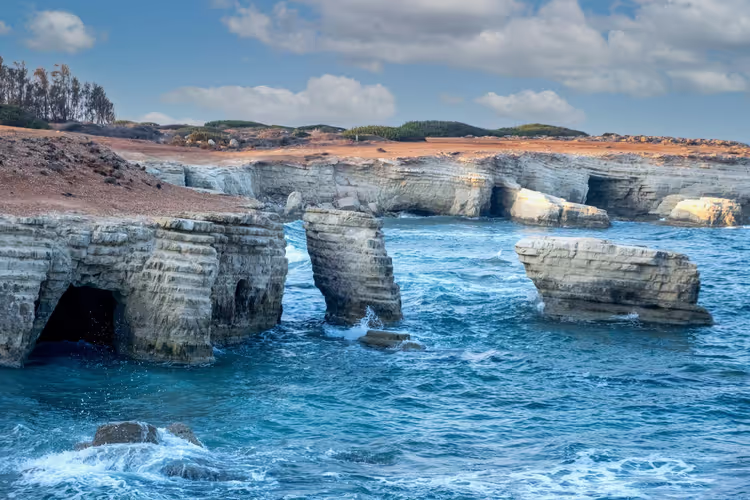
Weekend in Paphos: a weekend itinerary with prices and opening hours
Paphos is mostly known for its all-inclusive hotels and the promenade with ice cream vans. The real city lies a couple of kilometers from the beach strip, and many tourists simply never make it there. In two days you can realistically cover Roman mosaics, Byzantine ruins, and a medieval castle, then head up into the Troodos mountains.
Below is a ready-made weekend itinerary with prices, opening hours, and honest catches.
Ad: this article contains affiliate links, we earn a commission if you book through them, at no extra cost to you.
Kato Paphos: the ancient quarter by the harbor
💡 In short:
- Two days are enough for Kato Paphos, the upper town, and one big trip into the mountains.
- The Department of Antiquities combined ticket costs €8.50 for 1 day, €17 for 3 days (as of 09/2026, Visit Cyprus).
- Prices and opening hours: 09/2026, verified on Visit Cyprus).
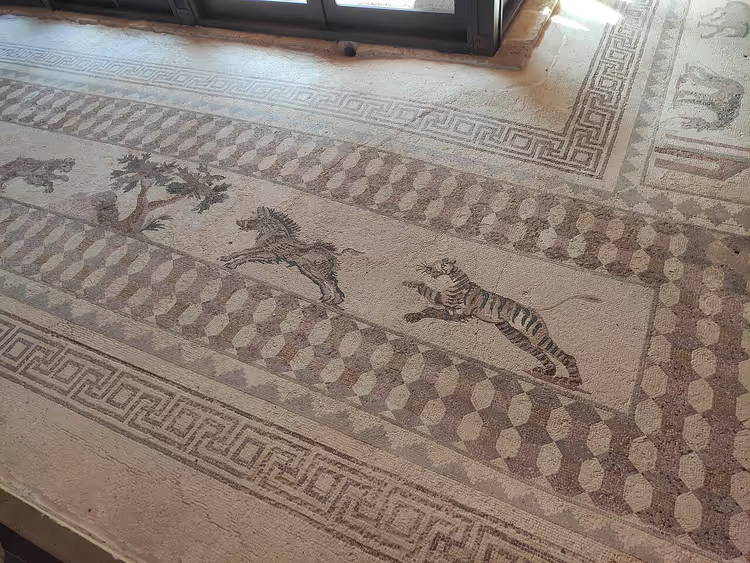 © Fry72, Karel Frydrýšek · CC BY-SAPhoto: Fry72, Karel Frydrýšek, CC BY-SA (https://creativecommons.org/licenses/by-sa/4.0), Wikimedia Commons
"Kato" means "lower." That is the name of the quarter by the harbor, where the city's main archaeological park stands. UNESCO added it to the World Heritage List in 1980 (according to the Cyprus tourism office), and monuments from antiquity to the Middle Ages survive here.
The park is open year-round. From April 16 to September 15 it operates from 8:30 to 19:30, in the other months until 17:00. It closes only three days a year: Christmas, New Year's Day, and Greek Easter.
The mosaics of Paphos: the houses of Dionysus and Theseus
The heart of the park is the floor mosaics of four Roman villas: Dionysus, Theseus, Aion, and Orpheus. They were found by accident during construction work in the mid-20th century and cleared with the involvement of archaeologists from the University of Warsaw. The scenes are drawn from Greek myths: a grapevine, hunting scenes, sea deities.
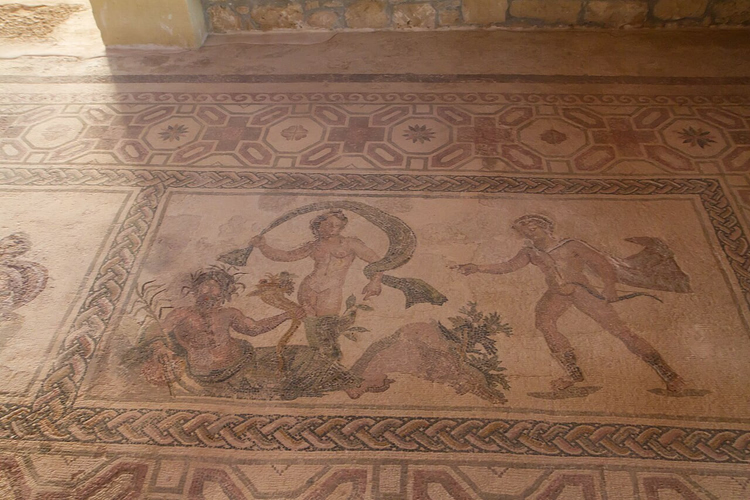 © Максим Улитин · CC BYPhoto: Максим Улитин, CC BY (https://creativecommons.org/licenses/by/3.0), Wikimedia Commons
It is best to view the rooms in the morning, before tour groups arrive. Admission costs €4.50 for an adult, and organized groups of 10 or more get a 20% discount (as of 09/2026, Visit Cyprus). If you want a guided visit, tickets and tours on Tiqets usually include an audio guide.
Good to know: at midday the open-air mosaics glare, so go in the morning or after 17:00. The catch: in July and August the rooms are stuffy and there is almost no shade.
The Odeon, the lighthouse, and the Agora nearby
One park ticket also covers the neighboring monuments: the Odeon, the Agora, and the sanctuary of Asclepius. The Odeon was begun in the Hellenistic period and finished by the Romans. The ancient amphitheater had a canopy that sheltered the audience from sun and rain.
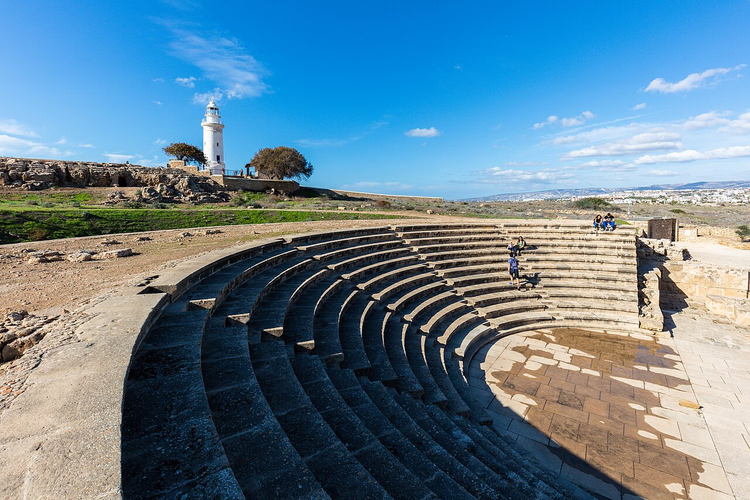 © Diego Delso · CC BY-SAPhoto: Diego Delso, CC BY-SA (https://creativecommons.org/licenses/by-sa/4.0), Wikimedia Commons
The Odeon is still in use today. Several times a year it hosts theater and music festivals, including the "Rhythms of Light" light festival. Right above the ruins stands a working 19th-century British lighthouse. You cannot climb it, but you can walk around the grounds and photograph the city and the sea.
Of the Agora, a large trading square, mostly columns remain. Life once bustled here: merchants came from all over the island, and townspeople discussed politics and culture. Some columns survive nearby, by the ruins of Saranta Kolones castle, which the Byzantines defended against Arab raids.
The Asclepieion was a sanctuary of Asclepius, the god of medicine. The three sites stand roughly two hundred meters apart inside the park, so they are easy to cover in one loop. Allow at least three hours for all of Kato Paphos, otherwise you will have to rush.
The Tombs of the Kings under the open sky
There were no kings on Cyprus back then. The name Tombs of the Kings comes from the rich decoration of the burial chambers of the local aristocracy. It is a large necropolis with underground chambers carved into the rock.
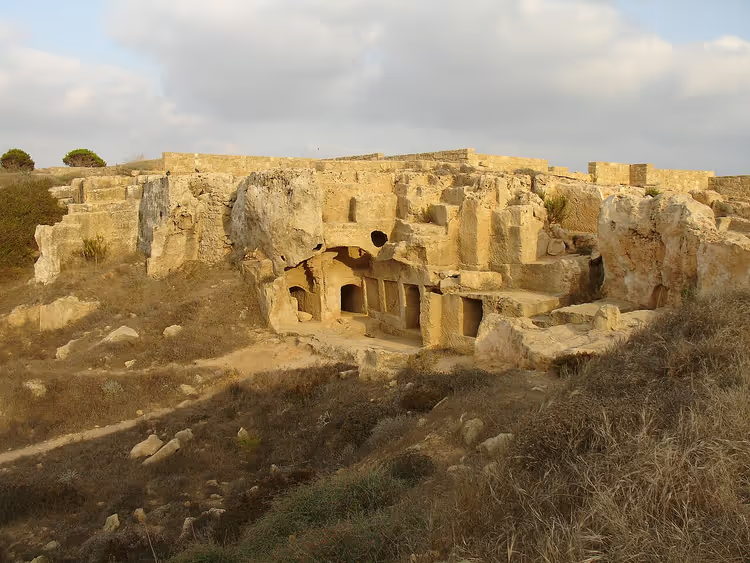 © Mgiganteus1 at en.wikipedia · CC BY-SAPhoto: Mgiganteus1 at en.wikipedia, CC BY-SA (http://creativecommons.org/licenses/by-sa/3.0/), Wikimedia Commons
Admission costs €2.50 on top of the park ticket (as of 09/2026, Visit Cyprus). There is almost no shade here and there are many steps, so bring water and comfortable shoes. If you don't handle heat well, come at opening time or closer to sunset.
The promenade, Paphos Castle and the city beach
If archaeology isn't your thing, modern Kato starts just beyond. A promenade with cafes, restaurants and ice cream vans runs along the sea. The medieval Paphos Castle stands on the shore: admission is paid, the price is in the low double digits in euros, check the exact amount at the ticket office.
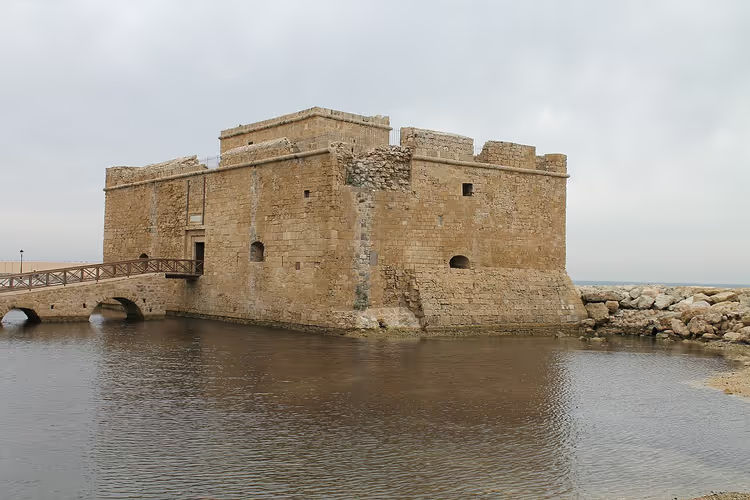 © Alan Samuel from Cardiff, Wales · CC BYPhoto: Alan Samuel from Cardiff, Wales, CC BY (https://creativecommons.org/licenses/by/2.0), Wikimedia Commons
Classical music concerts are sometimes held right on the waterfront in front of the castle. On the promenade you can rent a jet ski, go parasailing, water skiing or ride a seabob. A convenient way to compare boat trip options is the boat trips and water activities section.
The city beach is clean and well equipped: parking, toilets, changing cabins, showers and taps to rinse off the sand. A parking spot is easier to find through the Paphos Smart Parking app. Sunbeds and umbrellas are available for a fee.
The swimming season here runs from May to mid-October. The warmest water is in mid-September, when the sea heats up to about thirty degrees. The catch: the promenade venues are packed by evening, so book a table in advance.
The park and the Agia Kyriaki basilica
It's easy to escape the noisy promenade in the park by the Agia Kyriaki church. This is a rare case for the city: the church is not Orthodox but Catholic and Gothic, and it has stood here since the seventh century AD. Around it lies a quiet park with mosaics and the ever-present Cypriot cats.
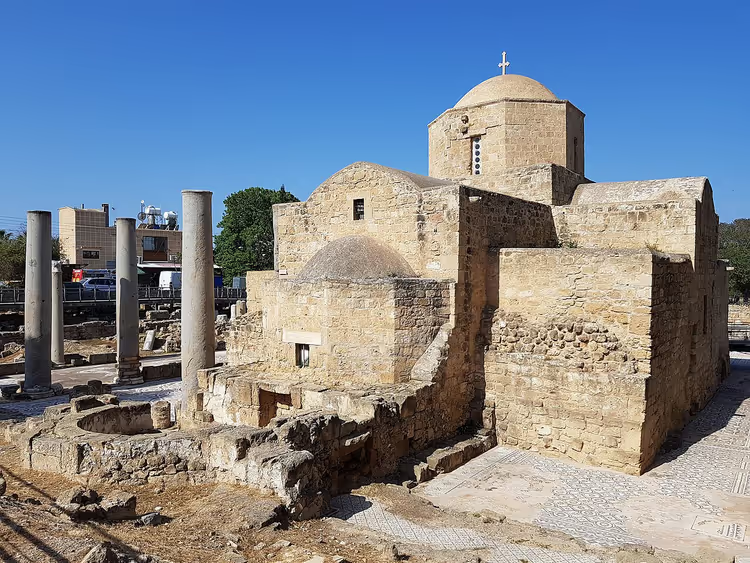 © Joostik · CC BY-SAPhoto: Joostik, CC BY-SA (https://creativecommons.org/licenses/by-sa/4.0), Wikimedia Commons
Admission is free and the grounds are small. It's a convenient place to rest between the ancient ruins and the castle, especially in the heat.
The upper town: the white streets of Pano Paphos
The upper town, also known as Pano Paphos and Ktima, is the medieval part of the city. It is also under UNESCO protection. There are no massive towers or fortress walls here: the streets are lined with low buildings made of light-colored stone.
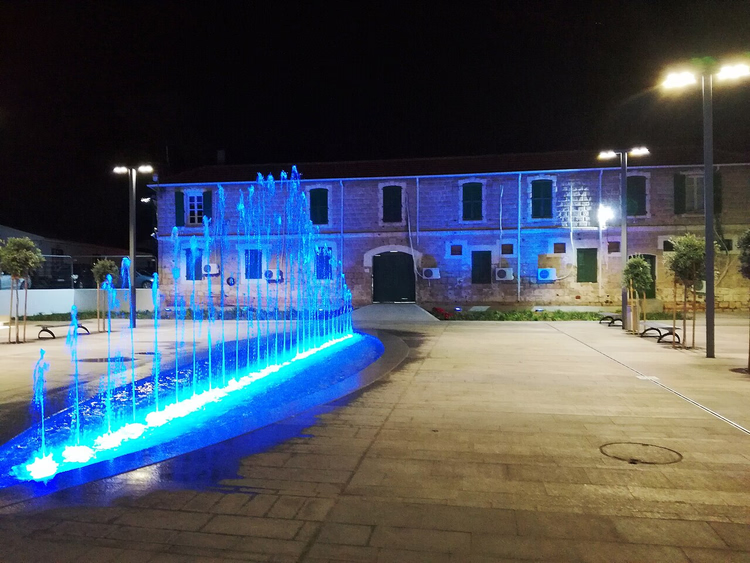 © Viaggiamocela · CC BY-SAPhoto: Viaggiamocela, CC BY-SA (https://creativecommons.org/licenses/by-sa/4.0), Wikimedia Commons
After restoration, the area has partly lost its former character, but the snow-white narrow streets are still pleasant to explore on foot. There are more locals here than tourists.
This part of the city has many cafes, bars, tailor shops, boutiques and souvenir markets. Street art decorates the walls of the buildings.
One of the unusual structures is the Ottoman bath.
The city wall offers a view of the sea. The catch: the streets are narrow and almost always crowded, especially in the evening.
Tours and tickets in Paphos
Guided tours, skip-the-line tickets and activities — most offers can be cancelled free of charge.
See offers on GetYourGuideThe widget loads once you give your consent.
What to see around Paphos
Most natural sights lie outside the city. Aphrodite's Rock, the Blue Lagoon, and the Troodos Mountains all require driving, so on day two a rental car saves time. Left-hand traffic scares many people, but you get used to it within the first hour. Finding a rental online is easy, just get a car with extra power: you'll be driving on mountain roads. Comparing car rental prices is convenient in a single search.
Where | How to get there | Time | Do you pay |
|---|---|---|---|
Aphrodite's Rock | car, highway toward Limassol | one to two hours | free entry |
Blue Lagoon | car to Latchi, then boat | half a day | cruise or yacht rental |
Troodos and Kykkos | car, mountain switchbacks | full day | tasting and cafes |
Aphrodite's rock (Petra tou Romiou)
On the highway toward Limassol there is a beach with a rock called Aphrodite's rock (Petra tou Romiou). According to myth, this is where the goddess emerged from the sea. The Cypriot altar to Aphrodite was mentioned as far back as the Odyssey, and archaeologists have found figurines of her dating to the third and second millennia BC.
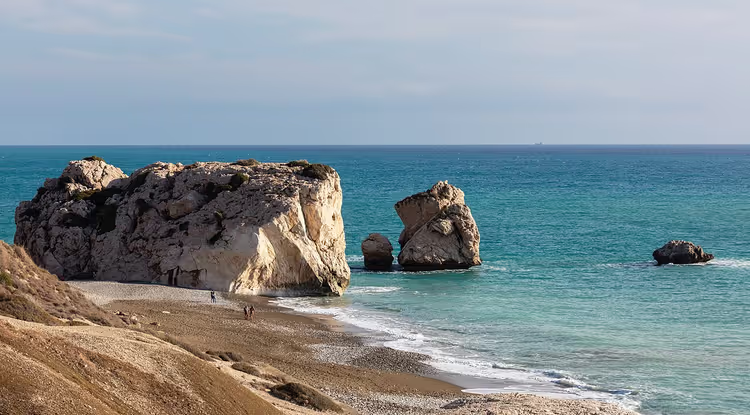 © Diego Delso · CC BY-SAPhoto: Diego Delso, CC BY-SA (https://creativecommons.org/licenses/by-sa/4.0), Wikimedia Commons
Swimming here is pleasant, but at sunset the largest crowds arrive. The spot is easy to find with a navigator near the village of Kouklia.
Blue Lagoon
The Blue Lagoon is a must for anyone who loves swimming and boating. The water here is clear, and the bottom is sandy.
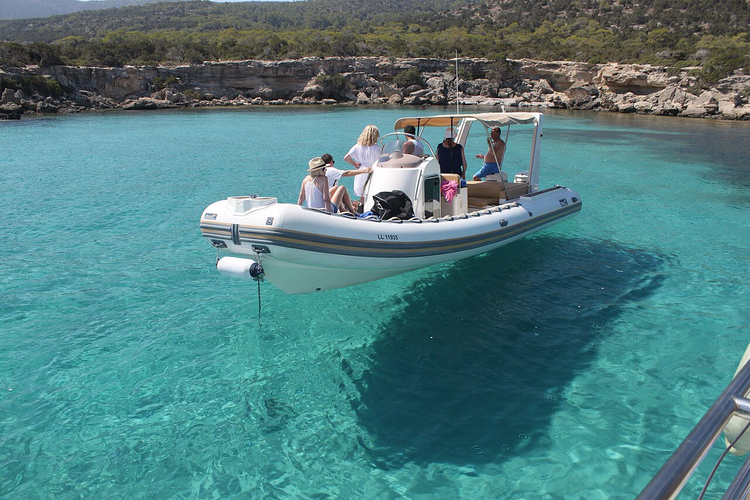 © Liilia Moroz · CC BY-SAPhoto: Liilia Moroz, CC BY-SA (https://creativecommons.org/licenses/by-sa/4.0), Wikimedia Commons
You can get to Latchi harbor and from there take a group cruise or rent a small yacht. A group cruise is cheaper, and the ticket includes a tour and light snacks; the captain shows you the bays and makes a stop for swimming. About a dozen companies operate in Latchi, including Atlantis N Paphos Cruises.
- Who it's for: those who love the water and want to see the bays of Akamas.
- Not for: those who get seasick on a boat.
- The catch: a group cruise is shorter, and there are more people on the boat.
You can rent a yacht for your own group. No special training is needed to operate the boat: before departure you get a briefing, a map, and a radio for contacting rescuers. The average price for half a day starts around one hundred fifty euros, and the smallest yacht takes six people. Rentals are offered, for example, by Latchi Watersports Centre and George's Boat Hire. If you get seasick, take motion sickness pills. Bring drinks and snacks in a cooler: you choose the bays yourself.
Troodos, wineries, and Kykkos Monastery
The island's highest mountains are called Troodos. Here you'll find cedar and pine forest, cool air, and dozens of marked trails of varying difficulty. You can easily pick a suitable hike on the Choose Your Cyprus website.
 © Dickelbers · CC BY-SAPhoto: Dickelbers, CC BY-SA (https://creativecommons.org/licenses/by-sa/3.0), Wikimedia Commons
In winter, Troodos has a ski resort, so it's not only a summer destination.
If sports aren't your thing, stop for a tasting at one of the wineries. A tasting set of seven wines with bread and olive oil costs about ten euros at Lambouri Winery.
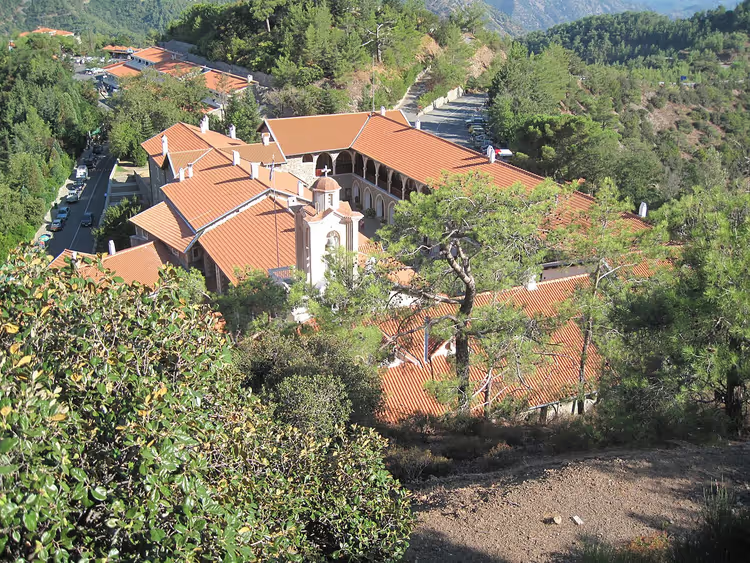
The Orthodox Kykkos Monastery sits at an elevation of about 1,140 meters above sea level (according to Cyprus Inform). The original appearance of the buildings has not survived due to fires, but inside you can still light a candle for loved ones and write a prayer request in Greek, English, or Ukrainian.
Only fifteen people live on the grounds permanently. Besides the church buildings, there is a museum and a market with local wine and sweets.
The monastery is open daily: in summer until about 6:00 PM, in winter until 4:00 PM (as of 09/2026, Cyprus Inform).
The catch: from Paphos it takes about one and a half to two hours to get here along winding mountain roads, and part of the route runs through narrow mountain sections.
Local cuisine: what to order at a taverna
If you have a car, it's worth driving to one of the nearby villages for a real Cypriot dinner at a taverna. The local cuisine is rich: moussaka, fish meze, souvlaki, Greek salad, and Cypriot coffee, which is something between espresso and Turkish coffee. For meat, try souvlaki, and for drinks there's a wide selection of milkshakes.
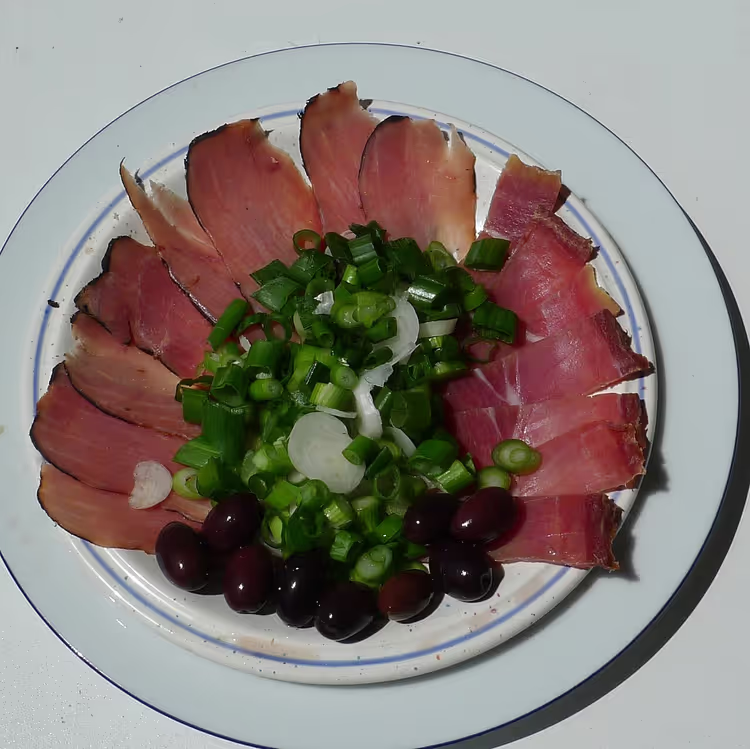 © Ulrich prokop · CC BY-SAPhoto: Ulrich prokop, CC BY-SA (https://creativecommons.org/licenses/by-sa/3.0), Wikimedia Commons
One of the best moussakas is served at the family-run Periklis Tavern in the village of Nata. If you decide to have dinner in the village, call ahead and book a table: on weekdays places close early if there's no reservation. On Sundays everything is packed because Cypriots come back to their home villages and have family lunches at tavernas.
If you want to stay in town, near the restaurant street on the promenade there's the Pingouino cafe with local and European cuisine. Starbucks and Costa Coffee chains are also there.
⁉️🤔 Frequently asked questions
How many days do you need for Paphos?
At least two full days. The first goes to Kato Paphos and the upper town, the second to the surrounding area with a car. If you want to see both the Troodos Mountains and the Blue Lagoon at a relaxed pace, add a third day.
How much do tickets to the ancient sites cost?
Prices for Kato Paphos Archaeological Park, the Tombs of the Kings, and the combined ticket are listed above in the sections about those sites.
When is the best time to go swimming?
In summer it's hot during the day, so it's better to see the ruins in the morning and swim in the evening.
Do you need a car in Paphos?
Not for the city itself: Kato Paphos and the upper town are walkable. You need a car on the second day for Aphrodite's Rock, the Blue Lagoon, and the Troodos Mountains. Remember that traffic drives on the left.
What should you try from Cypriot cuisine?
Moussaka, fish meze, souvlaki, and Greek salad, with Cypriot coffee for dessert. Dinner is tastier at village tavernas, for example Periklis Tavern in the village of Nata, but on weekdays you should book a table in advance.
Where should you stay?
Closer to the promenade is more convenient for the beach, closer to the upper town is quieter and has more locals. The difference in price and noise is noticeable, so choose based on your trip scenario.
In short: what to book
Two days are enough to cover Paphos completely: the archaeological park, the castle, the promenade, and one trip to the mountains. The decision matrix is simple. If you only want the beach and the city, book a hotel near the promenade and tickets to the archaeological park in advance. If you're traveling as a family with kids, plan a day for the city beach and the park at Agia Kyriaki. If you want nature, rent a car and set aside a full day for Troodos. For the Blue Lagoon, add a third day. Comparing hotels in Paphos on Trip.com is easy by map and price.

A small editorial team writing guides for independent travel. We travel ourselves, but we haven’t been everywhere, so we check prices, opening hours and how to get there against official sources.