

















Zurich Christmas markets: dates, mug deposit and card payment
Planning a trip to Zurich for Christmas? The city sits at the crossroads of Europe's rail network, and from here you can easily reach the Christmas markets in Basel, Strasbourg, and Munich.
The main thing to know in advance: the market season is very short. In 2026, most markets open on November 19 and close on December 23 (as of 09/2026, Zurich tourism office). Cards are accepted almost everywhere, and you'll need Swiss francs less often than you might expect.
Below we break down dates, languages, the four main markets, food, money, and a hotel in the center.
Ad: this article contains affiliate links, we earn a commission if you book through them, at no extra cost to you.
When Zurich Christmas markets are open
💡 In short:
- The 2026 season runs from November 19 to December 23, with some markets extending to December 24 (as of 09/2026, market calendar).
- Stalls are open daily, usually from 11:00 to 22:00; exact hours for each market are listed in the market overview.
- Pay by card: only a few stalls accept banknotes.
- Dates and opening hours: 09/2026, verified on the official Zurich Christmas markets page.
Each market has its own opening dates, although the overall framework is the same: start on November 19 and finish before Christmas (as of 09/2026, current market schedule). Check the schedule before the final week, as the market at the train station closes later than the others.
If your dates are flexible, pick a weekday. On weekends the largest market gets crowded, while the other markets stay calmer. A Tuesday morning will be almost crowd-free. In the evening after work, there are noticeably more people.
 © Ank Kumar · CC BY-SAPhoto: Ank Kumar, CC BY-SA (https://creativecommons.org/licenses/by-sa/4.0), Wikimedia Commons
Language: is English enough in Zurich
Switzerland has four official languages, and the most widespread is German, but in a distinct Swiss dialect. In practice, people in Zurich will almost always speak English with you. Ticket counters, hotels, and market vendors respond without any problem.
A couple of words are enough for a greeting, and locals will appreciate it:
- Hallo means hello, pronounced roughly like "hallo".
- Danke means "thank you", and the reply is "bitte".
- Glühwein means mulled wine, the main winter drink at the markets.
If you're not understood, show your phone screen with an online translator.
Four main Zurich Christmas markets
The city has four main markets. Three of them are in the old town within walking distance of each other, and the fourth awaits you inside the main train station. In the evening, all four markets are lit up with garlands, and the route between them takes less than an hour on foot. Between the historic buildings and cathedrals you'll also find modern shops, so you can pick up gifts along the way.
In terms of quality, Zurich's markets are a step above those in smaller Swiss towns, and prices here are typical for Switzerland. Below is a breakdown of each market: where it is, what makes it different, and when to visit. At the end of the section there's a block with tickets and city tours.
Christkindlimarkt at the main train station
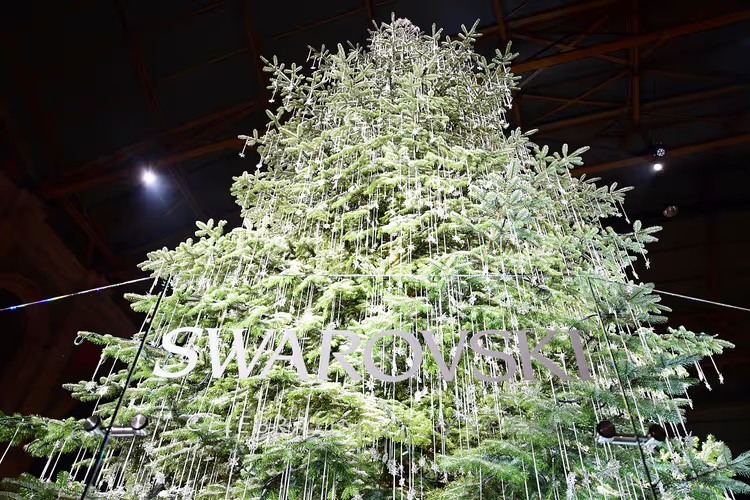
The most accessible option is right at Zürich HB station. You step off the train and straight into the festivities, no transfers or taxis needed. In 2026, the market in the station hall runs under the new name Polarzauber and features over a hundred stalls (as of 09/2026, Polarzauber website).
 © Ank Kumar · CC BY-SAPhoto: Ank Kumar, CC BY-SA (https://creativecommons.org/licenses/by-sa/4.0), Wikimedia Commons
In the center of the hall stands a huge Christmas tree, around which the market revolves. It runs until December 24 (as of 09/2026, Polarzauber schedule). Visit in the morning or after eight in the evening: at lunchtime the hall fills with rushing passengers.
Bellevue Noël at Sechseläutenplatz
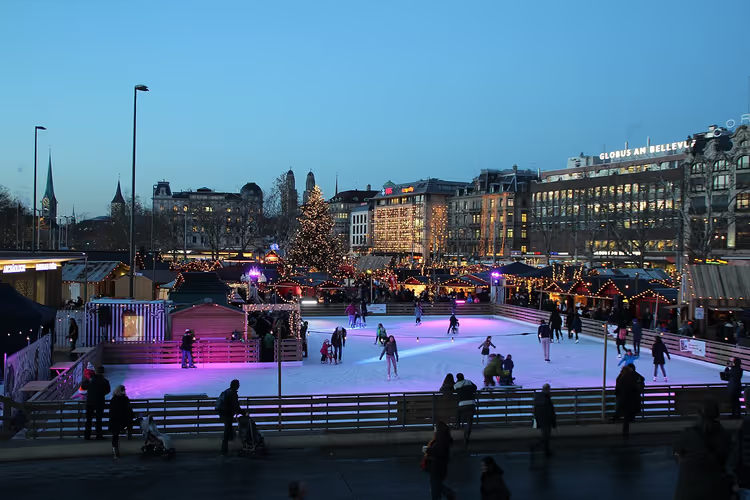
Zurich's largest Christmas market changed operators in 2026 and is now called Bellevue Noël. It still stands in the same spot, between the opera house and the lake, and runs from November 19 to December 23 (as of 09/2026, Blick). The previous market, Wienachtsdorf, held this location for ten years and left after 2025.
 © Adrian Michael · CC BY-SAPhoto: Adrian Michael, CC BY-SA (http://creativecommons.org/licenses/by-sa/3.0/), Wikimedia Commons
The food here is international: Indian, Venezuelan, Mexican, Japanese, and Belgian stalls stand side by side. This market is the biggest and the most crowded. Come at opening time if you want to grab a spot near the stage.
Singing christmas tree on bahnhofstrasse
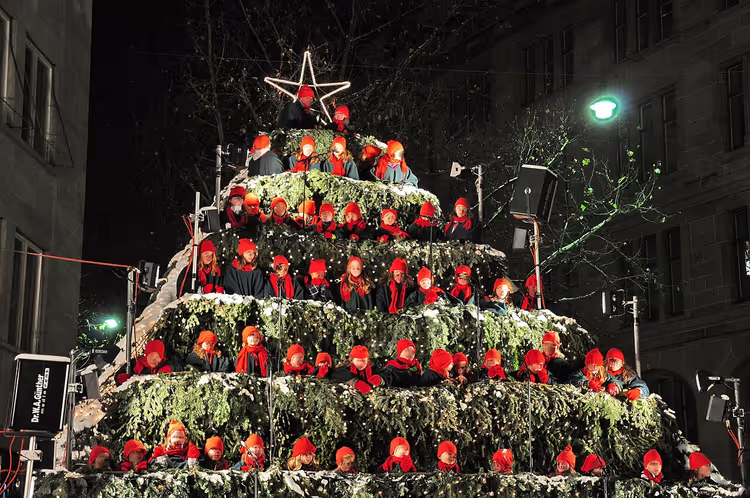
Near Bahnhofstrasse there is a small market dedicated to the singing Christmas tree. A choir performs every evening on a structure of green and red tiers (as of 09/2026, organizer). On weekends, concerts are held twice a day.
 © Roland zh · CC BY-SAPhoto: Roland zh, CC BY-SA (https://creativecommons.org/licenses/by-sa/3.0), Wikimedia Commons
The stage is visible right from the street, and admission is free. Evening performances draw a crowd, while during the day you can take it all in calmly and without the crush. For a short stop along the way, this market is the best fit.
Illuminarium in the courtyard of the National Museum
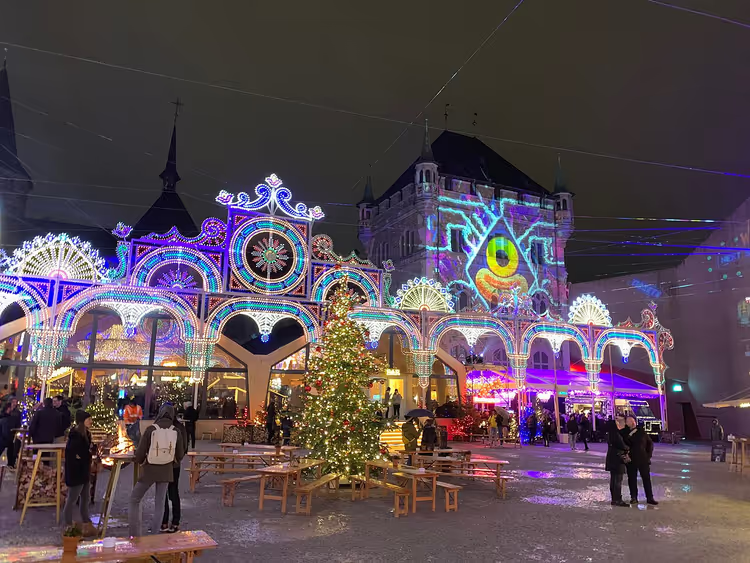
Strictly speaking, this is not a market but a light show in the inner courtyard of the Swiss National Museum. In 2026, Illuminarium is being held for the ninth time (as of 09/2026, organizers). The courtyard opens at 5:00 PM, and light installations are projected onto the building walls.
The front part of the courtyard with a bar and fondue chalet can be visited for free; the paid zone with the show requires a ticket (as of 09/2026, Zurich tourism office). Check the hours on the website before visiting, as the schedule varies by day.
 © Ank Kumar · CC BY-SAPhoto: Ank Kumar, CC BY-SA (https://creativecommons.org/licenses/by-sa/4.0), Wikimedia Commons
If you want ready-made tours and city tickets, take a look at the selection below.
Tours and tickets in Zurich
Guided tours, skip-the-line tickets and activities — most offers can be cancelled free of charge.
See offers on GetYourGuideThe widget loads once you give your consent.
What to eat and drink at the markets
A Swiss Christmas market feeds you first and foremost. Portions are hearty, stalls stand close together, and in one evening you can try several dishes. Here's what to get:
- Hot Chocolate. The hot chocolate here is thick and rich, served at almost every other stall.
- Fonduebrot. A baguette with melted cheese inside, the fastest snack on the go.
- Fondue. Cheese fondue is more popular than chocolate fondue at the markets, and portions are meant for two.
- Raclette. Cheese is melted on a large block and scraped right onto your plate, served with potatoes, cornichons, and pickled onions.
- Glühwein. Mulled wine comes in red and white varieties, with rum, amaretto, or Grand Marnier added. The non-alcoholic version is called Kinderpunsch.
- Kartoffelpuffer. Potato pancakes fried in oil, greasy and very filling.
Get one portion for two people. That way you'll make it to dessert instead of stopping at the first cheese dish. Sweet stalls are mostly located closer to the market exit.
Money: francs, cards, and mug deposits
Switzerland is in Europe, but it uses its own currency. At Zurich's Christmas markets you'll need Swiss francs, which also serve as the official currency of neighboring Liechtenstein.
How the mug deposit works
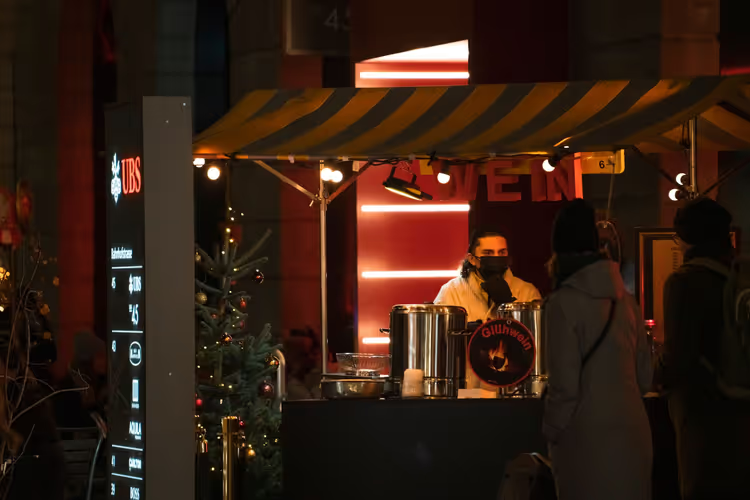
One rule will save you from surprises at the register. The sign shows the price of the drink, but you pay more: the difference is held as a deposit for the mug. Return the mug to the counter and you get the deposit back. If you keep the mug as a souvenir, the seller keeps the deposit.
The deposit amount and return rules can vary from stall to stall. Ask the vendor before ordering how the deposit works at that particular stall.
How much dinner costs at the market
Think in terms of individual items, not a total bill. Mulled wine and punch cost a few francs, plus the mug deposit. Raclette, fondue, and hot dishes cost more than drinks, while desserts fall in the middle range. International dishes like ramen or bao will set you back as much as a full meal.
For dinner with a drink and dessert, budget around thirty francs per person. That's a guideline, not an exact figure: every stall has its own prices. Market prices are Swiss, meaning higher than the European average for comparable dishes.
Card or cash
The short answer: card. Most stalls accept contactless payment, and some markets operate on a "card only, no cash" basis. This is noticeably different from markets in Germany and Austria, where cash is still common.
Cash left over from a trip to another city may simply not be accepted here. So don't withdraw large amounts in advance "just in case." A small reserve of francs covers the rare stalls without a card terminal.
How to get francs without extra fees
The most straightforward option: order currency from your bank a few business days before your trip. Exchange at a branch is usually cheaper than at the airport or a street exchange office.
If you're already in Zurich, withdraw francs from an ATM. An international debit card will work, with a small fee per transaction and the bank's exchange rate. Exchange offices and Western Union are almost always more expensive.
Check whether your bank charges a fee for withdrawals in Switzerland. Sometimes it's cheaper to pay by card than to withdraw cash for a single purchase.
Where to stay in Zurich
For a market-focused itinerary, it's important to stay within walking distance of the old town and the train station. Below is an option that meets both requirements and doesn't require daily transit.
Ibis Styles Zurich City Center
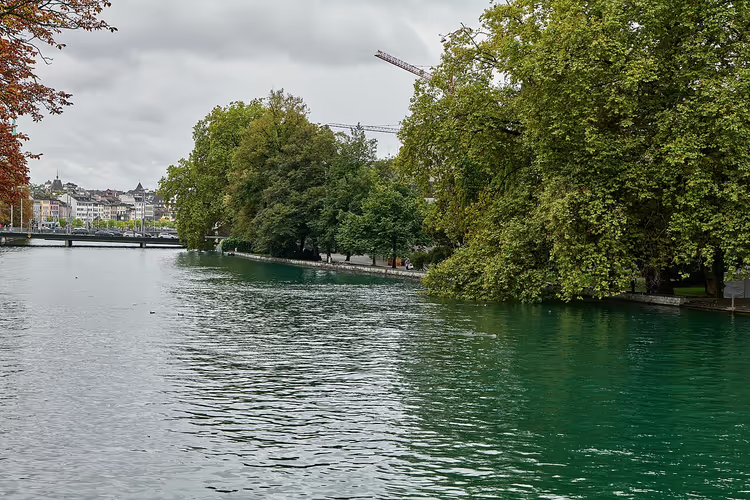
This three-star hotel sits in one of the most convenient locations for exploring Christmas Zurich. You can easily walk to the old town, the main train station, and several markets. From the airport, a taxi gets you to the hotel in about fifteen minutes.
It's not a boutique hotel, but a predictable city option: quiet rooms, breakfast on the ground floor, and its own restaurant. It's closer to a chain business hotel than a design property.
- Who it's for: if you want to walk to the markets and not overpay for design.
- Not for: if you need a lake view or a historic interior.
- Location: old town, train station, and Bahnhofstrasse within walking distance; the waterfront and lake are nearby.
- Price: in December, prices in central Zurich are high, so book your dates early.
- The catch: there's no premium service here, it's an honest three stars.
Check prices at Ibis Styles Zurich on Trip.com
How to get around the city
The best transport in Zurich: your own two feet. Stay in or near the old town, and you'll reach the markets without transfers. The main bridges make it easy to cross to the other bank and continue your walk.
For longer distances, trams and trolleybuses come to the rescue. They run frequently and cover the entire center, so a car is almost unnecessary in the city.
During market season, the Märlitram Christmas tram runs through the center, but it's a sightseeing route, not transport between markets (as of 09/2026, Zurich tourism office). Families with children ride it: actors read stories along the way.
If you need to get somewhere faster, call a taxi or Uber. The main station, Zürich HB, connects the city with Basel, Lucerne, Bern, and Munich. It's convenient to check train schedules within Switzerland in advance: check trains.
 © Tony Badwy · CC BY-SAPhoto: Tony Badwy, CC BY-SA (https://creativecommons.org/licenses/by-sa/3.0), Wikimedia Commons
⁉️🤔 Frequently asked questions
When should I go to avoid the crowds?
On a weekday afternoon, there are the fewest people. On weekends, the largest market at Bellevue fills up by evening, and the market at the train station is crowded at lunchtime. Aim for the morning or after eight in the evening.
How much money should I bring to the market?
Budget for dinner with a drink and dessert per person. Mulled wine costs a few francs plus the mug deposit; raclette and fondue cost more. There's no exact price list, every stall has its own prices.
Should I eat before heading out?
No, the market is your dinner. Order one portion for two and move along the stalls, and you'll still make it to dessert.
What should I wear in Zurich in December?
A warm sweater, a jacket, and comfortable shoes. There are few benches and tables, and you'll be standing a lot, so shoes matter more than your outfit. Check the forecast the day before you go.
In short: what to book
If you have one night: book Ibis Styles Zurich City Center and head straight to the market at the train station. If you have two days: add Bellevue Noël and the evening show at Illuminarium. If you're traveling with children: choose Märlitram and the evening concert at the singing tree.
Check the dates on the tourism office page and book central accommodation early: December fills up fast. Zurich hotels on Trip.com.

A small editorial team writing guides for independent travel. We travel ourselves, but we haven’t been everywhere, so we check prices, opening hours and how to get there against official sources.