







Zagreb in December 2026: fairs, markets and city walks
Zagreb's Christmas markets have been named the best in Europe three times. In 2026, Advent in the capital of Croatia starts on November 28 and runs until January 7 (as of 09/2026, Grad Zagreb). These are the dates people come here for in winter.
The venues are free to enter; you only pay for mulled wine, food, and the ice rink. To keep your trip from turning into a shuffle between stalls, it's worth planning your route in advance. Below we break down the markets, city markets, museums, transport, and accommodation with prices and links.
Ad: this article contains affiliate links, we earn a commission if you book through them, at no extra cost to you.
Advent in Zagreb: dates and main venues
💡 In short:
- Advent 2026/2027 runs from 11/28/2026 to 01/07/2027, and entry to the venues is free.
- Main spots: Ban Jelačić Square, Zrinjevac Park, and the streets leading to the train station.
- Weekdays are the least crowded.
- Dates and venues: 09/2026, verified on the official Advent Zagreb website.
Zagreb was named the best Christmas market in Europe three years in a row, in 2016, 2017, and 2018 (according to Croatia Week). The title isn't awarded more than three times, so that result is the maximum possible. After these wins, the city started to be seen as a winter destination, not just a summer stop on the way to the Adriatic.
 © Branko Radovanović · CC BY-SAPhoto: Branko Radovanović, CC BY-SA (https://creativecommons.org/licenses/by-sa/4.0), Wikimedia Commons
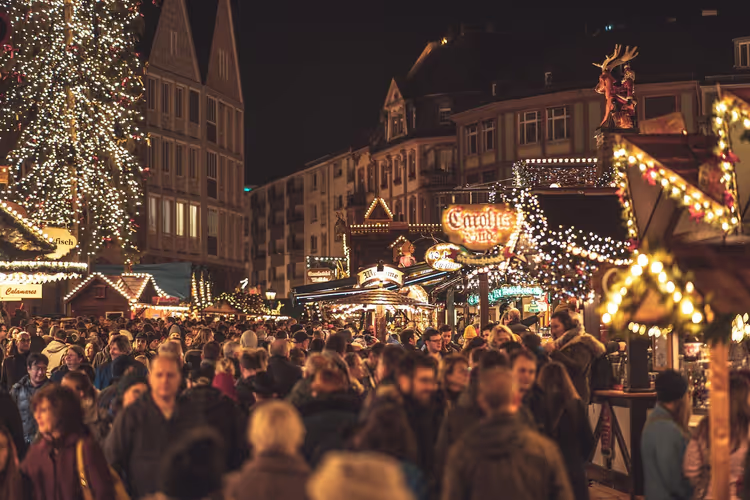
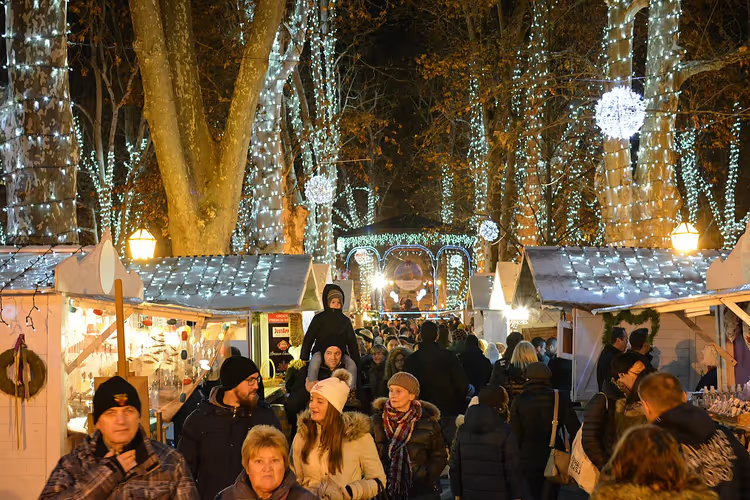
In December, central Zagreb turns into one big market. Stalls line the alleys around Ban Jelačić Square and stretch from Zrinjevac Park to the train station. Each year the program runs under a new theme (as of 09/2026, official Advent Zagreb website). Check the current map if you're going for specific venues from old guidebooks.
The markets run from the first Advent weekend until Epiphany, which is almost six weeks. You can also visit between the holidays: on December 27-29 everything is still in full swing. You pay for food, mulled wine, and the ice rink on site, while entry to the venues remains free (Advent Zagreb schedule).
Advent in Zagreb is known far beyond Croatia, and weekends here are genuinely crowded. If you don't like crowds, pick a weekday. On weekdays the lines at the stalls are noticeably shorter, and the atmosphere stays just as festive (official website).
Right after Christmas, the lights and music remain, but the crowds thin out noticeably.
It's easiest to plan around the evenings: the lights come on early, and the squares look their best in the dark. Set aside one free evening for the longest walk, so you can move between venues without a schedule. Most of the time goes to food and the mulled wine line, not to sightseeing itself.
The markets sell mulled wine, gingerbread, sausages, and cheese, with prices on par with Western European cities. The food is local though: you're trying Croatian sausages and strudels, not standard fast food. The full list of venues, map, and concert program is published on the official Advent website, where you can also see which locations are open on specific days.
Zagreb's markets: Dolac and flea markets
Besides the Christmas markets, Zagreb has regular farmers' and flea markets. Here you buy from locals rather than tourist stalls, so prices are noticeably lower.
 © Rilegator · CC BY-SAPhoto: Rilegator, CC BY-SA (https://creativecommons.org/licenses/by-sa/4.0), Wikimedia Commons
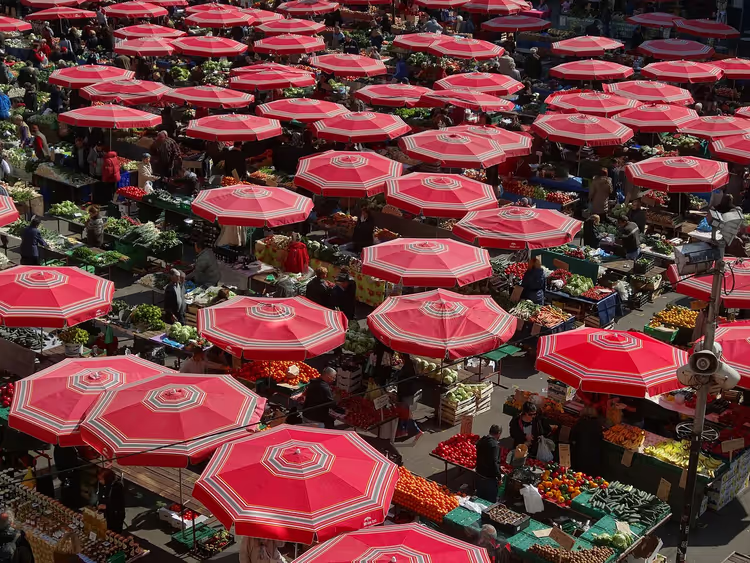
Dolac is considered the city's main food market. The Tržnice Zagreb brand operates 28 locations, and Dolac is the largest among them (as of 09/2026, Tržnice Zagreb). It is famous for its red umbrellas, which in winter are not packed as tightly as in summer. Trading takes place on the open square, under a canopy below its level, and in covered pavilions along the edges.
Climb the steps to the top and you will find yourself at the Kumica statue. It was erected in honor of the market women who have supplied the city with produce for decades. Take a look inside the fish pavilion: the selection is such that many people regret not having a kitchen in their apartment. In the covered part of the market, cheese, cream, and meat products are sold year-round, and the fish stalls open early in the morning.
Go to Dolac for shopping on weekdays: on Saturday the narrow aisles are packed, and by lunchtime the fish selection is already smaller. The antique market at Britanski trg runs on Sundays, and its inventory changes every week. Come at opening time, because the best items are snapped up in the first hours. They sell coins, postcards, dishes, and old Austrian banknotes that people take home as souvenirs.
In winter, fruit here is cheaper than in the supermarket, especially mandarins. It is better to buy in the morning, when the stalls are full. Access with a stroller is possible through the pavilion and then by elevator (according to Infozagreb).
Fans of old things should check out the flea market. The country's largest flea market, Hrelić, lies on the outskirts, so the Sunday antique market at Britanski trg is closer. Schedules and addresses of the markets are collected on the Zagreb tourist portal.
A walk through Zagreb: upper and lower town
In the cold, movement matters more, so put on a hat and gloves and go on foot. The center is compact, and you can cover the main sights in a few hours.
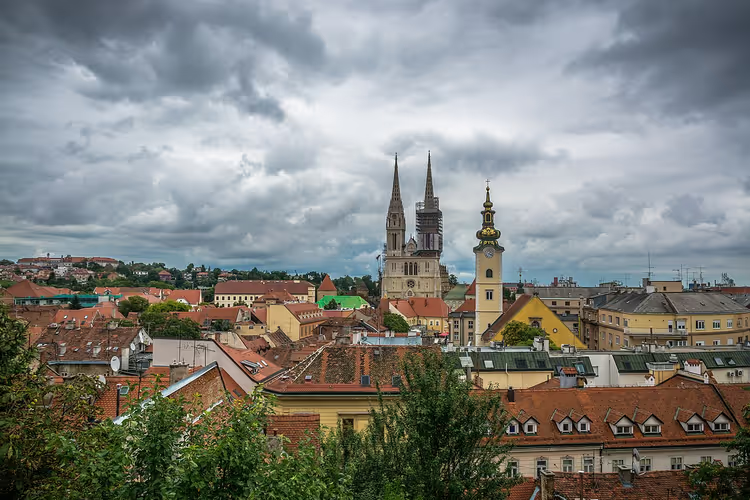 © Nikolai Karaneschev · CC BYPhoto: Nikolai Karaneschev, CC BY (https://creativecommons.org/licenses/by/3.0), Wikimedia Commons
Any route starts at Ban Jelačić Square, the city's main square. From here you go up to the cathedral and on to St. Mark's Church, or you head toward the train station. During Advent, both paths are lined with fairs, nativity scenes, and light figures.
The upper town is divided into the Gradec and Kaptol districts, while the lower town is known for its palaces and the Green Horseshoe. This way you cover the main attractions and, if you like, step into churches, museums, or taverns. In the upper town stand the cathedral and St. Mark's Church with its colorful tiled roof.
In the lower town you walk past the palaces, theaters, and museums of the Green Horseshoe, as well as past Dolac market and Zrinjevac Park. With a guide, you learn in an hour why metal balls sit on the roofs. The gas lamps here are lit by hand, and it is worth seeing at dusk.
From the Strossmayer Promenade you get a view of the lower town and the rooftops, and this is the most convenient spot for photographing the panorama. In the evening, the lighting makes it even more striking, so leave a little time for the viewing platform before heading down.
To save your energy, take the Uspinjača funicular up to the upper town. It is one of the oldest and shortest funiculars in the world: it runs every 10 minutes from 6:30 to 22:00, and the fare is €0.66 (as of 09/2026, ZET). The ticket is valid together with city transport.
If you want facts from first-hand sources, book a guided tour or join a free walking tour. In the upper town, use the Lotrščak Tower as your landmark: at exactly noon, a cannon fires from it.
Walking here is equally pleasant in the morning, in the quiet, and at sunset, when the lights come on. Between sights, you can always warm up at a fair or in a cafe.
Tours and tickets in Zagreb
Guided tours, skip-the-line tickets and activities — most offers can be cancelled free of charge.
See offers on GetYourGuideThe widget loads once you give your consent.
If you want a route to specific points with a guide, Zagreb tours on GetYourGuide offer ready-made options with schedules and reviews.
What to eat in Zagreb and where to warm up
In Zagreb you can try all of Croatian cuisine at once, from hearty meat dishes to vegetarian options. Keep two things in mind that you should definitely try: Štruklji and, if you eat meat, Čevapi.
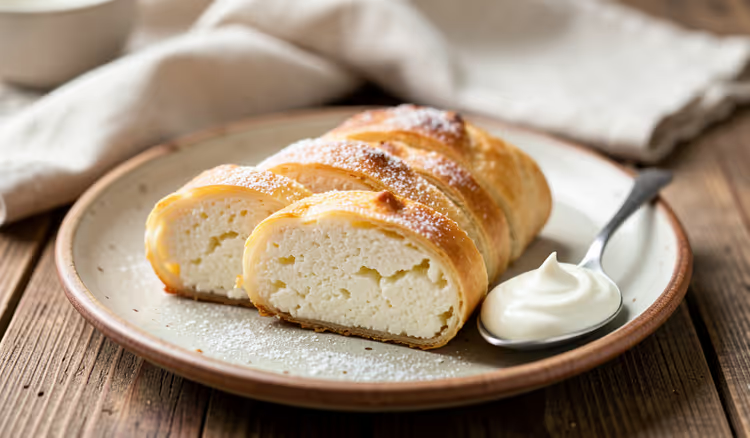 AIIllustrative image: AI-generated
Štruklji is similar to a cottage cheese strudel, but noticeably more savory. Čevapi here is more often called Čevapčiči, and it is served with onions and bread. Both dishes are available in almost every tavern in the center, and prices stay at the average European level.
For a reliable spot, head to the tiny Plac near Dolac Market. Thanks to its enclosed courtyard and infrared heaters, you can sit outside even in December. Meat and vegetarian options are available in equal proportions, so a group with mixed tastes won't argue.
During Advent, you can skip restaurants altogether. The fairs cook everything from steamed dumplings to vegetarian hot dogs, and you can eat between venues. A convenient place to eat right by the fair is Fuliranje near Strossmayer Square: it has both hearty and sweet options.
A good place to warm up between walks is Café Orient Express at Ulica Nikole Tesle 10. The interior replicates a train car and recalls the times when the Orient Express brought tourism to the city. Seating here is limited, so on weekends it's better to come before evening.
The Zagreb 360 observation deck is closed. For dinner, choose Kaptolska Klet. The restaurant stands opposite the cathedral in an inner courtyard, the kitchen combines classics and modern dishes, and there is a good wine list. Important for parents: there are high chairs and a changing table here, which is not common everywhere in Zagreb.
Portions are hearty, and prices are slightly lower than restaurant prices, so lunch on the square costs less than dinner in the center. Mulled wine here is brewed with spices, and you drink it right between the stalls.
In the evening, bars and wine cellars with local wines are open in the center. If you need a quiet dinner, book a table in advance: during Advent, free spots go quickly, and lines at popular restaurants grow toward the weekend.
Museums in Zagreb: what's open in winter
By the number of museums per capita, Zagreb ranks among the world's leaders. There are small galleries and large thematic museums, including quite unusual ones.
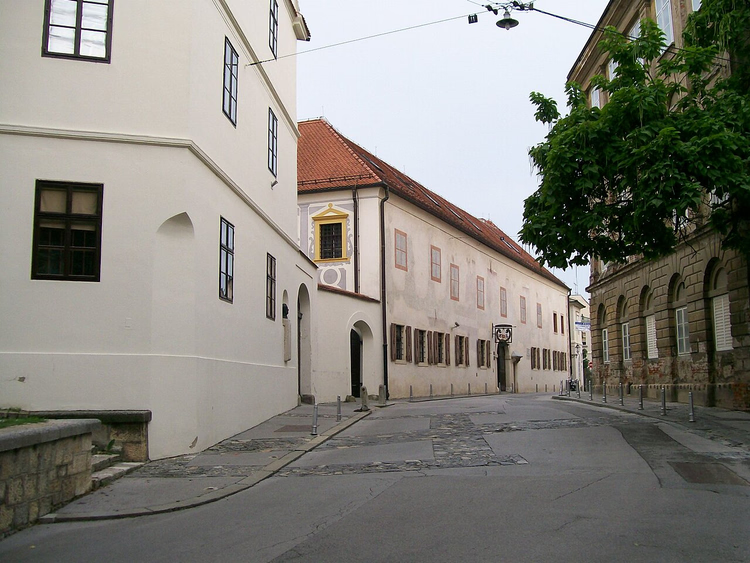 © Suradnik13 · CC BY-SAPhoto: Suradnik13, CC BY-SA (https://creativecommons.org/licenses/by-sa/4.0), Wikimedia Commons
A couple of hours in the cold is easily offset by a warm hall. This is especially helpful on rainy days and with children. Below are two museums worth setting aside time for, and one that has closed.
A program of two museums with a coffee break takes almost half a day on a cold day.
The Museum of Broken Relationships (Muzej prekinutih veza) displays personal items with breakup stories. The exhibition occupies the baroque Kulmer Palace in the upper town, and you can go through it in an hour. Check opening hours and tickets on the museum's official website, they change by season.
The Nikola Tesla Technical Museum shows the development of technology: a planetarium, a working mine model, old cars and airplanes, and Tesla's office (as of 09/2026, museum's official website). The museum is among the most visited in Croatia. Guided tours are organized for groups here, and children especially like the underground tunnel.
The Image of War military photography museum has closed, and that's a shame: the exhibition about life during the Balkan war of the early nineties was deeply moving. Next time it's worth checking out Muzej 80-ih, the Selfie Museum, and Hrvatski muzej naivne umjetnosti. Museum and attraction tickets are convenient to book in advance through Tiqets.
Winter sports: Sljeme and the ice rink
Let's talk about winter sports separately: they are stronger here than you'd expect from a city. If you're traveling in January or February, add a day on the slopes to your plan.
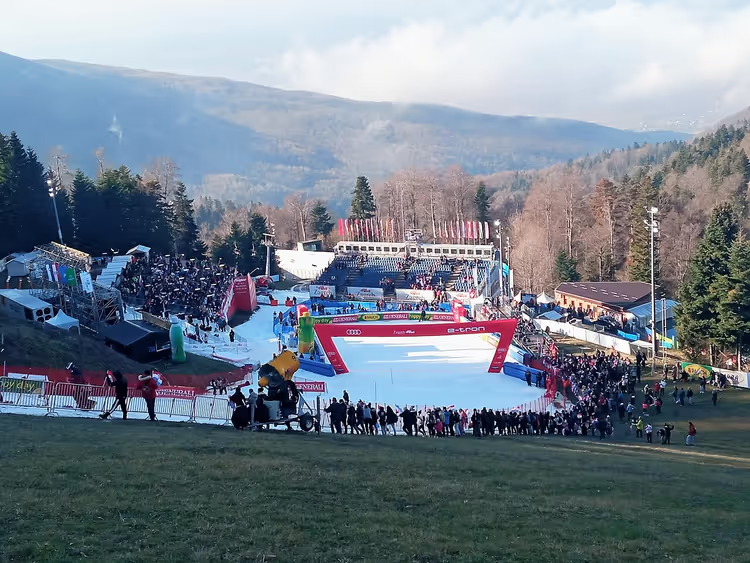 © Mudroslov · CC BY-SAPhoto: Mudroslov, CC BY-SA (https://creativecommons.org/licenses/by-sa/4.0), Wikimedia Commons
To the north of Zagreb rises the Medvednica mountain range. Inside it lies the Sljeme ski area with several runs and lifts, enough for a full day of skiing. You can easily combine the city and the slope in one trip if there is snow.
In the lower town on King Tomislav Square, a large ice rink operates right in the Christmas decorations. Skate rental is available on site, and admission and price depend on the season. Skating is more convenient in the evening when the lights are turned on, but in the morning the ice is fresher and lines are shorter.
For passive sports, go to hockey: KHL Zagreb and KHL Mladost Zagreb play in the city. The country's most famous club, KHL Medveščak, has ceased to exist, so the level of matches varies from season to season. Tickets are sold at the entrance, separate booking is usually not needed.
If there is no snow, the ski area does not operate, and then only the ice rink remains. Hockey matches draw families, and check the game schedule before your trip.
How to get to Zagreb
You can get there by plane, train, bus, or car. For a short trip from Austria and southern Germany, ground transport is the most convenient.
Franjo Tuđman Airport lies south of the city, and a bus runs from it to the central bus station. The journey takes about half an hour. There are flights from Vienna, Zurich, Frankfurt, and Cologne, so a transfer in Zagreb takes little time (according to the Zagreb tourist portal).
By train you can get here from many cities in Austria, Germany, and Switzerland. A night train runs from Zurich, Munich, and Vienna, and daytime travel is also convenient, sometimes with a transfer in Ljubljana. Check schedules and prices in the trains section on Trip.com.
By bus from Graz is the fastest, from Vienna the journey takes about five hours, from Munich about eight. The bus is often cheaper than the train and arrives right at the central bus station, from where you can walk to the center in ten minutes.
By car from southern or eastern Austria, you drive through Spielfeld and Slovenia. A vignette is required for Slovenian highways, and it is sold at gas stations before the border. Through Hungary, you can bypass the short Slovenian section on a regular road and not pay for it. From Germany, Switzerland, and western Austria, the route goes through Villach and also requires a vignette.
Where to stay in Zagreb
Zagreb has everything, from hostels to five-star hotels. The center is compact, so accommodation near Ban Jelačić Square saves you from needing transport.
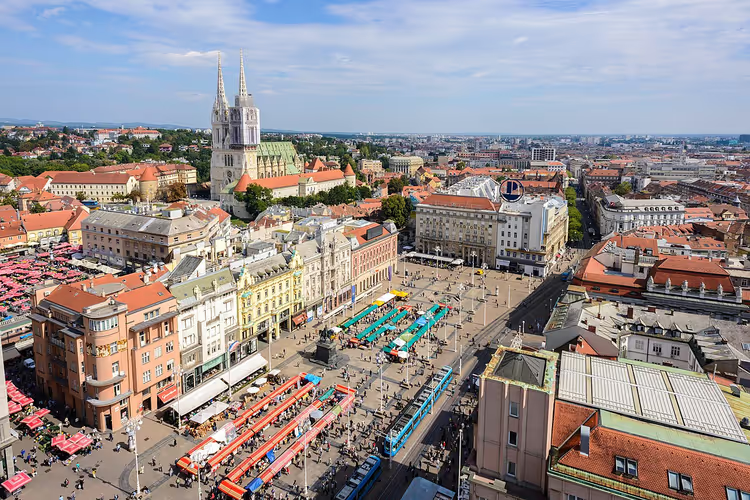 © Nick Savchenko from Kiev, Ukraine · CC BY-SAPhoto: Nick Savchenko from Kiev, Ukraine, CC BY-SA (https://creativecommons.org/licenses/by-sa/2.0), Wikimedia Commons
Hotel Dubrovnik
The four-star hotel sits right on Ban Jelačić Square, so you can walk to the Christmas markets. Breakfast here is hearty, which is convenient before a long walk. Check Hotel Dubrovnik prices on Trip.com.
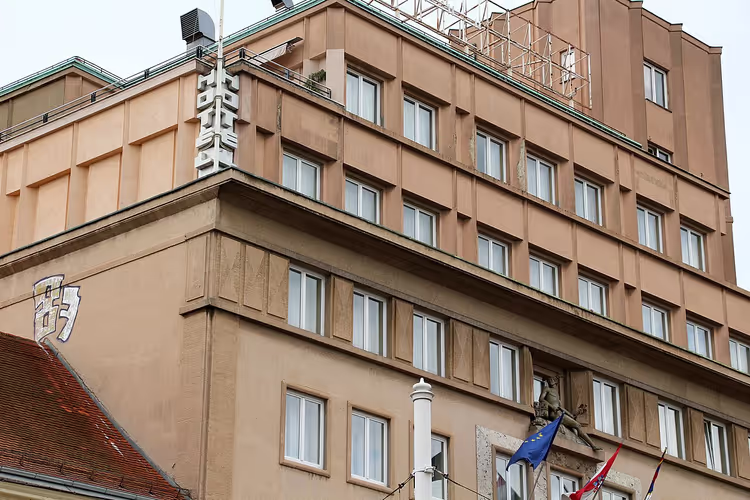 © Fred Romero from Paris, France · CC BYPhoto: Fred Romero from Paris, France, CC BY (https://creativecommons.org/licenses/by/2.0), Wikimedia Commons
Hotel Park 45
This is a good mid-range hotel in the center with its own parking courtyard. If you arrive by car, a spot at the hotel is guaranteed. Check Hotel Park 45 prices on Trip.com.
Hotel Esplanade
History lovers will appreciate Hotel Esplanade near the train station. The hotel was popular back in the Orient Express era, and today's interior highlights that. Check Hotel Esplanade prices on Trip.com.
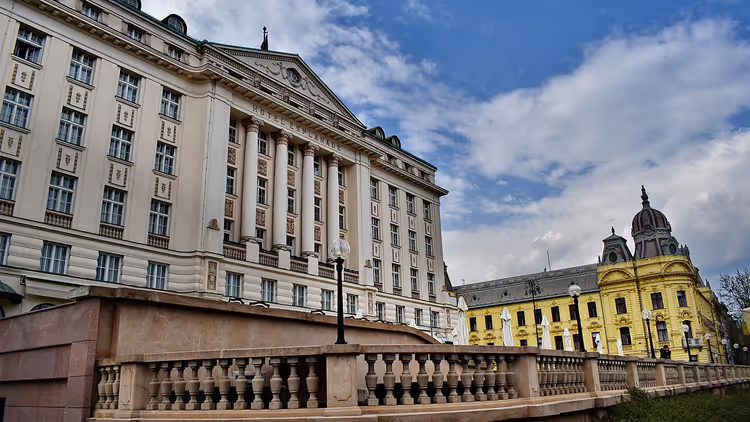 © Miroslav.vajdic · CC BY-SAPhoto: Miroslav.vajdic, CC BY-SA (https://creativecommons.org/licenses/by-sa/4.0), Wikimedia Commons
Apartments near Dolac
After the market, you will want to cook: fresh fish and vegetables are cheaper than any restaurant. Apartments with a stove near Dolac solve this, especially for a longer trip. Find apartments in central Zagreb.
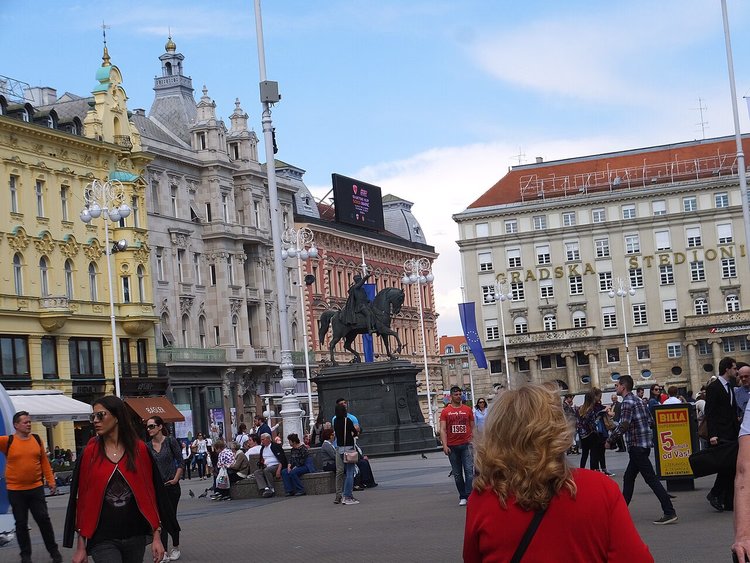 © lienyuan lee · CC BYPhoto: lienyuan lee, CC BY (https://creativecommons.org/licenses/by/3.0), Wikimedia Commons
How many days do you need in Zagreb
Three full days are enough for a relaxed look at the city. In that time you can cover the main sights, make it to the market, and visit a couple of museums. If you came only for the Christmas markets, two days are enough.
With small children, the pace is different: short walks, an early dinner, and breaks to warm up. Plan fewer stops and more time at each one. The city itself is compact, so you can easily walk between points.
Zagreb in winter: who it suits
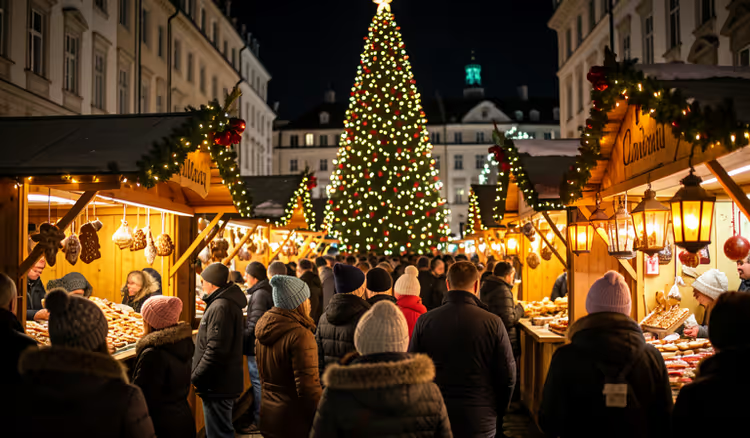
From late November to early January, the whole city lives and breathes Advent. A walk without the smell of mulled wine and Christmas music is simply not going to happen here. If you are not into that kind of holiday, come after January 7, when the markets pack up.
 AIIllustrative image: AI-generated
Zagreb suits shoppers, museum-goers, and people who like wandering old quarters alike. The cultural program here is just as rich as the markets. Plus, in winter you get the festive decorations that are absent in summer.
Be sure to bring warm clothes: the squares catch the wind, and getting from a market to a museum can take half an hour on foot. Comfortable shoes matter more than elegant ones, as sidewalks in the center are often wet.
If you want quiet, choose weekdays and mornings. That way you can photograph the squares with almost no people around and make it to a museum before the tour groups arrive.
The Croatian capital remains a convenient base for several days: it is easy to reach other regions from here. Advent adds atmosphere to the city but does not change its character. This version of Zagreb is worth seeing at least once.
After you get back from a walk, you will easily find something to do in the evening: concerts at venues run almost daily. And after New Year's, the city returns to its calm rhythm.
⁉️🤔 Frequently asked questions
When does Advent start in Zagreb?
In 2026, the markets open on November 28 and run until January 7, 2027 (as of 09/2026, Zagreb city administration). So you can come for the entire pre-Christmas week and right after New Year's. Opening hours vary by venue, so check them on the official Advent website.
How much does it cost to enter the Christmas markets?
Entry to the market areas is free; you only pay for food, drinks, and entertainment. The Uspinjača funicular costs 0.66 € per ride (as of 09/2026, city transit operator ZET). Your trip budget is determined by accommodation and restaurants, not by the markets themselves.
When is the best time to go to avoid the crowds?
Advent in Zagreb is popular far beyond Croatia, and weekends here are busy. Pick a weekday. On weekdays, lines at the stalls are noticeably shorter, and the program is the same.
What should you definitely try in Zagreb?
Štruklji and Čevapi, if you eat meat. Štruklji is similar to a cottage cheese strudel, but noticeably more savory. Both dishes are available in taverns near Dolac Market and in the center, and at the markets you can round things out with desserts and mulled wine.
Where should you stay in Zagreb in winter?
In the center, so you can walk to the markets. Hotel Dubrovnik is right on Ban Jelačić Square, and Hotel Park 45 offers courtyard parking. For a longer visit, book an apartment with a kitchen near Dolac.
How many days do you need for Zagreb?
Three full days are enough for a relaxed visit. In that time you can cover the markets, museums, and walks through both quarters. With kids, plan fewer stops and more breaks.
In short: what to book
If you are taking a short trip for Advent, book a hotel in the center and a city tour. If you are driving, choose accommodation with parking. If you want to see museums without lines, book tickets in advance and go on weekdays.
- Short trip to the markets: Hotel Dubrovnik on Ban Jelačić Square.
- Trip by car: Hotel Park 45 with courtyard parking.
- Longer visit with market access: an apartment with a kitchen near Dolac.
Book a hotel in Zagreb on Trip.com and add city tours on GetYourGuide. That way you cover accommodation and activities in one booking.

A small editorial team writing guides for independent travel. We travel ourselves, but we haven’t been everywhere, so we check prices, opening hours and how to get there against official sources.