
















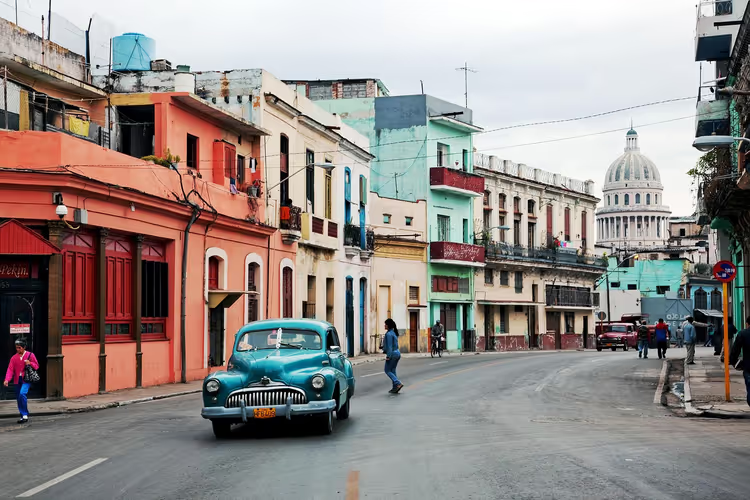
16 Things to do in Cuba: from music in Havana to Pico Turquino
An isolated country that lives at its own pace. Cuba is not just about the beach, so build your itinerary around people, music, and nature.
Below are sixteen things worth adding to your itinerary: from live music in Havana to climbing Pico Turquino.
Ad: this article contains affiliate links. We earn a commission if you book through them, at no extra cost to you.
💡 In short:
- Build your itinerary around people, music, and nature: Cuba is not just about the beach.
- For a week, three bases are enough: Havana, Viñales, and Varadero.
- With two weeks, add Trinidad, Santa Clara, and Matanzas.
1. Listen to live Cuban music
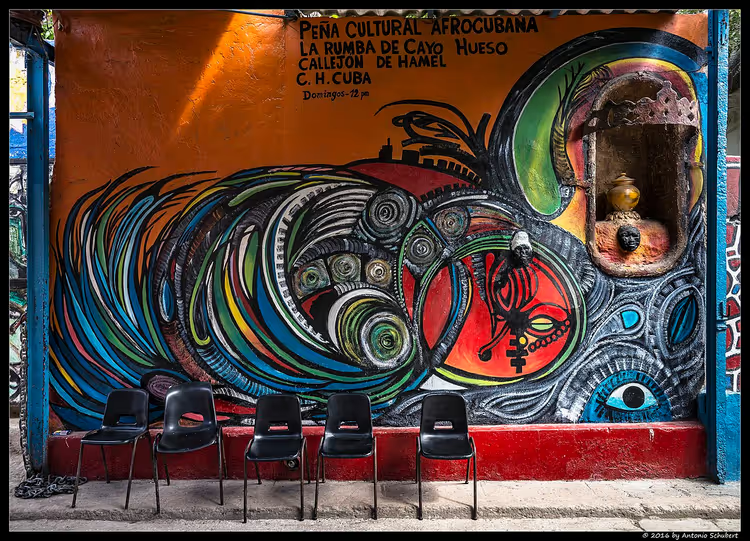
Spending a day in Cuba without hearing live music is almost impossible. Cuba is called one of the most musical countries in the Caribbean: son, salsa, and rumba all sound here. Locals treat music as conversation, not background noise.
Look for it not in hotels, but in squares and city clubs. In Havana, small ensembles play in the evenings, and entry often costs a token amount. Spend your first days in Havana, then head to Viñales and the Varadero coast.
 © Antonio Schubert from Rio de Janeiro, Brasil · CC BY-SAPhoto: Antonio Schubert from Rio de Janeiro, Brasil, CC BY-SA (https://creativecommons.org/licenses/by-sa/2.0), Wikimedia Commons
If you want quiet, stay away from the club streets: evenings here are loud and late.
2. Stay in a private home
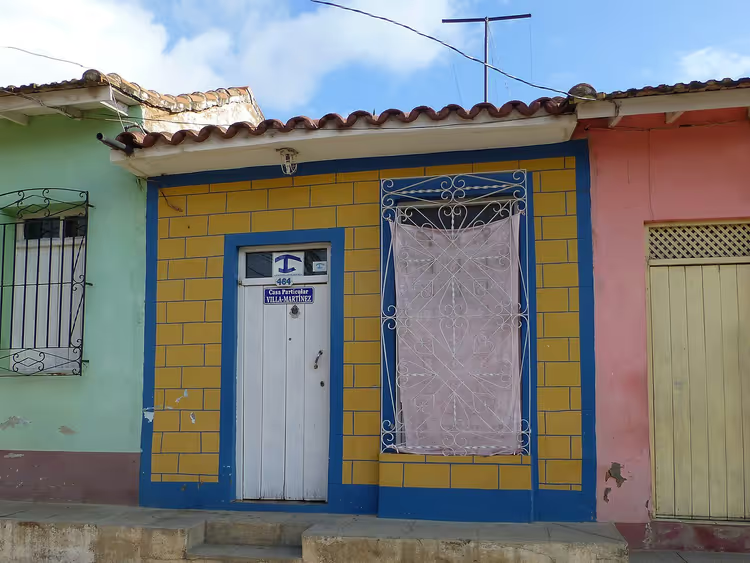
A hotel won't show you how Cubans live. For that, go to private homes, casas particulares, which are rented for any budget: from simple rooms in the provinces to well-kept houses in Havana and Viñales.
What to expect: rocking chairs on the porch, a bottle of rum on the dresser, family heirlooms in the living room, and long conversations over breakfast. On quiet streets you can hear the clatter of hooves. This kind of lodging costs less than a hotel and gives you more to remember.
 © Ji-Elle · CC BY-SAPhoto: Ji-Elle, CC BY-SA (https://creativecommons.org/licenses/by-sa/4.0), Wikimedia Commons
If the private format isn't for you, Cuba hotels on Trip.com can help you find a room. Book your first and last nights in advance: in high season, available rooms are scarcer.
3. Catch a local festival
Celebrations in Cuba never stopped, even in the hardest years. Today they are loud street festivals with music, dancing, and food, not closed parties for tourists.
The calendar is packed: carnivals, city days, music showcases. Exact dates change every year, so ask about the program locally. The country's main carnival takes place in July in Santiago de Cuba, and people come from all over the island for it.
Arrive early. By evening, the central streets are packed, and you'll be standing in a crowd with no view of the stage.
4. Take in the architecture of Old Havana
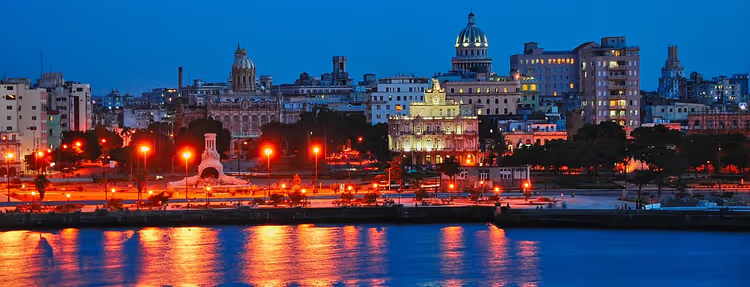
Old Havana was built on "sugar" money, and it shows in the facades. Early mansions were built during the era of enslaved Afro-Cuban labor on plantations. Art deco and modernism appeared after the abolition of slavery, so different eras are mixed together here.
The rule is simple: look not only at the grand squares, but also into the courtyards. There you'll find galleries, stucco work, and old doors that aren't in the guidebooks. In two or three hours you can walk the center on foot.
 © Gabriel Rodríguez · CC BY-SAPhoto: Gabriel Rodríguez, CC BY-SA (https://creativecommons.org/licenses/by-sa/2.0), Wikimedia Commons
Keep in mind: some buildings are in a state of disrepair. For locals this is everyday life, not a backdrop for tourists.
5. Go birdwatching
Cuba has almost no large animals, but it does have several hundred bird species, and some of them are found only on the island (according to BirdLife International, 09/2026). Start with Ciénaga de Zapata in the south, the country's largest wetland.
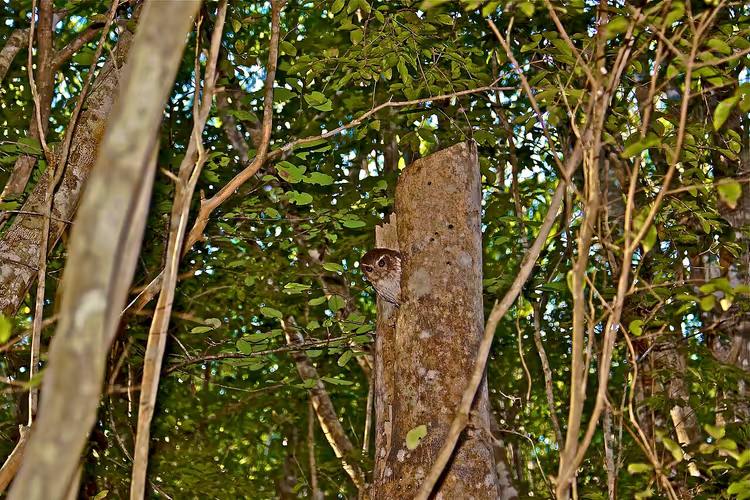 © Kate Perez · CC BY-SAPhoto: Kate Perez, CC BY-SA (https://creativecommons.org/licenses/by-sa/4.0), Wikimedia Commons
Inside it lies Gran Parque Natural Montemar with trails through the mangroves. Bring binoculars and go in the morning: by midday the birds are hiding. Crocodiles are protected here too, so the reserve is not only interesting for birdwatchers.
6. Go to the beach
Cuba has beaches for every taste. For a resort vacation, head to Varadero: there is a long stretch of sand, hotels, and all the infrastructure. If you want quiet, choose the Guanahacabibes Peninsula, where turtles come ashore.
For seclusion, go to Isla de la Juventud: pirates once stopped here, and now people come for the deserted bays. Nudists choose Cayo Largo del Sur.
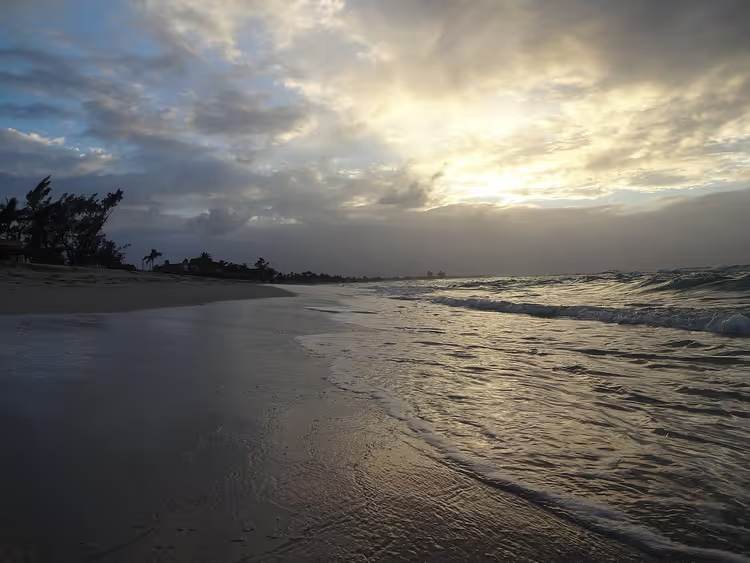 © Rômulo Ferreira · CC BYPhoto: Rômulo Ferreira, CC BY (https://creativecommons.org/licenses/by/2.0), Wikimedia Commons
Hotels in Varadero on Trip.com are useful if you want a package with breakfast. In high season, book several months in advance.
7. Explore the legacy of the revolution
The history of the revolution is everywhere here, and it is worth seeing, not just reading about. Start with the Museum of the Revolution (Museo de la Revolución) in Havana: it occupies the former presidential palace and shows events from the inside.
From there, the route goes deeper into the island. In the Sierra Maestra mountains, Comandancia de la Plata, the rebel headquarters, has been preserved. In Santiago de Cuba stand the Moncada barracks, where the uprising began.
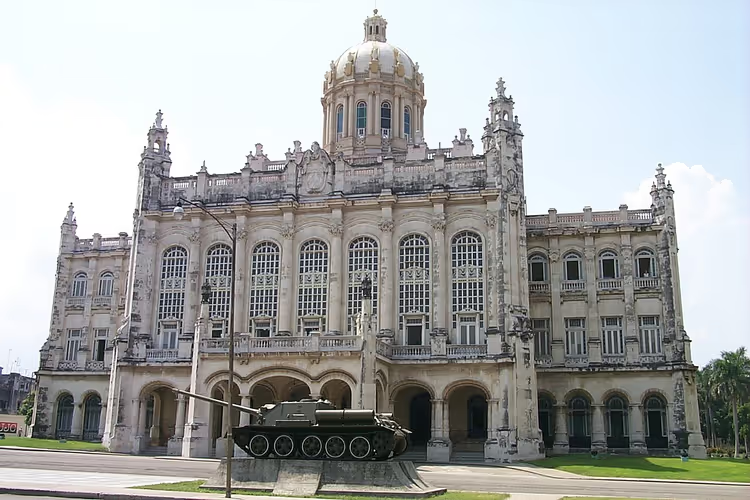 © Paul Mannix · CC BY-SAPhoto: Paul Mannix, CC BY-SA (https://creativecommons.org/licenses/by-sa/2.0), Wikimedia Commons
Plan half a day for the museum and a separate day for Santiago. The signs are almost all in Spanish, so bring a translator.
8. Spend some time in Trinidad
Trinidad looks as if time stopped here in the mid-19th century. It is a former sugar town where colonial houses sit next to a rural outskirts. At the same time, the city remains alive and working, not a stage set.
Walk the cobblestone streets in the morning, before it gets hot. In the afternoon, climb to the viewpoints: from there you can see the tiled roofs and the valley. In the evening, return to the central square, where musicians play.
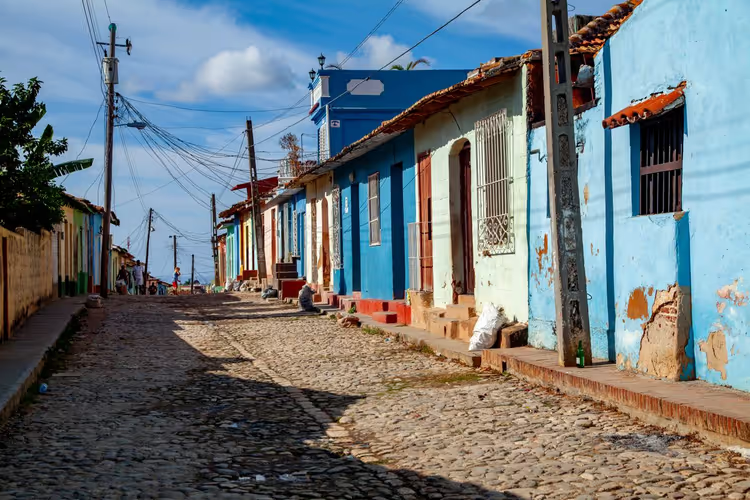
You can get there by bus from Havana; the trip takes several hours. Stay at least one night: you cannot feel the city in just a couple of hours.
9. Get underwater
The Caribbean Sea around Cuba is clear, and the reefs are almost untouched. Beginners will like the Bay of Pigs, also known as Bahía de Cochinos: calm water, shallow areas, and plenty of fish right by the shore.
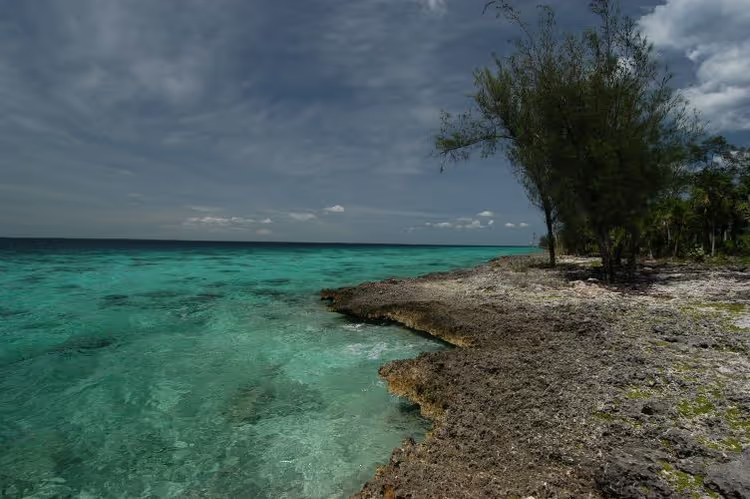
Experienced divers head to the Jardines de la Reina archipelago. There you will find long reef walls and large marine life. Snorkeling is possible on almost any beach, but it is better to bring your own gear.
Book diving tours in advance: groups leave on a schedule, and spots are limited. Do not dive after a heavy lunch and do not touch the corals.
10. Check out Fábrica de Arte Cubano
Fábrica de Arte Cubano (FAC) in Havana's Vedado district was opened by musician X-Alfonso. During the day it has exhibition halls, and in the evening it becomes a club: you move from room to room, listening to new Cuban music and looking at paintings.
The program changes every week, so check the schedule on the official website (as of 09/2026). Arrive at opening time: later a line forms at the entrance, and you will lose an hour.
 © Yoeztudioz · CC BY-SAPhoto: Yoeztudioz, CC BY-SA (https://creativecommons.org/licenses/by-sa/4.0), Wikimedia Commons
Inside it is noisy and crowded. This is not a place for a quiet evening.
11. Discover Matanzas
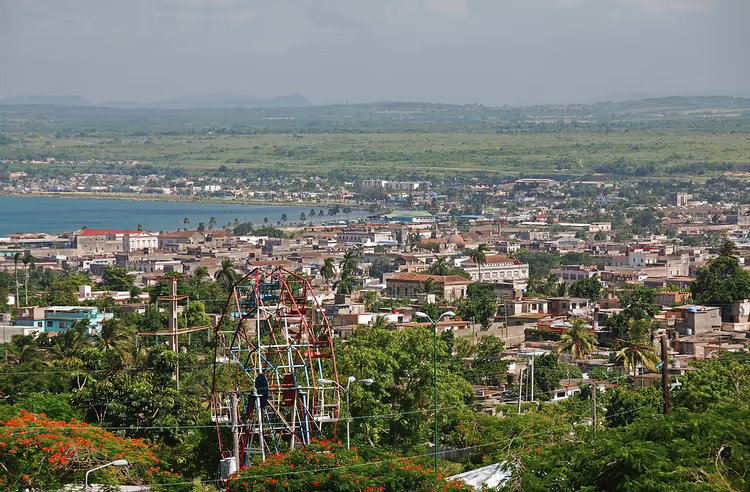
Matanzas used to be a place people passed through on the way to Varadero. Now the city is restoring its former look: the theater has been renovated, concert halls have opened, and a modern art street has been created.
 © Jerome Ryan · CC BYPhoto: Jerome Ryan, CC BY (https://creativecommons.org/licenses/by/3.0), Wikimedia Commons
Stop for at least a day. Walk along the waterfront, visit the theater and the art street. In the evening the city comes alive, and you will understand why locals talk about a cultural renewal.
Keep in mind: cafes and shops close early, so have dinner before dark.
12. Ride through the Viñales Valley
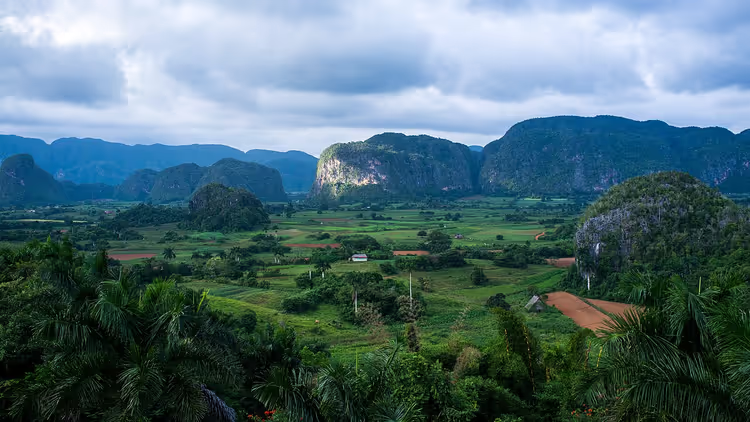
The Viñales Valley is good for cycling, even if you usually prefer a car. Limestone monoliths, mogotes, are scattered across the valley, with tobacco fields lying between them.
Oxen graze in the fields here. Take your time on the dirt roads: in a couple of hours you can loop around the nearby farms and reach the viewpoints.
 © Severin.stalder · CC BY-SAPhoto: Severin.stalder, CC BY-SA (https://creativecommons.org/licenses/by-sa/3.0), Wikimedia Commons
Stay until sunset: the light on the monoliths changes every hour. Arrange a bicycle in advance, in season there are not enough available for everyone.
13. Try the local cuisine
Cuban cuisine has changed noticeably in recent years. The country used to offer mostly rice and beans, and now many private restaurants are operating. The menu has become more varied, but traditional dishes have not gone anywhere.
Try things by region: in Caibarién they cook crabs, and in Baracoa they make chocolate. In Havana, look for paladares, small private restaurants where the food is home-style.
Keep in mind: portions and prices vary widely, so check the menu and confirm the cost before ordering.
14. Take a walk around Santa Clara
Santa Clara feels like a young, lively city. Culture mixes with rock and roll here, and the atmosphere is noticeably more relaxed than in other cities on the island.
In the evening, head to Parque Vidal: the city orchestra plays on its bandstand. Mejunje hosts shows for the LGBTQ community, and student theaters perform at Casa de la Ciudad.
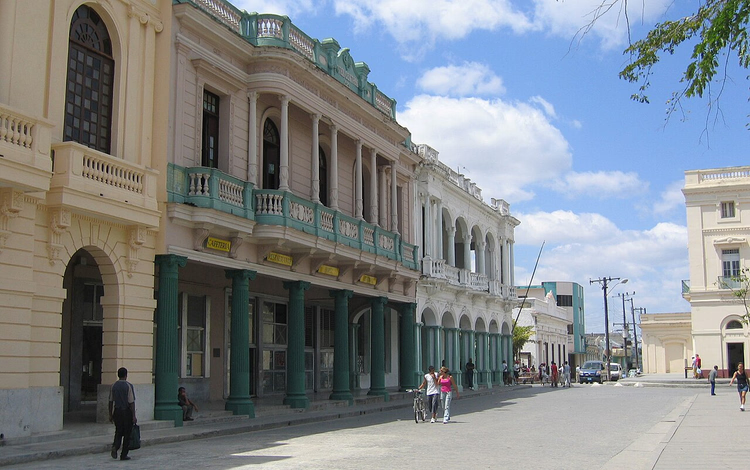
Set aside one evening and take your time: the city is small, everything is close by. If you catch a concert, stay until the end.
15. Join in the local dances
Cuban dances are not limited to salsa for tourists. In Santeria rituals, the beat of drums calls upon the orisha spirits, and this is a living part of the local culture.
You do not have to just watch. Many folk groups invite anyone who wants to join, and the state supports these ensembles to preserve Cuba's African heritage.
Start with open evenings and beginner classes. Find out in advance where the gatherings take place: schedules change, and some events are closed to outsiders.
16. Climb Pico Turquino
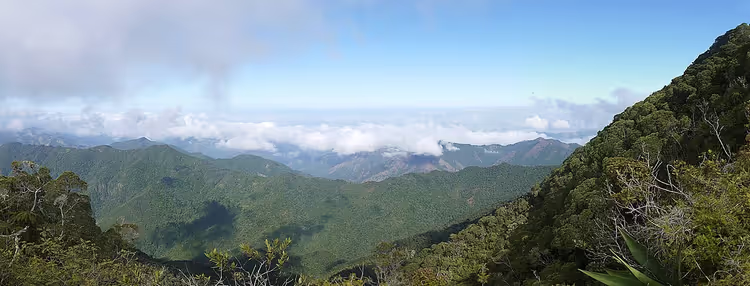
Pico Turquino rises above the island's other peaks. You should only hike the mountain with a guide: the routes through the cloud forests of the Sierra Maestra are poorly marked, and there is nothing for you to do there alone.
 © Óðinn · CC BY-SAPhoto: Óðinn, CC BY-SA (https://creativecommons.org/licenses/by-sa/2.5/ca/deed.en), Wikimedia Commons
There are two routes. Beginners can do one-day outings, while experienced hikers can take a multi-day trek along the ridge. At the summit, a bronze bust of José Martí, Cuba's national hero, awaits you.
Bring water, a warm layer, and sturdy footwear: it is damp in the clouds even in the heat. We do not recommend climbing without a guide on your own.
⁉️🤔 Frequently asked questions
Do I need a visa to travel to Cuba?
Yes, a visa is required for a tourist trip, and you can only apply online through the eVisaCuba portal (as of the official Auswärtiges Amt website, 09/2026). Get the document in advance, without it you will not be allowed to board your flight. Requirements change periodically, so check them before you fly.
How many days do I need for Cuba?
Plan at least two weeks for your first trip. One week goes to Havana, the Viñales Valley, and Varadero. With a second week, you can easily add Trinidad, Santa Clara, and Matanzas. For longer transfers, take a bus or a rental car.
When is the best time to go to Cuba?
The dry season is the most comfortable, with less rain and milder heat. In summer, humidity is higher and tropical downpours are possible, but the carnival takes place. The island's beaches are open year-round, but mountain routes are best not planned during the rains.
Is it safe to travel independently?
Yes, the country is calm toward tourists, and most trips go without problems. Keep your documents and money in a safe, and do not leave your belongings unattended on the beach. Cash is needed almost everywhere, so withdraw money in advance.
What should I bring with me?
Bring a supply of cash in euros, sunscreen, insect repellent, and a basic first aid kit. Binoculars, a power bank, and a plug adapter will come in handy. For mountain routes and diving, add a warm layer and your own gear.
In short: what to book
If you have one week and it is your first trip, build your route around Havana, Viñales, and Varadero: three bases and minimal travel. With two weeks, add Trinidad, Santa Clara, and Matanzas.
If you are traveling with children, choose Varadero. For active recreation, save the Sierra Maestra and diving at Jardines de la Reina. You will find music, food, and dancing in any city.
Before you fly, check your insurance and accommodation for the first few days. Start with two steps: Cuba hotels on Trip.com and book tours.

A small editorial team writing guides for independent travel. We travel ourselves, but we haven’t been everywhere, so we check prices, opening hours and how to get there against official sources.