
















Three days in Havana: old town, fortresses across the bay and distant parks
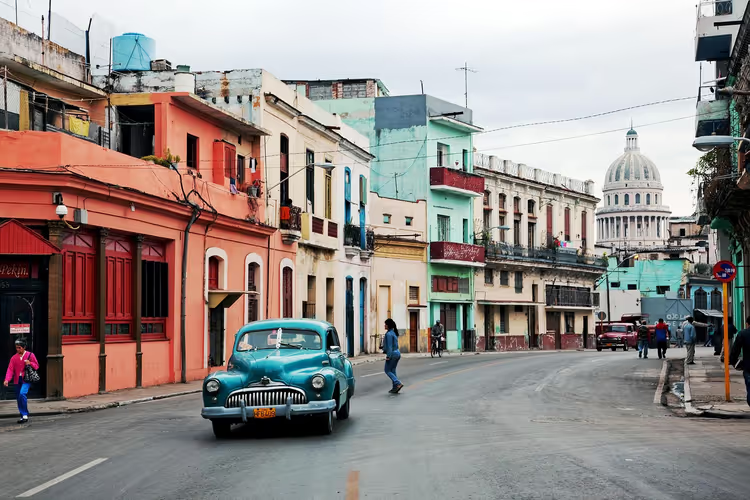
Havana smells of mango, salt, and cigar smoke. In three days you'll have time to see both the old town and the fortresses on the other side of the bay. The city is small but dense: distances are deceptive, and the heat drains your energy faster than you'd expect.
Since 2021, Cuba has had a single currency again, the Cuban peso, and the convertible peso has been abolished (as of 09/2026, Wikipedia). Cards are accepted almost nowhere, so keep your budget in cash.
Below is a three-day itinerary: with transport, the order of stops, and honest time estimates for each.
Ad: this article contains affiliate links, we earn a commission if you book through them, at no extra cost to you.
Three-day itinerary
💡 In short:
- Split the city by sides: the center, the fortresses across the bay, the outlying parks.
- Walk the old town, and take taxis to Vedado, across the bay, and out of town.
- Prices and opening hours of the fortresses: 09/2026, according to Tripadvisor.
The order matters more than it seems. The fortresses sit across the bay, and you cross it through an underground tunnel, while the botanical garden is far outside the city. If you put these stops on day one, the travel alone will use up all your energy.
Day | Main sights | Advance tickets | On foot |
|---|---|---|---|
Day 1 | Old Havana, the Capitol, the cathedral, Colón Cemetery, Revolution Square, the Malecón | not needed | center on foot, taxi to Vedado |
Day 2 | La Fuerza, La Cabaña, El Morro | not needed | little, taxi between stops |
Day 3 | Botanical garden and Finca Vigía | not needed | little, transfer only |
Tips for independent travelers
You buy tickets to the fortresses and museums right at the entrance, there's nothing to book in advance. Accommodation, though, is worth looking for a month ahead: the old town gets booked up first, and in high season there are almost no vacant rooms left there.
Staying in the old town costs more, but all of day one's stops are right outside your window. A room in a casa particular is cheaper than a hotel, and it's official rental: the owners pay taxes and mark the house with a special badge. Ask the hosts for breakfast in advance, because almost all cafés in the city only open around noon.
Keep your money in cash. The street rate and the bank rate differ sharply, so exchange money in small amounts and not your whole budget at once (as of 09/2026, currency overview on Wikipedia). Large bills are often not accepted in small places, so keep a supply of small change.
Read the menu carefully. In neighborhoods where locals eat, prices are in Cuban pesos, and the waiter may state the total in foreign currency. If the price for a dish looks like dollars, confirm the currency before ordering. Lunch for two with drinks in a non-tourist café costs noticeably less than on the Malecón.
Getting from the airport and getting around the city
José Martí Airport lies far from the center, and the trip takes about half an hour. Taxis charge a fixed amount per car, not per person, so agree on the price before getting in. Exchange a small amount right at the airport, and the rest in the city.
Within Havana, the cheapest way to get around is by coco taxi. It's a three-wheeled little car shaped like a coconut, it costs less than a regular car and easily navigates the narrow streets of the old town. A regular taxi costs more, and the driver is more willing to bargain if you name the price first.
Viazul buses and private cars run between cities, including to Varadero. For long-distance routes, seats sell out from the morning, so buy your ticket on the first day of your trip, not the last.
 © Antonio Schubert from Rio de Janeiro, Brasil · CC BY-SAPhoto: Antonio Schubert from Rio de Janeiro, Brasil, CC BY-SA (https://creativecommons.org/licenses/by-sa/2.0), Wikimedia Commons
Day 1: Old Havana and the Malecón
Old Havana fits into a few blocks, and you cover it on foot. The cemetery and Revolution Square are in Vedado, so you take a taxi there. Start at the Capitol and finish at the Malecón: that way the sun stays behind your back for most of the route.
The Capitol
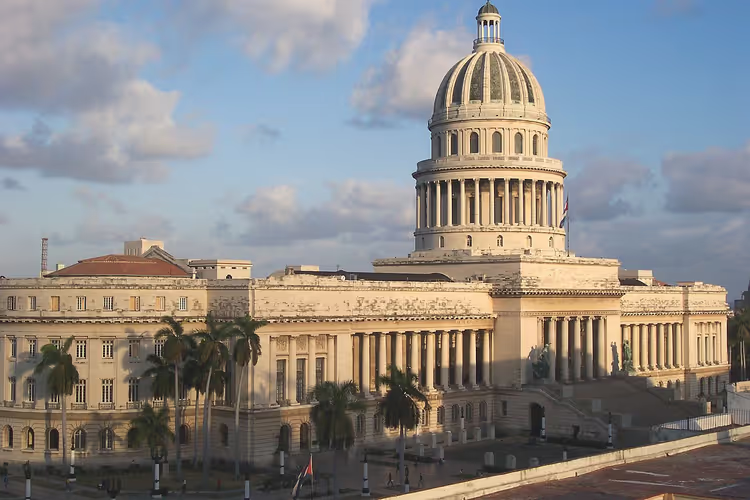
Havana's Capitol stands on the border between Old Havana and Centro Habana. Cubans are proud of it as an exact copy of the one in Washington, only smaller. The site was once a swamp, then a botanical garden was laid out here, and only later did the palace itself appear.
You can only enter with a guide, the ticket costs around ten dollars, and it's best to arrive at opening time, before the group fills up. Nearby, almost every building qualifies as an architectural monument, so keep your phone charged.
- Location: center, between Old Havana and Centro Habana.
- Entry: guided tours only, ticket around ten dollars.
- Who it's for: those who want to see the city's main symbol from the inside.
The cathedral
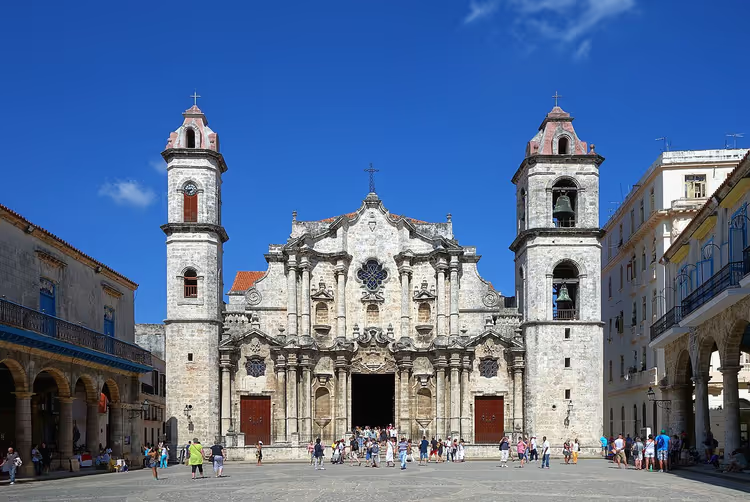
The cathedral is built of gray stone with inlays of real coral. The building stands out against the city, but the square would lose half its charm without that lacy facade. The interior was painted by an Italian master.
In the evenings, organ music is played here, and it's worth coming at sunset for that. The cathedral is active, so dress modestly: shoulders and knees are best covered.
 © Velvet · CC BY-SAPhoto: Velvet, CC BY-SA (https://creativecommons.org/licenses/by-sa/4.0), Wikimedia Commons
- Entry: free, this is an active church.
- How to get there: on foot from the Capitol, about ten minutes.
Calle empedrado and la bodeguita del medio
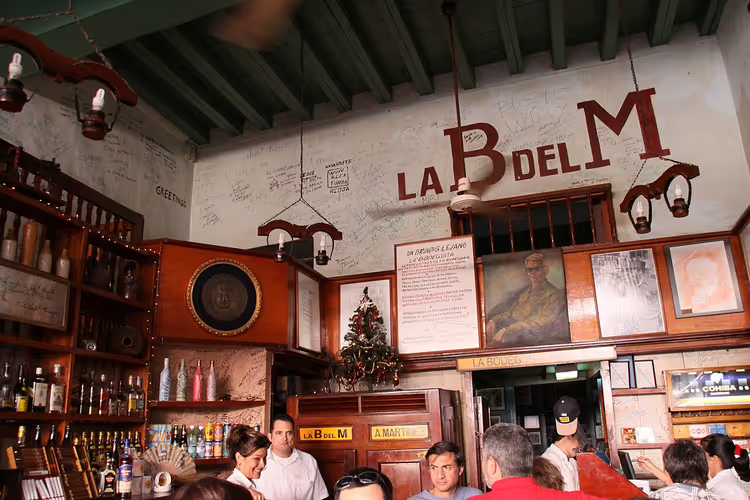
By lunchtime you turn onto Calle Empedrado. Look for the crowd with cameras, that's where the bar is. This is home to La Bodeguita del Medio, the bar Ernest Hemingway chose for his mojito.
 © Tony Hisgett from Birmingham, UK · CC BYPhoto: Tony Hisgett from Birmingham, UK, CC BY (https://creativecommons.org/licenses/by/2.0), Wikimedia Commons
The walls, furniture, and even the ceiling are covered in guests' signatures, and inside it's easy to forget you came to eat. The food is good, but prices are above the city average.
- Who it's for: those who care about the mojito ritual and the atmosphere, not a quiet meal.
- The catch: lunch for two with drinks costs more than in the neighboring blocks.
Colon Cemetery
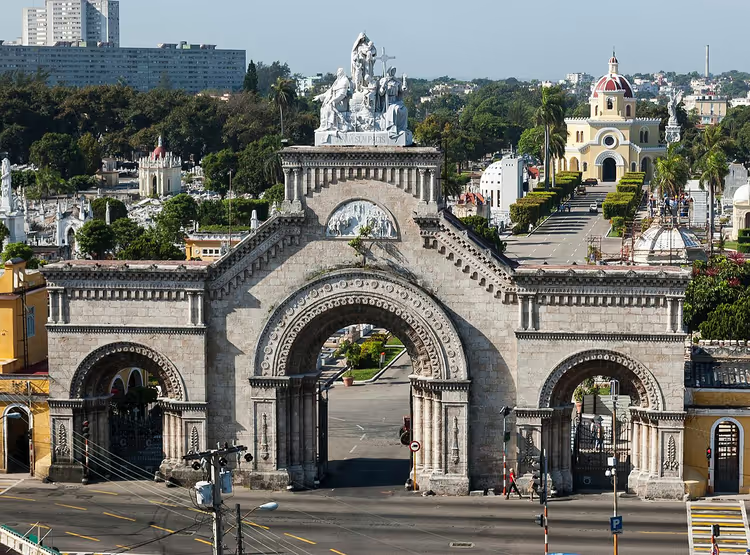
After a hearty lunch, it makes sense to retreat into quiet, and Colon Cemetery fits the bill. It's white marble spread across dozens of hectares, a world of angels and peaceful avenues. Nowhere else in Cuba will you find a calmer place.
The internal infrastructure is surprising: the cemetery has its own named streets, complete with regular road signs. What seems intimidating from a distance actually washes away the city bustle and restores your energy.
 © Ivan2010 · CC BY-SAPhoto: Ivan2010, CC BY-SA (https://creativecommons.org/licenses/by-sa/3.0), Wikimedia Commons
- How to get there: from the old town by taxi, about half an hour.
- Location: Vedado, not far from Revolution Square.
Jose marti revolution square
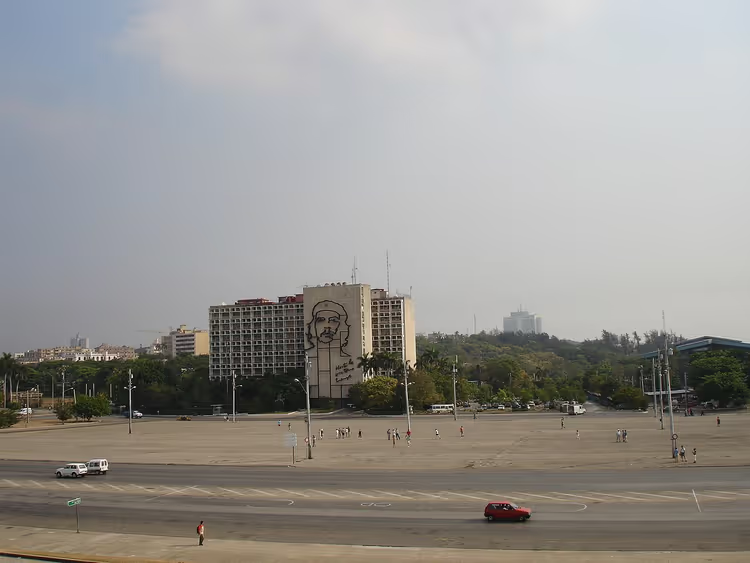
Right next to the cemetery lies Jose marti revolution square. The towering gray concrete tower looks stern: not a single window, just an upward-reaching structure circled by large black birds. In front of the monument stretches a spacious square where revolutionary gatherings were once held.
On the tower's ground floor, the Jose Marti Museum is open. Entry to the grounds and inside costs about three euros, and you pay on the spot.
 © Takethemud at English Wikipedia · CC BY-SAPhoto: Takethemud at English Wikipedia, CC BY-SA (http://creativecommons.org/licenses/by-sa/3.0/), Wikimedia Commons
- Cost: about three euros for entry to the tower and museum.
- Who it's for: those who care about Cuba's modern history.
Malecon seawall
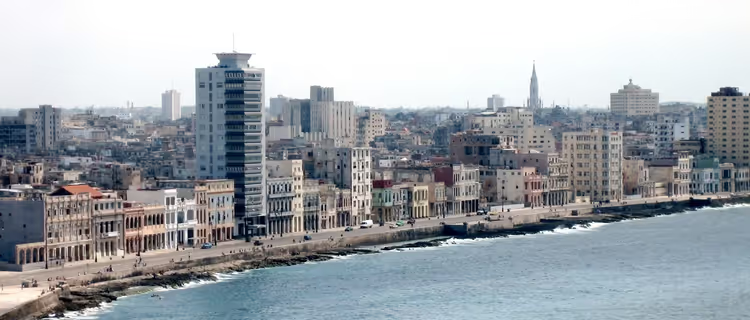
You end the day on the Malecon seawall. Here people watch the sun set over the ocean, listen to the waves crashing against the reefs, and breathe fresh air after a packed day. The wind on the Malecon is strong even in the heat, so bring a light jacket for the evening.
 © Lukas Mathis · CC BY-SAPhoto: Lukas Mathis, CC BY-SA (https://creativecommons.org/licenses/by-sa/2.0), Wikimedia Commons
Day 2: Fortresses across the bay
Day two starts with breakfast at your place. After breakfast, walk to La Fuerza.
La Fuerza fortress
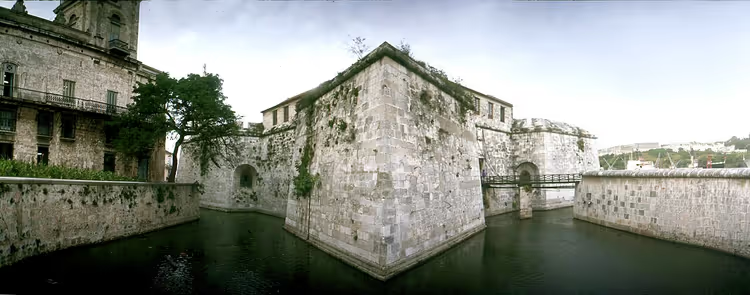
La Fuerza is the oldest fortress in the Americas, and it still has a water-filled moat around it. Guides tell stories of endless pirate attacks, but Havana never surrendered without a fight. Inside, there is a museum of ship models and a separate room with treasures recovered from the bottom of the strait.
The fortress stands in the heart of Old Havana, so it's easy to reach on foot. For its age, this fortress has no equal in the region.
 © LBM1948 · CC BY-SAPhoto: LBM1948, CC BY-SA (https://creativecommons.org/licenses/by-sa/4.0), Wikimedia Commons
- Getting there: on foot through Old Havana or by coco taxi.
- Admission: paid, tickets on site.
La Cabaña fortress
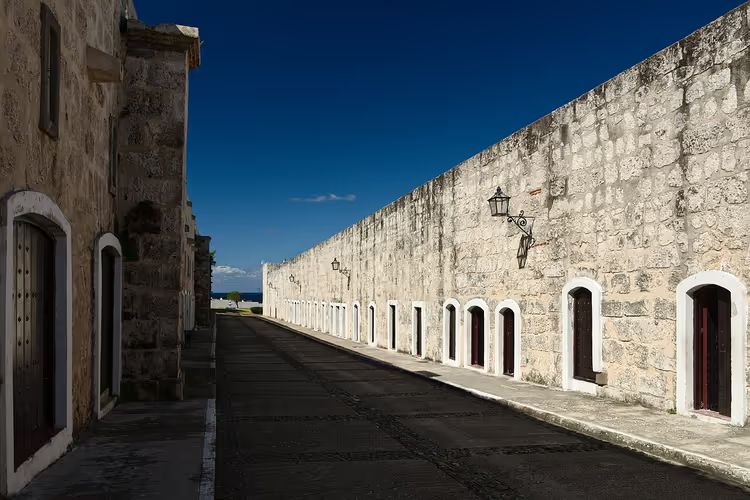
Next, you take a taxi and cross the bay through the underwater tunnel to see the La Cabaña fortress complex. This is the longest Spanish defensive structure in the Americas, and its walls hold the best panorama of the city and the bay.
Come in the morning before the tourist crowds build up: then you can calmly climb higher and sit above the ocean, looking out at the water beyond the defensive walls. In the evening, a cannon salute fires here, and it's worth staying until dark for the spectacle.
 © Rob Oo from NL · CC BYPhoto: Rob Oo from NL, CC BY (https://creativecommons.org/licenses/by/2.0), Wikimedia Commons
- Time: the cannon fires every evening at exactly nine.
- Who it's for: those who want to see the city from the water and from above.
El Morro fortress
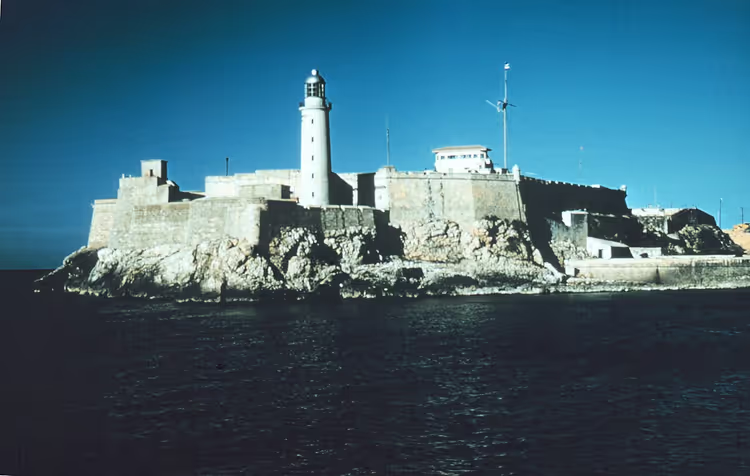
Next, you walk to the lighthouse, which still operates today. From its top you can see the blue ocean and the orange stone roof of the neighboring structure. The fortress together with the lighthouse is called El Morro, and it's one of the symbols of Havana.
This fortress has long defended the harbor entrance at the most vulnerable point of the bay. In the evening, you return to the old town and order a mojito at any bar.
Retro cars on the streets
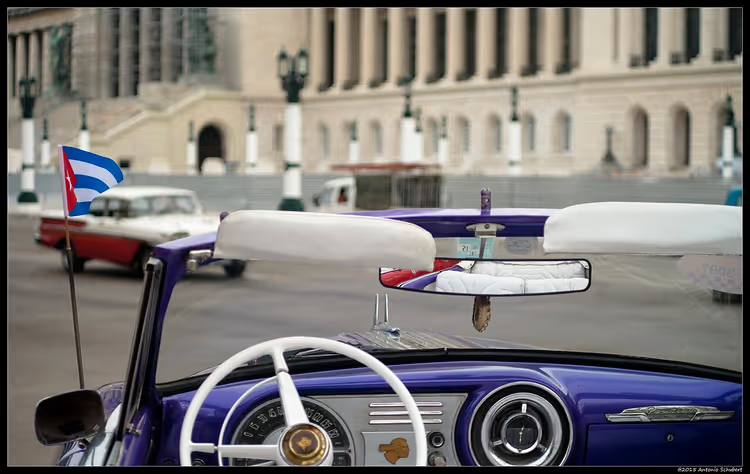
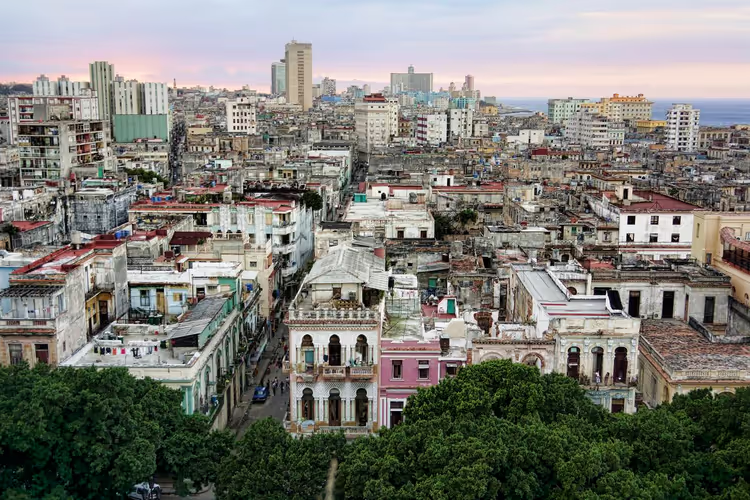
In the evening, all that's left is to wander the city and look at the cars. The cars here are bright: blue, red, yellow, green, and all of them are genuine rarities. Together with the architecture, the old cars define the city's look.
The engines in these cars are old, and the tourist quarters smell strongly of exhaust. But this is exactly where drivers earn their main income, taking visitors around different corners of the city. If you want to ride not in a taxi but in a real convertible, check out Havana tours on GetYourGuide.
 © Christopher Michel · CC BYPhoto: Christopher Michel, CC BY (https://creativecommons.org/licenses/by/2.0), Wikimedia Commons
Day 3: Botanical garden and Hemingway's house
Day three you give to the outskirts. Take a car for the whole day, because there is no convenient transport between the points here, and that's the main challenge of going outside the city.
National Botanical Garden
The National Botanical Garden lies far from the center, and taxi drivers often either don't know the way or inflate the price. The vast grounds hold thousands of plant species, and this is one of the few places in Cuba where, between walking and transport, you're better off choosing transport.
You can't cover the whole garden on foot, so buy a ticket for the little trailer pulled by a tractor. There is almost no cafe on the grounds and almost no shops selling water either, so don't be stingy and get the ride ticket right away.
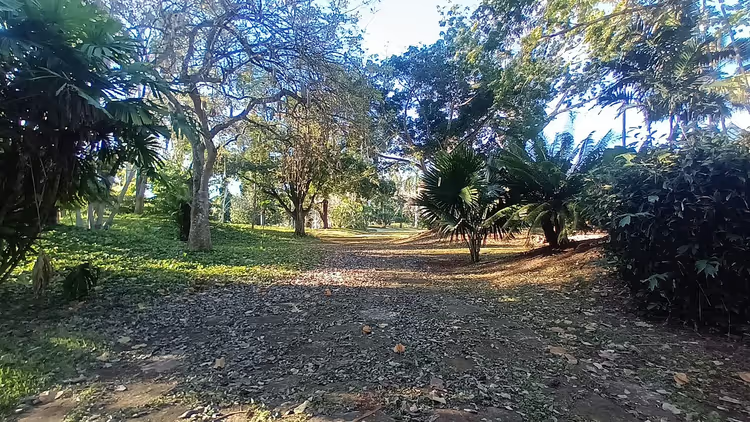
- Location: far outside the city, about half an hour by car.
- The catch: there are almost no cafes or shops on the grounds, bring water with you.
Japanese garden
Hidden inside the botanical garden is the Japanese garden, the most peaceful place of the whole trip. It's better not to let your driver go here and to ask them to wait while you look around. Finding a taxi back at the entrance is difficult, especially if you arrived in the morning.
- Who it's for: those who value quiet and water in the landscape.
- The catch: without your own car, the way back turns into a quest.
Finca Vigía, Hemingway's house
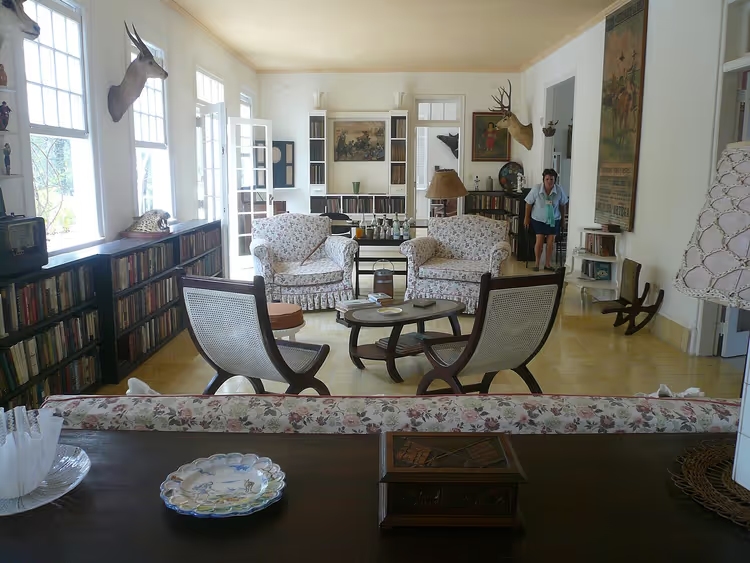
The last stop is Finca Vigía, the house where Ernest Hemingway lived for more than twenty years and wrote "For Whom the Bell Tolls" and "The Old Man and the Sea". You can't go inside; you can only look through the open windows and doors, and that's for the best: tourists would not have left the furnishings in their original state.
The cottage is surrounded by a green garden where you can stroll and admire the writer's favorite boat. Behind the house, not far from the pool, you'll find four graves of pets, and that's the most touching spot on the estate.
 © InZweiZeiten · CC BYPhoto: InZweiZeiten, CC BY (https://creativecommons.org/licenses/by/3.0), Wikimedia Commons
Three days end here, and on the way back you still count what you missed. In Varadero, if you're heading there next, don't book a car in advance: with luggage it's easier to arrive at the station and negotiate with a driver on the spot.
If you want to close out the route with ready-made tour cards with prices and photos, open the selection below and pick the day you need.
Tours and tickets in Havana
Guided tours, skip-the-line tickets and activities — most offers can be cancelled free of charge.
See offers on GetYourGuideThe widget loads once you give your consent.
⁉️🤔 Frequently asked questions
How much is a taxi from Havana airport to the center?
The fare is charged per car, not per person, so the trip to the old town costs less if there are two or more of you. Agree on the price before getting in.
Can you pay by card in Cuba?
Cards are accepted only in a few places, mostly in expensive hotels, and the terminal may not work when you need it. The main means of payment remains cash Cuban pesos.
Is it realistic to walk all of Old Havana in a day?
Yes, the old town fits into a few blocks, and you can easily cover it on foot. The Cementerio de Colón cemetery and Revolution Square are in Vedado. You take a taxi there and then return to the waterfront.
How do you get to the botanical garden without your own car?
Take a taxi for the whole day. There is almost no public transport to the garden. Agree on the price for the round trip up front.
Where can you try a mojito like Hemingway?
At La Bodeguita del Medio on Calle Empedrado, where the writer ordered his drink. The bar is small and always full, so come at opening or closer to evening. Prices here are above average, but the atmosphere itself is worth the visit.
In short: what's worth booking
Three days in Havana rest on three pillars: lodging in the old town, taxis, and cash pesos. If you're on a short trip, take a room in the old town and don't waste energy moving between neighborhoods. If you're going for views and the ocean, save the third day for the far parks and don't skimp on a driver.
Lodging and tours are better booked in advance, while exchange rates and availability are best checked on the spot. check hotel prices in Havana on Trip.com

A small editorial team writing guides for independent travel. We travel ourselves, but we haven’t been everywhere, so we check prices, opening hours and how to get there against official sources.