
















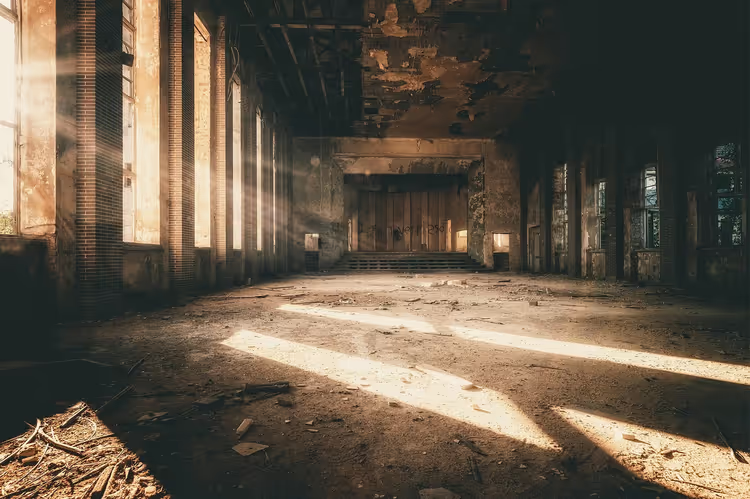
Ten abandoned mortuaries of Europe and the USA: what survived inside
Mortuarium Schoonselhof in Antwerp was demolished in 2007. For ten years before that it stood empty: autopsy tables and wall tiles remained in place (according to the urbex.nl photo archive, 09/2026). This is how many hospital buildings end: the facility is closed, equipment is abandoned, and there is no money for demolition.
We've put together ten abandoned morgues and mortuaries in Europe and the US. Among them are a hospital near Berlin, where Corporal Adolf Hitler was treated in 1916, and sites whose addresses are still not published (according to Berliner Morgenpost, 09/2026).
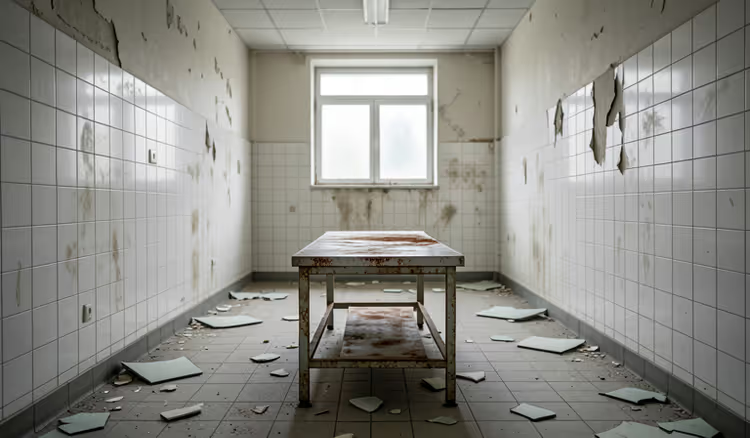 AIIllustrative image: AI-generated
For each location you'll find four things: what the site is, what remains inside, how people get in, and what to look at first.
What these ten places have in common
💡 In short:
- The sites closed at different times: the hospital on Ellis Island operated until 1951 (hospital history), while the mortuary in Antwerp was only dismantled in 2007 (photo documentation).
- Autopsy equipment remains inside almost everywhere: hauling it out costs more than leaving it.
- Cemetery buildings have open access, and Ellis Island admits visitors as part of the national monument programs. The other sites are guarded or hidden from visitors.
- Site status and access: 09/2026, verified via the Beelitz-Heilstätten page and National Park Service materials.
The table below helps you pick a site for your route. Full descriptions follow, in the same order.
Site | Country | What remains | Access |
|---|---|---|---|
Mortuarium Schoonselhof | Belgium | mortuary demolished in 2007, photos remain | cemetery open, free entry |
Beelitz-Heilstätten | Germany | buildings, wards, staircases | protected as a monument |
St Mary's Hospital Mortuary | England | walls, floors, corridors | does not accept visitors |
Harold Wood Hospital Mortuary | England | rooms with puddles on the floor | no data |
St Peter's Hospital Mortuary | England | tables, equipment | active hospital |
Cambridge Military Hospital | England | wards and operating rooms | restoration into housing |
Morgue without an address | England | cold storage chambers | address not published |
Private morgue | Germany | autopsy rooms | address not published |
Ellis Island morgue | USA | hospital buildings | part of the national monument |
Ghost morgue | unknown | no information | coordinates kept secret |
1. Mortuarium Schoonselhof, Antwerp, Belgium
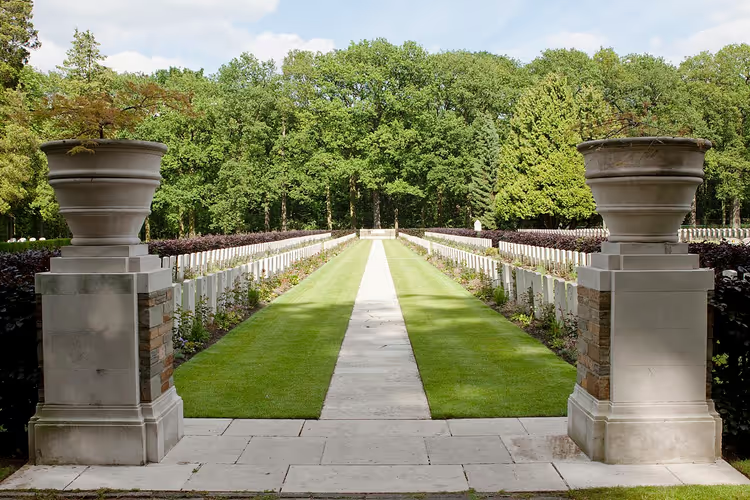 © Wernervc · CC BY-SAPhoto: Wernervc, CC BY-SA (https://creativecommons.org/licenses/by-sa/3.0), Wikimedia Commons
The Schoonselhof Cemetery in Antwerp is still operating, so entry is free. The cemetery mortuary was closed in the late 1990s and then dismantled: there is nothing left to see inside (according to a photo report on the mortuary and the official cemetery page, 09/2026).
Nevertheless, this is the most famous site in the selection. Photos of the empty autopsy room with white tile and long tables spread across urbex blogs and still appear in other people's lists of abandoned places. It is precisely these shots that spark interest in the topic.
If you find yourself in Antwerp, visit the cemetery itself. It has its own architecture, quiet atmosphere, and signs pointing to historic graves, while the mortuary can only be seen in archival photos.
- Location: Antwerp, Schoonselhof municipal cemetery.
- The catch: the mortuary itself no longer exists. It remains in this selection only through photographs.
2. Beelitz-Heilstätten, near Berlin, Germany
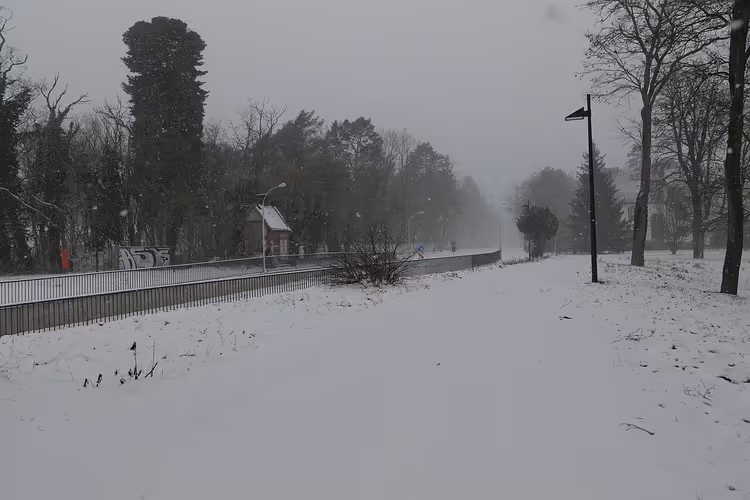
The complex in Beelitz was built starting in 1898 as a pulmonary sanatorium for Berlin workers (according to German Wikipedia, 09/2026). It became one of the largest hospital ensembles near the capital: several dozen buildings on two hundred hectares.
During both world wars, it served as a military hospital. In 1916, Corporal Adolf Hitler, wounded at the front, was treated in one of the wards, and after 1945 the complex was taken over by the Soviet military (according to a history essay on Beelitz, 09/2026).
The buildings have stood empty since the 1990s. You will see ward tiles, wide staircases, and traces of hospital logistics: corridors where gurneys were wheeled and kitchens designed for hundreds of meals. The scale hits you immediately once you walk through a single building end to end.
- What remains: buildings, wards, staircases, and some medical equipment.
- Who it's for: those looking for scale and history rather than thrills.
- The catch: the ensemble is a listed architectural monument, so free access inside is closed.
3. St Mary's hospital mortuary, England
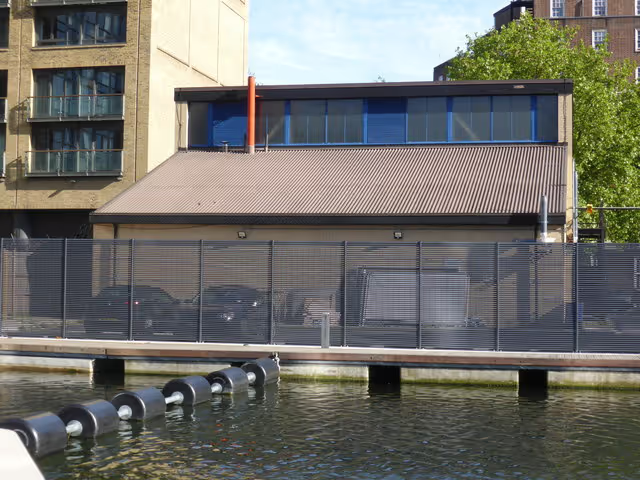 © Chris Allen · CC BY-SAPhoto: Chris Allen, CC BY-SA (https://creativecommons.org/licenses/by-sa/2.0), Wikimedia Commons
A British hospital mortuary that was closed without clearing out the rooms. The walls here are a swamp-green color, and the floors and corridors remain almost as they were on working days. This color was not chosen for aesthetics in hospitals: it hid marks on the walls.
The feeling is oppressive: narrow passages, blank doors, floor-to-ceiling tile, and a complete absence of windows in some rooms. These are exactly the interiors you see in most photos of abandoned medical facilities.
The building is not part of any official city route. There is no official information in open sources about the reasons for closure or the exact date, so the site has to be dated by the condition of the rooms.
- What remains: equipment and furniture that were not removed when it closed.
- What it looks like: green walls and empty corridors without signs.
4. Harold Wood Hospital Mortuary, Essex, England
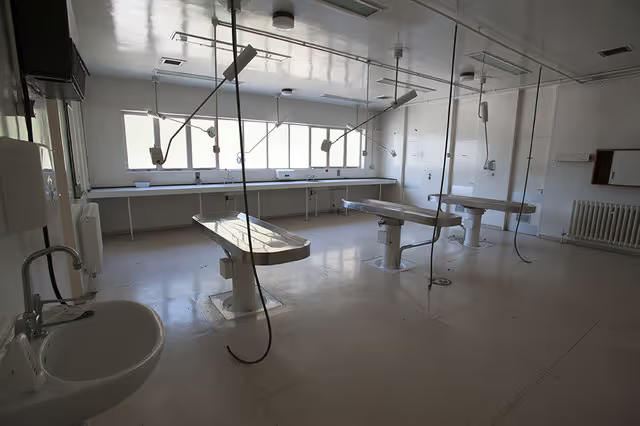 © Noel Jenkins · CC BY-SAPhoto: Noel Jenkins, CC BY-SA (https://creativecommons.org/licenses/by-sa/2.0), Wikimedia Commons
The mortuary at the hospital in Essex has been abandoned for a long time, and it shows immediately inside. Puddles stand on the floor, dirt clings to the walls, and only heavy tables and some tile remain of the furniture. The English countryside around it looks completely ordinary: bakeries, neat houses, green lawns.
That is the contrast that works: outside, a quiet suburb with a measured pace of life; inside, the damp and dark rooms of a former mortuary. During the day it is not frightening, but in the evening the light fades quickly and you are left in the dark with your phone instead of a flashlight.
- What remains: autopsy tables, tile, and some equipment.
- The catch: the site is not maintained, and the floors are wet and slippery in any weather.
5. St Peter's hospital mortuary, Surrey, England
 © Alan Hunt · CC BY-SAPhoto: Alan Hunt, CC BY-SA (https://creativecommons.org/licenses/by-sa/2.0), Wikimedia Commons
This mortuary was left in almost working condition. The equipment stands in place, and the rooms look as if the shift ended yesterday. That is exactly why this site is more unsettling than the others.
St Peter's Hospital itself in Chertsey is still operating.
Outside, it is an ordinary suburban neighborhood in Surrey where no one will stop you. Inside, everything is barely holding together: the staircases and floors were designed for a different load and a different level of maintenance.
- What remains: equipment and furniture.
- The catch: the hospital in Chertsey is active, and there is no free access to the mortuary.
6. Cambridge military hospital, England
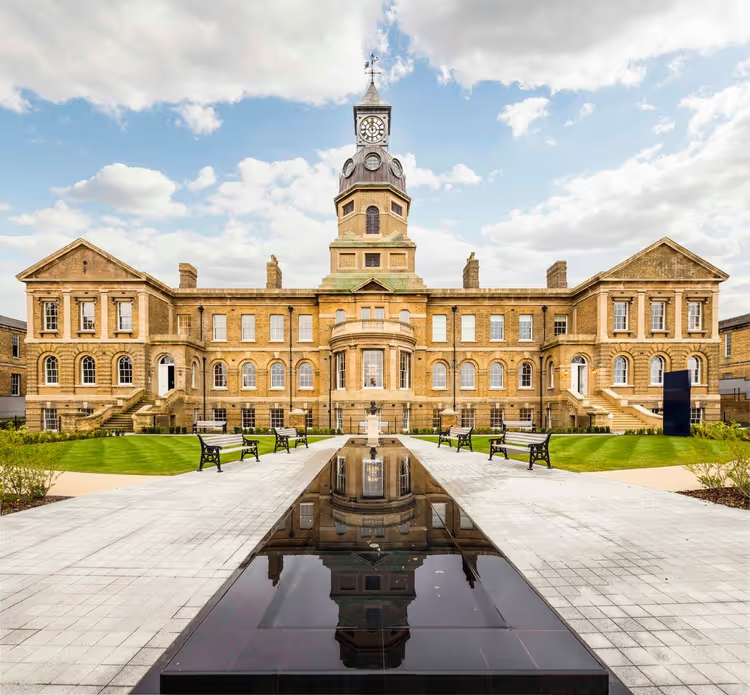 © Jack1956 · CC BY-SAPhoto: Jack1956, CC BY-SA (https://creativecommons.org/licenses/by-sa/4.0), Wikimedia Commons
A military hospital in Aldershot whose wards saw soldiers with burns and bullet wounds. They were treated here for months, and those who did not survive were moved to the mortuary within the same complex.
The building is now being restored and converted into housing, so you cannot go inside. If the atmosphere of military medicine matters to you, you will have to look from outside. Inside, according to descriptions, the wards and operating rooms with historic tile have been preserved.
A separate theme of this selection: how a former military hospital gets a new life. Here the historic buildings are being restored and converted into housing.
- What remains: wards, operating rooms, and building corridors.
- The catch: there is no free entry; the buildings are undergoing restoration for housing.
7. Mortuary without an address, England
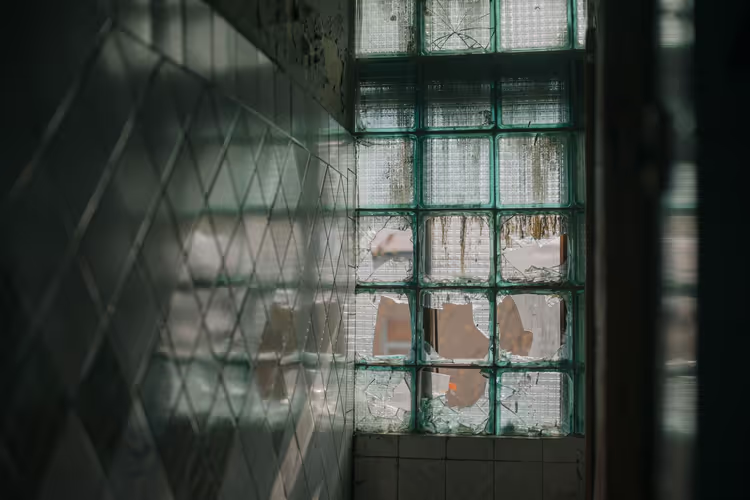
This site was abandoned many years ago, and its exact location is still not published. The cold storage chambers have long stopped working but look intact, as do the tables next to them. The floor tile is chipped in places, but the wall pattern is still visible.
Who closed the mortuary and why is unknown. There is no official information about the fate of the building, so only speculation circulates online: from a hospital relocation to a utility failure. There is nothing to verify, and there is no address either.
- What remains: cold storage chambers and autopsy tables.
- The catch: the coordinates are kept secret, so you cannot find the site on a map.
8. Private morgue, Germany
A small morgue in a residential building in Germany. Autopsy rooms sit next to ordinary rooms, which raises the main question: did a pathologist work from home here, or did the owner simply store the instruments?
There is no answer. The building is abandoned, the owner's name is not disclosed, and the layout of the rooms is documented only in photographs. For you, this is a rare case where private practice and medicine coexist in the same building.
The layout suggests the space was purpose-built for a specific function rather than adapted later. Tables, drains, and tile are exactly where they should be.
- What remains: autopsy rooms and instruments.
- The catch: the address is not published, so you cannot see the site in person.
9. Ellis Island morgue, New York, USA
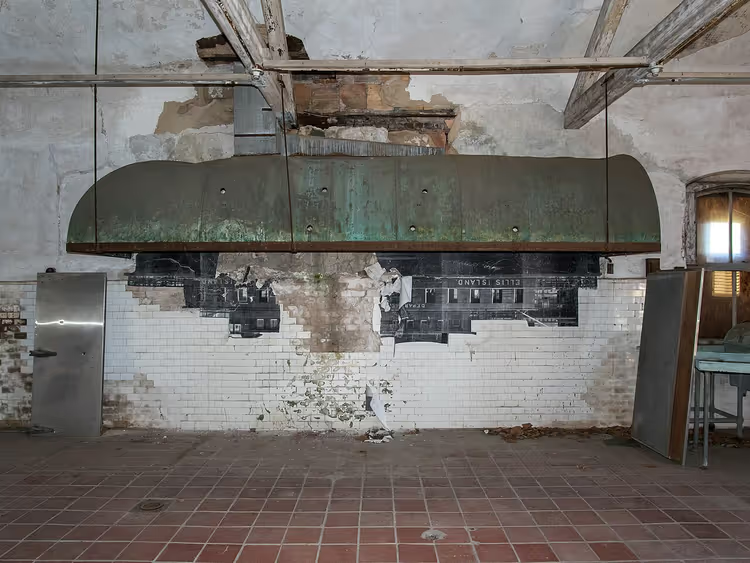 © Rhododendrites · CC BY-SAPhoto: Rhododendrites, CC BY-SA (https://creativecommons.org/licenses/by-sa/4.0), Wikimedia Commons
The hospital on Ellis Island admitted immigrants from 1902 to 1951 (according to English Wikipedia, 09/2026). The station itself, through which millions of people passed, closed in 1954 (according to the National Park Service, 09/2026).
The hospital buildings stand on the south side of the island and are part of the Statue of Liberty National Monument. This is where those denied entry for health reasons were treated, and where those who did not survive were buried. The morgue was part of the same system.
For you, this is the most accessible site in this list: the island is connected to the city by ferry, and the south side is open through the monument's organized programs.
- What remains: hospital buildings on the south side of the island.
- Access: national monument grounds, reachable only by ferry.
10. Ghost morgue with no coordinates
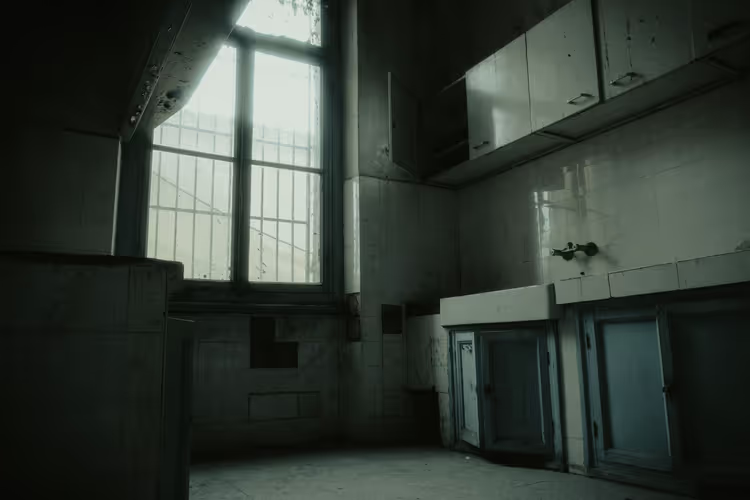
The final entry: a site whose coordinates the person who found it chose not to publish. The reason is unknown. Perhaps they don't want random sightseers going there, or perhaps they saw something inside that they aren't talking about.
By all accounts, it is grim and quiet inside, and footsteps echo across the entire floor. These accounts cannot be verified, so treat them as stories rather than facts. Only one thing is confirmed: there is no official data about this morgue in open sources.
- What remains: no verified information.
- The catch: no address or coordinates in open sources.
Safety and the law: what to keep in mind
Entering closed property without permission is not allowed. In Germany and the UK, this is a legal violation, not entertainment, and you will be held responsible. Some of the sites in this list are privately owned.
The second risk is structural. In old buildings, ceilings collapse, tiles fall off, and dust harmful to the lungs gets stirred up. Bring a respirator, a flashlight, gloves, and sturdy-soled shoes.
Go with a partner and tell someone close to you where you are going. Before visiting, check the site's status: some buildings in this list have already been demolished, and others have been closed for restoration. If you see fresh fencing, turn around.
⁉️🤔 Frequently asked questions
Can you legally get into an abandoned morgue?
Most often, no. The sites in this list are privately or publicly owned, and entering without permission is considered a violation. Cemetery buildings and the national monument grounds on Ellis Island are legally accessible. The other morgues can be viewed from outside or by arrangement with the owner.
Which sites in this list still exist?
Most of them. The Beelitz-Heilstätten buildings, the British hospitals, and the Ellis Island complex are still standing. The Schoonselhof mortuary in Antwerp was dismantled in 2007, so it remains in this list only through photographs.
Why is autopsy equipment still left inside?
Removing it costs money, and a new owner usually has no use for heavy tables and cabinets. It is easier to close the building and leave everything as is. That is why equipment and tile remain in morgues for years, and photographers and abandoned-place enthusiasts end up going there.
Is it dangerous to visit abandoned hospitals?
Yes, and the danger is practical, not mystical. Collapsed ceilings, broken glass, mold, and dust harm your health, and an injury on closed property will require explaining. Bring a respirator and a flashlight, don't go alone, and stay out of rooms with cracks.
Where can you check the current status of a site?
On official pages. For Schoonselhof cemetery, that is the City of Antwerp website; for Ellis Island, the National Park Service materials. For historical background on the German and British hospitals, look at municipal websites and local archives; forums are only useful as a rough guide to appearance.
In short: what to book and when to go
If you are after scale and history, start with Beelitz-Heilstätten. If you want a legal visit with no risk, go with Schoonselhof cemetery in Antwerp or the south side of Ellis Island through the national monument programs. If military medicine interests you, view Cambridge Military Hospital in Aldershot from outside.
One practical tip to finish. Check the hours and visiting rules on the site's official page: at Schoonselhof, entry is free, and it is the calmest option for a first trip (as of 09/2026, cemetery information).

A small editorial team writing guides for independent travel. We travel ourselves, but we haven’t been everywhere, so we check prices, opening hours and how to get there against official sources.