
















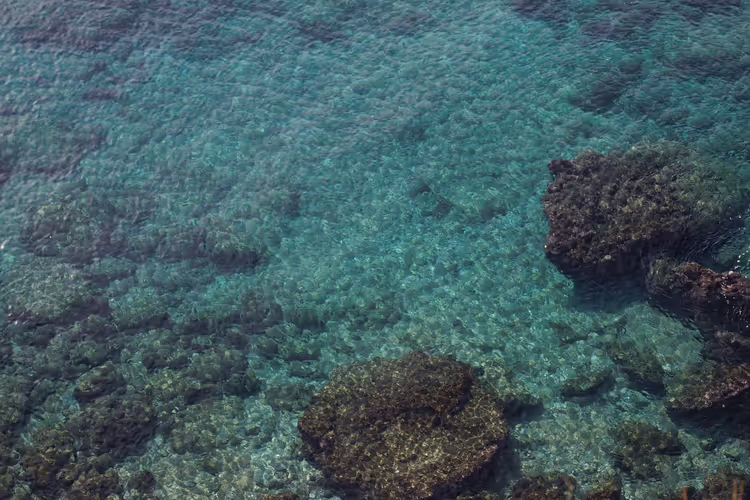
Where the water is clearest: 10 places from Corfu to Tulum
Clear water is visible from the shore for dozens of meters. That is exactly the effect people travel to Corfu, Moorea, and Phi Phi for, not for the hotel food. This selection covers ten places where the ocean and sea stay clean all year round.
Many spots on the list are protected by law. These are marine reserves, national parks, and community-managed areas where fishing, vehicle access, and the number of boats are restricted. That is exactly why the water stays clear there.
You can check this in advance. We verified access, visiting rules, and seasonal restrictions against official sources (as of: 09/2026). You will see where you can drive, and where you will have to walk or take a boat.
How we selected the places
💡 In short:
- The list includes only spots where water quality is officially monitored: reserves, national parks, community-managed areas.
- In some places commercial fishing is banned, and that is exactly why the reefs remain alive.
- Beach access is free; you pay for a boat, parking, or a ticket to a heritage site.
- Access and visiting rules: 09/2026, according to Calanques National Park and the Cayos Cochinos Marine Reserve.
Below are ten spots: for each one, we explain how to get there and what you will find on site.
Place | Country | Type of water | Who it suits |
|---|---|---|---|
Corfu | Greece | Ionian Sea, rocky coves | Those who combine the sea with an old town |
Moorea | French Polynesia | Pacific Ocean lagoon | Couples and snorkeling beginners |
Panari | Japan | Coral reefs | Divers and underwater photographers |
Linapacan | Philippines | Straits between islands | Those looking for calm coves |
Cayos Cochinos | Honduras | Caribbean reef | Snorkelers and divers |
Phi Phi | Thailand | Andaman Sea | Divers and boat trip lovers |
San Blas | Panama | Caribbean reefs | Those who want quiet |
Cala Macarelleta | Spain | Mediterranean Sea, cove | Those going to the beach for one day |
Calanque de Sormiou | France | Mediterranean Sea, fjord | Hikers and rock climbers |
Tulum | Mexico | Caribbean Sea near ruins | Those who combine beach and history |
1. Corfu, Greece
The Ionian Sea comes right up to the island, and along the rocky shores the water stays clear. In some coves visibility measures dozens of meters, which is why divers have long chosen Corfu. The beaches of Paleokastritsa hold the European Blue Flag for clean sea and shoreline.
Most local beaches have dive clubs. Paleokastritsa is home to one of the island's strongest dive centers, and from there you head straight out to underwater caves in the rocks. Another reason to come here: easy water entry and a mild climate.
 © Martin Falbisoner · CC BY-SAPhoto: Martin Falbisoner, CC BY-SA (https://creativecommons.org/licenses/by-sa/4.0), Wikimedia Commons
- How to get there: 23 km from Corfu Town along the west coast; regular buses run from the town (as of: 09/2026, Visit Corfu).
- What to do on site: snorkeling from the shore, boat trips to sea caves, guided dives.
- Who it suits: those who want to combine the sea with an old town.
2. Moorea, French Polynesia
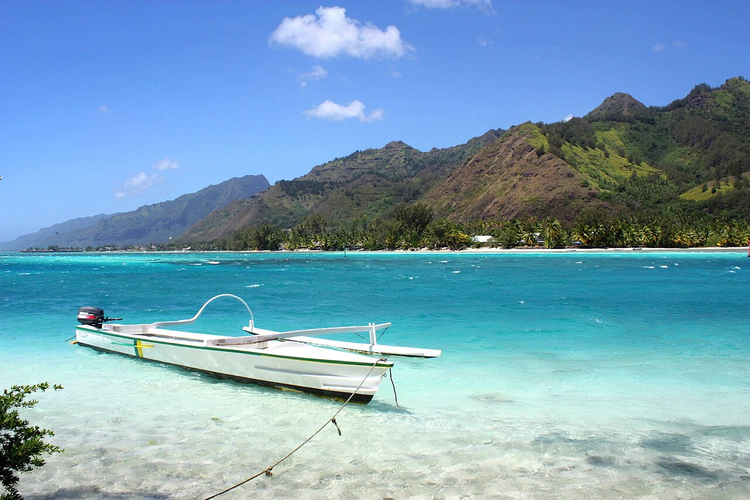
The island lies in the tropical zone of the Pacific Ocean, and from the air its outline resembles a heart. The lagoon water is so clear that you can see the coral reefs without scuba gear. You can swim here all year round, which is why couples come to Moorea for their honeymoon.
A separate highlight: a dolphin center in a natural lagoon enclosed by a pontoon. There you swim alongside dolphins. For snorkeling, a mask is enough: turtles and bright fish stay right by the shore.
 © DANIEL JULIE from Paris, France · CC BYPhoto: DANIEL JULIE from Paris, France, CC BY (https://creativecommons.org/licenses/by/2.0), Wikimedia Commons
- What to see: coral gardens, turtles near the shore, the dolphin lagoon.
- Who it suits: those trying snorkeling for the first time and wanting calm water.
3. Panari, Japan
Panari has kept its pristine ocean waters far from the industrial areas of Japan. Visibility here holds at dozens of meters deep. Hundreds of coral species, sea turtles, tropical fish, and rays have made these reefs their home. Whale sharks are a rarity here.
You will find ready-made scenes for underwater photography: fish stay right by the reef and are not afraid of boats. There is no developed infrastructure on the island, so plan your dives in advance.
 © mariemon · CC BY-SAPhoto: mariemon, CC BY-SA (https://creativecommons.org/licenses/by-sa/3.0), Wikimedia Commons
- What to see: coral reefs, sea turtles, rays.
- Who it suits: divers and underwater photography enthusiasts.
4. Linapacan, Philippines
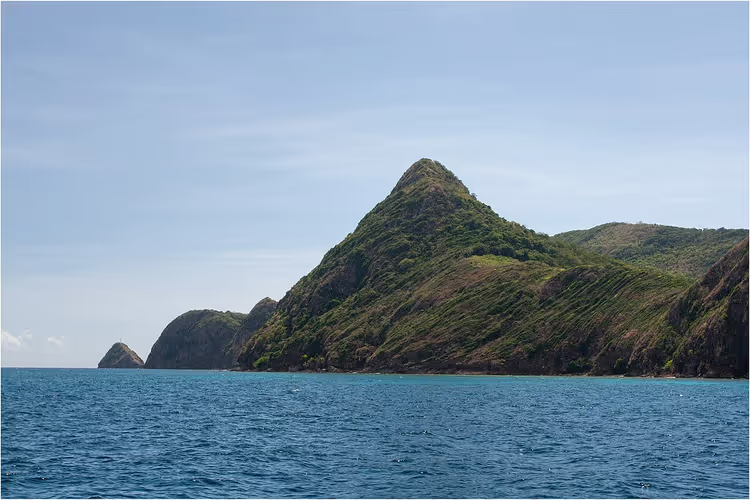
Linapacan is known for its clear water and white sand along the coast. You can see the bottom well in advance, which is why people cliff jump and leap from boats here. Local fishermen work bottom fishing in these waters. Cliff jumping suits those who enjoy a thrill.
If you're sailing on a traditional Filipino boat, it feels like moving through a huge aquarium: fish and jellyfish are visible as if in the palm of your hand. Snorkeling and diving here require no special training.
 © Tuderna · CC BYPhoto: Tuderna, CC BY (https://creativecommons.org/licenses/by/3.0), Wikimedia Commons
- What to do: cliff jumping, island boat trips, fishing.
- Who it's for: those looking for quiet bays without crowds.
5. Cayos Cochinos, Honduras
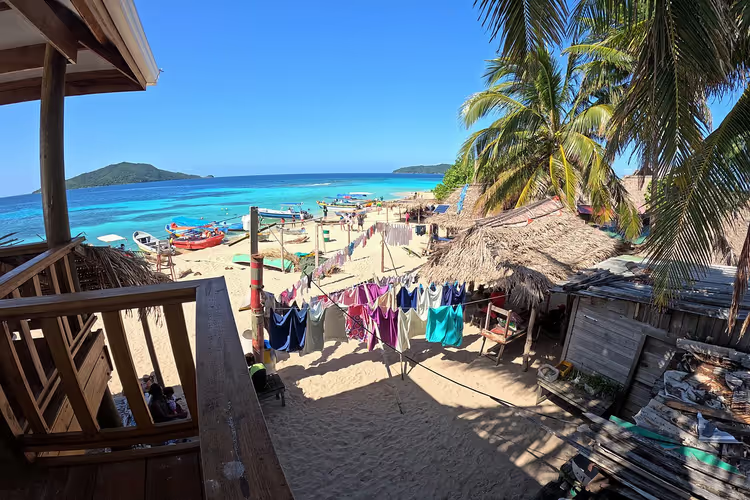
Cayos Cochinos has a marine reserve, and commercial fishing is banned here. Only local residents are allowed to fish, and for many it's their only source of income. Coral reefs stretch along the coast and remain alive precisely because of this ban.
A couple of large islands and a scattering of small cays are almost undeveloped. Boats from the mainland arrive on a schedule, so after lunch the beach gets quiet. The reserve area is managed by the Honduras Coral Reef Fund (as of 09/2026).
 © Vaido Otsar · CC BY-SAPhoto: Vaido Otsar, CC BY-SA (https://creativecommons.org/licenses/by-sa/4.0), Wikimedia Commons
- What to do: shore snorkeling, reef diving, quiet beaches.
- Who it's for: those who want seclusion without hotel noise.
6. Phi Phi, Thailand
In the Andaman Sea around Phi Phi, visibility reaches tens of meters, and underwater landscapes can be seen right from the surface. Between Phuket and the archipelago lies the King Cruiser ferry, which sank in 1997 (as of 09/2026, PADI). It's one of the most famous dive sites in the region.
There's plenty to do above water too: Monkey Beach, where troops of monkeys come, and a fishing village on stilts. During boat trips, leopard sharks are encountered here. Whale sharks are rare.
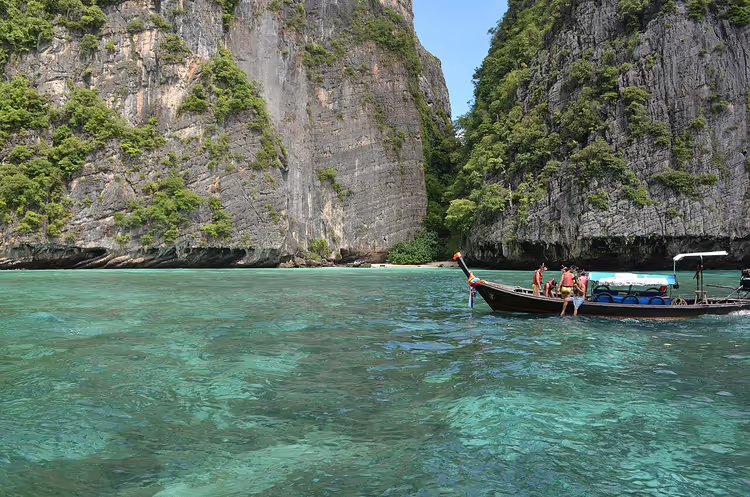 © Luxure · CC BYPhoto: Luxure, CC BY (https://creativecommons.org/licenses/by/3.0/au/deed.en), Wikimedia Commons
- What to see: the King Cruiser wreck, Monkey Beach, the village on stilts.
- Who it's for: divers and those who enjoy boat routes.
7. San Blas, Panama
The San Blas archipelago has kept its pristine appearance thanks to the indigenous Guna people. Their relationship with nature has maintained the cleanliness of the ocean and its inhabitants for centuries. Locals say there are 365 islands in the archipelago, one for each day of the year.
Local residents earn a living from coconuts, fishing, and tourism, while visitors come for underwater exploration. The best time for diving is from mid-spring to mid-summer, when the sea is calm and the reefs have no waves.
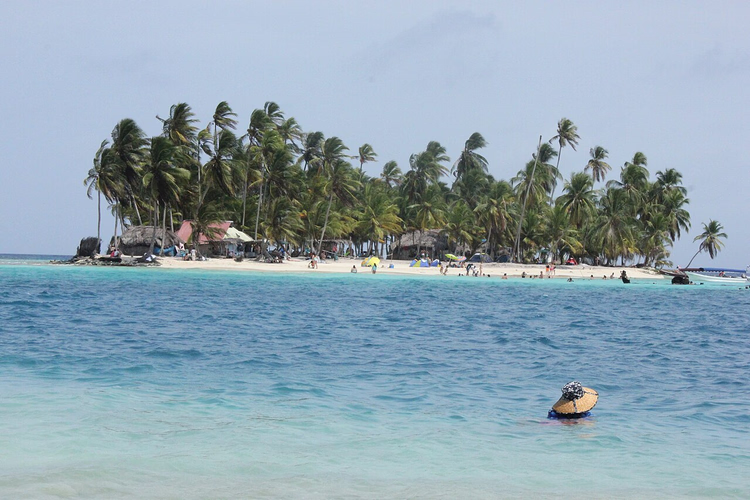 © Mónica J. Mora · CC BY-SAPhoto: Mónica J. Mora, CC BY-SA (https://creativecommons.org/licenses/by-sa/3.0), Wikimedia Commons
- What to do: reef snorkeling, fishing, island-hopping trips.
- Who it's for: those who want quiet and interaction with the local community.
8. Cala Macarelleta, Spain
A small cove on Menorca occupies a short stretch of coastline and hides between cliffs. The sand here is so fine that it's compared to powder, and the clear water attracts divers. Pine and deciduous forests on the cliffs shelter the cove from the wind, so waves almost never reach it.
For quiet swimming, it's one of the most peaceful spots on the island. The seclusion makes the cove convenient for couples who want to spend a day without neighbors.
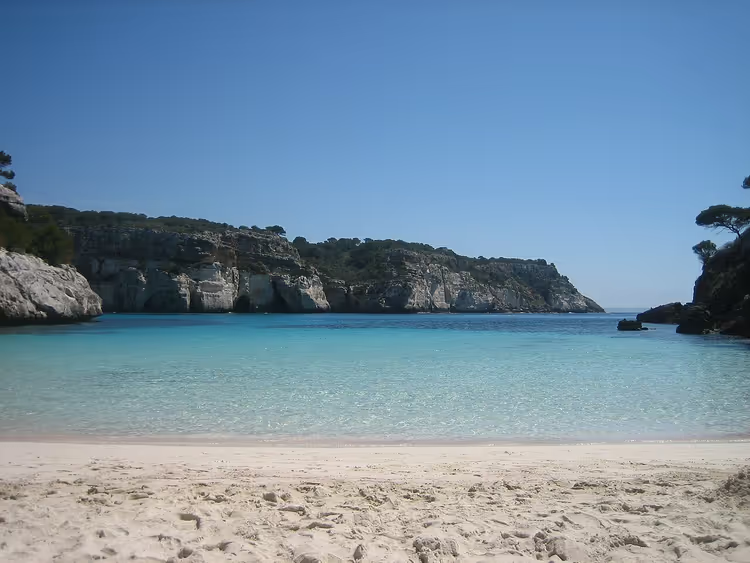 © Seruba · CC BY-SAPhoto: Seruba, CC BY-SA (https://creativecommons.org/licenses/by-sa/3.0), Wikimedia Commons
- Who it's for: couples and those heading to the beach for a day.
- What to see: powder-soft sand, pines on the cliffs, calm water in the cove.
9. Calanque de Sormiou, France
The cove near Marseille changes color several times a day: from turquoise to deep blue. The tall limestone hills around it resemble Norwegian fjords, and pines grow out of cracks in the rocks. The water here is colder than at neighboring beaches: underground streams emerge beneath the cliffs.
Access is regulated. Vehicle entry to the village by the cove is closed on certain dates and at certain times, so you walk from the last parking lot (as of 09/2026, Calanques National Park).
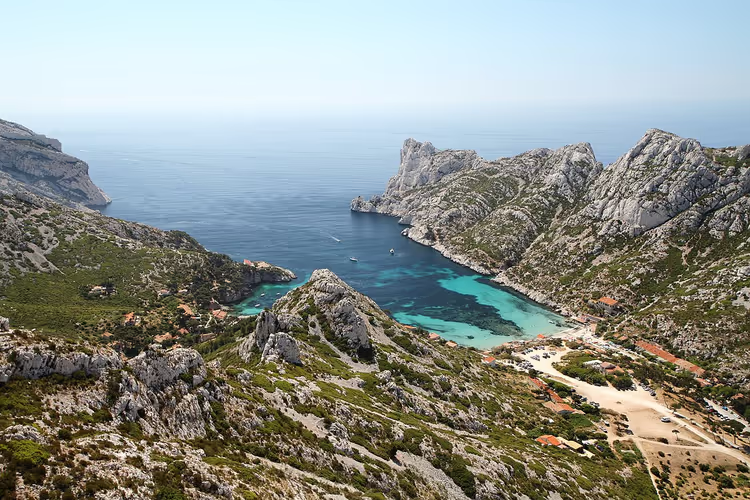 © Benh LIEU SONG · CC BY-SAPhoto: Benh LIEU SONG, CC BY-SA (https://creativecommons.org/licenses/by-sa/3.0), Wikimedia Commons
- How to get there: on foot from the last parking lot, the trail descends to the water.
- Who it won't suit: those who want to drive right up to the beach.
- What to do: rock climbing, swimming, walks along the limestone walls.
10. Tulum, Mexico
Tulum was a major Maya city built directly on the seashore. One of its beaches served the Maya as the departure point for the route to the island of Cozumel, where rituals were held. The Caribbean Sea near the cliffs has kept its color and clarity, so you can combine the beach with exploring the ruins.
Plan your day like this: first the ruins, before the heat sets in, then the water. The ticket to the archaeological site is purchased separately, and the beach below the cliffs is open to everyone. You get a rare combination: the history of a civilization and clear water in one place.
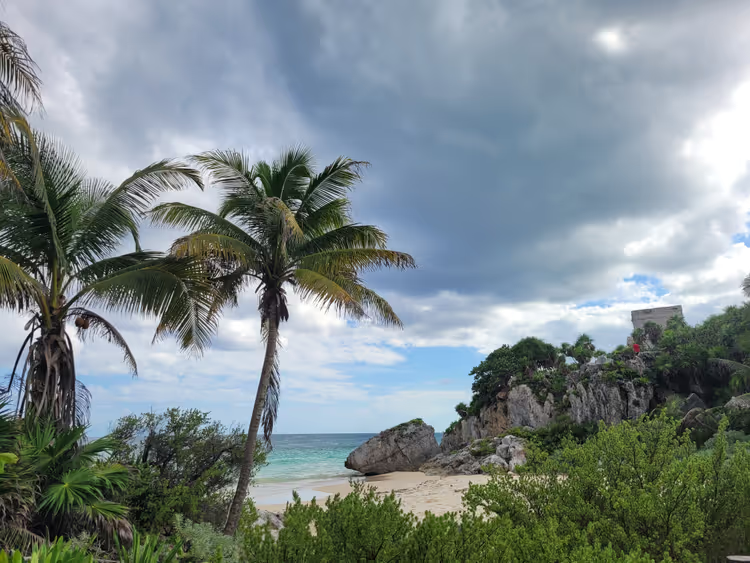 © Erik Cleves Kristensen · CC BYPhoto: Erik Cleves Kristensen, CC BY (https://creativecommons.org/licenses/by/2.0), Wikimedia Commons
- What to see: Maya ruins on the cliff, the beach below the walls, views of the Caribbean Sea.
- Who it suits: those who don't want to choose between history and the sea.
⁉️🤔 Frequently asked questions
Where is the water clearest for snorkeling without scuba gear?
Moorea Lagoon and the Cayos Cochinos reefs. On Moorea, corals are visible right from the surface, so a mask and snorkel replace scuba gear. At Cayos Cochinos, the reefs run along the shore, and you can swim out to them. Check the current and wind before entering the water.
Do you need a permit to visit the reserves on this list?
At Cayos Cochinos and in Calanques National Park, tourist access is open, and restrictions apply to vehicle entry and fishing rules. Boats to the islands depart from the mainland on a schedule; book your spot in advance. Check the exact conditions on official websites before your trip.
When should you go to San Blas and Cayos Cochinos?
At San Blas, the best diving season starts in mid-spring and lasts until mid-summer: the sea is calm and there are no waves at the reefs. For Cayos Cochinos, aim for the dry season in the Caribbean. Plan your trip with extra days, because boats depend on the weather.
Can you swim in these places with children?
Calm water and a gradual increase in depth are found at Paleokastritsa on Corfu and in Moorea Lagoon, because the bays are enclosed by rocks and reefs. Calanque de Sormiou near Marseille is better suited to adults: the descent is rocky, and you enter the water over stones. Bring water shoes.
How does clear water differ from clean water?
By clean, we mean a low level of pollution, confirmed by programs like the Blue Flag and marine reserve status. Clear means underwater visibility, which is affected by sand, plankton, and currents. This list brings both parameters together.
In short: what's worth booking
- One week and a flight from Europe: Corfu or the coves of Menorca.
- Snorkeling without courses: Moorea Lagoon and the Cayos Cochinos reefs.
- Diving with descents: Phi Phi, Panari, and San Blas.
- One day along a route: Calanque de Sormiou near Marseille.
- Beach and history in one trip: Tulum.
Book boat trips in advance, because schedules depend on the season and weather. Check access rules on the official website of the park or reserve before you set out: at some locations, vehicle entry is closed on certain dates.

A small editorial team writing guides for independent travel. We travel ourselves, but we haven’t been everywhere, so we check prices, opening hours and how to get there against official sources.