
















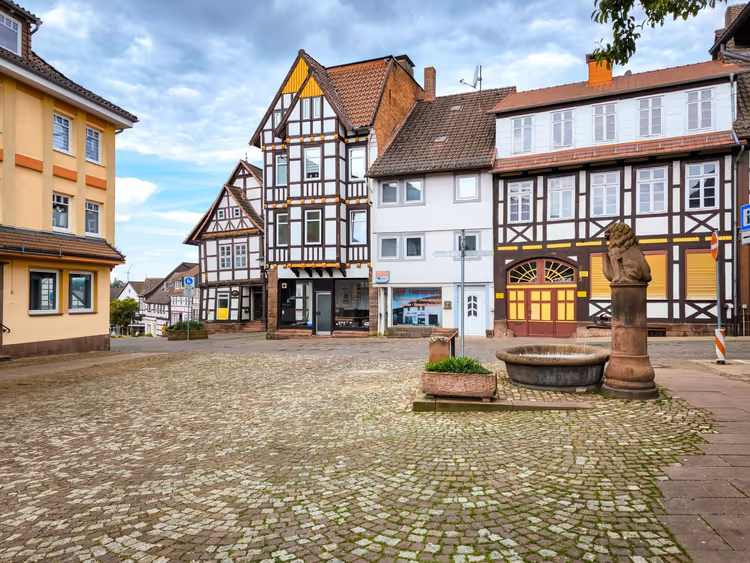
Ten small towns: medieval streets, rock churches and fjords
The most pleasant surprises are not hidden in capital cities. Most of the ten small towns below look like sets from a historical film. Göreme in Cappadocia, alpine Arosa, and Norwegian Bergen add rock churches, mountains, and fjords to the mix. At the same time, each one has working cafes, museums, and hotels, so spending the night in these settings is entirely possible.
You have probably already seen the big metropolises, and bus tours through them all look alike. Small towns move at a different pace: you can walk across the center in a couple of hours, and the real finds are waiting in the side streets.
Palmanova was conceived as an ideal fortress city, and the salt mines of Hallstatt are protected by UNESCO. Below, we break down what to see, how to get there, and what to pay attention to in each place.
How to read this list
💡 In short:
- Plan two or three towns per trip: getting between them eats up half a day.
- Stay in the center, then everything interesting will be within walking distance.
- Arrive in the morning: by midday, tour buses roll into Český Krumlov, Hallstatt, and Bruges.
The order of the towns is not random, but each one can be taken on its own and fit into any Europe itinerary.
Town | Country | Who it's for |
|---|---|---|
Český Krumlov | Czech Republic | Those who want to see an entire medieval town in a day |
Palmanova | Italy | Fans of military history and unusual geometry |
Rothenburg ob der Tauber | Germany | Those looking for a postcard-perfect fairy tale |
Dürnstein | Austria | Those traveling through the Wachau Valley |
Trémolat | France | Those who want a quiet village among vineyards |
Hallstatt | Austria | Those willing to face crowds for the lake view |
Bruges | Belgium | Those who love canals and chocolate |
Göreme | Turkey | Those interested in rock churches and frescoes |
Arosa | Switzerland | Families with children and mountain lovers |
Bergen | Norway | Those coming for fjords and Grieg's music |
Ad: this article contains affiliate links, we earn a commission if you book through them, at no extra cost to you.
1. Český Krumlov
 © Xth-Floor · CC BY-SAPhoto: Xth-Floor, CC BY-SA (https://creativecommons.org/licenses/by-sa/4.0), Wikimedia Commons
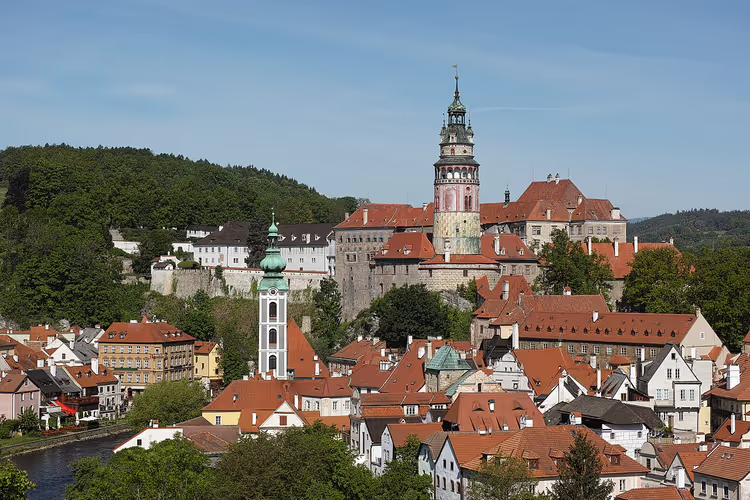
Krumlov sits where the Vltava makes a sharp loop. A castle with a tower in painted colors rises above the tiled roofs, and the historic center is listed as a UNESCO World Heritage Site.
The streets here are paved with cobblestones, and the houses stand close together. You can walk the entire center in a couple of hours and find galleries, coffee shops, and restaurants along the way.
From Prague you can get here by bus, the trip takes about three hours (see schedules and tickets on FlixBus, as of 09/2026), or by train with a transfer in České Budějovice.
- Who it's for: those who want to see a complete medieval town and return to Prague in the evening.
- The catch: the center is compact, and by lunchtime in summer it fills with tour groups, so arrive at opening time.
Hotels in Český Krumlov on Trip.com
2. Palmanova
 © Carsten Steger · CC BY-SAPhoto: Carsten Steger, CC BY-SA (https://creativecommons.org/licenses/by-sa/4.0), Wikimedia Commons
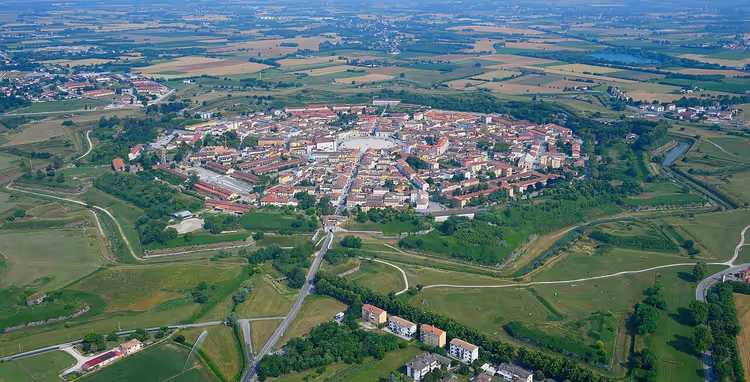
On the map, Palmanova looks like a perfect nine-pointed star (according to the city's official website, as of 09/2026). The Venetians built it in 1593 as an ideal fortress city.
Inside the walls, three straight streets converge and lead to the central Piazza Grande. The town has cafes and restaurants serving fish: the Adriatic is not far from here.
- How to get there: from Venice by car or by train with a transfer in Udine.
- Who it's for: those interested in military history and unusual urban planning.
- The catch: the town is small, half a day is enough to see it.
Hotels in Palmanova on Trip.com
3. Rothenburg ob der Tauber
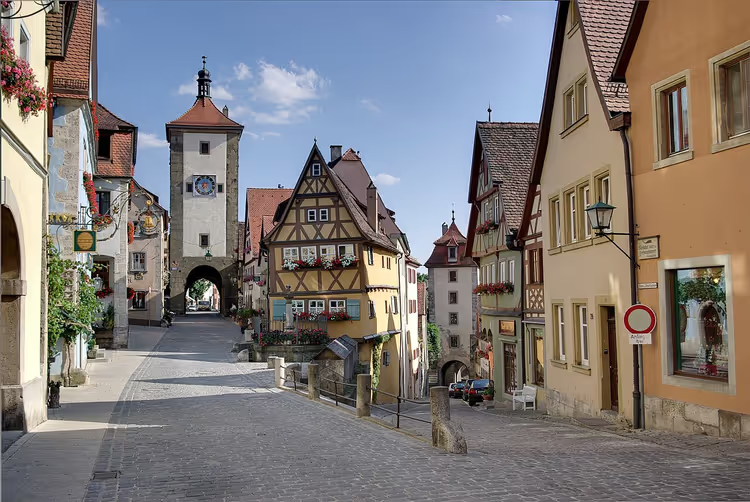
Rothenburg ob der Tauber has preserved its city wall and towers almost completely. You can walk the wall along the entire perimeter; it rises above the tiled roofs.
The gingerbread facades and red roofs are familiar even to people who have never been here: houses of this type were copied for the Pinocchio cartoons.
- How to get there: the train from Munich takes about three hours with a transfer (timetable and tickets: Deutsche Bahn, as of 09/2026).
- The catch: the trip from Munich takes almost half a day, but in the evening the center empties out.
Hotels in Rothenburg ob der Tauber on Trip.com
4. Durnstein
 © C.Stadler/Bwag · CC BY-SAPhoto: C.Stadler/Bwag, CC BY-SA (https://creativecommons.org/licenses/by-sa/4.0), Wikimedia Commons
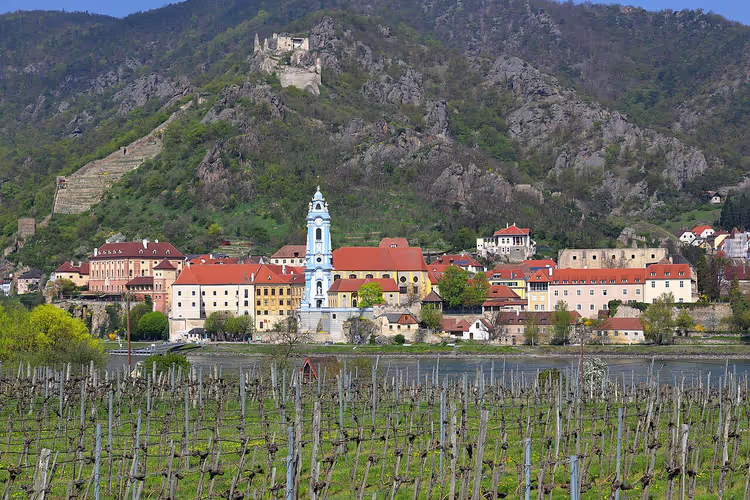
Durnstein sits on the Danube in the Wachau Valley, and above the river rise a clock tower and stone houses under red tile roofs.
The area is also known for wine: the surrounding slopes are planted with vineyards. Local winemakers make wine according to recipes passed down from generation to generation.
- How to get there: by seasonal train through the Wachau Valley along the Danube, Durnstein station.
- The catch: during the day cruise ships bring in a lot of tourists, so it's better to walk around in the morning or evening.
Hotels in Durnstein on Trip.com
5. Tremolat
 © Père Igor · CC BY-SAPhoto: Père Igor, CC BY-SA (https://creativecommons.org/licenses/by-sa/3.0), Wikimedia Commons
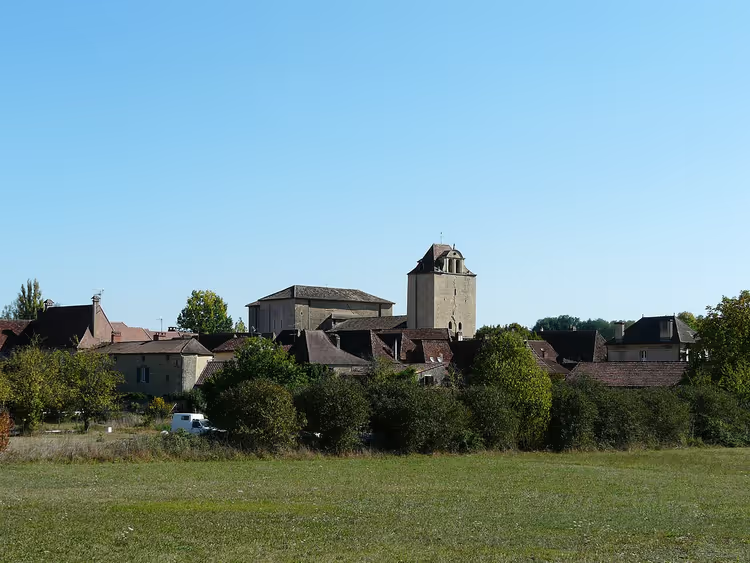
Tremolat lies in southwestern France, among the vineyards of the Dordogne Valley. The village is small but known far beyond the region.
The Romanesque church of Saint-Hilaire was built in the 12th century, and old wineries survive nearby. There is also a cave not far away that once served as a shelter.
- How to get there: easiest by rental car; the nearest major stations are in Bergerac.
- The catch: public transport hardly runs here.
Hotels in the Dordogne Valley on Trip.com
6. Hallstatt
 © Ritóper Ramón · CC BY-SAPhoto: Ritóper Ramón, CC BY-SA (https://creativecommons.org/licenses/by-sa/4.0), Wikimedia Commons
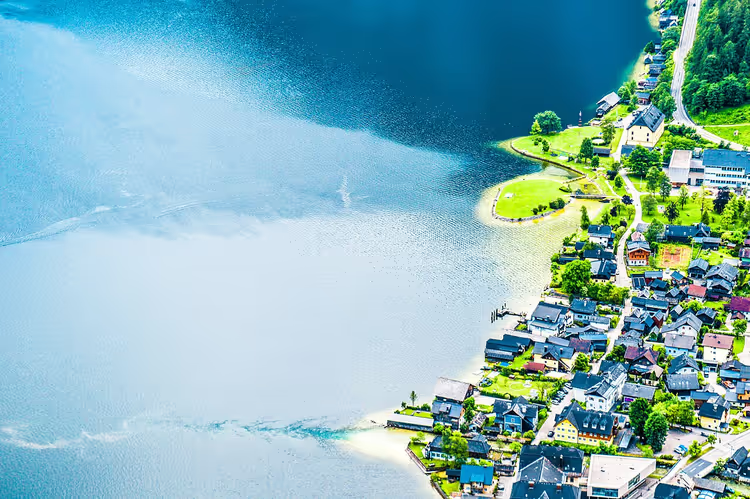
Hallstatt is squeezed between steep slopes and the lake. The village is known for its salt mines: salt was extracted here before our era (according to Salzwelten, as of 09/2026).
Next to the Catholic church stands the Bone House, where painted skulls are kept: they are decorated with flowers and names when a grave at the cemetery is cleared.
- How to get there: by train to Hallstatt station, then by ferry across the lake.
- The catch: the village is tiny, in summer it is overrun with tourists, arrive by morning or stay overnight.
Hotels in Hallstatt on Trip.com
7. Bruges
Bruges is laced with canals crossed by dozens of bridges. Houses with neat gables stand so tidily they look assembled from building blocks.
The historic center is almost entirely pedestrian: you can walk it in half a day and still have time to pop into a chocolate workshop.
- How to get there: the train from Brussels takes under an hour (schedule: Belgian Rail, as of 09/2026).
- The catch: the center is small, the flow of tourists never lets up all year round.
8. Goreme
 © MusikAnimal · CC BY-SAPhoto: MusikAnimal, CC BY-SA (https://creativecommons.org/licenses/by-sa/4.0), Wikimedia Commons
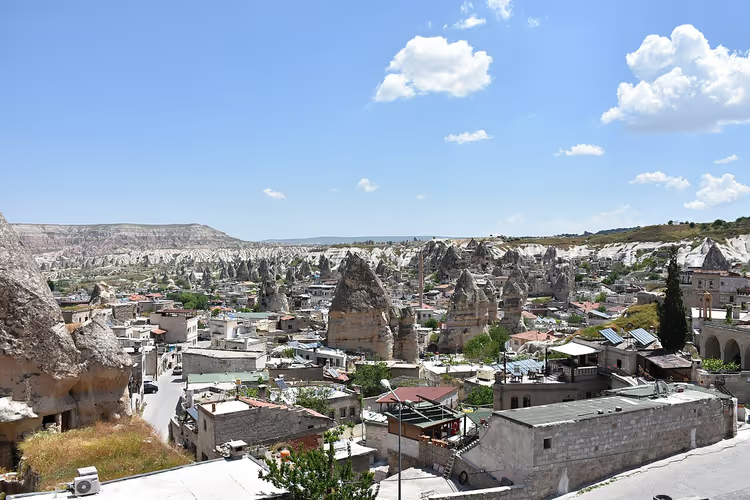
Goreme in Cappadocia is famous for its rock-cut churches: the open-air museum brings together dozens of churches carved directly into the soft rock.
The walls inside are covered with Byzantine frescoes, some of them well preserved. Entry to the museum is paid, check opening hours before your trip on the official reserve website.
- How to get there: the nearest airport is in Kayseri, then by bus to Goreme.
- The catch: in summer it is very hot during the day, the frescoes are best viewed in the morning.
9. Arosa
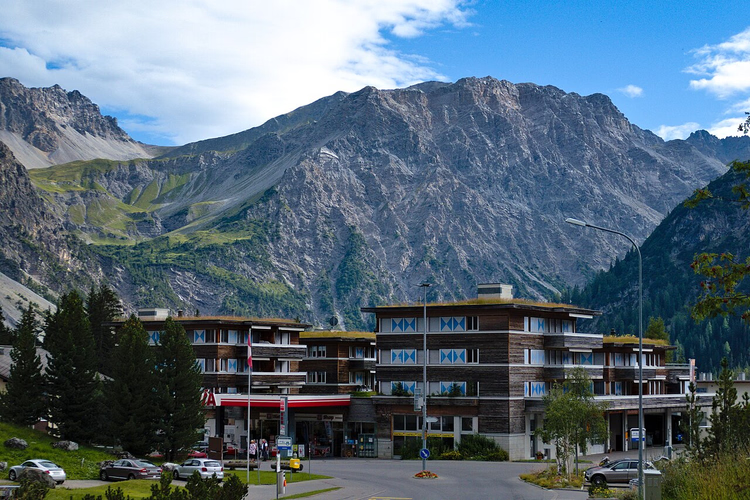 © Tiia Monto · CC BY-SAPhoto: Tiia Monto, CC BY-SA (https://creativecommons.org/licenses/by-sa/3.0), Wikimedia Commons
Arosa lies on a plateau in the Swiss Alps and is known for its high number of sunny days and almost complete absence of wind.
In winter Arosa operates as a ski resort, and in summer hiking trails run along the slopes.
- Who it's for: families who want to get their kids started on skis.
- How to get there: train from Zurich with a change in Chur, then a narrow-gauge railway.
- The catch: in winter accommodation prices are high, book in advance.
10. Bergen
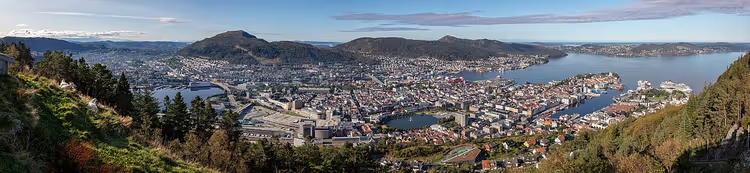 © Diego Delso · CC BY-SAPhoto: Diego Delso, CC BY-SA (https://creativecommons.org/licenses/by-sa/4.0), Wikimedia Commons
Bergen is surrounded by mountains and fjords and is known as the birthplace of composer Edvard Grieg. His home Troldhaugen is open as a museum (according to Kode Bergen, as of 09/2026).
The city has museums of modern and decorative art, and the fish market bustles by the Bryggen waterfront.
- How to get there: direct train from Oslo through the mountains, the journey is long but scenic.
- The catch: it rains often, bring a waterproof jacket.
⁉️🤔 Frequently asked questions
How many cities from the list can you realistically see in one trip?
Two or three, if you're traveling by car or train. Traveling between countries eats up time, so don't try to cover everything in a week. Pick one region, for example Czechia and Austria, and add one city per day. That way you'll still have time for the city itself.
When is the best time to visit these small towns?
The best time is late spring and September: in July and August, Cesky Krumlov, Hallstatt, and Bruges are overrun with tour groups, and Goreme is scorching hot. In May and September the lines are shorter, and the weather still lets you walk around all day.
Do you need a car to get to Palmanova and Tremola?
For Tremola, a car is almost essential: public transport barely goes there. For Palmanova, the most convenient option is to drive from Venice, although there is also a train with a transfer in Udine. Renting a car gives you flexibility along the entire route.
Where should you stay in Hallstatt and Cesky Krumlov?
In Cesky Krumlov, there are more hotels to choose from and prices are lower, and the entire historic center is within walking distance. In Hallstatt, accommodation is more expensive and you need to book in advance. You can stay in nearby Obertraun and come for the day.
What to see in Bergen besides Grieg's house?
Besides Troldhaugen, it's worth checking out the Bryggen waterfront, the fish market, and the art museums. Nature lovers will enjoy the fjords and the funicular up Mount Floyen. Two days is a comfortable amount of time for the city.
In short: what's worth booking
If you have three or four days and you're starting from Prague: go for Cesky Krumlov and Hallstatt. If you're going skiing with the family: Arosa is your pick.
Accommodation in these towns gets booked up quickly, especially in high season. Book hotels in Hallstatt and Bruges in advance, otherwise your options will shrink to the outskirts.

A small editorial team writing guides for independent travel. We travel ourselves, but we haven’t been everywhere, so we check prices, opening hours and how to get there against official sources.