
















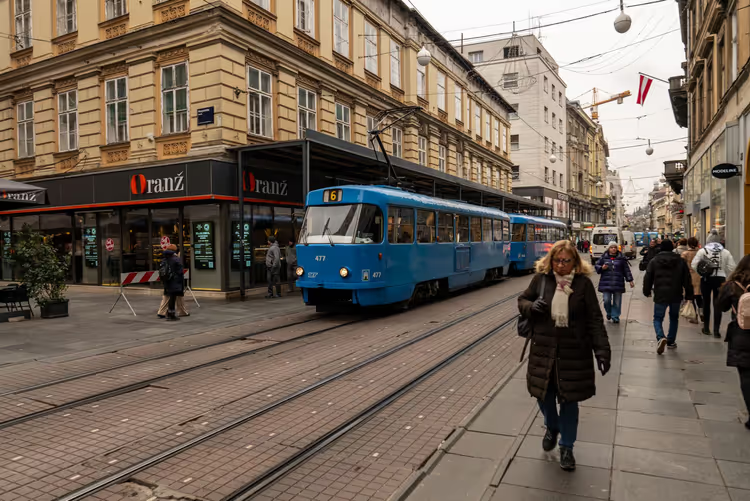
What to see in Zagreb: 11 places and their status in 2026
Zagreb is more compact than it looks on a map. The city center fits within two hills, and you can walk to almost all the main sights in one day. One problem: old guidebooks still list outdated prices and don't mention that some museums have been closed since the 2020 earthquake. We put together 11 places to start your visit to the city and checked their status in September 2026 on the official Zagreb tourist board website.
Kaptol and Gradec are ten minutes apart on foot, with the Dolac market between them. You can start at the top and walk down, or head uphill from the main square. After that, it's up to you: one day for the old town, or two if you want to see museums and galleries.
Ad: this article contains affiliate links, we earn a commission if you book through them, at no extra cost to you.
What to see in Zagreb: overview and history
💡 In short:
- Start with Gradec hill: that's where the Lotrščak Tower and St. Mark's Church stand.
- Walk down to the cathedral and Dolac market, it's ten minutes on foot.
- Check museum status before your trip: Mimara and Strossmayer are closed after the earthquake.
- Save time for Ilica Street if you want to come home with shopping.
- Prices and opening hours: 09/2026, verified on the tourist board website.
Zagreb first appears in written sources at the end of the 11th century. At that time, the Hungarian king established a bishopric on Kaptol hill. Gradec grew up next to it: it received the status of a royal city in the mid-13th century, along with a fortress wall and a watchtower with a bell. The bell told residents that the city gates were closing. In the early 17th century, Kaptol and Gradec merged into one city called Zagreb. According to one version, the old Croatian word "zagreb" meant a fortification.
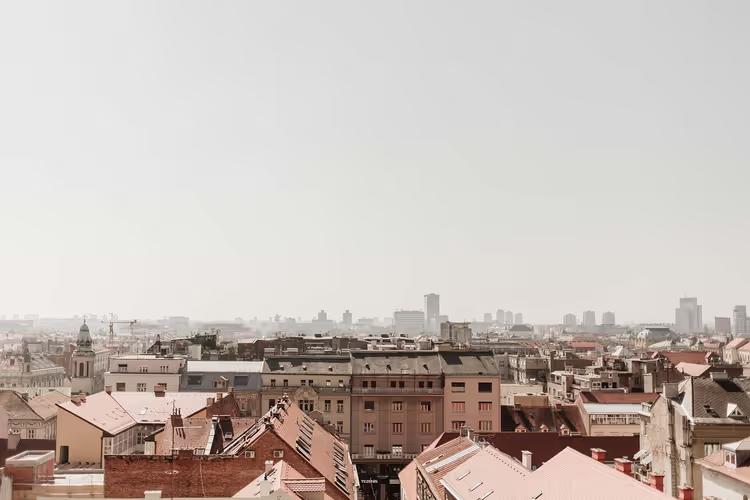
Today Zagreb is called a city of museums: there are collections on almost every street. Travelers always have less time than there are exhibitions, so below are eleven places to start with. Eight of them are in the old center, while Maksimir Park, the zoo, and Mirogoj Cemetery are a bit farther out.
Place | Admission | When to go |
|---|---|---|
a few € | daily, cannon fires at noon | |
free | morning and evening | |
closed | until restoration is complete | |
closed | reopening expected in 2026 | |
paid | ticket office 9:00-15:00 | |
Mirogoj Cemetery | free | daily |
Dolac market | free | in the morning, before noon |
1. Lotrščak Tower
 © Jorge Láscar from Australia · CC BYPhoto: Jorge Láscar from Australia, CC BY (https://creativecommons.org/licenses/by/2.0), Wikimedia Commons
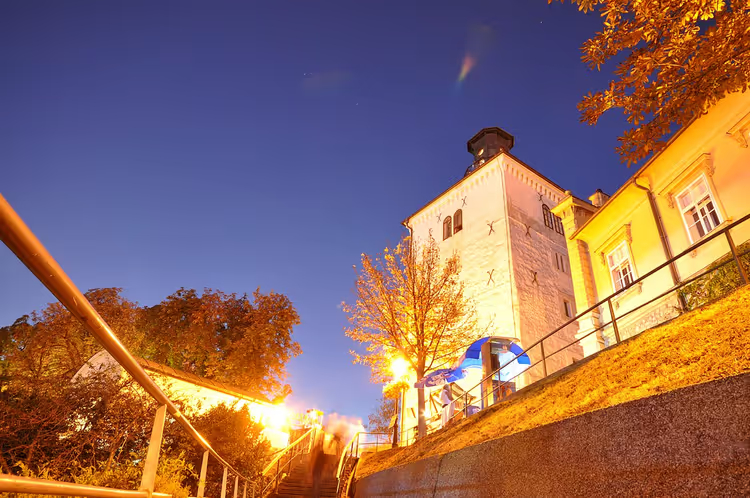
Lotrščak Tower (Kula Lotrščak) rises above the old town as the only surviving piece of the Gradec fortress wall. It is also the best viewpoint in the center: the tower is about 30 meters high and around eight hundred years old (as of 09/2026, Visit Zagreb). Every day at exactly noon, the Grički top cannon fires from a tower window, and the shot can be heard throughout the center.
- How to get there: at the end of Ilica Street, about a ten-minute walk from Ban Jelačić Square.
- Cost: access to the viewing platform is paid, around a few euros (as of 09/2026, Galerija Klovićevi dvori).
- Who it's for: for those who want a panorama of the center without a long trip.
2. Zagreb Cathedral
 © Larisa Uhryn · CC BY-SAPhoto: Larisa Uhryn, CC BY-SA (https://creativecommons.org/licenses/by-sa/4.0), Wikimedia Commons
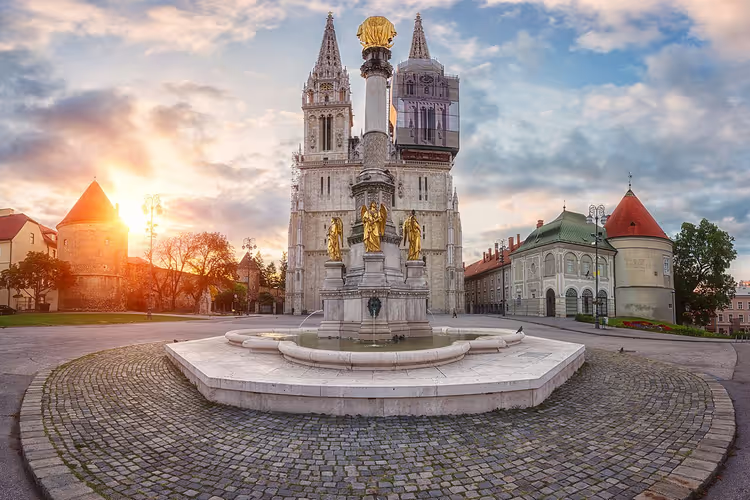
The Cathedral of the Assumption of the Blessed Virgin Mary and Saints Stephen and Ladislaus is considered the main church of Croatia and a symbol of the city: its image even appeared on the national currency. The first church on this site was consecrated in honor of Saint Stephen back in the 12th century, and the cathedral has been rebuilt several times since. Its two towers, about 105 meters high, are visible from anywhere in the center (as of 09/2026, Zagreb guide). Inside there is a sarcophagus with the relics of Cardinal Aloysius Stepinac, and the light from the stained glass windows makes the walls look like paintings. Admission is free.
- How to get there: from Ban Jelačić Square through Dolac Market, about a five-minute walk.
- The catch: after the 2020 earthquake, part of the cathedral is still being restored, and there is a lot of scaffolding on the facade (as of 09/2026, Visit Zagreb).
- Who it's for: for those who care about the country's main church, not just a facade for photos.
3. Croatian National Theatre
 © CAPTAIN RAJU · CC BY-SAPhoto: CAPTAIN RAJU, CC BY-SA (https://creativecommons.org/licenses/by-sa/4.0), Wikimedia Commons
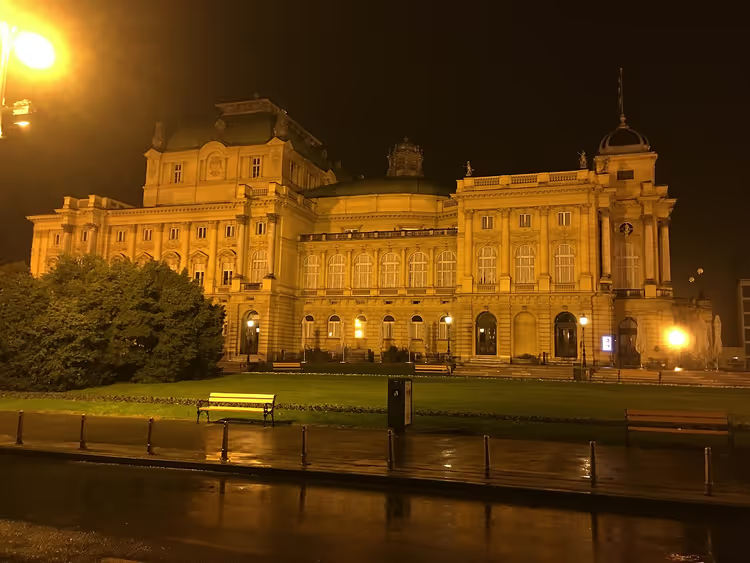
The yellow building of the Croatian National Theatre (Hrvatsko narodno kazalište) stands on the Square of the Republic of Croatia (Trg Republike Hrvatske). It opened in the late 19th century, and on a sunny day the facade looks golden, while in the evening it is illuminated. Inside, the old boxes, velvet seats, and a curtain with an illustration from an opera have been preserved. Tickets for performances are sold at the box office and online. You can see the facade itself from the square for free, and in the evening it gets busy here.
- How to get there: Square of the Republic of Croatia, about a seven-minute walk from Dolac Market.
- Who it's for: for those who want both architecture and a performance in one evening.
- Not for: for those who are in Zagreb for just a couple of hours and are not ready for an evening outing.
4. St. Mark's Church
 © Jerzy Strzelecki · CC BY-SAPhoto: Jerzy Strzelecki, CC BY-SA (https://creativecommons.org/licenses/by-sa/3.0), Wikimedia Commons
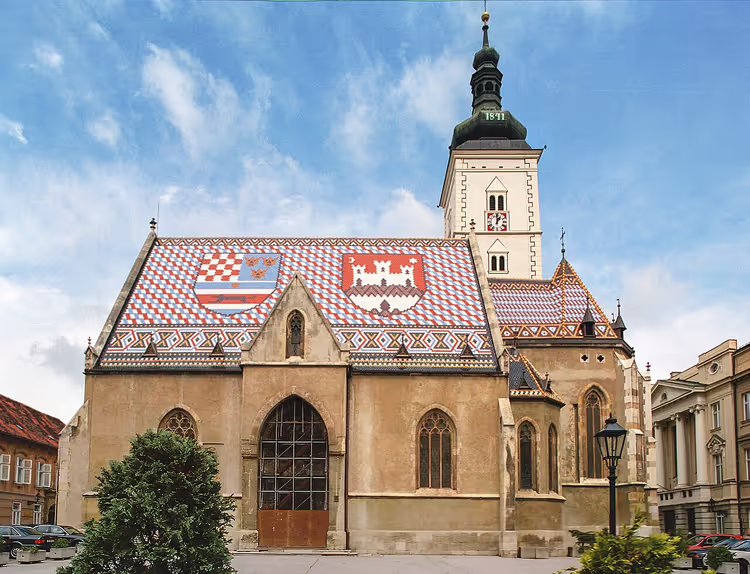
St. Mark's Church (Crkva sv. Marka) looks ordinary only from below. The main thing here is the roof: it was re-tiled in the late 19th century with multicolored tiles, and the mosaic forms the coats of arms of Croatia, Slavonia, Dalmatia and Zagreb. Look at it from St. Mark's Square, where the buildings of the Croatian Parliament also stand. Visitors are allowed inside between services, so it's better not to build your plans around a visit in advance.
- How to get there: upper town, St. Mark's Square, a two-minute walk from the Lotrščak Tower.
- Who it's for: for those who care about one striking detail rather than a large exhibition.
5. Kallina House

Kallina House (Kallina kuća) stands on the corner of Masarykova and Gundulićeva streets. It was built in the early 20th century for an industrialist who produced ceramic tiles: the building's walls are completely covered in top-grade ceramics and worked as advertising. The lacy balconies and colored tiles make the facade visible from afar. You'll see it on the way between the main square and the upper town.
- How to get there: intersection of Masarykova and Gundulićeva streets, about three minutes from Ban Jelačić Square.
- Cost: viewing from the outside is free.
6. Strossmayer Gallery
 © Donatus (Darko Tepert) · CC BYPhoto: Donatus (Darko Tepert), CC BY (https://creativecommons.org/licenses/by/2.5), Wikimedia Commons
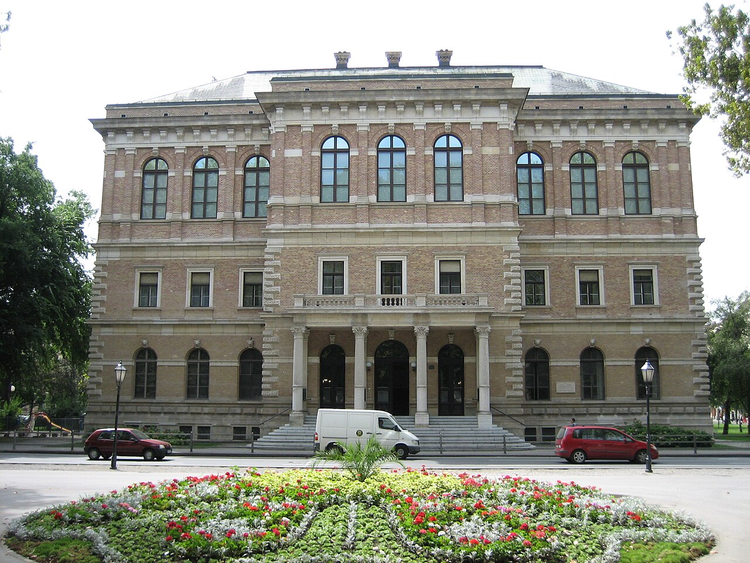
The Strossmayer Gallery (Strossmayerova galerija starih majstora) is a collection of old masters founded by Bishop Josip Juraj Strossmayer in the late 19th century. The collection includes about four thousand works, among them pieces by Dürer, El Greco and Goya. A monument to the bishop himself stands in front of the entrance. The gallery is currently closed to visitors: the building was damaged in an earthquake, and restoration is not yet finished (as of 09/2026, official HAZU website).
- The catch: you can't get inside until the Academy reopens the gallery.
- Who it's for: for those who plan their trip in advance and follow the museum's news.
7. Mimara Museum
 © Bernard Gagnon · CC BY-SAPhoto: Bernard Gagnon, CC BY-SA (https://creativecommons.org/licenses/by-sa/4.0), Wikimedia Commons
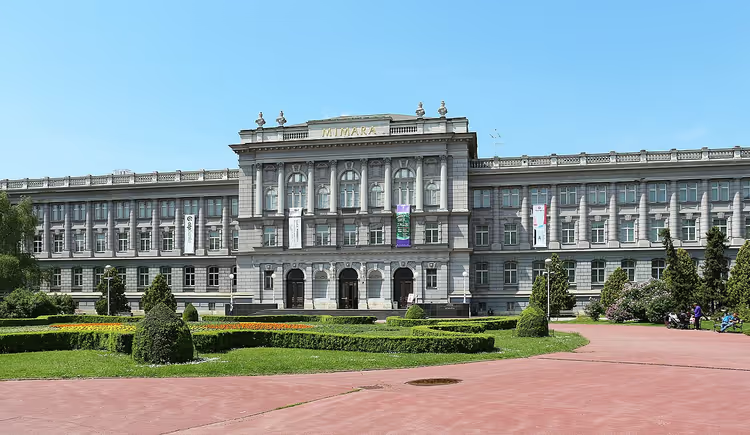
The Mimara Museum (Muzej Mimara) grew out of the private collection of Ante Topić Mimara. He collected paintings and art objects around the world, and at the end of his life donated the collection to his native Zagreb. The museum was housed in a former gymnasium building constructed in the 19th century. The collection has almost four thousand works: Flemish masters, Bosch, Rubens. The building on Rooseveltov trg has been closed since the 2020 earthquake, with reopening expected in 2026 (as of 09/2026, Muzej Mimara).
- How to get there: Rooseveltov trg, about a fifteen-minute walk from the main square.
- The catch: the collection is inaccessible while restoration is underway.
- Who it's for: for those willing to return to Zagreb for the old masters.
8. Maksimir Park
 © Silverije · CC BY-SAPhoto: Silverije, CC BY-SA (https://creativecommons.org/licenses/by-sa/3.0), Wikimedia Commons
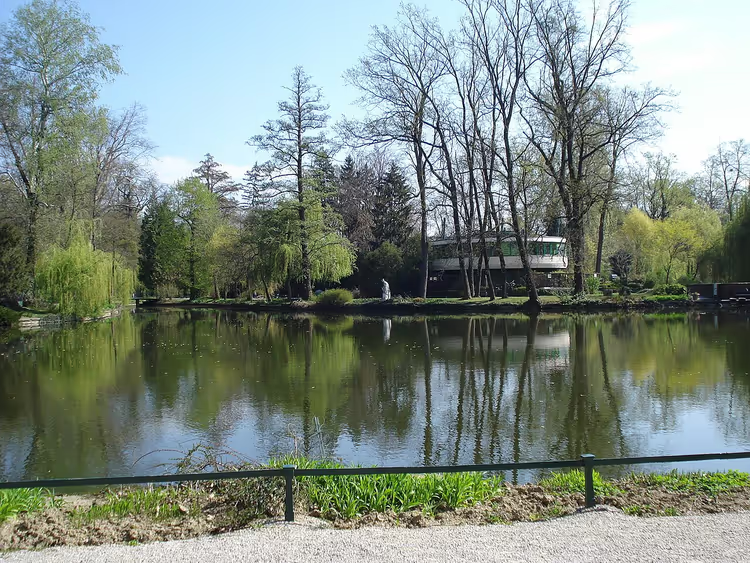
Maksimir Park was laid out in the late 18th century and named after Bishop Maksimilijan Vrhovac, who championed the idea of a large city park. The park covers hills with lakes, tree-lined paths, and lawns where locals relax in summer. The botanical garden with tens of thousands of plants is not here but in the center, on Marulićev trg. Maksimir is recognized as a monument of landscape architecture. It's a good place to get away from the crowds of the center.
- Getting there: tram from the center to the Maksimir stop, then walk to the main entrance.
- Cost: park entry is free.
- Who it's for: families with children and anyone tired of museums.
9. Zagreb Zoo
 © Janjko · CC BY-SAPhoto: Janjko, CC BY-SA (https://creativecommons.org/licenses/by-sa/4.0), Wikimedia Commons
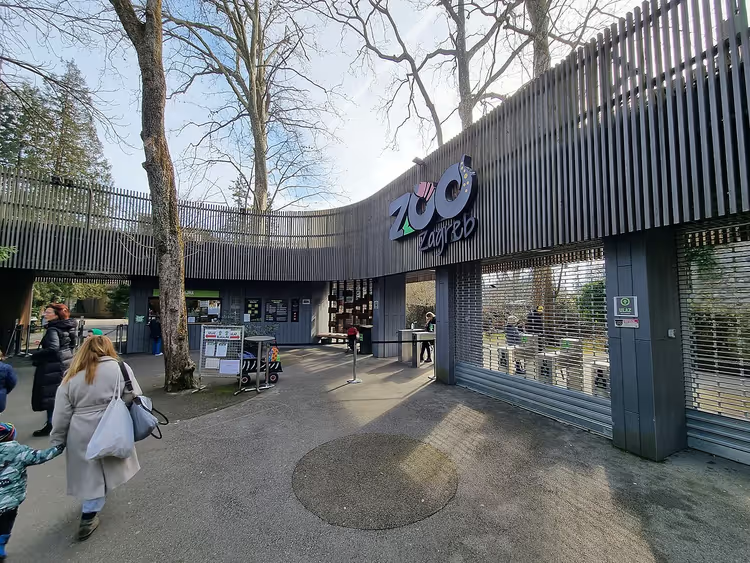
The zoo (Zoološki vrt grada Zagreba) operates inside Maksimir Park and covers about five hectares. It is home to a pygmy hippo, a snow leopard, and a scimitar oryx, and the team participates in rare species conservation programs. The ticket office is open from 9:00 to 15:00, the zoo itself is open until 16:00, and you can enter only during ticket office hours (as of 09/2026, Zoo Zagreb). Hours change by season, so check the website before your visit.
- Cost: tickets are paid, cheaper for children; check the official website for current prices.
- Who it's for: families with children; the zoo is open year-round.
- Not for: those who came only for the old town architecture.
10. Mirogoj Cemetery
 © Admiral Norton · CC BY-SAPhoto: Admiral Norton, CC BY-SA (https://creativecommons.org/licenses/by-sa/3.0), Wikimedia Commons
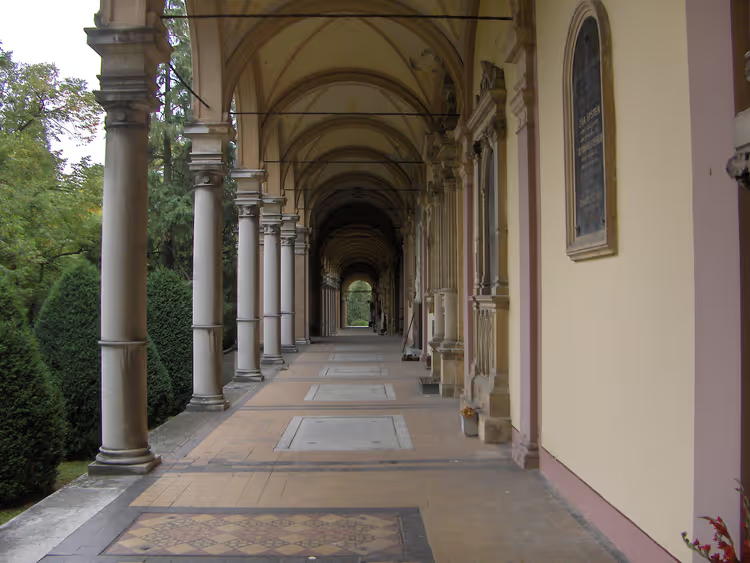
Mirogoj Cemetery is not a place of mourning in the usual sense. The entrance is an arcade with columns covered in ivy, and beyond it are paths with well-kept greenery and sculptures. It is quiet and peaceful here, so many people come as if to a park. The grounds are large, and a leisurely walk takes about an hour. You will see architecture that rarely appears in short lists.
- Getting there: bus from the center to the Mirogoj stop, about twenty minutes.
- Cost: entry is free.
- Who it's for: those interested in architecture and quiet.
11. Dolac market and Ilica street
 © Nick Savchenko from Kiev, Ukraine · CC BY-SAPhoto: Nick Savchenko from Kiev, Ukraine, CC BY-SA (https://creativecommons.org/licenses/by-sa/2.0), Wikimedia Commons
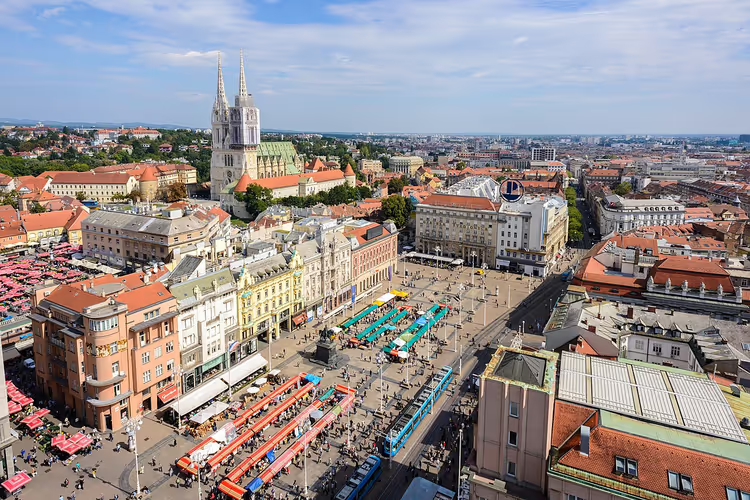
Dolac is Zagreb's main market, opening early in the morning when farmers bring their produce. Up top, under the umbrellas, vendors sell vegetables, fruit, honey, and the local cream cheese sir i vrhnje. Below the terrace is a covered pavilion with meat, fish, and cheeses. This is also where people buy souvenirs and goods from local artisans (as of 09/2026, Visit Zagreb). If you don't find anything, head to the Hrelić flea market: they sell everything from buttons to cars. Brand lovers will enjoy Ilica Street, the city's longest street.
- Getting there: between Ban Jelačić Square and the upper town, about three minutes from the main square.
- The catch: vendors start packing up by lunchtime, so the best selection is in the morning.
- Who it's for: those who want to bring home food and souvenirs rather than magnets.
Local guides can help you combine the old town, museums, and a trip to Maksimir into one itinerary. Below is a selection of Zagreb tours.
Tours and tickets in Zagreb
Guided tours, skip-the-line tickets and activities — most offers can be cancelled free of charge.
See offers on GetYourGuideThe widget loads once you give your consent.
⁉️🤔 Frequently asked questions
How many days do you need in Zagreb?
One day is enough for the old town: Kaptol, Gradec, Lotrščak Tower, the cathedral, and Dolac Market are all within a fifteen-minute walk of each other. Add a second day if you want museums, Maksimir, and the zoo. In summer, start early; by midday the center gets crowded.
What is currently closed in Zagreb?
After the 2020 earthquake, the Mimara Museum and the Strossmayer Gallery are closed (as of 09/2026, official museum website, HAZU). Check official websites before your trip: dates keep shifting.
How to get from the airport to the center?
A bus runs from Franjo Tuđman Airport to the center, and taxis and transfers are also available. The trip takes about half an hour. The bus is cheaper; a taxi is more convenient if you arrive at night. Check schedules and prices with the carrier before your flight.
What should you buy at Dolac Market?
Be sure to try sir i vrhnje, a local cream cheese from the top shelves. Come before ten in the morning: the selection is better and the lines are shorter (as of 09/2026, Visit Zagreb).
Is it worth going to Mirogoj Cemetery?
Yes, if you're interested in architecture and quiet. Think of it as a park with history rather than an ordinary cemetery.
In short: what's worth booking
If you have one day: Lotrščak Tower, the cathedral, St. Mark's Church, and Dolac Market. If you're with kids: the zoo in Maksimir is open every day, and park entry is free. If you love art: check the Mimara and Strossmayer websites first, both museums are closed today. If you want a guided city tour: Zagreb tours on GetYourGuide.

A small editorial team writing guides for independent travel. We travel ourselves, but we haven’t been everywhere, so we check prices, opening hours and how to get there against official sources.