
















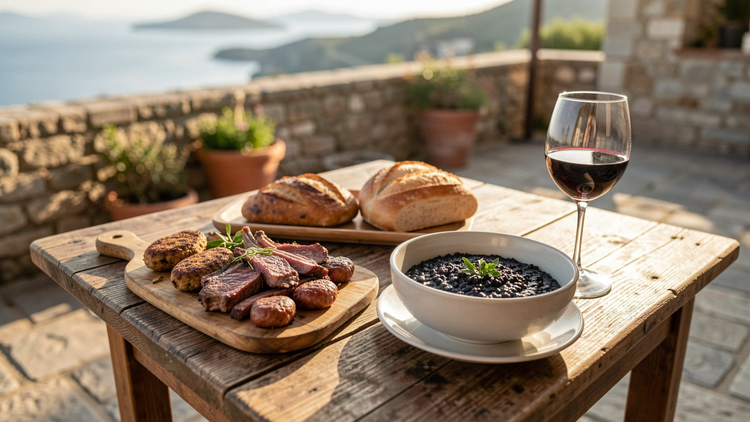
 AIIllustrative image: AI-generated
What to order in Croatia: 21 dishes and drinks from konobas and bakeries
Croatian cuisine starts with the grill. On the Adriatic coast, meat and fish are cooked over coals in almost every konoba, and the smell of smoke catches up with you in the parking lot before you've even opened the menu.
An official fact for understanding the local food: Croatia has been on the UNESCO intangible heritage list for the Mediterranean diet since 2013 (ich.unesco.org). It's not just about the products, but also about the culture of the long table: fish, vegetables, olive oil, and eating among your own people.
Below we break down 21 items from the konoba and bakery menu. You'll see what each dish is made from, how it differs from its neighbor on the list, and what to order with it.
How Croatian cuisine works
💡 In short:
- On the coast, everything revolves around the grill: coals, olive oil, garlic, and bread.
- Portions in konobas are large, so order one hot dish for two and bread for the sauce.
- With fish, ask for a white Grasevina; with meat, a red Babic; after dinner, they'll pour you rakija.
- Dishes and regions: 09/2026, according to the official Croatian tourism portal.
The menu in Croatia is divided into two halves. Dalmatia and the islands offer fish, mussels, octopus, and stewed meat in a dark sauce. Istria, Kvarner, and the mainland part of the country rely on pork, sausages, lamb, and strudel. Continental cuisine is closer to Austrian and Hungarian, while coastal cuisine is closer to Italian. You can see it in the desserts too.
A konoba is a local tavern. Tables are set outside, the service is simple, but the portions are sized for a hungry person coming off the beach. If you're eating as a pair, order one meat or fish dish for two, a salad, and bread. That way you'll try more items in one evening. Leave the fish selection to the owner: he knows today's catch.
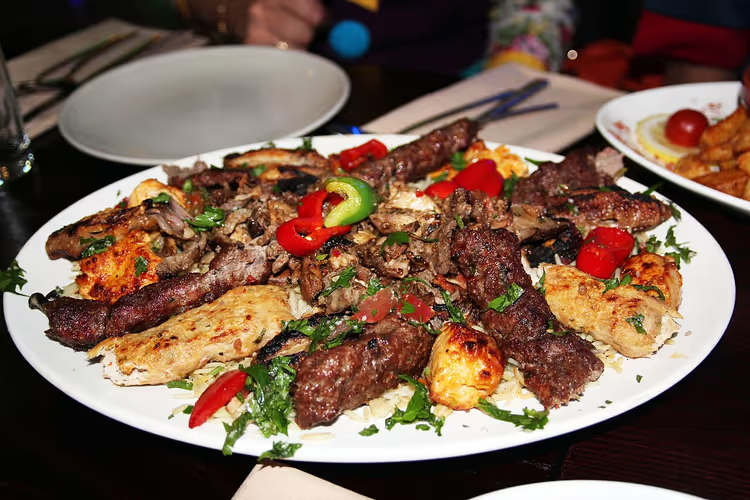
1. Mijesano meso
 © Murcotipton · CC BY-SAPhoto: Murcotipton, CC BY-SA (https://creativecommons.org/licenses/by-sa/4.0), Wikimedia Commons
Mijesano meso translates as mixed meat, and it's the easiest entry point into the local cuisine. You get a large plate with a little of everything: a cutlet, cevapi, pljeskavica, raznjici, and homemade sausage. Sometimes fried liver is added to the mix.
The side dish is also a mix. Along with french fries, the plate includes duved, Croatian rice with vegetables, and vegetables from the coals. Mixed meat is prepared just as readily in Istria, in the Kvarner Gulf, in Dalmatia, and inland, so you won't have to search long for it.
- Who it's for: a group of two or three people who want to try everything at once.
- Important: the composition of the plate varies from konoba to konoba, so ask the waiter what's already ready.
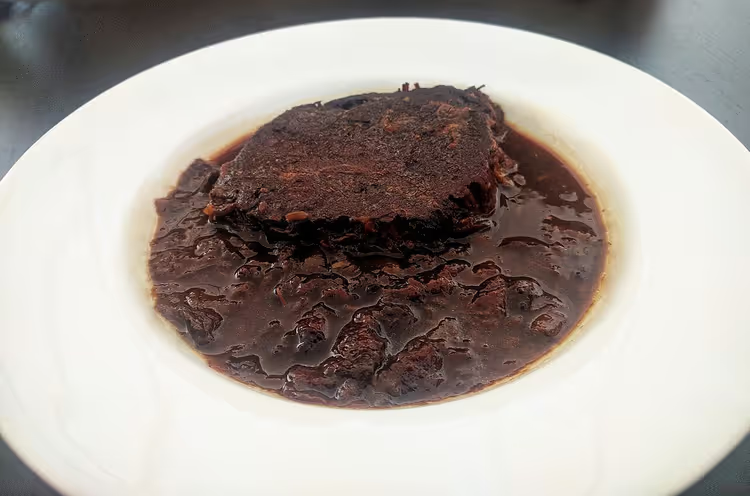
2. Pasticada
 © Ponor · CC BY-SAPhoto: Ponor, CC BY-SA (https://creativecommons.org/licenses/by-sa/4.0), Wikimedia Commons
Pasticada is made in Dalmatia, from the northern part to the southern. It's stewed beef, cut into large pieces or served as a single piece, with gnocchi alongside. Both sit in a thick sauce similar to goulash.
The dish lives on time: the meat simmers until the sauce becomes dense and dark. Many guests come for the grill and skip pasticada, which is a shame. This is where you see Dalmatian cuisine without coals and without fish.
- Who it's for: those who want a hearty hot dish and are willing to wait.
- The catch: the dish is for fans of stewed meat; some guests don't appreciate it.
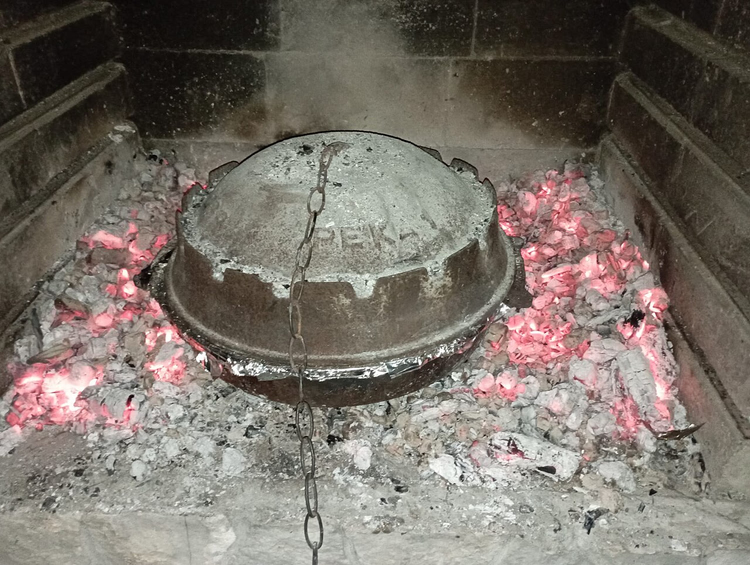
3. Peka
 © MatSkvorc · CC BY-SAPhoto: MatSkvorc, CC BY-SA (https://creativecommons.org/licenses/by-sa/4.0), Wikimedia Commons
Peka is a cooking method, not a set of ingredients. Meat or fish, together with potatoes, is placed under a clay or metal bell, covered with hot coals, and left to cook in its own juices.
The classic here is lamb. But most often guests order octopus peka, meaning octopus under the bell: it comes out tender and very rich in flavor. Steam and smoke stay inside, so the potatoes soak up the meat juices. The dish takes a long time to cook, and that changes the dinner plan.
- Important: order peka when you arrive, along with your drinks, not at the end of dinner.
- Who it's for: groups of three or more; one portion only fills up a very hungry person.
4. Svinjedina i janjedina na razu
 © Silverije · CC BY-SAPhoto: Silverije, CC BY-SA (https://creativecommons.org/licenses/by-sa/4.0), Wikimedia Commons
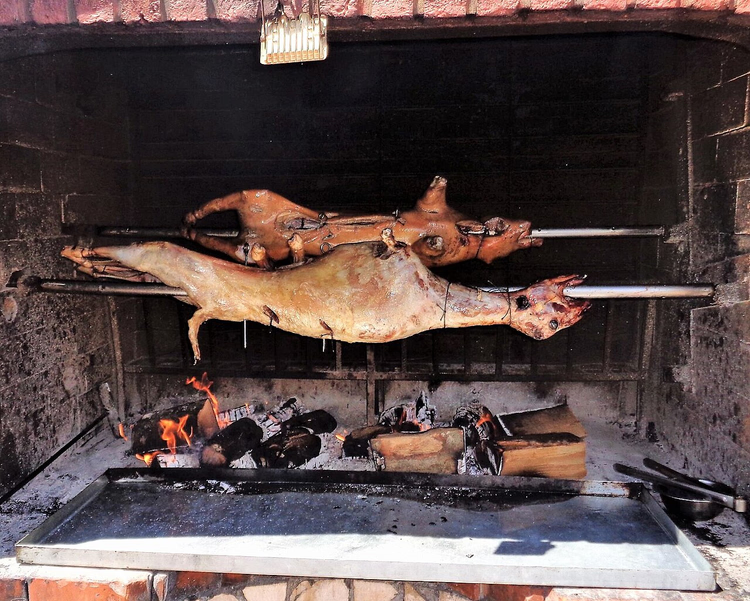
If there's a spit by the road and you can see the smoke from far away, stop. Svinjedina i janjedina na razu is suckling pig and lamb roasted over coals and turned constantly until the skin becomes crispy.
These grills are set up along the coastal highway, between towns and in remote villages. The meat comes out juicy inside and aromatic outside, and the best piece is the skin. It's served with duved, fried potatoes, or just bread. Bread here isn't a formality: you use it to soak up the juice and fat from the plate.
- How to get there: look for spits along the Jadranska magistrala, the coastal highway, away from resort centers.
5. Sardine na zaru
 © Jos Dielis · CC BYPhoto: Jos Dielis, CC BY (https://creativecommons.org/licenses/by/2.0), Wikimedia Commons
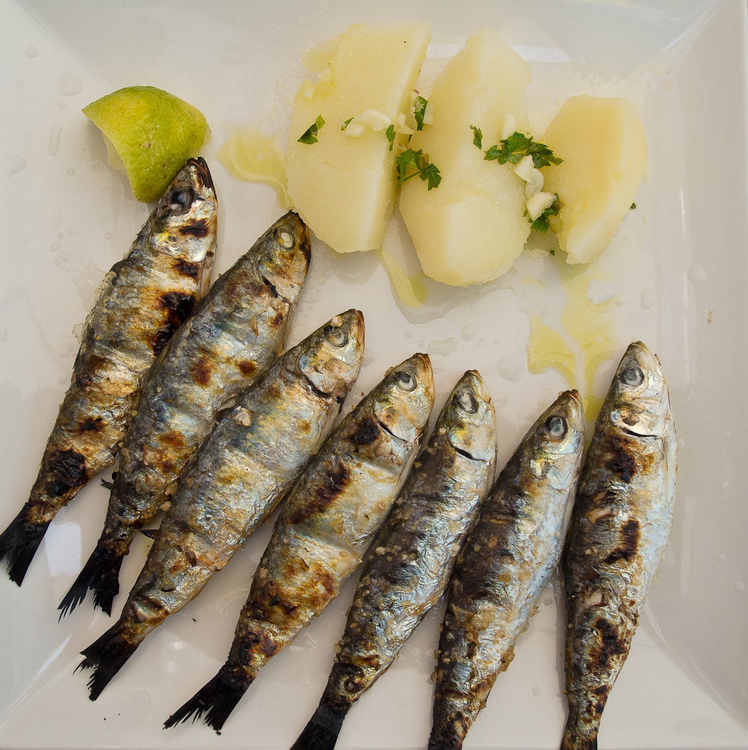
Fresh sardines are nothing like canned ones. They're grilled whole, with garlic and olive oil, and served with white bread so you can soak up the oil from the bottom of the plate.
Sardines have a strong flavor of their own, so they're barely hidden behind sauces. This is a simple fish option for a quick lunch after a swim. Add a lemon, and later in the evening order a glass of white.
- Who it's for: those who want to try Adriatic fish without a long dinner.
- The catch: the bones are small, so you'll have to debone the fish yourself.
6. Girice i ribice
 © Minja Klarić · CC BY-SAPhoto: Minja Klarić, CC BY-SA (https://creativecommons.org/licenses/by-sa/4.0), Wikimedia Commons
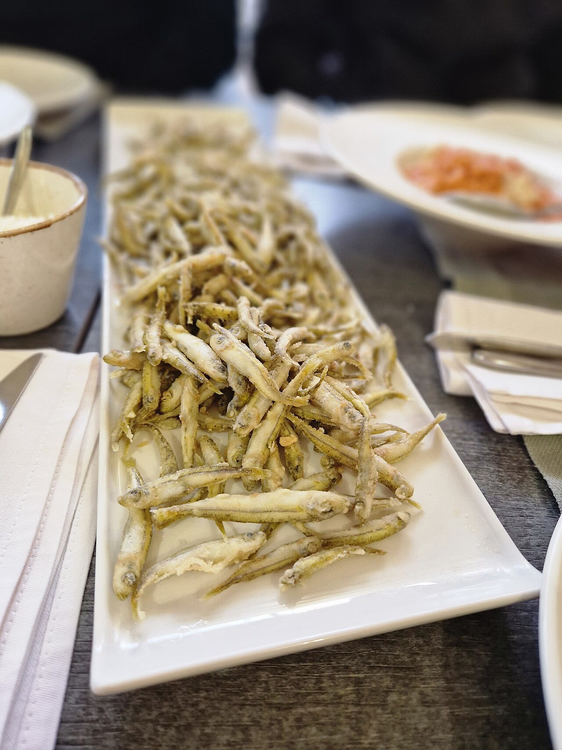
Girice and ribice are small fish that in Croatia are deep-fried and served in a pile. Girice are even smaller than ribice, and under that pile the plate is barely visible. This is how they are served in konobas throughout Dalmatia.
The fish is not fried until dry: the crust should stay crispy while the middle remains soft. It's a classic snack with beer or wine at a beach bar, but a portion easily turns into a full lunch.
- Who it's for: a snack with a drink and a light beach bite.
- Not for: those who aren't ready to eat fish whole, with the head and tail.
7. Punjena paprika
 © Silverije · CC BY-SAPhoto: Silverije, CC BY-SA (https://creativecommons.org/licenses/by-sa/4.0), Wikimedia Commons
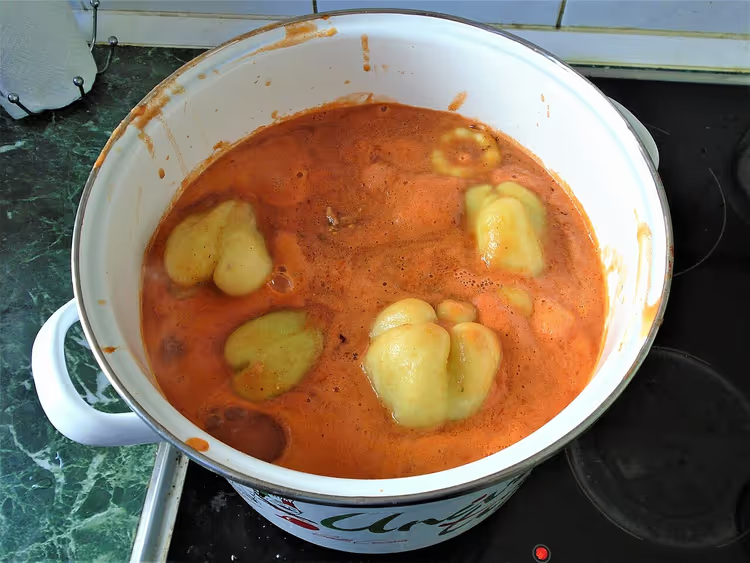
Punjena paprika is stuffed pepper, and this is where the main difference from the German version begins. The pepper itself is smaller, the filling is denser and meatier, there is less rice in it, and the pepper swims in tomato sauce.
The flavor rests on local ingredients: peppers, tomatoes, and meat come from the nearby market. If you're tired of grilled meat and fish but want to stay within Croatian cuisine, this is a solid choice for the evening.
- Who it's for: those who want a hot home-style dish without the grill.
- The catch: it's not close to the familiar taste, the filling is denser and there's a lot of sauce.
8. Crni rizot
 © Micaela & Massimo · CC BYPhoto: Micaela & Massimo, CC BY (https://creativecommons.org/licenses/by/2.0), Wikimedia Commons
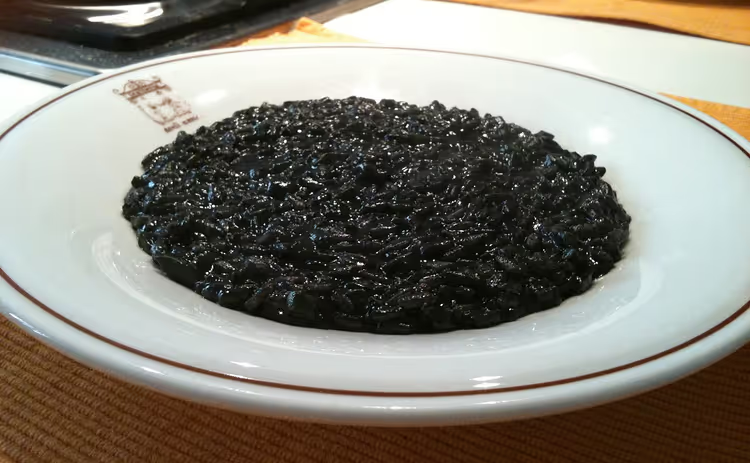
Crni rizot is black risotto, and its color comes from squid ink. It's added while the rice cooks, so the flavor spreads through the whole plate rather than staying on the surface. Pieces of squid also go into the pot and cook together with the rice.
Many guests look at the black plate with suspicion. Unnecessarily: the ink works as a seasoning, not as decoration. Order the risotto as the last hot dish, it's filling and after it you won't need dessert.
- Who it's for: those who love seafood and want to try something beyond the grill.
- The catch: the black color puts off some guests who choose food with their eyes.
9. Lignje na zaru
 © KLMircea · CC BY-SAPhoto: KLMircea, CC BY-SA (https://creativecommons.org/licenses/by-sa/2.0), Wikimedia Commons
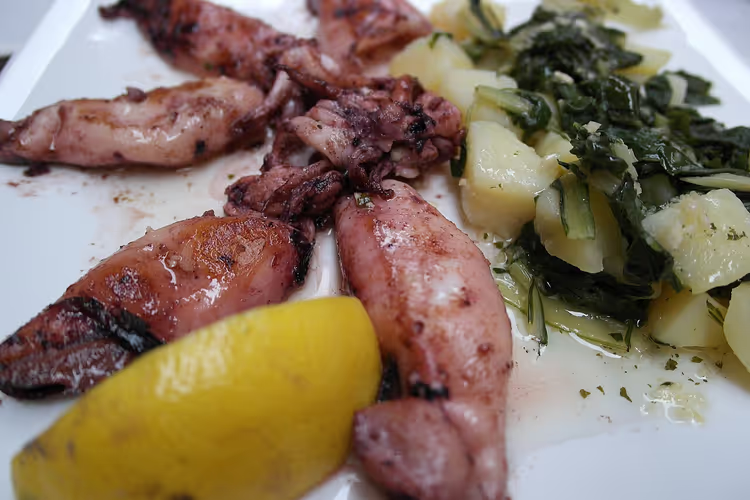
Lignje na zaru is grilled squid, which in Italy is called calamari. The recipe is short: coals, olive oil, garlic, and salt. Nothing else is done to the squid, and that's the whole point.
In Croatia it's served with blitva, local Swiss chard with potatoes and garlic. It's the best side dish for a seafood item because it doesn't overpower the taste of the fish. If you see the pairing of lignje and blitva on the menu, go for exactly that.
- Who it's for: those who want a simple seafood item without sauce.
- Important: squid is easy to overcook on the fire, so ask them not to leave it on the grill too long.
10. Cevapcici
 © amanderson2 · CC BYPhoto: amanderson2, CC BY (https://creativecommons.org/licenses/by/2.0), Wikimedia Commons
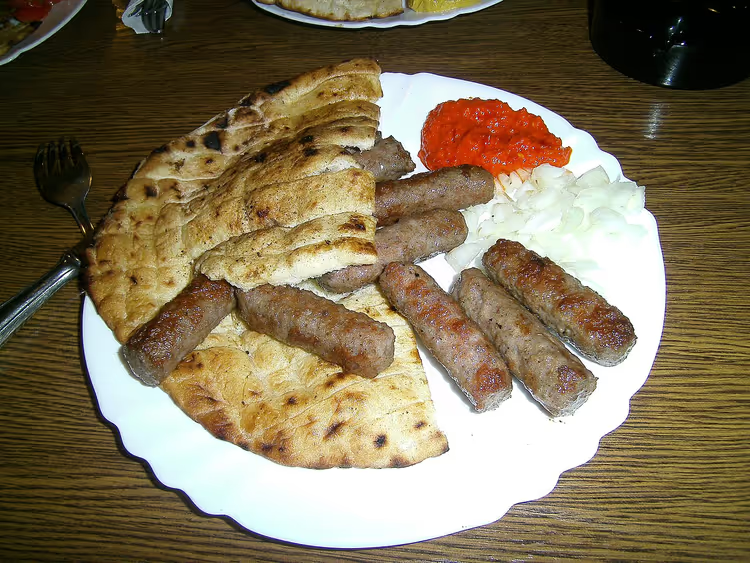
Cevapcici are small sausages made from minced meat and perhaps the country's most famous dish. The original is made from lamb, but today the mince more often contains beef and pork, because lamb gives off too strong a flavor.
Real cevapi must go over coals: without the smoke from charcoal, the taste comes out flat, and it becomes a different product. As street food they're put in a flatbread with onions, and then lunch is eaten on the go. You can also get a plate with french fries if you want to sit down at a table.
- Who it's for: a quick lunch and a first introduction to the cuisine.
- The catch: the original lamb version is rare, so check the mince composition in advance.
11. Dagnje
Dagnje are black mussels that konobas cook fresh every day. The choice is simple but fundamental: buzara, meaning mussels in tomato sauce, or the classic preparation in white wine with garlic.
The sauce decides almost everything here, so pick the one that appeals to you more. Bread is mandatory: otherwise the sauce stays in the plate, and that is the main loss of the evening. Mussels are eaten with your hands, and the sauce is soaked up with bread.
- Who it's for: those who love seafood and don't want to fuss with fish.
- Important: the shells are not edible, so keep the edge of your plate clear for them.
12. Riba na zaru
 © Luca.favorido · CC BY-SAPhoto: Luca.favorido, CC BY-SA (https://creativecommons.org/licenses/by-sa/4.0), Wikimedia Commons
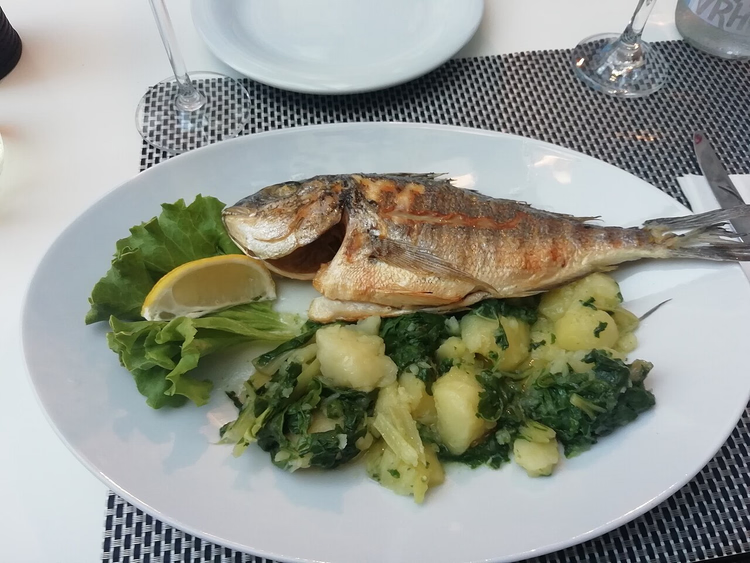
Riba na zaru is grilled fish, and here freshness decides everything, not the sauce. The fish is gutted, placed on the grill, cooked through, and finished with salt, olive oil, garlic, and parsley.
Nothing else is done to it, so the flavor comes through clearly. Choose the type of fish according to your taste or leave the choice to the waiter: he knows what was caught that morning. In konobas along the coast, this fish is the main argument for making the trip to the Adriatic.
- Who it's for: those who want to understand why you travel to the sea for food.
- The catch: the fish is served whole, with head and fins, and you have to get used to it from the first time.
13. Salata od hobotnice
 © Haydn Blackey from Cardiff, Wales · CC BY-SAPhoto: Haydn Blackey from Cardiff, Wales, CC BY-SA (https://creativecommons.org/licenses/by-sa/2.0), Wikimedia Commons
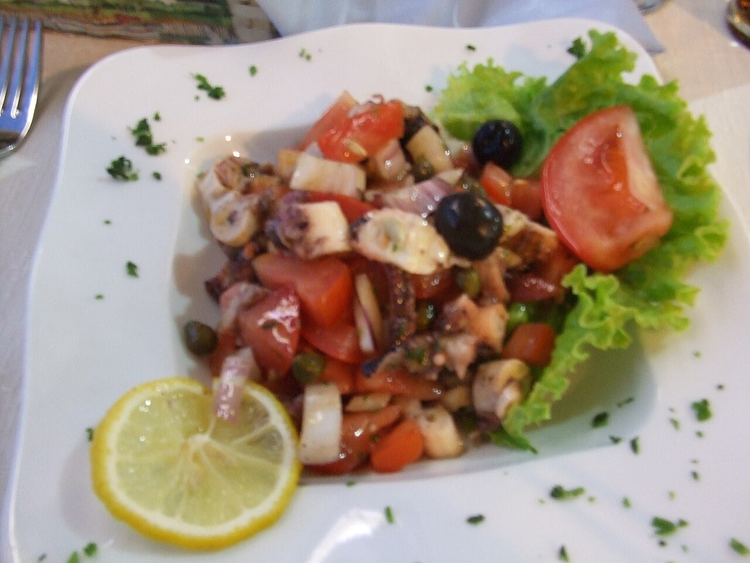
Salata od hobotnice is a cold octopus salad. The octopus is cut into small pieces, drizzled with lemon, and mixed with olives, tomatoes, and pieces of paprika. It is served cold, often right by the water.
This is the perfect beach snack: sitting in the shade, looking at the water, and eating a cold salad with bread and a glass of white wine. The octopus has already cooled and become firm, so the dish is not heavy. Get bread and white wine, the salad opens up fully with them.
- Who it's for: a light bite in the heat and a starter before dinner.
- Important: this salad is not reheated, it is meant to be cold.
14. Svinjske kotlete
Svinjske kotlete is an ordinary pork chop, but in the Croatian version it grows into a full dish. The cut of meat is large, grilled over coals, and kept on the fire just long enough for the center to stay juicy.
These chops turn out best in konobas away from the tourist streets. Sometimes the meat is served with grilled vegetables from the owner's own garden, and then the dinner comes together completely. Look for a place where locals are sitting at the next table.
- Who it's for: those who want simple meat without sauces and complicated sides.
- Important: get away from the first row along the waterfront, they cook there for volume, not for themselves.
15. Pizza
 © LucianoZ · CC BY-SAPhoto: LucianoZ, CC BY-SA (https://creativecommons.org/licenses/by-sa/3.0), Wikimedia Commons
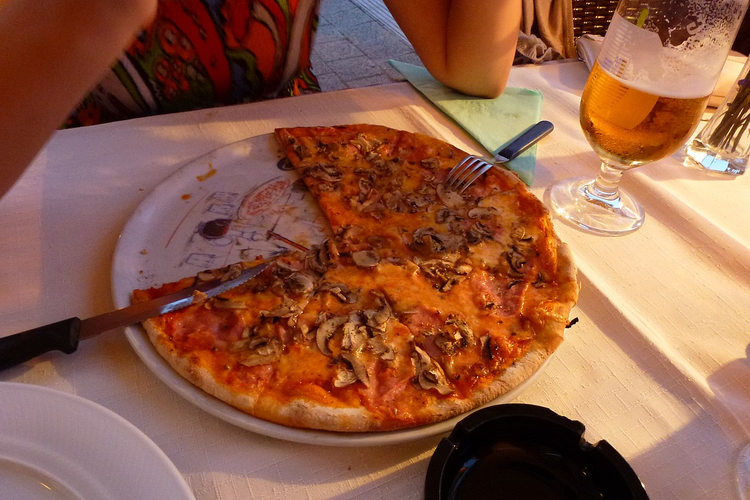
Pizza in Croatia is not a tourist trap. Venetians and Croats traded and fought for centuries, so dough and rice came here from Italy long ago and took root. Dough and risotto have held on in the local cuisine far longer than a hotel menu would suggest.
Croats themselves consider their pizza the second best in the world after Italian. Arguing with that on vacation is pointless, it's easier to test it: if you're tired of fish, pizza and risotto close out the evening without surprises and without a long wait.
When you order pizza in Zadar or Split, you are staying within the local cuisine, not stepping outside it.
- Who it's for: those who are tired of grilled food and want a simple dinner.
- The catch: the recipe came from Italy, so it doesn't count as a genuinely Croatian dish.
16. Palacinke
 © David Monniaux · CC BY-SAPhoto: David Monniaux, CC BY-SA (http://creativecommons.org/licenses/by-sa/3.0/), Wikimedia Commons
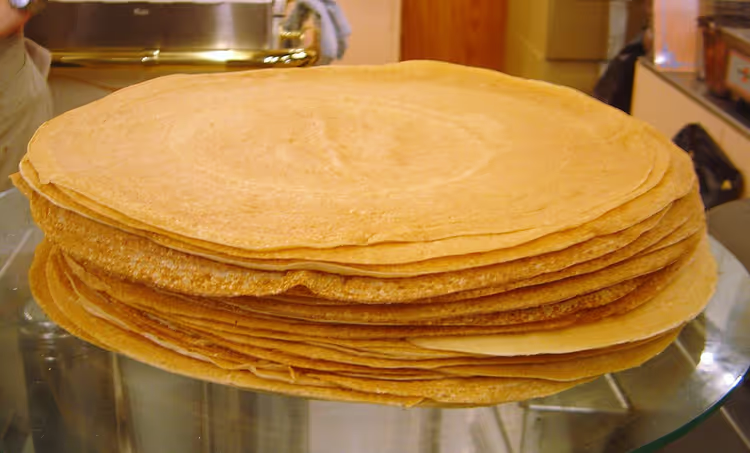
Palacinke are crepes, the foundation of all local desserts. In Austria they are called the same, in Germany you would say Pfannkuchen, and in Croatia they are served at the end of any proper lunch.
The filling varies: the traditional one with jam, and also chocolate or ice cream. Save room in your stomach, otherwise the crepes will have to wait until the next evening. One portion for two is usually enough, the crepes are filling.
- Who it's for: those who want something sweet after dinner.
- The catch: they are heavy, after a full meal a portion is too much.
17. Fritule
 © Massimo Telò · CC BY-SAPhoto: Massimo Telò, CC BY-SA (https://creativecommons.org/licenses/by-sa/3.0), Wikimedia Commons
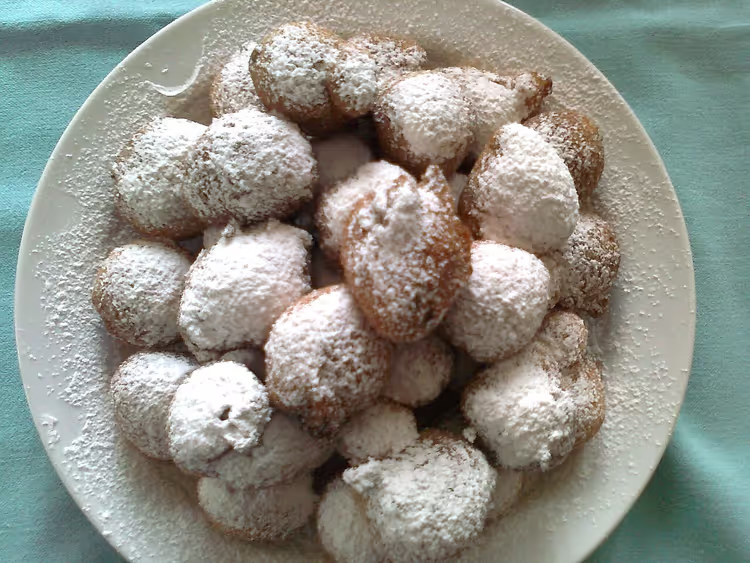
Fritule are small sweet dough balls. Technically this is a Christmas dish, but Croats love them so much that they make them all year round: in bakeries and at fairs they sit alongside the rest of the pastries.
The dough is simple: eggs, sugar, flour, and yeast, sometimes yogurt for moisture. The balls are deep-fried and dusted with powdered sugar. They are eaten warm, and once cooled they are not the same, so grab them right away.
- Who it's for: those who want something sweet on the go, without a fork and plate.
- The catch: fresh and warm ones are far better than cooled ones.
18. Strudel
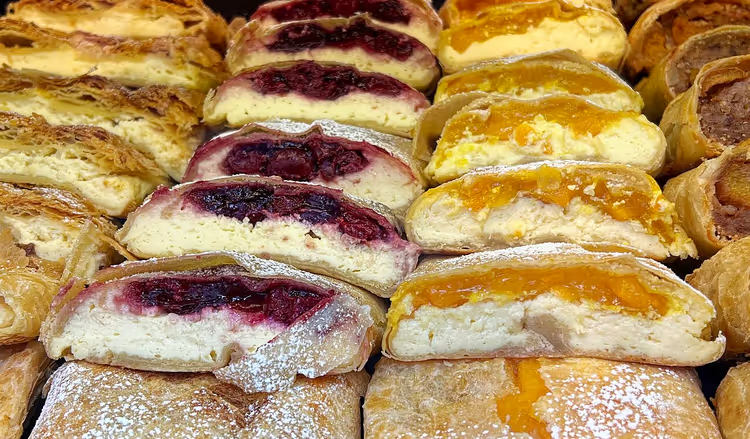 © Burkhard Mücke · CC BYPhoto: Burkhard Mücke, CC BY (https://creativecommons.org/licenses/by/4.0), Wikimedia Commons
Strudel in Croatia is strudel, and you won't have to spell out the name when ordering. Its lineage is Austrian, so Austria has more fillings, while Croatia keeps a more modest set: cherry, apple, and chocolate.
More modest does not mean worse. The dough stays thin, and the dessert closes out a coastal lunch well. If you want a bite between the beach and dinner, strudel does the job better than any pastry from a chain supermarket.
- Who it's for: those who want a dessert between lunch and dinner.
- The catch: fewer fillings than in the Austrian version.
19. Breskvice
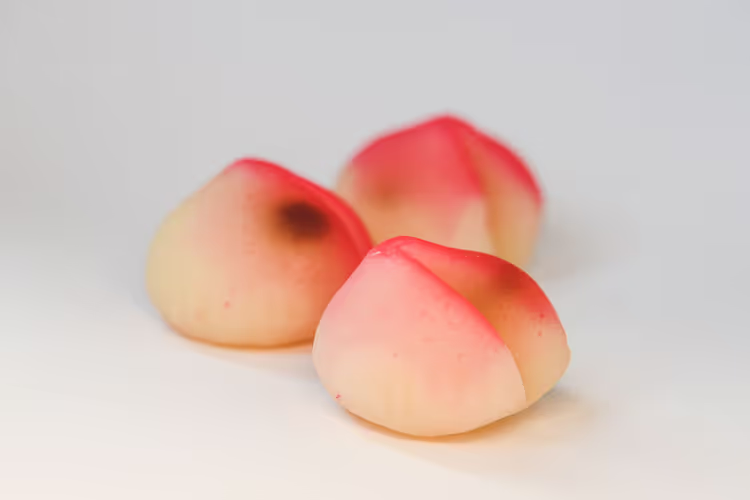
Breskvice look like peaches, but there are no peaches in them. They are small round shortcrust pastries: the halves are baked, then joined with a filling of walnuts, apricot jam, cocoa, and rum. The pastry is then dipped in sugar syrup.
They are served at family celebrations and christenings, so you will see them less often in an ordinary konoba than fritule.
The pastry turns out dense and moist, not dry. For a Croatian family, breskvice are a dessert of celebration: without them a christening or anniversary is not considered complete. If you see them in a bakery display, take them right away: you won't be able to put these pastries together at home.
- Who it's for: those who love dense nutty desserts.
- The catch: outside of holidays and bakeries they are rare.
20. Babic Vino
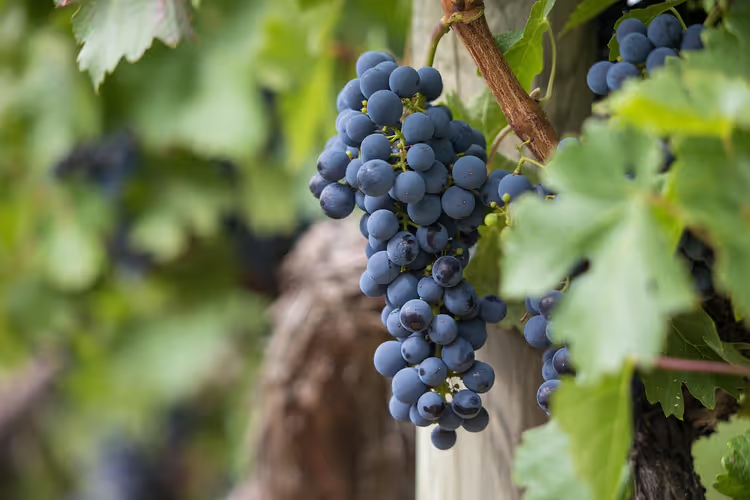
Babic is a Croatian red wine made in only one place: the Šibenik area, more precisely around Primošten. The grapes grow on rocky, poor soil, and this is exactly the case where poor land produces a dense wine.
Its color is dark ruby, but Babic drinks easy. It pairs perfectly with meat, and its tannins are reminiscent of Malbec from Argentina. For fish, skip it and go with a white Grasevina instead.
- Who it's for: meat dishes, spit-roasted meats, and cheeses.
- The catch: not a fit for fish or light salads.
21. Rakija

Rakija is a homemade schnapps, and without it a Croatian dinner isn't considered complete. It's distilled in nearly every backyard: from fruit, herbs, or nuts. Cherry and walnut are the most common pours.
The main rule of your vacation: if the host invites you to a shot after dinner, don't refuse. Saying no is taken as rudeness here, and the shot rarely shows up on the dinner bill. And remember that behind the wheel even one small shot is one too many.
- Important: after dinner, rakija is often served free by the establishment.
- The catch: it's strong, and it's usually not served with dessert.
⁉️🤔 Frequently asked questions
How much does dinner cost at a Croatian konoba?
The price comes down to three things: the region, the type of fish, and where your table is located. Fish is often sold by weight, so it's better to confirm the price before ordering, not after. Grilled dishes, pasta, and desserts are predictably priced in both Dalmatia and Istria (as of 09/2026, Croatia's tourism portal).
What if you don't eat pork?
Pork shows up often on Croatian menus: mixed meat, cutlets, and some of the minced meat in cevapi. Fish, mussels, squid, and black risotto fully solve the problem, and peka can be ordered with octopus. Always ask the waiter about the minced meat blend: recipes vary from konoba to konoba, and cevapi doesn't always contain pork.
Can you try Croatian cuisine without meat?
Yes, if you stick to seafood and vegetables. Black risotto, mussels in white wine, octopus salad, and blitva with potatoes make a complete dinner. Mixed meat, cutlets, and spit-roasted meat won't work for you: those are all built around meat.
Where do you find peka and when should you order it?
Peka is prepared in Dalmatian konobas, usually to order and fairly slowly. Look for places away from the waterfront and ask at the door whether peka is available today. If it is, order it right away, along with your drinks, and you won't have to wait at the end of the meal.
What should you drink with fish, and what with meat?
With fish and seafood, go for a white Grasevina: it doesn't compete with the flavor of the sea. With meat, especially cevapi and spit-roasted dishes, ask for a red Babic from the Sibenik area. After dinner, the host often pours rakija, usually cherry or walnut.
If you want to see local cuisine in action, here's a short English-language overview of traditional dishes.
In short: what to order at a konoba
The formula is simple. If you have one dinner on the coast, get the mixed meat and black risotto, and save the fish for a second evening. If you came for the sea, sardines, mussels, and grilled squid will cover everything. If you're tired of meat and fish, pizza will save you. For dessert, a palacinke at the end of the meal and fresh fritule from the bakery are enough.
What to take with you: strudel and breskvice for the road, a bottle of Babic to bring home. And one promise to yourself: on the last evening, leave room for peka, it's something people remember for a long time. Arrive with an empty stomach and don't plan anything after dinner, a Croatian table doesn't wrap up in an hour.

A small editorial team writing guides for independent travel. We travel ourselves, but we haven’t been everywhere, so we check prices, opening hours and how to get there against official sources.