
















 AIIllustrative image: AI-generated
13 Thermal resorts of Hungary: where water heals and how much a course costs
Hungary is one of the top five countries in the world by number of thermal springs. Around 1,300 thermal springs have been discovered on its territory, and baths, pools, and treatment centers have been built around them (according to Hungary's official tourism portal). We've rounded up 13 thermal resorts that are open to guests in fall 2026, from Lake Hévíz to the cave bath in Miskolctapolca.
Below you'll find water temperature and composition, treatment profile, operating season, and a price benchmark for a course. First comes a comparison table, then a breakdown of each resort, and at the end, answers to frequently asked questions.
Ad: this article contains affiliate links, we earn a commission if you book through them, at no extra cost to you.
Overview: 13 resorts and their profiles
💡 In short:
- Hungary's thermal baths are open year-round, and admission is sold as hourly tickets without advance booking.
- A treatment course takes 1 to 3 weeks (as of 09/2026, national tourism portal).
- Prices, opening hours, and bath seasons: 09/2026, verified on the official Széchenyi Bath website.
Resort | Region | Water temperature | Profile |
|---|---|---|---|
1. Hévíz | Transdanubia | from +24 to +42 °C | joints, gynecology, skin |
2. Széchenyi Bath | Budapest | spring up to +78 °C | metabolism, joints, spine |
3. Gellért Bath | Budapest | from +38 to +43 °C | joints, spine, respiratory |
4. Bükfürdő | Western Hungary | from +55 to +65 °C | GI tract, heart, blood vessels |
5. Sárvár | Western Hungary | spring up to +83 °C | rheumatism, women's health, respiratory |
6. Miskolctapolca | Northeast | from +29 to +35 °C | respiratory, heart, skin |
7. Debrecen | East | up to +63 °C | metabolism, GI tract, joints |
8. Harkány | South | +62 °C | skin, gynecology, rheumatology |
9. Hajdúszoboszló | East | up to +75 °C | joints, spine, neuralgia |
10. Balatonfüred | Balaton | warm, CO2 springs | heart and blood vessels |
11. Visegrád | Danube Bend | spring from 1,300 m | joints, gout, osteoporosis |
12. Zalakaros | Transdanubia | up to +96 °C | nerves, rheumatism, gynecology |
13. Gyula | Southeast | 7 springs | joints, skin, digestion |
Temperatures, water composition, and profiles: according to the national tourism portal and official bath websites, 09/2026.
1. Hévíz
 © Oleg Andriychuk · CC BYPhoto: Oleg Andriychuk, CC BY (https://creativecommons.org/licenses/by/3.0), Wikimedia Commons
Hévíz has been known since the 17th century thanks to the world's largest thermal lake, covering 4.7 hectares. Water is supplied by two springs in an underwater cave, heated to +42 °C and +38 °C, plus one mineral spring with water at +17 °C (according to the Hungarian thermal baths portal). The lake's water fully renews every 28 hours.
In summer the temperature stays between +30 and +32 °C, and in winter it never drops below +24 °C. When the air is colder than the water, steam rises above the lake's funnel. The water contains sulfur, carbon dioxide, and radon, and the bottom is covered with a meter-thick layer of mud rich in calcium and magnesium.
Treatments here target the musculoskeletal system, skin and gynecological inflammation, and nervous system disorders. Without a clinical course, you can bathe for no more than 1.5 hours, and with rheumatism only 30 minutes: the lake puts a heavy load on the heart.
- Who it's for: people with joint conditions and rheumatism.
- The catch: bathing time is limited, so treatment has to be done in short sessions.
Next to the State Clinic there's a pump room with thermal drinking water, taken for low stomach acidity. If you want to stay right by the water, look for a hotel 500-600 meters from the lake: hotels in Hévíz on Trip.com.
2. Széchenyi Bath
 © Marc Ryckaert ( MJJR ) · CC BYPhoto: Marc Ryckaert ( MJJR ), CC BY (https://creativecommons.org/licenses/by/3.0), Wikimedia Commons
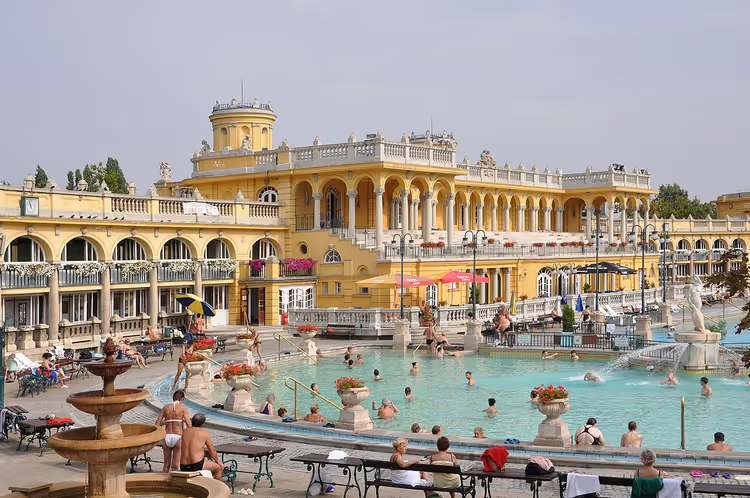
The Széchenyi Bath has operated in Budapest since 1913 and is considered the largest in Europe. The complex is built in neo-baroque style and is fed by water from the St. Stephen spring. It has 15 indoor pools, 3 outdoor pools, and 10 saunas and steam rooms.
Water is pumped from a depth of 1,246 meters, where the spring is heated to nearly +78 °C. In addition to bathing, the bath offers aromatic, thermal, and therapeutic massage. Széchenyi drinking water helps with metabolic disorders and high acidity, as well as joint and spine conditions.
In summer, the ticket line gets long. If you're coming on vacation, buy an online ticket for the morning slots (as of 09/2026, the bath's official website). Budapest hotels on Trip.com.
3. Gellért Baths
 © Zairon · CC BY-SAPhoto: Zairon, CC BY-SA (https://creativecommons.org/licenses/by-sa/3.0), Wikimedia Commons
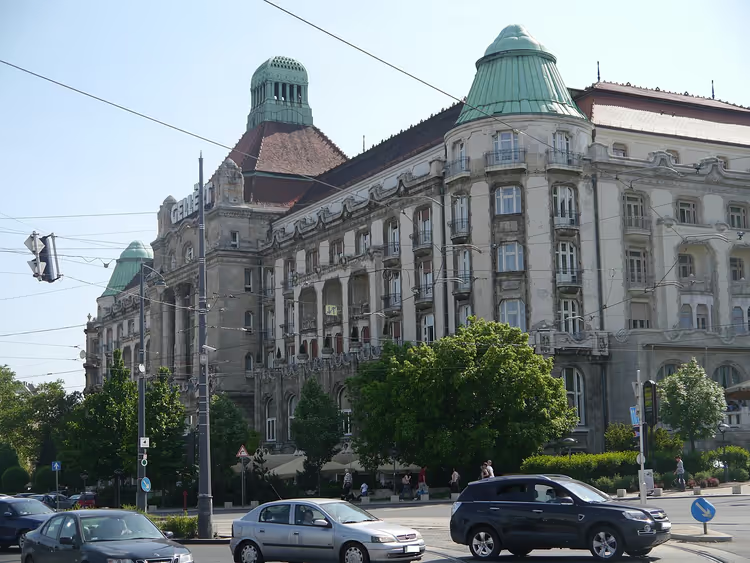
The Gellért Baths at the foot of Gellért Hill are considered the most beautiful in Budapest. It's an indoor complex with stained glass and columns, and the water comes from springs at +38 to +43 °C (according to the Visit Hungary portal). Guests have access to 13 pools: outdoor, sitting, children's, wave, and a pearl bath.
The water is rich in trace elements and helps with spinal conditions and joint pain. It's used to treat neuralgia, vascular and pulmonary diseases, asthma, and anxiety. Therapeutic sessions are complemented by a sauna, steam room, mud applications, and massage.
Since fall 2025, the baths have been closed for renovation. Check their status on the official website before you go.
4. Bükfürdő
 © Jakub Hałun · CC BY-SAPhoto: Jakub Hałun, CC BY-SA (https://creativecommons.org/licenses/by-sa/4.0), Wikimedia Commons
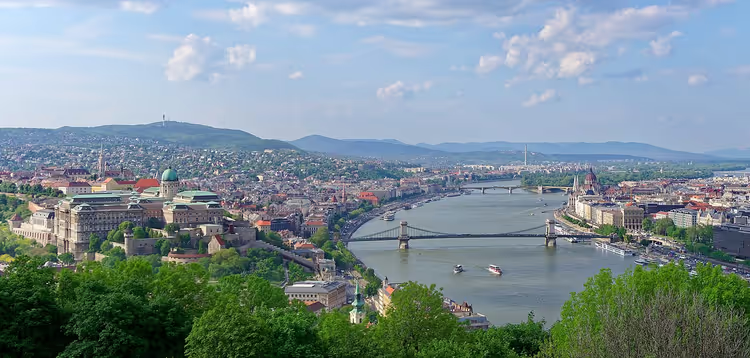
Bükfürdő operates in the western part of the country and is known for water with the highest concentration of calcium and magnesium. It emerges from the ground at +55 to +65 °C and is classified as a bicarbonate type (as of 09/2026, Bükfürdő's official website).
The complex includes a medical center, a children's center, the Sauna World, and a restaurant. After an examination, doctors put together an individual program. It includes reflexology, Thai and underwater massage, mud wraps, therapeutic baths, and laser therapy.
The high concentration of carbon dioxide helps with gastrointestinal, heart, vascular, and spinal conditions. It's worth going here if you need a course of treatment under medical supervision: Bükfürdő hotels on Trip.com.
5. Sárvár
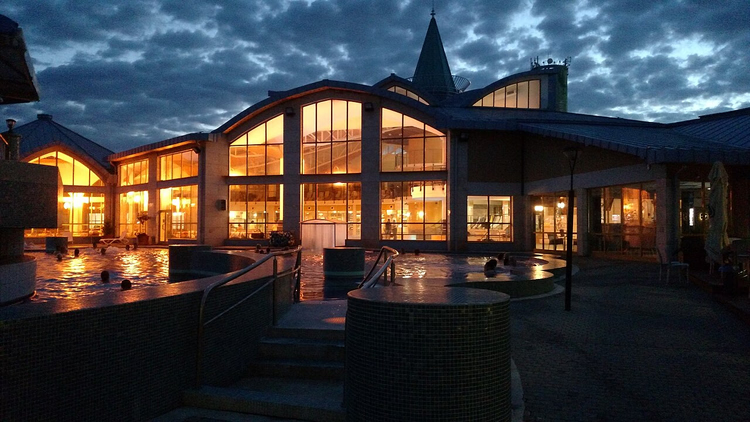 © Goga504 · CC BY-SAPhoto: Goga504, CC BY-SA (https://creativecommons.org/licenses/by-sa/4.0), Wikimedia Commons
Sárvár is known for two hot springs with different water compositions. From the first, water at +83 °C is pumped from a depth of about 2 kilometers: it's rich in fluoride and iodine bromide. From the second, about a kilometer deep, comes alkaline bicarbonate water at +43 °C that relieves muscle tension and treats joints (according to Hungary's national tourism portal).
The salty spring is evaporated to produce Sárvár crystal, which is added to bathing water. The bath complex has a salt cave with a microclimate for treating respiratory conditions. The city's most prominent hotel is connected to the baths by a walkway: Spirit Hotel Sárvár rates.
Sárvár is a convenient base for several days: Lake Balaton and the Austrian border are not far from here, and the town itself is compact. If you want to combine treatment with accommodation and meals, look for a sanatorium at the bath complex.
6. Miskolctapolca
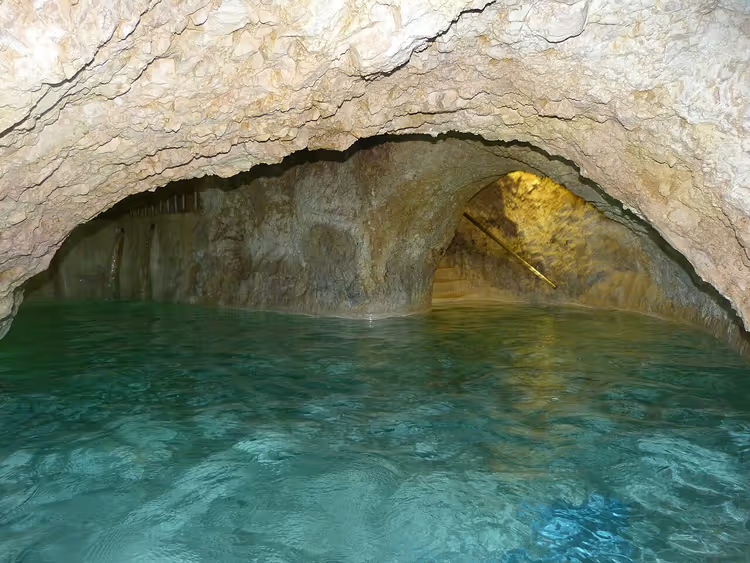 © Derzsi Elekes Andor · CC BY-SAPhoto: Derzsi Elekes Andor, CC BY-SA (https://creativecommons.org/licenses/by-sa/4.0), Wikimedia Commons
Miskolctapolca is known for Hungary's only therapeutic cave bath. The springs flow directly beneath the cave vaults, and the air in the cave stays at around +18 °C year-round (as of 09/2026, Hungary's tourism portal). This microclimate is beneficial for the lungs and respiratory tract.
The water here is of the calcium-hydrogen-carbonate type with radon and a low concentration of trace elements, so bathing is suitable for all ages. In the two indoor pools the water is +35 °C, in the "Roman" and "Starry" halls it's +32 °C, and in the old cave pool it ranges from +29 to +30 °C.
The waters help with respiratory, heart, bone and joint conditions, and also improve skin health. The bath complex is sheltered from the wind by a beech forest, so walking here is comfortable at any time of year.
7. Debrecen
 © Mister No · CC BYPhoto: Mister No, CC BY (https://creativecommons.org/licenses/by/3.0), Wikimedia Commons
Debrecen is called Hungary's second capital, and it ranks among the country's three largest balneological resorts. The treatment departments of the Aquaticum complex and the hotel are located in a forest park. The spring water is heated to +63 °C and has an alkaline-chloride, hydrocarbonate, and iodine-bromine composition (according to the official tourism portal).
The main bathhouse is covered by a dome 66 meters in diameter. Inside you'll find a tropical garden, water slides, cave baths, hydromassage pools, geysers, and waterfalls. Adjacent to the building is a beach with 6 pools.
After a medical examination, the treatment program includes electrotherapy, laser and magnetic therapy, mud poultices, and therapeutic massage. It's convenient with kids here: family pools operate next to the treatment area. Hotels in Debrecen on Trip.com.
8. Harkány
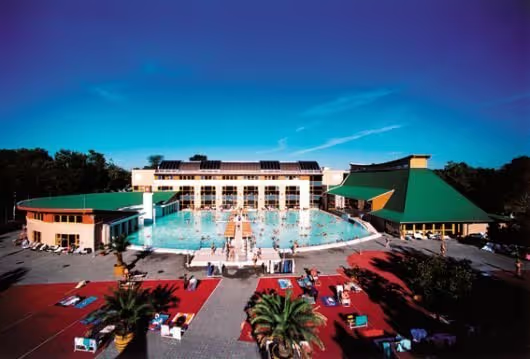 © Béda Pál at Hungarian Wikipedia · CC BY-SAPhoto: Béda Pál at Hungarian Wikipedia, CC BY-SA (https://creativecommons.org/licenses/by-sa/3.0), Wikimedia Commons
Harkány sits in the southern part of the country at the foot of Mount Tenukes, and its sulfur waters have been known for over a hundred years. The bathhouse opened in the early 20th century and was later renovated. Water at +62 °C is pumped from a depth of 1,500 meters and contains sulfides, selenium, fluorine, and zinc (as of 09/2026, Hungary tourism portal).
Hydrogen sulfide enters the body through the skin and through breathing. A layer of gas 10 to 30 centimeters high hangs above the pools, which also produces a therapeutic effect. The resort's main specialties: dermatology, gynecology, and rheumatology.
In dermatology, psoriasis is treated here; in gynecology, infertility and female inflammatory conditions. For a full course, it's convenient to stay at a hotel connected to the medical center, pools, and saunas by a walkway. Hotels near the Harkány bathhouse on Trip.com.
9. Hajdúszoboszló
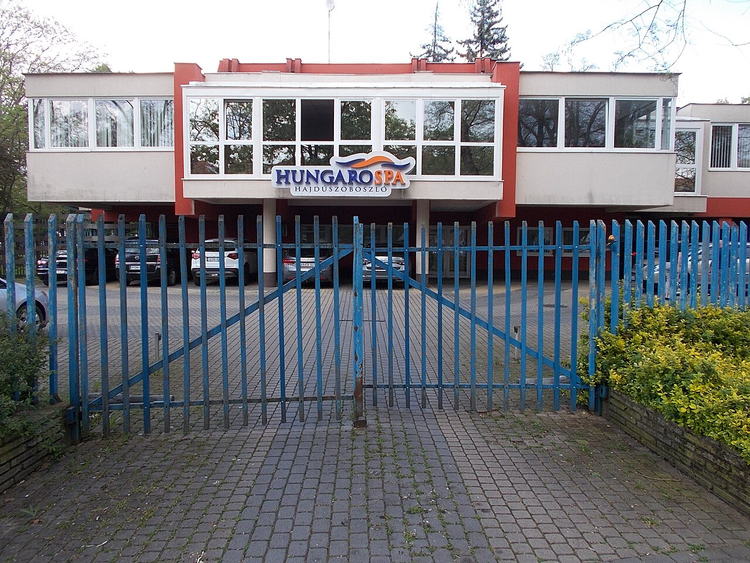 © Globetrotter19 · CC BY-SAPhoto: Globetrotter19, CC BY-SA (https://creativecommons.org/licenses/by-sa/4.0), Wikimedia Commons
Hajdúszoboszló is chosen by rheumatology patients from all over Europe. The air above the large lake carries salt and iodine vapors, and treatment runs year-round. The local Hungarospa hydrotherapy center is considered one of the largest in Europe (as of 09/2026, official Hungarospa website).
Alkaline water with iodine, bromine, table salt, and hydrocarbonates rises from a depth of 1,090 meters and reaches +75 °C. Titanium, copper, vanadium, zinc, and barium were found in it, which earned the water the name "boiling gold." The medical complex consists of 4 divisions and offers more than 40 types of treatments.
Treatment packages include mud wraps, ultrasound, salt chambers, Thai and therapeutic massage. It helps with chronic inflammation of the joints, spine, female organs, neuralgia, and post-traumatic conditions. If you need a serious course, a hotel next to the bathhouse will save you from daily commuting: hotels in Hajdúszoboszló on Trip.com.
10. Balatonfüred
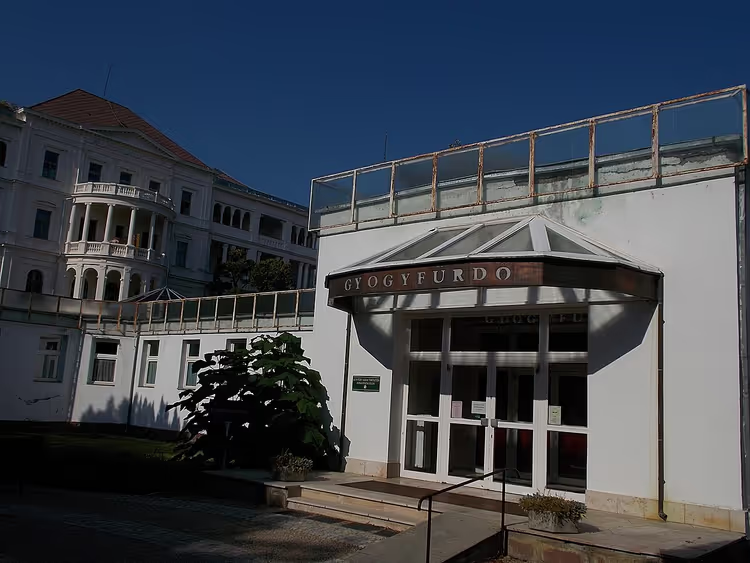 © Globetrotter19 · CC BY-SAPhoto: Globetrotter19, CC BY-SA (https://creativecommons.org/licenses/by-sa/3.0), Wikimedia Commons
Balatonfüred on the shores of Lake Balaton is considered the country's best resort for the heart and blood vessels. It works with warm, lightly mineralized water from carbon dioxide springs containing sulfates, bicarbonates, magnesium, and calcium. This water is drunk and used for baths and treatments (according to the country's baths portal).
Local sanatoriums primarily treat cardiology. The city is home to the State Cardiology Center, and old carbon dioxide springs bubble up from the ground nearby. Programs include recovery after heart attacks and surgeries.
In hot weather, doctors advise people with cardiovascular conditions not to travel to Balaton; it's better to choose the off-season. If you're planning a course in the fall, the city has plenty of hotels: hotels in Balatonfüred on Trip.com.
11. Visegrád
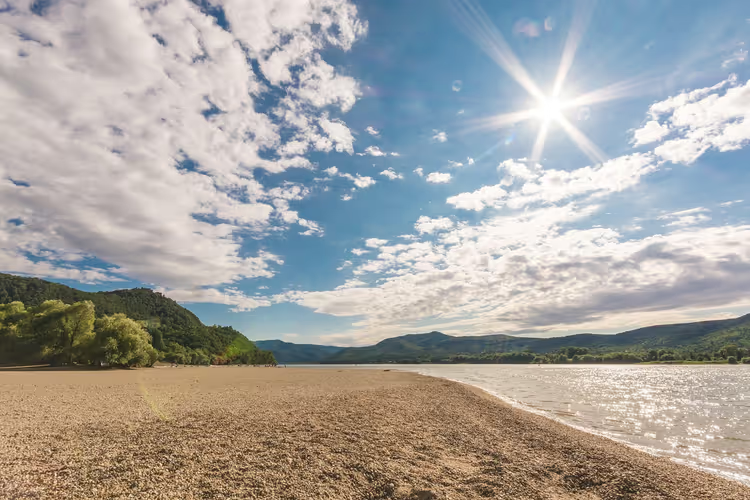
Visegrád sits in a bend of the Danube, 45 kilometers from Budapest. The thermal complex uses water from the Lepence spring, which rises from a depth of 1,300 meters, surrounded by the Pilis forest park (as of 09/2026, national tourism portal).
The center specializes in rheumatic joint conditions, gout, and osteoporosis. It offers mud applications, a 4-chamber bath, salt room sessions, hydrotherapy, and aromatherapy. Healthy guests strengthen their immune system and nerves with regular bathing.
Next to the outdoor bath is Thermal Hotel Visegrád with children's and thermal pools and a "Sauna World" complex: prices at Thermal Hotel Visegrád.
12. Zalakaros
 © Oleg Andriychuk · CC BYPhoto: Oleg Andriychuk, CC BY (https://creativecommons.org/licenses/by/3.0), Wikimedia Commons
Zalakaros is a young resort, but families with children already choose it. The hydrotherapy center is complemented by an entertainment water complex, so you can both get treatment and relax here (as of 09/2026, thermal resorts portal).
The water rises from a depth of more than 2 kilometers and is heated to +96 °C. The high levels of bromine, iodine, and fluorine have made Zalakaros's alkaline-chloride water the country's top choice for therapeutic properties. Bromine helps with nervous, rheumatic, and women's conditions; fluorine helps with periodontal disease and gum inflammation.
The Zalakarosi Fürdő bath is divided into zones: men's, women's, and family changing rooms lead to the beach, water park, or indoor pool. Two outdoor pools are heated to +36 °C and +34 °C, with a depth of 1.1 meters. Independent travelers are advised to keep treatments to no longer than half an hour. Hotels in Zalakaros on Trip.com.
13. Gyula
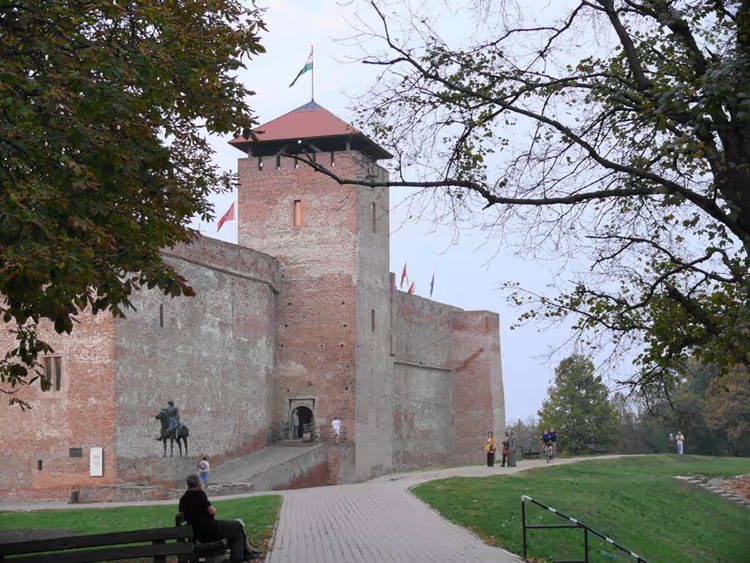 © Original uploader was Domokdr at hu.wikipedia · CC BY-SAPhoto: Original uploader was Domokdr at hu.wikipedia, CC BY-SA (http://creativecommons.org/licenses/by-sa/3.0/), Wikimedia Commons
Gyula lies on the border with Romania on the banks of the Körös River. The town's pools are fed by 7 thermal springs, and the resort itself is known for its historic park and castle (as of 09/2026, official tourism portal).
The Castle Baths in the middle of the park offer a comfortable beach and thermal pools. The Fortress Balneological Complex provides treatments in 20 pools, in the "children's paradise," in the treatment rooms of the wellness center, steam rooms, saunas, and carbon dioxide baths. After an examination, each patient with musculoskeletal, skin, or digestive issues receives an individualized treatment plan.
Come here if you want to combine treatment with walks through historic sites. Hotels in Gyula on Trip.com.
Best time to visit

Hungary's thermal resorts work well in almost any season, and the mild climate makes treatment possible even in winter. The sun shines here for more than 2,100-2,200 hours a year (according to the national Visit Hungary portal). Summers are moderately hot, autumn is dry and sunny, winter is mild, and spring is warm and rainy.
The bathing season starts in early May and lasts until early October. May showers are short, and the sun returns quickly afterward. From mid-June to the first ten days of September there is almost no rain. In July and August, the areas around Zalakaros and Debrecen can get as hot as Madrid, but cool days also occur.
If you want to combine treatment with sightseeing, the best months are May and October: fewer people and more comfortable weather. People with cardiovascular conditions are advised against going to Lake Balaton during the hottest period.
Which resort to choose for a family vacation
Hungary is well suited for family vacations: the bathing season at Lake Balaton lasts more than three months. Thermal complexes usually have family pools and shallow kiddie pools next to the treatment area, so children don't get in the way of adults during procedures (according to the Hungarian tourism portal).
Summer water parks in Budapest, Debrecen, Hajdúszoboszló, Zalakaros, and Sárvár add variety to the trip. Slides with "special effects" there reach heights of 10 meters. You'll find parks with playgrounds at every resort.
In Budapest, it's worth visiting the playground on Gellért Hill, riding the children's railway, and walking through the rope park. Kids will enjoy Sümeg Castle with its knight tournaments, the caves beneath Buda Castle, and a confectionery in Buda that is more than two hundred years old.
History lovers will find the ruins of the Roman settlements "Aquincum" in Budapest and "Gorsium" in Székesfehérvár interesting. Near Budapest you can descend into the Pálvölgyi, Szemlőhegy, and Molnár János caves. The museum list includes the "Palace of Miracles" and the railway museum in Budapest, the Pannonian Sea Museum in Miskolc, "Agora" in Debrecen, and the marzipan museum in Eger.
Nature lovers will enjoy Lake Kis-Balaton with its large number of waterfowl and the nearby buffalo reserve. At the zoos in Budapest, Debrecen, and Miskolc, children can see animals they wouldn't encounter in the city.
Benefits of treatment and relaxation

The main advantage of Hungary is that you can get treatment and relax at the same time. Balneological centers usually operate year-round, and medical examinations are done right on site with an individual program (as of 09/2026, the main tourism portal). Hotels are located next to the springs.
Hungary is rich in castles, Baroque and Neoclassical palaces, parks, and museums. So a course of treatment is easy to combine with excursions and cultural activities. If you come for two weeks, you can devote half the days to procedures and half to traveling around the country.
Who thermal treatment helps
Most Hungarian springs are universal, so the indications largely overlap. The baths help with musculoskeletal disorders, spine and joint problems. They are also used for skin conditions, gynecological issues, and metabolic disorders.
There are also specialized resorts: Balatonfüred treats the heart and blood vessels, Harkány treats the skin, Hajdúszoboszló treats the spine, and Miskolctapolca treats the respiratory tract (according to the official tourism portal of Hungary).
A course lasts from 1 to 3 weeks, so plan your budget in advance (as of 09/2026, the national tourism portal of the country). If you have a diagnosis, discuss the trip with your doctor first.
When thermal baths are not recommended
Before a course of thermal waters, be sure to consult your doctor. There are conditions in which the baths can do harm (according to the main tourism portal of the country). The time children spend in thermal water is best agreed with a pediatrician, and for cardiovascular conditions you need a cardiologist's advice.
You should not go to a thermal bath with acute infections and fever, during flare-ups of chronic conditions, or right after surgery. Pregnant women and people with unstable blood pressure also need a doctor's consultation.
If there are no contraindications, a thermal water vacation gives you a boost of energy and helps you recover. Then choosing a resort comes down to your diagnosis and the season.
Thermal resorts of Hungary on the map
Below is a map of all 13 resorts from this selection. Open it to build a route between the baths and hotels you have chosen.
Thermal resorts of Hungary
Places on the map
- 1Széchenyi Baths Europe's largest baths, spring up to +78°C, Neo-Baroque style
- 2Gellért Baths Indoor complex with stained glass by Mount Gellért, water +38...+43°C
- 3Bükfürdő Highest concentration of calcium and magnesium, medical centre
- 4Sárvár Two hot springs, salt cave for the respiratory tract
- 5Miskolctapolca Hungary's only therapeutic cave bath
- 6Debrecen Aquaticum complex under a 66-metre dome in a forest park
- 7Harkány Sulphur waters for over a hundred years, dermatology and gynaecology
- 8Hajdúszoboszló Europe's largest water therapy centre Hungarospa, water up to +75°C
- 9Balatonfüred The country's best resort for heart and blood vessels on Lake Balaton
- 10Visegrád Lepence spring from 1300 m depth in the Pilis forest park
- 11Zalakaros The country's hottest water, up to +96°C, family water complex
- 12Gyula 7 thermal springs by a castle on the Körös River
⁉️🤔 Frequently asked questions
How much does treatment at a thermal resort in Hungary cost?
A course with a doctor's examination and procedures costs roughly from 100 to 200 € per week (as of 09/2026, the national tourism portal). Treatment lasts from 1 to 3 weeks, so plan your weekly budget in advance. Accommodation and meals are paid separately. Exact prices depend on the city and the level of the sanatorium.
When is the best time to go to thermal resorts in Hungary?
The baths operate year-round, and the swimming season at outdoor pools runs from early May to early October. May and October are convenient for excursions: the weather is mild and there are fewer tourists. In July and August, the areas around Zalakaros and Debrecen sometimes get very hot. Doctors advise people with heart conditions not to go to Balaton during peak heat.
Where is the hottest water in Hungary?
The hottest water is in Zalakaros: the spring heats up to +96 °C, and it is brought to the surface from a depth of more than 2 kilometers (as of 09/2026, the official Visit Hungary portal). Next come Sárvár with a spring of +83 °C and Hajdúszoboszló with water at +75 °C. In the pools, the water is still more comfortable than in the spring because it is cooled to +34...+38 °C.
Which resort should I choose for a child?
For a family with children, Zalakaros, Hajdúszoboszló, Debrecen, and Sárvár are good options: there are family pools and water parks next to the treatment area. The swimming season at Balaton lasts more than three months (the national tourism portal of Hungary). Young children are better off swimming in family pools, and therapeutic baths should be discussed with a pediatrician.
Do I need to book the bath in advance?
At most baths, entry is sold as hourly tickets without booking, but lines are long in summer. Online tickets save time, especially at Széchenyi in Budapest (as of 09/2026, the official Széchenyi website). Arrive at opening time or in the evening. You do need to book treatment procedures, but that is done on site.
In short: what to book
If you have joint or spine problems, start with Hajdúszoboszló and Bükfürdő: they have the widest range of procedures. For the heart and recovery, Balatonfüred is a good fit; for skin and women's health, Harkány; for breathing, Miskolctapolca.
For families with children, we recommend Zalakaros and Hajdúszoboszló: there are water parks and family pools next to the treatment area. For architecture and impressions, go to Budapest, to the Széchenyi bath. If you want to combine treatment with excursions around the country, use Sárvár or Visegrád as your base.
Whatever you choose, book accommodation near the bathhouse in advance: browse hotels on Trip.com.

A small editorial team writing guides for independent travel. We travel ourselves, but we haven’t been everywhere, so we check prices, opening hours and how to get there against official sources.