
















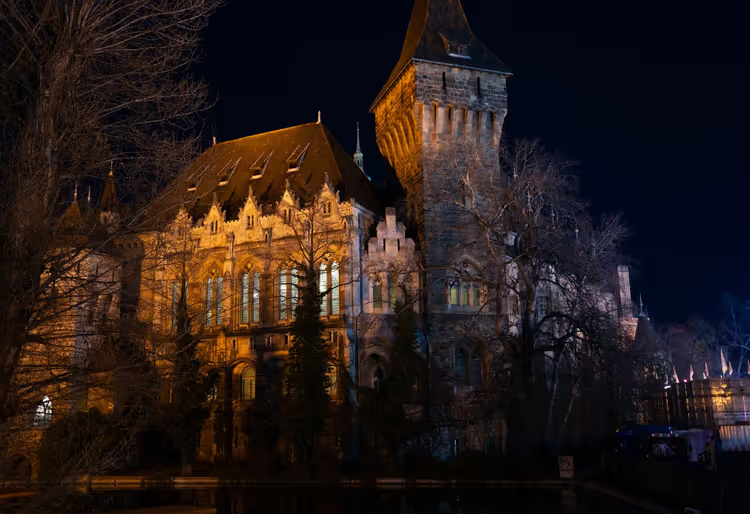
Vajdahunyad Castle in Budapest: free courtyard, museum inside and the Anonymous statue
There are two common misconceptions about Vajdahunyad Castle in Budapest. People mistake it for a real medieval fortress, and they look for a ticket booth at the entrance to the courtyard. You do have to pay, but only for the museum inside.
The castle stands in Városliget Park and was built as an exhibition piece at the end of the 19th century. The courtyard and the surrounding park are open to everyone at any time of day, and there is no ticket office at the entrance. Tickets are sold only for the Museum of Agriculture, which occupies the baroque wing.
You can walk around the courtyard in half an hour, and the museum will add another hour to an hour and a half. Vajdahunyad Castle is a decorative ensemble that brings together four architectural styles of Hungary. Below you will find the history of the building, a breakdown of the architecture, the museum's opening hours, and what else is worth seeing nearby.
Ad: this article contains affiliate links, we earn a commission if you book through them, at no extra cost to you.
What Vajdahunyad Castle is
💡 In short:
- You only need a ticket for the Museum of Agriculture.
- Museum opening hours and entrance: 09/2026, verified on the museum's official website.
 © Marc Ryckaert ( MJJR ) · CC BYPhoto: Marc Ryckaert ( MJJR ), CC BY (https://creativecommons.org/licenses/by/3.0), Wikimedia Commons
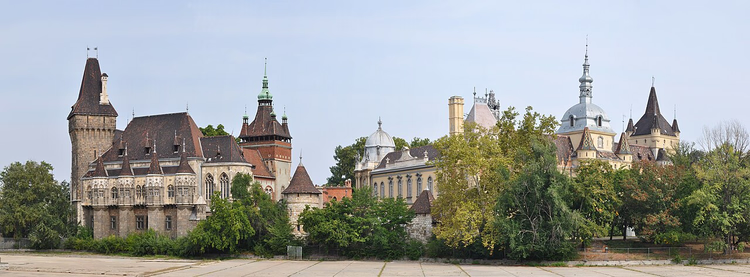
Vajdahunyad Castle brings together the look of different eras of Hungarian architecture. A Romanesque chapel, a Gothic tower, a Renaissance palace, and baroque halls stand side by side here. That was the idea of the anniversary exhibition organizers: to show the country's thousand-year architectural history in one place.
The castle got its name from Vajdahunyad Fortress in Transylvania, the ancestral seat of the Hunyadi family. It looks like a medieval fortification, but it was built just over a century ago. The stone version was erected in 1904-1908. That is why the walls here are smooth rather than weathered.
For a visitor, this is convenient: in a single walk you see what you would normally travel to different Hungarian cities for. Take your time, because the courtyard and the museum have very different moods.
History: from plywood to stone
The ensemble was built for the celebrations marking the millennium of Hungary in 1896, according to the National Office of Cultural Heritage of Hungary. At first these were lightweight pavilions made of wood, plywood, and papier-mâché: stage sets for an exhibition, not stone buildings. They were combined into a historical group that showed the country in different eras.
The pavilions were a hit with the people of Budapest. So part of the concept was recreated in stone, and the set gradually became a permanent castle (Vajdahunyad vára). Construction was led by Ignác Alpár.
The building survived World War II and the events of the 1950s: the complex suffered from bombing and street fighting. It was restored only in the 1990s. Since then, the castle has once again shown visitors its original appearance.
The Hunyadi family and Corvin castle
 © Carcea Daniel · CC BY-SAPhoto: Carcea Daniel, CC BY-SA (https://creativecommons.org/licenses/by-sa/3.0/ro/deed.en), Wikimedia Commons
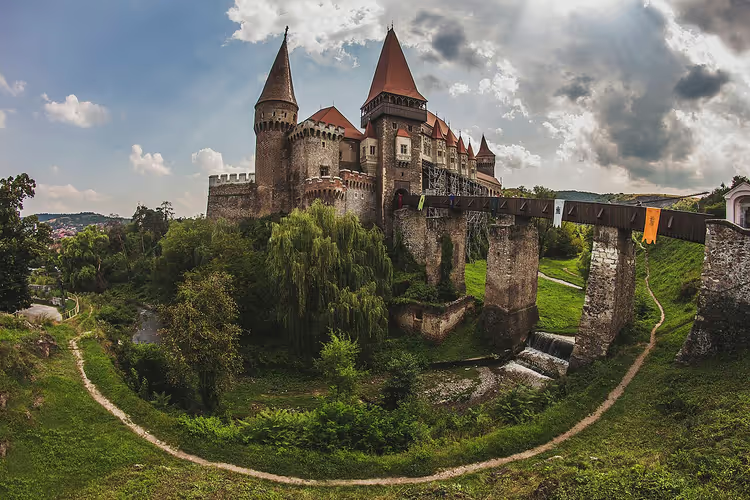
The Hunyadis, or Corvins, left a notable mark on Hungarian history. The family coat of arms featured a raven, and that is what gave the family its second name. The ancestral Hunyadi castle stands in Transylvania, and its fortress served as the model for the Budapest ensemble.
The most famous member of the family is János Hunyadi, a 15th-century military leader. He preserved Hungarian statehood during a difficult period when the country was a buffer zone between Western Europe and the Ottoman Empire. After him, his son Matthias became king, and he looked after the welfare of the people and patronized the arts.
The reign of Matthias is associated with the flowering of the Renaissance in Hungary. In Hungarian memory, the Hunyadi family remains a symbol of independence, which is why the entire ensemble in Városliget bears its name.
Ignác Alpár and his monument
 © Derzsi Elekes Andor · CC BY-SAPhoto: Derzsi Elekes Andor, CC BY-SA (https://creativecommons.org/licenses/by-sa/3.0), Wikimedia Commons
The stone castle was designed by Ignác Alpár (Alpár Ignác). He was also responsible for the historical pavilions of the anniversary exhibition, meaning he came up with the entire concept. The exhibition background explains why the building is so ornate: it had no defensive purpose.
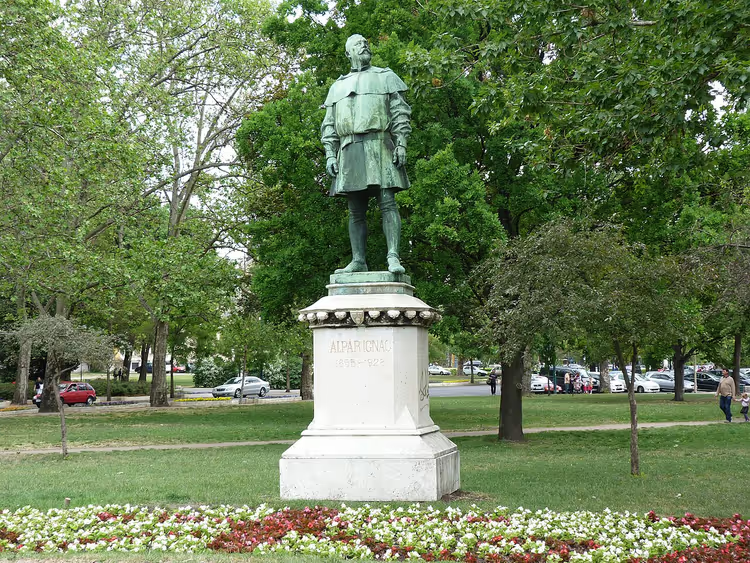
Alpár began his career as a stonemason's apprentice. He finished gymnasium and the Berlin Academy of Arts as an adult and later defended his doctoral thesis. In front of the castle stands a monument to this architect, who is valued for his precision of proportions and love of detail.
Architecture: four styles in one courtyard
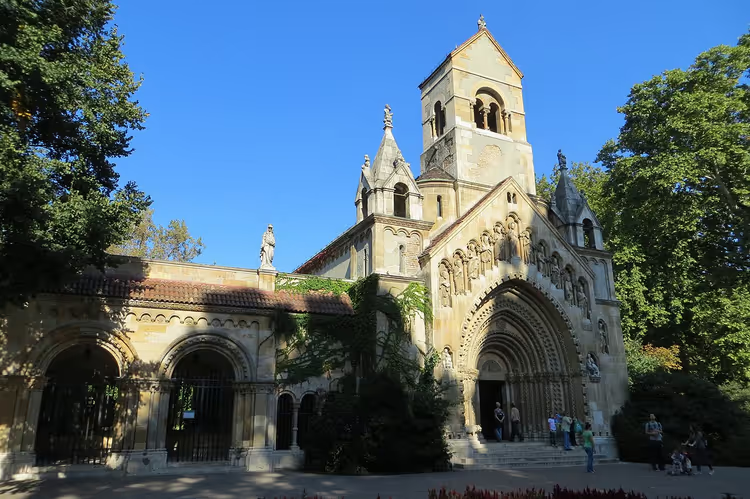 © Mister No · CC BYPhoto: Mister No, CC BY (https://creativecommons.org/licenses/by/3.0), Wikimedia Commons
The castle is surrounded by a moat, like medieval fortresses. A small bridge and Gothic-style gates lead into the courtyard. On the left you will see a Romanesque chapel that replicates a church from the village of Ják on the border with Austria. The chapel has been consecrated, and couples get married there today.
After construction was completed, the Renaissance section was connected by a passageway to the baroque palace. The interiors are decorated in the baroque spirit, although the parts of the castle look different from the outside. The facades feature winged angels, lion heads, dragons, and stone vases.
The dome is topped with the Hungarian crown, and around it stand sculptures of rural pursuits: agriculture, horticulture, animal husbandry, and winemaking. Behind the Apostles' Tower hides an Italian piazza. Nearby you will find a replica of the tower of Segesvár Fortress, and on the walls are depicted King Matthias and Princess Beatrice of Aragon.
Opening hours and admission
Paid entry is only for the Museum of Agriculture, which occupies the upper halls of the baroque wing. We checked the opening hours on the museum's official website (as of 09/2026).
What | Details |
|---|---|
Courtyard and park | free entry, open at any time |
Museum of Agriculture | Tuesday-Sunday, 10:00-17:00 (as of 09/2026, official website) |
Apostles' Tower | tours every hour, the last one starts an hour before the museum closes |
Ják Chapel | services on Sundays from spring to autumn |
- The catch: the museum is closed on Mondays, and there are no services in the chapel in winter.
It is more convenient to buy tickets online in advance: Budapest museum tickets on Tiqets.
Tours and tickets in Budapest
Guided tours, skip-the-line tickets and activities — most offers can be cancelled free of charge.
See offers on TiqetsThe widget loads once you give your consent.
The courtyard, the Anonymous statue, and the lake
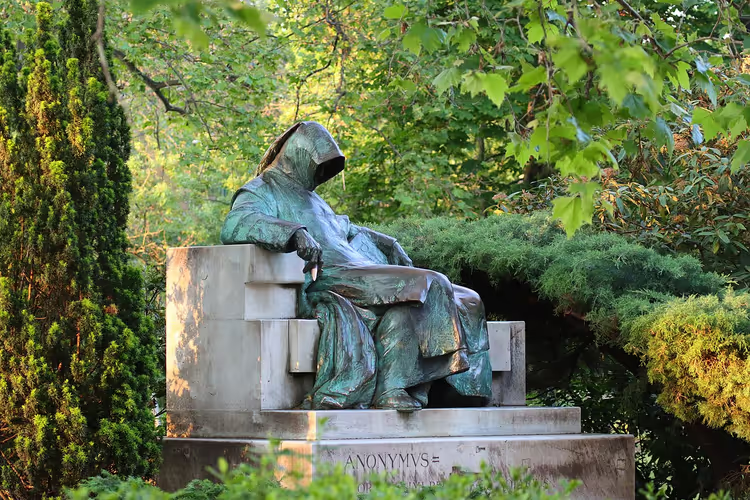
The castle courtyard is made for strolling. There are paths, flower beds, benches, and sculptures, and street musicians play in summer. After dark, the lighting comes on and the facades turn into theatrical scenery.
In the center of the courtyard stands a monument to Anonymous, the nameless chronicler of King Béla III. The hooded monk wrote the "Deeds of the Hungarians" and left no name behind. The bronze figure was created by sculptor Miklós Ligeti in 1903 (Budapest.city).
Students and writers come to touch the pen in the chronicler's hand: it is said to bring good luck. Next to the castle lies a lake. In the warm season people go boating on it, in winter it turns into an ice rink, and at any time of year the water reflects the towers.
⁉️🤔 Frequently asked questions
Do you have to pay to enter the courtyard of Vajdahunyad Castle?
No, the courtyard and the park around the castle are open freely and at any time of day. Tickets are sold only for the Museum of Agriculture, which occupies the baroque wing. If you want to see the facades, take photos, and walk along the paths, you do not have to pay anything.
How much does a museum ticket cost?
It is best to check the exact price on the museum's official website: rates change by season. A tour of the Apostles' Tower may be paid separately. Entry to the castle courtyard remains free, and you only pay for the permanent exhibitions inside. Check the amount in advance so you do not have to look for cash on the spot.
How do you get to the castle from the center?
The castle stands in the very heart of Városliget Park, and a straight path leads to it from Heroes' Square: about a ten-minute walk. From the center, the easiest way is to take metro line M1 to Hősök tere or Széchenyi fürdő station. In summer, bring water with you and plan your walk for the morning or early evening.
What else is worth seeing near the castle?
In the same park you will find the Széchenyi Baths and a large ice rink, and the lakeside is pleasant for a walk. The Museum of Fine Arts is nearby on Heroes' Square. With children, it is worth visiting the zoo, which is also in Városliget. More ideas are collected in the article about interesting places in Budapest.
When is the best time to come for photos?
Early morning and late evening give soft light and fewer people. At night the lighting comes on and the facades look especially striking: that is a good time to shoot from the opposite shore of the lake. At midday the light is harsh and many visitors end up in the frame.
In short: what to book
The only things worth planning in advance are a ticket to the Museum of Agriculture and a spot on the Apostles' Tower tour.
- If you are coming for views and photos: come after sunset, no ticket needed.
- If you want to see the museum exhibitions: buy a ticket online in advance so you do not have to wait at the ticket office.
- If you are traveling with children: check out ideas for Budapest with a child.
A couple of hours is enough for a walk in the park, but then the museum will be left out. Book museum tickets online and compare city tour options.

A small editorial team writing guides for independent travel. We travel ourselves, but we haven’t been everywhere, so we check prices, opening hours and how to get there against official sources.