
















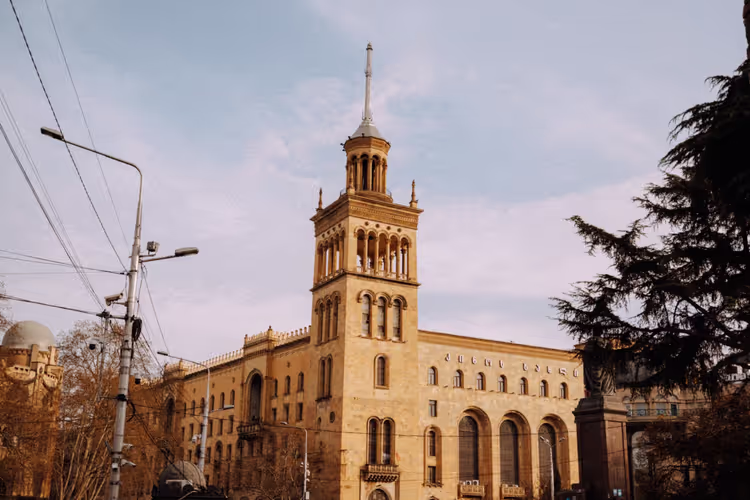
Museums in Tbilisi: 20 addresses, tickets and where to go in the rain
In Tbilisi, rain can fall for three days straight, and that's when museums save the trip. The museum network in the city center is dense: twenty venues fit within walking distance. Some hold the gold of Colchis, others showcase Soviet retro cars, and still others lead you into a basement with a real printing press.
In practice, this means you can fit in two or three museums a day, not ten. Many venues are closed on Mondays, smaller museums change their schedules, and an adult ticket for foreign visitors at the country's main museum costs 40 GEL (as of 09/2026, Admission).
Below are twenty Tbilisi museums with addresses, opening hours, and an explanation of why each one is worth visiting. We verified the information on the museums' official websites in September 2026.
Ad: this article contains affiliate links, we earn a commission if you book through them, at no extra cost to you.
What to consider before visiting Tbilisi museums
💡 In short:
- Most Tbilisi museums are closed on Mondays, so plan your visits from Tuesday onward.
- An adult ticket to the National Museum of Georgia for foreign visitors costs 40 GEL (as of 09/2026, official website).
- Allow about three hours for a large museum; a small private collection takes forty minutes.
- Addresses and opening hours: 09/2026, verified on the National Museum of Georgia website.
Most Tbilisi museums are closed on Mondays. On Sundays, almost all venues on the list are open but close earlier than usual. If you only have two days, pick one large museum and one small collection nearby. Getting around the city eats up more time than the exhibits themselves.
The table below lists addresses and schedules: some museums confirm their hours on the official website, while for the rest you should double-check the opening hours before leaving your hotel.
Museum | Address | Days and hours | Source |
|---|---|---|---|
Simon Janashia National Museum of Georgia | 3 Shota Rustaveli Avenue | Tue-Sun 10:00-18:00, closed Monday | |
Museum of Soviet Occupation | 3 Shota Rustaveli Avenue | Tue-Sun 10:00-18:00, closed Monday | |
Museum of Georgian Emigration | 1 Ilia Chavchavadze Avenue | weekdays, daytime | |
Korneli Kekelidze National Center of Manuscripts | 1/3 Merab Aleksidze Street | Tue-Sat from eleven in the morning to five in the evening | |
Open Air Museum of Ethnography | 1 Kustba Street, Vake Park | Tue-Sun 10:00-20:00, closed Monday | |
David Baazov Museum of History and Ethnography of Georgian Jews | 3 Anton Catholicos Street | check hours by calling the museum | |
Money Museum of the National Bank of Georgia | Tbilisi, 3 Giorgi Leonidze Street and Kvareli, 10 Shota Rustaveli Street | Thu-Mon 10:00-17:00, break 13:00-14:00, closed Tuesday and Wednesday | |
Tbilisi History Museum Karvasla | 8 Sioni Street | Tue-Sun 10:00-18:00, closed Monday | |
State Silk Museum | 6 Giorgi Tsabadze Street | Tue-Sat 11:00-18:00, closed Sunday and Monday | |
Museum of Theater, Music, Cinema and Choreography | 6 Kargareteli Street | Tue-Sat, daytime | |
Automobile Museum | Varketili, 79 Kairo Street | daily | |
Museum of the Underground Printing House | 7 Kaspi Street | by arrangement with a guide | |
Shalva Amiranashvili Museum of Art of Georgia | 1 Gudiashvili Street | Tue-Sun 11:00-16:00, closed Monday | |
National Gallery of Georgia | 11 Rustaveli Avenue | Tue-Sun 10:00-18:00, closed Monday | |
Shota Rustaveli Theater Museum | 17 Rustaveli Avenue | Tue-Sat, daytime | |
Zakaria Paliashvili House Museum | 10 Bakradze Street | Wed-Sat, daytime | |
Tbilisi State Conservatory Museum | 8 Griboedov Street | weekdays, daytime | |
Museum of Musical Instruments | 6 Samgebro Street | Tue-Sun, daytime | |
Titian Tabidze House Museum | Chkvishi village | Tue-Sun, daytime | |
Mikheil Javakhishvili House Museum | 21 Javakhishvili Street | Mon-Fri, daytime |
1. Simon Janashia National Museum of Georgia
 © Mostafameraji · CC BY-SAPhoto: Mostafameraji, CC BY-SA (https://creativecommons.org/licenses/by-sa/4.0), Wikimedia Commons
The National Museum of Georgia grew out of the collections of the Caucasus Museum, which opened in this building in the mid-19th century. In the early 1920s, the valuables were taken to Europe to save them from the Bolsheviks, and they returned to Rustaveli Avenue only after World War II. Later the building survived a change of government and a fire, so today you see it after a major reconstruction.
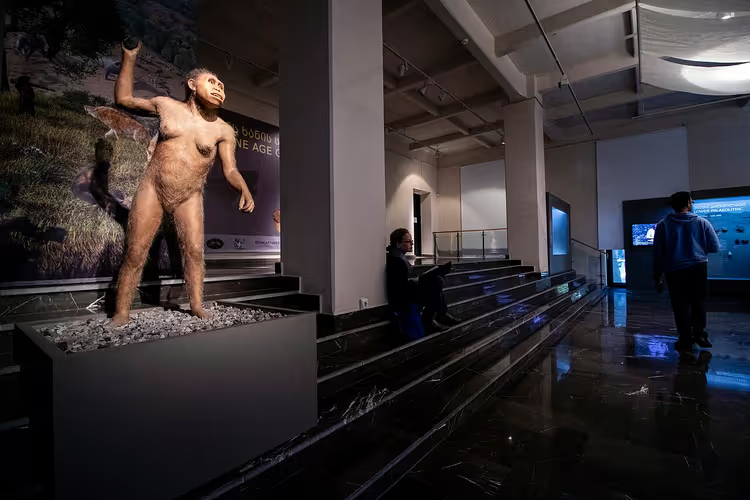
The main treasure is gold jewelry, coins, and embossing from the Colchian and Scythian eras. In the neighboring halls, you can see the remains of the earliest human found in Dmanisi and stones with Urartian inscriptions. This is where you get the most complete picture of the ancient culture of the Caucasus.
An adult ticket for foreign visitors costs 40 GEL; students and schoolchildren pay less with an ID (as of 09/2026, museum price list).
- Who it's for: for a first introduction to the country's history and for a rainy day when you need a large indoor museum.
- The catch: on weekends there is a line at the ticket office, so it's better to buy a ticket in advance on biletebi.ge.
2. Museum of Soviet Occupation
 © Jeremy Teigen from USA · CC BYPhoto: Jeremy Teigen from USA, CC BY (https://creativecommons.org/licenses/by/2.0), Wikimedia Commons
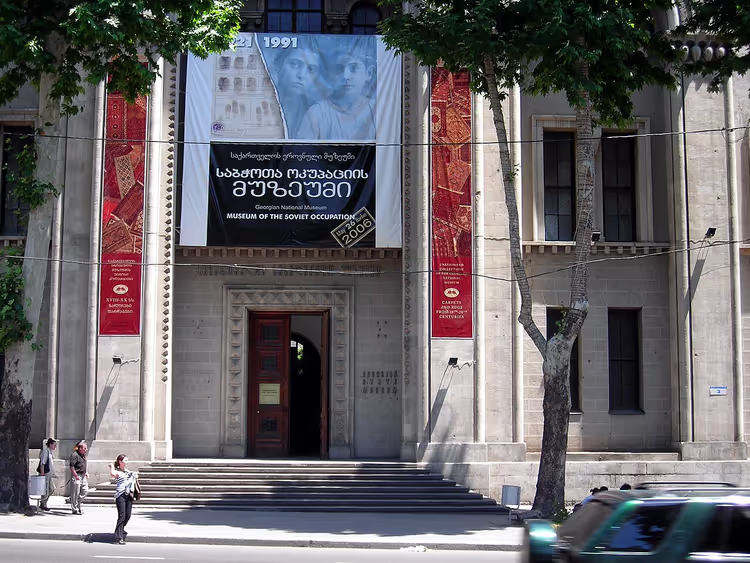
The museum occupies the same building as the National Museum, but it has a separate entrance. The exhibition is built on documents: decrees, orders, KGB archives, photographs, and personal belongings of people who were repressed. There are no slogans here, so you read history through papers.
The most striking exhibit is the wall of a railway car riddled with bullets: participants of the 1924 uprising were executed in it (museum page). Nearby stands the work desk of a Cheka investigator, and visitors are allowed to sit at it. A separate hall tells how Georgia declared independence in 1918 and how it was lost.
- Who it's for: for those who want to understand the Soviet period of Georgia through documents, not retellings.
- Time: plan for an hour or an hour and a half; the exhibition is compact.
- The catch: some labels are only in Georgian, and the audio guide costs extra.
3. Museum of Georgian Emigration
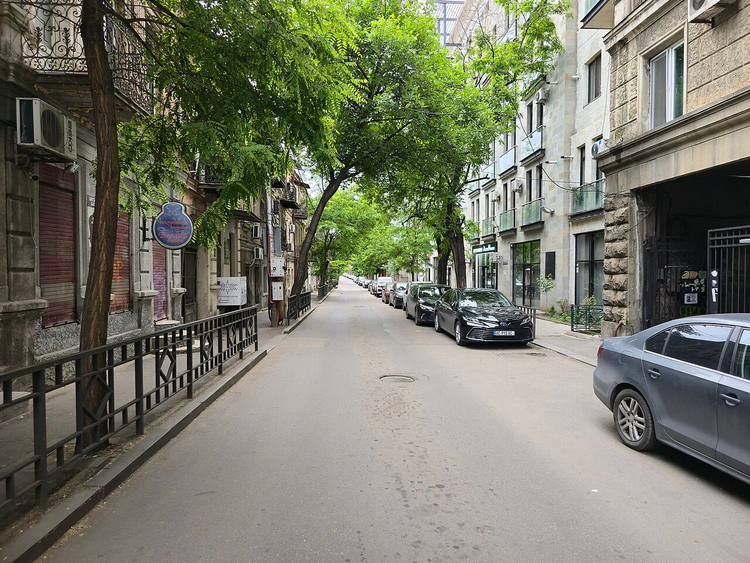
The museum operates under the state university because its collections have scholarly value. It houses archives of Georgians who left the country for political reasons: handwritten and printed documents, letters, photographs. You will see how the life of the Georgian diaspora took shape in Paris, Berlin, and New York.
 © David1010 · CC BY-SAPhoto: David1010, CC BY-SA (https://creativecommons.org/licenses/by-sa/4.0), Wikimedia Commons
A separate story is connected with Ekvtime Takaishvili, who took almost forty crates of church utensils and art objects to France to save them from destruction. The collection returned to its homeland only by the end of World War II, and Takaishvili himself died under house arrest. The exhibition includes materials about Noe Zhordania and Grigol Robakidze.
- Who it's for: for those interested in the history of Georgian scholarship and culture abroad.
- Important: this is an active research archive, not a museum with a ticket office at the entrance, so visits are arranged in advance (map location).
4. Korneli Kekelidze National Center of Manuscripts
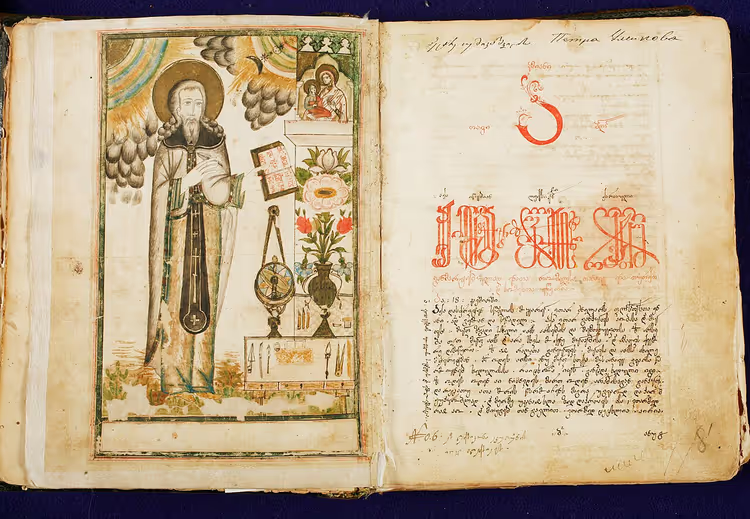
The center opened in 1958 and has been collecting Georgia's written heritage ever since (official website). It houses manuscripts, archives of notable figures, rare printed books, and microfilms of Georgian texts that remain in foreign collections.
The collection includes more than ten thousand handwritten books and tens of thousands of documents, including charters in Greek, Persian, and Arabic. Tourists rarely stop by, so you often have the halls almost to yourself. Staff members assist researchers and answer visitors' questions.
- Who it's for: those who love books and the history of writing more than grand exhibition halls.
5. Open Air Museum of Ethnography
 © rugbyxm · CC BYPhoto: rugbyxm, CC BY (https://creativecommons.org/licenses/by/2.0), Wikimedia Commons
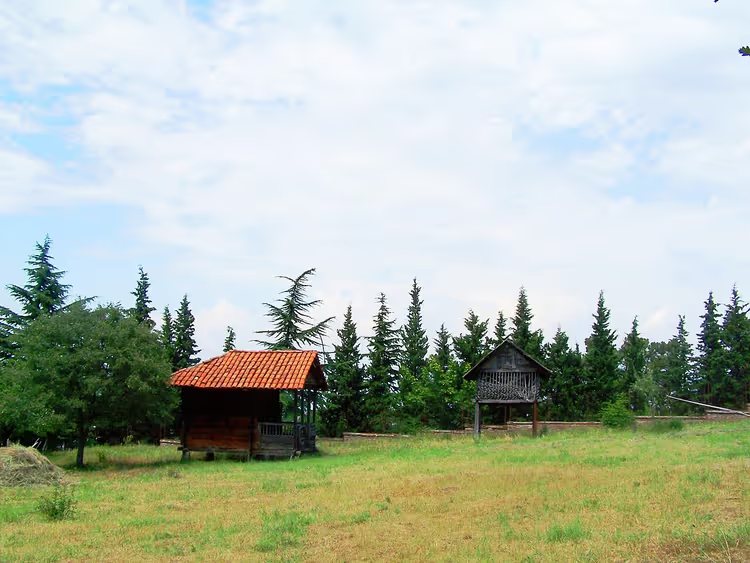
The museum occupies a hillside in Vake Park near Turtle Lake, and exploring it takes half a day. It was founded by ethnographer Giorgi Chitaia, who wanted to show how different strata of Georgian society lived in a single setting. Today there are about seventy structures here, and these are not models but real houses transported from different regions of Georgia.
You'll see dwellings of highlanders and lowland residents, homes of poor and wealthy families, mills, forges, wine cellars, and carts. Visitors are allowed inside the houses, so you can examine furniture, dishes, and weaving looms (museum website).
On weekends, bread is baked in the Kakhetian house and guests are offered cheese. Occasionally, workshops on old crafts are held here. Wear comfortable shoes: the paths go uphill, and the warm season is better for a visit than winter.
- The catch: the complex is on the outskirts, and it takes about half an hour by taxi or bus from central Tbilisi.
6. David Baazov Museum of History and Ethnography of Georgian Jews
 © Meo Hav · CC BY-SAPhoto: Meo Hav, CC BY-SA (https://creativecommons.org/licenses/by-sa/4.0), Wikimedia Commons
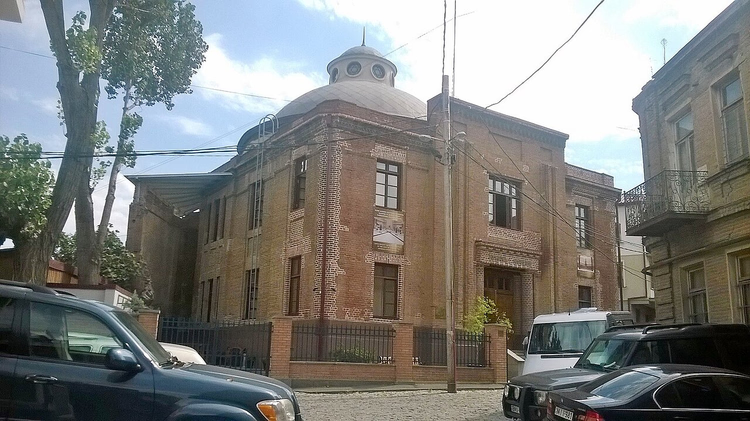
The collection occupies the building of an old synagogue near Freedom Square. The exhibition tells the story of twenty-six centuries of shared life between Georgians and Jews: documents, old photographs, household items, and community memorabilia. The museum is named after David Baazov, a rabbi and public figure.
This is a small museum run by enthusiasts. Its hours change frequently, so call the number listed on the museum contacts before visiting. Half an hour is enough to see everything, but you'll encounter materials not found in larger exhibitions.
- Who it's for: those who want to go beyond the standard route through central Tbilisi.
7. Money Museum of the National Bank of Georgia
The museum opened in 2001 to mark the tenth anniversary of the country's independence (National Bank of Georgia), and today part of the collection is displayed in Kvareli, at a bank branch. It brings together the history of monetary circulation: Colchian tetri, staters of Alexander the Great, coins of the Roman Empire, Byzantium, and Venice, as well as banknotes from the modern era.
 © David1010 · CC BY-SAPhoto: David1010, CC BY-SA (https://creativecommons.org/licenses/by-sa/4.0), Wikimedia Commons
The tour takes less than an hour, but numismatists stay longer. The schedule is unusual: the museum is open Thursday through Monday, closed Tuesday and Wednesday, with a midday break (museum hours).
- Who it's for: numismatists and anyone traveling to Kakheti via Kvareli.
8. Tbilisi history museum Karvasla
The museum is named after the poet Ioseb Grishashvili and occupies an old caravanserai: the word "Karvasla" itself meant caravanserai. The exhibition shows city life from ancient times to the twentieth century: weapons, jewelry, tableware, household items, and old photographs of Tbilisi.
The museum's collection numbers about fifty thousand items, so in an hour you can only cover the main halls (the Karvasla collection). Moving through the halls, you see how the city passed from one ruler to another and how its appearance changed.
- Who it's for: anyone who wants to understand how the city itself changed, not just the country.
9. State Silk Museum
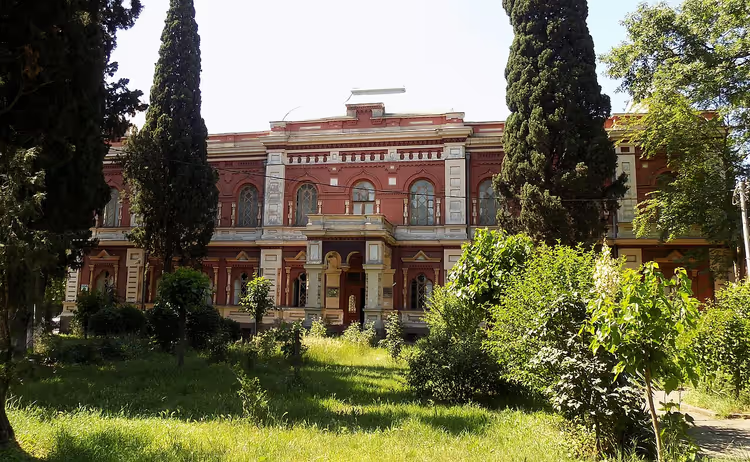 © Lasha ge · CC BY-SAPhoto: Lasha ge, CC BY-SA (https://creativecommons.org/licenses/by-sa/4.0), Wikimedia Commons
The sericulture station was founded in Tiflis in 1887 and later grew into a museum (State Silk Museum website). The building was designed by architect Alexander Shimkevich, a graduate of the Academy of Arts in Saint Petersburg, so from the outside it is not a typical museum box but an elegant mansion.
The exhibition explains the entire journey of silk: from cocoons and silkworm caterpillars to finished fabrics. You will see silkworms preserved in alcohol, old tools, a scientific library, and samples of silk products. A separate theme relates to quality: fine thread comes only from mulberry leaves, while coarse feed produces low-grade fabric.
In season, visitors are allowed to feed the caterpillars leaves, and children especially enjoy this. The museum is located between Dinamo Arena and Mushtaidi Park, a ten-minute walk from the Tsereteli metro station. The ticket costs a symbolic amount, so people stop by here between other activities.
- Who it's for: families with children and anyone interested in crafts.
10. Museum of theater, music, cinema, and choreography
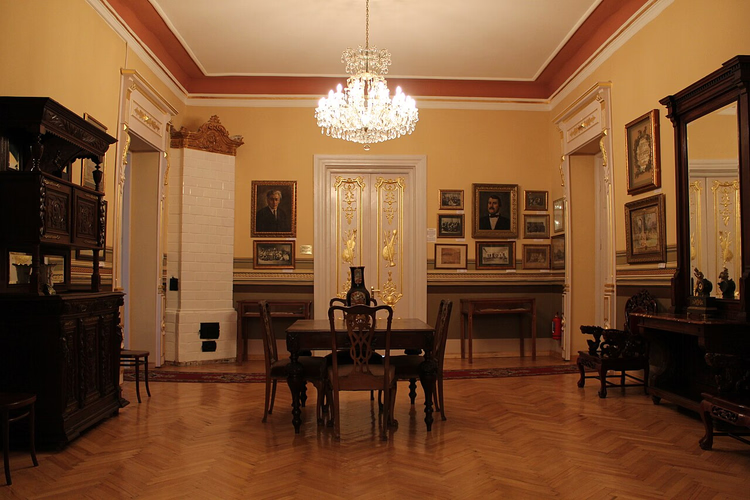 © Giorgi1975 at Georgian Wikipedia · CC BY-SAPhoto: Giorgi1975 at Georgian Wikipedia, CC BY-SA (https://creativecommons.org/licenses/by-sa/3.0), Wikimedia Commons
The museum occupies the Palace of Arts, built by German architect Paul Stern. It is one of the most beautiful buildings in the city, so it is worth visiting even just for the interiors (Palace of Arts).
The collection is large: scenes from performances, photographs from rehearsals and tours, artists' costumes, posters, programs, manuscripts, and private archives. It houses tape recordings and Georgian films, and among the oldest exhibits you will see a marble mask from ancient times. Many artists have donated their awards to the museum, and the collection is constantly growing.
Separate displays are dedicated to tours of Georgian troupes abroad: the photographs show how the theater's lineup changed and which productions were taken to Europe. In an hour you can cover the entire exhibition.
- Who it's for: theater lovers and anyone who wants to see the Palace of Arts from the inside.
11. Automobile Museum
The private collection was assembled by businessman Gia Mamulashvili, and it all started with one old "Moskvich" that took a long time to restore. Today it stands alongside "Volgas," "Zhigulis," and "Zaporozhets" cars: all the vehicles are in running condition, and restoring each one takes up to nine months.
Almost every exhibit has its own story attached, and the guide happily tells them. One of the cars, for example, was dug out of the ground. The most unusual-looking exhibit is the armored car used by Konstantin Chernenko. The owner dreams of adding to the collection the Mercedes from the assassination attempt on Eduard Shevardnadze.
The old convertibles make for good photographs, so people come here even without an interest in machinery. The museum operates in Varketili, on Kairo Street, and is open every day (museum location).
- Who it's for: lovers of Soviet-era retro cars in perfect condition.
- The catch: getting there is inconvenient, there is no metro nearby, you go by taxi or bus.
12. Underground printing house museum
The house on Kaspi Street is connected to revolutionary history: Lenin proposed that his Georgian supporters print leaflets underground. For this purpose, a plot was purchased, a house was built, and a large basement was equipped where the printing press was lowered. The entrance to the basement went through a well.
If things became dangerous, the lady of the house rang a signal bell, and work stopped. In 1906 the printing house was discovered and the house was destroyed. In the 1930s, on Stalin's orders, the building was rebuilt and a museum was opened here.
Today you can go down into the basement and see that very press, which has rusted considerably. The museum has no fixed schedule: tours are conducted by arrangement, so you discuss the visit time in advance (address on the map).
- Who it's for: anyone interested in the daily life of underground activists of the early twentieth century.
13. Shalva Amiranashvili museum of fine arts of Georgia
The museum occupies a historic building near Freedom Square. It used to house a theological seminary where the young Joseph Dzhugashvili studied. Today the collection numbers about one hundred forty thousand items (museum collection).
The museum bears Shalva Amiranashvili's name for good reason: he led the collection for more than thirty years and did a great deal to expand it. Look for medieval chased metalwork, the golden cross of Queen Tamar, and the ancient icon "The Savior Not Made by Hands." A separate room is devoted to works by Niko Pirosmani, with paintings by Eastern and Western masters hanging nearby.
For anyone interested in Georgian art, this is a must-stop. It's also a convenient starting point for exploring the center: Rustaveli Avenue is a ten-minute walk away.
- Who it's for: those who want to combine Freedom Square and a major art collection in a single outing.
14. National Gallery of Georgia
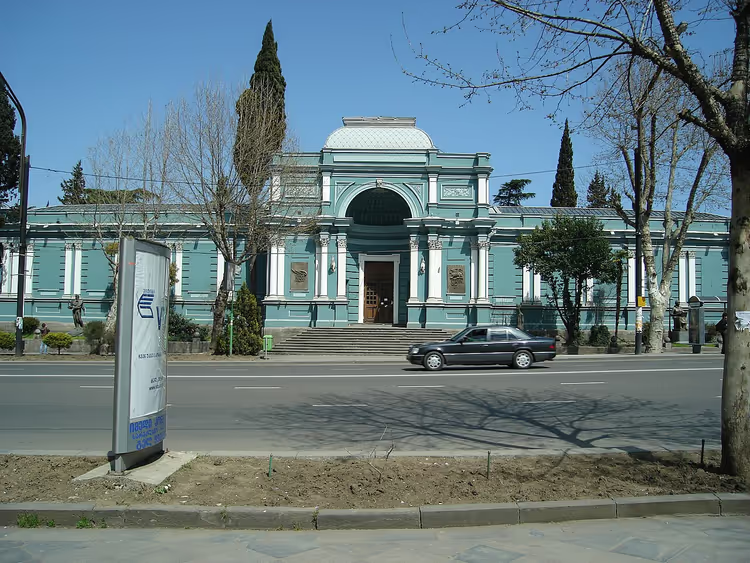
The gallery is known as the "Blue Gallery," and its building was constructed in the late nineteenth century. It opened in 1917, and the artist Dmitry Shevardnadze played a major role in that: after restoration, the gallery bears his name (gallery collection).
Today the holdings include about thirty thousand paintings, sculptures, photographs, and decorative art objects. Most of the works belong to twentieth-century artists. Two halls house the permanent exhibitions, while the rest of the space is given over to temporary shows, so you see a different gallery each time you visit.
Tours are offered in several languages. If you're visiting with children, take the short route through the main halls: a full walk through the gallery takes two hours.
- Who it's for: those who want to see Georgian art from the last century.
15. Shota Rustaveli theater museum
The museum opened in 1932 and tells the story of one of the country's leading theater companies (where the museum is located). The name of the twelfth-century poet Shota Rustaveli has been given to many places in Georgia, and the theater is no exception.
Here you'll find actors' personal belongings and costumes, set design sketches, posters, programs, and manuscripts, as well as books and newspaper articles about the theater and its directors. The exhibition is small but dense: in an hour you trace the company's journey from its first performances to contemporary productions.
Stop by before an evening performance: the museum is at the same address as the theater on Rustaveli Avenue, so no separate trip is needed.
- Who it's for: those who love theater and want to understand how it developed in Georgia.
16. Zacharia Paliashvili house museum
The Tbilisi Opera House appeared in the mid-nineteenth century and outwardly resembles a Moorish palace. It stages classical productions such as "The Nutcracker" and "The Sleeping Beauty," and the season opens with "Abesalom and Eteri," based on an old Georgian legend. Nearby, in a small park, lies the grave of the composer Zacharia Paliashvili.
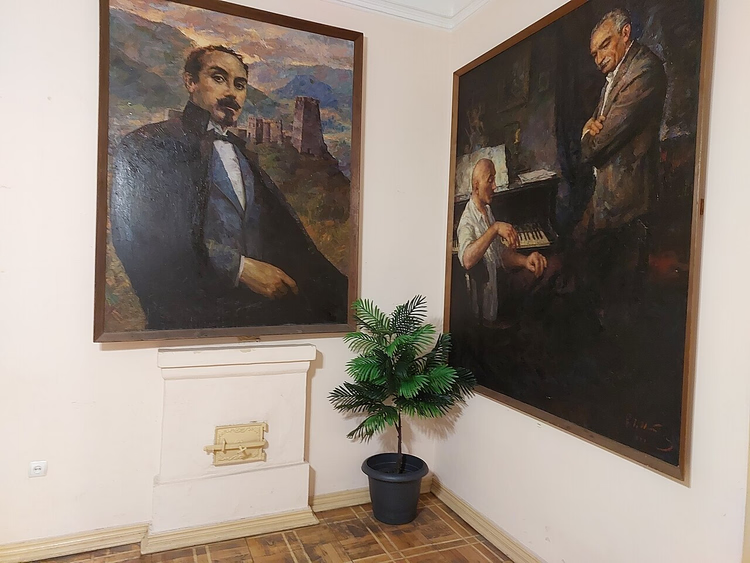 © Jaba1977 · CC BY-SAPhoto: Jaba1977, CC BY-SA (https://creativecommons.org/licenses/by-sa/4.0), Wikimedia Commons
The house museum opened in 1959 and recreates the setting in which the composer lived (directions). You'll see his belongings, manuscripts, sheet music, and books, as well as a collection of paintings and sculptures.
It's a quiet two-room museum that tour groups rarely reach. If you're going to the opera in the evening, come here during the day: the music makes a fuller impression after seeing the composer's home.
- Who it's for: those going to the opera who want to add the composer's story to their evening.
17. Tbilisi state conservatoire museum
The conservatoire opened its museum in 1997, and since then it has been gathering the country's musical heritage: private collections, manuscripts, sheet music, photographs, and documents (museum coordinates). The exhibition shows how the school developed and which musicians emerged from it.
The museum is not just about exhibitions. It hosts musical evenings, creative meetings, and live concerts, so in the evenings the halls are filled with music rather than silence. Tbilisi residents love their conservatoire, and families come to concerts together.
It's best to visit on weekdays, when the academic buildings are open. On weekends the entrance is usually closed, so plan your visit for midweek.
- Who it's for: those who want to catch a concert in the conservatoire's historic building.
18. Museum of Musical Instruments
 © Miguel Discart · CC BY-SAPhoto: Miguel Discart, CC BY-SA (https://creativecommons.org/licenses/by-sa/2.0), Wikimedia Commons
The museum grew out of the collection of the Museum of Theater, Music, Cinema, and Choreography. It holds more than five thousand exhibits: Georgian, Russian, and European instruments, panpipes, accordions, and bagpipes in cases decorated with precious metals and stones.
A separate part of the collection features rare audio recordings from the early twentieth century, gramophones, and sound-recording devices. There are also national instruments from Eastern countries, many of which you've likely never seen before.
The halls are small, so a tour takes no more than an hour. The collection grew out of the Museum of Theater, Music, Cinema, and Choreography, so it makes sense to see both museums in one day.
- Who it's for: those interested in music and the history of sound recording.
19. Titian Tabidze house museum
The museum stands in the village of Chkvishi, the birthplace of Galaktion Tabidze, and tells the story of him and his cousin Titian. The setting has been preserved from that era. You'll see the brothers' personal belongings, furniture, and paintings and sculptures by well-known artists. Galaktion wrote poetry that is read far beyond Georgia, while Titian also worked with essays and miniatures.
 © David1010 · CC BY-SAPhoto: David1010, CC BY-SA (https://creativecommons.org/licenses/by-sa/4.0), Wikimedia Commons
Titian's fate was tragic. He was friends with the poet Paolo Iashvili, who took his own life while awaiting arrest. Beria offered Titian protection in exchange for naming his friend a spy, but Titian refused and was executed. Boris Pasternak helped the family: he visited Tbilisi, and Nina Tabidze stayed by his side in the last days of his life.
- How to get there: the house museum is located in the village of Chkvishi, so you can't get here without a car or taxi (route to the museum).
20. Mikheil Javakhishvili house museum
Mikheil Javakhishvili left behind novels, short stories, and journalism. His youth was difficult: his relatives were killed by robbers, which forced him to drop out of school, and for a while he worked at a copper smelter. In the early twentieth century he turned to journalism.
Javakhishvili went into exile for his critical articles about tsarism. He traveled across almost all of Europe and visited the United States, then returned to Georgia after the revolution and began writing books again. He didn't get along with the new government either and was a member of the National Democratic Party.
In the 1920s he was arrested and sentenced to execution, but Ordzhonikidze's intervention saved his life. In the 1930s his books were published under harsh criticism in the press. In 1937 he was arrested again on Beria's orders, tortured and forced to sign a confession, and soon executed. The writer was rehabilitated only after Stalin's death, and his books returned to stores at the same time (location in Tbilisi).
The house preserves the writer's memory: you'll see his study, manuscripts, books, and family photographs. The tour takes about an hour, so allow extra time for getting there.
This list covers only part of the city's museum network: Tbilisi has significantly more venues open, including small departmental collections. Before your trip, it's worth making a plan, because some museums close earlier than you can reach them. Set priorities like this: first one large museum, then two small collections nearby, and you won't spend the day on travel.
Tbilisi museums on the map
All twenty museums are collected on one map, so it's convenient to build your route by geography rather than by the order in the list. Open it on your phone and mark the points near your hotel.
Museums of Tbilisi
Places on the map
- 1Georgian National Museum Gold from Colchis and the Scythian era, remains of the Dmanisi hominid
- 2Museum of Soviet Occupation KGB documents and archives on repression, separate entrance in the same building
- 3Museum of Georgian Emigration Archives of the diaspora from Paris, Berlin and New York at the university
- 4National Centre of Manuscripts Over ten thousand handwritten books, open since 1958
- 5Ethnographic Museum About seventy open-air structures in Vake Park
- 6Museum of History and Ethnography of Georgian Jews Building of the old synagogue, 26 centuries of Georgians and Jews living together
- 7Money Museum Colchian tetri, Roman and Byzantine coins, opened in 2001
- 8Karvasla Tbilisi History Museum Old caravanserai, about 50,000 items on the city's life
- 9State Silk Museum The path of silk from cocoon to fabric, founded in 1887
- 10Museum of Theatre, Music, Cinema and Choreography Art palace by architect Paul Stern, costumes and posters
- 11Museum of Cars Private collection of Soviet-era retro cars in Varketili
- 12Underground Printing House Museum Basement with a real early-20th-century printing press
- 13Shalva Amiranashvili Museum of Fine Arts About 140,000 items, the cross of Queen Tamar, the Pirosmani hall
- 14National Gallery "Blue Gallery", about 30,000 20th-century paintings and sculptures
- 15Rustaveli Theatre Museum Costumes and posters of the troupe, museum opened in 1932
- 16Tbilisi State Conservatoire Museum The country's musical heritage, opened in 1997
- 17Museum of Musical Instruments Over five thousand instruments, rare recordings and gramophones
- 18Javakhishvili House Museum The writer's study, manuscripts and family photographs
It's worth downloading the map in advance in the Google Maps app: then it will open even without a local SIM card and you won't get lost in the lanes of Vake and Varketili. From the center you can reach most of the points on the list by metro or taxi for little money.
Tours and tickets in Tbilisi
Guided tours, skip-the-line tickets and activities — most offers can be cancelled free of charge.
See offers on TiqetsThe widget loads once you give your consent.
⁉️🤔 Frequently asked questions
When are Tbilisi museums closed?
In Tbilisi, almost all museums are closed on Mondays, so plan your visits from Tuesday through Saturday. Small private collections follow their own schedules and often welcome guests only by appointment. At the National Museum of Georgia, the last ticket is sold half an hour before closing (opening hours).
How much does admission to Tbilisi museums cost?
An adult ticket to the National Museum of Georgia for foreign visitors costs 40 GEL; students and schoolchildren pay from 15 GEL with an ID (as of 09/2026, ticket prices). At the National Center of Manuscripts and the Museum of Money, admission costs a token amount, and children under six often don't need a ticket. Check the exact price at the ticket office of the specific museum.
Can you buy tickets online?
The National Museum of Georgia sells tickets at the box office and on biletebi.ge, so you don't have to stand in line for a ticket to the country's main museum. The other museums on the list often don't have online sales. Bring a card and some cash: not every ticket office has a card terminal.
Which museum should you choose if you have one day?
Start with the National Museum of Georgia and the Museum of Soviet Occupation: they're in the same building on Rustaveli Avenue, and both take about three hours. After lunch, walk to the National Gallery or the Tbilisi History Museum. That way you can cover ancient history, the Soviet period, and art in one day without traveling across the city.
Are museums open on Sunday?
Yes, most venues on the list are open on Sunday, but they close earlier than on weekdays. The exception is the State Silk Museum: Sunday is its day off. The Open Air Museum of Ethnography and the Automobile Museum stay open longer on weekends than the others (list of museums).
In short: what's worth booking
If you have one free day and it's raining: go for the National Museum of Georgia, and add the National Gallery in the evening. If you're traveling with children: the Open Air Museum of Ethnography and the State Silk Museum. If you're interested in the Soviet period: the Museum of Soviet Occupation and the Museum of the Underground Printing House. For a quiet evening, save the Zacharia Paliashvili House Museum or the Museum of Musical Instruments.
Tickets for museums and tours in Tbilisi are easy to find on Tiqets, and walks through the city's museum districts are available on GetYourGuide. Both services accept cards and don't require you to print vouchers.

A small editorial team writing guides for independent travel. We travel ourselves, but we haven’t been everywhere, so we check prices, opening hours and how to get there against official sources.