
















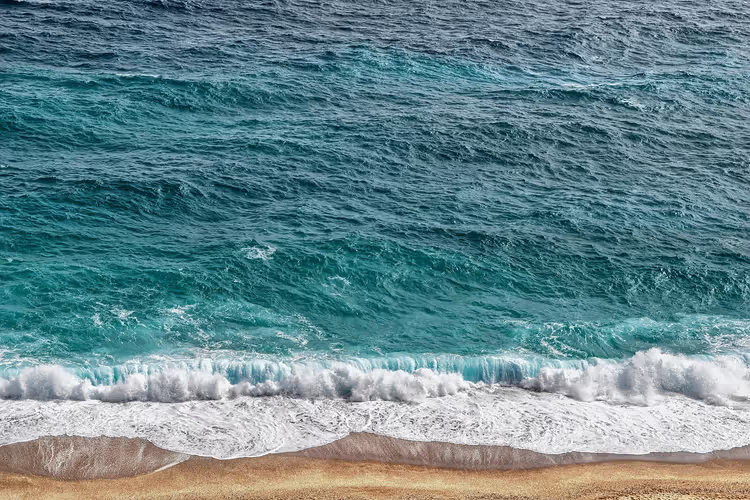
Sandy beaches of Italy: 14 shores where booking is needed and where entry is free
Sandy beaches in Italy are nothing alike. In Sardinia, the sand is white as flour and the water is clear all the way to the bottom. In Calabria, waves crash against the dark cliffs of the Tyrrhenian Sea. We've rounded up 14 shores worth seeing: from the wild coves of the Gulf of Orosei to the quartz beaches of Tuscany. Some of them only welcome visitors by reservation and with a daily visitor cap. Here's an example: at Cala Violina, booking is mandatory and costs 1 € (as of 09/2026, Comune di Scarlino). Below you'll find access details, parking information, and the rules for September 2026. Pick a shore that fits your trip and check the route in advance.
Our picks: 14 sandy beaches
💡 In short:
- For wild coves, head to the Gulf of Orosei on Sardinia's east coast: you get there by boat or on foot along a trail.
- For families, choose Fetovaia on Elba and Cala Violina in Tuscany: shallow bottom and a gentle entry into the water.
- At Cala Violina and the Costa di Baunei beaches, you need to book ahead; they may not let you in on the spot.
- Access and visiting rules: 09/2026, verified on the official Sardinia tourism website
Beach | Region | How to get there | Who it's for |
|---|---|---|---|
Cala Mariolu | Sardinia, Baunei | boat from Cala Gonone, by reservation | lovers of wild nature |
Fetovaia | Elba, Tuscany | car or bus | families with children |
Marina dell'Isola | Calabria, Tropea | on foot from town | those who want a view of the church |
Cala Spinosa | Sardinia, Santa Teresa Gallura | car, then a trail | snorkelers |
Due Sorelle | Marche, Ancona | boat only from Numana | those seeking solitude |
Cala Violina | Tuscany, Scarlino | car or bike, by reservation | families and cyclists |
Chiaia di Luna | Ponza, Lazio | sea access only | experienced swimmers |
Cala Bianca | Campania, Camerota | on foot or by boat | photography lovers |
Orange Bay | Apulia, Gargano | car to the viewpoint | families |
Costa degli Dei | Calabria, Tropea | on foot from town | surfers |
Cala Rossa | Favignana, Sicily | boat or a steep descent | history lovers |
Cala Spinosa at Capo Testa | Sardinia | trail from the lighthouse | those willing to walk |
Cala Goloritzé | Sardinia, Baunei | trail from the plateau | hikers |
Baia di Zagare | Apulia, Mattinata | car from Mattinata | walkers |
1. Cala Mariolu in the Gulf of Orosei
 © Lddcrs · CC BY-SAPhoto: Lddcrs, CC BY-SA (https://creativecommons.org/licenses/by-sa/4.0), Wikimedia Commons
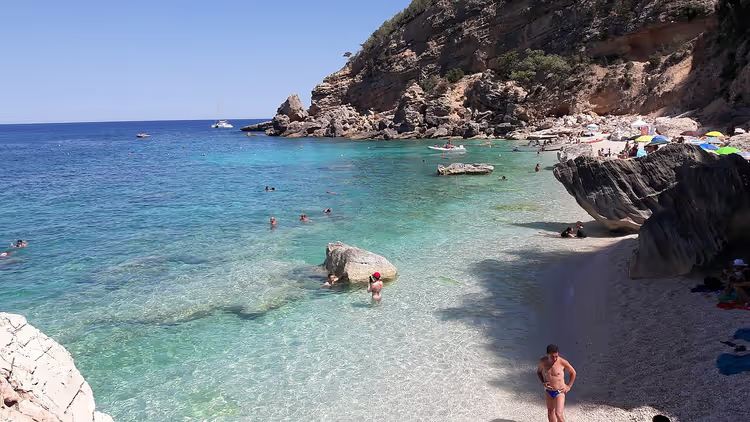
Cala Mariolu lies on Sardinia's east coast, in the Gulf of Orosei. Locals call it "the cove of the cheerful thief." The name came from a Mediterranean monk seal. According to legend, she stole fish from fishermen's nets. The white pebbles look like snowflakes. The water shifts from turquoise to emerald.
You can't get here by car. The overland route follows a rocky trail across the Baunei plateau. Most visitors come by boat. Scheduled services run from the ports of Cala Gonone, Arbatax, and Santa Maria Navarrese.
Since 2025, the Costa di Baunei beaches have operated with a daily visitor cap. If you arrive on your own or on a rented boat, a reservation and QR code are mandatory (as of 09/2026, official Cala Mariolu website). Organized tours bring guests on a set schedule. The water near the shore is clear, and the depth increases quickly.
Take a morning departure. After midday, the wind picks up and the number of boats triples. The cove's bottom is rocky, so water shoes won't hurt.
- Who it's for: lovers of wild nature and anchorages.
- Not for: those who want loungers and a beach bar under an umbrella.
- How to get there: boat or trail from the Golgo plateau; there is no direct road access to the sea.
- The catch: without a reservation you won't be allowed ashore, and getting there by boat or on foot takes considerable effort.
2. Fetovaia on Elba Island
 © Carsten Steger · CC BY-SAPhoto: Carsten Steger, CC BY-SA (https://creativecommons.org/licenses/by-sa/4.0), Wikimedia Commons
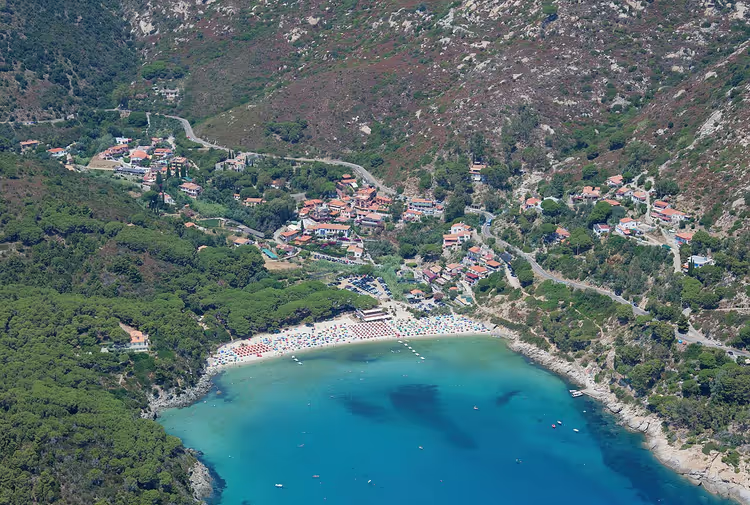
Fetovaia hides in a quiet cove on Elba's southwest coast. The beach has kept its pristine look. Golden sand, granite cliffs wrapped in greenery, and clear water have made Fetovaia one of Italy's most popular shores.
The bottom near the shore is shallow and the entry is gentle. You'll be comfortable with small children. Napoleon was exiled on Elba and, according to legend, couldn't resist the local shores. An asphalt road leads to the beach, and there's parking nearby. For Elba, that's a rarity: most shores are tucked away behind trails.
Popularity erases this place's main advantage. In July and August, visitors fill the sand by midday. Come at opening time or after 5 p.m. Then you'll have both space and shade from the pines.
- Who it's for: families with children and those traveling by car.
- How to get there: drive to the beach, parking at the entrance.
- Not for: those looking for an empty shore in high season.
- The catch: in summer the beach is packed by lunchtime; look for parking in advance.
3. Marina dell'Isola in Tropea
 © Benjamin Smith · CC BY-SAPhoto: Benjamin Smith, CC BY-SA (https://creativecommons.org/licenses/by-sa/4.0), Wikimedia Commons
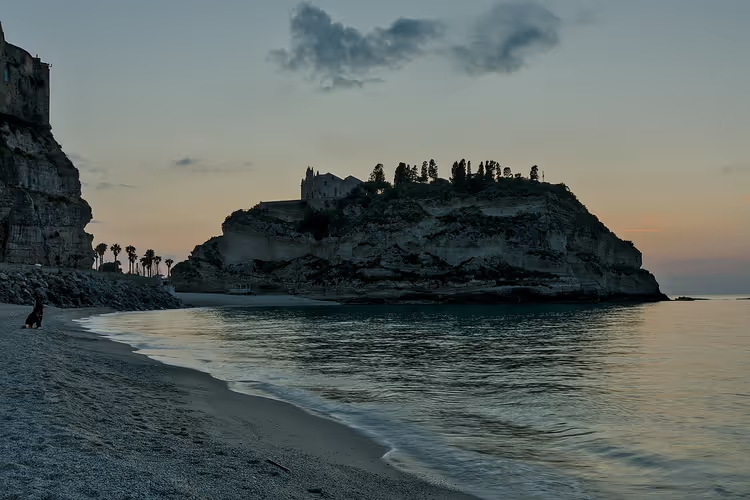
Marina dell'Isola lies at the very "toe" of the Italian boot, in Tropea. This stretch of the Tyrrhenian coast is considered one of the best in Calabria. The beach's main landmark: a cliff with the church of Santa Maria dell'Isola. It stands right in the water and is visible from any point on the shore.
The sand here is hot, and the sea stays warm for almost the entire season. A short descent from town leads to the water. There's no elevator, so choose your route wisely.
Many people come here for a photo with the church in the background. A good view also opens up from the town's lookout point. Bring water and rock shoes: the pebbles near the water are large.
Morning before 9 a.m. is the best time. There are few people, and the cliff's shadow falls evenly. After lunch, the shore gets crowded.
- Who it's for: those who want beach and town in one spot.
- How to get there: on foot from the center of Tropea.
- Not for: those not willing to go down stairs.
- The catch: the descent to the water is steep; with a stroller it will be tough.
4. Cala Spinosa in Santa Teresa Gallura
Cala Spinosa opens up on Sardinia's northeast coast, near Santa Teresa Gallura. Granite boulders cut the cove off from the road. The water is so clear that yachts at anchor seem to float in midair.
In summer, mostly Italians themselves relax here. Organized groups rarely make it: the rocky trail deters some visitors. So you have a chance to find a spot even in season.
Come on a weekday. On weekends, the shore fills with locals, and parking near the trail runs out. For underwater photography, this is one of the best spots in the area (according to Sardinia tourism, 09/2026). Bring a mask: the bottom is rocky and rich in marine life.
- Who it's for: snorkelers and photographers.
- How to get there: drive to the parking lot, then walk along a trail.
- Not for: those who want to drive right up to the water.
- The catch: on weekends it's crowded, and you'll have to park far away.
5. Due Sorelle near Monte Conero
 © Diego Baglieri · CC BY-SAPhoto: Diego Baglieri, CC BY-SA (https://creativecommons.org/licenses/by-sa/4.0), Wikimedia Commons
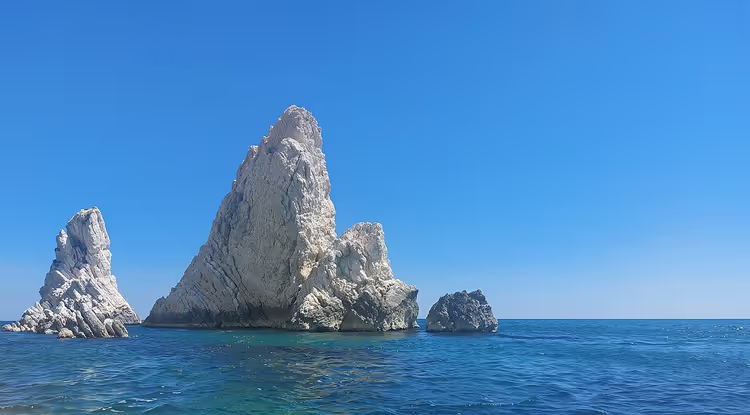
Due Sorelle beach lies at the southern slope of Monte Conero in Le Marche. From the land side, it is sealed off by sheer cliffs. The only way to get here is by sea. Boats depart from the port of Numana and from Sirolo. You will return to the same place after swimming.
The swimming season here runs from May through September. In early autumn, visitor numbers rise: locals hold a sea festival. The beach has no dedicated pier, so you are dropped off right from the boat.
- Who it's for: those who want a shore with no roads or hotels nearby.
- How to get there: boat from the port of Numana; services run from June through September (schedule and prices: Traghettatori del Conero carrier website).
- The catch: you can't reach the shore without a boat, and services depend on the weather.
6. Cala Violina in Tuscany
 © Jacopo Marcovaldi · CC BYPhoto: Jacopo Marcovaldi, CC BY (https://creativecommons.org/licenses/by/2.0), Wikimedia Commons
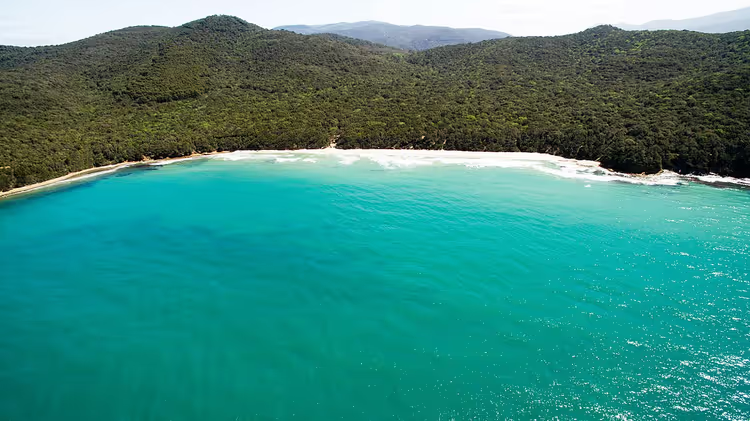
Cala Violina hides in a nature reserve near the town of Scarlino in Tuscany. The shore is covered with the finest quartz sand, and the water stays clear. The spot is classified as a "wild" beach: there are no loungers or umbrellas here.
There is no entrance fee, but you need to reserve your spot in advance. Booking is mandatory and costs €1 (as of 09/2026, booking rules from the municipality). The number of guests per day is limited. Leave your car in a designated parking area and continue on foot.
Two dirt roads lead to the cove: one from Puntone and one from Route 158 near Pian d'Alma. The nearest towns for overnight stays are Follonica and Punta Ala. A bicycle is more convenient than a car here.
- Who it's for: families and cyclists.
- How to get there: car or bicycle from Puntone, then on foot.
- Booking: in advance on the official Cala Violina website.
- The catch: without a booking, you will be turned away at the entrance.
7. Chiaia di Luna on Ponza
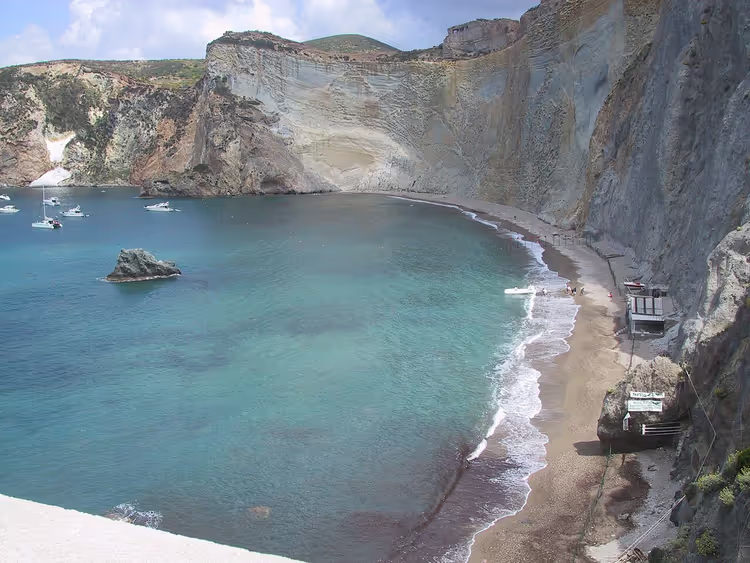
Chiaia di Luna is the most recognizable bay on the island of Ponza in Lazio. A tall white cliff rises above the water. An ancient Roman tunnel once led to the beach. Through it, people descended directly to the water.
The descent is now closed due to the risk of rockfall. Stabilizing the cliffs proved impossible, and reopening is not currently planned. So the shore is accessible only from the sea.
- How to get there: by boat from the port of Ponza, there is no access on foot.
- Who it's for: those willing to view the bay from the water.
- Not for: those who want loungers and shallow water.
- The catch: the land tunnel is closed, the shore is not accessible on foot.
8. Cala Bianca in Camerota
 © Anna Eden 86 · CC BY-SAPhoto: Anna Eden 86, CC BY-SA (https://creativecommons.org/licenses/by-sa/4.0), Wikimedia Commons
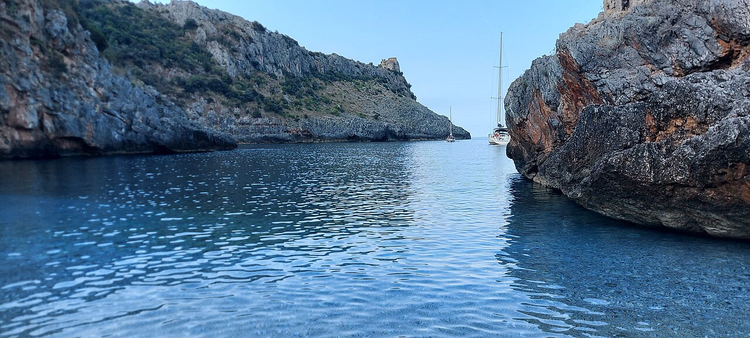
Cala Bianca lies in the national park of Cilento, near the resort of Marina di Camerota. A narrow strip of white sand is pressed against a cliff. The beach has won contests for the most beautiful shores in Italy for its scenery. The sea along this part of the coast is considered among the cleanest in the country.
Swimming here is comfortable from May through September. The beach is "wild": there are no facilities by the water, bring everything with you. It's convenient to stay overnight in Camerota or in neighboring villages. In season, accommodation gets booked up quickly, so reserve ahead.
- How to get there: on foot along the coast or by boat from Marina di Camerota.
- Who it's for: lovers of hiking and photography.
- Not for: those who want cafes and loungers.
- The catch: there is almost no shade, and facilities are far away.
9. Orange Bay in Gargano
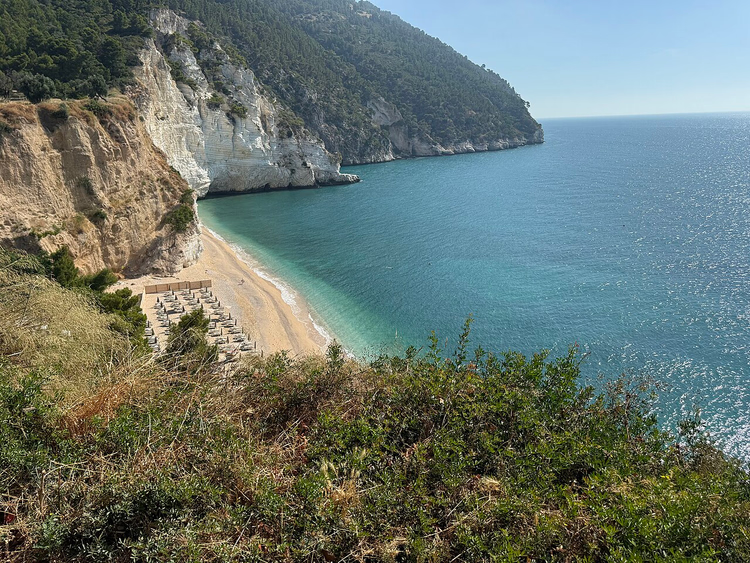 © Old Vigornian · CC BY-SAPhoto: Old Vigornian, CC BY-SA (https://creativecommons.org/licenses/by-sa/4.0), Wikimedia Commons
Orange Bay is hidden on the Gargano peninsula in Puglia. Almost the entire headland is occupied by a national park. The name comes from the groves of bitter orange trees on the cliffs. In spring, the air here smells of blossoming citrus.
In summer, people sunbathe and swim on the shore. The Adriatic water is clear, and oak and beech forests rustle nearby. The closest towns for a stay are Mattinata and Vieste. Both suit a quiet family vacation.
- How to get there: by car to Mattinata or Vieste, then on foot or by boat.
- Who it's for: families: quiet towns and a gentle entry are nearby.
- The catch: there is little parking near the shore, not enough space for everyone.
10. Costa degli Dei in Calabria
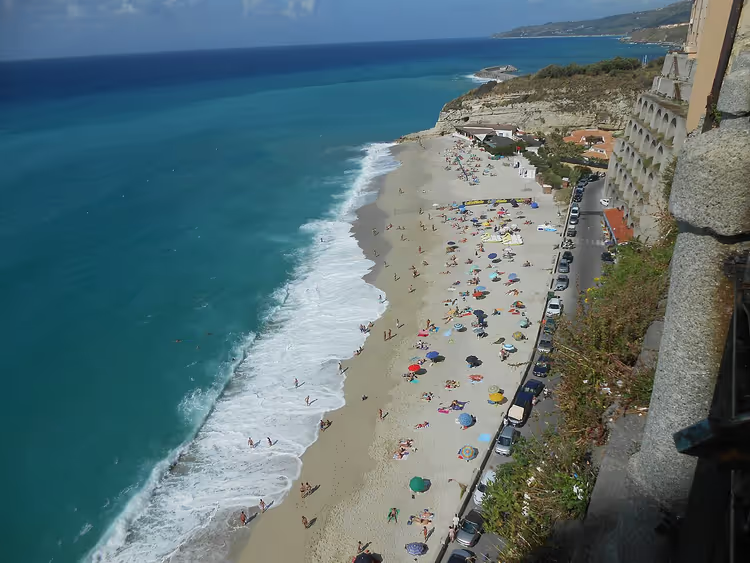 © Brianza2008 · CC BY-SAPhoto: Brianza2008, CC BY-SA (https://creativecommons.org/licenses/by-sa/3.0), Wikimedia Commons
Costa degli Dei is the "coast of the gods" on the Tyrrhenian Sea in Calabria. Steady winds blow here, which is why windsurfers and kitesurfers come. Conditions also suit diving. Clear water and white sand await you in the bays near Tropea.
Tropea is called one of the best beaches in Europe. The sea along this stretch has received awards for cleanliness. Local festivals run all summer. In July there is a fish and onion festival, in August a film festival, in September a blues festival.
Combine swimming with a walk around the town. The old center of Tropea stands on a cliff above the sea. In the evening, it's worth going up there for the sunset.
- Who it's for: surfers and festival lovers.
- How to get there: on foot from Tropea or by car along the coastal road.
- The catch: at the height of the season, the beaches near the town are overcrowded.
11. Cala Rossa on Favignana
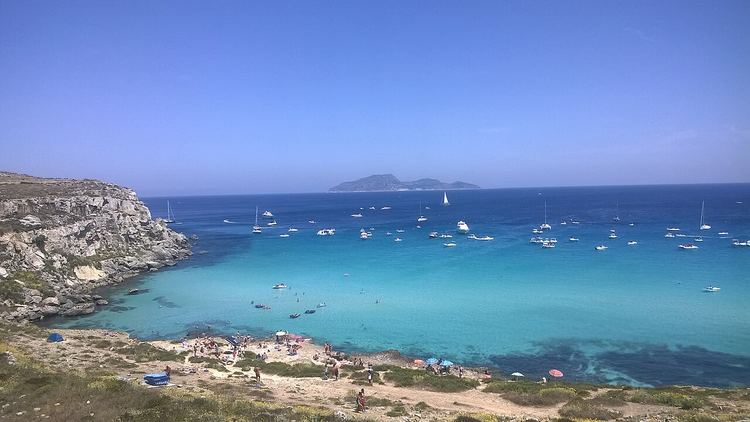 © Arcona B&B · CC BYPhoto: Arcona B&B, CC BY (https://creativecommons.org/licenses/by/3.0), Wikimedia Commons
Cala Rossa opens up on the island of Favignana in the Egadi archipelago off Sicily. Tuff was once quarried here: quarries ran along the coast. The beaches were formed from them. The local stone gave the shore its appearance.
The name is linked to a naval battle between the Carthaginians and the Romans. According to legend, the water turned red with the blood of the fallen. In reality, the sea here shimmers blue, turquoise, and green. You rarely find such a set of shades.
Two paths lead to the beach: by sea on a boat or down a steep descent from the cliffs.
- How to get there: by boat or a rocky descent from the cliffs.
- Who it's for: those who want to combine sea and history.
- The catch: the footpath down is exposed to the sun, bring water.
12. Cala Spinosa near Capo Testa
Cala Spinosa opens up on the side of Capo Testa, near the Strait of Bonifacio. This strait separates Sardinia from Corsica. A narrow strip of sand is squeezed by granite rocks. The wind has carved whimsical figures out of the stone.
To reach the beach, head for the Capo Testa lighthouse. A path leads down from it. The descent is short but rocky. In return, the water here is clean, and the wind keeps the heat from becoming oppressive.
- How to get there: use the Capo Testa lighthouse as a landmark, then down the path from it.
- Who it's for: those willing to walk down.
- Not for: those traveling with a stroller or suitcase.
- The catch: the path is rocky and slippery in places.
13. Cala Goloritzé in Baunei
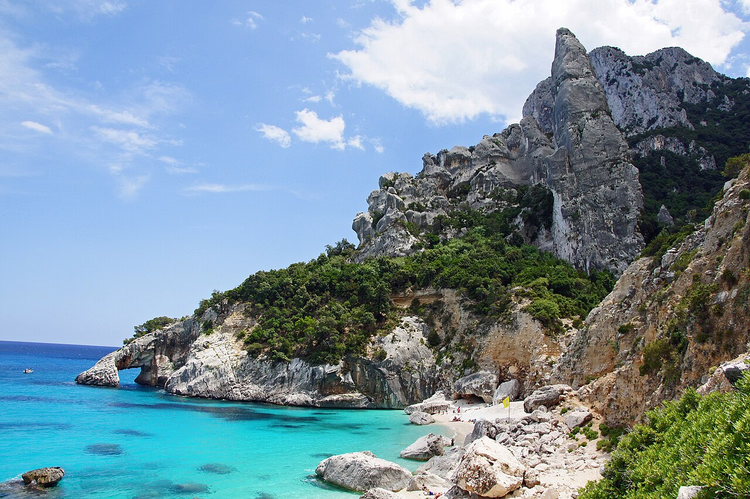 © Yesuitus2001 · CC BY-SAPhoto: Yesuitus2001, CC BY-SA (https://creativecommons.org/licenses/by-sa/2.5), Wikimedia Commons
Cala Goloritzé lies on the Baunei coast in the Gulf of Orosei. The beach is declared a national monument of Italy. Above the pebbles rises the limestone spire Aguglia, also called Monte Caroddi. It is visible from the sea from far away.
The descent from the Golgo plateau goes along rocky terraces and an oak forest. It's a long walk, but views open up at every step. Boats do not land at the shore, so the only way here is on foot.
Bring shoes with good grip and plenty of water. Going down is easy, going back up is harder. Plan your start for the morning, before the sun is at its peak.
- How to get there: only on foot from the Golgo plateau, boats do not land at the shore.
- Who it's for: those who love hiking and views.
- Not for: those who want to reach the beach without effort.
- The catch: the climb back up is hard in the heat.
14. Baia di Zagare in Mattinata
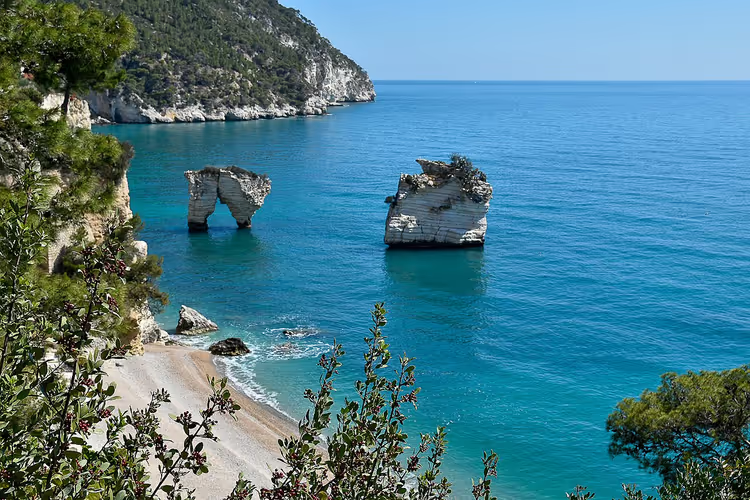 © Vincenza.amato1975 · CC BY-SAPhoto: Vincenza.amato1975, CC BY-SA (https://creativecommons.org/licenses/by-sa/4.0), Wikimedia Commons
Baia di Zagare in the bay near Mattinata in Gargano closes the list. The bay is part of a nature park, so it's never boring here. After lying on the golden sand to your heart's content, you head inland into the reserve. Trails run in the shade of ancient oaks and beeches.
From the mountain peaks, a view of the Adriatic opens up. Part of the route around the Adriatic runs right here. This is a place for those who want sea and walks in a single day. Bring comfortable sneakers.
- Who it's for: those who want sea and walks in one day.
- How to get there: by car from Mattinata, then on foot or by boat.
- The catch: there is little shade near the shore, it's hot at midday.
Sandy beaches of Italy on the map
All 14 beaches from the list are marked on the map. Open it and assess the distances between shores, towns, and airports. That makes it easier to put together a route through Italy.
Sandy beaches of Italy
Places on the map
- 1Cala Mariolu Orosei Gulf, white pebbles, water ranging from turquoise to emerald
- 2Fetovaia Southwest of Elba, shallow bottom and gentle entry, parking available
- 3Marina dell'Isola Tropea, view of the cliff with the church of Santa Maria dell'Isola
- 4Cala Spinosa (near Santa Teresa Gallura) Granite boulders, clear water, rocky bottom
- 5Due Sorelle By Monte Conero, reachable only by sea from Numana
- 6Cala Violina Nature reserve near Scarlino, quartz sand, booking required
- 7Chiaia di Luna Ponza island, white cliff, accessible only from the sea
- 8Cala Bianca Cilento National Park, narrow strip of white sand
- 9Bitter Orange Bay Gargano peninsula, thickets of bitter orange trees on the cliffs
- 10Costa degli Dei Coast of the Gods on the Tyrrhenian Sea, steady winds for surfing
- 11Cala Rossa Favignana island, former quarries, water of varying shades
- 12Cala Spinosa (near Capo Testa) Landmark Capo Testa lighthouse, descent along a rocky trail
- 13Cala Goloritzè National monument, limestone spire Aguglia above the pebbles
- 14Baia delle Zagare Mattinata on the Gargano, golden sand and a nature park
⁉️🤔 Frequently asked questions
When is the best time to go to the sandy beaches of Italy?
The swimming season in the south lasts from May through September. The water is warmest in July and August, but that's when the shores are at their most crowded. Choose June or the first half of September: the sea is still warm, and access limits to wild bays close less often. On Sardinia, the wind is weaker in September than in August.
Do you need a reservation to enter the beaches?
Not for everyone. Cala Violina and the Costa di Baunei beaches require reservations and cap daily visitor numbers. Cala Violina charges €1 per spot (as of 09/2026, Scarlino municipal website). The other shores on the list are open, but you should grab a parking spot near the entrance before 10 a.m. Rules change every season, so check them on the beach's official website before you go.
Where are the least crowded beaches in Italy?
On the wild shores of Sardinia and Ponza. Cala Goloritzé and Cala Spinosa take fewer visitors because they're hard to reach. Chiaia di Luna is accessible only from the sea, so there are no crowds on foot. Go on a weekday: on weekends Italians fill even the hard-to-reach coves.
Can you reach the wild coves by car?
Most of them, no. Cala Mariolu is reached by a trail and boat trips. Boats don't dock at Cala Goloritzé; only a trail leads there. Dirt roads lead to Cala Violina, then you walk or bike the rest of the way. A car is useful on Elba, near Mattinata, and on Favignana. In other cases, leave your car in the lot and take a boat.
Which beaches are good for kids?
Fetovaia on Elba and Cala Violina in Tuscany: the water is shallow near the shore and the entry is gradual. Marina dell'Isola in Tropea also works, but the descent to the water is steep. Book Cala Violina: without a reservation you won't get in. The Orange Bay in Gargano is good for families, with quiet little towns nearby and places to have lunch.
In short: which beaches to book
Italy offers something for every taste: the wild coves of Sardinia, the quartz sand of Tuscany, and the warm shores of Calabria. Pick a coastline that fits your route, not the other way around.
- If you're traveling with kids: choose Fetovaia and Cala Violina.
- If you want peace and quiet: Cala Goloritzé and Cala Spinosa.
- If you don't have a car: Marina dell'Isola and Costa degli Dei.
- If you're up for a boat ride: Cala Mariolu and Chiaia di Luna.
Book your spot in advance on the Cala Violina beach website: in summer, the daily limit fills up several days ahead.

A small editorial team writing guides for independent travel. We travel ourselves, but we haven’t been everywhere, so we check prices, opening hours and how to get there against official sources.