
















Saxon Switzerland from Dresden: fortresses, Bastei bridge and prices 2026
Saxon Switzerland begins on the border of Germany and the Czech Republic, half an hour from Dresden. It is the country's only non-Alpine rocky national park. The Elbe cuts through sandstone plateaus, and sandstone towers rise above the river. Most people come here for a day, see the Bastei Bridge, and head home. That way you miss the fortresses, the waterfall, and the best panoramas.
We put together a practical plan: what to see, when to go, and how to get there from Dresden or Prague.
Ad: this article contains affiliate links, we earn a commission if you book through them, at no extra cost to you.
The national park: essentials for your trip
💡 In short:
- The park covers about 93 km² on the right bank of the Elbe and is open year-round (according to the park's official website).
- Stolpen Fortress: admission 8 €, daily 10:00-18:00 in season (as of 09/2026, official Burg Stolpen website).
The park has more than 1,000 km of hiking trails (according to the park's official website). In one day you can cover the Bastei Bridge and Königstein Fortress. Allow a second day for everything else.
History and name of the park
 © Hullbr3ach · CC BY-SAPhoto: Hullbr3ach, CC BY-SA (https://creativecommons.org/licenses/by-sa/2.5), Wikimedia Commons
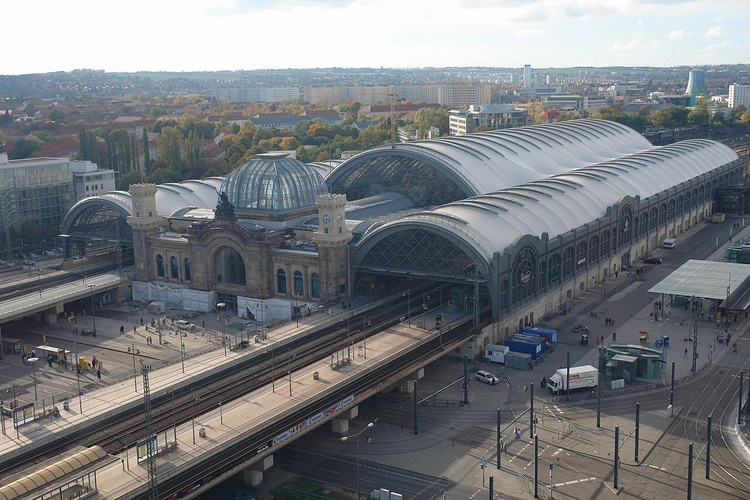
People appreciated the sandstone landscape along the Elbe as early as the Romantic era. In the 19th century it was threatened by quarries and new railways; the terrain could have been disfigured forever. In 1956 the area was declared a protected landscape, and on October 1, 1990, it became a national park (according to Wikipedia).
The park covers about 93.5 km², making it one of the smallest national parks in Germany (according to Nationalpark Sächsische Schweiz). The boundaries of the protected area were expanded gradually, so you'll already see some of the cliffs around Rathen from the water during the ferry crossing.
The name was coined by Swiss artists Adrian Zingg and Anton Graff, instructors at the Dresden Academy of Fine Arts. The local cliffs reminded them of home, and the region became known as Saxon Switzerland (according to the region's official tourism portal).
What to see in the park
There are hundreds of kilometers of hiking trails here, and the main long-distance trail is called the Malerweg, or Painters' Trail, stretching 112 km (according to Tourismusverband Sächsische Schweiz). Bring sturdy-soled shoes. Below are six spots most often included in an itinerary.
Bastei
 © Bybbisch94, Christian Gebhardt · CC BY-SAPhoto: Bybbisch94, Christian Gebhardt, CC BY-SA (https://creativecommons.org/licenses/by-sa/4.0), Wikimedia Commons
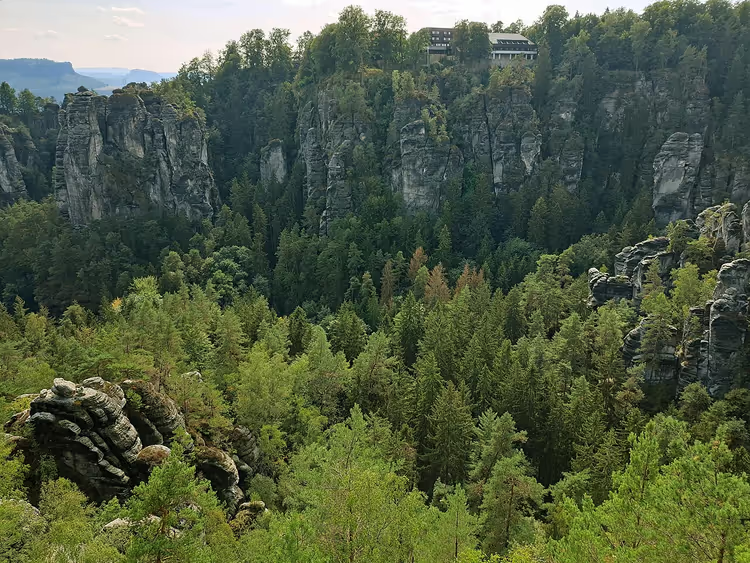
The Bastei viewing platform rises about 190 m above the Elbe (according to the tourism association). It offers a panorama of the cliffs and a bend in the river, and it's where most people start exploring the park. The Bastei Bridge (Basteibrücke), about 76 m long, rests on seven arches. The first wooden bridge was built for tourists, and in 1851 it was replaced with a stone one.
Almost everyone comes here, so the viewing platform gets crowded in summer. Arrive at opening time or closer to evening. An hour is enough for the panorama and a first impression.
- Who it's for: a first introduction to the park and the Elbe panorama.
Königstein Fortress
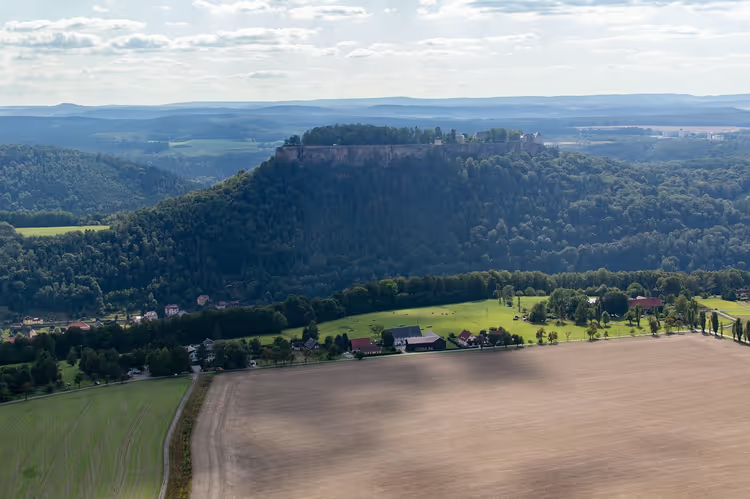
Königstein Fortress (Festung Königstein) sits on a table mountain near the town of Königstein. Inside there are about fifty historic buildings, a museum, and a well more than 150 m deep (according to the official Festung Königstein website). The climb to the gates is uphill, so bring water.
The fortress was first mentioned in the 13th century. It controlled the banks of the Elbe and was long considered impregnable. In the 18th century, alchemist Johann Friedrich Böttger was held here after discovering how to make European porcelain, which led to Meissen porcelain. In 1849, the Saxon royal family took refuge in the fortress. During World War II, paintings from the Dresden Gallery were hidden here.
Allow half a day for your visit. Three hours is enough if you don't go into every exhibition.
- The catch: the climb to the plateau is uphill, and admission is paid.
Lichtenhain Waterfall
The Lichtenhain Waterfall (Lichtenhainer Wasserfall) in the Kirnitzschtal valley works like a show. Every half hour, music plays and water is released from the dam, so the flow doesn't roar constantly but on a schedule (according to Tourismusverband Sächsische Schweiz). Admission is free.
The waterfall's history began in the 19th century. Back then, a "waterfall puller" was in charge of the water: he opened the sluice when enough spectators had gathered. The Gasthof Lichtenhainer Wasserfall has operated next to the waterfall since 1853. Many trails start from the waterfall, and the walk to Kuhstall takes about half an hour.
- The catch: the flow runs on a schedule, not around the clock.
Kuhstall
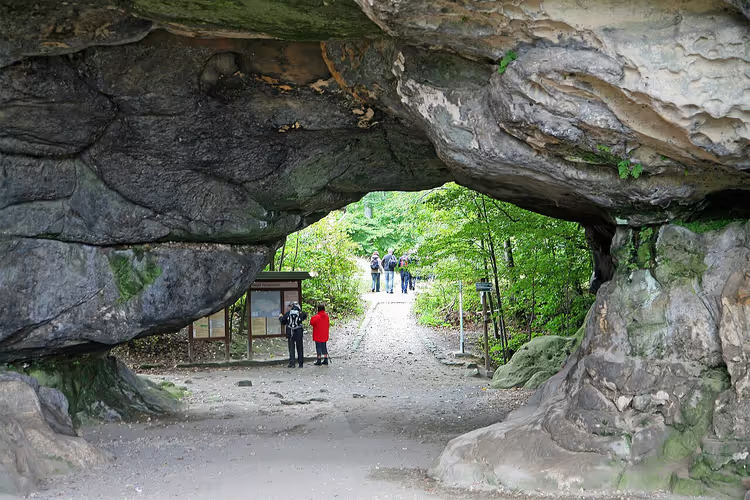 © W. Bulach · CC BY-SAPhoto: W. Bulach, CC BY-SA (https://creativecommons.org/licenses/by-sa/4.0), Wikimedia Commons
Kuhstall translates from German as "cow shed," but you won't find any cows here. It's a rock arch more than 10 m high and about 16 m wide. It leads to a viewing platform at 337 m, with views of almost the entire park (according to the tourism association website). Long ago, cows were hidden behind the arch from Swedish soldiers.
There's a restaurant near the arch where you can rest and grab a bite. The trail to Kuhstall goes through the forest and climbs uphill. At a relaxed pace, it takes about an hour.
Stolpen Fortress
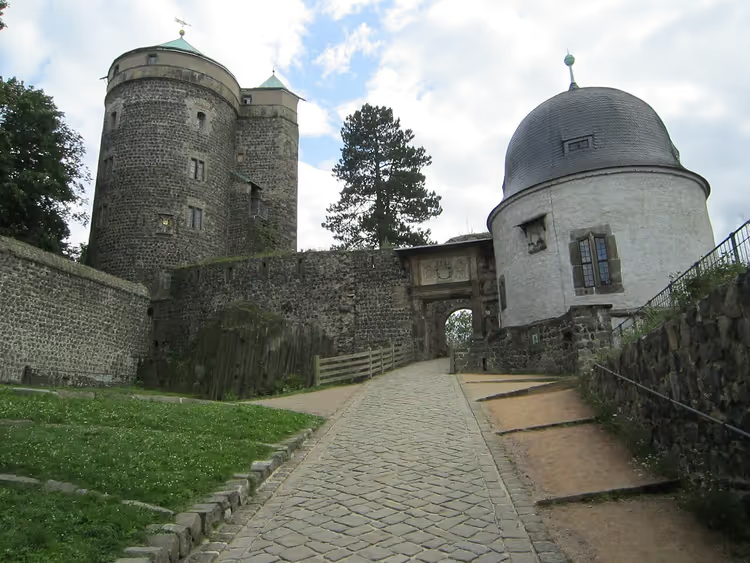 © Dickelbers · CC BY-SAPhoto: Dickelbers, CC BY-SA (https://creativecommons.org/licenses/by-sa/3.0), Wikimedia Commons
Stolpen Castle (Burg Stolpen) grew up on a basalt rock as early as the 12th century and took its final shape in the mid-15th century. Here you'll see the round tower where the bastions began and a well more than 80 m deep cut into the basalt. The rock was heated with fires and doused with water to make it crack.
Over time the castle housed a bishops' residence, a military garrison, a fire station, and a prison. In the 18th century Countess Cosel, a favorite of Augustus the Strong, was sent here into exile. Today it's a museum with a permanent exhibition.
- The catch: in winter the castle opens depending on the weather, and some rooms may be closed (according to the castle's hours page).
Rathen Rock Theater
The open-air summer theater near the Rathen resort was built at the request of local residents. The Rathen Rock Theater (Felsenbühne Rathen) was long famous for productions based on Karl May's works about the Apache Winnetou. Today up to 90 performances are staged here each season, and the auditorium seats about 2,000 spectators (according to Landesbühnen Sachsen). The repertoire includes not only westerns but also operas, musicals, and children's shows.
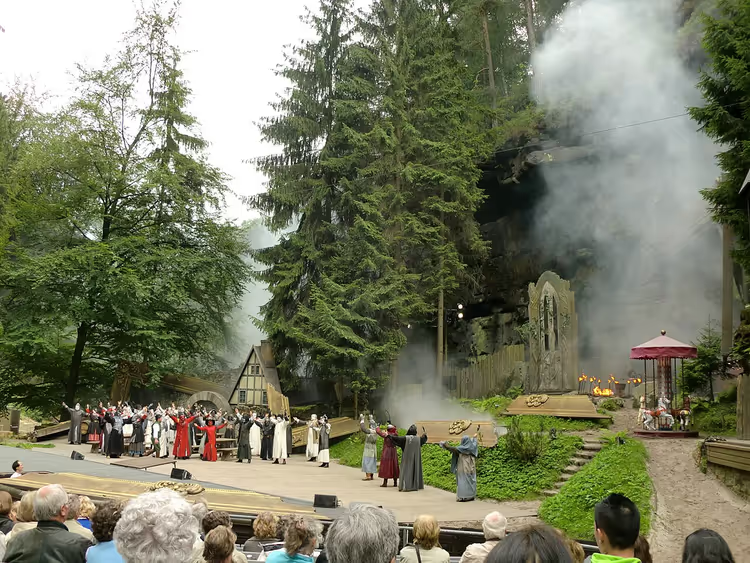 © Derbrauni · CC BY-SAPhoto: Derbrauni, CC BY-SA (https://creativecommons.org/licenses/by-sa/4.0), Wikimedia Commons
- The catch: performances run only in the warm season.
Park tours
The most interesting sights are easier to see with a guide. Day trips from Prague to the park are available, and tours from Prague to Saxon Switzerland on GetYourGuide usually go to the Bastei Bridge and along the Painters' Trail. Part of the route runs along the edge of the cliff, but the views are wide open, and photographers tend to linger here.
There's a separate program focused on castles. You'll hear the history of Königstein, learn how Meissen porcelain was born, and see Stolpen. Countess Cosel lived here in exile. Neurathen Castle once hid robbers, and today only its foundation remains.
A third theme that's often offered is called "The Magic Power of the Elements." The guide will explain how water, downpours, and storms sculpted sandstone into figures that look like sculptures. These landscapes inspired the composer Richard Wagner and the storyteller Hans Christian Andersen.
Free time is almost always built into the program, so you'll explore part of the park on your own. Book a tour in advance: in August spots sell out faster.
Opening hours and ticket prices
You pay separately for entry to each site. Below is a table with prices and opening hours. Seasonal prices change, so check them on the fortress websites before your trip.
Site | Summer season | Winter season | Opening hours |
|---|---|---|---|
Königstein Fortress | 17 €, reduced 13 € | 15 €, reduced 11 € | 9:00-18:00 in summer, 9:00-17:00 in winter |
Stolpen Fortress | 8 €, reduced 7 €, children 6-16 years 1 € | entry weather-dependent | 10:00-18:00 |
Neurathen Rock Castle | 2 €, children 1 € | 2 € | ticket office during daylight hours |
Sources in the table: Festung Königstein, Burg Stolpen.
The season at Königstein runs from March 28 to November 1, 2026 (as of 09/2026, official fortress price list). In winter the fortress is open from 9:00 to 17:00, and the ticket drops to 15 €. Last entry to the grounds is one hour before closing.
Stolpen Fortress welcomes visitors from March 30 to October 25, 2026 (as of 09/2026, official Stolpen Fortress website). In summer the castle is open daily with no days off, and children aged 6 to 16 pay just 1 €. In winter it opens depending on the weather, so check the hours before your trip.
Only the foundation remains of Neurathen Rock Castle. Entry costs a symbolic 2 €, and you can drop it in the box if the ticket office is already closed. Tickets to the fortresses are easiest to buy on Tiqets in advance.
Checked on 14.09.2026 on the official websites of Königstein and Stolpen fortresses.
Tours and tickets in Dresden
Guided tours, skip-the-line tickets and activities — most offers can be cancelled free of charge.
See offers on GetYourGuideThe widget loads once you give your consent.
Best time to visit
The best months to visit Saxon Switzerland are August and September. The weather is warm then, and all viewpoints and fortresses are open. School holidays fall in August, so popular spots get crowded.
In spring the park is especially beautiful, everything is in bloom. But crowds come here too, so museums and viewpoints get packed. You won't always find a free table at the little restaurants near Bastei.
In winter the weather lets you down. Snowfall closes some trails, daylight hours are short, and you won't manage to see everything you planned. On the plus side, the frozen waterfall and snow-covered rocks look spectacular. If you go in the cold season, leave yourself extra time.
Where it is and how to get there
The park stretches along the right bank of the Elbe between Dresden and the Czech border. The most convenient approach is from Dresden or Prague, both cities sit close to the protected area.
From Dresden, the S-Bahn S1 suburban train runs to Bad Schandau station, taking about 40 minutes. From Prague, a EuroCity train goes to the same station, taking about two hours (according to the regional tourism portal). For Rathen, get off earlier at the separate S1 station Kurort Rathen. The ferry there only crosses the Elbe. From Bad Schandau, buses continue onward.
By car from Prague, the E55 highway is convenient, taking about two hours. Parking at the main viewpoints is paid. A historic tram, the Kirnitzschtalbahn, runs through the park itself and takes you right to the Lichtenhain Waterfall.
Saxon Switzerland on the map
Below is a map of the national park. Open it and mark the spots you want to see so you can plan your travel time.
⁉️🤔 Frequently asked questions
How many days do you need for Saxon Switzerland?
One day is enough for a first visit: Bastei Bridge and Königstein Fortress. If you want the waterfall, Kuhstall, and Stolpen Fortress, plan two days with an overnight stay in Rathen or Bad Schandau. The routes are long and some trails are steep, so don't take on too much at once.
When is the best time to go to the park?
In summer and early autumn all fortresses and viewpoints are open. In winter some trails close due to snow, and daylight hours are short. In spring nature is beautiful, but Bastei and Kuhstall get crowded.
How much does it cost to see the fortresses?
Königstein prices depend on the season and are listed in the table above. Entry to Stolpen Fortress costs 8 €, children aged 6 to 16 pay 1 €. Only the foundation remains of Neurathen Rock Castle, and entry costs 2 €.
How do you get there from Dresden or Prague?
From Dresden, an S-Bahn train runs to Bad Schandau station; from Prague, a EuroCity train goes to the same place. For Rathen, the S1 goes to a separate station, Kurort Rathen, where the ferry only crosses the Elbe. From Bad Schandau, continue by bus. By car from Prague, take the E55 highway. The historic Kirnitzschtalbahn tram is a convenient way to get around the park.
Do you need a car in Saxon Switzerland?
For Bastei and Rathen you don't need a car: train, ferry, and tram get you to the main spots. A car is useful if you want to cover Kuhstall, Stolpen, and the more distant viewpoints in one day. In that case, look for parking at the park entrance.
In short: what's worth booking
If you have one day, take the Bastei Bridge and Königstein Fortress. For two days, add the Lichtenhain Waterfall, Kuhstall, and Stolpen Fortress. It's better to buy fortress tickets in advance. To go from Prague with a guide, it's also better to find a Saxon Switzerland tour on GetYourGuide in advance.

A small editorial team writing guides for independent travel. We travel ourselves, but we haven’t been everywhere, so we check prices, opening hours and how to get there against official sources.