
















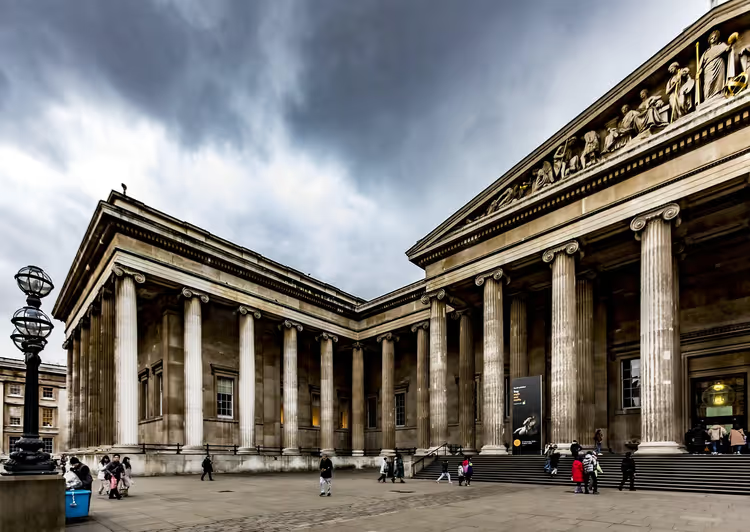
15 Best museums in Warsaw: free days and tickets 2026
In Warsaw there are dozens of museums. Most of them have one day a week when admission to the permanent exhibition is free. This is not a one-off promotion, it is a requirement of Polish museum law. State museums are required to let visitors in without a ticket once a week.
We have put together fifteen Warsaw museums that are worth your time. For each one we have noted what to see inside, which day admission is free, and where to get a timed ticket. We checked prices and hours in September on the museums' official websites.
Ad: this article contains affiliate links. We earn a commission if you book through them, at no extra cost to you.
Free days at Warsaw museums
💡 In short:
- Thursday gives you the most: free admission to twenty-one Warsaw museums, including POLIN and the Museum of Warsaw.
- On Tuesdays the National Museum and the Maria Skłodowska-Curie Museum are free, and on Wednesdays the Royal Castle is open.
- Only the permanent exhibition is free; temporary exhibitions and the audio guide are paid separately.
- Prices and opening hours: 09/2026, checked on the official website of the National Museum.
The rule is simple: every state museum in Poland opens its permanent exhibition without a ticket once a week. This is Article 10 of the law on museums (according to the Warsaw museum guide, 08/2026). Free admission almost always means only the permanent collection, and the audio guide costs 5-10 zloty (as of 09/2026, Warsaw museum guide).
Day of the week | Who offers free admission |
|---|---|
Monday | Jewish Historical Institute, Railway Museum |
Tuesday | National Museum, Maria Skłodowska-Curie Museum |
Wednesday | Royal Castle, Museum of the Battle of Warsaw |
Thursday | POLIN, Museum of Warsaw, and almost twenty other museums |
Friday | Polish History Museum, Łazienki Museum |
Saturday | Museum of Sports and Tourism |
Sunday | Adam Mickiewicz Museum of Literature |
On the free day the halls fill up, especially on Thursday. Come at opening time or two hours before closing. That way you can move through the main halls comfortably. The Royal Castle also takes part in the nationwide Free Art Day: on April 11, 2026, admission is free regardless of the day of the week (according to the same guide, 08/2026).
1. National Museum
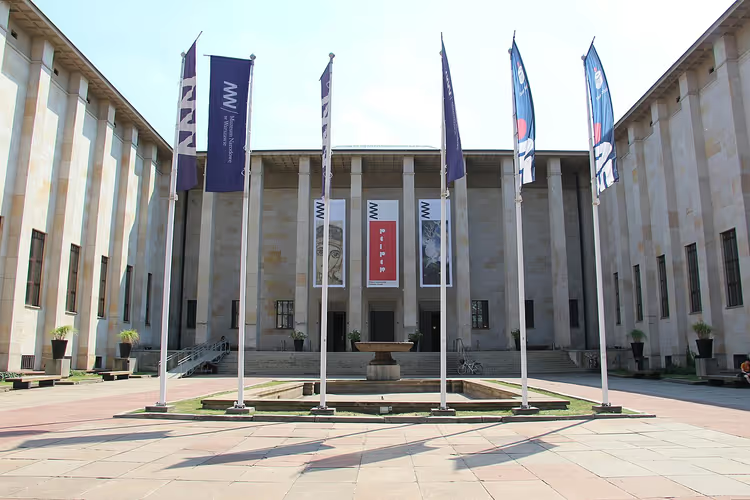 © Fred Romero from Paris, France · CC BYPhoto: Fred Romero from Paris, France, CC BY (https://creativecommons.org/licenses/by/2.0), Wikimedia Commons
The National Museum opened in 1862, and today it is one of the largest art collections in Poland. It houses "The Battle of Grunwald" by Jan Matejko, works by Botticelli, and frescoes from Faras (according to the official website, 09/2026).
The exhibition was assembled from private collections of patrons and specially purchased artifacts. During the German occupation the collection was looted. Part of it was recovered; the rest is lost forever.
The halls are designed with attention to national culture, and the exhibits are arranged in an engaging way. The visit captivates both children and adults.
- When admission is free: Tuesday, permanent exhibition (as of 09/2026, visit page).
- Ticket: for adults the ticket is paid; check the exact price on the website. On Fridays from 5:00 PM to 8:00 PM there is a 50% discount (as of 09/2026, official website).
- Good to know: before your visit, check for notices about maintenance work; the museum sometimes closes halls.
2. Adam Mickiewicz museum of literature
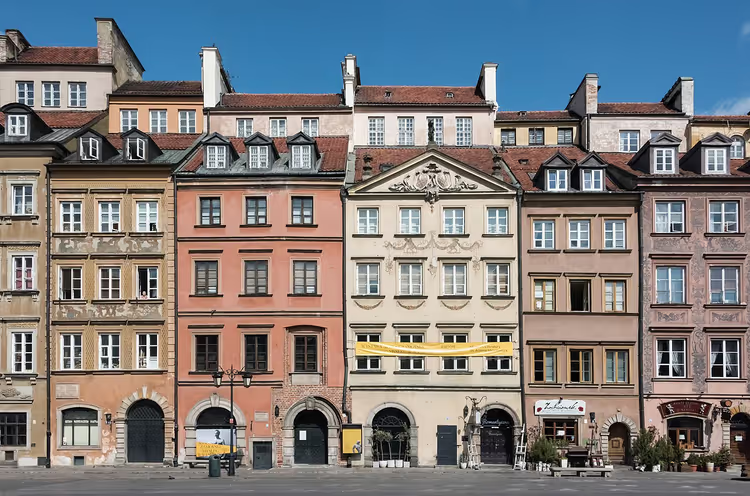 © Adrian Grycuk · CC BY-SAPhoto: Adrian Grycuk, CC BY-SA (https://creativecommons.org/licenses/by-sa/3.0/pl/deed.en), Wikimedia Commons
The museum came about after an anniversary exhibition dedicated to Adam Mickiewicz. It was held at the National Museum and drew so many visitors that Warsaw decided to open a permanent center for the poet and publicist. Two buildings were allocated for the exhibition, and the holdings were made up of Mickiewicz's personal belongings, manuscripts, and letters.
Later the museum was given two more houses, and the collection continues to grow. Exhibits often arrive from abroad. You will see the poet's manuscripts and letters, and the museum itself collaborates with foreign literary centers and organizes traveling exhibitions.
- When admission is free: Sunday (according to the Warsaw museum guide, 08/2026).
3. Maria Skłodowska-Curie Museum
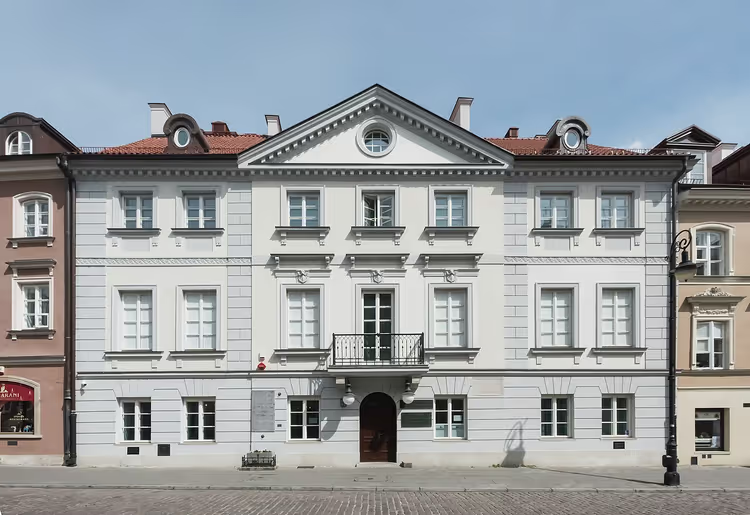 © Adrian Grycuk · CC BY-SAPhoto: Adrian Grycuk, CC BY-SA (https://creativecommons.org/licenses/by-sa/3.0/pl/deed.en), Wikimedia Commons
The museum was opened for the centenary of Skłodowska-Curie's birth at the initiative of the Polish Chemical Society. Nine Nobel laureates attended the ceremony, and most of the exhibits were donated by the scientist's daughter, Ève Curie.
The exhibition tells the story of Maria's work and her relationships with colleagues and loved ones. The core of the collection consists of personal belongings, letters, photographs, and notes of Maria and Pierre Curie, as well as a collection of films in Polish and other languages.
A separate room is dedicated to the scientists' work in France, their participation in international organizations, and the creation of the Radium Institute in Warsaw. Here you will learn about Maria's life after leaving Poland. The museum is located on Freta Street in the Old Town, where Skłodowska-Curie was born.
- Free admission: Tuesday (according to a review of Warsaw museums, 08/2026).
4. Copernicus Science Centre
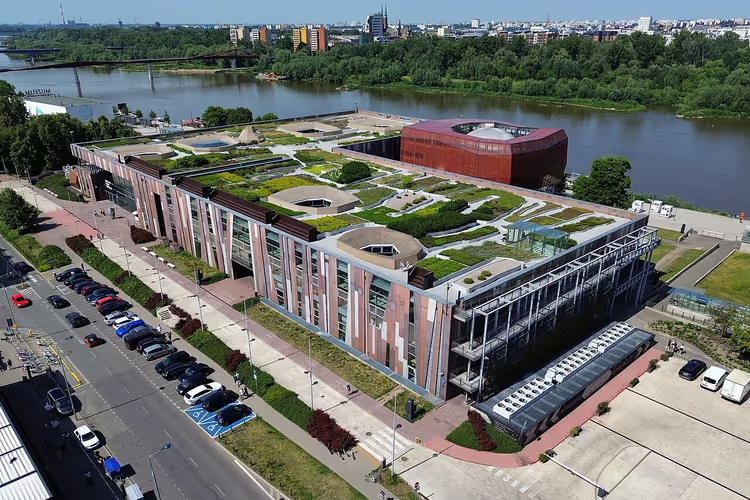 © Kapitel · CC BY-SAPhoto: Kapitel, CC BY-SA (https://creativecommons.org/licenses/by-sa/4.0), Wikimedia Commons
The Copernicus Science Centre is set up as a large laboratory (according to the official website, 09/2026). Here you can generate thunder and lightning yourself, control the movement of clouds, and make it rain or snow. More than 400 interactive exhibits cover 2.2 hectares, and the complex includes a planetarium and laboratories.
Popular exhibitions: "Roots of Civilization," Re: generation, "Light Zone," "Humans and the Environment," "World in Motion," and "Preschool Gallery." Re: generation explores psychological issues and manipulation of people. "Light Zone" resembles a digital show, and in the children's gallery you can play with a robot.
Visitors either conduct experiments themselves or watch a center staff member. The center is loved by both visitors and Warsaw residents alike.
- Tickets and hours: check the official website; on weekends, book a time slot online in advance.
5. Royal Castle
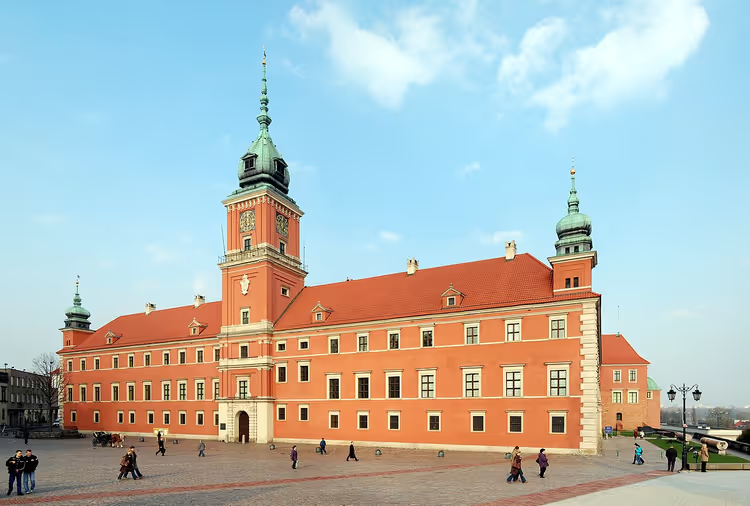 © Marcin Białek · CC BY-SAPhoto: Marcin Białek, CC BY-SA (https://creativecommons.org/licenses/by-sa/3.0), Wikimedia Commons
The Royal Castle was rebuilt from scratch: the original was completely destroyed during World War II, and in the 1980s the building was reconstructed on its original site. Craftsmen relied on surviving archives and amateur photographs, so the exterior and interiors were restored almost exactly to the original.
Inside, there is a permanent exhibition of paintings, sculpture, furniture, and household items of the royal family. Thematic exhibitions, concerts, and symposia are also held here.
- Hours: Tue-Sun 10:00-18:00, last entry at 17:00; on Wednesdays some rooms are closed (as of 09/2026, official castle website).
- Free admission: Wednesday, permanent routes (according to the list of free days, 08/2026).
- The catch: not all exhibits have English labels, so some items you view without explanations.
- Ticket: Warsaw museum tickets on Tiqets.
6. Archaeological Museum
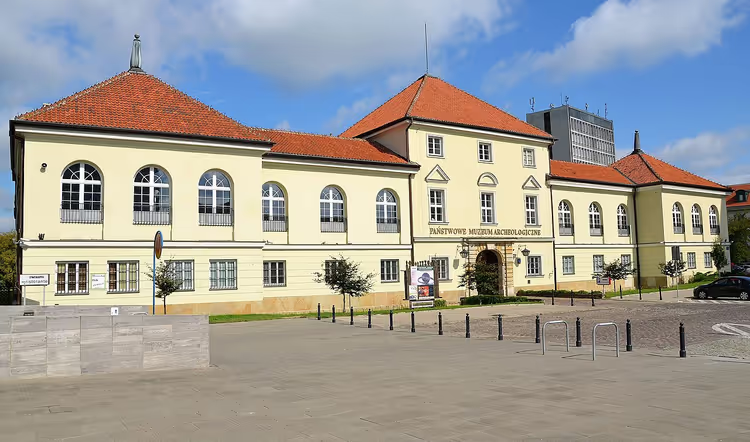 © Adrian Grycuk · CC BY-SAPhoto: Adrian Grycuk, CC BY-SA (https://creativecommons.org/licenses/by-sa/3.0/pl/deed.en), Wikimedia Commons
The Archaeological Museum was founded in the 1920s by the Ministry of Education and the Committee for Religious Affairs. Initially it studied the earliest history of Polish lands, and after the war it absorbed the collections of the Erasmus Majewski Scientific Society and the Biskupin settlement.
In addition to permanent and thematic exhibitions, workshops are held here. At these workshops you can learn weaving, pottery making, and creating jewelry from glass and ceramic beads using traditional Polish techniques.
7. Eryk Lipiński caricature museum
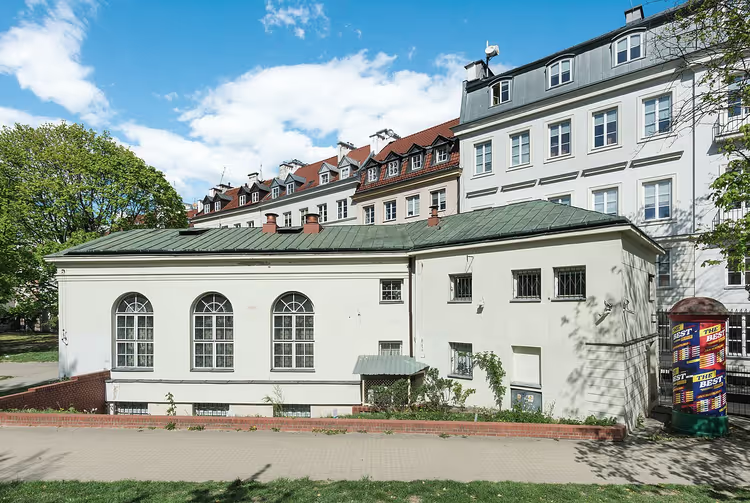 © Adrian Grycuk · CC BYPhoto: Adrian Grycuk, CC BY (https://creativecommons.org/licenses/by/3.0/pl/deed.en), Wikimedia Commons
The Museum of Caricature was founded in the late seventies by artist Eryk Lipiński, and his archive and painting collection became its first holdings. Today the collection includes tens of thousands of works, including drawings from the eighteenth century.
Artists from Poland and other countries are exhibited. The museum takes part of its collection abroad, organizes thematic exhibitions at its own venue, and runs a separate program for young people.
8. POLIN Museum of the History of Polish Jews
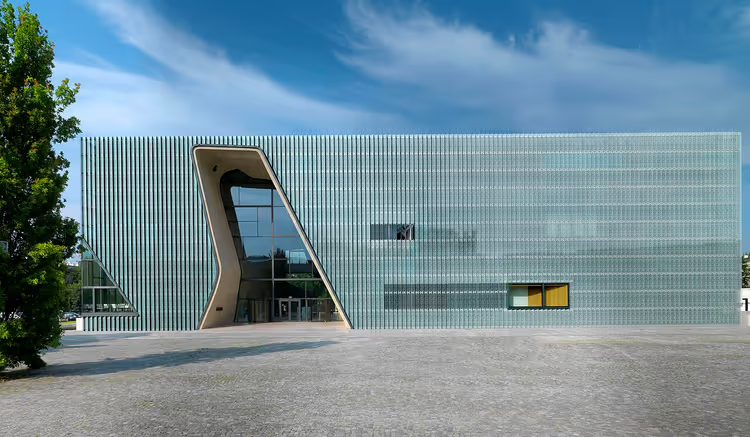 © Wojciech Kryński · CC BY-SAPhoto: Wojciech Kryński, CC BY-SA (https://creativecommons.org/licenses/by-sa/3.0/pl/deed.en), Wikimedia Commons
POLIN was named the best museum in Europe in 2016 (according to the official website, 09/2026). It beat 48 contenders in the final. The name is explained as follows: in ancient Hebrew, "Polin" means "Poland," and the second interpretation sounds like "here you can rest."
The exhibition covers a thousand years of history, from the first Jewish communities on Polish lands to the present day. The displays combine documents, artifacts, and interactive screens, and there is a 3D cinema showing a thematic film.
The halls are arranged by era: "Forest," "First Encounters," "The Jewish Town," "Paradisus Iudaeorum," "The Jewish Street," and "Holocaust." In the "Forest" hall you will hear birdsong, and "The Jewish Street" transports you to an old street with a pharmacy and a shop window. The hardest to get through is the "Holocaust" hall: it is dark, and the names of Warsaw Ghetto streets are written on the staircase steps.
- When admission is free: Thursday (according to the free admission calendar, 08/2026).
9. Warsaw Uprising Museum
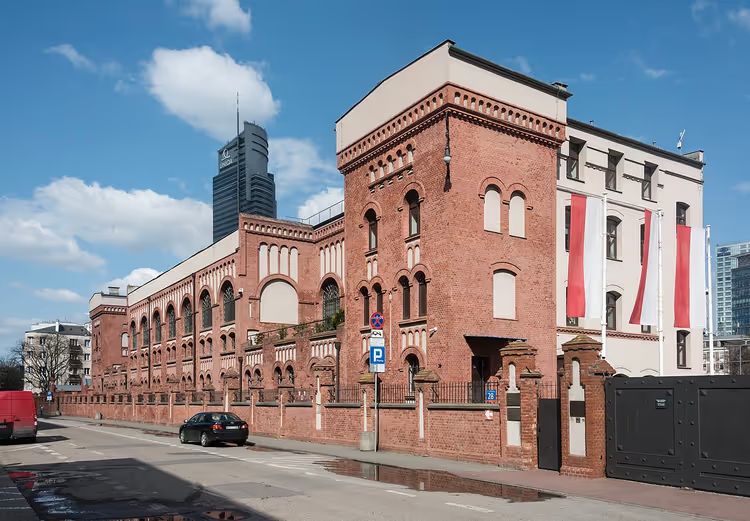 © Adrian Grycuk · CC BYPhoto: Adrian Grycuk, CC BY (https://creativecommons.org/licenses/by/3.0/pl/deed.en), Wikimedia Commons
The museum occupies an early 20th-century tram depot building and tells the story of the 1944 uprising. At that time, the residents of Warsaw rose up against the occupiers and held out for 63 days (according to the official website, 09/2026). No help came, the insurgents were defeated, and the city was almost destroyed.
The exhibition is arranged humanely: photographs of mass executions are hidden in recesses, and the display stands are placed high up so that children cannot see them.
Among the main exhibits is a replica of the American B-24 Liberator bomber. Light and sound create the illusion of an imminent takeoff. The museum also shows a film edited from aerial photographs of the destroyed city.
10. Museum of Modern Art
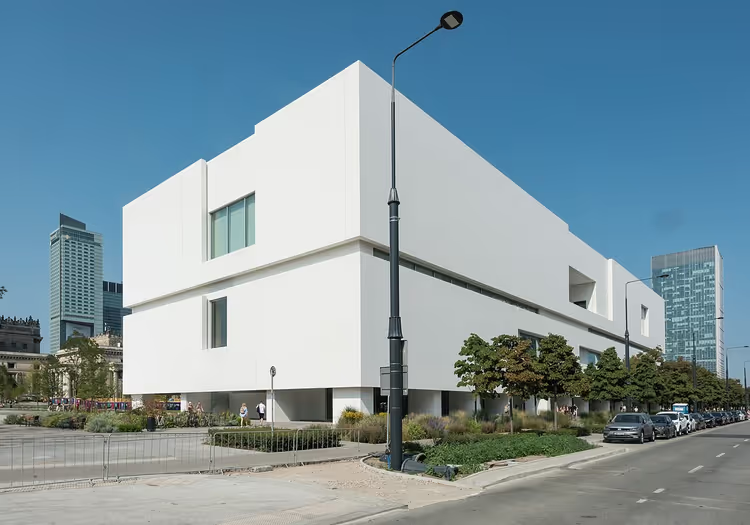 © Adrian Grycuk · CC BYPhoto: Adrian Grycuk, CC BY (https://creativecommons.org/licenses/by/3.0/pl/deed.en), Wikimedia Commons
The museum's first location was in a former furniture store building (according to the official website, 09/2026). The unusual space helped test how Polish contemporary art lives alongside everyday life.
The exhibition of paintings by Andrzej Wróblewski shows the artist's journey from socialist realism to his own style. There is a cafe downstairs where you can take a break between the halls.
11. Museum of Independence
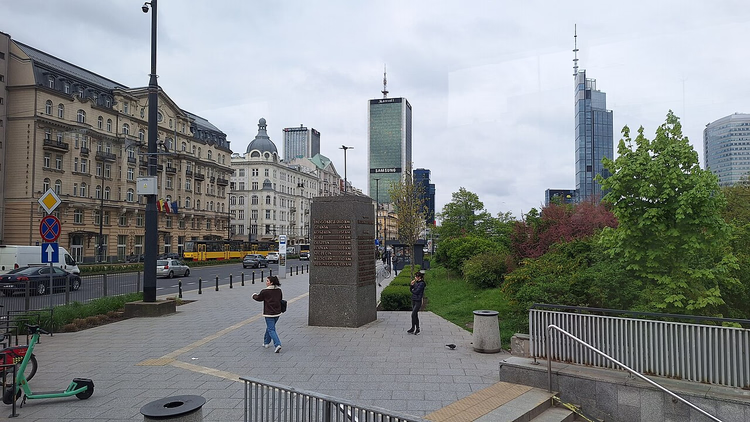
Until the late 1980s, this Radziwiłł mansion housed the Lenin Museum. After the change of regime, the building was handed over to the newly created Museum of Independence, which shows all the stages of Poland's struggle for independence.
Since the early 1990s, it has been a people's cultural center. Lectures and film screenings are held here, and the permanent exhibitions cover different periods of Polish history. A visit will be of interest to those studying the history of Central Europe.
12. National Museum of Ethnography
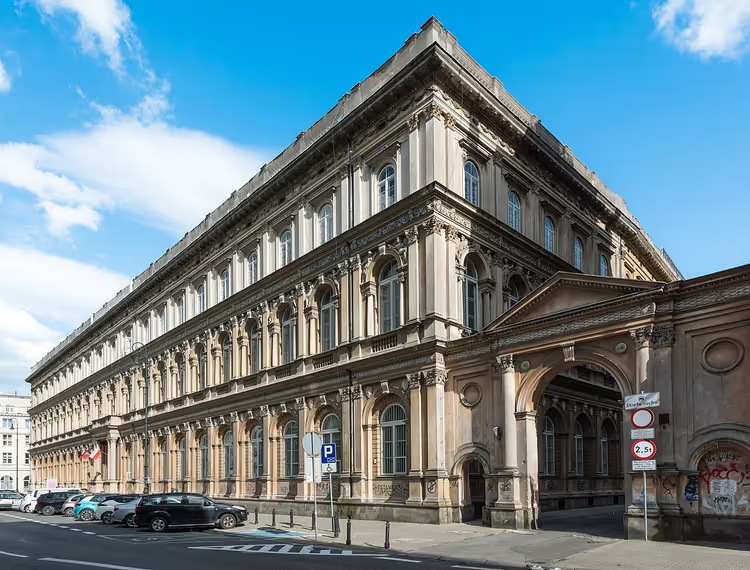 © Adrian Grycuk · CC BYPhoto: Adrian Grycuk, CC BY (https://creativecommons.org/licenses/by/3.0/pl/deed.en), Wikimedia Commons
Before World War II, the Museum of Ethnography had a large collection, but during the occupation it was looted and the building was destroyed. After the war, the surviving exhibition was housed in the Brühl Palace and was called the folk culture exhibition.
Later, the museum received a 19th-century mansion, the former building of the Credit Society. It also had to be restored, while at the same time lost items were being returned to the collections. The renewed exhibition opened in the early 1970s.
13. Fryderyk Chopin Museum
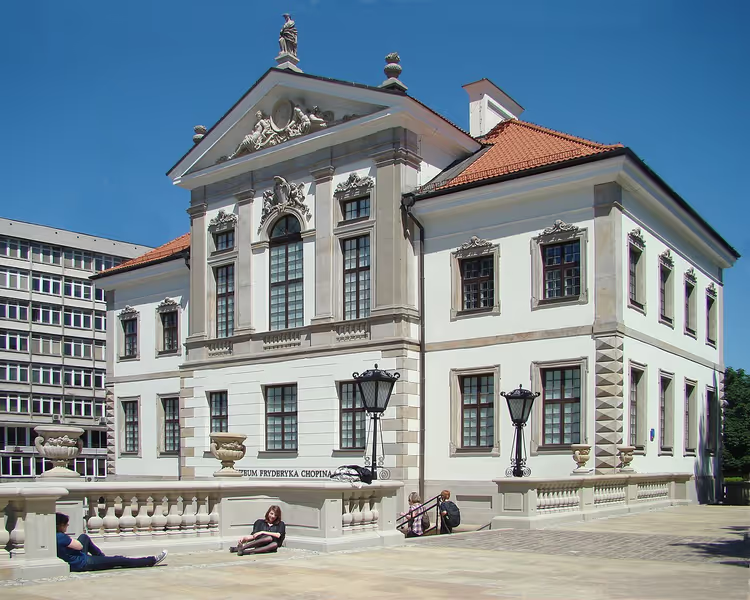
The Chopin Museum is housed in the Ostrogski Palace. The building was destroyed after the Warsaw Uprising and rebuilt based on surviving documents.
The core of the collection was established by the Chopin Society, which bought manuscripts from the composer's relatives. The Fryderyk Chopin Institute grew out of it, and the permanent exhibition opened in the 1950s.
Later, the Ostrogski Palace was renovated, the grounds were cleared, and the exhibition was supplemented with interactive screens. Today it is one of the best museums in Warsaw, and here you will see the composer's sheet music, letters, and personal belongings.
14. Polish Vodka Museum
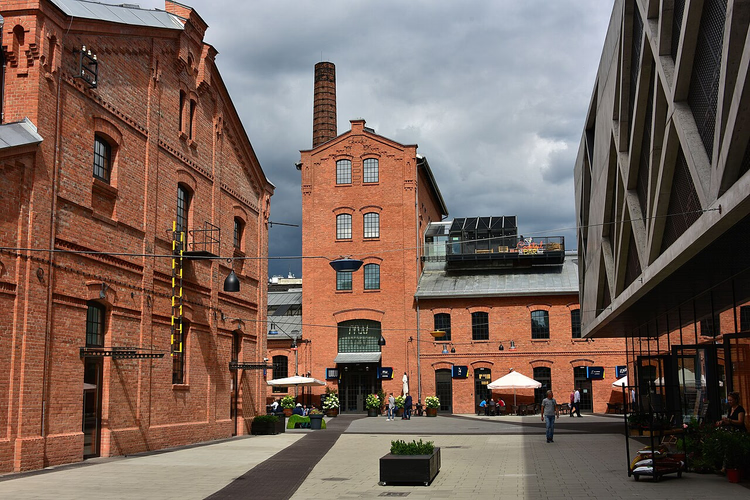 © Adrian Grycuk · CC BY-SAPhoto: Adrian Grycuk, CC BY-SA (https://creativecommons.org/licenses/by-sa/3.0/pl/deed.en), Wikimedia Commons
The Polish Vodka Museum opened in the late 2010s at the Koneser factory, where recipes for vodkas known around the world were once created. The exhibition shows the evolution of production and tells the story of the masters of vodka making.
A film about vodka is shown in a screening room with seats from the Komedia cinema. At the end of the tour, a tasting awaits you: you try vodka made from potatoes, rye, and barley. After the tasting, you can eat at the museum cafe.
- Important: due to the tasting, entry is for adults only.
15. Museum of Warsaw Praga
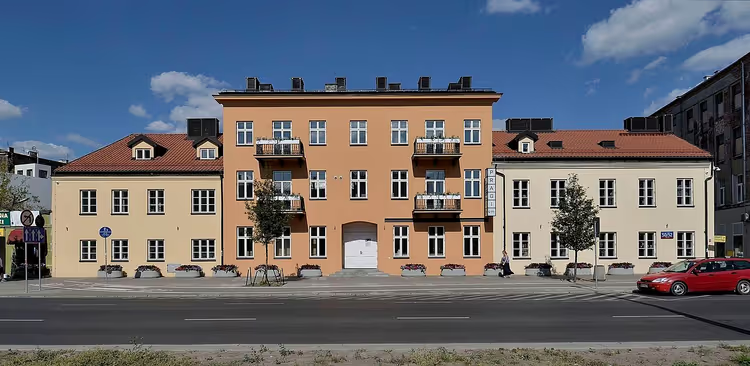 © Adrian Grycuk · CC BY-SAPhoto: Adrian Grycuk, CC BY-SA (https://creativecommons.org/licenses/by-sa/3.0/pl/deed.en), Wikimedia Commons
In the 15th century, the right bank of the Vistula was densely forested. Some of the trees were burned, and the village of Praga appeared in their place, its name linked to the burning of the forest (according to the Museum of Warsaw, 09/2026).
After the Warsaw Uprising, the historic center lay in ruins, while Praga was almost untouched. As a result, the old buildings survived here, and the Museum of Warsaw Praga operates at 50/52 Targowa Street.
Old houses with plaques showing the names and trades of former owners stand along the narrow streets. You will see the Bazar Różyckiego market and the 19th-century Orthodox Cathedral of St. Mary Magdalene. The district is loved by Polish and international artists, drawn by its old-world atmosphere.
Warsaw museums on the map
We marked all fifteen museums on a single map. Open it on your phone and plan your route by neighborhood. On Thursday, it is convenient to start with POLIN in Muranów and finish in the Old Town.
Museums of Warsaw
Places on the map
- 1National Museum Poland's largest art collection, Matejko's "Battle of Grunwald"
- 2Adam Mickiewicz Museum of Literature The poet's manuscripts and letters, free admission on Sundays
- 3Maria Skłodowska-Curie Museum Personal belongings and letters of Marie and Pierre Curie on Freta Street
- 4Copernicus Science Centre Over 400 interactive exhibits, a planetarium and laboratories
- 5Royal Castle Castle rebuilt after the war, collection of paintings and furniture
- 6Archaeological Museum The oldest history of Polish lands, pottery workshops
- 7Eryk Lipiński Caricature Museum Tens of thousands of works by cartoonists from Poland and abroad
- 8POLIN Museum of the History of Polish Jews A thousand years of Polish Jewish history, named Europe's best museum
- 9Warsaw Uprising Museum The 1944 uprising, housed in a former tram depot
- 10Museum of Modern Art Works by Andrzej Wróblewski in a former furniture shop
- 11Museum of Independence Radziwiłł mansion, Poland's struggle for independence
- 12State Ethnographic Museum Polish folk culture, a 19th-century mansion
- 13Fryderyk Chopin Museum Sheet music, letters and personal items of the composer in the Ostrogski Palace
- 14Polish Vodka Museum Koneser factory, production history and tastings for adults
- 15Museum of Warsaw Praga Open-air museum in the surviving Praga district
Tickets to Warsaw museums can be bought in advance so you do not have to wait at the ticket office.
Tours and tickets in Warsaw
Guided tours, skip-the-line tickets and activities — most offers can be cancelled free of charge.
See offers on TiqetsThe widget loads once you give your consent.
⁉️🤔 Frequently asked questions
How many Warsaw museums can be visited for free?
At least one museum is free every day of the week, and on Thursday twenty-one museums offer free entry, including POLIN and the Museum of Warsaw. The permanent exhibition is free; temporary exhibitions remain paid. Check the museum website for exact conditions before your visit.
Which day is best for planning a museum trip?
Thursday is the most economical. Start with POLIN in Muranów, and in the evening stroll through the Old Town.
Do I need to buy tickets in advance?
For popular museums, yes. At the Copernicus Science Centre, POLIN, and the Royal Castle on weekends and free days, the lines are long. Book a time slot online in advance, and you will get in without waiting at the ticket office. On weekday mornings, tickets are usually available on site.
From what age are visitors allowed into the Polish Vodka Museum?
Adults only. Due to the tasting, guests under eighteen are not admitted to the exhibition halls. If you are traveling with children, choose another museum, such as the Copernicus Science Centre or the Museum of Caricature.
What should I see first at POLIN?
Start with the "Forest" and "First Encounters" galleries, then continue through "The Jewish Town" and "The Jewish Street." Leave the heaviest gallery, "The Holocaust," for the end. Allow at least three hours for POLIN, otherwise you will miss part of the exhibition.
In short: what to book
If you are short on time, choose the Copernicus Science Centre and the Royal Castle. If you want history, go to POLIN and the Warsaw Uprising Museum. If you are traveling with children, the Copernicus Science Centre and the Museum of Caricature are good options. On Thursday, POLIN is free, while the Copernicus Science Centre, the Royal Castle, and the Warsaw Uprising Museum remain paid.
Tickets and tours for Warsaw museums are easy to book in advance: see options on GetYourGuide.

A small editorial team writing guides for independent travel. We travel ourselves, but we haven’t been everywhere, so we check prices, opening hours and how to get there against official sources.