
















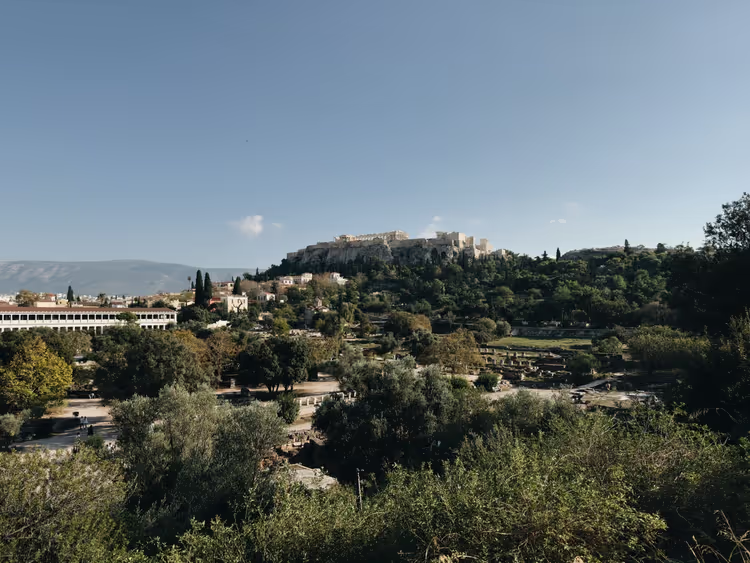
Athens in 3 days: route through the Acropolis, Agora and Sounion
Athens is hard to see in one go. The Acropolis, two Agoras, ancient libraries and temples are scattered across the center, and tickets in high season sell out several days in advance.
We put together a three-day route that you walk from Syntagma Square to Cape Sounion. You will see 16 ancient sites, figure out which tickets you need and where to book a time slot.
Ad: this article contains affiliate links, we earn a commission if you book through them, at no extra cost to you.
Day 1: from Syntagma Square to the Acropolis
💡 In short:
- Day one: Syntagma Square, two Agoras, the Acropolis and sunset on Lycabettus.
- Walk, all the sites are almost right next to each other.
- Prices and opening hours: 09/2026, checked on the official ticket portal.
It is most convenient to stay in the center, near Syntagma Square or the Agora. Thissio View, Phidias Hotel Athens and Art Hotel Athens work well: from them you can walk to most ancient sites. We build day one as a loop through the old town. Start at Syntagma and head toward the Acropolis.
Syntagma Square
 © C messier · CC BY-SAPhoto: C messier, CC BY-SA (https://creativecommons.org/licenses/by-sa/4.0), Wikimedia Commons
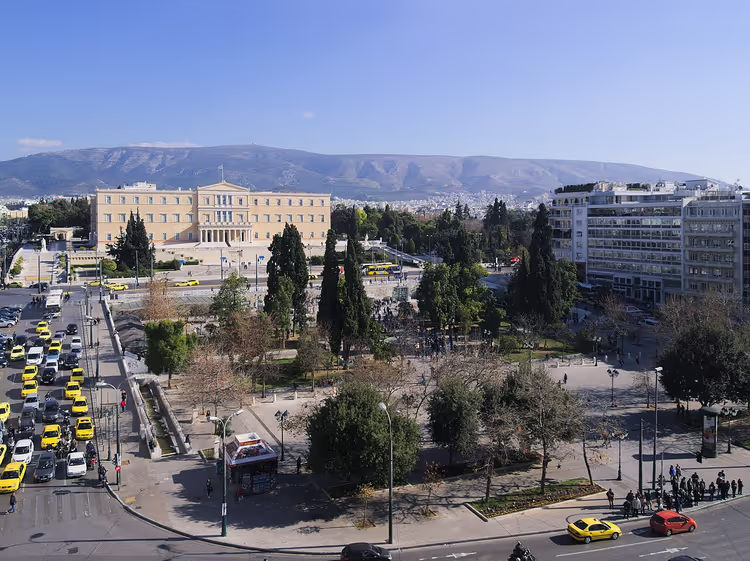
Syntagma Square, the main square of Greece, lies in front of the parliament building. A 19th-century marble fountain stands here, and a wide white staircase leads up to the palace. At the Tomb of the Unknown Soldier, evzones in national uniform stand guard. On Sundays a company of guards with a band comes to the monument, and the changing of the guard turns into a small performance. From Syntagma metro station you can reach Amalias Avenue in a couple of minutes, and then you enter the archaeological zone.
Hadrian's Library
 © C messier · CC BY-SAPhoto: C messier, CC BY-SA (https://creativecommons.org/licenses/by-sa/4.0), Wikimedia Commons
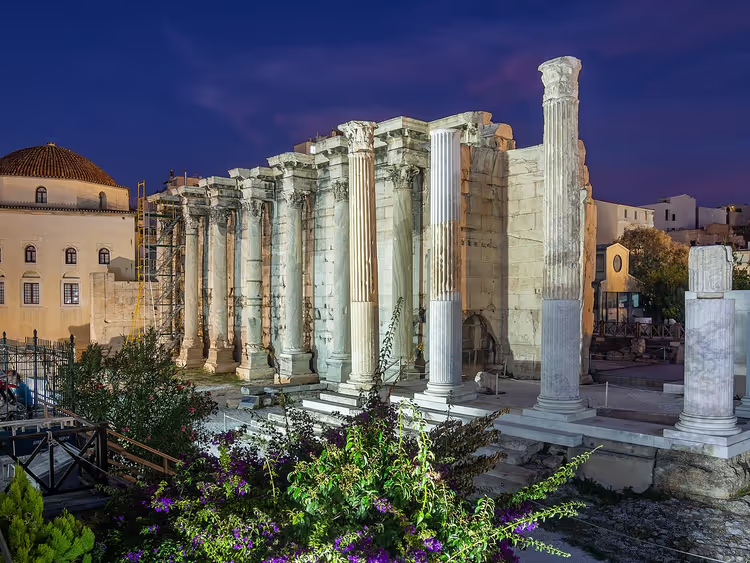
Hadrian's Library was built under Emperor Hadrian, around 132 AD. Inside there were lecture and reading halls, gilded ceilings and statues in niches. Today only the western marble wall and the remains of columns speak of its former scale. The columns were made not from local stone but from Phrygian stone, which was brought from far away. The building's plan repeated the layout of the Acropolis, and the entrance opened toward the market. You need a separate ticket here; the Acropolis ticket is not valid. After seeing the wall, you can reach the Roman Agora in a couple of minutes.
Roman Agora
 © Andreas Trepte · CC BY-SAPhoto: Andreas Trepte, CC BY-SA (https://creativecommons.org/licenses/by-sa/2.5), Wikimedia Commons
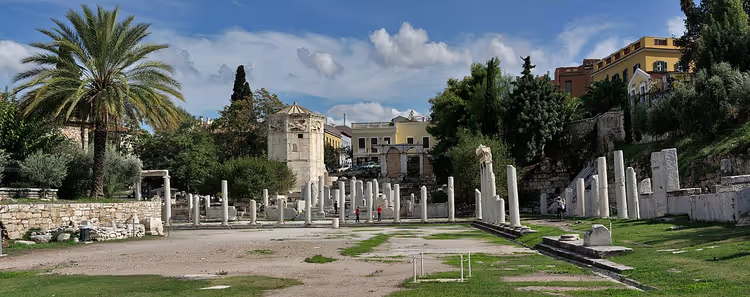
The Roman Agora is not a single square but a commercial and cultural complex of several buildings. Here you will see the remains of ancient paving, columns, the Church of Panagia Grigorousa, the Fethiye Mosque and the octagonal Tower of the Winds. Underfoot you can see paving slabs and traces of a sewer system laid before our era. A particular rarity is the Vespasian public latrines with several dozen seats. Through the western entrance you pass under four tall marble columns. The Agora was founded before our era, funded by Julius Caesar, as the inscription at the entrance reminds you. The complex is surrounded by trees, so it is cooler here than in the open sun. Plan your visit for the morning. From Hadrian's Library you can get here in three minutes (on the map).
Tower of the Winds
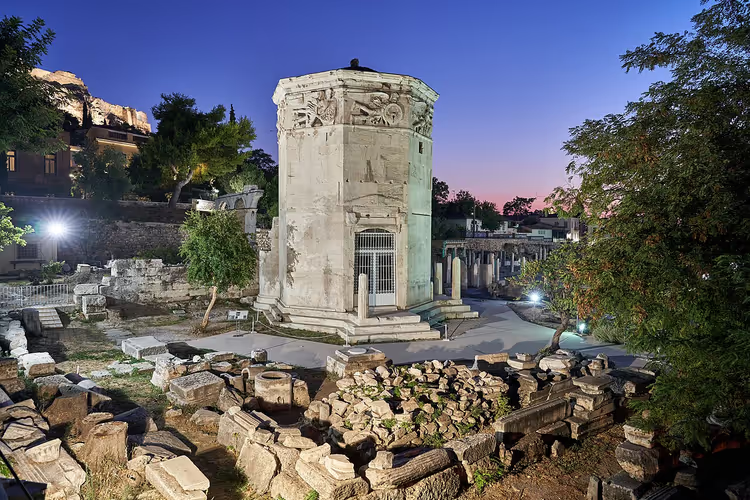
The Tower of the Winds stands inside the Roman Agora and is considered the oldest meteorological structure in the world. The octagonal building was built by the astronomer Andronicus of Cyrrhus. At the top there was a sundial, and inside a water clock called the "Clepsydra" ran, fed by an aqueduct from the Acropolis. The eight faces symbolized the eight wind gods, and each one has its own god carved on it, so the direction is easy to determine from the reliefs. A round chamber is attached to the tower on the south side, and on the northeast an entrance with Corinthian columns survives. The roof was made of ceramic tiles. It is best to see the tower at the end of the day, when the sun falls on the marble. You can see the tower with the Roman Agora ticket.
Ancient Agora
 © Ad Meskens You are free to use this picture for any purpose as long as you credit its author, Ad Meskens . Example: © Ad · CC BY-SAPhoto: Ad Meskens You are free to use this picture for any purpose as long as you credit its author, Ad Meskens . Example: © Ad, CC BY-SA (https://creativecommons.org/licenses/by-sa/4.0), Wikimedia Commons
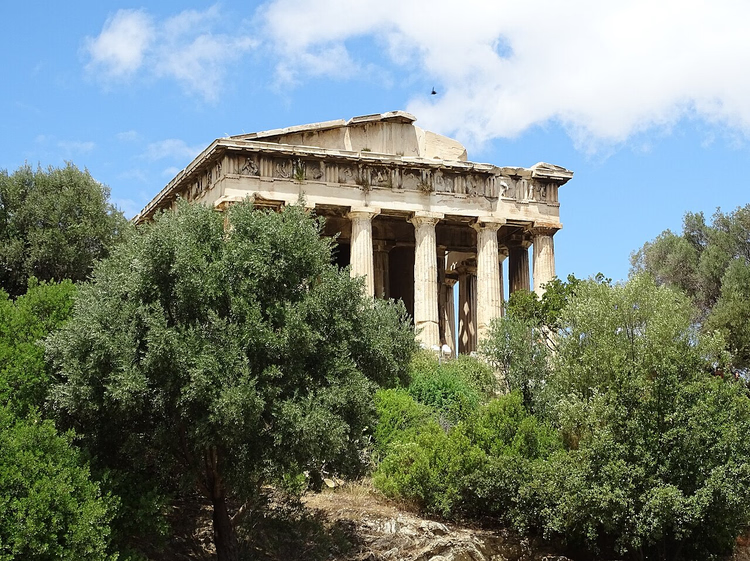
The Ancient Agora occupies a slope by the Acropolis and is noticeably larger in area than the Roman one. This was the center of Athenian life: the market, the court and the place of public assemblies. Today it is a park where you can rest under the trees between temples. In addition to the Temple of Hephaestus, you will see the ruins of the Council buildings where Athenians sat, and the small Church of the Holy Apostles. This is the oldest Christian structure in the city. In the two-story Stoa of Attalos portico, the Agora Museum operates, housing finds from the excavations. Come in the morning, before it gets too hot.
Temple of Hephaestus
 © Dennis G. Jarvis · CC BY-SAPhoto: Dennis G. Jarvis, CC BY-SA (https://creativecommons.org/licenses/by-sa/2.0), Wikimedia Commons
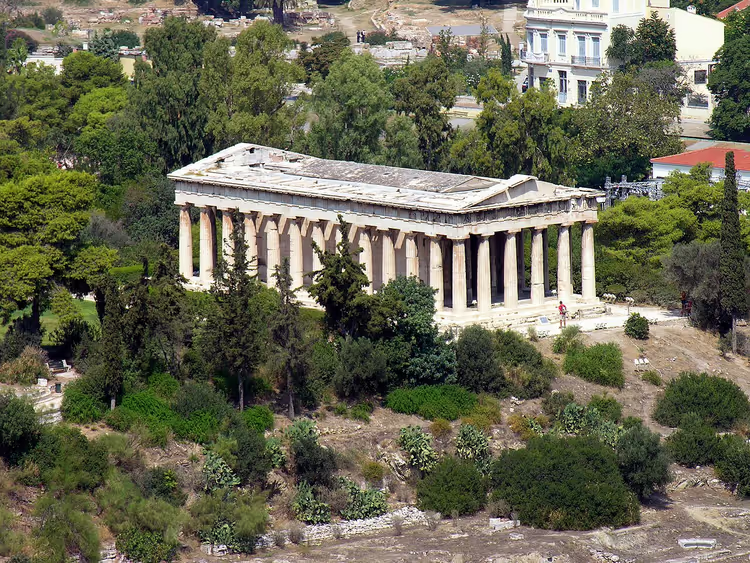
The Temple of Hephaestus is considered the best-preserved ancient temple in Greece. It was built from marble back in the 5th century BC and dedicated to the god of fire and blacksmithing. The temple is older than the Parthenon. It survived because from the 7th century it housed the Orthodox Church of Saint George. All the Doric columns stand in a circle, and decorative friezes survive under the roof. The reliefs depict scenes from the labors of Hercules and Theseus. Look at the eastern facade in the morning light, when the details are easier to see. The temple stands inside the Ancient Agora and is covered by its ticket.
Theater of Dionysus
 © Rrburke · CC BY-SAPhoto: Rrburke, CC BY-SA (https://creativecommons.org/licenses/by-sa/3.0), Wikimedia Commons
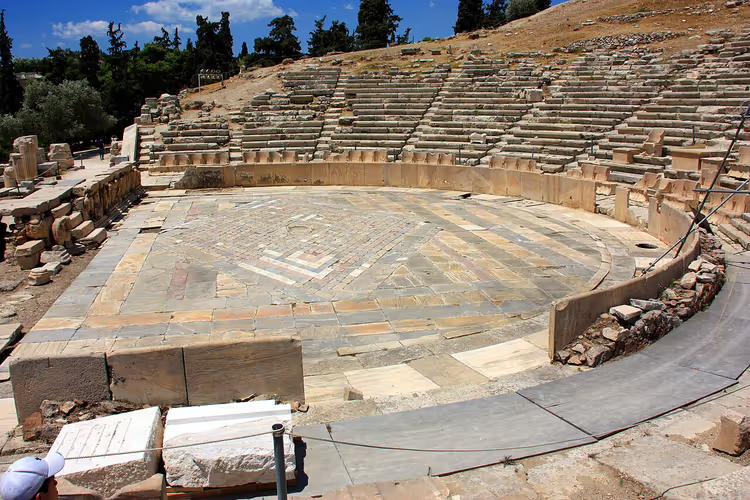
The Theater of Dionysus lies on the southern slope of the Acropolis and is included in the Acropolis ticket. It was carved into the rock before our era, on the site of a sanctuary to the god of winemaking. The city's first stone theater held thousands of spectators, and the tragedies of Aeschylus and Sophocles were performed on its stage. The acoustics survive: stand in the center and say a word, and you will be heard at the top. The first few rows were carved from expensive marble for the nobility, and carved names are still visible on some of the seats. Under the Romans, barriers with friezes were installed here to protect spectators during gladiator fights.
Acropolis
 © HerrAdams · CC BY-SAPhoto: HerrAdams, CC BY-SA (https://creativecommons.org/licenses/by-sa/4.0), Wikimedia Commons
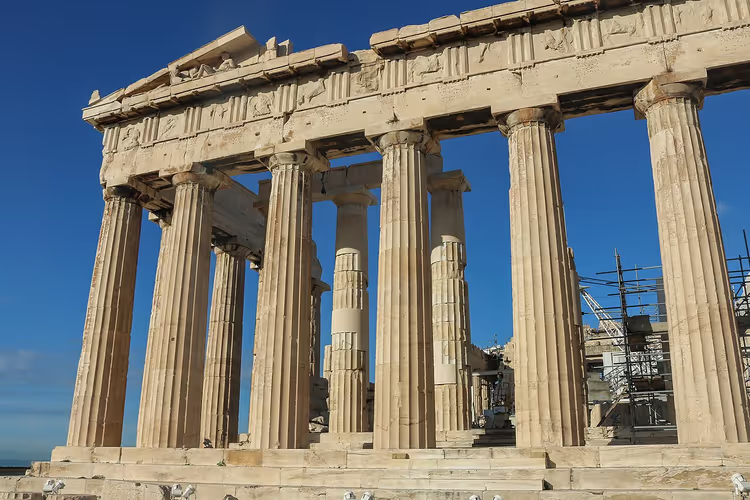
The main temples of Athens stand on the rock of the Acropolis. The Acropolis was not only a fortress but also a sanctuary to the goddess Athena. You ascend through the Propylaea, pass the Temple of Athena Nike and the Erechtheion, and at the top the Parthenon greets you. In the Erechtheion, they show a well with salt water linked to the legend of Poseidon. A ticket costs 30 €, and in summer it is sold only for a specific time slot. The daily limit is 20,000 people, so you should book a slot in advance. It is better to walk among the ruins in the morning, while there are fewer tour groups and it is not so hot. In the heat, bring water and a hat: there is almost no shade on the rock.
Mount Lycabettus
 © George E. Koronaios · CC BY-SAPhoto: George E. Koronaios, CC BY-SA (https://creativecommons.org/licenses/by-sa/4.0), Wikimedia Commons
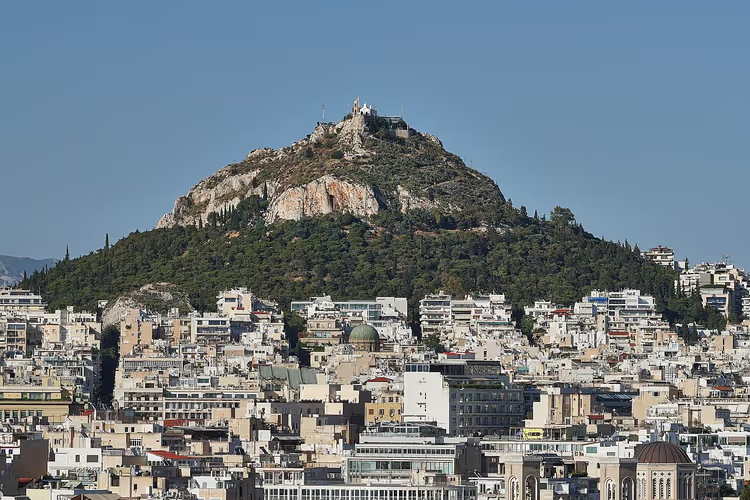
Mount Lycabettus is worth saving for sunset. You will see the best panorama of the city from here: the entire Acropolis and the sea open up. You can climb on foot along a path or take the funicular, which runs every half hour. At the top there is a cafe where you can rest and have coffee with a view of the city. Get a spot half an hour before sunset. If your evening is booked, you can see the panorama from another hill the next day.
Day 2: Arch of Hadrian, Temple of Zeus, and Kerameikos
Day two takes you east from the Acropolis to the Arch of Hadrian, then west to Kerameikos and Piraeus. You will cover part of the route between stops by metro. For an evening guided walk, Athens sightseeing tours on GetYourGuide are a good option.
Arch of Hadrian
 © George E. Koronaios · CC BY-SAPhoto: George E. Koronaios, CC BY-SA (https://creativecommons.org/licenses/by-sa/4.0), Wikimedia Commons
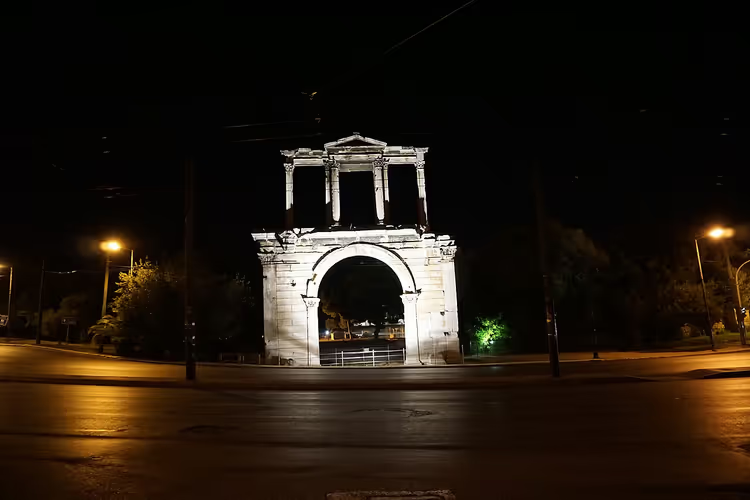
The Athenians built the Arch of Hadrian in honor of the emperor, and it stood on the road from the old city to the new district of Hadrianopolis. The two-tier marble arch stands out for its upper section with three Ionic columns. It is roughly the height of a six-story building. Nearby there is a pond that turtles have made their home. From Syntagma Square or the Acropoli metro station you can walk here in a few minutes (see map). In the evening the arch is beautifully lit, and it makes for great photos.
Temple of Olympian Zeus
 © Ava Βabili · CC BY-SAPhoto: Ava Βabili, CC BY-SA (https://creativecommons.org/licenses/by-sa/4.0), Wikimedia Commons
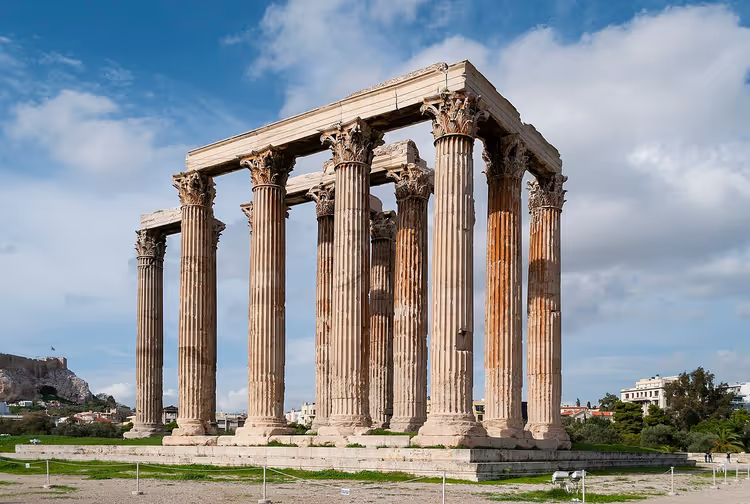
The Temple of Olympian Zeus, or the Olympieion, was one of the largest temples in Greece. It was dedicated to Zeus, but it served for only about three centuries: the building was destroyed during the Heruli invasion. The ivory-and-gold statue of Zeus was carried off and disappeared. The surviving columns are of the Corinthian order, some of them standing at an angle. One fallen column lies nearby. From the remaining supports you can get a sense of the building's scale. The Olympieion requires a separate ticket. A visit takes about half an hour, not counting photos.
Aristotle's Lyceum
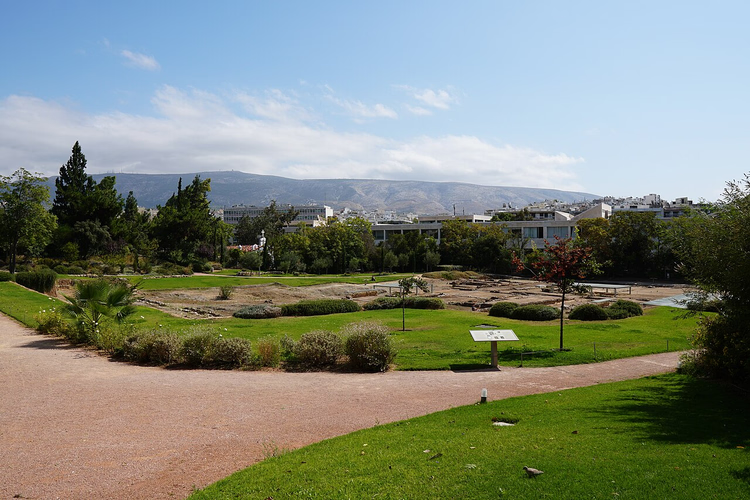
Aristotle founded his school at the Lyceum. A complex of teaching buildings, a gallery, and a library stood here, and students worked from morning to evening. Advanced students studied in the morning, beginners in the afternoon, and in the evening the philosopher lectured for all citizens. Only the foundations remain, and they were excavated relatively recently. A small museum opened on the site. The Lyceum also requires a separate ticket. From here you go down to the metro and ride to Kerameikos.
Kerameikos
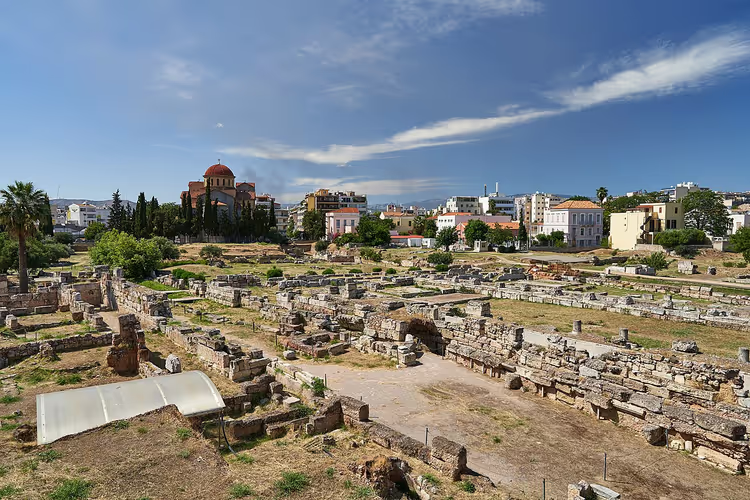
Kerameikos, the potters' quarter and ancient cemetery, lies by the city wall. The name comes from the craftsmen who made pottery here. The quarter was divided into a residential area and the Kerameikos cemetery, separated by the Wall of Themistocles, and part of the wall is still visible. Through the Dipylon and Sacred Gates you enter the site and see surviving grave markers, columns, and the marble bull from the tomb of Dionysius. Among the monuments are stelae with reliefs and Bronze Age burials. The museum displays potters' finds and ancient sculptures. You need a separate ticket to enter.
Piraeus
 © macrolepis · CC BYPhoto: macrolepis, CC BY (https://creativecommons.org/licenses/by/3.0), Wikimedia Commons
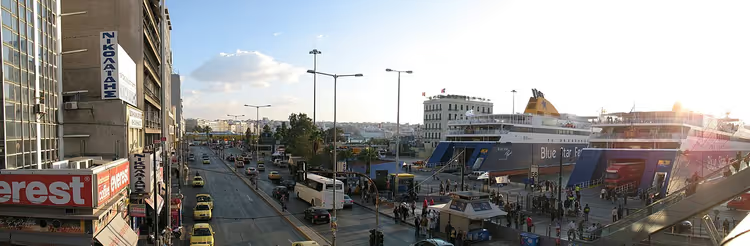
Piraeus is home to Greece's largest port, and the green metro line runs here to its terminus. Ferries to the islands and cruise ships dock near the station. It is worth visiting the Archaeological and Maritime Museums here, then the baroque Church of Saints Constantine and Helen. It was built with two bell towers in the early 18th century, and the facade is decorated with arched windows, stucco work, and two columns at the entrance. From the metro to the harbor you walk on foot (see map). Leave extra time for the return trip.
Day 3: Lake Vouliagmeni and Cape Sounion
Day three takes you out of the city to the south of Attica, to a warm lake and a cape with the Temple of Poseidon. The easiest option is to take a day tour: public transport is slow and requires transfers. A day trip to Cape Sounion covers both places in one day. If you have your own car, start with the lake and arrive at Sounion for sunset.
Lake Vouliagmeni
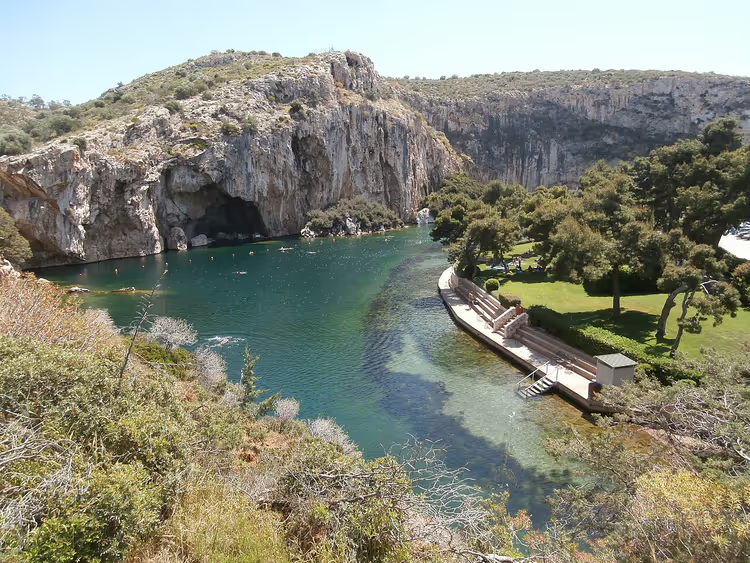
Lake Vouliagmeni lies about twenty kilometers from central Athens and stays warm all year round. It is fed by springs on the bottom, so the water holds a temperature of about 22-27 °C. Minerals, sulfur and radon give the water a therapeutic effect, and people come here to swim even in winter. Eucalyptus and pine trees grow around it, so the air smells of pine needles. Garra Rufa fish, which clean the skin, swim in the shore area. Nearby, archaeologists found marble pedestals and slabs bearing the name of Apollo Zoster. Admission is paid: about 17 € on weekdays and 19 € on weekends (as of 09/2026, lake price list). In summer the lake is open roughly from 8:00 to 19:00 (as of 09/2026, opening hours).
Cape Sounion
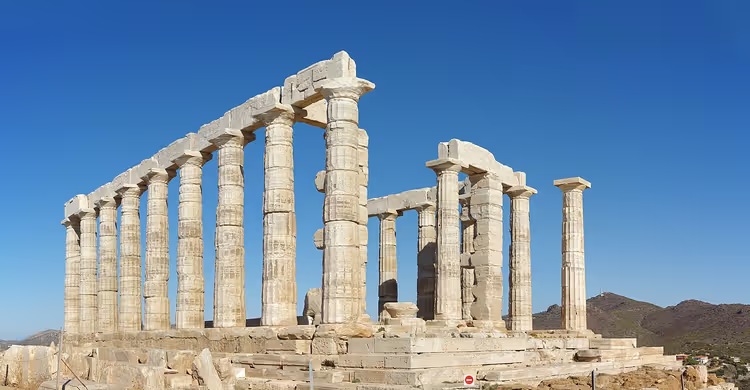 © Berthold Werner · CC BY-SAPhoto: Berthold Werner, CC BY-SA (https://creativecommons.org/licenses/by-sa/3.0), Wikimedia Commons
Cape Sounion, the southern tip of Attica, is known for the Temple of Poseidon on the cliff. The temple stood above the sea and served as a landmark for sailors. The road from Vouliagmeni runs along the Saronic Gulf, and along the way you pass tavernas serving local cuisine. On the cliff, the temple colonnade and part of the architrave survive. The reliefs depict Theseus with the bull and the battle of the centaurs with the Lapiths. From here you get a view of the Aegean Sea, and the sunset is one of the most famous in Greece. In 2026 tickets are sold only on site, and the ticket office is open until sunset (as of 09/2026, Sounion guide). Head back to the city before dark.
Tickets and opening hours
Before your trip, sort out your tickets so you do not stand in line at the ticket office. The combined pass for 7 ancient sites no longer exists: it was abolished in April 2025, and each site now needs its own ticket. An Acropolis ticket costs 30 €, reduced 15 € (as of 09/2026, official Greece website). It covers the hill with its northern and southern slopes. Tickets for the Ancient and Roman Agoras, Kerameikos, Hadrian's Library, the Olympieion and Aristotle's Lyceum are bought separately. An Acropolis ticket in summer is sold for a specific time, so book your slot in advance.
Site | Admission | Summer hours |
|---|---|---|
Acropolis | 30 €, timed slot | 8:00-20:00 |
Ancient Agora | separate ticket | until 20:00 |
Roman Agora | separate ticket | 8:00-20:00 |
Kerameikos | separate ticket | until 20:00 |
Temple of Olympian Zeus | separate ticket | 8:00-20:00 |
Hadrian's Library | separate ticket | 8:00-20:00 |
In high season the hours are roughly 8:00-20:00, and in winter they are two to three hours shorter (as of 09/2026, site opening calendar). Before your visit, check the exact time on the site's schedule, because individual halls and museums close earlier.
Tours and tickets in Acropolis
Guided tours, skip-the-line tickets and activities — most offers can be cancelled free of charge.
See offers on TiqetsThe widget loads once you give your consent.
If you want to visit the Acropolis without queuing and with an audio guide, there is a ticket with a time slot on GetYourGuide.
3-Day Athens itinerary on the map
Below is a day-by-day route map. The points for days one and two are in the center and are connected on foot, while day three requires transport. Distances are shown according to the map.
Day | Main focus | Book in advance | On foot |
|---|---|---|---|
1 | Acropolis, two Agoras, Lycabettus | tickets and Acropolis slot | about 6 km |
2 | Arch of Hadrian, Temple of Zeus, Kerameikos, Piraeus | separate tickets, metro | about 5 km |
3 | Lake Vouliagmeni, Cape Sounion | lake ticket, Sounion on site | by transport |
Athens 3-day route
Places on the map
- 1Syntagma Square Greece's main square in front of the parliament, changing of the Evzones guard
- 2Hadrian's Library Built under Emperor Hadrian around 132 AD
- 3Roman Agora Commercial and cultural complex with the Tower of the Winds and a mosque
- 4Tower of the Winds The world's oldest meteorological structure, eight faces depicting wind gods
- 5Ancient Agora Center of Athenian life, market, court and public assemblies
- 6Temple of Hephaestus Greece's best-preserved ancient temple, older than the Parthenon
- 7Theatre of Dionysus The city's first stone theatre, tragedies by Aeschylus and Sophocles
- 8Acropolis Propylaea, the Temple of Athena Nike, the Erechtheion and the Parthenon
- 9Mount Lycabettus The best panorama of the Acropolis and the sea, at sunset
- 10Hadrian's Arch Two-tiered marble arch on the road to Hadrianopolis
- 11Temple of Olympian Zeus Olympieion, one of the largest temples in Greece
- 12Lyceum of Aristotle Foundations of Aristotle's school, excavated relatively recently
- 13Kerameikos Potters' quarter and the ancient Kerameikos cemetery
- 14Piraeus Greece's largest port, with museums and a baroque church
- 15Lake Vouliagmeni Warm lake with mineral springs, temperature 22-27°C
⁉️🤔 Frequently asked questions
Is three days enough for Athens?
Three days cover almost all the main ancient sites in the center plus one trip outside the city. Day one goes to the Acropolis and the two Agoras, day two to the east, Kerameikos and Piraeus, day three to the lake and Cape Sounion. If you want the Acropolis Museum and the Plaka district, add a fourth day.
Do I need to buy an Acropolis ticket in advance?
Yes. In summer, entry is by time slot, and the daily limit is 20,000 people (as of 09/2026, hhticket.gr portal). In high season, slots sell out several days in advance. Take a morning window: by midday the rock is hot and crowded with tour groups.
Is there a combined ticket for the ancient sites?
No, it was abolished in April 2025. Each ancient site now needs its own ticket; details are in the tickets section. The Acropolis Museum is also paid for separately.
How do you get to Cape Sounion without a car?
The easiest way is a day trip from Athens. The public bus takes over an hour each way and doesn't always connect conveniently with sunset. If you go on your own, allow two hours for the drive and head back before dark.
Are there free admission days at museums in Greece?
Yes, many state-run sites have free dates throughout the year, plus discounts in winter. The exact calendar is published by the Ministry of Culture. Before your trip, check the current dates on the official portal so you don't pay unnecessarily.
In short: what to book
If you only have three days: grab a morning slot at the Acropolis on day one. If you're traveling with family: plan day three for Lake Vouliagmeni, where the water is warm and the bottom is shallow. If you want a beautiful evening: save the sunset for Mount Lycabettus or Cape Sounion.
To avoid wasting time in lines, buy an Acropolis ticket with an audio guide on GetYourGuide and choose a hotel in the center on Trip.com.
It's convenient to book your airport transfer in advance: compare prices on Kiwitaxi.

A small editorial team writing guides for independent travel. We travel ourselves, but we haven’t been everywhere, so we check prices, opening hours and how to get there against official sources.