
















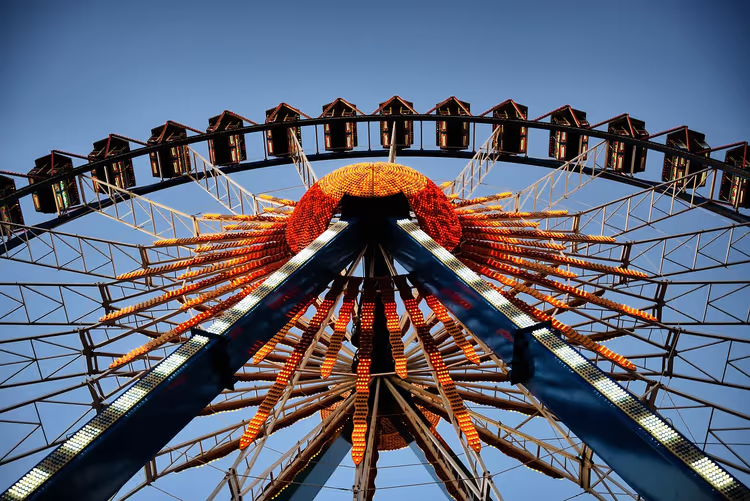
15 Best parks in Berlin: what to see and how much entry costs
Berlin is one of the greenest cities in Europe.
Parks here start literally around the corner. Some serve as memorials, others work as city squares, and still others have become large landscaped gardens with paid entry. We picked 15 places worth seeing and listed the admission, hours, and the honest catch for each.
Entry to Gärten der Welt costs 9 € in summer (as of 09/2026, official Gärten der Welt website). Tiergarten and most city parks, meanwhile, are free.
Ad: this article contains affiliate links, we earn a commission if you book through them, at no extra cost to you.
What to know about Berlin's parks
💡 In short:
- Free entry every day: Tiergarten, Lustgarten, Treptower Park, Volkspark Friedrichshain, Mauerpark, Humboldthain, Viktoriapark, and Körnerpark.
- Paid entry: Gärten der Welt, Zoologischer Garten, Botanischer Garten, Britzer Garten, and Pfaueninsel; Spreepark can only be visited on a guided tour.
- The Reichstag dome requires advance registration, but the ticket itself is free.
- Prices and hours for parks with paid entry: 09/2026, verified on the official Gärten der Welt website and the Zoologischer Garten ticket page.
Most Berlin parks are open from morning until dark, and admission is free. You pay for Gärten der Welt, Britzer Garten, Botanischer Garten, the zoo, and Pfaueninsel. Spreepark can only be visited on a guided tour. Below you'll find 15 places from different parts of the city, with practical details and distances.
1. Tiergarten
 © Eisenacher · CC BY-SAPhoto: Eisenacher, CC BY-SA (http://creativecommons.org/licenses/by-sa/3.0/), Wikimedia Commons
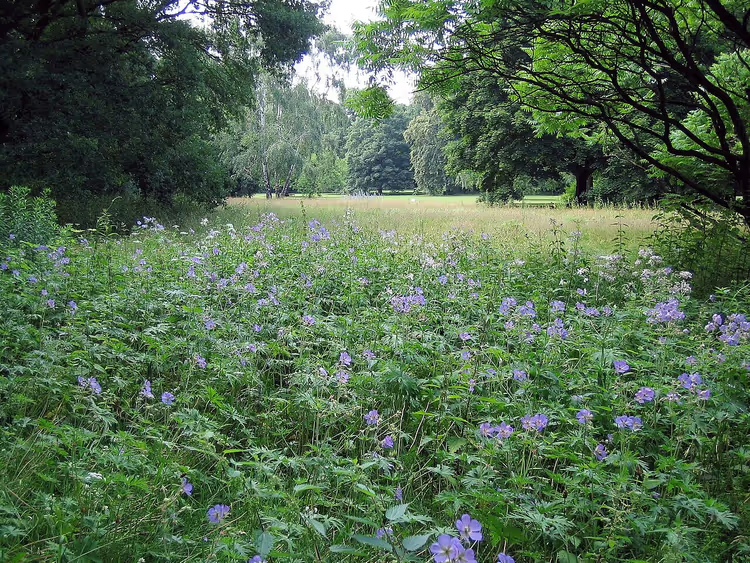
Tiergarten is the largest park in central Berlin. It covers about 210 hectares, and its network of walking paths stretches nearly 30 kilometers (according to the Tiergarten Wikipedia page). Lawns and hedges here sit alongside actual forest and ponds. If you go without a map, it's easy to head off in the wrong direction.
The park's history begins in the 16th century. At first it was the hunting grounds of the Prussian kings; Tiergarten became open to the public in the late 18th century. At its center stands the 67-meter Victory Column (according to Wikipedia on Tiergarten) with a gilded statue of Victoria. Nearby you'll find a sculpture avenue and a Soviet war memorial.
- Getting there: S-Bahn and U-Bahn Potsdamer Platz or Brandenburger Tor, then walk.
- Cost: free entry, the park is open daily.
- The catch: the main sights are spread across the grounds, so you'll walk several kilometers between them.
2. Lustgarten
 © Asio otus · CC BY-SAPhoto: Asio otus, CC BY-SA (https://creativecommons.org/licenses/by-sa/3.0), Wikimedia Commons
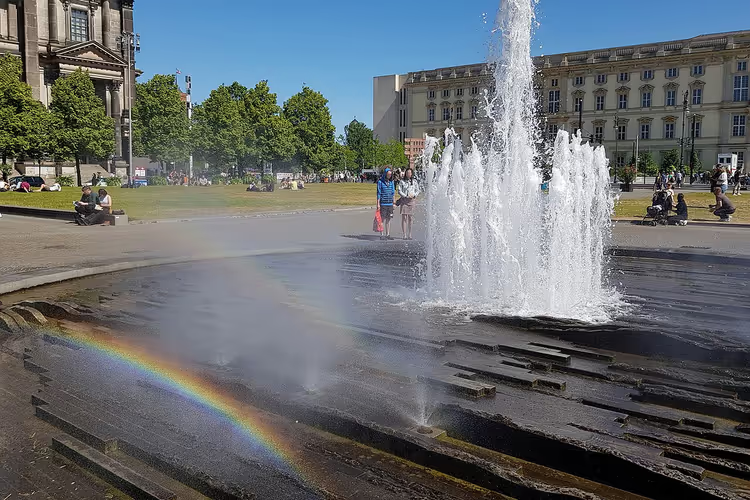
Lustgarten is a small square in the center of Museum Island, next to Berlin Cathedral. It once hosted military parades and political rallies; today it's a quiet lawn with a fountain and animal sculptures. Trees and shrubs are planted around the perimeter, and the lawns are divided by straight paths.
In front of the Altes Museum stands a granite bowl about 7 meters in diameter. A visit takes 20-30 minutes. If you're doing the museums, Lustgarten offers a convenient break: several museums are nearby, along with the Berlin Museum Pass, which is valid for several days.
- Getting there: S-Bahn Hackescher Markt or U-Bahn Museumsinsel, then a 5-minute walk.
- Cost: free entry.
- The catch: trees grow only around the perimeter, so in hot weather there's no shade on the lawn.
3. Treptower Park
 © Cyberfreak77 · CC BY-SAPhoto: Cyberfreak77, CC BY-SA (https://creativecommons.org/licenses/by-sa/4.0), Wikimedia Commons
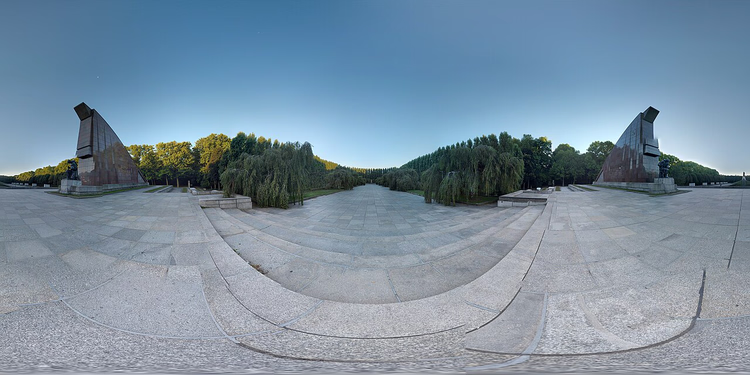
Treptower Park lies in southeast Berlin and covers about 90 hectares (according to Wikipedia on Treptower Park). The main reason to come here: the Soviet War Memorial, one of the largest in Europe. The grounds combine forest, meadows, and the riverbank, so you can walk here for a long time.
The entrance is framed by a triumphal arch, and beyond it you're greeted by the sculpture "Grieving Motherland". An avenue of weeping birches leads to granite pedestals shaped like bowed banners. Around 7,000 Soviet soldiers are buried here (according to the memorial description).
At the center, on a mound, stands the 12-meter bronze Liberator Warrior: in one hand he holds a rescued girl, and with the other he cuts a swastika with his sword. A staircase leads up to the monument. The sculpture was modeled on Sergeant Nikolai Masalov.
- Getting there: S-Bahn Treptower Park, a 10-minute walk from the station.
- Cost: free entry.
- The catch: this is a memorial site, so loud music and rowdy picnics are out of place here.
4. Botanischer Garten
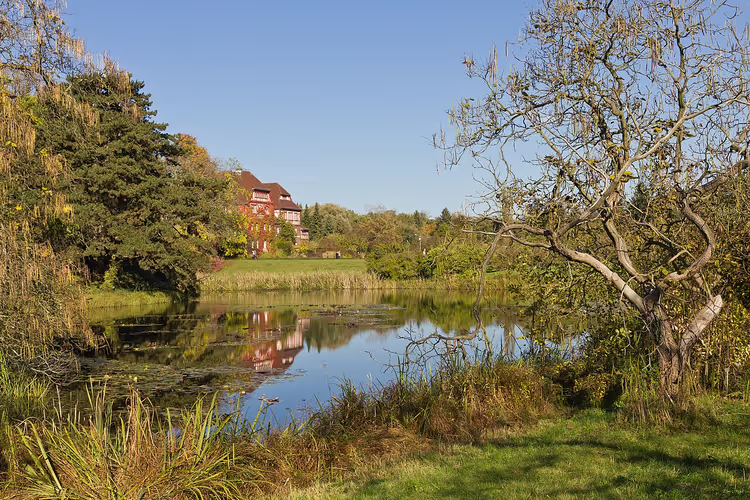 © A.Savin · CC BY-SAPhoto: A.Savin, CC BY-SA (https://creativecommons.org/licenses/by-sa/3.0), Wikimedia Commons
Botanischer Garten in the Dahlem district works as both a park and a research center. The collection includes about 22,000 plant species (according to Wikipedia). The garden was established in the late 19th century, and today it features themed areas, ponds, and large greenhouses.
Under glass grow orchids, cacti, coffee trees, a baobab, and bamboo. The park's particular pride: carnivorous plants. You can see firsthand how they catch insects. Entry is paid; tickets and opening hours are available on the official website (as of 09/2026, bo.berlin).
- How to get there: S-Bahn Botanischer Garten, a 5-minute walk from the station.
- Who it's for: for those who want to see tropical flora in the middle of Berlin.
- Cost: paid ticket, check the exact price on the official website.
5. Reichstag and the Platz der Republik lawn
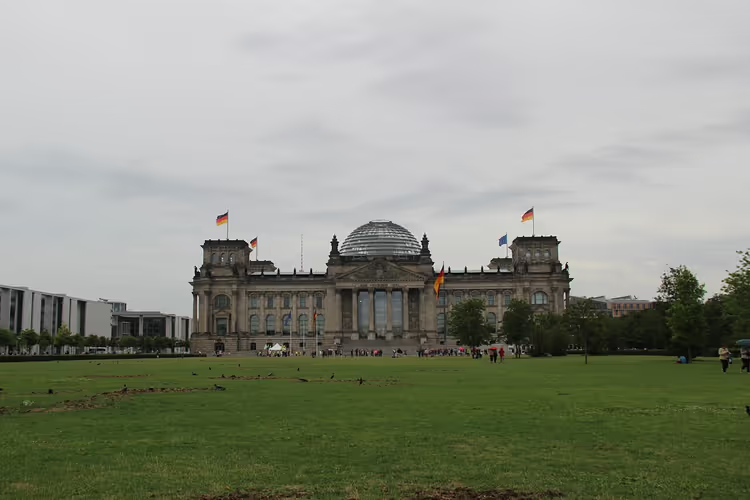
The Reichstag is the German parliament building and Berlin's most recognizable landmark. In front of it stretches the Platz der Republik lawn: here you can lie down on the grass and photograph the facade. Benches are only along the road.
The main reason to go up: the glass dome. Entry is free, but you need to book in advance through the Bundestag website (as of: 09/2026, official Bundestag website). Without a reservation you won't get in: first you submit an online request, then you show up at your time slot.
If you want to combine the viewing platform with coffee, the Käfer restaurant operates on the roof. Coffee on the Reichstag roof should be booked in advance.
- How to get there: S-Bahn Brandenburger Tor, then an 8-minute walk.
- Who it's for: for those who want to see the city from above for free.
- The catch: you can only get in with a prior reservation, a spontaneous visit won't work.
6. Gärten der Welt
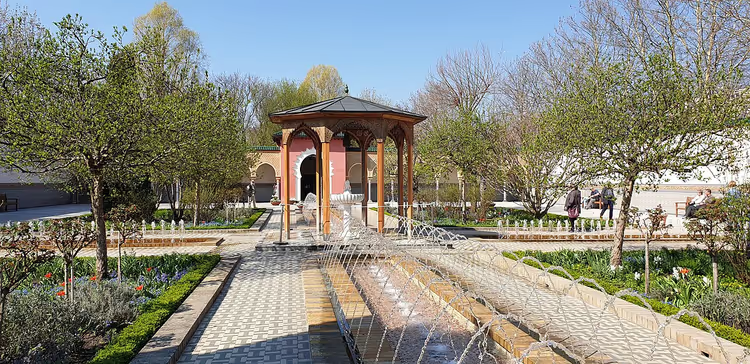 © Anagoria · CC BYPhoto: Anagoria, CC BY (https://creativecommons.org/licenses/by/3.0), Wikimedia Commons
Gärten der Welt in the Marzahn district is a park of international gardens. Japanese, Chinese, Korean, Balinese, and Oriental gardens coexist side by side here. In summer an adult ticket costs €9, in winter €4 (as of: 09/2026, rates on the park website).
The park opens daily at 9:00 and stays open until dark. A separate reason to come: the cable car across the park. A combined ticket with a round trip costs €12.90 (as of: 09/2026, cable car tickets). An annual pass for €40 also gives access to Britzer Garten and Natur Park Südgelände (as of: 09/2026, rates on the park website).
- How to get there: S-Bahn and tram to the main entrance, the trip from the center requires a transfer.
- Who it's for: for those who want to see different garden traditions in one day.
- The catch: once you leave, re-entry with a day ticket is not possible (according to the day ticket terms).
7. Volkspark Friedrichshain
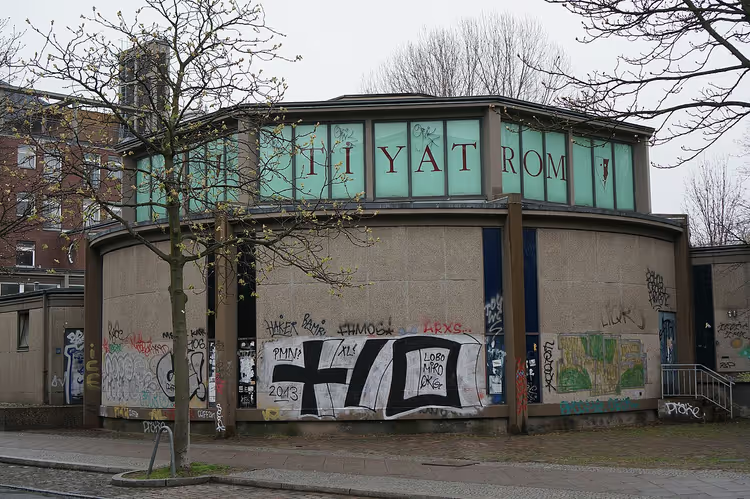 © Steffen Zahn from Berlin, Germany · CC BYPhoto: Steffen Zahn from Berlin, Germany, CC BY (https://creativecommons.org/licenses/by/2.0), Wikimedia Commons
Volkspark Friedrichshain is Berlin's oldest public park, opened in 1848 (according to Wikipedia). Today it's a large green area with lawns, paths, and ponds in the eastern part of the city.
The park's main attraction is the multi-tiered Märchenbrunnen fountain with figures of characters from the Brothers Grimm fairy tales. Nearby there's a Japanese garden with a pavilion and a bell. In summer, open-air movies are shown here, and on the slopes you'll find picnic spots and playgrounds.
- Getting there: tram to the Volkspark Friedrichshain stop.
- Cost: free entry.
- Who it's for: families with children and long walks across the lawns.
8. Mauerpark
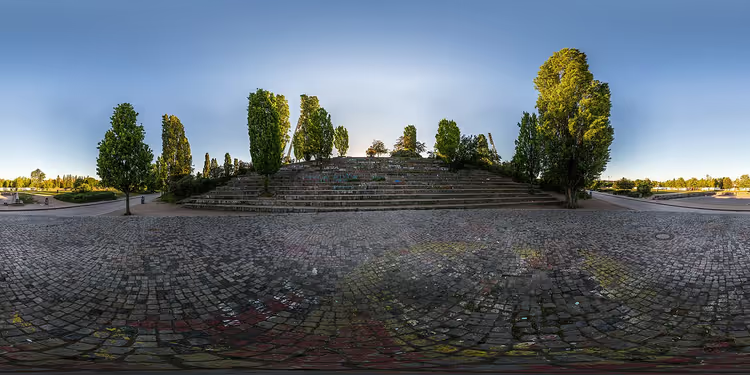 © Ansgar Koreng · CC BY-SAPhoto: Ansgar Koreng, CC BY-SA (https://creativecommons.org/licenses/by-sa/4.0), Wikimedia Commons
Mauerpark sits on the site of the former border strip: part of the Berlin Wall ran through here until the late 1980s. Today it is one of the city's liveliest parks and a favorite spot for musicians, artists, and young people.
On Sundays, a large flea market fills the park with noise: you'll find vinyl, furniture, dishes, and vintage clothing. Street musicians perform nearby, and open karaoke sessions take place in the amphitheater. A roughly 800-meter section of the Wall (according to Wikipedia) has been preserved as a monument and covered in graffiti.
- How to get there: U-Bahn Eberswalder Straße, then a 5-minute walk.
- The catch: the market and karaoke only run on Sundays; on weekdays the park is quiet.
9. Humboldthain
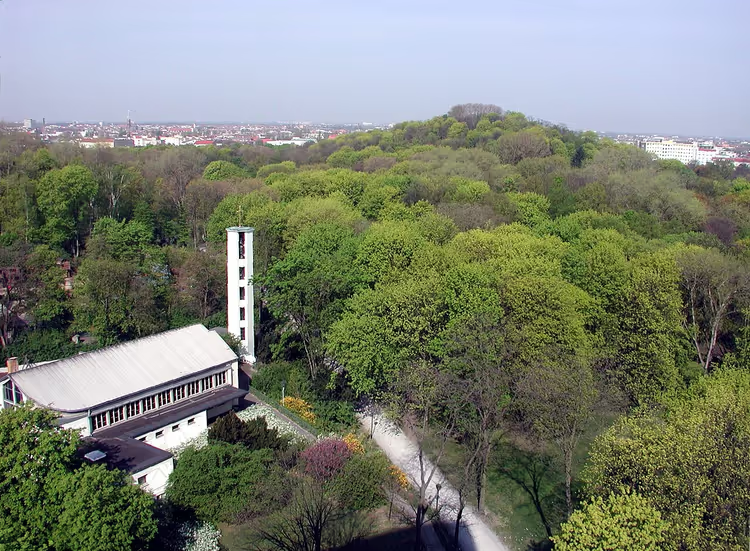 © Angela Monika Arnold · CC BY-SAPhoto: Angela Monika Arnold, CC BY-SA (https://creativecommons.org/licenses/by-sa/2.0/de/deed.en), Wikimedia Commons
Volkspark Humboldthain lies in the north of Berlin, next to Gesundbrunnen station. Since 1869, it served as a recreation area for workers from the surrounding factories. Today the park is loved for its rose alleys, dense groves, and picnic lawns.
A World War II flak tower remains on the hill. A staircase and a winding path lead up to it, and a free observation deck has been built at the top. Climb up here if you want to see the city center from above without paying for it.
- How to get there: S-Bahn and U-Bahn Gesundbrunnen.
- Cost: free entry.
- The catch: the climb to the tower is steep; without comfortable shoes it will be tough.
10. Britzer Garten
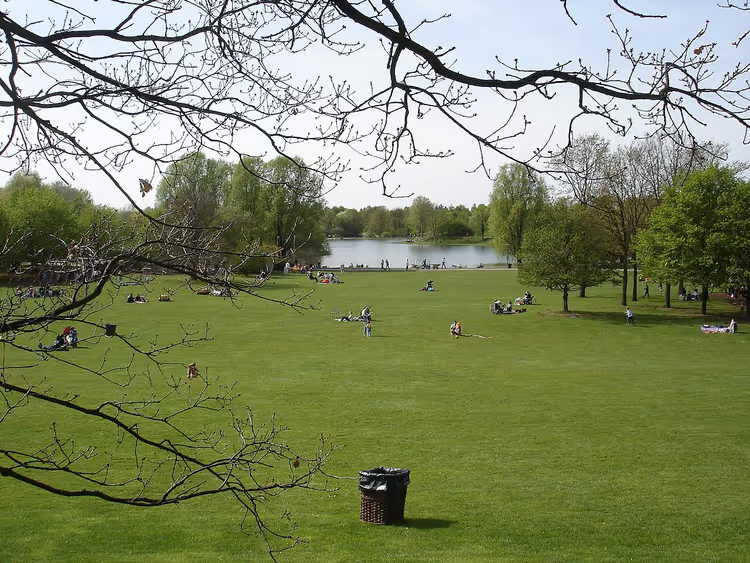
Britzer Garten is a landscape park in the south of Berlin covering more than 90 hectares (according to Wikipedia about Britzer Garten). It was created for the 1985 garden show and has been one of the city's best-kept parks ever since.
Dogs and bicycles are not allowed here: the park is designed for quiet relaxation. In May, the grounds fill with blooming cherry blossoms, and at the center lies an artificial lake with small islands and bridges. You'll find sundials and a path under arches of vines.
- How to get there: U-Bahn Britz-Süd or a bus to the entrance.
- Cost: paid entry; an annual pass for €40 also includes Gärten der Welt (as of 09/2026, Grün Berlin website).
- The catch: you can't bring a bicycle inside; you'll have to leave it at the entrance.
11. Viktoriapark
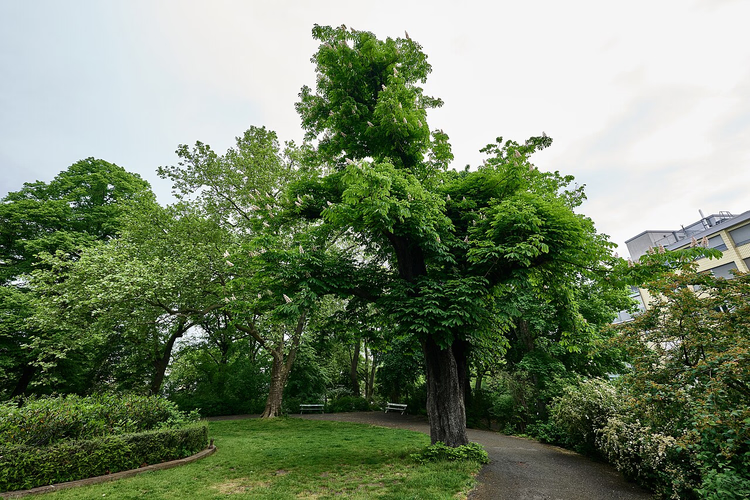
Viktoriapark is laid out on a hillside in the Kreuzberg district. A panorama of the city opens from the top, and that's what people climb up here for. At the summit stands a national monument commemorating the end of the war with Napoleon: a Gothic tower about 20 meters tall (according to Wikipedia).
A cascading waterfall flows down at the foot of the monument. Nearby there's a Biergarten, an open-air beer garden with a terrace among the trees. It gets crowded here in the evenings, so come during the day if you want quiet.
- How to get there: U-Bahn Mehringdamm or Platz der Luftbrücke, then walk.
- Cost: free entry.
- The catch: the path goes uphill; climbing with a stroller or suitcase is inconvenient.
12. Spreepark
 © wazabi · CC BYPhoto: wazabi, CC BY (https://creativecommons.org/licenses/by/3.0), Wikimedia Commons
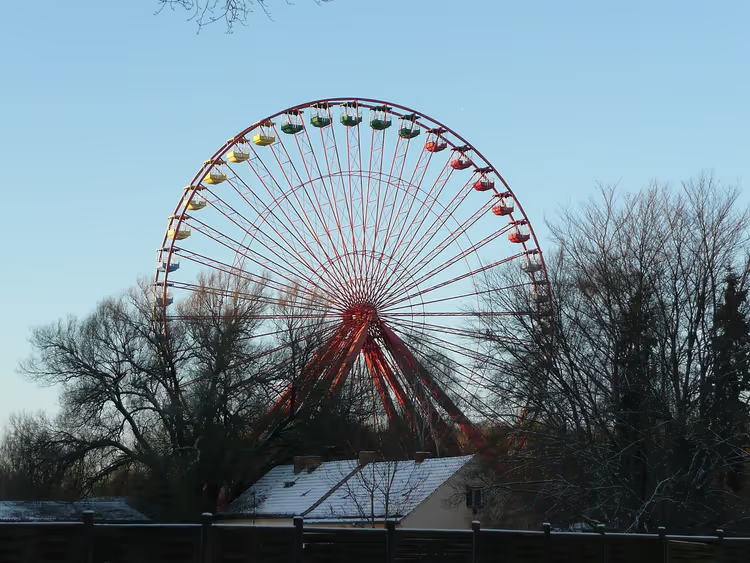
Spreepark is an abandoned amusement park in the eastern part of Berlin. It opened in 1969 as a GDR culture park and operated until around 2001. After closing, the grounds gradually fell into ruin. The area is now closed to free access: you can only get in on organized tours run by Grün Berlin.
Rusty carousels, ruined roller coasters, a children's railway, and a huge Ferris wheel over an overgrown pond remain here. The empty pavilions evoke the former festive atmosphere. Many people come here for moody photos of the abandoned site.
- How to get there: S-Bahn Plänterwald, then walk.
- Cost: entry only with a tour; Grün Berlin publishes the schedule.
- The catch: you can't wander the grounds freely, only in a guided group.
13. Zoologischer Garten
 © Adamantios · CC BY-SAPhoto: Adamantios, CC BY-SA (http://creativecommons.org/licenses/by-sa/3.0/), Wikimedia Commons
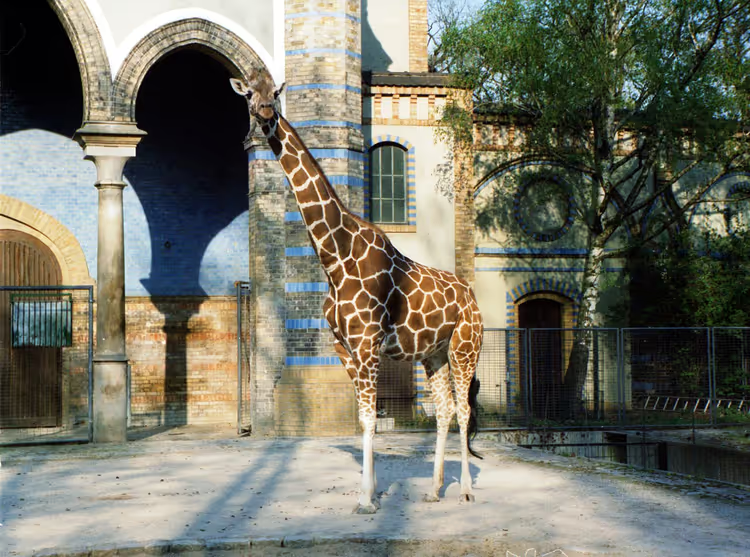
Zoologischer Garten is one of the oldest zoos in Germany, opened in 1844. Today it is home to about 20,000 animals (as of 09/2026, official website). The grounds cover 35 hectares, and there is a separate three-story aquarium.
A zoo ticket starts at €16 online, children aged 4 to 15 pay from €7.50 (as of 09/2026, ticket page). A combined ticket with the aquarium costs more. Buy online: the price at the ticket office is higher.
The pavilions feature pandas, gorillas, and kiwi birds, while penguins and fur seals swim in the pools. The aquarium has 250 tanks with fish, jellyfish, seahorses, sharks, and rays.
- How to get there: S-Bahn and U-Bahn Zoologischer Garten.
- Who it's for: families with children, animals live in large open enclosures.
- The catch: the combined ticket is only sold until 3:00 PM, and there can be lines at the aquarium entrance (according to the ticket page).
14. Pfaueninsel
 © E-W · CC BY-SAPhoto: E-W, CC BY-SA (https://creativecommons.org/licenses/by-sa/3.0), Wikimedia Commons
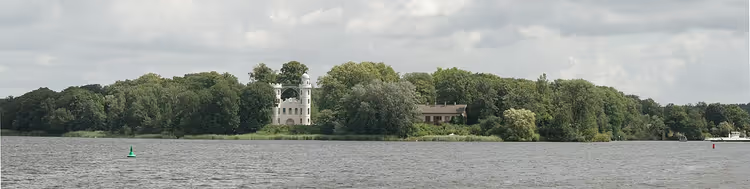
Pfaueninsel lies on the Havel River in the southwestern part of Berlin, covering more than 60 hectares. Since the late 18th century, it has been home to a landscaped garden and a white castle built in the Gothic style. Together with the Potsdam parks, this site is part of the UNESCO World Heritage list.
A small ferry takes you to the island, and without it you cannot get in. The island's main residents, peacocks, roam freely along the paths and are hardly afraid of people. Old buildings also remain here: the cavalier house, a dairy farm, and an antique portico.
- How to get there: S-Bahn to Wannsee, then bus and ferry.
- Cost: you need a ferry ticket and an entrance ticket, check prices on the SPG website.
- The catch: dogs are not allowed on the island.
15. Körnerpark
 © Dieter Brügmann · CC BY-SAPhoto: Dieter Brügmann, CC BY-SA (http://creativecommons.org/licenses/by-sa/3.0/), Wikimedia Commons
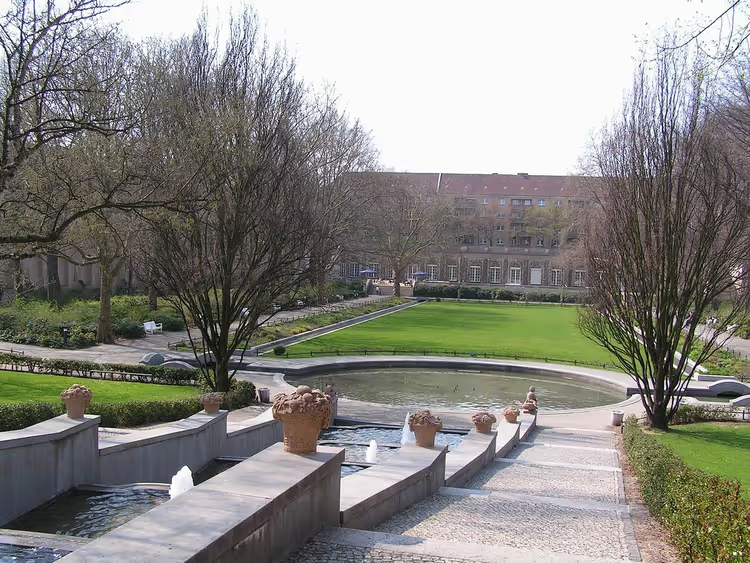
Körnerpark hides in the quiet Neukölln district. The park was laid out in the early 20th century on the site of a gravel quarry, so it sits several meters below street level. From the road you can only see the retaining wall, but inside you will find well-kept lawns, rhododendron walks, and flower beds.
In the western part of the park stands an old orangery with a terrace, cafe, and art gallery. The staircases, balustrades, and sculptures preserve the spirit of the early last century. A cascading fountain flows on the eastern side. Walking on the central lawn is not allowed: a sign warns visitors about this.
- How to get there: U-Bahn Rathaus Neukölln, then a 5-minute walk.
- Cost: free entry.
- The catch: the entrance from the street is easy to miss, the park is hidden behind a wall and below the road.
Berlin parks on the map
Best Parks in Berlin
Places on the map
- 1Tiergarten The largest park in the center, about 210 hectares
- 2Lustgarten A small square by Berlin Cathedral with a fountain
- 3Treptower Park Soviet war memorial, one of the largest in Europe
- 4Botanical Garden About 22,000 plant species, carnivorous plants under glass
- 5Reichstag Parliament building with a glass dome, entry by booking
- 6Gärten der Welt Japanese, Chinese, Korean and Balinese gardens with a cable car
- 7Volkspark Friedrichshain Berlin's oldest public park, the Märchenbrunnen fountain
- 8Mauerpark Former border strip, flea market on Sundays
- 9Humboldthain Rose alleys and a free viewing platform on the flak tower
- 10Britzer Garten Landscape park with blooming cherry trees and an artificial lake
- 11Victoria Park City panorama from a hill and a cascading waterfall
- 12Spreepark Abandoned amusement park, only with a guided tour
- 13Berlin Zoo About 20,000 animals, a three-storey aquarium
- 14Pfaueninsel Island with peacocks and a white castle, a UNESCO site
- 15Körnerpark Park on the site of a gravel pit with a greenhouse and gallery
All 15 places are collected on the map below. Open it in advance and plan your route: the parks are scattered across different districts, and you will spend time traveling to the far ones. For getting around the city, the Berlin WelcomeCard is useful: it covers public transport and gives discounts on museums.
⁉️🤔 Frequently asked questions
How much does it cost to enter Berlin's parks?
Most city parks are free: Tiergarten, Lustgarten, Treptower Park, Volkspark Friedrichshain, Mauerpark, Humboldthain, Viktoriapark, and Körnerpark. You'll have to pay at Gärten der Welt, Zoologischer Garten, Botanischer Garten, Britzer Garten, and Pfaueninsel. Spreepark can only be visited on a guided tour. The Grün Berlin annual card for €40 (as of 09/2026, Grün Berlin rates) gives you access to three parks.
What is the biggest park in Berlin?
Berlin's biggest park is Tempelhofer Feld; Tiergarten is smaller in area. But Tiergarten is the largest in the center: about 210 hectares and almost 30 kilometers of paths (according to Wikipedia on Tiergarten). For comparison, Britzer Garten and Treptower Park each cover roughly 90 hectares (according to Britzer Garten size data). Körnerpark and Lustgarten are small green spaces you can walk around in half an hour.
Can you visit the Reichstag dome without a reservation?
No. The dome and observation deck are open, but only with advance registration on the Bundestag website. You apply online, and admission is free. Book ahead, as capacity is limited (as of 09/2026, dome information).
Where can you walk for free in Berlin with a city view?
Climb the hill in Viktoriapark or the flak tower in Humboldthain: both spots are free and offer a panorama of the center. If you want to go higher, sign up for the free Reichstag dome: from there you can see all of Berlin.
What to do in Berlin on a rainy day?
Stop by the greenhouses at Botanischer Garten, the aquarium at Zoologischer Garten, or the museums on Museum Island near Lustgarten. Indoors, you can easily spend several hours without getting wet. The worst option in that weather: a long walk through Tiergarten.
In short: what to book
If you have just one day in Berlin, start with Tiergarten and the Reichstag, then stop by Mauerpark in the evening. Here's a simple matrix for different trips.
- For families with kids: Zoologischer Garten and Volkspark Friedrichshain.
- For a quiet morning: Botanischer Garten or Körnerpark.
- For unusual photos: Spreepark and Viktoriapark.
- For Eastern gardens and the cable car: Gärten der Welt.
- For a free city view: the Reichstag dome and the tower in Humboldthain.
Book the Reichstag dome and zoo tickets in advance so you don't have to wait in line at the ticket office. Berlin tours and excursions and airport transfer are worth arranging ahead of time.

A small editorial team writing guides for independent travel. We travel ourselves, but we haven’t been everywhere, so we check prices, opening hours and how to get there against official sources.