
















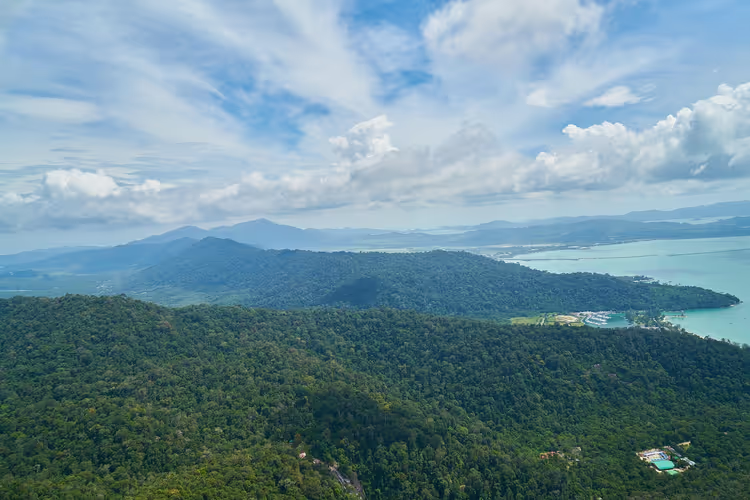
12 Best islands in Malaysia: which one to choose for beach and diving
In Malaysia there are dozens of inhabited islands, and choosing the right one is harder than it seems. Some are great for diving, others for the beach, and others for sightseeing. It's easy to make a mistake because the wet season on the east coast does not match the season on the west coast.
We picked twelve islands that travelers choose most often for vacations. For each one, you'll find who it's for, when the weather is best, and how to get there. Below is a comparison, honest catches, and answers to frequently asked questions.
Ad: this article contains affiliate links. We earn a commission if you book through them, at no extra cost to you.
Island comparison: who each one suits
💡 In short:
- For beaches and a first visit: Langkawi, Pangkor, Redang.
- For diving: Sipadan, Tioman, Lankayan.
- For family vacations: Langkawi, Pangkor, Perhentians.
- On the east coast, the swimming season runs from March through September.
- Diving rules and quotas at Sipadan: 09/2026, verified on the official Sabah Parks website.
Island | Who it's for | Best season | Standout feature |
|---|---|---|---|
Langkawi | beach, families, shopping | December-June | Sky Bridge and cable car |
Penang | cities, food, sightseeing | year-round | Georgetown and street food |
Borneo | nature, diving | year-round | orangutans and Mount Kinabalu |
Pangkor | couples, families | April-May, October-December | quiet beaches and snorkeling |
Tioman | romance, diving | March-September | corals and turtles |
Labuan | diving, shopping | April-October | shipwrecks and duty-free |
Kapas | budget, seclusion | March-September | small quiet island |
Tenggol | diving | March-September | calm dive sites |
Lankayan | diving, turtles | March-October | turtle conservation station |
Sipadan | diving | March-October | top dive site in the world |
Redang | beach, snorkeling | March-September | white sand and sunsets |
Perhentians | families, couples | March-September | two islands and turtles |
Pick an island based on your scenario: head west for beaches, east for diving, and to Penang for city life. That way you won't waste your vacation on unnecessary transfers.
1. Langkawi
 © Azreey · CC BY-SAPhoto: Azreey, CC BY-SA (https://creativecommons.org/licenses/by-sa/3.0), Wikimedia Commons
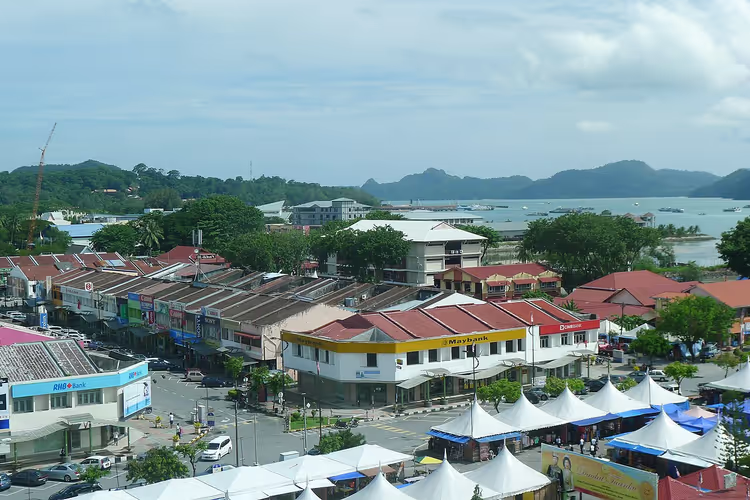
Langkawi lies in the Andaman Sea in the north of the country, near the border with Thailand. The island is considered a model of resort infrastructure for all of Southeast Asia. Turquoise water, well-developed services, excursions, and duty-free shops make it an easy choice for a first introduction to Malaysia.
The island's main town, Kuah, greets visitors at the port. As you approach the pier, you'll see a huge eagle statue, the symbol of Langkawi. Kuah itself has nowhere to swim, so you'll head farther along the coast for beaches.
The island's best beach, Pantai Cenang, stretches along hotels with restaurants, pools, and kids' clubs. The entry into the sea here is gentle, and the sand is fine and light. Beyond a rocky headland lies Pantai Tengah: the sand is coarser and yellow, and the drop-off into the water is steeper. On the plus side, water activities are nearby, including parasailing and banana boat rides.
On the west coast lies Burau Bay with Pantai Kok and Pantai Burau beaches. From here, a cable car climbs to the Sky Bridge, which hangs over a gorge. Among public beaches, note Rekreasi Kastam with comfortable bungalows and Tanjung Rhu with light sand among pines and mangroves.
- Who it's for: families, couples, and those who value service and shopping.
- The catch: Kuah itself has no beaches suitable for swimming.
- Where to stay: Langkawi hotels on Trip.com
2. Penang
 © HundenvonPenang · CC BY-SAPhoto: HundenvonPenang, CC BY-SA (https://creativecommons.org/licenses/by-sa/4.0), Wikimedia Commons
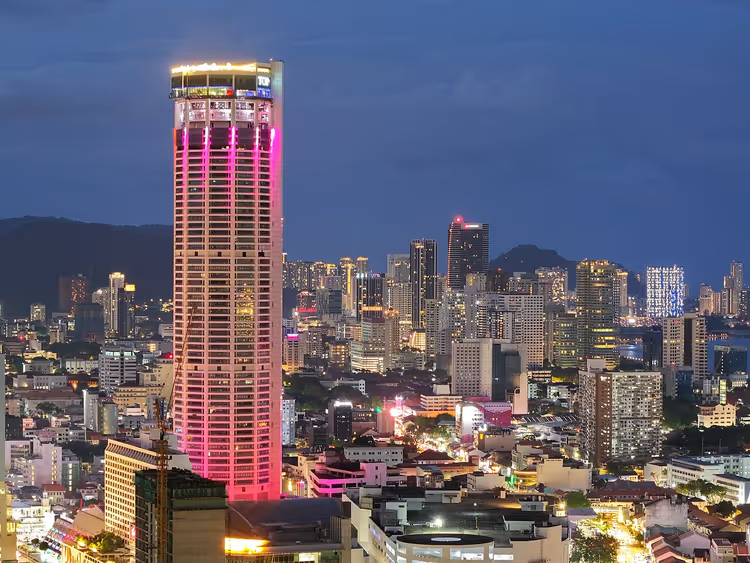
Penang is connected to the mainland by two bridges, and the older one resembles the San Francisco bridge. The island appeals to those who enjoy sightseeing, city food, and nightlife more than beach resorts.
Penang's capital, Georgetown, is called an open-air museum. The city's age is evident from Fort Cornwallis, whose walls protected the first settlers from pirate attacks. Around the citadel grew a city with streets of English colonial architecture, neighborhoods of Indian culture, and Chinatown. Nearby stand the snow-white St. George's Church, a mosque, and Hindu and Chinese temples.
Plenty of museums round out the experience. From the Penang Hill observation deck, you get a view of the entire island, reached by funicular. Check tickets and opening hours on the official Penang Hill website (as of 09/2026). The largest Buddhist temple in Southeast Asia is considered to be Kek Lok Si, which blends traditions from China, Thailand, and Burma.
There is almost nowhere to swim on Penang. The popular Batu Ferringhi beach often suffers from jellyfish, so a trip here is usually combined with other islands.
- Who it's for: lovers of cities, street food, and sightseeing.
- The catch: good beaches are few, and coastal waters are favored by jellyfish.
- Where to stay: Penang hotels on Trip.com
3. Borneo
 © kallerna · CC BY-SAPhoto: kallerna, CC BY-SA (https://creativecommons.org/licenses/by-sa/4.0), Wikimedia Commons
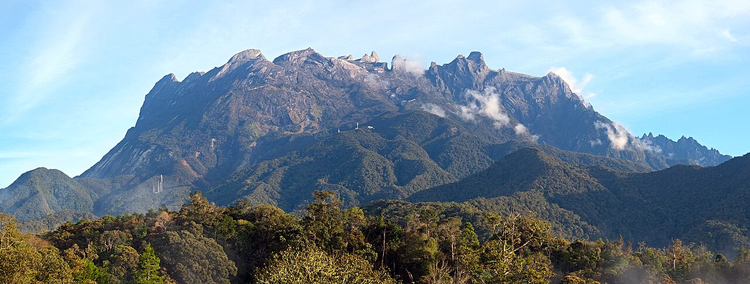
Borneo is divided among three countries: Indonesia, Malaysia, and Brunei. On world maps, the island is called Kalimantan, and its Malaysian part lies in the north, in the states of Sabah and Sarawak. Sabah's coastline faces three seas, and its beaches are known for coral reefs and rich underwater life.
On the west coast, near the state capital Kota Kinabalu, lies Tanjung Aru Beach. The large Shangri-La Tanjung Aru resort complex with full service operates nearby. From Tanjung Aru, boats depart for the islands of the Tunku Abdul Rahman marine park, where resorts with villas and dive training centers are located.
In the east, in the Sulu Sea, lies the Turtle Islands group. Overnight stays are allowed on only one of them, Selingan. The southeastern coast is famous for the dive resorts of Mataking, Mabul, and Kapalai. The protected dive site Sipadan lies nearby.
Beach time is easy to combine with excursions. From here you can climb Mount Kinabalu, visit an orangutan sanctuary, thermal springs, and a pearl farm.
Sarawak State in the west of the island draws visitors with beaches, jungles, and the vast Niah Caves with rock paintings. Nearby, on the Sarawak River, stands the state capital Kuching. The city's name translates as "cat," and cat sculptures fill its streets and squares, with an entire museum dedicated to one of them.
Borneo's history and culture can be explored at the Sarawak Museum and in an ethnographic village. Kids will enjoy the crocodile farm and Gunung Gading National Park with the rafflesia plant, which feeds on vine sap. You can round out the trip with rafting and a safari, then finish with beach time at the foot of Gunung Santubong. Borneo is good to visit year-round, and a couple of weeks lets you cover more ground.
- Where to stay: Borneo hotels on Trip.com
4. Pangkor
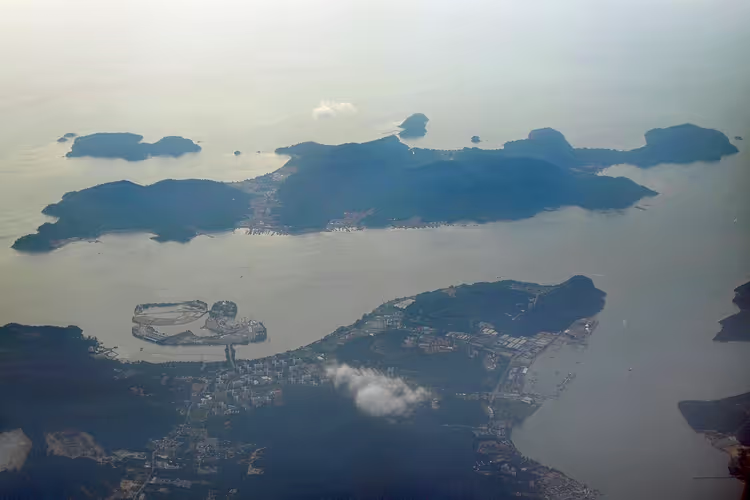 © Cmglee · CC BY-SAPhoto: Cmglee, CC BY-SA (https://creativecommons.org/licenses/by-sa/4.0), Wikimedia Commons
Pangkor lies off the west coast of Malaysia, in the Strait of Malacca. The mainland is just a couple of kilometers of water away, and a high-speed ferry connects the island to it.
Jungle covers most of the island, while fishing villages and hotels line the shore. The fine-sand beaches suit a quiet getaway, and there are no loud bars or nightclubs here.
Pangkor's main points of interest include Teluk Nipah Bay, the old Dutch fort, and the Foo Lin Kong Chinese temple. Coral Beach and Teluk Nipah are considered the best swimming spots, with developed infrastructure, cafes, and shops.
At Coral Beach, watch out for monkeys that leap through the trees and snatch food from bags. At the Teluk Nipah marine park, you typically spend a full day: you rent gear and go snorkeling. Affordable hotels and the authentic Tiger Rock villas fit any budget.
- Where to stay: Pangkor hotels on Trip.com
5. Tioman
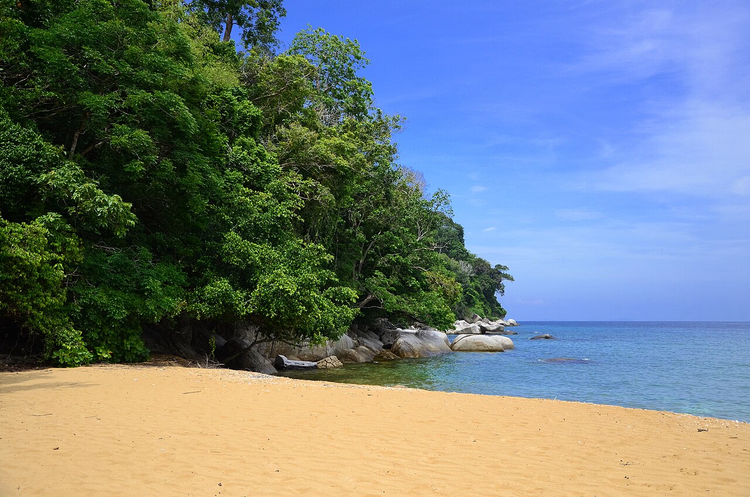 © Theo Crazzolara · CC BYPhoto: Theo Crazzolara, CC BY (https://creativecommons.org/licenses/by/2.0), Wikimedia Commons
Tioman is considered one of the best islands in the world for romance, snorkeling, and diving. The coral reefs are home to turtles, exotic fish, and whale sharks, and underwater visibility is among the best in the region. You'll also encounter land wildlife here: mouse deer, iguanas, and myna birds, which have been listed among the local attractions for their beautiful singing.
Tioman has almost no infrastructure. Some villages have no electricity or running water. The only paved road runs from the airport to the Berjaya hotel with chalets right by the sea. A large part of the hotel grounds is taken up by entertainment facilities, a fitness center, and a golf course, so it works well for both couples and families with children. Other hotels are reached by boat. A separate plus of the island: duty-free shopping and alcohol sales in hotels and shops.
- The catch: almost no infrastructure, villages don't always have electricity and water.
- Where to stay: Tioman hotels on Trip.com
6. Labuan
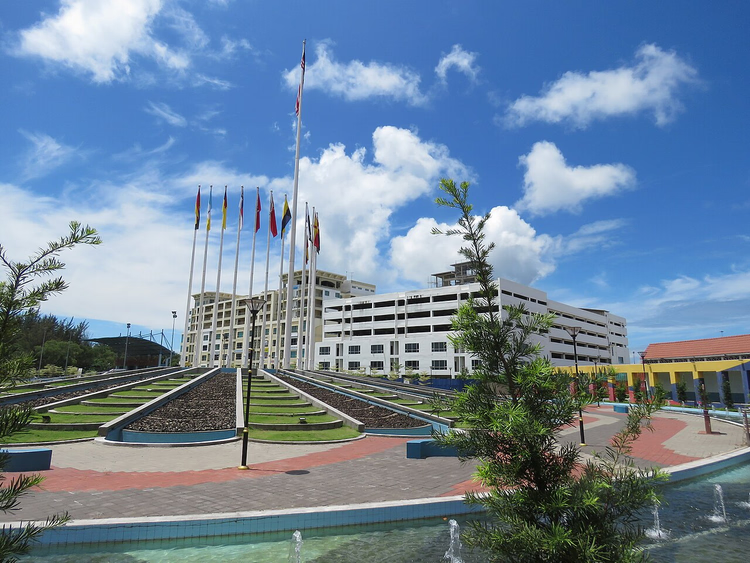 © Calistemon · CC BY-SAPhoto: Calistemon, CC BY-SA (https://creativecommons.org/licenses/by-sa/4.0), Wikimedia Commons
Labuan attracts visitors with white beaches and good diving conditions. The capital, Bandar Labuan, receives flights and sea transport from Kuala Lumpur and Kota Kinabalu.
The island is part of a duty-free zone, so vacation costs here are lower. Rooms in hotels of various levels are moderately priced, restaurant food is affordable, and the beaches are clean and well maintained.
In Bandar, it's worth visiting the World War II Memorial Park, the bird park, and the parrot show. Alcohol sales and consumption, as well as smoking, are restricted in the city.
Divers are drawn to the remains of shipwrecks among the corals. The marine museum displays artifacts raised from the seabed after shipwrecks, along with an aquarium of marine life. The best beaches lie on the west coast, near the dive centers and the golf course.
- Who it's for: divers and those who enjoy a quiet vacation.
- Where to stay: Labuan hotels on Trip.com
7. Kapas
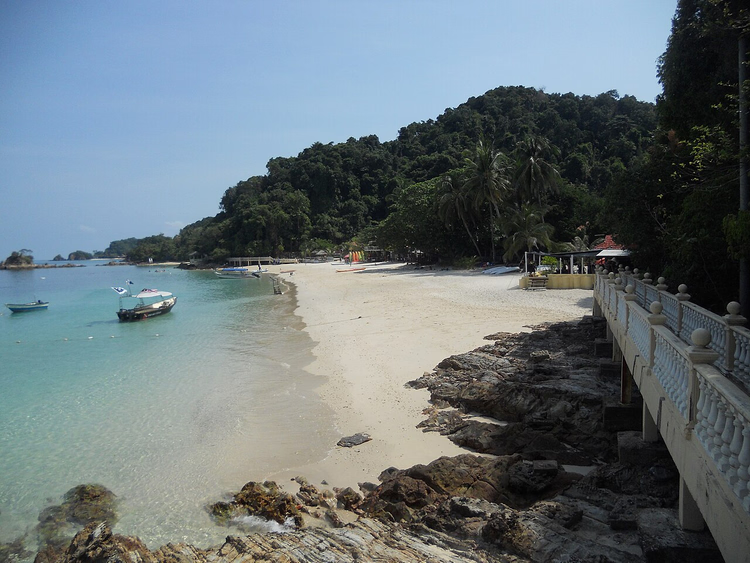 © WorldTravleerAndPhotoTaker · CC BY-SAPhoto: WorldTravleerAndPhotoTaker, CC BY-SA (https://creativecommons.org/licenses/by-sa/4.0), Wikimedia Commons
Kapas lies off the coast of Terengganu state and takes up very little space. Electricity, running water, and mobile service are available here, so you won't be cut off.
The island is surrounded by beaches with fine sand, palm trees, scenic rocks, and jungle. The beaches are connected by concrete walkways that make it easy to move from one to another.
Along the shore there are comfortable hotels with internet access and budget bungalows and chalets. From the Kapas Island Resort and Turtle Valley Resort complexes, walking trails lead into the jungle, and from the viewpoint you can see the neighboring island of Gemia.
Clear water and reefs with fish and turtles attract divers. Surfing, canoeing, kayaking, snorkeling, and fishing are also popular here. Kapas is less known than the heavily promoted islands, so a vacation here costs less and stays quiet.
- Where to stay: Kapas hotels on Trip.com
8. Tenggol
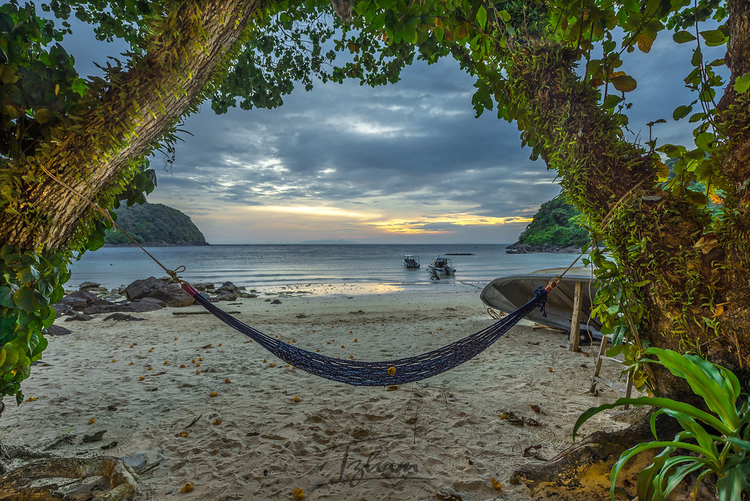
Tenggol lies in the south of Malaysia, off the coast of Terengganu state. You can get there by boat from the town of Kuala Dungun.
 © shizham · CC BYPhoto: shizham, CC BY (https://creativecommons.org/licenses/by/2.0/), Flickr
The rocky island is covered in tropical forest that in places drops to the sea as sheer cliffs. Until recently it was uninhabited, but today hotels and bungalows have been built right at the water's edge.
Tenggol's development was helped by its underwater world. Many dive sites have been set up around the coast, so people come here for exotic diving. In a quiet bay, the depth increases gradually, revealing boulders, tunnels, crevices, and coral gardens. The dive sites are home to butterflyfish, moray eels, crabs, and other mid-depth marine life.
Tenggol also works for a beach vacation. The small beaches are surrounded by palm trees, the sand is soft, and the water is clear. From any high point you can see the South China Sea to the horizon. Rare birds complete the picture with their appearance and calls.
- Where to stay: Tenggol hotels on Trip.com
9. Lankayan
 © Jonathan Muhiudeen · CC BY-SAPhoto: Jonathan Muhiudeen, CC BY-SA (https://creativecommons.org/licenses/by-sa/3.0), Wikimedia Commons
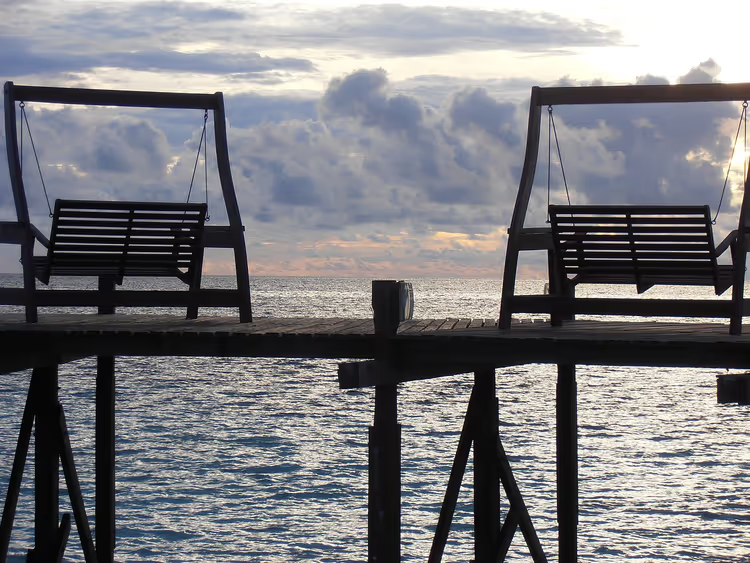
Lankayan lies in a protected zone of the Sulu Sea, northeast of the Malaysian part of Borneo. You get there by boat from the town of Sandakan.
The island is shaped like a drop. It is surrounded by an emerald lagoon, palm trees and white-sand beaches with shells and corals, while the top is covered in tropical forest.
On the quiet side there is one hotel, Lankayan Dive Island Resort, with chalets and all-inclusive service. Meals are served buffet style with plenty of fruit and vegetables, and almost every bungalow opens onto its own beach with loungers. Separate from the hotel there is a dive center on stilts: here you can rent gear and set up your equipment.
All activities on Lankayan revolve around the water. At nearby dive sites you will see whale sharks and bamboo sharks, octopuses and shipwrecks. The turtle research station receives animals that come to lay eggs from July to October.
- Where to stay: Lankayan hotels and tours on Trip.com
10. Sipadan
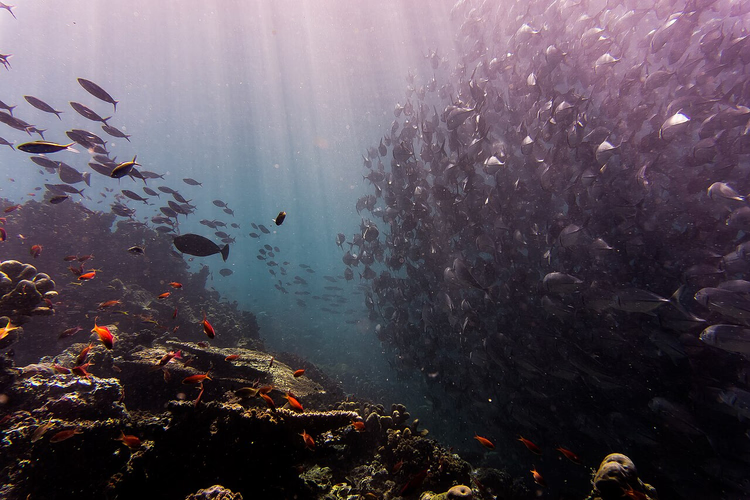
Sipadan occupies a tiny island off the coast of Sabah. Dense tropical forest is framed by sandy beaches, while underwater lie coral and volcanic landscapes.
Every diver dreams of getting here: Sipadan ranks among the best dive sites in the world. Jacques-Yves Cousteau did his dives here. The island is a protected area, so no one lives here, and there are no hotels or beach infrastructure.
Diving is possible only with a permit. Dives are booked in advance through Sabah Parks, and daily quotas are limited, so spots for the date you want are reserved months ahead. Rules and quotas are confirmed on the Sabah Parks diving page (as of 09/2026).
You cannot go into the island's interior, but on the shore you will see monitor lizards, other animals and birds. Excursions go to famous sites: Turtle Patch off the southern shore, the Turtle Tomb cave with its maze of tunnels, Barracuda Point and coral gardens with exotic fish. Dives are done from boats and directly from the shore.
There is nowhere to stay on Sipadan; tourists stay in chalets on neighboring Mabul and Kapalai. When heading here, bring water and food.
- Where to stay: hotels near Sipadan on Trip.com
11. Redang
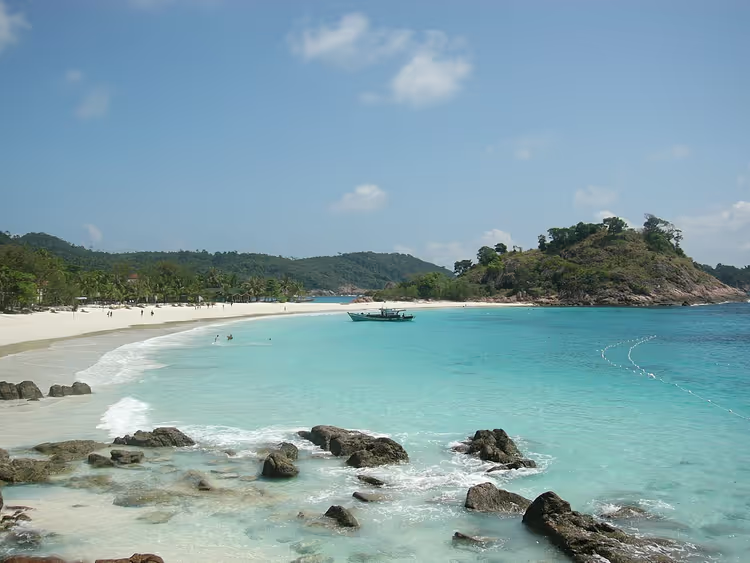
You reach Redang by ferry from Kuala Terengganu. The island is surrounded by magnificent reefs, including Mushroom, famous in diving circles for its mushroom-shaped cap.
There is little developed infrastructure here. If you are particular about service, choose The Taaras Beach and Spa Resort with its spacious beach and sea views from designer rooms. There is infrastructure at the beach next to the Laguna Redang Resort hotel, not far from the airport: shops, a souvenir store and restaurants with live music.
All of Redang's vacation experience is built around the beach, diving, windsurfing, boat trips and jungle trekking. The island is loved for its clean white sand, clear water and sunsets.
- Where to stay: Redang hotels on Trip.com
12. Perhentian Islands
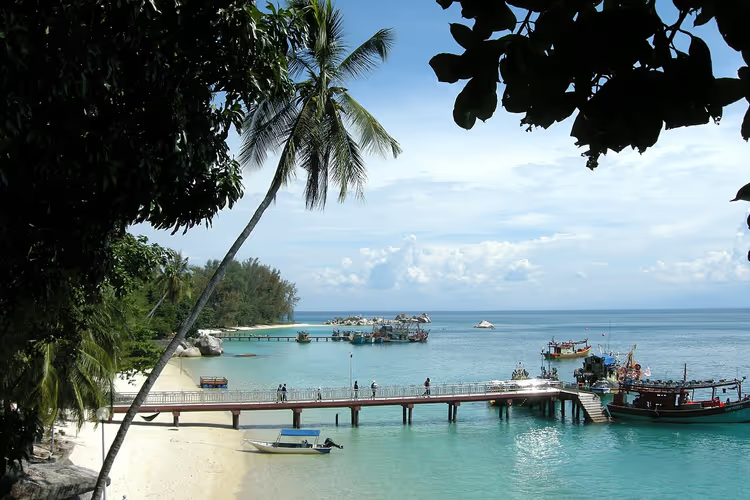 © Vyacheslav Argenberg · CC BYPhoto: Vyacheslav Argenberg, CC BY (https://creativecommons.org/licenses/by/4.0), Wikimedia Commons
The Perhentian Islands lie in the Gulf of Thailand, not far from the state of Terengganu. The archipelago consists of two large islands, Perhentian Kecil and Perhentian Besar, and small islets around them.
The islands are covered with rocky plateaus topped by tropical forests. The beaches, separated by cozy coves and coral reefs, look like a Bounty ad: lush palm trees against white sand and bright blue water.
The gentle slope into the sea makes swimming comfortable at any age. Besides public beaches, the archipelago has private ones, where water taxis take you.
The underwater world is interesting for both diving and snorkeling. In the depths you will encounter turtles, whale sharks, clownfish, parrotfish and rays.
Both large islands have developed infrastructure. On Besar people stay for premium service, fine dining and nightlife. Kecil is a bit simpler, but it pleases with affordable prices.
- Where to stay: Perhentian hotels on Trip.com
Where to vacation on Malaysia's islands
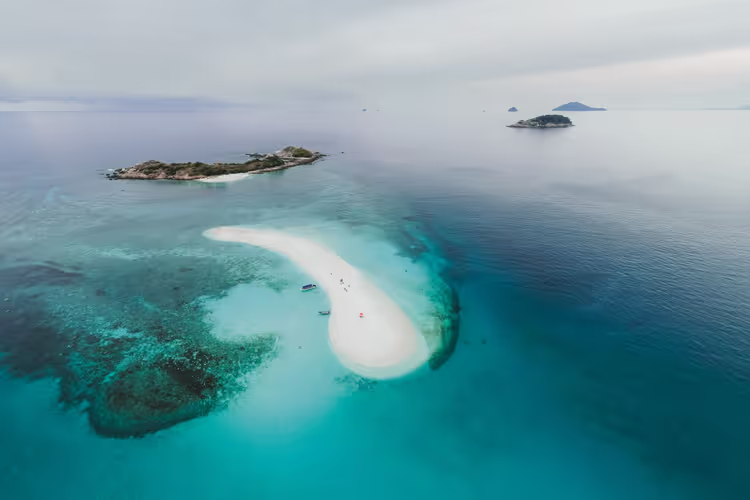
Most travelers come to Malaysia for the beach, with diving as a secondary goal. Island resorts cover both, so you just need to pick the island that fits your plans.
Langkawi is chosen for comfort, calm seas, and shopping. You can swim here almost all year without storms, and the markets are full of exotic fruit. Nature lovers will enjoy Kilim Park, Dayang Bunting Lake, Pulau Tuba Geopark, and Burau Bay.
Borneo appeals to those who love active travel, unique nature, and ethnic culture. There are plenty of good beaches and dive sites, and you can see animals right in the reserves.
Penang is popular with younger travelers and nightlife fans. Great restaurants, clubs, and markets pair well with sightseeing.
Redang has earned a reputation as an eco-friendly island with lush greenery, white sand, and clear water. People come here for sunsets and beautiful reefs, while those seeking quiet choose less crowded islands as a base.
Pangkor suits couples and families with kids: a gentle entry into the sea, a light breeze, and quiet create the conditions for a relaxed vacation.
Compare islands by three questions: where you want to stay, what you'll do during the day, and how far you're willing to travel. For beach and service, Langkawi or Redang are the logical choice; for nature and diving, Borneo or Tioman; for city life and food, Penang.
- Where to find hotels: compare Malaysia hotels on Trip.com
Islands for family vacations
Langkawi is considered the best resort for a family trip. The sea near the shore is shallow and calm, the sand is soft, and the entry into the water is gentle, so even toddlers can swim comfortably.
Keep two things in mind: in some spots there are sharp shells on the bottom, and from November to February there are a lot of jellyfish in the water. Bring swim shoes for your kids so they don't get cut.
Langkawi has plenty of attractions for children. A huge aquarium with underwater tunnels, artificial waterfalls, and lakes keeps them fascinated for a long time: it's home to exotic fish, crabs, turtles, and jellyfish. Next door there's a mini zoo with penguins, birds, and monkeys.
At Oriental Village, kids can ride catamarans, elephants, and ponies. You can return on an amphibious bus. A cable car over the gorge takes you to a bird park and parrot show.
Good conditions for kids are also available on Borneo, at the Shangri-La Rasa Ria Resort on the west coast of Sabah. Kids are looked after by activity leaders and caregivers in the kids' club: they teach them to identify birds and care for animals, and take them to an orangutan rehabilitation center and a mini zoo.
At the Penang hotels Shangri-La Rasa Sayang Resort & Spa and Shangri-La Golden Sands, there's a wide range of entertainment for kids and activity leaders on staff. Kid-friendly beaches and hotels are also found on Pangkor, Labuan, Tioman, and the Perhentians.
When planning a family trip, check how far the hotel is from the beach and whether it has a kids' club. Langkawi and Pangkor have better family infrastructure than the protected islands of Sipadan and Lankayan, where there are almost no hotels.
Best time to visit the islands
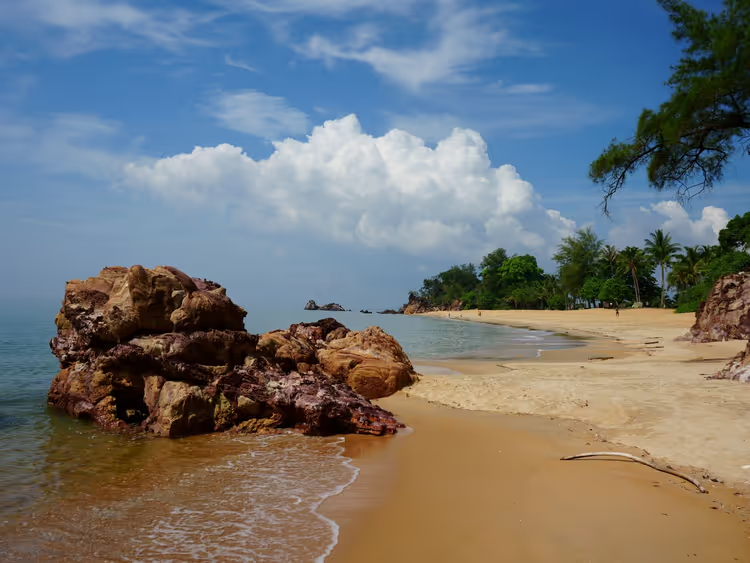
The climate on the islands is humid and hot all year round, and the water is almost always warm. The difference between islands comes down to the rainy season, so your travel dates matter more than you might think.
The eastern islands (Tioman, Redang, and the Perhentians) get heavy rain from November to February. The best season here runs from March to mid-September.
In the west, on Pangkor, good weather comes in April and May, and again from October to December. In the north, on Langkawi, swimming is comfortable from December to June, while May and October are good for diving, when the water becomes clear. On Labuan, the sunny season starts in April and lasts until early October.
So at any time of year, you'll find an island with weather suited to the beach or diving. For diving, it's better to choose dry-season months when the water is clear, while transitional weeks work fine for the beach. Check the season before booking flights so you don't end up in a rainy month.
Malaysia's islands on the map
All twelve islands are marked on the map below. The western islands, Langkawi and Pangkor, sit apart in the Andaman Sea and the Strait of Malacca, while the eastern ones, from Tioman to Borneo, stretch along the South China Sea. The map makes it easy to estimate distances and put together a route covering two or three islands in one trip.
Best islands of Malaysia
Places on the map
- 1Langkawi A model of resort infrastructure, the Sky Bridge
- 2Penang Georgetown, Fort Cornwallis and street food
- 3Borneo Orangutans, Mount Kinabalu and the coral reefs of Sabah
- 4Pangkor Quiet beaches and snorkelling in the Strait of Malacca
- 5Tioman Corals, turtles and whale sharks, almost no infrastructure
- 6Labuan Duty-free zone, sunken ships for divers
- 7Kapas Small quiet island, concrete walkways between beaches
- 8Tenggol Calm dive sites, tropical forest right down to the water
- 9Lankayan Turtle conservation station, a single dive hotel on the island
- 10Sipadan One of the world's top dive sites, diving by permit only
- 11Redang White sand, sunsets and the Mushroom reef
- 12Perhentian Islands Two islands of the archipelago, turtles and coral reefs
⁉️🤔 Frequently asked questions
When is the best time to visit Malaysia's islands?
Look at the coast. In the east, which includes Tioman, Redang, and the Perhentians, the season runs from March to September, while November to February brings heavy rain. Langkawi is comfortable from December to June. On Pangkor, the weather is good in April and May, and again from October to December. A universal option: April and May, when the weather is good almost everywhere.
Which island has the best diving?
For experienced divers, the best choice is Sipadan. It ranks among the world's top dive sites, but dives are strictly by permit and quota from Sabah Parks (as of 09/2026). Beginners will do well on Tioman, the Perhentians, and Lankayan, where first dives and snorkeling are available right off the shore.
Which island is best for a family vacation?
Langkawi is the most convenient: shallow sea near the shore, a gentle entry, and plenty of entertainment. Calm beaches with a gentle slope are also found on Pangkor, Labuan, and the Perhentians.
How many islands should you visit in one trip?
Don't chase quantity. Pick a couple of islands with similar seasons and add a city on the mainland, such as George Town or Kuala Lumpur. That way you won't spend your vacation on transfers and you'll have time to explore each island at a relaxed pace.
Is it expensive to vacation on Malaysia's islands?
Prices depend on the island. Labuan is a duty-free zone, so accommodation and shopping are cheaper there. Langkawi and Redang have more hotels, with options ranging from budget guesthouses to five-star resorts. On the protected islands of Sipadan and Lankayan, options are limited and prices are higher.
In short: what to book
A matrix for your plans:
- If it's your first trip: choose Langkawi.
- If you want diving: Sipadan or Tioman.
- If you're traveling with kids: Langkawi, Pangkor, or the Perhentians.
- If you want city life and food: Penang.
Compare accommodation and excursions in advance: find Malaysia hotels on Trip.com and browse tours on GetYourGuide.

A small editorial team writing guides for independent travel. We travel ourselves, but we haven’t been everywhere, so we check prices, opening hours and how to get there against official sources.