

















Where to go from Valencia: 17 guided tours to caves and fortresses
Valencia is one of the three largest cities in Spain. Its historic center is compact, and around it lies a whole kingdom of underground rivers, mountain fortresses, waterfalls, wineries, and a lake with pirate legends.
You can't cover all of that in one day. The distances are considerable, some sites operate on their own schedules, and tickets are best booked in advance during high season.
We've put together 17 excursions from Valencia for different interests: architecture, nature, food and wine, and trips with kids. Below you'll find the format, duration, and what you pay for separately.
💡 In short:
- Start with a walking tour of the center to get a feel for the city's layout.
- Set aside separate days for caves, mountain fortresses, and wineries.
- Prices and opening hours: 09/2026, verified on the official website
Ad: this article contains affiliate links. We earn a commission if you book through them, at no extra cost to you.
1. Sightseeing walk through the historic center
The walk through the historic center takes about three hours and doesn't require a car. The landmarks of the old town are close together, so you visit them one after another without wasting time on transfers.
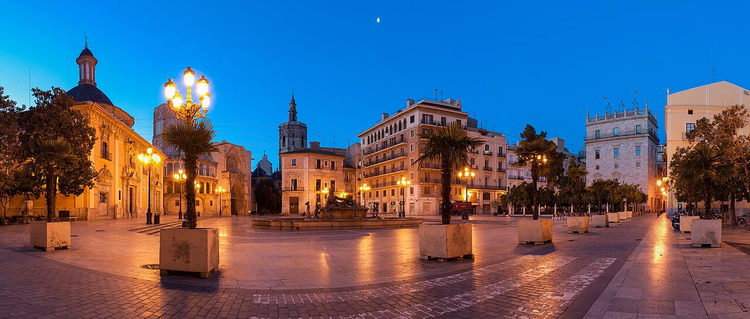
The guide shows you the towers of the old city wall, Plaza de la Virgen, Valencia Cathedral (Catedral de Valencia), the Central Market, and the Silk Exchange. Climbing the Miguelete bell tower is usually included. From the top you can see the cathedral domes and tiled roofs all the way to the Turia riverbed. The list of must-see spots in the center is available on the Valencia tourist office website (as of: 09/2026).
 © Mihael Grmek · CC BY-SAPhoto: Mihael Grmek, CC BY-SA (https://creativecommons.org/licenses/by-sa/3.0), Wikimedia Commons
The cost is calculated per group, not per person, so a larger group makes this tour cheaper. The guide confirms the exact price at booking; it depends on the number of participants.
- What's included: city center, cathedral exterior, climb up Miguelete.
- How long it lasts: about three hours.
- The catch: in summer it's hot on the squares during the day, so schedule your start for the morning.
2. Princess Valencia: cathedral and the Water Tribunal
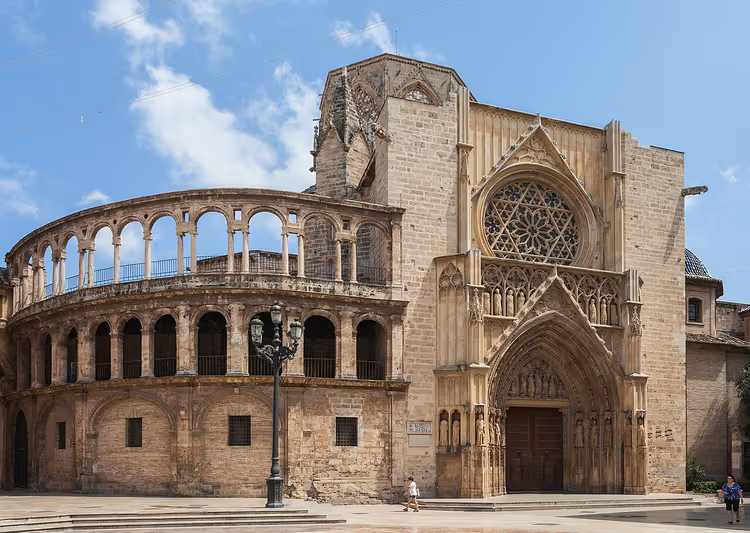
You start getting to know the city's history from Torres de Serranos. These are 14th-century city gates that served as the ceremonial entrance to Valencia. From there you walk to Plaza de la Virgen, where Valencia Cathedral stands with the Chapel of the Holy Grail.
The program includes the Miguelete bell tower, the frescoes of the Patriarchal College (Colegio del Patriarca), the Central Market, and the Silk Exchange. There's a separate stop at the Porta de la Seu gate: on Thursdays at noon, the Water Tribunal (Tribunal de las Aguas) convenes here. It settles disputes over field irrigation, and UNESCO has added this ritual to its intangible heritage list.
 © Diego Delso · CC BY-SAPhoto: Diego Delso, CC BY-SA (https://creativecommons.org/licenses/by-sa/3.0), Wikimedia Commons
Nearby stands one of the narrowest houses in Europe, and at the neighboring cafe you'll be offered horchata made from tiger nuts. The tour lasts about four hours. This route differs from the sightseeing walk in point 1 by including the Water Tribunal, the Patriarchal College, and a longer duration.
- What you pay for separately: cathedral entry 12 €, reduced ticket 6 €, Miguelete climb 3 € (as of: 09/2026, official website).
- The catch: the program is packed, leaving little time for the museums inside the cathedral.
Tickets with a guide and cathedral entry are easy to find on GetYourGuide: see Valencia center tours.
3. Quest walk "Catch the Dragon"
This is an interactive walk along the route of classic tours, except instead of listening to a guide, you complete tasks. The team walks through the old town and finds answers on the spot.
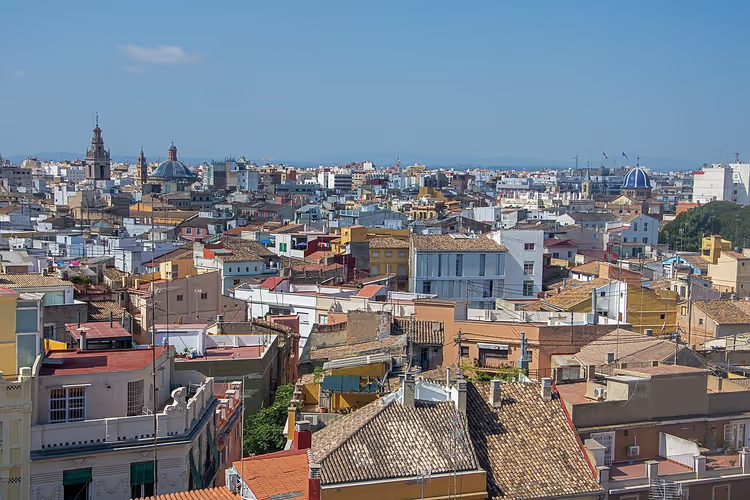
You'll find a piece of the Arab city wall at Torres de Serranos, follow the traces of the flood down into El Carmen, and count the bats on Valencia's coat of arms. At the cathedral, you'll hear the legend of the Holy Grail brought from Aragon.
 © Derek Rankine from Glasgow, Scotland · CC BYPhoto: Derek Rankine from Glasgow, Scotland, CC BY (https://creativecommons.org/licenses/by/2.0), Wikimedia Commons
The format works well for families with kids and for anyone who struggles with long lectures. The walk takes about two hours, and payment is per group.
- Format: a quest with tasks, not a guide's monologue.
- Who it's for: active couples and parents with kids.
4. From antiquity to the City of Arts and Sciences
This four-hour driving and walking tour covers both the old and the new. Part of the time you ride, part of the time you walk, so the itinerary is packed.
The first block is the City of Arts and Sciences (Ciudad de las Artes y las Ciencias), built on the former bed of the Turia River. The complex was constructed at the end of the last century from designs by Santiago Calatrava and Félix Candela. It includes the Oceanogràfic, a science museum, a cinema, and an opera house.
 © Jcca76 · CC BY-SAPhoto: Jcca76, CC BY-SA (https://creativecommons.org/licenses/by-sa/4.0), Wikimedia Commons
From there the route follows the Turia riverbed. The old river channel was turned into a park, while the bridges, including the 15th-century Trinity Bridge, stayed in place. In the center you pass the cathedral, the Silk Exchange, the Palace of the Generalitat Valenciana, and the basilica.
The walk ends at the bullring. Along the way you get time for coffee and pumpkin doughnuts (buñuelos).
- Tickets sold separately: an adult ticket to the Oceanogràfic starts at €35.90 (as of 09/2026, official website).
- The catch: roughly half the route is spent in the car.
5. The holy cave and medieval Segorbe
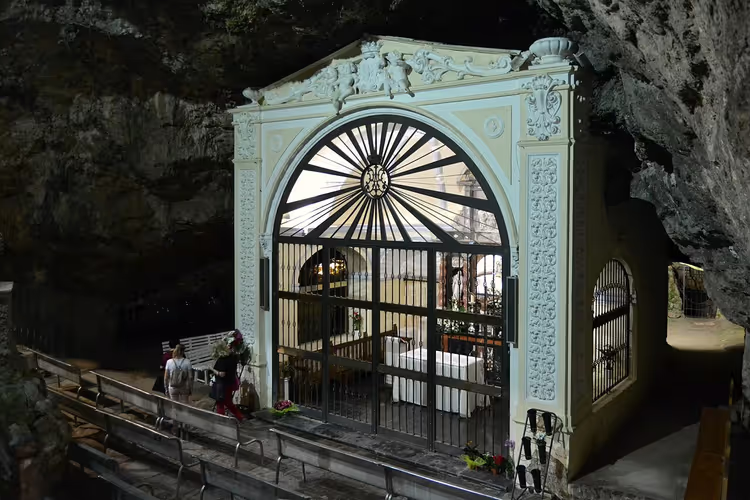
The trip starts with a climb into the mountains to the Holy Cave. According to tradition, an image of the Virgin Mary was found here in the 16th century, and the cave became a pilgrimage site. It sits at an altitude of about eight hundred meters, with a chapel built nearby.
 © Joanbanjo · CC BY-SAPhoto: Joanbanjo, CC BY-SA (https://creativecommons.org/licenses/by-sa/3.0), Wikimedia Commons
The ascent to the cave follows a forest trail within the natural park. You cover this section on foot, so the route is not suitable for people with limited mobility.
 © Joanbanjo · CC BY-SAPhoto: Joanbanjo, CC BY-SA (https://creativecommons.org/licenses/by-sa/4.0), Wikimedia Commons
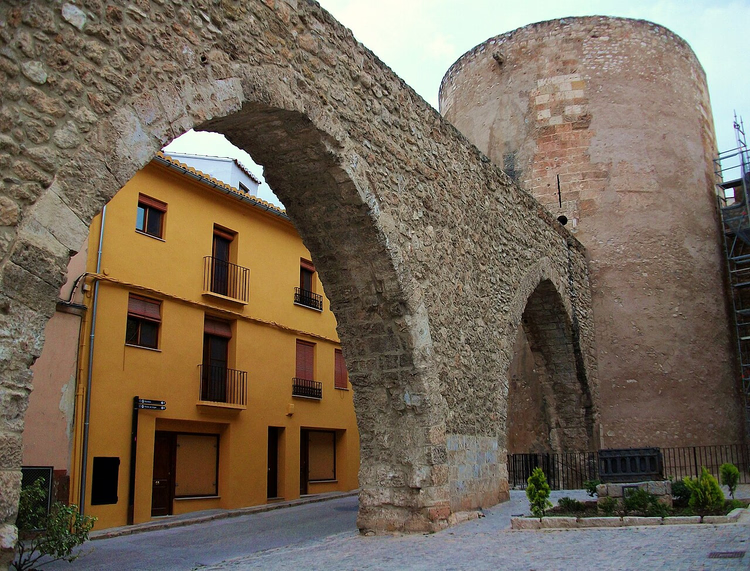
The second part of the day is the town of Segorbe. It has preserved medieval gates, a Gothic cathedral, and a citadel known as the "Star Fortress." A separate highlight is the round Torre de la Cárcel, a former city prison about twenty meters high.
In Segorbe it's worth visiting the Olive Oil Museum, and outside the town you'll find a fountain with fifty spouts, one for each province of Spain. Local festivals and bull runs take place here.
- The catch: part of the route follows a mountain trail, so you need shoes with non-slip soles.
6. Blind wine tasting in the Eixample district
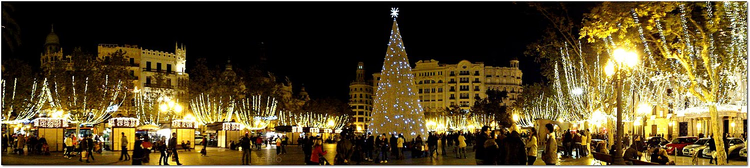
You can't understand Spain without wine, and Valencia has a dedicated format for that. You walk through Eixample, an upscale part of the city with the Gran Vía and Russafa quarters, and taste wines blind.
The idea is to identify the drink without the label. You get four glasses, write your rating on a sheet, and compare the varieties. A cheese tasting is included in the price.
 © Sento · CC BYPhoto: Sento, CC BY (https://creativecommons.org/licenses/by/2.0), Wikimedia Commons
It all takes place at four stops: a café at the Colón market, a Spanish bodega, a cheese restaurant, and a Basque tavern. At the last one you'll be poured Txakoli, a light Basque wine that is rarely exported outside the region.
Payment is per group, and the number of participants is limited. If there are more than five of you, the price per person is usually lower.
- The catch: you walk between the four stops through the district.
7. A Roman aqueduct among the cliffs
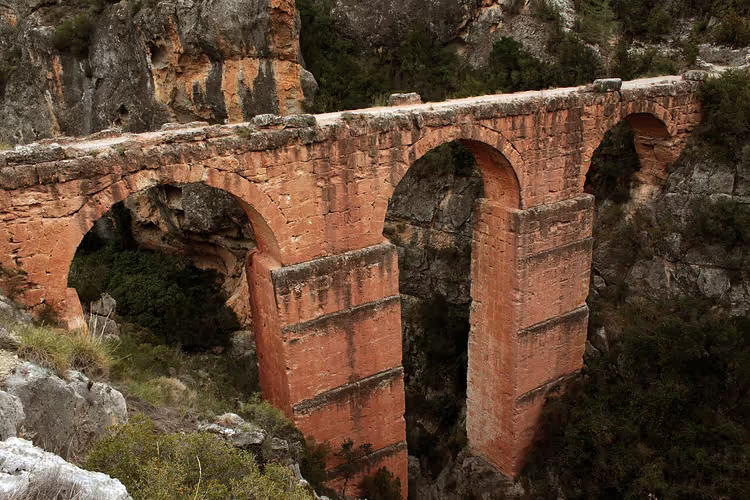
The Romans founded Valencia and left behind a system of water channels. One of the aqueducts, the fourth largest in Spain, runs among the cliffs in the Peña Cortada gorge.
The route takes about five hours. You walk along a trail beside the 1st to 2nd century aqueduct, which was built from the dam on the Tuéjar River. The total length of the surviving section is about thirty kilometers, but only a portion is covered on foot.
 © Falconaumanni · CC BY-SAPhoto: Falconaumanni, CC BY-SA (https://creativecommons.org/licenses/by-sa/3.0), Wikimedia Commons
The trail is unpaved, of moderate difficulty, with rest areas and panoramic views. The walking section is about eight kilometers long, with a maximum elevation of about four hundred meters.
The hike is scheduled on days without rain or intense sun. On the exposed rock there is almost no shade, so you'll want water and a hat.
- The catch: the trail is unpaved, and part of the group gets tired by the halfway point.
8. The underground river in the Coves de Sant Josep
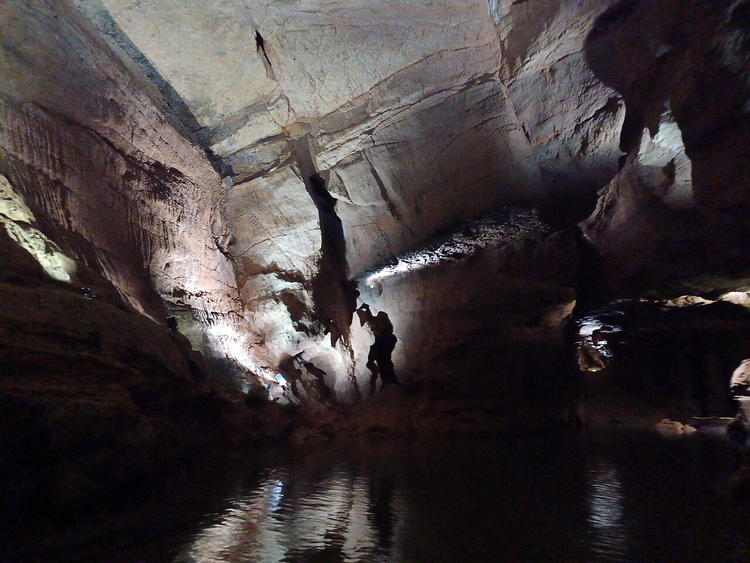
The Coves de Sant Josep are located in La Vall d'Uixó, in the province of Castellón. Inside flows the longest navigable underground river in Europe.
The road to them runs along the Costa del Azahar. Along the way you see mountains, the sea, and orange groves.
 © Simon Burchell · CC BY-SAPhoto: Simon Burchell, CC BY-SA (https://creativecommons.org/licenses/by-sa/4.0), Wikimedia Commons
Inside the cave you board a boat, and part of the route is walked through a gallery. The lighting is installed with minimal impact on the rock, and the water level is maintained. In the Dry Gallery, unusual stone formations are shown, such as the "stone crocodile."
The exact length of the underground river is still unknown; some passages are closed to visitors and are being studied by specialists.
- Tickets: adult €18, child aged three to twelve €12 (as of 09/2026, official website).
- The catch: cave admission is paid separately from the tour.
9. Guadalest fortress and the Algar waterfalls
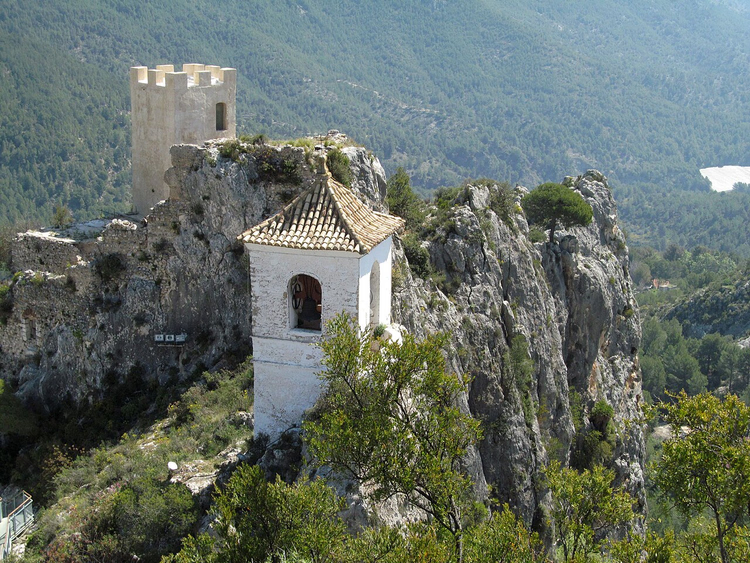
Guadalest is a fortress town in the mountains of Alicante province. The only road in passes through a tunnel cut into the rock. Guadalest consistently ranks among the most visited fortresses in Spain.
 © Huguette Dion · CC BY-SAPhoto: Huguette Dion, CC BY-SA (https://creativecommons.org/licenses/by-sa/3.0/es/deed.en), Wikimedia Commons
Nearby are the Algar waterfalls (Fonts de l'Algar) in Callosa d'en Sarrià. These are natural springs with cascades and bathing pools in a wooded gorge. Admission is paid; check the current price on the official website.
The trip takes a full day, and part of the route runs along winding mountain roads. Farther up in the mountains there are viewpoints overlooking the valley.
- The catch: the drive into the mountains takes almost the whole day, so plan ahead if you're traveling with children.
10. Spanish in three hours of walking
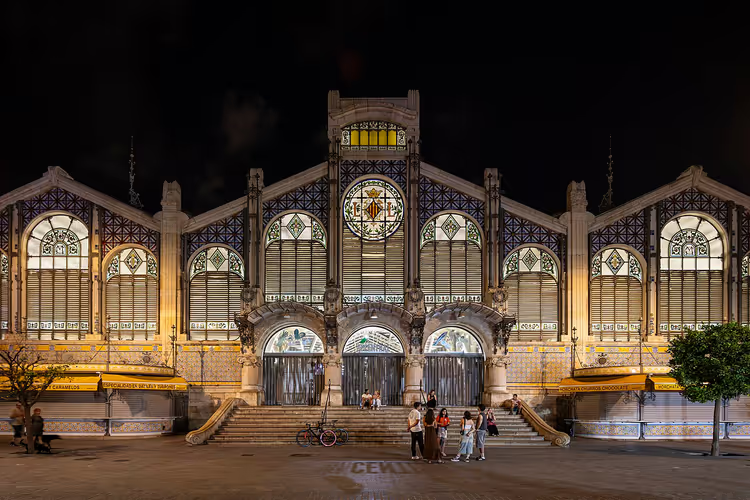
This is a walk through the city center with a language focus. You meet at the bullring, then head to the Cathedral, the Central Market, the Silk Exchange, and the City Hall square.
The guide tells the history of these places while teaching you simple Spanish phrases. By the end of the walk, you'll be able to ask for directions, order a coffee, and understand a shopkeeper's answer.
 © Rafa Esteve · CC BY-SAPhoto: Rafa Esteve, CC BY-SA (https://creativecommons.org/licenses/by-sa/4.0), Wikimedia Commons
Each participant receives a phrase cheat sheet that's handy for future trips. A separate part is a talk about regions: the guide explains how Basque, Aragonese, and Catalan differ.
The walk lasts about three hours, and payment is per group.
- Who it's for: first-time visitors to Spain who want to speak, not just look.
- The catch: this is an introduction to phrases, not a full language course.
11. Cuenca's "hanging houses" and the Enchanted City
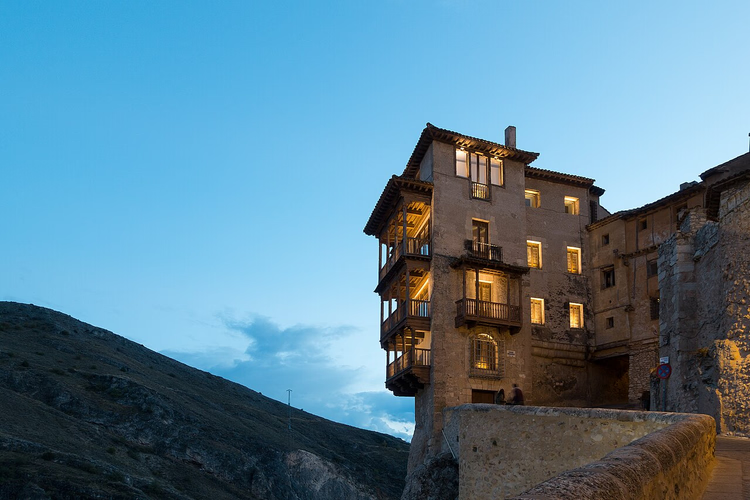
Cuenca is about two hundred kilometers from Valencia, so the trip takes a full day. The city was built among cliffs, and its "hanging houses" (Casas Colgadas) cling directly over the edge of the Huécar gorge.
The second stop is the Enchanted City (Ciudad Encantada). Limestone rock has weathered into shapes resembling animals and faces, with a walking route laid out through them.
 © Edmundo Sáez · CC BY-SAPhoto: Edmundo Sáez, CC BY-SA (https://creativecommons.org/licenses/by-sa/4.0), Wikimedia Commons
Cuenca is tied to the name of Don Quixote: these are the places where Cervantes' hero is believed to have walked. A local legend tells of a Spaniard's love for a green-eyed foreign woman.
The drive is long, but in one day you can see both the town and the nearby natural park.
- The catch: you'll spend several hours on the road, and the trip is tiring for small children.
12. Peñíscola and the Templar castle
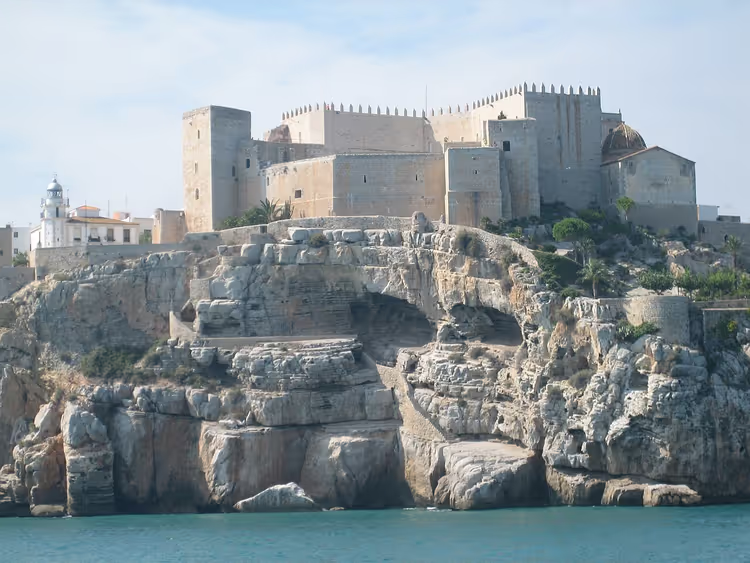
Peñíscola stands on a rocky headland above the sea. The castle at the top was built on the site of a Phoenician fortress, and in the 13th century it was taken over by the Templars. Later Pope Benedict XIII lived here, which is why the fortress is called the Castle of Pope Luna.
Legends surround the castle: some search its dungeons for the Imperial Codex, others speak of a place of power. You enter through the Fosc gate and climb stone steps to the walls and the viewing platform.
 © Millars · CC BY-SAPhoto: Millars, CC BY-SA (https://creativecommons.org/licenses/by-sa/3.0/es/deed.en), Wikimedia Commons
Along the way, the guide tells you about El Cid, whose campaigns are connected with this region. The trip takes almost a full day, and castle admission is paid separately.
- The catch: almost the whole day is spent on the road and on your feet.
13. Valencia in one day by car
A format for those just passing through. On a short guided tour, you cover the essentials: the historic center with the cathedral and medieval towers, the Central Market, and the City of Arts and Sciences.
A second option is a tour with lunch, where you have time to drive through the city's neighborhoods and old streets. You can set the list of places yourself, and the route is tailored to your interests.

You travel by car, get out at points of interest, and listen to stories about the city. In a day you get a complete picture of Valencia, even if you're here for just 24 hours.
Book a Valencia sightseeing car tour on GetYourGuide.
- Duration: the short option is about two and a half hours; the full day includes lunch.
- The catch: on the short option, you see part of the city from the car window.
14. Pirates, paella, and Lake Albufera
About forty kilometers from Valencia lies Cullera, a coastal resort with Blue Flag beaches. The town is tied to the story of the Turkish pirate Dragut, who captured it and set up base in a local cave.
Today the cave houses a Pirate Museum with weapons, navigational instruments, and old maps.
 © Enrique Íñiguez Rodríguez ( Qoan ) · CC BY-SAPhoto: Enrique Íñiguez Rodríguez ( Qoan ), CC BY-SA (https://creativecommons.org/licenses/by-sa/3.0), Wikimedia Commons
Next you head to the village of El Palmar, considered the birthplace of paella. Here it is cooked over a wood fire using old recipes, with rice, meat, seafood, and cuttlefish ink. The hosts also offer the local dish all i pebre with eel from the lake.
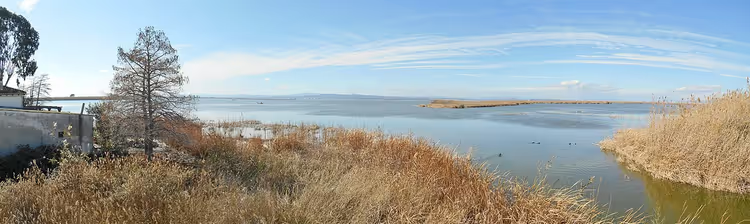
The finale is Lake Albufera, the largest freshwater lake in Spain. You can take a boat ride on it, and the Romans called it the "Mother-of-Pearl Pond." The whole trip takes about five hours.
- Who it's for: those who want to combine the sea, food, and nature in one day.
- The catch: part of the time is spent traveling between Cullera, the village, and the lake.
15. All of Valencia by car in half a day
A guided sightseeing tour by car is a good way to get acquainted with the city without a lot of walking. The route is built around your interests, with stops at key points. This format differs from the trip in item 13 in duration: four hours instead of two and a half or a full day.
In four hours you drive through Valencia's main neighborhoods and see the city from different angles. The program is flexible, and you agree on the list of places when you meet.

For a large group there is an option with a minivan or bus, in which case payment is calculated per vehicle. This format is convenient if you are traveling with a group or family.
- The catch: you see some sights from the window, without going inside.
16. Teruel and Albarracin: Mudéjar heritage
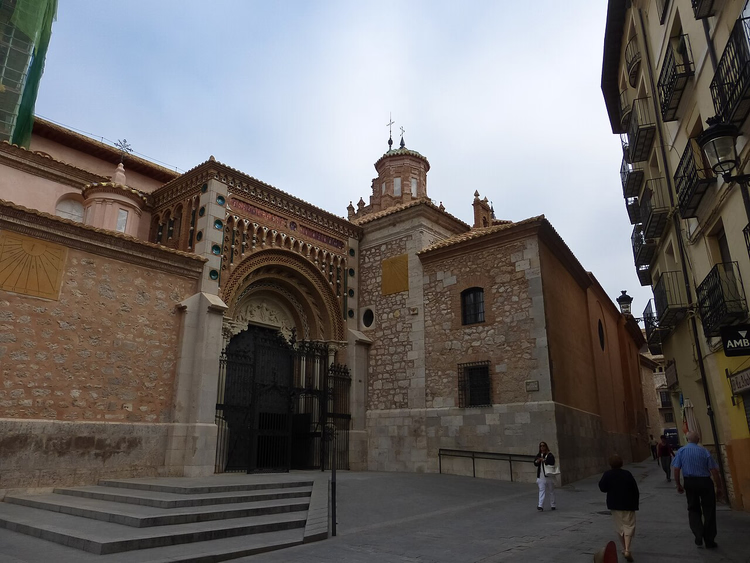
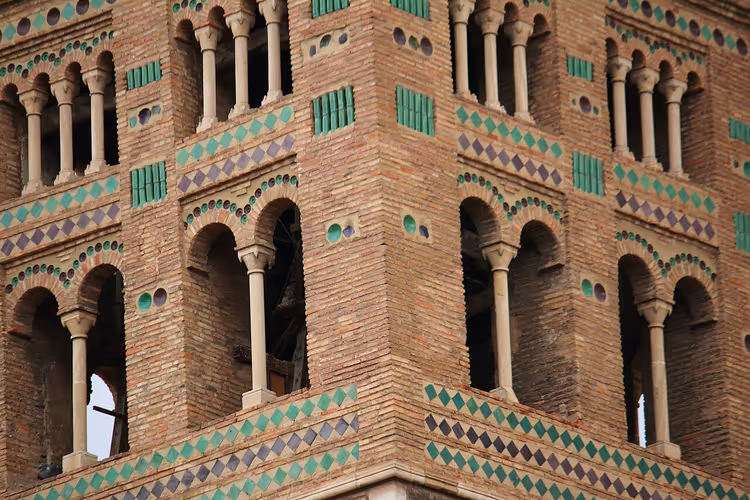
The trip to Aragon takes a full day, but it shows a different Spain. Teruel is known for its Mudéjar-style towers, which blend Moorish and Christian elements. Five towers have survived and are considered the city's calling card.
 © D.Rovchak · CC BY-SAPhoto: D.Rovchak, CC BY-SA (https://creativecommons.org/licenses/by-sa/4.0), Wikimedia Commons
The Church of San Pedro houses the tombs of Juan and Isabel, the lovers from a local legend. The church's bell tower is considered the oldest example of Mudéjar architecture in the region.
 © FrDr · CC BY-SAPhoto: FrDr, CC BY-SA (https://creativecommons.org/licenses/by-sa/4.0), Wikimedia Commons
Next you head to Albarracin. There are no modern buildings here, only old houses above the gorge, and some streets run right along the rocks. The town is called "pink" because of the color of its stone.
Lunch usually takes place at a restaurant housed in a historic building.
- The catch: the drive to Aragon is long, and the trip is designed for a full day.
17. Gastronomic trip to Requena
Requena is a wine region west of Valencia. It produces red wines and Spanish sparkling cava, and the local cuisine has preserved old recipes.
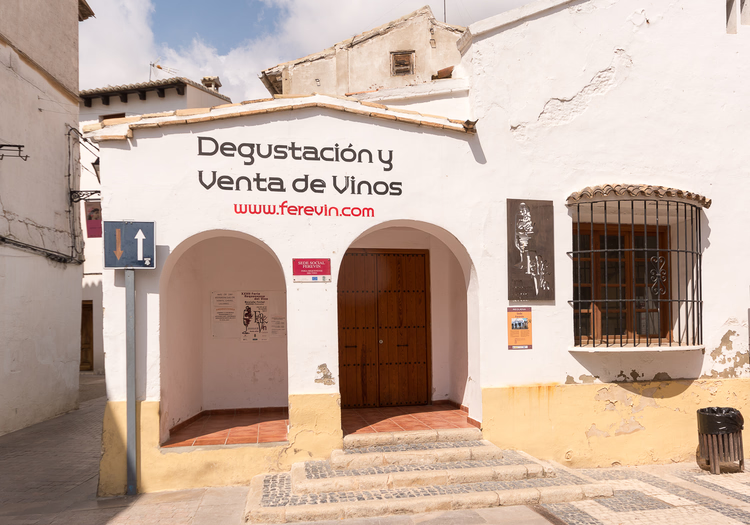
You go to a private winery, descend into the cellars, and see how wine is made. Then you walk through the vineyards and taste grapes straight from the vines.
 © StellarD · CC BY-SAPhoto: StellarD, CC BY-SA (https://creativecommons.org/licenses/by-sa/4.0), Wikimedia Commons
The tasting usually comes with snacks, and some of the dishes are made according to recipes that have not changed in the region for centuries. This format suits those who want to try the local cuisine, not just see the city.
- The catch: after the tasting it is best not to drive, so take a guided tour.
Tours and tickets in Valencia
Guided tours, skip-the-line tickets and activities — most offers can be cancelled free of charge.
See offers on GetYourGuideThe widget loads once you give your consent.
⁉️🤔 Frequently asked questions
Can you see old Valencia on foot in one day?
Yes. The historic center is compact: from the Cathedral to the Central Market and the Silk Exchange you can walk in half a day. A guide adds context and helps with tickets, and you don't need a car inside the old town. Arrive in the morning to beat the heat.
How much does entry to the Cathedral and the Miguelete cost?
A cultural visit to the cathedral with the museum costs 12 €, a reduced ticket is 6 €, and a family package is 22 €. Climbing the Miguelete is paid separately, 3 €. The ticket includes an audio guide in ten languages (as of 09/2026, cathedral website).
What should I bring to the caves and waterfalls?
Comfortable shoes with non-slip soles, water, and a light jacket. The San José caves are cool and damp, and the rocks at the Algar waterfalls are wet. In summer, a swimsuit comes in handy at Algar, and in the mountains you'll need a sun hat.
When is the best time to go to Albufera and the waterfalls?
In spring and early fall: fewer people and milder weather. In summer, the Algar waterfalls get crowded, and the rice fields around Albufera are hot. Boat rides on the lake run year-round, but the schedule depends on the weather.
Are these tours suitable for children?
Some routes are designed for adults, but there are also family-friendly formats. The "Catch the Dragon" quest is built around tasks and works well for children. For the caves and waterfalls, bring comfortable shoes, and kids may get tired on the long trips to Teruel or Cuenca.
In short: what's worth booking
If you only have one day, take the walking tour of the center. With children, choose the quest, and for nature head to the San José caves or the Algar waterfalls. Food lovers will enjoy the blind tasting and the Requena wineries.
If you have... | Take |
|---|---|
one day and a walking route | a sightseeing walk through the historic center |
children | the "Catch the Dragon" quest |
a car and a free day | the City of Arts and Sciences with the Turia riverbed |
heat and the sea | Albufera with paella in El Palmar |
gastronomy | a blind tasting or the Requena wineries |
mountains and nature | the San José caves and the Algar waterfalls |
For the full list of Valencia tours with reviews, see GetYourGuide: choose a city tour.

A small editorial team writing guides for independent travel. We travel ourselves, but we haven’t been everywhere, so we check prices, opening hours and how to get there against official sources.