
















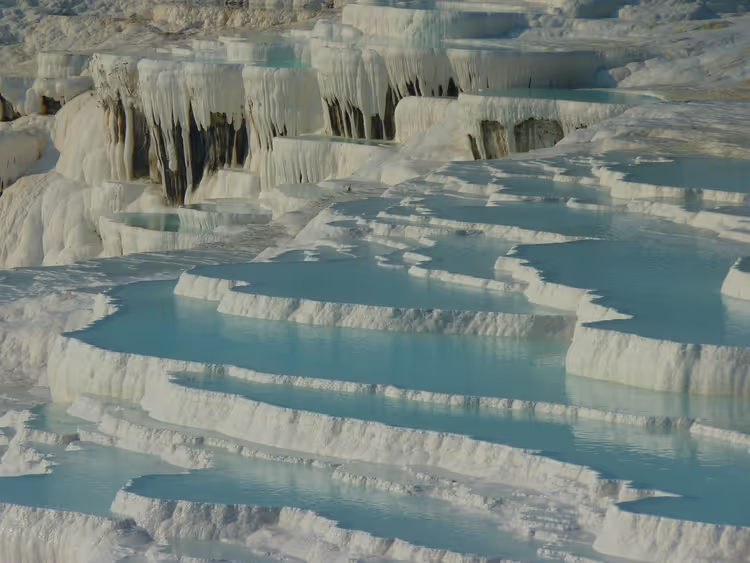
15 Thermal springs of Turkey: where to swim and what they treat
Thermal springs of Turkey are far less known than its beaches. And that's a shame. Hot mineral water rises from the ground in Denizli, Izmir, Bursa, and on the Black Sea coast. People drink it here, bathe in it, and use it to treat skin, joints, and blood vessels.
The problem is something else. Some bathhouses are closed for renovation, schedules change, and old guidebooks haven't been updated in years. Current entrance prices are published on the official website of Turkey's museums.
Below are 15 verified thermal resorts in Turkey. For each one we give the water temperature, composition, what makes the place special, and the main catch. Prices, opening hours, and addresses were checked against official resort websites and tourism boards (as of 09/2026).
How to choose a thermal resort
💡 In short:
- Define your goal: choose the Aegean coast for terraces and ancient cities, inland Anatolia for treating skin and joints.
- Bring a swimsuit, towel, and rubber slippers: many resorts charge for rentals.
- Come in the morning: in outdoor pools the water is softer and there are fewer people.
- Prices and opening hours: 09/2026, verified on official resort websites and the museum portal.
If you need | Resort | Why |
|---|---|---|
First introduction to thermal springs | Pamukkale | white terraces, ancient Hierapolis, and Cleopatra's Pool in one place |
Skin treatment | Kangal | selenium in the water and Garra rufa fish |
Thermal springs in a big city | Bursa | Çekirge springs right within the city limits |
Mountain air and nature | Ayder | a plateau in Rize, water flows into the Black Sea |
Radon baths | Sultaniye | high radon content and warm water year-round |
Sanatorium treatment | Balçova | sanatorium programs and medical laboratories |
1. Pamukkale
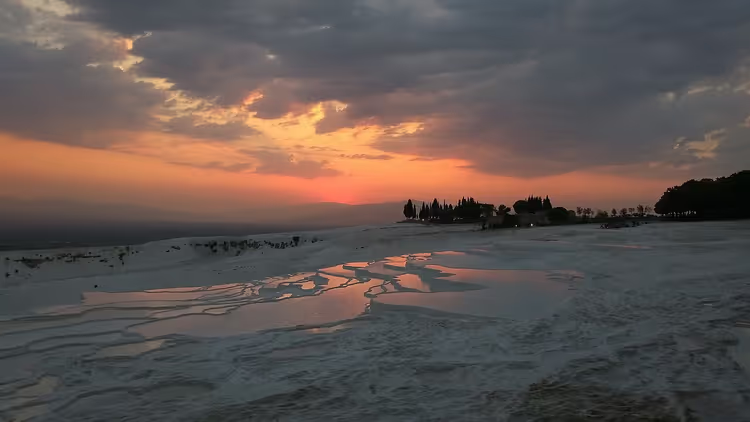 © Filmgramer · CC BY-SAPhoto: Filmgramer, CC BY-SA (https://creativecommons.org/licenses/by-sa/4.0), Wikimedia Commons
The healing springs were found by the Greeks in the 2nd century BC. The city of Hierapolis grew up next to them. After an earthquake, the water changed its course, and a depression formed that was named Cleopatra's Pool. For centuries, mineral water flowed down the hillside ledges, leaving a snowy deposit and creating the white terraces.
Today Pamukkale has more than 20 springs with temperatures from 36 to 100 °C. The water is saturated with calcium carbonate, so it settles as a white deposit and colors the bottom of the streams. Tourists walk on the terraces, where the water is shallow, or bathe in Cleopatra's Pool. Water from some of the springs can be drunk, but first check which conditions it is beneficial for.
The ticket is a single one: you can see the terraces and ancient Hierapolis for 30 € (as of 09/2026, Pamukkale tickets online). Bathing in Cleopatra's thermal pool is paid separately.
- How to get there: the resort is near Denizli, and from there a bus or a rental car takes you the rest of the way.
- Who it's for: those who want to combine thermal water with an ancient city.
- The catch: it's windy on the terraces, so bring sunglasses, a hat, and a bottle of water.
2. Denizli
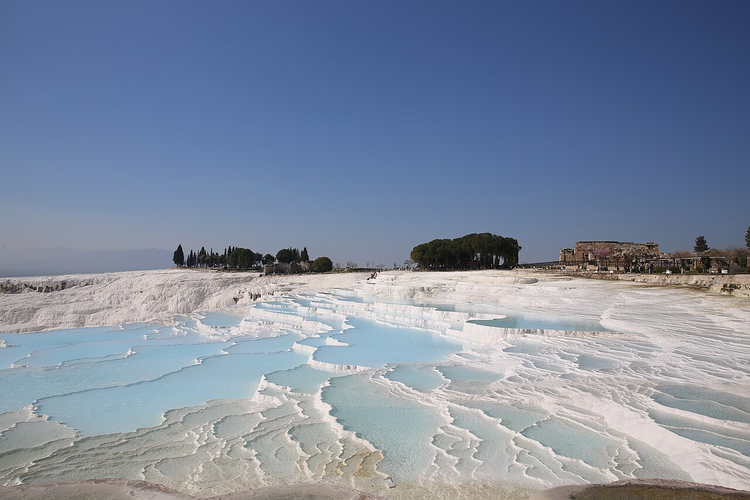 © Biologg · CC BY-SAPhoto: Biologg, CC BY-SA (https://creativecommons.org/licenses/by-sa/4.0), Wikimedia Commons
Pamukkale is the most famous here, but not the only one. Less recognizable springs operate nearby, and some of them are just as beneficial.
Near the village of Sarayköy there are the thermal complexes Ortakçı Ilıcası and İnaltı. The water in both contains a lot of sulfur, so they treat skin conditions and the musculoskeletal system here. İnaltı is so hot that it's called a hammam. Near the village of Kabaağaç, the Kabaağaç spring operates, and its water is used for digestive disorders. Tepekey near the village of Teke combines sulfur with a high concentration of soda, and the outlet temperature exceeds 90 °C, so the water is cooled. The Yenice baths maintain a comfortable 40-50 °C and help with skin, gastrointestinal, and vascular conditions.
- How to get there: the springs are scattered around the area, so a rental car or public transport from Denizli is most convenient.
- Who it's for: those who are following a doctor's prescription and are willing to switch between bathhouses.
- The catch: the springs are far apart, so you can't visit them all in one day.
3. Karahayit
 © Nihat1988 · CC BYPhoto: Nihat1988, CC BY (https://creativecommons.org/licenses/by/3.0), Wikimedia Commons
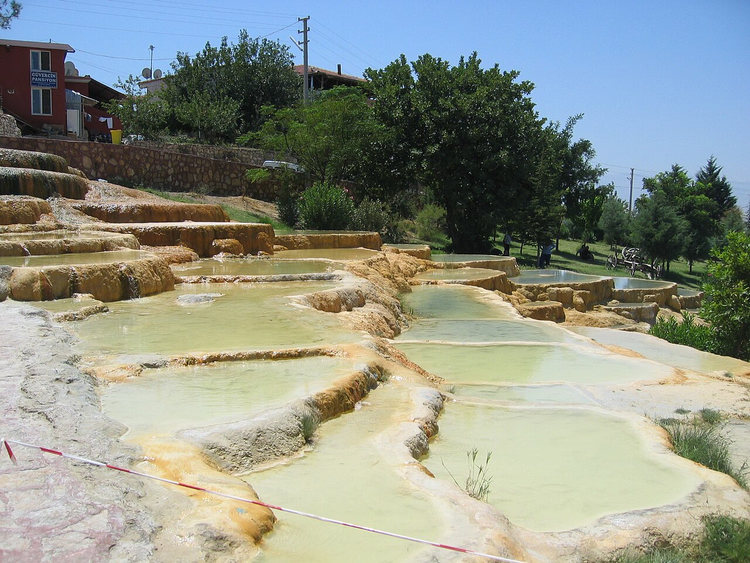
Locals have valued Karahayit for a long time, but tourists barely know about it. Iron salts predominate in the water, hence the brownish-yellow tint. The water bursts out of the ground as a fountain or collects in pools. There are 5 springs in total.
At the spring outlets the water is heated to about 60 °C, and it cools down in the pools. The ferruginous water has no unpleasant smell. You can drink it, but from the drinking fountains, not from the baths, and each one indicates for which conditions and how treatment is recommended. The surrounding park is well maintained: flower beds, trees, benches. Nearby there are hotels for those who want to extend their treatments.
- Who it's for: those looking for a quiet place without large groups.
- The catch: the water at the spring outlets is about 60 °C, so it's better to keep your dips in the pool short.
4. Kızılcahamam
 © Pivox · CC BY-SAPhoto: Pivox, CC BY-SA (https://creativecommons.org/licenses/by-sa/4.0), Wikimedia Commons
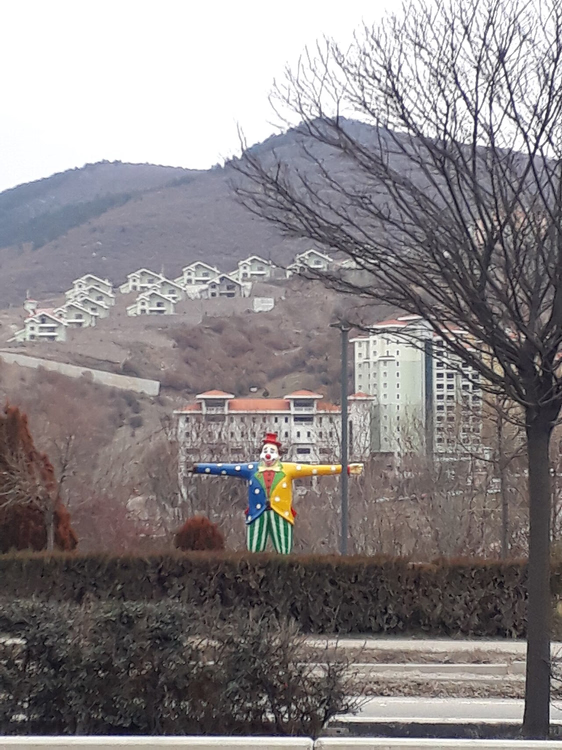
The ancient Romans already received treatment here: they noticed the healing properties of the water near the highest mountains. Today Kızılcahamam is a popular resort not far from Ankara, where people come both for treatment and for spa.
The resort produces four types of water, and each has its own purpose. The water helps with arthritis, osteochondrosis, psoriasis and women's health conditions. You can stay in hotels right by the springs or in one of the nearby villages. Here the water is drunk, bathed in, or used for treatments. The history and list of services of the resort are confirmed by the Kızılcahamam administration (as of 09/2026).
- How to get there: a short drive from Ankara by car or a regular bus.
- The catch: the pools have men's and women's days, so you'll need to plan your visit in advance.
5. Balçova
 © Ziegler175 · CC BY-SAPhoto: Ziegler175, CC BY-SA (https://creativecommons.org/licenses/by-sa/3.0), Wikimedia Commons
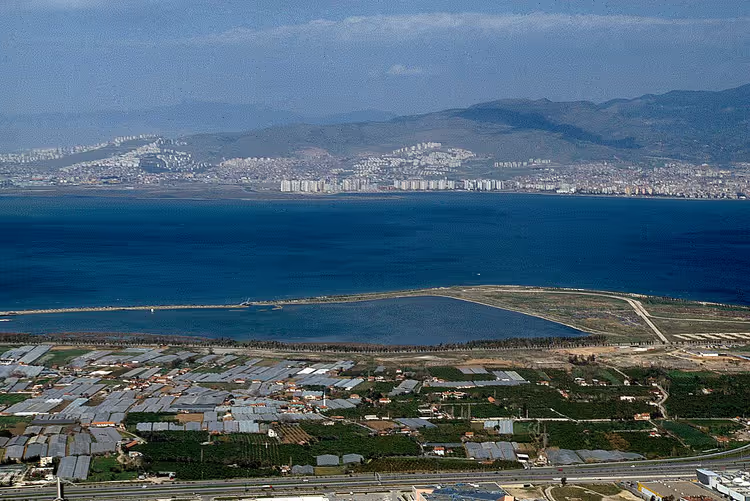
The water temperature at the outlets of the Balçova springs ranges from 60 to 80 °C. Mineralization is high, so the water is used for treatment rather than for long bathing.
The resort's history goes back to myths: the healing properties of the springs were known as far back as the time of King Agamemnon. Today you'll be offered spa treatments, therapeutic baths, massage and full sanatorium treatment. There are 10 medical laboratories and a psychological relaxation room on site.
- Who it's for: those coming for a full course of sanatorium treatment.
- The catch: high mineralization requires short dips.
6. Sultaniye
 © rob Stoeltje from loenen, netherlands · CC BYPhoto: rob Stoeltje from loenen, netherlands, CC BY (https://creativecommons.org/licenses/by/2.0), Wikimedia Commons
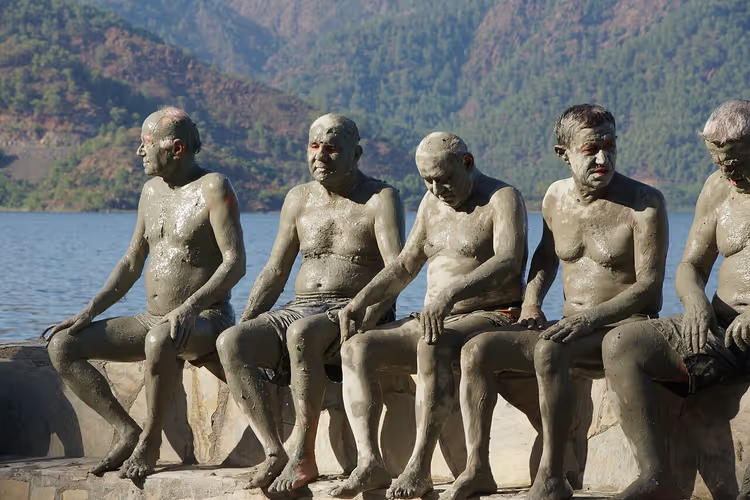
The place has been benefiting people since the 1st century BC. According to legend, Cleopatra, queen of Egypt, bathed in the natural baths, which is why the hollows were named Cleopatra's baths. The spring temperature stays at 39 °C all year round.
Sultaniye's main advantage is its high radon content. Besides radon, the water contains a lot of sulfur, hence the distinctive smell, and calcium chloride. It is used to treat the musculoskeletal system and for rejuvenating treatments. Near the spring there are therapeutic muds: they are applied to the body and used for therapeutic massage.
- Who it's for: those who need radon baths and mud wraps.
- The catch: the water smells of sulfur, and the smell is noticeable around the site too.
7. Ayder
 © Alexkom000 · CC BYPhoto: Alexkom000, CC BY (https://creativecommons.org/licenses/by/4.0), Wikimedia Commons
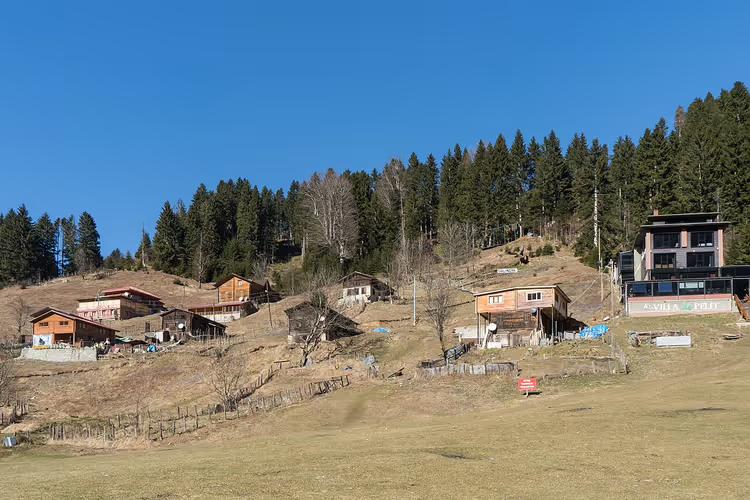
The healing climate of the Ayder plateau was appreciated as early as 1300 by the first settlers. But the therapeutic effect of the springs was only noticed in 1987, when scientists from Karadeniz University tested samples and found elevated levels of sodium sulfate. From that point on, Ayder began to develop as a balneological resort.
The water temperature is about 55 °C (as of 09/2026, Rize Province Directorate of Culture and Tourism). Hot water bursts out of the ground, flows through forests and meadows, collects in natural pools and flows into the Black Sea already cooled. The area is called Alpine Turkey. The chemical activity of the springs requires caution.
- How to get there: the resort lies in Rize Province, and the ascent starts from the Black Sea coast.
- The catch: treatments are recommended to be alternated with walks; you shouldn't sit in the water for long.
8. Erzurum
 © Dosseman · CC BY-SAPhoto: Dosseman, CC BY-SA (https://creativecommons.org/licenses/by-sa/4.0), Wikimedia Commons
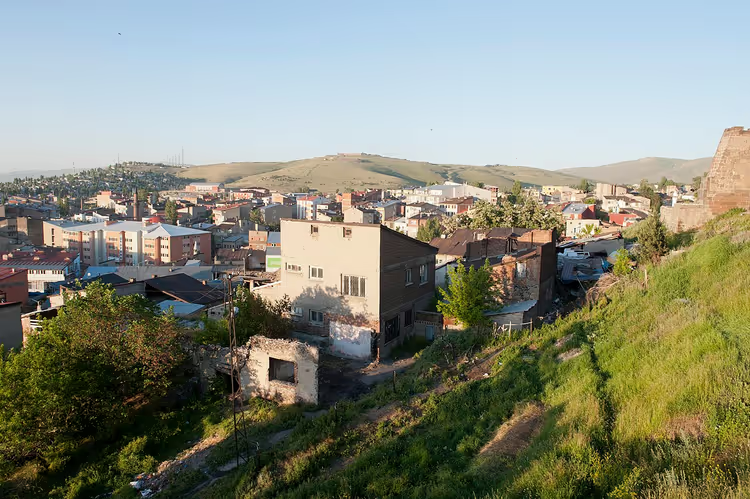
The Erzurum resort has several types of springs. In Akdag, all the baths are open-air, so men come here more often; healing sulfur mud lies nearby. The Helink, Meman, Gelingeldi and Asboğa springs stay hot, and these are the ones most often used for bathing. Çorak and Süngerci are drinking springs. Another one, Erzurum Maden Suyu, is located near the tomb of Abdurrahman Gazi and is easy to reach.
The resort treats skin conditions as well as liver and kidney diseases. Tourists mostly come here in summer.
- Who it's for: those willing to switch bathhouses to try different types of water.
- The catch: some baths are open-air, so bathing is uncomfortable in cool weather.
9. Çekirge
 © Carl Ha · CC BY-SAPhoto: Carl Ha, CC BY-SA (https://creativecommons.org/licenses/by-sa/4.0), Wikimedia Commons
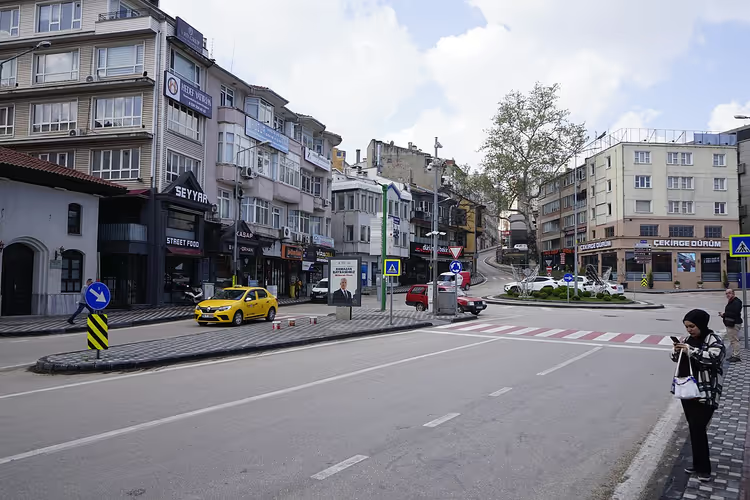
Çekirge is the thermal district of Bursa. The province's springs stretch from the Sea of Marmara to the Uludağ highlands, and the climate shifts from warm, humid maritime to harsh, sharply continental. There are a great many springs, and each one has comfortable hotels nearby.
Water properties vary by location, but there is no radical difference. Besides the city thermal baths, the province is home to Gemlik Kaplıcası, known since Byzantine times, the Adliye Köyü İçmesi drinking spring, the odorless Sodağı Köyü Kaplıcası, and Ağaçhisar Köyü Ilıcası with healing mud.
- Who it's for: those who want to combine a resort stay with Bursa's urban infrastructure.
- The catch: the springs are spread over a large area, and some are inaccessible without a car.
10. Bursa
 © Mustafa DUMAN · CC BYPhoto: Mustafa DUMAN, CC BY (https://creativecommons.org/licenses/by/3.0), Wikimedia Commons
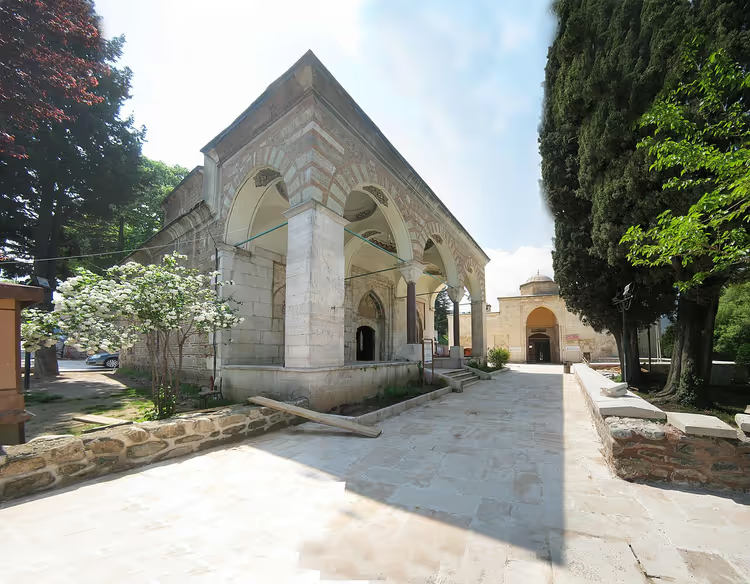
Bursa is a city that contains the Çekirge thermal district within its limits. The climate here is mild and humid, influenced by the proximity of the Sea of Marmara. Hot springs were first used for treatment back in Byzantine times, and under the Ottomans the tradition of building baths over warm springs continued. Reconstructed thermal baths can be seen today at the Karavansaray hotel.
The water composition at Bursa's main springs is almost identical, with only minor differences. Tourists most often head to Eski Kaplıca, the oldest geothermal resort with cool and hot zones, restored in 1988. Next comes Karamustafa Paşa Kaplıcaları with radioactive water, Kaynarca at an altitude of 160 m, whose first pools were built 1,680 years ago, Yeni Kaplıca with highly mineralized sulfur water, Dümbüldek with low mineralization, and Oylat, whose springs have been used for more than two thousand years.
Bursa has many hotels where guests stay during treatment.
- Who it's for: those who want treatment in a city rather than far from civilization.
- The catch: the popular central thermal baths get crowded, so it is calmer to arrive at opening time.
11. Kangal
 © Bertramz · CC BY-SAPhoto: Bertramz, CC BY-SA (https://creativecommons.org/licenses/by-sa/3.0), Wikimedia Commons
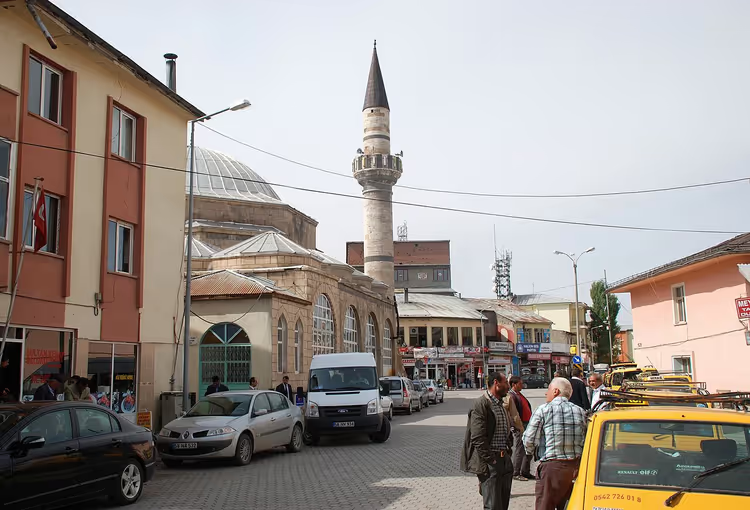
The healing water deposit was found in 1800, but it was only put to use starting in 1981. Kangal is a high-altitude resort at 1,650 m, and the sun shines here 280 days a year.
The resort specializes in skin conditions. The water has a high concentration of selenium (1.3 mg/l), plus magnesium and zinc, and the temperature exceeds 37 °C. An additional effect comes from Garra rufa fish: they live in the hot water and gently clean affected areas. The largest influx of patients comes in spring, when skin diseases flare up.
- Who it's for: those treating psoriasis and other skin conditions.
- The catch: in the spring high season, the resort has many patients.
12. Yalova
 © Annikat53 · CC BY-SAPhoto: Annikat53, CC BY-SA (https://creativecommons.org/licenses/by-sa/3.0), Wikimedia Commons
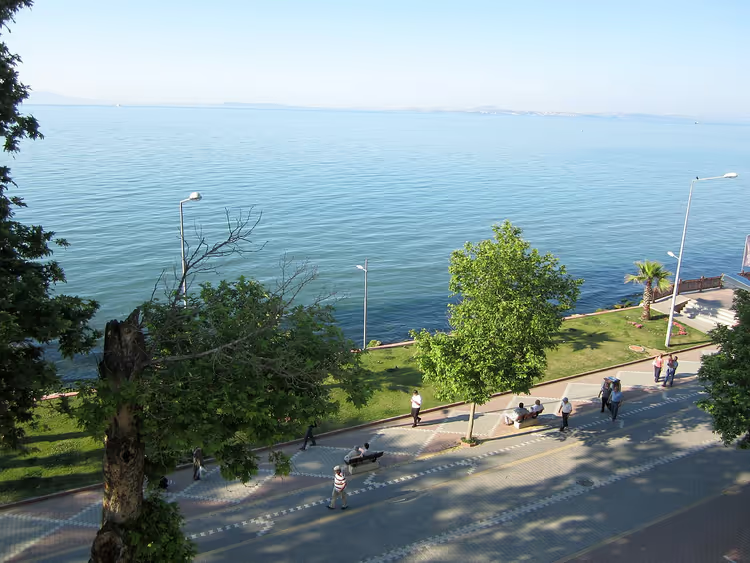
The resort belongs to Turkey's Ministry of Health, and private health facilities with their own thermal pools operate nearby. The springs were used as far back as Byzantine times, but after the Ottomans arrived they were forgotten, and people traveled to Bursa for treatment. The springs came back into use in the early 20th century, and the resort's rise is tied to Atatürk.
Besides the main thermal treatments, guests are offered massage, manual therapy sessions, acupuncture and paraffin wraps.
- Who it's for: those who need a combination of treatment and medical procedures.
- The catch: many private health facilities with varying service levels sit next to the state resort, so choose in advance.
13. Bolu
 © Dosseman · CC BY-SAPhoto: Dosseman, CC BY-SA (https://creativecommons.org/licenses/by-sa/4.0), Wikimedia Commons
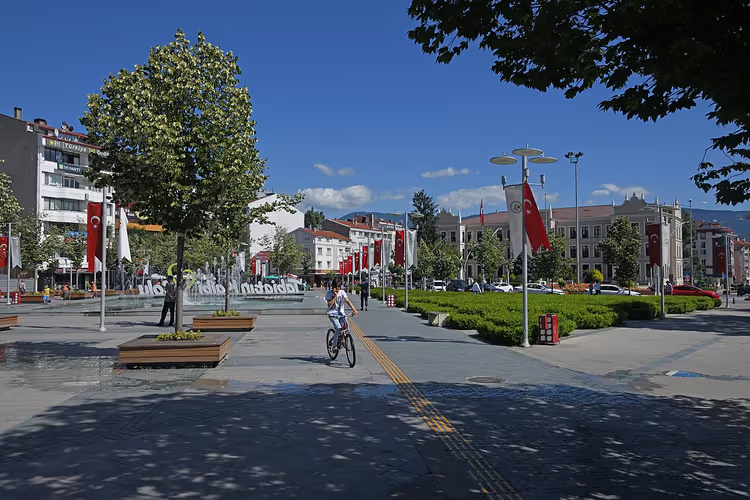
These springs lie in the foothills of the Ala range. The water temperature is comfortable for people: about 40 °C. The beneficial properties come from the water's composition. Treatment here is built around baths, inhalation and drinking the water.
The spring water helps with conditions of the urogenital system, kidneys, liver and gallbladder. Bolu is a pleasant place to relax: the area is scenic, and the air is clean and fresh. The district contains two national parks, the Seven Lakes park and Lake Abant park. Tourists interested in history should see the remains of buildings from Byzantine and Ottoman times.
- Who it's for: those who want to combine treatment with walks in national parks.
- The catch: some of the district's points of interest are reachable only by car.
14. Afyon
 © Bluetime93 · CC BY-SAPhoto: Bluetime93, CC BY-SA (https://creativecommons.org/licenses/by-sa/4.0), Wikimedia Commons
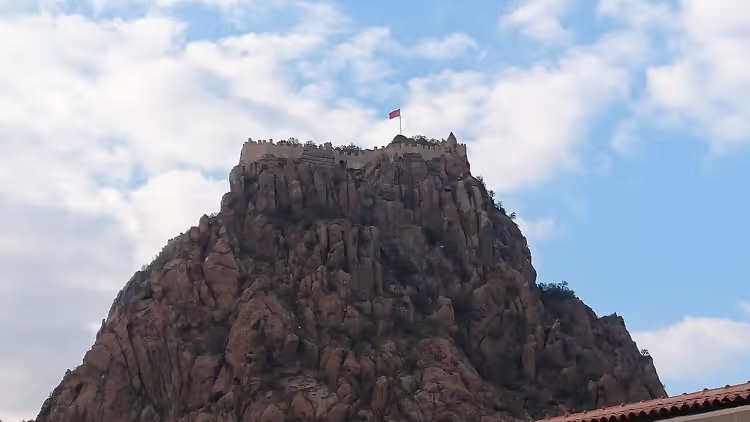
Afyon packs 7 resorts into a small area. The place is considered the balneology capital of Turkey. More than 12,000 guests can receive treatment here at the same time. The infrastructure is strong: hotels for the duration of procedures, mud therapy facilities, spas, shops, restaurants and entertainment centers.
History lovers will want to visit the hammam built in the Ottoman era: it is rented out for warm baths. The spring water is heated to between 60 and 95 °C. The resort welcomes guests year-round. A separate Physiotherapy and Rehabilitation Center treats injuries and post-surgical conditions. The Gazlıgöl baths are run by the Afyonkarahisar municipality (as of 09/2026).
- Who it's for: those who need a large resort with a full range of services.
- The catch: because of the large flow of guests in season, hotels near the springs get booked up well in advance.
15. Gönen
 © Kızıl · CC BY-SAPhoto: Kızıl, CC BY-SA (https://creativecommons.org/licenses/by-sa/4.0), Wikimedia Commons
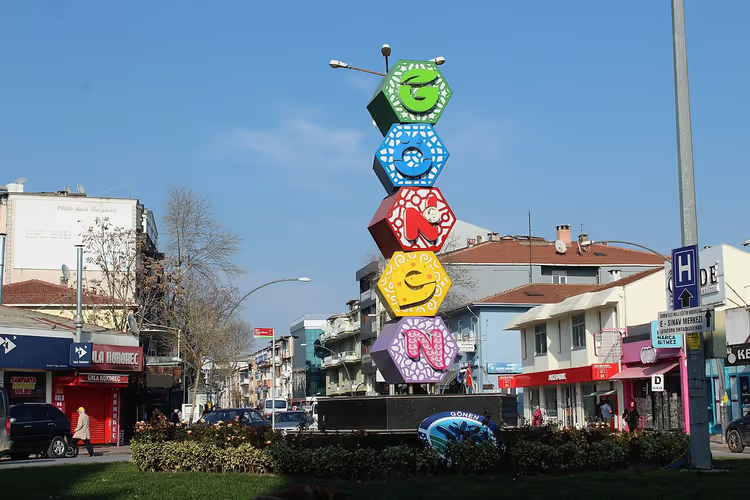
This resort sits in the valley of the Gönen River and is designed to treat more than 700 people at once. The complex is managed by the local municipality together with private investors, and the governing body monitors the quality of medical services. Gönen stands out for its exceptionally clean springs: this level of safety is hard to find not only in Turkey.
The infrastructure here is strong. Visitors can use the gym, volleyball court or tennis court, sit in the reading room, or hold a meeting in the conference hall.
- Who it's for: those who want to combine treatments with active recreation.
- The catch: the entertainment program is limited to the complex itself, and there is little to do in the evening.
Thermal springs of Turkey on the map
Before your trip, open the map and mark the springs you need. This will help you plan a route between resorts faster and see which ones are close to each other.
Thermal springs of Turkey
Places on the map
- 1Pamukkale Over 20 springs, white terraces and Cleopatra's Pool
- 2Denizli Complexes near the villages of Sarayköy, Kabaağaç and Teke
- 3Karahayit 5 springs with iron salts, pools around 60 °C
- 4Kızılcahamam Resort near Ankara, four types of water
- 5Balçova Water at 60-80 °C, sanatorium programmes and laboratories
- 6Sultaniye Cleopatra's baths, second in the world for radon content
- 7Ayder Plateau in Rize province, water around 55 °C flows into the Black Sea
- 8Erzurum Several types of springs, therapeutic mud with sulphur and uranium
- 9Çekirge From the Sea of Marmara to Uludağ, numerous springs
- 10Bursa Eski Kaplıca and other baths dating to Byzantine times
- 11Kangal 1650 m altitude, selenium in the water and Garra rufa fish
- 12Yalova Resort of Turkey's Ministry of Health, massage and manual therapy
- 13Bolu Foothills of the Ala range, water around 40 °C
- 14Afyon 7 five-star-level resorts, the capital of balneology
- 15Gönen Gönen river valley, treating over 700 people at once
⁉️🤔 Frequently asked questions
How much does it cost to enter thermal resorts in Turkey?
Most baths charge only for the pool, and the price depends on the range of services. A single ticket in Pamukkale includes the terraces with Hierapolis, while Cleopatra's Pool is paid for separately (as of 09/2026, Turkey museum fees). Check the exact rates on the official website of your chosen resort before your trip.
What kind of water is in Turkish thermal springs?
The composition varies by region. In Pamukkale the water is rich in calcium carbonate, in Karahayit iron salts predominate, in Sultaniye there is a lot of radon, sulfur and calcium chloride, and in Kangal there is a high concentration of selenium. It is the composition that determines which conditions a spring is beneficial for.
Can you drink thermal water?
Yes, but not everywhere and not from the baths. In Karahayit the water is drunk from fountains, and in Kizilcahamam and Bolu there are also drinking springs. Before drinking the water, check locally which conditions the spring is recommended for.
Where in Turkey are skin conditions treated?
The two best-known places are Kangal, with selenium and Garra rufa fish, and the Yenice baths in Denizli Province. In Kangal flare-ups occur in spring, so there are many patients in season, and available rooms in hotels run out quickly.
Do you need a package or can you come on your own?
At most resorts you come on your own and pay only for entry and treatments. The exception is large complexes like Afyon and Gonen: there it is more convenient to book a hotel at the springs in advance, especially in high season.
In short: what's worth booking
If you're new to thermal springs, plan for Pamukkale: the terraces, ancient Hierapolis, and Cleopatra's Pool are all in one place here. For skin treatment, choose Kangal; for a joint-focused sanatorium program, choose Balçova. Those who value mountains and nature will enjoy Ayder, and for radon baths it's worth going to Sultaniye.
Each of these resorts solves a different problem, so start your selection with the purpose of your trip.
Choose a hotel right at the springs: that way you can get to treatments without any travel. Check hours and prices on the resort's official website before you leave, and keep a map of the key sites handy.

A small editorial team writing guides for independent travel. We travel ourselves, but we haven’t been everywhere, so we check prices, opening hours and how to get there against official sources.