
















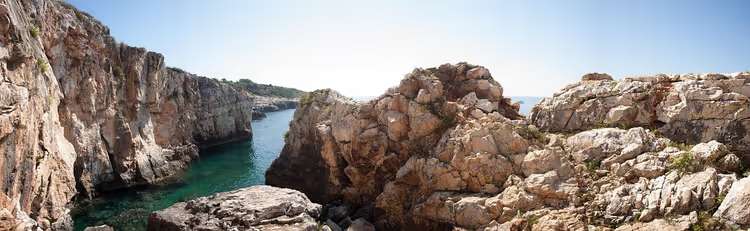
Excursions in Croatia: 15 routes from Dubrovnik, Split and Zagreb
Excursions in Croatia start from three cities: Dubrovnik, Split, and Zagreb. They are hundreds of kilometers apart, and one wrong choice costs you a full day of travel. Five days of vacation can easily disappear on transfers if you don't plan everything in advance.
We've put together fifteen excursions: walking tours of the Old Town, trips to Plitvice Lakes, Mostar, and the island of Lokrum. For each one, you'll see the format, duration, and what's included. Park ticket prices were checked on official websites (as of 09/2026).
Ad: this article contains affiliate links. We earn a commission if you book through them, at no extra cost to you.
How to choose an excursion in Croatia
💡 In short:
- Start with the city where you're staying: the drive between Dubrovnik and Split takes about three hours one way.
- Book trips to Plitvice and Mostar in advance, group spots fill up quickly.
- Buy national park tickets online with a specific date.
- Park prices and schedules: 09/2026, verified on the official Plitvice Lakes website.
Half of the excursions on this list are walking tours. They start in Dubrovnik, Split, or Zagreb, so pick the ones that begin near your hotel. The other half require a full day and a bus or car transfer.
If you want | Choose | Format |
|---|---|---|
To see Dubrovnik in a day | An Old Town walking tour | on foot, an hour and a half |
Nature without a car | A trip to Plitvice Lakes | bus, full day |
A second country in a day | An excursion to Mostar | bus with a guide |
Sea and quiet | A boat to Lokrum island | half a day |
An ancient city | Diocletian's Palace in Split | on foot, two hours |
1. Dubrovnik with love
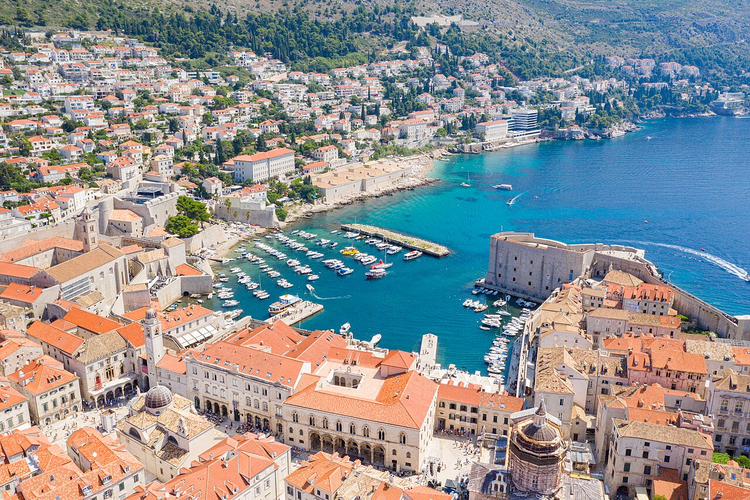
This walking tour of the Old Town lasts an hour and a half. The guide leads you along Stradun, Dubrovnik's main street, and tells you about a city that is on the UNESCO list. Behind the fortress walls, palaces, libraries, churches, and monasteries have been preserved.
 © dronepicr · CC BYPhoto: dronepicr, CC BY (https://creativecommons.org/licenses/by/2.0), Wikimedia Commons
The route covers the exteriors of the Cathedral, the Rector's Palace, the Church of St. Blaise, and the Dominican Monastery. You also pass one of Europe's oldest pharmacies, which has been operating since the 14th century.
- Format: walking tour, an hour and a half.
- What you'll see: Stradun, the Cathedral, the Rector's Palace, the Church of St. Blaise, the Dominican Monastery.
- Start: Old Town, at Pile Gate.
- The catch: the program includes exteriors only; entry to the cathedral and monastery is paid separately.
Old Town tours on GetYourGuide
2. Dubrovnik: sightseeing tour
 © dronepicr · CC BYPhoto: dronepicr, CC BY (https://creativecommons.org/licenses/by/2.0), Wikimedia Commons
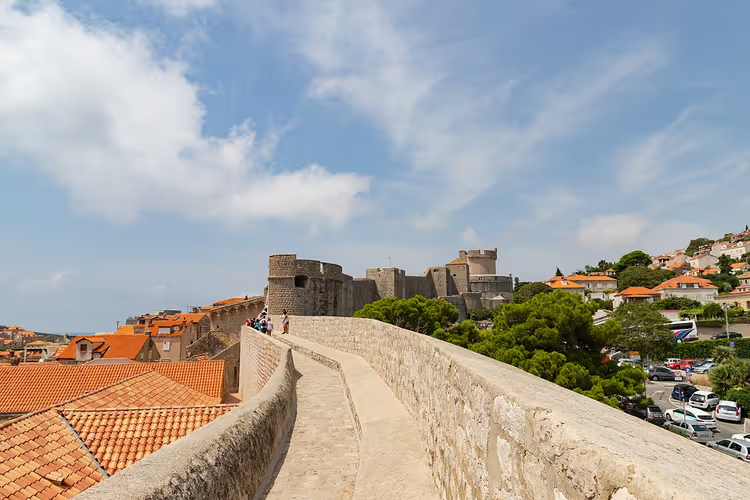
This sightseeing walk through Old Dubrovnik takes an hour and a half. The guide shows the city's landmarks and explains how medieval quarters grew on a rocky outcrop. The fortress walls encircle the entire peninsula, and behind them hide towers, chapels, and houses under red tile roofs.
Here you'll learn about the culinary traditions, crafts, and religious life of the city's residents. The program gives you a general overview of the city, while the themed tours on this list dig deeper.
- Format: walking tour, an hour and a half.
- What you'll see: fortress walls, towers, palaces, Adriatic panoramas.
- Who it's for: if you're interested in daily life, crafts, and local cuisine rather than individual monuments.
Hotels in Dubrovnik on Trip.com
3. Dubrovnik's Jewish community
This is a walking tour through the old ghetto quarters. The guide explains how the Jewish community lived inside the fortress city and what rules of conduct applied to non-Christians here.
You'll see one of Europe's oldest synagogues and a museum complex with a collection of religious objects. The route is short and relaxed.
- Format: walking tour of the Old Town.
- What you'll see: ghetto quarters, the old synagogue, the museum.
- Who it's for: if you're interested in the history of communities, not just architecture.
4. Dubrovnik: first date
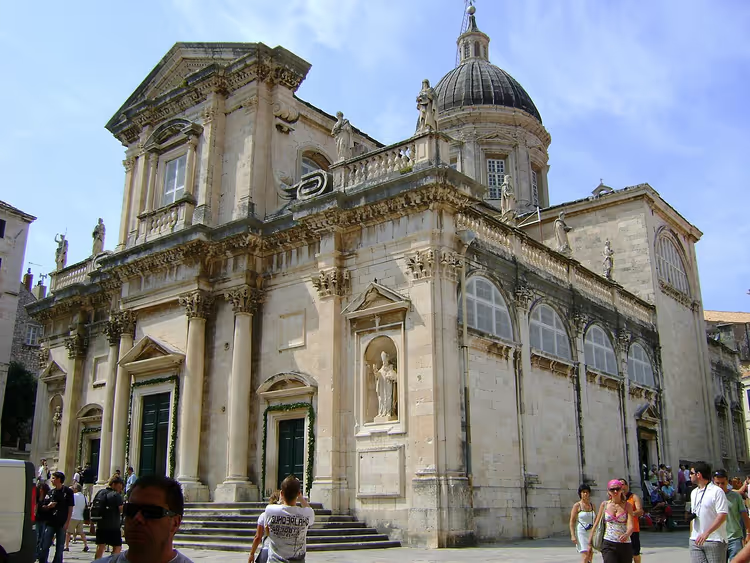
A two-hour walk focused on cathedrals and Christian relics. You go to the Cathedral of the Assumption of the Virgin Mary, an example of Italian Baroque, and to the Treasury building with its Christian relics.
One of the stops on the route is an old pharmacy founded by monks in the 14th century. You finish the walk on Stradun, where Onofrio's two fountains stand.
- Format: walking tour, two hours.
- What you'll see: the Cathedral, the Treasury, the Church of St. Blaise, Stradun, Onofrio's two fountains.
- The catch: the route overlaps with some of the sights from excursion 1, so choose one of the two.
5. Walking tour of the fortress and Lokrum island
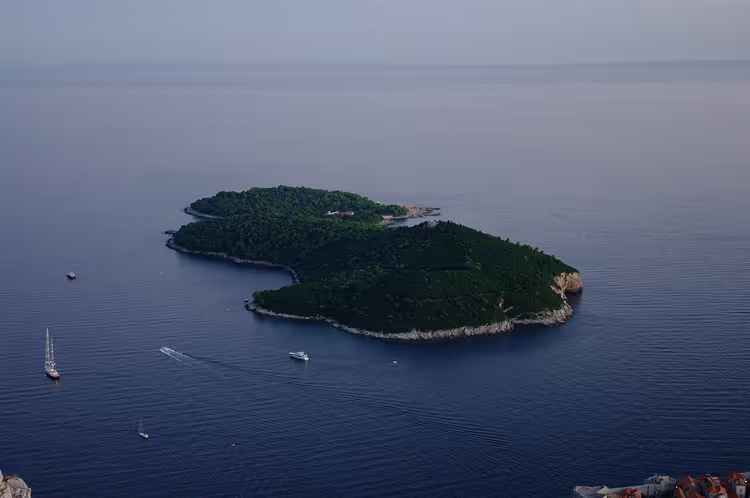
First you explore the palaces, cathedrals, monasteries, and forts of the old town. Then the group boards a boat and heads to Lokrum Island: on the map it's about 700 meters from Dubrovnik's historic center.
On the island you'll find rocky beaches, a botanical garden, a star-shaped fort, and monastery ruins. At the end, you swim in a salt lake connected to the Adriatic Sea.
- Dubrovnik walls: the ticket is valid for one entry, re-entry is not possible (as of 09/2026, official Dubrovnik city walls website).
- Lokrum Island: €30 per person, round-trip boat and reserve entry included (as of 09/2026, official island website).
- The catch: the island has rocky beaches, no sand.
Walk the walls and visit Lokrum
6. From Dubrovnik to Plitvice Lakes
 © Pablo BM from London, England · CC BYPhoto: Pablo BM from London, England, CC BY (https://creativecommons.org/licenses/by/2.0), Wikimedia Commons
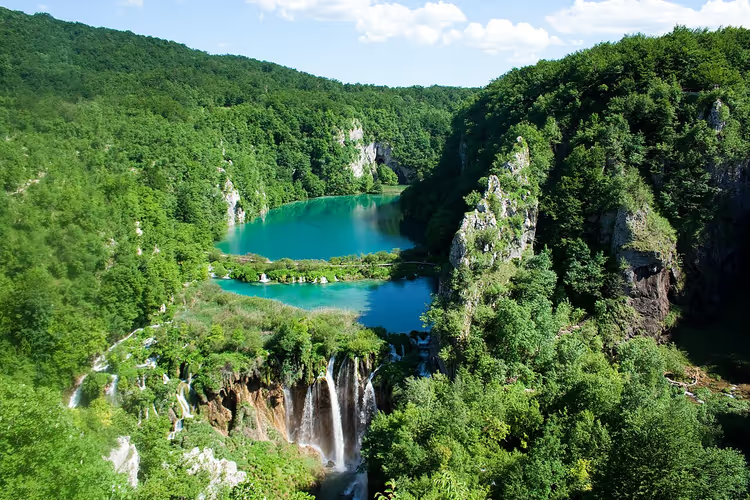
Plitvice Lakes is a system of karst lakes connected by waterfalls, rapids, and channels. You walk along wooden boardwalks beside limestone shores, and between lakes you're transported by electric boat and panoramic train.
The drive from Dubrovnik takes almost the entire day, so the itinerary includes only the park itself. The ticket includes transport within the park and visitor insurance.
- Ticket: in June to September €40 before 4:00 PM and €25 after, in April, May, and October €23 (as of 09/2026, park price list).
- Children 7-18: €15 in high season, under 7 free.
- Parking: €2 per hour in summer, pay on exit (as of 09/2026, same price list).
- The catch: in season this is the most expensive trip on the list, and the drive from Dubrovnik eats up the whole day.
7. Around Dubrovnik: the village of Čilipi
 © Bjoertvedt · CC BY-SAPhoto: Bjoertvedt, CC BY-SA (https://creativecommons.org/licenses/by-sa/3.0), Wikimedia Commons
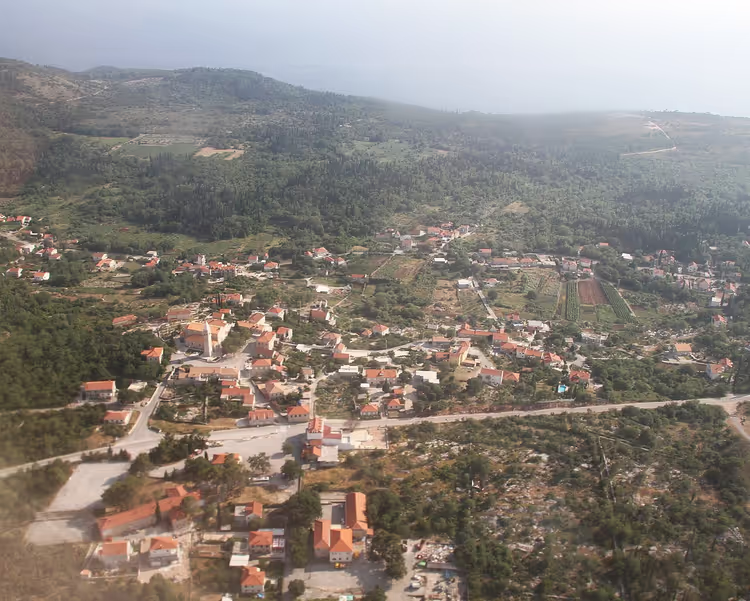
Čilipi sits next to Dubrovnik and is known for its stone architecture and careful preservation of folk traditions. On Sundays, festive fairs and folklore ensemble performances take place here.
At the ethnographic museum you'll see how the ancient Croatian Konavle clan lived. Locals sell confectionery, fabrics with traditional patterns, and wine.
- Format: a guided walking tour of the village.
- When: Sunday fairs and performances.
- Who it's for: if you're interested in crafts, cuisine, and local customs.
8. From Dubrovnik to Mostar
 © Ramirez · CC BY-SAPhoto: Ramirez, CC BY-SA (https://creativecommons.org/licenses/by-sa/4.0), Wikimedia Commons
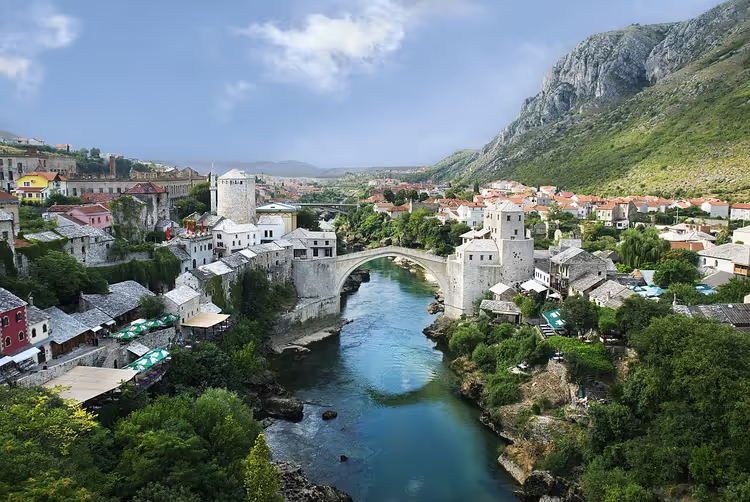
Mostar spreads along the banks of the Neretva, surrounded by mountain ranges. It's the only city on the list outside Croatia: you cross the border into Bosnia and Herzegovina.
The itinerary includes mosques, Catholic churches, towers, and old manor houses. The main highlight is the pedestrian bridge over the Neretva, which connects the Christian and Muslim parts of the city. Along the cobblestone streets you'll find market stalls and artisan workshops.
- Format: a full-day guided bus trip.
- What you'll see: the Old Bridge, mosques, fortresses, merchant manors.
- Important: this is a trip outside the EU, bring your documents.
- The catch: the round trip takes up most of the day.
9. Getting to know Zagreb
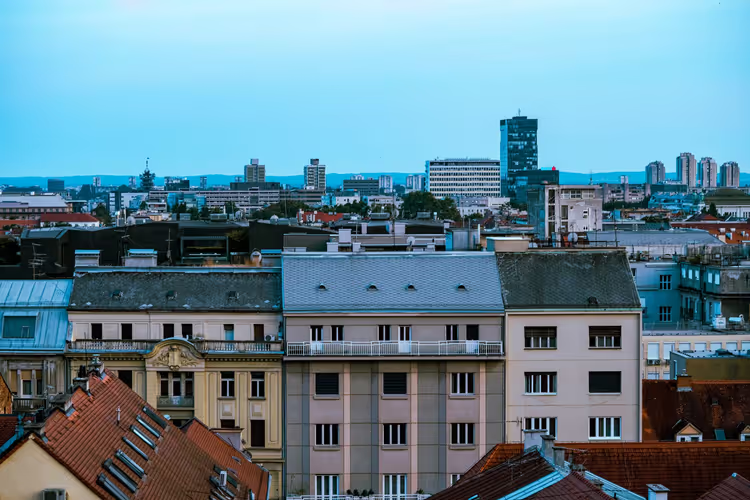
A three-hour guided walk through Zagreb. You'll hear legends about the city's founding and walk through squares, streets, and landscaped parks with lakes.
The main highlights are the neo-Gothic Cathedral with its spires and St. Mark's Church with its colorful tiled roof featuring the coats of arms of Zagreb and Croatia. The active part alternates with breaks at coffee shops.
- Format: walking tour, three hours.
- What you'll see: the Cathedral, St. Mark's Square, parks, coffee shops.
- The catch: the center is divided into Upper and Lower Town, and you'll climb stairs between them.
10. Split: love at first sight
 © TimeTravelRome · CC BYPhoto: TimeTravelRome, CC BY (https://creativecommons.org/licenses/by/2.0), Wikimedia Commons
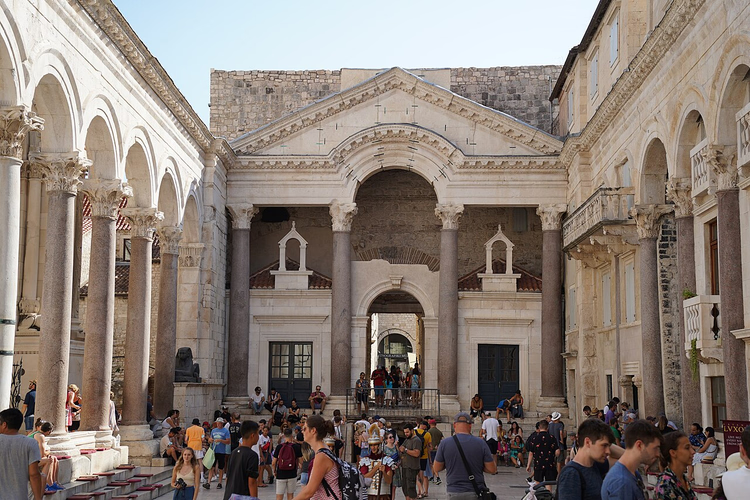
Split is Croatia's second-largest city, and its main attraction is the palace of the Roman emperor Diocletian. The guide leads you through ancient streets and spacious squares inside the palace.
You'll see the Cathedral, the Temple of Jupiter, the mausoleum, ancient gates, and fragments of Roman baths. A separate stop is Peristyle Square with its colonnade and granite sphinx figure.
- Format: guided walking tour.
- What you'll see: Diocletian's Palace, Peristyle, Temple of Jupiter, Roman baths.
- Who it's for: if ancient history speaks to you.
11. From Split to the pirate town of Omiš
 © Zvone00 · CC BY-SAPhoto: Zvone00, CC BY-SA (https://creativecommons.org/licenses/by-sa/4.0), Wikimedia Commons
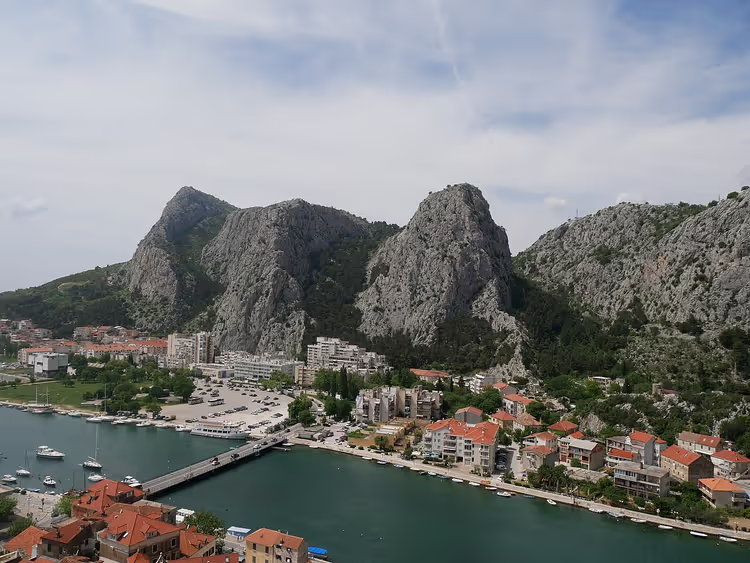
Omiš sits at the mouth of the Cetina River between high cliffs. In the Middle Ages the town was a pirate haven, and the guide tells stories about local corsairs and their warships.
You'll walk through narrow streets with stone houses, see old quarters from the 13th century, churches, and two fortresses. One of the forts towers above the town, and the whole group climbs up to its tower.
- Format: guided trip from Split.
- What you'll see: fortresses, the old town, the Cetina estuary, panoramic views of Omiš.
- The catch: climbing the fortress tower requires stamina and comfortable shoes.
12. Split: city of Romans and Slavs
 © dronepicr · CC BYPhoto: dronepicr, CC BY (https://creativecommons.org/licenses/by/2.0), Wikimedia Commons
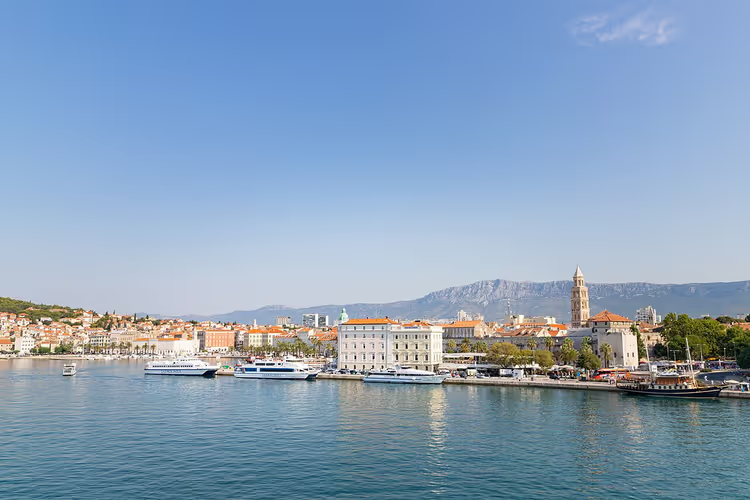
This is a sightseeing walk through Split at the foot of Marjan Hill. You'll see ancient streets, medieval churches, and modern neighborhoods with hotels and restaurants.
The main part of the route goes through Diocletian's Palace, built of white limestone. The guide shows the remains of the Temple of Jupiter, aqueduct ruins, the cathedral, the Peristyle, and the bell tower.
- Format: guided sightseeing walk.
- What you'll see: Diocletian's Palace, the aqueduct, the bell tower, the Temple of Jupiter.
- The catch: the palace theme overlaps with tours 10 and 13, so pick one of the three.
13. Split and Trogir: Croatian heritage
 © VitVit · CC BY-SAPhoto: VitVit, CC BY-SA (https://creativecommons.org/licenses/by-sa/4.0), Wikimedia Commons
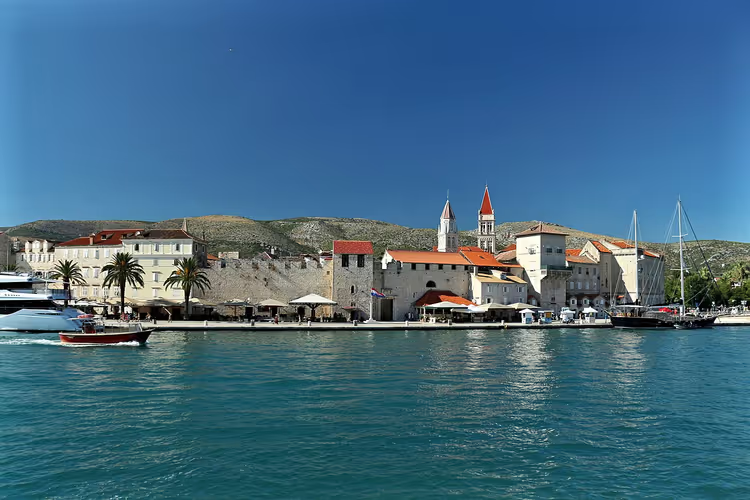
This four-hour tour covers two cities at once. In Split you walk through Diocletian's Palace, a UNESCO site, and see the Cathedral, the Temple of Jupiter, the Peristyle, and Roman baths.
Then the group heads to Trogir: its historic quarter occupies an entire island. Here you'll find temples, mansions, towers, and houses with red-tiled roofs, with decor blending Romanesque, Gothic, and Renaissance styles.
- Format: guided bus tour, four hours.
- What you'll see: Diocletian's Palace and island Trogir.
- The catch: you get roughly two hours in each city.
14. To Krka National Park from Split
 © Matea Bolčević · CC BY-SAPhoto: Matea Bolčević, CC BY-SA (https://creativecommons.org/licenses/by-sa/4.0), Wikimedia Commons
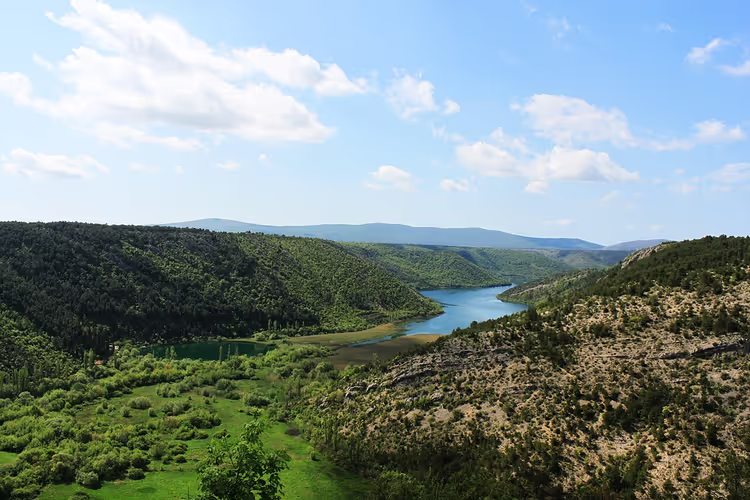
Krka is a river valley with cascading waterfalls and beech forests on the slopes. The trip starts in Split and passes through Skradin, where you'll see a Gothic cathedral, an 18th-century basilica, and the town hall.
Then a boat ride down the river to the waterfalls, one of which descends over seventeen rocky steps. After that, a walk along wooden boardwalks and an ethnographic presentation with a blacksmith's workshop.
- Admission: ticket prices vary by season, with the highest in July and August (as of 09/2026, current prices on the park website).
- Format: guided driving tour.
- Who it's for: if you want nature rather than architecture.
Car rental in Croatia on DiscoverCars
15. Ston and the Trsteno botanical garden
 © Fridolin freudenfett · CC BY-SAPhoto: Fridolin freudenfett, CC BY-SA (https://creativecommons.org/licenses/by-sa/4.0), Wikimedia Commons
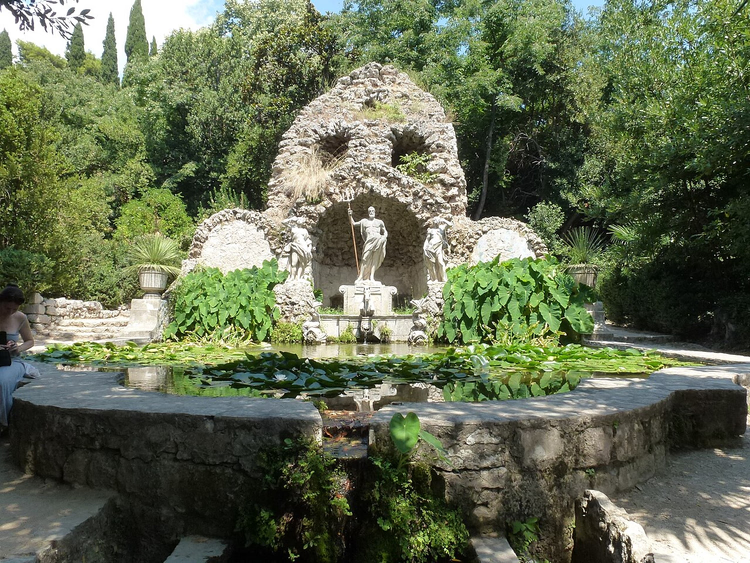
This six-hour trip combines the garden and oysters. Trsteno is home to an arboretum: plane trees, bamboo groves, cypress avenues, and citrus trees.
Among the plants stands a Renaissance-era estate with a baroque fountain, a medieval aqueduct, and a gazebo. The route then continues to Ston.
Ston is enclosed by a long fortress wall on a green hill. On the shore of the ecological bay, oyster farms serve fresh seafood.
- Walls of Ston: for tickets and opening hours, see the website of the city walls of Dubrovnik and Ston (as of 09/2026).
- Format: guided car trip, six hours.
- Who it's for: if you love gardens, fortresses, and coastal cuisine.
All fifteen excursions depart from Dubrovnik, Split, or Zagreb. Check the meeting point in advance so you don't spend the morning crossing the whole city.
⁉️🤔 Frequently asked questions
Which city is the best starting point for excursions in Croatia?
It depends on your route. From Dubrovnik, it's convenient to go to the Old Town, Lokrum, and Mostar; from Split, to Omis, Krka, and Trogir. Dubrovnik and Split are about three hours apart by road, so don't plan both points for the same day (according to the map).
How much does entry to Plitvice Lakes cost in 2026?
Summer and spring prices are listed in section 6 on Plitvice Lakes. In winter, an adult ticket costs 10 € (as of 09/2026, prices on the park's official website).
Do I need to buy park tickets in advance?
Yes, in high season buy them online and for a specific date. At Plitvice Lakes, the ticket is tied to the chosen entrance and time, and at Krka the price depends on the season (as of 09/2026, official park websites). On-site lines are noticeably longer.
Can you get to Lokrum without a tour?
Yes, a boat leaves from the Old Port of Dubrovnik from nine in the morning (as of 09/2026, lokrum.hr). The island is small, and you can walk around it entirely in half a day.
What to see in Dubrovnik if you only have one day?
Take a walking tour of the Old Town, and after that climb the city walls. Stay by the Old Port for sunset.
If you're heading from Dubrovnik to Split, add Omis, Krka, and Trogir to your plan. They're easy to combine with an overnight stay in the city, while the Ston route works well for a relaxed day by the sea.
Tours and tickets in Croatia
Guided tours, skip-the-line tickets and activities — most offers can be cancelled free of charge.
See offers on GetYourGuideThe widget loads once you give your consent.
In short: what's worth booking
If you have one day in Dubrovnik: first a walking tour of the Old Town, then the city walls. If you don't have a car, take a bus tour to Plitvice Lakes or a trip to Mostar. For sea and quiet, a boat to Lokrum works well: rocky shores, a botanical garden, and a salt lake.
If you're staying in Split, the closest options are Omis, Krka, and Trogir: half-day or full-day trips. Garden lovers and fans of coastal cuisine will enjoy the route to Trsteno and Ston. Check park tickets before your trip: summer prices are at their highest.
Find excursions on GetYourGuide and compare hotels on Trip.com.

A small editorial team writing guides for independent travel. We travel ourselves, but we haven’t been everywhere, so we check prices, opening hours and how to get there against official sources.