
















Entertainment in Barcelona for kids: 20 places with prices and tickets
Barcelona scares parents with its prices and lines. In reality, there are plenty of places here where you can come with a child without booking a month in advance.
We've put together 20 things to do with kids in Barcelona: parks, rides, museums, a cable car, and a stadium. For each place you'll find the ticket price or an honest "check the website," how to get there, and the catch you're better off knowing about in advance. Some spots run timed sessions, so buy tickets a couple of days ahead.
Ad: this article contains affiliate links: we earn a commission if you book through them, at no extra cost to you.
1. Montjuïc cable car
💡 In short:
- Montjuïc is the cable car, parks, and a fortress. The center is Gaudí and museums. The north is Tibidabo and Port Aventura.
- Get tickets to Park Güell, Casa Batlló, and the Aquarium in advance: in summer, slots sell out several days ahead.
- The calmest day to visit is a weekday: lines are shorter and evening sessions are cheaper.
- Prices and hours: as of 09/2026, verified on the Park Güell pricing page.
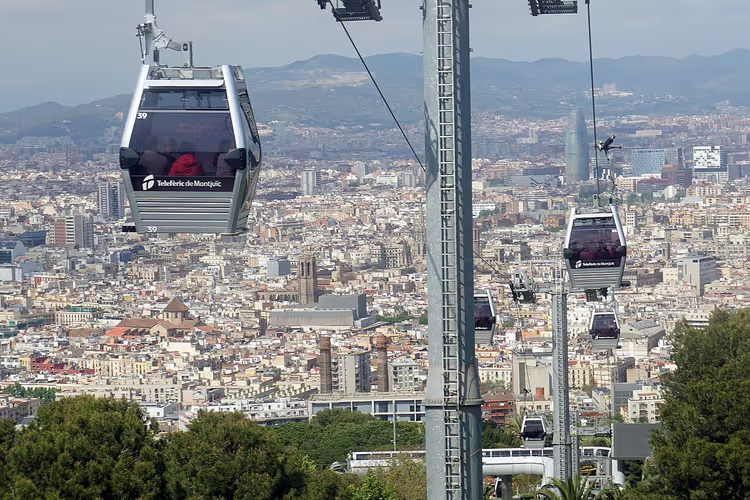 © Mariordo (Mario Roberto Durán Ortiz) · CC BY-SAPhoto: Mariordo (Mario Roberto Durán Ortiz), CC BY-SA (https://creativecommons.org/licenses/by-sa/4.0), Wikimedia Commons
The Montjuïc cable car connects the port with the top of the hill. The route opened in 1970, and in 2007 the lift was completely renovated: it now runs 55 cabins, each fitting up to 8 adults (according to the Montjuïc cable car).
The ride takes about eight minutes. In that time you gain 85 m of elevation and travel more than 750 m above the rooftops of the port and the gardens of Montjuïc. You don't have to ride to the end: get off at any of the three stations and continue on foot.
The Parc Montjuïc station drops you next to the 1992 Olympic venues: the rings, museums, and the Palau Sant Jordi. At the Mirador station, a cactus garden and a panorama of the sea and port await you. The last stop, Castell, leads to the Montjuïc fortress, which began construction in the 17th century.
How much it costs: the cable car is not included in the city transit pass; tickets are bought separately (according to the lift operator), and children's tickets are cheaper than adult ones.
How to get there: from the Paral·lel metro station you walk to the lower Avinguda de Miramar station; from there, buses continue up the hill.
Who it's for: kids aged 5-6 and up who enjoy heights and the view from above.
The catch: in strong wind the cabins stop running, so it's better to plan your ride for the morning.
2. Tibidabo amusement park
 © Enric · CC BY-SAPhoto: Enric, CC BY-SA (https://creativecommons.org/licenses/by-sa/4.0), Wikimedia Commons
Tibidabo sits at the highest point in the city, so you can see all of Barcelona and the sea from here. The park opened in 1889 and still operates as a classic family amusement park (according to the Tibidabo administration). There are more than 30 rides, and some of the carousels are older than your parents and still run after restoration.
The main challenge is getting there. The funicular takes you up to the park in a few minutes, while the historic blue tram, Tramvia Blau, is under repair: check its status in the park schedule. Including the trip from the center without a car, allow about an hour for the ascent.
At the top there is a Ferris wheel, a panoramic area with gentle rides, and shaded spots where parents wait out the midday heat. Tickets are sold for the whole day and based on the child's height: this way you pay only for the rides your child is allowed on (according to Tibidabo).
Tickets: the rate depends on height; check the current pricing on the official website.
Getting there: funicular from Avinguda Tibidabo station, then walk; a bus goes to the park from Plaça de Kennedy.
Who it's for: families with children aged 4-12.
The catch: the calendar is variable, the park is not open every day and closes in bad weather, so check the schedule.
3. Magic Fountain of Montjuïc
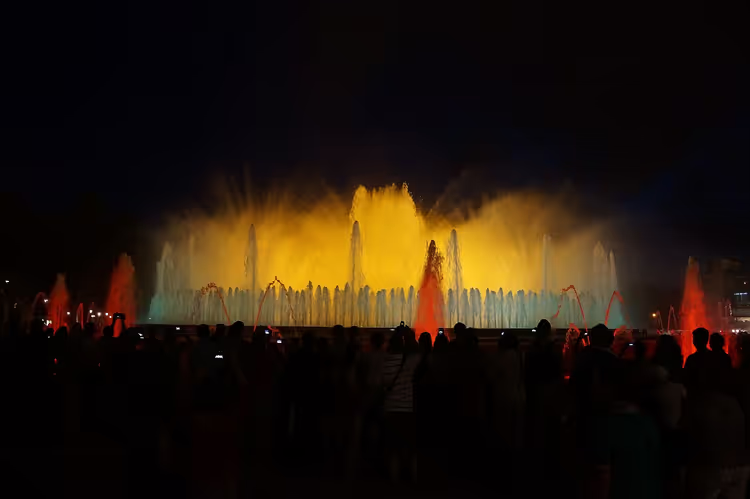 © DagafeSQV · CC BY-SAPhoto: DagafeSQV, CC BY-SA (https://creativecommons.org/licenses/by-sa/3.0), Wikimedia Commons
The Magic Fountain was built for the 1929 Barcelona International Exposition, designed by engineer Carles Buïgas. It is a hydraulic installation covering 3,000 m², and the jets reach the height of a 16-story building (according to Barcelona City Council). In the early years the installation was operated manually, with 20 people working per shift.
Later the fountain was automated, and music and colored lighting in thousands of shades were added. The evening shows were long a free attraction for the whole city. Due to drought, the shows were suspended for several years, and the calendar is still seasonal and changes by city decision: check the city council's program.
Arrive half an hour before the start and stand on the steps by the National Museum (MNAC). From there you can see the entire fountain basin, and you won't have to lift your child above the crowd. The show lasts about an hour.
Getting there: Espanya metro station (lines L1 and L3), then walk up the avenue toward the hill.
Cost: access to the square is free, but shows do not run every evening.
Who it's for: families with children of any age.
The catch: the schedule depends on the season and water reserves; in a dry year shows are canceled entirely.
4. Parc de la Ciutadella
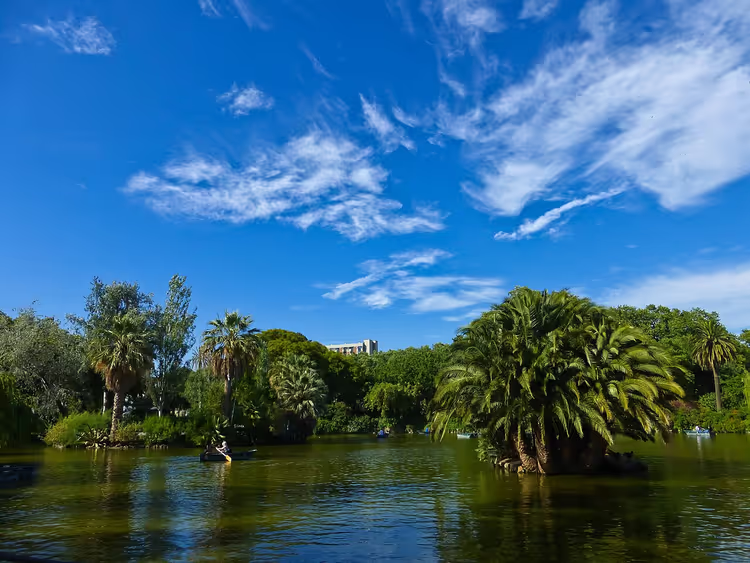 © D.Rovchak · CC BY-SAPhoto: D.Rovchak, CC BY-SA (https://creativecommons.org/licenses/by-sa/4.0), Wikimedia Commons
King Philip V ordered the construction of a fortress in the city center after 1714. A century and a half later it ceased to be a military site, and most of the walls were demolished to erase the memory of the city's suppression. A park was laid out on the cleared land.
Today it is the most convenient park for a walk with children. Inside you'll find a zoo, a lake with rowboats, the Cascada fountain worked on by a young Gaudí, and the Castle of the Three Dragons with animal sculptures. Some of the buildings house museums, and one of them is the seat of the Parliament of Catalonia (according to the city administration).
There are three reasons to linger here: free entry, plenty of shade, and playgrounds for children of different ages. Go in the morning or after 5:00 PM, when the heat subsides. The park is also open in winter, it just closes earlier in the evening.
Hours: the park is open daily, admission is free; see exact hours on the Parc de la Ciutadella page.
Getting there: Arc de Triomf or Marina metro station, then walk along the park.
Who it's for: toddlers with playgrounds and children aged 5-12 who are taken to the zoo.
The catch: boat rentals and some facilities operate depending on the weather; they are closed in winter.
5. Poble Espanyol
 © pere prlpz · CC BY-SAPhoto: pere prlpz, CC BY-SA (https://creativecommons.org/licenses/by-sa/3.0), Wikimedia Commons
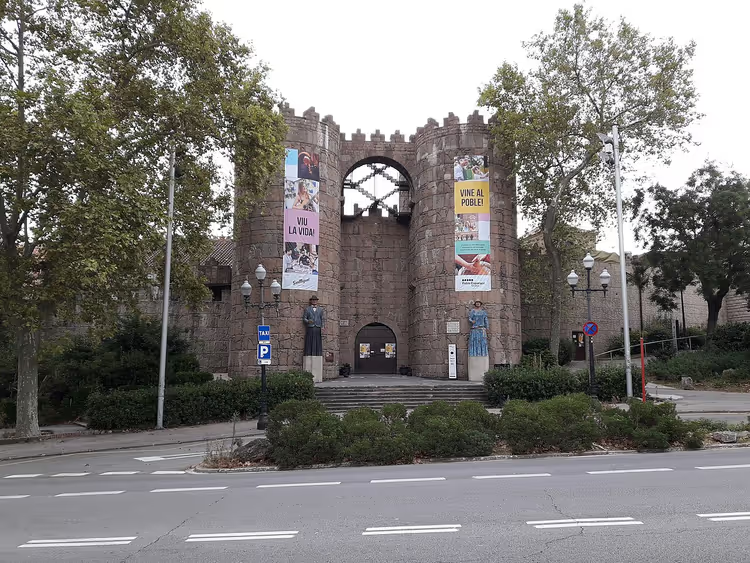
Poble Espanyol appeared on Montjuïc for the 1929 Barcelona International Exposition. The idea was proposed by architect Josep Puig i Cadafalch, and artists and craftsmen were brought in for the work. They traveled around the provinces, sketched the most distinctive houses and squares, and then assembled them in one place.
Some of the buildings replicate the originals at a 1:1 scale, while others are scaled down. In one loop, you walk through Spain from Castilian stone streets to Andalusian courtyards. Workshops operate here too: glass, ceramics, leather.
For kids, it's a convenient "map of the country" without any travel, and in the evening they turn on the lights and host concerts. Buy tickets online: there's a line at the ticket office, and on weekends entry is time-slotted (according to the village).
Tickets: paid entry for adults and children, exact rates on the official website.
Getting there: funicular from Paral·lel metro station or cable car to Parc Montjuïc station.
Who it's for: kids aged 6+ and parents interested in crafts.
The catch: lots of tour groups during the day, and souvenirs in the shops cost more than in the city.
6. Gran Teatre del Liceu
 © Chabe01 · CC BY-SAPhoto: Chabe01, CC BY-SA (https://creativecommons.org/licenses/by-sa/4.0), Wikimedia Commons
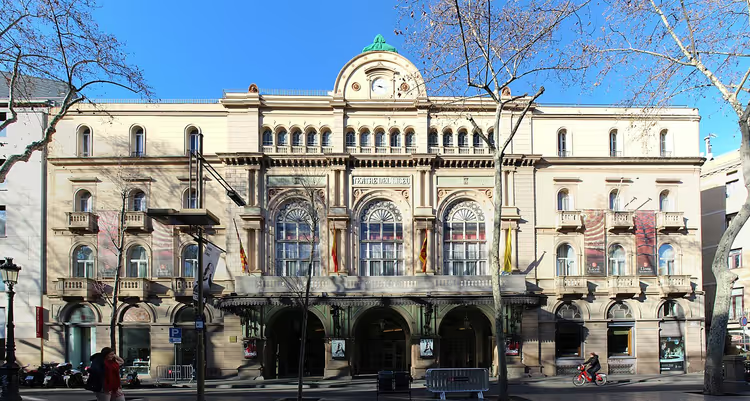
Gran Teatre del Liceu opened in 1847 and has survived several fires and renovations. In the early 20th century, Diaghilev's company performed here, and after the latest renovation the theater is considered one of the largest in Europe.
With kids, you don't come here for the opera but for a tour: you see the auditorium, the mirrored foyer, the wings, and the stage mechanics. The guide explains how a production is prepared, and it's clear even to a school-age child. Check tickets and tour times in the theater schedule.
Tours: scheduled, limited spots, buy in advance on the theater website.
Getting there: Liceu metro station (L3) right at the entrance, in the middle of La Rambla.
Who it's for: kids 8+ and teens who love theater and music.
The catch: on days with evening performances, some halls are closed and tours are shortened.
7. Park Guell
 © Canaan · CC BY-SAPhoto: Canaan, CC BY-SA (https://creativecommons.org/licenses/by-sa/4.0), Wikimedia Commons
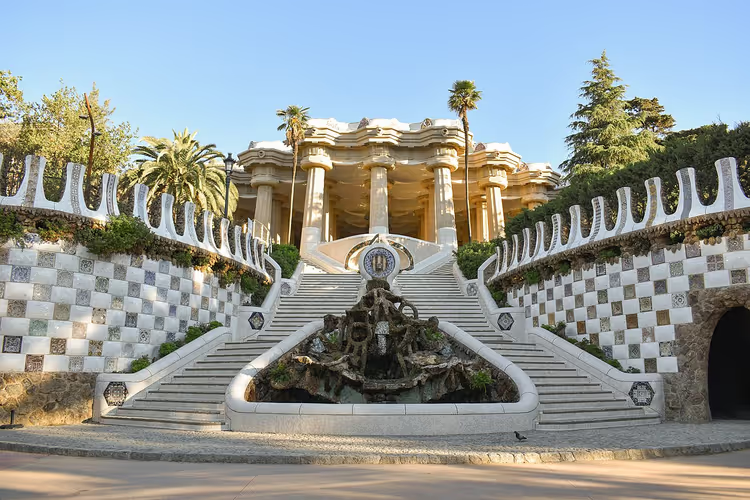
Park Guell was conceived as a garden city for wealthy Catalans. Patron Eusebi Guell bought land on the outskirts, but the plots sold poorly: the rich did not want to leave the center. In the end, only one house remained residential, and the park became a park.
Gaudi built terraces, viaducts, and a bench assembled from broken dishes, shards, and glass from bottles. At the entrance, you are greeted by gingerbread houses with glazed roofs, and beneath the hall with good acoustics, a water catchment is hidden. There is plenty to see here even in the rain: some of the paths run under vaults.
Tickets cost 18 EUR for adults, 13.50 EUR for children aged 7-12, and kids under 6 enter free, but they still need a ticket (as of 09/2026, Park Guell fares). Entry is in 30-minute slots from 9:30 to 19:30, and once you leave, you cannot go back in.
Tickets: online is cheaper and more reliable than at the ticket office; morning slots go first (as of 09/2026, official website).
Getting there: Vallcarca or Lesseps metro, then uphill on foot or by bus 24.
Who it's for: children aged 5 and up and teenagers who love unusual places.
The catch: the uphill climb is tough in the heat, and by 11:00 there are lines for photos at the bench and the houses.
8. Horta Labyrinth
 © Canaan · CC BY-SAPhoto: Canaan, CC BY-SA (https://creativecommons.org/licenses/by-sa/4.0), Wikimedia Commons
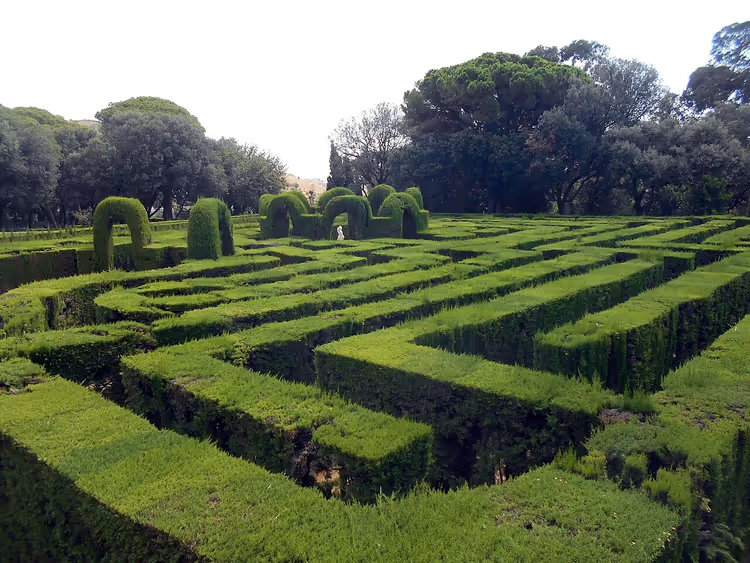
The Laberint d'Horta park began to be laid out in the 18th century as the private garden of the Marquis of Desvalls. In the 19th century, neighboring plots were added to the palace, and the garden was opened to city residents. In the 20th century, it passed to the city and became public after restoration.
The labyrinth is made of trimmed cypress trees and stands in the neoclassical part of the garden. Not everyone manages to find the way out on the first try, but the search for the exit turns into a game for children. Nearby, a romantic section awaits you with a pond, pavilions, and rare plants.
Part of "Perfume: The Story of a Murderer" was filmed here, so teenagers know the park from a movie scene. Visitors are admitted in batches to protect the paths: book your entry in advance on the city council page.
Cost: entry is limited by visitor numbers; check current conditions and hours on the city council website.
Getting there: Mundet metro (L3), then walk uphill along the street; the entrance is from Passeig dels Castanyers.
Who it's for: children aged 4 and up and schoolkids interested in gardens and the labyrinth.
The catch: small groups and timed entry, so a spontaneous walk may not work out.
9. Barcelona Aquarium
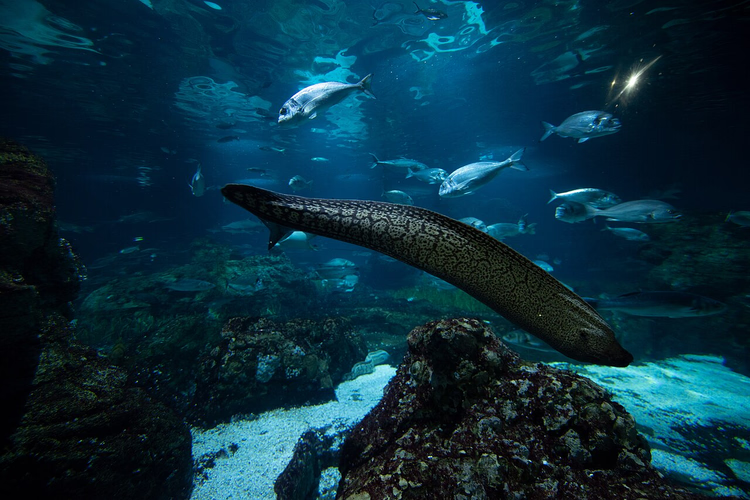 © Robertgombos · CC BY-SAPhoto: Robertgombos, CC BY-SA (https://creativecommons.org/licenses/by-sa/4.0), Wikimedia Commons
The aquarium stands right in the port, next to the Maremagnum shopping center, and it is the most convenient option for a rainy day. The main attraction is an 80 m underwater tunnel: sharks and rays swim above you, and children walk through it without taking their eyes off the glass (according to the aquarium).
The exhibition is divided into two parts. The first shows the inhabitants of the Mediterranean Sea, the second explains how depth and water properties change the lives of marine animals. A separate hall is dedicated to penguins, which are easy to observe from the edge.
For little ones, there are play and sports areas inside, and for parents, benches are placed near the large aquariums. Tickets are sold by time slots, so arrive at your scheduled time rather than early: waiting in line at the entrance with a child is hard.
Tickets: children's tickets are cheaper than adult ones; current prices and schedule are on the aquarium website.
Getting there: Drassanes metro (L3) or Barceloneta (L4), then walk along the waterfront.
Who it's for: children aged 3 and up and parents who want to spend half a day indoors.
The catch: at peak hours the tunnel is crowded, and on weekends there are many school groups.
10. Casa Batllo
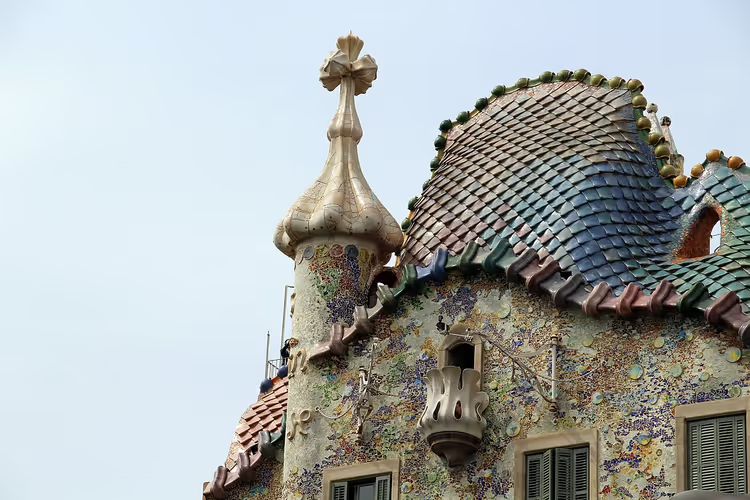 © Fred Romero · CC BYPhoto: Fred Romero, CC BY (https://creativecommons.org/licenses/by/2.0), Wikimedia Commons
Casa Batllo had stood on Passeig de Gracia since 1875, until the owner invited Gaudi to rebuild it. The architect kept the frame but added two facades, a light well, and a new roof with scales. This commission marked the start of his independent work without looking back at the canons.
Inside, there are almost no straight lines: ceilings are twisted, windows rise toward the light well, and on the roof, chimneys resembling warriors are on display. The facade was laid with broken mosaic, so it changes color depending on where you stand.
The tour follows a route with an audio guide that includes a children's version of the narration. Get tickets for a specific time slot: without one, a line forms at the entrance from La Rambla and the avenue (according to Casa Batlló).
Tickets: entry is by time slot, children's rates are cheaper, exact prices on the official website.
Getting there: Passeig de Gràcia metro (L2, L3, L4), the exit is right by the building.
Who it's for: kids aged 8 and up who aren't scared of steep staircases.
The catch: the ticket is expensive, and the climb to the roof is narrow and stuffy in the heat.
11. Museu Blau natural science museum
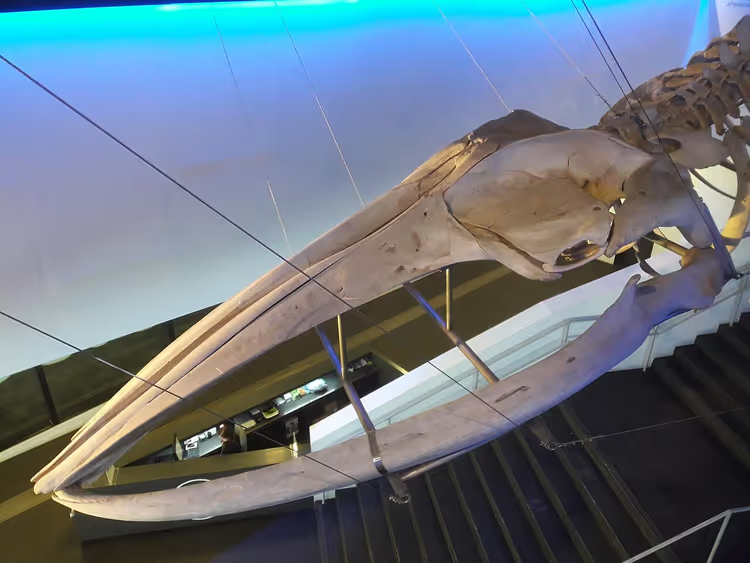 © pere prlpz · CC BY-SAPhoto: pere prlpz, CC BY-SA (https://creativecommons.org/licenses/by-sa/3.0), Wikimedia Commons
The Museu Blau stands in Parc del Fòrum on the site of a former industrial zone. It's part of the larger Natural Science Museum of Barcelona, which also includes the Botanical Garden and the building in Ciutadella Park (according to the museum). There are no rows of stuffed animals behind glass here: almost everything can be pressed, turned, and listened to.
The exhibition is divided into sections. "Planet Life" tells the story of Earth's origins, with a model of the starry sky shimmering in the dim light. In "Biography of the Earth," kids can model things that are impossible to see in nature. "Earth Today" focuses on the creatures that live alongside us.
For younger children there's a science nest with simple experiments, and for school-age kids there are science islands with unexpected questions. You can easily spend half a day here, but check tickets and opening hours in advance on the museum's website.
Tickets: a combined ticket covers several museum sites, rates on the website.
Getting there: El Maresme-Fòrum metro (L4), then a walk through the park.
Who it's for: kids aged 5 and up and schoolchildren who enjoy experiments.
The catch: the museum is away from the center, so the trip takes half a day.
12. CosmoCaixa museum
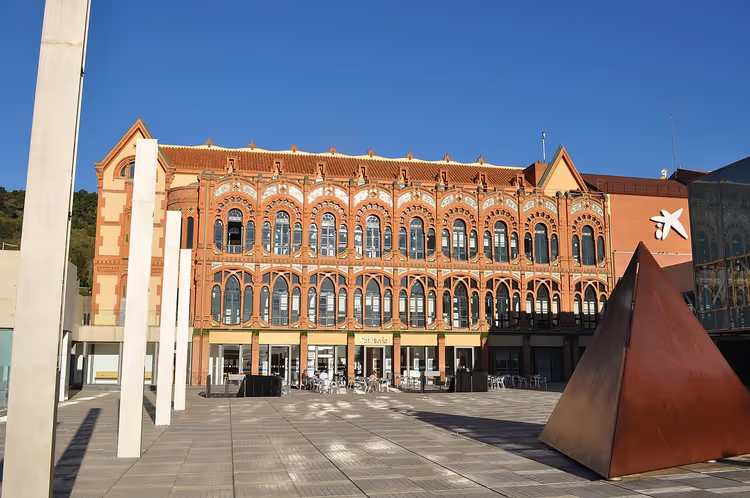 © Jirka Dl · CC BY-SAPhoto: Jirka Dl, CC BY-SA (https://creativecommons.org/licenses/by-sa/3.0), Wikimedia Commons
CosmoCaixa opened in its current form in 2004, and before that it was part of the city's science museum. Today it's one of the largest interactive museums in Spain, funded by the la Caixa foundation (according to the museum). It's engaging for both toddlers and teenagers because almost every exhibit needs to be started by hand.
The permanent exhibition is built around matter: dead, living, civilized, and intelligent. In the "Geological Wall" section, screens show mountains in cross-section and the movement of tectonic plates. In the "Flooded Forest," you step into a recreated corner of the Amazon jungle, where fish live under glass and birds perch above the water.
There's also an interactive planetarium and a play area for the youngest visitors, where basic knowledge is taught through games. If you get hungry, you can grab a bite at the on-site café. Check tickets and opening hours on the museum's website.
Tickets: some programs run by time slot, rates on the official website.
Getting there: there's no metro nearby; from Avinguda Tibidabo station you continue by bus.
Who it's for: kids aged 4 and up, teenagers, and adults who enjoy physics.
The catch: getting there from the center takes about forty minutes, so arrive at opening time.
13. Chocolate museum
 © Enric · CC BY-SAPhoto: Enric, CC BY-SA (https://creativecommons.org/licenses/by-sa/4.0), Wikimedia Commons
The Chocolate Museum opened in 2000 on the initiative of local confectioners, and it occupies an old monastery in the El Born neighborhood. The exhibition explains how cocoa reached Europe with the conquistadors and why the first drinks were made with hot pepper instead of sugar (according to the museum).
Further on, you see how the recipe changed: sugar, vanilla, and cinnamon were added, and later people learned to cast bars and figurines. The rooms display works by famous chocolatiers: replicas of city buildings, movie characters, and entire scenes made of dark chocolate.
The main attraction for children is the workshop. Participants receive a pliable chocolate mass and, under the guidance of an instructor, make their own figurine to take home. The tour ends in the cafe, where you can try hot chocolate.
Tickets: the workshop is paid for separately and runs in sessions; see the museum website for details.
Getting there: Arc de Triomf (L1) or Jaume I (L4) metro station, then a walk through the narrow streets.
Who it's for: children aged 4 and up and sweet tooths of any age.
The catch: the museum is small, and you'll get through the rooms faster than you expected.
14. Barcelona Zoo
 © 1997 · CC BY-SAPhoto: 1997, CC BY-SA (http://creativecommons.org/licenses/by-sa/3.0/), Wikimedia Commons
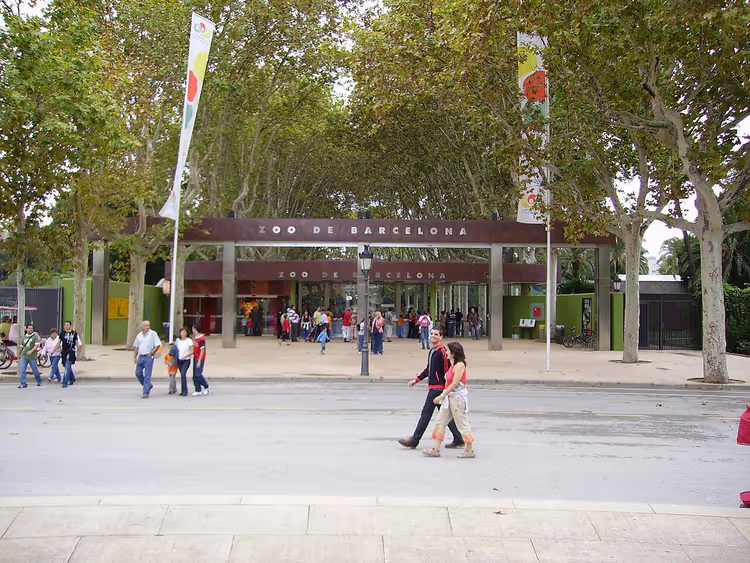
The zoo occupies part of Parc de la Ciutadella, and it's easy to get here after a walk around the city. The collection includes more than 300 animal species and several thousand plants (according to the zoo). Each animal is kept in a spacious enclosure or pool, with signs describing the species nearby.
The zoo participates in programs to help rare animals, so part of its work is invisible to visitors. While you walk around, staff are doing scientific work and receiving grants for the care and relocation of new animals.
It's convenient for kids here: there's a playground, food stands, souvenir kiosks, and picnic areas. You can get around on foot, by train, or by electric vehicle. Animal programs run on a schedule, so check the times on the zoo's website.
Tickets: children's tickets are cheaper than adult tickets, available at ticket offices and online on the official website.
Getting there: Ciutadella-Vila Olímpica metro station (L4), then walk to the park entrance.
Who it's for: kids aged 3 and up who want animals, not museums.
The catch: the grounds are large, and by midday the animals hide in the shade and don't move much.
15. Maritime Museum
 © rameylady from Anderson, SC, USA · CC BYPhoto: rameylady from Anderson, SC, USA, CC BY (https://creativecommons.org/licenses/by/2.0), Wikimedia Commons
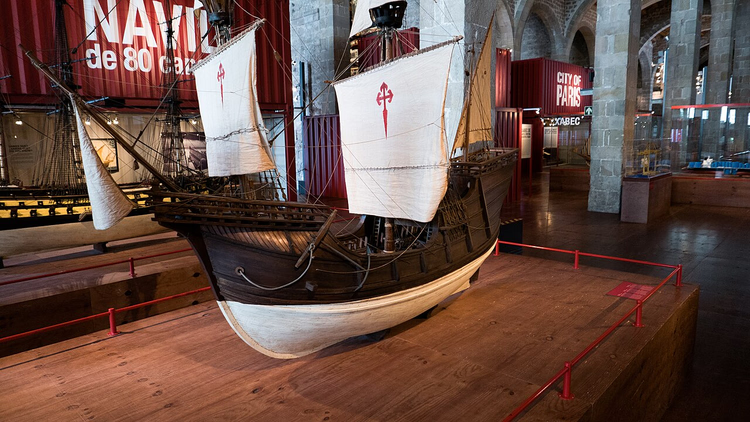
The Maritime Museum occupies the old royal shipyards of Drassanes, where ships were built and repaired from the 13th century onward. In the 18th century, the passage was widened to move a large vessel out, and later the docks served as the city arsenal. In 1936, the shipyards were handed over to the city, the first exhibition opened in 1941, and in 2006 the museum received national status (according to the museum).
For kids, one thing matters here: some of the ships sit in dry docks, and you can board them. You walk across the decks, peek into the hold, and get a sense of how sailors lived during the age of exploration. Caravels and ship models are displayed nearby.
The building itself is a monument: the vaulted ceilings of the shipyards resemble a Gothic cathedral, and even people indifferent to history can see that. You can easily spend an hour or two here.
Tickets: check fares and opening hours on the museum's website.
Getting there: Drassanes metro station (L3), entrance from Avinguda del Paral·lel.
Who it's for: kids aged 6 and up who are interested in ships, and teenagers.
The catch: toddlers aged 3 to 4 get bored quickly here; they need a playground, not an exhibition.
16. Camp Nou Stadium
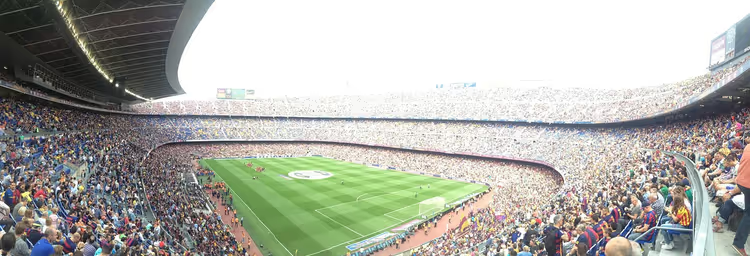
Camp Nou is Barcelona's home arena, opened more than half a century ago. The stadium is currently undergoing a phased renovation: the project will increase capacity to over 100,000 seats and add a retractable roof (according to the club). For young fans, something else matters more: the stadium has a museum with documents, photographs, and players' personal belongings.
You can walk through the stands, peek into the locker room, and see the trophy the club has won more than once. The history of Barça is presented here from the first match to the present day, and part of the exhibition is dedicated to works by Spanish artists.
You need to plan your visit in advance: during construction, some areas are closed, and tours are canceled on match days. Check the calendar on the club's official website right before your trip.
Tickets: tours run in sessions, with prices and available slots on the club's website.
Getting there: Les Corts or Palau Reial metro station (L3), then a short walk along the avenue.
Who it's for: kids aged 7 and up who follow football.
The catch: due to renovations, the tour route changes and the museum is sometimes closed.
17. PortAventura
 © karel291 · CC BYPhoto: karel291, CC BY (https://creativecommons.org/licenses/by/3.0), Wikimedia Commons
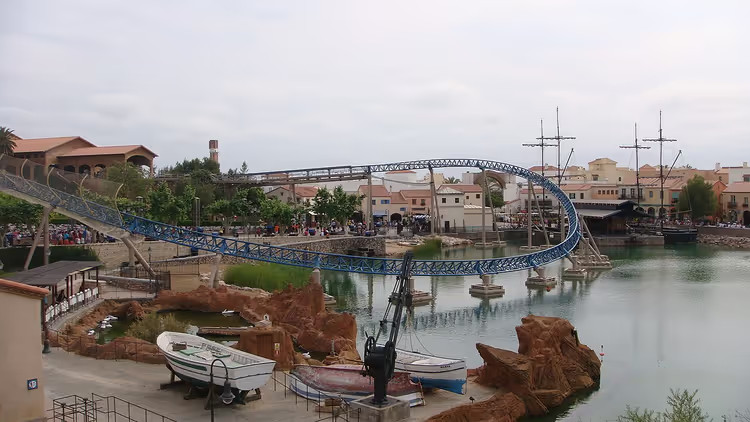
PortAventura (PortAventura World) is a large amusement park about an hour from Barcelona, in Salou. It has not only a water park but also six themed areas: the Mediterranean, the Wild West, Mexico, China, Polynesia, and Sesamo Aventura for younger kids (according to the park).
Each area has its own rides and shows. In the Mexican section you explore Mayan culture, in the Chinese section you descend toward a flying dragon, in the Polynesian section you hear drums in front of a volcano's mouth. Over the course of a day the park puts on more than 100 performances, so kids have no time to get bored.
Plan for a full day and decide in advance whether you're visiting one park or buying a combo ticket. Bring hats: lines for popular rides are out in the open sun.
Tickets: the price depends on the date and the number of parks; buy in advance on the PortAventura website.
Getting there: train from Barcelona Sants station to the PortAventura stop, about an hour.
Who it's for: kids aged 6 and up and families who want a full-day park.
The catch: a day ticket is expensive, and the round trip eats up several more hours.
18. Magic shop-museum
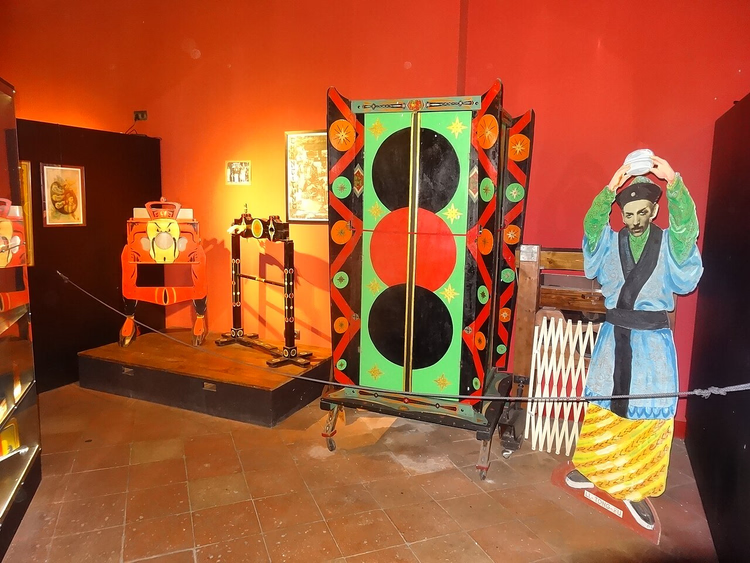 © Jordiferrer · CC BY-SAPhoto: Jordiferrer, CC BY-SA (https://creativecommons.org/licenses/by-sa/4.0), Wikimedia Commons
The magic shop opened in central Barcelona back in the late 19th century. Illusionists bought props, cards, and special boxes here, and later the owner added a small exhibition to the shop. That's how an ordinary store turned into a museum of tricks.
Today you step into a narrow space where the history of illusions lies under glass: antique devices, posters, props. Kids are shown simple tricks and told how to repeat them at home. The shop also sells kits for beginner magicians, and that's the most practical souvenir from the trip.
The museum is small, so don't set aside half a day for it. It's better to combine the visit with a walk through the Gothic Quarter.
Hours: the shop follows city hours; check the exact times before your visit.
Getting there: Jaume I metro station (L4), then a walk through the streets of the Gothic Quarter.
Who it's for: kids aged 6 and up and parents who enjoy close-up tricks.
The catch: there are only a few rooms, and the visit takes less than an hour.
19. Barcelona Bosc Urbà ropes course
 © Enric · CC BY-SAPhoto: Enric, CC BY-SA (https://creativecommons.org/licenses/by-sa/4.0), Wikimedia Commons
Active kids find it hard to stand in front of museum displays, but they won't say no to climbing through a real jungle. At Barcelona Bosc Urbà, the courses are set at different levels: walkways made of planks, rope railings, safety harnesses, and a roof overhead. You can also go here in the rain; the weather won't get in your way.
The courses vary in difficulty. The orange one hangs low above the ground and suits the youngest kids. The blue one goes higher and adds more obstacles; school-age kids from 8 are allowed on it. The red one is the longest and highest, open to kids over 12.
Every participant gets a harness, so parents can wait calmly below. There's only one opponent here: your own fear. After the first course, kids usually ask for a second one.
Rules: admission is based on age and height; everyone gets a short briefing before heading onto the course.
Getting there: the park operates on a seasonal calendar; check the address and hours before you set off.
Who it's for: active kids aged 6 and up and teenagers.
The catch: on weekends there's a line for the courses, so come at opening time.
20. PLOM children's gallery
The PLOM children's gallery is a place for those who can't draw yet but really want to. Nobody judges anyone here: kids work with paints, scraps of fabric, and colored paper, and the best pieces end up on the gallery wall.
Alongside individual drawings, the gallery also creates large collaborative panels, and the whole group takes part. Adults have something to do too: while the kids draw, you can look at the exhibition and relax. Looking at works by well-known artists also helps children: abstract thinking develops faster when there's an example in front of them.
Classes: run on a schedule and in small groups; sign up in advance.
Who it's for: kids aged 4 and up and creative teenagers.
The catch: the gallery is small, and everything depends on the workshop schedule.
Tours and tickets
Guided tours, skip-the-line tickets and activities — most offers can be cancelled free of charge.
See offers on KlookThe widget loads once you give your consent.
Things to do in Barcelona with kids on the map
All twenty places from this selection are gathered on one map. Mark the points in advance so you don't have to crisscross the city twice: Montjuïc, the center, and northern Barcelona are easy to split into three days by area. You can open the map on your phone and build your route right on it.
Attractions in Barcelona for kids
Places on the map
- 1Montjuïc Cable Car Links the port with the hilltop, an 8-minute ride
- 2Tibidabo A classic funfair at the city's highest point since 1889
- 3Magic Fountain of Montjuïc A 1929 hydraulic marvel with music and lighting shows
- 4Ciutadella Park Park with a zoo, a lake and Gaudí's early Cascade Fountain
- 5Poble Espanyol (Spanish Village) Spain's buildings and squares in miniature, built for the 1929 expo
- 6Gran Teatre del Liceu One of Europe's largest opera houses, backstage tours
- 7Park Güell Terraces and Gaudí's mosaic bench, entry by time slot
- 8Horta Labyrinth Park An 18th-century garden with a maze of clipped cypresses
- 9Barcelona Aquarium An 80 m underwater tunnel with sharks and rays in the port
- 10Casa Batlló Gaudí building with a broken-mosaic facade on Passeig de Gràcia
- 11Blau Natural Sciences Museum Interactive exhibition about Earth in Parc del Fòrum
- 12CosmoCaixa Large interactive science museum with a flooded rainforest
- 13Chocolate Museum The history of cocoa in an old monastery, a workshop for kids
- 14Barcelona Zoo Over 300 animal species in Ciutadella Park
- 15Maritime Museum Old royal Drassanes shipyards, ships in dry docks
- 16Camp Nou Stadium Barça's home stadium with the club museum
- 17PortAventura Theme park with six themed zones in Salou
- 18Magic Shop-Museum A magic props shop with a 19th-century display
- 19Barcelona Bosc Urbà Rope Park Multi-level courses with harnesses for different ages
- 20PLOM Children's Gallery Gallery where children draw and make collective murals
⁉️🤔 Frequently asked questions
How much money do you need for a day with kids in Barcelona?
Budget around tickets: check Park Güell prices in its section above (as of 09/2026, Park Güell price list). The Ciutadella and Horta parks will cost you nothing or just a free ticket. For a day with two kids, set aside a budget for entry tickets and food: the total depends on the places you choose and the season.
At what age do kids enjoy the cable car?
The Montjuïc cable car is usually recommended from age 5-6, when a child can calmly look down and isn't afraid of heights. Toddlers have more fun watching the cabins from below, and the ride itself is best planned for the morning, before the wind picks up and the boarding line grows.
When is the best time to visit Barcelona with kids?
May, June, and September are the most comfortable. In July and August, temperatures top 30 degrees, and the parks offer little shade. If you're going in summer, schedule museums, the aquarium, and Casa Batlló for midday, and parks, the cable car, and the zoo for the morning or after 5:00 PM.
Do you need to buy tickets in advance?
Yes, if Park Güell, Casa Batlló, or the Aquarium are on your list. They use 30-minute entry slots, and in high season available times sell out several days ahead (as of 09/2026, Park Güell official website). Other places usually let you in without a reservation.
Where to eat with kids near Ciutadella Park?
The park has kiosks, cafés, and picnic areas, so you can bring your own food. Right next to it starts the El Born neighborhood with tapas bars and pizzerias, and after the zoo it's an easy walk to the waterfront, where family-friendly restaurants are always open.
In short: what's worth booking
The easiest approach is to split your trip by area: one day for Montjuïc, a second for the center with Gaudí and museums, a third for the north with Tibidabo. That way you don't waste time on transit and get more done.
If you have toddlers: go for the Aquarium and Ciutadella Park.
If you have school-age kids: Park Güell, Casa Batlló, the Maritime Museum, and Tibidabo.
If you have teenagers: PortAventura, the cable car, and the ropes course.
Book tickets for the main attractions in advance: Park Güell and Casa Batlló tickets are sold by time slot, and in high season available times run out quickly. For guided tours of Barcelona, check GetYourGuide, and plan your airport transfer with kids through a transfer service.

A small editorial team writing guides for independent travel. We travel ourselves, but we haven’t been everywhere, so we check prices, opening hours and how to get there against official sources.