
















15 Vatican museums: what to see and how to buy a ticket without queuing
Lines to the Vatican Museums in summer stretch for several hours. The complex itself is not one building but two dozen separate collections under one roof. We broke down the fifteen most interesting museums and galleries: what to see in each, how much admission costs, and when the halls are open.
Many people come here for three hours and only manage to see the Sistine Chapel. In reality, the complex takes almost a full day. Below you will find the order of the halls, a time guide, and the honest catches that brochures do not mention.
Ad: this article contains affiliate links, we earn a commission if you book through them, at no extra cost to you.
How the Vatican Museums are organized
The Vatican Museums opened to the public in the eighteenth century and grew into one of the largest museum complexes in the world. All the halls are connected, so there is one entrance, and you walk the route from bottom to top, finishing at the Sistine Chapel. The route is long, and it is easier to decide right away which halls you need and which you can skip.
💡 In short:
- One ticket covers all the halls and the Sistine Chapel only on the day of purchase.
- The halls are open Monday through Saturday, entry until 6:00 PM; on the last Sunday of the month admission is free.
- Prices and opening hours: as of 09/2026, verified on the official website.
No. | Museum | What to see |
|---|---|---|
1 | Pio-Clementine Museum | Laocoön and Apollo Belvedere |
2 | Chiaramonti Museum | Roman portraits and reliefs |
3 | Gregorian Profane Museum | Sarcophagi and mosaics |
4 | Gregorian Etruscan Museum | Etruscan heritage |
5 | Gregorian Egyptian Museum | Mummies and stelae |
6 | Pinacoteca | Paintings by Raphael and Caravaggio |
7 | Pio Cristiano Museum | Early Christian sarcophagi |
8 | Ethnological Museum | Cults of Asia, Africa, and Oceania |
9 | Vatican Library | Frescoes and manuscripts |
10 | Historical Museum | Carriages and the popemobile |
11 | Gallery of Tapestries | Tapestries based on sketches by Raphael's students |
12 | Gallery of Maps | Map of Italy on the corridor walls |
13 | Borgia Apartments | Frescoes by Pinturicchio |
14 | Raphael Rooms | Fresco "The School of Athens" |
15 | Raphael Loggias | Grotesques inspired by the Domus Aurea |
1. Pio-Clementine Museum
 © Sodacan · CC BY-SAPhoto: Sodacan, CC BY-SA (https://creativecommons.org/licenses/by-sa/4.0), Wikimedia Commons
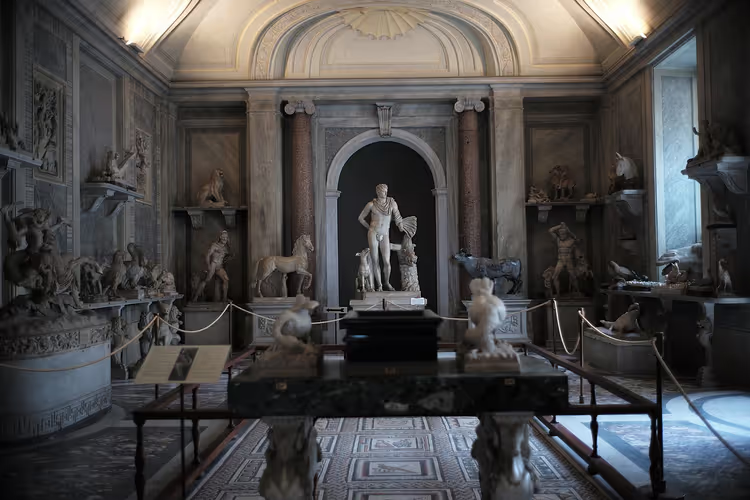
This is the first major museum on the route and one of the main parts of the complex. Greek and Roman sculpture was kept here, and the first collections stood in the orange courtyard of the Belvedere Palace. Over time, separate niches were set aside for the most valuable pieces. In the Rotunda hall, the decor of Nero's Domus Aurea was recreated, and a separate room is devoted to the Egyptian theme: sarcophagi, frescoes, and statues from the third century. If you have little time for the first hall, see Laocoön and the mosaic floor.
- What to see: the niches of Laocoön and Apollo Belvedere, as well as the Rotunda hall with its ancient mosaic floor.
- The catch: this is the first big stop after the entrance, so all tour groups head straight here.
2. Chiaramonti Museum
 © Michal Osmenda from Brussels, Belgium · CC BY-SAPhoto: Michal Osmenda from Brussels, Belgium, CC BY-SA (https://creativecommons.org/licenses/by-sa/2.0), Wikimedia Commons
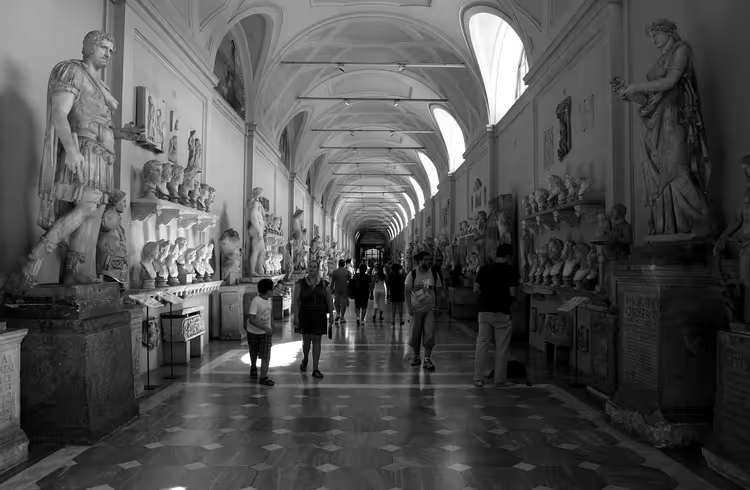
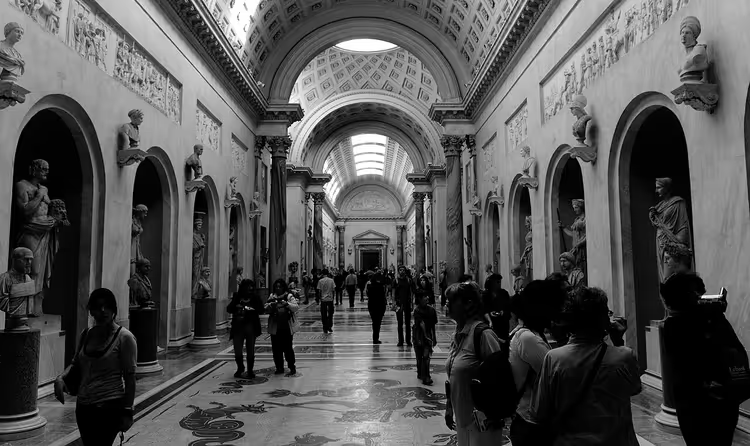
The museum was founded by Pope Pius VII of the Chiaramonti family. The collection includes reliefs and portrait sculpture from Greece and Rome. The main corridor is an arched gallery divided into several dozen sections. Masters of the Academy of Saint Luke worked on its design, and Antonio Canova served as the main decorator. In the Braccio Nuovo, the "new arm," the largest collection of portrait sculpture is kept, while the Lapidary Gallery holds inscriptions from the pre-Christian and Christian periods.
- What to see: an unusually large head of Athena and the portrait sculpture collection in the Braccio Nuovo.
- The catch: the Lapidary Gallery is open only by special request, you cannot just walk in.
3. Gregorian Profane Museum
 © Rabax63 · CC BY-SAPhoto: Rabax63, CC BY-SA (https://creativecommons.org/licenses/by-sa/4.0), Wikimedia Commons
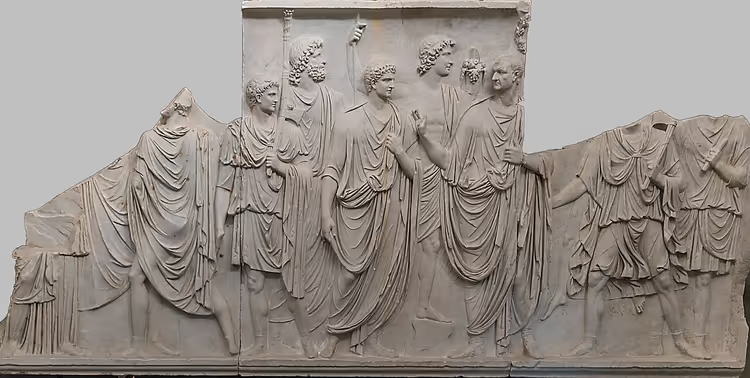
The museum was founded in the mid-nineteenth century, and its collections were initially housed in the Lateran Palace. The core of the collection consisted of secular finds from excavations of that period. Today it is a separate hall of the Gregorian complex. Among the finds are fragments of the Parthenon that have survived to this day. If you are interested in sarcophagi with images of gods and heroes, this is worth a longer stop.
- What to see: statues of Sophocles and Neptune, heads of Athena based on Myron's originals, mosaics from the Baths of Caracalla.
- The catch: a significant part of the collection consists of Roman copies of Greek originals, so there are fewer genuine pieces here than it seems.
4. Gregorian Etruscan Museum
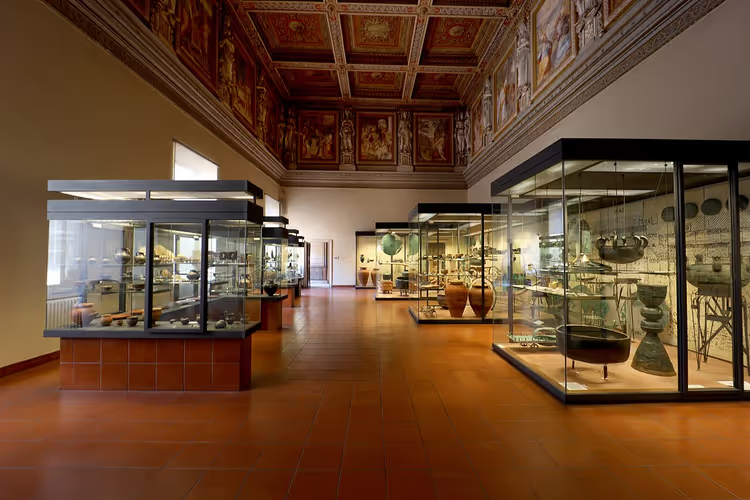 © Fabrizio Garrisi · CC BY-SAPhoto: Fabrizio Garrisi, CC BY-SA (https://creativecommons.org/licenses/by-sa/4.0), Wikimedia Commons
The Etruscan civilization laid the foundation of ancient Roman culture. The exhibition occupies the former Palace of Innocent VIII, and the everyday objects and jewelry of the Etruscans were gathered from excavations in southern Italy. Some halls are designed to resemble temples, tombs, and treasuries. The rest are arranged chronologically: the Archaic hall and the Bronze hall. This way you see not only the objects themselves but also how the Etruscans used them.
- What to see: a mirror with the face of a goddess, ancient oil lamps, vessels for incense, and glass objects.
- The catch: without a guidebook it is hard to make sense of the chronology of the halls, and the labels on the exhibits are brief.
5. Gregorian Egyptian Museum
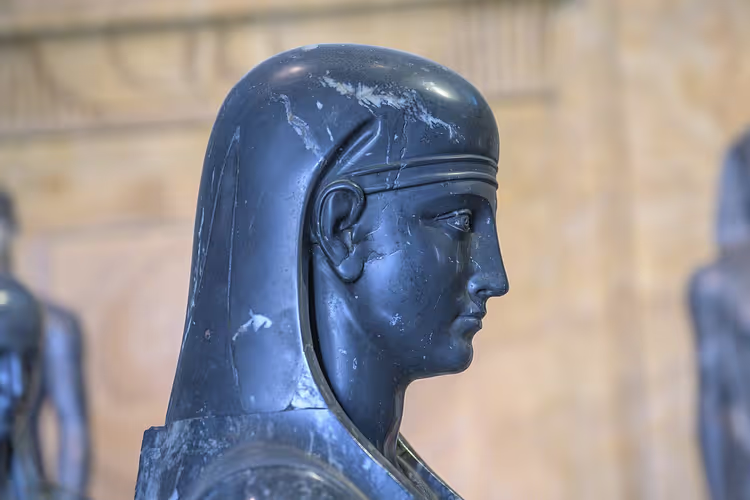
The museum opened in the first half of the nineteenth century, and the name preserves that of Pope Gregory XVI. It houses death masks, busts, and sculptures of ancient Egypt, as well as objects from burial ceremonies. The first drafts of the collection appeared under Pius VII. Today nine thematic halls are open for viewing, and ancient ceramics of Christian and Islamic traditions are displayed nearby.
- What to see: mummies, stelae with hieroglyphs, and the collection of ancient ceramics of Christian and Islamic traditions.
- The catch: some halls are devoted to finds from Syria and Mesopotamia and have nothing to do with Egypt.
6. Picture Gallery (Pinacoteca)
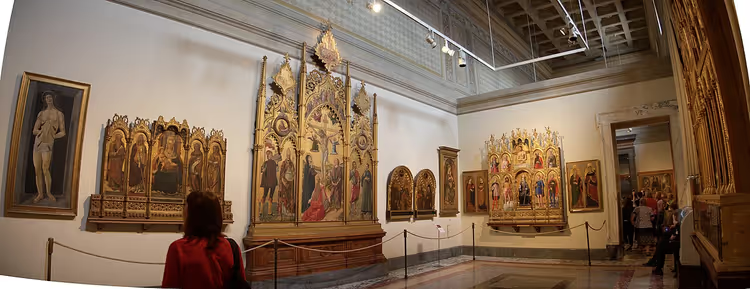 © Vadim Zhivotovsky · CC BYPhoto: Vadim Zhivotovsky, CC BY (https://creativecommons.org/licenses/by/3.0), Wikimedia Commons
In ancient times, a pinacotheca was a collection of paintings donated in honor of the goddess Athena. The modern Vatican gallery appeared in the early twentieth century as a collection of religious painting. It displays works by Italian masters from Giotto to Crespi. Alongside Raphael and Caravaggio, you will find canvases by Crivelli and Bernini. The rooms follow a strict chronological order from the Middle Ages to the Baroque, making it easy to trace how religious painting evolved.
- What to see: paintings by Raphael, Caravaggio, Titian, and Leonardo da Vinci, arranged chronologically.
- The catch: to walk through the entire gallery in order, allow at least an hour.
7. Pio Cristiano Museum
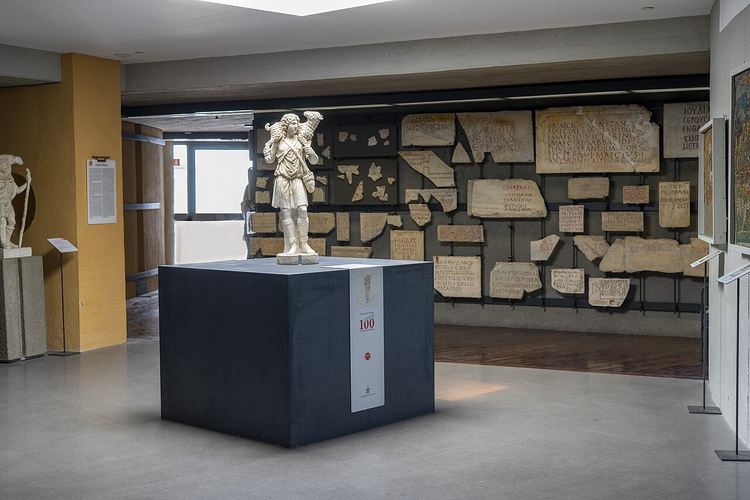 © Fabrizio Garrisi · CC BY-SAPhoto: Fabrizio Garrisi, CC BY-SA (https://creativecommons.org/licenses/by-sa/4.0), Wikimedia Commons
The collection is made up of finds from the early Christian period, most of them discovered in the Roman catacombs. These objects were previously kept in the Lateran Basilica, and the Vatican exhibition opened only toward the end of the twentieth century. The exhibits are grouped by iconographic themes and arranged chronologically. The Sarcophagus of the Good Shepherd was created around the fourth century and is one of the hall's main relics.
- What to see: the Sarcophagus of the Good Shepherd and reliefs on classical themes.
- The catch: some of the sarcophagi are eighteenth-century restorations rather than the original ancient appearance.
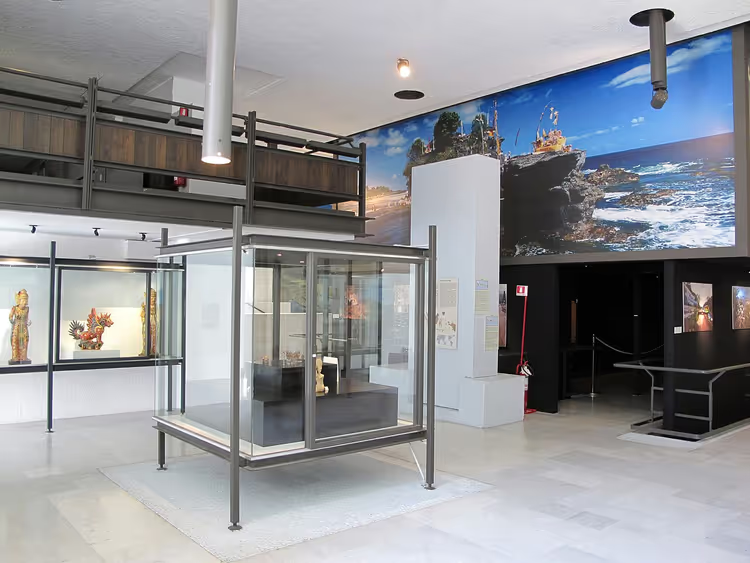
8. Ethnological Missionary Museum
 © Sailko · CC BYPhoto: Sailko, CC BY (https://creativecommons.org/licenses/by/3.0), Wikimedia Commons
The museum was first housed in the Lateran Palace, then moved to the Vatican, where a separate building was constructed for the collections. The holdings grew from the first tens of thousands of items to more than one hundred thousand objects (as of 09/2026, official website). The focus is on the religious cults of different peoples. If you are interested in more than just Europe and antiquity, this hall will show you the cults of extinct and living religions.
- What to see: objects from Japan, China, India, Korea, Tibet, Africa, and Oceania.
- The catch: the exhibition is aimed primarily at specialists; a casual visitor will find it a jumble of disconnected objects.
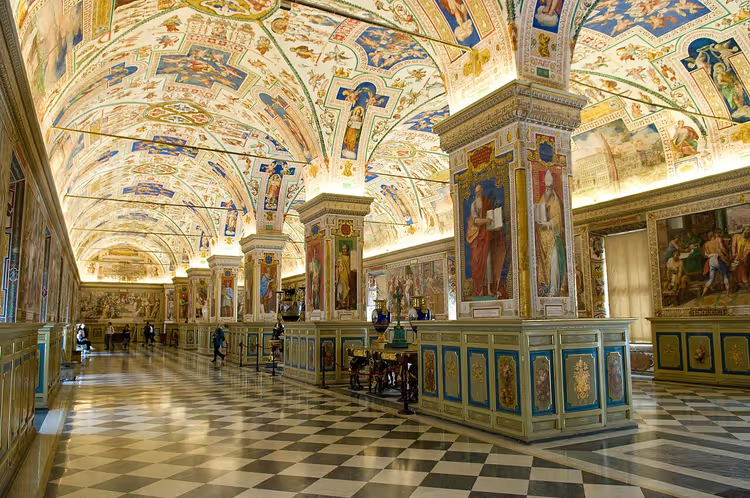
9. Vatican Library
 © Michal Osmenda from Brussels, Belgium · CC BY-SAPhoto: Michal Osmenda from Brussels, Belgium, CC BY-SA (https://creativecommons.org/licenses/by-sa/2.0), Wikimedia Commons
The Apostolic Library is considered the most important part of the museum complex. It houses books dating back to the early Middle Ages, manuscripts, maps, and a coin collection. The holdings are still being expanded to this day. Medals are also kept here, and the frescoes in the halls were created by the finest masters of their time. It is this decoration that puts the Library on the visitor route.
- What to see: the richly decorated halls and frescoes.
- The catch: only a small part of the premises is open to tourists; the rest is accessible only to researchers.
10. Historical Museum
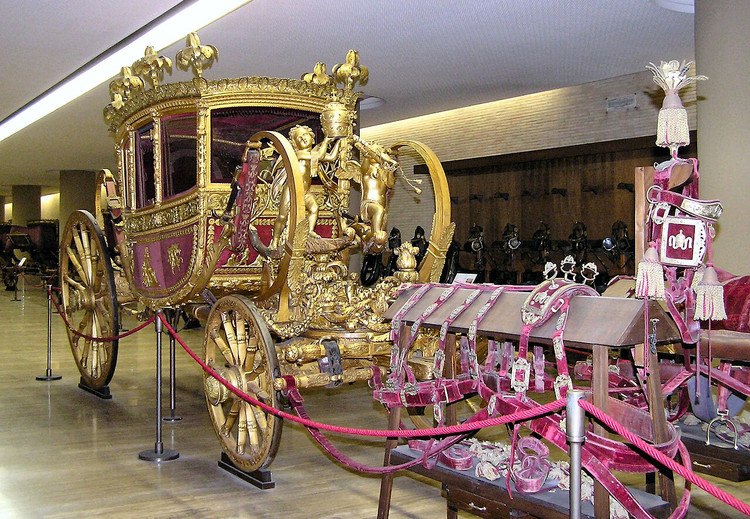
Getting in here is difficult: by regulation, the number of visitors cannot exceed forty people at a time (as of 09/2026, on the official museum portal). In return, it houses uniforms, documents, saddles, palanquins, and carriages of all the popes.
- What to see: the ceremonial carriage of Leo XII, the first Vatican locomotive, and the popemobile.
- The catch: because of the forty-person limit, tickets here are harder to get than for other halls.
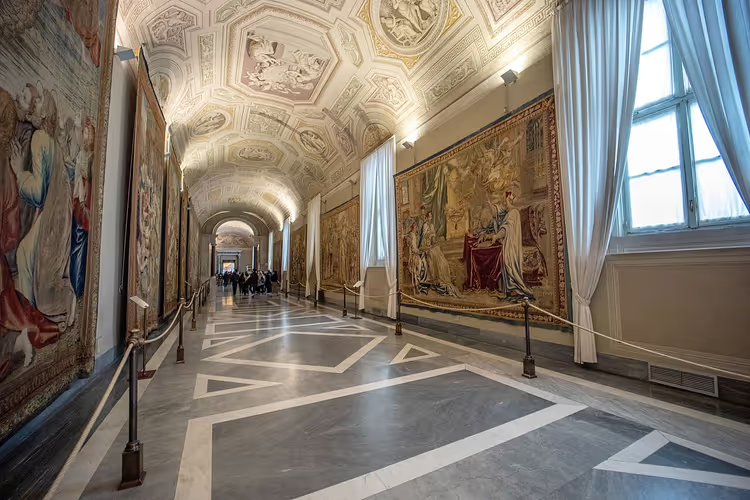
11. Gallery of Tapestries
 © Fabrizio Garrisi · CC BY-SAPhoto: Fabrizio Garrisi, CC BY-SA (https://creativecommons.org/licenses/by-sa/4.0), Wikimedia Commons
The Gallery of Tapestries is part of the triad of main galleries in the Apostolic Palace. It opened in the last quarter of the sixteenth century, and the architect was Mascherino. Tapestries with biblical scenes based on sketches by Raphael's students hang here. Ten tapestries are displayed along the hundred meters of the gallery, each devoted to its own subject. They were made by Flemish masters from the workshop of Pieter van Aelst.
- What to see: tapestries by Flemish masters based on motifs from the Old and New Testaments.
- The catch: the hall is dimly lit and the tapestries hang high, so fine details are only visible up close.
12. Gallery of Maps
 © edwin.11 · CC BYPhoto: edwin.11, CC BY (https://creativecommons.org/licenses/by/2.0), Wikimedia Commons
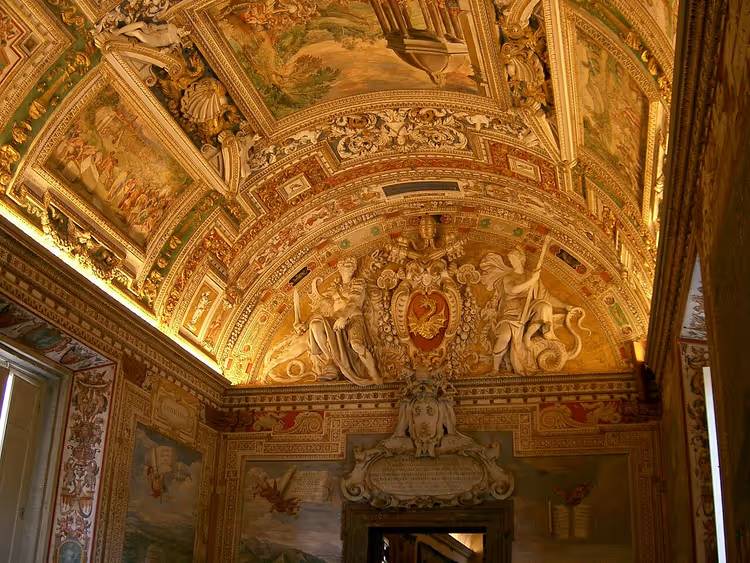
The gallery took almost two years to create, with Ottaviano Mascherino in charge of the architecture. The corridor is painted from floor to ceiling with topographical maps of Italy from the era of papal power at its height. The hall is divided into seventeen sections. The west wing of the Belvedere was extended by almost a full story to accommodate the paintings. The maps show papal lands and the main city-states of Italy at the time, and between them the masters placed scenes from the Old Testament.
- What to see: maps of Italy's regions, as well as mythological figures and sea monsters on the walls.
- The catch: it is a passage gallery, and many people walk straight through without examining the paintings.
13. Borgia Apartments
 © sailko · CC BY-SAPhoto: sailko, CC BY-SA (https://creativecommons.org/licenses/by-sa/3.0), Wikimedia Commons
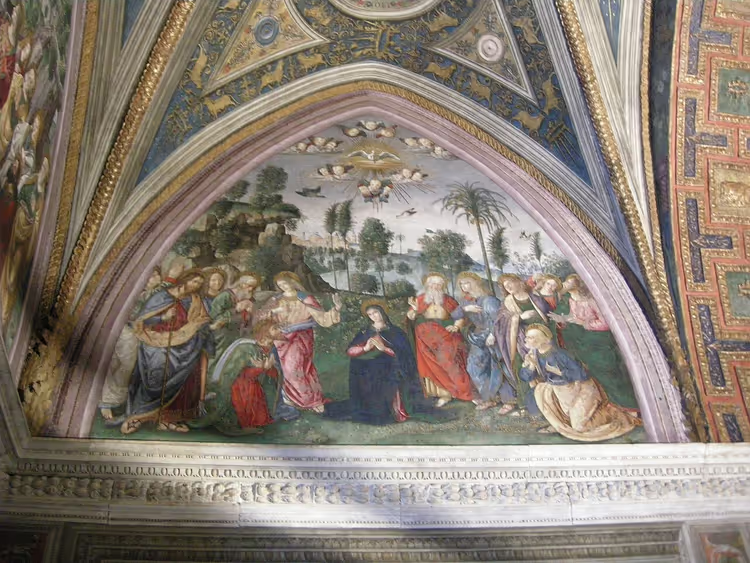
These rooms belonged to Pope Alexander VI of the Borgia family. After his death, subsequent pontiffs did not occupy the richly decorated chambers and turned them into a museum. The master Pinturicchio and his students worked on the paintings. The halls are named after the motifs of their frescoes: the Hall of Mysteries of the Faith, the Hall of Saints, the Hall of Pontiffs, and the Hall of Miracles of the Faith. In the Hall of Sibyls and Prophets, the planets known at the time were once depicted.
- What to see: the Hall of Sibyls and Prophets, the Hall of Saints, and the Hall of Sciences with paintings honoring the liberal arts.
- The catch: to examine Pinturicchio's frescoes, you will have to fall behind the group; it is always crowded here.
14. Raphael Rooms

The Rooms came about after the death of Alexander VI: the next pope, Julius II, refused to live in the Borgia Apartments. The new chambers were decorated by the young Raphael together with his students. Four rooms were decorated in total. Raphael painted the Stanza della Segnatura on themes of human intellectual activity: theology, philosophy, poetry, and law. His students finished the last room after the master's death.
- What to see: the fresco "The School of Athens" in the Stanza della Segnatura, with Aristotle and Plato at the center.
- The catch: "The School of Athens" is the most crowded spot after the Sistine Chapel; photographing the fresco without people in the frame is almost impossible.
15. Raphael Loggias
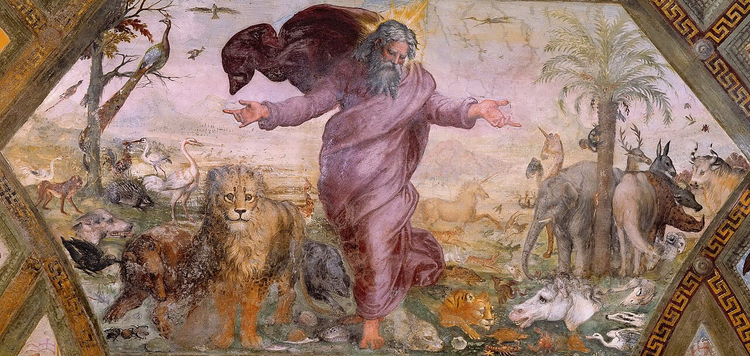
The Loggias are attributed to the High Renaissance period; the project was designed by the architect Bramante. Raphael Sanzio decorated the pilasters, vaults, and walls together with his students. The ornaments were inspired by the grotesques from the Golden House in Rome. The loggias offered a view of Rome, and in total the masters created more than fifty compositional elements of painting. Together they read as a single "Raphael Bible."
- What to see: the repeating ornaments and frescoes that have earned the loggias the name "Raphael Bible."
- The catch: the loggias are not always open; some rooms are closed, so not everyone manages to get inside.
Tickets and opening hours
A full ticket costs 20 € at the ticket office and 25 € with Skip the Line online booking (as of 09/2026, official Vatican Museums website). A reduced student ticket costs 10 €, school groups pay 5 €, and children under 7 enter free (as of 09/2026, official Vatican Museums website). The ticket is valid only on the day of your visit and cannot be refunded.
What | Price | Conditions |
|---|---|---|
Full ticket | 20 € | at the ticket office, no booking |
Skip the Line full ticket | 25 € | online booking on the official website |
Reduced (students) | 10 € | with ID |
Children under 7 | free | every day |
Last Sunday of the month | free | entry until 12:30 |
Prices and conditions are based on official data (as of 09/2026, official Vatican Museums website).
The halls are open Monday through Saturday from 8:00 to 20:00, with last entry at 18:00. On the last Sunday of the month the museum is open from 9:00 to 14:00 (as of 09/2026, on the Vatican Museums website). A timed entry slot is worth booking in advance on Tiqets: without a booking you will stand in line for an hour or more. If you get a morning ticket, arrive at opening time: lines are shorter in the first hours, and the frescoed halls are still empty.
Tours and tickets in Vatican Museums
Guided tours, skip-the-line tickets and activities — most offers can be cancelled free of charge.
See offers on TiqetsThe widget loads once you give your consent.
From Fiumicino Airport to the Vatican, the most convenient option is a taxi or a pre-booked transfer; the trip takes about an hour. The Leonardo Express train goes to Termini station, and from there you can take metro line A to Ottaviano or Cipro. Booking a transfer from Fiumicino in advance is worth it if you arrive late in the evening.
If you want to see the complex with a guide, a tour of the Museums and the Sistine Chapel on GetYourGuide is worth booking for the same morning as your ticket. Separate entry to St. Peter's Basilica is not included in the Museums ticket; you need to book a separate slot for it.
Vatican Museums on the map
The entrance to the Museums is on Viale Vaticano; the nearest metro stations are Ottaviano and Cipro on line A. The map below shows the complex itself; use it when planning your route.
⁉️🤔 Frequently asked questions
Do I need to buy tickets in advance?
Yes, in summer the line without online booking takes at least an hour. A "Skip the Line" ticket costs €25 and is tied to a specific entry time (as of 09/2026, official website). Book a few days ahead; in high season, time slots sell out quickly.
Which days are the museums closed?
The complex is closed on Sundays, except the last Sunday of the month. The halls are also closed on major Catholic holidays. We check the current list of closing days on the official Vatican Museums website.
How much time do I need for a visit?
Plan for at least half a day. You walk through all the halls on foot along a single route, and a relaxed visit with stops at the frescoes takes almost the whole day. If you are short on time, head straight to the Sistine Chapel and leave the Pinacoteca and the Library for next time.
Is the Sistine Chapel included in the ticket?
Yes, entry to the chapel is included in the regular ticket; you do not need to pay separately. Photography is prohibited inside, and visitors are asked to keep their voices down. The chapel is the last hall on the route, and you can only exit it toward the museum exit.
Can I come with children?
Yes, children under seven enter free of charge. A stroller will be inconvenient in some halls because of stairs, and in the Sistine Chapel a child will get bored standing in one place for a long time. Plan your visit for the morning, when the halls are less crowded.
In short: what to book
If you are visiting the Vatican for the first time, get a ticket with a morning time slot and plan for the whole day: the first rooms are best seen before the crowds, and the Sistine Chapel should be left for the finale. Art lovers should add separate time for the Pinacoteca and Raphael's Rooms.
- First visit: a ticket with a morning time slot and, if you like, a guide.
- Painting and the Renaissance: the Pinacoteca, Raphael's Rooms, Raphael's Loggias.
- Short on time: the Sistine Chapel, Raphael's Rooms, and the Gallery of Maps.
- Staying nearby: hotels near the Vatican on Trip.com.
Check the opening hours before your trip: the museums close some rooms on holidays, and entry stops two hours before closing. A good visit starts with a ticket bought in advance.

A small editorial team writing guides for independent travel. We travel ourselves, but we haven’t been everywhere, so we check prices, opening hours and how to get there against official sources.