
















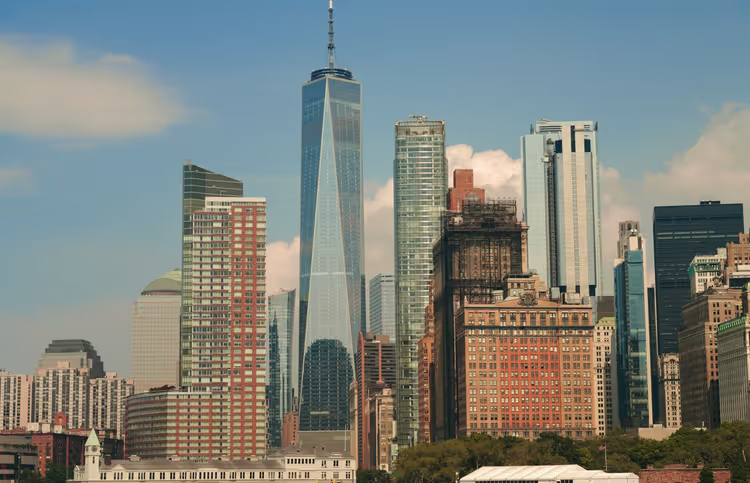
New York from another side: 18 places from a cable car to observation decks
New York is hard to cover in a single trip. The metropolis stretches across five boroughs, and a typical Manhattan route wears you out fast.
We've put together 18 places that show the city from a different angle. They include a cable car over the East River, Brooklyn parks, and four observation decks. We compared the spots by price, hours, and lines.
In short: plan two to three days for the whole list, and book observation deck slots in advance. A ticket to the 86th floor of the Empire State Building starts at $46 (as of 09/2026, Empire State Building website).
Ad: this article contains affiliate links. We earn a commission if you book through them, at no extra cost to you.
1. Roosevelt Island Tramway
💡 In short:
- A ticket costs the same as one subway ride.
- The ride takes a few minutes, and the views open up right from the cabin.
- Fares and hours: 09/2026, verified on the official MTA website
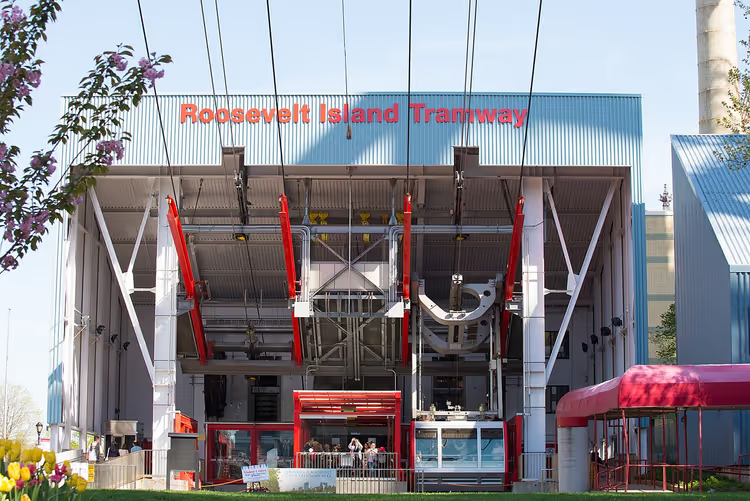
The tramway connects Roosevelt Island to Manhattan and hangs over the East River. The route is 940 meters long, and its highest point rises 76 meters above the water (as of 09/2026, operator). For a long time it was the only way to reach the island from Manhattan.
 © Fletcher · CC BYPhoto: Fletcher, CC BY (https://creativecommons.org/licenses/by/4.0), Wikimedia Commons
But the tramway became famous not for transit, but for film. It has been shot in more than a dozen movies, from fantasy to science fiction. A ride costs the same as one subway trip, $2.90 (as of 09/2026, MTA fares). You pay by card or phone through the OMNY system, there are no turnstiles.
The cabins travel at about 29 kilometers per hour and hold up to 110 people, so the line at the station moves quickly (as of 09/2026, speed and capacity). The ride itself lasts less than five minutes, and in that time you glide over the island and the Manhattan waterfront.
Take the ride at sunset: the cabin moves over the water while Midtown gradually lights up. Grab a spot by the window, and note that the return trip is paid separately.
2. Museum Mile
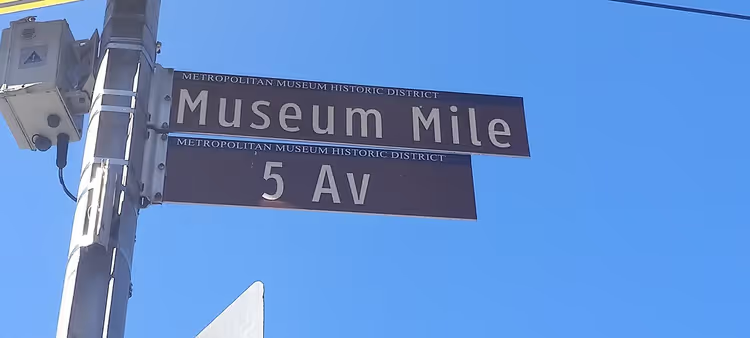
Museum Mile is the name for the stretch of Fifth Avenue from 82nd to 105th Street. In just over a mile, more than a dozen museums stand here (as of 09/2026, Metropolitan Museum). The stretch is also called "Millionaire's Mile."
 © Kidfly182 · CC BYPhoto: Kidfly182, CC BY (https://creativecommons.org/licenses/by/4.0), Wikimedia Commons
The Met stands in the middle of the Mile. It is one of the most visited art museums in the world and ranks among the top five globally by visitor numbers (as of 09/2026, Metropolitan Museum). Nearby are the Museum of the Jewish People, the Goethe Center, and the Design Academy. In June, the street is closed to cars for a day for the Museum Mile Festival. You can walk the entire mile from end to end and see the facades of all the museums.
Every second Tuesday, the neighborhood museums hold an open house and admit visitors free of charge on a special schedule (as of 09/2026, open house schedule). On other days, book a morning slot: before the first tour groups arrive, you can cover two or three museums without the crowds.
Want a guide: New York museum tours on GetYourGuide. The line at the Met is shorter right after opening, so book a weekday morning slot.
3. Barnes & Noble
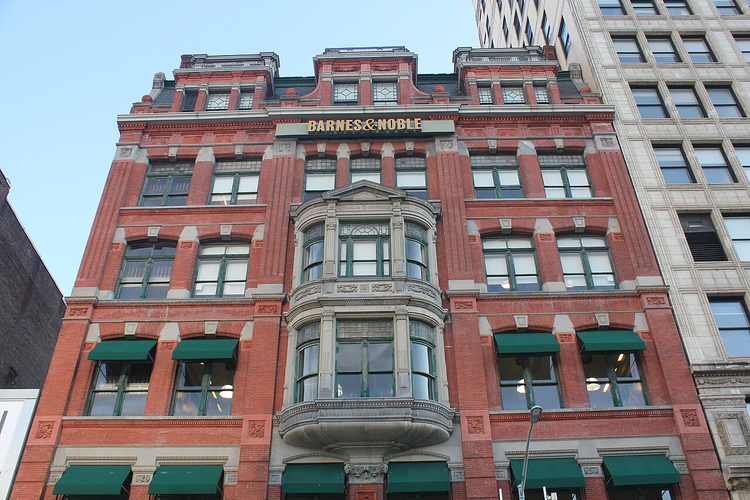
Barnes & Noble works not only as a store but also as a cultural center with reading chairs. You pick up a book you like, sit down, and read, and nobody watches the clock for you. The chain's founder, Stephen Riggio, built an entire empire of reading culture around this idea.
 © Epicgenius · CC BY-SAPhoto: Epicgenius, CC BY-SA (https://creativecommons.org/licenses/by-sa/4.0), Wikimedia Commons
The chain has its own publishing house, which puts out richly illustrated children's books. Visitors say the covers and the smell of printer's ink here are more powerful than e-books. Famous people stop by, and there are interest-based clubs and art meetups.
You'll come in for an hour and lose track of time. Grab a coffee and sit in a chair by the window, then continue your Mile route from here. Selection and store locations are on the chain's website.
4. High Line
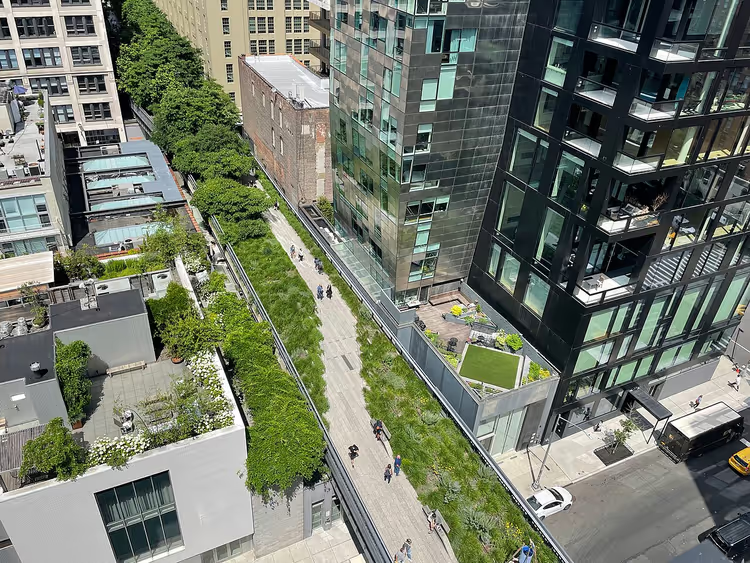
The High Line grew out of a former elevated railway that was turned into a park. The promenade hangs about ten meters above the ground in the southern part of Manhattan. The route is just over one and a half kilometers long, and admission is free (as of 09/2026, official High Line website).
 © Wil Fyfordy · CC BY-SAPhoto: Wil Fyfordy, CC BY-SA (https://creativecommons.org/licenses/by-sa/4.0), Wikimedia Commons
From the elevated walkway you can see the IAC Building, nicknamed the "Iceberg," and a residential building designed by Jean Nouvel on Eleventh Avenue. The landscape was assembled from more than two hundred plant species, and benches and drinking fountains were placed along the path. You can walk the entire route in forty minutes if you don't stop at every viewing platform.
Exit at the north end and walk down to Chelsea Market. A weekend morning here is noticeably quieter than the afternoon.
5. Lowline Lab
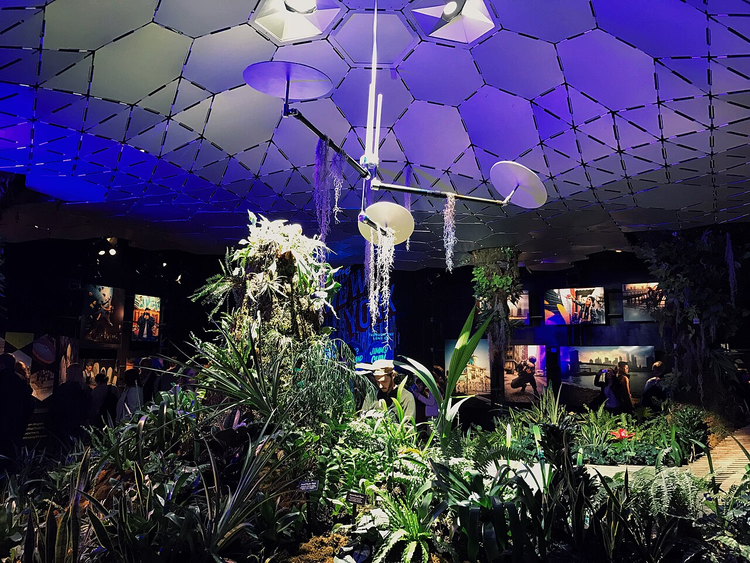
Lowline Lab was set up in an underground warehouse space where light was collected through a system of reflectors. That light was enough for rare plants. The site covered several hundred square meters, and thousands of exotic species grew inside.
 © Zerae123 · CC BY-SAPhoto: Zerae123, CC BY-SA (https://creativecommons.org/licenses/by-sa/4.0), Wikimedia Commons
The project was conceived by James Ramsey and Dan Barasch. The goal: to bring together plants from different climate zones that don't occur together in nature. The terraces were arranged in cascades, and the irrigation systems ran automatically.
The catch: Lowline Lab has been closed since 2017, and the underground park project was scrapped. You can't visit the site now, so don't put it on your route.
6. Prospect Park
Prospect Park is considered one of Brooklyn's main parks. The idea for the park emerged in 1859, and at the turn of the century it was actively improved: walking areas, entrances, and sculptures were added (as of 09/2026, official Prospect Park website). More than ten million people come here every year.
The natural terrain was used wisely. The water area was shaped with cascading waterfalls, and the large lake became a venue for fishing festivals. The Brooklyn Botanic Garden and an Italianate mansion by architect A. J. Davis operate inside. The park's layout was designed in the mid-19th century and has barely changed since (as of 09/2026, park history).
Here you can ride horses, play baseball, or cover more than sixty kilometers of walking and biking trails. In winter the lake freezes over and people skate on the ice, and in the warm season the zoo is open.
7. New York botanical garden
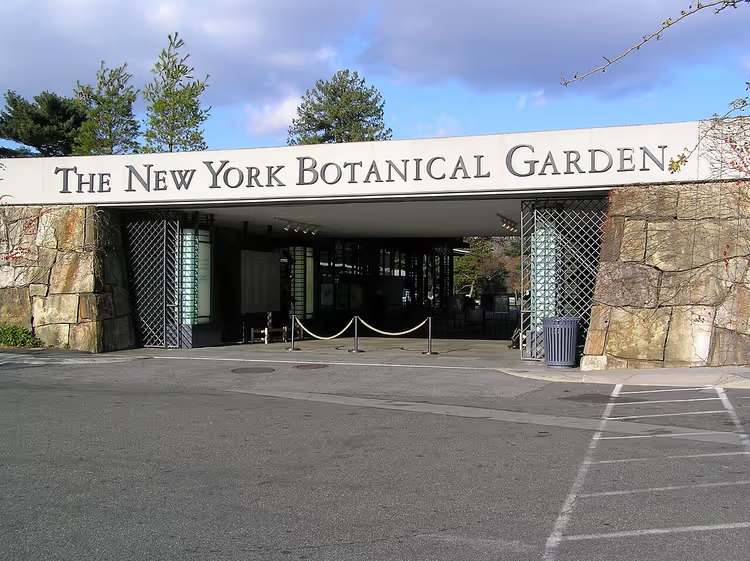
The garden in the Bronx needs at least a full day. The grounds span over a hundred hectares and include the Thain Family old-growth forest, the Peggy Rockefeller Rose Garden, a Victorian conservatory, the Rock Garden, and the Azalea Garden (as of 09/2026, official NYBG website). In summer the garden hosts classical and jazz performances, and family programs run on weekends.
 © Anthony22 at English Wikipedia · CC BY-SAPhoto: Anthony22 at English Wikipedia, CC BY-SA (http://creativecommons.org/licenses/by-sa/3.0/), Wikimedia Commons
Start your route at the Conservatory Gate: the info center will tell you about the event schedule, deals, and timings. Three hours is enough for the main conservatories; allow a full day for a complete walkthrough. In spring, see the Peggy Rockefeller Rose Garden; in fall, add the Rock Garden and the Azalea Garden.
Wear comfortable shoes and plan for the whole day. You'll return to the gate by the same route, and the info center is open from the morning.
8. Secret bar Apotheke
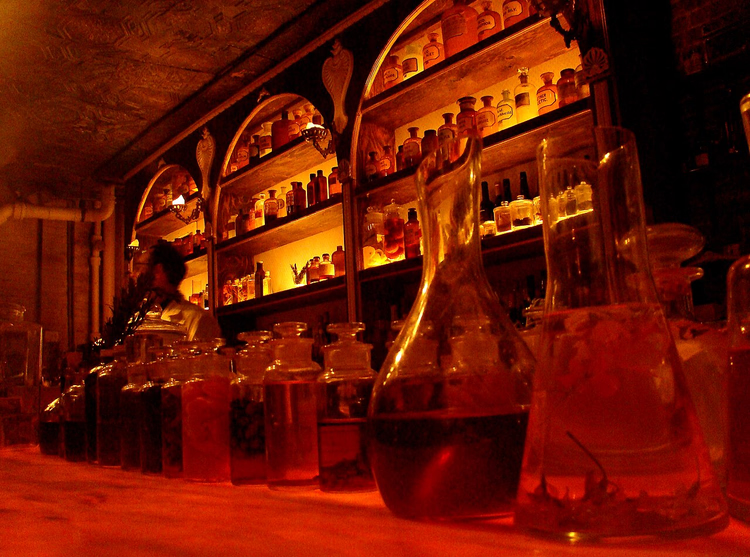
Apotheke Bar sits in Chinatown on a street locals call "the bloody angle." During Prohibition, a pharmacy opened here that sold more than just medicine. Today the bar crafts signature cocktails from herbal tinctures, and each drink has its own purpose: to relieve stress or fatigue.
 © istolethetv · CC BYPhoto: istolethetv, CC BY (https://creativecommons.org/licenses/by/2.0), Wikimedia Commons
The bartenders play the role of healers and match a drink to each guest. The tinctures are made from organic ingredients grown in the bar's own garden or sourced from farmers using a proprietary recipe. You'll step into the atmosphere of an old pharmacy, not a typical cocktail bar.
Who it's for: lovers of the exotic and unusual presentation. You can walk there from Canal Street in a few minutes.
9. Secret bar Campbell Apartment
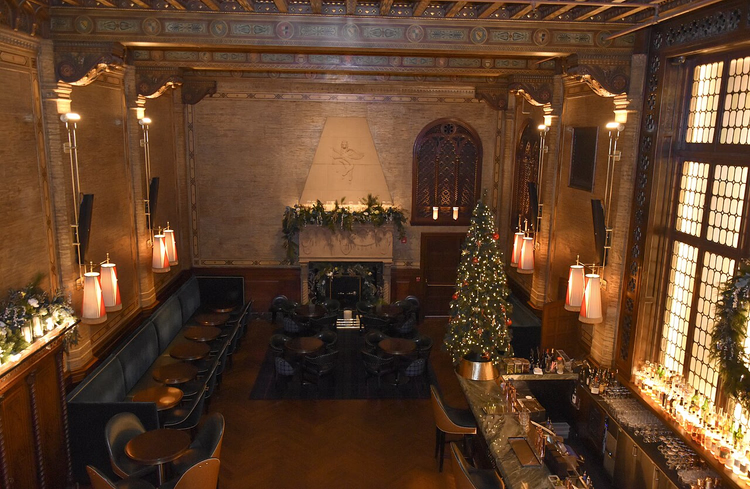
Campbell Apartment hides inside Grand Central Terminal, and you will barely find it in guidebooks. The idea came from railroad executive John W. Campbell: in the evenings he turned his office into a club for business people. The parties were private, for a select crowd only.
 © Ɱ · CC BY-SAPhoto: Ɱ, CC BY-SA (https://creativecommons.org/licenses/by-sa/4.0), Wikimedia Commons
Today the bar serves a martini that regulars consider the best in the city. Another plus: you ride up to the second floor in an art deco elevator, and the room itself has kept its old-world atmosphere. Who it's for: anyone looking for a non-touristy evening in the center.
Getting there is easy: you walk into Grand Central and look for the entrance from the main concourse. Pick a weekday evening so you can sit at the bar without a rush.
10. Mari Vanna restaurant
Mari Vanna brings Russian cuisine to Manhattan. The interior is styled like a Stalin-era apartment: matryoshka dolls, crystal, and a library of samizdat. The dishes come from the same place: shchi, borscht, cutlets with mashed potatoes, mushrooms, and beef stroganoff.
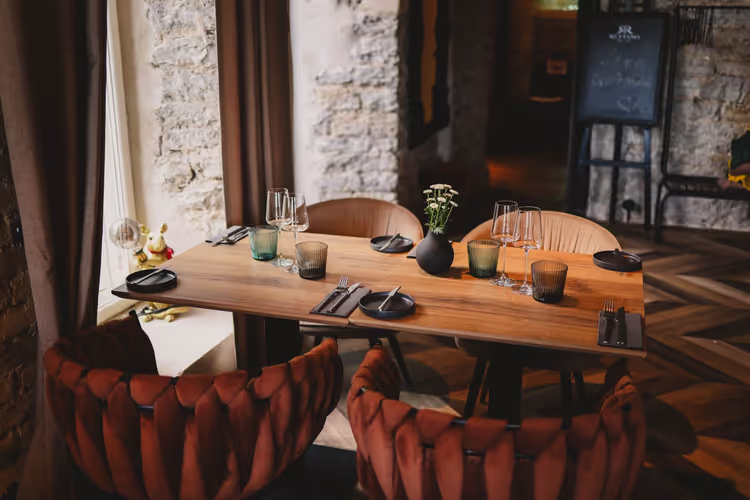
The concept is built around the image of a fussing grandmother who makes sure every guest is full and happy. They serve thick sour cream in a clay pot and well-browned cutlets. You come here for a relaxed dinner, not for trendy plating. Who it's for: anyone who misses familiar flavors.
11. The IDES bar
The IDES sits on a Brooklyn rooftop and opens up a panorama of Manhattan with a glass in your hand. Inside there is a small covered area, and outside there is an open terrace. There is no full kitchen and almost no tables, but you will not forget the sunsets over the city.
Come early or book a spot: getting in with a group is hard. The bar opens in the afternoon. You will come for an hour or an hour and a half, more for the view than for dinner. The catch: you cannot grab a bite here, there is no kitchen, and seating is very limited.
12. The Cloisters museum
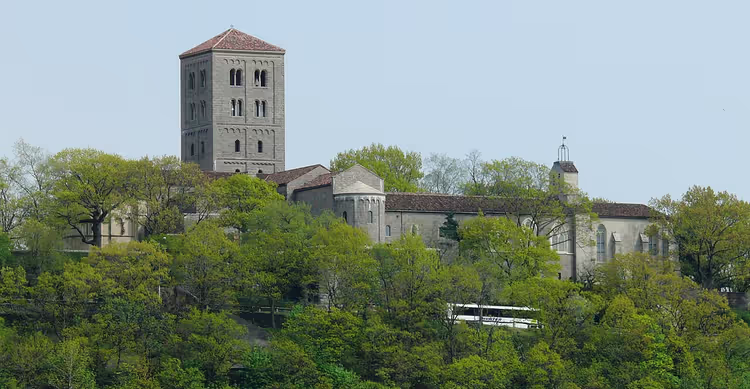
The Cloisters is a medieval art museum in northern Manhattan. The collection of Gothic and Romanesque art was assembled with Rockefeller funding, and five cloisters from 12th and 13th century French monasteries were brought together to house it (as of 09/2026, official The Met website). The collection is arranged chronologically across nine galleries.
 © Paweł Drozd on Wiki Drozdpl cropped by Beyond My Ken ( talk ) 17:05, 27 December 2013 (UTC) · CC BY-SAPhoto: Paweł Drozd on Wiki Drozdpl cropped by Beyond My Ken ( talk ) 17:05, 27 December 2013 (UTC), CC BY-SA (https://creativecommons.org/licenses/by-sa/3.0), Wikimedia Commons
More than five thousand artifacts span the entire era. Among the exhibits, the early 15th century "The Hunt of the Unicorn" tapestries stand out. Nearby hang sculptures, illuminated manuscripts, reliquaries, and ivory carvings. The five cloisters were brought from different French monasteries and joined into a single ensemble, and the building itself stands in a park above the Hudson (as of 09/2026, official The Met website). You will walk through the galleries in two to three hours and exit through the inner courtyard.
The ticket is combined with the Metropolitan Museum on Fifth Avenue, so one admission covers both museums. Check the schedule for your visit day on the website.
13. Empire State Building
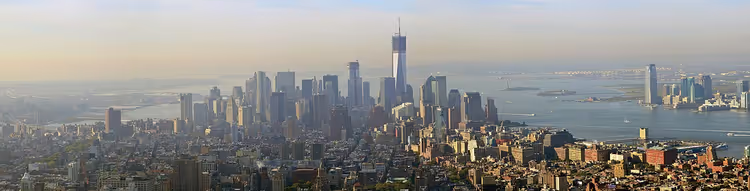
The Empire State Building rises to 443 meters including its spire and ranks among America's engineering marvels. The observation deck occupies the 102nd floor, and 73 high-speed elevators handle the ride up (as of 09/2026, official website). A ticket to the 86th floor starts at $46, and the Top Deck with access to both levels starts at $81 (as of 09/2026, official Empire State Building website).
 © Gzzz · CC BY-SAPhoto: Gzzz, CC BY-SA (https://creativecommons.org/licenses/by-sa/3.0), Wikimedia Commons
The deck stays open late, so you will have time to capture the city lights at night. If you want to save time, book a timed slot online right away: Empire State Building tickets with a time slot.
Below the upper floors are offices and a lobby with a mural themed around the wonders of the world, where the skyscraper itself is marked as the eighth wonder.
14. Rockefeller Center observation deck
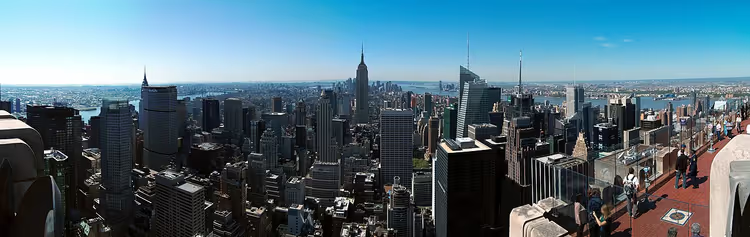
Top of the Rock at Rockefeller Center is considered the second most popular observation deck after the Empire State Building. The open terraces span three floors, from the 67th to the 70th, and the convenient glass panels don't get in the way of photos (as of 09/2026, official website). On the plus side, this deck gives you a view of the Empire State Building itself, so your shots will turn out better.
 © Šarūnas Burdulis from USA · CC BY-SAPhoto: Šarūnas Burdulis from USA, CC BY-SA (https://creativecommons.org/licenses/by-sa/2.0), Wikimedia Commons
The advantage of this deck is the short lines. Rockefeller Center is 60 meters lower than the Empire State Building, and some visitors head to the tallest skyscraper instead. The sunset slot sells out faster than the others, so book it in advance.
You'll go up, walk around all three levels, and walk back to the center of the city.
15. One World Observatory
One World Observatory opened in 2015 at Freedom Tower, the tallest building in the city. The deck occupies the 102nd floor, and a high-speed elevator takes you up in 47 seconds (as of 09/2026, official website). The floor in the viewing area is glass, so you can see the streets below under your feet.
 © Christian David · CC BY-SAPhoto: Christian David, CC BY-SA (https://creativecommons.org/licenses/by-sa/4.0), Wikimedia Commons
On the 100th floor there's a "sky portal" with cameras that show what's happening at the base of the tower. The panorama opens up onto Manhattan, Brooklyn, and the Statue of Liberty. You can also enter through the Oculus and Brookfield shopping centers if you want to combine the observation deck with shopping.
Pick your price based on the time slot on the website: it varies by date and time. There's a restaurant and a coffee shop nearby, but the restaurant requires a reservation. Come at opening time, before the elevator gets crowded.
16. Vessel observation deck
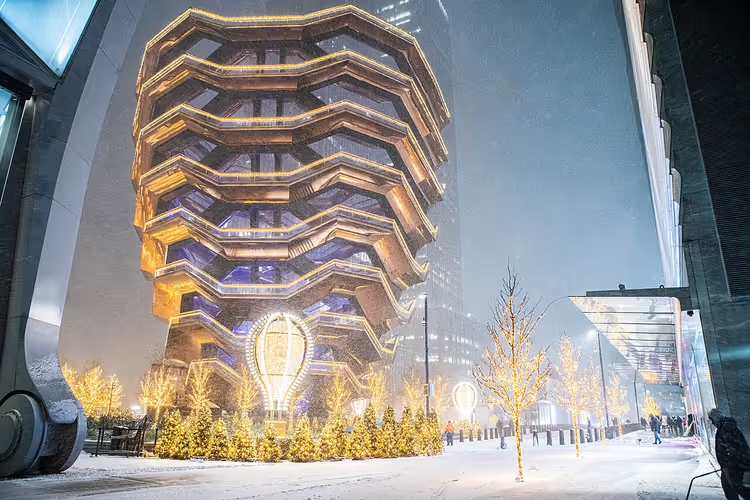
Vessel is built as a labyrinth of 154 flights of stairs, 80 platforms, and 2,500 steps (as of 09/2026, official website). The structure rises 60 meters above ground level in the Hudson Yards complex. From here you can see the entire futuristic district.
 © Anthony Quintano from Mount Laurel, United States · CC BYPhoto: Anthony Quintano from Mount Laurel, United States, CC BY (https://creativecommons.org/licenses/by/2.0), Wikimedia Commons
Tickets start at $10, children under five get in free, and New York City residents enter free on Thursdays (as of 09/2026, Vessel terms). Shops and eateries are nearby, in the Hudson Yards complex. Entry is by time slot, and once inside you'll climb the spiral staircases and walk around the platforms at different heights (as of 09/2026, official Vessel website). The catch: slots get booked in advance, and reservations can go as deep as two weeks out. In the morning you can try to book a spot for the day of your visit.
You'll climb the steps and walk around the platforms in about an hour.
17. Whitney Museum
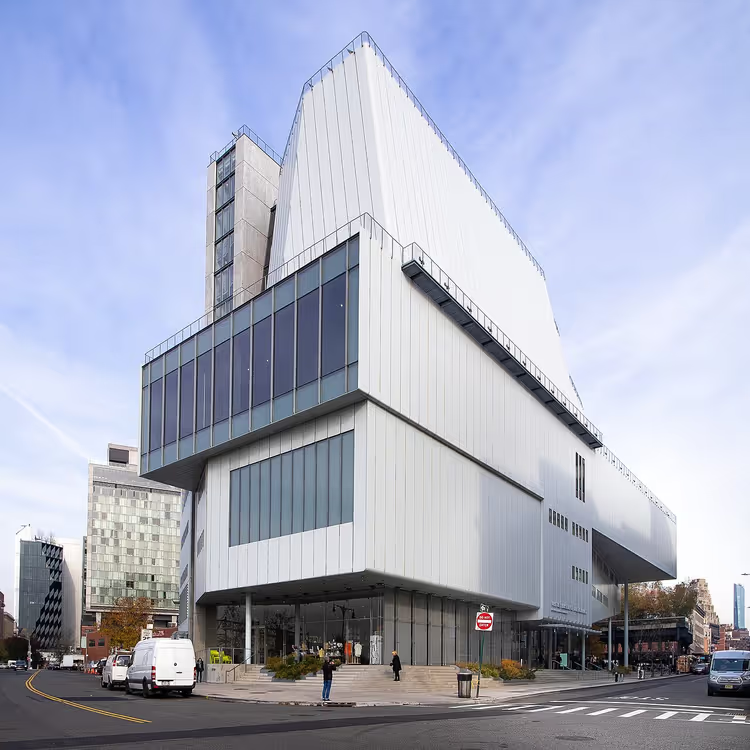
The Whitney Museum stands at the corner of Washington Street and Gansevoort Street. The building designed by Renzo Piano opened in 2015, and its nine floors are supported by a central steel frame with no interior columns (as of 09/2026, official website). As a result, the galleries are huge and feature continuous glass walls.
 © Ajay Suresh from New York, NY, USA · CC BYPhoto: Ajay Suresh from New York, NY, USA, CC BY (https://creativecommons.org/licenses/by/2.0), Wikimedia Commons
The collection of American art here is the most complete. You'll see works by Edward Hopper, Pollock, and Rothko. There's an open-air observation area on the roof, and inside there are movie theaters, workshops, lecture halls, and a cafe. The Whitney Biennial also takes place here.
Plan your visit for the morning: the main level takes two to three hours, and the temporary exhibitions will take more time.
18. Cooper Hewitt Design Museum
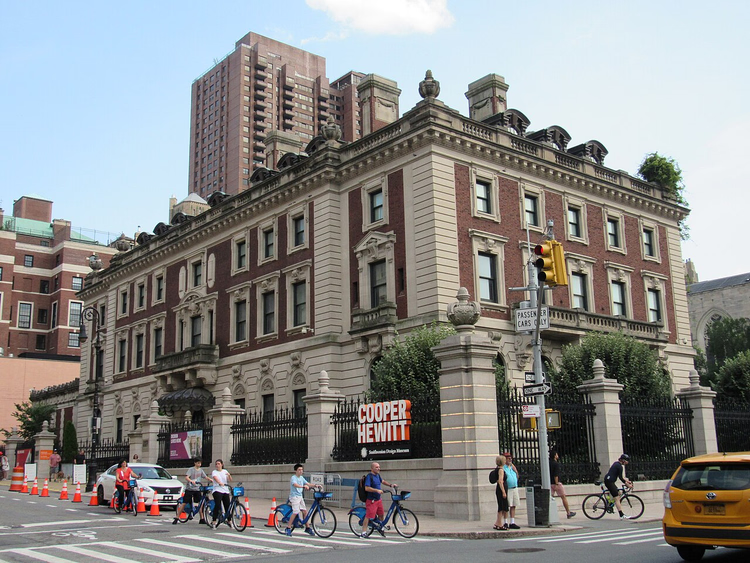
Cooper Hewitt is housed in the mansion of multimillionaire Andrew Carnegie. The museum operates under the motto "Design into Life" and showcases industrial design, graphic design, textiles, and wallpaper (as of 09/2026, official website). The exhibitions here are dynamic, and the themes sometimes surprise: there was even an exhibition of residential design projects for dogs.
 © Eden, Janine and Jim from New York City · CC BYPhoto: Eden, Janine and Jim from New York City, CC BY (https://creativecommons.org/licenses/by/2.0), Wikimedia Commons
The lobby preserves the owner's studio-gallery and Tiffany stained glass in the garden vestibule. The rooms capture the lifestyle of the era, and Mark Twain was a guest in this mansion. Every few years, the National Design Triennial takes place here. Exhibitions change every few months, and touring the four floors takes a couple of hours (as of 09/2026, official Cooper Hewitt website).
The catch: without a ticket booked in advance, you may not get in, demand is high. Plan your visit for the second half of the day: from 5 to 6 pm, admission operates on a "pay what you wish" basis. You pay as much as you think is appropriate.
Interesting places in New York on the map
We've marked all eighteen points from the list on the map so you can build your route by day.
Interesting places in New York
Places on the map
- 1Roosevelt Island Tramway 940 meters over the East River, fare 2.90 dollars like a subway ride
- 2Museum Mile Fifth Avenue from 82nd to 105th Street, over a dozen museums and the Met in the middle
- 3Barnes & Noble Bookstore and cultural center with reading armchairs and interest clubs
- 4High Line Park on a former elevated railway, a mile and a half long and free entry
- 5Lowline Lab Underground garden lit through reflectors, still a test model of a future park
- 6Prospect Park The city's second-largest park, cascading waterfalls, a lake and a summer zoo
- 7Brooklyn Botanic Garden Garden inside Prospect Park, run together with the mansion of architect Davis
- 8New York Botanical Garden Over a hundred hectares in the Bronx, a Victorian conservatory and the Peggy Rockefeller Rose Garden
- 9Apotheke Secret bar in Chinatown, cocktails on herbal tinctures in an old apothecary style
- 10Campbell Apartment Bar at Grand Central Terminal, an art-deco lift and the best martini according to regulars
- 11Mari Vanna Home-style restaurant in a mid-century apartment interior
- 12The IDES Rooftop bar in Brooklyn with a Manhattan panorama, no kitchen and few seats
- 13The Cloisters Museum of the Middle Ages in northern Manhattan, five cloisters and the Unicorn Tapestries
- 14Empire State Building 443 meters with a spire, decks on the 86th and 102nd floors, ticket from 46 dollars
- 15Top of the Rock Rockefeller Center's deck on three floors, from here you can see the Empire State Building itself
- 16One World Observatory 102nd floor of Freedom Tower, the lift rises in 47 seconds, glass floor
- 17Vessel A maze of 154 flights and 2500 steps in Hudson Yards, ticket from 10 dollars
- 18Whitney Museum Renzo Piano building, the most complete collection of American art and a rooftop zone
- 19Cooper Hewitt Design Museum Andrew Carnegie's mansion, industrial design and Tiffany stained glass, pay what you wish in the evening
Brooklyn's parks and the Bronx garden are off to the side, so it's better to see them on a separate day. Combine observation decks with an evening in Manhattan, and group the Upper East Side museums into one block. You can walk to the points in central Manhattan, and you'll take the subway to Brooklyn and the Bronx.
Tours and tickets in New York
Guided tours, skip-the-line tickets and activities — most offers can be cancelled free of charge.
See offers on TiqetsThe widget loads once you give your consent.
⁉️🤔 Frequently asked questions
How many days do you need for the places on the list?
At a relaxed pace, two to three days. Do Museum Mile and the Upper East Side museums in one day, and set aside a separate day for Brooklyn's parks. Put observation decks in the evening and book time slots in advance. If you only have one day, pick two or three spots rather than the whole list.
What on the list can you visit for free?
The High Line and Prospect Park are open year-round and don't charge admission. Vessel is free for children under five and for New York City residents on Thursdays. Cooper Hewitt has a pay-what-you-wish evening. The rest of the museums and observation decks require a ticket.
When is the best time to go to the observation decks?
Plan your visit for sunset: the lights come on and the panorama is at its most striking. Top of the Rock gives you a view of the Empire State Building itself, and the Empire State Building stays open late. At One World Observatory, arrive at opening time, before the elevator line builds up.
Do you need to book tickets in advance?
Yes, it's better to book time slots for observation decks and popular museums online. Vessel opens bookings in advance, up to two weeks out. At the Empire State Building, evening slots go first. At Cooper Hewitt, you may not get in without a pre-booked ticket.
What to see in New York with kids?
Kids usually enjoy the High Line, Prospect Park, and the New York Botanical Garden. Prospect Park has horses, baseball, and a zoo. Vessel keeps them engaged with its stairs and platforms. Save the observation decks for the evening, so you catch both sunset and city lights.
In short: what's worth booking
New York is easy to split into themed days. See the Upper East Side museums together, Brooklyn's parks on another day, and leave the observation decks for the evening. Book time slots for observation decks online; evening windows go first.
If you have two days: do the Met and the High Line. If you have three days: add the Cloisters and the Whitney and Cooper Hewitt museums. If you're going for panoramas: put Top of the Rock and One World Observatory on your list.

A small editorial team writing guides for independent travel. We travel ourselves, but we haven’t been everywhere, so we check prices, opening hours and how to get there against official sources.