
















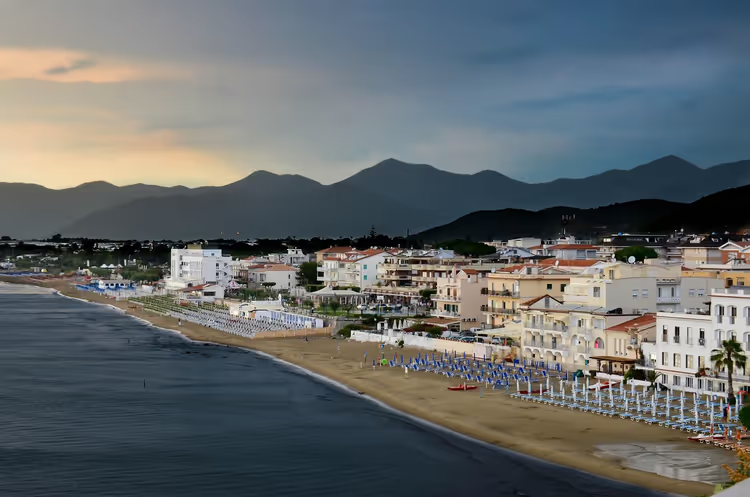
Where to go to the sea in Italy: 19 resorts from Liguria to Sicily
Italy is washed by several seas at once. Almost every region of the country has its own seaside resort, and choosing just one is genuinely difficult. Somewhere sand gives way to pebbles, somewhere wind gets in the way of swimming, and the most prestigious beaches are taken over by hotels.
We have gathered resorts on every coast, from Liguria to Sicily. For each one you will find what makes it different, how to get to the beach, and what to expect in terms of money. Below is a short breakdown by location.
The swimming season runs from late spring through October, so you should choose a resort based on the style of vacation rather than the month of your holiday.
Ad: this article contains affiliate links, we earn a commission if you book through them, at no extra cost to you.
Seaside resorts in Italy: how to choose
💡 In short:
- Rimini, Bellaria-Igea Marina, and Lido di Jesolo are convenient for families with children: shallow sea and a gentle slope into the water.
- Couples and those who love strolling choose Portofino, Portovenere, Minori, and Capri.
- Capri and Amalfi will cost the most, Vasto and the Adriatic towns are the most affordable.
- Beach prices and conditions: 09/2026, verified against the current Bandiere Blu 2026 list and stabilimento rates.
Italy is divided into several sea zones, and each has its own character. Liguria in the northwest means cliffs and pebbles, the Adriatic in the east means long sandy beaches and a gentle slope into the water, the south and the islands mean warm sea and volcanic shores.
You can combine the beach with history: in Genoa, Naples, and Rome, the old towns stand right by the water. Take wind and depth into account, because they determine how comfortable swimming with children will be.
1. Genoa
 © patano · CC BY-SAPhoto: patano, CC BY-SA (https://creativecommons.org/licenses/by-sa/3.0), Wikimedia Commons
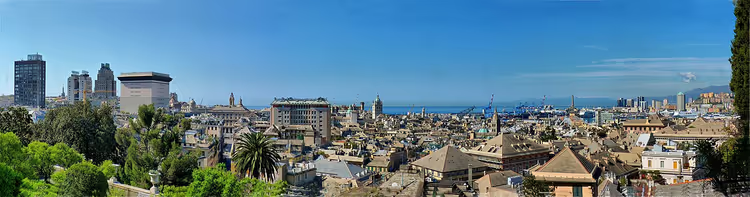
Genoa is the capital of Liguria and one of the oldest ports on the Mediterranean. In the Middle Ages the city was called Janua, meaning "door": trade with half the Mediterranean passed through it.
The navigator Christopher Columbus and the violinist Niccolò Paganini were born here. Walking through the old center, you will see palaces, churches, and narrow lanes directly above the port.
The city sits on hills by the water, so swimming here goes hand in hand with viewing architecture. The beaches within Genoa are pebbly, but the water is clean and the waterfronts are well maintained.
Genoa suits you if you do not want to spend your vacation only on the beach and are ready to combine the sea with city walks. In high season, grab a spot in the shade early in the day.
2. Portofino
 © Quintin Soloviev · CC BYPhoto: Quintin Soloviev, CC BY (https://creativecommons.org/licenses/by/4.0), Wikimedia Commons
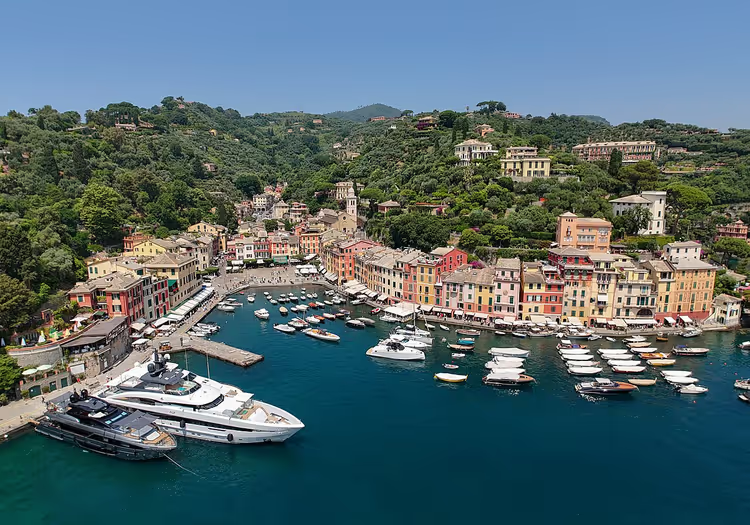
Portofino occupies a tiny bay in Liguria and is considered one of the most beautiful small towns in Italy. The water here is emerald, and the beaches are small and often pebbly.
In 2026, Liguria received 35 Blue Flag awards, more than any other region in the country (as of 05/2026, Spiagge.it, Bandiere Blu 2026). Portofino is among the recognized places.
Above the town rise the medieval churches of San Martino and San Giorgio and the Castello Brown fortress. Nearby lies the Portofino national park, which protects the rare flora and fauna of the Mediterranean.
You will enjoy it here if you value views and quiet walks. The catch: there are few beaches, and cafe prices are above the regional average.
Find a hotel in Portofino on Trip.com
3. Portovenere
 © Aconcagua ( talk ) · CC BY-SAPhoto: Aconcagua ( talk ), CC BY-SA (https://creativecommons.org/licenses/by-sa/3.0), Wikimedia Commons
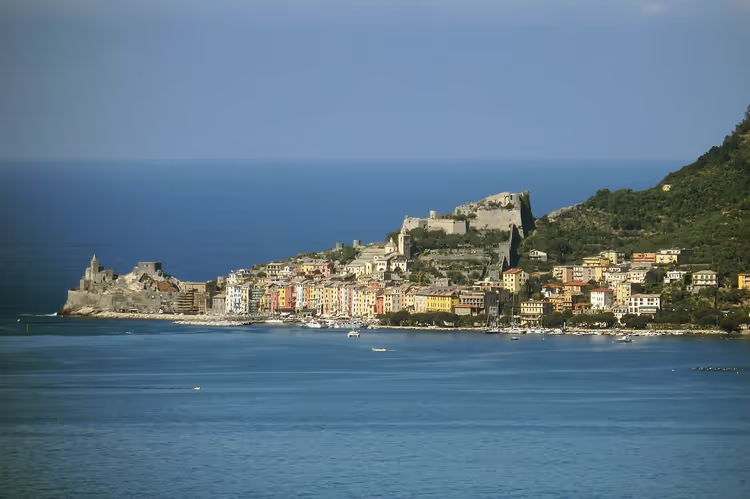
Portovenere stands in the province of La Spezia and, together with neighboring villages, is listed by UNESCO. The first settlements here date back to the 6th century BC.
The town suits you if you love quiet and slow walks. The streets are narrow, there are almost no cars, and an old castle rises above the bay.
Nearby, the ruins of the ancient Villa Varignano have been preserved. The local cuisine is simple and built on fish, herbs, and olive oil. The bays here are pebbly, but the water is clear.
Hotels in Portovenere on Trip.com
4. Naples
 © This Photo was taken by Wolfgang Moroder . Feel free to use my photos, but please mention me as the author and send me a · CC BY-SAPhoto: This Photo was taken by Wolfgang Moroder . Feel free to use my photos, but please mention me as the author and send me a, CC BY-SA (https://creativecommons.org/licenses/by-sa/3.0), Wikimedia Commons
Naples lies in Campania at the foot of Mount Vesuvius. It is a loud southern city where the sea sits alongside a volcano and ancient Pompeii.
The old center has many churches and palaces, and a wide promenade runs along the water. Naples is considered the birthplace of pizza, so this is exactly where you should try it.
Swimming is more convenient not in the center but on the beaches along the bay. Naples suits you if you want to combine the beach with sightseeing and city life.
5. Ischia
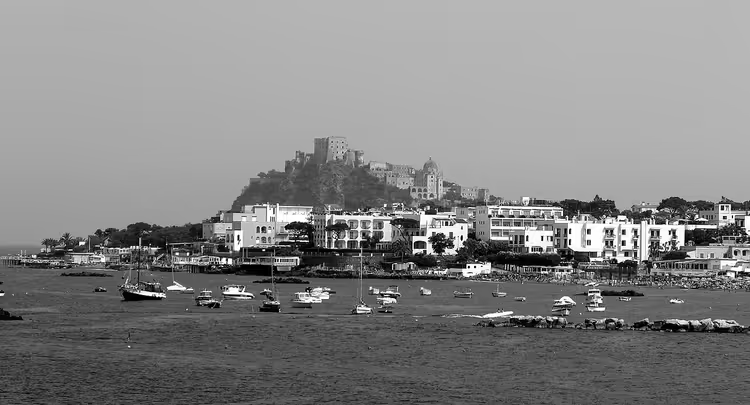
Ischia lies in the Gulf of Naples and is famous for its thermal springs. Hot water rises from the seabed at Sorgeto Bay, so swimming here is pleasant almost year-round.
The island's beaches are pebble and sand, and many belong to hotels or charge for access. The largest beach, Maronti, stands out for its dark sand and is well suited for swimming with children.
The thermal water is considered beneficial, but you shouldn't sit in it for too long to avoid overheating. Bring a towel, water, and shade: not every beach has facilities.
6. Rimini
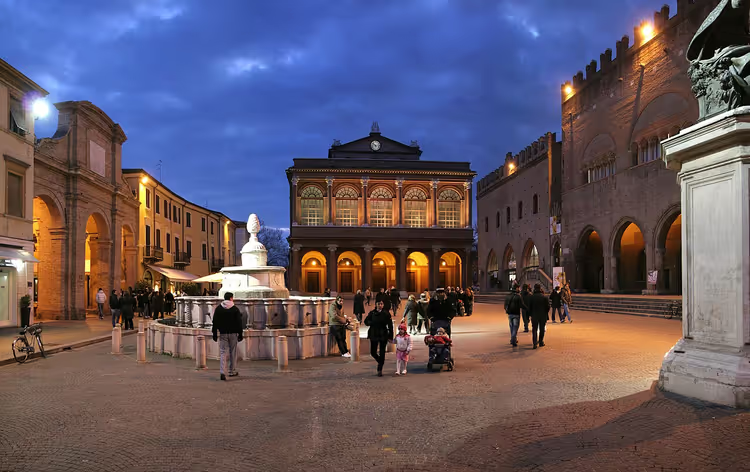 © Emilio Salvatori · CC BY-SAPhoto: Emilio Salvatori, CC BY-SA (https://creativecommons.org/licenses/by-sa/4.0), Wikimedia Commons
Rimini is the main Adriatic resort in the Emilia-Romagna region. It has a long sandy beach, a gentle slope into the water, and plenty of hotels right along the shore.
In summer the air warms up moderately, there is no oppressive heat, and the sea stays warm and calm. Umbrellas, loungers, cafes, and children's play areas are available at almost every hotel.
In 2026 Rimini received the Blue Flag: water quality and services were checked by the FEE commission (as of 05/2026, Spiagge.it, Bandiere Blu 2026). Each stabilimento sets its own rates for umbrellas and loungers, so check the exact price at the specific beach.
Rimini suits you if you're traveling with family or want a city with entertainment. The catch: in July and August the beaches are packed.
Rimini's old town preserves ancient monuments and medieval squares, so it's easy to mix beach time with sightseeing.
7. Puglia
 © ParisTaras · CC BY-SAPhoto: ParisTaras, CC BY-SA (https://creativecommons.org/licenses/by-sa/4.0), Wikimedia Commons
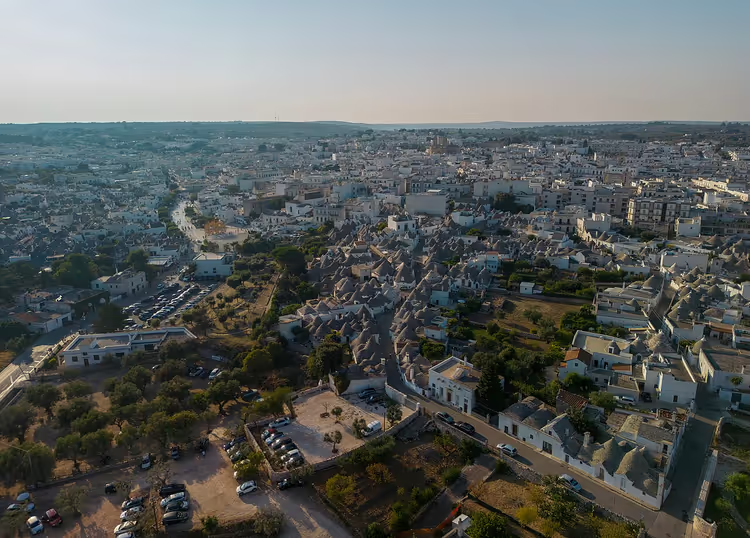
Puglia occupies the "heel" of Italy and stretches between the Adriatic and Ionian seas. Its coastline is the longest of any mainland region in the country, and the beach season runs from May to September.
The rugged coastline has created many secluded coves. One well-known spot is Grotta Verde, where you can swim at the entrance to a cave.
Divers choose Porto Cesareo, while the Gargano peninsula with its national nature reserve is good for active holidays. A narrow strip of land lies between the sea and the salt lakes of Varano and Lesina.
You'll like Puglia if you're looking for clear water and quiet towns. Bring a car: without one, reaching the more remote beaches is difficult.
8. San Vito Lo Capo
 © trolvag · CC BY-SAPhoto: trolvag, CC BY-SA (https://creativecommons.org/licenses/by-sa/3.0), Wikimedia Commons
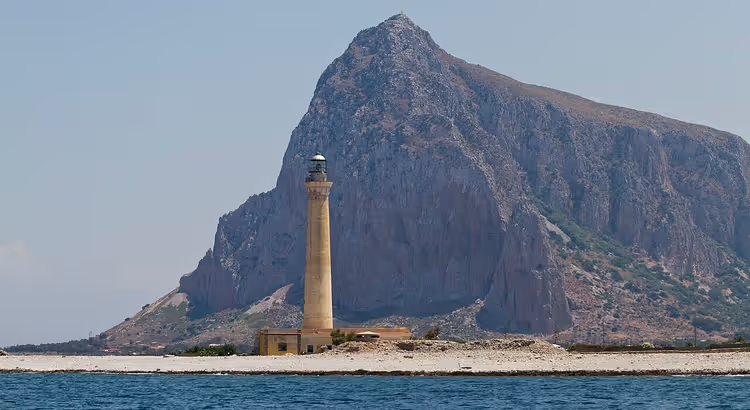
San Vito Lo Capo lies on the western coast of Sicily and is known for its wide sandy beach. It's often called one of the best beaches on the island, and it really is clean and well maintained.
The beach has everything you need: umbrellas, loungers, showers, changing rooms, and a first-aid station. Some services are paid; a set of one umbrella and two loungers costs roughly from 10 € (as of 2026, Spiagge.it).
Peak season is July and August, while May and late September are the quietest times. Reserve a spot in the front rows in advance if you're traveling with children.
San Vito Lo Capo hotels on Trip.com
9. Amalfi
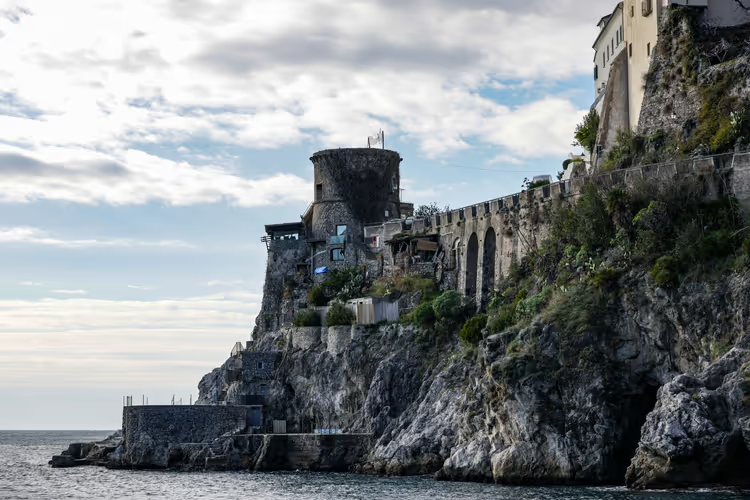
Amalfi gives its name to the entire coast between Naples and Salerno. Most of the scenic beaches here belong to hotels, and you can't access them from outside.
Amalfi's town beach is open to everyone, and nearby, at Atrani, there's a municipal beach with black volcanic sand. Umbrellas and loungers are provided after payment, just like at neighboring Santa Croce.
Amalfi is a good fit if you value views and are ready for climbs up staircases. The catch: the beaches are small, and in season people queue up for them.
10. Viareggio
 © Arne Müseler · CC BY-SAPhoto: Arne Müseler, CC BY-SA (https://creativecommons.org/licenses/by-sa/3.0/de/deed.en), Wikimedia Commons
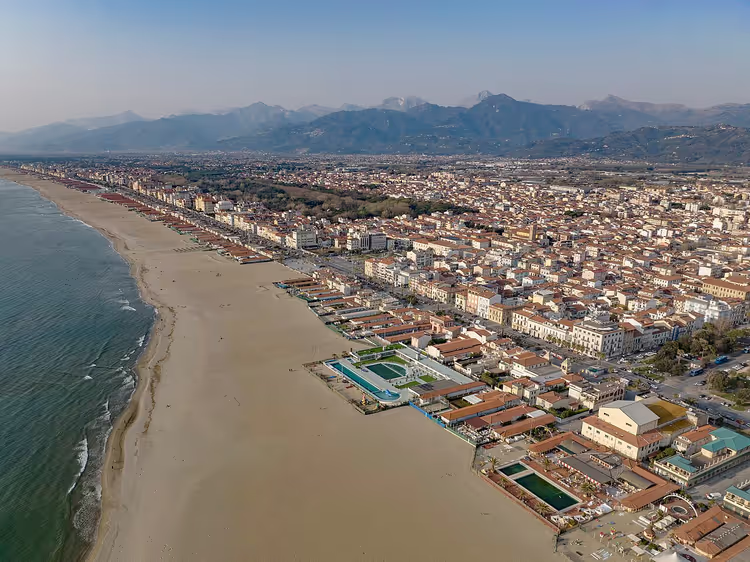
Viareggio opens the Tuscan coast of Versilia, which includes Marina di Pietrasanta, Lido di Camaiore and Torre del Lago. There is a long sandy beach with clean water here.
Back at the beginning of the last century, these places were chosen by the Italian elite, and before them the poet Byron and the composer Puccini spent time here. Viareggio's beaches received the Blue Flag again in 2026 (as of 05/2026, Spiagge.it, Bandiere Blu 2026).
The areas are divided into private and free. A set of an umbrella and two loungers at a private stabilimento starts at around 8 € (as of 2026, Spiagge.it).
You will like Viareggio if you want sand and developed infrastructure. Private beaches close in the evening, so late swimming is not possible.
11. Vasto
 © Verdenex84 · CC BY-SAPhoto: Verdenex84, CC BY-SA (https://creativecommons.org/licenses/by-sa/4.0), Wikimedia Commons
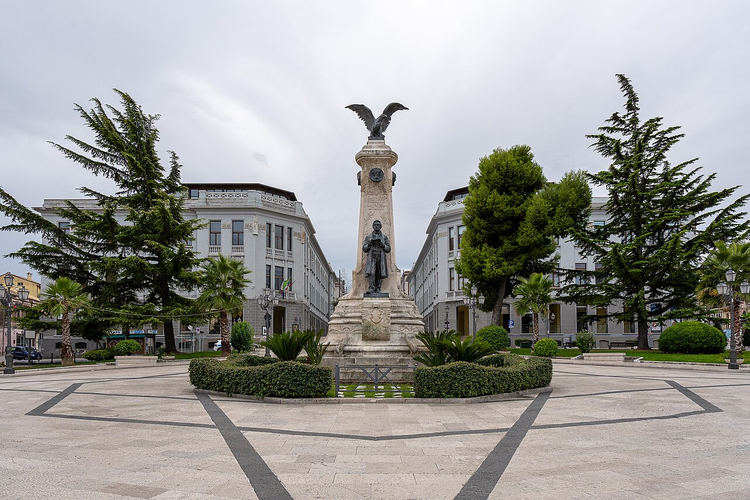
Vasto sits on a hill in the Abruzzo region, above a semicircular bay of the Adriatic Sea. The resort part is called Vasto Marina, and that is where the hotels, campsites, children's camps and apartments are concentrated.
The beaches here are sandy and pebbly, and the bay warms up well in summer. The old town up above adds history to the trip: you can alternate the sea with walks around the fortress and old streets.
Besides the beach, Vasto has a well-developed range of active recreation, so the resort suits people of different ages, including families. Take a car or bus to go up to the upper town, because walking uphill takes a long time.
12. Porto Cervo
 © Superbass · CC BY-SAPhoto: Superbass, CC BY-SA (https://creativecommons.org/licenses/by-sa/3.0), Wikimedia Commons
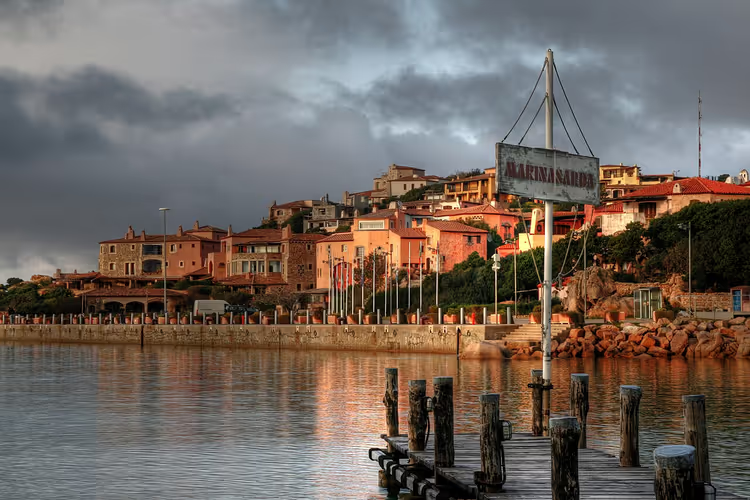
Porto Cervo is the center of the Emerald Coast on Sardinia, which was named that for the color of the water. White sand and emerald-green water here sit alongside giant granite boulders.
A chain of small resorts stretches along the coast: Cala Granu, Mortorio, Dolce Sposa and others. The bay shores are overgrown with juniper and coniferous trees, and the air is filled with the scent of pine needles and the sea.
The beaches here are free, and the town itself is compact, with boutiques, restaurants and clubs along the main pedestrian street. The resort is loved by divers and golfers, and in the evenings life happens on the waterfront.
Porto Cervo will suit you if you want a prestigious vacation and are ready to pay for developed infrastructure. Take a car to reach the neighboring bays.
Porto Cervo hotels on Trip.com
13. Bellaria-Igea Marina
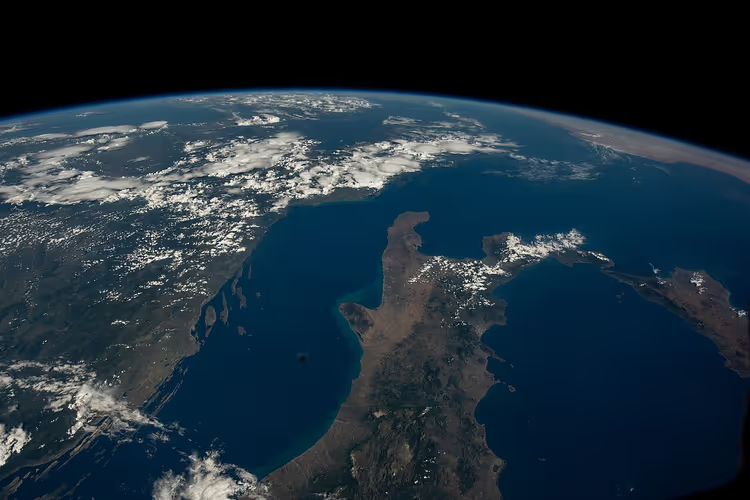
Bellaria-Igea Marina is a family resort on the Adriatic that is easy to reach from Rimini. It has a long coastline, sandy beaches and a gentle slope into the water.
The sea near the shore is shallow and warms up quickly, so the swimming season opens as early as May and lasts until the end of September. The conditions are convenient for toddlers too.
Besides calm swimming, people do surfing, yachting and other water sports here. The beach area is kept clean and regularly maintained, and the equipment you need for your stay is provided on site.
Bellaria-Igea Marina will suit you if you are traveling with children and want a calm sea. Book a spot on the first line: demand is high already in June.
Bellaria-Igea Marina hotels on Trip.com
14. Lido di Jesolo
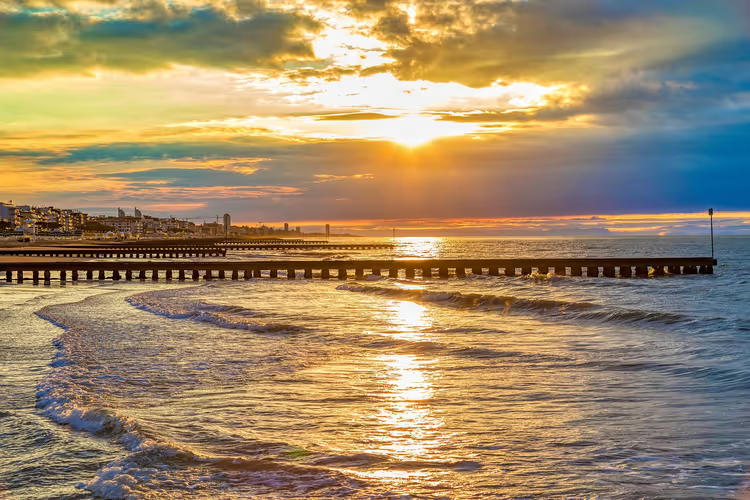
Lido di Jesolo lies in Veneto, not far from Venice, Verona, and Padua. Its convenient location makes it easy to combine the beach with trips to the cities of northern Italy.
The swimming season lasts about five months, and in summer the water warms up to almost thirty degrees. The sea near the shore is shallow, with a sandy bottom, so high waves are rare here.
The Aqualandia water park and an amusement park operate on the shore, and restaurants, cafes, bars, and hotels stretch along the coast. There are no large factories nearby, so the water and air remain clean.
You'll like Lido di Jesolo if you're traveling with children or want entertainment. Grab your spot on the beach in the morning: by lunchtime the front rows are taken.
Lido di Jesolo hotels on Trip.com
15. Minori
 © ApicellaOslo · CC BY-SAPhoto: ApicellaOslo, CC BY-SA (https://creativecommons.org/licenses/by-sa/3.0), Wikimedia Commons
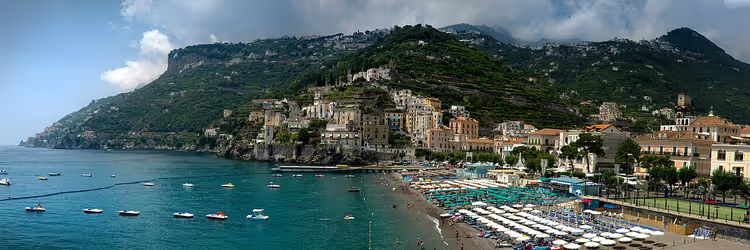
Minori is a small town on the Amalfi Coast that's easy to reach by boat along the shore. The beach here is short, sandy and pebbly, with shallow water near the shore.
Part of the beach is equipped with umbrellas and loungers for a fee, so it's better to book a spot in the shade in advance. Rooms in local hotels and apartments also get booked early, especially in high season.
After swimming, stop by the mini limoncello factory: they show how the drink is made from lemon peels and let you taste it. It's a pleasant way to add variety to a beach day.
Minori's recreational complex consists of hotels and apartments, and the price level depends on the category of accommodation. The town is compact, and it's easy to get around on foot or by boat along the shore.
Minori suits you if you want a quiet vacation away from large hotels and don't mind a short beach.
16. Sardinia
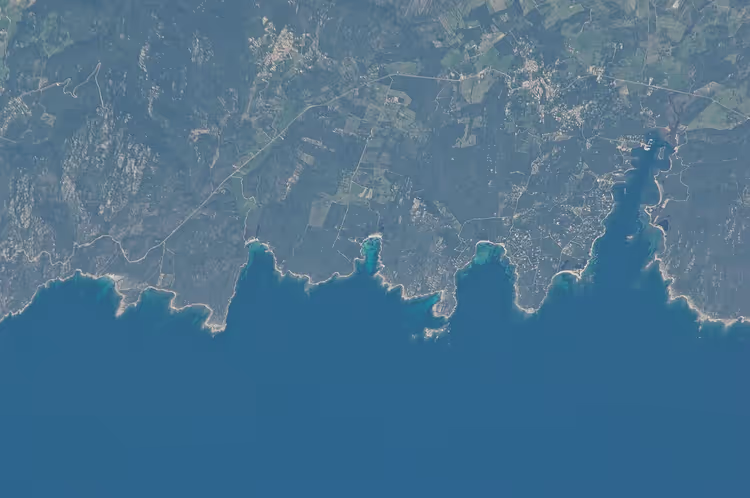
Sardinia is Italy's second-largest island, and it's home to a significant share of all the country's beaches. The island's coastline is long, and the bays vary in water and sand color.
Among the resort areas, the Costa Smeralda stands out with its Capriccioli and Spiaggia del Principe beaches. In the east, Cala Luna beach is popular, with fine sand and underwater grottoes, reached by boat from Cala Gonone.
The sea near the shore is warm and shallow, so Cala Luna is often chosen by families with children. Near the beach there's a small freshwater lake, and the surrounding cliffs are covered with Mediterranean vegetation.
In the northwest, near Alghero, the coast is called the "Coral Riviera" because of its rare purple corals. The beach area here is wide, and along it there are both crowded and uncrowded stretches.
Part of the coast is favored by wild beach lovers: Spiaggia della Speranza is far from roads and villages. Burantine Bay is shaped like a heart, so couples love to visit it.
Those who like the unusual should check out the "rice beaches": the surface here is covered with quartz crystals that look like grains of rice. Walking on them barefoot isn't very comfortable, but you tan faster, and don't forget sun protection.
Sardinia suits you if you're looking for clear water and secluded bays. Rent a car, otherwise you won't reach half the beaches.
17. Sicily
 © sikeliakali · CC BY-SAPhoto: sikeliakali, CC BY-SA (https://creativecommons.org/licenses/by-sa/2.0), Wikimedia Commons
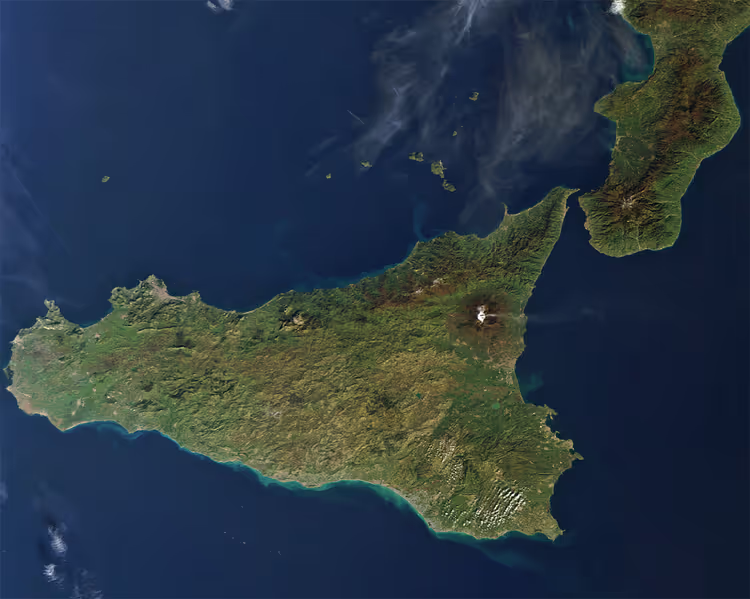
Sicily, Italy's largest island, is washed by several seas at once. A narrow strait separates it from the African coast, so the climate here is mild almost year-round.
The island has resorts for every taste and budget. Upscale vacations are offered by Naxos beach near Taormina, where luxury hotels, restaurants, and nightclubs have been built.
For solitude, head to the Aeolian Islands: they are sparsely populated and see fewer tourists. At the foot of Mount Etna stretches the long La Plaia beach, and eruptions sometimes add a bit of excitement to a vacation.
In season, Palermo is crowded with tourists, and the city beaches are packed. Head to the south or west of the island if you want open space by the water.
Sicily is a good fit if you want to combine the beach with volcanoes, ancient towns, and local cuisine.
18. Terracina
 © tiger rus · CC BYPhoto: tiger rus, CC BY (https://creativecommons.org/licenses/by/3.0), Wikimedia Commons
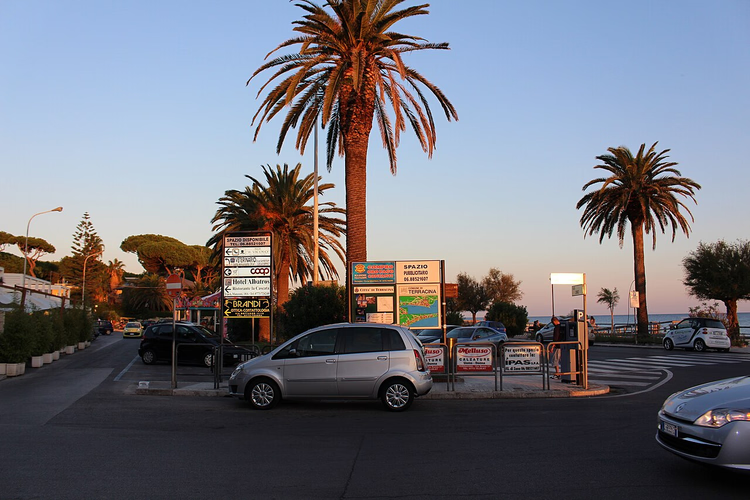
Terracina lies on the "Odysseus Coast" between Rome and Naples and is considered the capital of this coastline. The resort is known for its golden sandy beaches, which stretch for nearly fifteen kilometers.
Fine sand, a gentle slope into the water, and a mild climate make for comfortable vacation conditions. The air here is rich in iodine vapor and phytoncides from coniferous trees, so people also come here for wellness.
The swimming season runs from May almost to October. At hotels of various categories, beach access with loungers and umbrellas is often included in the rate.
Terracina is a good fit if you want a long sandy beach and proximity to Rome. Book a room closer to the sea: the town is stretched along the shore.
19. Capri
 © Mentnafunangann · CC BY-SAPhoto: Mentnafunangann, CC BY-SA (https://creativecommons.org/licenses/by-sa/4.0), Wikimedia Commons
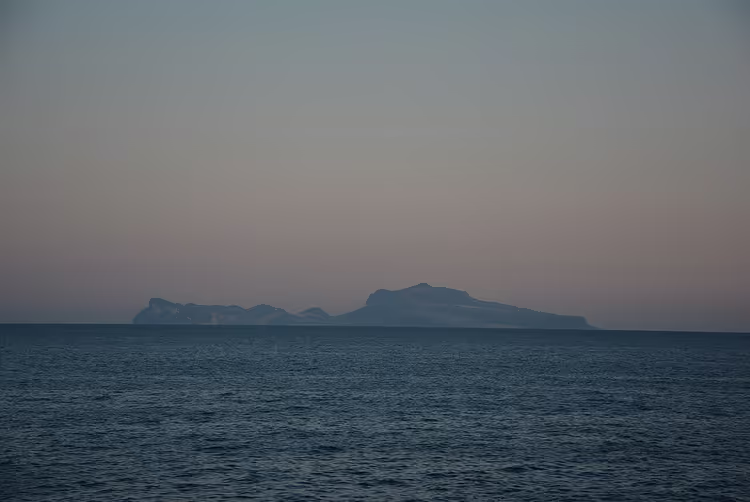
Capri is a small island in the Gulf of Naples that, despite its modest size, has become a famous resort. The Roman emperor Tiberius chose it for his residence.
The main natural attraction is the Blue Grotto (Grottta Azzurra). Sunlight refracts in the water and creates a bluish glow, which is why boats go to the cave.
Swimming on Capri is organized at specific spots, many of which are stairways into the water with no sunbathing area. Among the equipped options, da Luigi ai Faraglioni, Lido del Faro, and Bagni di Tiberio stand out: the surface is pebbly, and entry to the bathing areas is free.
Capri suits you if you are willing to pay for prestige and views. The catch: there are few beaches, getting into the water is often awkward, and prices are high.
⁉️🤔 Frequently asked questions
Which Italian resort should I choose for a family with kids?
Rimini, Bellaria-Igea Marina, and Lido di Jesolo are better for families: they have sandy beaches and a gentle slope into the water. On Ischia, Maronti beach is convenient. If your child is older, Cala Luna on Sardinia and La Plaia on Sicily work well. Everywhere, check the depth near the shore and whether lifeguards are present.
Where is the warmest sea in Italy?
The swimming season lasts longest in the south and on the islands: Capri, Ischia, Sicily, and Sardinia. On Ischia, thermal springs emerge near Sorgeto bay, so the water is warm almost year-round. On the Adriatic the season is shorter, and on the Amalfi Coast the sea warms up only by June.
How much does a lounger and umbrella cost on the beach?
The price depends on the resort, the row, and the season. In Viareggio, a set of one umbrella and two loungers starts at about €8; in San Vito Lo Capo, from €10 (as of 2026, Spiagge.it). On the prestigious beaches of Amalfi, Capri, and Portofino, prices are higher. Check the exact amount with the specific stabilimento.
Are there free beaches in Italy?
Yes. In Porto Cervo the beaches are free, and in Genoa, Amalfi, and Terracina there are municipal sections. Part of the shore is usually occupied by paid stabilimenti, but a free zone remains. On Capri, entry to the bathing areas is free, although there is little space for sunbathing.
When is the best time to go to the sea in Italy?
Late spring and September are the most comfortable: the sea is already warm and the beaches are less crowded. In July and August, Rimini, Palermo, and the Amalfi Coast are full of tourists. On Ischia and Sardinia the season lasts longer, so you can still swim there in early October.
Seaside resorts in Italy on the map
All the resorts from this selection are marked below so you can gauge the distances between them. Northern destinations are easy to combine with a trip to Venice, Verona, or Genoa, while southern ones pair well with Rome, Naples, and Sicily.
Where to go for the sea in Italy
Places on the map
- 1Genoa The capital of Liguria, the oldest port in the Mediterranean, pebble beaches near the centre
- 2Portofino Liguria's emerald bay, Castello Brown fortress, few beaches
- 3Portovenere UNESCO site near La Spezia, narrow streets and an old castle above the bay
- 4Naples Town at the foot of Vesuvius, beaches along the bay, the birthplace of pizza
- 5Ischia Thermal springs in the Bay of Naples, Maronti beach with dark sand
- 6Rimini The main Adriatic resort, a long sandy beach and a gentle entry
- 7Puglia The heel of Italy between the Adriatic and Ionian seas, secluded coves
- 8San Vito Lo Capo Wide sandy beach in western Sicily, well-equipped infrastructure
- 9Amalfi Coast between Naples and Salerno, black volcanic sand at Atrani
- 10Viareggio Tuscany's Versilia coast, a long sandy beach
- 11Vasto Abruzzo's semicircular bay, an old town on a hill above the sea
- 12Porto Cervo Sardinia's Emerald Coast, white sand and free beaches
- 13Bellaria-Igea Marina Family Adriatic resort near Rimini, shallow sea
- 14Lido di Jesolo Veneto resort near Venice, the Aqualandia water park
- 15Minori Amalfi Coast town, a limoncello factory
- 16Sardinia The second-largest island, Cala Luna beach and the Coral Riviera near Alghero
- 17Sicily Italy's largest island, Naxos beach near Taormina and La Playa near Etna
- 18Terracina The Odyssey coast between Rome and Naples, an almost 15 km sandy beach
- 19Capri Island in the Bay of Naples, the Blue Grotto and bathing spots at the Faraglioni
In short: what to book
Italian resorts differ in season, price, and the style of vacation. If you want sand and entertainment, choose Rimini or Lido di Jesolo. If you want prestigious views and are willing to pay, go for Capri, Amalfi, or Portofino. For a long season and warm water, Ischia, Sardinia, and Sicily are good options.
If you are a family with kids: choose Rimini or Bellaria-Igea Marina.
If you are looking for seclusion: choose Sardinia or Portovenere.
If proximity to cities matters: choose Genoa, Naples, or Terracina.
Trip.com is a convenient place to compare options and check hotel prices.

A small editorial team writing guides for independent travel. We travel ourselves, but we haven’t been everywhere, so we check prices, opening hours and how to get there against official sources.