
















8 Fountains of Rome: a one-day walking route through the center
Rome begins with water. The ancient aqueducts supplied the city, and a fountain here has long been more than just a water source, it is part of the urban stage.
In half a day you can easily cover the eight main fountains of the center, from Piazza Navona to Trevi. Neighboring basins are 10-25 minutes apart on foot (on the map), and almost the entire route runs along pedestrian streets.
You do not need tickets for this walk: the fountains stand in open squares, and access to them is free. Below you will find the walking order, construction years, authors, and practical tips for each segment.
Ad: this article contains affiliate links, we earn a commission if you book through them, at no extra cost to you.
Route overview
💡 In short:
- Walking order: Piazza Navona, Piazza Barberini, Piazza di Spagna, Piazza della Repubblica, Piazza Mattei, Trevi.
- Time: half a day. Neighboring fountains are 10-25 minutes apart on foot (on the map).
- Money: admission is free, no tickets are sold for the fountains.
- Tip: start at 8-9 am, while the "Boat" is not crowded. Trevi comes last, and by day it is packed. For photos without people, come back to it late in the evening.
- Access and route: 09/15/2026, according to the Rome tourist office.
How Rome got its water
 © Andrawaag · CC BYPhoto: Andrawaag, CC BY (https://creativecommons.org/licenses/by/4.0), Wikimedia Commons
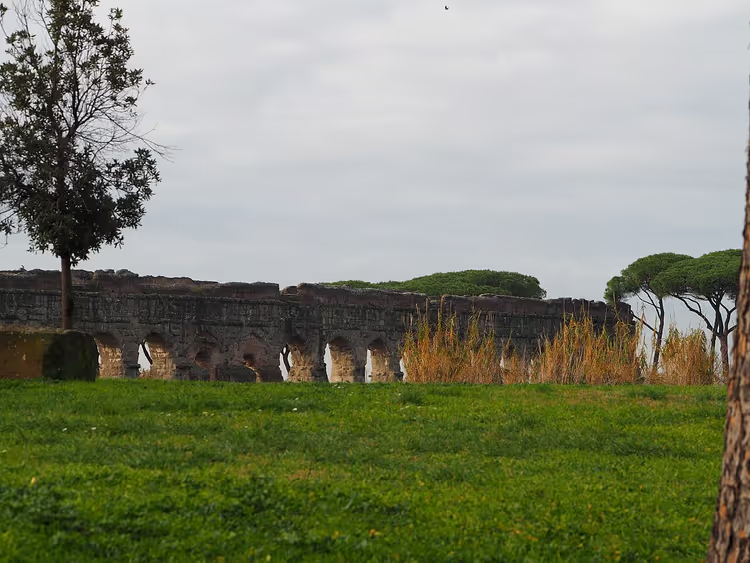
The city grew around water. In ancient Rome, 11 aqueducts were in operation, and there was enough water for both the baths and the street fountains (according to the official tourism portal of Rome). Even then, fountains were placed in squares: they quenched thirst and beautified the city.
During the Renaissance, popes returned to the abandoned aqueducts and brought water back through the old channels. New basins appeared in the squares, and small fountains in the courtyards of the nobility.
The subjects are almost always marine. Tritons, dolphins, nymphs, and sea horses live here, not gods of war. Rome's fountains inspired artists and composers: Ottorino Respighi wrote the symphonic poem "Fountains of Rome" at the beginning of the last century.
Look at the details when you approach a basin. Water reaches all the fountains through one system, but each has its own sound.
1. Fountain of Neptune
 © Fiat 500e · CC BY-SAPhoto: Fiat 500e, CC BY-SA (https://creativecommons.org/licenses/by-sa/4.0), Wikimedia Commons
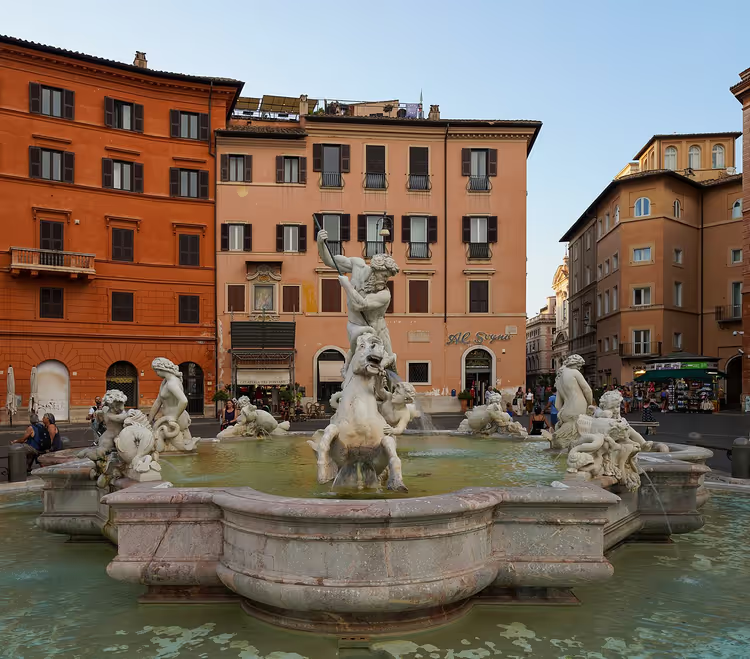
The first stop on the route. The basin in Piazza Navona was installed in 1574, and Neptune with his trident was added only at the end of the 19th century (according to the Rome tourist office). The sea god stands fighting an octopus, dolphins are beside him, and jets shoot from the basin.
View it from the south side of the square: then both the trident and the Agonale obelisk will fit in the frame. In the evening the water is lit.
- Location: Piazza Navona, about 350 m from the Pantheon, 5 minutes on foot (on the map).
- Who it's for: those who start their day in the center and want to see two fountains in one square.
2. Fountain of the Four Rivers
 © Nicholas Gemini · CC BY-SAPhoto: Nicholas Gemini, CC BY-SA (https://creativecommons.org/licenses/by-sa/4.0), Wikimedia Commons
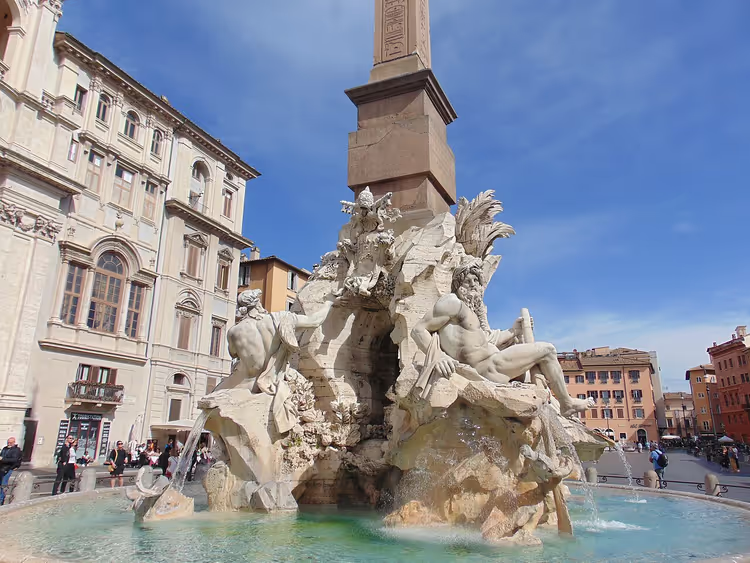
The second fountain in Piazza Navona. Lorenzo Bernini installed it in the mid-17th century in front of the palace of Pope Innocent X and carved on the rock the four rivers of the world known at the time: the Ganges, the Nile, the Danube, and the Rio de la Plata (according to the Rome tourist office).
The rivers are depicted as giants. The Nile is covered with a veil: in those years the source of the river had not yet been found, and the sculptor marked this with a detail. The obelisk above the rock was brought from Egypt.
- Tip: photos with the obelisk come out better in the morning, while there are few guided groups in the square.
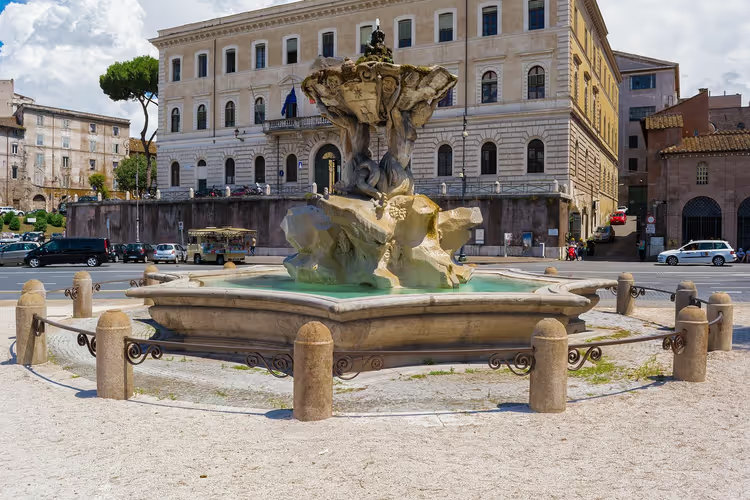
3. Triton Fountain
 © Ank Kumar · CC BY-SAPhoto: Ank Kumar, CC BY-SA (https://creativecommons.org/licenses/by-sa/4.0), Wikimedia Commons
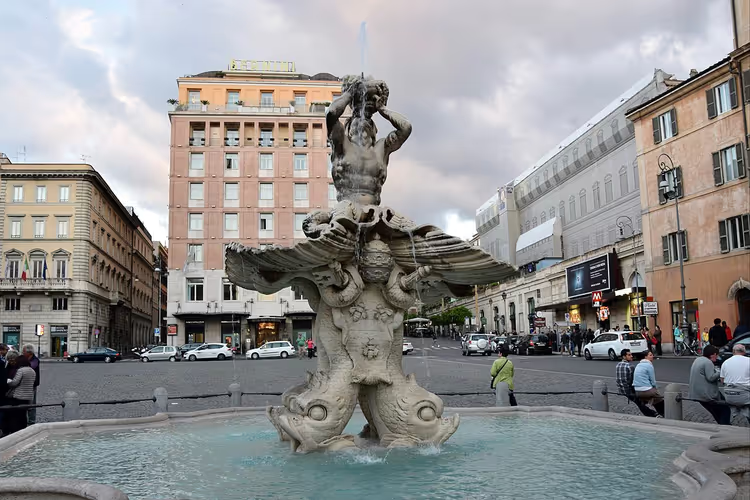
A work by Lorenzo Bernini, installed in 1642 in Piazza Barberini (according to the Rome tourist office). A sea creature with a human torso sits on the open valves of a shell, and water flows from it into the basin.
The fountain is small but eye-catching. It stands almost in the center of the square and is visible from any side of the intersection. Take a close look at the dolphins holding the shell.
- Tip: photograph it from the sidewalk, the square is busy with traffic.
4. Fountain of the Bees
 © Girolamus · CC BY-SAPhoto: Girolamus, CC BY-SA (https://creativecommons.org/licenses/by-sa/4.0), Wikimedia Commons
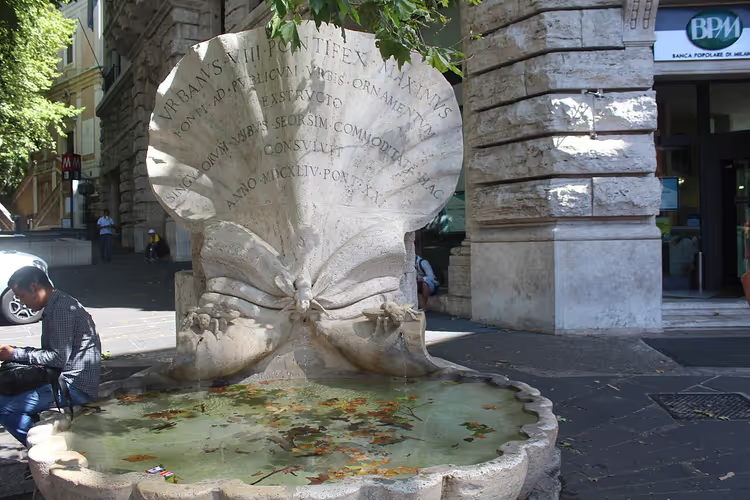
The bee is the coat of arms of the Barberini family, so Pope Urban VIII commissioned the fountain in 1644 just steps from his palace (according to the Rome tourist office). Between the shell valves, three bees pour water, and the composition looks deliberately light. It is more of an urban sculpture than a large fountain.
The bees have had a difficult fate: in 2004 a vandal damaged one of the figures, and it was later restored.
- Who it's for: those walking from Barberini to Piazza di Spagna, the fountain is right on the way.
5. Fountain of the old boat (La Barcaccia)
 © WikiRomaWiki · CC BY-SAPhoto: WikiRomaWiki, CC BY-SA (https://creativecommons.org/licenses/by-sa/4.0), Wikimedia Commons
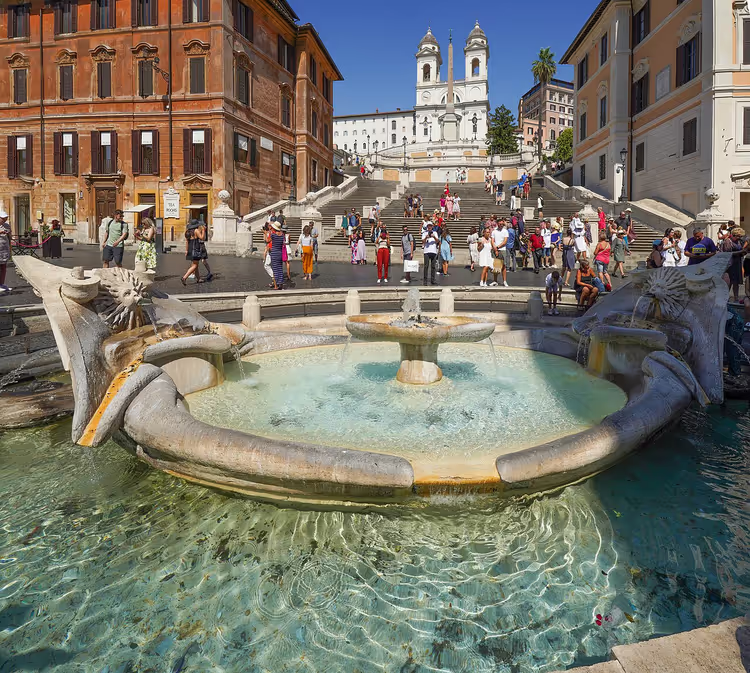
The fountain was installed in memory of the flood of 1598, when the overflowing Tiber flooded the city center (according to the Rome tourist office). The author is Pietro Bernini, father of Lorenzo Bernini, so it is interesting to compare the Old Boat with the Four Rivers at the other end of the route.
The boat sits low, below the level of the square, and water enters it from the bow and stern. The half-sunken boat is a reminder of how high the water once rose.
- The catch: in the evening, dozens of people sit on the steps around it, and the sculpture is barely visible. Come in the morning.
- Location: Piazza di Spagna, at the bottom of the Spanish Steps (see map).
6. Fountain of the Naiads
 © Aldo fiorenza · CC BY-SAPhoto: Aldo fiorenza, CC BY-SA (https://creativecommons.org/licenses/by-sa/4.0), Wikimedia Commons
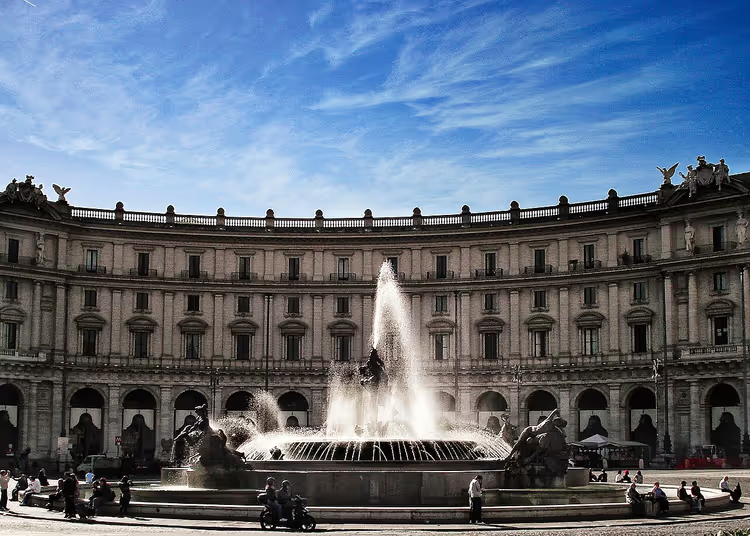
The main decoration of Piazza della Repubblica. The fountain was installed in 1888, and the naiad statues were added in 1901.
Four nymphs represent different elements. One sits on a swan and represents a lake, the second rides a river monster and represents a river, the third races on a sea horse and represents the ocean, and the fourth tames a dragon and symbolizes the waters of the underworld.
- Tip: walk around the square in a circle, from the side opposite the road the figures are fully visible.
7. Turtle Fountain
 © Livioandronico2013 · CC BY-SAPhoto: Livioandronico2013, CC BY-SA (https://creativecommons.org/licenses/by-sa/4.0), Wikimedia Commons
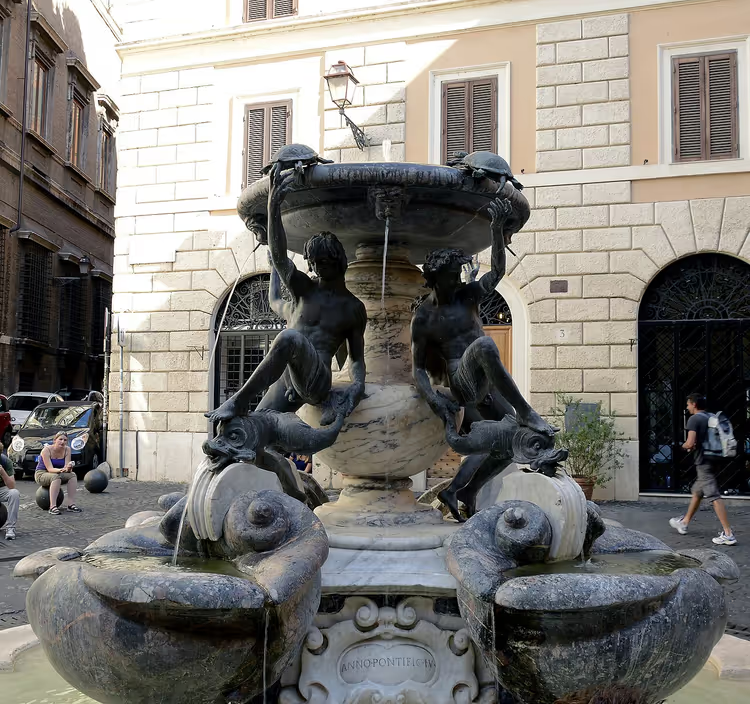
The smallest fountain on the route hides in an alley near Piazza Mattei. The basin was made in the late 16th century, around 1581-1588, and the sculptures were executed by Taddeo Landini (according to the Rome cultural heritage authority).
The turtles were added later, in the 17th century, and they gave the fountain its name. Young men hold the basin, and the reptiles reach toward the water.
- The catch: the fountain is easy to miss, check the map on your phone.
- Who it's for: lovers of quiet alleys, tour groups almost never come here.
8. Trevi Fountain
 © NikonZ7II · CC BY-SAPhoto: NikonZ7II, CC BY-SA (https://creativecommons.org/licenses/by-sa/4.0), Wikimedia Commons
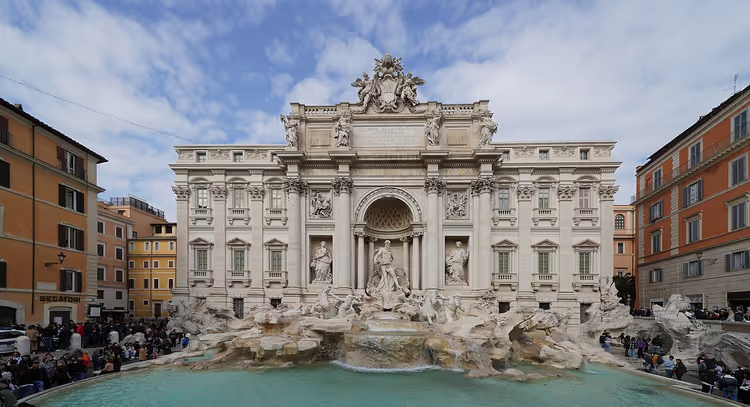
The finale of the route and the largest fountain in the city. Nicola Salvi's design was built from 1732 to 1762. The location was not chosen by chance: this is where the ancient Aqua Virgo aqueduct ended.
Legend says the spring was found by Roman soldiers. A girl showed them the water when they were dying of thirst, and the spring was later turned into an aqueduct that supplied the city center.
In the center of the composition stands a sea god, flanked by the goddesses of Health and Abundance. In front of the sculptures is a large basin that collects the coins.
The fountain gained its fame as the city's calling card after Federico Fellini's film La Dolce Vita (1960): Anita Ekberg's character walks into the water in her evening dress.
Coins are removed from the fountain every day. In 2025, 1.86 million euros in coins were collected here and donated to charity programs (report from the Diocese of Rome). You can toss a coin with your right hand over your left shoulder, as almost all visitors do.
- The catch: on this route you'll get here in the daytime, in a dense crowd. Quiet hours for an empty square are listed in the frequently asked questions.
- Location: Trevi Square, about 700 m from the Spanish Steps, a 9-minute walk (on the map).
In the evening the center changes: the lights come on, the streets empty out, and there's more room around the fountains. If you'd like to see the city with a guide, here's a selection of Rome tours.
Tours and tickets in Rome
Guided tours, skip-the-line tickets and activities — most offers can be cancelled free of charge.
See offers on GetYourGuideThe widget loads once you give your consent.
Advance tickets: Colosseum, forum and palatine
Fountains don't require tickets, but at Rome's main monuments the morning line stretches for hours. Entry to the Colosseum is timed, so you can't be late, and rescheduling your slot is nearly impossible.
If the Colosseum is in your plan, get a ticket with a morning slot. One ticket covers the Colosseum, the Roman Forum and the Palatine. Schedule it for a different day of your trip: the morning of the fountains day is already taken up by this route.
How to get around Rome
The center is compact, and you'll walk the entire fountain route on foot. Choose comfortable shoes: cobblestones and the climbs on the squares put more strain on your feet than it looks on the map.
If the day is hot or you're tired by evening, get a hop-on hop-off bus ticket. It loops past the Colosseum, the Vatican, and Piazza Venezia, and it's a convenient way to see the city without walking.
Fountains of Rome
Places on the map
- 1Neptune Fountain 1574 basin on Piazza Navona, the Neptune statue was added in the 19th century
- 2Fountain of the Four Rivers Bernini, mid-17th century, river giants of the Ganges, Nile, Danube and Río de la Plata
- 3Triton Fountain Bernini's 1642 fountain on Piazza Barberini, a triton on a shell
- 4Fountain of the Bees Barberini coat of arms, Pope Urban VIII commissioned the fountain in 1644
- 5Barcaccia Fountain Pietro Bernini, marking the 1598 Tiber flood, by the Spanish Steps
- 6Fountain of the Naiads Piazza della Repubblica, four nymphs of lakes, rivers, oceans and underground waters, 1870-1901
- 7Turtle Fountain The smallest fountain on the route, late 16th century, turtles added in the 17th century
- 8Trevi Fountain The city's largest fountain, designed by Nicola Salvi, 1732-1762
All eight stops are marked on the map. Follow the numbers in order, and check your phone at intersections: the alleys in the center are confusing, and an extra loop costs time.
⁉️🤔 Frequently asked questions
How much time do you need for all the fountains?
Half a day with stops for photos and coffee. The route is about six kilometers through the center, but you can go at your own pace: between neighboring fountains it's a 10-25 minute walk (on the map). If you're short on time, skip Piazza Navona and Trevi.
Do you have to pay to see the fountains?
No. All the fountains on the route are in open squares, no tickets are sold for them, and ticket offices are only at museums. The only thing you might pay for is coffee nearby, and water is free at both Trevi and Piazza Navona.
When is Trevi least crowded?
Before eight in the morning and after eleven at night. The rest of the time, groups stand by the basin and a stream of tourists crosses the square. Morning has another plus: the light hits the sculptures from the side, and photos come out with more contrast.
Can you throw coins into the Trevi Fountain?
Yes, the tradition is alive. How much money is collected and how to throw a coin is explained above in the Trevi section.
Which fountain on the route is the oldest?
The oldest water in the center came through the Aqua Virgo aqueduct. Among the basins on the route, the basin of the Fountain of Neptune in Piazza Navona appeared first, installed in 1574. The Fountain of the Four Rivers next to it was built by Bernini in the 17th century. Trevi as an ensemble was finished in the 18th century, and the Fountain of the Naiads appeared only in 1888.
In short: what's worth booking
The fountain route requires no tickets and no reservations. You only pay for coffee and, if you want, for tours.
- If you have one day in Rome, set aside the morning for the fountains, and after lunch take a city tour.
- If you're traveling with family or after a flight, book museum and observation deck tickets in advance: that way you won't stand in line at the ticket office.
Start at Piazza Navona, where there are two fountains right away, and finish at Trevi by lunchtime. In the evening, come back to it once more, when the lights come on and the crowd thins out. The numbered loop takes half a day and requires no reservations at all.

A small editorial team writing guides for independent travel. We travel ourselves, but we haven’t been everywhere, so we check prices, opening hours and how to get there against official sources.