
















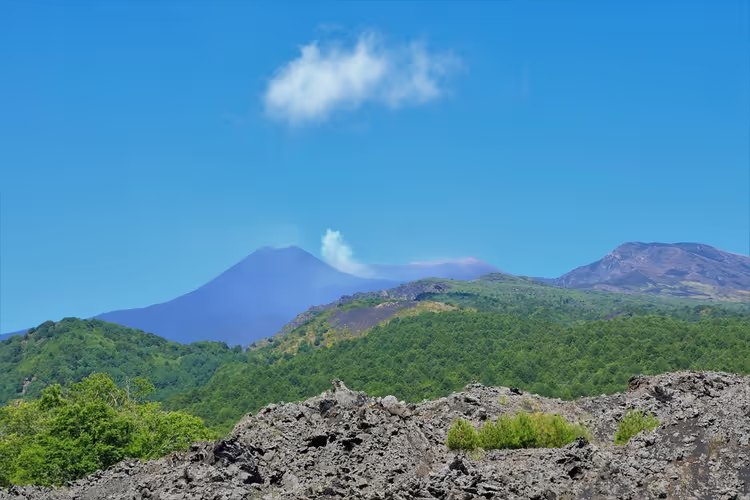
Where to go in Sicily: 30 places worth seeing
Sicily is an island that is hard to cover in a single trip. In a relatively small area, it packs ancient temples, Norman cathedrals, an active volcano, and white-sand beaches. Many people come for a week and leave feeling they saw only a small part of it.
We put together thirty of the island's main sights, from the Valley of the Temples in Agrigento to the Egadi Islands off the western coast. Each entry has a short description, its location, and a tip on how to get there.
Splitting the list across several days is easy. If you are short on time, do the west and the east as separate routes: that way you will not spend hours driving between the two ends of the island.
Ad: this article contains affiliate links, we earn a commission if you book through them, at no extra cost to you.
What to see in Sicily: a quick overview
💡 In short:
- Base cities for the trip: Palermo, Catania, Syracuse, and Agrigento.
- See the ancient and baroque UNESCO sites with tickets bought in advance.
- Prices, opening hours, and tickets: 09/2026, checked on the official Sicily tourism portal.
Our picks for a first trip
Our pick | Where | What makes it stand out |
|---|---|---|
Mount Etna | east of the island | active volcano and black beaches |
Valley of the Temples | Agrigento | ancient Doric temples |
Ortigia | Syracuse | island historic center |
Palatine Chapel | Palermo | Arab-Norman mosaics |
Spiaggia dei Conigli | Lampedusa | white sand and clear water |
Greek theater | Taormina | view of Etna from the seats |
1. Church of La Martorana in Palermo
 © This Photo was taken by Wolfgang Moroder . Feel free to use my photos, but please mention me as the author and send me a · CC BY-SAPhoto: This Photo was taken by Wolfgang Moroder . Feel free to use my photos, but please mention me as the author and send me a, CC BY-SA (https://creativecommons.org/licenses/by-sa/3.0), Wikimedia Commons
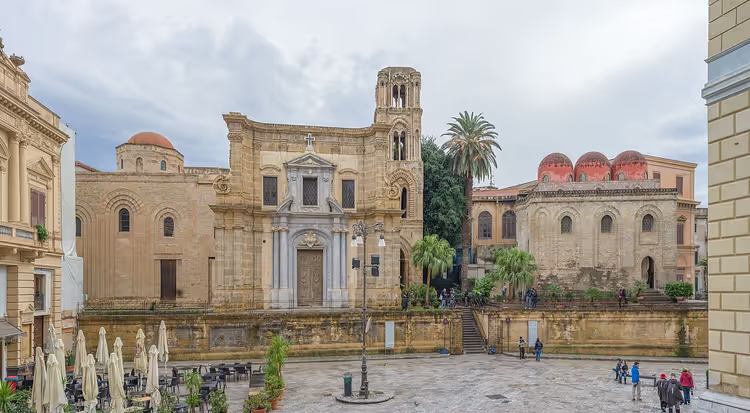
La Martorana stands in the historic center of Palermo, next to Piazza Bellini. It stands out for its unusual mix of baroque and Arab-Norman style. Inside, you will find 12th-century Byzantine mosaics, some of the oldest in Italy. It is an active church, so visits are limited during services. It is better to come in the morning, before masses begin.
The gold background of the mosaics has survived almost completely. In one scene, George of Antioch lies at the feet of the Virgin Mary; in another, Christ places a crown on King Roger II. This was how the Byzantine tradition showed that a ruler received power directly from God, not from the Pope. The church was originally built in the form of a Greek cross, and the building was later rebuilt. Half an hour is enough for a visit, and check the exact opening hours on the Sicily tourism portal.
2. Val di Noto valley
 © VanSky Studio · CC BY-SAPhoto: VanSky Studio, CC BY-SA (https://creativecommons.org/licenses/by-sa/4.0), Wikimedia Commons
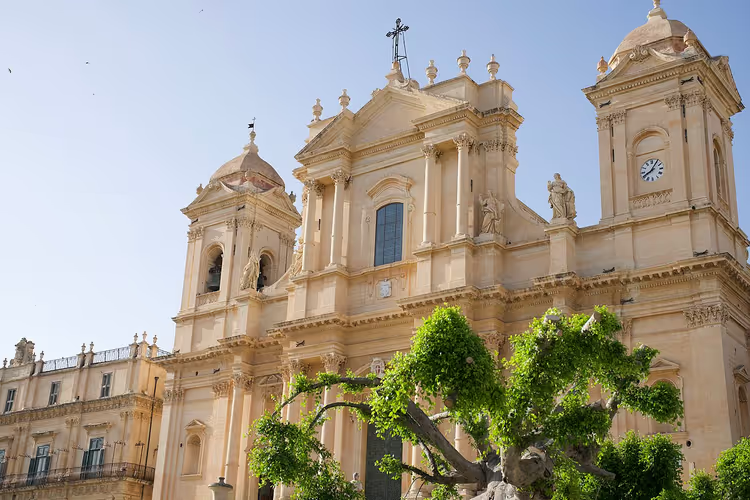
The Val di Noto valley brings together eight towns in southeastern Sicily linked by a single style. After a major earthquake at the end of the 17th century, they were rebuilt from scratch, and that is how "Sicilian baroque" was born. Today these towns are on the UNESCO World Heritage list. In the architecture you will notice curved facades, balconies with wrought-iron railings and masks, and dark volcanic stone.
The towns are scattered across the valley over dozens of kilometers, so you cannot cover all eight in one day. Pick two or three: Noto, Modica, and Ragusa are the usual choices for an itinerary. The facades are complemented by staircases, little cupid figurines, and dark volcanic stone, and the squares and alleys are photographed on almost every block. Buses run between the towns, but the schedule is sparse, and without a car the trip will take longer.
- The catch: the towns are scattered across the valley, so one day is not enough for everything at once.
3. Villa del Casale in Piazza Armerina
 © Berthold Werner · CC BY-SAPhoto: Berthold Werner, CC BY-SA (https://creativecommons.org/licenses/by-sa/4.0), Wikimedia Commons
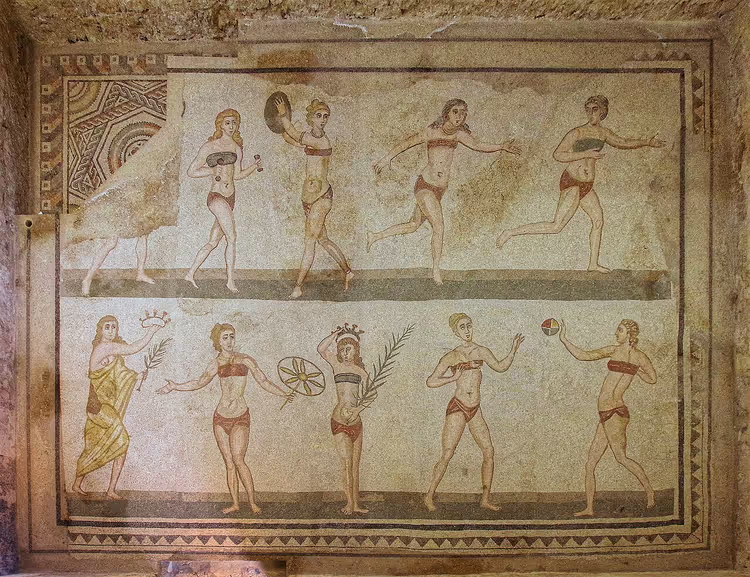
Villa del Casale lies a few kilometers from Piazza Armerina. It is the remains of a luxurious Roman estate, and its main treasure is the floor mosaics that cover almost every room. The most famous scene shows ten girls in athletic outfits, and it is called "The Bikini Girls." Besides that, you will see hunting scenes, chariot races, and mythological pictures.
Scholars still argue about the purpose of individual rooms. It is thought that the north and west wings housed the baths, the owners lived in the eastern part, and the guest bedrooms were in another wing. The villa is on the UNESCO World Heritage list. The easiest way to get here is by car, because public transport requires a transfer in Piazza Armerina.
- The catch: without a car, the trip from Palermo takes a lot of time.
4. Valley of the Temples in Agrigento
 © Ludvig14 · CC BY-SAPhoto: Ludvig14, CC BY-SA (https://creativecommons.org/licenses/by-sa/4.0), Wikimedia Commons
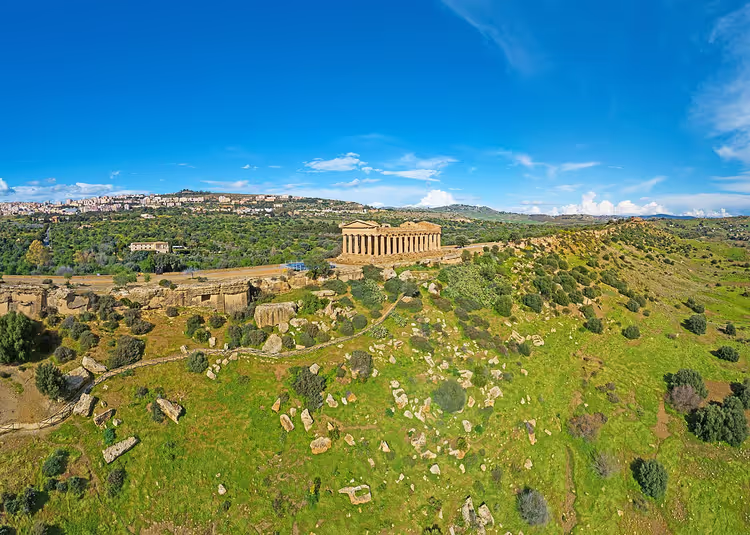
The Valley of the Temples stretches along a ridge above Agrigento and covers most of the ancient city. Here you will walk along an old road past ruins that are more than two thousand years old. Some of the structures are dedicated to Zeus and other gods, with the Temple of the Dioscuri and the Temple of Concordia standing out in particular.
The Temple of Zeus was built in the 5th century BC and has come down to us almost destroyed. It was decorated with huge statues of titans; one of them is now displayed in the city's archaeological museum. The Temple of Concordia is the best preserved: in the Middle Ages it was converted into a Christian church, and that saved the structure. The site is open, with little shade, so bring water and a hat. Check tickets and opening hours in advance on the tourism portal.
- The catch: the site is open, so in summer it is better to go in the morning or closer to evening.
5. Capuchin Catacombs in Palermo
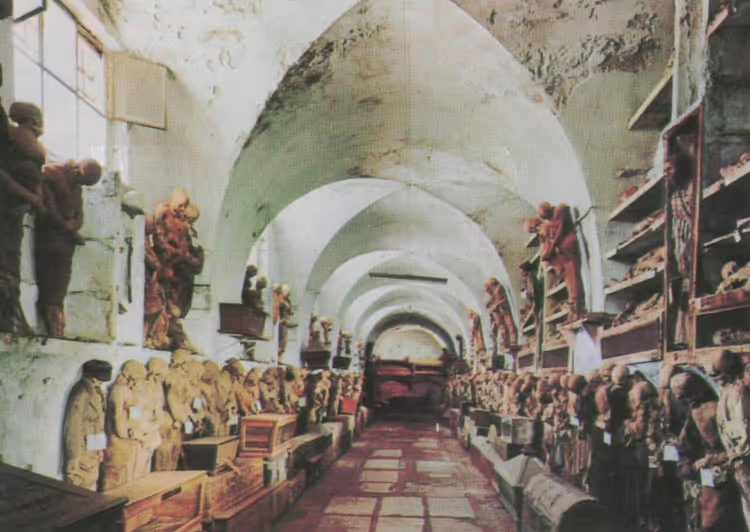
The Capuchin Catacombs are considered the most unusual museum in Palermo. Beneath the monastery run galleries where nobles, clergy, and townspeople of various professions were buried from the 16th to the 19th century. The underground corridors were built over several centuries, so the sections are divided by social class: nobles lie separately, clergy separately, artisans separately. The dry air preserved not only the bodies but also the clothing. The costumes show how fashion changed over three centuries. Many people leave here with mixed feelings: interest mingled with unease.
- The catch: not for the sensitive, some halls are better skipped.
6. Mount Etna and its slopes
 © Radek Kucharski from Warsaw, Poland · CC BYPhoto: Radek Kucharski from Warsaw, Poland, CC BY (https://creativecommons.org/licenses/by/2.0), Wikimedia Commons
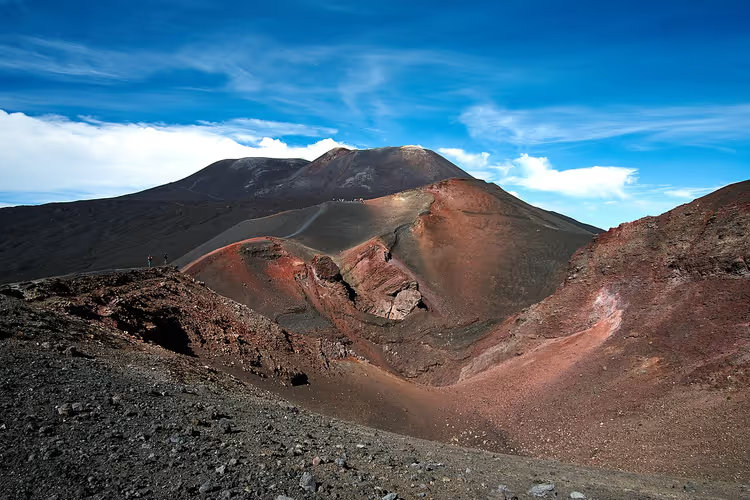
Etna remains an active volcano and the main symbol of the island. Its black-and-white summit is visible from almost anywhere in eastern Sicily. Eruptions happen here regularly, but locals have long grown accustomed to this neighbor. Winemakers owe the flavor of local wines precisely to the volcanic soil.
The crater is reached by several routes, usually with a guide. Independent ascent is possible only on the lower sections; beyond that you need a guide and warm clothing: it is cold and windy at the top even in summer. There are many viewpoints and lava fields around. If you want to go higher with a group, check out Etna tours.
- The catch: craters are unpredictable, some routes are sometimes closed.
7. Puppet Museum in Palermo
 © Stendhal55 · CC BY-SAPhoto: Stendhal55, CC BY-SA (https://creativecommons.org/licenses/by-sa/4.0), Wikimedia Commons
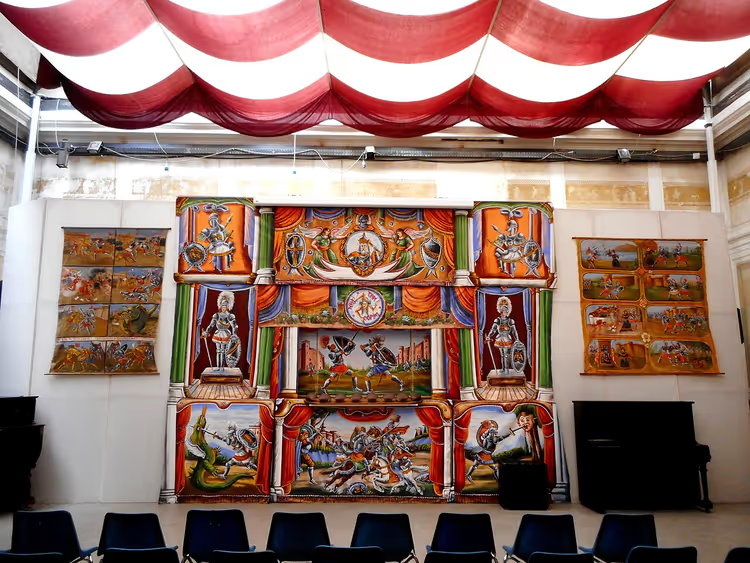
The Sicilian puppet theater, or opera dei pupi, is included in the UNESCO list. In Palermo there is a museum housing marionettes from entire dynasties of master puppeteers. The puppets were carved and dressed by hand, so each figure differs from the one next to it. The exhibits were created by puppeteers of different generations, and the oldest date back to the 16th century. Here you will see knights in armor, angels, devils, and monsters used to stage chivalric tales.
Short performances are shown in separate halls, so check the schedule at the entrance. The museum tour is short, but it works well for families with children. For the address and opening hours, see the Sicily tourism portal.
8. Norman Palace: Royal Apartments
 © Jules Vaulont · CC BY-SAPhoto: Jules Vaulont, CC BY-SA (https://creativecommons.org/licenses/by-sa/4.0), Wikimedia Commons
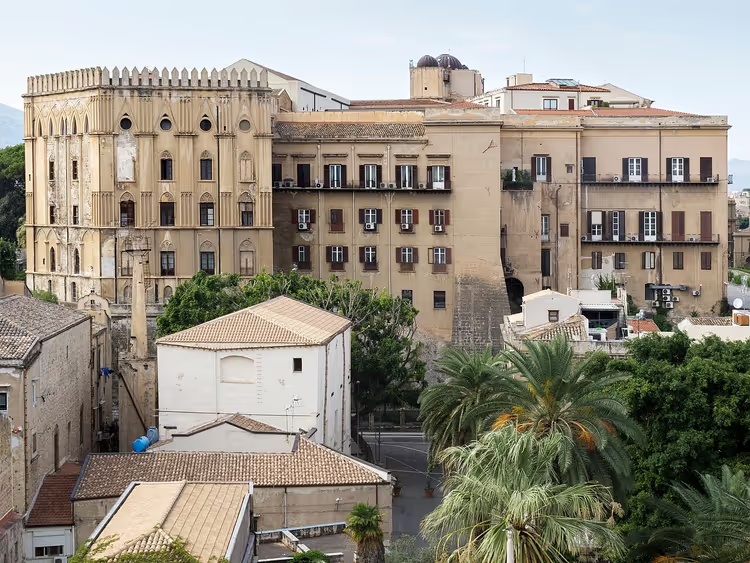
The Norman Palace was once the residence of the kings of Sicily, and today it houses the regional parliament. The building was constructed and rebuilt by different rulers, so its appearance combines Arab, Byzantine, and European features. The palace has preserved an ancient tower where the university's astronomical observatory once operated. The interior halls are famous for their mosaics and carvings, but some rooms are still occupied by administrative offices. You cannot tour the palace in full: access to many galleries is closed.
- The catch: only part of the rooms is open, the rest is occupied by offices.
9. Spiaggia dei Conigli on Lampedusa
 © Hein56didden · CC BY-SAPhoto: Hein56didden, CC BY-SA (https://creativecommons.org/licenses/by-sa/3.0), Wikimedia Commons
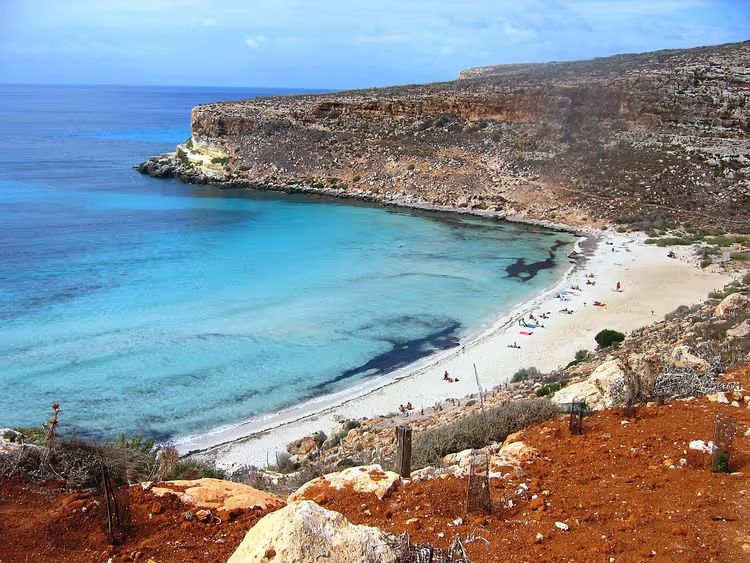
Spiaggia dei Conigli lies on the island of Lampedusa between Africa and Sicily. It is a small bay with white sand and clear turquoise water that regularly appears in world beach rankings. The area is part of a protected zone, so human impact here is minimal. With a mask and fins you will see colorful fish and underwater grottoes.
You can get there by ferry from Porto Empedocle or by plane: Lampedusa has its own airfield. From there, a road and a walking trail lead to the beach. Because of its nature reserve status, visitor numbers are limited, so arrive early in the morning.
- The catch: part of the route has to be walked, and there can be a line at the entrance.
10. Ortigia in Syracuse
 © Ludvig14 · CC BY-SAPhoto: Ludvig14, CC BY-SA (https://creativecommons.org/licenses/by-sa/4.0), Wikimedia Commons
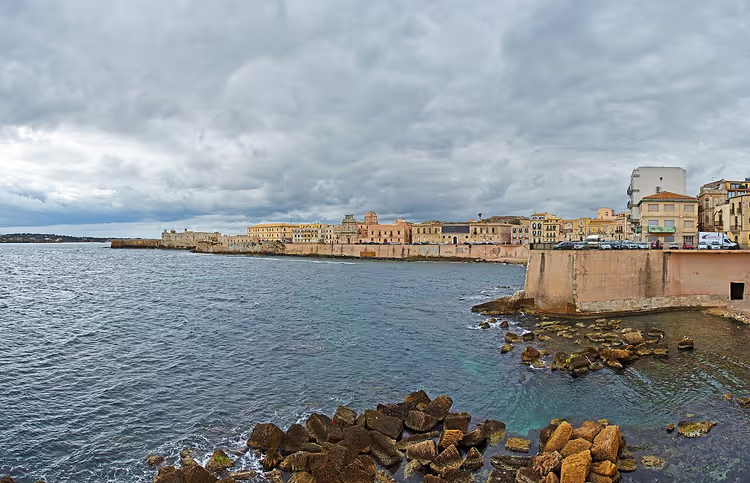
Ortigia lies on a small island connected to Syracuse by bridges. It is the city's historic center, and its quarters are thousands of years old. Across the main bridge, Ponte Umbertino, you come straight to the Temple of Apollo.
Ortigia's main attraction is the cathedral. It was built on the site of an ancient Greek temple and became a Christian church in the early Middle Ages. Inside is the Chapel of Saint Lucy with part of her remains. Nearby, the Fountain of Arethusa is worth seeing: it is a pool right by the sea where ducks and fish swim, and papyrus, rare for Europe, grows in the water.
Outside Ortigia, in Syracuse proper, the Paolo Orsi Archaeological Museum is worth a visit. The building was constructed specifically for the collection of excavation finds, and many exhibits date back to prehistoric times. On Ortigia itself, the Maniace Castle stands out: it served both as a royal residence and as a prison. Also note the Palazzo Montalto with its Gothic facade and windows of varying sizes.
Restaurants, cafes, and souvenir shops line the waterfront and Via Cavour. Locals love strolling here in the evenings. You can get there by regular bus, taxi, or rental car. Check cathedral opening hours on the Sicily tourism website.
11. Monreale Cathedral
 © Ludvig14 · CC BY-SAPhoto: Ludvig14, CC BY-SA (https://creativecommons.org/licenses/by-sa/4.0), Wikimedia Commons
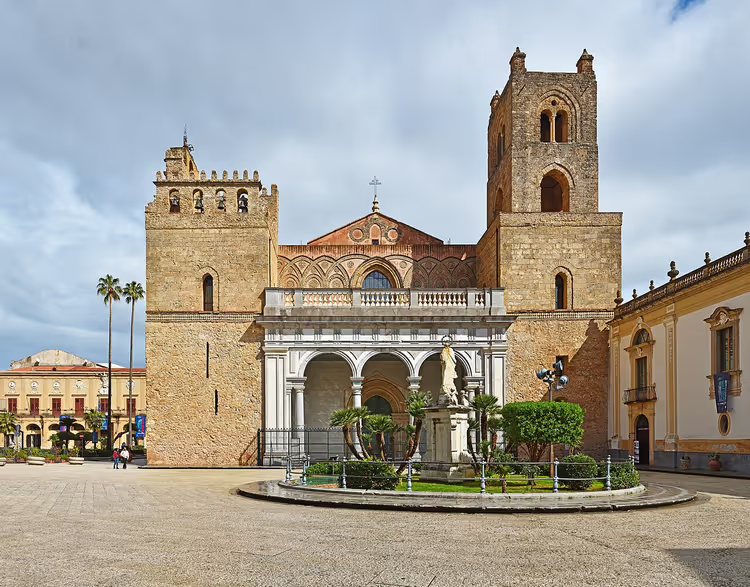
Monreale Cathedral stands in a small town near Palermo. It was built in the 12th century by order of King William II, so the building is considered a prime example of Norman architecture. The complex includes the church itself, a Benedictine monastery, and a former royal residence.
Outside, the facade is decorated with arches, and one of the towers is crowned with a spire. The appearance was cared for over centuries: in the late Middle Ages a sacristy was added, the floor was laid with white marble, and the Chapel of the Crucifix appeared. In the portico stands a statue of William the Good presenting a gift to the Virgin Mary.
The church survived a lightning strike and a fire, after which part of the interior had to be restored. Inside you will see Byzantine mosaics, Arab elements, and Norman forms. Getting there from Palermo is easy by regular bus; the trip is short. Exact opening hours are listed on the official tourism portal (as of 09/2026).
12. Riviera dei Ciclopi
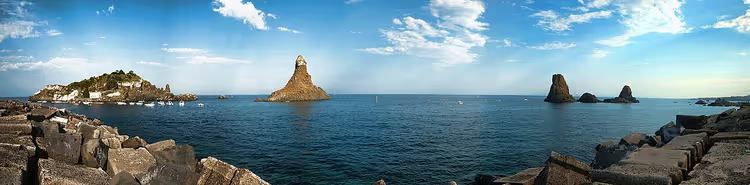 © forastico from Milano, Italia · CC BYPhoto: forastico from Milano, Italia, CC BY (https://creativecommons.org/licenses/by/2.0), Wikimedia Commons
Riviera dei Ciclopi stretches along the Ionian Sea near the town of Aci Castello. Small lava islets near the shore feature in popular itineraries and look striking against the water. These places are tied to the myth of Odysseus and the cyclops Polyphemus.
According to legend, Odysseus got the giant drunk on wine, then blinded him and escaped. The enraged cyclops hurled rocks at the fugitives, and those rocks, falling into the water, formed the unusual reefs you see today. The rocks are easy to view from a boat, and some of them are visible right from the shore. The spot works well for a seaside walk and a short stop on the way to Etna.
13. Ragusa: a baroque city
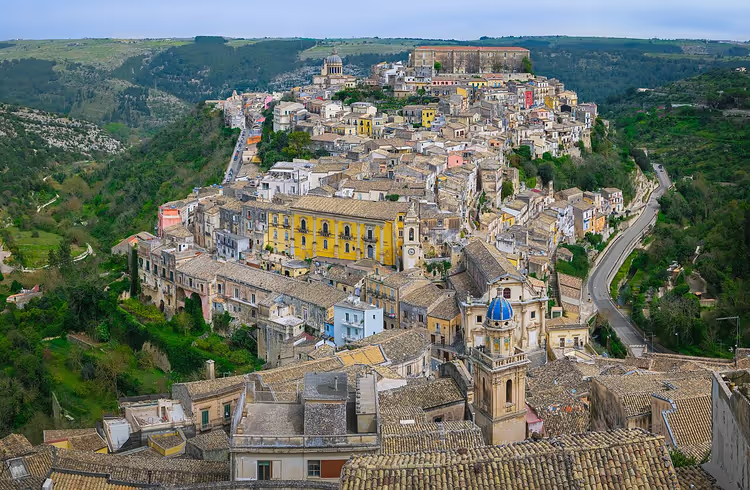 © Chris Down · CC BYPhoto: Chris Down, CC BY (https://creativecommons.org/licenses/by/4.0), Wikimedia Commons
Ragusa is divided into the modern Upper Town and the old Lower Town. The lower part grew on the site of quarters destroyed by an earthquake in the late 17th century and is almost entirely built in the baroque style. There are many palaces, churches, and monuments here.
In the Upper Town stands the Cathedral of Saint John the Baptist, completed in the late 18th century. Nearby, an archaeological museum displays finds from Ragusa's history. Among secular buildings, note the Palazzo Schininà, now the bishop's residence, and the Palazzo Zacco in rococo style with the family coat of arms on the facade and masks on the balconies.
Of the city's old gates, only Porta Valtirieri survives. Between Upper and Lower Ragusa you will have to climb uphill streets, so wear comfortable shoes. Regular buses run here from Syracuse, Catania, and Palermo.
- The catch: the Upper and Lower Towns sit at different elevations, and the climb takes effort.
14. Tuna Museum on Favignana
Tuna has been caught on Favignana since ancient times, and in the late 19th century the local economy was boosted by the entrepreneur Ignazio Florio. He built a fish processing factory that became the island's main employer. Today a museum occupies the site of the closed plant.
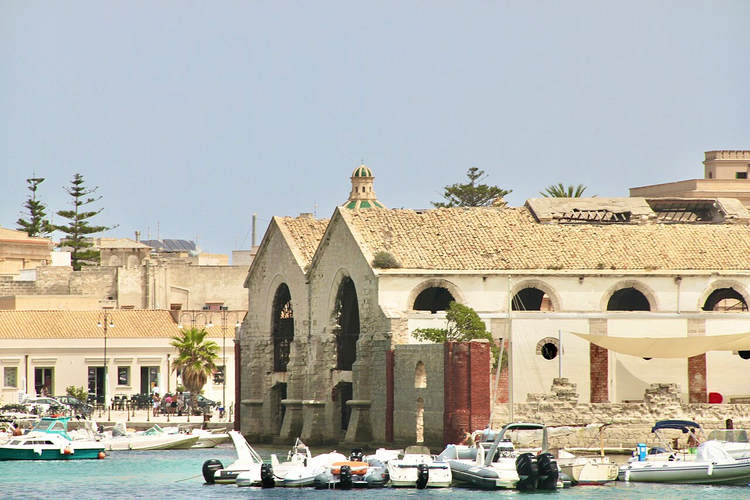 © Lorefoto · CC BY-SAPhoto: Lorefoto, CC BY-SA (https://creativecommons.org/licenses/by-sa/4.0), Wikimedia Commons
The exhibition explains how the catch was carried out, what tools the fishermen used, and how the fish was processed. You will see old boats, nets, and working tools. Check the address, opening hours, and ticket price at the entrance. You can reach Favignana by fast ferry from Trapani.
15. Riserva dello Zingaro
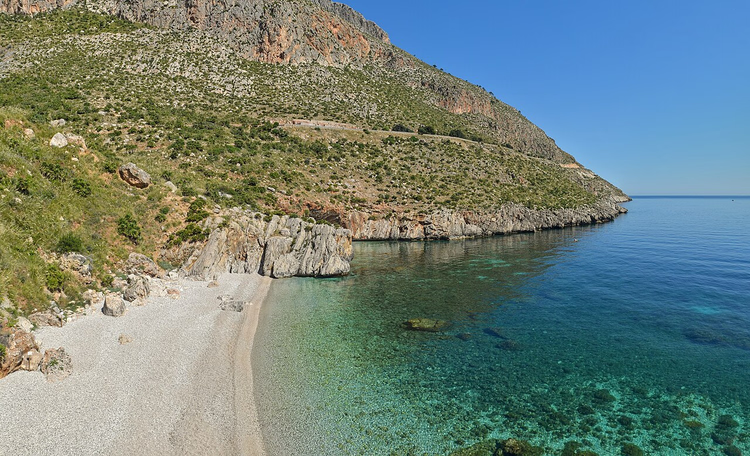 © The Cosmonaut · CC BY-SAPhoto: The Cosmonaut, CC BY-SA (https://creativecommons.org/licenses/by-sa/2.5/ca/deed.en), Wikimedia Commons
Between Palermo and Trapani, by a bay, lies the Zingaro Nature Reserve. It covers a large stretch of coastline between San Vito Lo Capo and Scopello. The terrain is carved with caves and oddly shaped limestone cliffs.
The reserve was created to protect nature from development, so rare plants and animals have survived here. Clear water, grottoes, and underwater rocks make this a good spot for diving. Safe trails run along the entire coast, and you can swim right in the bay. A nature museum on the grounds tells about local species. Bring water and comfortable shoes: the trails are rocky, and there is little shade along the route.
16. Historic center of Noto
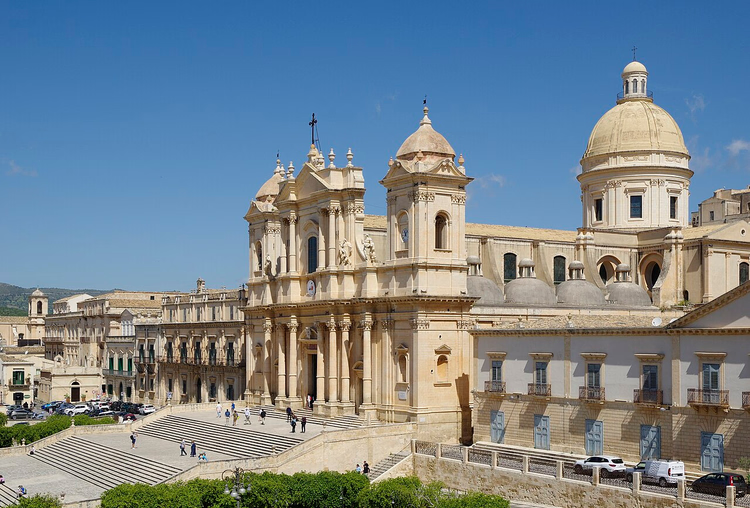
Noto was almost completely destroyed by an earthquake in the late 17th century, and the city was rebuilt from scratch in a new location. The streets here are wide and straight, and nearly all the buildings are in the baroque style. Many were designed by the architect Vincenzo Sinatra.
 © Berthold Werner · CC BY-SAPhoto: Berthold Werner, CC BY-SA (https://creativecommons.org/licenses/by-sa/4.0), Wikimedia Commons
The city's main building is the Cathedral of San Nicolò, made of yellow sandstone. You will walk along even streets between baroque facades, staircases, and small squares. Regular buses run here from Catania.
17. Cala Rossa on Favignana
 © Arcona B&B · CC BYPhoto: Arcona B&B, CC BY (https://creativecommons.org/licenses/by/3.0), Wikimedia Commons
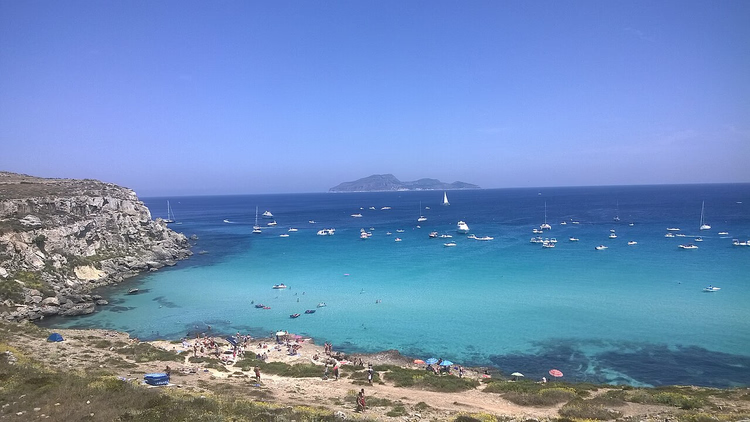
Favignana has an indented coastline, so there are many convenient coves for swimming. Cala Rossa stands out among them. According to legend, the name appeared after a naval battle between the Romans and the Carthaginians, when the water in the cove turned red.
The bottom is sandy and there are almost no waves, so it is comfortable here with a mask and fins. The spot is good for a relaxed stay. You can get there by ferry, which runs on a schedule.
18. Cathedral of Syracuse
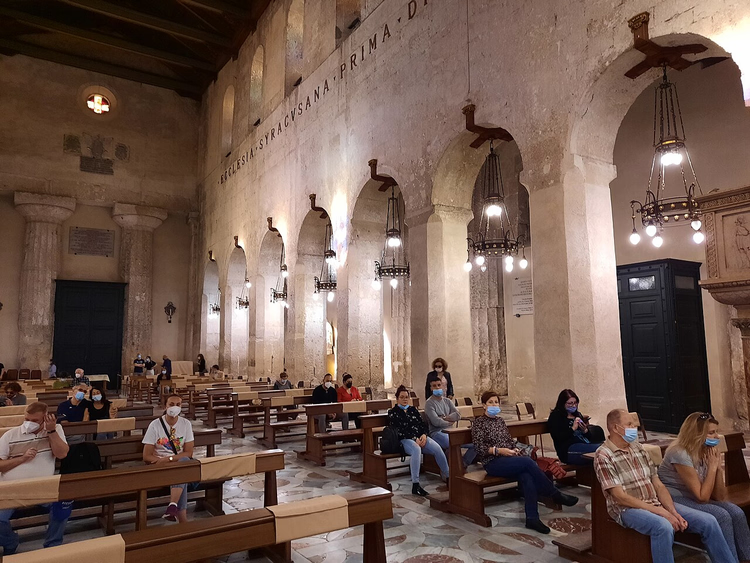
The Cathedral of Syracuse was built on the ruins of an ancient Greek temple. In the 16th century it was expanded and chapels were added, and in the 18th century a western facade was built around the surviving naves and apse. Columns, wrought-iron gates, frescoes, and statues appeared at the same time.
 © Bybbisch94, Christian Gebhardt · CC BY-SAPhoto: Bybbisch94, Christian Gebhardt, CC BY-SA (https://creativecommons.org/licenses/by-sa/4.0), Wikimedia Commons
In the early 20th century the cathedral was restored and some of the decorations from the previous century were removed. It is an active church, so tourist access is limited during services. The cathedral stands on Ortigia, and it is easy to include it in a walk around the island.
19. Erice in the province of Trapani
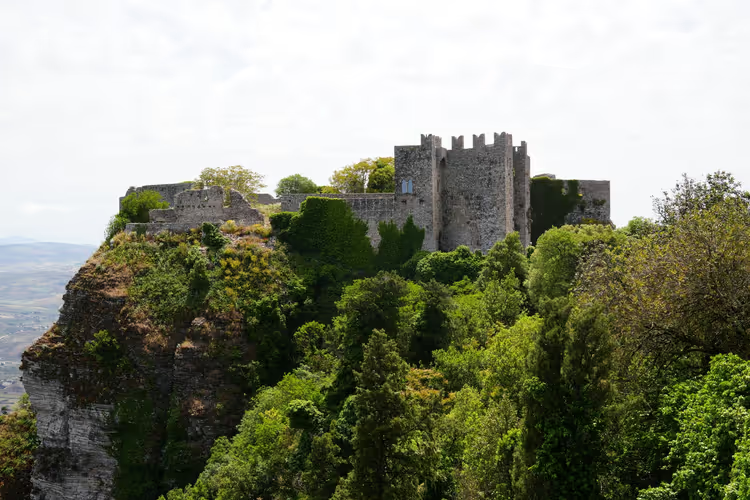
Erice stands high above the sea in western Sicily, and it is visible from almost the entire coast. The town was founded as a religious center of the goddess Aphrodite, and was later associated with the Roman Venus. In plan, Erice has the shape of a triangle, and its streets are tangled and winding.
Near the Norman gate Porta Trapani is the Chiesa Matrice, built in the 14th century. From there, a scenic road makes it easy to walk to the castles of Castello Pepoli and Castello di Venere. The town museum holds finds, some of which date back to the Stone Age.
From Trapani you can go up to Erice by funicular or take a regular bus. You can walk around the whole town in a few hours, so it is convenient to come here for half a day. Medieval walls, silence, and clouds make Erice unlike other towns on the island.
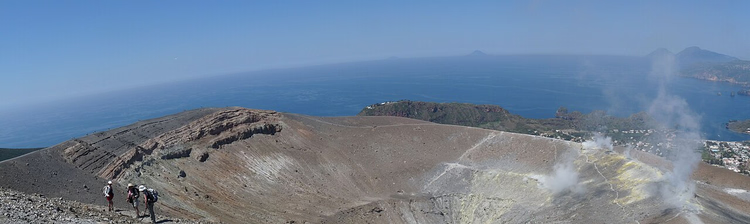
20. Vulcano Island and its crater
Vulcano Island lies in the Tyrrhenian Sea near Sicily. It got its name from the ancient Roman god, the patron of blacksmiths. The ancient Greeks believed that the god's forge stood right here, with smoke and fire bursting out of it.
 © antoineraemaekers · CC BYPhoto: antoineraemaekers, CC BY (https://creativecommons.org/licenses/by/3.0), Wikimedia Commons
The island is made up of several volcanoes, and one of them, Fossa, is considered active. The last eruption happened more than a century ago, but scientists do not rule out a new awakening. In the past, locals earned a living mining and processing volcanic sulfur, but now tourism has become the mainstay.
People come here for the views, the sulfur and mud baths, and the local wine. A trail leads from the pier up to the crater, and the summit opens up a panorama of the entire archipelago. Below lies the Valley of the Monsters with unusual figures made of sand and plants. The beaches here have black sand, which is a rarity for the Mediterranean.
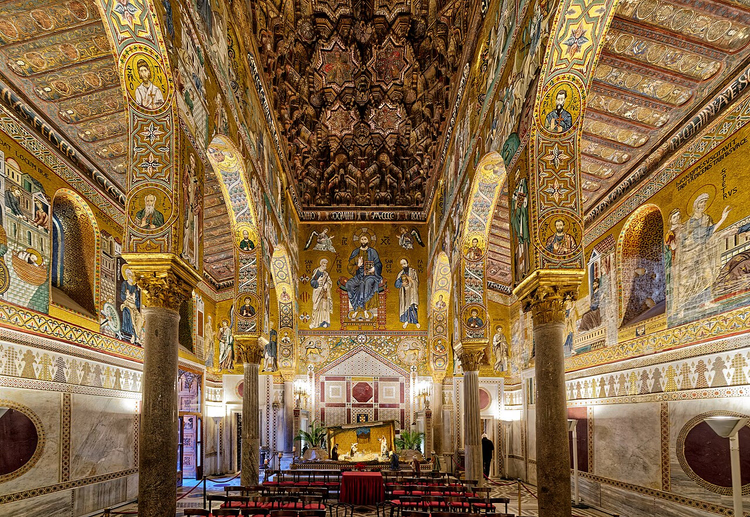
21. Palatine chapel of the Norman palace
 © Holger Uwe Schmitt · CC BY-SAPhoto: Holger Uwe Schmitt, CC BY-SA (https://creativecommons.org/licenses/by-sa/4.0), Wikimedia Commons
The Norman Palace in Palermo was built by the Phoenicians, and later it was held by the Romans and the Arabs. Its heyday came under the reign of Frederick II, who made the palace an imperial residence. The building resembles a fortress with blind arches.
It is worth visiting for the Palatine Chapel with its golden mosaics, the Hall of Roger with mosaics on secular themes, and the Hall of the Squires. The Hall of Hercules survives in the royal apartments. Some rooms are occupied by offices, so visitors are not admitted everywhere.
22. Greek theater in Taormina
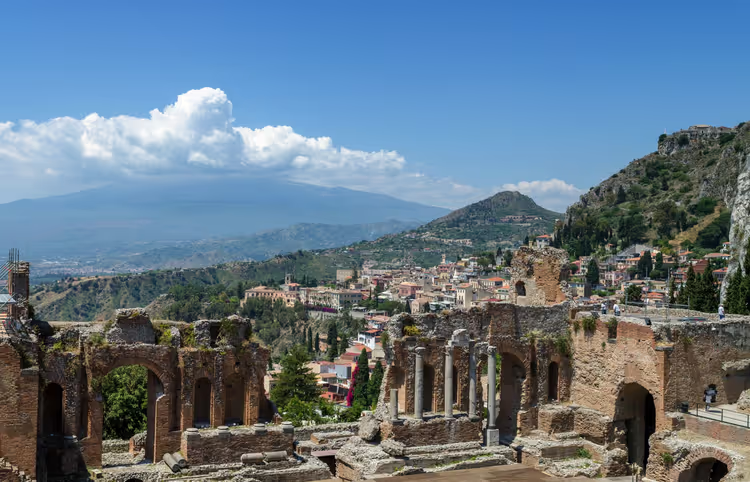
The Greek theater in Taormina was built back in the first millennium BC. The seating faces the sea, so it offers a view of Etna and the Ionian coast. In Roman times, gladiator fights were held here.
Today the theater remains a symbol of Taormina: concerts and an international arts festival take place within the ancient walls. The stands hold thousands of spectators and still receive audiences, so the stage is not occupied every evening. Because of concerts, the visiting schedule changes, and it is best to check the timetable in advance.
23. Chiesa del Gesù in Palermo
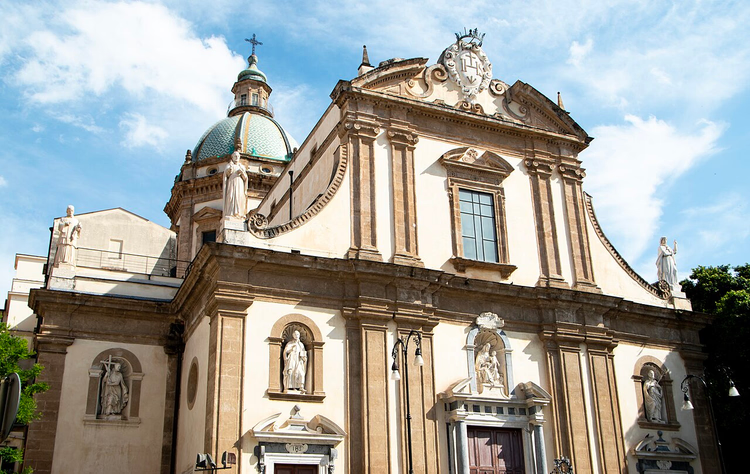
Chiesa del Gesù, known as Casa Professa, is considered one of the most ornate churches in Sicily. Construction began in the 16th century by Jesuit monks. Over time, side chapels and two aisles were added to the main nave to give the building a more monumental appearance.
Inside, the walls are decorated with mosaics, and in one of the chapels you can see the fresco "Adoration of the Magi". After restoration, the church was reopened to visitors. If you like ornate interiors, put it on your walking plan through the center of Palermo.
24. Monastero dei Benedettini in Catania
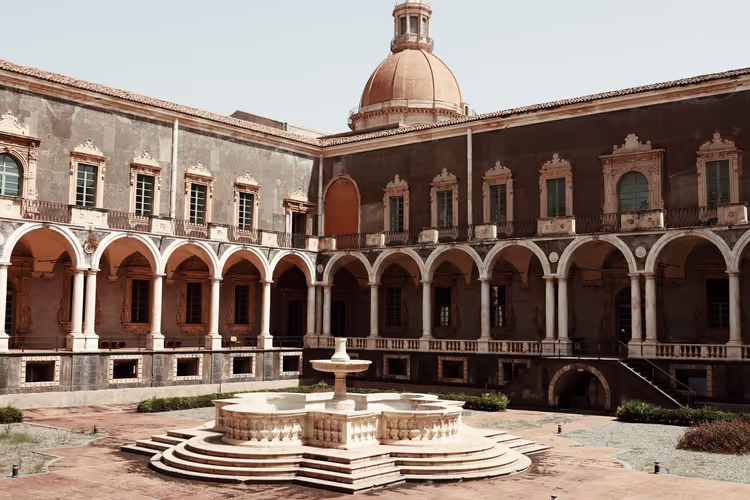
The Benedictine monastery in Catania is worth visiting both for its architecture and for its museum. The complex, which includes the Church of Saint Benedict, now houses a university: professors' offices are set up in former monks' cells, and lecture halls occupy church rooms.
The monastery library holds tens of thousands of volumes, many of which are of historical value. Visitors are not admitted every day, so it is worth checking the schedule in advance on the official Sicily website.
- The catch: visits are possible only on certain days of the week.
25. Chiesa di San Giorgio in Modica
Modica lived through the rule of many peoples, and in the 18th century it became a cultural center where scholars, philosophers, and poets lived. The historic center is divided into Upper and Lower Modica.
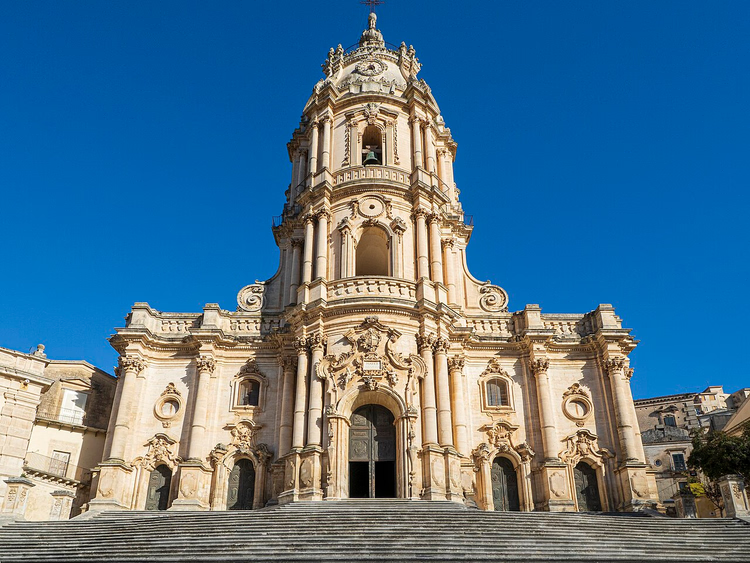 © Pasquale Relvini · CC BY-SAPhoto: Pasquale Relvini, CC BY-SA (https://creativecommons.org/licenses/by-sa/4.0), Wikimedia Commons
The city's main church, Chiesa di San Giorgio, began construction in the mid-17th century, but the building was soon destroyed by an earthquake. The church was rebuilt and greatly altered: it consists of five naves, and a bell tower stands in the central part. The church was built on high ground, so it appears light. Construction continued for decades, and in the early 19th century a wide staircase was added to the church, which became its calling card.
26. Bue Marino cove on Favignana
Favignana Island is part of the Egadi archipelago. This area is known for its tuff quarries, beaches, and coves. Bue Marino cove suits those who love snorkeling: underwater there are corals, schools of colorful fish, aquatic plants, grottoes, and caves.
The descent to the water is rocky and steep, and the water is cool even in summer. But the underwater world here is rich. You can get there from Trapani by speedboat.
- The catch: the descent to the water is steep and rocky, and it is inconvenient with children.
27. Ceramics museum in Palermo
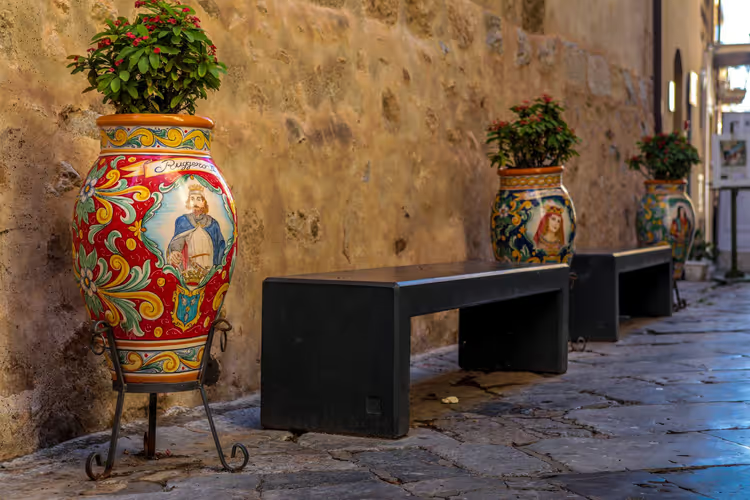
Ceramics held a special place in Sicily, and a dedicated museum in Palermo is devoted to them. The collection holds several thousand tiles: some were made by modern artisans, while some pieces are more than four centuries old. This collection was assembled by ceramics enthusiast Pio Mellino.
The museum occupies the restored Torre Pirajno palace in the city center, and its ceilings are painted with frescoes. The halls contain tiles from different centuries, so it is easy to compare old and new works by artisans here. The exhibition is in demand, so there are plans to expand it. Check the address and opening hours on site.
28. Catania Cathedral
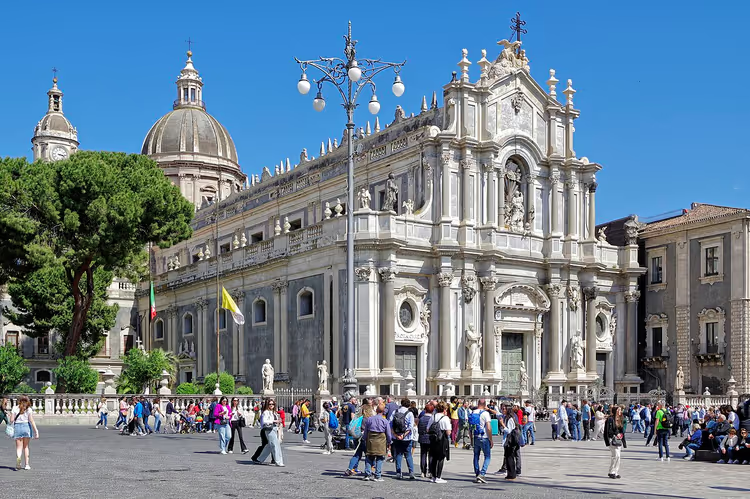 © Berthold Werner · CC BY-SAPhoto: Berthold Werner, CC BY-SA (https://creativecommons.org/licenses/by-sa/4.0), Wikimedia Commons
In Catania, it is worth seeing the Cathedral of Saint Agatha, the city's patron saint: her remains are kept in the church. The first structure was built in the 11th century, but an earthquake and fire almost completely destroyed it. In the early 18th century, the cathedral was rebuilt from scratch.
The facade is clad in marble and decorated with statues. It is an active church, so tourist access is limited during services. The cathedral stands in the center of Catania, next to the main square, and is easy to see as part of a city tour.
29. Scala dei Turchi
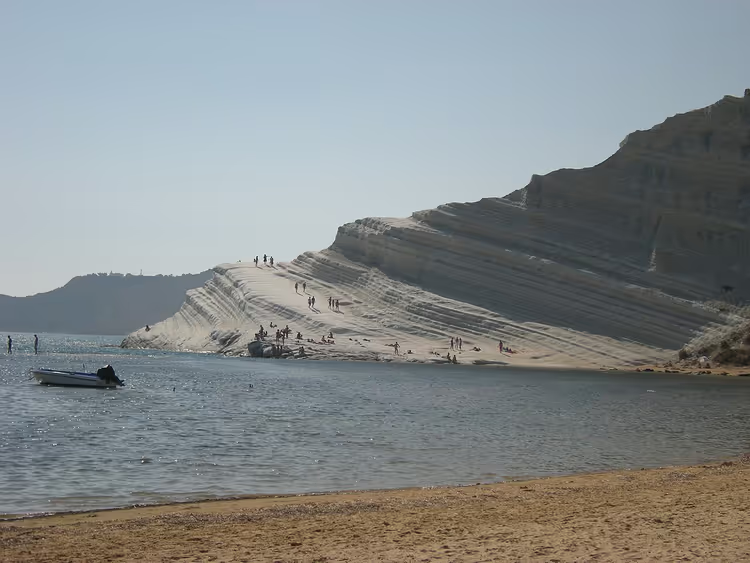 © Carnby · CC BYPhoto: Carnby, CC BY (https://creativecommons.org/licenses/by/3.0), Wikimedia Commons
Scala dei Turchi rises above the sea between Realmonte and Porto Empedocle. The cliff got its name from Turkish pirates who hid in the calm bay. It is made of soft white marl, and at sunset the stone becomes especially bright. At the foot there are convenient beaches where you can swim. People reach the cliff from the neighboring beaches, and it is best to pick a calm day without waves.
30. The Egadi Islands and their beaches
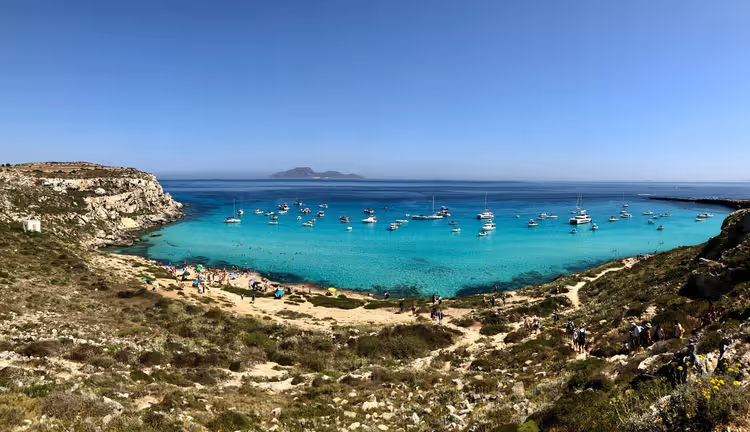
The Egadi archipelago includes Favignana, Levanzo, Marettimo, and several smaller islands. People settled here as far back as prehistoric times, when part of the land was connected to the mainland. Ancient drawings and carved stone artifacts were found in a local cave.
Today several thousand people live on the islands, and the administrative center is the village of Favignana. Clear water, rugged coastlines, caves, and grottoes have made the archipelago popular with tourists. Local attractions include caves with drawings, fortifications, and buildings from the time of the Republic of Genoa. You can get there by scheduled ferries from Trapani; tickets are sold at the pier.
Tours and tickets in Sicily
Guided tours, skip-the-line tickets and activities — most offers can be cancelled free of charge.
See offers on GetYourGuideThe widget loads once you give your consent.
⁉️🤔 Frequently asked questions
How many days do you need for Sicily?
Plan for at least a week. That gives you enough time to see Palermo, the Valley of the Temples, and the east side of the island with Etna and Taormina. If you want to add Lampedusa and the Egadi Islands, plan for two weeks and factor in ferry travel.
When is the best time to visit Sicily?
The most comfortable months to travel are April, May, June, September, and October. In summer, open-air sites like the Valley of the Temples get very hot, and the beaches are packed. Winter is quiet, but some boat tours run on a reduced schedule.
Do you need a car in Sicily?
On the east side and in the cities, you can get by with buses and trains. Without a car, it is harder to reach Villa del Casale, the Zingaro Nature Reserve, and the beaches in the south. If you plan to cover the whole island, renting a car will save you a lot of time.
Is it dangerous to go up Mount Etna?
With a guide, the ascent is safe: routes are chosen based on volcanic activity. On your own, you can only walk on the lower sections. Bring a warm jacket and closed-toe shoes, because it is cold and windy at the top even in hot weather.
What to see in Sicily with kids?
Kids tend to love the beaches of Lampedusa and the Egadi Islands, the puppet museum in Palermo, and the cable cars near Etna. Teenagers usually enjoy the Capuchin Catacombs and the Greek Theatre in Taormina. Long routes are best broken into shorter stretches.
How do you get to the Egadi Islands?
Ferries and fast hydrofoils run to the archipelago from Trapani, and in summer there are additional departures from other ports. Tickets are sold at the pier or online, and in high season it is better to buy them in advance. There is also service between Favignana and Levanzo.
How much does it cost to enter the Valley of the Temples?
Tickets for the archaeological park are sold separately, and prices change by season, so check the exact amount on the official website before your trip. In summer, it is more convenient to buy your ticket online so you do not stand in line at the ticket office in the sun.
What should you bring to Mount Etna?
A warm jacket, closed-toe shoes, and extra water. It is noticeably colder at the top than on the coast, and the wind makes it feel even colder. If you go up with a guide, they will tell you what gear is provided on site.
Sicily attractions
Places on the map
- 1Catacombs of the Capuchins Underground burial galleries from the 16th-19th centuries beneath the monastery
- 2Puppet Museum Sicilian puppet theatre opera dei pupi, a UNESCO site
- 3Norman Palace Former royal residence, now the region's parliament
- 4Monreale Cathedral 12th-century Norman architecture, Byzantine mosaics
- 5Palatine Chapel Arab-Norman mosaics inside the Norman Palace
- 6Chiesa del Gesù One of the most lavishly decorated churches in Sicily, mosaics and frescoes
- 7Ceramics Museum Collection of ceramic tiles in the Torre Pirrone palace
In short: what to book
If you have a week, start with Palermo and the east side: Etna, Taormina, and the baroque towns give you the most packed itinerary. Sea lovers will enjoy Lampedusa and the Egadi Islands, while those coming for ancient history should build their route around Agrigento and Villa del Casale.
Palermo, Catania, and Syracuse are convenient bases for overnight stays: from there it is easy to travel around the island. Look for hotels in advance, especially in high season, and you can find a hotel in Sicily on Trip.com.
If you need insurance, compare options from different companies and choose one that fits your route.

A small editorial team writing guides for independent travel. We travel ourselves, but we haven’t been everywhere, so we check prices, opening hours and how to get there against official sources.