
















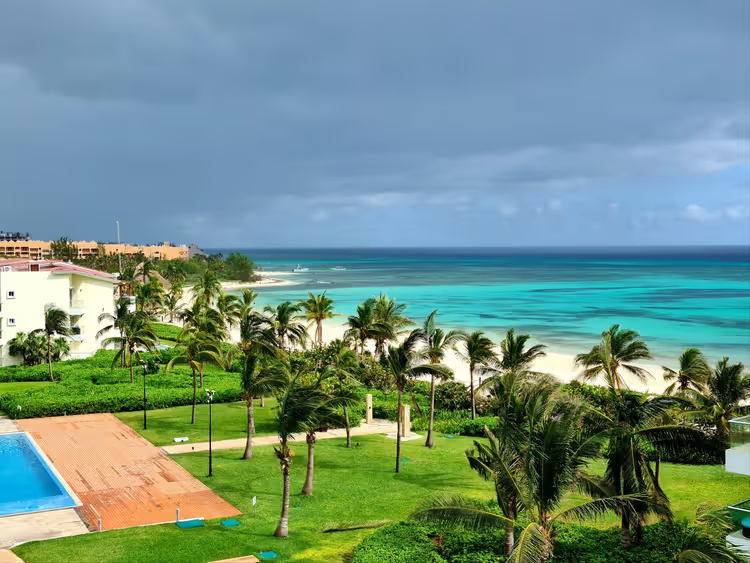
Where to swim in Mexico: 20 beaches from the Caribbean to the Pacific Ocean
Where are the best beaches in Mexico? The answer depends on what you are looking for: a quiet lagoon for kids, big waves for surfing, or reefs for diving. Mexico is bordered by the Caribbean Sea, the Gulf of Mexico, and the Pacific Ocean, so the choice here is huge.
Island beaches, such as on Isla Mujeres, are reached by Ultramar ferry from Puerto Juarez: an adult one-way ticket costs 290 MXN (as of 09/2026, Ultramar). Some routes run along the coast, others across the Mujeres Strait.
Below are 20 beaches worth seeing. For each one we note how to get there, when to go, and what to expect. Some spots lie near Cancun and Tulum, others on islands and the Pacific coast.
💡 In short:
- The list covers two coasts of Mexico: the Caribbean and the Pacific.
- The dry season on the Caribbean runs from November through April, when the sea is calmer.
Ad: this article contains affiliate links, we earn a commission if you book through them. At no extra cost to you.
1. Maroma
Maroma lies on a long sandy shore of the Yucatan. From Playa del Carmen it is about 24 km, from Cancun about 48 km (on the map). Jungle blocks the road to the water, so city noise stays behind. There is almost no pebbles or seaweed washed up by the sea here.
The Secrets Maroma resort operates nearby. The beach itself is open to everyone, but loungers and umbrellas are mostly taken by hotel guests. Come in the morning on a weekday: before noon there are noticeably fewer people, and the water stays clear.
2. Isla Mujeres
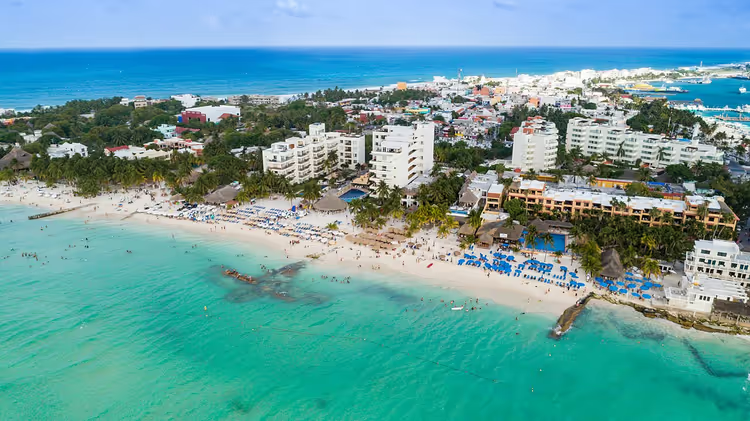 © dronepicr · CC BYPhoto: dronepicr, CC BY (https://creativecommons.org/licenses/by/2.0), Wikimedia Commons
Isla Mujeres (Isla Mujeres) sits in the Caribbean Sea across from Cancun. The island got its name from the stone statues that the first Spaniards found here. The southern shore is rocky, while the entire northern part of the island is one continuous strip of sand.
The island is declared a national park and protected by the state. Part of the shore lies on a coral reef of the Mesoamerican Reef system. Divers come here for the underwater museum: dozens of statues stand on the seabed by the marine park.
There is plenty to do on land too. You can rent a moped or bicycle, go kayaking, or visit a turtle farm. The island has many beaches: Playa Norte and Playa Indios are loved for their calm water, Playa Paraiso for its quiet.
Isla Mujeres hotels on Trip.com
3. Akumal
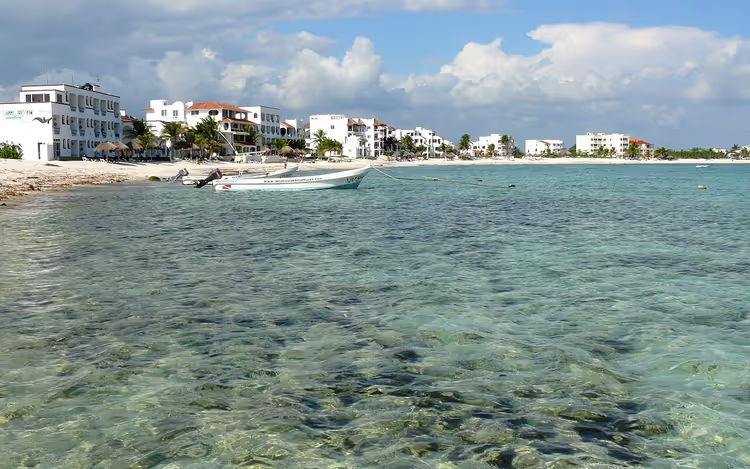
Akumal is called the "turtle" beach. It is a small village on the Riviera Maya and the first tourist center on the Mexican coast. Visitors walk across a white bridge to reach the turtles and swim with them in the lagoon.
The best snorkeling spots are in the northern part, by the coral reef. The shore is divided into three sections: central, northern, and Jade by the small lagoon. Umbrellas, loungers, mask rentals, and boats are clustered around the central section. For a restroom, the easiest option is to go into a restaurant or dive center.
Keep in mind: turtles must not be touched or fed, and you can be fined for it.
The lagoon is shallow and protected from waves, so even beginners snorkel here. The best time for the water is morning, while it is clear and there are few boats. If you do not want to swim, you can easily watch the turtles from the bridge; they come close to shore during the day too. Address: Akumal pueblo.
4. Tulum
 © FeldBum · CC BY-SAPhoto: FeldBum, CC BY-SA (https://creativecommons.org/licenses/by-sa/4.0), Wikimedia Commons
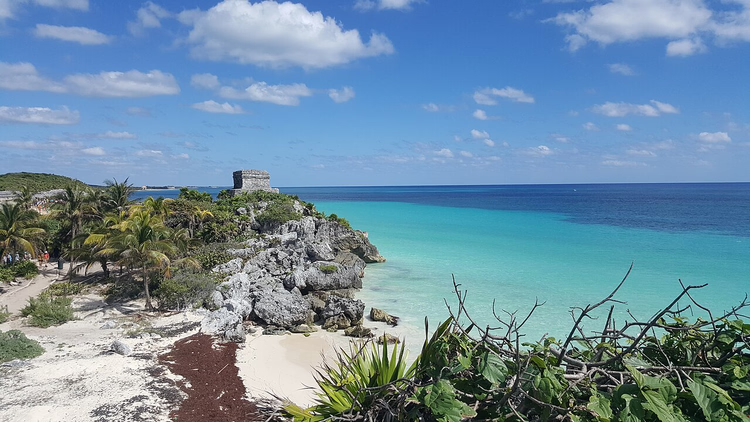
Tulum sits on the Caribbean coast, and high season here runs from November through April. Public sections are scattered along the shoreline: Santa Fe, Pescadores, Paraiso, Las Palmas, Maya. A dense wall of trees hides the beaches from the road.
Bungalows with palm-leaf roofs hide among the palm trees. Waves barely reach here, and the water entry is gentle, so swimming with kids is easy. Changing rooms and restrooms stand by the road and are marked with signs.
The town has free parking, restaurants, and entertainment centers. Visitors also come here for the Mayan ruins and the Sian Ka'an reserve, which are nearby.
Address: Zona Hotelera Tulum.
5. Sian Ka'an
 © Tschips · CC BY-SAPhoto: Tschips, CC BY-SA (https://creativecommons.org/licenses/by-sa/3.0), Wikimedia Commons
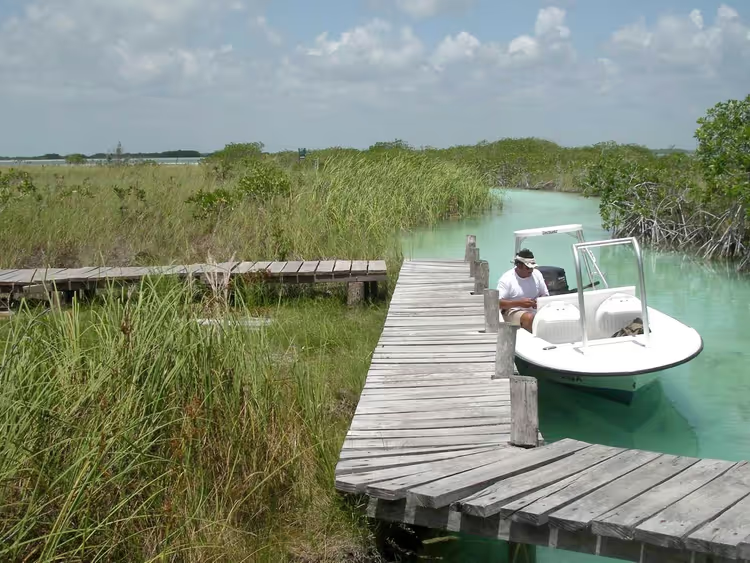
Sian Ka'an is one of Mexico's top nature reserves and is a UNESCO World Heritage Site. The coastline stretches for dozens of kilometers along the Caribbean Sea, with impenetrable jungle coming right up to the sandy strip.
There are no facilities here, so bring water, food, and sun protection. In return, you get pristine silence, fine white sand, and a sea that shifts from azure to emerald. A coral reef shields the shore from the waves.
The reserve is best explored with a group or by boat with a guide. There are few beaches in the usual sense, and reaching them is not easy. But you will see the coast as it was before the hotels.
6. Puerto Morelos
 © Luis Fernández García · CC BY-SAPhoto: Luis Fernández García, CC BY-SA (https://creativecommons.org/licenses/by-sa/2.5/es/deed.en), Wikimedia Commons
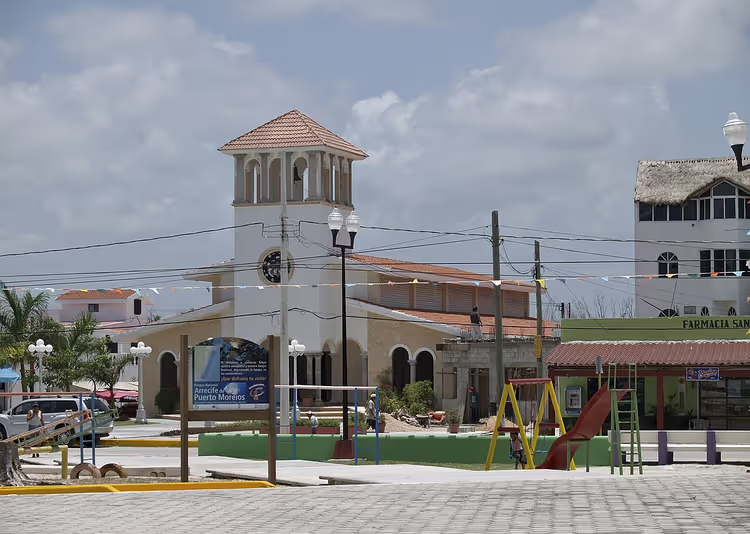
Puerto Morelos is easy to recognize by its two lighthouses and the pier. The old lighthouse survived a hurricane and stayed in place, becoming a symbol of the fishing village. Snorkeling enthusiasts are increasingly drawn here.
The barrier reef comes close to shore and lies at a shallow depth, so you can explore it with just a mask and snorkel. Near the shore you may encounter turtles, barracudas, and rays. The reef calms the waves, and the water at the beach is almost always still.
A promenade with cafes and shops runs along the main beach. Activities on offer include boat trips, visits to a crocodile farm, and the Delphinus Puerto Morelos dolphinarium.
7. Playa del Amor
 © Luis Carlos Soria Contreras · CC BY-SAPhoto: Luis Carlos Soria Contreras, CC BY-SA (https://creativecommons.org/licenses/by-sa/4.0), Wikimedia Commons
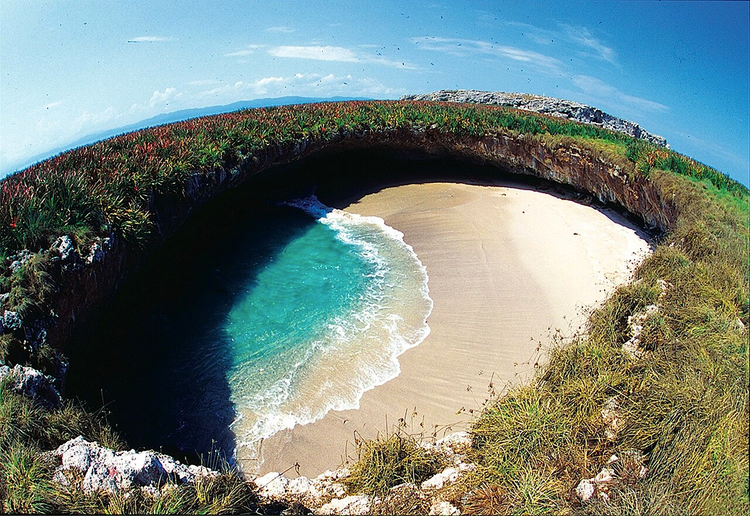
Playa del Amor (Love Beach) hides under a stone arch on an uninhabited island near Puerto Vallarta. A cave covers it from above, and the only way inside is by water through a narrow tunnel in the rocks.
The shore is made of snow-white coral sand, and the water here is turquoise. The beach is part of a biosphere reserve, so access is limited and open only by permit. Boat operators bring visitors here in small groups.
Inside, only snorkeling and kayaking are allowed. Fishing and hunting are prohibited, and violations carry a heavy fine. Couples come here for seclusion and unusual photos.
8. Zicatela
 © Gzzz · CC BY-SAPhoto: Gzzz, CC BY-SA (https://creativecommons.org/licenses/by-sa/4.0), Wikimedia Commons
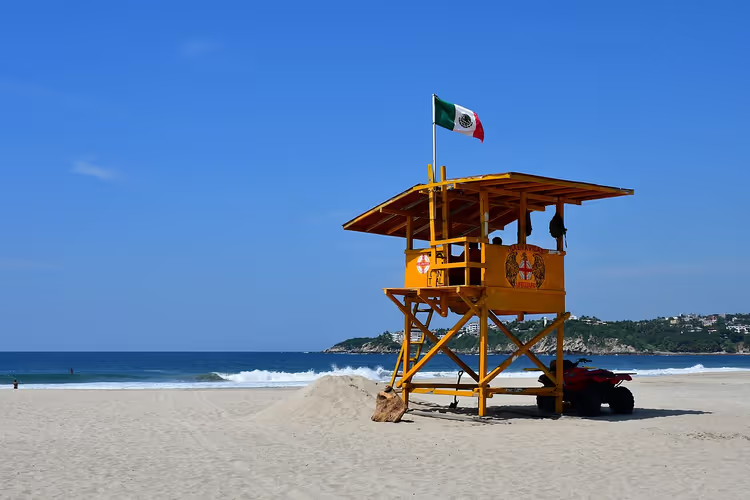
Zicatela lies on the Pacific coast near the town of Puerto Escondido in the state of Oaxaca. The waves here are high and powerful, so not everyone dares to swim, but surfers consider this one of the best spots.
Twice a year, Zicatela hosts surfing championships. Other visitors stroll along the ocean: the strip stretches for almost 3 km (on the map). Your feet sink into soft sand, and the waves roar right beside you.
Bring water and do not leave your belongings unattended. The strong current near the shore is dangerous for beginners, so enter the water only near lifeguard towers.
Surfing is taught at local schools right on the beach. If you are not getting up on a board, come at sunset: the ocean looks especially powerful at that time.
9. Playa Norte
 © dronepicr · CC BYPhoto: dronepicr, CC BY (https://creativecommons.org/licenses/by/2.0), Wikimedia Commons
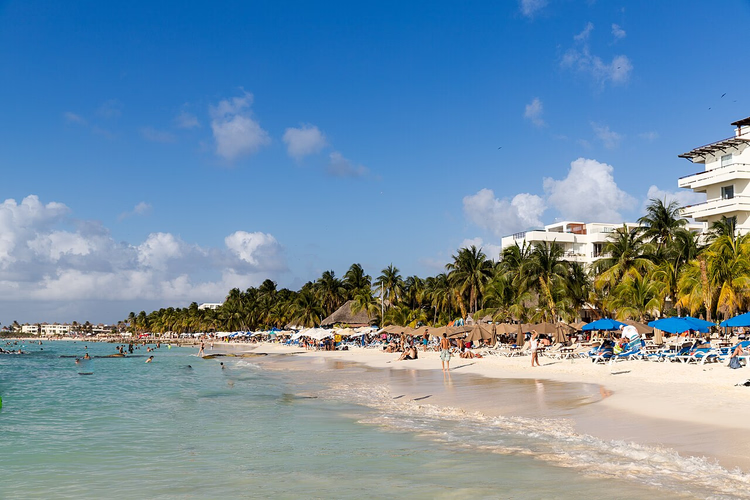
Playa Norte lies in the northern part of Isla Mujeres and is considered the island's best beach. A white strip about 500 meters long (on the map) meets warm, clear water. It is about 13 km from Cancun by water (on the map).
The beach is well suited for small children: it is shallow near the shore, and the depth increases slowly. Deeper areas nearby are popular with adults who like to dive. The water is warm almost all year, the air is hot during the day, and nights are cooler.
Hotels, cafes, and restaurants line the shore. The island is small, so you can walk to the main sights. Stop by Hacienda Mundaca park, climb Punta Sur, and see the Maya sculptures by the sea. From the mainland, you can get here by ferry across the Mujeres Strait.
Fragments of an ancient temple to the goddess Ixchel remain on the island.
10. El Caracol
 © Николай Максимович · CC BYPhoto: Николай Максимович, CC BY (https://creativecommons.org/licenses/by/3.0), Wikimedia Commons
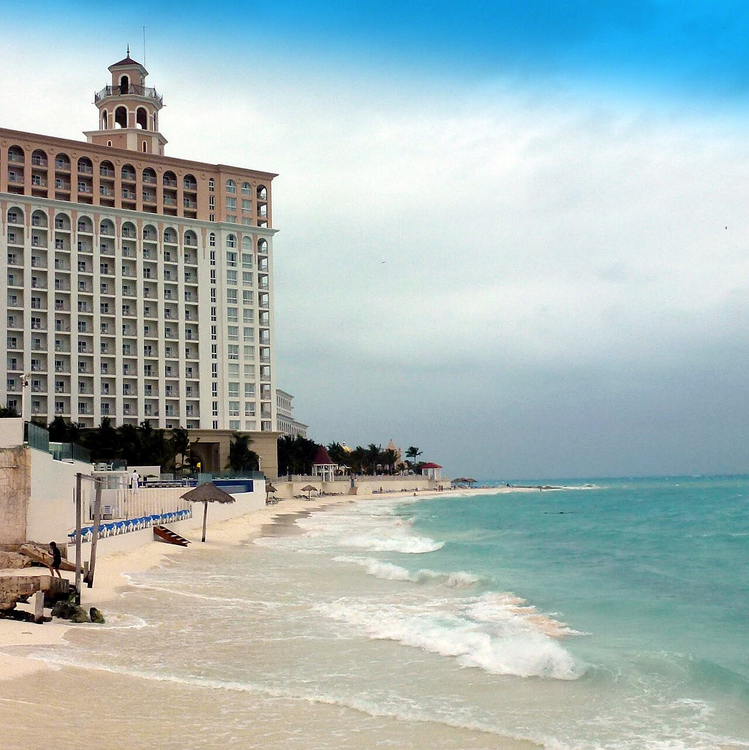
El Caracol stretches as a narrow strip along the sea in Cancun's Zona Hotelera. It is lined with upscale hotels where Europeans and Americans stay. The sand here is fine and white, the depth increases gradually, and a wooden pier stands at the shore.
Loungers, umbrellas, and restaurants belong to hotel guests, although the beach is technically public. Other visitors are left with the shops along Kukulcan Boulevard: Terramar Plaza, Plaza Caracol, and the Chedraui supermarket.
Activities include boat trips, a visit to a crocodile farm, and stalactite caves. In the evening, it is worth checking out the restaurants and the Coco Bongo nightclub. From here, it is convenient to take excursions to the pyramids of Chichen Itza, Xcaret, Tulum, and the Xel-Ha cenotes.
11. Playa Linda
 © Tonatiuh MeCa · CC BY-SAPhoto: Tonatiuh MeCa, CC BY-SA (https://creativecommons.org/licenses/by-sa/3.0), Wikimedia Commons
Playa Linda sits next to the Calinda Bridge, which connects Nichupte Lagoon to the Caribbean Sea. It is a great spot to watch yachts and see the current in the channel change direction twice a day. Locals call this area El Embarcadero.
There are almost no waves near the shore, so families with children favor this beach. You will be offered parasailing, kayaking, snorkeling, and golf on the neighboring course. For a view, climb the La Torre Cancun tower.
Cafes, bars, and restaurants operate near the pier. In the evening, a show for tourists is held on a boat. Cruise ships and ferries to nearby islands also depart from here, so the dock area is always lively.
12. Playa Tortugas
 © Jacquidiaz · CC BY-SAPhoto: Jacquidiaz, CC BY-SA (https://creativecommons.org/licenses/by-sa/4.0), Wikimedia Commons
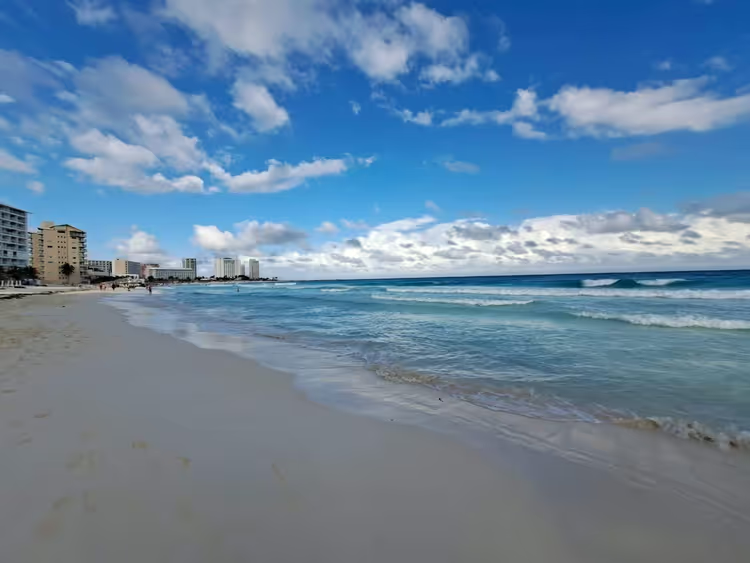
Playa Tortugas is in the northern part of Cancun and is popular with locals. Music plays here, it can get crowded, and there is a zip-line tower on the shore. If you want a quiet corner, come at opening time.
Isla Mujeres shields the beach from high waves, so swimming with children is safe. A boat station with water ski and gear rentals operates nearby, and sightseeing boats stop at the pier.
Among the nearby attractions, the dolphinarium is worth a visit. El Garrafon Park is on the neighboring island of Isla Mujeres. Look for souvenirs at the flea market by the beach: the selection is large, and bargaining is expected here.
13. Playa Marlin
 © Dnnna-10 · CC BY-SAPhoto: Dnnna-10, CC BY-SA (https://creativecommons.org/licenses/by-sa/4.0), Wikimedia Commons
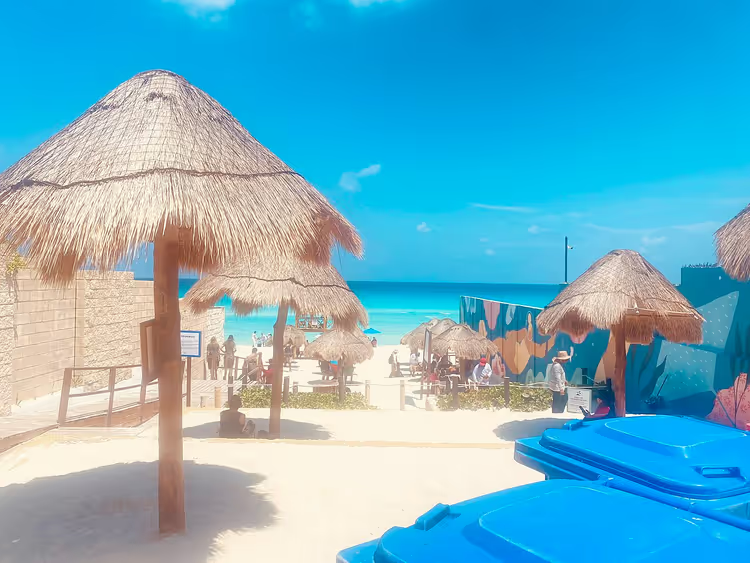
Playa Marlin is one of the "wave beaches" and stretches along Kukulcan Boulevard from kilometer 9 to kilometer 20 (on the map). Around kilometer 12-13 the current is especially strong, and swimming there is only possible right at the shore.
Flags on the beach indicate water conditions. A black or red flag means no entry into the water, so keep an eye on them. Lifeguards monitor safety from a tower.
Barracudas, whale sharks, and jellyfish can be found in the sea nearby, but they do not come close to the shore. Once a year, sea turtles come here to lay eggs in the sand.
The shore is lined with white hotels. The easiest way to reach the water is through the entrance at Kukulkan Mall, where showers, restrooms, cafes, and shops are also located. Buses 1 and 2 run here from the city, and the ruins of two Mayan temples lie nearby.
14. Playa Delfines
 © Capmo · CC BY-SAPhoto: Capmo, CC BY-SA (https://creativecommons.org/licenses/by-sa/4.0), Wikimedia Commons
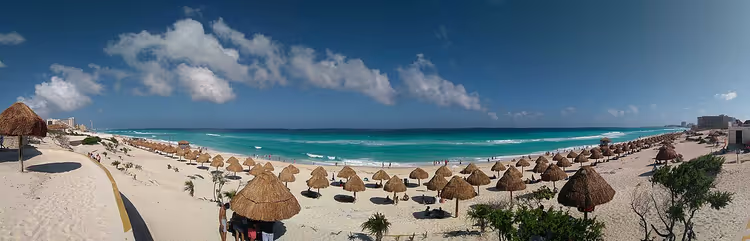
Playa Delfines is considered the longest and widest beach in this part of the Caribbean. Dolphins often swim close to the shore, and you can watch them for free at any time.
The sand here is light yellow, the water entry is gentle, and the sea is calm. The spot suits older adults and families with children. The beach is easy to find by the large colorful letters at the entrance, and a wooden staircase leads down to the shore.
Hotels and restaurants stand at a distance, so there is always free space on the sandy stretch. A kiteboarding school operates among the water activities. The El Rey ruins are across the road, and the bus from the city center takes about an hour (on the map).
15. Playa Langosta
 © Alfonzo Buscemi · CC BYPhoto: Alfonzo Buscemi, CC BY (https://creativecommons.org/licenses/by/3.0), Wikimedia Commons
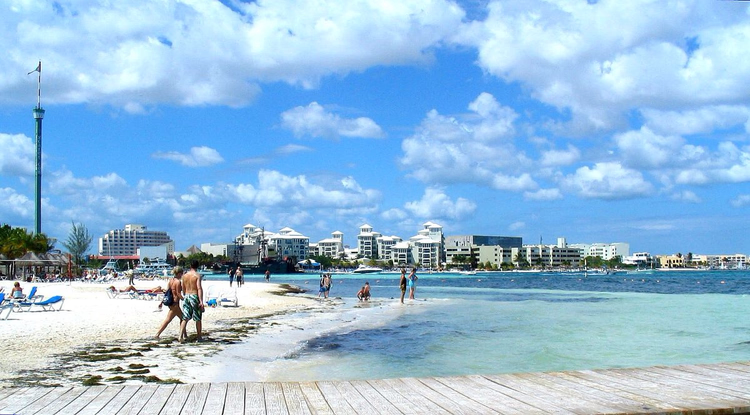
Playa Langosta lies across from Kukulcan Boulevard near the Asta Bandera Monumental monument. It is a quiet area with white coral sand that barely heats up in the sun. The sea breeze does not reach here, and there are almost no waves near the shore.
A wooden boardwalk divides the wide beach into two parts. The swimming area is marked with buoys and watched by a lifeguard. The fine sand resembles powdered sugar and is comfortable to walk on barefoot.
The infrastructure here is complete: showers, restrooms, loungers, umbrellas, wooden gazebos, and playgrounds. A bar, cafe, and ATM are available, and there is free parking. Any visitor can use all of this, not just hotel guests.
16. Playa Paraiso
 © diego_cue · CC BY-SAPhoto: diego_cue, CC BY-SA (https://creativecommons.org/licenses/by-sa/3.0), Wikimedia Commons
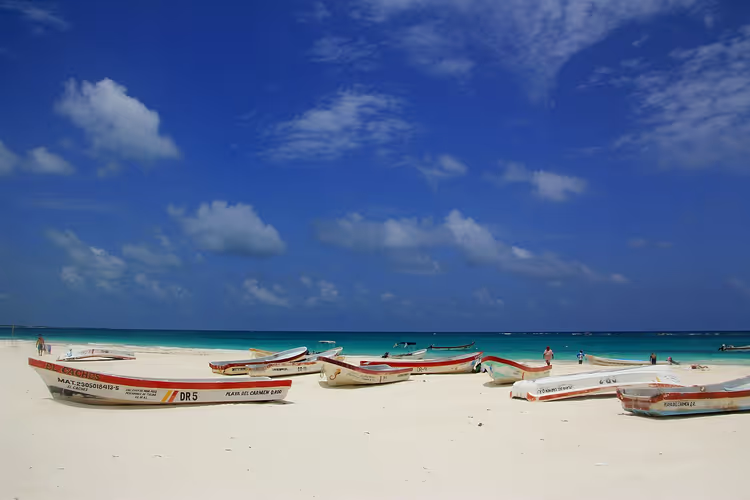
Playa Paraiso is in the young resort area of Riviera Maya. It is about 45 km from Cancun and about 22 km from Playa del Carmen (on the map). Cozumel Island lies across from the beach.
The resort was built under a joint program between Mexico, Belize, and Guatemala. In addition to hotel rooms, guests are offered three-story bungalows with pools. But the sea still wins you over, and you will quickly understand why: the sand is white, the umbrellas are colorful, and the water is warm.
A barrier reef runs right along the shore, so diving and scuba diving are popular here. There are almost no nightclubs, but peaceful time on the sand and underwater routes are available year-round.
17. Xpu-Ha
 © Wasquewhat · CC BY-SAPhoto: Wasquewhat, CC BY-SA (https://creativecommons.org/licenses/by-sa/4.0), Wikimedia Commons
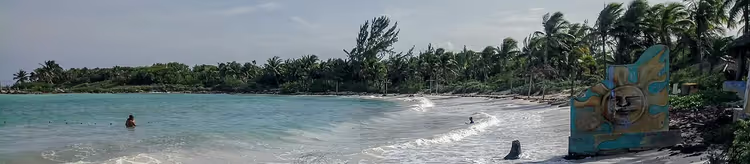
Xpu-Ha stretches for almost 2 km between Playa del Carmen and Akumal (on the map). The sand here is not pure white but has a pink tint, which is especially noticeable next to the turquoise water. This color is rare, so the beach is easily recognizable in photos.
There is a small entrance fee for the beach, and it operates during daytime hours. Check the exact price and hours on site or with the beach club: rates change periodically, and extra fees are added in high season.
The shore is divided into two zones. The active zone has bars, sports courts, and water activities. In the quiet zone, you can lie on the sand and explore the surroundings. There are many hotels, restaurants, and shops nearby, and a beach club hosts weddings inspired by Mayan rituals.
In the evening, folklore shows are held for guests. People also head from here to cenotes, deep-sea fishing, flamingo sightings, and Mayan ruins. There are no direct buses, so taking a taxi from your hotel is more convenient.
18. Mahahual
 © Juan Ortega · CC BYPhoto: Juan Ortega, CC BY (https://creativecommons.org/licenses/by/3.0), Wikimedia Commons
Near the fishing village of Mahahual lie lagoons ringed by rocks. The water in them shimmers in different shades of blue, and on the shore it is pleasant to sink into the white sand and listen to the silence. You can get here on a rented bicycle, which hotel owners offer.
Comfortable amenities are concentrated in the village center closer to the pier. Villas stand along the lagoons, with restaurants, bars, and souvenir shops operating right there. Foreigners come here for the freshwater lake among the rocks: turtles and crocodiles live in it, and you can see it on a tour.
In the open sea, anglers catch tarpon, marlin, and sailfish. Divers head out to explore the reefs, and loungers on the shore are spaced well apart. Address: Mahahual village.
19. Playacar
 © Harry Van den Bulck · CC BY-SAPhoto: Harry Van den Bulck, CC BY-SA (https://creativecommons.org/licenses/by-sa/4.0), Wikimedia Commons
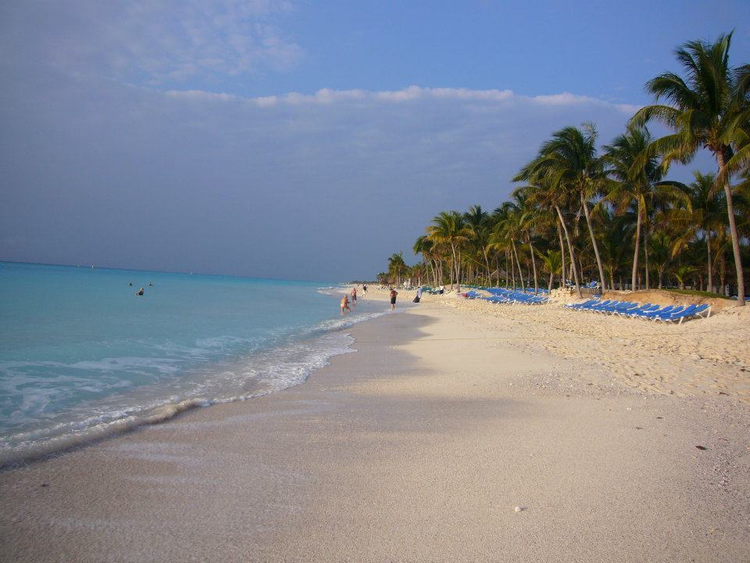
Playacar occupies the coastal strip of Playa del Carmen amid Riviera Maya scenery. It stretches between Tulum and Cancun. Routes to the Chichen Itza pyramids, the Coba ruins, and Cozumel start from here.
Modern hotels, golf courses, and tennis courts hide among coconut palm groves. Pelicans wander between them, and beach access is free. The calm sea and gentle entry make the spot convenient for swimming.
November through March is the dry season here, with almost no rain, and the air and water warm up to roughly the same temperature. From May to October, storms are more frequent. In the shops on Quinta Avenida you will find souvenirs, and several dive centers organize trips to coral reefs. Fins, masks, and boats are rented right on the shore.
The strip runs along the coast in a long line, so it is better to walk from your hotel to the water along marked paths. In the evening, guests stroll along the waterfront and Quinta Avenida, where shops and restaurants are concentrated.
20. Punta Sur Eco Beach
 © Sharon Hahn Darlin · CC BYPhoto: Sharon Hahn Darlin, CC BY (https://creativecommons.org/licenses/by/2.0), Wikimedia Commons
Punta Sur Eco Beach lies in the southern part of Cozumel island. Environmental services enforce the rules strictly: sunscreen is not allowed when swimming, but the shore stays clean in return.
Almost the entire island is untouched, with no large settlements among the jungle. The island's only town, San Miguel, receives cruise ships, and that's where the shops and cafes for passengers are concentrated.
The southern beaches are better equipped and charge an entrance fee. The main activities here are diving along the reef and visiting pre-Columbian monuments.
Mexico beaches on the map
Below is a map with the beaches marked. Open it and sketch out a route between the points: some spots are close together, others require a trip across the peninsula.
20 beaches of Mexico
Places on the map
- 1Maroma A long sandy shore of the Yucatán behind the jungle, next to the Secrets resort
- 2Isla Mujeres An island national park across from Cancún, a reef and an underwater statue museum
- 3Akumal A turtle beach on the Riviera Maya, snorkelling by the reef in the northern part
- 4Tulum The Santa Fe and Paraiso sections under palm trees, a gentle entry into the water
- 5Sian Ka'an A UNESCO reserve, dozens of kilometres of wild coast with no facilities
- 6Puerto Morelos A fishing village with two lighthouses, the barrier reef comes right up to shore
- 7Zicatela Puerto Escondido, high waves and surfing championships
- 8Playa Norte The island's best beach, a white strip about 500 metres long with shallow water
- 9El Caracol A narrow strip in Cancún's Zona Hotelera with a wooden pier
- 10Playa Linda A beach by the Calinda bridge, ferries and cruise ships depart from here
- 11Playa Tortugas North Cancún, a tower with a zip line and water-sports rental
- 12Playa Marlin A beach with waves along Kukulcan Boulevard, watch the flags
- 13Playa Delfines The longest and widest beach in the area, next to the El Rey ruins
- 14Playa Langosta A quiet zone with coral sand and full infrastructure
- 15Playa Paraíso Riviera Maya across from Cozumel, a barrier reef along the shore
- 16Xpu-Ha Two kilometres of pink-tinted sand, paid entry
- 17Playacar A strip of Playa del Carmen among palm trees, free beach access
- 18Punta Sur South Cozumel, paid entry, diving along a long reef
⁉️🤔 Frequently asked questions
When is the best time to go to Mexico's beaches?
The dry season on the Caribbean coast runs from November through April: less rain, calm seas, and mild heat. The Pacific coast has different seasons, and surfing there is good almost year-round. If you want warm water without storms, choose winter on the Yucatan.
Can you swim if a flag is up on the beach?
Pay attention to the flag color. Green means calm water, yellow calls for caution, and red and black prohibit entering the sea. At Playa Marlin and other beaches with waves, currents can be strong, so don't swim far out even under a green flag.
Where should you stay if you want calm seas?
For swimming with kids, Playa Norte on Isla Mujeres, Playa Langosta in Cancun, and Playa Paraiso on the Riviera Maya are good options: they're shallow and have almost no waves. If you love diving, choose a shore closer to the reef, such as the Akumal area or Punta Sur on Cozumel.
How much does it cost to enter protected beaches?
The fee depends on the location and changes every season, so check prices on site. The Sian Ka'an reserve has a paid, limited entry, and Punta Sur Eco Beach charges a fee for visiting the southern section. Most city beaches in Cancun are free to enjoy.
How do you get to the island beaches?
Passenger ferries run to Isla Mujeres and Cozumel: to Isla Mujeres from Puerto Juarez, and to Cozumel from Playa del Carmen. Check schedules and prices on the carriers' websites in advance, as spots sell out quickly in high season. Ultramar ferry tickets are sold at the ticket office by the pier.
In short: what's worth booking
If you want a calm vacation with kids, look at Playa Norte, Playa Langosta, and Playa Paraiso. For surfing, choose Zicatela; for diving, the shore near Akumal or Punta Sur on Cozumel. Those seeking seclusion and nature will like Sian Ka'an and Mahahual.
It's better to book a hotel in advance: during the high season from November through April, available rooms on the coast are scarce. Find a hotel on Trip.com or browse tours on GetYourGuide.

A small editorial team writing guides for independent travel. We travel ourselves, but we haven’t been everywhere, so we check prices, opening hours and how to get there against official sources.