
















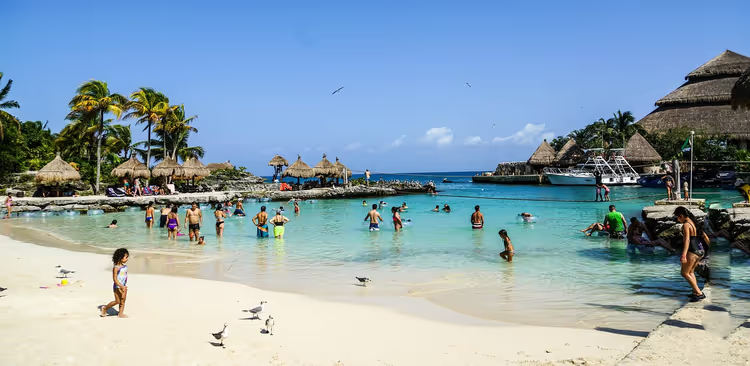
15 Day trips from Cancun: Mayan pyramids, snorkeling and flamingos
From Cancun, you can realistically see Mayan pyramids, turtles, and a pink lake in a single day. The resort sits at the northern tip of the Yucatan, and the peninsula's main points are spread along highways running south and west. The drive takes anywhere from one to four hours, and the trip is easy to put together on your own.
The main question is always the same: what to choose if you only have one day. Below are fifteen routes for different paces. There are ancient Mayan cities, parks with cenotes, snorkeling with turtles, and reserves with flamingos. Each entry includes the route, ticket type, and who it's best for.
The short answer for a first trip: go with Chichen Itza plus a cenote, choose Xcaret or Xel-Há if you have kids, head to Rio Lagartos and Celestun for wildlife, and Akumal covers beach and snorkeling.
Ad: this article contains affiliate links, we earn a commission if you book through them, at no extra cost to you.
What to consider before a day trip
💡 In short:
- Leave Cancun early: before the sites open there's less traffic, milder heat, and shorter lines.
- A rental car gives you freedom, while a tour with transfer removes the hassle of logistics and language.
- Bring water, a hat, sunscreen, and mosquito repellent: there are plenty of mosquitoes around the ruins and in the jungle.
- Ticket prices and opening hours for sites and parks: 09/2026, verified on the INAH website and in the Xcaret price list.
The Yucatan Peninsula only looks compact. From Cancun, the drive to nearby points takes about an hour, while the farthest ones reach up to four hours, according to the map. So in one day you can comfortably fit either one distant site or two or three nearby ones. For example, Tulum and a cenote nearby, Valladolid and Ek Balam, Merida and Uxmal.
Transport solves half the problem. ADO intercity buses run along the main highways but don't stop at cenotes or remote reserves. A rental car is convenient for Coba, Rio Lagartos, and Celestun, where buses are infrequent. A tour with transfer helps when you don't want to drive or haggle on the spot. A simple rule: the farther the site and the less infrastructure around it, the more an organized trip wins.
Weather and money impose their own conditions. From April to October it's hot and humid, with short but torrential rains. Dollars aren't accepted everywhere, and cards in small reserves work only intermittently. Keep cash pesos on hand; you'll need them at entrances and parking. Popular sites charge admission, and the rate for foreign visitors is noticeably higher than for locals. Check exact prices and hours on the official pages of sites and parks before heading out.
For quick orientation, see the table by route type.
Route type | Where to go | Why it's worth it |
|---|---|---|
Mayan pyramids | Chichen Itza, Coba, Tulum, Ek Balam, Uxmal | ancient Mayan cities: from nearby ruins to entire complexes |
Parks with cenotes | Xcaret, Xel-Há | swimming in underground rivers, snorkeling, and shows for the family |
Beaches and snorkeling | Akumal, Playa del Carmen | warm sea, turtles, and reef close to shore |
Islands | Isla Mujeres, Cozumel | ferry, beaches, and diving half an hour from the mainland |
Reserves | Rio Lagartos, Celestun | birds, flamingos, and pink lagoons |
Base cities | Valladolid, Merida | overnight stays, food, and a starting point for distant ruins |
1. Chichen Itza
 © Gage Skidmore · CC BY-SAPhoto: Gage Skidmore, CC BY-SA (https://creativecommons.org/licenses/by-sa/4.0), Wikimedia Commons
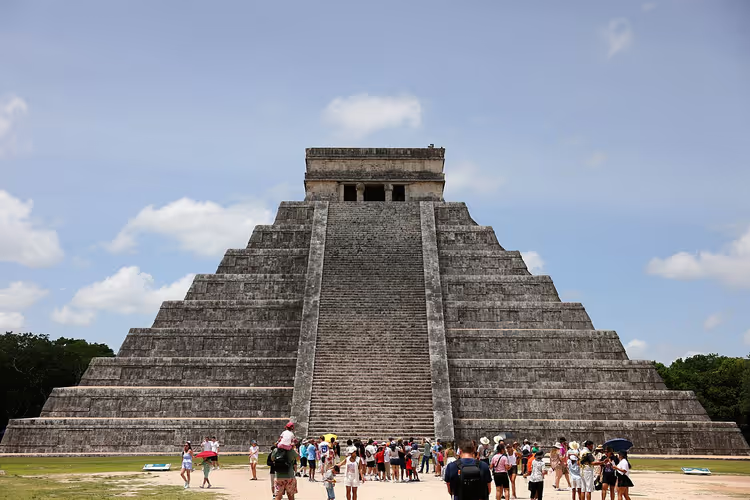
The main archaeological site of the Yucatan and the remains of a sacred city. Chichen Itza is on the list of the "New Seven Wonders of the World," and most tourists visiting the peninsula for the first time come here. The oldest Mayan structures were built long before our era, and in the 10th century the city was captured by the Toltecs, who made it their capital. Trade and crafts turned it into a major economic center.
Later, neighboring city-states sacked Chichen Itza and slaughtered its defenders. When Spanish conquerors arrived in the 16th century, the city stood empty, but the Maya settled nearby because they considered the place sacred. The conquistadors destroyed monuments and killed priests, yet some structures survived. Today you'll see temples, the El Caracol observatory, ball courts, ruins of colonnades, a sacred cenote for offerings, and statues of deities.
- How to get there: about two and a half hours west along the highway, according to the map. ADO buses run there, as do many day tours to the pyramids with hotel transfer.
- Cost: admission is paid, with a single ticket that's more expensive for foreign visitors. Check the current rate and hours on the official INAH page.
- Who it's for: first-time Yucatan visitors who want to see the most famous Mayan city.
- The catch: there's little shade in the open plaza, and by midday the bulk of tour groups arrive. Go in the morning.
2. Valladolid
A small colonial city that makes a convenient base for exploring the eastern Yucatan. Valladolid was founded in the mid-16th century and named after the Spanish city that was the capital at the time. Francisco de Montejo established it to secure Spain's hold over these lands. The city originally stood closer to the coast, but mosquitoes carrying disease were a constant nuisance, so the settlement was moved inland.
The Mayan city of Zaci, meaning "white hawk," once stood where Valladolid is now. The Spanish dismantled the ancient structures and built houses in their own style. The indigenous people rebelled more than once, but their resistance was crushed. In the mid-19th century, an uprising broke out here that turned into a revolt, and the colonizers had to temporarily abandon the city. In the early 20th century, the revolutionary movement was born right here in Valladolid.
Today it's a pleasant place to spend an evening after visiting the ruins. Visitors enjoy the old cathedral, museums, and local cafes, and the streets have kept their colonial look.
- How to get there: about two hours according to the map. It's convenient to combine with Chichen Itza and a cenote along the way.
- Where to stay: there are small hotels in central Valladolid, and from here it's easy to reach Ek Balam.
- Who it's for: those who want to spend the night in a quiet town rather than return to Cancun.
- The catch: public transport to distant ruins runs infrequently, so you'll need a car or a tour.
3. Coba
 © Bernard DUPONT · CC BY-SAPhoto: Bernard DUPONT, CC BY-SA (https://creativecommons.org/licenses/by-sa/2.0), Wikimedia Commons
Coba suits those who like an active day and are ready to do a lot of walking. A bus runs here from Cancun. The advice is simple: leave early. The midday heat is intense, and in the morning there are noticeably fewer tourists. Clothing and shoes should be comfortable, because you'll be walking a lot. Don't forget mosquito repellent: the area is full of biting insects. Bring water with you, as there are few places to buy it on site.
The ancient city of Coba likely emerged in the 4th century BC. It was a religious and cultural center that may have been home to up to fifty thousand people. The city is tied to many mysteries: for example, a network of roads was built here, even though the Maya had no wheeled carts. Perhaps these long roads were used by an even more ancient people.
When you arrive, rent a bicycle or hire a cycle rickshaw. That way you can move from one site to another without exhausting yourself. You'll still walk around the monuments themselves, and the full tour takes about four hours. Many people take a guided tour: the guide keeps you from getting lost in the jungle and warns you about swimming in lakes where crocodiles live.
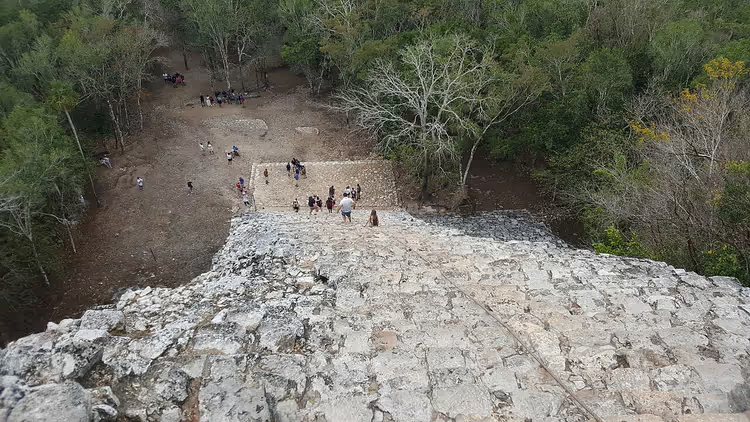
The complex's main point, the Nohoch Mul pyramid, was once the tallest on the peninsula. Since 2020, climbing it has been closed, and the pyramid can only be viewed from below. Besides it, you should see the ball court, ancient stelae, and other pyramids. Those are also viewed only from the outside. For those arriving in their own vehicle, there's parking at the entrance.
- How to get there: about two and a half hours according to the map; bus, car, or tours to Coba with a cenote stop.
- Cost: admission is paid. Check exact details on site.
- Who it's for: fans of active walking and those who want to see a Mayan city in the jungle.
- The catch: without a guide it's easy to get worn out, and swimming in the local lakes is unsafe due to crocodiles.
4. Tulum
 © Erik Cleves Kristensen · CC BYPhoto: Erik Cleves Kristensen, CC BY (https://creativecommons.org/licenses/by/2.0), Wikimedia Commons
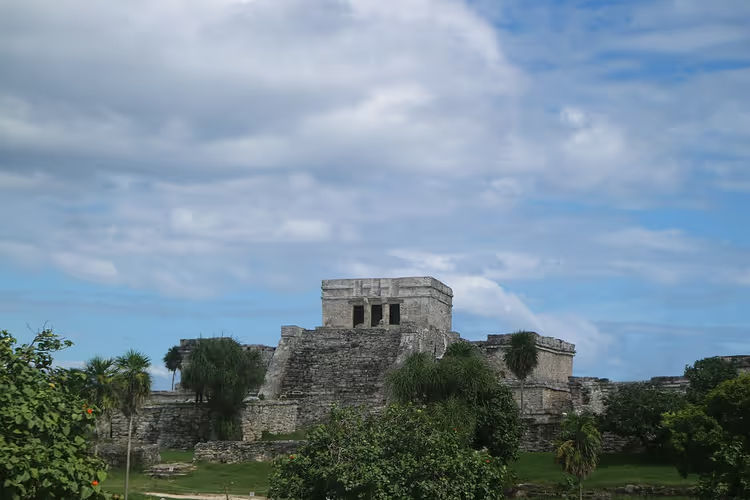
A Maya city on a cliff directly above the Caribbean Sea. It once bore the poetic name Zama, "city of dawn," while Tulum means "wall." Tulum appears in European documents from the 16th century, and it was abandoned when the Spanish arrived. The architecture is typical of the Maya: steps lead up to residential structures, doorways are narrow, and there are columns, stucco work, and altars at the rear walls.
The Maya placed great importance on fortification. On one side, the city was protected by the sea and steep cliffs; on the other, the Maya built a high, thick wall. Watchtowers reinforced the defenses, and a natural cenote supplied the residents with drinking water. When you visit, see the Temple of the Frescoes, the Castillo fortress that served as both shrine and lighthouse, the murals, and the many artifacts. It's best to arrive at opening time: by midday it's hot and crowded here.
- Getting there: about two hours by map; it's convenient to stop in Akumal along the way.
- Tickets: admission is paid, and the rate for foreign visitors is higher. Check opening hours on the INAH page and buy tickets through Tiqets.
- Who it's for: those who want to combine ruins and the sea, then have dinner in Playa del Carmen in the evening.
- The catch: the beach below the cliffs is small; swimming is more comfortable at neighboring beaches.
5. Mérida
 © BP004KJC · CC BYPhoto: BP004KJC, CC BY (https://creativecommons.org/licenses/by/4.0), Wikimedia Commons
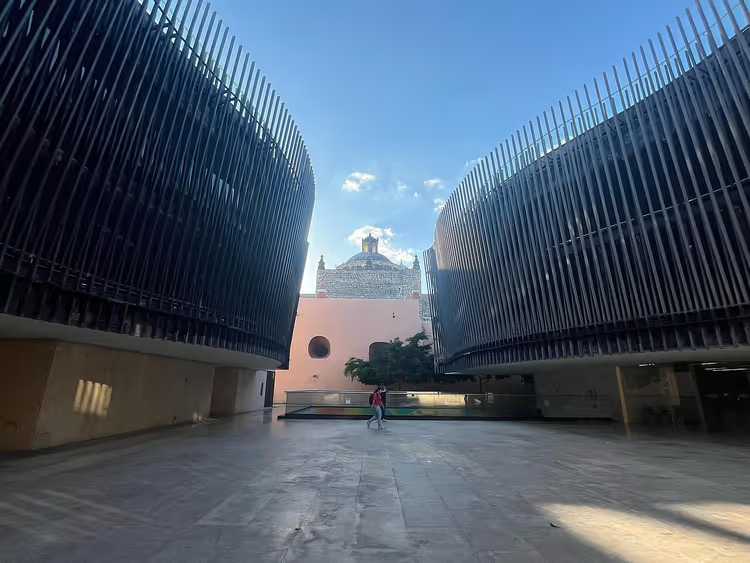
The first city the Spanish built on the Yucatán. The ruins of an ancient Maya settlement reminded the conquistadors of the remains of a Roman fortress in Mérida, Spain, and the new city was named in its honor. Mérida lies in a valley, so it's almost always hot here. Bring a hat, sunglasses, and sunscreen.
It's a pleasant city for walking. Narrow, colorful streets, green parks, and white houses earned the city the nickname "the white city." There are plenty of historic buildings from the 16th to 18th centuries: a cathedral, churches, a monastery, and a museum with exhibits about indigenous life. Mérida is surrounded by agave plantations, so the textile industry thrives here, and the city also has its own university. The rectangular street grid makes it easy to find your way.
Come to Mérida on a Sunday. Roads are closed to traffic, and a festival begins: local folk groups sing and dance, and a ceremony honoring the Maya takes place in front of the government building. The city is also known as the place where the UN Convention against Corruption was signed in 2003.
- Getting there: about three and a half hours by map; from there it's convenient to continue to Uxmal.
- Where to stay: there are many hotels in central Mérida, and an overnight stay breaks up the long drive to Uxmal.
- Who it's for: those who want colonial architecture and gastronomy without beaches.
- The catch: in summer the city is more stifling than the coastal resorts; walking is more comfortable in the morning and evening.
6. Akumal
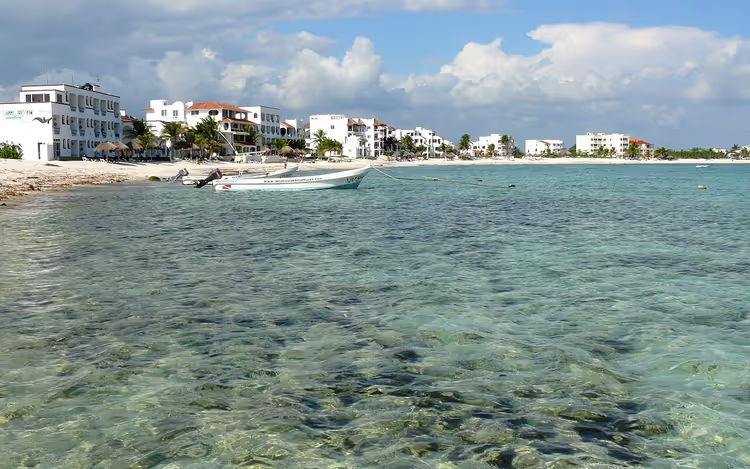
A place for nature lovers who want to swim with turtles. The name translates as "place of turtles," and it lives up to it: clear water, white sand, a rich underwater world, and turtles right by the shore. This was once a coconut plantation, then Pablo Bush Romero bought the land and essentially created a resort. Tourists from different countries began coming here, even though at the time the only way to get there was by sea.
Storms are rare here, and the sand is silky and white, so many people prefer Akumal to other resorts in the region. You'll also see a statue of Gonzalo Guerrero. In the 16th century, this Spaniard was captured by the Maya, but he found common ground with them, adopted the Maya faith, married a chief's daughter, and went on to command the tribe's warriors. There really are many turtles in the area: from April to October they come ashore to lay eggs. But the most interesting thing is watching them in the water.
Diving here is fascinating: a coral reef, one of the largest in the world, with plenty of bright fish, rays, and turtles. You can buy a diving tour or book a fishing trip. Those seeking solitude can relax in one of the lagoons, where the water is crystal clear and there are almost no people. If you want to stay for a few days, there are hotels around, from modest to expensive.
- Getting there: about an hour and a half by map; the beach is a step from the highway.
- Booking: snorkeling with turtles is best booked in advance during the season.
- Who it's for: families with children and anyone who wants snorkeling without a long drive.
- The catch: during the season there are many groups at the water entry point; it's better to go see the turtles in the morning.
7. Xel-Há Park
Xel-Há suits those who want to combine nature and entertainment for the whole family. A Maya city once stood in this lagoon, and according to scholars, the chiefs loved to relax here. The park lies just over a hundred kilometers from Cancún, and you can get there by bus, taxi, or a guided tour.
What is there to do in the park? First of all, admire the place itself. There are excellent white-sand beaches, warm clear water, and no big waves, so you can sunbathe or rest in the shade under a canopy. Diving enthusiasts will appreciate the underwater world, and there are also scenic caves with stalactites and stalagmites and karst lakes with rare animals.
The boldest visitors jump from the cliffs, with lifeguards watching over safety. There's a dolphinarium: you can watch a show, feed the dolphins, and swim with them. A separate area is set up for children, and there are cafes and restaurants on the grounds. If you plan to spend the whole day in the park, it's more cost-effective to take an all-inclusive ticket with food and drinks.
- Getting there: about an hour and a half by map toward Tulum.
- Tickets: the all-inclusive Xel-Há tour is easiest to book in advance, and check prices in the park's price list.
- Who it's for: families with children and those who want calm water without waves.
- The catch: the grounds are large, you're on your feet all day, and in high season the main lagoon gets crowded.
8. Xcaret Park
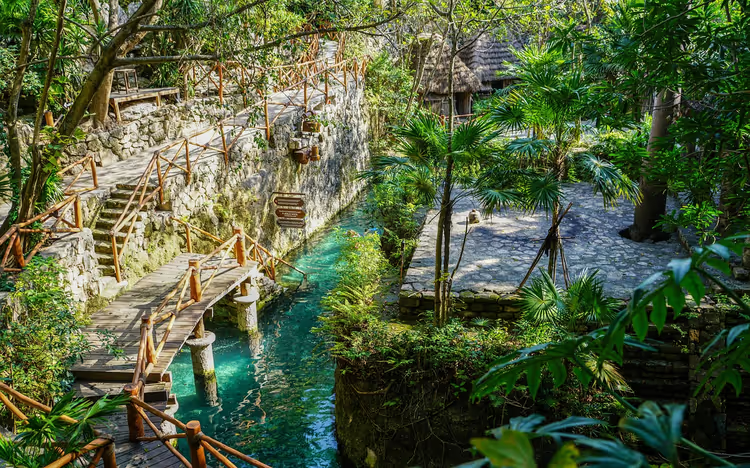
Xcaret is a large cultural and entertainment center, not just a beach. It combines a nature reserve, a tropical zone, a coral reef, underground tunnels, and many attractions. Everyone finds their own thing, and nobody gets in anyone else's way. The most convenient way to visit is with a tour: you'll be picked up from your hotel and brought back, and the buffet is already included in the ticket.
You can also get there on your own by bus or taxi and buy an admission ticket on site. The park is man-made, but it's designed so you feel like you're in a natural environment. Turquoise pools invite you to take a dip, remnants of ancient structures appear among the tropical plants, and a raft trip down the underground river turns into an adventure.
During the day you'll encounter many animals, from jaguars and crocodiles to bright butterflies, and pink flamingos take food from your hand. Colorful macaws perch on your shoulders. For dives, oxygen helmets are provided, so the corals and fish are right up close. Toward evening, performances begin, including fire dances, so come in the morning and stay until the end.
- Getting there: about an hour by car toward Playa del Carmen.
- Tickets: Xcaret tickets with meals are best bought online; options and prices are in the Grupo Xcaret price list.
- Who it's for: families with kids and anyone who wants shows and underground rivers in one day.
- The catch: the ticket is expensive, and without booking in advance during high season it's easy to end up without a spot at the evening show.
9. Rio Lagartos
 © Gildardo Sánchez · CC BYPhoto: Gildardo Sánchez, CC BY (https://creativecommons.org/licenses/by/2.0), Wikimedia Commons
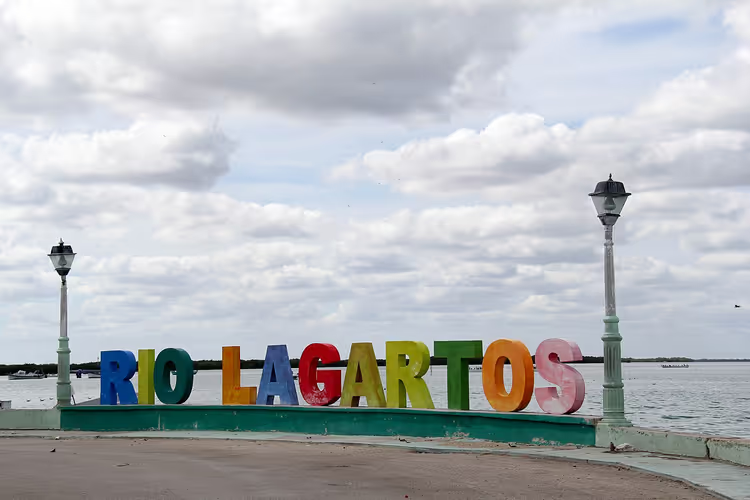
One of the best nature reserves in Mexico lies about two hundred and fifty kilometers from Cancun. You can get there by bus or taxi, but a guided tour is more convenient: most locals on site speak only Spanish. The guide will arrange a motorboat rental in advance, and without one you won't see half of the reserve's beauty.
The name translates as "river of crocodiles," and these reptiles are Rio Lagartos's main claim to fame. If you go without a guide, hire one of the local fishermen: they know the spots where crocodiles are always visible. Under supervision, you're even allowed to feed them, but don't do it on your own. The reserve is also famous for its flamingos.
The birds here are shyer than in parks and won't let you get close, but you can still admire and photograph them. Other rare birds live here too: pelicans, eagles, storks, and cormorants, many of them not timid at all. The pink lakes are stunning, colored by microorganisms. Swimming is not allowed, but the photos turn out great. The salt extraction plant is also impressive, salt that was already used by the Maya.
- How to get there: about three hours by car north of the peninsula.
- Tours: the flamingo trip is best taken with a boat and guide.
- Who it's for: bird, crocodile, and unusual landscape lovers.
- The catch: no swimming, and without a boat the route loses its point.
10. Ek Balam
 © Photo by Dorothy Beals and Sarah Martin Original uploader was Elijahmeeks at en.wikipedia · CC BY-SAPhoto: Photo by Dorothy Beals and Sarah Martin Original uploader was Elijahmeeks at en.wikipedia, CC BY-SA (http://creativecommons.org/licenses/by-sa/3.0/), Wikimedia Commons
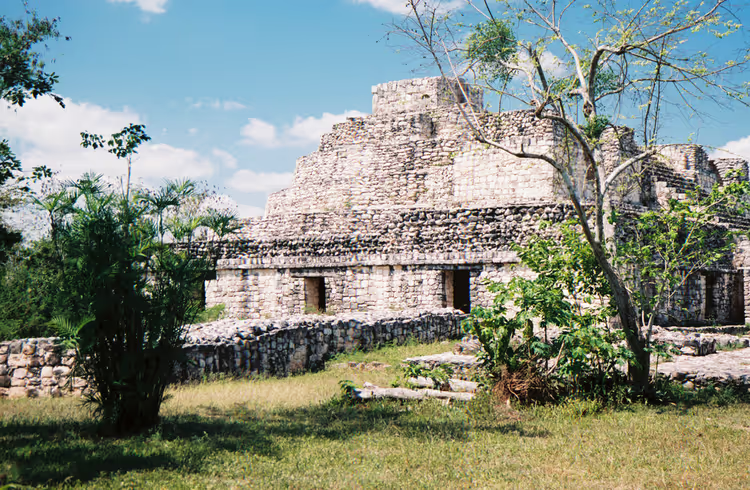
A Maya city near Valladolid. It was founded in the 3rd century BC and was abandoned after the conquistadors arrived. The original name, Talol, appears in chronicles. Today about forty-five buildings remain. The main structure, the large acropolis, stretches lengthwise, and at the entrance there's a plaster frieze shaped like the jaws of a beast.
Visitors admire the Oval Palace, explore the ball court, pyramids, a stela, an arch, and wall paintings. The Maya depicted people and animals with remarkable realism, and images of gods and mystical creatures draw particular interest. The site is compact and easy to cover in half a day.
- How to get there: about two and a half hours by car, easy to combine with Valladolid.
- Tickets: paid entry, buy your ticket in advance so you don't have to wait in line.
- Who it's for: those who want to see the carved frieze without the crowds of Chichen Itza.
- The catch: fewer structures than at the major complexes, and getting there without a car or tour is harder.
11. Isla Mujeres
 © dronepicr · CC BYPhoto: dronepicr, CC BY (https://creativecommons.org/licenses/by/2.0), Wikimedia Commons
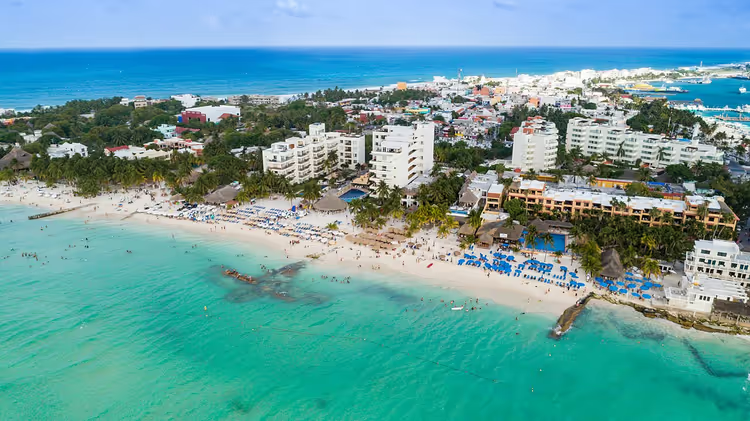
A short trip that will bring you a lot of pleasure. The island lies ten kilometers from Cancun, and you can get there in several ways. Most people take the ferry, but there's also the option of a motorboat or a yacht cruise. The island itself is small: about eight kilometers long and less than a kilometer wide. The northwestern side, with its good beaches, is better suited for relaxing. The opposite side has scenic cliffs, but the seabed is rocky. There are hotels and modest hostels, shops, and cafes serving seafood dishes.
The Maya once lived on the island, and many statues and ceremonial structures remain from that era. The Spanish conquerors encountered a people with a high level of culture here, and they named the island after seeing numerous female statues, such as the goddess of Fertility. The underwater world is rich too: a coral reef lies nearby, so diving reveals its inhabitants.
- How to get there: ferry from Puerto Juarez, about twenty minutes by water.
- Tour: the catamaran to Isla Mujeres includes snorkeling and lunch on board.
- Who it's for: those who want sea and beach without a long journey.
- The catch: on weekends the beaches are crowded with local vacationers, come on weekdays.
12. Cozumel
 © AMAPO · CC BY-SAPhoto: AMAPO, CC BY-SA (https://creativecommons.org/licenses/by-sa/3.0), Wikimedia Commons
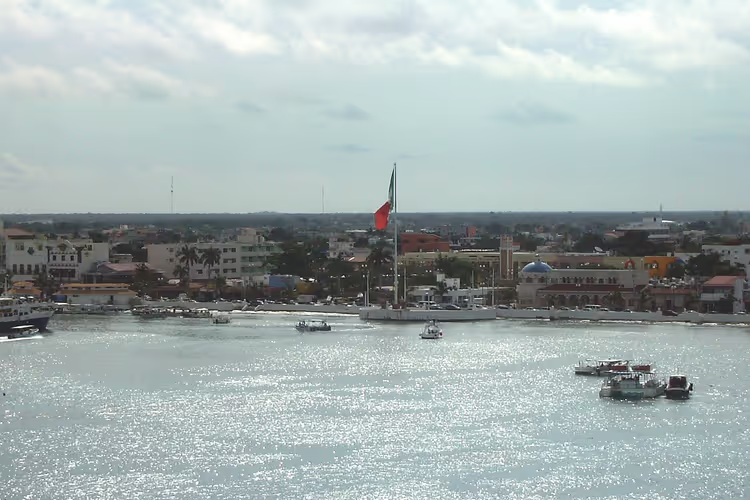
One of Mexico's largest islands. It's noticeably elongated, separated from the mainland by a narrow strait, and about sixty kilometers from Cancun. The island is home to many rare plants and animals found only here. To learn more about them, book a tour on site: the guide will point out the endemic species. Once only the Maya lived here, and in the 16th century the Spanish conquerors began toppling the indigenous idols and converting the locals to Christianity.
Today Cozumel is a popular resort, especially with diving enthusiasts. The underwater world is rich, the water is clean and warm, and gear is always available on site. Booking a sea fishing trip is no problem either. The large island has well-developed services: hotels, shops, cafes, and entertainment centers cover every need.
- How to get there: ferry from Playa del Carmen, about forty-five minutes by water.
- Diving: Cozumel tours include dives and snorkeling.
- Who it's for: divers and those who want a quiet island for a day or more.
- The catch: you can't avoid the ferry, and in high season there can be lines at the crossing.
13. Uxmal
 © Adrian Hernandez · CC BY-SAPhoto: Adrian Hernandez, CC BY-SA (https://creativecommons.org/licenses/by-sa/4.0), Wikimedia Commons
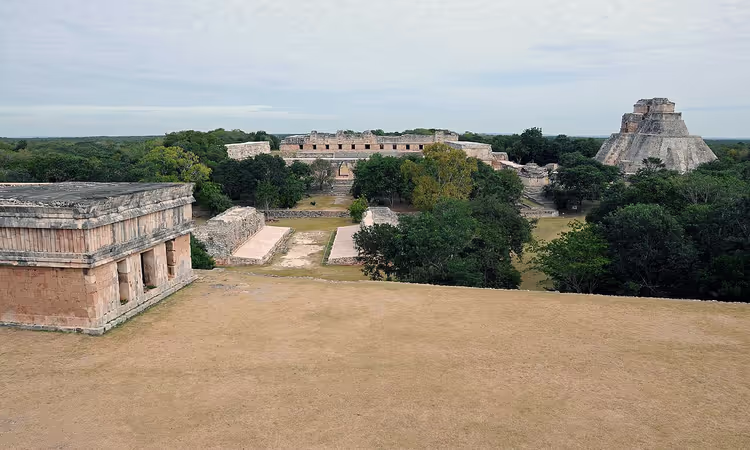
If Maya culture has caught your interest, Uxmal is worth the trip. The city lies near Merida. Scholars believe that "uxmal" in the indigenous language means "three times": perhaps the city fell into ruin and was rebuilt three times. According to the most common version, it was founded in the 11th century.
Uxmal quickly became a major political and cultural center with a population of about twenty-five thousand. Later the indigenous peoples fought internal wars, various tribes captured the city, and by the time the Spanish arrived it was nearly destroyed. But much has survived to this day. The Governor's Palace building remains, with its sculptures and mosaics.
An oval pyramid rises upward, with a temple at its summit. You can also explore other pyramids, as well as a complex known as the "nunnery." Unfortunately, bacterial colonies that settled on the ancient buildings have triggered an erosion process.
- Getting there: about four hours by car, best with an overnight stay in Merida.
- Tickets: tickets to Uxmal should be bought in advance, spots for the evening programs sell out.
- Who it's for: those who have already seen Chichen Itza and want a more intimate site.
- The catch: far from Cancun, doing it as a day trip with the drive is tough.
14. Celestun
 © Bernard DUPONT · CC BY-SAPhoto: Bernard DUPONT, CC BY-SA (https://creativecommons.org/licenses/by-sa/2.0), Wikimedia Commons
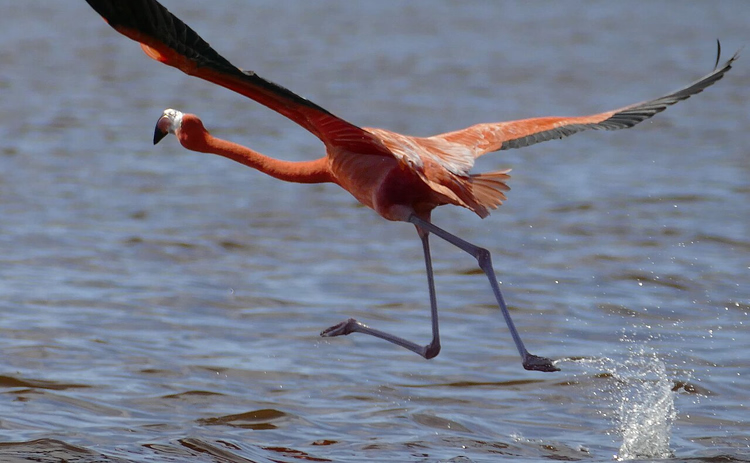
Celestun, a small town founded in the early 18th century on the site of a fishing village. Later, salt evaporation ponds appeared here, but the locals never gave up their traditional trades: they still fish and raise poultry. The main reason to come here is the reserve, about a fifteen-minute drive from town. This is where ecotourism first began to develop in the area.
Tourists come here for the reserve's wildlife. Beautiful virgin forests and wetlands are home to thousands of animals. You'll see pelicans, rare species of storks, and crocodiles, but the reserve's main pride is its flamingos. Visitors watch them fly, fish, and march in formation, and take home photos of these birds' daily lives.
- Getting there: about four hours by car to the west, best with an overnight stay in Merida.
- Tour: the trip to Celestun includes a boat ride through the lagoon and flamingo watching.
- Who it's for: bird lovers and anyone who enjoys peaceful nature without crowds.
- The catch: far from Cancun, and without a boat you can only see the flamingos from a distance.
15. Playa del Carmen
 © Giorgio Galeotti · CC BYPhoto: Giorgio Galeotti, CC BY (https://creativecommons.org/licenses/by/4.0), Wikimedia Commons
Once a stopover point for the Maya heading to Cozumel, then a small fishing village, it's now a resort town with a population of over a hundred thousand. The city is located near Cancun, and it's worth visiting at least for a day: you might like it just as much. Excellent beaches, vividly colored water, ferry service to Cozumel, and plenty of hotels and shops.
The city has its own Fifth Avenue, a pleasant place to stroll, sit in cafes, and buy souvenirs. Nearby are a biosphere reserve and a system of underground rivers. Staying in Cancun, you can easily fit in some interesting day trips.
- Getting there: about an hour by car south on the highway.
- Base: the city works well as a base for several days, with easy access to the ferry to the islands.
- Who it's for: those who want city life, a beach, and a ferry to the islands all close by.
- The catch: the center is noisy and crowded, it's quieter away from Fifth Avenue.
One-day trip route from Cancun on the map
The map below brings together the points from the list: from nearby beaches to distant ruins. Open the route to get a sense of the order of stops and the distances between sites before your trip.
One-day route from Cancún
Places on the map
- 1Chichén Itzá Yucatan's main archaeological site, a wonder of the world
- 2Valladolid Colonial town, a convenient base for eastern Yucatan
- 3Cobá Nohoch Mul pyramid and a network of ancient roads in the jungle
- 4Tulum Maya city on a cliff above the Caribbean Sea
- 5Mérida Yucatan's first Spanish city, the "white city"
- 6Akumal Snorkelling with turtles by white sand
- 7Xel-Há Lagoon with caves, a dolphinarium and cliff jumping
- 8Xcaret Cultural and entertainment park with shows and an underground river
- 9Río Lagartos Reserve with crocodiles, flamingos and pink lagoons
- 10Ek Balam Maya city with a stucco frieze shaped like a beast's jaw
- 11Isla Mujeres Island 10 km from Cancún with Maya statues
- 12Cozumel Large island popular with divers
- 13Uxmal Governor's Palace and the Oval Pyramid
- 14Celestún Flamingo and pelican reserve
- 15Playa del Carmen Resort with Fifth Avenue and a ferry to Cozumel
⁉️🤔 Frequently asked questions
Do you need a car for a day trip from Cancun?
A car isn't mandatory, but it makes things easier. ADO buses run to nearby spots like Tulum, Akumal, and Playa del Carmen, while distant ruins and nature reserves are more convenient to reach with a tour or a rental car. Having your own car helps where schedules are patchy, but parking at popular sites is paid.
Which direction is closest to Cancun?
The east coast is the closest: Akumal, Playa del Carmen, and Xcaret Park are an hour to an hour and a half away on the map. Isla Mujeres is just half an hour by ferry from Puerto Juarez. The western sites, Uxmal and Celestun, are the farthest, with a drive of about four hours.
Can you see Chichen Itza and swim in a cenote in one day?
Yes, that's the most popular scenario. A tour usually takes the whole day: ruins in the morning, then a cenote and lunch. If you're going on your own, allow time for the drive both ways, the entrance, and the cenote visit. An early start saves you from the heat and the lines, and you'll be back at your hotel by evening.
When is the best time to see the pyramids?
The best time is from November to March: dry season, milder heat, and less rain. From April to October it's humid and hot, with short but heavy downpours. Regardless of the season, arrive at opening time: before the tour buses show up, the sites are cooler and less crowded.
What should you bring on a day trip?
Bring water, a hat, sunscreen, a swimsuit, and a towel. Mosquito repellent and cash in pesos for entrance fees and parking will come in handy. In the jungle and around cenotes you need comfortable closed-toe shoes, and at parks water and food are often already included in the ticket.
In short: what's worth booking
Fifteen routes cover different scenarios, so the choice depends on what you're looking for that day. Here's a simple matrix.
- If it's your first time in Mexico: pyramid tours with transfers.
- If you're traveling with kids: Xcaret and Xel-Ha parks.
- If you want beach and snorkeling: Akumal and Playa del Carmen.
- If you want animals and birds: Rio Lagartos and Celestun.
- If you're planning an overnight stay on the coast: Cancun hotels on Trip.com.
Book tours with transfers in advance during high season: spots on morning departures go first. For independent trips around the peninsula, car rental will help, especially toward Coba, Uxmal, and Rio Lagartos.

A small editorial team writing guides for independent travel. We travel ourselves, but we haven’t been everywhere, so we check prices, opening hours and how to get there against official sources.