
















What to see in Bilbao: 25 places from the Guggenheim Museum to Casco Viejo
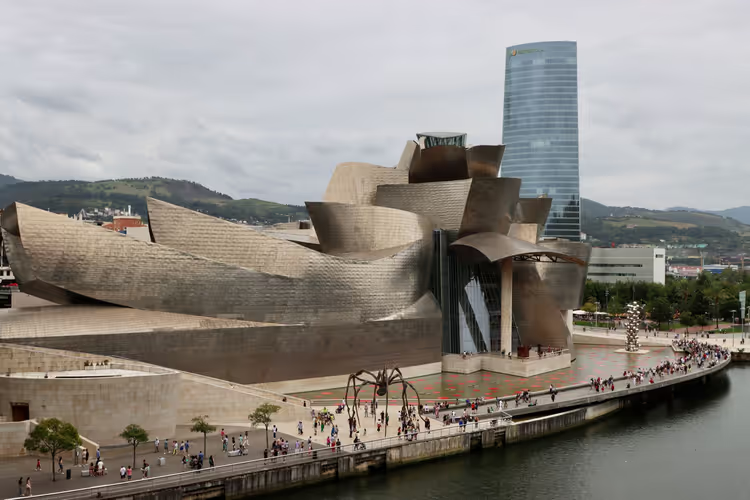
Bilbao is no longer a city of factories. In a single generation, the port hub of the Basque Country has turned into a destination for art, food, and architecture. The city's new story is usually dated to 1997, when the Guggenheim Museum opened on the banks of the Nervión (as of 09/2026, museum page).
The city is compact and stretches entirely along the river. Bilbao's twenty-five main attractions are split between two banks: Casco Viejo and the market on one side, the museum and Ensanche on the other. We've put them together in one list with photos and a walking order.
Below are twenty-five places: what each one is, how it differs from its neighbors, and how to get there. Check opening hours in advance, because museums and the funicular change their schedules by season (according to the Bilbao tourist office, 09/2026).
Ad: this article contains affiliate links, we earn a commission if you book through them, at no extra cost to you.
What to know before you walk
💡 In short:
- Split the city into two walks: Casco Viejo and the left bank with the museums.
- Walk along the river: from the Guggenheim Museum to La Ribera Market you can go on foot.
- Check opening hours in advance: museums and the funicular change their schedules by season.
- Tickets and opening hours: 09/2026, verified on the Guggenheim Museum fares page.
1. Guggenheim Museum
 © Naotake Murayama · CC BYPhoto: Naotake Murayama, CC BY (https://creativecommons.org/licenses/by/2.0), Wikimedia Commons
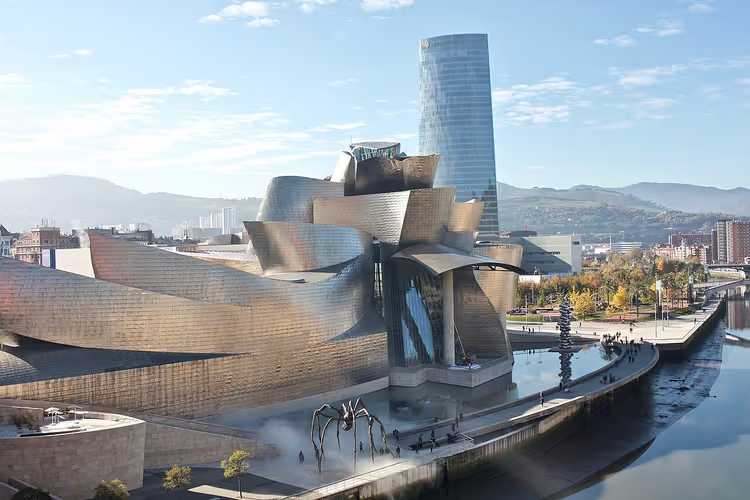
The building is made of titanium, glass, and limestone, and it is often compared to a ship. This branch of the American Solomon R. Guggenheim Museum opened in 1997 and immediately became the city's main symbol. According to the museum, the building covers more than 42,000 m², houses 19 galleries inside, and the central atrium of glass and metal rises 55 meters (as of 09/2026, schedule and fares).
It's worth seeing more than just the permanent collection here. The building appeared in "The World Is Not Enough" and "Men in Black," so even people who never planned to visit the museum recognize it. Tickets are sold for a specific time slot, so get your Guggenheim Museum tickets and time slots in advance.
2. Cathedral of Saint James
 © JnCrlsMG · CC BY-SAPhoto: JnCrlsMG, CC BY-SA (https://creativecommons.org/licenses/by-sa/4.0), Wikimedia Commons
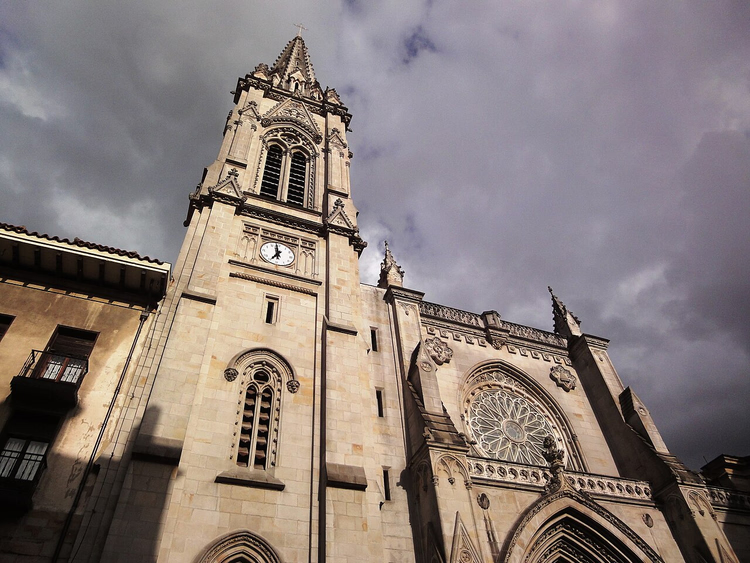
The church is called a triumph of Gothic architecture, but the facade also reveals the Renaissance era. Stone was first laid here in the Middle Ages, and the cathedral's area exceeds one thousand square meters (as of 09/2026, Bilbao tourist office). The title of "minor basilica" gave the church a special status, and today it remains an active pilgrimage site.
James is revered as one of the main saints in Spain. The pilgrims' route to his relics in Santiago de Compostela passed through the fishing village that later grew into Bilbao.
Inside you'll find masses, and tourist entry is open between services, so it's worth checking the schedule in advance.
3. Zubizuri Bridge
 © Basotxerri · CC BY-SAPhoto: Basotxerri, CC BY-SA (https://creativecommons.org/licenses/by-sa/4.0), Wikimedia Commons
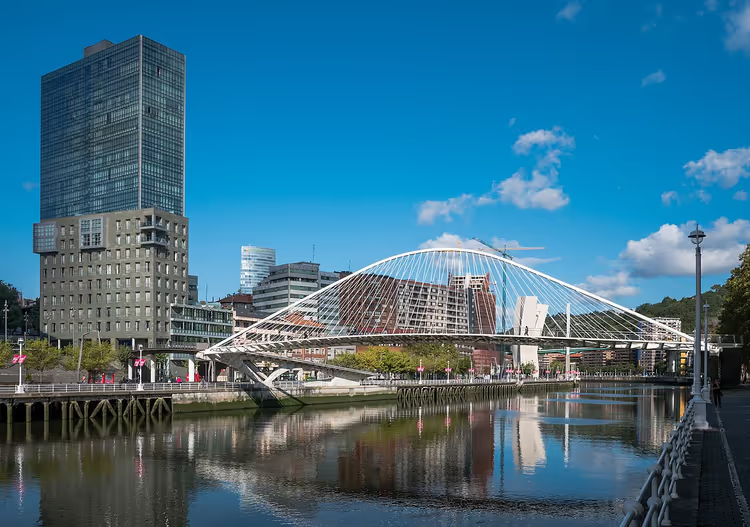
The Basques call it Zubizuri, which means "white bridge." Glass and steel, a suspended arch over the Nervión, opened at the end of the last century: the bridge had a practical job, connecting the hotel district with the Guggenheim Museum. Today it is also a viewing point you will inevitably cross on your way to the museum.
The crossing has a reputation, and not only a good one. The glass tiles crack under load, and in the rain the surface gets slippery, so broken pieces have long become a local landmark. Walk down the center and take your time: people love the bridge both for the view and for its character. Details about the bridge and other sights on the left bank are on the tourist office website.
4. Plaza Nueva
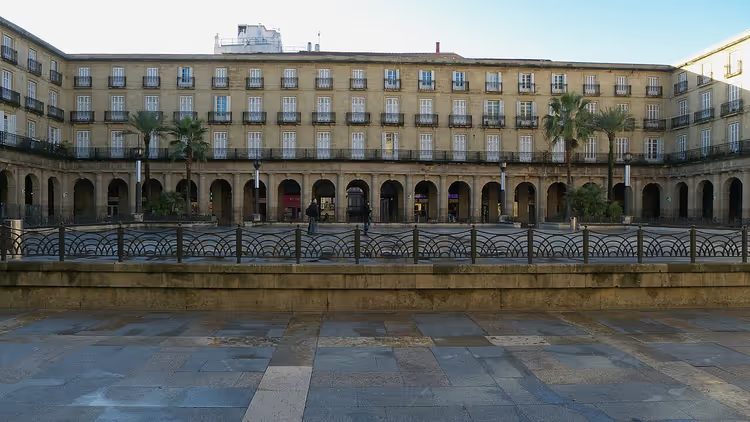 © José Luis Filpo Cabana · CC BY-SAPhoto: José Luis Filpo Cabana, CC BY-SA (https://creativecommons.org/licenses/by-sa/3.0), Wikimedia Commons
The square was built according to neoclassical canons and looks like a precise rectangle with columns. It took more than half a century to build and opened in the mid-19th century, and the main building houses the Academy of the Basque language. Under the arcades are small bars where they play only Basque music.
On Sundays the square turns into a market: antiques, local crafts, books, and coins. It is a good stop on your way through Casco Viejo if you want to grab a bite and listen to the locals talk.
5. Vizcaya Bridge
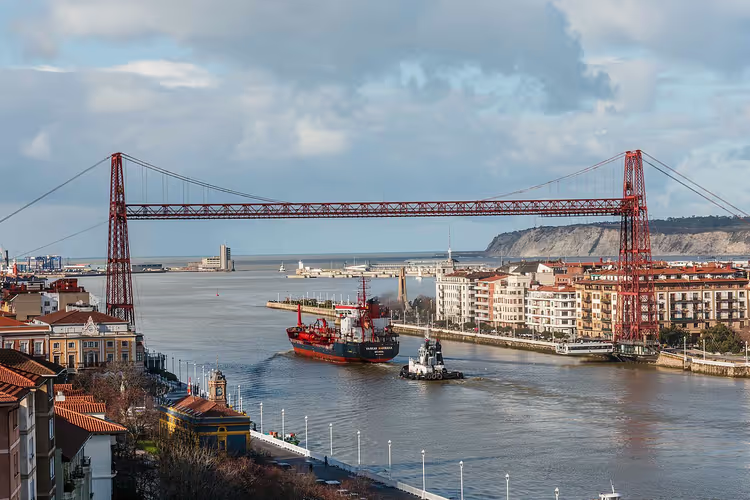 © Ebaki · CC BY-SAPhoto: Ebaki, CC BY-SA (https://creativecommons.org/licenses/by-sa/4.0), Wikimedia Commons
Europe's oldest transporter bridge has been operating since the late 19th century. The Civil War stopped it only for repairs, and after the fighting the gondola went back across the river. The main span, over 160 meters long, hangs from cables at a height of 45 meters, and a "flight" departs every 8 minutes (as of 09/2026, Biscay tourist office).
The crossing takes a minute and a half, and it is not only cars that use it. The twin 61-meter towers got elevators after renovation, and part of the platform at 50 meters was opened as a viewing deck. The bridge stands away from the center, so you will get there by commuter train.
The structure has no ornate decoration, and that is its defining feature: the bridge was recognized as a late 19th-century architectural monument because the solution proved successful. The Biscay crossing became a model for similar projects in the Old and New Worlds, and today you can ride it like regular transport.
6. Euskal Museoa
The Basque Museum opened in the first quarter of the 20th century in a building that was once a Jesuit school and a 17th-century church. The exhibition explains why the Basque language and customs are so unlike the rest of Europe.
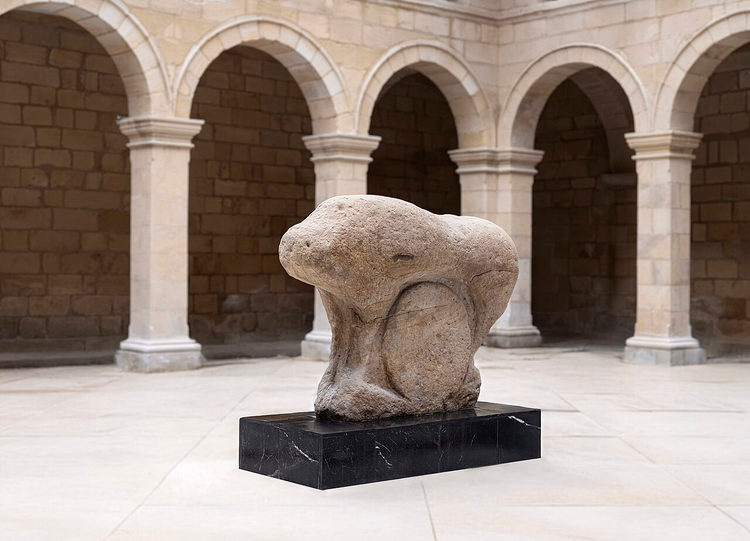 © Euskal Museoa · CC BY-SAPhoto: Euskal Museoa, CC BY-SA (https://creativecommons.org/licenses/by-sa/4.0), Wikimedia Commons
The collection here is rare: weapons, coats of arms, women's jewelry, ceramics, tools, manuscripts, restored fragments of dwellings and ships. According to official museum data, the holdings include more than two hundred thousand items, and some of them exist in a single copy. Check opening hours at the city tourist office.
The collection is large, so you will need at least two hours to see it.
7. Church of San Antón
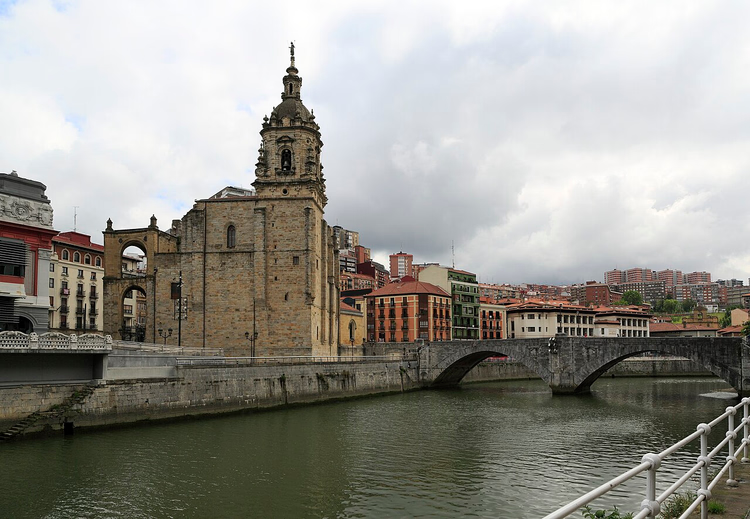 © Falk2 · CC BY-SAPhoto: Falk2, CC BY-SA (https://creativecommons.org/licenses/by-sa/4.0), Wikimedia Commons
The church stands at the mouth of the river, next to the bridge of the same name, and its image appears on Bilbao's coat of arms. The Gothic building was consecrated in the 15th century, the facade was designed in the Renaissance spirit, and three centuries later a Baroque bell tower was added next to it. Inside are preserved statues of Christ, Saint Anthony, the Virgin Mary, and the apostles Peter and Paul, created in the 15th to 17th centuries.
The early 20th-century organ still works today. Anthony himself is considered the patron saint of travelers, shepherds, and newlyweds, so for the city this is one of its main shrines. You will pass by here on your way through Casco Viejo, between La Ribera market and the cathedral.
8. Basilica of Begoña
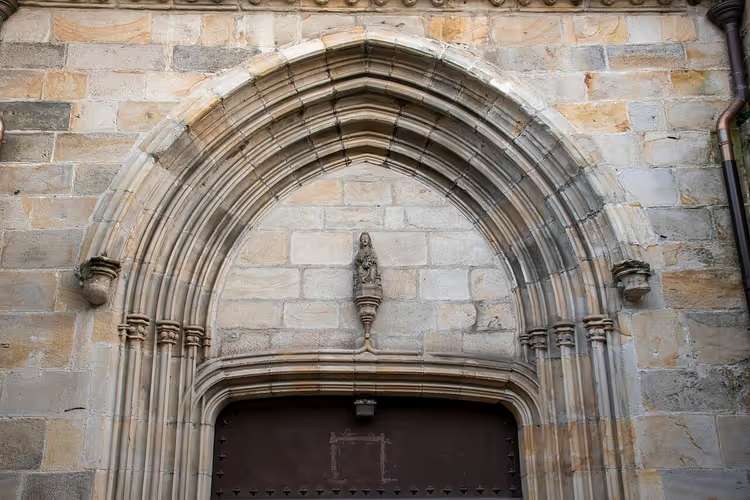 © Theklan · CC BY-SAPhoto: Theklan, CC BY-SA (https://creativecommons.org/licenses/by-sa/4.0), Wikimedia Commons
The Basques venerate the Virgin Mary as the patroness of sailors, so the Basilica of Begoña stands on high ground, above the city. It took more than a hundred years to build and was consecrated in the 16th century, with the Baroque bell tower added later. Inside, everything is austere: a gilded altarpiece and a wooden statue of Our Lady, to which pilgrims come from all over Spain.
The church survived looting, fires, and bombings, but masses never stopped here, even during the Civil War. The bells of the renovated basilica ring out seven melodies, and sailors consider the number seven lucky. From Casco Viejo you can walk up here; the road climbs uphill.
The Basques tried to build churches in honor of Our Lady in every coastal town, and Bilbao is no exception. Today it is a working church, not a museum, so entry depends on the service schedule.
9. Azkuna Zentroa
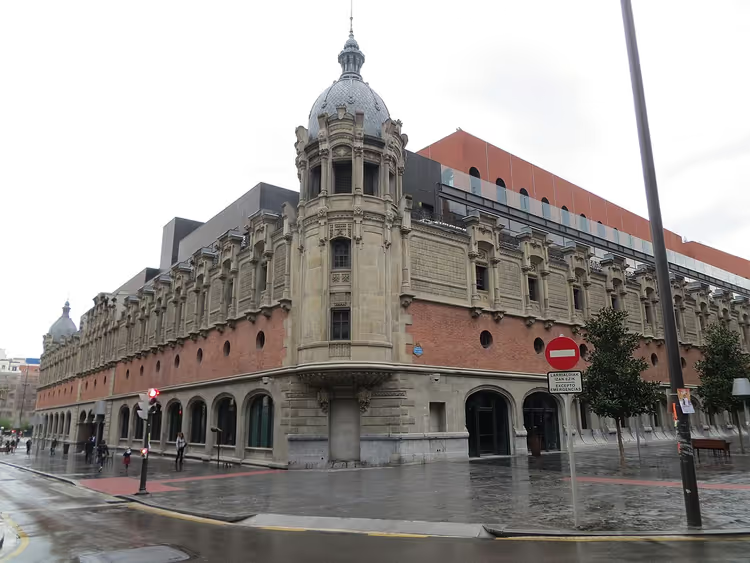 © Tereajuria · CC BY-SAPhoto: Tereajuria, CC BY-SA (https://creativecommons.org/licenses/by-sa/3.0), Wikimedia Commons
The building was constructed in 1909 as a wine warehouse, and seventy years later it was slated for demolition because there was not enough space. The architecture saved it: the structure resembles a castle or a cathedral. The facade and layout were preserved, and since 2010 the Azkuna Zentroa center has operated here with restaurants, galleries, a library, and an auditorium.
Inside, an atrium with forty-three columns awaits you, each with its own design. People also come here for the rooftop pool with a glass floor. You can visit the atrium freely, and for the exhibition and event program, check the Azkuna Zentroa website (as of 09/2026).
10. Museo de Bellas Artes
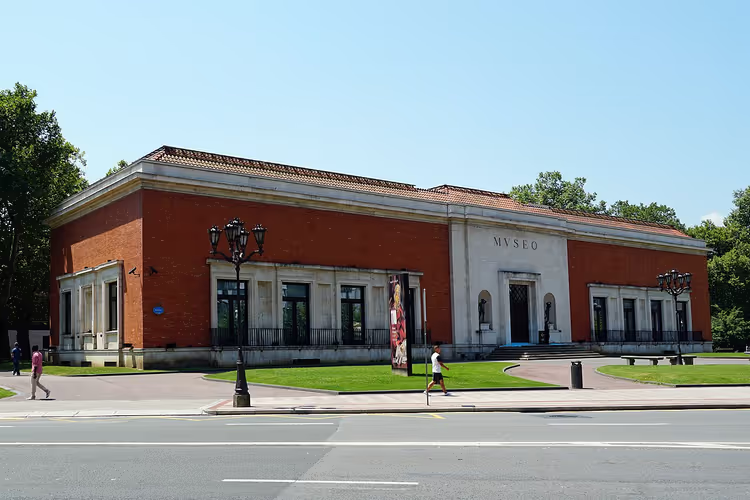 © IGOLEA · CC BY-SAPhoto: IGOLEA, CC BY-SA (https://creativecommons.org/licenses/by-sa/4.0), Wikimedia Commons
The Museo de Bellas Artes collection is arranged chronologically, so in the galleries you will find Gauguin, Murillo, Zurbarán, and Sérusier. One of the three main departments is dedicated to Basque painters, sculptors, and applied arts masters. By European standards the museum is young: the building is just over a century old, and a renovation added halls for exhibitions and presentations.
Plan for one and a half to two hours here and get a combined ticket with the Guggenheim Museum. This option is cheaper than two separate tickets; check rates and discounts on the rates and tickets page (as of 09/2026).
11. Palacio Euskalduna
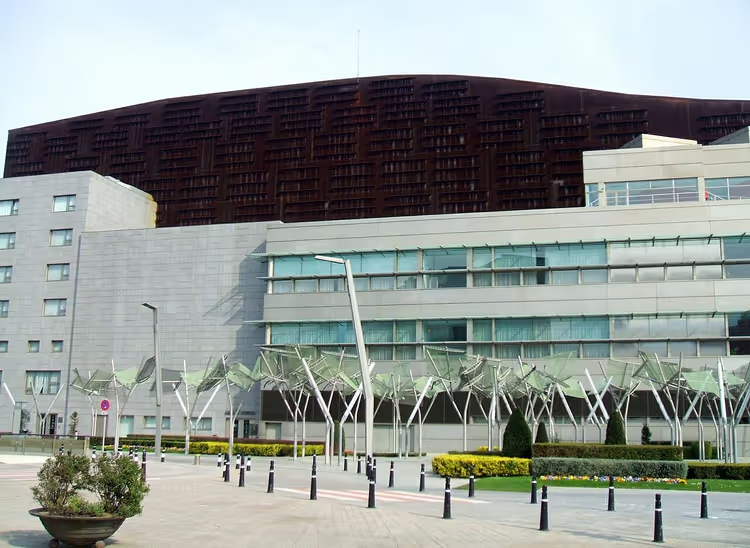
The Euskalduna Palace opened at the end of the last century and looks like a ship from the outside. The building stands over fifty meters tall, its total area reaches twenty-five thousand square meters, and inside there are concert and exhibition halls, restaurants, and a shopping gallery (as of 09/2026, city tourism portal).
For locals, the palace's silhouette recalls the shipyards that once fed Bilbao. If you are walking from the Guggenheim Museum along the river, the palace makes a logical next stop on your route.
12. Plaza Moyúa
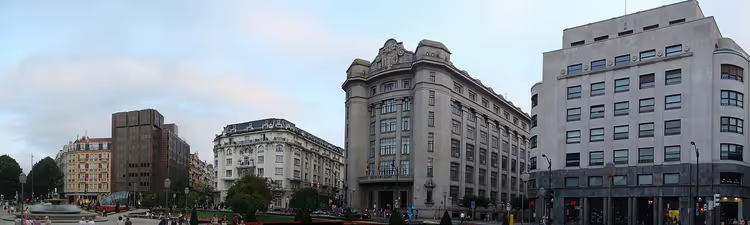 © Pablo Costa Tirado (… · CC BY-SAPhoto: Pablo Costa Tirado (…, CC BY-SA (https://creativecommons.org/licenses/by-sa/3.0), Wikimedia Commons
Plaza Moyúa looks like a classic European square: flower beds, tree-lined paths, and an unusual fountain. Nearby stands the Carlton Hotel, where scientists, writers, and composers of the past once stayed. From here you can walk to both the Guggenheim Museum and Doña Casilda Park.
A bonus of the location: at Plaza Circular, 1 you will find Bilbao's main tourist office, where you can pick up a map and current opening hours (as of 09/2026, tourist office website).
13. Doña Casilda Park
The park was laid out in the early 1920s following English design principles: lawns, tree-lined paths, a pond with ducks and swans. It covers about nine hectares, peacocks stroll along the paths, and by the main fountain stands a bronze bust of Doña Casilda, who donated this land to the city.
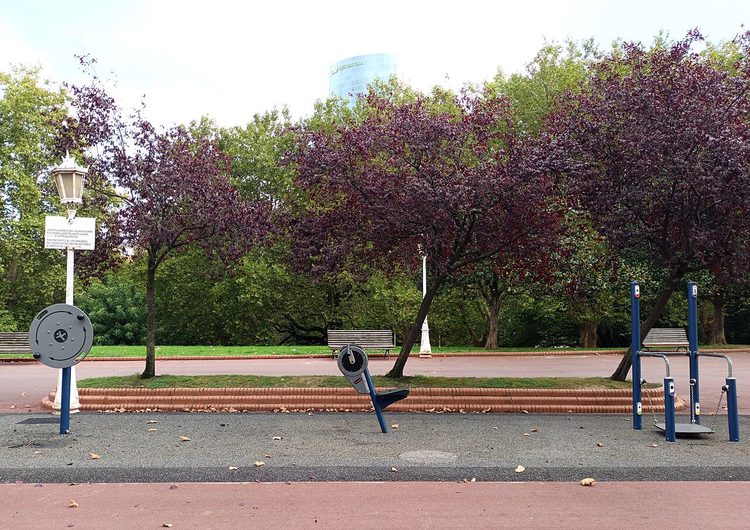 © Acediscovery · CC BYPhoto: Acediscovery, CC BY (https://creativecommons.org/licenses/by/4.0), Wikimedia Commons
For families, there is a carousel and picnic areas, so you won't disturb those who came for some quiet. Admission is free, so the park is easy to fit in between two museums or after the funicular.
14. Itsasmuseum
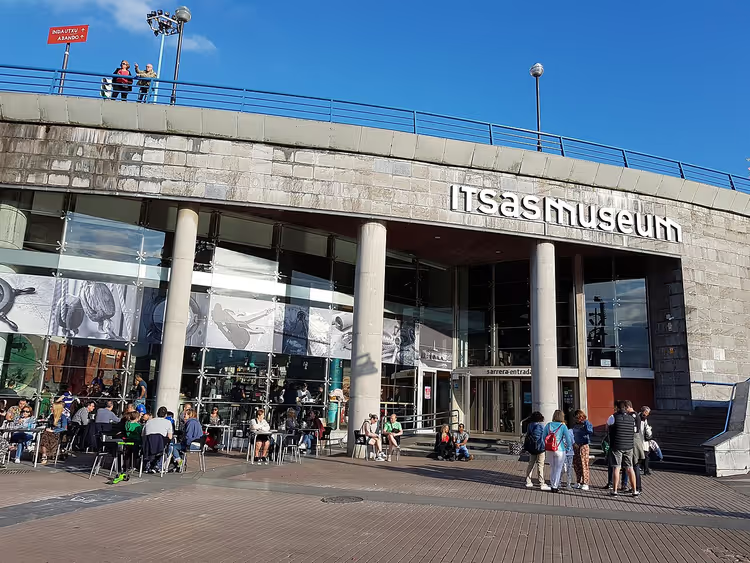 © Xabier · CC BY-SAPhoto: Xabier, CC BY-SA (https://creativecommons.org/licenses/by-sa/4.0), Wikimedia Commons
Until the mid-1980s, the Euskalduna shipyard operated on the museum's site. When shipbuilding declined, the area was not demolished but turned into Itsasmuseum: its exhibition space reaches twenty-seven thousand square meters. The exhibition is divided into three sections covering the nature of the Bay of Biscay, the economy of northern Spain, and shipbuilding technology.
The most recognizable exhibit is a replica of the Basque ambassadors' ship: the wooden finish was restored based on old engravings. Keep in mind that such vessels carried cannons, so the felucca looks both elegant and military at the same time. Tickets and opening hours: 09/2026, official museum website.
Part of the exhibition is outdoors, so a visit takes longer than it seems. The museum also tells the story of port professions and how the sea shaped the city's character. If you are traveling with children, start with the ship by the water, then move into the galleries.
15. La Ribera Market
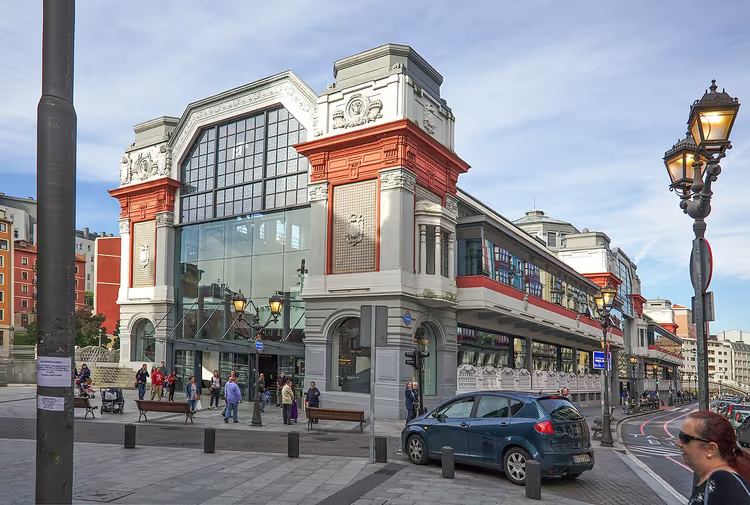 © PA · CC BY-SAPhoto: PA, CC BY-SA (https://creativecommons.org/licenses/by-sa/4.0), Wikimedia Commons
The market traded on this spot eight centuries ago, and the current building was constructed in the late 1920s. The three-story covered market spans ten thousand square meters and is considered one of the largest in Europe. Its shape again resembles a ship, and colorful stained glass adds a sense of occasion.
The stalls offer fish, meat, greens, and fruit, while the upper levels house gastro bars and restaurants serving Basque cuisine. Jazz concerts, chef masterclasses, and tastings turn the market into a leisure hub, so you can combine lunch here with a show.
Check the concert and masterclass schedule on site.
16. Artxanda Funicular
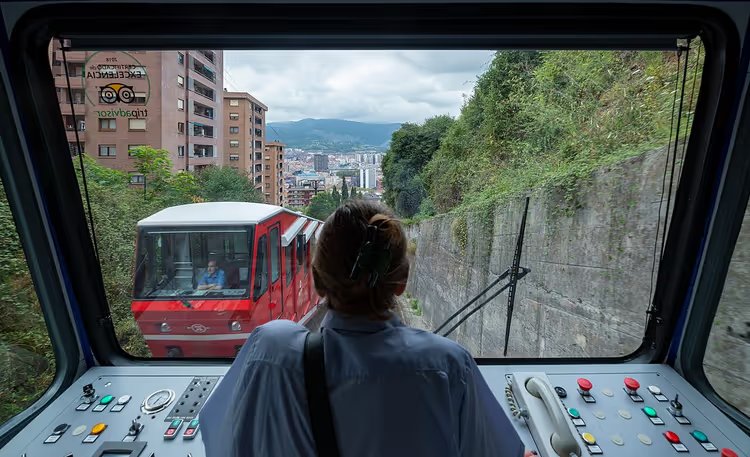 © Jules Verne Times Two · CC BY-SAPhoto: Jules Verne Times Two, CC BY-SA (https://creativecommons.org/licenses/by-sa/4.0), Wikimedia Commons
The ride up Mount Artxanda takes three minutes, and hundreds of thousands of people come here every year for the view over the city. The funicular has been operating since 1915 and only stopped during the years of the Civil War. At the top you will find a park, restaurants, a sports complex, and a golf club (as of 09/2026, Artxanda funicular website).
- Getting there: the lower station is in the center.
- Tickets: see fares and departure times on the official website.
17. Arriaga Theater
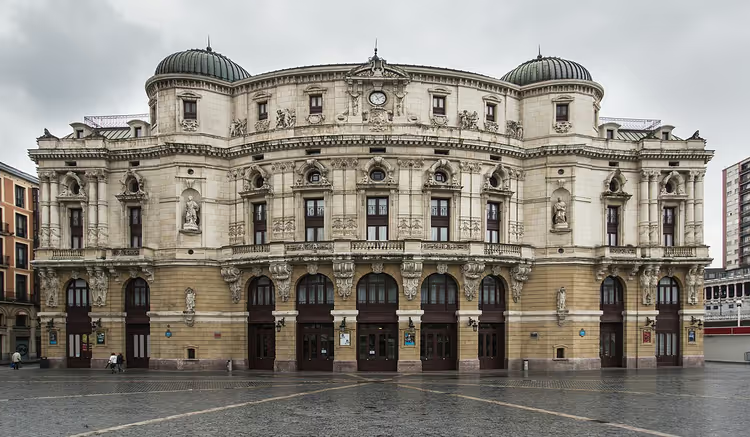 © Pedro J Pacheco · CC BY-SAPhoto: Pedro J Pacheco, CC BY-SA (https://creativecommons.org/licenses/by-sa/3.0/es/deed.en), Wikimedia Commons
The theater is named after Juan Arriaga. The composer was born on the day Mozart would have turned fifty, wrote symphonies, cantatas, and operas, and did not live to see twenty. His music still plays here, and the neo-baroque building was constructed in the late 19th century and made to resemble the Parisian theaters Arriaga dreamed of.
The facade is worth seeing even without a ticket. The theater stands between Casco Viejo and the Zubizuri bridge, so you will walk past it on your route, but check the program in advance.
18. San Mames Stadium
 © EinfachFrankfurt1955 · CC BY-SAPhoto: EinfachFrankfurt1955, CC BY-SA (https://creativecommons.org/licenses/by-sa/4.0), Wikimedia Commons
The old stadium with this name stood in the city for about a hundred years, while the new one opened in 2013 and was built in three years. Metal and glass form a scaly structure that glows like a large lantern in the evening. The stands hold more than fifty thousand people, and the Athletic Bilbao club museum spans three floors (as of 09/2026, Bilbao tourist office).
The stadium inherited its name from a nearby church. A match here is the city's biggest celebration, and if you get to a game, you will see Bilbao from the inside, not just from a viewing platform.
19. Church of Saint Nicholas
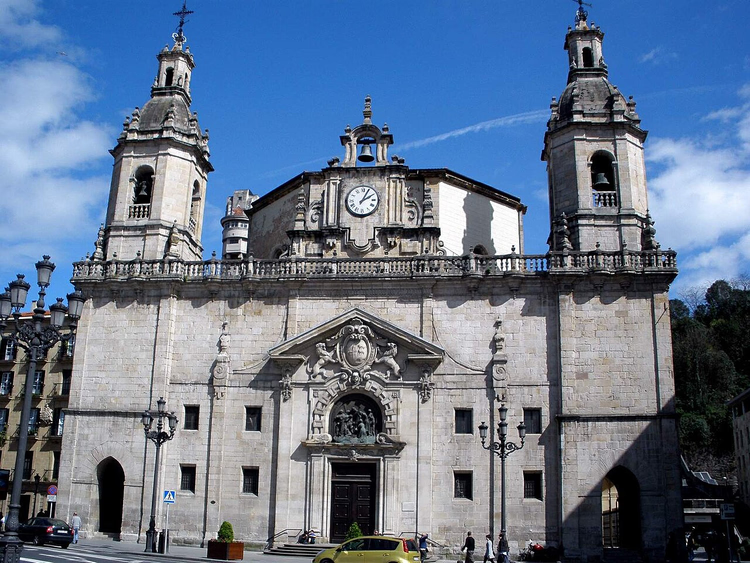
The Church of Saint Nicholas stands right by the water, which makes sense for a church dedicated to the patron saint of sailors and fishermen. The baroque building has not survived in its original form: the base was raised significantly to protect the interiors from flooding. The main relics here are the sculptures of saints and the carved altarpiece.
The church sits on the edge of Casco Viejo, so it is easy to combine with a walk through the old quarter. Check visiting hours on the Bilbao tourist office website.
20. Casa Consistorial
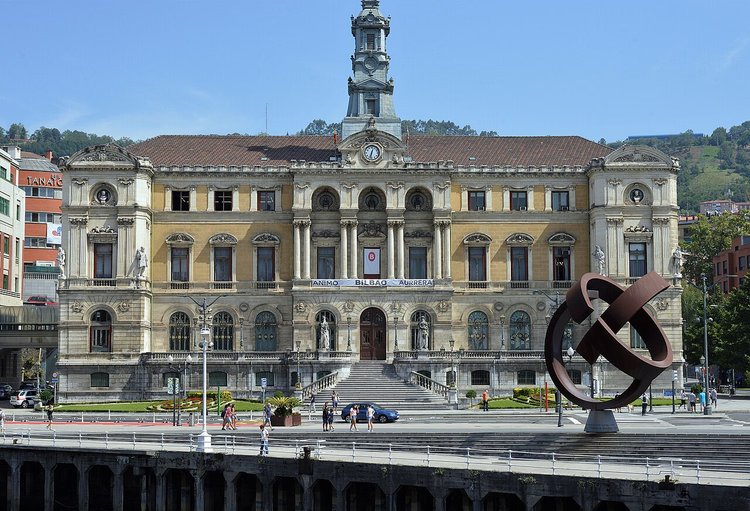 © Alberto-g-rovi · CC BYPhoto: Alberto-g-rovi, CC BY (https://creativecommons.org/licenses/by/3.0), Wikimedia Commons
The city hall is easy to mistake for a royal palace: symmetry, arches, balconies, and columns of different sizes come together into a single ensemble. The building was constructed in the late 19th century and is still cited as an example of European eclecticism.
The city administration works here, while passersby get the facade. The city hall stands by the river opposite Casco Viejo, so you will see it on your way to the museums.
21. Concordia Station
Concordia Station was built in the early 20th century in the art nouveau style and for many years served as the city's calling card. Restorers preserved the bright facade, the clock, the colored tiles, and the hand-forged elements, so it is worth stopping in even without a train to catch, just for ten minutes.
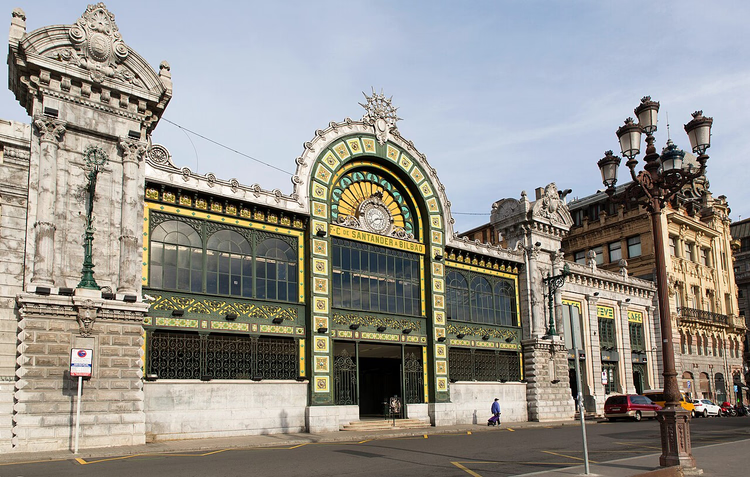 © PA · CC BY-SAPhoto: PA, CC BY-SA (https://creativecommons.org/licenses/by-sa/4.0), Wikimedia Commons
Nearby is Abando station with its five-story terminal and stained glass windows. Both stations are in the center, so you can easily combine them with a walk through Ensanche.
22. Torre Iberdrola
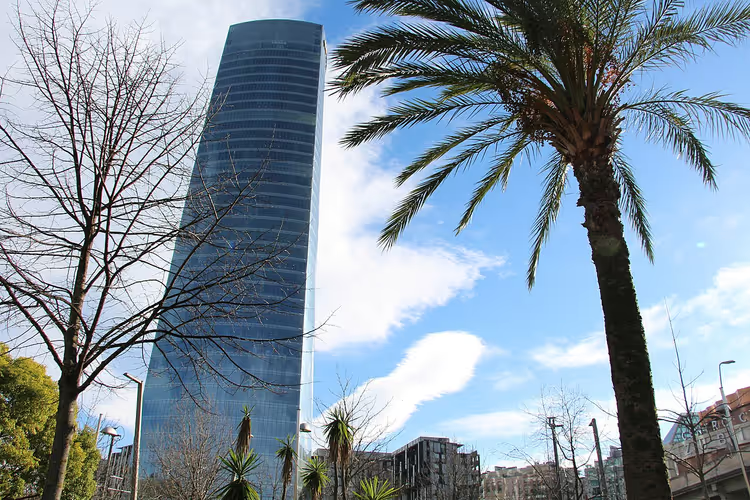 © Fred Romero from Paris, France · CC BYPhoto: Fred Romero from Paris, France, CC BY (https://creativecommons.org/licenses/by/2.0), Wikimedia Commons
The 41-story tower was built in 2010-2012 for one of Europe's largest energy companies. Glass and concrete, high-tech and modern in a single facade: the skyscraper looks eclectic, but it is instantly recognizable. The first three floors house cafes, shops, sports and exhibition halls (as of 09/2026, Bilbao tourism portal).
Works by Basque sculptors and artists are on permanent display at the base of the tower.
23. Universidad de Deusto
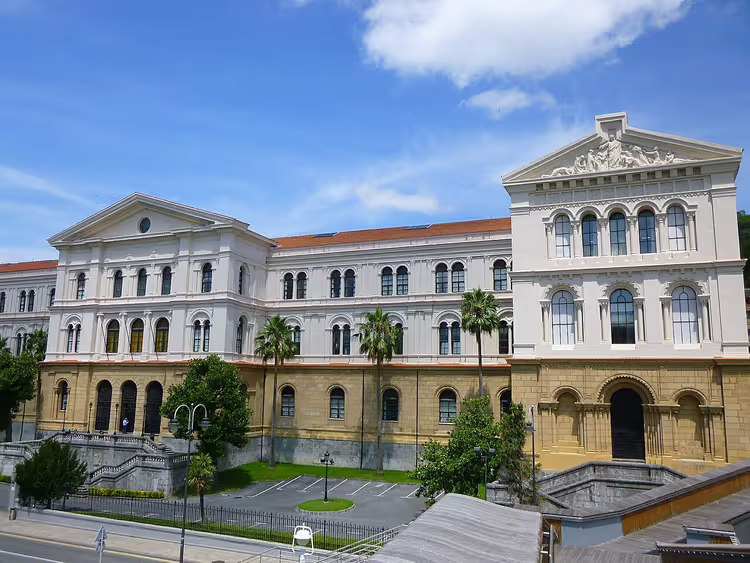 © Zarateman · CC BY-SAPhoto: Zarateman, CC BY-SA (https://creativecommons.org/licenses/by-sa/4.0), Wikimedia Commons
The University of Deusto traces its history back to a Jesuit institution built on the Nervion riverbank in the 19th century. It was home to the country's first business school, and its graduates played a major role in building the region's industry. The campus is named after the Deusto district and is still considered one of the most prestigious in Spain.
Classes were interrupted during the Civil War: the grounds were used as a military base, a hospital, and a camp. After the war, studies resumed, and the university became one of the first in Europe to introduce distance learning so that students could earn money for housing. Today the university collaborates with more than two hundred institutions worldwide, and the campus features a ten-story 21st-century library.
It is not only the lecture halls that are worth seeing here. The university environment explains why Bilbao considers itself a city of knowledge, and you can find open events on the tourist office website (as of 09/2026).
24. Salón Árabe
Salón Árabe is inside the same Casa Consistorial city hall, by the river across from Casco Viejo. The building stands on the grounds of a former monastery and forms a single ensemble with the neighboring structures. The building's history begins in the 19th century, and during the war some of the rooms, sculptures, and the bell tower were destroyed. After restoration, the halls began to be used for exhibitions, concerts, and creative events.
The most famous room here, Salón Árabe, is used for official receptions, award ceremonies, and weddings. Basques joke that the hall is booked out for years ahead, and there is some truth to that: finding open dates is not easy. Check the event schedule at the tourist office.
25. Casco Viejo and the "7 streets"
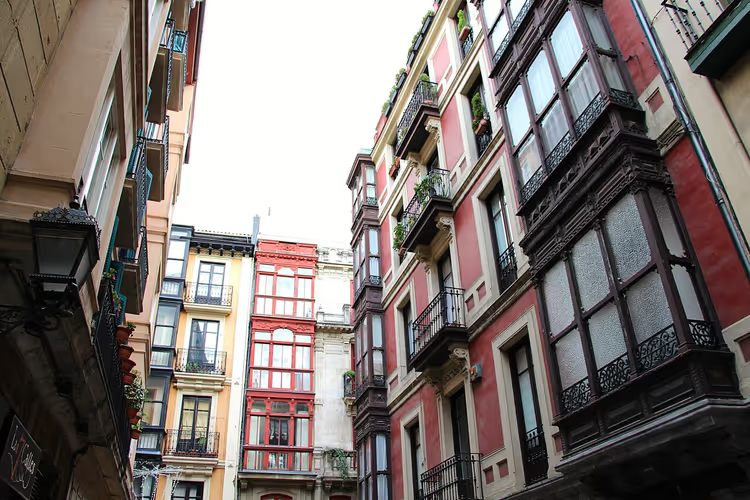 © Fred Romero from Paris, France · CC BYPhoto: Fred Romero from Paris, France, CC BY (https://creativecommons.org/licenses/by/2.0), Wikimedia Commons
The pedestrian zone in Casco Viejo appeared in 1979, although the district itself is more than seven centuries old. Basques believe in the lucky number seven: the pedestrian center started with three streets, and after the fortress walls were demolished, the quarter grew to seven. The stones from the old fortifications most likely went into the houses on the other four streets (as of 09/2026, tourist office website).
Here you will find tapas bars, the La Ribera market, the Cathedral of St. James, and the Church of St. Anthony, meaning half the list in one district. Start your walk in the morning, before the streets fill up with tour groups.
Bilbao attractions on the map
Most of the points are clustered close together, so it is convenient to open the map on your phone and follow the route on it. The Vizcaya Bridge in Portugalete is more than five kilometers from the center, while you can walk between the museums.
Tickets and opening hours of the main museums
Museums change their rates and schedules by season, so check the official pages before your trip. Below is what you should verify in advance (as of 09/2026).
Attraction | What to buy | Where to check |
|---|---|---|
Guggenheim Museum | timed ticket, rates and discounts | |
Museo de Bellas Artes | ticket and combined option with the Guggenheim | |
Itsasmuseum | ticket and opening hours | |
Artxanda Funicular | ticket and departure schedule | |
Azkuna Zentroa | exhibition and event program |
Timed tickets are sold online, and in high season the choice of time slots is smaller. If you want to visit the museum on a convenient day, pick your time in advance.
Tours and tickets in Bilbao
Guided tours, skip-the-line tickets and activities — most offers can be cancelled free of charge.
See offers on TiqetsThe widget loads once you give your consent.
Opening hours for individual halls may differ from the museum's general schedule. Check the times before your visit and take morning slots: that way you will have the second half of the day for walking around.
⁉️🤔 Frequently asked questions
How many days do you need for Bilbao?
Two days are enough for the main sights: Casco Viejo, the Guggenheim Museum, the La Ribera market, and Museo de Bellas Artes. Give the third day to the Vizcaya Bridge, the Artxanda Funicular, and a walk along the left bank. If you are going for museums and gastronomy, plan three to four days so you do not have to rush around the city.
How to get from the airport in Bilbao to the center?
The airport is outside the city, and you can get to the center by bus or taxi. The bus is cheaper, a taxi is more convenient with suitcases. If you don't want to figure out transport on the spot, compare airport transfer options on Kiwitaxi in advance.
Do you need Guggenheim Museum tickets in advance?
Yes, if you want to choose a time. The museum sells timed entry slots, and rates depend on the day and exhibitions (as of 09/2026, museum slots and rates). Online you skip the ticket office line, while on site you risk getting only a late window. Get tickets a few days ahead, or a week ahead in high season.
What to see in Bilbao for free?
For free you can walk across the Zubizuri bridge, stroll through Casco Viejo and Doña Casilda Park, and see Casa Consistorial and the Arriaga Theatre from the outside. On Sundays there is a market at Plaza Nueva, and city views open up from the Nervión riverfront. You pay for museums, the funicular, and the Vizcaya Bridge.
Which neighborhood should you stay in?
For bars, the market, and atmosphere, choose Casco Viejo: half the places on this list are nearby. For museums, quiet streets, and shopping, Ensanche and the area around Plaza Moyúa work well. Both neighborhoods are within walking distance of each other, so the choice comes down to what you want to see from your window.
In short: what to book
If you have two days and it's your first trip to Bilbao, book a Guggenheim Museum slot and a combined ticket to the Museo de Bellas Artes: these are the city's two main museums in one spot on the map. For three days, add the Artxanda funicular and the Vizcaya Bridge, because the view from above and the gondola crossing give you a second perspective on the city.
With kids, put Doña Casilda Park, Itsasmuseum with its replica of the Basque ambassadors' ship, and La Ribera market on your plan, where tastings will keep children engaged. If you're traveling for food, start your day in Casco Viejo and end it at a bar on Plaza Nueva.
For a 2026 trip, compare Bilbao tours on GetYourGuide and Bilbao hotels on Trip.com.

A small editorial team writing guides for independent travel. We travel ourselves, but we haven’t been everywhere, so we check prices, opening hours and how to get there against official sources.