
















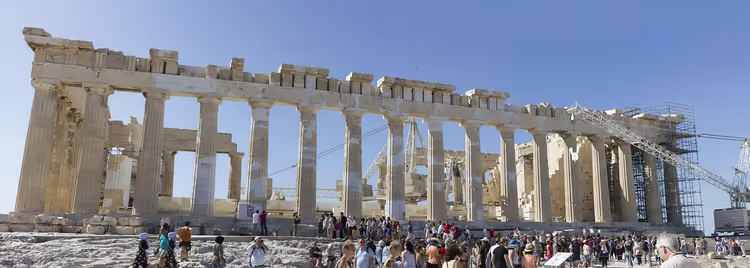
20 Museums in Athens: what to see and how to plan your day
Athens is not just the Acropolis and beaches. The city has more than twenty museums, and almost every one has its own day off: some are closed on Mondays, some on Tuesdays.
We have gathered twenty Athens museums in one list. For each venue you will find what to see and what makes it different from its neighbors in this selection. At the end, tickets, a map, and answers to frequently asked questions await you.
Ad: this article contains affiliate links, we earn a commission if you book through them, at no extra cost to you.
What to know before you go
💡 In short:
Museums have different days off: the Museum of Cycladic Art is closed on Tuesdays, while the National Archaeological Museum has reduced hours on Mondays.
Arrive at opening time: by midday, tour groups fill the main halls.
Tickets and opening hours: as of 09/2026, verified on the official Acropolis Museum website.
Seeing one venue takes from one to three hours. Plan no more than two museums per day, otherwise by evening you will stop telling vases and amphorae apart. Almost all museums are in the center, between Syntagma and the Acropolis, so you can easily walk between them.
Many halls close on major holidays: Christmas, New Year, and Easter. Some venues also rest at the beginning of the week, so it is best to check schedules in advance on official websites. In summer, museums often extend their hours and stay open longer than usual.
If you are planning three visits or more, consider a combined ticket: it covers a group of state museums at once. Buying tickets in advance online is more convenient, and then you will skip the ticket office.
1. New Acropolis Museum
 © Yair-haklai · CC BY-SAPhoto: Yair-haklai, CC BY-SA (https://creativecommons.org/licenses/by-sa/4.0), Wikimedia Commons
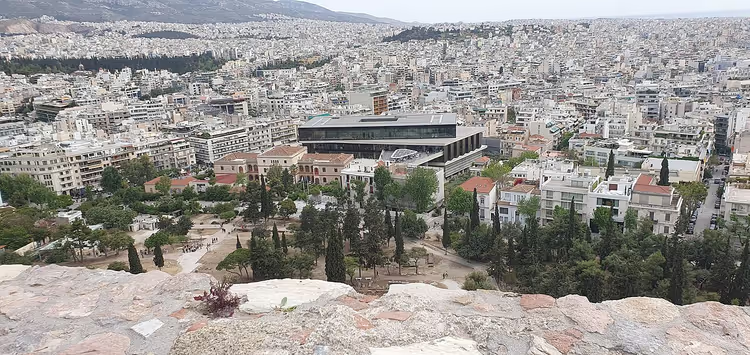
The New Acropolis Museum opened in 2009 and holds more than 4,250 finds from the hill and its slopes (as of: Wikipedia). The transparent floor of the first level hangs directly over the excavations, and you walk on glass above the foundations of ancient houses.
The building was raised on columns so as not to disturb the remains of the settlement beneath it. On the second floor, finds from the Archaic period are gathered, while the third floor replicates the shape of the Parthenon and holds its sculptures. Through the glass walls you can see the hill itself. The museum was built largely to secure the return of the Parthenon Marbles from the British Museum.
On the top level there is a cafe with a view of the Acropolis, a convenient place to rest between halls. In summer it is cool here, and in winter warm, so you can plan your route without worrying about the weather.
- Day off: none, the museum is open daily.
- Tickets: New Acropolis Museum tickets with a time slot.
2. National Archaeological Museum
 © Thomas Wolf , www.foto-tw.de · CC BY-SAPhoto: Thomas Wolf , www.foto-tw.de, CC BY-SA (https://creativecommons.org/licenses/by-sa/3.0/de/deed.en), Wikimedia Commons
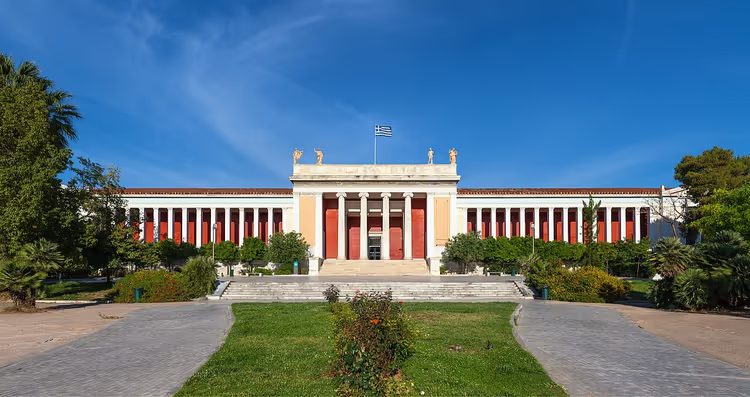
The National Archaeological Museum was founded at the end of the nineteenth century, and the land for it was donated by the patron Eleni Tositsa. The first visitors saw the exhibition while the building was still unfinished. During World War II, the collection was hidden in bank vaults and caves, and the finds survived.
Today it is one of the world's major collections of ancient art. You will see bronze statues, painted pottery, and Mycenaean finds. In the sixties, the museum underwent a large-scale renovation, after which an updated exhibition opened. It houses a laboratory and restoration workshops, and you should check opening hours on the museum's official website.
- Closed: no, shorter hours on Mondays.
- Tickets: tickets to the National Archaeological Museum.
3. Benaki Museum
 © Dimboukas · CC BY-SAPhoto: Dimboukas, CC BY-SA (https://creativecommons.org/licenses/by-sa/3.0), Wikimedia Commons
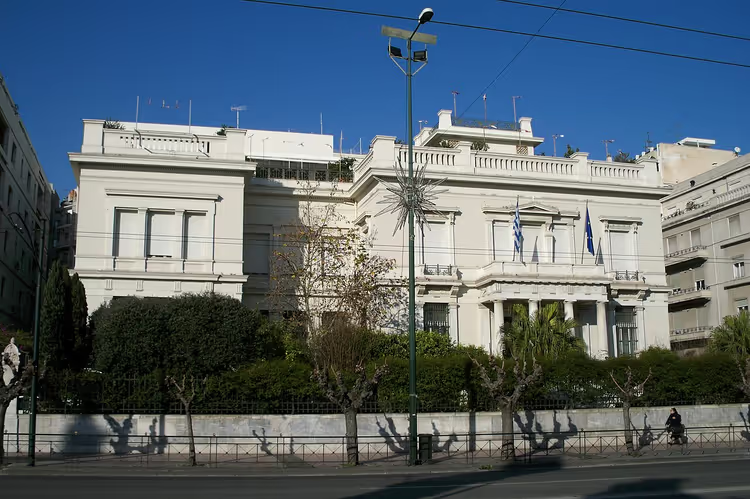
The Benaki Museum occupies a house that the entrepreneur Emmanuel Benakis built in the century before last. His son Antonis collected antiquities without strict preferences and, after his father's death, opened the country's first private museum here. He ran the complex until the late fifties, and his heirs continued to add to the collection.
Until the late nineties, the entire collection fit in this house. After the renovation, only exhibits on Greek culture remained here, while the rest moved to new wings. The Benaki is called the city's most visited museum: its galleries cover history from antiquity to modern times.
Admission is free on Thursdays, and on that day you will encounter many school groups. If you want to view the displays in peace, come on another day, but not much later than opening time.
4. Byzantine Museum
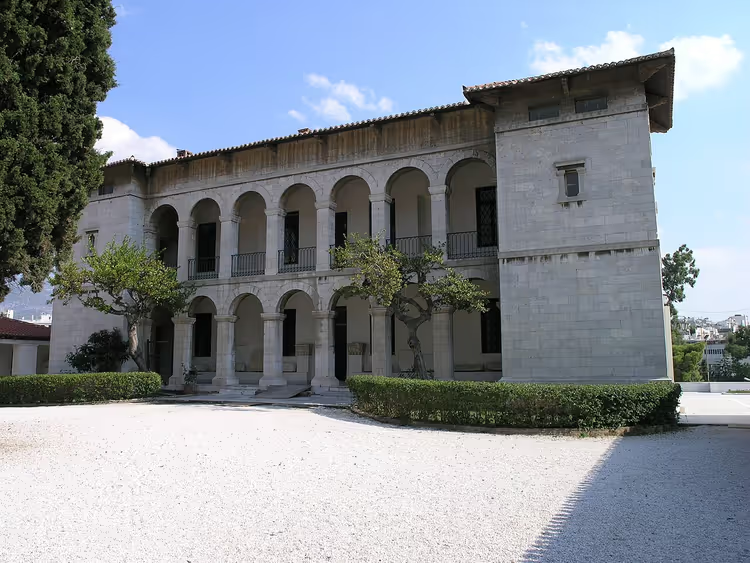 © Marsyas · CC BY-SAPhoto: Marsyas, CC BY-SA (http://creativecommons.org/licenses/by-sa/3.0/), Wikimedia Commons
The Byzantine Museum grew out of finds that enthusiasts collected back in the early twentieth century. The Christian Archaeological Commission helped open it, and director Adamantios Adamantiou attracted patrons. At first the exhibits were shown at the Academy of Athens, but the collection grew, and in the thirties it moved to the Ilisia estate.
Duchess Sophie Lebrun once lived here. During the renovation, the facade was left untouched, so only the interior halls were rebuilt. The courtyard with a fountain, Byzantine mosaics, and orange trees is worth a separate visit. The collection is divided into two sections, and among the icons you will find images bound in gold and silver.
5. Museum of Cycladic Art
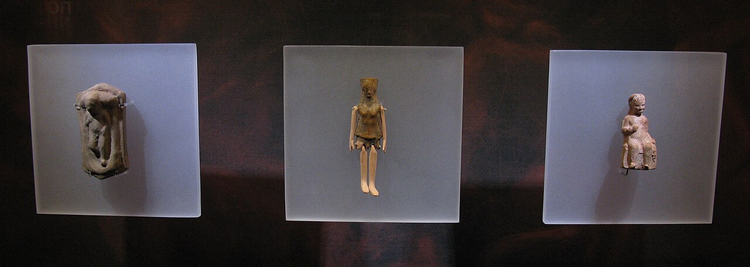 © Tilemahos Efthimiadis from Athens, Greece · CC BYPhoto: Tilemahos Efthimiadis from Athens, Greece, CC BY (https://creativecommons.org/licenses/by/2.0), Wikimedia Commons
The core of the Museum of Cycladic Art was assembled by collector Nikolaos Goulandris. He received permission from the authorities to work in the Cyclades and, from the sixties onward, brought marble figurines and vessels from there. They were first shown at the Benaki Museum in the late seventies, and then the collection traveled to Madrid, Washington, Tokyo, and Brussels.
After the collector's death, his widow donated the collection to Greece, and since the mid-eighties it has been housed in the Goulandris residence. Exhibits continue to arrive, so in the early nineties a new wing was added to the building. The exhibition covers three periods, and you will see the distinctive marble idols from the islands.
- Closed: Tuesday.
6. Museum of the City of Athens
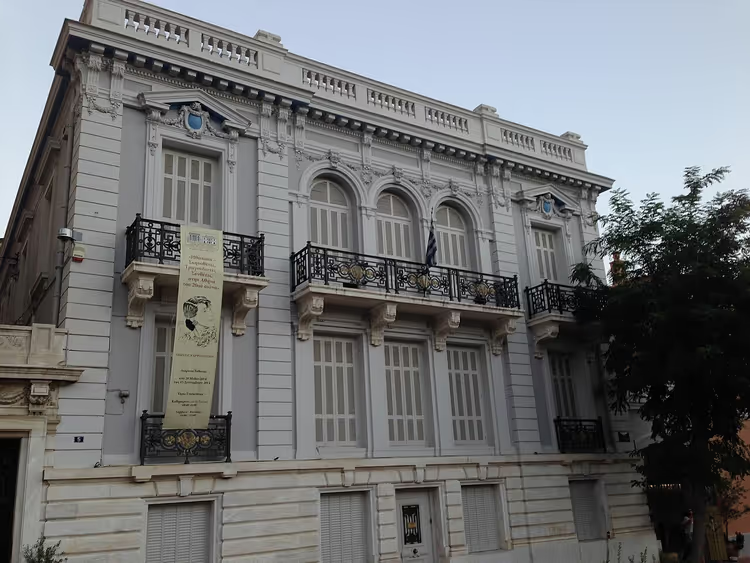
The Museum of the City of Athens opened in the early eighties. The exhibition tells the story of the city from Frankish rule to the nineteenth century, mainly through personal belongings of the royal family and aristocrats.
It consists of two separate buildings connected by a covered passage. In the house at 7 Paparrigopoulou you will see the apartments of King Otto and Queen Amalia, furnished in a romantic style. At 5 Paparrigopoulou there is a picture gallery and recreated rooms of nineteenth-century nobility.
The museum is closed on Christmas, New Year's Day, and Easter. Start with the first house: there you will be greeted by the royal couple's state rooms.
7. Numismatic Museum
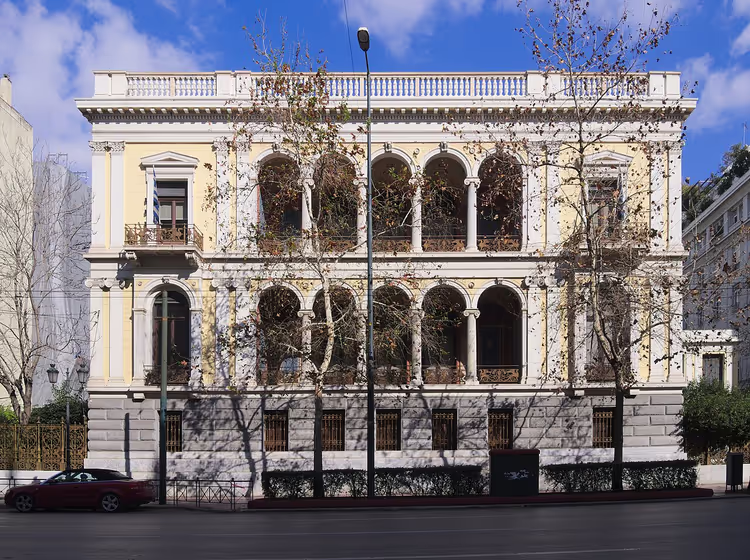 © C messier · CC BY-SAPhoto: C messier, CC BY-SA (https://creativecommons.org/licenses/by-sa/4.0), Wikimedia Commons
The Numismatic Museum traces its history back to the first half of the nineteenth century. For a long time the collection had no home of its own, and the coins were shown only occasionally in rented spaces. Only in the late nineties did the collection move to the former mansion of Heinrich Schliemann, which had stood abandoned until then.
The tour begins with a room about Schliemann and his family, where the archaeologist's personal belongings are displayed. Next you move on to coins from different eras and learn to spot counterfeits the way it was done in ancient Greece. The museum has a lecture hall and a small mint: visitors can strike their own coin.
8. War Museum
 © Gre regiment · CC BY-SAPhoto: Gre regiment, CC BY-SA (https://creativecommons.org/licenses/by-sa/4.0), Wikimedia Commons
The War Museum opened its doors in the mid-seventies, although the decision to create it was made ten years earlier. The location was not chosen by chance: on the corner of Rizari Street and Queen Sophia Avenue, a military camp stood between the two world wars.
The exhibition is divided into indoor and outdoor sections. Inside, eleven halls follow the chronology of the wars Greece fought, and the weapons collection was donated to the museum by Petros Saroglou. In the courtyard you will see real military equipment from different years and temporary themed exhibitions that change throughout the year.
The museum is open Tuesday through Saturday, and on Sunday it is open only in the morning. On Good Friday, Christmas, New Year's Day, and Easter the halls are closed, so do not plan a visit on those dates. The tour takes about two hours, and part of the time you spend outdoors, so bring water in hot weather.
9. Museum of the history of the university of Athens
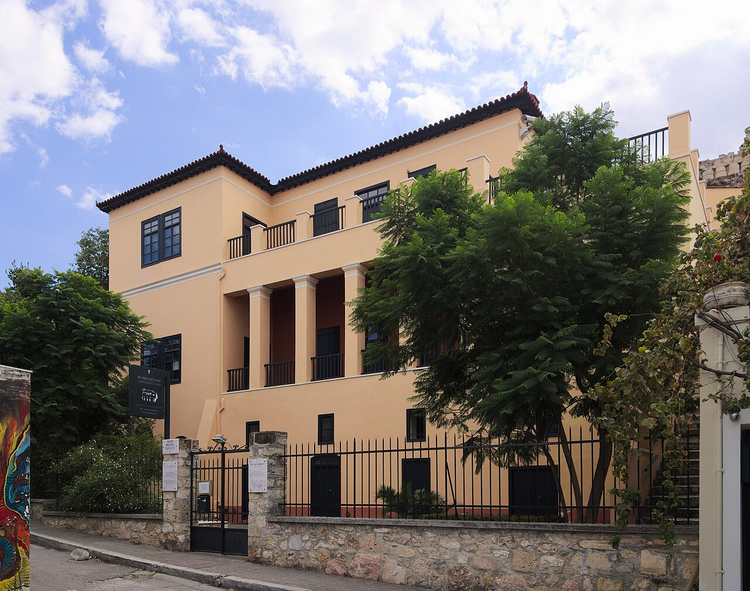 © C messier · CC BY-SAPhoto: C messier, CC BY-SA (https://creativecommons.org/licenses/by-sa/4.0), Wikimedia Commons
One of the oldest buildings in the city was built back in Ottoman times. In the 1830s it was bought by Kleanthis and Schaubert, who converted it into their own architectural office, and soon the young University of Athens moved in. The house was later sold, but in the middle of the last century the university succeeded in getting it back.
The museum opened here in the late 1980s, for the university's anniversary. The exhibitions are thematic: they cover the history of the university and its faculties. Some rooms are dedicated to the people who stood at the origins of Athenian education, so you will see not only documents but also professors' personal belongings.
10. Kerameikos
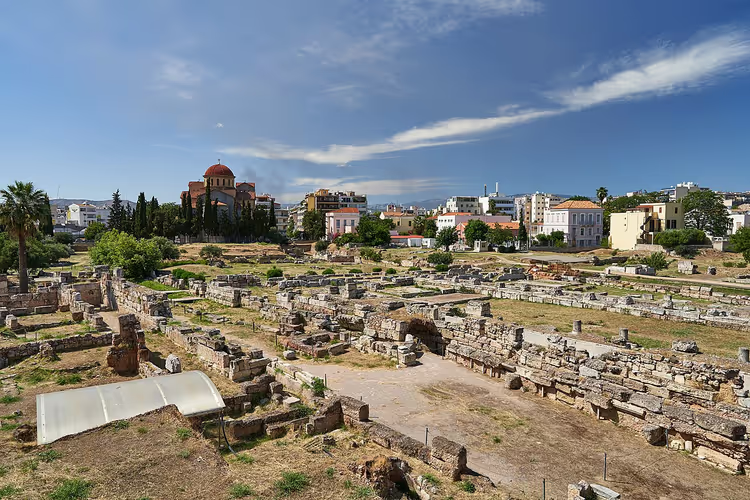
Kerameikos is the oldest and largest cemetery found in Greece. The Dipylon and Sacred Gates stand side by side here, and noble Athenians were buried on both sides of the ancient wall.
Where the name came from is not known for certain. The traveler Pausanias believed the district was named after the hero Keramos, but there is also a version involving the potters' quarter of Keramos on the banks of the Eridanos. Among the monuments you will see steles, tombs, and crypts, and the local museum holds items Athenians brought to the dead: pottery, jewelry, and amphorae with wine and oil.
11. Frissiras Museum
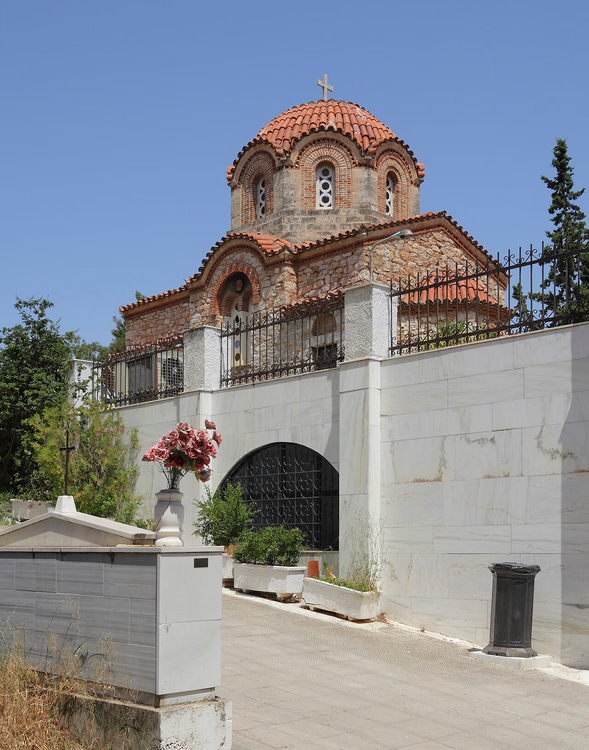 © A.Savin · CC BY-SAPhoto: A.Savin, CC BY-SA (https://creativecommons.org/licenses/by-sa/3.0), Wikimedia Commons
The permanent exhibition has been running since the early 2000s in a restored nineteenth-century house. Vlassis Frissiras assembled an extensive collection of paintings and drawings by twentieth-century European artists, and today it numbers more than five thousand works.
The display changes, so you will see part of the collection only at temporary shows. If you get tired, there is somewhere to eat: the building has a cafe serving Greek and European dishes, and a souvenir shop nearby. The rooms are small, so you can cover them in a single visit.
The Frissiras collection spans the entire twentieth century, so very different artists sit side by side in one exhibition.
12. Museum of Greek folk musical instruments
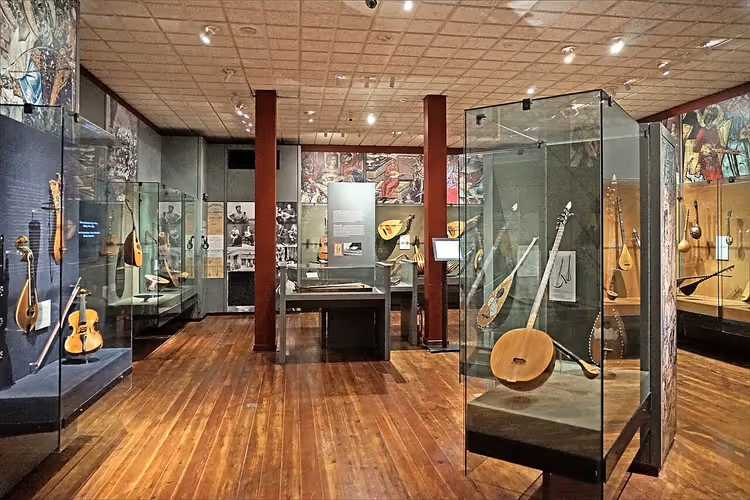 © Jean-Pierre Dalbéra · CC BYPhoto: Jean-Pierre Dalbéra, CC BY (https://creativecommons.org/licenses/by/2.0), Wikimedia Commons
The core of the exhibition is the collection of the researcher Fivos Anoyanakis. He accumulated instruments from different periods and donated the collection to the city in the late 1970s. Today it numbers more than a thousand items, but the permanent exhibition shows only half: the rest appear in thematic displays and at other museums.
The center occupies three floors. On the first you will see percussion instruments, drums, tambourines, and frame drums, alongside wind pipes and bagpipes. The second floor is given over to strings and plucked instruments: guitars, lutes, and cimbaloms. The third floor holds instruments that create sound within themselves, and here the makers' imagination is especially striking. Many exhibits are decorated with inlays of bone, metal, and stone.
- Closed: Monday.
13. Museum of the history of Greek costume
The museum was opened by the Lyceum Club of Greek Women in the late 1980s, with support from the Minister of Culture, Melina Mercouri. The club acquired its first costumes back in the 1920s, and they were worn not only at exhibitions but also in plays and concerts.
Today the club's holdings number a quarter of a million items. You will see some of the costumes in the permanent exhibition; the rest take part in performances and thematic displays. The exhibition is small and open on weekdays, so it is easy to combine with a walk through the center.
14. Archaeological Museum of Piraeus
 © Giovanni Dall'Orto . · CC BYPhoto: Giovanni Dall'Orto ., CC BY, Wikimedia Commons
This museum is for those who want to study Greek history in greater depth. The exhibitions tell the story of the rise and development of Athens, which was not only the trading center of the eastern Mediterranean but also the main shipbuilding center. The artifacts span the period from the Mycenaean era to Roman rule.
Most of the finds were discovered in the Piraeus area, and some were raised from the seabed. They are mainly bronze and marble statues and reliefs. The museum has its own laboratory, where the condition of objects is monitored, and a lecture hall, where staff talk about little-known pages of the city's history.
- Closed: Monday.
15. National Gallery
 © Leeturtle · CC BY-SAPhoto: Leeturtle, CC BY-SA (https://creativecommons.org/licenses/by-sa/4.0), Wikimedia Commons
In the late nineteenth century, the University of Athens transferred the works of art in its keeping to the state. Soon the patron Alexandros Soutzos donated his own collection of paintings to the city, and that is how the gallery began. At first it was squeezed into the university building, and in the early twentieth century it moved into its own home.
The holdings grew through donors: about two hundred and fifty works turned into a large collection that includes paintings by El Greco, Dürer, and Giordano. Thematic exhibitions are held regularly, so you will see something new each time.
- Closed: Tuesday.
16. Railway Museum
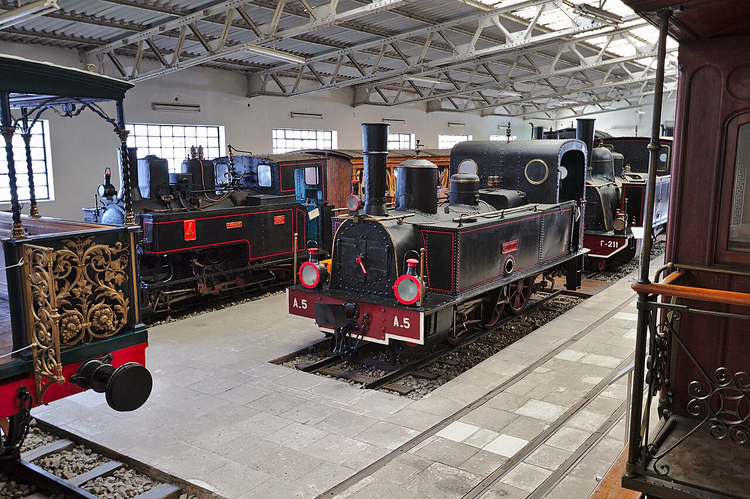 © Herbert Ortner · CC BYPhoto: Herbert Ortner, CC BY (https://creativecommons.org/licenses/by/4.0), Wikimedia Commons
The museum was established in the late 1970s. On an area of about twelve hundred square meters, everything that moves on rails is gathered: trains, trams, carriages, and locomotives. Many exhibits stand in the open air, and you can get right up close to them.
The exhibition is small but dense: an hour is enough to see everything. Admission is free, which is a rarity for Athens. On Wednesdays the museum opens only in the evening; on other working days it welcomes visitors during the day.
17. Hadrian's Library
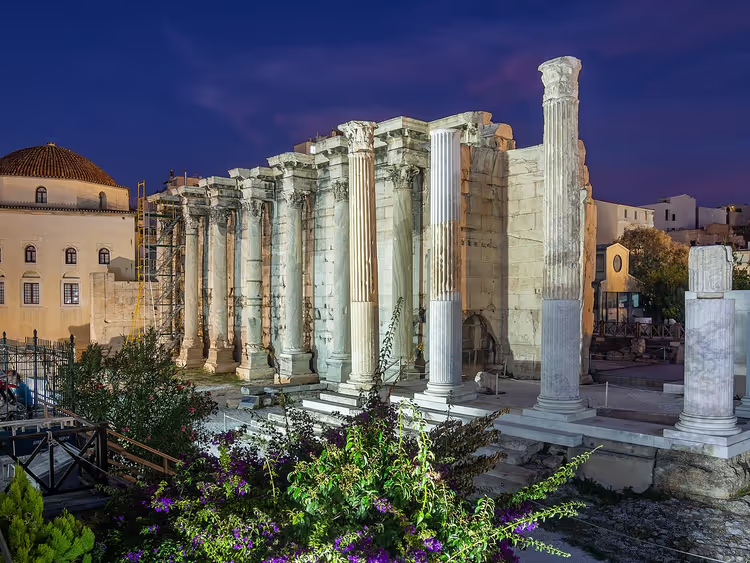 © C messier · CC BY-SAPhoto: C messier, CC BY-SA (https://creativecommons.org/licenses/by-sa/4.0), Wikimedia Commons
The library was built in Roman times by order of the Emperor Hadrian. At the time it served several purposes at once: it had a reading room where thousands of valuable manuscripts were kept, lectures and debates took place, and documents were translated from foreign languages. According to unconfirmed reports, the complex also included a small theater.
Weary visitors rested in the inner courtyard by the fountain, among statues of the emperor. The library was later looted and destroyed by Germanic tribes, and only in the early 2000s, after reconstruction, did it reopen as a museum. Today you will see the remains of walls, a colonnade, and a mosaic floor. Opening hours depend on the season, so check them before your visit.
18. Theater Museum
Theater was born in Greece, and here its history is shown in detail. The museum tells how the stage developed from ancient amphitheaters to the present day, and the collected materials include costumes, set models, and posters.
The museum has a library and a sound archive where scholarly research is carried out. The exhibition is open in the morning and closes after lunch, so you should come early. The rooms are small, and you can see them in an hour.
19. Tower of the Winds
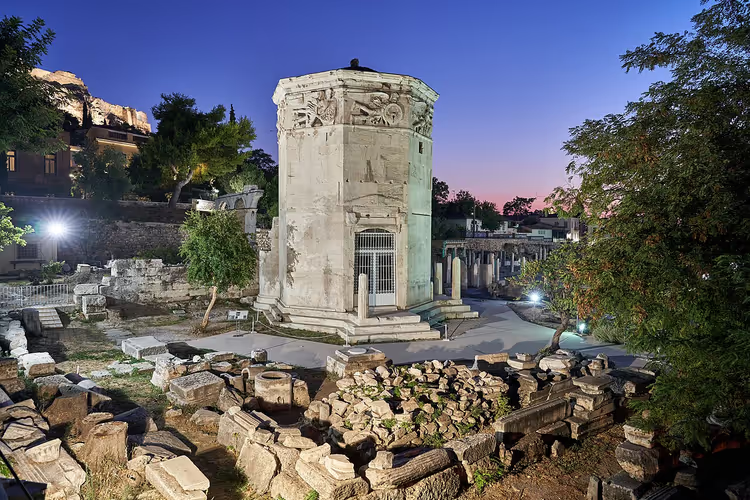
There is no exact date for the construction of the Tower of the Winds, but it is the first monument to science of its kind. The ancient Greeks used it to tell the time and predict the weather. A wind deity is carved on each face, so that the forecast would be more accurate.
The tower was later used as a Christian church, then passed to the dervishes, and over time it was simply abandoned. Restoration began in the last century and continues to this day, so part of the stucco has already been restored. In summer the tower can be visited until evening; in winter it closes earlier, so come in the first half of the day.
20. Children's Museum
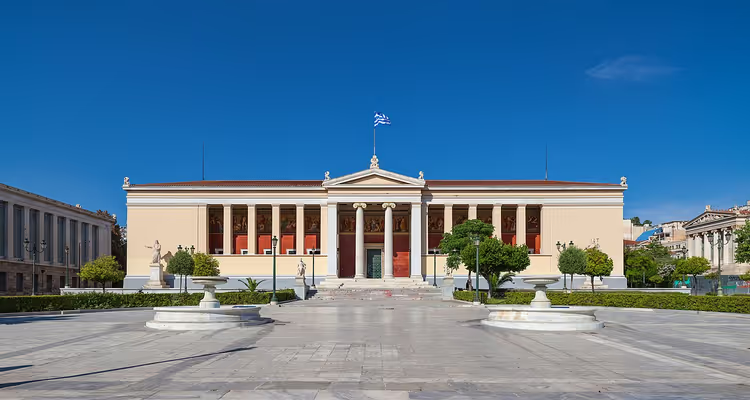 © Thomas Wolf , www.foto-tw.de · CC BY-SAPhoto: Thomas Wolf , www.foto-tw.de, CC BY-SA (https://creativecommons.org/licenses/by-sa/3.0/de/deed.en), Wikimedia Commons
The Children's Museum teaches children through play. Everything here is built on experiments: in the Bubble Room children observe physics, in the Pythagoras Room they study geometry, and in the Family Room they play together with their parents. In the Kitchen, kids prepare simple dishes under an instructor's supervision and get acquainted with chemistry.
The museum has a shop selling educational toys. Note: all activities are conducted only in Greek, and foreign visitors take part in workshops without an interpreter. The museum welcomes visitors on weekdays and during the day on weekends, but it is closed in July and August.
Tickets and how to get there from the airport
It is better to buy tickets online in advance: in summer the line at the Acropolis Museum ticket office is longer than the one inside. Some venues sell time slots, and arriving late means losing your entry. Check prices and discounts on the museums' official websites: they change by season, and some state museums offer a discount through a combined ticket.
From the airport to the city center, you can take the metro or bus, but with luggage it is more convenient to book an Athens airport transfer. The driver will meet you in the arrivals hall and take you to your hotel.
Tours and tickets in Athens
Guided tours, skip-the-line tickets and activities — most offers can be cancelled free of charge.
See offers on TiqetsThe widget loads once you give your consent.
Athens museums on the map
If you want to build a route through the whole list, open the map below. It shows the museums from this selection, and you will immediately see that most of the spots are in the center. Neighboring venues are easy to combine into one day so you do not waste time getting around.
Museums of Athens
Places on the map
- 1Acropolis Museum Opened in 2009, glass floor over excavations
- 2National Archaeological Museum Bronze statues, painted ceramics, Mycenaean finds
- 3Benaki Museum The country's first private museum, history from antiquity to today
- 4Byzantine Museum Ilissia mansion, a courtyard with a fountain and mosaics, framed icons
- 5Museum of Cycladic Art Collection of Nicolas Goulandris, marble idols from the islands
- 6Athens City Museum King Otto's apartments, two buildings linked by a covered passage
- 7Numismatic Museum Heinrich Schliemann's mansion, coins from various eras
- 8War Museum Eleven halls covering Greece's wars in chronological order, equipment in the courtyard
- 9University of Athens History Museum Ottoman-era building, history of the country's oldest university
- 10Kerameikos Greece's oldest and largest cemetery, stelae and tombs
- 11Frissiras Museum Over five thousand works by 20th-century European artists
- 12Museum of Greek Folk Musical Instruments Collection of Foivos Anogeianakis on three floors
- 13Museum of the History of Greek Costume A quarter of a million items from a women's club-lyceum
- 14Piraeus Archaeological Museum Finds from the Piraeus area, statues and reliefs from the seabed
- 15National Gallery Canvases by El Greco, Durer and Giordano
- 16Railway Museum Trains, trams and locomotives on open-air display
- 17Library of Hadrian Emperor Hadrian's Roman reading room, ruins and a mosaic floor
- 18Theatrical Museum History of the stage from ancient amphitheatres, costumes and models
- 19Tower of the Winds Ancient monument to science, once told time and weather
- 20Children's Museum Activities and experiments for children, sessions in Greek
⁉️🤔 Frequently asked questions
How much does it cost to enter Athens museums?
Prices depend on the venue and the season: state museums are usually cheaper than private ones, and a combined ticket covers several sites. Check exact prices and discounts on the museums' official websites before your trip, because rates change in summer.
What day are the museums closed?
There is no single rule. The Museum of Cycladic Art and the National Gallery are closed on Tuesdays. The Acropolis Museum is open daily, and the National Archaeological Museum has shorter hours on Mondays. Plan your route so the main venues do not fall on their closing day.
Can I go with children?
Yes. The Children's Museum is built around experiments and games, and the Acropolis Museum and the War Museum have plenty to see even for school-age kids. Keep in mind that at the Children's Museum, activities are held only in Greek and without an interpreter.
Where can I buy tickets without waiting in line?
Online. Many museums sell time slots, and then you walk right past the ticket office. Buy in advance, especially in summer and on weekends, when long lines form at the main venues.
How many museums can you realistically fit into one day?
No more than two, and it is better if they are close to each other. Seeing one venue takes from one to three hours, and fatigue builds up quickly. Leave a coffee break between visits, otherwise by evening you will stop telling the exhibits apart.
In short: what to book
If you have only one day for museums, go for the Acropolis Museum and the National Archaeological Museum: these are the city's two main collections. Compare hotels in central Athens on Trip.com so you stay within walking distance of Syntagma.
- If you are traveling with children: the Children's Museum and the War Museum.
- If you love painting: the National Gallery and the Frissiras Museum.
- If you want antiquities without the crowds: Hadrian's Library and Kerameikos.
Timed museum tickets should be bought in advance, and guided tours of Athens will help you avoid drowning in dates and names. Check the schedule in advance: the National Archaeological Museum has shorter hours on Mondays.

A small editorial team writing guides for independent travel. We travel ourselves, but we haven’t been everywhere, so we check prices, opening hours and how to get there against official sources.