
















Acropolis in Athens 2026: tickets, hours and main temples
The line to the Propylaea in summer stretches for more than an hour. Without a time slot, you risk standing in it for nothing and climbing the hill in the hottest part of the day.
Since 2025, an adult Acropolis ticket costs 30 € (as of 09/2026, official ticket portal). The site operates on a seasonal schedule: in summer the gates open at 8:00, and entry is sold for a specific time. In winter the site closes noticeably earlier.
Below is the practical side of the visit: prices, opening hours, the main temples on the hill, and the route from the metro. First, let's go through the history of the place so you understand what you're walking past.
Ad: this article contains affiliate links, we earn a commission if you book through them, at no extra cost to you.
The Acropolis: what to know before your visit
💡 In short:
- A ticket to the hill costs 30 € for an adult, and EU visitors under 25 enter free (as of 09/2026, ticket sales site).
- Entry is by time slot only: you choose the slot when buying, not at the gate.
- Come at 8:00 or after 18:00; midday is when the longest line forms at the Propylaea.
- Prices and opening hours: 09/2026, verified on the official website.
A full tour of the site takes three to four hours if you visit every temple. The museum stands separately on the south slope and requires its own ticket. Let's go in order, from ancient history to practical details.
History of the Acropolis
 © A.Savin · CC BY-SAPhoto: A.Savin, CC BY-SA (https://creativecommons.org/licenses/by-sa/3.0), Wikimedia Commons
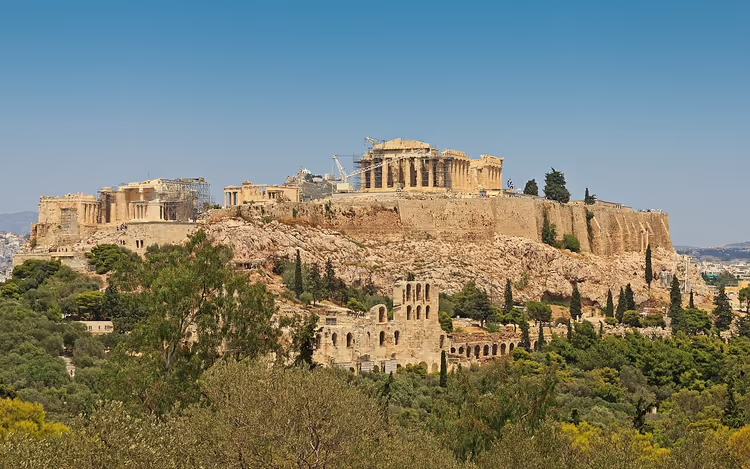
The Acropolis grew as an ancient city on a high hill. The main settlement lived behind the fortress walls, and the rock was considered nearly impregnable. Cliffs blocked the approach from both land and sea, so the site became a center of both defense and worship.
According to legend, the city was founded by Cecrops, a creature half man, half snake. He dedicated his creation to the goddess Athena, and the first temple on the hill was built in her honor. Cecrops' buildings were modest, and the heavy work was done by hired Cyclopes. Later, structures decorated with gold and silver rose in their place.
When the empire adopted Christianity, the pagan temples were handed over to Christians. The architecture was left almost untouched; only the interiors were changed. The Ottomans in the 15th century also preserved the ensemble: the temples were turned into mosques without breaking down the walls.
The fatal blow came from Venetian artillery. In the 17th century, Venetian cannons fired on the hill, and many buildings suffered damage that has not been repaired to this day. In the 19th century, some sculptures were taken to the British Museum, and Greece still demands their return. Today a large-scale restoration is underway on the hill, funded from the state budget and donations. The Acropolis is a UNESCO World Heritage site.
Architecture of the ensemble
 © HerrAdams · CC BY-SAPhoto: HerrAdams, CC BY-SA (https://creativecommons.org/licenses/by-sa/4.0), Wikimedia Commons
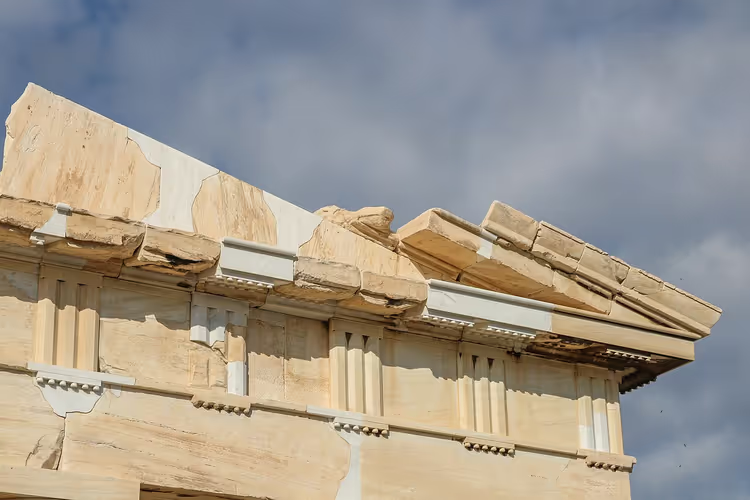
The main construction began after the victories over the Persians in the second half of the 5th century BC. Democracy had taken firm root in Athens by then, and Pericles decided to rebuild the hill from scratch. The location was well chosen: the high rock of gray-blue limestone is protected by cliffs on three sides.
The architects sought a unified style for all of Hellas and combined the Doric and Ionic orders. The project was led by Ictinus, Callicrates, Mnesicles, and the sculptor Phidias. Marble, gold, and precious stones were used for the finishing, and the best craftsmen were brought in for the work.
The architects' solutions seemed unexpected. The buildings were shown in volume: from the main entrance you could see three walls of a temple at once. Compositions were made asymmetrical, colonnades broke up the space or connected it. The Corinthian order began to be used more widely, and it defined the look of Hellenic architecture.
The construction was expensive and caused disputes. The allied cities gave Athens money for the army and navy, and the city directed it to the hill. Craftsmen resented the mandatory participation in the project. To all objections, Pericles replied that since the neighbors provided no soldiers or sailors, he would manage the treasury himself. The new ensemble kept its defensive role and at the same time brought glory to Athens.
What to see on the Acropolis
On the hill you will see both restored temples and ruins that are still waiting to be rebuilt. It is convenient to start your visit with the buildings that have been returned to their original appearance. The main sites are covered below, each with its own place on the map and its own story.
Parthenon
 © Giles Laurent · CC BY-SAPhoto: Giles Laurent, CC BY-SA (https://creativecommons.org/licenses/by-sa/4.0), Wikimedia Commons
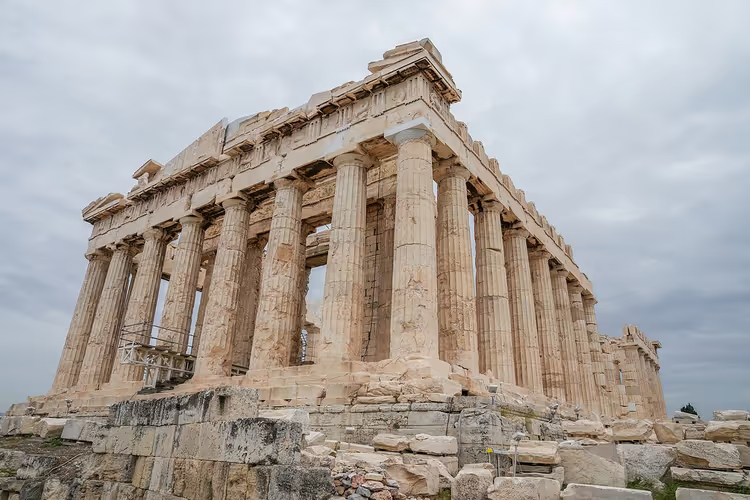
The Parthenon remains the main temple of the ensemble. It is dedicated to the goddess Athena and was built on the site of the Hekatompedon, which was destroyed by the Persians. Work began around 447 BC, the temple was consecrated around 438 BC, and the finishing was completed by 432 BC. It was designed by Ictinus, construction was supervised by Callicrates, and all the work was personally overseen by Pericles.
What is worth examining closely:
- The temple stands on a three-step base about 1.5 meters high.
- The entrances to the Acropolis and to the Parthenon face each other, so you enter by walking around the building.
- The statue of Athena and the altar occupied the eastern part, while the state archive was kept in the western part.
- Right after construction the marble was pure white; later it acquired a noble yellowish tone.
- The blocks were fastened with iron rods and sealed with lead for extra strength.
The Parthenon looks perfectly straight, but this is an optical illusion. Ictinus knew that the eye distorts perspective, so he left not a single straight line. He raised the stylobate so the massive building would not seem heavy. He made the columns thicker in the middle so they would not look fragile, and tilted them slightly toward the center. He made the corner columns noticeably more massive than the rest, and the spacing between columns increases from the edges toward the center. The temple was shifted east relative to the center of the hill, so at the entrance it seems to rise gradually.
Even after two and a half thousand years, the temple remains a model for architects. Ictinus's innovations were revolutionary for their time, and that is exactly why the Parthenon is considered the main building on the entire hill.
The catch: some of the columns are covered in scaffolding; restoration has been going on for decades.
Hekatompedon
 © Thomas Wolf , www.foto-tw.de · CC BY-SAPhoto: Thomas Wolf , www.foto-tw.de, CC BY-SA (https://creativecommons.org/licenses/by-sa/3.0/de/deed.en), Wikimedia Commons
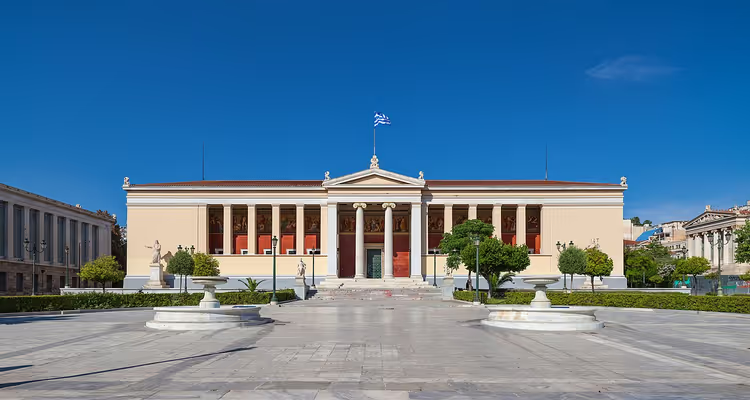
The Hekatompedon was the main temple of the state until 480 BC. It was dedicated to Athena and stood for only a few decades. The building was erected under Peisistratos, and the Persians destroyed it when they captured the city. The name translates as "hundred-foot" and refers to the size of the structure.
The remains of the foundation show that the temple was rectangular and decorated with columns around its perimeter. It stood at the highest point of the hill, so every visitor saw it first. The entrance of the main temple faced the Propylaea, the ceremonial gates of the Acropolis. An altar to Athena had previously stood on the site of the Hekatompedon, and part of the Parthenon also bears the name Hekatompedon.
Excavations here uncovered well-preserved statues. They were carved from porous limestone and painted in bright colors: pink torsos, blue hair, green eyes. The compositions depict Heracles fighting Triton, the battle of the gods against the titans, and a lion tearing apart a bull. These sculptures are now displayed in the Acropolis Museum, where the necessary conditions and a stable climate have been created for them.
The Hekatompedon was destroyed by the Persians on the orders of King Xerxes, who wanted to erase the very memory of the city. Xerxes was irritated by the long siege and the courage of the defenders, so he ordered everything destroyed. After the victory over the Persians, the Athenians did not rebuild the temple, and the surviving marble fragments were used in the construction of the Parthenon. That is exactly why archaeologists cannot reliably reconstruct the appearance of the Hekatompedon, although excavations on the hill continue.
Erechtheion
 © Chepry 💬 ( Andrzej Barabasz ) 📷 🇵🇱 · CC BY-SAPhoto: Chepry 💬 ( Andrzej Barabasz ) 📷 🇵🇱, CC BY-SA (https://creativecommons.org/licenses/by-sa/4.0), Wikimedia Commons
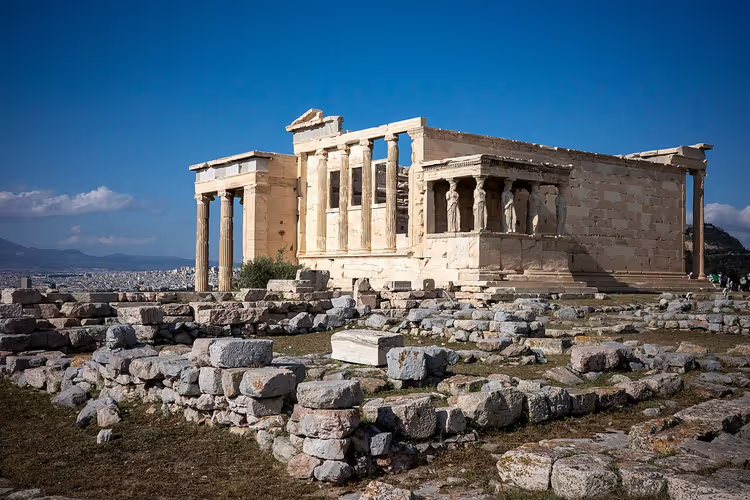
The Erechtheion stands north of the Parthenon and is named after King Erechtheus. This site is linked to the contest between Poseidon and Athena for patronage over Hellas. Poseidon struck the rock with his trident, and salt water flowed out. Athena touched the ground with her spear, and an olive tree grew. The Greeks considered the goddess's gift more valuable, so the temple was built next to the legendary tree.
The initiator of the construction was Pericles, but the work was completed only after his death. The project was designed by Mnesicles, the author of the Propylaea. Construction began in 421 BC and coincided with the war against Sparta, so money and labor were in short supply. The work was finished only by 406 BC.
The site under the temple is uneven, so its parts stand at different heights and have separate entrances. The eastern part housed the wooden xoanon of Athena, to which women brought a new peplos after the Panathenaic Games. King Erechtheus is buried in the western part, and funerary rosettes are carved above the entrance. Altars to Poseidon, Hephaestus, and Butes also stood there.
The south portico is recognized by its six marble caryatids made of Pentelic marble. Each figure is over two meters tall. Caryatids were usually used to decorate temples of Artemis, but here they were placed to appease the goddess. Later the Erechtheion served as a church of the Virgin Mary, a palace of the Athenian duke, and a harem. It was badly damaged by Venetian bombardment, and in the 19th century some of the statues were taken to Great Britain, while others were simply destroyed.
An interesting detail is connected with Athena's olive tree. When the Acropolis was ravaged during the Persian Wars, the tree burned down, but later it grew back in the same place without human intervention. Worship in the Erechtheion did not last long: just a year and a half later Sparta and its allies won the war, and the former power of Athens came to an end. After the consecration, the most significant objects for the Athenians were moved here, but it was not possible to return them to their former place.
The catch: restoring the Erechtheion to its original form is no longer possible.
Temple of Athena Nike
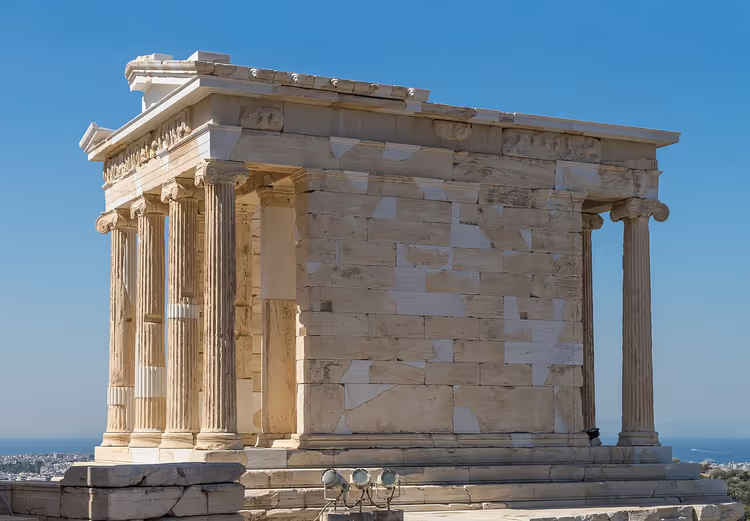
The Temple of Athena Nike stands right at the entrance, formally outside the walls of the Acropolis. A fortified bastion previously stood on this site, and an altar to Athena Nike was placed nearby so that warriors could bring offerings. In the 6th century BC a temple to Athena replaced the altar, but the Persians destroyed it on the orders of Xerxes. The design of the new building was developed by Callicrates and approved by the popular assembly.
Historians do not know exactly when construction began, but the temple was consecrated in 421 BC. Five hundred years later the building received a different name due to an error by Pausanias. The historian mistook a statue of Athena without armor for a statue of Nike without wings and invented a story that the wings had been torn off so that victory could not fly away. There was no one to correct him, and the name stuck.
The temple has two facades: one faces the Parthenon, the other the Propylaea. The base consists of three steps, and the walls are decorated with depictions of battles between the Athenians and the Persians and a scene of the assembly of the gods. In the center Athena is shown without a helmet, holding a pomegranate in her hand. The building was destroyed several times.
Restoration began only after Greece gained independence. The first restoration was carried out without proper preparation, so the building bore little resemblance to the original. In the 20th century cracks appeared in the foundation, and the structure was dismantled and reassembled more carefully. The final restoration was completed in the early 21st century, and the temple now matches the descriptions of historians.
Odeon of Herodes Atticus
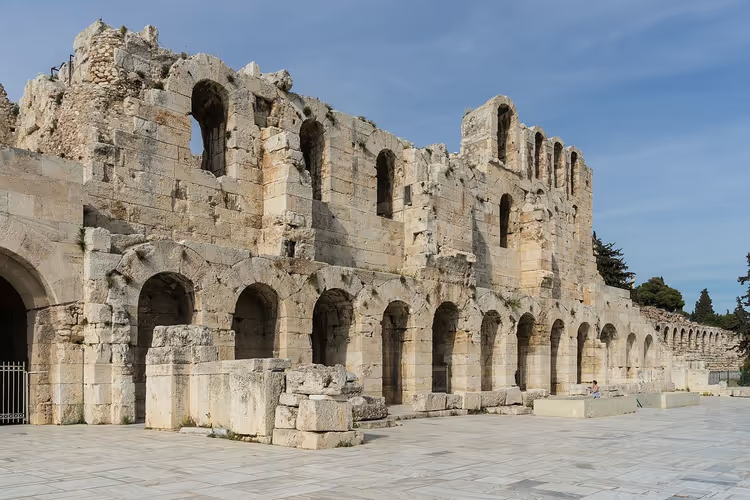
The theater on the southern slope appeared at the will of Herodes Atticus, who wanted to commemorate his deceased wife. It was built in the 2nd century AD, after the heyday of the Acropolis. The exterior of the building is faced with Parian marble, while roughly worked stone was used inside.
The auditorium is carved directly into the rock. Its diameter is 76 meters, and the marble seats are divided into two sections of thirty-two rows each. The roof was made of Lebanese cedar and is supported without internal columns. The stage wall had three levels with windows and niches for statues, and the orchestra was paved with white marble.
Archaeologists have established that the arena hosted not only concerts but also gladiator fights. Restoration began as early as the 19th century. Today you can get inside only on performance days with a ticket purchased in advance.
The catch: on ordinary days you cannot go inside, only for concerts.
Asclepieion
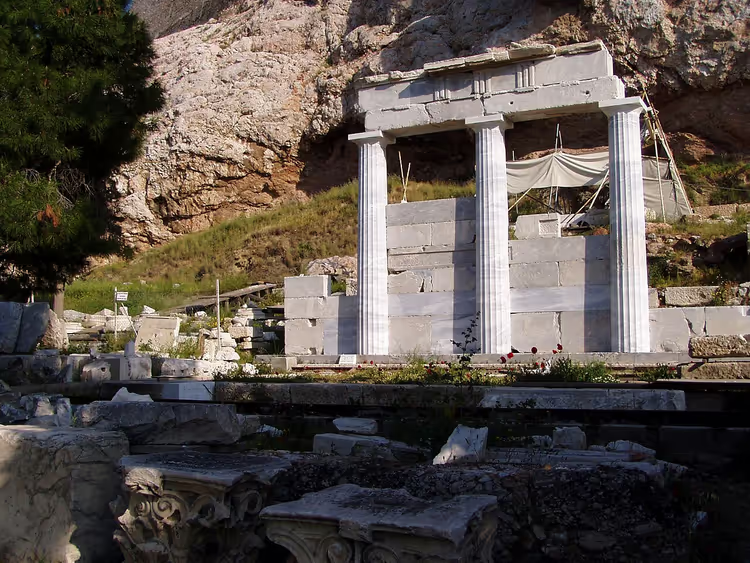 © DerHexer · CC BY-SAPhoto: DerHexer, CC BY-SA (https://creativecommons.org/licenses/by-sa/4.0), Wikimedia Commons
The Asclepieion surprises with its dual role: it served both as a temple of the god Asclepius and as a healing center. The temple was built on the initiative of Telemachus. The new god had an earthly incarnation as a snake and initially lived in the temple of Demeter until he received his own home. The site was chosen on the southern slope next to a source of clean water, because water was important for healing.
The complex included a temple, an altar, and porticoes for the sick. The temple was decorated with images of Asclepius and his children, including his daughters Hygieia and Panacea. Those who came for healing sacrificed a rooster, and after recovery they left money, jewelry, and dishes. Sometimes healed organs carved from wood or stone were offered as gifts.
The priests kept daily records of offerings. From these records historians have reconstructed which operations and procedures were performed here. The temple was damaged and restored more than once, and after the arrival of Christianity it was converted into a church of healers. Restoration work is currently underway on the site.
The catch: most of the buildings lie in ruins.
Theater of Dionysus
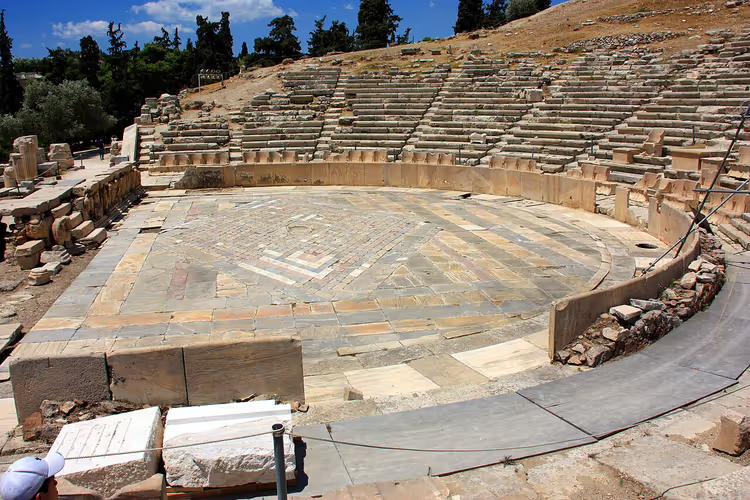 © Rrburke · CC BY-SAPhoto: Rrburke, CC BY-SA (https://creativecommons.org/licenses/by-sa/3.0), Wikimedia Commons
Peisistratos loved the god of wine and merriment, and it was he who ordered a temple to Dionysus to be built on the hill. The structure was decorated with a statue of the god made of ivory and gold, and a platform for ritual dances was set up nearby. That platform became the beginning of the theater.
At first the theater hosted only religious performances, then secular plays were added. The auditorium could hold up to seventeen thousand spectators, while Athens itself had twice as many inhabitants. The most distinguished spectators were given the lower rows, and the names of the owners were carved on the backs of the seats. Later gladiator fights were held here, and a marble portico with a metal grille was built for them.
Today only ruins remain of the Theater of Dionysus, and they are gradually being restored. The work is funded from the state budget, with help from private donors as well. The history of the European stage begins with this theater, so it is worth making a separate visit here.
Destroyed sites
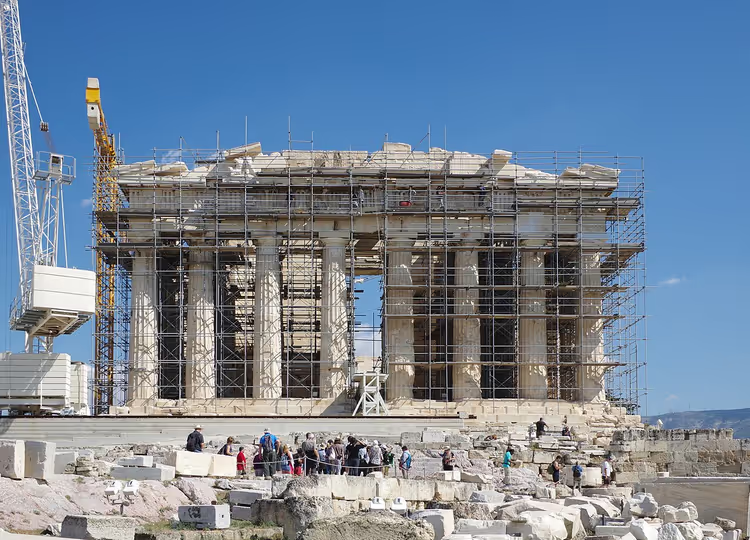 © Berthold Werner · CC BY-SAPhoto: Berthold Werner, CC BY-SA (https://creativecommons.org/licenses/by-sa/3.0), Wikimedia Commons
The restoration of the hill is far from complete, but even the ruins are worth seeing. Near the entrance the traces of the Chalkotheke survive, where attributes for festivals in honor of Athena were stored. Nearby you can see the remains of a small sanctuary of Zeus Polieus, which consisted of two halls. Further on you can make out the foundations of the temple of Aphrodite, the precinct of Artemis Brauronia, and a structure in honor of the emperor Augustus.
The restoration process is slowed by excavations: archaeologists continue to work directly on the site. That is why some of the sites are preserved rather than restored.
Old Acropolis Museum
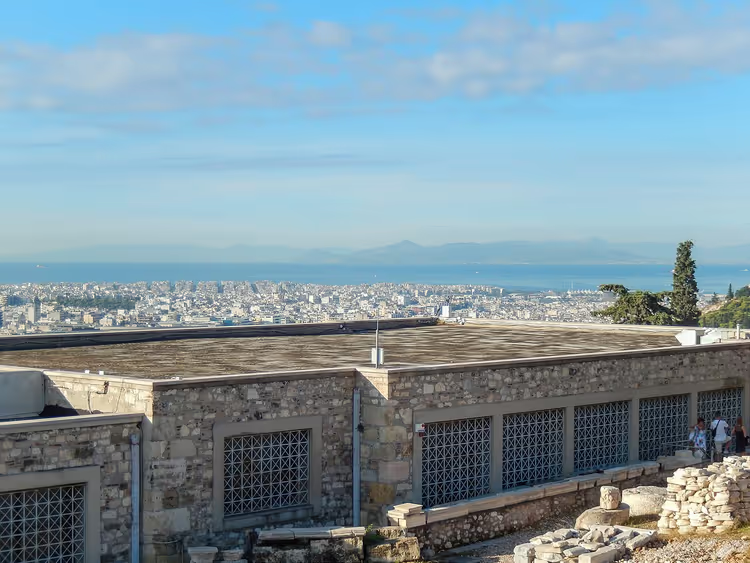 © HerrAdams · CC BY-SAPhoto: HerrAdams, CC BY-SA (https://creativecommons.org/licenses/by-sa/4.0), Wikimedia Commons
To display the finds from the hill, the Acropolis Museum opened in 1878. At first, a small building next to the Parthenon was enough, but the collection grew and no longer fit in nine rooms. Scholars criticized the authorities because valuable exhibits were kept in an earthquake-prone area. So the decision was made to build a new structure.
New Acropolis Museum
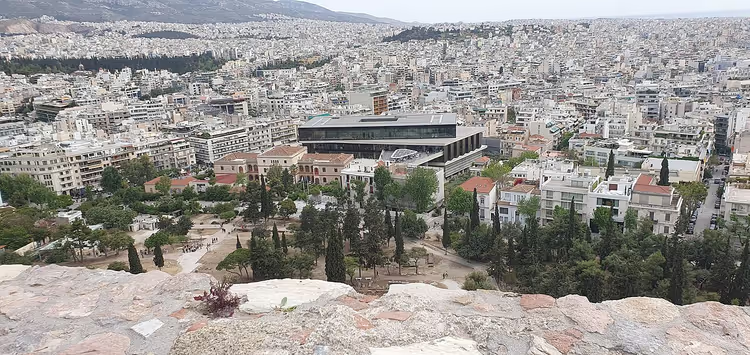 © Yair-haklai · CC BY-SAPhoto: Yair-haklai, CC BY-SA (https://creativecommons.org/licenses/by-sa/4.0), Wikimedia Commons
The New Acropolis Museum welcomed its first visitors in 2009. The building was constructed 300 meters from the wall that encloses the hill, based on a design by Swiss architect Bernard Tschumi. Glass floors and walls are meant to bring you closer to the atmosphere of the ancient world. From the upper terrace, you can admire the Acropolis without leaving the galleries.
The core of the collection consists of statues found during excavations. For special exhibits, automated systems maintain the required temperature and humidity. A museum ticket costs €20 for an adult, and EU visitors under 25 enter free (as of 09/2026, official website).
Important: museum admission is paid separately; the hill entrance ticket does not grant access to the galleries.
Interesting facts
The Ottoman garrison in the fortress needed lead and began dismantling buildings to extract metal from the fasteners. The Greeks would not allow such barbarism and sent the enemy the lead they needed themselves. Architect Ictinus deliberately distorted the perspective and achieved a seemingly perfect Parthenon. The new museum, opened in 2009, is ten times larger than the old building.
Tours and audio guide
You can explore the Acropolis on your own. With a guide, you will more quickly understand what the friezes and pediments mean. Tours come in group and private formats, and times can be tailored to you. An audio guide on your phone works well if you want to go at your own pace. You can compare group and private programs on GetYourGuide.
Tickets and opening hours
Tickets and schedules change by season, so below is the current information for September 2026. An adult Acropolis ticket costs €30 and is sold for a specific time slot (as of 09/2026, official Acropolis portal). EU visitors under 25 enter free, but the discounted entry is issued at the ticket office with an ID.
What | Price | Who |
|---|---|---|
Acropolis, adult | €30 | all adult visitors |
Acropolis, EU youth under 25 | free | with ID, at the ticket office |
Acropolis Museum, adult | €20 | purchased as a separate ticket |
Acropolis Museum, reduced | €10 | children and students from non-EU countries |
In summer, the hill is open from 8:00 to 20:00; in winter, the gates close around 17:00, with last entry about half an hour before closing (as of 09/2026, Acropolis website). The Acropolis is fully closed on January 1, on Orthodox Easter, and on December 25.
Tours and tickets in Acropolis
Guided tours, skip-the-line tickets and activities — most offers can be cancelled free of charge.
See offers on TiqetsThe widget loads once you give your consent.
How to get to the Acropolis
The Acropolis is in the center of Athens, and the metro is the most convenient way to get there. You can also arrive by surface transport: trolleybuses 1, 5, and 15 go to the hill, as do buses 106, 135, and 208. If you have just landed and are traveling with suitcases, it is easier to book a transfer from the airport to your hotel. You can check prices on Kiwitaxi.
Acropolis on the map
The hill stands in the center of Athens, and the map clearly shows how close the metro stations and main streets come to it. Mark the point in advance so you do not have to search for the entrance in the heat. Below is an interactive map showing the location of the Acropolis.
⁉️🤔 Frequently asked questions
How much does an Acropolis ticket cost in 2026?
An adult ticket costs €30 and is valid for one entry at the selected time (as of 09/2026, official ticket portal).
Do I need to buy a ticket for a specific time?
Yes, entry to the hill is sold by time slots, and in high season available windows run out several days in advance. Take a slot at 8:00 or in the evening, when the heat subsides. Without a reservation, you may stand in line at the gate for over an hour.
When is the Acropolis open for free?
Free entry applies on March 6, April 18, May 18, June 5, October 28, and on the last weekend of September. Every first Sunday from November to March, entry is also free. On these days, crowds are especially large, so arrive right at opening time.
How to get to the Acropolis by metro?
You need the Akropoli station on Athens metro line 2. From the exit to the site entrance it is a short uphill walk.
How much time do you need to see the Acropolis?
Seeing all the temples takes three to four hours if you read the signs and take breaks. A quick route through the main structures takes about two hours. The Acropolis Museum is a separate visit, allow another one and a half to two hours for it.
In short: what is worth booking
The Acropolis is best seen in the morning, before the heat and the lines. If it is your first time, take the 8:00 slot and allow three hours. If you are with children, choose an evening time after 18:00. If details matter to you, add a guide or an audio guide. Plan the museum as a separate visit, its ticket is not included in the hill ticket.

A small editorial team writing guides for independent travel. We travel ourselves, but we haven’t been everywhere, so we check prices, opening hours and how to get there against official sources.