
















Milan in two days: Duomo, Sforza Castle and the Brera district
Milan is often treated as a one-day city. That's a mistake: the sights sit close together in the center, and you can walk to half of them. We've put together places from Milan Cathedral to Torre Velasca, with tickets, opening hours, and honest catches.
Give the city two days. In one you'll see the Duomo and the Galleria, but you'll miss Brera, Cimitero Monumentale, and the Vertical Forest.
Ad: this article contains affiliate links. We earn a commission if you book through them, at no extra cost to you.
1. Milan Cathedral
💡 In short:
- Start with the Duomo: book terrace tickets online, morning slots go first.
- Prices and opening hours: 09/2026, verified on the official Duomo website.
 © Jakub Hałun · CC BY-SAPhoto: Jakub Hałun, CC BY-SA (https://creativecommons.org/licenses/by-sa/4.0), Wikimedia Commons
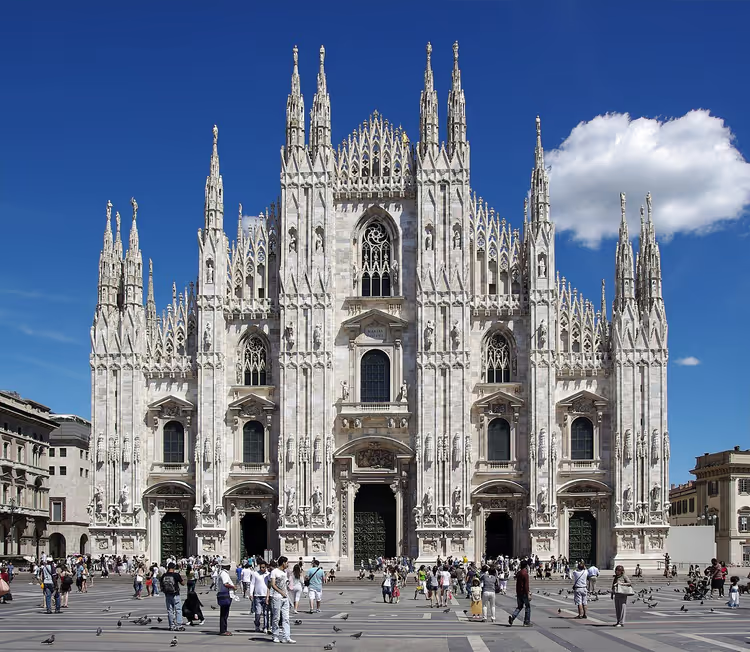
The Duomo took almost six centuries to build: construction began in the late fourteenth century and finished in the early nineteenth. The design barely changed over that time, which is why the building looks so cohesive. The cathedral is easy to recognize: it has more than a hundred marble spires, and the tallest is crowned by a statue of the Madonna Assunta, the city's patron saint.
Inside, the cathedral holds tens of thousands of people. White stone columns, nearly life-size statues, and tall stained-glass windows hold your attention longer than you planned. Allow an hour for the nave and another hour if you go up to the terraces. The ticket office is open on weekdays 9:00-19:00 (as of 09/2026, cathedral page with opening hours).
There's a Milanese detail worth knowing. By law, no building in the city may rise above the statue of the Madonna. Skyscrapers get around the ban by placing a copy of the statue on the roof, so the rule is technically not broken. On the cathedral itself, among the bas-reliefs, there's also something unexpected: one of the towers has Mussolini carved next to King Victor Emmanuel II.
Plan your visit like this. First walk around the cathedral from outside and count the spires, then go inside, and go up to the terraces at the end. Up top you'll find yourself among marble and statues, with the whole city opening up beneath your feet. Bring water: in summer it's hot on the open gallery.
2. Museo del Novecento
 © Emanuela Terzi · CC BY-SAPhoto: Emanuela Terzi, CC BY-SA (https://creativecommons.org/licenses/by-sa/4.0), Wikimedia Commons
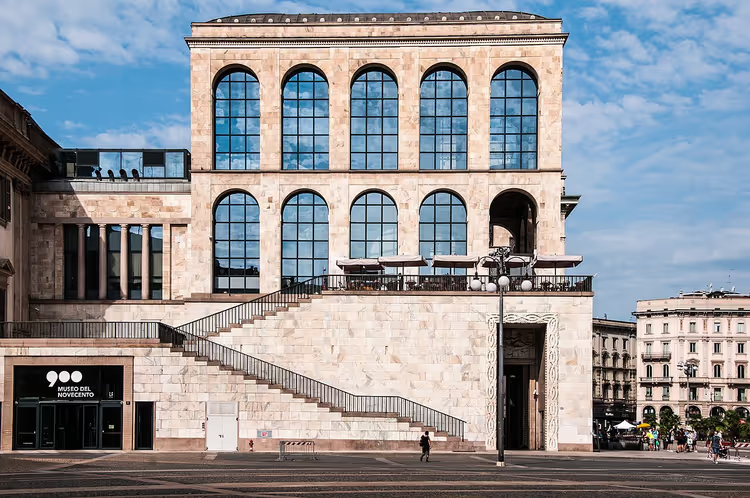
The museum opened in the Palazzo dell'Arengario and is dedicated to art of the twentieth and twenty-first centuries. The exhibition runs floor by floor in chronological order, and you climb from the earliest works to the latest. From the upper windows you can see the square and Milan Cathedral, so the view is included in the ticket.
The collection has around four hundred works. Here you'll find Matisse, Modigliani, Kandinsky, and Picasso. One room is devoted to the Futurists, another to the abstractionists. Temporary exhibitions change several times a year, so it's worth coming back.
The building itself is also interesting. The Palazzo dell'Arengario was built in the middle of the last century, and the museum opened here later, preserving the austere stone facade.
Who it's for: those who want to understand twentieth-century Italian art in a single visit. Not for: those who came only for antiquity. Check tickets and opening hours on the museum's official website (as of 09/2026).
3. Galleria Vittorio Emanuele II
 © Paolobon140 · CC BY-SAPhoto: Paolobon140, CC BY-SA (https://creativecommons.org/licenses/by-sa/4.0), Wikimedia Commons
The Galleria connects Piazza del Duomo and the La Scala theater. It's not just a passage but a covered street with boutiques, cafes, and a glass dome high above. During the day, light passes through the glass and falls in reflections on the mosaics and frescoes.
There's history under your feet too. The mosaics encode symbols of the House of Savoy and the coats of arms of Italian cities. Near the bull mosaic, people traditionally spin on their heel: Milanese believe this makes a wish come true. The animal in that spot is visibly worn, so you'll easily find the right stone.
The Galleria works as a crossroads: from here you can exit to La Scala or to Piazza del Duomo. If you're tired, sit at a table and look up at the dome, it's the easiest way to rest in the center.
Entry to the Galleria is free, so you can drop in at any time. Who it's for: shopping, coffee, and architecture all at once. Not for: a quiet visit, it's crowded from morning to evening. Cafes in the Galleria are usually more expensive than around the corner.
4. Arch of Peace
 © Tobia09 · CC BY-SAPhoto: Tobia09, CC BY-SA (https://creativecommons.org/licenses/by-sa/3.0), Wikimedia Commons
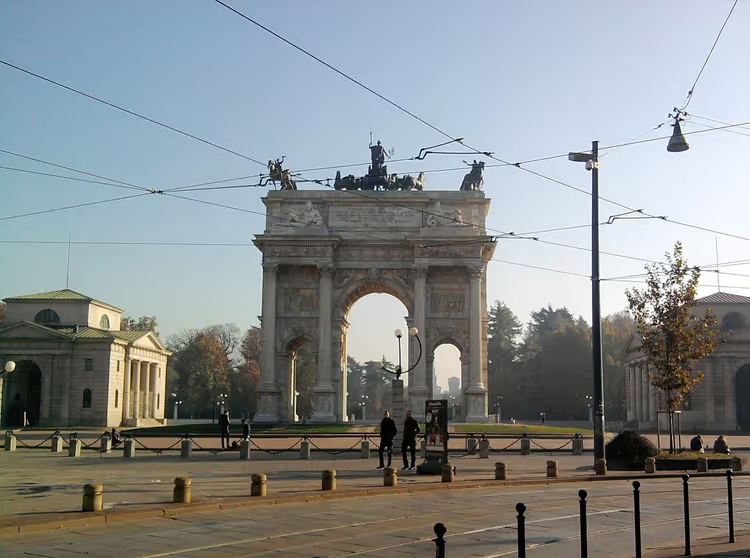
The arch was conceived as a monument to Napoleon's victories, but it opened as a symbol of the end of the Napoleonic wars. On top stand equestrian statues of the goddess of victory; on the pediment, allegories of the rivers of Lombardy. Inside you'll read panels about Napoleon's fall and Austrian rule.
Today it's also the entrance to Parco Sempione. The site is free and open around the clock, so it's convenient to stop by on the way to Sforza Castle. Look at the arch from the boulevard: that way you see both its scale and the perspective of the park behind it. In the evening the lighting comes on, and the white stone looks different.
5. Leonardo da Vinci museum of science and technology
 © Paolo Soave · CC BYPhoto: Paolo Soave, CC BY (https://creativecommons.org/licenses/by/4.0), Wikimedia Commons
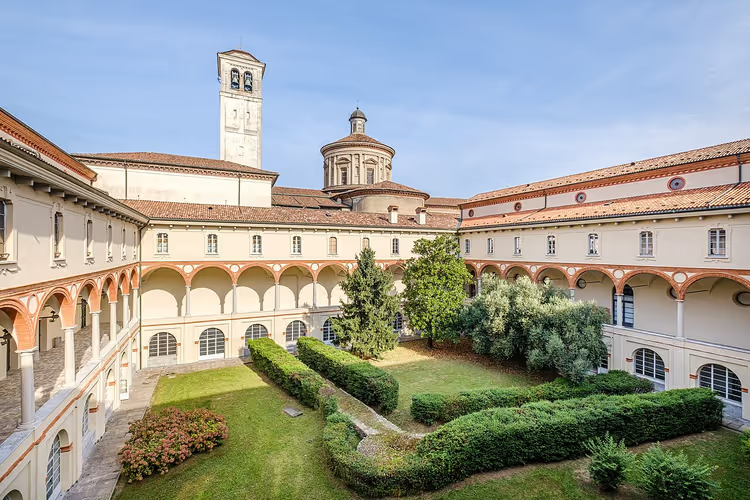
The museum occupies a former monastery and holds the largest collection of Leonardo's technical inventions. The exhibits aren't just for looking at. Some of the mechanisms are working models, and you can operate them yourself, repeating the master's experiments.
The collection includes thousands of items, from transport and engineering to clocks and musical instruments. An entire floor is dedicated to Leonardo's drawings and mechanisms built from them after his death. There's also a section for children.
The sections are conveniently organized by field: transport, engineering, materials, art, and energy. You move from room to room within one theme and never lose the thread of the collection.
The collection spans tens of thousands of square meters, so plan at least half a day for your visit. If you're going with children, start with the "science for kids" section, then take them to the working models. That way you won't be exhausted halfway through the route.
Who it's for: families and anyone interested in technology. Not for: those expecting old paintings. Check tickets and opening hours on the museum's official website (as of 09/2026). If you'd like to add a city tour, see options on Tiqets.
6. Fountain at Sforza Castle
 © Fred Romero · CC BYPhoto: Fred Romero, CC BY (https://creativecommons.org/licenses/by/2.0), Wikimedia Commons
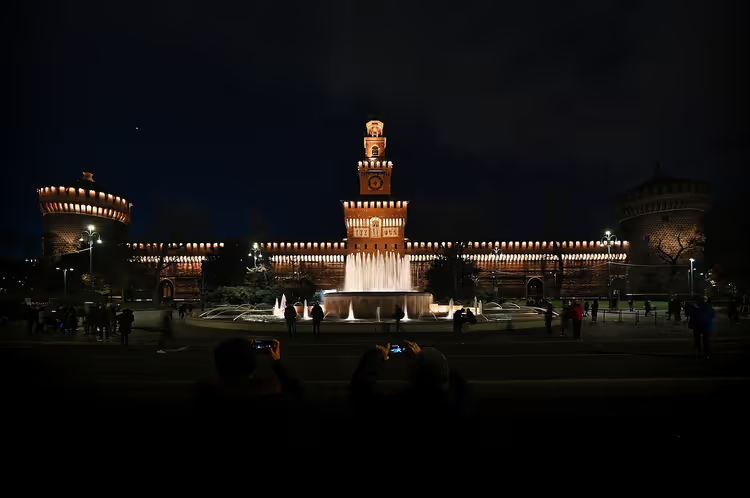
The fountain in front of Sforza Castle has a popular nickname, "Wedding Cake": its shape resembles a multi-tiered dessert. The tradition is simple: toss a coin and make a wish. Newlyweds come here more than anyone else, so the area around the water is almost always crowded during the day.
The fountain has been restored several times, with the final restoration completed in the early 2000s. Take it in together with the castle: this spot offers the best view of the brick towers and the moat. In the evening, the lighting comes on, and the water glows along with the fortress.
7. Vertical Forest
 © Daniel Case · CC BY-SAPhoto: Daniel Case, CC BY-SA (https://creativecommons.org/licenses/by-sa/3.0), Wikimedia Commons
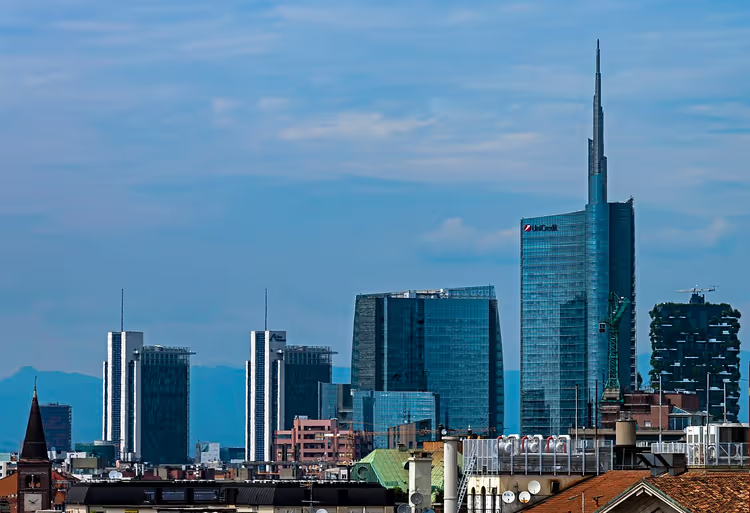
Bosco Verticale is two residential buildings with nearly a thousand trees planted on their balconies. The project was conceived as an ecosystem, not as decoration: the plants were selected for their flowering times, growth patterns, and seasonality.
The buildings are different heights, and the green tiers change color from spring to autumn. You can't go inside, these are private apartments, but from outside and from the nearby bridge you can see everything. Come in the evening, when the light is even and the balconies look especially lush.
Who it's for: photographers and fans of modern architecture. Not for: those who want to get inside. The courtyard is private, so don't go past the fence and don't make noise under the windows.
8. Sforza Castle
 © TeKappa · CC BY-SAPhoto: TeKappa, CC BY-SA (https://creativecommons.org/licenses/by-sa/4.0), Wikimedia Commons
The castle was built in the fifteenth century on the site of a destroyed ducal residence. Its appearance resembles the Moscow Kremlin, and that's no coincidence: the Milanese fortress served as the prototype for the Kremlin towers. Leonardo da Vinci worked on the decoration of its halls.
Today it's a whole museum complex. It houses Michelangelo's unfinished sculpture "Rondanini Pietà," antique musical instruments, and household items of the nobility. One ticket gives access to several museums, including collections of ancient Egypt and the prehistoric period.
Museum admission costs €5 (as of 09/2026, castle ticket page). They're open Tuesday through Sunday, 10:00 to 17:30, closed on Mondays. You can enter the courtyards and the park for free any day. Sforza Castle museum tickets on Tiqets.
9. Teatro alla Scala
 © Jakub Hałun · CC BY-SAPhoto: Jakub Hałun, CC BY-SA (https://creativecommons.org/licenses/by-sa/4.0), Wikimedia Commons
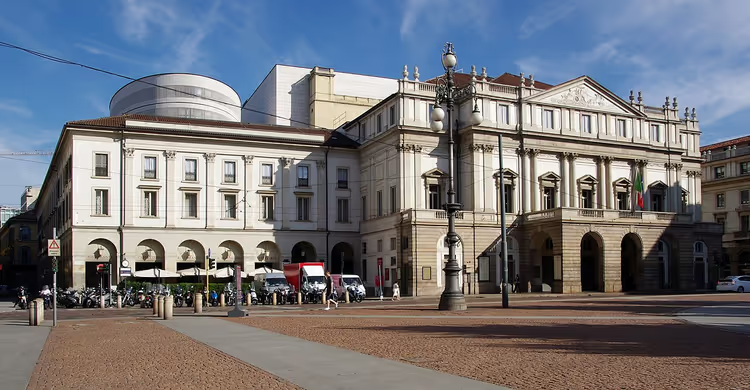
La Scala is more than an opera house. It hosts premieres that music lovers around the world follow closely. The building looks modest from the outside, but inside everything rests on the hall's acoustics and on an audience that dresses accordingly.
Performances require a dress code, and tickets sell out well in advance. It's easier to visit the theater's museum: it's open during the day, and you can see the hall from a box. The interior is rich with gold and velvet, and it's worth seeing even if you don't listen to opera.
Who it's for: lovers of music and architecture. Not for: those unwilling to deal with either the dress code or ticket prices. Check the museum's opening hours before your trip, as the schedule changes by season, and look for tours on GetYourGuide.
10. Santa maria presso san satiro
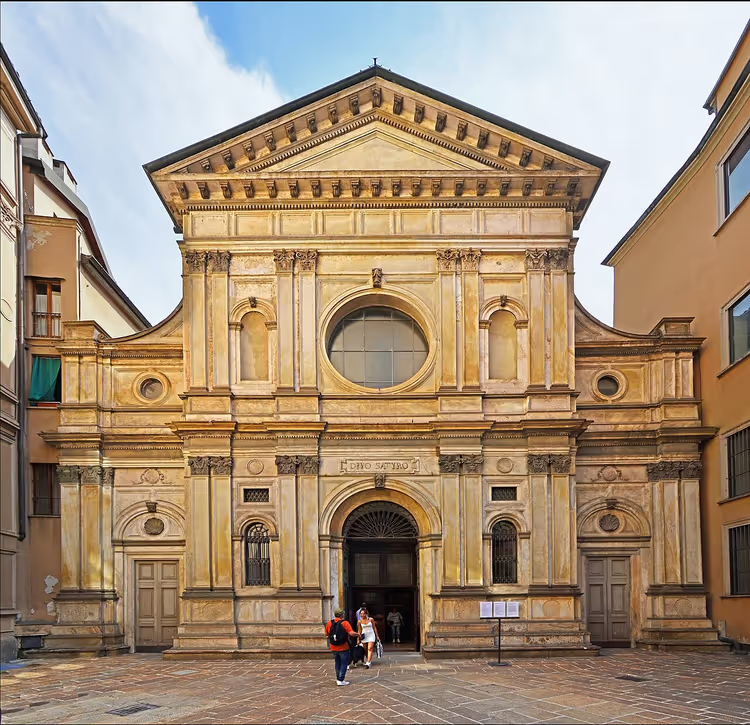 © Ludvig14 · CC BY-SAPhoto: Ludvig14, CC BY-SA (https://creativecommons.org/licenses/by-sa/4.0), Wikimedia Commons
A short walk from the Duomo, on a shopping street, stands a church that's easy to miss. It was rebuilt in the late fifteenth century on the site of a ninth-century temple. The facade looks modest, and you don't expect a Renaissance hall to open up behind the door.
Inside, everything changes thanks to Bramante's design. The architect needed to place an altar icon of the Virgin Mary in a tight niche less than a meter deep. He created an optical illusion: through painting, the niche reads as a space receding many meters into the distance.
Pay attention to details that are easy to miss. The niche is very shallow, but the painting builds arches and draws the eye far back. Compare it with the neighboring chapels: there the space is real, while here an artist created it.
The street outside is noisy and commercial, but behind the door it's quiet, and you'll feel the contrast immediately.
The church is active, and admission is free. Go in the morning, when there's no service and you can calmly study the perspective. After the enormous Duomo, this visual trick surprises you more than you expect.
11. Torre Pirelli
The skyscraper on Piazza Duca d'Aosta was an engineering breakthrough for Italy in the middle of the last century. The building survived a tragedy: in the early 2000s, a private plane crashed into it. The structure held, and a memorial hall was opened at the site where people died.
From the upper floors you can see the entire city and the foothills of the Alps. The Belvedere observation deck opens rarely, only on holiday dates, so don't count on going up on any given day. A copy of the statue of the Virgin Mary stands on the roof: that's how builders got around the city's ban on building higher than the Madonna of the Duomo.
The catch: getting to the observation deck is nearly impossible, so watch for announcements. The building's exterior is always accessible, and it's nicely lit in the evening.
12. Pinacoteca di Brera
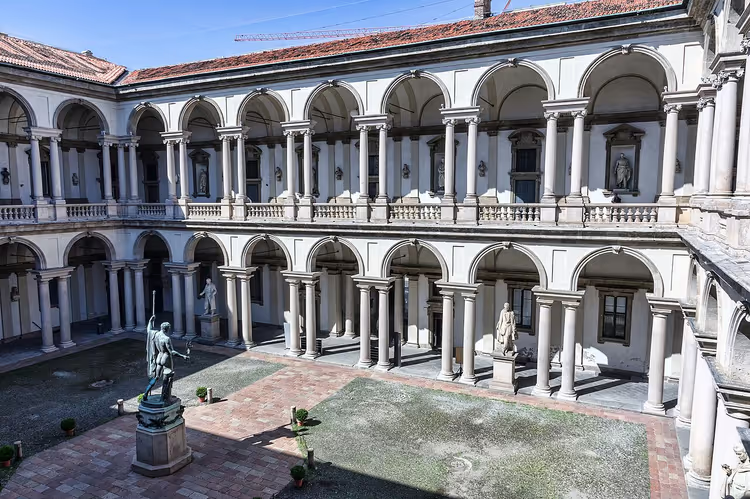 © Jean-Christophe BENOIST · CC BYPhoto: Jean-Christophe BENOIST, CC BY (https://creativecommons.org/licenses/by/3.0), Wikimedia Commons
Brera is the city's main gallery and the heart of a bohemian neighborhood. The collection opened in the early nineteenth century, and today it displays Raphael, Caravaggio, El Greco, and Rembrandt. The building, a former monastery with an inner courtyard, is worth a visit in itself.
Behind a glass partition you can watch restorers at work. Next to the gallery there's a botanical garden, a convenient place to rest between rooms. Check tickets and opening hours on the official website (as of 09/2026).
13. Casa degli atellani and Leonardo's vineyard
The Atellani house stands next to the church of Santa Maria delle Grazie, where Leonardo painted The Last Supper. The artist had a vineyard here: the vine was a gift from Ludovico Sforza, the house's owner at the time. The garden is not open every day; entry is only with a tour and on event days.
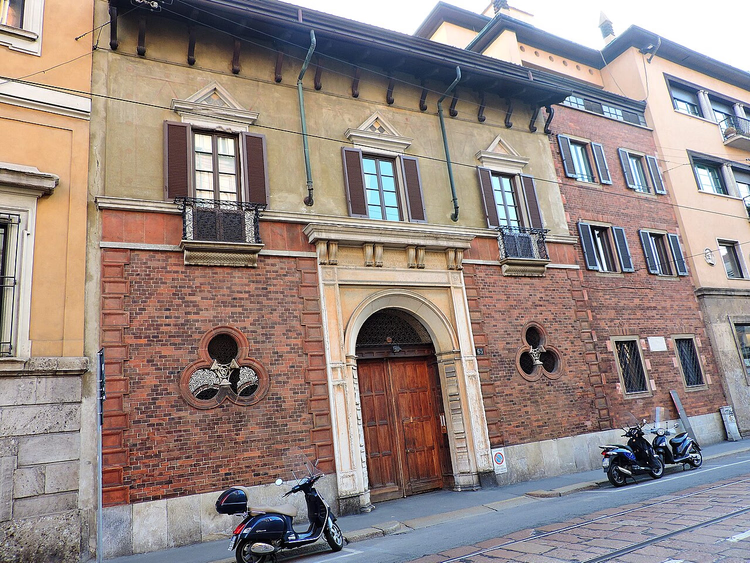 © Dimitris Kamaras from Athens, Greece · CC BYPhoto: Dimitris Kamaras from Athens, Greece, CC BY (https://creativecommons.org/licenses/by/2.0), Wikimedia Commons
Leonardo's vineyard died in the 1940s. Researchers reconstructed the vine's history and in 2015 replanted the same variety. Today you can see it in the back courtyard, next to the Renaissance house.
The catch: the house welcomes visitors only on specific days, so check the schedule in advance.
14. Parco Sempione
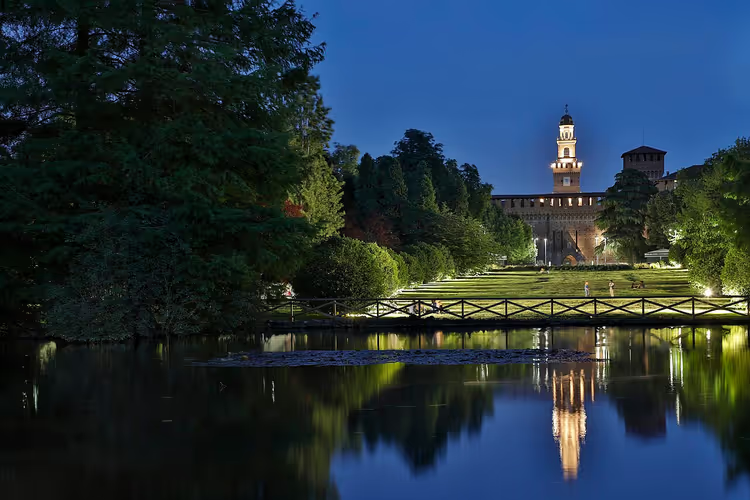 © Maurizio Moro5153 · CC BY-SAPhoto: Maurizio Moro5153, CC BY-SA (https://creativecommons.org/licenses/by-sa/4.0), Wikimedia Commons
The park lies between Sforza Castle and the Arch of Peace. It was laid out in the late nineteenth century on the site of a military training ground. Today it offers shady plane-tree avenues, bridges, and pavilions where both Milanese and tourists relax.
The paths bear the names of writers: Shakespeare, Ibsen, Schiller, Gautier. There's a Pushkin avenue, reached by a bridge of little mermaids. The park is home to Europe's oldest aquarium and Torre Branca, where an elevator takes you up to a panoramic deck.
The park is large, and it's convenient to build your day around it: it connects the Castle, the Arch of Peace, and the museum district. Walking from the Arch of Peace to the Castle, you move through greenery and barely hear the city.
Who it's for: a break between museums and a view from above. Not for: those looking for a lively program. Park entry is free; attractions are paid. The Palazzo dell'Arte in the park hosts world-class exhibitions.
15. Triennale Design Museum
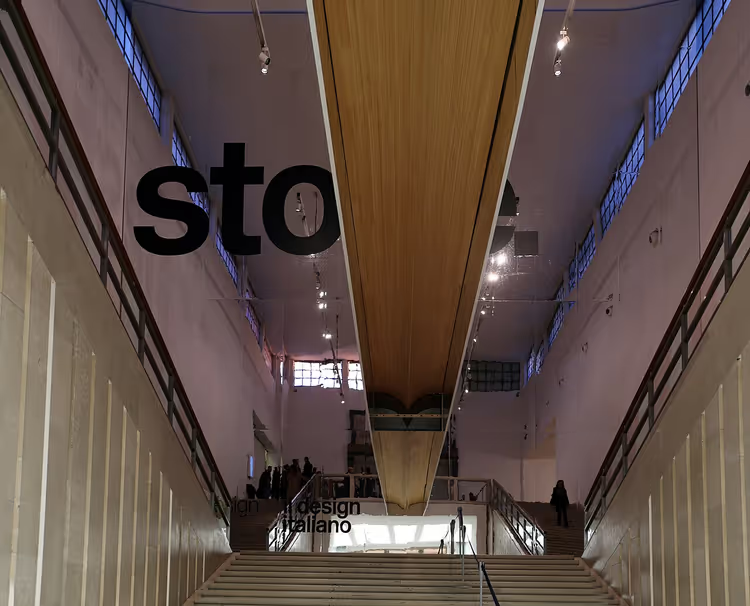 © Sailko · CC BY-SAPhoto: Sailko, CC BY-SA (https://creativecommons.org/licenses/by-sa/4.0), Wikimedia Commons
Italy's first design museum opened in 2007. The name comes from the original exhibitions, which were refreshed every three years. Now the displays change annually, and each time the hall looks different.
Here the idea matters more than the object. Exhibitions engage visitors, and separate activities are organized for children. On the top floor there's a restaurant with panoramic windows: after the museum, it's a convenient place to have lunch and look at the city from above.
16. Cimitero Monumentale
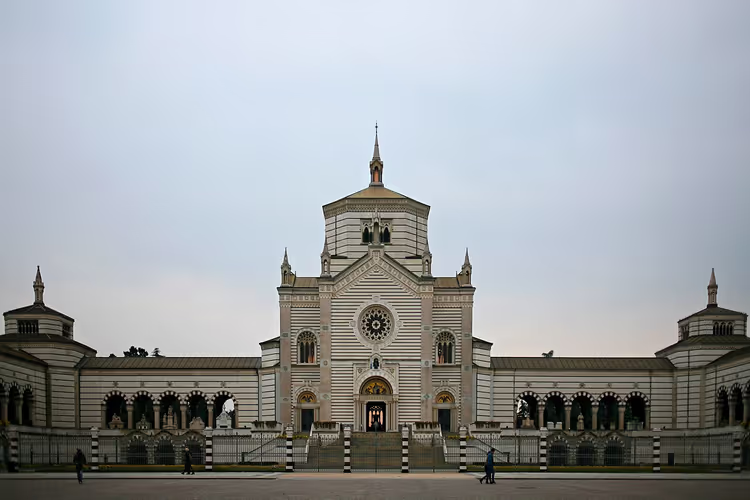 © Paolobon140 · CC BY-SAPhoto: Paolobon140, CC BY-SA (https://creativecommons.org/licenses/by-sa/4.0), Wikimedia Commons
Cimitero Monumentale is not an ordinary cemetery but an open-air sculpture gallery. It opened in the second half of the nineteenth century, and famous cultural figures are buried here. The monuments convey a person's character as well as portraits do.
The Famedio chapel at the entrance holds the sarcophagus of the writer Alessandro Manzoni. Along the walls stand urns of soldiers from World War I. Walk the paths: you'll see how Italians turned gravestones into creative works.
17. Corso Como
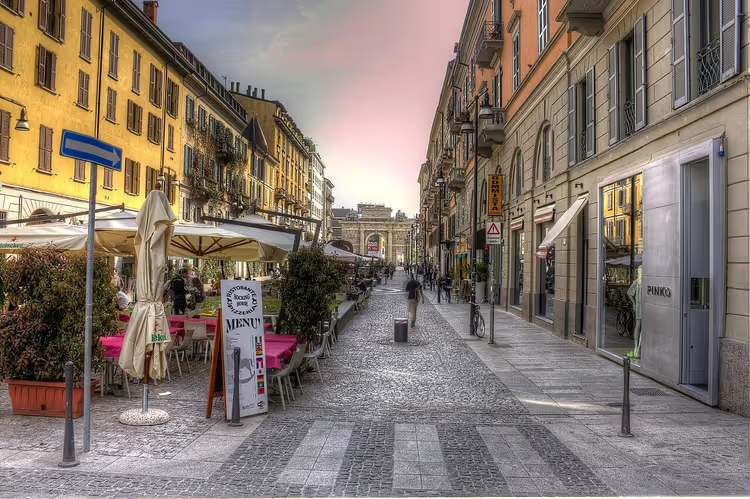 © Luca Canepa · CC BYPhoto: Luca Canepa, CC BY (https://creativecommons.org/licenses/by/3.0), Wikimedia Commons
Corso Como is a pedestrian promenade and the center of nightlife. It has the city's best clubs, cafes, and multi-brand stores, including CORSO COMO. During the day people stroll here, in the evening there's not a free table to be found, and you'll understand why the street is called the liveliest in Milan.
At one end the street is closed off by the city gate Porta Garibaldi, at the other, by a block of new high-rises. Past and future stand side by side here: the old gate and the glass towers of the new Milan. Come at sunset, when the shop windows light up.
18. San Bernardino alle Ossa
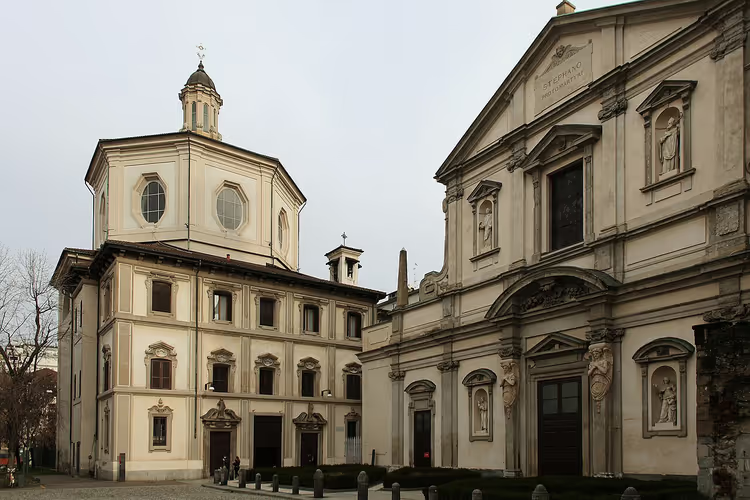 © Paolobon140 · CC BY-SAPhoto: Paolobon140, CC BY-SA (https://creativecommons.org/licenses/by-sa/4.0), Wikimedia Commons
The church was built in the thirteenth century, and its name translates as "St. Bernard on the bones." The ossuary came about out of practical necessity: old burials near the church were cleared to make room as the city grew.
The ossuary is part of the church, not a separate museum. The chapel walls are lined with bones, and it looks almost like a pattern rather than something horrifying. If you feel uncomfortable, take a quick look and step out.
Today it's an octagonal building with marble altars. The ceiling retains frescoes by Ricci with a three-dimensional effect, and the chapel holds a sculpture of the Madonna before the tomb of Christ. The church is active, and entry is open to everyone daily.
19. Torre Velasca
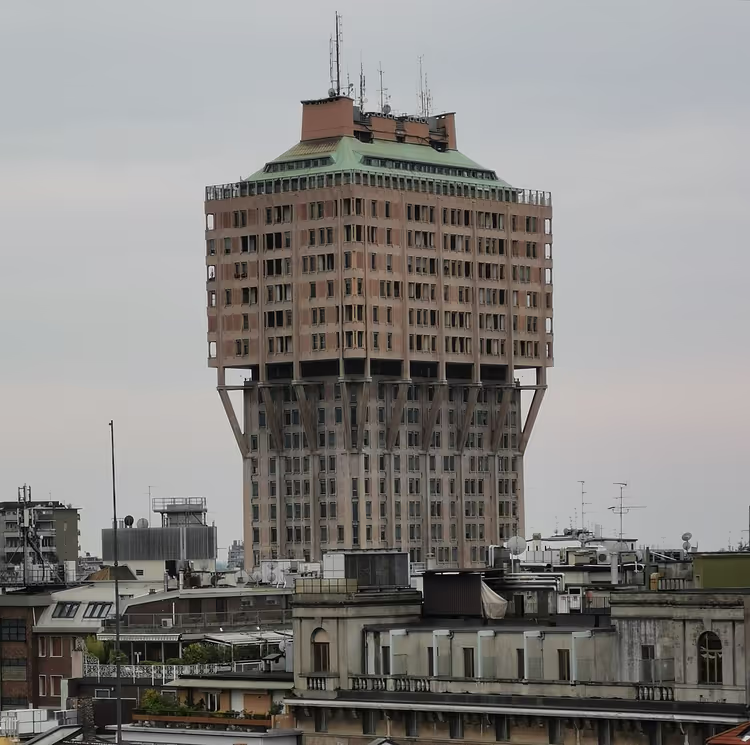 © Saggittarius A · CC BY-SAPhoto: Saggittarius A, CC BY-SA (https://creativecommons.org/licenses/by-sa/4.0), Wikimedia Commons
The city's first skyscraper looks like a medieval tower, although it was built in the middle of the last century. In the evenings the walls are lit up, and the silhouette is clearly visible from the center. It's a symbol of postwar Milan.
Look at the tower from the neighboring streets: that way you can see how it fits into the old city. It stands apart from the classic landmarks. Who it's for: fans of postwar architecture. Not for: those looking for palaces and cathedrals.
The catch: critics have more than once called the tower an ugly symbol of modern Italy. Whether you love it or not, decide for yourself.
Interesting places on the map
Interesting places in Milan
Places on the map
- 1Milan Cathedral (Duomo) The Duomo, built over almost six centuries, more than a hundred marble spires
- 2Museo del Novecento 20th-21st century art, Matisse, Modigliani, Kandinsky, Picasso
- 3Galleria Vittorio Emanuele II Covered street with a glass dome, connecting the Duomo and La Scala
- 4Arch of Peace Monument to Napoleon's victories, entrance to Parco Sempione
- 5National Museum of Science and Technology Leonardo da Vinci The largest collection of Leonardo's technical inventions
- 6"Wedding Cake" Fountain Popular name for the fountain by Sforza Castle, restored in the early 2000s
- 7Vertical Forest Bosco Verticale, two residential towers with almost a thousand trees on the balconies
- 8Castello Sforzesco (Sforza Castle) 15th-century fortress, museum complex, Michelangelo's 'Rondanini Pietà'
- 9La Scala Theatre Famous opera house, museum and view of the hall from a box
- 10Santa Maria presso San Satiro Bramante's optical illusion in a cramped chancel niche
- 11Torre Pirelli Mid-20th-century skyscraper, 'Belvedere' observation deck
- 12Pinacoteca di Brera The city's main gallery, Raphael, Caravaggio, El Greco, Rembrandt
- 13Casa degli Atellani and Leonardo's Vineyard House next to 'The Last Supper', Leonardo's restored vineyard
- 14Parco Sempione Park between Sforza Castle and the Arch of Peace, Europe's oldest aquarium
- 15Triennale Design Museum Italy's first design museum, exhibitions change every year
- 16Cimitero Monumentale Open-air sculpture gallery, the Famedio chapel
- 17Corso Como Pedestrian promenade, clubs, cafés and multi-brand stores
- 18San Bernardino alle Ossa 13th-century church with an ossuary, walls lined with bones
- 19Torre Velasca The city's first skyscraper, a symbol of postwar Milan
All the spots are easy to cover using the map. Half of them stand within one radius: the Duomo, the Galleria, and Museo del Novecento are close together, as are the Castle and Parco Sempione. The rest are scattered around the center, but it's easy to walk between them.
Open Milan on the map and build your own route so you don't have to backtrack through the center.
Tours and tickets in Milan
Guided tours, skip-the-line tickets and activities — most offers can be cancelled free of charge.
See offers on GetYourGuideThe widget loads once you give your consent.
⁉️🤔 Frequently asked questions
How many days do you need to see these places?
Two days is enough for the center. On the first day you'll cover the Duomo, the Galleria, Sforza Castle and Parco Sempione. On the second, leave the Pinacoteca di Brera, Museo del Novecento, Cimitero Monumentale and the Vertical Forest. Add a third day if you want to explore the museums without rushing.
When should you go to the Duomo and how do you avoid the line?
Book terrace tickets online and for the morning: the earliest time slots go first. Right after opening you'll get inside fastest.
Sforza Castle or Pinacoteca di Brera, which one to choose?
If you're short on time, start with the Castle: one ticket gets you into several museums. Brera is for those who came for the paintings of Raphael and Caravaggio.
What can you visit in Milan for free?
Entry to the Galleria Vittorio Emanuele II, the Arco della Pace, Parco Sempione and the courtyards of Sforza Castle costs nothing. Both churches on the list, Santa Maria presso San Satiro and San Bernardino alle Ossa, are also free. Only the museums, the Duomo terraces and the park attractions charge admission.
Where to have dinner and where to go in the evening?
In the evening, head to Corso Como: there are clubs, cafes and restaurants for any budget. For a quiet dinner, it's better to turn into the Brera district next to the gallery. The restaurant on the top floor of the Triennale is good for the view of the city.
In short: what's worth booking
Milan's main sights are concentrated in the center, and in two days you'll cover the key places on the list. Start with the Duomo in the morning, and leave the Sforza Castle museums for the afternoon.
- If you have one day: Duomo, Galleria, Sforza Castle and Parco Sempione.
- If you have two days: add the Pinacoteca di Brera, Museo del Novecento, Cimitero Monumentale and the Vertical Forest.
- If you're traveling with kids: go for the Leonardo da Vinci Museum of Science and Technology.
Book hotels in central Milan on Trip.com and tours on GetYourGuide in advance.

A small editorial team writing guides for independent travel. We travel ourselves, but we haven’t been everywhere, so we check prices, opening hours and how to get there against official sources.