
















How to travel to Georgia cheaper: cash, connectivity and taxis
A trip to Georgia can be inexpensive. The main overpayments happen in the first hours after landing: currency exchange, a SIM card, and a taxi.
We have put together practical tips that eliminate unnecessary expenses. Some are about money, others about daily life and interacting with locals. Below is what actually works in Tbilisi, Batumi, and the resorts, not generic advice.
Ad: this article contains affiliate links, we earn a commission if you book through them, at no extra cost to you.
Bring cash and exchange currency in the city
💡 In short:
- Bring euros or dollars in cash: the exchange rate in the city center is better than at the airport.
- Cards are accepted almost everywhere, but you need a cash reserve for markets and small shops.
The local currency is called the lari, written as GEL on receipts and in apps. Visa and Mastercard are accepted in hotels, cafes, gas stations, and large stores. There are almost no problems with terminals in cities.
The difficulties start with cash withdrawals. Many banks set a daily withdrawal limit, and each transaction carries a fee. If you need a large amount, you will have to withdraw it in several steps.
So it makes more sense to bring some money with you. Euros and dollars can be exchanged at exchange offices and banks, and the rate in the center is usually better than at the airport. Exchange in small amounts and compare rates at several places before handing over all your cash.
Look for ATMs inside bank branches, not in underpasses. That reduces the risk of surcharges and technical failures. Keep your exchange and withdrawal receipts until the end of your trip: they will help if there are disputed charges.
Do not buy a SIM card or exchange money at the airport
A SIM card at the airport counter costs more than in the city. The same goes for currency exchange: you will get less than at an exchange office near the train station. This is the first and most common way to overpay on day one.
Three main mobile operators work in Georgia: Silknet, Magti, and Cellfie. Each has tourist packages with data, and the price depends on the duration and data volume (official Silknet website).
Get your SIM card at an operator store or an information center, not in the arrivals area. Bring your passport: without it, they will not issue a card. Check that a "free" card does not turn out to be paid after activation.
If you need internet right after landing, look into eSIM. You activate it before the trip and get online while still at the airport, without wasting time in line at a counter.
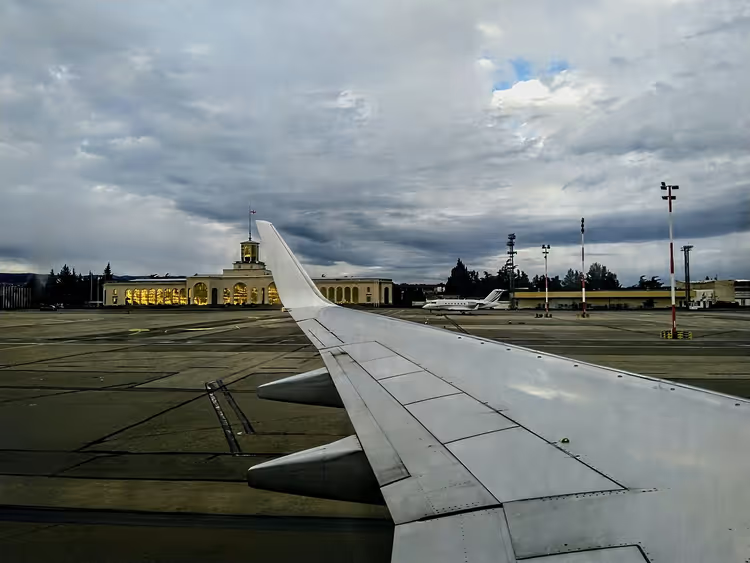 © Jelger Groeneveld · CC BYPhoto: Jelger Groeneveld, CC BY (https://creativecommons.org/licenses/by/2.0), Wikimedia Commons
Use taxi apps
The Bolt app works in Georgian cities. It shows the price before you get in, and that is the main argument against street taxis.
Do not get into a car with a driver who approaches you at the curb. Those rides cost more, and the meter is sometimes started before you even get in. Order through the app and pay the fare, not a price negotiated on the spot.
Sometimes you do not need a taxi at all. The center of Tbilisi and Batumi can have traffic jams, and a short walk turns out to be faster than a ride. Consider the time, not just the price.
If your hotel offers a paid airport transfer, compare its cost with the price in the app. The difference can be significant. Booking a transfer with Kiwitaxi in advance is worth it if you arrive at night.
Cross the road carefully. Pedestrian crossings are not always respected here, and rushing across the street saves nothing.
Do not bring up the topics of Abkhazia and South Ossetia
It is better not to discuss politics and religion with locals. Be especially careful with the topics of Abkhazia, South Ossetia (Tskhinvali), and relations with Russia: the reaction can be sharp, and the person you are talking to may take offense.
Many Georgians honor their history and borders, so a casual remark can ruin an evening. The rule is simple: think first, then speak.
If the topic is unpleasant, steer the conversation to food, wine, or nature. Those topics are always safe and usually interesting to both sides.
Buy groceries at markets, not by the road
Produce by the roadside collects dust and exhaust fumes. Walk past those stands, even if the price seems low. Your health is worth more than the coins you save.
In Tbilisi, people go to the Deserter Bazaar near the railway station for fresh produce. Vendors there sell cheese, spices, nuts, churchkhela, and wine directly from producers. Prices are usually lower than in supermarkets, and bargaining is appropriate.
Do not buy everything at the entrance. Go deeper into the market: it is calmer and cheaper there. Buy churchkhela, spices, and cheese from one vendor if you need a lot: that makes it easier to negotiate a discount.
Bring a hat, sunscreen, and medications
For monasteries and churches, women need a headscarf and covered shoulders. Some churches have signs prohibiting trousers, so keep a long skirt or a pareo ready.
Bring high-SPF sunscreen and sunglasses. In the mountains, the sun is stronger than it seems, and you can get sunburned even in May. In winter, sunglasses are also useful: snow reflects light as much as water does.
Bring an extra supply of any medications you take regularly. Some drugs in Georgia are prescription-only, and the name you are used to may not be available at the pharmacy. Having a prescription with you will avoid unnecessary questions.
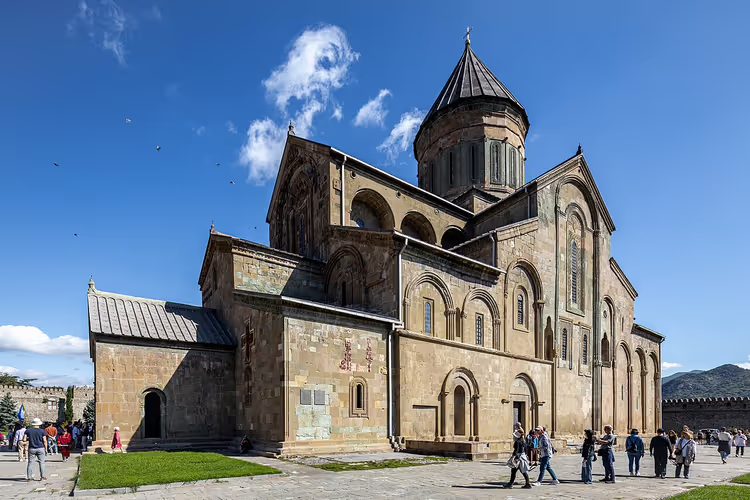 © This Photo was taken by Supanut Arunoprayote . Feel free to use any of my images, but please mention me as the author an · CC BYPhoto: This Photo was taken by Supanut Arunoprayote . Feel free to use any of my images, but please mention me as the author an, CC BY (https://creativecommons.org/licenses/by/4.0), Wikimedia Commons
Ask about discounts and promotions
Asking about a discount does not mean haggling until you are hoarse. It is how you learn about promotions that are not on the price tag. One question saves both time and money.
Private sellers at markets and in small shops readily give in if you buy several items or pay in cash. A polite request works better than pressure.
Prices are fixed in shopping malls, but it is still worth asking about a discount card or a seasonal promotion. Sometimes the card is issued at the register for free.
Know the emergency numbers
Patrol cars in Georgia drive with their lights on. That is how the police mark their presence, and it is normal, not a sign of an incident.
In an emergency, call the single number 112. The call is free from all phones, and the operator takes calls around the clock and forwards them to the appropriate service (according to the 112.gov.ge portal, 09/2026).
If you get lost, you can approach a patrol officer and ask for directions. They do not always understand English, so keep a translator handy.
Download a translator
Georgians cherish their language and speak it everywhere. Signs, menus, and price tags are often only in Georgian, especially in places aimed at locals.
Download an offline translator, ideally one with photo recognition. That way you can read the ingredients on a package and the name of a dish without internet. An online translator may not work in the mountains.
With young people in cities, it is easier to communicate in English. A couple of phrases in Georgian endears you to the person you are talking to and helps when bargaining.
Follow the rules when visiting
In Georgian homes, customs about shoes vary. Watch what the hosts do, or simply ask them.
If you are offered wine or food, refusing can offend the hosts. Try at least a little. If you cannot for health reasons, explain calmly and without lengthy apologies.
Do not rush at the table: toasts here are long, and a meal can stretch late into the night. That is part of the hospitality, and it is better to be prepared for it in advance.
⁉️🤔 Frequently asked questions
How much money should I bring to Georgia?
There is no exact figure: expenses depend on the season, the city, and your habits. Keep a cash reserve for a few days and a card in case you need a terminal. Store money in two places so you do not lose everything at once.
Where can I buy groceries cheaper in Tbilisi?
At the Deserter Bazaar near the railway station. Prices there are usually lower than in supermarkets, and bargaining is appropriate.
Do I need cash in Georgia if I have a card?
Yes, it is worth keeping a cash reserve. For markets and small shops, cash remains the main payment method.
Is it safe to use a taxi without an app?
There is a risk: drivers who approach you at the curb inflate the price. Order through Bolt, where the price is visible before you get in.
What number do I call in an emergency?
Georgia has a single number, 112, for police, ambulance, and fire services (112.gov.ge). Save this number in your phone in advance.
In short: what is worth booking
A trip to Georgia rarely hits your budget hard if you eliminate the main overpayments: exchange, connectivity, and taxis. Exchange cash in the city, get a SIM card at an operator store, and order a car through the app.
- You have a short trip: arrange your airport transfer in advance and do not spend the evening looking for an ATM.
- You have a long vacation with travel between cities: compare hotel options on Trip.com and keep some money in cash.
- You are visiting monasteries: bring a headscarf, a long skirt, and sunscreen.
One last piece of advice: keep your exchange receipts and ATM slips until you get home.

A small editorial team writing guides for independent travel. We travel ourselves, but we haven’t been everywhere, so we check prices, opening hours and how to get there against official sources.