















Trip to Tbilisi: mandatory insurance, transport and local habits
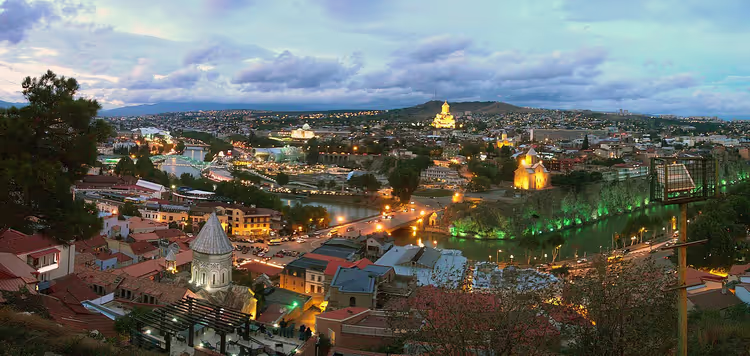
Tbilisi surprises you not because it is complicated, but because it works differently from what you expect. The city sits on hills, and the climb starts right behind the embankment. Distances on the map are deceptive here, and the first two days can easily go on getting your bearings.
We rewrote this guide using official sources and fresh data. Here you will find practical tips for a trip to Tbilisi and around Georgia: what has changed at the border, how to get around between the hills, where to exchange lari, what to expect from the local food, and why you shouldn't agree to a "tour" sold from a car with a banner.
Every figure in the text sits next to its source and the date it was checked. Where there is no exact figure, you get an honest description instead of a nice-sounding invention. That saves you time and money.
Ad: this text contains affiliate links, we earn a commission from them, and the price for you does not change.
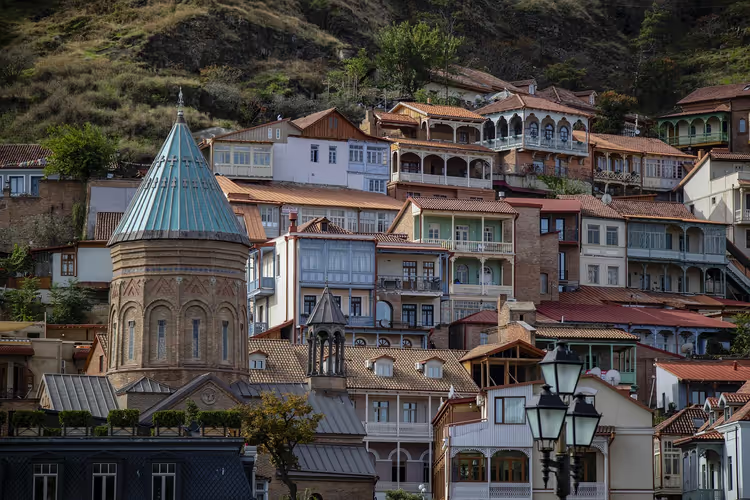
The city blends carved balconies, Soviet facades and glass new-builds. The contrast between districts is greater here than in most European capitals, and it is worth factoring in ahead of time.
Below, the city is broken down into blocks: planning, getting there, food, money, everyday habits and safety. Read it straight through or open the section you need before your trip.
What's new in Tbilisi and Georgia in 2026
💡 In short:
- Since the start of 2026, medical insurance for entering Georgia has been mandatory: buy a policy before you fly, because it is not sold at the airport.
- Protests in Tbilisi have been going on since late 2024, but they remain local and take place in the evening: the square in front of parliament, not the whole city.
- Allow at least three to four full days for Tbilisi, otherwise you will only see the center and wear yourself out on the climbs.
- Entry requirements and transport fares: 09/2026, checked on ge.usembassy.gov and ttc.com.ge.
 © David1010 · CC BY-SAPhoto: David1010, CC BY-SA (https://creativecommons.org/licenses/by-sa/4.0), Wikimedia Commons
When planning a trip this year, keep two changes in mind. The first concerns documents at the border, the second has to do with the evening situation in the center. Neither is a reason to cancel your trip.
Medical insurance is mandatory from January 1, 2026
Since the start of 2026, all tourists entering Georgia must hold a medical and accident insurance policy. This is a requirement of the Law on Tourism, and it applies regardless of visa regime (as of 09/2026, US Embassy in Georgia).
The policy must be valid for the entire trip and cover at least 30 000 GEL (as of 09/2026, Embassy of Greece in Tbilisi). You can show the document on paper or electronically, and the text must be in Georgian or English.
You cannot buy a policy on arrival at Tbilisi airport. Arrange insurance in advance, at the same time as your tickets and accommodation, otherwise you may be turned back at the border. For trips without fixed dates, a subscription that is easy to extend on the go is more convenient.
If you are traveling around the country for more than two weeks, check that the cover includes treatment, hospitalization and medical evacuation. These are the points checked most often on entry.
Protests in Tbilisi are continuing
In late November 2024, the ruling party announced that talks on joining the European Union would be suspended until 2028 (as of 09/2026, DW). Since then, peaceful rallies have become part of city life.
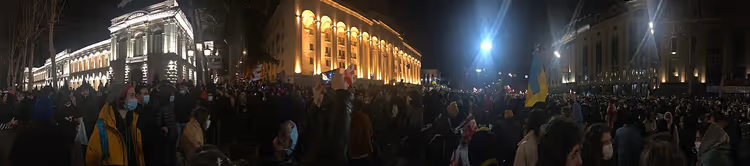 © Kober · CC BY-SAPhoto: Kober, CC BY-SA (https://creativecommons.org/licenses/by-sa/4.0), Wikimedia Commons
The protests are local and predictable. On most evenings people gather on Rustaveli Avenue in front of the parliament building. The rest of the city carries on as usual during that time: cafes are open and transport runs on schedule.
If you are staying near the square, go around it along parallel streets or move dinner to another district. The rallies barely affect tourists, and during the day only the posters remind you of them.
In late 2024 and early 2025 the news was loud, and there were many questions about safety. Since then the city has stayed calm for visitors, and locals are getting on with ordinary life too.
Rules for rallies have become stricter
Over two years the rules for holding rallies have tightened, and dispersals have become more frequent, sometimes with brief detentions (as of 09/2026, OSAC report). For a tourist, this means you shouldn't walk into the crowd in the evening for the sake of photos.
Watch the square in front of parliament from a distance and don't get in the protesters' way. If you find yourself inside a cordon, calmly walk away along a parallel street: the police only close off the adjacent blocks.
Most visitors don't come across a rally at all during their whole trip.
Tips for planning a trip to Tbilisi
Choose the season to suit your plans
Summer brings long days and intense heat, which makes walking the hills tiring fast. Winter is quieter and better suited to a slow trip with museums and coffee shops. Spring and fall offer the best balance: mild weather and plenty of energy for walking.
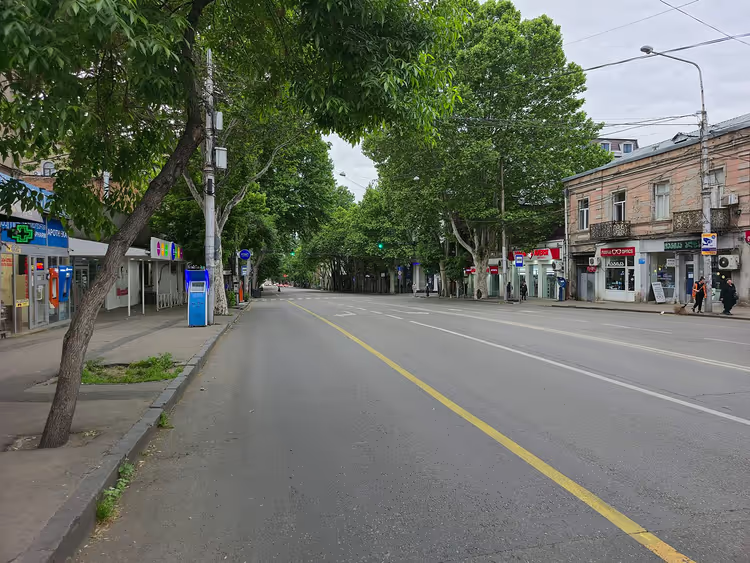 © David1010 · CC BY-SAPhoto: David1010, CC BY-SA (https://creativecommons.org/licenses/by-sa/4.0), Wikimedia Commons
If you haven't decided when to go yet, look not only at the temperature but also at the events calendar. The wine season starts in fall, the city blooms in spring, and in winter the main event is the festive lights. In July, plan your outings for the morning and sunset, and spend the middle of the day in the shade and indoors.
Check the public holidays
Holidays change the rhythm of the city: banks, government offices, museums and some small shops close. Popular cafes and sights, on the other hand, are packed on those days.
Independence Day in late May, the fall festival Tbilisoba, Orthodox Easter and the January Alilo procession are the best moments to feel the city come alive. Plan around these dates in advance if you want to land on a celebration rather than closed doors.
Trains to Batumi and Kutaisi sell out faster than usual on long weekends. If your trip coincides with a holiday, book tickets in advance, not the day before you leave.
The district you stay in matters more than the hotel
Your choice of district affects the trip more than the number of stars on the hotel. Look at the hills, walking distances, metro access and how noisy the street under your windows is.
On the map two addresses may be a kilometer and a half apart, but on foot you get a climb and stairs. Districts that look close on screen actually call for a taxi.
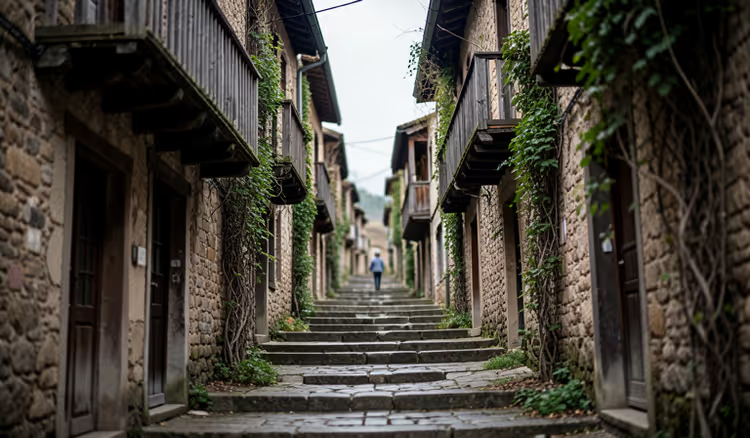 AIIllustrative image: AI-generated
A well-located district makes evenings easier: cafes, bars, restaurants and markets are all within walking distance. Accommodation far from the center saves on the room rate but makes you spend time and money on getting around.
You can find an option with a decent location on Trip.com by filtering hotels by map rather than by name.
Don't plan Tbilisi as a one-day stop
Many people put the city on their schedule as a short stop between regions or after the mountains and long transfers. That is how transit works, not how you get to know a place.
From the outside Tbilisi seems compact, but it doesn't open up when you rush. The streets, courtyards and everyday spots only come together into a picture when you have time to settle in.
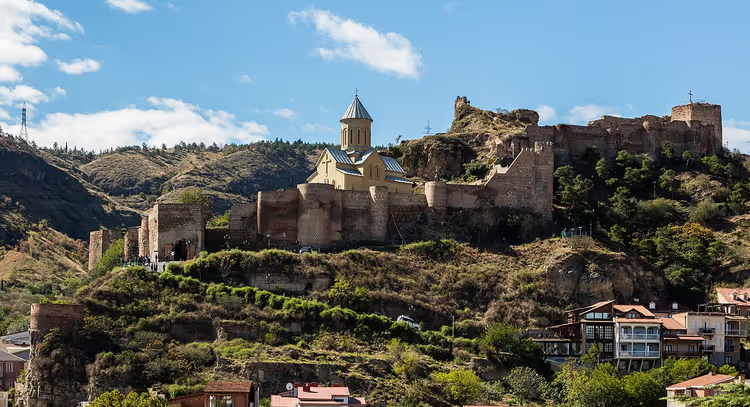 © Diego Delso · CC BY-SAPhoto: Diego Delso, CC BY-SA (https://creativecommons.org/licenses/by-sa/4.0), Wikimedia Commons
Beyond the old town, it is worth strolling along Rustaveli Avenue, sitting in coffee shops and dropping into ordinary markets. That is where you see how the city lives between the sights.
With three to four full days, things open up that don't fit into a one-day route: themed walks, seasonal festivals, craft workshops. Check what is on in the city for your dates and leave one day unplanned.
Budget honestly
Tbilisi is often described as a cheap European capital where everything is affordable by default. Food, local transport and day-to-day expenses really do cost noticeably less than in Western Europe.
That said, prices have risen in recent years, and both locals and visitors feel it. Central accommodation, good cafes and guided tours no longer look cheap compared with earlier visits.
Some museums and attractions charge foreigners a different price. This applies, for example, to the cable car from Rustaveli Avenue up to Mtatsminda: the ride takes a few minutes, and the fare for visitors is higher.
A lot in the city is free: walks through the districts, courtyards, parks and viewpoints. Your money is better spent on experiences, day trips and Georgian cuisine.
Pack for the city and the season
When packing, think not about the average climate but about the swings over a single day. The morning can be cool, the afternoon hot, and the evening chilly again.
Footwear matters more here than you might think. Hills, uneven sidewalks and cobblestones tire your feet quickly, and sneakers made for a flat city won't do.
 AIIllustrative image: AI-generated
In summer bring breathable fabrics, and in spring and fall, layers that are easy to take off and put back on. In winter you don't need Arctic gear, but warm shoes and insulated layers make all the difference when the city is damp and gray.
From our own travel experience: bring a second pair of shoes if you plan to walk a lot. After rain the cobblestones get soaked, and a spare pair of dry sneakers saves the evening.
Get used to Georgian time
Life in Tbilisi moves more slowly than in most European cities. Days start later, dinner stretches out, and schedules are rarely kept to the minute.
Shops and small businesses open closer to ten in the morning, sometimes later. Coffee shops follow the same rhythm, though you can find an early breakfast if you know where to look.
 © Robot8A · CC BY-SAPhoto: Robot8A, CC BY-SA (https://creativecommons.org/licenses/by-sa/4.0), Wikimedia Commons
Locals joke about "Georgian time": if something is promised for the afternoon, it may well happen in the evening. Being late for a meeting is rarely taken as an insult here.
Sunday is an ordinary day here
Unlike parts of Europe, Sunday in Tbilisi doesn't bring the city to a halt. Shops, supermarkets, cafes and restaurants keep their usual hours, and the streets stay lively.
The exceptions are banks and government offices, which are closed. For a tourist, Sunday rarely disrupts plans: it is a day for walking like any other.
Keep the first day light
Many flights land in Tbilisi before dawn, so the first day starts with fatigue. You either head to the hotel to drop your bags or wait for check-in at the nearest coffee shop.
 © Andrew Milligan sumo · CC BYPhoto: Andrew Milligan sumo, CC BY (https://creativecommons.org/licenses/by/2.0), Wikimedia Commons
A change of time zone and an unfamiliar city make simple plans harder. Don't cram the first day with sights: a short walk, coffee nearby and getting to know your district will give you more.
If you arrive in the morning, arrange early check-in with your accommodation ahead of time. That way you get a few hours of sleep, and the day goes more smoothly.
Keep your documents in one folder
Keep your policy, accommodation bookings and tickets in one place: on your phone and as a paper copy.
Screenshots of bookings are sometimes not accepted, so save the full confirmation email. If you are traveling with children, check that the policy is issued for each traveler separately.
Book accommodation and transport in advance
Central hotels, trains and rental cars go first in high season and on holidays. The closer the date, the fewer options remain and the higher the price.
Compare cars for your dates before you fly, and get train tickets to Batumi and Kutaisi before the weekend. That way you won't end up choosing between an expensive hotel on the outskirts and a transfer in the dark.
Budget around your own route, not around an average figure from the internet. The spread of accommodation prices here is wider than it seems: a bed in a good hostel and a room in an upscale hotel differ several times over, and the cost depends on the district and the season.
Dinner for two at a mid-range restaurant costs a few dozen lari, groceries in shops remain affordable, and a short taxi ride around the center comes to a few lari. Museum admissions vary just as much: some sights cost a token amount, while others charge foreigners a separate rate.
Day trips from Tbilisi
Although the city lies in the east of the country, it is a convenient base for heading out in different directions. Below are the destinations most often chosen for a single day.
Where to go for a day
Destination | What to see | One-way journey |
|---|---|---|
Kazbegi (Stepantsminda) | Mount Kazbek and Gergeti Church against the peaks | about three hours (map estimate) |
Mtskheta | Svetitskhoveli Cathedral and Jvari Monastery | about half an hour (map estimate) |
Gori and Uplistsikhe | a cave town and a fortress | a little over an hour (map estimate) |
Sighnaghi and Telavi | wineries and the fortress wall in Kakheti | about two hours (map estimate) |
Bolnisi | German heritage and archaeological digs | about an hour (map estimate) |
Rainbow Mountains | colored rock formations south of the city | depends on your starting point (map estimate) |
The times in the table are map estimates, without traffic or stops.
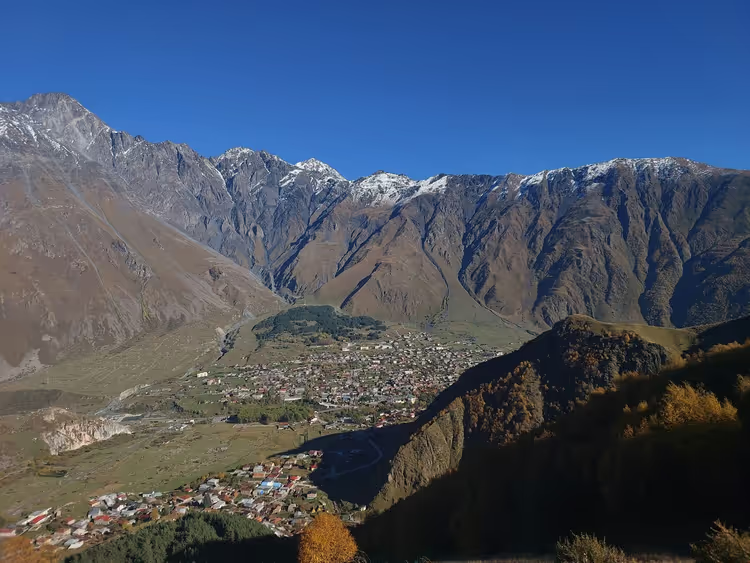
The route to Kazbegi follows the Georgian Military Road, past a gorge and a reservoir. From Mtskheta you are back by evening, and a trip to Kakheti pairs well with a tasting.
Having your own car gives you flexibility: you decide where to stop at a waterfall or a viewpoint. A private driver with several stops works almost the same way, only it costs more.
Car rental or an organized tour
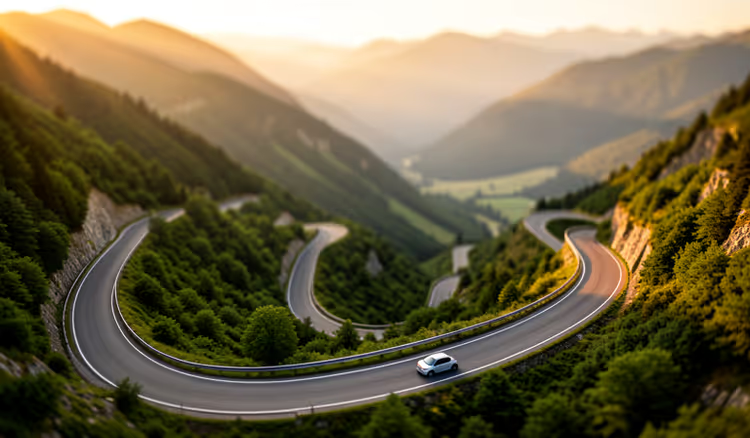
If you want to cover several places in a day, a car is more convenient. Renting gives you freedom over your route but demands attention on mountain roads: the switchbacks are steep, and the surface is uneven in places.
It is worth comparing car rental prices in advance, before you fly, because in high season fewer cars are available for the dates you need.
For one or two travelers an organized program is more often the better deal: the car, driver and guide are included in the price, and the evening drive is left to the professionals.
 AIIllustrative image: AI-generated
Bolnisi lies off the usual routes but offers a different view of the country: settlements of German colonists and excavations that changed our understanding of human migration.
It is easier to choose a day program by reviews and the route description than by a spoken promise.
Tours and tickets in Tbilisi
Guided tours, skip-the-line tickets and activities — most offers can be cancelled free of charge.
See offers on GetYourGuideThe widget loads once you give your consent.
After that, all that is left is to choose: a city tour, a trip to the mountains or a wine day. Check whether admission to the sights is included in the price and how much time you spend on the road.
Hiking routes right by the city
You don't need gear or a long bus ride for a walk. The hills around the city make for a peaceful half-day outing.
The route from Kojori Fortress to Asureti takes you into the quiet, away from the city. A more accessible option runs from Kojori to Mtatsminda Park and the district of the same name. Another easy trail leads from Mtatsminda Park to Turtle Lake (Kus Tba).
The cable car saves your energy on the climb, and from there you walk along the ridge and come back a different way. Bring water: there are few places on the trails where you can buy a drink.
Wine trips to Kakheti
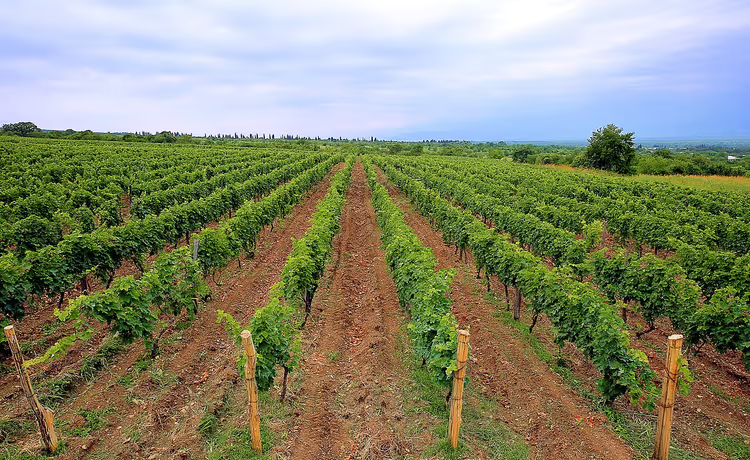
Kakheti is the nearest wine region, and it is easy to reach from Tbilisi for a day. In Sighnaghi and Telavi there are wineries in town and nearby, so a long drive isn't necessary.
 © Chateau Zegaani · CC BY-SAPhoto: Chateau Zegaani, CC BY-SA (https://creativecommons.org/licenses/by-sa/2.0), Wikimedia Commons
If wine is new to you, start with a tasting in the city and then pick an estate outside it. In fall the harvest season is added to the mix, and it is best to book the trip in advance.
What to take on a day trip
Water, a light snack and cash for small expenses come in handy on any trip out of town. In villages and by the roadside your card may not go through, so keep a few small bills in your pocket.
Bring comfortable shoes and a charged power bank: navigation and photos drain the battery fast. Download maps in advance, because the signal drops out in the mountains and you are left without a route.
If you are going for a full day, plan to be back before dark. Unlit mountain roads demand attention, and traffic gets heavier in the evening.
Walking the city without a guide
If you are interested in more than architecture, look for themed walks: they are led by local authors, and the route rarely matches the usual tourist one. They talk about courtyards, daily life and the changes of recent years.
Schedules for these walks appear on social media and on the organizers' pages. One evening is enough for a first introduction to the city, and after that you will work out for yourself which districts suit you best.
How to get to Tbilisi and how to get around
From the airport to the center
Tbilisi International Airport is about seventeen kilometers from the center, and the journey takes twenty-five to forty minutes by the map.
There are three main options: the bus, a taxi app and a pre-booked transfer. Bus 337 runs to the center at the city fare: the ride costs 1 GEL, the same as the metro (as of 09/2026, Tbilisi Transport Company). At night buses are infrequent, so an early arrival more often ends in a taxi.
The apps work right away, but at rush hour the car may be far off and the price goes up. Drivers at the terminal exit name their own price, while a pre-booked transfer removes the haggling and unexpected surcharges.
Tours and tickets in Tbilisi
Guided tours, skip-the-line tickets and activities — most offers can be cancelled free of charge.
See offers on KiwitaxiThe widget loads once you give your consent.
Check exactly where you will be dropped off: the streets in the old town are narrow, and drivers sometimes cover the last stretch on foot with you.
Walk more, but with caveats
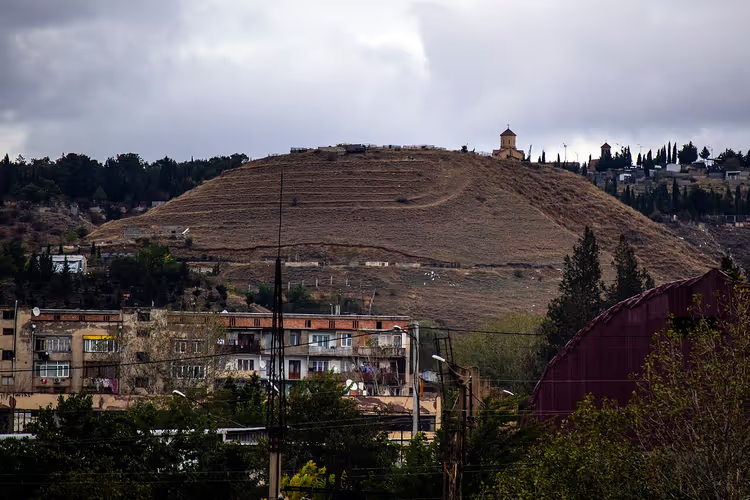
Tbilisi is pleasant for walking, but only once you have understood the logistics. The city is built on hills, and some districts rise steeply.
 © Mostafameraji · CC BY-SAPhoto: Mostafameraji, CC BY-SA (https://creativecommons.org/licenses/by-sa/4.0), Wikimedia Commons
The difference between "near" and "far" is measured in gradient here. Mix walking with transport, and you will save your energy for the evening.
Metro, buses and payment
The metro is the fastest way to cross the city. Fares were checked on 12.09.2026 on the operator's official website.
Transport | Cost | How to pay |
|---|---|---|
Metro | 1 GEL (as of 09/2026, metro fares) | Metromoney card or contactless bank card |
Buses and minibuses | the same city fare (surface transport fares) | Metromoney card or contactless card |
Cable car to Narikala | 2.5 GEL one way (cable car fares) | Metromoney card |
Cable car to Turtle Lake | 1 GEL one way (price list for the cable car to the lake) | Metromoney card |
Buses and minibuses depend on traffic, so walking across the center is often quicker than waiting. For longer stretches, take the metro and change to a bus.
The Metromoney card is sold at metro ticket offices and at Bank of Georgia express branches (as of 09/2026, the carrier's official website). One card pays for the metro, buses and cable cars, and you can top it up at a machine in the station.
If you are in the city for a couple of days, a contactless bank card is enough: it works on the same turnstiles and on buses. Cash is hardly accepted on transport.
Taxis and apps
Taxis in Tbilisi are cheap by European standards, but the price depends on distance and time of day. At night a ride costs noticeably more, and in the rain there are fewer cars in the app.
Order a car in an app rather than from the curb. That way you see the price up front and don't haggle on the spot, and the route stays in your ride history.
Around the center it is often faster to walk than to sit in traffic. A taxi makes more sense for climbs, the trip to the airport and late returns to the hotel.
How to travel to another city
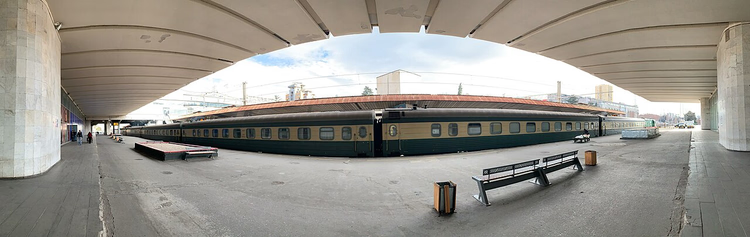
Trains connect Tbilisi with Batumi and Kutaisi, and buses run to almost every major city in the country. Tickets sell out quickly on holidays, so check the train timetable on Trip.com in advance.
The station is in the center and easy to reach on foot from the metro. If you are heading to Batumi in the evening, get your ticket in advance: morning departures fill up first, and the only free seats left are at inconvenient times.
Cross by the underpasses
Crossing rules are strict here. If there is no crosswalk nearby, there is an underpass not far away.
Jaywalking is not treated as a trifle: videos have appeared on social media of tourists being fined for crossing outside the markings. Locals sometimes take the risk, but you are better off walking to the crossing.
Drivers don't always brake for a crosswalk either. Make eye contact with the driver, wait until the car stops, and only then walk.
Food in Tbilisi: what to order and how it works
 © Andrew Milligan sumo · CC BYPhoto: Andrew Milligan sumo, CC BY (https://creativecommons.org/licenses/by/2.0), Wikimedia Commons
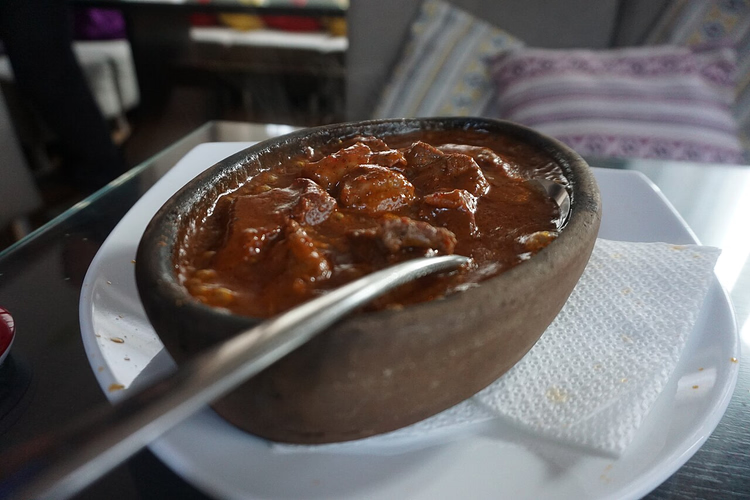
Try more of the cuisine than two dishes
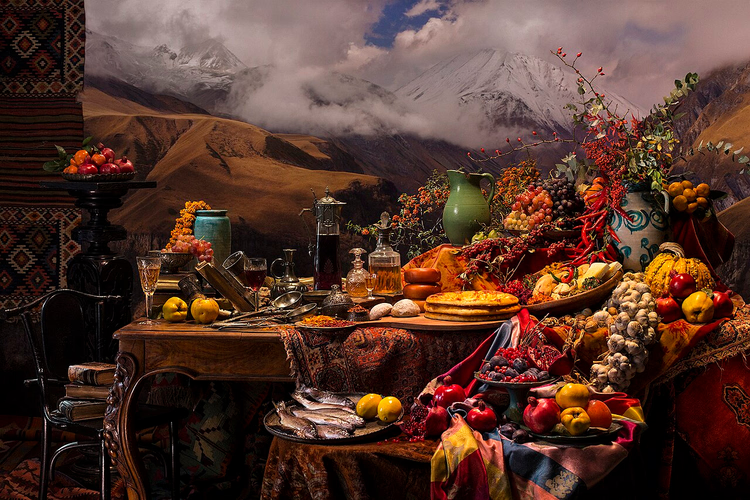
Khinkali and khachapuri are famous for good reason, but if you stop at those, you will miss half of the everyday cuisine. Almost every region of Georgia lays claim to at least one dish of its own.
 © Irma Sharikadze ( ირმა შარიქაძე ) · CC BY-SAPhoto: Irma Sharikadze ( ირმა შარიქაძე ), CC BY-SA (https://creativecommons.org/licenses/by-sa/4.0), Wikimedia Commons
Some dishes depend on the season and only appear on the menu in spring or fall. Ask the waiter what is fresh right now instead of choosing by the photo.
If you don't eat meat, finding an option is easy: eggplant, beans, walnut sauces and herbs form the backbone of the cuisine. The sweets are worth trying too, even if you usually skip dessert.
Markets give an honest picture of how the city eats: cheese, herbs, spices and seasonal fruit. For an evening with a tasting, take a look at tours and tastings on GetYourGuide.
Khinkali are eaten with your hands
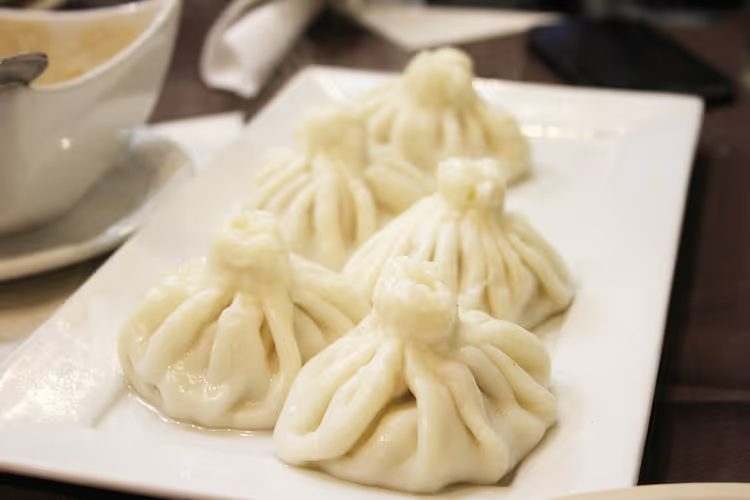
Khinkali are eaten with your hands, without a knife and fork. You hold one by the knot on top, bite into the side, drink the hot broth and only then eat the rest.
 © Sandra C from Canada · CC BY-SAPhoto: Sandra C from Canada, CC BY-SA (https://creativecommons.org/licenses/by-sa/2.0), Wikimedia Commons
The knot is usually left on the plate. That is the etiquette, though many people bend it at home.
What you shouldn't do in front of locals is cut khinkali with a knife and fork. The exception is vegetarian ones: they contain less broth, and it is perfectly fine to cut them.
Waiters are in no hurry
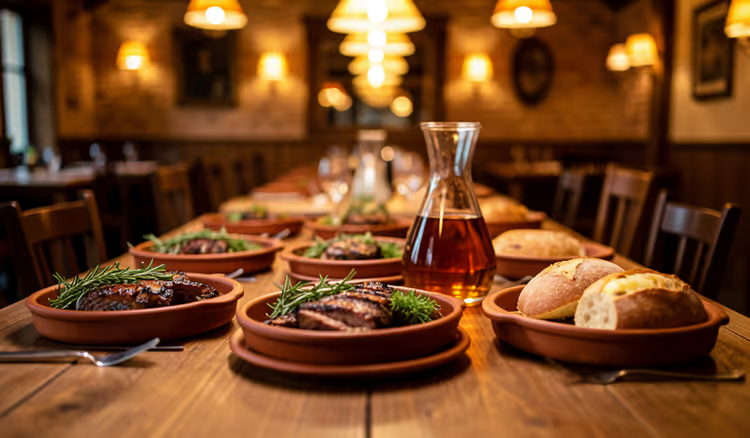
Service in Tbilisi is relaxed. Tables aren't cleared quickly, the waiter rarely comes over unprompted, and dinner moves at its own pace.
 AIIllustrative image: AI-generated
Some visitors read this as bad service. Sometimes it is, but more often the cause is low wages and long shifts in the industry. If you need the check or another dish, call the waiter over yourself, that's normal.
Don't generalize: the city has restaurants with attentive, professional service, and you will easily find them through reviews.
Tipping: about a tenth, but not an obligation
Tips in Georgia are appreciated but not required. If you enjoyed yourself, round up the check or leave about a tenth at a restaurant or coffee shop.
A service charge sometimes appears on the bill. It usually doesn't go directly to the waiter but covers the venue's basic costs.
Under local law, menu prices already include tax, so the final total matches the listed one. In bakeries, hotels and taxis tipping is hardly customary.
What a supra is
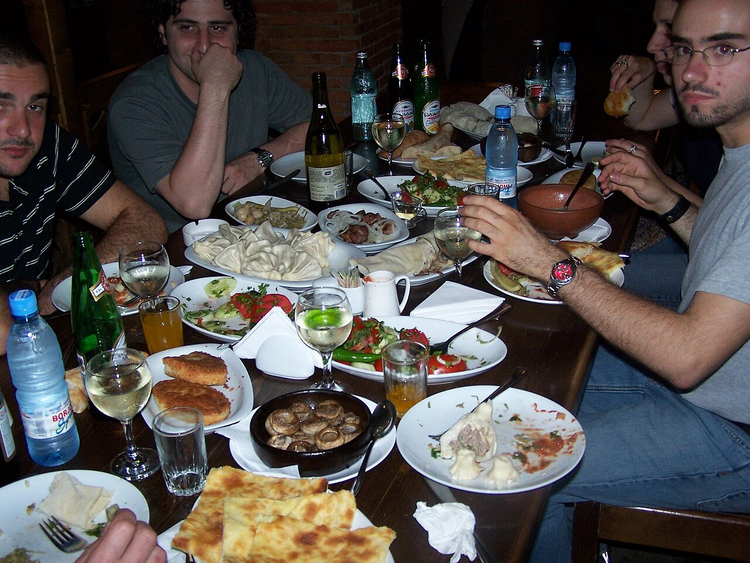
If you are invited to a Georgian family's home, you will find yourself at a supra. It isn't just a big table but a feast with its own order.
 © rugbyxm · CC BYPhoto: rugbyxm, CC BY (https://creativecommons.org/licenses/by/2.0), Wikimedia Commons
The evening is led by the tamada: he gives toasts one after another, and the guests follow his lead. Glasses aren't raised at random, and every toast has its place.
Dishes come out in waves, wine flows freely, and conversations change tone quickly. For a guest a supra can feel overwhelming, but it is this evening that stays with you the longest.
Money and payment in Tbilisi
Cards are widely accepted, but you need cash
Georgia's currency is the Georgian lari (GEL). Cards are accepted almost everywhere: in restaurants, cafes, museums, bars, supermarkets, hotels and on public transport.
Cash still comes in handy for small bakeries, markets, neighborhood shops and taxis. Keep a little money on you in case your card doesn't go through: terminals are sometimes out of order.
Where to exchange currency and withdraw money
There are plenty of exchange offices in the city, but rates and commissions vary. Ask about the commission up front and compare the rate with the office next door.
Two reliable spots are the Rico Credit branches and the exchange office on Pushkin Street near Freedom Square. Banks usually offer a worse rate than dedicated exchange offices.
ATMs are everywhere, and the most visible networks are TBC Bank and Bank of Georgia. Other banks sometimes charge a lower fee or let you withdraw more in one go.
If you pay with a Wise card, withdrawing from Bank of Georgia ATMs is usually cheaper. Most ATMs dispense lari and dollars, some add euros, and the available currencies are shown on the machine itself.
Small cash that comes in handy
You need small change more often than you might think. Some public toilets take cash only, and in small bakeries and at markets cards don't always go through.
Carry a few small bills, but don't carry all your money at once. It is better to leave the bulk of it in the hotel safe and take enough for the day.
Ask for change at exchange offices and shops, not from street money changers. Their rate is usually worse, and the bills may turn out to be dubious.
How to withdraw money more safely
Withdraw money from ATMs inside bank branches or shopping malls rather than on the street. That lowers the risk of your card getting stuck or of someone standing next to you and peering at the screen.
If the ATM offers to charge the amount in your home currency, it is usually cheaper to choose to be charged in lari and let your bank do the conversion itself. Keep the receipt until the end of your trip: it shows how much you withdrew and what fee you paid.
Separately, check your home bank's terms. Many cards charge a percentage for withdrawals abroad, and that is worth knowing before your first transaction.
Culture, language and everyday communication
Directness doesn't mean rudeness
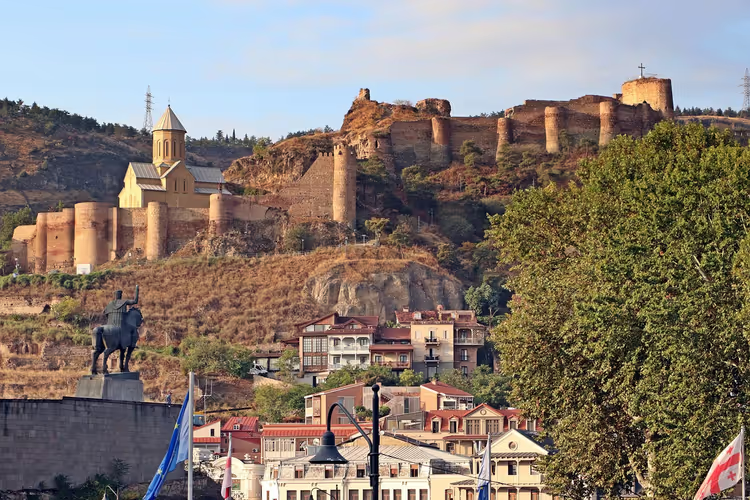
Dealing with locals often feels very direct. People get straight to the point, skip the small talk and don't waste time on pleasantries, especially in shops.
Many people speak English by translating a phrase straight from Georgian. To a foreigner it sounds abrupt, though it is meant neutrally. Instead of a polite "how can I help you" you may hear "what do you want".
Directness shows in personal conversations too. You may be asked about your family, job or plans, and it isn't tactlessness but curiosity: boundaries here are wider than you are used to.
It helps not to read meaning into tone and facial expressions. Warmth comes through in actions: people will treat you to something, walk you to the right street or help with translation.
Directness applies to service as well. If a waiter or shop assistant answers briefly, it doesn't mean they aren't interested in you. People are sparing with words here, but they help just as willingly as in any other city.
Don't be afraid to ask again if a phrase sounded harsh. Say you didn't understand, and the conversation almost always shifts to a friendly tone.
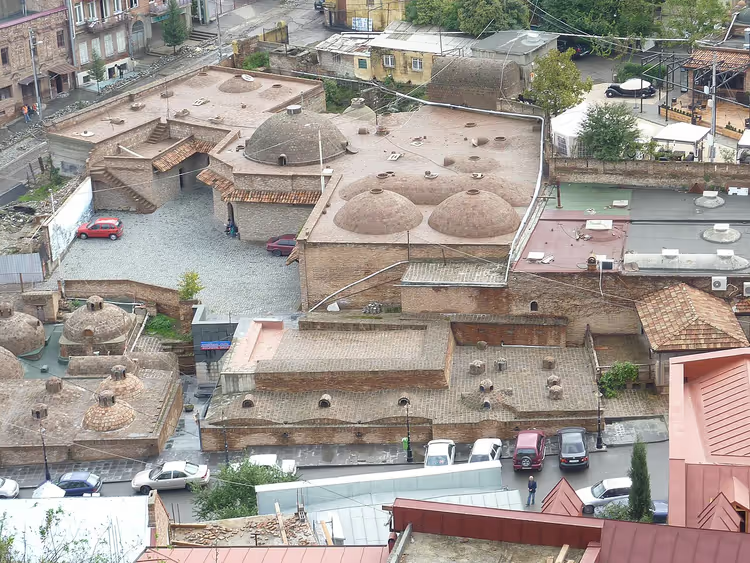
The sulfur baths in Abanotubani
The sulfur baths in the Abanotubani district are not an attraction but a part of city life with a long history. Today they are geared toward visitors, but locals come here too, as they would to a spa.
 © Henri MOREAU · CC BY-SAPhoto: Henri MOREAU, CC BY-SA (https://creativecommons.org/licenses/by-sa/4.0), Wikimedia Commons
The old town has both private and public halls. Most often locals rent a private room and split the cost with friends, while for a solo traveler a room works out more expensive.
Among the reliable options with a private room, people name Chreli Abano, which is often mistaken for a mosque though it is a bathhouse, and Gulo's. Public halls are open too and cost less.
Order a massage with a rough scrubbing mitt: afterward your skin feels smooth, and the fatigue from all the traveling melts away. The best time for the baths is a cool morning or a winter evening.
Book a private room for the evening in advance: on weekends the baths fill up, and the only free slots left are during the day. Bring a towel, flip-flops and water, because you will be thirsty after the steam room.
Abanotubani is calmer during the day: there are fewer visitors, and the heat in the old quarter is easier to bear. In the evening the district looks more festive, but there are hardly any free rooms left.
If you go to a public hall, don't be surprised by the chatter and noise. Locals come here to socialize, and that is as much a part of the atmosphere as the hot water.
English isn't spoken everywhere
English is common among young people and wherever there are lots of tourists: in hotels, restaurants and coffee shops. For many jobs, knowing the language is one of the requirements.
Outside of work, some people are shy about speaking, even if they understand you well. In small shops, at markets and in taxis there may be no English at all.
Gestures, a couple of simple words and a translation app usually do the trick. Helpfulness here doesn't depend on language level.
Learn three words in Georgian
The fastest way to change how people treat you is to learn a few words. Perfect pronunciation isn't needed, the attempt is enough.
Word | Meaning | When it comes in handy |
|---|---|---|
Gamarjoba | hello | entering a shop, ordering in a cafe |
Madloba | thank you | after paying or being helped |
Gaumarjos | cheers | a toast at the table |
Even a single word brings a smile and changes the tone of the conversation. Locals appreciate the effort and often respond more warmly than expected.
Don't rely on a translator alone
A translator app is useful, but it handles Georgian unevenly: the language has its own structure and expressions that don't translate well word for word.
Written Georgian is recognized especially poorly. Keep the app as a prompt, not as your main way of communicating.
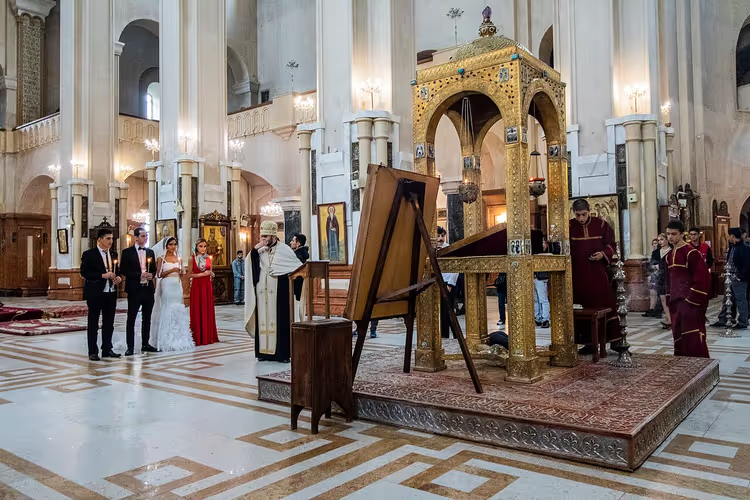
What to wear to churches and monasteries
The churches and monasteries are active places of worship, so the dress code is taken seriously. Shoulders and knees must be covered, and women are often asked to cover their heads in traditional churches.
 © Mostafameraji · CC BY-SAPhoto: Mostafameraji, CC BY-SA (https://creativecommons.org/licenses/by-sa/4.0), Wikimedia Commons
Scarves and skirts are sometimes handed out at the entrance, but you shouldn't count on it. Bring a scarf with you, and you will be able to walk into any church without a problem.
Safety and practical details
The city is safe, but staying alert doesn't hurt
Tbilisi is considered a safe city, and serious crime is rare here. You can walk around both day and night, not only in the center but beyond it too.
Caution still pays off. Keep an eye on your belongings in crowded tourist spots, avoid poorly lit streets late at night and take care with taxis and cash withdrawals.
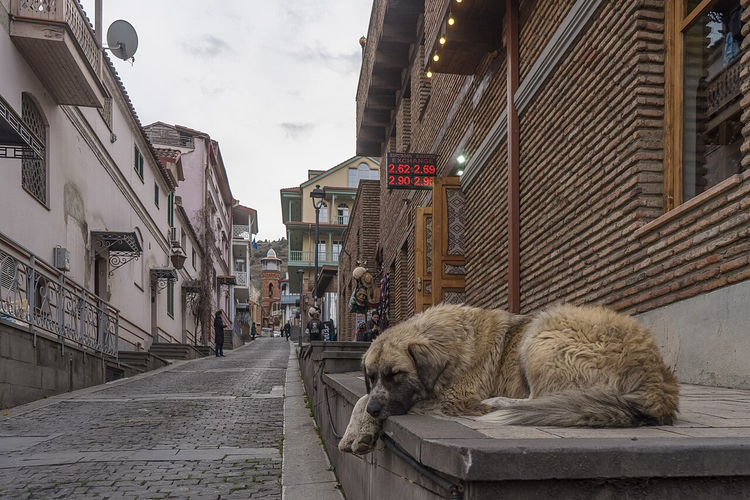
Stray dogs: calm, but not all of them
Stray dogs and cats are part of the cityscape. By local estimates there are tens of thousands of them in Tbilisi alone, and even more across the country.
 © Alexkom000 · CC BYPhoto: Alexkom000, CC BY (https://creativecommons.org/licenses/by/4.0), Wikimedia Commons
Most street dogs are vaccinated, tagged and used to people. They are calm, often sleep during the day and don't bother passersby, and locals feed them.
Outside the capital the picture is different: the animals are less protected and can behave more aggressively. If a dog looks hungry, you can buy pet food even in small shops like SPAR or Nikora.
Watch your step
Because of the large number of dogs, the sidewalks in Tbilisi aren't always clean. Not everyone cleans up after their pets, and you notice it on your very first day of walking.
Watch your step in alleys and courtyards, especially in the evening. On the central streets things are better than in residential neighborhoods.
There is no daylight saving time
If you are traveling in spring or fall, bear in mind that Georgia doesn't switch to daylight saving time. The clocks here run the same all year.
For you this means the time difference with Europe changes twice a year. Check schedules in local time, not by the difference with Europe you are used to.
Don't buy "tours" from cars
In the center you will be offered a trip around the city or the country right beside a car with a banner. These offers sound tempting, but they aren't tours in the usual sense.
Most often the people standing there are drivers, not guides. For your money you get transport and a couple of general remarks, and the price turns out higher than for an organized program.
If you want context and a well-planned route, book in advance and read what is included in the price. A spontaneous trip rarely gives you the history or a clear plan.
Beware of the bar scam
One of the few real risks is tied to nightlife. A stranger, sometimes from a dating app, suggests a drink at a particular bar, and the bill at the end turns out to be several times higher.
Choose the venue yourself and don't go anywhere that has no reviews and no trace on the maps. Proper bars in Tbilisi have a Google Maps page and at least a few reviews.
eSIM or a local SIM card
You need mobile data for maps, taxis and finding places. For a short trip an eSIM is simpler: it connects right away and doesn't require a visit to an operator's office.
It is worth choosing an eSIM for Georgia before you fly, so that your data works as soon as you reach the airport.
On a longer trip a local SIM is better value. Magti offers coverage across the whole country and good data rates, while Silknet will do if you are staying in Tbilisi.
You can drink the tap water
Tap water in Georgia is safe to drink, and locals drink it every day. For the first few days it is still sensible to drink bottled water so your stomach can adjust.
The water in Tbilisi is hard and chlorinated, although it is filtered before it reaches homes. In districts with old pipes there is a metallic taste, and some visitors find their skin and hair get drier.
Opening hours on Google Maps lie
Don't rely on the hours listed on the maps: venues rarely update them. Owners pay more attention to social media than to their map profile.
Check the current hours on Instagram or Facebook, or better still, message the venue. It is often quicker than calling, especially if you don't speak Georgian.
Where to find a toilet
Public toilets in Tbilisi aren't always easy to spot, even if this isn't your first day here. Keep a couple of tried-and-tested spots in the center in mind.
Near Freedom Square, Galleria Mall works well: there are toilets on every floor, entry is paid and you pay by card. By Rustaveli metro there is a free option, McDonald's, where it is customary to buy something afterward.
There is another free toilet behind Kashveti Church at the end of the garden. In the old town a public toilet sits under the station of the cable car to Narikala, on the Rike Park side.
Near Baratashvili Street and Orbeliani Square, Bazari Orbeliani comes to the rescue, where entry is paid and also by card. When searching the maps, look for "WC", but remember that some toilets only take small change in cash.
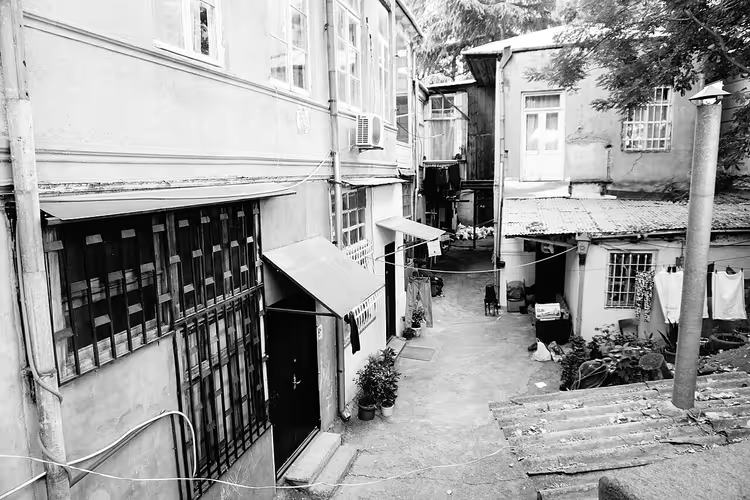
Courtyards and entrance halls: go in quietly
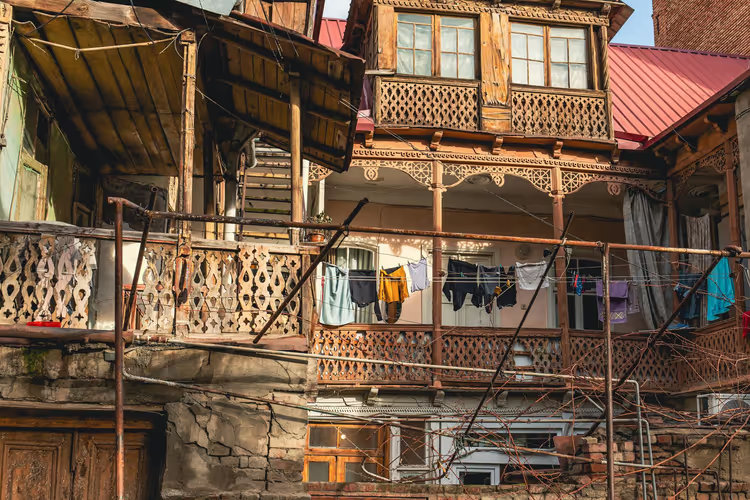
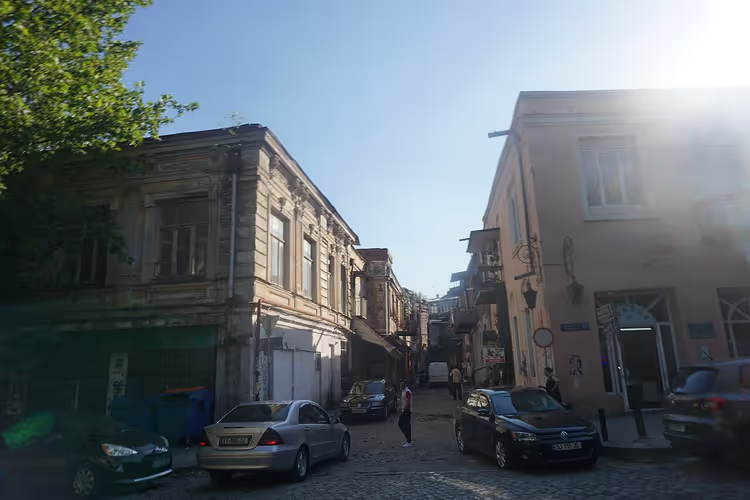
One of Tbilisi's quiet features is its courtyards, which are called Italian here. The carved wooden balconies and staircases are a reminder of the architectural heyday of the late nineteenth century.
 © Andrew Milligan sumo · CC BYPhoto: Andrew Milligan sumo, CC BY (https://creativecommons.org/licenses/by/2.0), Wikimedia Commons
There is no clear rule on whether you can go in. It is simplest to think of these courtyards as homes, not museums: quietly stepping in and looking around is usually fine.
The same logic applies to entrance halls. If the door is open and you can see a beautiful entrance, you can peek in for a minute and move on. Don't linger, speak quietly and remember that people live here.
If you are photographing a courtyard or the people in it, read the situation. Some are happy to chat and others value their privacy, and that is worth respecting.
What to do if you need a doctor
Keep your policy number and your insurer's contact details on your phone, not only in the paper folder.
Pharmacies sell basic medicines for colds and upset stomachs without a prescription. If you need a doctor, ask at reception for the address of the nearest clinic: doctors in the center often speak English.
Keep receipts and medical reports. Some insurers reimburse you after the trip, and without documents the claim won't be approved.
What to do on a rainy day
Overcast weather is no reason to stay in your room. Museums, galleries and markets are open in any weather, and the sulfur baths are especially pleasant on a day like that.
During the day you can wait out the rain in a coffee shop, and in the evening go for dinner with live music. Look for event listings on the venues' social media: they are updated there more often than on websites.
An umbrella comes in handy in Tbilisi in spring, and in fall the rain can last all day. A hooded jacket is more popular here than an umbrella.
How not to get worn out by the climbs
Hills drain your energy faster than distance does. Build your route so the descent is left for the end of the day and the climbs fall in the morning.
Cable cars and the metro save you half an hour of walking. If you need to get to the upper level of the city, ride up and then stroll down through the streets.
Take breaks in cafes. Here that is part of the route, not wasted time: you will rest and see how the district lives.
Keep the first and last days of your trip light. Early flights and transfers eat up more energy than you might think.
How not to get lost in the old town
House numbers in the old town don't run in order, and streets change their name at a bend. Navigate by landmarks: squares, bathhouses, churches and bridges.
 © Vladimer Shioshvili · CC BY-SAPhoto: Vladimer Shioshvili, CC BY-SA (https://creativecommons.org/licenses/by-sa/2.0), Wikimedia Commons
Download an offline map of the district: the signal sometimes drops in the narrow alleys. If you get lost, ask a shopkeeper for directions: they will gladly point the way and often walk you to the corner.
What to bring home
Wine, churchkhela, spices and cheese are sold at markets and in neighborhood shops. The same souvenirs cost more at the airport, so buy them in the city.
Cheese and wine are heavier than they seem, so decide in advance how many kilograms you are prepared to carry. Ask for fragile bottles to be given extra wrapping, and it is worth doing this before you travel on.
⁉️🤔 Frequently asked questions
When is the best time to go to Tbilisi?
Spring and fall offer the best balance: mild weather and plenty of energy for walking. Before booking, check the calendar of holidays and festivals, as it changes the rhythm of the city.
Do you need insurance for a trip to Georgia in 2026?
Yes. Since the start of 2026, a medical and accident insurance policy has been mandatory for all tourists, including those entering without a visa (as of 09/2026, US Embassy). The policy must be valid for the entire trip, with cover from 30 000 GEL (as of 09/2026, Embassy of Greece in Tbilisi).
How many days do you need for Tbilisi?
Allow at least three to four full days. The city seems compact, but it doesn't open up when you rush: the hills sap your energy, and the districts live at their own rhythm. Leave one day unplanned so you can make it to a market or the sulfur baths in Abanotubani.
Is Tbilisi safe right now given the protests?
Yes, the city remains calm for tourists. The rallies are local: on most evenings people gather in front of the parliament building on Rustaveli Avenue, while the rest of the city carries on as usual.
Can you drink the tap water in Tbilisi?
Yes, the tap water is safe to drink, and locals drink it all the time. The water is hard and chlorinated, so some visitors go for bottled water in the first few days. Old pipes in certain districts add a metallic taste, but that is not a safety issue.
Is tipping mandatory, and how much?
Tips in Georgia are appreciated but not required. At a restaurant or coffee shop it is enough to round up the check or leave about a tenth. The bill sometimes includes a service charge, which goes to the venue, not the waiter. In bakeries, hotels and taxis tipping is hardly customary.
How do you get from the airport to the center?
The cheapest option is bus 337: the ride costs 1 GEL, the same as on city transport (as of 09/2026, TTC). Next come taxi apps and a pre-booked transfer: the latter spares you the haggling at the terminal exit. At night buses are infrequent, and a taxi remains the main option.
In brief: what to book
Build your trip from four blocks: accommodation, insurance, a transfer and tours. A place in a good district saves time and energy, a policy is mandatory for entry, and the airport transfer is best booked before you fly.
If your trip is short, pick a hotel within walking distance of the metro and don't chase districts that only look close. If you plan trips around the country, decide in advance which suits you better: a rental car or an organized program.
Central accommodation is easier to find on Trip.com, and it is worth comparing the terms of an entry policy in advance.
Tours and excursions are easier to choose before the trip on GetYourGuide. That way you see in advance what is included in the price and how long the program lasts.

A small editorial team writing guides for independent travel. We travel ourselves, but we haven’t been everywhere, so we check prices, opening hours and how to get there against official sources.