
















22 Museums in Rome: tickets, hours and what to see in 2026
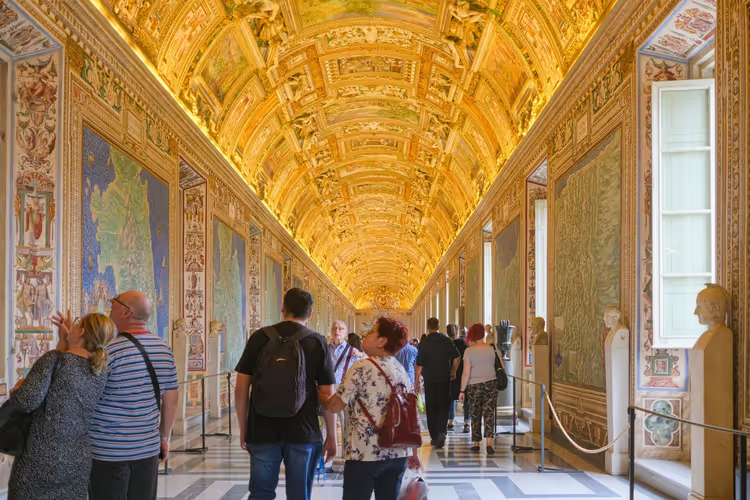
Rome holds more museums than you can get through in a single trip. The problem isn't choosing, it's the lines and tickets. In high season, entry to the Vatican and the Colosseum is sold in time slots, and without a reservation you'll stand in line longer than the visit itself takes.
This guide will help you decide what to see first. We've put together twenty-two museums and ancient sites in Rome and rechecked their prices: a Vatican Museums ticket costs 20 €, and Colosseum entry is about 18 € (as of 09/2026, Vatican Museums, Parco del Colosseo). Some galleries are covered by a single ticket, others are closed on Mondays, and still others require a separate ticket.
Ad: this article contains affiliate links, we earn a commission if you book through them, at no extra cost to you.
Our picks: what to see first
💡 In short:
- Start with the Vatican Museums and the Sistine Chapel: one ticket covers dozens of galleries and the chapel itself.
- The Colosseum, Roman Forum, and Palatine Hill are covered by one ticket with a time slot, book ahead.
- The Borghese Gallery only admits visitors in two-hour slots, and tickets sell out days in advance.
- Prices and opening hours: 09/2026, checked on the official Vatican Museums website.
If you're short on time, look at the table below. It lists four museums that cover the essential introduction to the city.
Museum | Ticket | Booking | Official website |
|---|---|---|---|
Vatican Museums and Sistine Chapel | 20 €, online 25 € (as of 09/2026, official website) | required in high season | |
Colosseum, Roman Forum and Palatine Hill | about 18 € (as of 09/2026, Parco del Colosseo website) | time slot required | |
Capitoline Museums | from 15 € (as of 09/2026, official website) | recommended | |
Galleria Borghese | 16 € plus 2 € booking fee (as of 09/2026, official website) | 2-hour time slot, online only |
1. Vatican Museums complex
 © Darafsh · CC BY-SAPhoto: Darafsh, CC BY-SA (https://creativecommons.org/licenses/by-sa/3.0), Wikimedia Commons
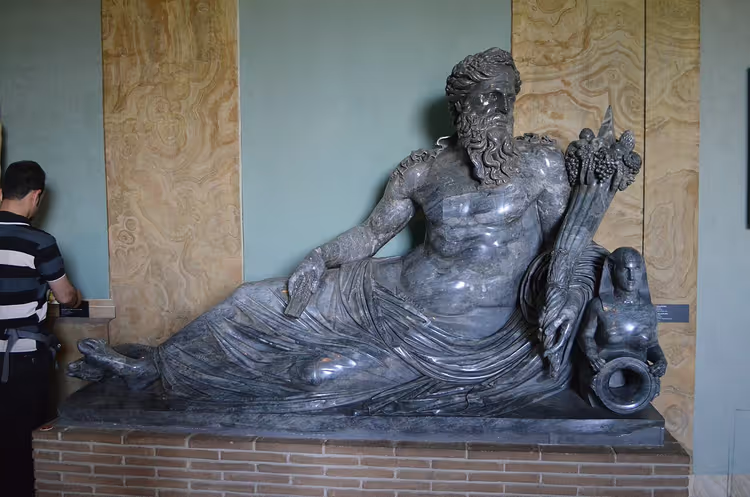
The first stop on any trip to Rome is the Vatican Museums. Dozens of collections are gathered under one roof: ancient sculpture, Roman mosaics, tapestries, old maps, and painting up to the nineteenth century. Some rooms have a religious feel, but most of the collection is secular.
A single ticket here covers the entire complex, including the Sistine Chapel and the Raphael Rooms. Full admission costs €20, and online booking with skip-the-line entry adds another €5 (as of 09/2026, official website). On the last Sunday of the month admission is free, but the line is long on those days.
It's easy to get lost inside: signs lead you through long galleries, and individual rooms close for restoration on a rotating basis. Pick two or three areas in advance, otherwise you'll reach the chapel with no energy left.
Who it's for: first-time visitors to Rome who want to see the highlights with one ticket.
Not for: if you need one specific room, the complex will wear you out within a couple of hours.
The catch: in summer the entry line is longer than the visit itself, so arrive at opening time.
Tickets: Vatican Museums tickets with a time slot.
2. Sistine Chapel
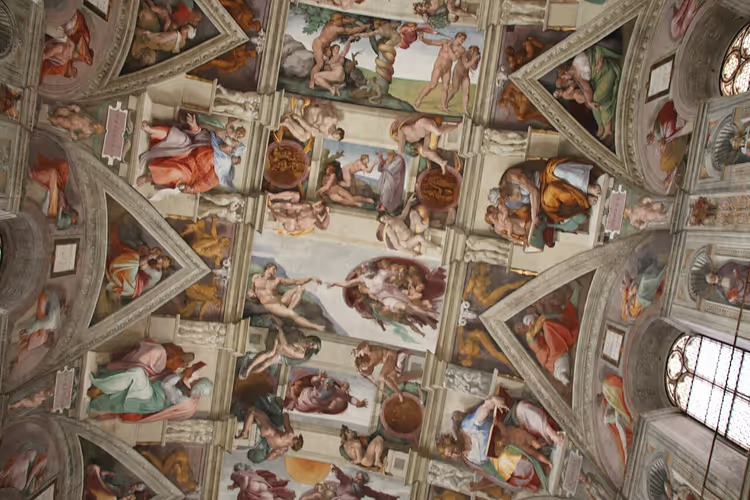
The Sistine Chapel deserves its own stop. Conclaves are held here to elect a new pope, and the color of the smoke above the roof still tells the world the result of the vote.
Michelangelo painted the ceiling, and his "The Last Judgment" covers the altar wall. The chapel is included in the general Vatican Museums ticket, so you don't need to buy separate entry.
Plan for at least half an hour and don't rush: you're allowed to walk through the room twice in a loop. Visitors are asked to speak in whispers, and flash photography and tripods are prohibited.
The side walls were painted by Botticelli and Pinturicchio, not only Michelangelo. From the outside the chapel looks modest compared with Rome's palaces, and a plain door from the courtyard leads inside.
Who it's for: anyone who wants to see the key Renaissance room with their own eyes.
The catch: the chapel is always crowded, and you can barely move near the wall with "The Last Judgment."
Combo ticket: Vatican Museums and St. Peter's Basilica skip-the-line.
3. Vatican Library
 © Bert Kaufmann from Roermond, Netherlands · CC BY-SAPhoto: Bert Kaufmann from Roermond, Netherlands, CC BY-SA (https://creativecommons.org/licenses/by-sa/2.0), Wikimedia Commons
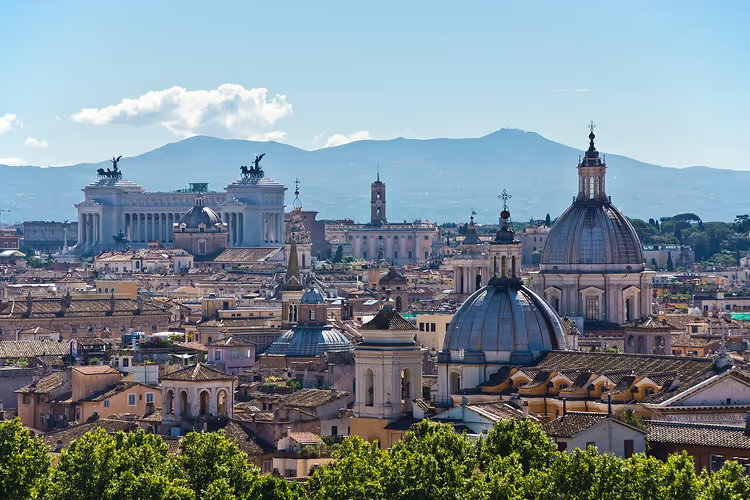
The Apostolic Library is considered the most closed treasure trove of knowledge in the Vatican. Most rooms are not open to the public, and some spaces are known only from specialists' descriptions.
The collection's value lies in manuscripts and engravings that span nearly every era. For the average visitor, something else matters more: the complex includes the Aldobrandini Wedding room with rare frescoes, and it's accessible with the general ticket.
You don't need a separate ticket for the library; it's part of the museum complex. If you're specifically interested in the manuscript collections, researchers can view them by prior application.
For scholars the collection remains a working tool, used for research on a wide range of topics. The texts are written in a dense style and in ancient languages, so the average visitor will connect more with the engravings than the manuscripts.
Who it's for: those who come to the Vatican for rare engravings and manuscripts.
The catch: most library rooms are closed, so you can't see it in its entirety.
4. Raphael Rooms
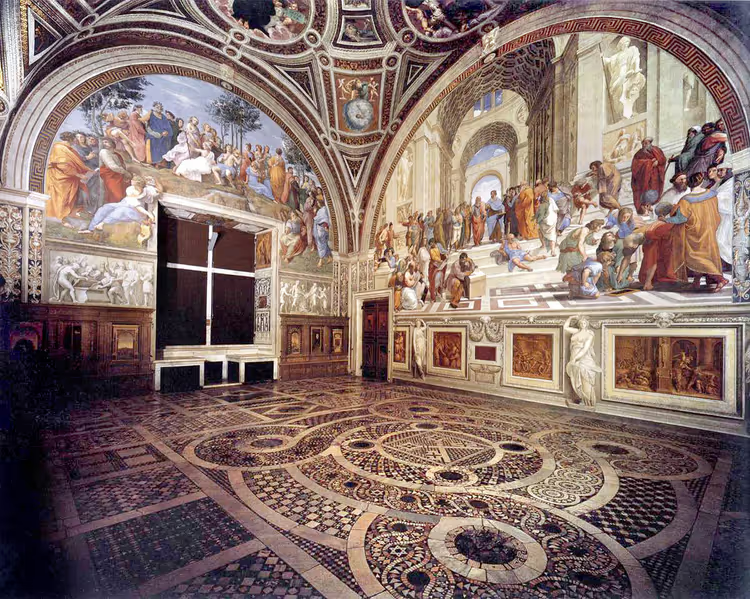
The Raphael Rooms are four chambers painted by Raphael Sanzio together with his students. They make room for philosophy, poetry, and law, not only religious subjects.
The walls originally featured other frescoes. The pope decided to replace them with the work of a young master who was about twenty-five years old at the time.
There's no separate fee for the rooms; they're included in the Vatican ticket price. It's best to see them right after the chapel, while you're not yet tired from the halls.
The scenes are tucked onto rough masonry, almost at the ceiling and above the supports. Portraits of contemporaries and figures from the past are woven into the paintings, which makes you want to study the rooms at length.
Who it's for: lovers of High Renaissance painting who are ready to unpack the scenes.
The catch: groups pile up in the small rooms, so move against their flow.
5. Villa Borghese
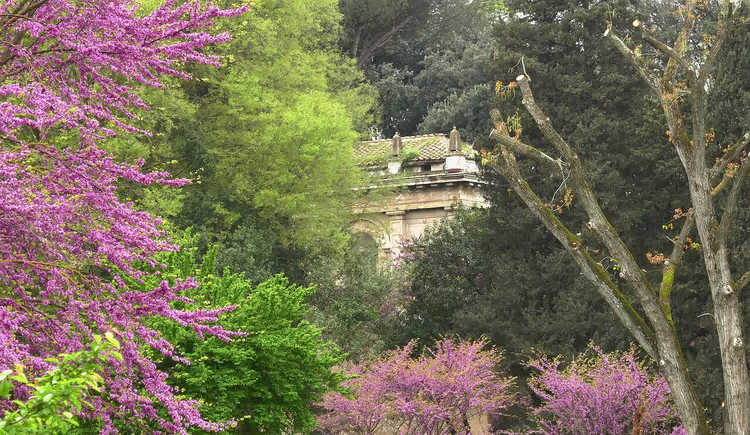
Villa Borghese is not a single museum but an entire park district on the Pincian Hill. The main draw here is the Borghese Gallery with sculptures by Bernini and paintings by Titian, Rubens, and Caravaggio.
Gallery entry is sold in two-hour time slots, and a ticket costs €16 plus a €2 booking fee (as of 09/2026, official website). You can't get in without a slot, and weekend tickets sell out several days in advance.
The surrounding park is free and open every day. A temple stands at the center of a small lake, and water clocks operate on the Pincian Hill. Sculptures and pavilions are hidden among the trees. Nearby, a modern art gallery displays works by Monet, Degas, and Cézanne.
The most scenic route to the park starts at the Spanish Steps and follows the Trinità dei Monti boulevard. The lake is a pleasant place to end the day once the heat subsides.
Who it's for: those who want to combine a museum with a stroll through a large park.
The catch: you can't get into the gallery without booking online, and the park is crowded on weekends.
6. Capitoline Museums
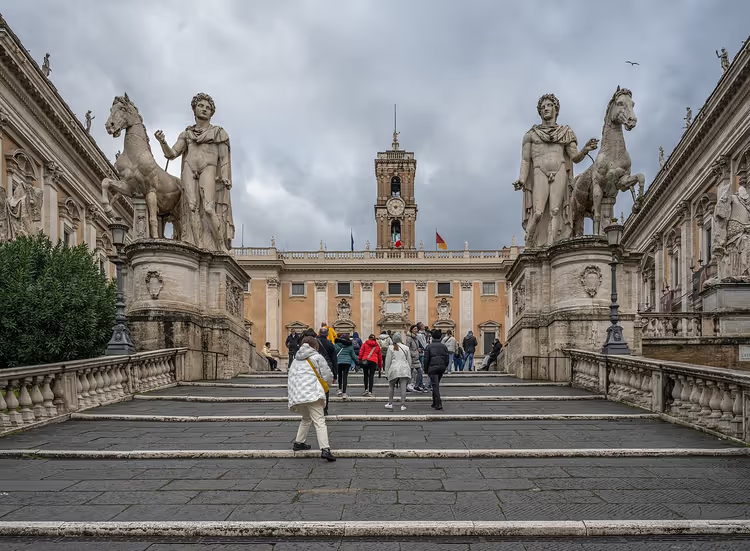
The Capitoline Museums are considered the city's oldest public collection. A pope laid the foundation back in the fifteenth century, when he gave Rome bronze statues from the Lateran.
Today the collection occupies two palaces on the Capitoline Hill. The Palazzo Nuovo houses "Cupid and Psyche" and the hall of philosophers, while the Palazzo dei Conservatori holds a fragment of the Colossus of Constantine. Between the buildings there is a view of the Roman Forum.
Tickets start at 15 € (as of 09/2026, official website). Recently, Rome residents get in free with an ID, while tourists are better off booking a time slot in advance.
Who it's for: those who want to see ancient sculpture without the Vatican lines.
Not for: if you're tired of museums, the square and the Forum panorama are free and require no ticket.
The catch: the cloakroom and ticket offices are slow, and when it rains a line builds up at the entrance.
Tickets: Capitoline Museums tickets.
7. The Ara Pacis Museum
 © BeshevI · CC BY-SAPhoto: BeshevI, CC BY-SA (https://creativecommons.org/licenses/by-sa/4.0), Wikimedia Commons
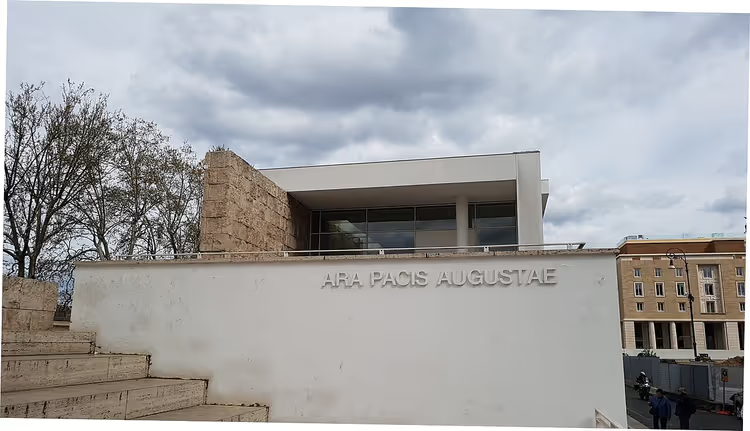
A museum built around a single exhibit is a rarity. It houses the Ara Pacis, an altar commissioned by the Senate to honor Emperor Augustus's return from Spain and dedicated to the goddess of peace.
The ancient altar stood on the banks of the Tiber and was heavily damaged during the barbarian invasions, then washed away by a flood of the river. Individual fragments began to be found in the sixteenth century, but the monument was reassembled much later.
An audio guide is available for an additional fee; check ticket prices on the official website. Getting there is easy: metro line A, Flaminio station, then a couple of minutes on foot.
Who it's for: anyone interested in the Augustan era and Roman sculpture.
The catch: it's a single hall, so there's nothing to do inside for more than an hour.
8. The National Roman Museum
 © Lalupa · CC BY-SAPhoto: Lalupa, CC BY-SA (http://creativecommons.org/licenses/by-sa/3.0/), Wikimedia Commons
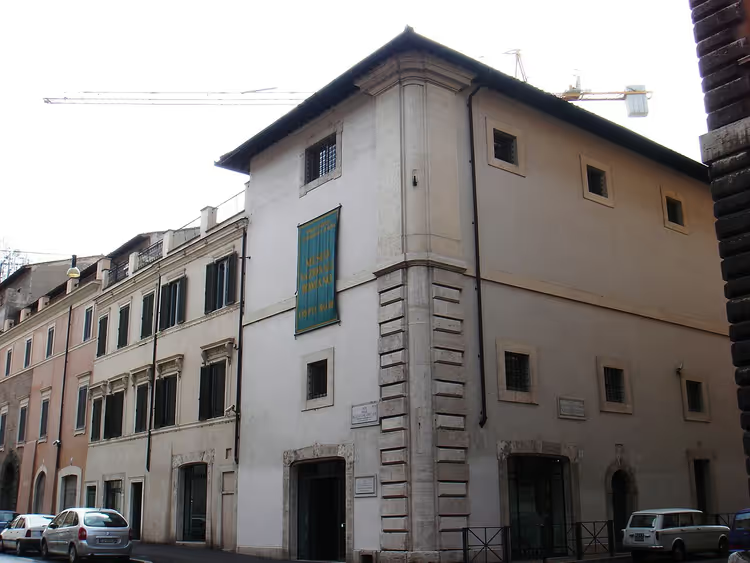
The National Roman Museum is actually four locations, not one building. Part of the collection is kept in storage, so you won't see the entire collection in a single visit.
Palazzo Massimo displays jewelry and ancient art, while Palazzo Altemps houses one of the best sculpture collections in Italy. The Crypta Balbi tells the story of the city through frescoes and coins, and the Baths of Diocletian showcase epigraphy and archaeological finds.
One ticket covers all locations; they are usually closed on Mondays (as of 09/2026, National Roman Museum website). Getting between the buildings is convenient by metro and on foot.
Who it's for: those willing to spend an entire day on antiquity.
The catch: the locations are scattered across the city, and each one requires its own time allowance.
9. The Temple of Vesta in Rome
 © Tournasol7 · CC BY-SAPhoto: Tournasol7, CC BY-SA (https://creativecommons.org/licenses/by-sa/4.0), Wikimedia Commons
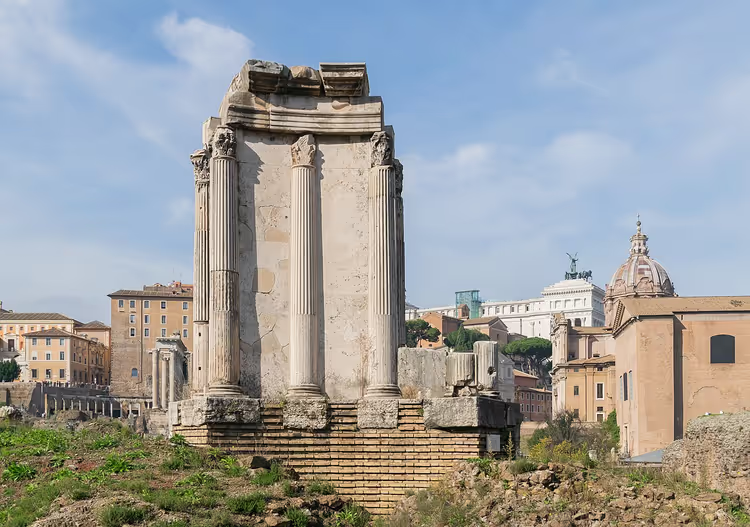
The main artery of ancient Rome was the Forum, and finds still surface here to this day. The Temple of Vesta was discovered during excavations led by Rodolfo Lanciani, and it quickly became one of the Forum's well-known landmarks.
What remains of the temple are the podium, part of the colonnade, and several statues. Nearby you can see the remains of the House of the Vestals, who tended the sacred flame as the embodiment of the goddess, whose images were forbidden inside the temple.
There is no separate ticket for the temple; it's included in the Roman Forum and Colosseum ticket. It's best to view the ruins in the morning, when the columns provide shade.
Who it's for: those visiting the Forum who want to understand what they're seeing.
The catch: little of the temple has survived, so much of it has to be imagined from descriptions.
10. The Colosseum
 © Jon Gudorf Photography · CC BY-SAPhoto: Jon Gudorf Photography, CC BY-SA (https://creativecommons.org/licenses/by-sa/2.0), Wikimedia Commons
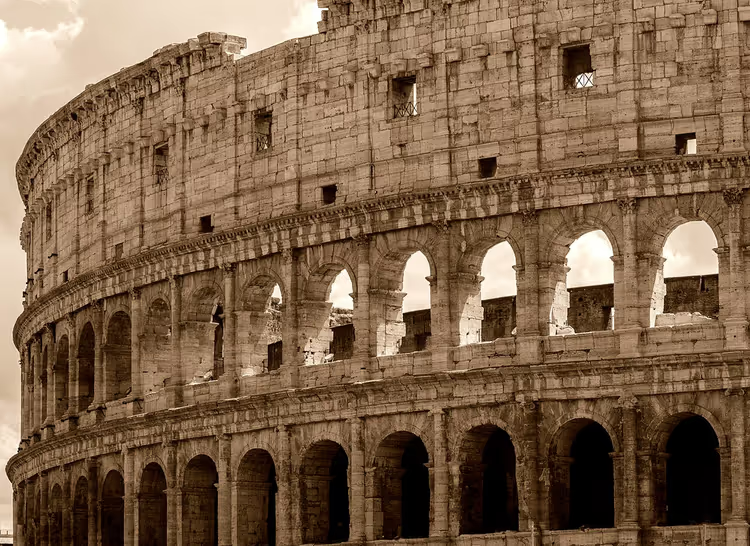
The Colosseum remains the main symbol of Rome, and its arches are recognizable without a caption. Conceived as an entertainment center, the amphitheater was built between three hills on the site of a drained lake.
The amphitheater's official name is linked to three generations of the Flavian dynasty. Construction was begun by Emperor Vespasian, continued by his son Titus, and completed by Titus's brother Domitian, under whom underground chambers were dug beneath the arena.
Tickets cost around 18 € and are valid for 24 hours (as of 09/2026, Parco del Colosseo website). Book a time slot in advance, otherwise in high season you'll be left standing at the wall with a sign.
Who it's for: first-time visitors to Rome; this is where your introduction to antiquity begins.
The catch: during the day there's almost no shade in the arena, so bring water and a hat.
Ticket with time slot: Colosseum ticket with time slot.
The Colosseum arena hosted gladiator fights, animal hunts, and reenactments of naval battles. Historians estimate that over the amphitheater's entire existence, hundreds of thousands of people and around a million animals died here.
Inside, you can see the underground corridors where animals and stage sets were kept. A separate ticket is sold for the arena and underground areas; it costs more than standard entry and requires its own time slot.
The name Colosseum is linked to the word "colossus." Some researchers connect it to the statue of Nero that stood nearby, others to the scale of the amphitheater itself.
- Important: last entry is usually earlier than closing time; check exact hours on the website before your visit.
11. Castel Sant'Angelo
 © Livioandronico2013 · CC BY-SAPhoto: Livioandronico2013, CC BY-SA (https://creativecommons.org/licenses/by-sa/4.0), Wikimedia Commons
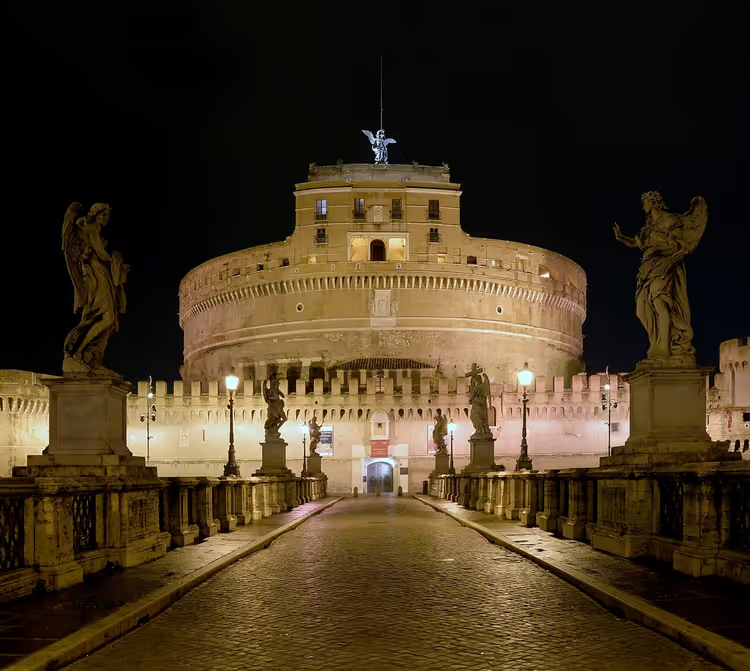
Castel Sant'Angelo has evolved from a mausoleum to a fortress, prison, and museum. It was originally built as a tomb for Emperor Hadrian and his family, and it became a fortress later, when the city recognized the strength of its walls.
The name is tied to the legend of an angel who sheathed his sword above the mausoleum. Later, prisoners were held in the castle's dungeons, including Giordano Bruno and Benvenuto Cellini. Today it's a multi-level building with dozens of rooms, an armory, and a treasury.
Admission is by ticket; check exact prices and hours on the Rome tourist office website. The observation deck at the top offers the best view of the Tiber and St. Peter's Basilica.
Who it's for: those who want to see a medieval fortress and a panoramic view of the city.
The catch: the climb goes up spiral staircases, so it will be tough with small children and a stroller.
Tickets: tickets to Castel Sant'Angelo.
12. Baths of Caracalla
 © Ethan Doyle White · CC BY-SAPhoto: Ethan Doyle White, CC BY-SA (https://creativecommons.org/licenses/by-sa/4.0), Wikimedia Commons
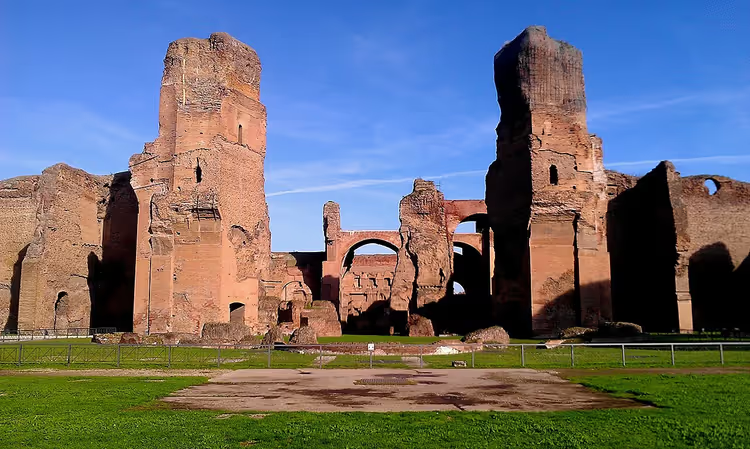
The ruins of the Baths of Caracalla still convey the scale of the Roman Empire. Construction began by order of Emperor Caracalla in the early third century and took about five years.
The complex occupied an eleven-hectare site between the Aventine and Caelian hills. Inside there was a main building, a park, sports grounds, an amphitheater, and libraries. The baths served as a place of leisure for nearly the entire city.
During the barbarian invasions they were partially destroyed, and life here came to an end. Today it is not only a monument but also a stage for concerts and theater productions; check tickets and hours on the park's website.
In summer, opera performances take place on the ancient stage, and tickets for them are sold separately from daytime admission.
Who it's for: those who want to see ancient architecture without museum crowds.
The catch: there is little on-site interpretation, and without an audio guide the ruins are hard to read.
13. Mausoleum of Augustus
 © MumblerJamie · CC BY-SAPhoto: MumblerJamie, CC BY-SA (https://creativecommons.org/licenses/by-sa/2.0), Wikimedia Commons
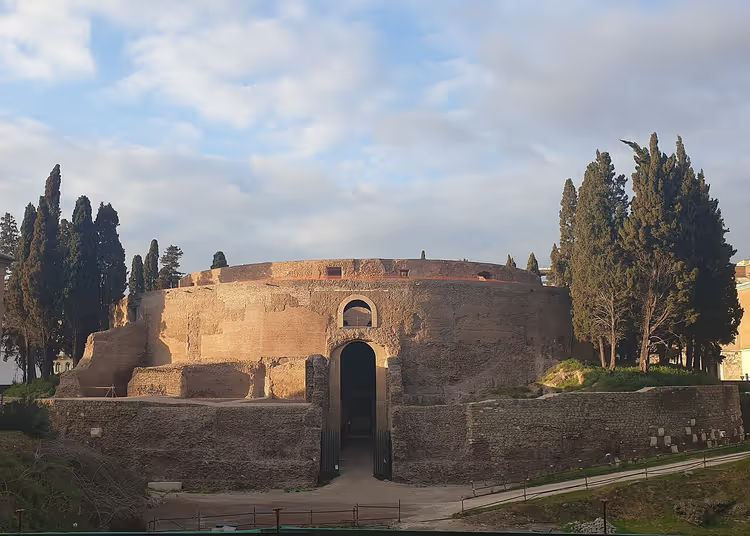
The Mausoleum of Augustus on the Campus Martius has survived less well than Hadrian's tomb. Octavian Augustus decided to build it in the late first century BC, when he returned from Alexandria.
Its shape resembles an Etruscan burial mound. The structure was about ninety meters in diameter, surrounded by a terrace with columns, and at the entrance stood two obelisks and bronze plaques recounting the life of its owner.
The mausoleum was looted in the fifth century; later the Colonna family turned it into a fortress, and Pope Paul III created a labyrinth garden here. Later the building served as an arena and concert hall, with the roof over it added only in the nineteenth century.
The tomb acquired its current appearance under Mussolini, who ordered the additions demolished. The restoration was never completed, and in recent years the mausoleum has reopened to visitors by advance reservation.
It is best to book ahead, as entry is usually organized in guided groups. The Ara Pacis stands nearby, so both sites are convenient to see in one day.
Who it's for: those interested in the Augustan era and who enjoy lesser-known places.
The catch: you can only enter during scheduled time slots, and without a reservation you may not get in.
14. Baths of Diocletian
 © Falk2 · CC BY-SAPhoto: Falk2, CC BY-SA (https://creativecommons.org/licenses/by-sa/4.0), Wikimedia Commons
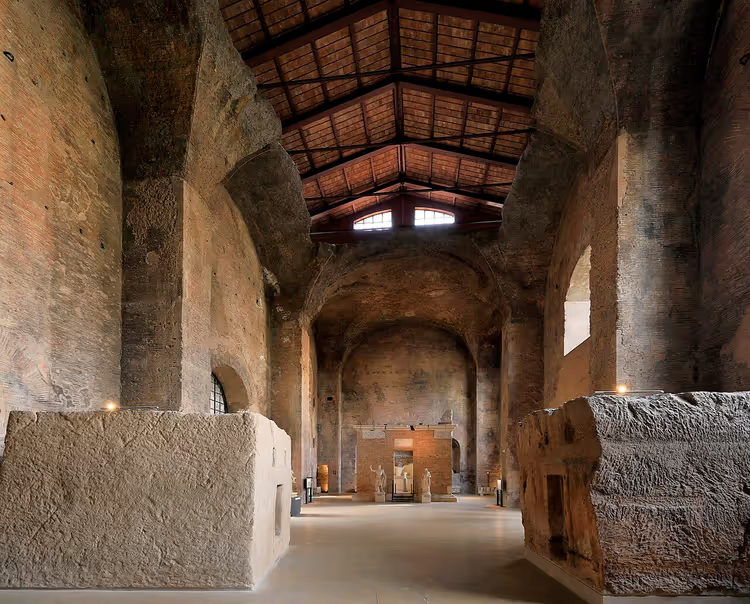
The Baths of Diocletian were the largest thermal complex in Rome. The surviving ruins do not convey the scale, because part of the site was taken over by later buildings.
Construction began in the late third century on a typical plan: the rooms were arranged symmetrically around a central axis. By the early fourth century there were pools with different water temperatures, saunas, libraries, and gymnasiums.
The complex got a second life during the Renaissance, when Michelangelo placed a basilica on the site of one of the halls. Since the late nineteenth century the baths have been part of the National Roman Museum, which displays a collection of ancient sculpture and everyday objects here (as of 09/2026, museum website).
Who it's for: those who want to combine antiquity and a basilica in one itinerary.
The catch: some of the buildings have been rebuilt, so you will not see the baths in their original unified form.
15. Theater of Marcellus
 © Fiat 500e · CC BY-SAPhoto: Fiat 500e, CC BY-SA (https://creativecommons.org/licenses/by-sa/4.0), Wikimedia Commons
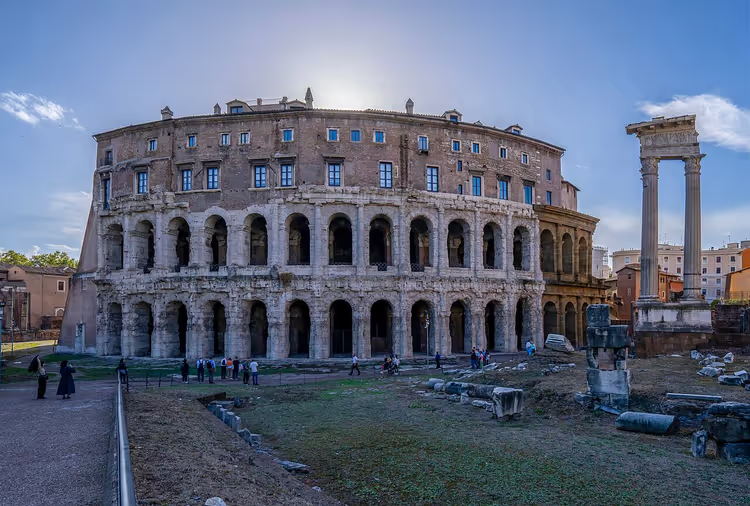
In the lower part of a residential building on the Tiber embankment, it's hard to recognize the prototype of the Colosseum. The Theater of Marcellus was built at the end of the first century BC, and it was the largest theater in the city.
Julius Caesar conceived the project, and Emperor Augustus brought it to life. The semicircular three-tier structure has partially not survived, it was later rebuilt, and its conversion into a fortress saved it from destruction.
In the sixteenth century, a Renaissance-style estate appeared here, and that is what has come down to us today. You can't go inside; the arches of the lower tier can be viewed from outside at any time. The upper floors are occupied by residential apartments.
Who it's for: those strolling through the center who want to see antiquity for free.
The catch: you can't go inside; viewing is limited to the outer arches.
16. Capuchin Museum and Crypt
The Capuchin Museum is known for its controversial crypt. It is located in the basement under the church, and both pilgrims and tourists come here.
 © jeffwarder · CC BY-SAPhoto: jeffwarder, CC BY-SA (https://creativecommons.org/licenses/by-sa/3.0), Wikimedia Commons
The crypt consists of several rooms. The walls and vaults are decorated with the bones and skulls of monks whose remains were moved from the old cemetery. Patterns, lamps, frames, and niches are assembled from the same material.
Skeletons in traditional Capuchin robes stand in the niches, and one hall contains the remains of a pope's niece, a child. By visiting the exhibition, you will learn the history of the order and see relics and archival documents.
Who it's for: those who love unusual places and are ready for a grim atmosphere.
The catch: sensitive people and small children will find it difficult here.
17. MAXXI Museum of Art
MAXXI is unlike a classical museum either in appearance or in concept. The futuristic building was designed by Zaha Hadid, and there is no conventional arrangement by era here.
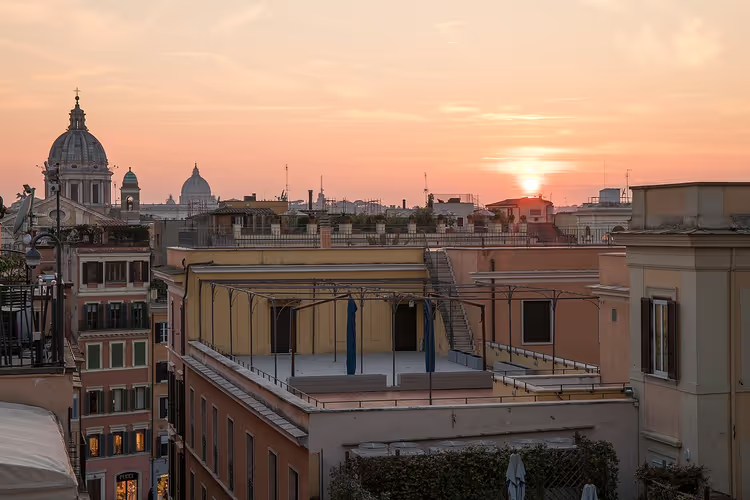 © Luigi Guerrieri4 · CC BY-SAPhoto: Luigi Guerrieri4, CC BY-SA (https://creativecommons.org/licenses/by-sa/4.0), Wikimedia Commons
Inside, there are not only exhibition halls: there is a research center, a library, an archive, a seminar auditorium, a restaurant, and a bookshop. It is more of an educational space where a wide variety of projects take place.
Admission is free up to a certain age; check the ticket price on the official website. On Saturdays, the museum is open longer than usual.
Who it's for: those coming for contemporary art and architecture.
The catch: there is no classical painting here; this is not a replacement for the Vatican.
Tickets: MAXXI tickets.
18. Villa Farnesina
 © Paris Orlando · CC BY-SAPhoto: Paris Orlando, CC BY-SA (https://creativecommons.org/licenses/by-sa/4.0), Wikimedia Commons
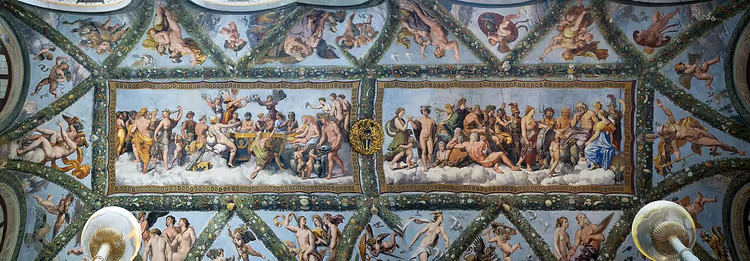
Villa Farnesina is considered a masterpiece of the Italian Renaissance. It was built in the early sixteenth century on the order of a banker, and it was originally called Villa Chigi.
The villa received its current name when Cardinal Farnese bought it. Owners changed later as well; today the National Academy of the Lincei operates here, and the building's history remains tied to its former name.
The main things inside are the frescoes by Raphael, Giulio Romano, and Il Sodoma, as well as the trompe-l'oeil painting done by the architect Baldassare Peruzzi. Visitors come specifically for these, and the villa's opening hours are short, so it's best to confirm the day of your visit in advance.
Who it's for: those who want to see Raphael's frescoes without the Vatican queues.
The catch: opening hours are short; the villa is often closed in the afternoon.
19. Crypta Balbi Museum
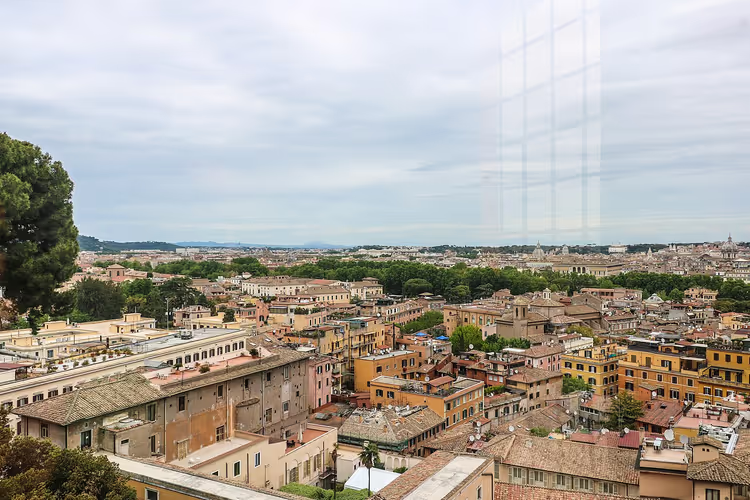
Crypta Balbi is part of the National Roman Museum and is named after the general Lucius Cornelius Balbus. With the money raised after his campaign, he built a theater and a crypt, which can be seen today beneath the modern building.
 © Diego Baglieri · CC BY-SAPhoto: Diego Baglieri, CC BY-SA (https://creativecommons.org/licenses/by-sa/4.0), Wikimedia Commons
The exhibition tells the story of the city's development. Coins, fragments of tableware, tools, and clothing are on display here. The first floor shows changes in architecture and daily life from the Middle Ages to the present day.
The second floor covers the evolution of the city from antiquity to the Middle Ages. In the basement there is an exedra; you can go down there only with a guided tour, so check the schedule on the National Museum website.
Who it's for: those who want to understand the everyday history of Rome.
The catch: the venue is small; a visit takes less than an hour.
20. Palazzo Barberini
 © NateBergin · CC BYPhoto: NateBergin, CC BY (https://creativecommons.org/licenses/by/4.0), Wikimedia Commons
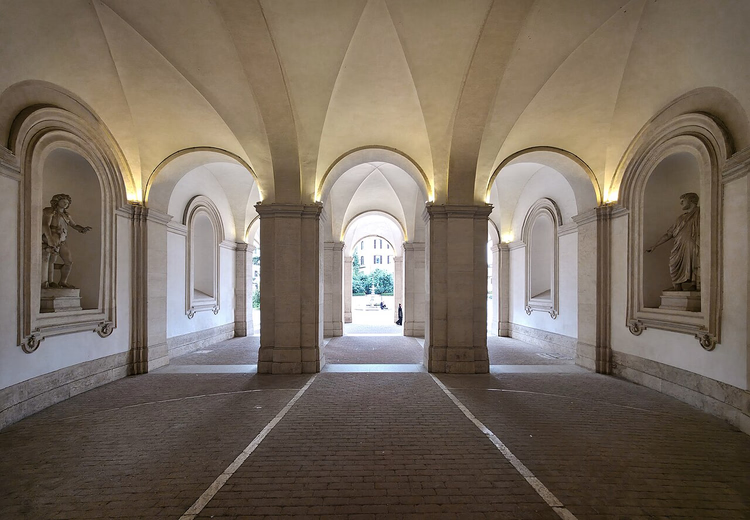
Palazzo Barberini was intended to resemble Villa Farnesina, but three architects turned it into one of the finest examples of early Baroque. Construction was completed in the 1630s for Cardinal Barberini.
The family owned the palace until the mid-twentieth century, when they sold it to the state. The left wing houses the National Gallery of Ancient Art with works by artists from the sixteenth to eighteenth centuries, a collection of porcelain, and furniture.
The right wing is occupied by the Officers' Club. Check the ticket and opening hours on the official website. The gallery's second venue, Palazzo Corsini, is in Trastevere, and the collection there is different.
Who it's for: those who want to see early Baroque and old paintings.
The catch: some rooms are occupied by institutions, so access is incomplete.
Tickets: tours and tickets to the Barberini and Corsini galleries.
21. National Etruscan Museum of Villa Giulia
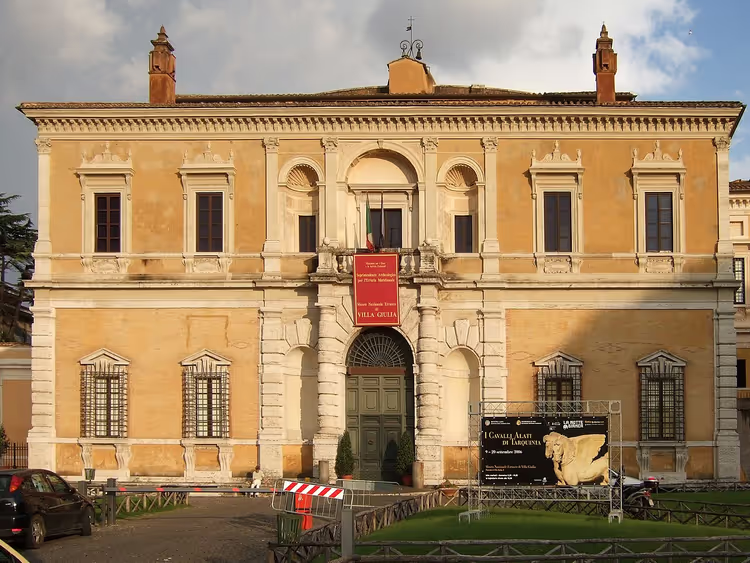 © AlMare · CC BYPhoto: AlMare, CC BY (https://creativecommons.org/licenses/by/2.5), Wikimedia Commons
Only part of the complex built in the mid-sixteenth century for Pope Julius III has survived. Villa Giulia was plagued by reconstructions from the very beginning: one part was demolished, another was remodeled for the next pope.
The building was conceived as a papal residence, but later it housed warehouses, military barracks, a hospital, and a school. In the second half of the nineteenth century, the villa passed to the state, and the National Etruscan Museum opened there.
Today it holds one of the most important collections of Etruscan culture. Check opening hours and tickets before your visit, as the villa's schedule changes by season.
Who it's for: those who have already seen ancient Rome and want to dig deeper.
The catch: the subject is niche; without an interest in the Etruscans, it will be boring.
22. Centrale Montemartini Museum
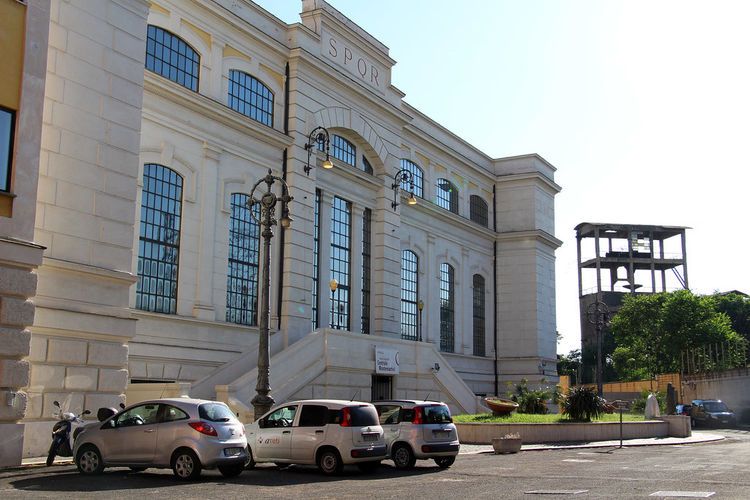 © corno.fulgur75 · CC BYPhoto: corno.fulgur75, CC BY (https://creativecommons.org/licenses/by/2.0/), Flickr
Centrale Montemartini came about by accident. When restoration began at the Capitoline Museums, the collections needed a temporary home, and someone remembered the empty building of a former power plant.
Sculptures, sarcophagi, and reliefs were placed against the backdrop of enormous installations, boilers, and machines. The contrast between antiquity and industry was so striking that first an exhibition was held here, and then a museum opened.
It is now one of the Capitoline Museums' venues; check tickets and opening hours on the official website.
Who it's for: those who want to see ancient sculpture presented in an unusual way.
The catch: getting there is inconvenient; the area is industrial and sparsely populated.
Tickets to Rome museums: where to buy without waiting in line
Tickets to Rome's main museums are best bought online and in advance. Official websites offer slots without a markup, but in high season they sell out weeks ahead. Third-party platforms are more convenient when the official website is already sold out.
It's easy to combine tickets to the Vatican, the Colosseum, and the Borghese Gallery in one order. Below is a selection of cards with prices and available slots.
Tours and tickets in Rome
Guided tours, skip-the-line tickets and activities — most offers can be cancelled free of charge.
See offers on TiqetsThe widget loads once you give your consent.
If you don't want to walk all day, check out the Rome hop-on hop-off bus. It connects the main sights and helps you save energy between museums.
⁉️🤔 Frequently asked questions
How much does a Vatican Museums ticket cost and what's included?
A ticket costs 20 €, or 25 € online with skip-the-line entry (as of 09/2026, Vatican Museums website). It includes dozens of halls, the Sistine Chapel, and the Raphael Rooms. The only separate tickets are for the dome of St. Peter's Basilica and the Colosseum underground.
Do I need to book tickets in advance?
In high season, time slots for the Vatican, the Colosseum, and the Borghese Gallery sell out weeks ahead. Official websites offer slots with no markup, and third-party platforms help when everything is sold out. Without a slot, you risk standing in line for hours and not getting in.
Which Rome museums are closed on Mondays?
The Borghese Gallery and the National Roman Museum are usually closed on Mondays. The Vatican Museums are closed on Sundays, except for the last Sunday of the month. Monday is a good day to leave for walks through the park and the streets.
What to see in Rome if you have only one day for museums?
Go for the Vatican Museums with the Sistine Chapel, and the Colosseum with the Roman Forum. Have lunch in the center in between, and in the evening walk to Villa Borghese and the Pincio Terrace. That way you'll see antiquity, the Renaissance, and a panoramic view of the city in one day.
Where can I buy skip-the-line tickets for Rome museums?
Online, on official museum websites or through platforms with time slots. In the tickets section above, we've put together cards with prices and available slots. The official website is usually cheaper, while a platform is more convenient when slots are sold out.
Rome museums on the map
All twenty-two sites are scattered across the city. The map below shows their locations so you can plan a route by neighborhood and avoid spending the day on transit.
Museums of Rome
Places on the map
- 1Vatican Museums Dozens of collections on one ticket, 20 euros without booking and 25 online with a time slot
- 2Sistine Chapel Michelangelo's ceiling and Last Judgment, included in the general Vatican Museums ticket
- 3Vatican Library Manuscripts and engravings, the general ticket gives access to the Aldobrandini Wedding hall
- 4Villa Borghese A park area on the Pincio hill with the Borghese gallery, entry to the gallery is by two-hour time slots
- 5Capitoline Museums The city's oldest public collection in two palaces on the Capitoline, tickets from 15 euros
- 6Museum of the Ara Pacis A single-exhibit museum near the Flaminio metro station, more than an hour inside there's nothing to do
- 7National Roman Museum Four sites on one ticket, usually closed Mondays
- 8Temple of Vesta The podium and part of the colonnade on the Forum, included in the ticket for the Roman Forum and Colosseum
- 9Colosseum The city's main symbol, a ticket around 18 euros is valid for a day, book a time slot in advance
- 10Castel Sant'Angelo Hadrian's mausoleum, later a fortress and prison, the best view of the Tiber is from the top
- 11Baths of Caracalla Eleven hectares of ruins between the Aventine and Caelian hills, operas are staged there in summer
- 12Mausoleum of Augustus A tomb on the Campus Martius about ninety meters in diameter, entry by appointment
- 13Baths of Diocletian The city's largest thermal complex, now part of the National Roman Museum
- 14Theatre of Marcellus A prototype of the Colosseum by the Tiber, the ground floor is always open, apartments occupy the upper floors
- 15Capuchin Museum and Crypt A crypt beneath a church where the walls are decorated with monks' bones, a gloomy atmosphere
- 16MAXXI Museum of Art A Zaha Hadid building with contemporary art, open later than usual on Saturdays
- 17Villa Farnesina A Renaissance masterpiece with frescoes by Raphael, short opening hours, check the day in advance
- 18Crypta Balbi A National Roman Museum site about the city's everyday history, a visit takes under an hour
- 19Palazzo Barberini Early Baroque with the National Gallery of Ancient Art in the left wing
- 20Villa Giulia National Museum of Etruscan Art in a 16th-century papal residence
- 21Centrale Montemartini Ancient sculpture against the machinery of a former power plant, a Capitoline Museums site
In short: what's worth booking
If you have two days, go for the Vatican Museums and the Colosseum with time slots. If you have three days, add the Borghese Gallery and the Capitoline Museums. If you have a week, set aside a separate day for the National Roman Museum and Villa Giulia.
Hotels in central Rome are easy to book in advance on Trip.com, and order your airport transfer through Kiwitaxi. Booking ahead takes care of lines and taxis on the day you arrive.

A small editorial team writing guides for independent travel. We travel ourselves, but we haven’t been everywhere, so we check prices, opening hours and how to get there against official sources.