
















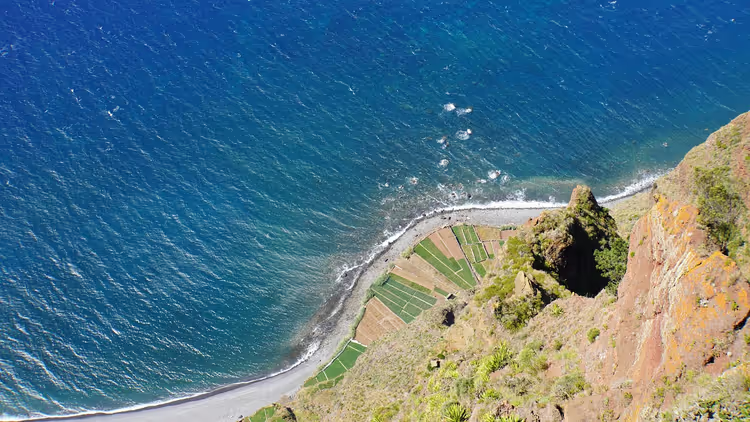
25 Beaches in Portugal: from the cliffs of Sintra to the quiet coves of the Algarve
The Atlantic deceives you. The water here is colder than on postcards, and the most beautiful coves hide beneath high cliffs.
Portugal stretches along the ocean for hundreds of kilometers, and the beaches on this coast vary greatly. Near Lisbon they are wild rocky strips with strong surf and cold water. Farther south, in the Algarve, the cliffs are lower, the water is warmer, and the season lasts longer. We've gathered twenty-five beaches from Sintra to the Algarve and noted where to swim with kids, where to bring a board, and where to simply gaze at the ocean. Here you'll find both the capital's urban shores and wild strips that you reach by a staircase cut into the cliff.
💡 In short:
- The list includes twenty-five beaches: from the wild cliffs of Sintra to the warm coves of the Algarve.
- Beach access is free, and swimming is most comfortable from July through September.
- In winter the water is cold and storms are frequent.
- Most spots are connected to Lisbon by train or bus (according to the official tourism portal of Portugal).
- Beach access and infrastructure: 09/2026, according to Visit Portugal.
1. Praia do Magoito
 © Rúdisicyon · CC BY-SAPhoto: Rúdisicyon, CC BY-SA (https://creativecommons.org/licenses/by-sa/4.0), Wikimedia Commons
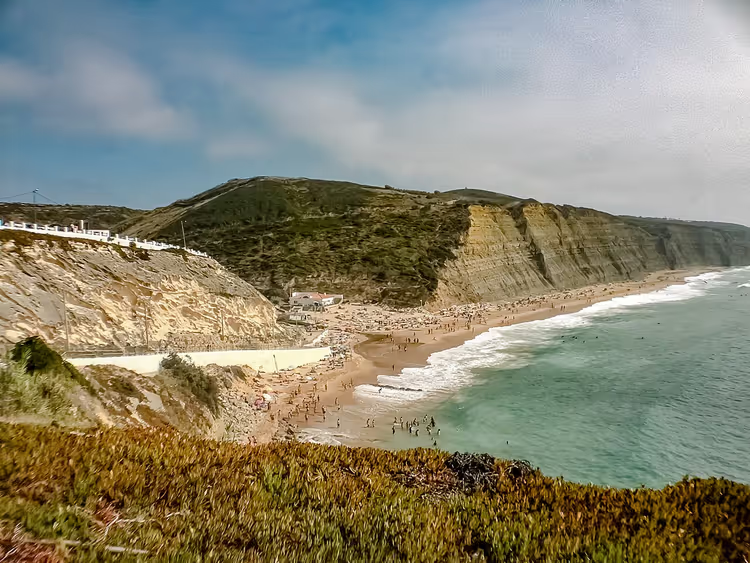
A long stretch of sand lies deep in a valley and is part of the Sintra-Cascais natural park. Praia do Magoito is known for its fossilized dunes. The wind has carved deep wrinkles into them, and such a dune ridge is rare. The main beach entrance sits next to the dunes, while in the southern part gray-black cliffs approach the water. They contrast sharply with the yellow sand.
A wooden boardwalk with steps zigzags down the slope to the water. A pine forest grows around it, making the air fresh. At low tide, relict layers of sand are exposed on the shore. Fishermen descend to the water by a staircase inside a vertical tunnel that was once cut into the cliff. You'll need sturdy footwear, because the descent is steep.
- The catch: the descent to the water is steep, and the beach lies at the end of a deep valley (according to the official Magoito page).
2. Praia das Azenhas do Mar
 © F Mira from Lisbon, Portugal · CC BY-SAPhoto: F Mira from Lisbon, Portugal, CC BY-SA (https://creativecommons.org/licenses/by-sa/2.0), Wikimedia Commons
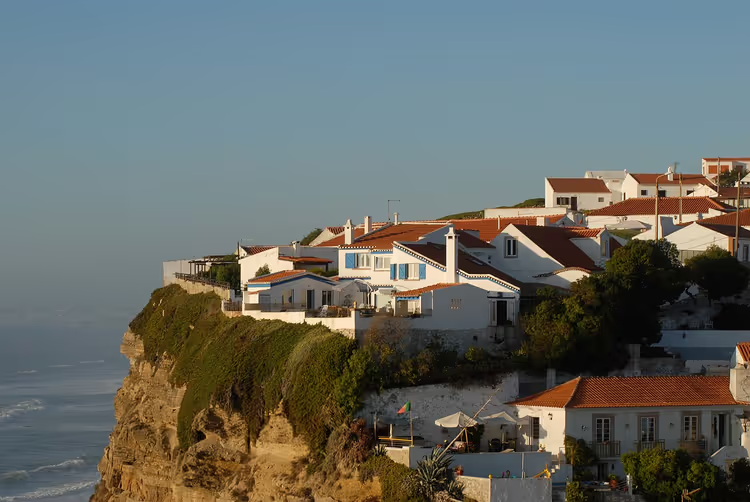
A tiny village of white houses stands on a high cliff, and below it the Ribeira do Cameijo river flows into the ocean. The name Azenhas do Mar comes from the Arabic water mills that once operated on this river. The beach itself is tiny, and its strip is clearly visible only at low tide. Dazzling white houses under tiled roofs descend to the water in a long row.
A long staircase with gentle steps leads down to the shore along the river. A small pool is carved directly into the rock and fills with water at high tide. Restaurant terraces open above it, drawing tourists. The beach strip has almost no infrastructure, and after swimming many people relax on the platform by the pool. Local restaurants serve red wine with a salty taste, considered the signature of this area.
- Who it's for: for those who come for the view and the wine, not for sun loungers.
- The catch: there's little sand, and it's comfortable here only at low tide.
3. Praia da Ursa
 © Erico Reis Junior · CC BY-SAPhoto: Erico Reis Junior, CC BY-SA (https://creativecommons.org/licenses/by-sa/4.0), Wikimedia Commons
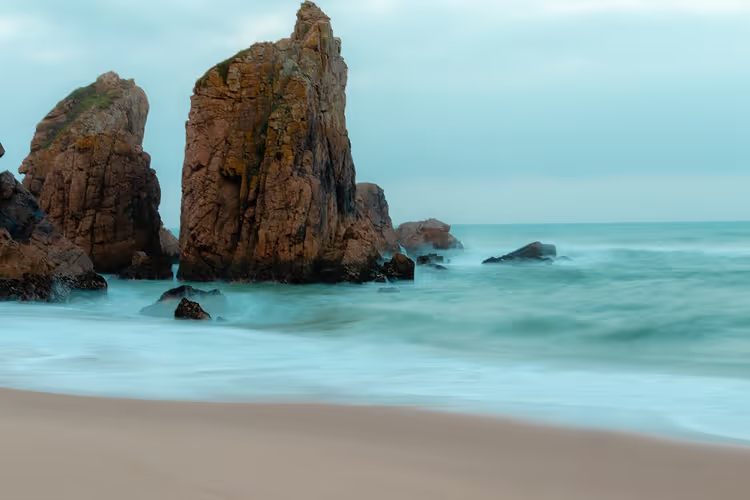
Ursa is considered one of the most beautiful beaches in the country. The rocks in the water resemble a mother bear with cubs, and an old legend is tied to them. According to it, the gods turned the animals to stone when they refused to leave their native shore. Even seasoned travelers admit the place is worth the long journey.
Praia da Ursa is wild, and getting there is not easy. A dirt road about a kilometer long leads to the shore: you can walk it or drive it in an off-road vehicle. The descent to the water follows two paths, and the left one is easier and safer. Behind the mother bear rock rises a huge arch overhanging the sand. Nearby a waterfall drops, formed by a small river, and a small cave hides close by. You should bring water and shoes with good tread.
- The catch: there is no infrastructure, and the descent is long and difficult.
4. Praia das Maçãs
 © Teves Costa from Sintra, Portugal · CC BY-SAPhoto: Teves Costa from Sintra, Portugal, CC BY-SA (https://creativecommons.org/licenses/by-sa/2.0), Wikimedia Commons
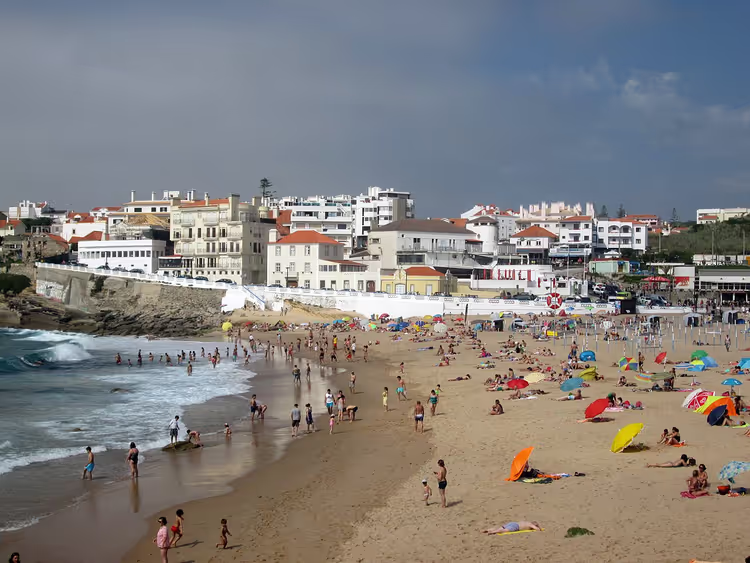
The beach lies not far from Sintra, next to the village that gave it its name. The village and the beach got their name from the apple orchards along the banks of the river that carried apples here. The wide, long strip of sand is sheltered from the wind by hills, so the entry into the water here is gentle and easy.
An old narrow-gauge railway leads here from Sintra, laid along the mountainside through the forest. The ride on the old tram is worth the time on its own. The beach has tennis courts, a soccer field, an amusement park, rentals, showers, and changing rooms, and lifeguards are on duty in season. In the village you can rent an apartment and have dinner at a cafe serving local cuisine, and you'll have enough here for both one evening and a whole week. You can easily spend the entire day here with kids.
- Who it's for: for families with children, because the entry into the water is gentle.
- The catch: there are rocks at both ends of the beach.
5. Costa da Caparica
 © Vitor Oliveira from Torres Vedras, PORTUGAL · CC BY-SAPhoto: Vitor Oliveira from Torres Vedras, PORTUGAL, CC BY-SA (https://creativecommons.org/licenses/by-sa/2.0), Wikimedia Commons
The sandy spit runs along the Setubal peninsula, and its western shore is almost entirely taken up by beaches. The Costa da Caparica resort began as a fishing village, and today it is a large town with developed infrastructure. The developed stretches cover several kilometers, and beyond them the wild sections begin.
There are no clear boundaries between the dozens of beach sections, and people navigate by the name of the tourist train station on the line from Lisbon. The best beaches are marked with the "Blue Flag" for water cleanliness. The first beach from the north is the widest and longest: a bike path and a promenade run along it. In spring, when the trees in the nearby grove bloom, the air fills with fragrance. Near the town the sections are well kept, and further on a forest begins beyond the dunes. You can choose a stretch to your taste and based on the number of people.
- How to get there: the Transpraia tourist train runs from Lisbon with stops at the beaches (see map).
6. Praia da Assenta
 © Vitor Oliveira from Torres Vedras, PORTUGAL · CC BY-SAPhoto: Vitor Oliveira from Torres Vedras, PORTUGAL, CC BY-SA (https://creativecommons.org/licenses/by-sa/2.0), Wikimedia Commons
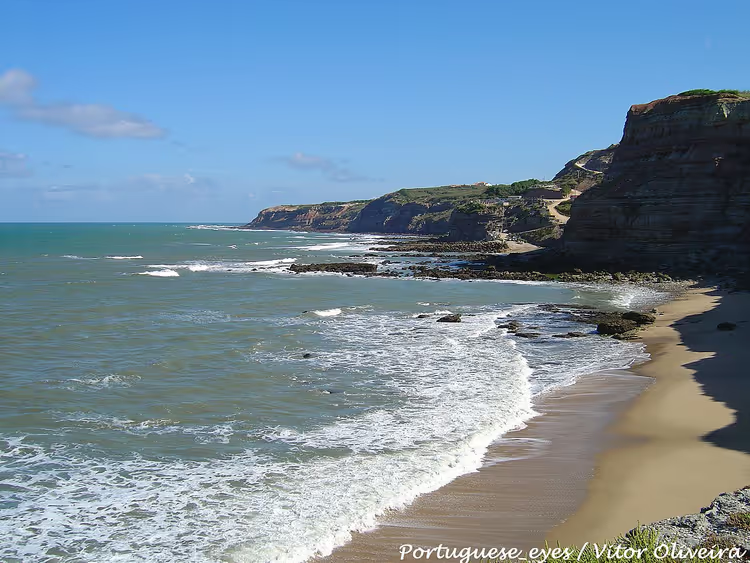
The wide sand-and-pebble stretch on the southern shore is better suited for contemplation than for swimming. There is a high rocky bank covered with grass and a small cascading waterfall that falls onto mossy stones. This landscape attracts tourists here more than the water itself.
The infrastructure is modest: there are no rental points or lifeguards, but a mini bar operates and rest areas are open. Swimming and surfing are limited because of the cold water and large rocks near the shore. You can walk to a small lighthouse by the road that leads into the village. Near the shore the road ends in a parking lot and a viewpoint at the same time, and the benches are a comfortable place to look at the ocean. There are more fishermen here than vacationers, and the boat sheds say as much.
- The catch: cold water and rocks near the shore, no lifeguards.
7. Praia de Algés
 © Rúdisicyon · CC BY-SAPhoto: Rúdisicyon, CC BY-SA (https://creativecommons.org/licenses/by-sa/4.0), Wikimedia Commons
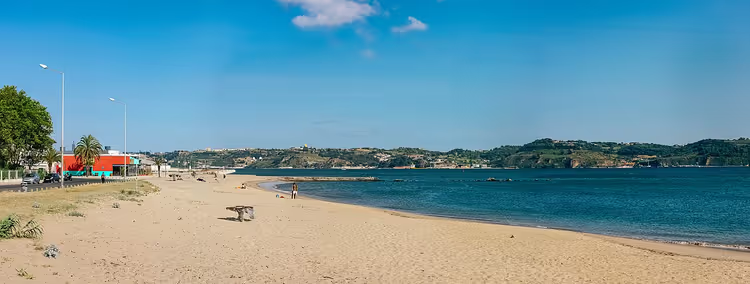
A stretch of yellow-gray sand lies on the Lisbon Riviera, within the city limits of Algés. For a long time this was a very lively place, and there were always many people here. Everything changed after the bridge to Costa da Caparica opened: people rushed to the long beaches of the new resort area, and the nearby shore almost emptied out.
Today those who seek quiet come here. The stretch is surrounded by fishing docks, the sand lies in a thick layer and stays soft, and the water in the bay is clean. A small breakwater protects the shore from strong waves. There is no beach infrastructure, so everyone comes with their own towels and mats. A Mexican restaurant is open right at the water's edge. It is worth coming here in the evening, when the heat subsides.
8. Praia de Cruz Quebrada
 © Vitor Oliveira from Torres Vedras, PORTUGAL · CC BY-SAPhoto: Vitor Oliveira from Torres Vedras, PORTUGAL, CC BY-SA (https://creativecommons.org/licenses/by-sa/2.0), Wikimedia Commons
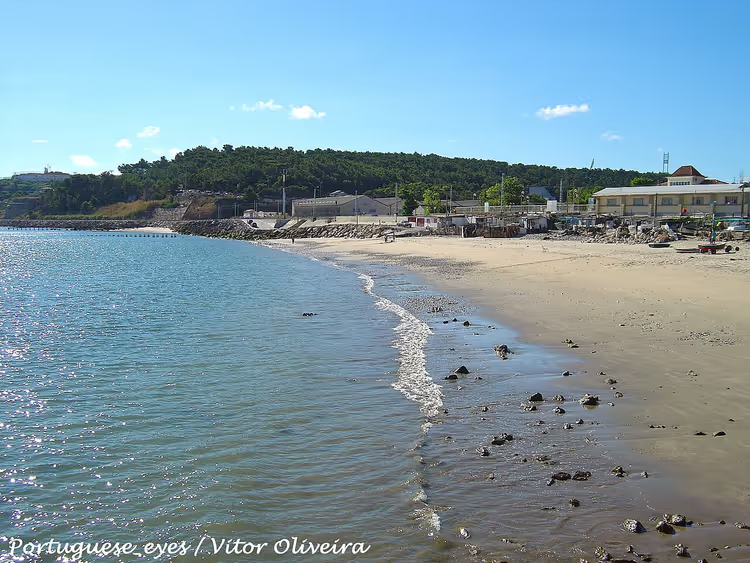
The beach lies in a Lisbon suburb, within the village of the same name. Cruz Quebrada translates as "broken cross." A wooden cross that was once damaged by lightning stands nearby, and locals consider it a monument.
You would not call this shore a busy tourist spot. There are more Portuguese fishermen here, and their boats and gear are stored right on the sand. There are no loungers or umbrellas, and no lifeguards on duty. On the plus side, a sports complex with a stadium, a pool, tennis courts, and a golf course operates nearby. A river flows through the middle of the beach, and three bridges cross it, one of which is decorated with old arches.
- Who it's for: for those who seek peace and do not expect services.
9. Praia de Caxias
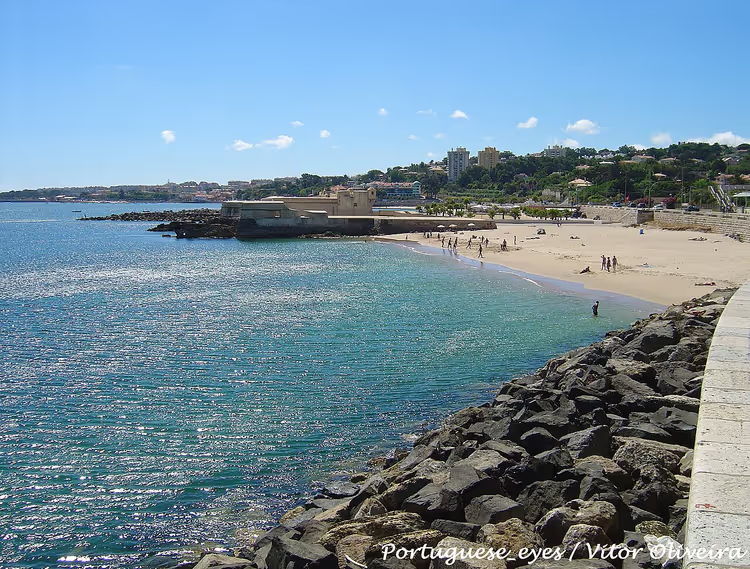 © Vitor Oliveira from Torres Vedras, PORTUGAL · CC BY-SAPhoto: Vitor Oliveira from Torres Vedras, PORTUGAL, CC BY-SA (https://creativecommons.org/licenses/by-sa/2.0), Wikimedia Commons
At the mouth of the Tagus, where the river meets the Atlantic, stand two old forts. Between them lies a beach with golden-yellow sand. Fort São Bruno is built in the shape of a star and is considered the most notable landmark in the area.
Getting here from Lisbon is easy by train: the commuter line stops right across from the beach. Running and cycling paths run along the shore, and near the fort there is a small square with a restaurant and parking. A palm-lined promenade and green lawns give the place a polished look. At low tide you can spot shrimp and crabs among the rocks. The beach has loungers, palm-leaf umbrellas, and lifeguards. You can easily combine swimming with a walk around town.
- Who it's for: those who want a beach close to the city.
10. Praia de santo amaro de oeiras
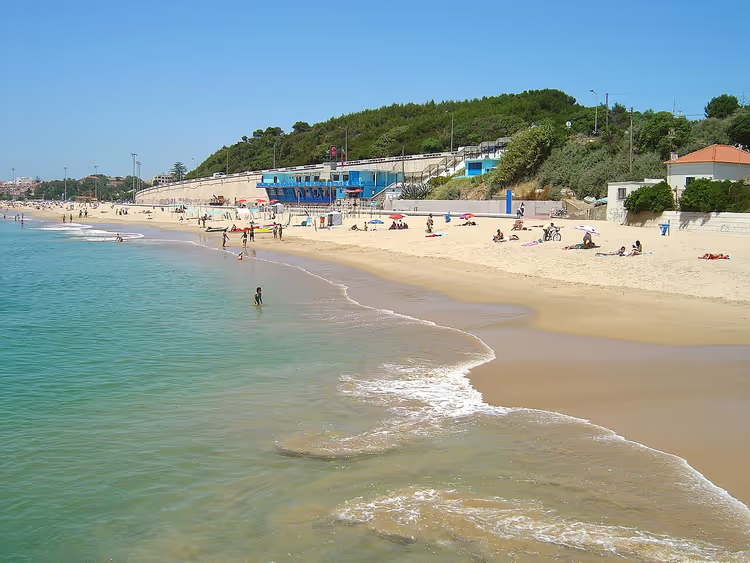 © Vitor Oliveira from Torres Vedras, PORTUGAL · CC BY-SAPhoto: Vitor Oliveira from Torres Vedras, PORTUGAL, CC BY-SA (https://creativecommons.org/licenses/by-sa/2.0), Wikimedia Commons
This stretch of coast near Oeiras is loved by both Lisbon locals and tourists. The large Santo Amaro beach is rightly considered the best on the Lisbon Riviera. It has everything you need for a day on the water.
The beach offers surf and catamaran equipment rentals, a restaurant and bar, and sports courts. During the swimming season, lifeguards and medical staff are on duty, and the shore is lit in the evening. You can easily get down to the sand via convenient ramps from the promenade. Lateral breakwaters protect the shore from strong waves, so the water here is calm. The shallow water near the shore is good for children. The beach sits next to the Oeiras marina and old forts, and at the mouth of the Tagus you can see a small island with a lighthouse.
- Who it's for: families with children, because the water entry is gradual.
- How to get there: the promenade with ramps leads straight to the sand (see map).
11. Praia da Torre
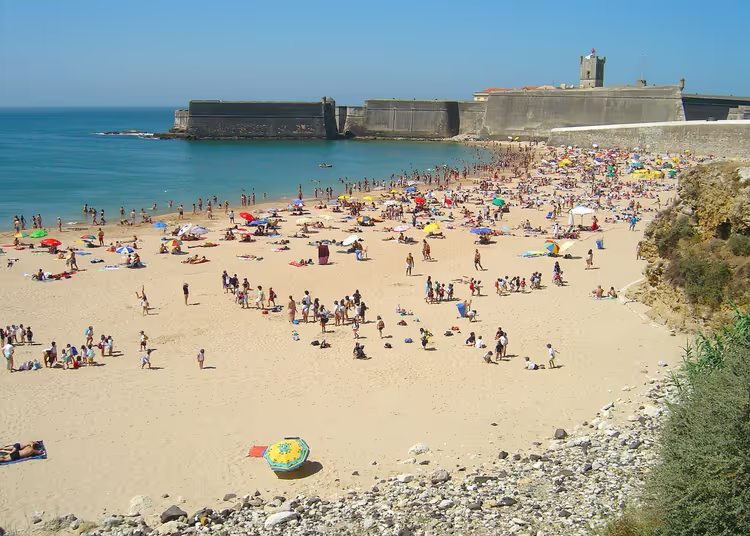 © Vitor Oliveira from Torres Vedras, PORTUGAL · CC BY-SAPhoto: Vitor Oliveira from Torres Vedras, PORTUGAL, CC BY-SA (https://creativecommons.org/licenses/by-sa/2.0), Wikimedia Commons
The beach takes its name from the tower of Fort São Julião da Barra. This large fortification is closed to visitors and can only be viewed from the outside. Today the fort houses the residence of the Portuguese Ministry of Defense.
The fort walls and the harbor breakwater reliably protect the water from waves. The entry into the ocean is gradual and the bottom is sandy, so many families with children come here. The area is well maintained and well equipped: loungers, umbrellas, toilets, and showers. There is a rare detail here: a bar in an old railway carriage. Nearby, a restaurant with an open terrace operates. On the other side of the fort stands a monument in the shape of a huge whale tail. Water quality is monitored constantly here, which is appreciated by those who swim regularly.
- Who it's for: families with children, because the water entry is gradual.
12. Praia da Azarujinha
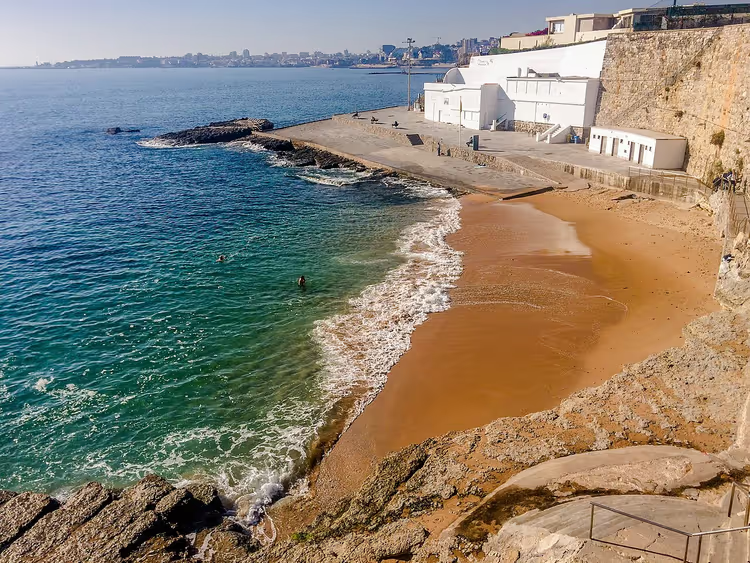 © Rúdisicyon · CC BY-SAPhoto: Rúdisicyon, CC BY-SA (https://creativecommons.org/licenses/by-sa/4.0), Wikimedia Commons
A wall of monolithic cliffs surrounds a small patch of sand, making the place resemble an ancient amphitheater. At high tide the water almost completely covers the shore, leaving only a narrow strip in the center.
You descend to the sand by two steep staircases built into the cliff slopes. On the other side, entry is open from a concrete promenade that runs along the water. City buildings rise near the beach, and a palm-lined promenade runs alongside. You can rent an umbrella here, and there is a first-aid post and lifeguards. On the western side, a bar with a terrace and benches is open, giving you a place to shelter from the sun. In the eastern part, Fort Santo António da Barra stands above the shore, but you can only reach it through the town.
- The catch: at high tide there is almost no sand left.
13. Praia da Poça
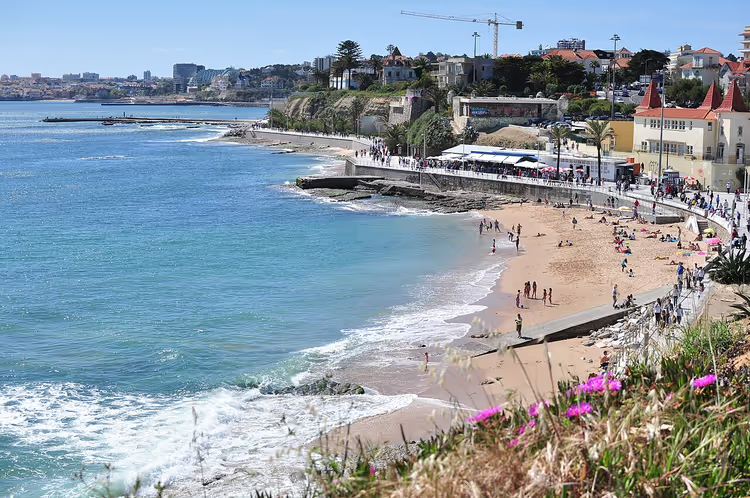 © pedrik · CC BYPhoto: pedrik, CC BY (https://creativecommons.org/licenses/by/2.0), Wikimedia Commons
A short strip of sand lies in Estoril, not far from Tamariz beach. Poça has won a gold medal for water quality, which sets it apart from its neighbors.
Access to the shore is easy here: a ramp leads down from the promenade. Swimming is allowed only in the central part, because rocks rise out of the water at the edges. The eastern part is quieter and calmer: it is sheltered from the land by a tall cliff on which a 17th-century fort stands. After restoration, it was turned into a children's summer camp. The beach has surf and snorkeling equipment rentals, showers, a restaurant and bar, and lifeguards are on duty in season. You won't need to bring your own umbrella and lounger.
- The catch: the water stays cool even in the hot months.
14. Praia das Moitas
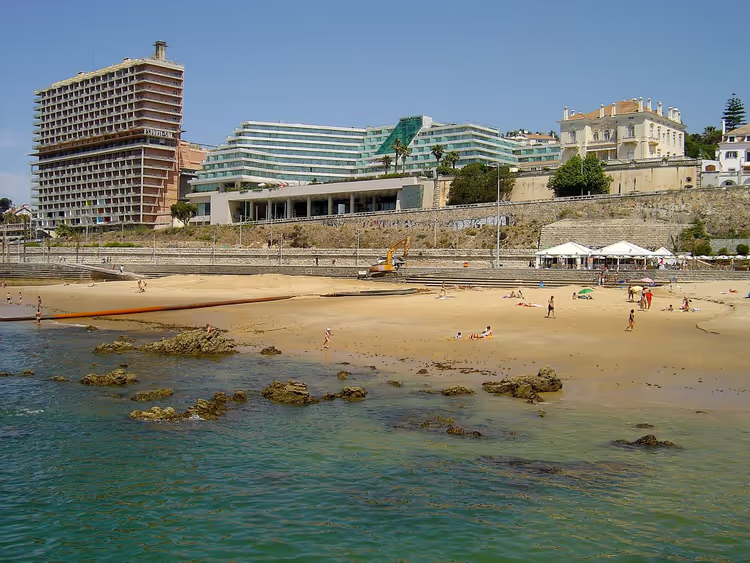 © Vitor Oliveira from Torres Vedras, PORTUGAL · CC BY-SAPhoto: Vitor Oliveira from Torres Vedras, PORTUGAL, CC BY-SA (https://creativecommons.org/licenses/by-sa/2.0), Wikimedia Commons
This small beach is easy to find thanks to the huge glass building in the modernist style near the shore. The strip of soft fine sand is shaped like an elongated triangle, and a breakwater separates it from the waves.
Moitas regularly receives the Blue Flag for environmental quality, and the urban surroundings here look well kept. Swimming can't really be called convenient: at low tide rocks are exposed on the bottom. On the plus side, there is a natural pool in the rocks nearby that fills at high tide and warms up nicely. The wind often blows in this area, so windsurfers and divers come here. If you want to catch a wave, come here for this weather. The beach facilities are good, and the clean water attracts people of all ages.
- The catch: at low tide rocks are exposed on the bottom.
15. Praia do Tamariz
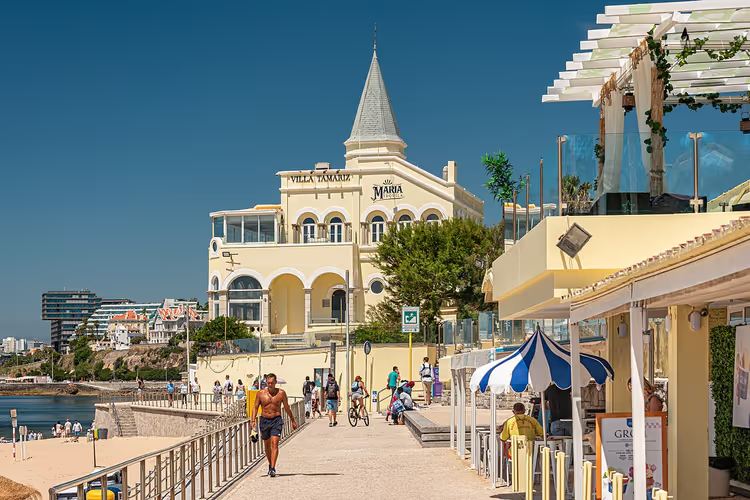 © Jorge Franganillo · CC BYPhoto: Jorge Franganillo, CC BY (https://creativecommons.org/licenses/by/2.0), Wikimedia Commons
The resort of Estoril began to develop thanks to Tamariz beach. The wide sandy strip attracted vacationers even before infrastructure appeared here, and it gave the town its start.
The Estoril casino stands opposite the beach, and beautiful buildings surround the promenade. Tamariz was the first beach in Portugal to receive the Blue Flag, and since then the award has been granted almost every year along with a gold medal for water quality. Rocks divide the sandy strip in the center, while a breakwater extending into the ocean protects the eastern part. Nearby there is a natural pool and a wild rocky beach. The beach has all the amenities for comfort, including wheelchair access, and you will find a spot here even at the height of the season.
- The catch: the paid parking lot often runs out of spaces.
16. Praia de Paço de Arcos
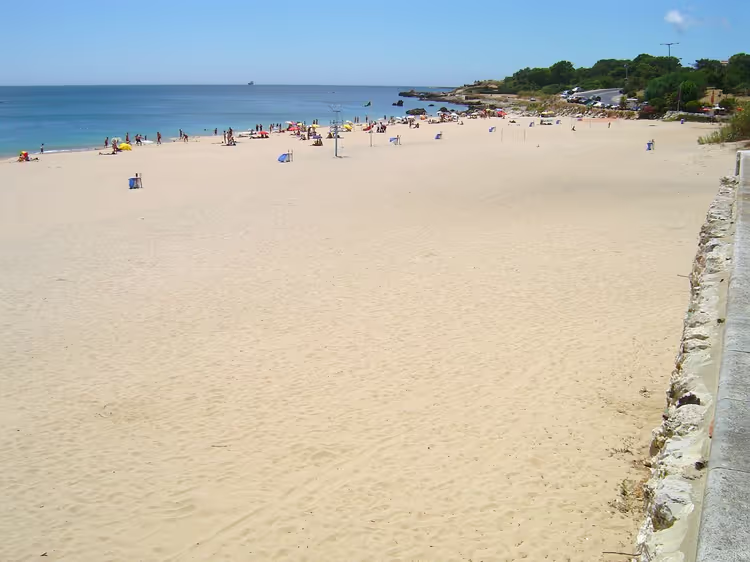 © Vitor Oliveira from Torres Vedras, PORTUGAL · CC BY-SAPhoto: Vitor Oliveira from Torres Vedras, PORTUGAL, CC BY-SA (https://creativecommons.org/licenses/by-sa/2.0), Wikimedia Commons
The town of Paço de Arcos is part of the municipality of Oeiras, and its beach was the first in the country to be developed. Today the shore is divided into two parts: the new and the old.
The new half is well equipped, but in season it gets very crowded and finding a free spot is difficult. The old part is protected by a long breakwater and has been claimed by fishermen: boats and gear lie right on the sand. The two parts of the beach are separated by the buildings of the Sailing Center and the closed grounds of the lighthouse authority. Nearby, a municipal garden with the ruins of an old fort has been laid out. Not far from the shore, a geyser fountain shoots up and is beautifully lit in the evening. On the western side of the strip there are rocks and small pools, and a bridge with an arch leads to the cliff.
- The catch: during the swimming season there is nowhere to stand on the new beach.
17. Praia da Foz do Sizandro
 © Alexkom000 · CC BYPhoto: Alexkom000, CC BY (https://creativecommons.org/licenses/by/4.0), Wikimedia Commons
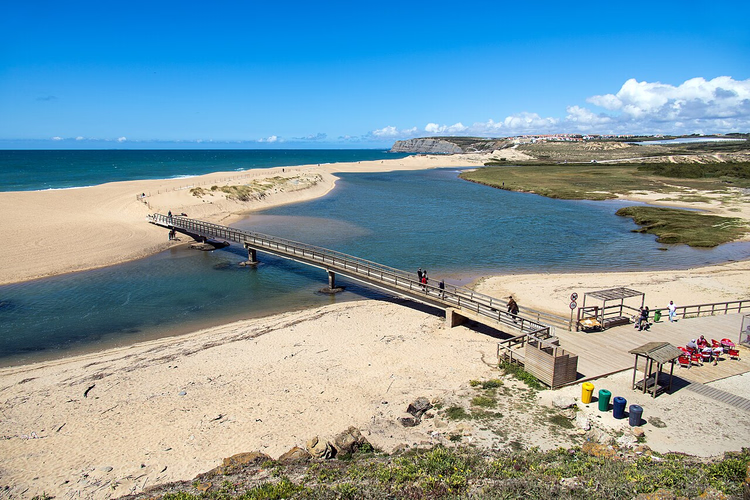
A curved sandy strip is washed by the ocean on one side and a river on the other. Two paths lead to the shore: via the neighboring Azul beach or over a pedestrian bridge from the village.
The bridge is accessible only in summer at low tide, and in autumn the tide covers half of it. Even in summer it is uncrowded here, because the water rarely warms up. Strong winds often blow in this area, and big waves attract surfers. The beach has a rental point for water sports and fishing equipment, showers, parking, and security. You can have lunch at the local restaurant or grab something cold at the bar. At the river mouth a shallow lagoon forms, where children usually splash around.
- The catch: the water is cold, and the bridge only works at low tide.
18. Praia de Santa Marta
 © Vitor Oliveira from Torres Vedras, PORTUGAL · CC BY-SAPhoto: Vitor Oliveira from Torres Vedras, PORTUGAL, CC BY-SA (https://creativecommons.org/licenses/by-sa/2.0), Wikimedia Commons
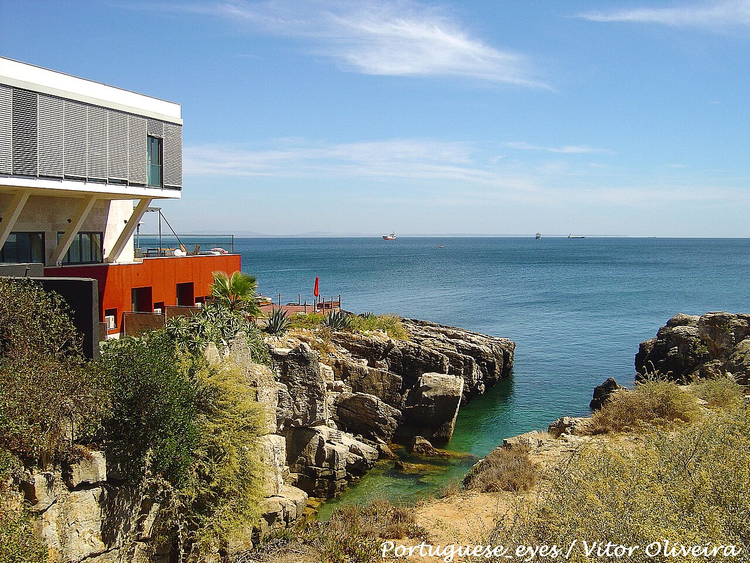
This place hardly resembles a typical beach. Nobody swims here, and there are no loungers, umbrellas, or sanitary control. Visitors are drawn by the unusual surroundings: an old Roman bridge with a stream flowing beneath it, and a palace covered in ivy.
A small sandy area lies at the end of a narrow inlet, and a pool is built into the rocks. At high tide, the water reaches the walls of the palace that once belonged to a count. The yellow walls and the stone tower with a Gothic roof look very elegant. Today the palace houses a museum with the count's collection. Next to the working lighthouse stands a second building that tells the history of Portuguese lighthouses. You'll find it interesting even without swimming.
- Who it's for: those who come for the architecture and views.
- The catch: there's nowhere to swim here, and no infrastructure.
19. Praia das Avencas
 © Vitor Oliveira from Torres Vedras, PORTUGAL · CC BY-SAPhoto: Vitor Oliveira from Torres Vedras, PORTUGAL, CC BY-SA (https://creativecommons.org/licenses/by-sa/2.0), Wikimedia Commons
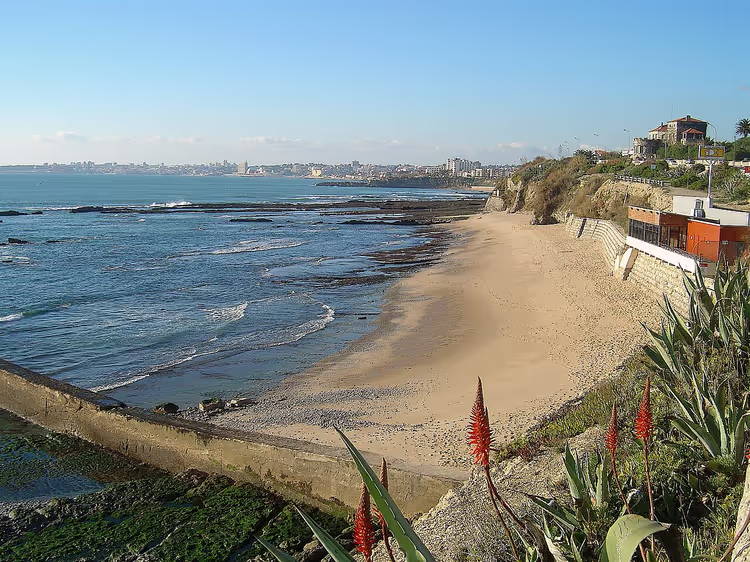
This small beach got its name from a medicinal fern that grows in the surrounding area. The terrain here is unusual: Avencas is almost completely enclosed by picturesque cliffs.
You can reach the sand via a narrow staircase from the walking path along the road or through a tunnel in the cliffs. The eastern edge is protected by a breakwater and the western edge by natural stone walls, so there is almost no wind here. The water stays cool even at the height of summer, but the beach is never empty. At low tide the bottom with its stone ridges is exposed, and it is fascinating to observe the marine life. Visitors often walk to the neighboring Bafureira beach, and you can follow the same route. Avencas has lounger and umbrella rentals, a first-aid station, lifeguards, a bar, and restrooms.
- The catch: the water is cold, and not everyone finds it comfortable for swimming.
20. Praia da Parede
 © Vitor Oliveira from Torres Vedras, PORTUGAL · CC BY-SAPhoto: Vitor Oliveira from Torres Vedras, PORTUGAL, CC BY-SA (https://creativecommons.org/licenses/by-sa/2.0), Wikimedia Commons
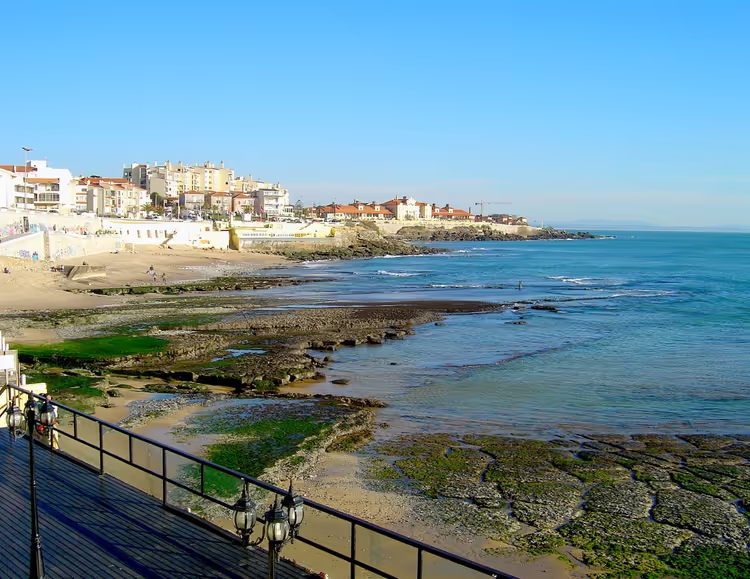
This beach is known as a place where musculoskeletal conditions are treated. Due to its natural features, a special microclimate has developed here: the air and water are rich in iodine.
People come here for treatment at two well-known orthopedic clinics. The St. Anne's Hospital was opened here back in the early 20th century. At high tide only a narrow strip of sand remains, but there are always plenty of visitors. The beach is accessible through three tunnels in the cliffs, so you can get here without a long walk. In the middle of the last century, a massive wall was built along the shore, and two cafes with terraces were placed on top of it. Parede has been awarded the Blue Flag for its environmental quality. The bottom is rocky, and at low tide round depressions are visible on the rock slabs. According to researchers, these are traces of dinosaurs that lived here millions of years ago.
- The catch: the bottom is rocky, and getting into the water is awkward.
21. Praia da Coelha
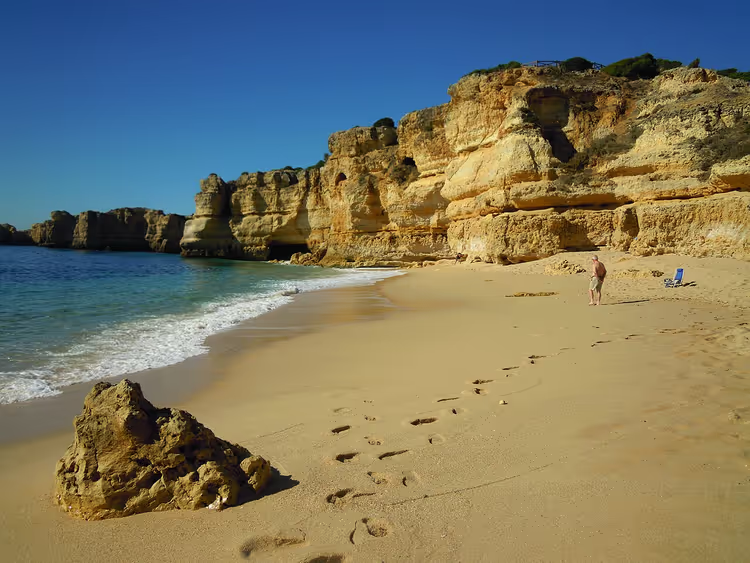 © Beeston · CC BYPhoto: Beeston, CC BY (https://creativecommons.org/licenses/by/3.0), Wikimedia Commons
A small strip of sand is protected by a ridge of unusually shaped cliffs. It resembles the half-ruined walls of an ancient amphitheater, and the beach is very popular with visitors.
At high tide the beach area shrinks noticeably, but there are always plenty of people here. The clean sandy bottom and easy entry into the water make it a relaxed place to spend time with children. Adults and teenagers snorkel among the rocks and watch the marine life. The beach has equipment rentals, a restaurant, and lifeguards. A path about half a kilometer long leads from the village to the shore: it passes between olive and oak groves, dwarf palms, and ancient carob trees. You descend to the sand by a staircase in the cliffs, and at the western end there is a grotto and a tiny wild beach.
- Who it's for: families with children, because the water entry is easy.
- The catch: at high tide there is little space on the sand.
22. Praia da Senhora da Rocha
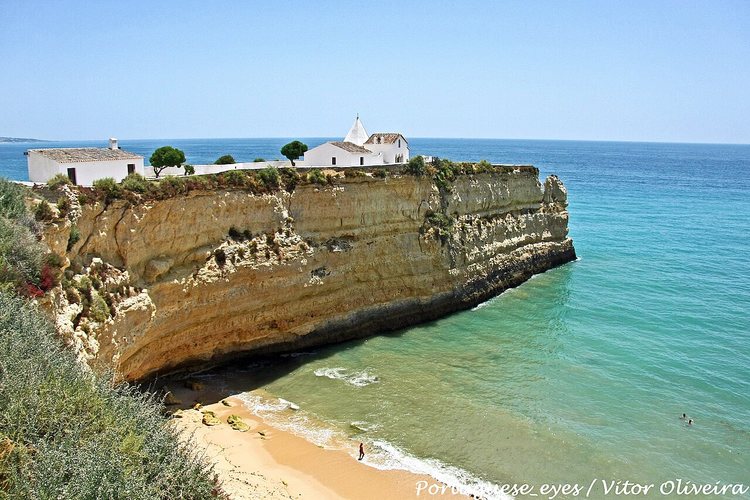 © Vitor Oliveira from Torres Vedras, PORTUGAL · CC BY-SAPhoto: Vitor Oliveira from Torres Vedras, PORTUGAL, CC BY-SA (https://creativecommons.org/licenses/by-sa/2.0), Wikimedia Commons
On the outskirts of Armação de Pêra lies a small beach that many consider a model of the ideal shoreline. It is enclosed on two sides by steep cliffs, and its cleanliness and environmental quality have earned it the Blue Flag.
The water gradually erodes the cliffs that stand directly in the sea, exposing their horizontal layers. The western edge of the beach is crowned by a cliff with the ruins of an old fortification and a chapel dedicated to Our Lady. A tunnel has been cut through the rock mass, leading to the neighboring cove. The beach is well equipped and sheltered from the wind, and the water here is warmer than in the surrounding areas. At low tide you can reach quiet coves and caves from fishing boats. On the first Sunday of August, a religious procession with an image of the Virgin Mary makes its way from the fort down to the sea.
- The catch: in summer the beach is small and fills up quickly.
23. Praia da Albandeira
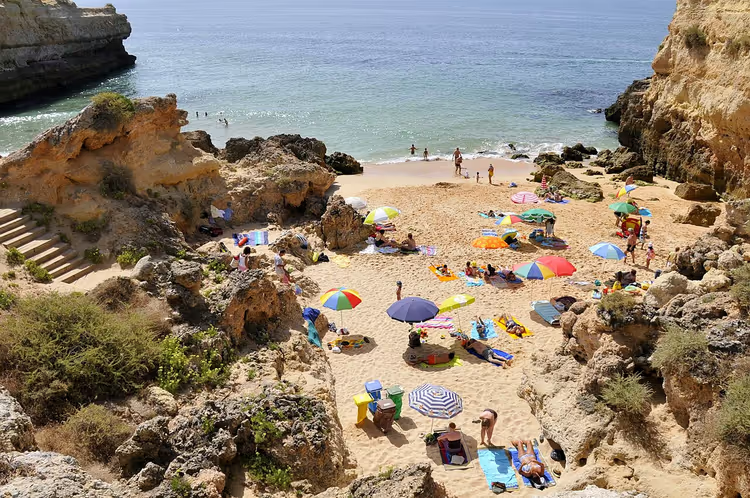 © CTHOE · CC BY-SAPhoto: CTHOE, CC BY-SA (https://creativecommons.org/licenses/by-sa/3.0), Wikimedia Commons
This spot will appeal to those looking for wild nature rather than comfort. The beach is surrounded by grand cliffs, and in some places their "caps" overhang the water and form grottoes.
There is also a huge natural arch here that astonishes with its shapes and size. Albandeira has no modern conveniences: just a parking lot and a small cafe. Rock formations divide the beach into two parts. At low tide mini-pools form between the rocks, and a tunnel leads to the neighboring wild beach. Five unusual caves are nearby, and a little farther on there is a rocky islet with a tiny patch of sand in a cove. Bats and seabirds live in the caves, and they are fascinating to watch. Walking paths and picnic areas have been set up in the surrounding area.
- The catch: no facilities apart from the parking lot and cafe.
24. Praia de Vale Centeanes
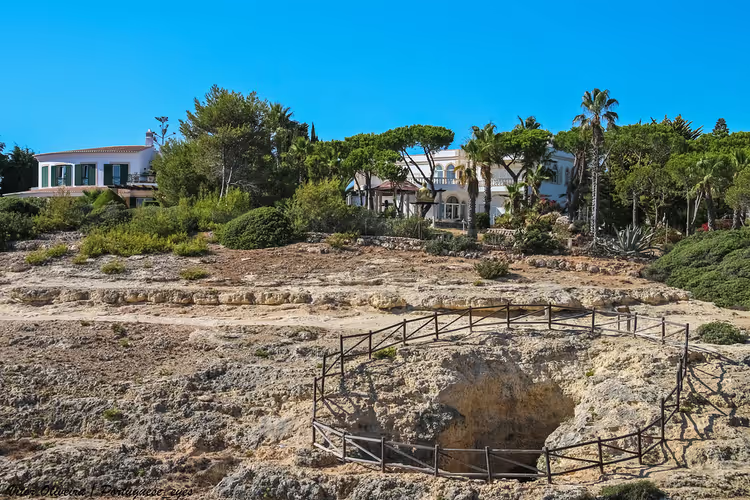 © Portuguese_eyes · CC BY-SAPhoto: Portuguese_eyes, CC BY-SA (https://creativecommons.org/licenses/by-sa/2.0/), Flickr
Towering yellow cliffs surround this medium-sized beach between rocky giants. The spot lies on the outskirts of Carvoeiro, and it is easy to reach: the cliffs are separated by a ravine with gentle walkways and parking.
The area is well equipped, with a dive center and boat rentals, loungers and umbrellas available, and lifeguards on duty. The underwater world is rich, and divers find plenty to explore here. In summer the water warms up, swimming is comfortable, and there is almost no wind. At low tide a cave is exposed at the western end, and farther on among the cliffs hides a huge arched cave on a wild beach. The eastern edge is notable for a cliff with excellent views and an old square lighthouse.
- Who it's for: those who want to combine beach time with diving.
25. Praia da Conceição
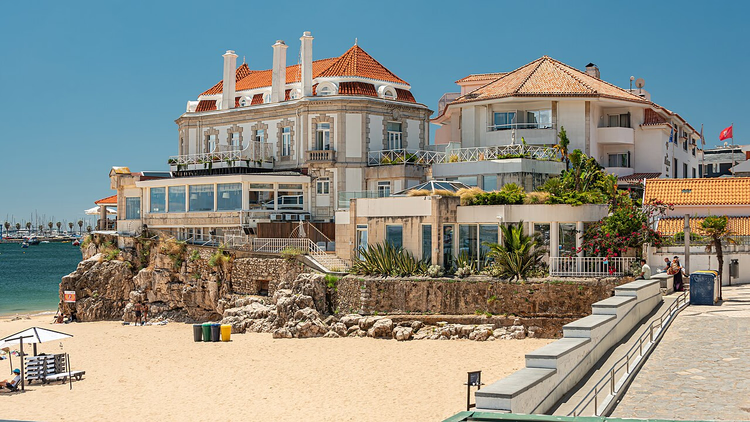 © Jorge Franganillo · CC BYPhoto: Jorge Franganillo, CC BY (https://creativecommons.org/licenses/by/2.0), Wikimedia Commons
This is one of the busiest beaches in Cascais. It is named after the Church of the Immaculate Conception and sits right next to the railway station.
The church on the western side of the beach is considered a symbol of faith: after the devastating 18th-century earthquake, the temple survived and became a place of pilgrimage. Nearby, a crucifix is carved into the cliff, commemorating an old shipwreck from the early 17th century. The beach got its modern name, Palm Beach, from the palm-lined avenue that frames the shore. A seaside promenade starts from this avenue. The beach has good infrastructure, rows of umbrellas, ramps, and cafes. The sand is clean and soft, with no stones, while the water is fairly cool, so you are unlikely to want to swim for long.
- The catch: the water is cool, and long swims are difficult.
Our pick: which beach suits you
If you want | Choose this beach |
|---|---|
Wild nature without crowds | Praia da Ursa, Praia da Albandeira |
Swimming with children | Praia das Maçãs, Praia de Santo Amaro de Oeiras, Praia da Torre |
Waves and wind | Praia do Magoito, Praia da Foz do Sizandro, Praia das Moitas |
Warm water | Praia da Senhora da Rocha, Praia de Vale Centeanes |
Architecture by the shore | Praia de Caxias, Praia de Santa Marta, Praia da Conceição |
An urban beach near Lisbon | Costa da Caparica, Praia de Algés, Praia de Cruz Quebrada |
Portugal's beaches on the map
All twenty-five spots from the list are marked on a single map. You can open it and plan your coastal route in advance.
Beaches of Portugal
Places on the map
- 1Magoito Fossil dunes and a wooden boardwalk to the water in Sintra-Cascais park
- 2Azenhas do Mar Tiny beach beneath a white cliffside village, pool in the rock
- 3Praia da Ursa Wild beach with a bear-shaped rock, hard to reach
- 4Maçãs Wide gentle beach near Sintra, historic narrow-gauge railway
- 5Costa da Caparica Large resort on a sandbar with the Transpraia train along the beaches
- 6Assenta Rocky shore with a waterfall, more for viewing than swimming
- 7Algés Quiet beach by fishing docks on the Lisbon Riviera
- 8Cruz Quebrada Uncrowded fishermen's beach next to a sports complex
- 9Caxias Beach between two old forts at the mouth of the Tagus
- 10Santo Amaro de Oeiras Best beach of the Lisbon Riviera with full infrastructure
- 11Torre Beach by São Julião da Barra fort, gentle entry for kids
- 12Azarujinha Amphitheatre beach among rocks, almost no sand at high tide
- 13Poça Estoril beach with a gold award for water cleanliness
- 14Moitas Triangular beach by a glass building, popular with windsurfers
- 15Tamariz Estoril beach by the casino, first to get the Blue Flag
- 16Paço de Arcos Country's first developed beach, old and new sections
- 17Foz do Sizandro Sandbar between ocean and river, popular with surfers
- 18Santa Marta Not a swimming beach but a Roman bridge and a waterside palace
- 19Avencas Beach among the rocks, named after a medicinal fern
- 20Parede Beach with an iodine microclimate and dinosaur tracks on the slabs
- 21Conceição Busy Cascais beach by the station, known as Palm Beach
⁉️🤔 Frequently asked questions
How are Portugal's Atlantic beaches different from Mediterranean ones?
The water in the Atlantic is colder, and there are almost always waves here, so not everyone is ready to swim for long. On the other hand, the coastline is longer and the beaches are more varied: near Lisbon they are wild rocky stretches, while in the Algarve the cliffs are lower, the water is warmer, and the season lasts longer.
Where in Portugal can you swim with children?
Choose beaches with a gentle slope into the water and protection from waves. In our list, these are Praia das Maçãs, Praia de Santo Amaro de Oeiras, Praia da Torre, and Praia da Conceição. The large urban beaches of Costa da Caparica are also calm, but in season they get very crowded, and you need to keep a close eye on your child.
Can you get to the beaches without a car?
Yes, most of the list is connected by commuter trains and buses. From Lisbon, the train runs along the coast to Caxias, Santo Amaro, Torre, and then on to Cascais. Along Costa da Caparica, the Transpraia tourist train runs with stops at the beaches. To Sintra and its coastline, it's more convenient to go by train and then take a local bus.
When is the best time to go to the beaches around Lisbon?
The swimming season here is short and cool: it's most comfortable from July to September. Even in these months, the water rarely rises above twenty degrees, and the wind often picks up toward evening. Bring a warm sweater and a windbreaker, and plan your swimming for the first half of the day.
How much does beach access cost?
Access to all beaches in Portugal is free; you only pay for loungers, umbrellas, and parking. At developed beaches, rental prices vary, and at wild stretches there is no infrastructure. Bring your own towels, mat, and umbrella if you don't want to spend money on site.
In short: what's worth booking
If you have only one day in Lisbon, go for Caxias or Costa da Caparica. If you want quiet, go for the wild Ursa and Albandeira. If you're traveling with children, go for Maçãs or Torre. Choose a beach based on the weather and wind: on windy days, sheltered coves like Avencas and Parede are better, while in calm weather the wild Albandeira and Ursa open up. The urban beaches of Lisbon get crowded by midday, so arrive in the morning. Bring an umbrella, a towel, and a warm sweater: the water in the Atlantic stays cool even in August.

A small editorial team writing guides for independent travel. We travel ourselves, but we haven’t been everywhere, so we check prices, opening hours and how to get there against official sources.