
















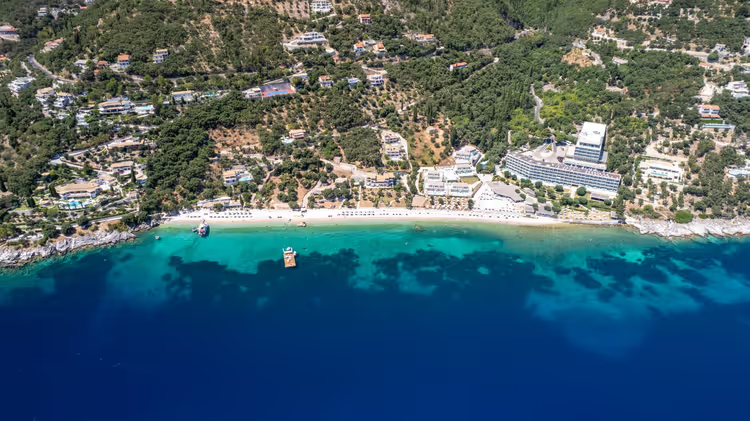
Where to go in Greece in 2026: 25 resorts for different types of holidays
Greece ranks second in the world for the number of Blue Flag beaches (as of 09/2026, Blue Flag). The country has more than six thousand islands and islets, but only 227 of them are inhabited (as of 09/2026, Visit Greece). Choosing just one resort from such a list is genuinely difficult.
We put together 25 destinations and organized them by type of trip: beach, family, romantic, wellness, and active. For each resort you will see who it suits, when the weather is comfortable, and what catch you will have to accept. Where a price or fact needs verification, the date and source are provided.
💡 In short:
- Decide on the type of trip first: beach, wellness, history, or nightlife.
- Then pick the season: May and September are milder and cheaper than July and August.
Ad: this article contains affiliate links, so we earn a commission if you book through them, at no extra cost to you.
1. Crete: birthplace of myths
Crete, the country's largest island, welcomes more visitors than any other region of Greece (as of 09/2026, official Crete portal). The west of the island is chosen for its authentic atmosphere: old houses, cobblestone streets, sandy beaches. The east suits families better because the sea is calmer there and the entry into the water is gradual.
 © Ввласенко · CC BY-SAPhoto: Ввласенко, CC BY-SA (https://creativecommons.org/licenses/by-sa/3.0), Wikimedia Commons
Heraklion, the island's capital, is named after Heracles. The city works well as a base: developed infrastructure, a mild Mediterranean climate, shops, restaurants, spas, and entertainment centers. From here you can easily reach both mountain villages and the main beaches.
The Lasithi region appeals to lovers of beautiful views: Mirabello Bay, windmills, scenic landscapes. The main resorts in this part, Agios Nikolaos and Elounda, maintain a high standard of hotels and service.
Rethymno connects antiquity with modern life, and the city itself recalls its Venetian past. Beaches stretch along the coast for kilometers: there are secluded coves for couples and gently sloping areas for children.
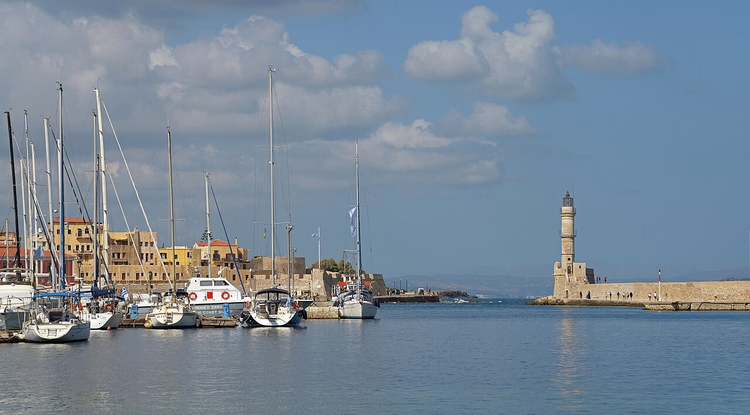
Chania, the most atmospheric city in the west, resembles Venice: old houses, narrow streets, hotels in historic buildings. It is the closest base to Balos Lagoon and the Samaria Gorge. It is quieter and noticeably cheaper than Heraklion, and the sea warms up well in summer. If you came for the beach, add Stalos, Elafonisi, and Stavros to your route.
If this is your first visit, split your vacation between two bases: the west with Chania and Rethymno, and the east with Agios Nikolaos. That way you can see the island's main natural sights without rushing. Buses run between the cities, and it is convenient to rent a car at Heraklion airport: distances on Crete are long, and mountain roads take more time than the map suggests.
2. Corfu: green and family-friendly
 © Martin Falbisoner · CC BY-SAPhoto: Martin Falbisoner, CC BY-SA (https://creativecommons.org/licenses/by-sa/4.0), Wikimedia Commons
Corfu, a green island in the Ionian Sea, preserves traces of many cultures, from the Venetians to the British. You can see it in the language, cuisine, and architecture. Locals honor their traditions, and the old towns have gradually turned into resorts.
Resort centers are scattered across the island: Perama and Kanoni, Kavos and Ermones. The south is chosen for nightlife and large hotels, while the central part has the most resorts. The northern calling card, Sidari, is known for its large water park and quiet coves.
Acharavi Beach, the main one on the island, stretches for several kilometers, so there is enough space for both families and couples. Corfu gets frequent rain in winter, so plan your beach trip for the warm season.
3. Peloponnese: antiquity and quiet

The Peloponnese, in southern mainland Greece, is chosen by those who value museums, landscapes, and long walks outdoors. There are fewer tourists here because there are almost no large premium hotels or entertainment complexes.
This quiet attracts fans of a healthy lifestyle and wellness tourism. The Corinthia prefecture has healing mineral springs, and families with small children will find Lakopetra convenient: it has a water sports center and a gentle entry into the sea.
The coziest beaches lie on the west coast, next to ancient monuments. The peninsula also has plenty of tavernas and bars, and the menus are almost everywhere homemade and Greek. If you are looking for a calm, unhurried vacation, this destination will suit you.
Hotels in the Peloponnese on Trip.com
4. Athens: an open-air museum
 © A.Savin · CC BY-SAPhoto: A.Savin, CC BY-SA (https://creativecommons.org/licenses/by-sa/3.0), Wikimedia Commons
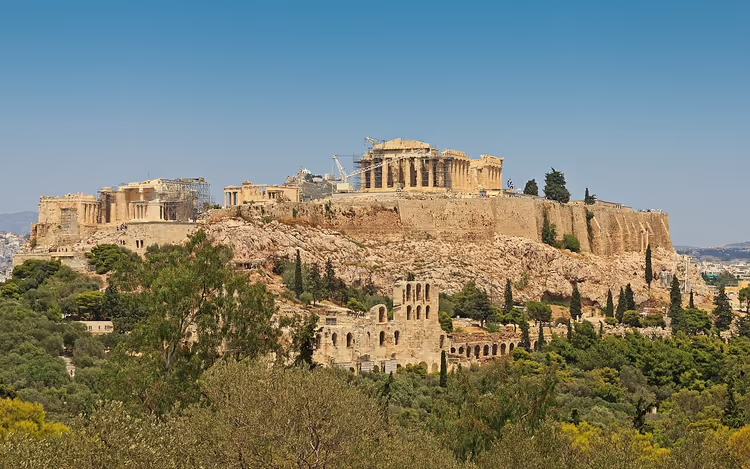
Athens suits both families and large groups. It is a metropolis with an ancient core: first you head to the Acropolis, where the Parthenon stands, one of the most famous monuments of antiquity. Nearby are the National Archaeological Museum and the Benaki Museum.
Another must-see is the Plaka district. The capital's oldest streets survive here, and souvenir shops fill the entire neighborhood. There is plenty of food too: cafes and tavernas are everywhere you look.
If you are traveling with children, add the National Zoo and the city park. By car or suburban train you can easily reach Loutraki, which has a wellness center with hydromassage and therapeutic baths.
The cultural program in Athens is almost endless: there are so many museums, galleries, and monuments that you cannot cover them in one visit. So choose two or three main stops in advance and leave the rest for next time. In the evening, head up to a viewpoint: you can see almost the entire city, and it is the best way to end the day.
5. Piraeus: the port and the sales
 © George E. Koronaios · CC BY-SAPhoto: George E. Koronaios, CC BY-SA (https://creativecommons.org/licenses/by-sa/4.0), Wikimedia Commons
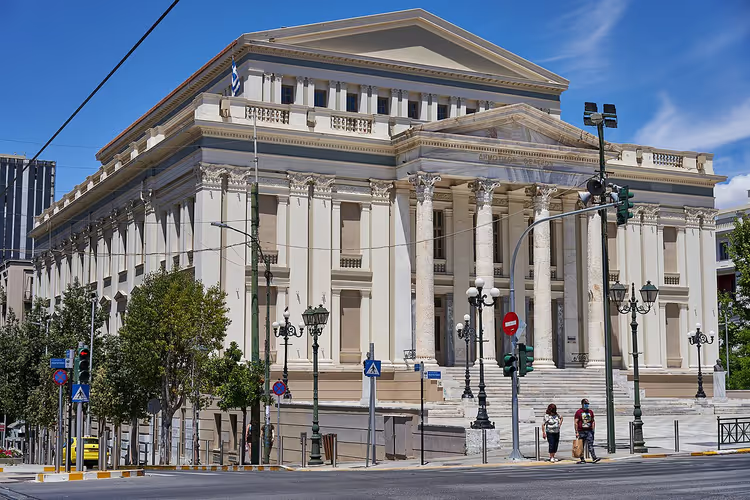
Piraeus, the port next to Athens, is associated with beaches and sea cruises. Here antiquity meets modern life, and the small harbors are beautiful in any weather. Many visitors to the country unfairly underestimate this city.
Piraeus is also good for shopping: prices in the shopping areas are lower than in the capital, so locals book their time around the sales well in advance. There are plenty of museums here too, so you can fill your day without rushing.
Cafes, shops, and restaurants are concentrated around the harbor. The seafood selection here is one of the best in the region, and hotels compete for guests with the quality of their menus and breakfasts.
6. Rhodes: wind, walls, and spas
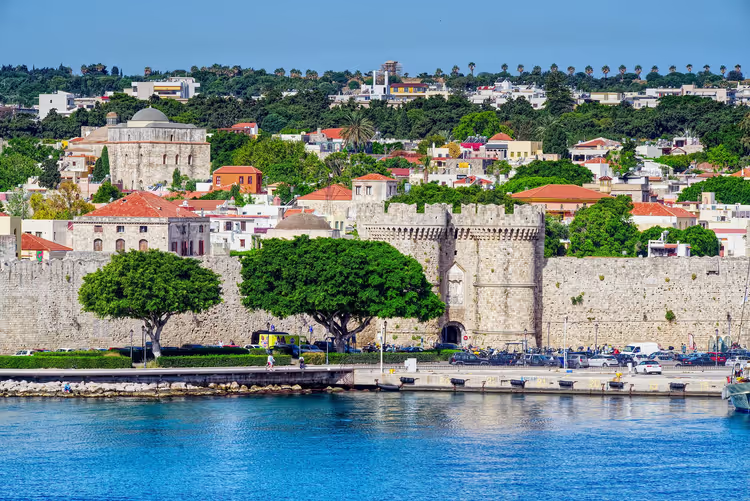
Rhodes, an island and a city with the same name, is called Greece in miniature. Almost every settlement works as a separate resort with developed infrastructure. The place is loved by windsurfers, because the wind blows here regularly.
An important detail: the shores are mostly sand and pebble, and the entry into the sea is steep. These beaches are not convenient with small children. However, near the village of Gennadi there is a long sandy beach, cafes with children's menus, and shops for young travelers.
Tsambika Beach is designed specifically for children, with a gentle entry. Plus, Rhodes is known as a spa destination: people come here from all over the world for the thermal springs and treatments with sea mud.
7. Thira: sunsets over the caldera
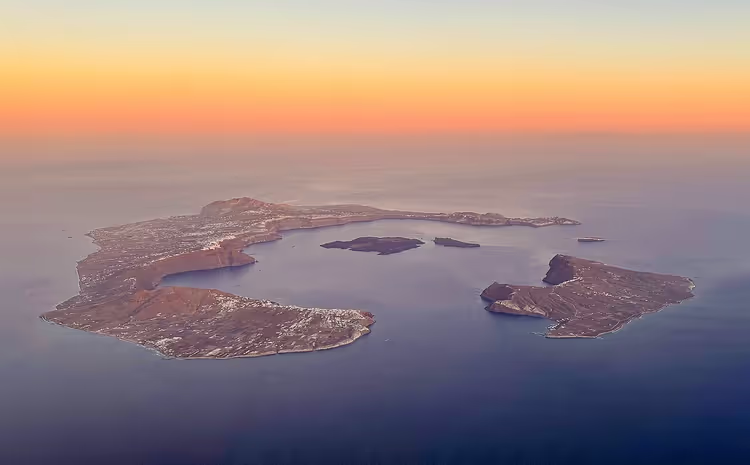 © kallerna · CC BY-SAPhoto: kallerna, CC BY-SA (https://creativecommons.org/licenses/by-sa/4.0), Wikimedia Commons
Thira, more often called Santorini, lies in the Aegean Sea. It is one of Greece's main attractions: white houses on cliffs, blue domes, a view of the caldera. In summer it is warm and sunny here, and winters are mild.
The island suits couples, because all the conditions for a romantic getaway are in place here. Guests climb up and down a steep staircase of hundreds of steps, and in the evening the slopes light up with hundreds of lights above the sea. The sunsets here are considered among the best in the world, and you will understand why on your very first evening.
A separate reason to come is the local wine Vinsanto, which is made without adding sugar. After your walks, you can swim in the clear waters of the Aegean Sea or take up water sports. Bars, restaurants, and clubs operate almost around the clock.
Hotels in Santorini on Trip.com
8. Mykonos: white houses and nightlife
 © dronepicr · CC BYPhoto: dronepicr, CC BY (https://creativecommons.org/licenses/by/2.0), Wikimedia Commons
Mykonos is known for its crystal-clear water and a town drenched in sunshine. A free-spirited lifestyle is the norm here, so the island attracts people who value openness and don't like strict rules. By day the island looks calm, and at night it turns into one big party.
Whitewashed houses with windows in every color of the rainbow have long been the island's symbol. Restaurants and cafes cater to any budget, and there are enough clubs and discos to last a whole week.
If you want to get to know the island more deeply, check out the archaeological, ethnographic, and maritime museums. After that, the logical next step is to visit the neighboring islands: most tourists choose Delos and Thira. Some researchers believe Thira is a remnant of the lost Atlantis.
9. Kos: pine trees, wind, and the Asclepieion
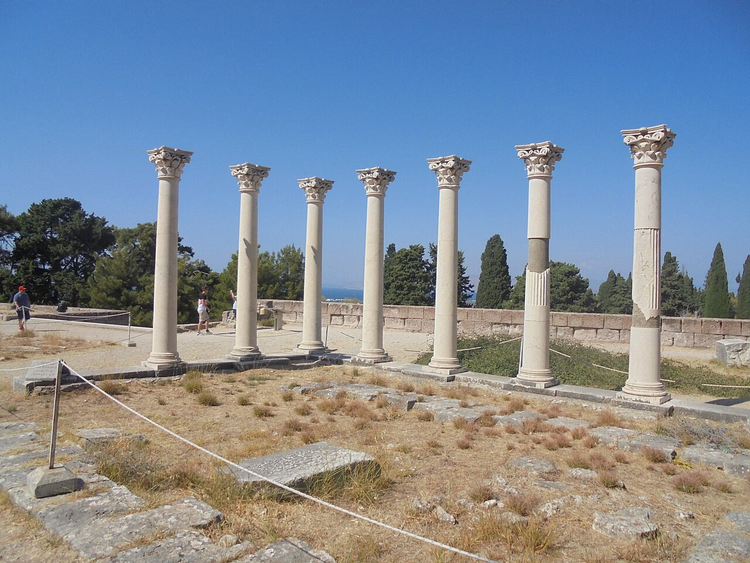 © ΑΝώΔυΝος · CC BY-SAPhoto: ΑΝώΔυΝος, CC BY-SA (https://creativecommons.org/licenses/by-sa/4.0), Wikimedia Commons
Kos attracts tourists from all over the world. The temple complexes honoring Asclepius, the legendary physician and son of Apollo, are well preserved here. This is exactly what gave the island its reputation as a healing destination.
The air over the island is considered therapeutic: many trees, shrubs, and herbs grow here that release phytoncides. Hotels and entertainment are concentrated on the northern and southern coasts. For village charm, head to the central part of the island, to the villages near the local airport.
The northern resorts of Lambi, Psalidi, and Tigaki are known for strong winds, so windsurfers feel right at home here. The south, by contrast, is calmer, and it's also close to historical sites and the hot spring in Agios Fokas. If you want a spa vacation, choose the southern side.
10. Halkidiki: three peninsulas
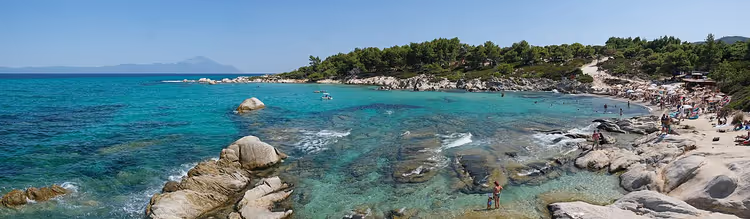 © kallerna · CC BY-SAPhoto: kallerna, CC BY-SA (https://creativecommons.org/licenses/by-sa/4.0), Wikimedia Commons
Halkidiki is loved by foreign tourists and locals alike. The peninsula is vibrant and lively, but it's also easy to find cozy spots for a quiet family vacation here. Clean sea and well-maintained beaches with gentle entry do their job.
Christian pilgrims come here year-round: Mount Athos is nearby. Women are not allowed into the monastic complex, but a boat trip along the shores of this holy stretch of land already means a lot to believers. You can also stay in the monasteries, spending your vacation in fasting and prayer.
Each part of the peninsula is interesting in its own way. In the north, residents of mountain villages are always happy to welcome guests, and natural and architectural landmarks are excellently preserved. An important point: room rates here depend on the area, so experienced travelers recommend comparing prices and asking about early booking discounts in advance.
Hotels in Halkidiki on Trip.com
11. Zakynthos: bays and sea turtles
 © dronepicr · CC BYPhoto: dronepicr, CC BY (https://creativecommons.org/licenses/by/2.0), Wikimedia Commons
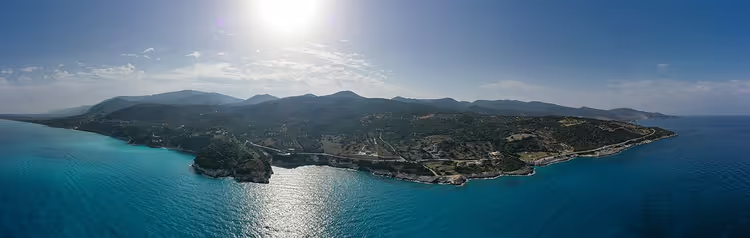
Zakynthos is loved by yachtsmen, and in ancient times Odysseus himself admired it. The water along the coast is bright blue, and the local beaches are ranked among the best in the world. If you're chasing views, head to the west of the island: lookout points stand one after another there.
Most hotels are located on the southern shore. There are especially many British tourists here, and accommodation fits any budget: from guesthouses by the sea to 4-5 star hotels. All-inclusive vacations take all the hassle away, while simpler hotels have their own pools and restaurants.
Another reason to choose Zakynthos: sea turtles. On some beaches they swim close to people, so you can easily snap a photo to remember the trip.
Hotels in Zakynthos on Trip.com
12. Paros: wine and rocks
 © Domob · CC BY-SAPhoto: Domob, CC BY-SA (https://creativecommons.org/licenses/by-sa/4.0), Wikimedia Commons
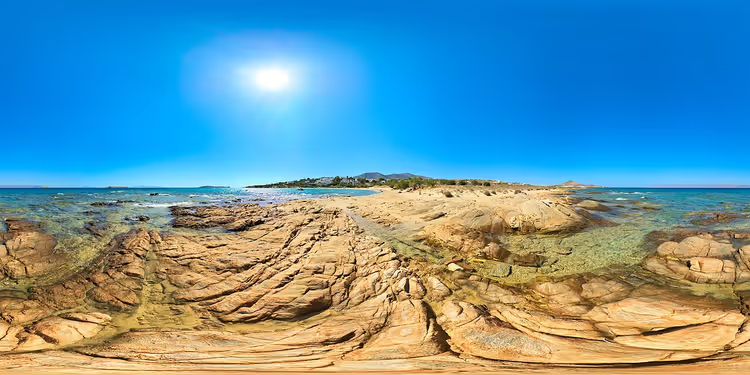
Paros is rapidly changing its appearance for the tourism industry: the southern part is gradually turning into a major resort complex. The island has long been famous for its wines, so investors are putting money into gastronomic tourism and promoting traditional Greek cuisine.
The island is also known for the views that artists have painted. Unusually shaped rocks are scattered across the entire territory, and people come from all over the world to admire them. Beaches, entertainment, and hotels are concentrated in the eastern part, which helps preserve nature and historical sites.
If you want to combine beach time and good food, Paros is a great fit. Just keep in mind that the island is actively developing, and there won't be any quiet in high season.
13. Volos: a city by the sea
 © Tsints · CC BY-SAPhoto: Tsints, CC BY-SA (https://creativecommons.org/licenses/by-sa/3.0), Wikimedia Commons
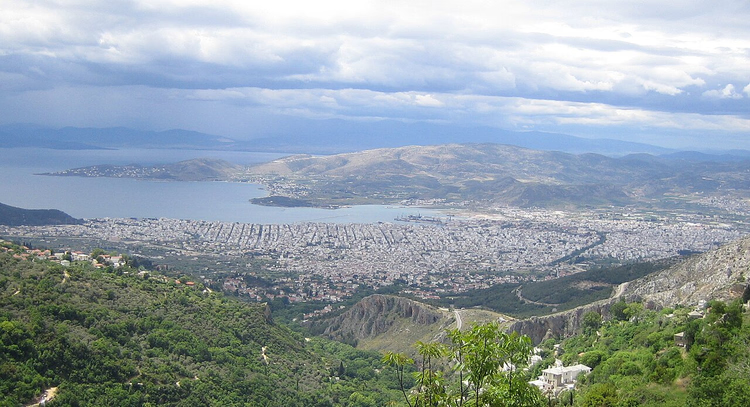
Volos combines a major industrial center and a popular resort. Everything here is steeped in myth: the hero Jason was born in this part of Greece, and the city itself stands on the ruins of three of its predecessors. Lovers of antiquities appreciate this kind of proximity.
Hotels are concentrated in the center and along the waterfront, and there are not that many of them. But the atmosphere is distinctive, and archaeological and historical sites, a park, and a small museum are all nearby. The beach in the city is municipal, but walking along the shore is pleasant.
If you are traveling through mainland Greece and want to stop for a day or two, Volos is convenient. For quiet and nature, you will head to the suburbs or nearby islands.
14. Kefalonia: turquoise beaches of the Ionian Sea
 © Matt Sims · CC BYPhoto: Matt Sims, CC BY (https://creativecommons.org/licenses/by/2.0), Wikimedia Commons
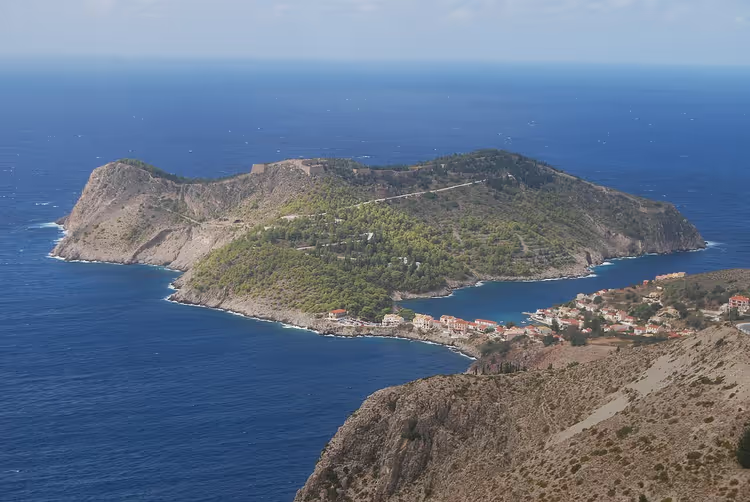
Kefalonia lies in the Ionian Sea, where the weather is almost always sunny. The mountain range and the sea together create the landscape people come here for. After World War II and the 1953 earthquake, the island had to be rebuilt, and it only became a mass-market resort in the 1980s.
You can get there by plane, the island has an airport, or by water. Entertainment options suit every taste: cinemas, nightclubs, and discos sit alongside quiet stretches of coastline. The best beaches, Assos, Myrtos, Petani, and Antisamos, have earned their Blue Flags.
The sea is deep in places, which divers appreciate. Worth seeing separately are the Drogarati cave with its excellent acoustics, where concerts are even held, the World War II memorial, and the monastery of Saint Gerasimos. A boat trip will give you the best view of the island from the water.
Getting around the island is easier by car: beaches are often more than an hour's drive from the capital. Those who love quiet are better off staying in the north, where there are fewer hotels and fewer people.
Beaches with a gentle entry are good for children, and for seclusion head to coves farther from the resorts. In the evening, it is worth returning to the port town and having dinner by the water. Keep in mind that some roads are winding mountain roads, so leave extra time for transfers.
Hotels in Kefalonia on Trip.com
15. Lesbos: Mytilini and thermal springs
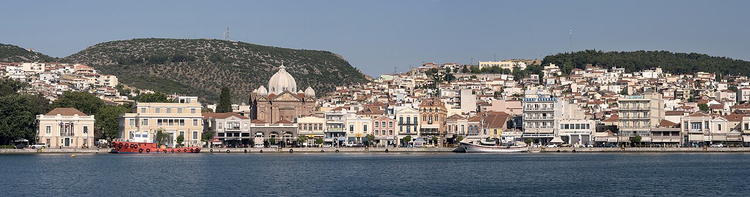 © Ggia · CC BY-SAPhoto: Ggia, CC BY-SA (https://creativecommons.org/licenses/by-sa/4.0), Wikimedia Commons
Lesbos is often called by the name of its main city, Mytilini. Every year an LGBT festival takes place here, and the island is open to a wide range of guests.
Accommodation varies: comfortable hotels in historic buildings, inexpensive family-run guesthouses, and the cheapest lodging in small villages. Many tourists come for the thermal springs and include spa treatments in their itinerary. The coastal strip is essentially one continuous stretch of beaches, as beautiful as postcards, but it gets crowded in high season.
Secluded spots exist too, favored by nudists, and Vatera beach is loved by yachters. Shopping enthusiasts will find traditional clothing, leather shoes, jewelry, and olive oil, and you can bargain in small private shops. For food, locals suggest starting with a Greek salad: if you like it, go ahead and order the rest of the dishes.
16. Naxos: beaches for families
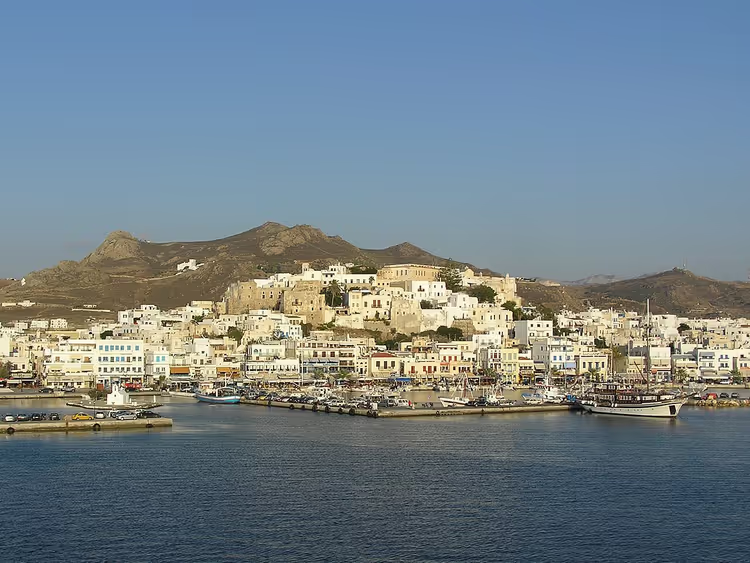 © Rol1000 · CC BY-SAPhoto: Rol1000, CC BY-SA (https://creativecommons.org/licenses/by-sa/3.0), Wikimedia Commons
Naxos is chosen by those who love songs, dancing, lively parties, and shopping. There are about two dozen beaches here, but these recreational areas are known worldwide. There is almost no strong wind, and walking into the warm water along gentle slopes and snow-white sand is a real pleasure.
Some beaches are set up specifically for family vacations. The rocky part of the island, where the wind blows, is, on the contrary, a true windsurfer's dream. The atmosphere in local hotels is homey: cozy, practical, without pretension.
The hospitality of the locals has long been proverbial, and the second universal hobby is delicious food. There is a cult of local cuisine, natural honey, and citrus liqueur here. Fans of crafts and anyone who believes in omens take home talismans and shell amulets from here.
17. Skiathos: pines and quiet
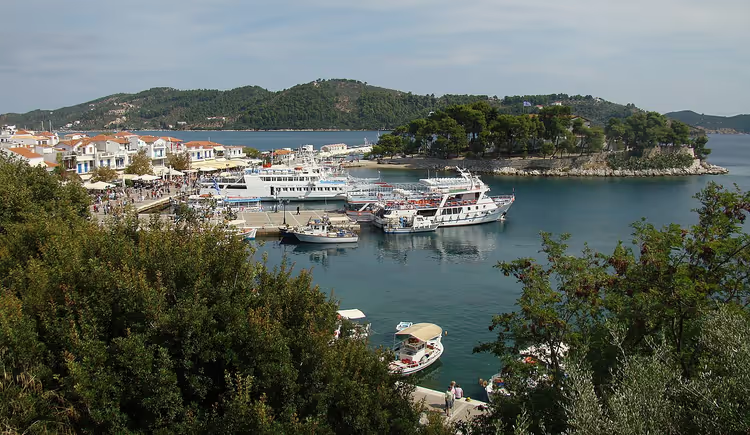 © Wisniowy · CC BY-SAPhoto: Wisniowy, CC BY-SA (https://creativecommons.org/licenses/by-sa/4.0), Wikimedia Commons
Skiathos is small, but it has cafes, hotels, shops, and a summer theater in the ruins of a Venetian fortress. The climate is mild: in summer the air usually warms to comfortable temperatures, and the coniferous forests provide cool shade.
If you are lucky, you will catch the Aegean Arts Festival, which opens every year. Ancient churches and monasteries attract pilgrims and history lovers: the former venerate the icon of the Virgin Mary in the Church of the Three Hierarchs, while the latter head to the Monastery of the Annunciation, where the flag of independent Greece was woven.
The island's beaches are special. Lalaria Beach can only be reached by sea; it is covered with white pebbles, and everyone photographs the stone arch by the water. The second beach is called "Golden Sand," and it really does seem to glow. If the sea is not enough for you, take a walk through the forest to the lake.
Hotels in Skiathos on Trip.com
18. Thasos: greenery and healing springs
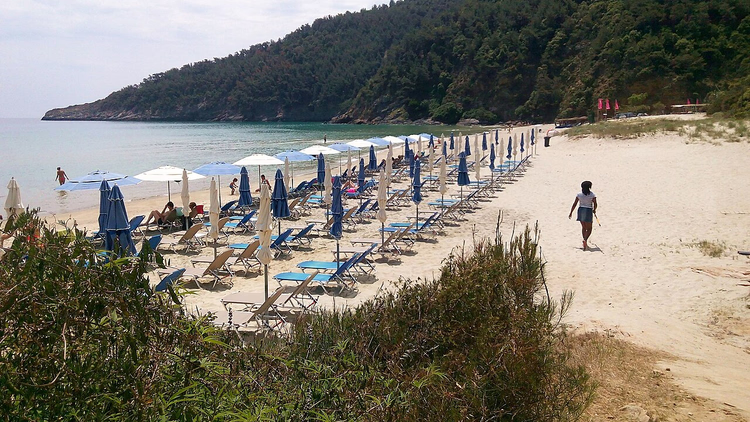 © DocWoKav · CC BY-SAPhoto: DocWoKav, CC BY-SA (https://creativecommons.org/licenses/by-sa/4.0), Wikimedia Commons
Thasos is not for fans of loud entertainment. People come here for quiet, clean air, the sea, mountains, and waterfalls. The island is famous for its springs, which locals consider healing.
All the beaches, including Tripiti, Chrissi Ammoudia, and Potamias, are well maintained. The island is excellent for families with children: the water entries are safe and gentle, and strong winds are rare. One of the main attractions is the pine forest.
Thasos is especially valued for its clean air and pine forest. If you are looking for a peaceful nature getaway, take a closer look at this island.
19. Evia: close to Athens
Evia is about 80 km from Athens on the map, and a bridge connects it to the mainland. The local strait is known for its "standing" waves, which are explained by the movement of currents. The central part of the island is covered with coniferous forests.
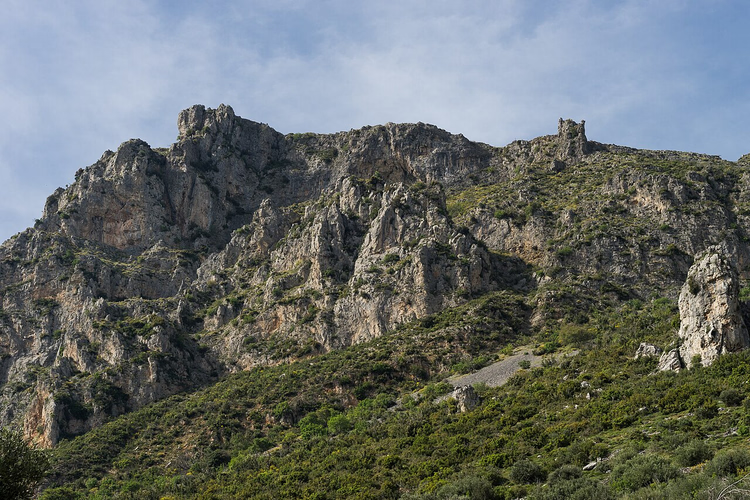
There are also plenty of mineral springs. Many people come here for radon baths and wellness treatments at spa centers: the Roman general Sulla once ordered thermae to be built on the island. Life here is lively, with clinics, 3-4 star hotels, pubs, and tavernas.
Believers will find churches and monasteries. Mystery lovers will be intrigued by the Dragon House, built from giant stone blocks: historians believe an ancient temple once stood here. If you want to get away from Athens for a day or two, Evia is convenient.
20. Kassandra: young crowds and a thermal spring
The name Kassandra recalls the sad fate of the prophetess from the myths of Apollo. The peninsula is part of Halkidiki and attracts young people, fans of active recreation, nightclubs, and foodies. Virtually all local settlements are well-known resorts.
The beaches here are huge and stretch for dozens of kilometers, and water parks and entertainment venues form entire tourist clusters with them. One of the main attractions is the pine forest with a thermal spring. People travel there specifically to improve the health of their skin, joints, and cardiovascular system.
Local honey is served everywhere in Kassandra's cafes and restaurants, and hotels include it in their menus at guests' request. If you enjoy lively vacations and long evenings by the sea, this peninsula will suit you.
Hotels in Kassandra on Trip.com
21. Sithonia: golf and villas
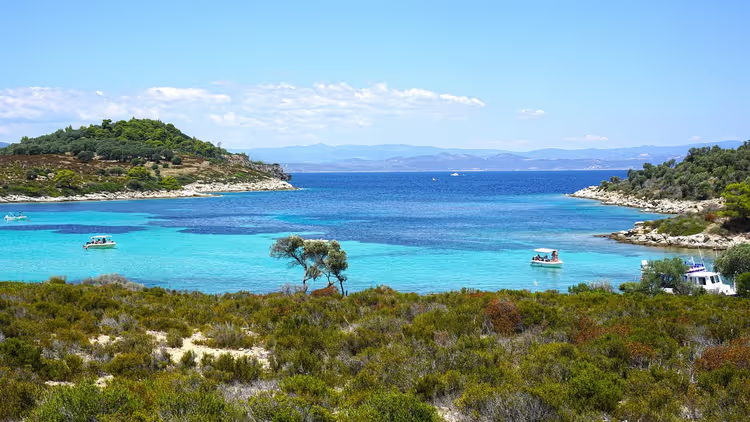
Sithonia is the second peninsula of Halkidiki, where time seems to stand still. A dark legend is tied to the place: it is said that nearby, Hades, the god of the underworld, could emerge onto the surface of the earth. Today the peninsula is a cult destination for golf fans and gambling enthusiasts.
The casino here operates legally, and modern nightclubs coexist perfectly with ancient structures. Tourists come to visit Christian shrines, attend folk festivals in fishing villages, and take a break from the hustle and bustle of big cities.
Building large hotel complexes is prohibited here, so houses blend harmoniously into the landscape. As a result, you can rent cozy rooms in luxurious villas, and at reasonable prices for that level.
Hotels in Sithonia on Trip.com
22. Thessaloniki: the city and suburban beaches
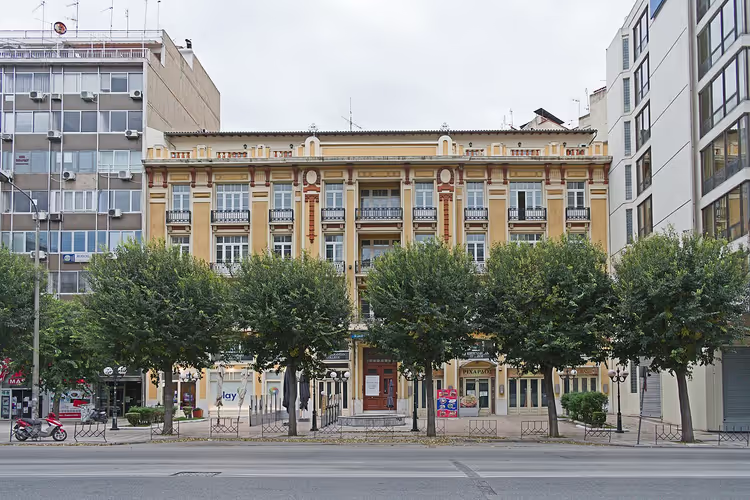 © Ymblanter · CC BY-SAPhoto: Ymblanter, CC BY-SA (https://creativecommons.org/licenses/by-sa/4.0), Wikimedia Commons
Thessaloniki is often called the unofficial capital of Greece. It is a port city loved by fans of boat trips and beach vacations. One important thing to keep in mind: all swimming spots are in the suburbs, and the vibe of different areas varies a lot. The party crowd heads to Perea, while those seeking quiet choose Epanomi.
The central waterfront has become an iconic spot for romantics, foodies, and cyclists. If you do not want to go far from the city, the Kalamaria district, where locals usually spend their time, is a good fit.
For families with children, experienced travelers recommend the resort of Agia Triada. There is not much entertainment here, but it has the cleanest beach, air, and sea in the area, and the water entry is gentle and safe.
Thessaloniki hotels on Trip.com
23. Syros: aristocratic Ermoupoli
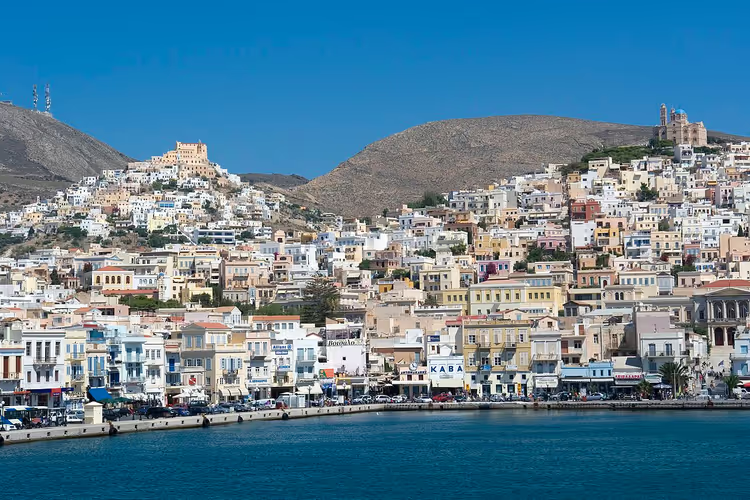 © Hans Peter Schaefer, http://www.reserv-a-rt.de · CC BY-SAPhoto: Hans Peter Schaefer, http://www.reserv-a-rt.de, CC BY-SA (https://creativecommons.org/licenses/by-sa/3.0), Wikimedia Commons
Fans of antiquity may find Syros a bit dull: there are no famous monuments of ancient Greek art here. But the capital, Ermoupoli, has its own archaeological museum. The island's main advantages are its tranquility, unhurried pace, and lack of tourist crowds.
The island, about 22 km long, includes a town and two settlements, and it is sometimes compared to the navel of Greece. Syros is loved by connoisseurs of refined travel, art, and coffee shops: the atmosphere here is aristocratic in its own way. Popular beaches and hotels are concentrated in the southern and western parts.
There are spots for families, groups of young people, and nudists. The most picturesque beach is considered to be Agathopes: a quiet sandy bay that is perfect for families with children. The north of the island is known for its "wild" beaches with no facilities.
24. Skopelos: forest and hundreds of churches
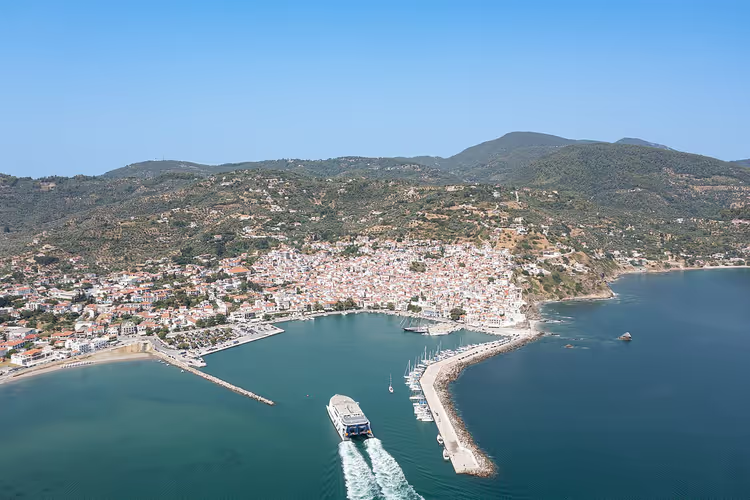 © dronepicr · CC BYPhoto: dronepicr, CC BY (https://creativecommons.org/licenses/by/2.0), Wikimedia Commons
Skopelos always has an atmosphere of seclusion and peace. The main attraction is the ancient forest of the same name. There are no high-end entertainment venues here, but the island is ideal for those who see a vacation as a spiritual journey and love boat trips.
The island has over a hundred churches, an ethnographic museum open year-round, and a waterfront that carefully recreates the atmosphere of an ancient Greek trading quarter with small shops. The most famous beaches, Stafilos and Velonav, stand out for their rustic character and low-key service.
Local plum treats and honey are considered the island's calling card. Fans of folk medicine will also find something for themselves: herbal teas made from Mediterranean herbs, hand-picked and hand-processed, are sold everywhere.
The island is small, so getting around on foot or by scooter is easy. During the day you walk through the forest and head down to the beaches, and in the evening you sit in a tavern by the water. The service is low-key, but everything you need is there: accommodation, cafes, shops. If you are tired of busy resorts, Skopelos offers a quiet that is rare for the Greek islands.
In summer, book accommodation in advance, because available rooms on the island are limited.
25. Milos: volcano and white cliffs
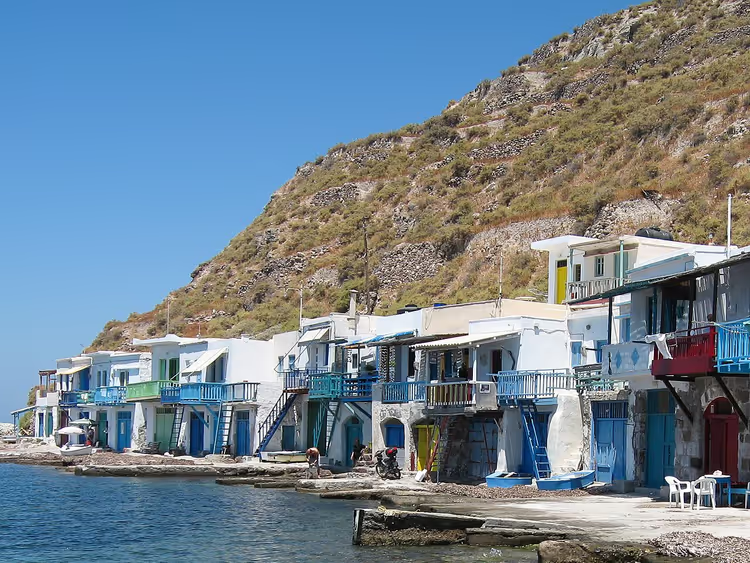 © Oliwan · CC BY-SAPhoto: Oliwan, CC BY-SA (https://creativecommons.org/licenses/by-sa/3.0), Wikimedia Commons
Milos is the result of volcanic activity, and that explains its unusual coastline. The island is famous for its many beaches and its ability to surprise. Many mystics consider Milos a place of power, since, according to legend, people settled it even before the Great Flood.
Long ago, early Christians hid in the island's catacombs, and some of them are open to visitors. The original statue of Aphrodite was taken to France two centuries ago and placed in the Louvre, but the disputes around it have not subsided. Those interested in ancient world history and museums enjoy vacationing on the island.
The best beach, Paleochori, and the most prestigious hotels occupy the southern coast. Many people come specifically to see the sandy bay of Sarakiniko with its shimmering white cliffs. If you like combining swimming with walks along hiking trails and museum visits, Milos is an ideal fit.
The island is large, so you cannot do without transport: the distances between beaches are significant. The northern shores have almost no infrastructure and suit fans of off-the-beaten-path travel, while the southern ones are set up for families with children. Check ferry schedules in advance: in high season, tickets to neighboring islands sell out quickly.
When to go to Greece
Beach season officially opens in May. From that time on, all hotels, guesthouses, cafes, and entertainment centers are open, and everything around is in bloom. In summer, resorts are hot, especially in July and August, and those months are considered high season, so prices rise noticeably. Kos is called the hottest island.
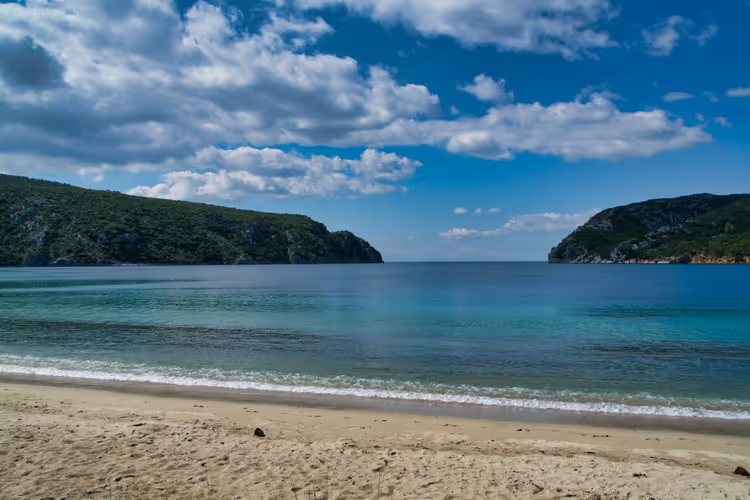
In September, the weather is more pleasant: the daytime air is no longer scorching, and the sea remains warm. In October, you can still swim, but daylight hours get shorter. By late October, rains begin, and most tourists leave.
Those who want to see the sights should come in spring, when there is no blistering heat yet. March and April are best: it is warm, you can walk around in summer clothes, and prices are still low. In autumn, you can also see the ancient sites, but there is a risk of spending a day at the hotel because of rain. At Christmas and New Year, there are many tourists and prices are higher, and from December to April about two dozen ski resorts operate.
If you are going for the sights, avoid July and August: the heat makes long walks difficult, especially in Athens and on Kos.
April and October are considered a compromise: the weather is mild, there are fewer tourists, and prices are lower. May is good because everything is in bloom and the sea has already warmed up. In September, you get a warm sea without exhausting heat, and that setup works well for families with small children.
In high season, book accommodation in advance: on popular islands, there are almost no available rooms left. In the off-season, the choice is wider, and some hotels offer early booking discounts. Also check local holidays: on those dates prices go up, but the atmosphere is worth it.
Vacations with kids and young people
Which resort to choose for a family vacation depends on the children's ages and the month of travel. In summer, any coastal town will work. If you are planning a trip in early spring or late autumn, take a closer look at Crete, Rhodes, and Zakynthos: it is warm there at that time.
Older kids may find the beach boring. In that case, choose Crete or Rhodes and add towns with water parks, rides, and water activities. Schoolchildren will see places where, according to mythology, the gods lived.
A separate direction is wellness travel. Near many resorts there are mineral springs, and the healing sea air benefits the whole family. Treatment suits those who suffer from cardiovascular conditions, asthma, and metabolic disorders.
Young people more often choose Crete, Rhodes, and the Halkidiki peninsula. Discos and bars there operate almost around the clock, and party areas are set apart in separate districts, so they do not disturb families. It is loud and fun in the Kallithea area on Halkidiki. Mykonos costs more and is preferred by Europe's "golden youth," while energetic guests can head to Athens.
Greece resorts on the map
The best resorts of Greece
Places on the map
- 1Crete The largest island: Heraklion, Chania, Rethymno and Agios Nikolaos
- 2Corfu A green island in the Ionian Sea, a water park in Sidari and Acharavi beach
- 3Peloponnese Antiquity and quiet, the mineral springs of Corinthia
- 4Athens The Acropolis, the Plaka district and the Benaki Museum, nearby the spa town of Loutraki
- 5Piraeus A port near Athens, seafood and prices lower than the capital's
- 6Rhodes Wind for windsurfers, the child-friendly Tsambika beach and thermal springs
- 7Thira Santorini: white houses above the caldera, sunsets and Vinsanto wine
- 8Mykonos Clear water by day and a nonstop party by night
- 9Kos The Asclepieion, healing air, a windy north and a spring at Agios Fokas
- 10Halkidiki Three peninsulas, clean sea and boat trips along Mount Athos
- 11Zakynthos Bright blue water, viewpoints in the west and sea turtles
- 12Paros Wines and oddly shaped rocks, beaches and hotels in the east
- 13Volos A seaside town built on the ruins of three predecessors, a municipal beach
- 14Kefalonia Myrtos and Antisamos beaches, the Drogarati cave with concerts
- 15Lesbos Mytilene, thermal springs and Vatera beach for yachtsmen
- 16Naxos About twenty white-sand beaches, some set up for kids
- 17Skiathos Pines and quiet, Lalaria beach with a stone arch reachable only by sea
- 18Thasos Healing springs, a pine forest and gentle, safe entries into the water
- 19Evia 80 km from Athens over a bridge, radon baths and the Dragon House
- 20Kassandra Young crowds and clubs, water parks and a thermal spring in a pine forest
- 21Sithonia Golf, a casino and villas instead of big resort complexes
- 22Thessaloniki The unofficial capital, people swim in the suburbs: Perea, Epanomi, Agia Triada
- 23Syros Aristocratic Ermoupoli and the sandy bay of Agathopes
- 24Skopelos An ancient forest, over a hundred churches, Stafilos and Velonav beaches
- 25Milos Volcanic shores, Paleochori beach and the white cliffs of Sarakiniko
⁉️🤔 Frequently asked questions
Which resort in Greece should you choose for a first visit?
For a first introduction, Crete is a good fit: it is the country's largest island, with an airport, developed infrastructure, and different types of vacations. Near Heraklion you will find historical monuments, in the west calm bays, and in the east gently sloping beaches for children. If you want a short flight from Athens, choose Evia or the Peloponnese.
Where in Greece should you vacation in September?
In September, almost everywhere is comfortable: the air is no longer scorching, and the sea remains warm. Crete, Rhodes, and Zakynthos are best, as the warmth lasts longer there. Keep in mind that daylight hours gradually shorten, and by late October rains begin. The velvet season is also convenient because prices are lower than in August.
Which Greek island suits a romantic trip?
For a couple, Santorini and Mykonos make the most sense. On Santorini, you will watch sunsets over the caldera and stroll through white streets, while on Mykonos you get clear water and nightlife. Zakynthos is calmer and cheaper, with hotels right by the sea. If you want quiet, take a look at Skopelos.
Where to go in Greece for treatment?
There are several treatment destinations. In the Corinthia prefecture on the Peloponnese, mineral springs flow; on Evia, radon baths are offered; and on Kos, near the village of Agios Fokas, there is a hot spring. Also consider Thasos: the local climate helps with allergies and respiratory conditions.
How much does a vacation in Greece cost?
The final amount depends on the island, the season, and the type of accommodation. Mykonos is the most expensive, while family guesthouses on Lesbos and in small villages are cheaper. May, June, and September are noticeably more affordable than July and August. We recommend comparing prices in advance and looking at options with free cancellation.
In short: what to book
Greece offers a choice for almost any need, and that is its main advantage. If you are a family with children, choose eastern Crete, Halkidiki, or Thasos. For romance, Santorini and Mykonos work well; for treatment, the Peloponnese, Evia, and Kos. For quiet, head to Skopelos and Syros.
- If you need hotels by the sea: find options on Trip.com.
- If you want excursions and island trips: tours and excursions on GetYourGuide.
Compare several resorts from the list and choose the one that matches your season and budget. That way you will definitely come back with a vacation that suited you specifically.

A small editorial team writing guides for independent travel. We travel ourselves, but we haven’t been everywhere, so we check prices, opening hours and how to get there against official sources.