
















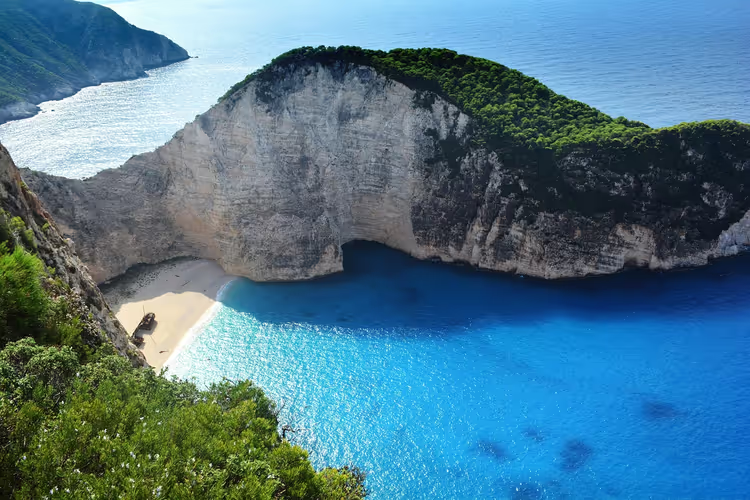
8 Resorts in Greece: where to go for beaches, wine and history
Greece has hundreds of islands, and picking just one resort is hard. Some people go for a quiet cove, others for a lively beach, and still others for Byzantine churches. We compared eight destinations and put together what you should know before you book.
The beaches here are genuinely a strong point. In 2026, 624 Greek beaches received the Blue Flag award (as of 05/2026, Blue Flag Greece). Below you'll find eight resorts worth looking at first.
Ad: this article contains affiliate links, we earn a commission if you book through them, at no extra cost to you.
How to choose a resort in Greece
The choice depends on who you're traveling with and the season. In high season, popular islands are overcrowded, while in May and September the sea is already warm but there are noticeably fewer people. If you're visiting for the first time, start with one island or city and don't try to cover everything in a single trip.
💡 In short:
- For views and romance, go with Santorini, for parties Mykonos, for beaches and family vacations Crete and Corfu.
- Rhodes and Karpathos suit those who want history and quiet without big crowds.
Resort | Who it suits | Beaches | Main draw |
|---|---|---|---|
Santorini | couples | volcanic | sunsets, wine |
Athens | city lovers | urban | Acropolis, museums |
Rhodes | history lovers | sand and pebbles | two coasts, fortress |
Crete | families | all kinds | size and infrastructure |
Karpathos | those seeking quiet | sandy | traditional way of life |
Corfu | those who dislike heat | sand and pebbles | greenery, old town |
Mykonos | young people | sandy | clubs and bars |
Thessaloniki | Byzantine history lovers | secondary | festivals, churches |
1. Santorini: volcano and caldera
Santorini was born from a volcano, and its real name is Thira. The eruption here is considered one of the possible sources of the Atlantis legend.
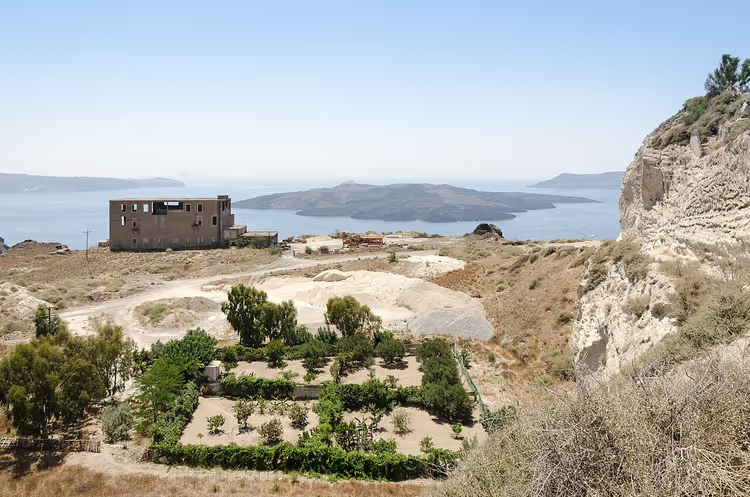 © Norbert Nagel · CC BY-SAPhoto: Norbert Nagel, CC BY-SA (https://creativecommons.org/licenses/by-sa/3.0), Wikimedia Commons
White cubic houses and blue church domes have made the island one of the most romantic places in Europe. During the day you wander the narrow streets of Oia, in the evening you watch the sunset over the caldera.
Winemaking on the island deserves a day of its own. The Assyrtiko grape grows in the volcanic soil and is used to make dry and dessert white wines, and many wineries offer tastings with sea views.
- Who it's for: couples and those coming for views and wine.
- What to see: Mount Profitis Ilias with a monastery on top, the Minoan excavations at Akrotiri, the old Catholic Cathedral of St. John the Baptist.
- How to get there: ferries from Piraeus and flights from Athens (per the carrier, 09/2026).
- Santorini hotels on Trip.com
2. Athens: antiquities and beaches
Athens is hard to call a beach resort, but it is a capital with access to the sea. Mountains surround the city on three sides, and the fourth side opens onto the Saronic Gulf, so beaches do exist here.
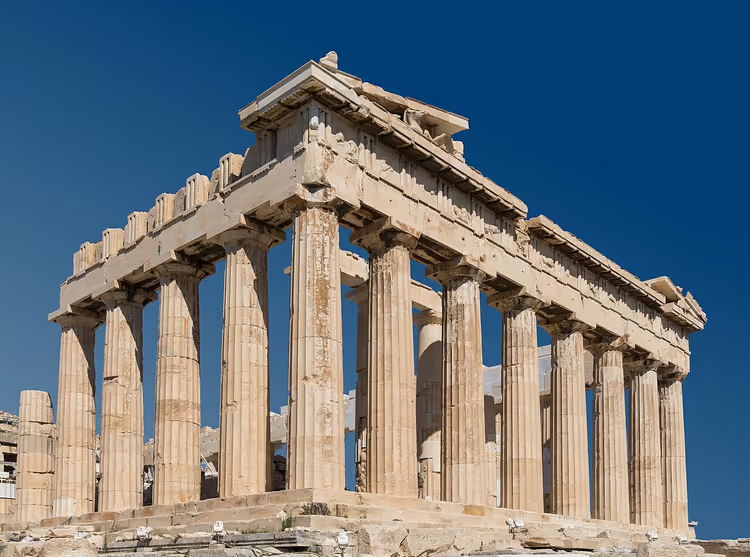
The Acropolis rises above the city, and at its foot lie the neighborhoods of Thissio and Plaka. There you'll also find the Theater of Dionysus, the Tower of the Winds, the Temple of Olympian Zeus, Hadrian's Library, and the Temple of Hephaestus. Entry to the Acropolis costs €30 (as of 09/2026, official Acropolis website).
Sports fans will enjoy the Panathenaic Stadium: it hosted the first modern Olympic Games. The city's museums hold sculptures of gods and works by contemporary artists.
For Athens beaches, look to the suburbs. The free Faliron beach lies almost in the center near the port, with changing cabins, cafes, and sunbed rentals. Voula beach is crowded but has entertainment for kids, and at the Alimos club you'll find a gentle entry into the sea and fine pebbles.
- Who it's for: those who want to combine city and sea.
- The catch: it's a big city, not a quiet beach resort; the best beaches are in the suburbs.
- Athens hotels on Trip.com
3. Rhodes: two coasts and a fortress
Rhodes lies at the meeting point of two seas: the Aegean to the west, the Mediterranean (Carpathian) to the east. That's why the island's coasts are so different from each other.
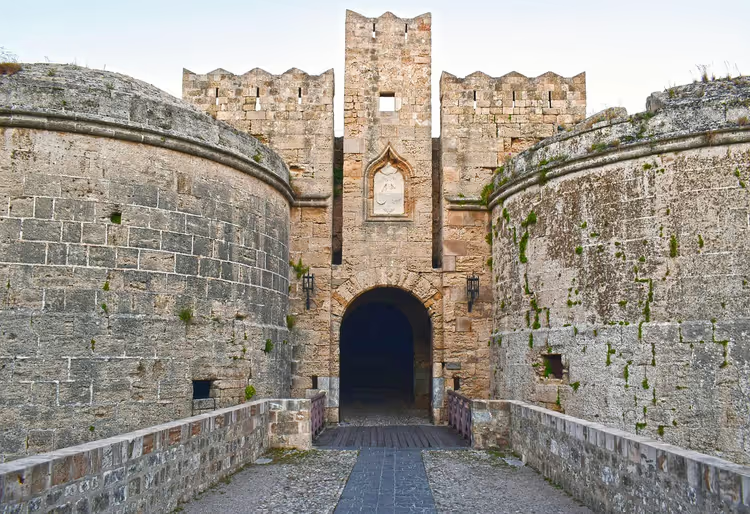
The western coast is mostly pebbly, with high waves. To the east you'll find sandy beaches and calm water. The coastline is broken up by open bays and capes, and the island's vegetation is highly diverse: pines, plane trees, oak, thyme, capers, and cyclamens. A special species of deer, the platoni, lives here.
There's plenty to choose from when it comes to sights. You can start with the medieval Rhodes fortress, then head to Petaloudes Valley, where thousands of butterflies gather in summer, to the ruins of ancient Kamiros, and to the acropolis of Lindos.
- Who it's for: lovers of history and nature.
- How to get there: ferries from Piraeus and other islands, plus an airport (according to the Greek tourism office, 09/2026).
- The catch: the west coast has high waves and pebbles; for sand, head east.
- Rhodes hotels on Trip.com
4. Crete: the largest island
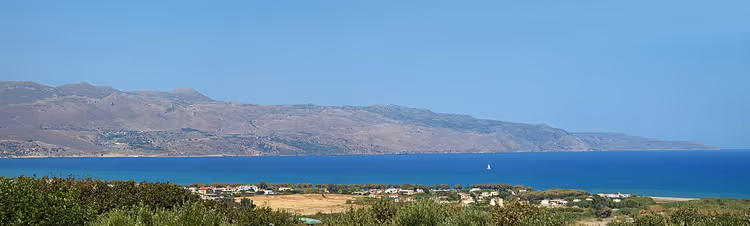
Crete is bigger than the other Greek islands (according to Visit Greece, 09/2026). Few places can match its tourism infrastructure: cities, shopping centers, cafes, and restaurants serving local cuisine.
 © Ввласенко · CC BY-SAPhoto: Ввласенко, CC BY-SA (https://creativecommons.org/licenses/by-sa/3.0), Wikimedia Commons
The Cretan Sea washes the island's north coast, and the Libyan Sea its south. In Balos Bay, waters of different temperatures and composition blend into a striking picture. The beaches here suit every taste, from pebble to sand, and nearly all are well equipped.
Elafonisi in the southwest deserves a day of its own: you'll find pink-tinged sand, warm water, and gentle waves. The must-see list includes the Heraklion Archaeological Museum, Knossos, Gortyna, Phaistos, the excavations at Malia, and the Venetian fortress of Fortezza. Among natural sights, the Samaria Gorge, Lake Kournas, and the ancient olive tree at Kavousi are worth seeing.
- Who it's for: families and those who value variety.
- Crete hotels on Trip.com
5. Karpathos: quiet Greece without the crowds
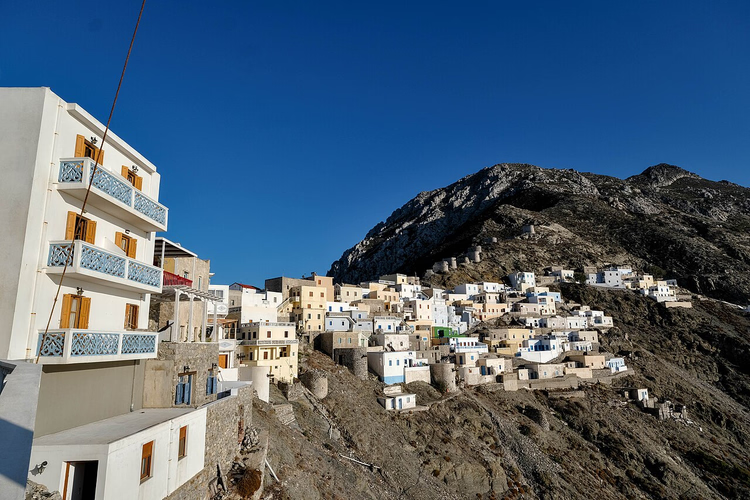
Karpathos is tucked between Crete and Rhodes. Traditional ways of life are carefully preserved here: in the villages you'll see old monuments and a way of living that locals carry on much as their ancestors did.
 © Magnus.chronicles · CC BYPhoto: Magnus.chronicles, CC BY (https://creativecommons.org/licenses/by/4.0), Wikimedia Commons
The island's defining trait is calm and seclusion, especially on the north side. The southern part suits younger, more active travelers better, with its concentration of trendy hotels.
The island's nature is varied: mountain landscapes, fruit orchards, and olive groves. In Pigadia, the largest settlement, you'll find a well-maintained sandy shore, and at Kyra Panagia you'll find white sand and clear water.
- Who it's for: those who want quiet and the real Greece.
- How to get there: ferries from Rhodes and Crete, plus an airport.
- The catch: there's almost no nightlife in the north; don't look for parties here.
- Karpathos hotels on Trip.com
6. Corfu: the green island
Corfu is the northernmost of the Ionian Islands, so the air here is a few degrees cooler. It suits those who don't handle heat well.
 © Dietmar Rabich · CC BY-SAPhoto: Dietmar Rabich, CC BY-SA (https://creativecommons.org/licenses/by-sa/4.0), Wikimedia Commons
The island's beaches stretch for dozens of kilometers, with both sandy and pebbly options. The south, at Agios Georgios, is quiet and peaceful. You'll find impressive cliffs and a cozy bay near Sidari, and local character in the village of Benitses. On the west side, the Glyfada waterfront is full of cafes and bars, while the cliffs of Paleokastritsa open up a sweeping view.
The island is well suited to active exploration. Mountains and hills rise in the center, and the coastline delights with its bays. Architecturally, the old town of Kerkyra, the Venetian fortress of Palaio Frourio, and the Palace of St. Michael and St. George with its garden are worth seeing.
- Who it's for: those who dislike intense heat.
- The catch: the sea is cooler than around the southern islands, so keep that in mind.
- Corfu hotels on Trip.com
7. Mykonos: clubs and beaches
Mykonos has long remained one of Greece's most fashionable destinations. Expensive hotels, bars, and clubs have sprung up here, and life buzzes almost around the clock.
 © dronepicr · CC BYPhoto: dronepicr, CC BY (https://creativecommons.org/licenses/by/2.0), Wikimedia Commons
The coastline is divided into zones. Paradise and Super Paradise are known for music and a free-spirited vibe. There are several nudist beaches here, including Paranga and Elia. If you're looking for quiet, choose Agrari or Ornos.
- Who it's for: young people and party lovers.
- Not for: families with children.
- The catch: nightclubs and nudist beaches create a lively atmosphere.
- Mykonos hotels on Trip.com
8. Thessaloniki: Byzantine heritage
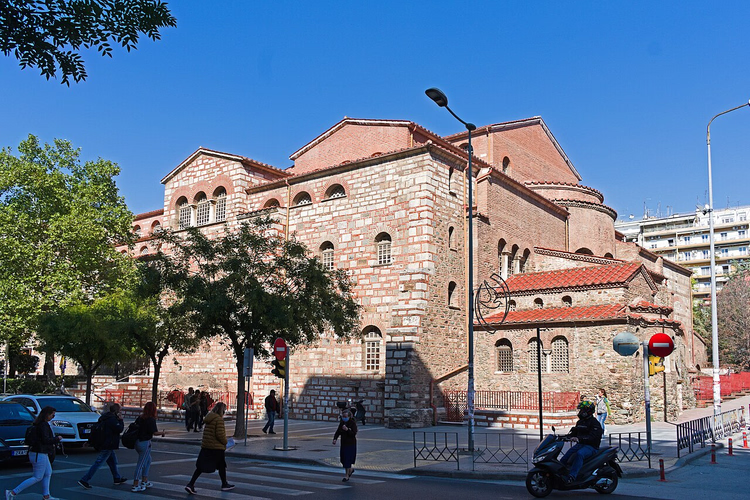
Thessaloniki is Greece's second-largest city after the capital. The city sits on the shore of the Thermaic Gulf at the foot of Mount Chortiatis. It's known for festivals, concerts and fairs, and there's plenty to do and see here.
 © Ymblanter · CC BY-SAPhoto: Ymblanter, CC BY-SA (https://creativecommons.org/licenses/by-sa/4.0), Wikimedia Commons
It's not worth coming here specifically for the beaches: the sea near the port is murky. But within a few dozen kilometers there are suitable towns with good recreation areas, such as Katerini and the Halkidiki peninsula.
You'll definitely appreciate the city's Byzantine heritage, though. The Basilica of Saint Demetrius, the Arch of Galerius and the Church of the Acheiropoietos are impressive both outside and inside.
- Who it's for: lovers of Byzantine architecture.
- The catch: the beaches near the city aren't the strongest, the sea near the port is murky.
- Thessaloniki hotels on Trip.com
⁉️🤔 Frequently asked questions
Which Greek island should I choose for romance?
For couples and sunsets, Santorini is the most common pick: white houses above the caldera give you the most recognizable views. Mykonos is more romantic in the evening, when bars and restaurants open along the waterfronts. If you want quiet time together, look at Karpathos: the north of the island is calm, and crowds are rare.
Where are the most beautiful beaches in Greece?
Crete holds first place for variety: Elafonisi has pink sand, while Balos mixes waters of different temperatures and composition. On Rhodes, choose the east coast, where there's sand and calm water. Corfu offers long sandy beaches and coves near the cliffs of Paleokastritsa.
Where should I go in Greece with kids?
Families find Crete most convenient: the island is large, the infrastructure is well developed, and there are beaches for every taste. Corfu works well because of its mild temperatures, making the heat easier to handle. Mykonos is less suited to family vacations: nightclubs and nudist beaches set a different atmosphere.
How much does it cost to enter the Acropolis?
A ticket to the Acropolis costs €30 (as of 09/2026, official Acropolis website). It gives access to the hill itself and the main structures. It's best to book timed tickets in advance: in the heat and during high season, the line at the entrance grows quickly.
How is Crete different from Rhodes?
Crete is larger and more diverse: long distances and beaches for every taste. Rhodes is more compact and easy to explore by car in a few days. Rhodes has two coasts with more distinct characters, while on Crete you'll find both the pink sand of Elafonisi and mountain gorges.
In short: what to book
The choice comes down to a couple of questions. Decide what matters most to you: views, beaches or history, and the rest is simple.
- If you're a couple and want sunsets: pick Santorini.
- If you're a family: Crete or Corfu.
- If you're a group and want parties: Mykonos.
- If you have a few days for a city: Athens.
- If you're looking for quiet: Karpathos, and for history, Rhodes and Thessaloniki.

A small editorial team writing guides for independent travel. We travel ourselves, but we haven’t been everywhere, so we check prices, opening hours and how to get there against official sources.