
















29 Places in Helsinki worth seeing: tickets, prices and opening hours
Helsinki is more compact than it seems: the center can be walked in one day. But behind the facades there are three dozen different places, from a sea fortress to a rock church. We've put together 29 attractions with prices, opening hours, and directions. Some of them are free, some are closed on Mondays. Rock churches, islands, and museums easily fit into a weekend itinerary. You'll figure out what to see first and what to leave for a second visit. Tickets and opening hours: 09/2026, verified on the Helsinki tourist office website.
💡 In short:
- Helsinki's center is walkable, but you'll need transport to reach the islands and parks.
- Many museums are closed on Mondays, so plan your visit in advance.
- Buy tickets online: in summer, ticket office lines are long.
Ad: this article contains affiliate links, we earn a commission if you book through them, at no extra cost to you.
1. Suomenlinna
 © Michal Pise, Michal.Pise · CC BYPhoto: Michal Pise, Michal.Pise, CC BY (https://creativecommons.org/licenses/by/2.0), Wikimedia Commons
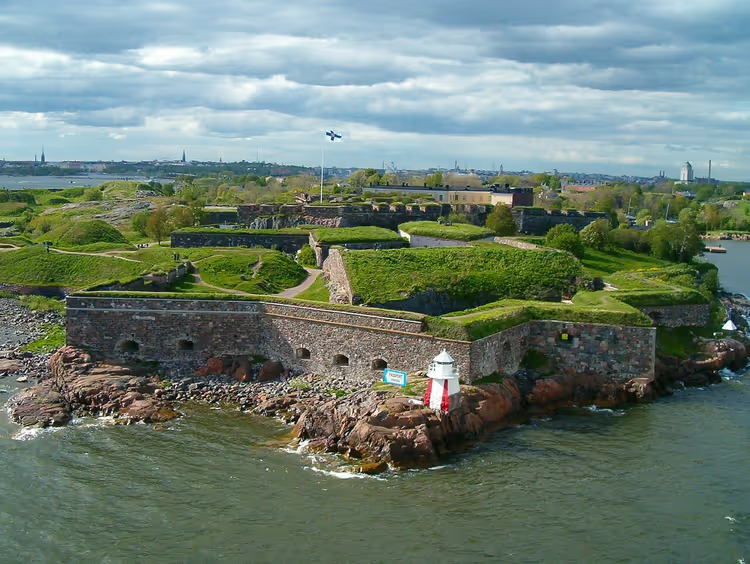
Suomenlinna (Sveaborg) spreads across islands two kilometers from the Helsinki waterfront. It's one of the city's most visited attractions, and several museums operate here as well. Architecture lovers will find fortifications from different eras, and those interested in military history will see equipment from past years. Even a simple walk along the ramparts and shore is already quite impressive.
The only way to get there is by water. The ferry departs from Market Square year-round, and the trip takes about 15 minutes. In summer, departures run every hour or more often; in winter, no less than once an hour. Buy an HSL zone A ticket in advance: they are not sold on board the ferry. There is no bike rental or public transport on the island, so wear comfortable shoes.
- How to get there: HSL ferry from Market Square, about 15 minutes each way (as of 09/2026, fortress official website).
- Cost: entry to the fortress is free, you only pay for transport and museum tickets (as of 09/2026, HSL).
- The catch: in summer, a line forms at the ferry dock, so arrive for the first departure.
2. Temppeliaukio
 © Lauren Stevens · CC BY-SAPhoto: Lauren Stevens, CC BY-SA (https://creativecommons.org/licenses/by-sa/4.0), Wikimedia Commons
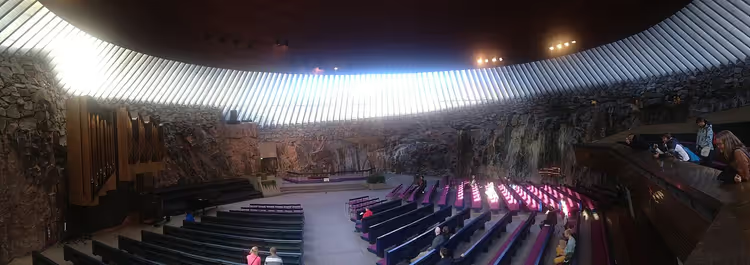
Temppeliaukio stands out among the city's churches. The church was carved directly into a granite rock, so from the outside it looks like a flattened dish. In the evening, the lights come on and the dome begins to glow from within. There are no bells here: instead, the sound is pre-recorded and played through speakers.
The church is known for its unusual acoustics, so organ and classical concerts are held here. Rock bands sometimes perform too, and some concerts are free. The address is simple: Lutherinkatu 3. An adult ticket costs €8, and admission is free for visitors under 18 (as of 09/2026, church official website). Opening hours vary by day of the week, so check the exact schedule on the official website before your visit.
- Cost: €8 for adults, free for children and teens under 18 (as of 09/2026, church official website).
- Opening hours: weekdays from morning until early evening, check the day-by-day schedule on the official website.
- The catch: during concerts and services, tourist entry is closed, so check the schedule in advance.
3. Winter Garden
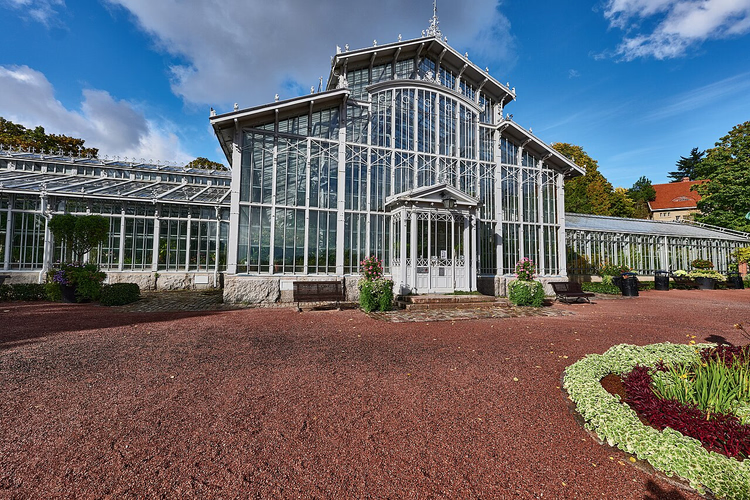
The Winter Garden (Talvipuutarha) sits on the shore of Töölönlahti Bay, next to the Olympic Stadium tower. Under its glass roof are three halls and more than 200 plant species: palms, cacti, and a decorative pond with fish. Parrots fly between the halls, so in winter it's easy to forget the snow outside.
Admission is free. The garden is open every day except Monday and closes in the afternoon. Address: Hammarskjöldintie 1A. Nearby is the old Linnunlaulu district with its wooden villas. Bring a camera: there's plenty of light in the greenhouse even on an overcast day.
- Cost: free admission (as of 09/2026, Helsinki tourist office).
- Hours: daily except Monday, until the afternoon; check exact times on the tourist office website.
- Who it's for: anyone tired of the cold who wants a quiet walk among greenery.
4. Zoo
 © Stephan van Helden · CC BY-SAPhoto: Stephan van Helden, CC BY-SA (https://creativecommons.org/licenses/by-sa/4.0), Wikimedia Commons
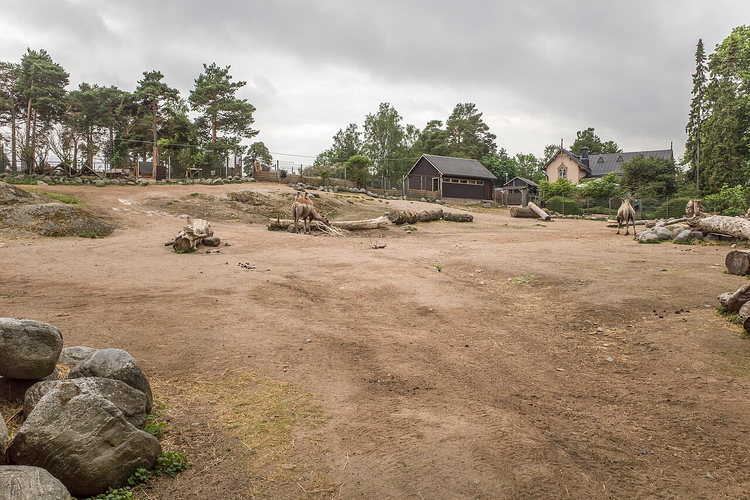
Helsinki Zoo occupies the entire island of Korkeasaari and is considered one of the oldest in the world. Its collection of animals and plants is arranged as a small model of the planet. Along the way you climb mountains, descend into Finnish lowlands, and pass through tundra. The Amazonia pavilion showcases South American fauna, while Africasia brings together inhabitants of tropical forests.
The island is connected to the mainland by a bridge. A bus runs from the central railway station to the zoo, taking about 20 minutes. From May to September you can also get there by ferry. Address: Mustikkamaanpolku 12. In season the zoo is open until eight in the evening; in winter it closes earlier, so check the schedule on the official website.
- Getting there: bus from the central railway station, about 20 minutes; a ferry is added in summer (as of 09/2026, official zoo website).
- Hours: until 20:00 in summer, until 16:00 in winter, until 18:00 in the shoulder season (as of 09/2026, Korkeasaari).
- Who it's for: families with children; it's easy to spend half a day outdoors here.
5. Sea life marine center
 © de:Benutzer:Sowizo · CC BY-SAPhoto: de:Benutzer:Sowizo, CC BY-SA (http://creativecommons.org/licenses/by-sa/3.0/), Wikimedia Commons
Next to the Linnanmäki amusement park is the large Sea Life aquarium. Under one roof are more than 50 aquariums home to sharks, jellyfish, and coral reef fish. Some of the inhabitants swim through a glass tunnel directly above visitors' heads. The hall walls are transparent, creating the feeling that you're standing on the seafloor.
Address: Tivolitie 10. From the central station you can get here by tram or bus in about 15 minutes. The center is open every day, with extended hours on Wednesdays. You can combine a visit with a walk through Linnanmäki, as they're right next to each other.
- Getting there: tram or bus from the central station (as of 09/2026, official Sea Life website).
- Hours: daily, with extended evening hours on Wednesdays; exact times on the center's website.
- Who it's for: families with children; it's a short route of 1.5 to 2 hours.
6. Design Museum
 © Vadelmavene · CC BY-SAPhoto: Vadelmavene, CC BY-SA (https://creativecommons.org/licenses/by-sa/4.0), Wikimedia Commons
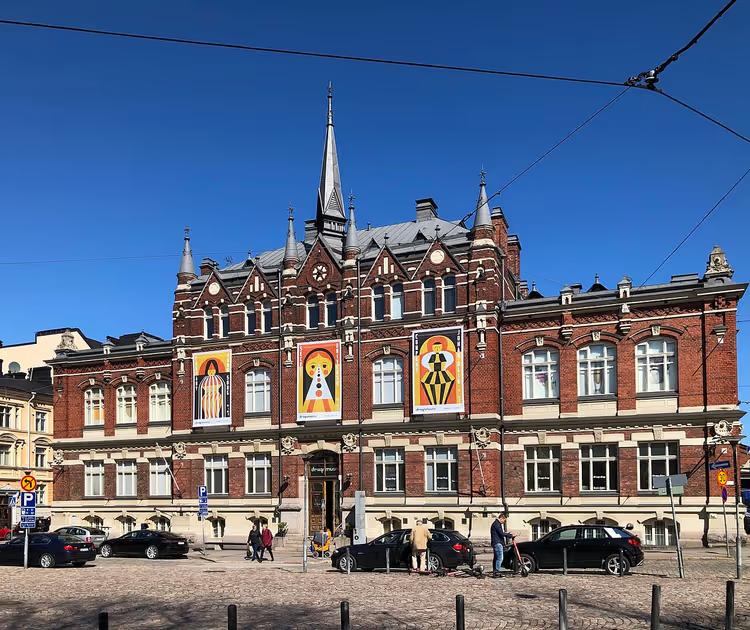
The Design Museum showcases Finnish and international design, from everyday objects to complex drawings. Its collections hold around 100,000 drawings and photographs, and its archives list more than a thousand designers. The permanent exhibition tells the history of the field, while temporary exhibitions focus on new trends.
The museum is located in the center, next to the Museum of Finnish Architecture. Address: Korkeavuorenkatu 23; the nearest stop, Johanneksen kirkko, is a couple of minutes on foot. In summer the museum is open daily; from September to May it stays open late on Tuesdays and is closed on Mondays. You can get there by bus or tram.
- Getting there: tram or bus, Johanneksen kirkko stop (as of 09/2026, museum's official website).
- Hours: open daily in summer, closed Mondays in winter; day-by-day schedule at Design Museum.
- Not for: if you came only for nature and panoramas, you can skip this museum.
7. Kiasma museum of contemporary art
 © Paasikivi · CC BY-SAPhoto: Paasikivi, CC BY-SA (https://creativecommons.org/licenses/by-sa/3.0), Wikimedia Commons
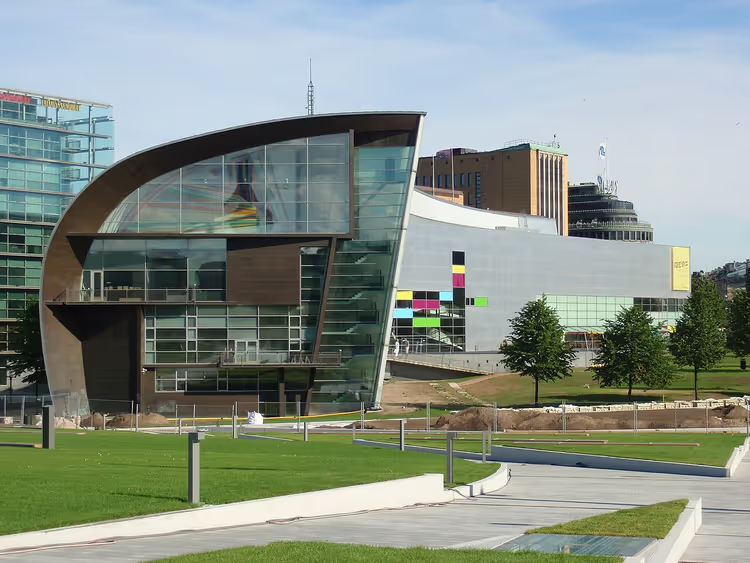
Kiasma is not like an ordinary museum. It is a venue that brings together video installations, painting, architectural concepts, and avant-garde music. Around 30 galleries of different profiles are gathered under one roof. The museum was conceived as a place where visitors and emerging artists meet.
The building stands on Mannerheiminaukio Square, next to the Mannerheim monument. The nearest stop, Elielinaukio, is served by many bus routes. Address: Mannerheiminaukio 2. The museum is open Tuesday through Sunday, closed Mondays; on Wednesdays and Fridays the doors stay open late. Buy an adult ticket online; admission is free for visitors under 18.
- Getting there: Elielinaukio stop right next to the building, then a couple of minutes on foot (as of 09/2026, Kiasma's official website).
- Hours: Tuesday-Sunday, closed Mondays; open until evening on Wednesdays and Fridays (as of 09/2026, Kiasma).
- The catch: it can get crowded on weekends; a weekday morning is a calmer time to visit.
8. Heureka science center
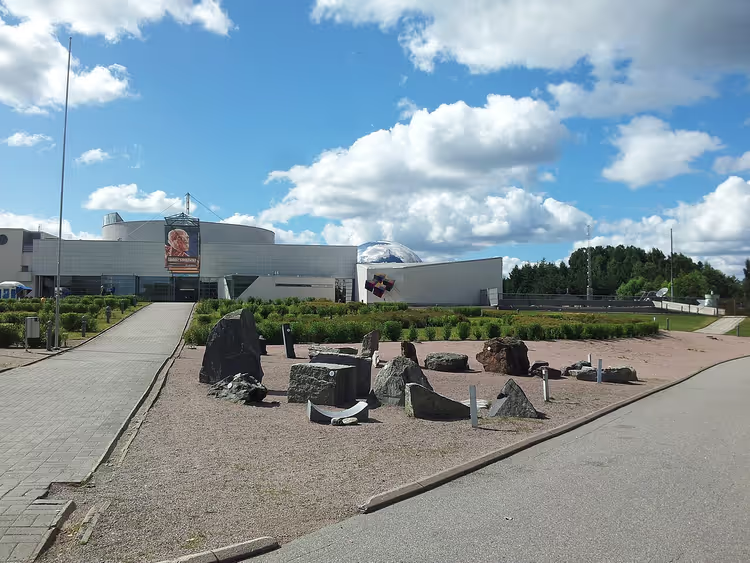
Heureka works in Vantaa, half an hour from central Helsinki. It is a science center that welcomes tens of thousands of visitors every year. The exhibits cover physics, astronomy, biology and chemistry. Many displays are hands-on: visitors run experiments, make paper and solve math puzzles.
 © Danila Talikov · CC BY-SAPhoto: Danila Talikov, CC BY-SA (https://creativecommons.org/licenses/by-sa/3.0), Wikimedia Commons
Kids love the Vattenfall planetarium with its large 3D screen, which shows science films about space and the birth of the universe. For visitors under 13, there is a camp where children spend several days at the center. Take the commuter train to Tikkurila station, then walk from there.
- Getting there: commuter train to Tikkurila, then about a 10-minute walk.
- Hours: open Tuesday through Sunday, with late hours on Thursdays.
- Who it's for: families with children aged 5 and up, and anyone traveling with teenagers.
9. National Museum of Finland
 © Ranerana · CC BY-SAPhoto: Ranerana, CC BY-SA (https://creativecommons.org/licenses/by-sa/4.0), Wikimedia Commons
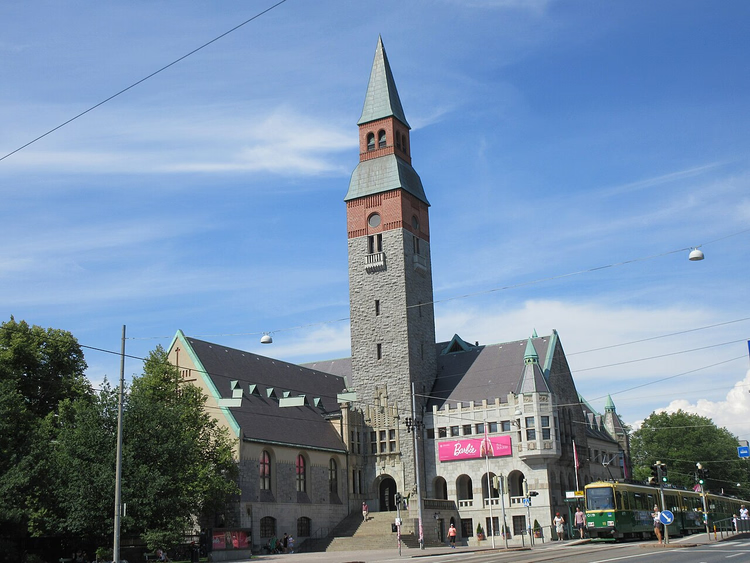
The National Museum of Finland preserves the country's cultural heritage from ancient times to the present day. The exhibition is divided into six sections: medals, coins, orders, weapons, jewelry and silver. The medieval castle-style building stands in the center, at Mannerheimintie 34. The Kansallismuseo stop is served by trams, and Finlandia Hall is nearby.
Important for planning: the museum is closed for a major renovation and expansion. This is the largest change in its history, and the public is expected back in spring 2027. While the doors are closed, part of the collection is shown at temporary venues, and you can check the schedule on the official website. Plan your visit now if you are going to Helsinki in 2027.
- Status: the museum is closed for renovation, reopening expected in spring 2027 (as of 09/2026, MyHelsinki on the National Museum).
- Getting there: Kansallismuseo stop, by tram or on foot from the station (as of 09/2026, official museum website).
- The catch: in 2026 the galleries are closed, so you cannot see the permanent exhibition.
10. Sibelius Monument
 © Tevfik Teker · CC BYPhoto: Tevfik Teker, CC BY (https://creativecommons.org/licenses/by/3.0), Wikimedia Commons
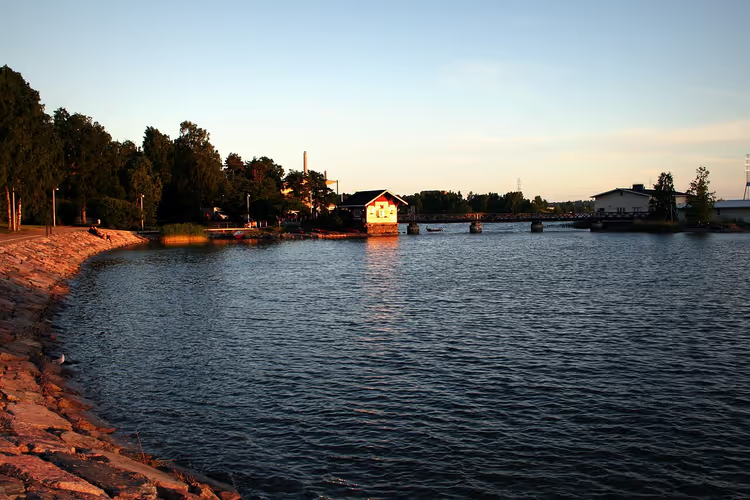
Jean Sibelius wrote music that everyone in Finland knows. The monument to the composer was erected in the park named after him ten years after his death. It takes the form of a wave made of hundreds of steel pipes welded into an undulating pattern. The artist, Eila Hiltunen, wanted to capture the essence of music itself rather than a portrait.
A sculptural portrait of the composer stands nearby. The exact address is Merikannontie, 00250 Helsinki, not far from the Töölö district. A miniature copy of this work is housed in the UNESCO building in Paris. The site is open around the clock and free, so it is an easy stop on the way to other sights.
- Cost: free entry, the site is open around the clock (as of 09/2026, MyHelsinki on the Sibelius Monument).
- Getting there: walk from the center along the boulevard or take a tram.
- Who it's for: those exploring the city at a relaxed pace and who enjoy open-air sculpture.
11. Linnanmäki amusement park
 © Simbe · CC BY-SAPhoto: Simbe, CC BY-SA (https://creativecommons.org/licenses/by-sa/4.0), Wikimedia Commons
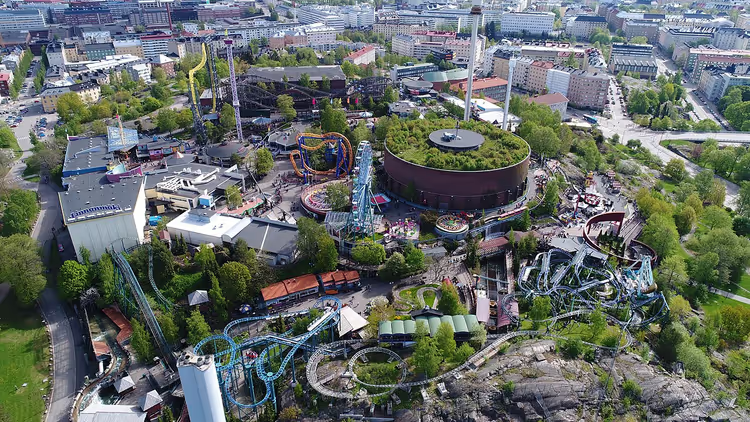
Linnanmäki is the city's main amusement park. It has just over 40 rides, and the Vuoristorata roller coaster is considered the park's symbol. The oldest carousel has been operating since the late 19th century. The park opened in 1950, and since then its proceeds have gone to support Finnish children's programs.
Entry to the park is free; you only pay for rides. The most convenient option is a day wristband, which gives access to all roller coasters and carousels. For families with small children, there is a separate wristband for kids' rides. Address: Tivolikuja 1, served by tram and bus from the center, with parking available.
- Cost: entry is free, you pay for a wristband for the rides (as of 09/2026, the park's official website).
- Season: the park is open from April to October, check the exact calendar on the Linnanmäki schedule.
- The catch: on weekends the lines for popular roller coasters are long, so arrive at opening time.
12. St. Nicholas' Cathedral
 © Superchilum · CC BY-SAPhoto: Superchilum, CC BY-SA (https://creativecommons.org/licenses/by-sa/4.0), Wikimedia Commons
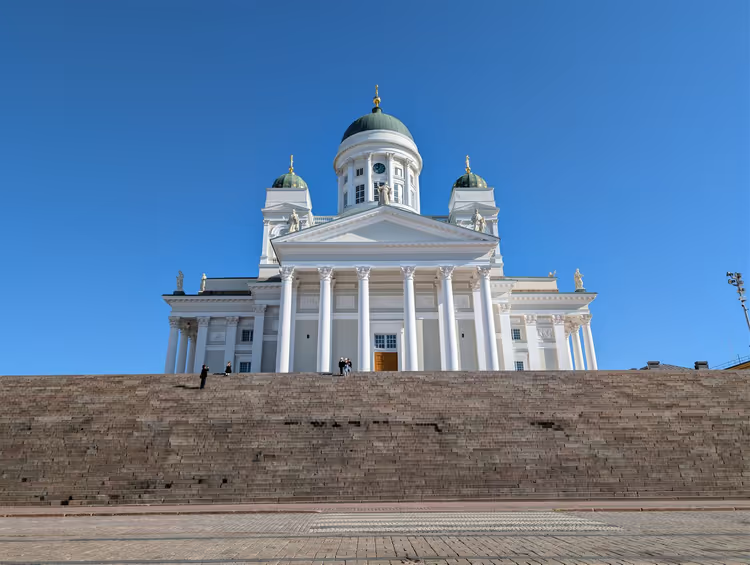
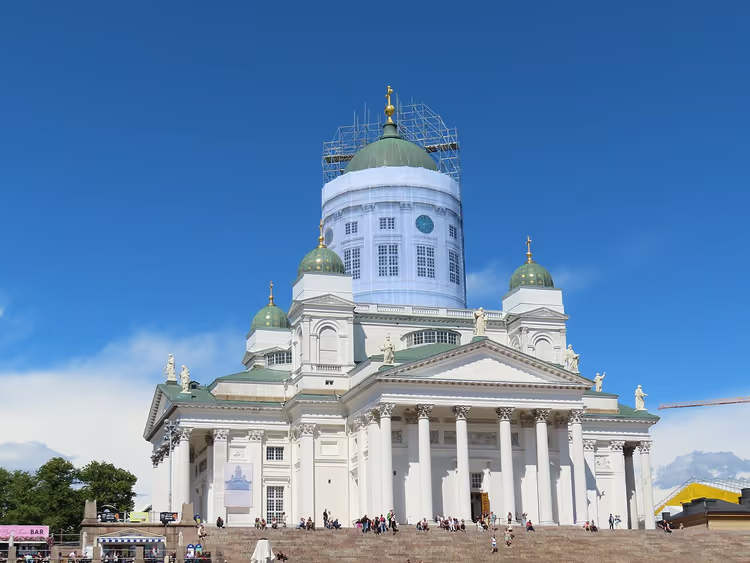
St. Nicholas' Cathedral rises above Senate Square and is considered the city's calling card. The snow-white church was built in the mid-19th century and consecrated in honor of St. Nicholas the Wonderworker. The building's floor plan forms an equilateral cross, and it is crowned by five green domes. The facades are decorated with columned porticos and sculptures of the twelve apostles.
Today the cathedral belongs to the Lutheran church. Inside there are no icons or murals, but the arched vaults, chandeliers, and the historic organ draw your attention. Entry is free, but during services visitors are asked to keep quiet. The cathedral is a two-minute walk from Market Square, so it's easy to include in a walk through the center.
- Cost: entry is free (as of 09/2026, Helsinki parishes).
- How to get there: on foot from Market Square or the train station.
- The catch: it's windy on the steps in front of the cathedral, and in summer there is almost no shade here.
13. Uspenski Cathedral
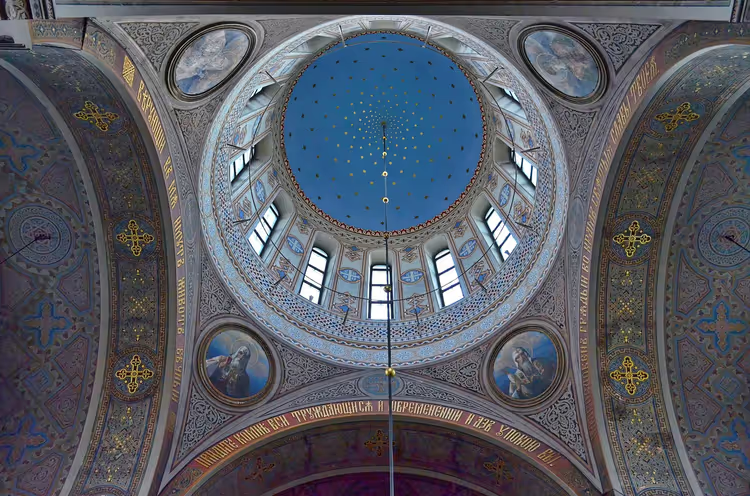
Uspenski Cathedral is considered the largest Orthodox church in Northern Europe. It was founded in 1868 on a rocky hill in the middle of a park. The church is built of red brick in the Byzantine style, and its height reaches about 50 meters. The building is crowned by thirteen gilded domes symbolizing Christ and the twelve apostles.
Inside, the vaults, arches, and cornices are painted with ornaments and the faces of saints. The columns are carved from granite, and the main dome is decorated on the inside like a starry sky. The prayer hall contains a two-tiered iconostasis with gilded carvings. The church stands on the way between Market Square and the Katajanokka district, and entry is free.
- Cost: entry is free, donations are welcome (as of 09/2026, Helsinki cathedrals).
- How to get there: on foot from Market Square toward Katajanokka.
- Who it's for: for those who want to see Orthodox architecture in the center of a Scandinavian capital.
14. Kamppi Chapel of Silence
 © Vadelmavene · CC BY-SAPhoto: Vadelmavene, CC BY-SA (https://creativecommons.org/licenses/by-sa/4.0), Wikimedia Commons
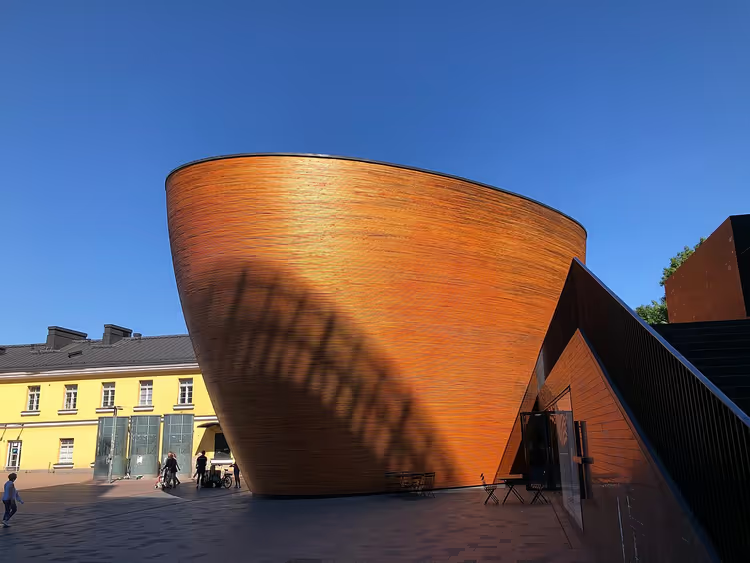
On the busy Kamppi square stands an unusual wooden building with no windows. The Chapel of Silence was designed in the shape of a bowl, and its walls are clad with panels of ash, alder, and spruce. The place has nothing to do with parishes or services: it's a place where you can be alone with your thoughts. About sixty people can fit inside at once.
Daylight enters through small openings in the ceiling, and simple wooden benches stand inside. No worship services are held here, but you can see a pulpit and a collection of biblical books. The chapel is open free of charge, entry is free, and it's easy to stop by on the way to the shopping center.
- Cost: entry is free (as of 09/2026, MyHelsinki on Kamppi Chapel).
- How to get there: Kamppi square in the center, next to the metro station and shopping center.
- Who it's for: for those who need a pause from the city noise.
15. Hietaniemi Cemetery
 © Marit Henriksson · CC BY-SAPhoto: Marit Henriksson, CC BY-SA (https://creativecommons.org/licenses/by-sa/4.0), Wikimedia Commons
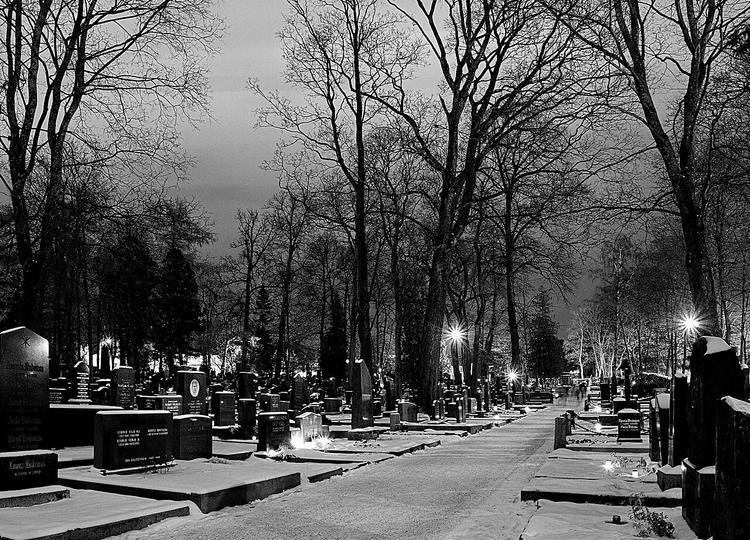
Hietaniemi, a historic cemetery, occupies a green area along the sandy beaches of the Gulf of Finland. The grounds are divided into sections for Orthodox, Lutheran, Jewish, and Muslim burials. Many famous people of Finland rest here: writers, actors, composers, artists, and politicians. The well-kept avenues of century-old trees make this place feel like a park.
People often walk here with children and photograph the sculptures on the gravestones. In the green areas you can encounter squirrels, hares, and even foxes. The cemetery is open to visitors free of charge, but you should behave quietly and respect the memory of the deceased. From the center you can easily walk to the entrance or take a tram.
- Cost: free entry (as of 09/2026, MyHelsinki about Hietaniemi Cemetery).
- Getting there: tram or on foot from the Töölö district.
- Who it's for: those interested in history and gravestone architecture.
16. Havis Amanda Fountain
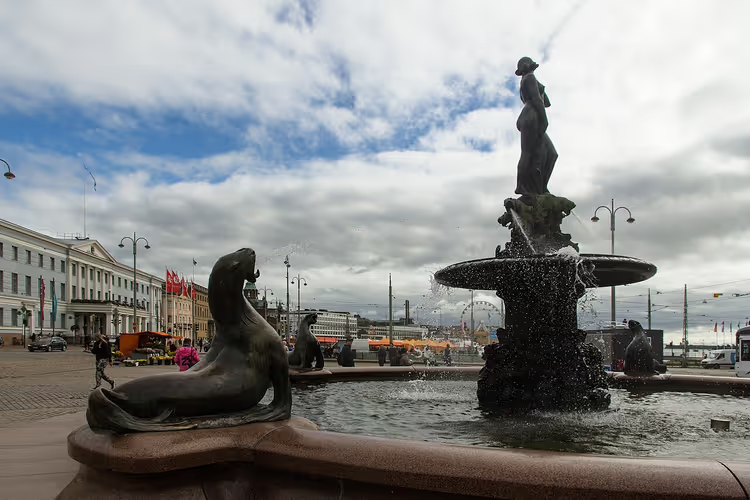 © Alexey Komarov · CC BY-SAPhoto: Alexey Komarov, CC BY-SA (https://creativecommons.org/licenses/by-sa/4.0), Wikimedia Commons
The Havis Amanda fountain has stood at the start of Esplanadi boulevard since the early 20th century. At the center of the composition is a bronze sea nymph on a pedestal basin, surrounded by fish and seals. The monument stands five meters tall, and the figure itself symbolizes the birth of the city. The nymph appears to be emerging from the depths of the sea onto land, with her back turned to the city administration building.
On May 1, students place a white cap on the nymph's head and celebrate Vappu. Both tourists and locals come to see the fountain. The site is open around the clock and free of charge, and a shopping street starts nearby. The best shots come in the morning, when the square is mostly empty.
- Cost: free to view, the site is open around the clock (as of 09/2026, MyHelsinki on the Havis Amanda fountain).
- Getting there: a couple of minutes on foot from Market Square.
- Who it's for: those strolling through the center who want to see the city's main fountain.
17. Central Railway Station
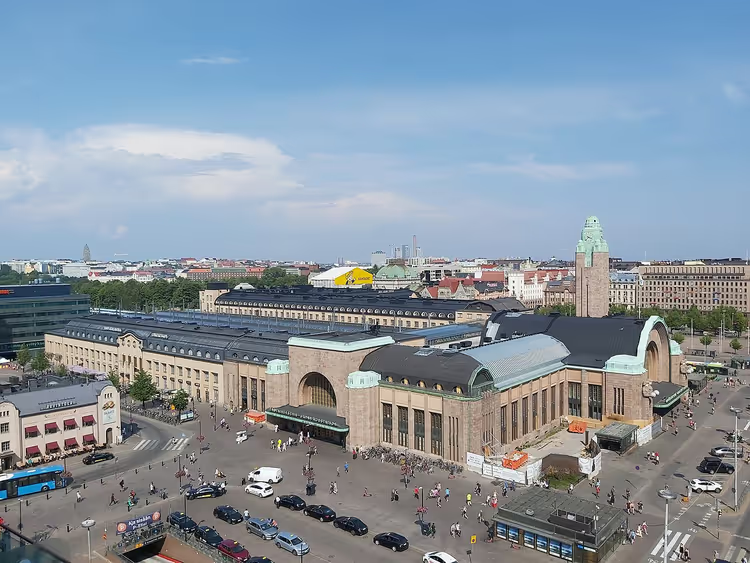 © Anne Pietarinen · CC BYPhoto: Anne Pietarinen, CC BY (https://creativecommons.org/licenses/by/4.0), Wikimedia Commons
Central Railway Station draws attention even before you reach the city center. The monumental building was completed in 1914 to a design by Eliel Saarinen. The facade is made of red granite with no superfluous ornamentation, and a clock tower rises above the entrance. At the main entrance stand two pairs of stone atlantes holding lanterns.
Trains, commuter rail, and buses depart from here to destinations across the country, making the station the city's main transport hub. Inside are spacious halls with modern infrastructure. Kamppi and the main shopping streets are nearby, so the station is a convenient starting point for a walk.
- Getting there: city center, Rautatientori metro station next to the building (as of 09/2026, VR).
- Who it's for: those arriving in Helsinki by train who want to be in the center right away.
- The catch: platforms get crowded at rush hour, so allow extra time.
18. Seurasaari open-air museum island
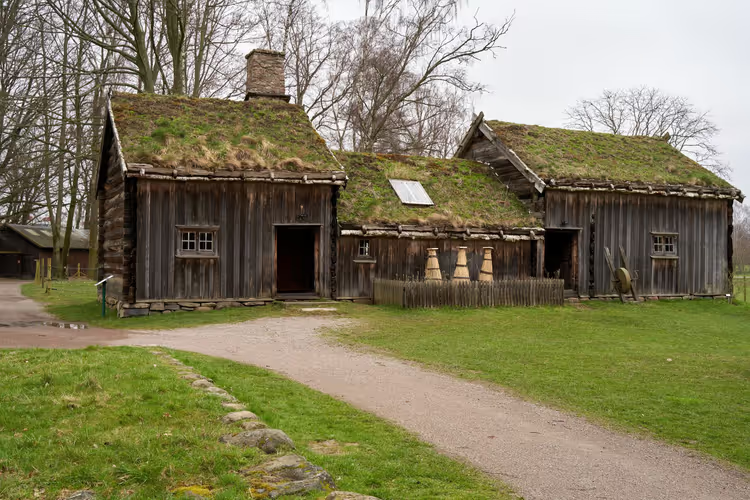
Seurasaari lies a few kilometers from the center and is connected to the mainland by a long pedestrian bridge. It is an open-air ethnographic museum: its exhibits consist of old cottages, farmsteads, mills, barns, and stables from Finnish villages. They showcase the traditional way of life of past centuries, and some houses have their interiors open to visitors.
The island is surrounded by majestic pines and spruces, and the wooded areas are home to squirrels, hares, foxes, and birds. The walk is calm and unhurried. You can get there on foot from the Töölö district or by bus. In summer, bring water and wear comfortable shoes.
- Getting there: bus from the center or on foot across the bridge from the Töölö district (as of 09/2026, MyHelsinki on Seurasaari island).
- Who it's for: those who want to get out of the city and stroll among historic buildings.
- The catch: on rainy days the paths on the island become slippery.
19. City Hall
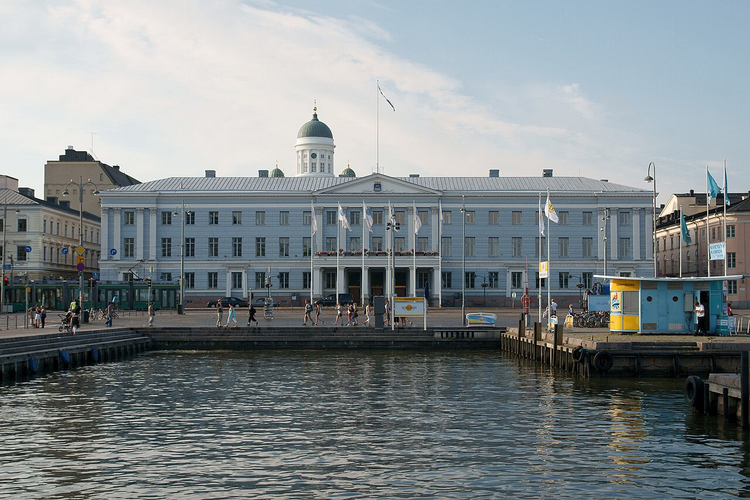 © kallerna · CC BY-SAPhoto: kallerna, CC BY-SA (https://creativecommons.org/licenses/by-sa/3.0), Wikimedia Commons
City Hall stands between Market Square and Senate Square. The three-story mansion was built in 1833 and initially served as a hotel and trading exchange. It hosted balls and society receptions, and since 1930 the building has been the seat of the city municipality. The light blue facade is decorated with pilasters, a columned portico, and a triangular pediment.
Anyone can enter City Hall. A tourist office operates there, providing information about the city's attractions. The ground floor regularly hosts exhibitions by contemporary Finnish artists. It is worth stopping by if you are already walking around Senate Square.
- Getting there: Senate Square in the center, entrance next to the cathedral (as of 09/2026, City of Helsinki).
- Who it's for: those interested in urban architecture who want to see an exhibition for free.
- The catch: access to the halls is restricted during official events.
20. St. John's Church
 © Ranerana · CC BY-SAPhoto: Ranerana, CC BY-SA (https://creativecommons.org/licenses/by-sa/4.0), Wikimedia Commons
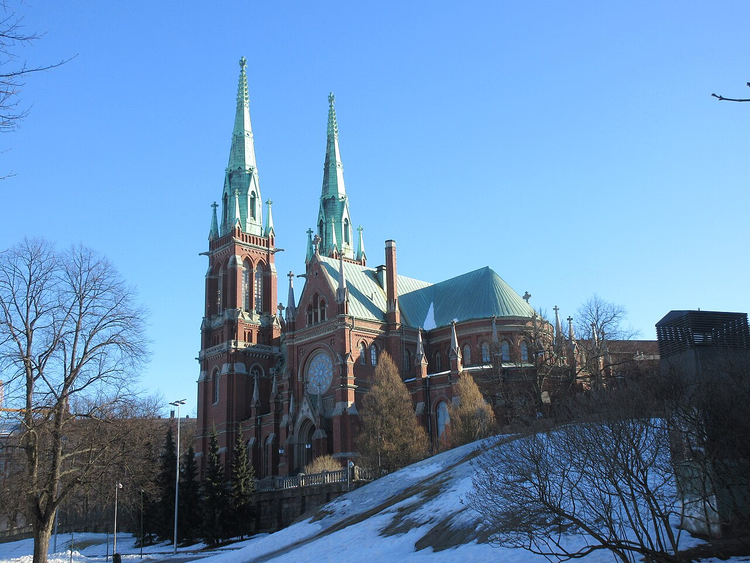
St. John's Church (Johanneksenkirkko) was built in the late 19th century from red brick. It is one of the largest Lutheran churches in the city: the building is 59 meters long, and the hall seats more than 2,500 people. Two slender towers with spires rise to 74 meters, making the church visible from afar.
The facade is decorated with delicate rose windows, pointed arches, and three ornamented portals. Inside are an arcaded gallery with massive columns, a carved pulpit, and an altar with a painted panel. Visiting the church is free, but viewing is limited during services. The church stands a block away from a busy street, so it is usually quiet here.
- Cost: free entry (as of 09/2026, Helsinki churches).
- Getting there: on foot from the station or by tram to the Kamppi district.
- The catch: on weekdays part of the hall is closed during services.
21. Monument to Alexander II
 © Przemek P · CC BY-SAPhoto: Przemek P, CC BY-SA (https://creativecommons.org/licenses/by-sa/3.0), Wikimedia Commons
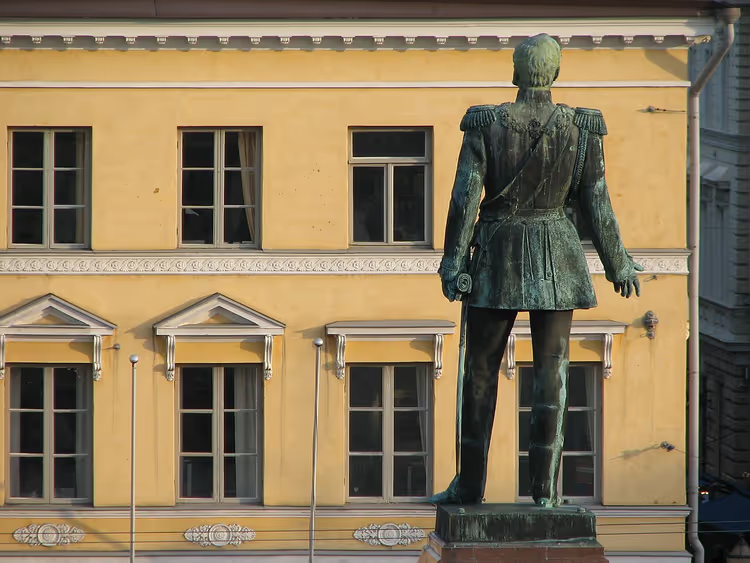
The monument to Alexander II was erected in the center of Senate Square in 1894. The unveiling was timed to the birthday of the monarch, who was respected in Finland. Under Alexander II, the country gained broad autonomy within the Russian Empire, which accelerated economic growth and the development of national culture. The bronze figure stands over three meters tall on a red granite pedestal.
Around the base are allegorical sculptures symbolizing Law, Peace, Light, and Labor. The emperor is dressed in a guards officer's uniform and stands at the top of the stairs leading to the Cathedral. The monument is open around the clock, and viewing is free. It's a convenient stop on a walk through Senate Square.
- Cost: viewing is free, the square is open around the clock (as of 09/2026, MyHelsinki on Senate Square).
- How to get there: city center, right in front of the stairs to the cathedral.
- Who it's for: those interested in Finland's history as part of the Russian Empire.
22. Finnish National Gallery
 © Finnish National Gallery · CC BY-SAPhoto: Finnish National Gallery, CC BY-SA (https://creativecommons.org/licenses/by-sa/4.0), Wikimedia Commons
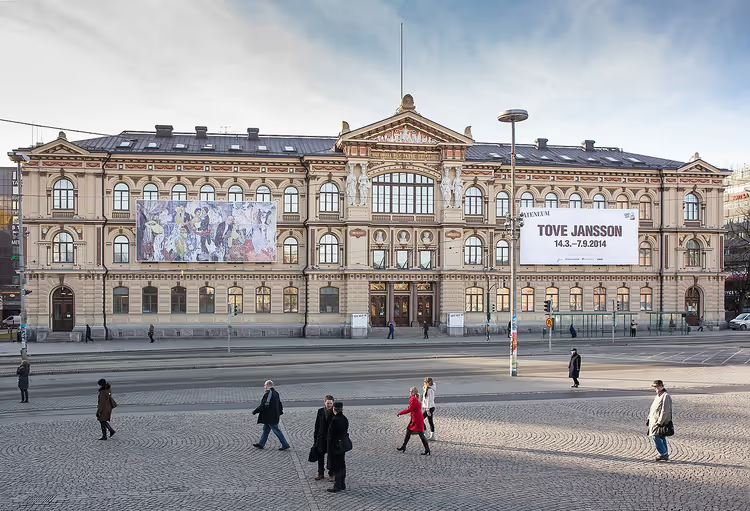
The Finnish National Gallery brings together three museums: Ateneum, Kiasma, and the Sinebrychoff Museum. They are located in different parts of the city and together show the history of art from classical to avant-garde.
The Sinebrychoff Museum houses a collection of Western European painting, antique furniture, and 18th-19th century interior objects. It also displays silver, porcelain, clocks, and old icons. It's easier to buy tickets online, and a combined ticket gives access to several venues at once.
- Cost: a combined ticket is valid at several museums in the gallery (as of 09/2026, official gallery website).
- How to get there: the museums are located in the center, easy to walk between them (as of 09/2026, gallery schedule).
- Who it's for: those ready to devote a whole day to art.
23. Presidential Palace
 © Natalia Semenova · CC BYPhoto: Natalia Semenova, CC BY (https://creativecommons.org/licenses/by/3.0), Wikimedia Commons
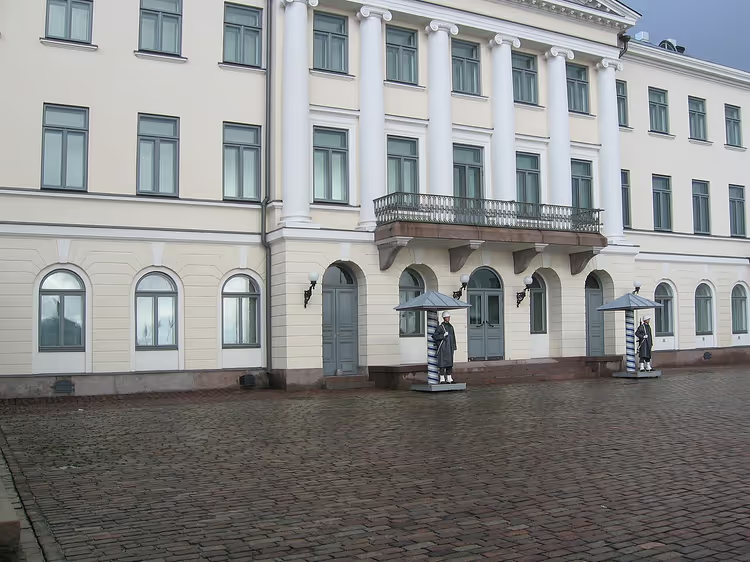
The Presidential Palace stands out among the buildings on Market Square. The elegant three-story mansion was built in 1818 for one of Finland's wealthiest merchants. It later became the residence of governors-general, and then of Russian emperors. Since 1919, after independence was declared, the palace has served as the official residence of the country's presidents.
The building's exterior is restrained: a beige facade, a six-column portico, a triangular pediment, and an arched entrance. You can't go inside, but the facade is clearly visible from the square. The palace is a two-minute walk from Market Square, so it's easy to see while strolling through the center.
- How to get there: Market Square, next to the ferry dock (as of 09/2026, official presidential website).
- Who it's for: those walking through the center and interested in official architecture.
- The catch: no entry inside, viewing is only possible from the outside.
24. Finnish National Theatre
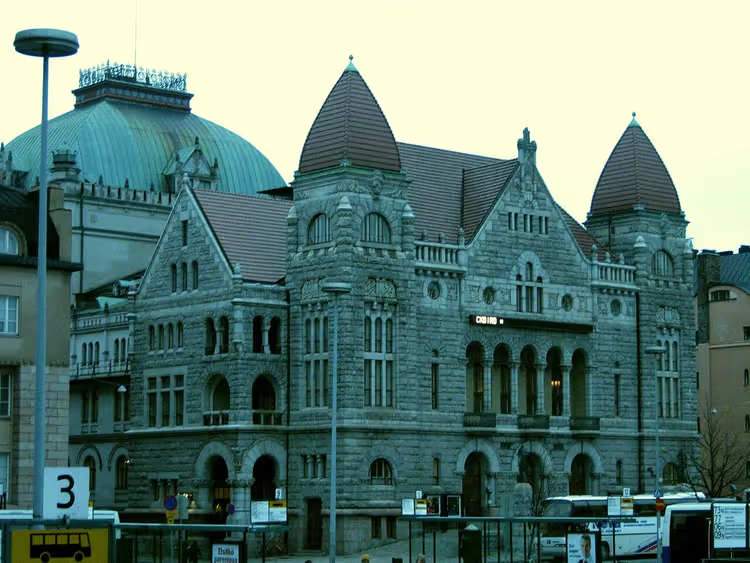 © Андрей Груздев · CC BYPhoto: Андрей Груздев, CC BY (https://creativecommons.org/licenses/by/3.0), Wikimedia Commons
The Finnish National Theatre stands near the railway station. The early 20th-century building resembles a medieval castle: solid granite walls, pointed towers, lancet windows and high red roofs. The theatre is tied to the rise of Finnish culture: it was among the first to stage plays and operas in Finnish.
Today the repertoire includes classical and contemporary productions. You can visit the theatre without seeing a performance: the building is interesting from the outside, and the facade is often photographed on the way to the station. If you plan to see a show, book tickets in advance, as the hall fills up completely on popular dates.
- How to get there: a couple of minutes on foot from Central Station (as of 09/2026, theatre's official website).
- Who it's for: those who want to see a performance in Finnish or appreciate the building from the outside.
- The catch: performances are in Finnish, so a foreigner needs at least basic language skills.
25. Ateneum Art Museum
Ateneum is part of the Finnish National Gallery and is considered one of the country's main art museums. The museum was named after the ancient Greek patroness of science and craft. The collection began in 1887, when the emperor gave 18 paintings to the Finnish Art Society. Today the halls of the Renaissance-style palace display works by European and Russian masters.
Here you can see paintings by Edgar Degas, Francisco Goya, Ivan Shishkin, Ilya Repin, Marc Chagall, Paul Cézanne and Amedeo Modigliani. A separate section is devoted to Finnish artists: Hugo Simberg, Helene Schjerfbeck, Akseli Gallen-Kallela and Albert Edelfelt. The ticket is valid all day, so you can comfortably plan a visit of several hours.
- Cost: museum ticket, valid all day (as of 09/2026, Ateneum official website).
- How to get there: city center, near Central Station (as of 09/2026, Ateneum page).
- Who it's for: those who love painting and want to see Finnish classics.
26. Finnish National Opera
The Finnish National Opera stands on the shore of Töölönlahti Bay. The white building was completed in 1993, and its facade stands out with straight lines and cold, undecorated glass. Around 300 performances are staged here every year. The auditorium has exemplary acoustics and seats 1,350 people, and the wide seats are arranged so the stage is visible from any point.
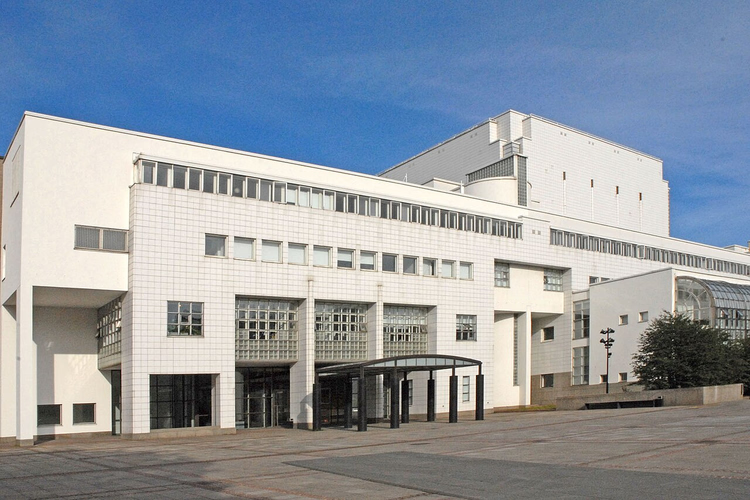 © Jean-Pierre Dalbéra from Paris, France · CC BYPhoto: Jean-Pierre Dalbéra from Paris, France, CC BY (https://creativecommons.org/licenses/by/2.0), Wikimedia Commons
The theatre is home to opera and ballet companies, as well as a symphony orchestra. The program includes classical and contemporary productions, so choose a performance to your taste. Tickets for popular evenings sell out in advance, and it's worth arriving half an hour before the start to find your seat without rushing.
- Cost: performance tickets, prices depend on the seat (as of 09/2026, opera official website).
- How to get there: tram or bus toward Töölö, stop at the building (as of 09/2026, opera program).
- Who it's for: those ready to spend an evening at the theatre and who love music.
27. Helsinki Music Centre
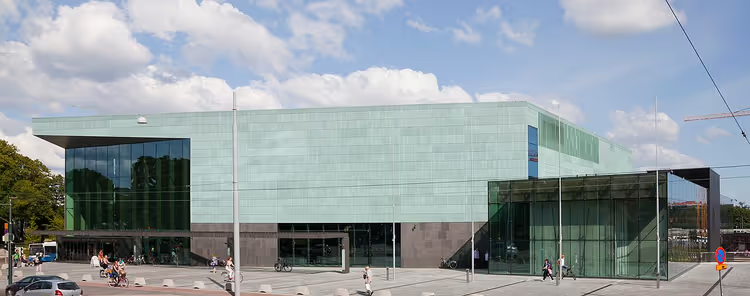 © Diego Delso · CC BY-SAPhoto: Diego Delso, CC BY-SA (https://creativecommons.org/licenses/by-sa/3.0), Wikimedia Commons
The Helsinki Music Centre (Musiikkitalo) opened in 2011 on the Töölönlahti Bay waterfront. The cube-shaped glass building fits well into the landscape, and a green lawn stretches in front of it. The complex is known for five concert venues hosting symphony orchestras, bands, dance and choral groups. The main hall seats 1,700 people, with seats rising around the stage in an amphitheater layout.
Wood was used in the interior finishes, which improves the acoustics of the halls. Listening to music is pleasant even from the balcony. Some concerts are free, and on weekdays rehearsals and daytime performances often take place here. Check the address and program on the official website before your visit.
- How to get there: Töölönlahti waterfront, next to the Finnish National Opera (as of 09/2026, official website).
- Who it's for: those who love classical music and modern architecture.
- The catch: tickets for popular evenings sell out in advance.
28. Amos Anderson Art Museum (Amos Rex)
The Amos Anderson Art Museum opened in 1965, and today it continues under the name Amos Rex. The collection was assembled by entrepreneur and patron Amos Anderson, who supported artists, musicians and theatre. The core of the collection is his personal holdings, with about 7,000 exhibits displayed in the halls. These include paintings, sculptures, photographs and household items from the patron's apartments.
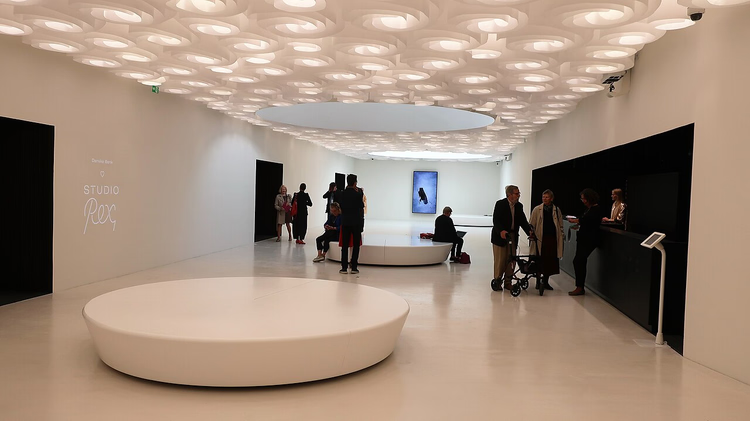 © Kulttuurinavigaattori · CC BY-SAPhoto: Kulttuurinavigaattori, CC BY-SA (https://creativecommons.org/licenses/by-sa/4.0), Wikimedia Commons
The new underground halls are built beneath Lasipalatsi Square, with light domes visible on the roof. Finnish impressionist masters and 20th-century European panels are shown here. Antique furniture and temporary exhibitions attract the most visitors. It's more convenient to buy tickets online, as there can be a queue on weekends.
- Cost: tickets to the permanent and temporary exhibitions (as of 09/2026, Amos Rex official website).
- Getting there: city center, near the Central Station and the shopping street (as of 09/2026, Amos Rex page).
- Who it's for: for those interested in contemporary art and interior design.
29. Agricola Church
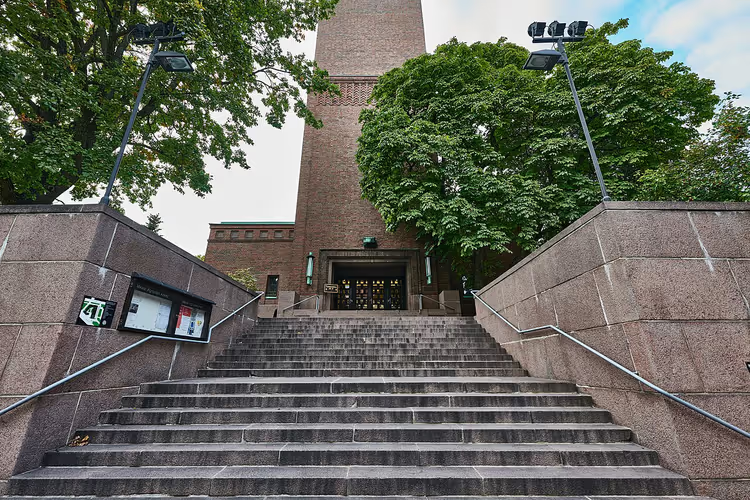
Agricola Church (Agricolan kirkko) is a fine example of Scandinavian modernism with clean, restrained forms. The church was built in the 1930s and named after Bishop Mikael Agricola, the founder of Finnish written language. The austere facade is made of dark red brick, and the main focal point is the church tower with its tall vertical emphasis. The main hall seats more than 800 worshippers.
Inside, an arched gallery features massive columns, a vaulted ceiling, and hanging brass chandeliers. Narrow, tall windows let daylight filter into the center of the hall. The church is active, so admission is free, but visits are limited during services. It's a peaceful spot away from the main tourist routes.
- Cost: free admission (as of 09/2026, Agricola Church on the parish website).
- Who it's for: for those who want to see 20th-century Finnish architecture without tourist crowds.
- The catch: you can't go inside during services.
Tours and tickets in Helsinki
Guided tours, skip-the-line tickets and activities — most offers can be cancelled free of charge.
See offers on TiqetsThe widget loads once you give your consent.
⁉️🤔 Frequently asked questions
What are the must-see sights in Helsinki in one day?
Start with Senate Square and Helsinki Cathedral, then walk down to Market Square and Uspenski Cathedral. After lunch, visit Temppeliaukio Church or take the ferry to Suomenlinna. The center is compact, so you can cover the main sights on foot without rushing.
How much do tickets to Helsinki museums cost?
Prices vary: admission to Temppeliaukio costs €8 for adults, and it's free for visitors under 18 (as of 09/2026, official church website). Kiasma, Ateneum, and Amos Rex have separate tickets. Many churches, the Kamppi Chapel, parks, and gardens are free, so you can plan a day for any budget.
What can you see in Helsinki for free?
Senate Square with the Alexander II monument, the Havis Amanda fountain, the Winter Garden, Seurasaari Island from the outside, the Kamppi Chapel of Silence, and Linnanmäki Park without rides are all free. Visiting the churches themselves is also free. You only pay for the ferry to Suomenlinna, museums, and rides.
Do you need a car to see Helsinki?
No. The center is walkable, and trams, buses, the metro, and ferries get you to the islands and outlying parks. A single ticket works across several modes of transport, so a car in the center only adds parking costs. A car is useful if you're continuing further into Finland.
How do you get to Suomenlinna Fortress?
The HSL ferry departs from Market Square year-round, and the trip takes about 15 minutes.
In short: what's worth booking
In Helsinki, it's easy to combine free walks and paid museums. If you're visiting for a weekend, do Suomenlinna and Temppeliaukio on the first day, and leave the museums and parks for the second. If you're traveling with kids, add Korkeasaari Zoo and Linnanmäki amusement park. If you want art, plan for Ateneum, Kiasma, and Amos Rex.
The main rule: buy museum tickets and attraction tickets online so you don't waste time in lines. It's easier to put together city and surrounding area tours through one service: book Helsinki tours on GetYourGuide.

A small editorial team writing guides for independent travel. We travel ourselves, but we haven’t been everywhere, so we check prices, opening hours and how to get there against official sources.