
















Where to go in Madrid: 11 museums with prices and free intervals
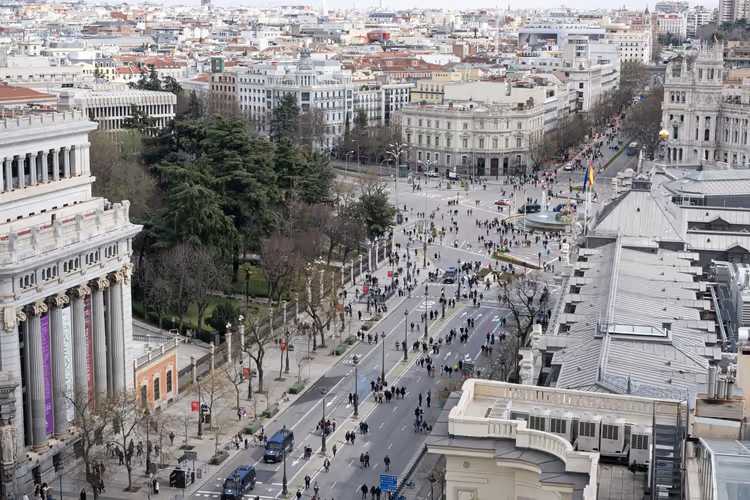
Madrid keeps its main museums in one neighborhood. The Prado, the Thyssen collection, and the Reina Sofía stand almost side by side. You can walk between them in about ten minutes.
We rounded up eleven of the city's museums and put prices, opening hours, and addresses into one table.
Ad: this article contains affiliate links, we earn a commission if you book through them, at no extra cost to you.
Tickets and opening hours: what you need to know
💡 In short:
- The Prado is open every day, and tickets there are sold with timed entry.
- Monday is a day off for almost all Madrid museums except the Prado and the Thyssen.
- The Reina Sofía and the Thyssen have free time slots: in the evening and on Mondays.
- Buy tickets online, otherwise you'll just stand in line outside the ticket office.
- Prices and opening hours: as of 09/2026, checked on the Prado visit page.
Museum Madrid divides into three groups. The Prado's royal collection covers the classics, the Reina Sofía handles the twentieth century, and private houses and academies show things the big crowds never reach. The first two are in the center, the rest are scattered across the streets and require a separate trip.
The Prado is open on weekdays and Saturdays from 10:00 to 20:00, and on Sundays it closes an hour earlier (as of 09/2026, museum visit page).
The Reina Sofía is closed on Tuesdays and offers free entry in the evenings from 19:00 to 21:00 (as of 09/2026, museum schedule and prices). On Sunday the free window starts after 13:30. If you're going for Guernica and arrive at the museum around dinner time, you won't have to pay.
The Thyssen waives admission on Monday (as of 09/2026, free entry conditions). On that day the museum operates only for free entry, so the galleries are packed. Plan your route like this: the Thyssen on Monday, the Prado and the Reina Sofía on the other days.
Summary table: admission, hours, day off
Museum | Admission | Opening hours | Source |
|---|---|---|---|
Museo del Prado | €15, reduced €7.50 | Mon-Sat 10:00-20:00, Sun 10:00-19:00 | |
Museo Reina Sofía | free evening time slots | Mon-Sat from 10:00, closed Tuesday | |
Museo Thyssen-Bornemisza | free on Monday | Tue-Sun during daytime hours | |
Museo Sorolla | a few euros, free on weekends | weekdays until evening, Sunday until midday | museum website |
Naval Museum | free | closed Monday | schedule on the museum website |
The rest of the museums on the list are cheaper and quieter. State-run venues charge a few euros for a ticket, and on weekends they often open with free entry. Prices and hours change, so check them on the museum's website before heading out.
The three main museums sell timed tickets, and popular slots sell out a day or two in advance. Check Madrid museum tickets on Tiqets: there you can see which slots are still available.
Tours and tickets in Madrid
Guided tours, skip-the-line tickets and activities — most offers can be cancelled free of charge.
See offers on TiqetsThe widget loads once you give your consent.
How to get there and museum map
The central museums sit near the metro line that runs through Banco de España and Atocha. You'll find the Prado and the Thyssen between these two stations, and the Reina Sofía stands almost at Atocha station itself. For the Cerralbo, go to Ventura Rodríguez or Noviciado; for the Sorolla, to Gregorio Marañón. The Museum of Natural Sciences and the Museum of the Americas lie north of the center: the first is closer to Nuevos Ministerios, the second to Moncloa. Both northern venues are convenient to see on the same day, so you don't have to return to the same part of the city.
Plan your route for the day so you don't crisscross Madrid for nothing.
1. Museo del Prado
 © Emilio J. Rodríguez Posada · CC BY-SAPhoto: Emilio J. Rodríguez Posada, CC BY-SA (https://creativecommons.org/licenses/by-sa/2.0), Wikimedia Commons
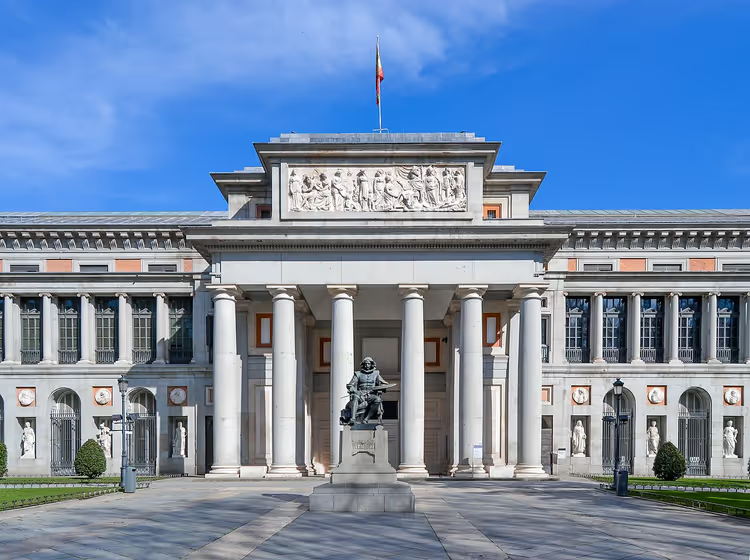
The Prado began as a royal collection and opened to the public in the first half of the nineteenth century. Today it is one of Europe's leading picture galleries, and its rooms display Velázquez's "Las Meninas," Goya's "Majas," and works by El Greco, Titian, and Bosch.
One ticket covers both the permanent collection and temporary exhibitions. Entry is by timed session, so choose your time when purchasing. Free and reduced tickets are issued at the ticket office with a document confirming your right to the discount.
- How to get there: metro to Banco de España or Atocha stations, entrance from Paseo del Prado.
- Tickets and hours: €15, reduced €7.5; Mon-Sat 10:00-20:00, Sun 10:00-19:00 (as of 09/2026, hours and rates).
- Who it's for: first-time visitors to Madrid who want to see the classics.
- The catch: convenient time slots get booked in advance, leaving only midday intervals at the ticket office.
2. Naval Museum
 © Fernando · CC BY-SAPhoto: Fernando, CC BY-SA (https://creativecommons.org/licenses/by-sa/4.0), Wikimedia Commons
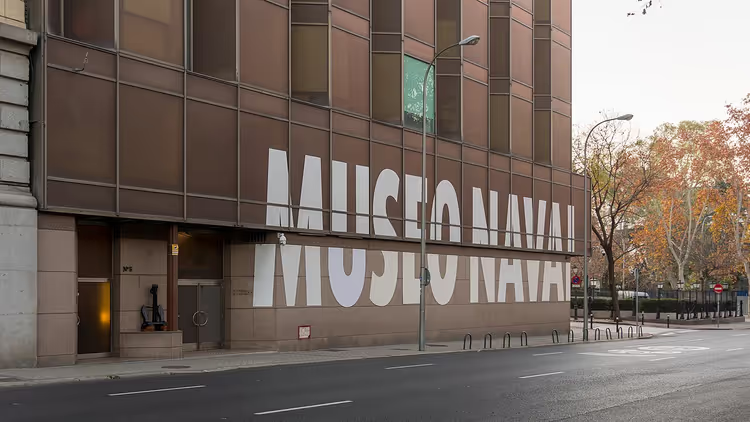
The Naval Museum presents the history of the Spanish fleet from the Age of Discovery. The exhibition is organized into themed rooms: you'll see model sailing ships, navigational instruments, nautical charts, ship's logs, and treasures raised from the seabed.
The explorers' room houses Juan de la Cosa's map with the first depiction of the American coast. The museum is still run by the naval department, so it's best to check room opening hours in advance.
- How to get there: Paseo del Prado, 5, entrance a stone's throw from the Prado.
- Cost: free, closed Mondays, check opening hours on the museum's website.
- Not for: those who find ship models and nautical charts boring.
3. Museum of the Americas
The collection has been assembled since the discovery of the New World and shows life in the Americas before the arrival of colonizers. The rooms display weapons, musical instruments, traditional clothing, and everyday objects from Peru, Mexico, and Colombia.
The holdings number tens of thousands of items, so one visit will only cover part of the collection. Take your time: the tour moves more slowly than it seems, and you'll want to examine the small objects in the display cases.
- How to get there: Avenida de los Reyes Catolicos, 6, Moncloa metro station.
- Tickets and hours: prices are low; on Sundays state museums in Spain usually offer free entry; check the museum's website for exact conditions.
- Who it's for: those interested in pre-Columbian America and archaeology.
- The catch: you can't walk here from the Prado; it's a separate metro trip.
4. Museo Reina Sofía
 © Luis García ( Zaqarbal ) · CC BY-SAPhoto: Luis García ( Zaqarbal ), CC BY-SA (https://creativecommons.org/licenses/by-sa/3.0), Wikimedia Commons
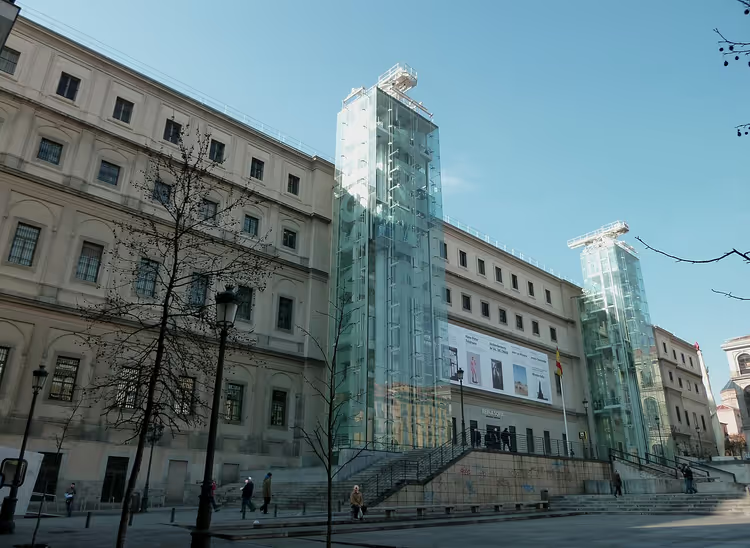
The Reina Sofía occupies two buildings and presents twentieth-century art from the first avant-garde movements to the present day. The main draw here is Pablo Picasso's "Guernica." Nearby hang works by Salvador Dalí, Joan Miró, Juan Gris, and the sculptor Julio González.
The museum is closed on Tuesdays, so don't schedule it for midweek. The evening slot from 19:00 to 21:00 is free, and on Sundays free entry starts after 13:30 (as of 09/2026, museum hours and rates). Plan your visit for the evening: you'll save money and see "Guernica" without the daytime tour groups.
- How to get there: Ronda de Atocha, 2, entrance through the Nouvel building, Atocha metro station.
- Tickets: evening slots are free; buy paid tickets online.
- The catch: closed on Tuesdays, so on a short trip you'll have to reschedule your visit.
5. Museo Cerralbo
 © Luis García ( Zaqarbal ) · CC BY-SAPhoto: Luis García ( Zaqarbal ), CC BY-SA (https://creativecommons.org/licenses/by-sa/3.0), Wikimedia Commons
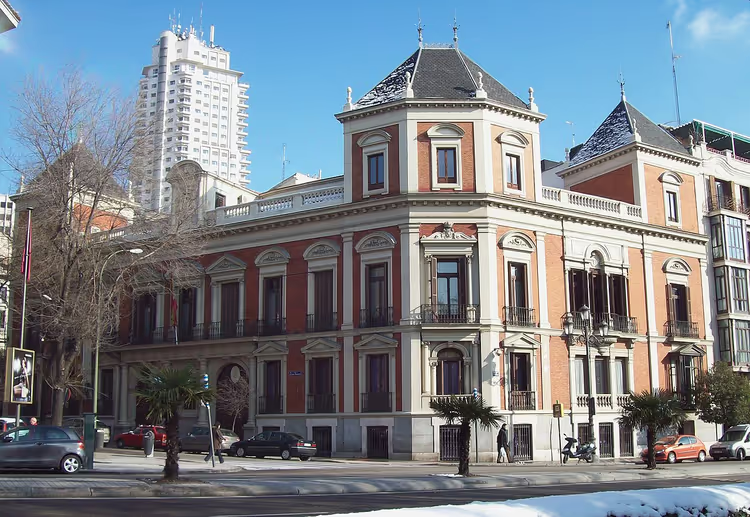
The Marquis of Cerralbo's mansion looks like a nineteenth-century residence rather than a museum. The owner spent most of his life traveling and brought back tens of thousands of objects: archaeological finds from Greece and Rome, Chinese and Japanese ceramics, edged weapons, carpets, coins, medals, and clocks.
The rooms are furnished as they were in the marquis's time, so you view the collection right in the living quarters. Allow two hours for the visit: the house has many small objects that are interesting to examine up close.
- How to get there: Calle Ventura Rodríguez, 17, Ventura Rodríguez or Noviciado metro station.
- Tickets and hours: prices are low; check the museum's website for free weekend slots.
- The catch: the opening day is short, so you'll have to schedule your visit for the morning.
6. Royal academy of fine arts of San Fernando
 © Carlos Delgado · CC BY-SAPhoto: Carlos Delgado, CC BY-SA (https://creativecommons.org/licenses/by-sa/3.0), Wikimedia Commons
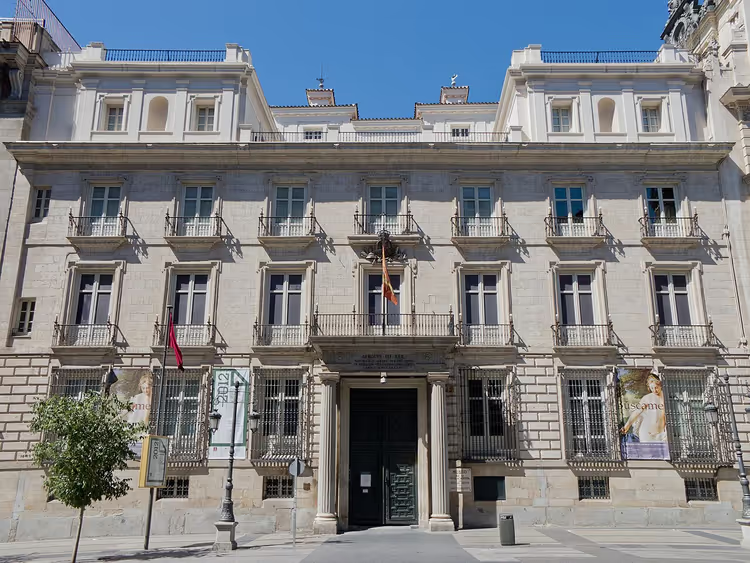
The academy occupies a baroque palace on Calle de Alcalá and has been operating for more than two and a half centuries. Spain's artists and sculptors studied here, and for a time the academy was headed by Francisco Goya.
The halls hold fifteen hundred paintings and sculptures, but the scale is smaller than the Prado. In return, you can walk through the rooms calmly, without tour groups.
A visit takes about an hour, and that's enough to see both painting and sculpture.
- Getting there: Calle de Alcalá, 13, Sol or Sevilla metro.
- Tickets and hours: the ticket is inexpensive; check the academy's website for prices and free-admission days.
- Not for: those who came only for "Las Meninas" and "Guernica."
7. Monasterio de las Descalzas Reales
 © Luis García ( Zaqarbal ) · CC BY-SAPhoto: Luis García ( Zaqarbal ), CC BY-SA (https://creativecommons.org/licenses/by-sa/3.0), Wikimedia Commons
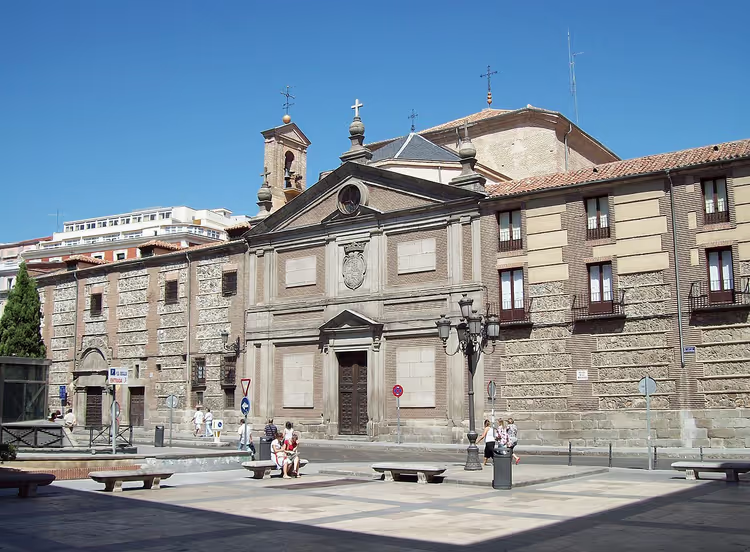
The Monasterio de las Descalzas Reales was founded in the mid-sixteenth century next to the royal palace. Young women from noble families entered the convent, and the nobility gifted it jewelry and paintings. That's why the halls display Titian, Rubens, and Murillo.
The interiors are finished in marble with gilding, and frescoes are visible above the grand staircase. The convent is still active, so the silence and daily routine here are genuine.
Visitors are admitted in timed sessions, and inside you walk along narrow corridors between the convent's rooms. Check the schedule in advance: entry windows are short, and the convent is closed on Mondays.
- Getting there: Plaza de las Descalzas, a stone's throw from Puerta del Sol.
- Tickets and hours: timed entry, closed on Mondays; check the schedule on the convent's website.
- The catch: some rooms are closed to visitors, so you won't see the entire complex.
8. Thyssen-Bornemisza Museum
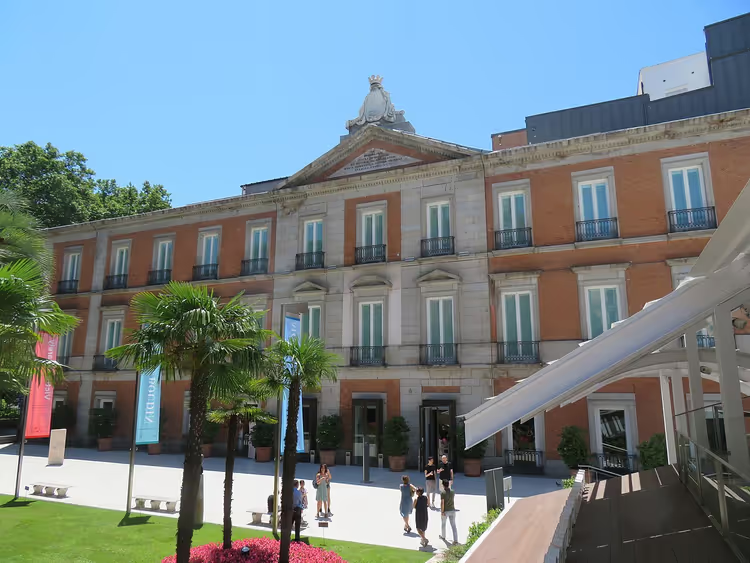 © Kyle Magnuson from Los Angeles, United States · CC BYPhoto: Kyle Magnuson from Los Angeles, United States, CC BY (https://creativecommons.org/licenses/by/2.0), Wikimedia Commons
The collection was assembled by the Thyssen-Bornemisza family starting in the mid-nineteenth century, and in the early nineties it received the status of a state picture gallery. In the halls you'll see Rubens and Caravaggio, Gauguin and Van Gogh, and also Americans like Edward Hopper.
The museum is housed in the Villahermosa Palace on Paseo del Prado, a block from the Prado and the Reina Sofía. On Mondays admission is free; on other days the ticket is paid (as of 09/2026, the museum's official page). Check your dates: if Monday is free, one museum out of the three will cost you nothing.
- Getting there: Paseo del Prado, 8, Banco de España metro.
- Tickets: free Monday; on other days buy a ticket online.
- The catch: Monday is reserved only for free admission; on other days a ticket is required.
9. Museo del Jamón
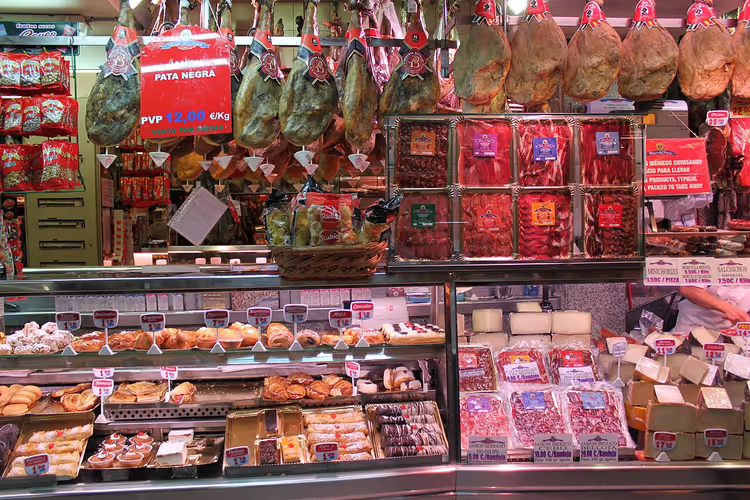 © Anagoria · CC BYPhoto: Anagoria, CC BY (https://creativecommons.org/licenses/by/3.0), Wikimedia Commons
The name is misleading: Museo del Jamón is a chain of ham bars and shops in central Madrid, not an exhibition hall. On the ground floor there are counters with sausages, cheeses, bread, and the main product, and on the second floor hot dishes are served.
The ham here comes in two main types. Serrano is made from white pigs and is cheaper, while ibérico comes from black Iberian pigs fed on acorns. The easiest way to try the ham is at the counter: order a sandwich on the ground floor.
- Getting there: Calle Mayor, 7, next to Plaza Mayor.
- Prices: serrano is cheaper than ibérico; check exact prices at the counter.
- The catch: there's no museum exhibition here; it's a snack bar and shop.
10. Sorolla Museum
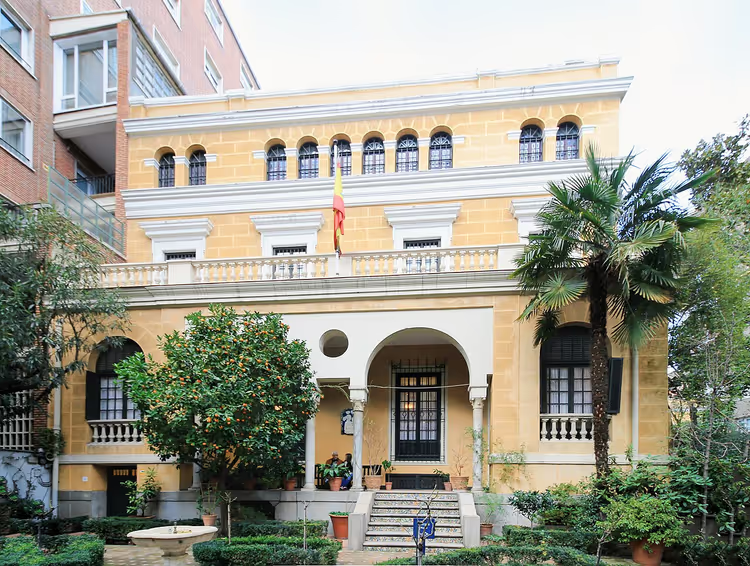 © Luis García ( Zaqarbal ) · CC BY-SAPhoto: Luis García ( Zaqarbal ), CC BY-SA (https://creativecommons.org/licenses/by-sa/3.0/es/deed.en), Wikimedia Commons
The house and studio of Joaquín Sorolla became a museum thanks to the artist's widow. The building with columns, the garden with a fountain, and the studio have preserved the setting in which Sorolla worked. The halls display portraits, still lifes, and landscapes with seascapes and fishing villages.
Besides the owner's works, the museum shows Ribera, Fortuny, and sculpture by Rodin.
The ticket costs a few euros, and on weekends the museum admits visitors for free. The garden is open together with the museum, and on a warm day you'll spend more time there than in the halls.
- Getting there: Paseo del General Martínez Campos, 37, Gregorio Marañón metro.
- Tickets and hours: admission costs a few euros, free on weekends; check the schedule on the museum's website.
- Not for: those expecting large halls and big names.
11. National museum of natural sciences
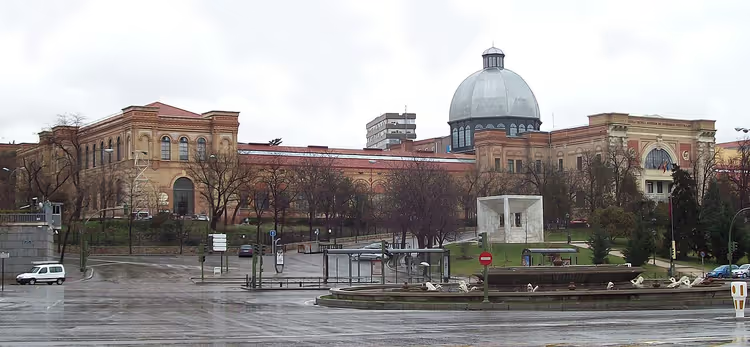 © Luis García ( Zaqarbal ) · CC BY-SAPhoto: Luis García ( Zaqarbal ), CC BY-SA (https://creativecommons.org/licenses/by-sa/3.0), Wikimedia Commons
The museum grew out of the Royal Cabinet of Natural History, which opened in the eighteenth century. Today the collection occupies five floors: skeletons of prehistoric mammals, a stuffed elephant from the eighteenth century, insects, minerals, and rare scientific books.
Next to the buildings are the Rock Garden and a Mediterranean corner, where people walk with children and listen to lectures. Families come here for half a day, and adults often combine the visit with a walk around the Nuevos Ministerios neighborhood.
- Getting there: José Gutiérrez Abascal, 2, Nuevos Ministerios metro, then about a ten-minute walk.
- Tickets and hours: tickets are inexpensive; check prices and schedule on the museum's website.
- Who it's for: families with children and anyone who needs a break from painting.
⁉️🤔 Frequently asked questions
How much does admission to Madrid museums cost?
The Prado is the most expensive: €15 for a full ticket and €7.50 for a reduced one (as of 09/2026, Prado museum rates). The Sorolla Museum charges a few euros for admission, and the Naval Museum is free. The Reina Sofía and the Thyssen have free time slots, and Spain's state museums usually offer free admission on Sundays.
What day are Madrid museums closed?
Monday is the day off at most venues: the Naval Museum, the Cerralbo, the San Fernando Academy, and the Monasterio de las Descalzas Reales are closed. The Prado is open on that day, and the Thyssen gives Monday over to free admission. The Reina Sofía is closed on Tuesday, so that museum is more convenient to see at the beginning or end of the week.
How do you get into Madrid museums for free?
Catch the free time slots. At the Reina Sofía, admission is free in the evenings from 7:00 PM to 9:00 PM; at the Thyssen on Mondays; at the Sorolla Museum on Saturdays after 2:30 PM and on Sundays. The Naval Museum is already free on the list. Plus, Spain's state museums usually open free admission on Sunday afternoons.
How much time should you allow for the Prado?
The Prado takes half a day if you want to cover at least the main halls. Start with "Las Meninas" and Goya, and leave temporary exhibitions for a second visit. Take a morning slot: during the day there are more groups in the halls, and people gather at the exit onto Paseo del Prado.
Can you walk between Madrid museums?
The three main museums can be covered on foot in one day: they stand between Atocha and Banco de España. To reach the Cerralbo, the Sorolla, the Museum of the Americas, and the Museum of Natural Sciences, you'll have to take the metro. A sensible plan: two museums a day and one walk between them.
In short: what's worth booking
Madrid is convenient to see in parts. If you have one day, take the Prado and the Reina Sofía: they stand next to each other, and the evening slot at the Reina Sofía may turn out to be free. Leave the Thyssen and the Monasterio de las Descalzas Reales for the second day.
If you're traveling with children: the Naval Museum, the Museum of Natural Sciences, and Museo del Jamón on Calle Mayor. If you want quiet and private collections: the Cerralbo and the Sorolla Museum.
Book tickets to the Prado and Reina Sofía in advance, because convenient time slots sell out quickly. For Madrid museum tours and tickets, check GetYourGuide.

A small editorial team writing guides for independent travel. We travel ourselves, but we haven’t been everywhere, so we check prices, opening hours and how to get there against official sources.