






Karlovy Vary: 30 places worth seeing, with tickets and hours
Karlovy Vary is compact: nearly all the main sights stand along the Teplá River and in the neighboring blocks. In one trip you can see the colonnades, viewpoints, and museums. The resort's main symbol, the Vřídlo spring, shoots 72 °C mineral water up to 12 m high (as of 09/2026, Czech tourism portal).
We put together 30 places in Karlovy Vary, from the Goethe Tower to the city market (based on the resort's tourist office). For each sight you'll find what to see, how to get there, and where to buy tickets. The town is small, but it has plenty of uphill walks, so plan your day with extra time.
Ad: this article contains affiliate links, we earn a commission if you book through them, at no extra cost to you.
What to see in Karlovy Vary: the highlights
💡 In short:
- Start in the center: the Hot Spring Colonnade and Lázně I stand next to each other.
- The glass and liqueur museums are open during the day, viewpoints depend on the weather.
- Prices and opening hours: 09/2026, verified on the tourist office pages.
Place | What to see | Who it's for |
|---|---|---|
Hot Spring Colonnade | the Vřídlo fountain and drinking fountains | all resort guests |
Moser Glass Museum | crystal collection and workshop | craft lovers |
Loket Castle | fortress, dungeons, gnome figurines | families with children |
Diana Observation Tower | panorama of the town and forests | those willing to climb |
Butterfly House | tropical butterflies under a dome | children and photographers |
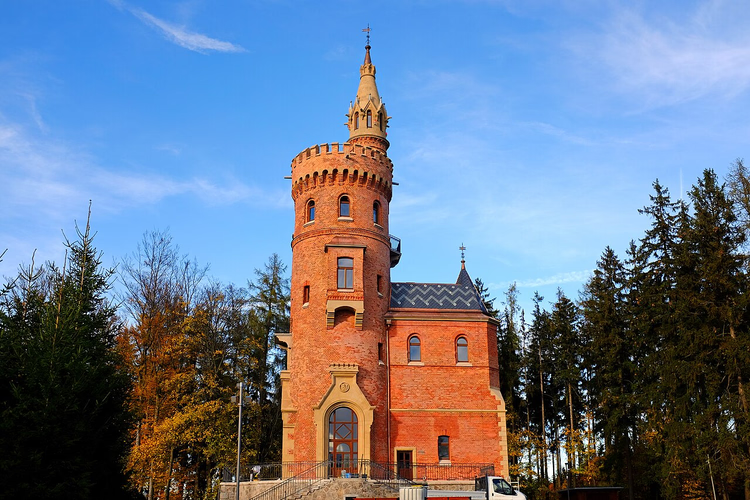
1. Goethe Tower
 © Lubor Ferenc · CC BY-SAPhoto: Lubor Ferenc, CC BY-SA (https://creativecommons.org/licenses/by-sa/4.0), Wikimedia Commons
The Goethe Tower stands on a hill called the "Peak of Eternal Youth." The structure appeared in the late 19th century. One day Princess Stephanie climbed the hill, liked the panorama, and ordered a tower to be built here. A restaurant was built nearby: the climb took time, and guests had time to get hungry.
The project was prepared by Viennese architects Ferdinand Fellner and Hermann Helmer. A cable car to the top was planned, but World War I prevented its construction. The tower has borne Goethe's name since the mid-20th century; the poet loved coming here. The hill itself is not high, but the uphill walk is tiring for some guests, so bring water.
- How to get there: on foot from the Hot Spring Colonnade following the signs, about half an hour uphill.
- Who it's for: those who want to see the resort panorama without the crowds.
2. Smetana Gardens
 © Lubor Ferenc · CC BY-SAPhoto: Lubor Ferenc, CC BY-SA (https://creativecommons.org/licenses/by-sa/4.0), Wikimedia Commons
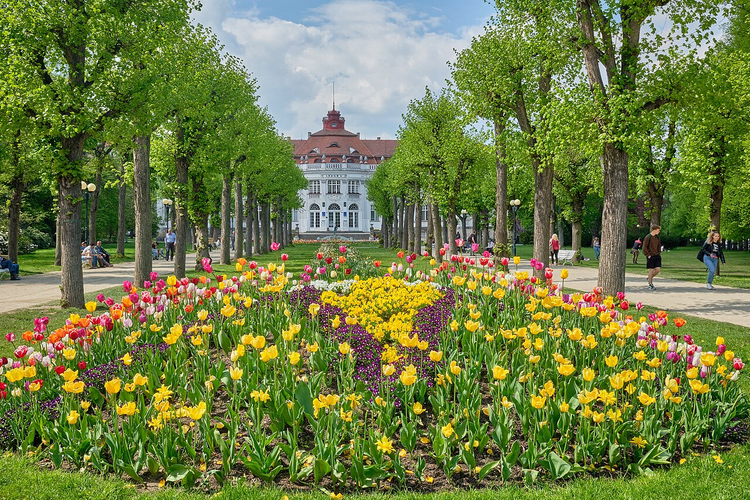
The park is named after the Czech composer Bedřich Smetana. At the entrance you're greeted by a large flower bed with the current date laid out in flowers at its center. A fountain murmurs here, and there are benches and lawns you can walk on: nobody will tell you off for it.
Concerts and festivals are regularly held in the gardens, so in summer you may catch one of the events. The spot is convenient for a break between seeing the center and climbing to the viewpoints. Bring a snack: the café inside the park is open only in season.
- How to get there: on the left bank of the Teplá, next to the Hot Spring Colonnade.
- Who it's for: a leisurely stroll and rest in the shade.
3. Moser Glass Museum
 © JiriMatejicek · CC BY-SAPhoto: JiriMatejicek, CC BY-SA (https://creativecommons.org/licenses/by-sa/4.0), Wikimedia Commons
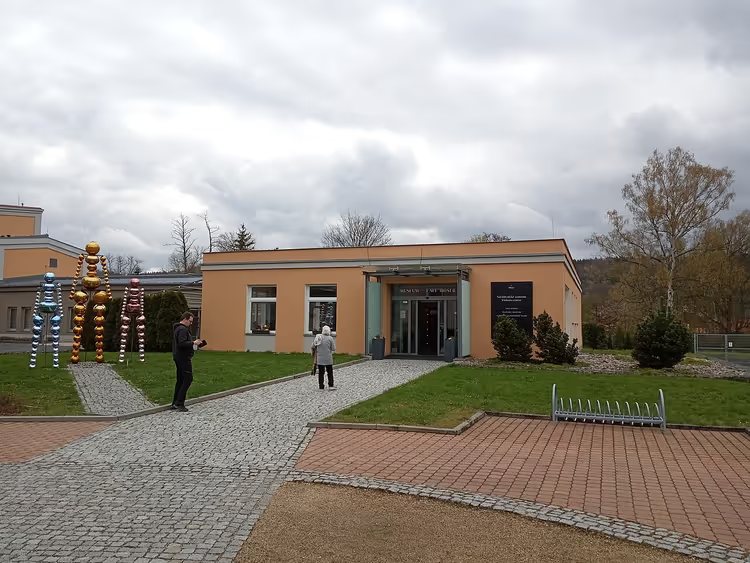
The Moser factory has been producing crystal for over 150 years, and its museum shows how a piece is born (as of the tourist office, 09/2026). The tour can be short, museum only, or extended, with a visit to the glassblowing workshop. In the workshop you'll see the production process up close, and in the museum you'll view the best works by masters from different decades.
We checked the opening hours on 09/14/2026 on the official Moser page: the museum café is open on weekdays and Saturday from 9:00 to 16:00, closed on holidays. Check the full tour schedule on site. Moser tableware is served at royal tables, so prices in the brand store are high.
The museum holds thousands of items: from the oldest glass samples to modern collections. A separate exhibition is dedicated to the factory owners and clients, who included royal courts of Europe. The workshop tour shows the full production cycle, from molten glass to cutting. If you're short on time, choose the museum only and come back for the workshop next time. The brand store operates at the museum, so you can buy a gift right after the tour.
- Cost: museum admission is paid, check the ticket price on the Moser page.
- Who it's for: those who love craft and design.
4. Jan Becher Museum
 © Karlovarská Becherovka · CC BY-SAPhoto: Karlovarská Becherovka, CC BY-SA (https://creativecommons.org/licenses/by-sa/3.0), Wikimedia Commons
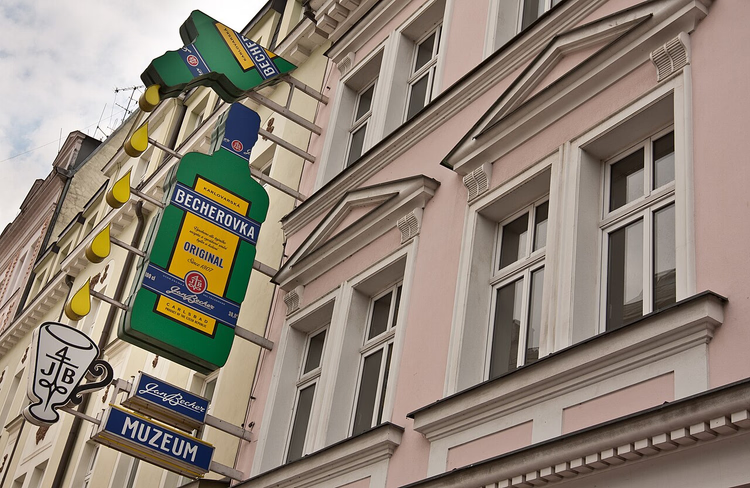
Becherovka was invented by pharmacist Jan Becher in 1809, he was looking for a remedy to improve digestion (as of 09/2026, Becherovka). The recipe is kept secret, the liqueur is made with local water and herbs, and some of the spices are imported from abroad. The first factory building appeared in 1867, and today it houses the "The Home of Becherovka" visitor center (tourist office page).
The tour goes through the historic cellars where the liqueur was stored and bottled. You will see bottles from different eras and hear about the Becher family. A tasting is included in the tour, so plan your visit without a car.
- Cost: the tour ticket is paid, check the schedule on site.
- Who it's for: for those who want to try the liqueur in its birthplace.
5. Church of St. Mary Magdalene
 © rboed* · CC BYPhoto: rboed*, CC BY (https://creativecommons.org/licenses/by/2.0), Wikimedia Commons
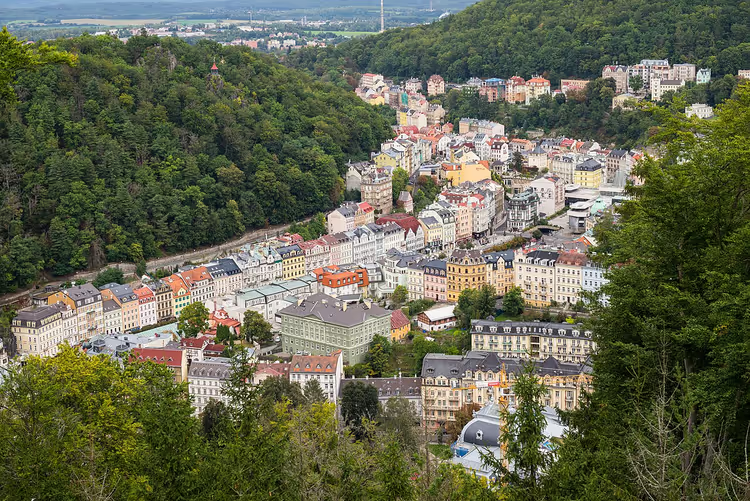
The church stands next to the Vřídlo spring and is considered a cultural monument of the Czech Republic. The first building was constructed by the Knights of the Cross in the late 15th century, then it was rebuilt from Gothic to Renaissance style, and a fire destroyed the structure. In the 18th century, architect Kilian Ignaz Dientzenhofer designed a larger church.
Construction proceeded cautiously: the hot Vřídlo spring was nearby. A new fire destroyed almost everything, only the altars survived. The church was fully restored by the mid-19th century. Today you can see paintings and statues, and in the evenings organ music concerts are held here.
- Cost: admission is free, donations are welcome.
- Who it's for: for those interested in architecture and organ music.
6. Karlovy Vary art gallery
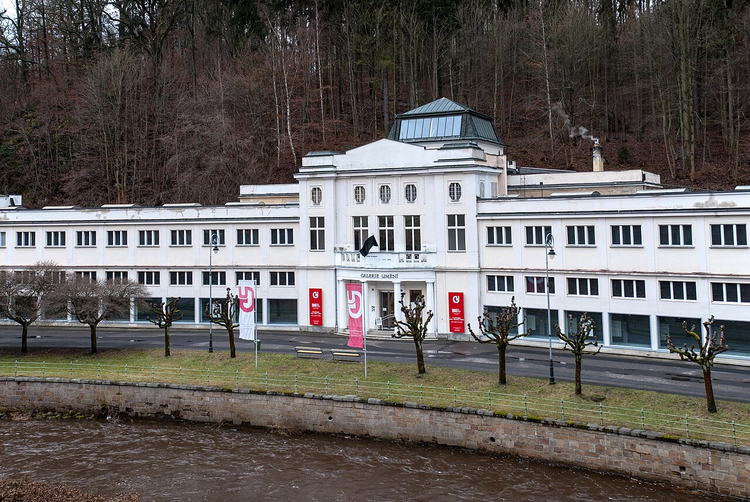
The art gallery was founded in the early 20th century on the Teplá embankment. During World War II the collection was damaged, it was restored by art historians and volunteers, and over time the gallery reopened. It houses paintings and graphic art from the 19th and 20th centuries, some works are on permanent display, while others rotate through temporary exhibitions.
 © Zorka Sojka · CC BY-SAPhoto: Zorka Sojka, CC BY-SA (https://creativecommons.org/licenses/by-sa/4.0), Wikimedia Commons
A lot of space is devoted to contemporary Czech artists. You can stop by for an hour between walks along the colonnades and see one exhibition.
- Cost: the ticket is paid, check the exhibition schedule on site.
- Who it's for: for lovers of painting and graphic art.
7. City Theater
 © Ray Swi-hymn from Sijhih-Taipei, Taiwan · CC BY-SAPhoto: Ray Swi-hymn from Sijhih-Taipei, Taiwan, CC BY-SA (https://creativecommons.org/licenses/by-sa/2.0), Wikimedia Commons
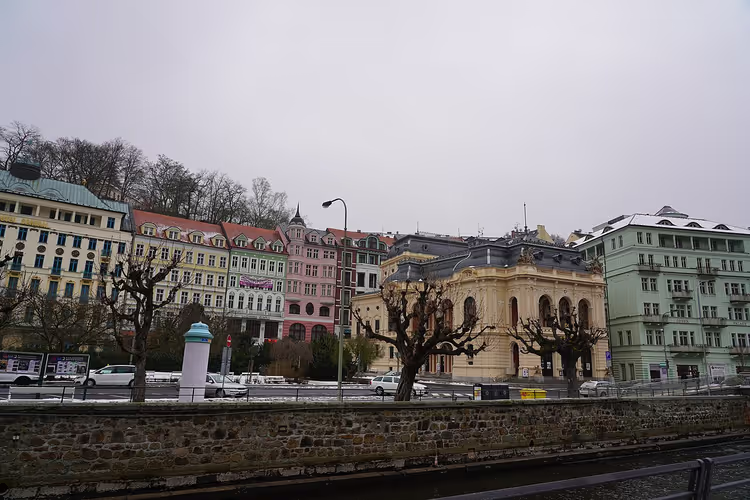
The theater stands on the bank of the Teplá, next to Theater Square, where you can park your car. The first building was made of wood in the 18th century, and it collapsed during a performance. The residents loved the theater so much that they raised money for a stone building.
In the late 19th century the building was renovated, and today it is one of the most visited places in the city. Opera, ballet, operetta, and orchestra concerts are performed here, so in the evening you can easily find a cultural program. Check the playbill at the entrance.
- Cost: tickets are sold by the theater box office, prices depend on the production.
- Who it's for: for those who want to spend an evening in the auditorium.
8. Loket Castle
 © Lubor Ferenc · CC BY-SAPhoto: Lubor Ferenc, CC BY-SA (https://creativecommons.org/licenses/by-sa/4.0), Wikimedia Commons
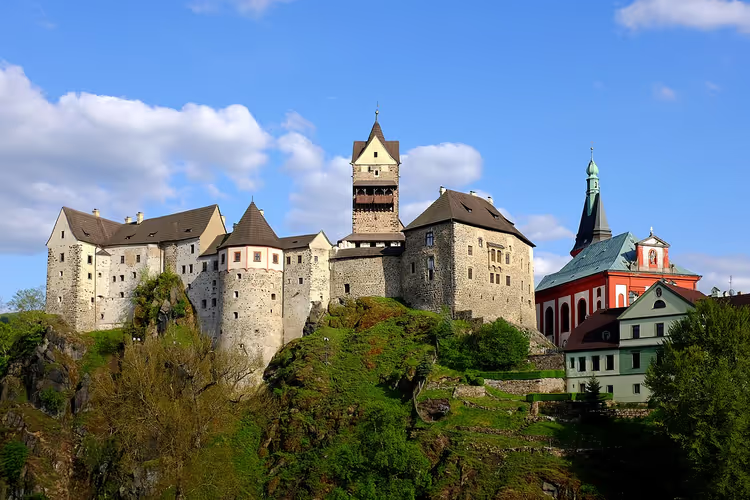
Loket began as a fortress that protected the Czechs from German troops. Later the castle served as a prison, and today on the tour you will see cells and torture instruments. Sometimes an execution scene is staged here as a theatrical performance, so if you are visiting with children, choose your route in advance.
The halls display porcelain collections and figurines of gnomes, which according to legend bring good luck. Legends tell of ghosts in the tower and a dragon that guards them. You can check this yourself.
- How to get there: the castle is located in the town of Loket, buses run there from Karlovy Vary.
- Who it's for: for families with children and lovers of the Middle Ages.
9. Diana funicular
 © I would appreciate being notified if you use my work outside Wikimedia. More of my work can be found in my personal gall · CC BY-SAPhoto: I would appreciate being notified if you use my work outside Wikimedia. More of my work can be found in my personal gall, CC BY-SA (http://creativecommons.org/licenses/by-sa/3.0/), Wikimedia Commons
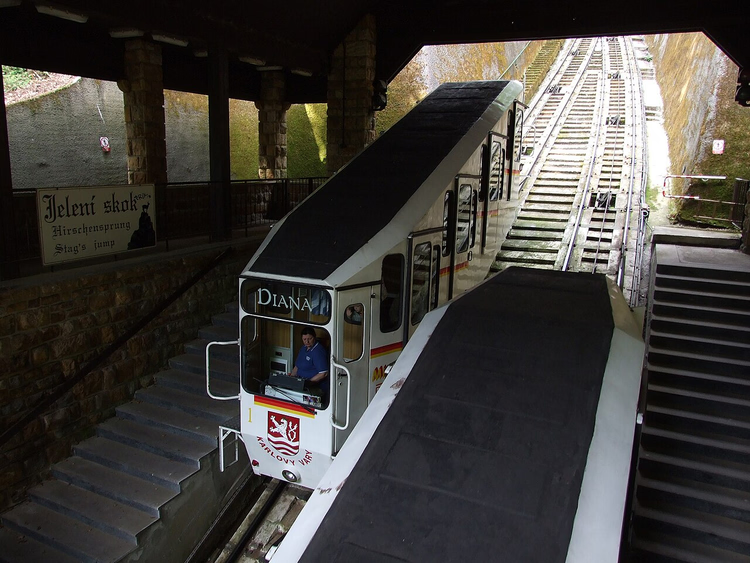
The funicular takes guests up to the Diana observation tower. The lower station is on Mariánská street next to the Grandhotel Pupp (as of Diana Karlovy Vary, 09/2026). The car runs for about five minutes and climbs 167 meters in elevation, with departures every 15 minutes.
The route passes over the forest, so you see the valley slopes from the window. The ride takes less time than walking uphill and works well for guests with children.
- Cost: buy a ticket at the station; tower admission is paid separately.
- Who it's for: anyone who wants to see the panorama without a long climb.
10. Three Crosses viewpoint
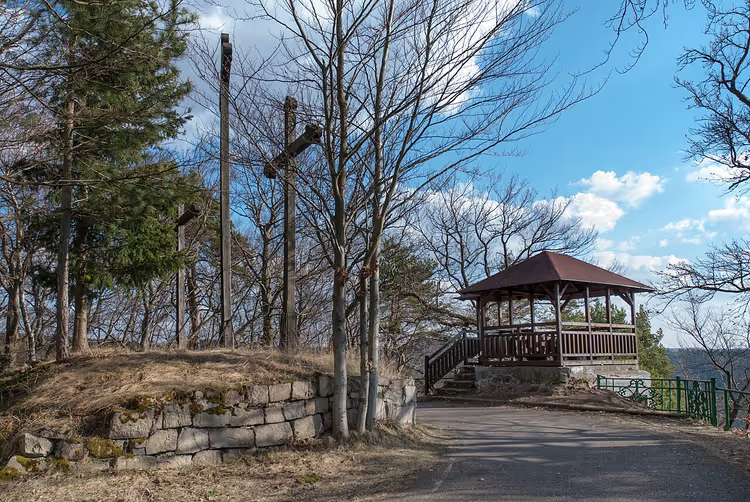 © Zorka Sojka · CC BY-SAPhoto: Zorka Sojka, CC BY-SA (https://creativecommons.org/licenses/by-sa/4.0), Wikimedia Commons
The Three Crosses stand on a hill above the city. The name comes from three crosses erected in memory of brothers who died for their faith. They were put up back in the 17th century, when the city returned to the patronage of the Catholic Church. The viewpoint offers a panorama of the entire resort.
Getting to the top is not easy, but you can walk here from the center following signs through the forest park. Tour routes pass through this spot, so there are fewer people here in the morning. The view is worth taking a few shots.
- How to get there: on foot from the center following tourist signs; the climb takes over half an hour.
- Who it's for: anyone ready for an uphill walk.
11. Diana observation tower
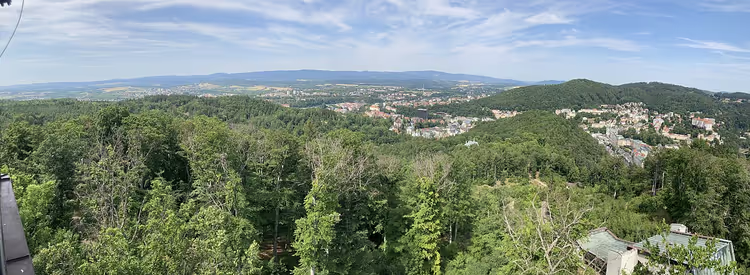 © Mattsjc · CC BYPhoto: Mattsjc, CC BY (https://creativecommons.org/licenses/by/4.0), Wikimedia Commons
The Diana tower stands at 562 m above sea level, and the structure itself rises about 40 m (as of 09/2026, tourist office). There are 150 steps to the top, but you can take the elevator. The hill was developed for visitors back in the early 19th century: the forest was thinned and benches were installed. You can reach the gallery at the base by elevator directly from the Grandhotel Pupp.
In clear weather you can see the horizon and the Fichtelgebirge mountain range from here. The tower was extended and renamed several times; after the war the name Diana stuck. Since the late 20th century the site has been listed among the cultural heritage monuments of the Czech Republic. The base with its covered wooden gallery and observation deck shows the resort town like the palm of your hand, and famous European travelers of past years visited here. The observation deck operates on a seasonal schedule, so plan your climb during daylight hours. This is where you get the best panorama of the city.
- How to get there: on foot following blue signs, by funicular, or by shuttle bus.
- Who it's for: lovers of views and short walks.
12. Deer Leap viewpoint
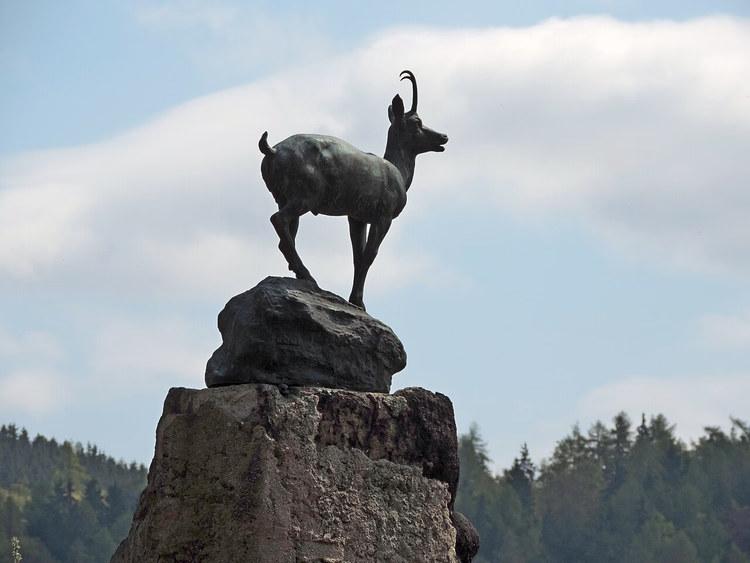 © Jan Starec · CC BY-SAPhoto: Jan Starec, CC BY-SA (https://creativecommons.org/licenses/by-sa/3.0), Wikimedia Commons
Deer Leap is the historic spot where the resort's story began. The developed viewpoint on the rock is easy to find west of the center; it has been open to visitors since the early 19th century. At the foot of the rock stands the city's largest hotel, from which you can ride up on the funicular.
The viewpoint with its wooden pavilion was built by a Viennese merchant born in Karlovy Vary to immortalize his name. On the rock stands a statue of a chamois that, according to legend, led Emperor Charles to the hot spring. The leaping chamois became the symbol of the city.
Interestingly, the resort's history began right here: Emperor Charles's dogs were chasing a chamois, the animal fell off the rock, and a dog landed its paw in a hot spring and drew people's attention. That is how the healing water was found. You can climb up a narrow staircase or ride the funicular. No tour of the resort skips this point, so there are always guests here.
- How to get there: west of the center, following signs along a forest trail.
- Who it's for: anyone who wants to see the founding site of the resort.
13. Svatoš Rocks
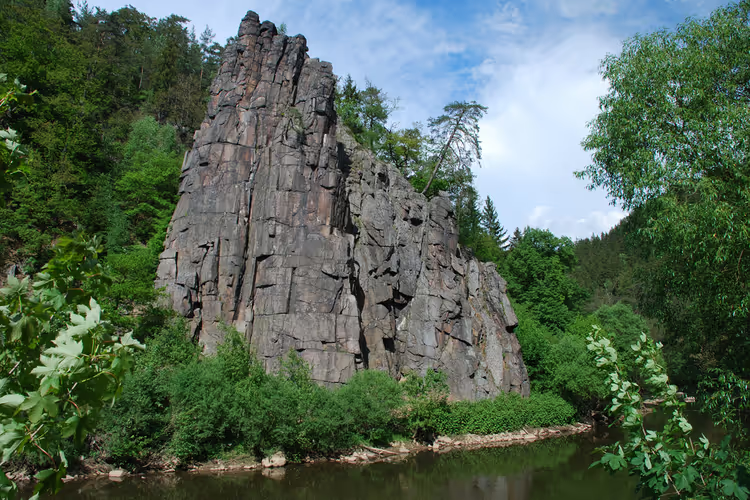 © Дмитрий Мозжухин · CC BYPhoto: Дмитрий Мозжухин, CC BY (https://creativecommons.org/licenses/by/3.0), Wikimedia Commons
Svatoš Rocks is a relict rock formation millions of years old and a national treasure of the Czech Republic. Granite pillars jut out on slopes covered with coniferous forest, and rare endemic plants that exist nowhere else survive here.
The rocks stand between Loket and Karlovy Vary. The Ohře River cut a deep canyon through the Slavkov Forest massif, and above it rise individual stones up to fifty meters high: pillars, cones, and truncated pyramids split by cracks. From a distance you see a procession of petrified giants, which is why the place has a second name, "the frozen wedding."
The rocks are under state protection, so it is best not to leave the trails. The unique relief took millions of years to form, and today it is one of the most photogenic spots near the resort. Legends about Jan Svatoš and an enchanted wedding procession are tied to the rocks; some of the stones bear the names of wedding guests. Goethe and the Brothers Grimm visited this protected forest.
- How to get there: between Loket and Karlovy Vary; the easiest option is to get off at the forest trail.
- Who it's for: nature lovers and fans of easy trekking.
14. Bečov nad Teplou Castle
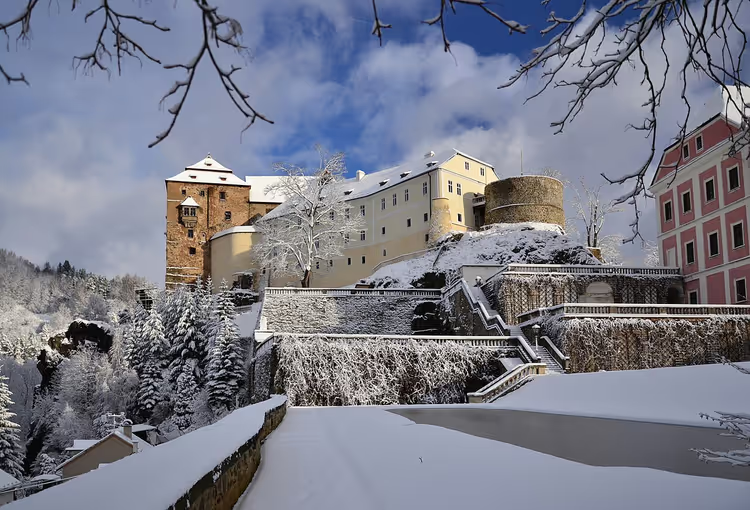 © LenkaSvasek · CC BY-SAPhoto: LenkaSvasek, CC BY-SA (https://creativecommons.org/licenses/by-sa/4.0), Wikimedia Commons
Bečov nad Teplou Castle and fortress stand about twenty-five kilometers from the resort, already in the outskirts. The Romanesque castle and fortress form a single ensemble in the Teplá River valley. The main treasure here is the Reliquary of St. Maurus: a jeweled sarcophagus whose value is compared to the crown jewels treasury (as of 09/2026, official castle website).
The fortress was built in the first half of the 14th century, but excavations found earlier wooden parts. A three-story chapel was added to the tower, where dry fresco wall painting survives. An earthquake damaged the walls, but the foundation held, so the building was expanded.
From the 16th century the fortress changed owners, who furnished the interiors in Renaissance style. Today these are the "Pluh Houses"; the land was bought from a bankrupt monastery. Reconstruction affected the foundation, and only what was restored in the mid-19th century has survived to our time, including antique furniture. The castle organizes walking tours through the protected forests, and the local restaurant is known for its Czech cuisine and homey atmosphere.
- Cost: admission by ticket; check the official website for tour times.
- Who it's for: anyone willing to head out of town for half a day.
15. Hotel Imperial
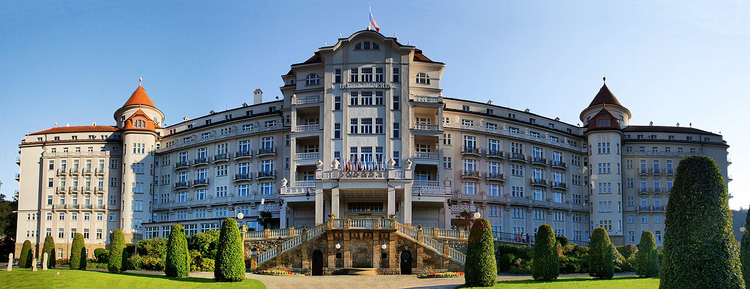 © Milan.latner · CC BY-SAPhoto: Milan.latner, CC BY-SA (https://creativecommons.org/licenses/by-sa/3.0), Wikimedia Commons
The Imperial Hotel sits on a mountainside in a park area, and the building seems to float above the wooded hills. It has top-category rooms, the Prague restaurant, and the best massage and cosmetic treatment rooms in the resort, staffed by medical personnel. This is a sanatorium hotel with a balneological focus, the most expensive in town.
Dietitians and rehabilitation specialists put together a personal regimen, a therapeutic exercise plan, and physiotherapy for guests with different fitness levels. Treatment uses water from local springs.
Today the hotel is open to guests who book a room in advance.
- Cost: accommodation is expensive; check current rates with the hotel.
- Who it's for: those who come for treatment and are willing to pay.
16. Christmas House
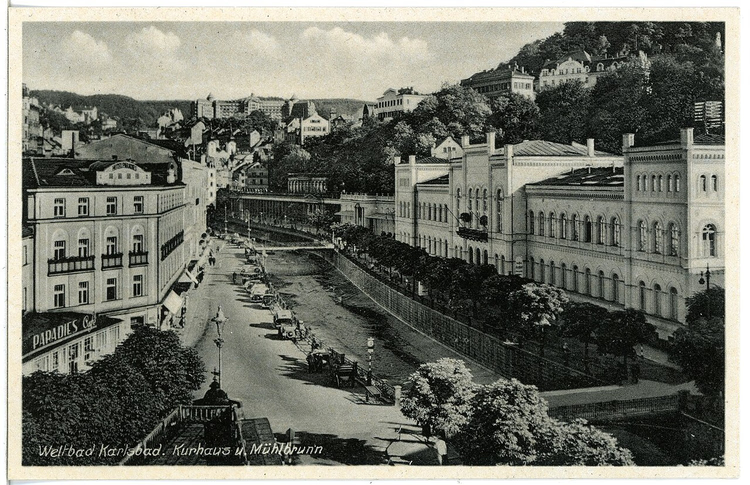 © Brück & Sohn Kunstverlag Meißen · CC BY-SAPhoto: Brück & Sohn Kunstverlag Meißen, CC BY-SA (https://creativecommons.org/licenses/by-sa/3.0), Wikimedia Commons
Christmas House is dedicated to a single holiday, and the winter atmosphere here lasts all year round. The building is filled with Christmas trees and New Year decorations, festive decor, and souvenirs. You can rent a hall here for a birthday or a romantic get-together.
The inner courtyard features a Bethlehem scene with the birth of Jesus. Tourists arriving on Christmas Eve hurry here with their families: everywhere there are angels and lambs, colorful little Christmas trees, snowmen, and other attributes of the winter holiday. All the decorations were created by Merkur Toys.
Photography and video are allowed, and many exhibits are for sale. For children, there is a snow town with a toy train. You can take a piece of the winter holiday home with you.
- Getting there: in Doubi Castle on the banks of the Ohře River.
- Who it's for: families and anyone who loves the New Year atmosphere.
17. Karlovy Vary regional history museum
The regional history museum occupies three historic buildings, and a tour usually takes no more than an hour. In that time you will get a full picture of the region and its history. The museum stands on the bank of the Teplá opposite the Grandhotel Pupp, and it is one of the most visited attractions in the city.
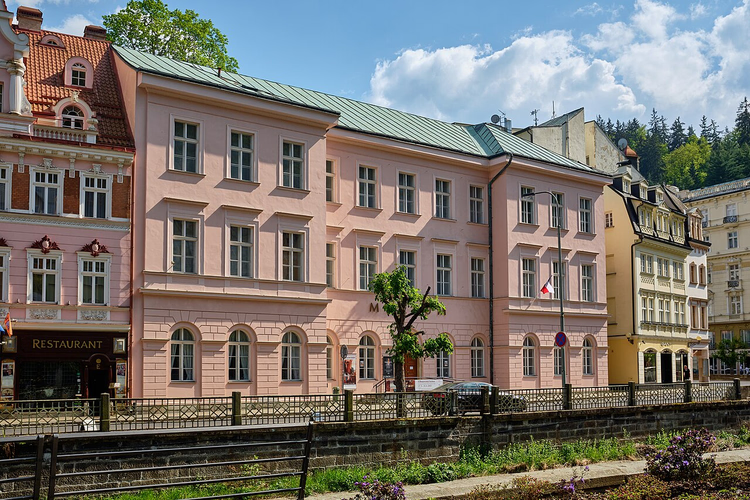 © Lubor Ferenc · CC BY-SAPhoto: Lubor Ferenc, CC BY-SA (https://creativecommons.org/licenses/by-sa/4.0), Wikimedia Commons
Guests receive a printout with information about the main exhibits in several languages, so you can revisit the details at home. The most interesting sections are the ancient and medieval sculptures, Paleolithic artifacts, porcelain, colored glass, and crystal.
Here they explain the nature of local phenomena: where the Geyser water comes from and why some springs disappear for a while. Separate rooms are dedicated to the history of the film festival, brewing, and Czech glass production. You will see portraits of celebrities and a model of the city as it was in the 17th century.
- Cost: paid admission, with discounts for children and students.
- Who it's for: for those who want to understand the spa town, not just photograph it.
18. Hot Spring Colonnade
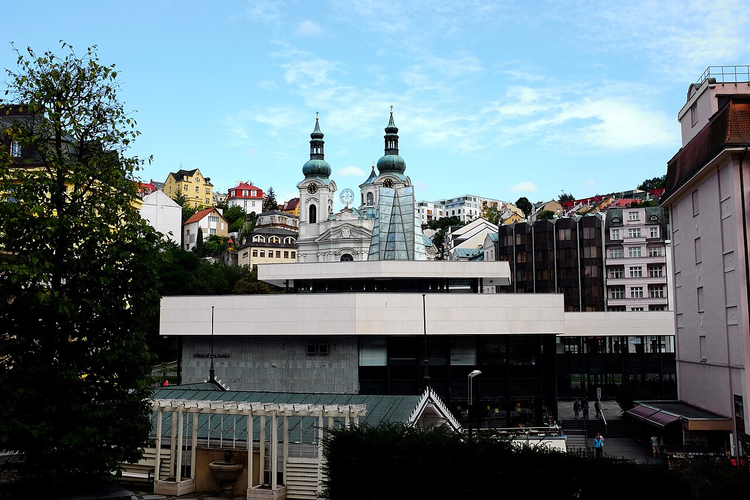 © Lubor Ferenc · CC BY-SAPhoto: Lubor Ferenc, CC BY-SA (https://creativecommons.org/licenses/by-sa/4.0), Wikimedia Commons
The Hot Spring Colonnade is a gallery of glass and concrete in the constructivist tradition, opened in 1975 (as of 09/2026, tourist office). The drinking hall is designed around a fountain basin, and the hall height is calculated to accommodate even unexpected eruptions.
Vřídlo shoots up from underground in the center of the spa town near Theater Square and pulses to a height of up to 12 m, delivering about 2,000 liters of water per minute (as of 09/2026, VisitCzechia). The fountain periodically erupts and changes the appearance of the colonnade, which is why the light pavilions and canopies were replaced with the current gallery.
An Empire-style colonnade once stood here, later replaced by a cast-iron one designed by Fellner and Helmer. One of the tour routes goes through the underground of the Hot Spring, where you can see how the spring system works. You can drink the mineral water in the drinking hall for free, but no more than the recommended portion.
The Hot Spring Colonnade remains the most recognizable landmark of the spa town. People come here to drink water as prescribed by a doctor. Visitors are advised to drink the water slowly, without rushing, and to combine walking with treatments. Other drinking halls with springs of different temperatures stand nearby, so you can try several waters in one visit. Glass panels protect guests from steam and cold, so the colonnade operates even in the off-season. Inside you can sit on benches, listen to the sound of the spring, and rest between treatments.
- Cost: admission to the colonnade is free, water in the drinking hall is free.
- Who it's for: for everyone who wants to see the main spring of the spa town.
19. Lázně I
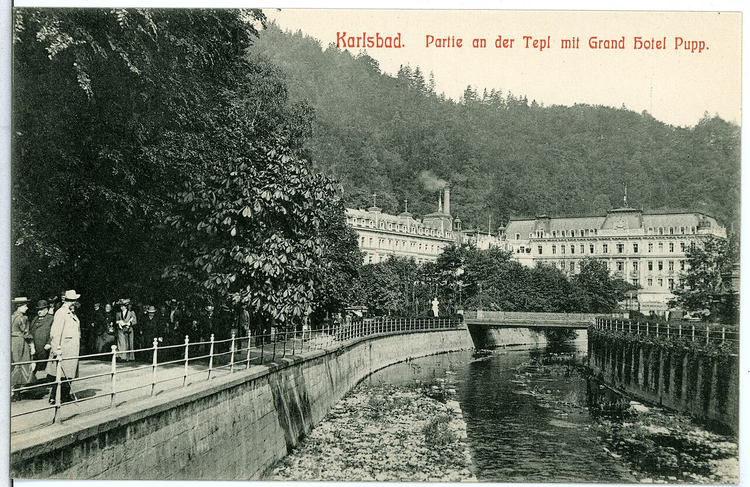
Lázně I stands near the Grandhotel Pupp and is the first spa house of the resort. Almost none of the old buildings survived due to fires, which is why the city ensembles look cohesive. The last major revision was carried out at the turn of the 19th and 20th centuries: unsuitable structures were removed and grand hotels and sanatoriums were raised.
The Imperial Spa House was designed in the Renaissance tradition with classical elements, so the building resembles a European theater or hotel. Construction was completed at the end of the 19th century, during the heyday of Karlovy Vary urban development. The rich facade emphasized that the spa house was being prepared for a visit by Emperor Franz Joseph.
Bas-reliefs, porticos, sculptures, and balconies set the building apart from the surrounding architecture. Today it houses a museum on the history of Karlovy Vary, and the building is being prepared for major renovation, so access may be limited.
- Cost: visits are possible on event days, check locally.
- Who it's for: for lovers of architecture and spa town history.
20. Alois Klein Pavilion
 © SchiDD · CC BY-SAPhoto: SchiDD, CC BY-SA (https://creativecommons.org/licenses/by-sa/4.0), Wikimedia Commons
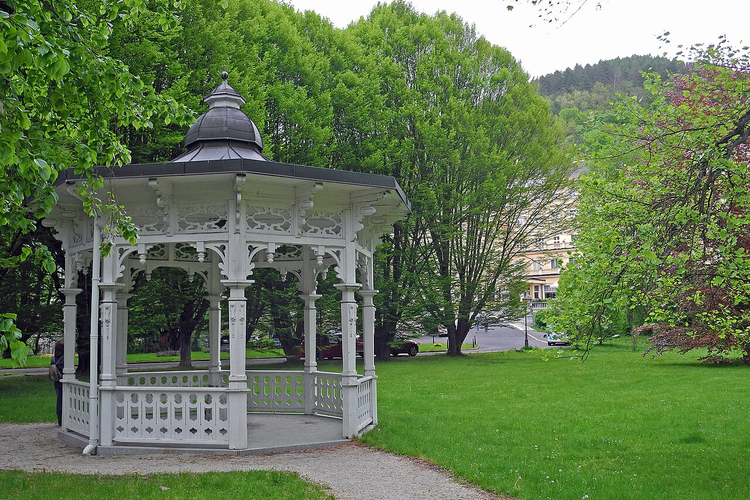
The Alois Klein Pavilion stands in a green area near the Richmond Park Hotel, on the southern edge of the spa town. The outskirts were improved back in the 18th century, when one of the tastiest mineral springs was discovered. The plantings around the spring eventually became part of the Richmond Park Hotel grounds.
The ferruginous spring with a slightly sour taste was named after Archduchess Stephanie, and its "Štěpánka" water was included in most treatment prescriptions. At the beginning of the 20th century the spring dried up, leaving only the drinking hall and a beautiful structure with lacy arches under the roof.
The search for a new spring was successful, and the pavilion was renovated. The hydrogeology of the spa town changes after each eruption of the Hot Spring, so any spring can go underground forever.
- How to get there: southern edge of the spa town, near the Richmond Park Hotel.
- Who it's for: for a quiet walk by the water.
21. Butterfly House
 © Manfred Werner / Tsui · CC BY-SAPhoto: Manfred Werner / Tsui, CC BY-SA (https://creativecommons.org/licenses/by-sa/3.0), Wikimedia Commons
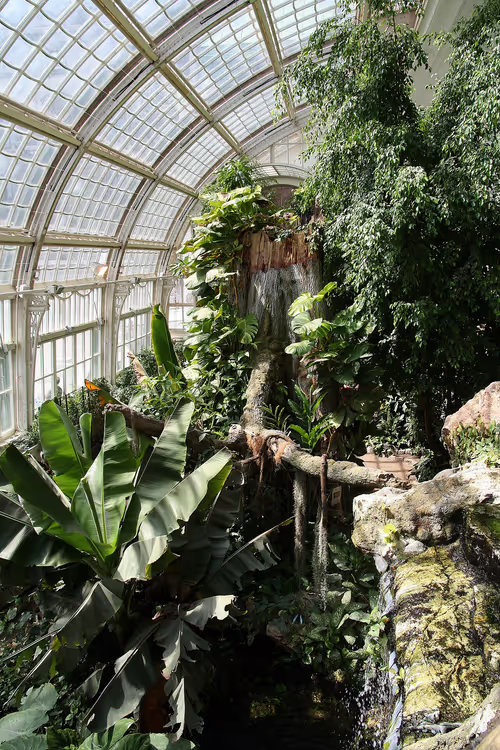
The Butterfly House is a glass gallery where you can catch the moment a caterpillar turns into a butterfly. Tourists and spa guests come here, and at the reception you can book a wedding or engagement ceremony in advance. Photography inside is allowed.
Under the dome are representatives of tropical fauna from South America, Central Africa, the Philippines, Thailand, Mexico, and Malaysia. The most patient visitors are rewarded at the incubator: some of the largest butterflies are born here, with a wingspan of up to twenty centimeters.
A separate flight zone is reserved for newborn specimens stretching their wings and trying nectar and fruit. Some species are rare in the wild due to worsening ecology. A butterfly may land on your hair, hand, or shoulder, so keep your camera ready.
- Cost: paid admission, with discounts for children.
- Who it's for: for children and photographers.
22. Church of saints Peter and Paul
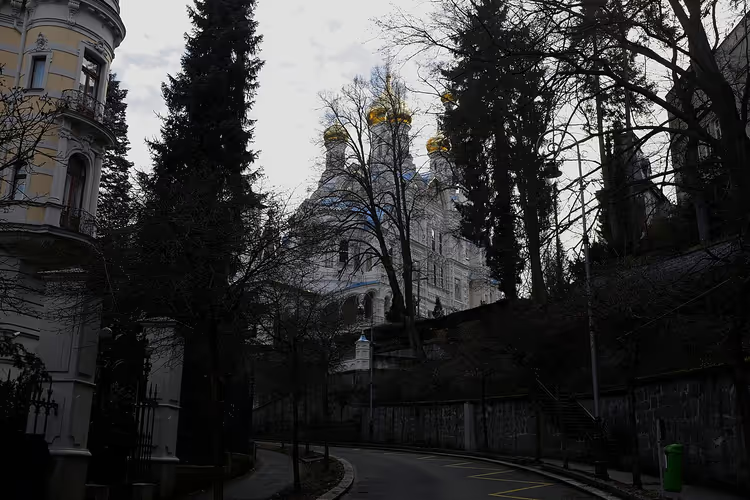 © Lubor Ferenc · CC BY-SAPhoto: Lubor Ferenc, CC BY-SA (https://creativecommons.org/licenses/by-sa/4.0), Wikimedia Commons
The Church of the Holy Apostles Peter and Paul is one of the most beautiful active religious buildings in the Czech Republic. It is open to visitors daily during daytime hours. The gilded domes of the church are visible from many points in the city, and inside you will admire the interior created by architect Gustav Wiedermann.
The church was built at the end of the 19th century in the tradition of Russian-Byzantine churches. The site was allocated in a green area of upscale neighborhoods closer to the western edge, and the prototype was a church in Ostankino. Construction was funded by donations from wealthy visitors from Serbia and the Russian Empire.
The new church is built in the shape of a Maltese cross and decorated with galleries, gilded domes, and murals. Tourists come here to appreciate the oak iconostasis with majolica, which was prepared for an exhibition in Paris. The icons are painted in oil and have high artistic value. You can reach the church on foot or by bus and then walk up Peter the Great Street.
- How to get there: by bus to the Krale Jiřího stop or on foot from the center.
- Who it's for: for those interested in church architecture.
23. Anglican Church of St. Luke
The Anglican Church of St. Luke is no longer used for services, but remains an interesting architectural landmark. It is the work of architect Josef Mothe, built at the end of the 19th century. The church stands on Castle Hill opposite the Bristol Hotel.
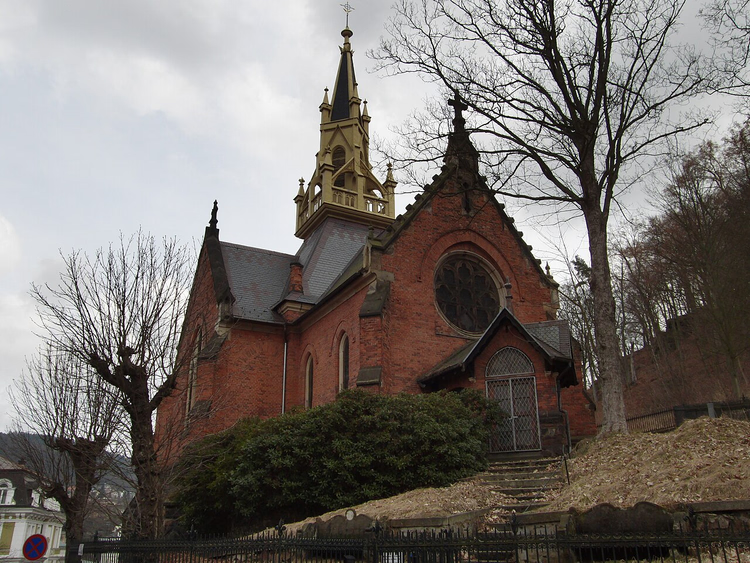 © Mejdlowiki · CC BY-SAPhoto: Mejdlowiki, CC BY-SA (https://creativecommons.org/licenses/by-sa/3.0), Wikimedia Commons
The building is done in a pseudo-Gothic style: red brick, round dormer windows with stained glass, and a pointed roof. It was built with donations from spa guests and city patrons. In the West End mansion district, the church stands out for its austere appearance.
From below, the building looks like a mini-fortress, especially if you are walking up Zamecky Vrch street. Up close it resembles an old castle, and there are several graves in the courtyard. Inside there is a wax figure exhibition.
- How to get there: on Castle Hill, opposite the Bristol Hotel.
- Who it's for: for those who love neo-Gothic style and quiet corners.
24. Wax museum
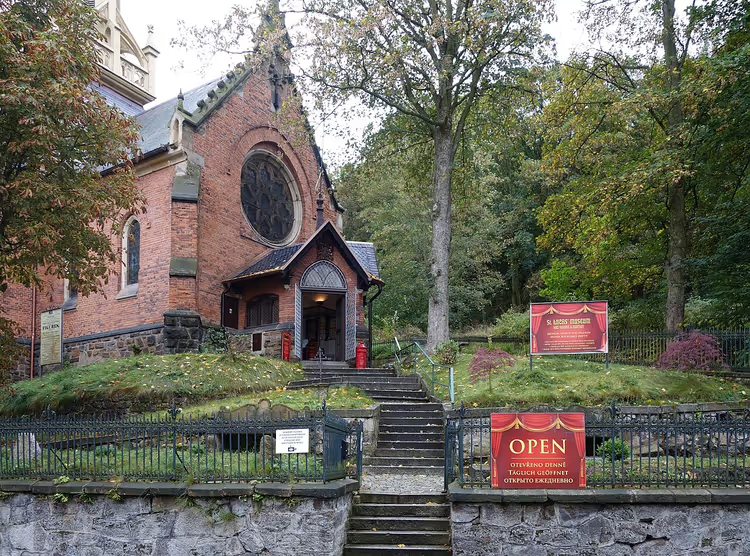
The wax museum operates in a former Anglican church. Many celebrities have visited Karlovy Vary at various times, and some of them have been immortalized in wax. The exhibition follows the traditions of the Tussauds family of museums.
Among the first figures are members of royal families, politicians, show business stars, and distinguished guests of the resort. European monarchs and their families, as well as leaders of other states, came here to restore their health at the local springs. From the musical elite, L. van Beethoven, N. Paganini, R. Wagner, and F. Chopin admired the local nature.
European classics and Russian writers also vacationed here: K. N. Batyushkov, N. V. Gogol, I. S. Turgenev. You can take photos with your idols by the "magic" mirrors and see the city's history in faces.
- Cost: paid ticket, photography is usually allowed.
- Who it's for: families and fans of interactive experiences.
25. Villa Lützow
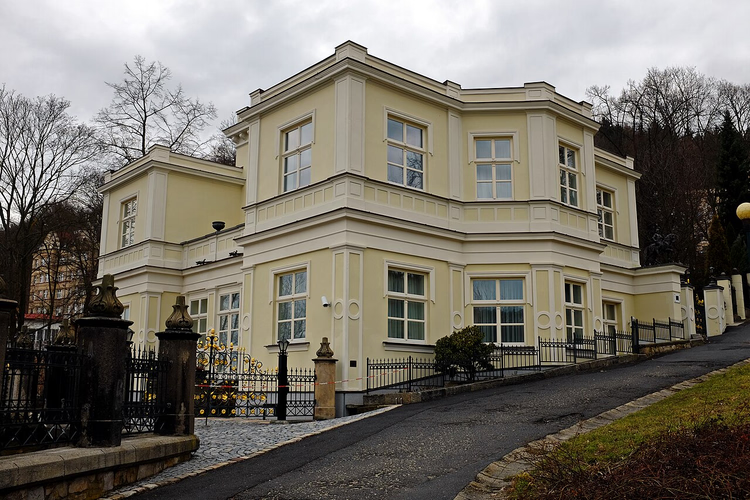 © Lubor Ferenc · CC BY-SAPhoto: Lubor Ferenc, CC BY-SA (https://creativecommons.org/licenses/by-sa/4.0), Wikimedia Commons
Villa Lützow stands on a fairly steep mountain slope, so the terrace in front of it offers a panoramic view of the valley. The town lies in a cleft of rocky mountains, and this is what gives the resort its special charm. It is worth climbing up here for the view, but be prepared for an uphill walk.
The snow-white villa changed owners several times, and now it belongs to a private individual, so most visitors have to admire it from a distance. Young visitors are delighted by the pedestal with a small cat sculpture.
The Empire-style villa was built in the mid-19th century for Baron August von Lützow, and it is one of the first luxury villas of Karlsbad. At the time, it was surrounded by a well-kept romantic garden with sculptures by August Kiss, which were commissioned and brought from Berlin. The project's author, city architect Johann Knoll, closed the villa to daily visits, but the owners open it several times a year.
- How to get there: on a mountain slope, uphill from the center following the signs.
- Who it's for: those who want to see a rare villa and a panoramic view.
26. Castle tower
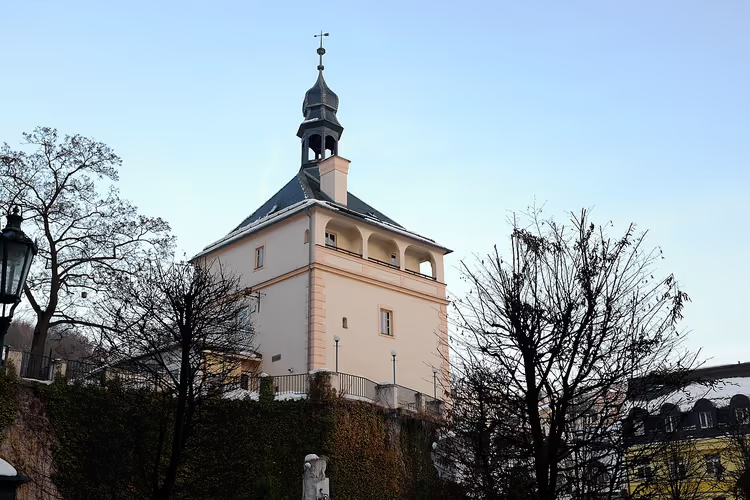 © Lubor Ferenc · CC BY-SAPhoto: Lubor Ferenc, CC BY-SA (https://creativecommons.org/licenses/by-sa/4.0), Wikimedia Commons
The castle tower is a tall structure that evokes fairy-tale scenes. Excavations have shown that an earlier castle stood here as well, one that disappeared before the town's heyday. The tower was built around the second half of the 14th century, during the reign of Charles IV, when these lands were kept as hunting grounds.
European aristocracy came here for lavish banquets and balls. A fire destroyed most of the castle grounds, but the monarch ordered the tower and adjacent rooms to be restored. Since the 17th century, the structure has delighted tourists in its original location.
Today, a cozy Gothic-style restaurant operates on Castle Hill. From its windows you can see the center, the square, the lacy colonnade, and the sanatoriums. For a long time the tower was used for signaling, and now one of its halls can be booked for a feast in medieval traditions.
- How to get there: on Castle Hill above the center, up Zamecky Vrch street.
- Who it's for: those who want to have dinner with a view of the city.
27. Chapel of Saint Nicholas
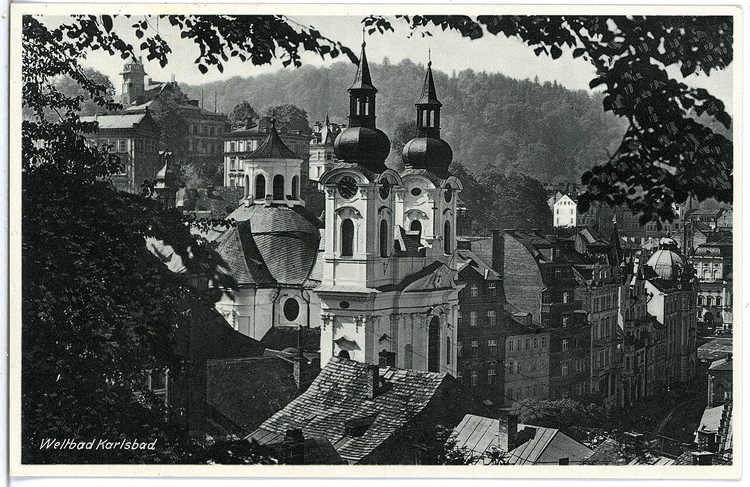 © Brück & Sohn Kunstverlag Meißen · CC BY-SAPhoto: Brück & Sohn Kunstverlag Meißen, CC BY-SA (https://creativecommons.org/licenses/by-sa/3.0), Wikimedia Commons
The Chapel of Saint Nicholas stands on Doubská hora near the Aberg observation tower. It is a small wooden structure with an icon of Saint Nicholas, and it impresses with the integrity of its composition. The site officially opened in the early 2000s.
The chapel was built with the personal funds of N. G. Stepanov, and the foundation was consecrated by Metropolitan Dorotheos. The timber was prepared in Russia: each log was processed and numbered, and then assembled in Karlovy Vary. The solemn consecration was held with the participation of the Archbishop of the Czech Lands and Bishop Christopher.
The surrounding area is well maintained and bordered by flowers in movable containers. Tourists are not allowed inside; the site is accessible only for exterior viewing. You will appreciate the view and the quiet among the greenery if you climb up here.
- How to get there: on Doubská hora, near the Aberg observation tower.
- Who it's for: a peaceful walk in the forest.
28. Císařské lázně
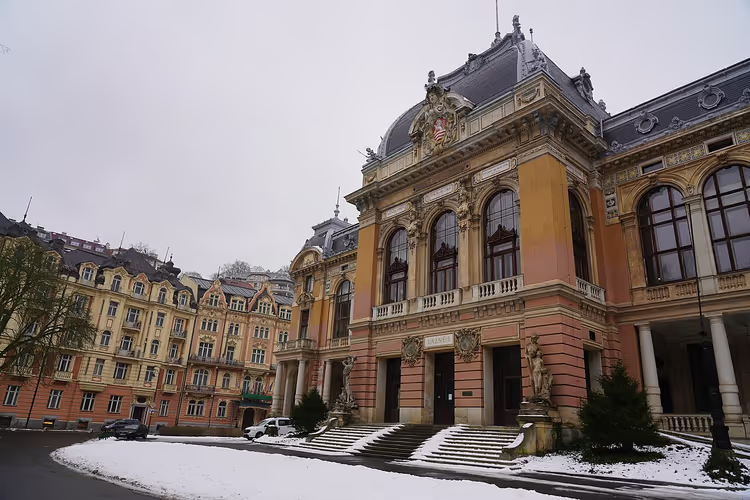 © Ray Swi-hymn from Sijhih-Taipei, Taiwan · CC BY-SAPhoto: Ray Swi-hymn from Sijhih-Taipei, Taiwan, CC BY-SA (https://creativecommons.org/licenses/by-sa/2.0), Wikimedia Commons
Císařské lázně is an imposing two-story building in the neo-Renaissance style, and today it houses a sanatorium and a museum. The building was constructed in the late 19th century, with the project prepared by Viennese architects Fellner and Helmer. The site of the city brewery on the southern edge of the resort was allocated for construction.
The facade combines French Renaissance and Baroque stucco with Art Nouveau decoration. It was once the best sanatorium in the Austro-Hungarian Empire. The horseshoe-shaped building, reminiscent of a theater, was used for Zander halls with equipment for therapeutic gymnastics according to the Swedish method.
The underground passage to the peat storage was closed, and the building was repurposed. While awaiting restoration, it fell into disrepair. Today, the exhibitions tell the story of the Karlovy Vary region's development, the foyer is decorated with statues and paintings, and the building is listed among cultural monuments of national significance.
- Cost: museum ticket is paid, check the schedule on site.
- Who it's for: those interested in the history of spa treatment.
29. Národní dům
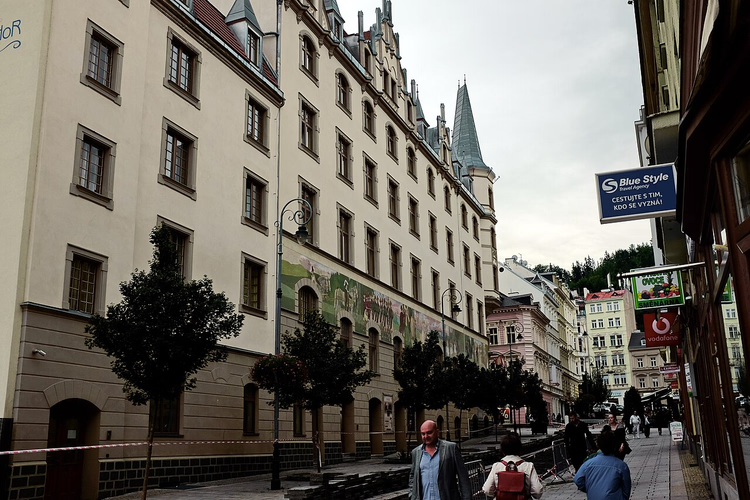 © Lubor Ferenc · CC BY-SAPhoto: Lubor Ferenc, CC BY-SA (https://creativecommons.org/licenses/by-sa/4.0), Wikimedia Commons
Národní dům stands on Franz Joseph Street in the northern part of the city, and it is one of the most prominent buildings of the resort. The Art Nouveau hotel house was completed in the early 20th century under the supervision of the head of the construction department, engineer E. Orth. The project's authors are the same Fellner and Helmer.
Before reconstruction, the popular Orpheum variety theater operated here and was known beyond the Czech lands. The hotel long served as a social and cultural center among the commercial quarters: the building housed four restaurants, summer cafes, a concert stage, and a ballroom. For some time, a shooting club was also located here.
Today it is the Grandhotel Ambassador Národní Dům. After long operation without major repairs, the building partially deteriorated, and reconstruction is now being completed. If you are walking through the center, this building is worth a closer look.
- How to get there: northern part of the city, Franz Joseph Street.
- Who it's for: those strolling through the architectural center.
30. City market
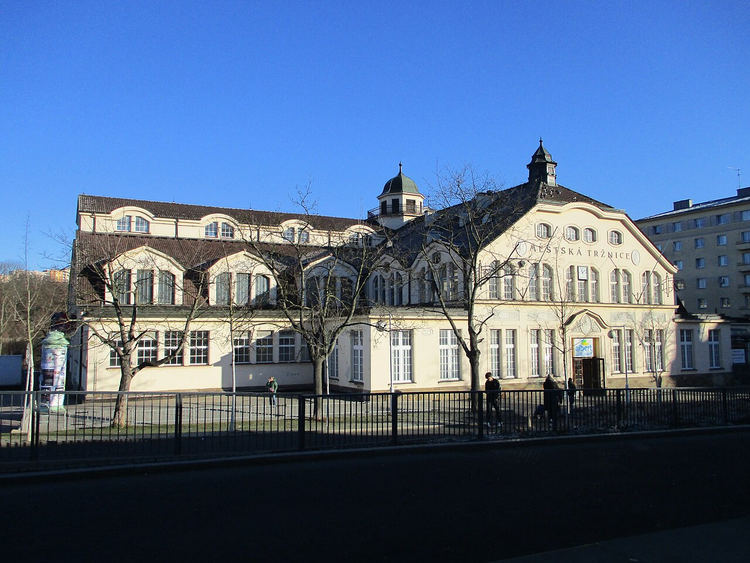 © Lenka64 · CC BY-SAPhoto: Lenka64, CC BY-SA (https://creativecommons.org/licenses/by-sa/4.0), Wikimedia Commons
The building of the former city market stands near the train station, and it is worth a walk from the center. The market was built in the early 20th century to organize the trade of mass-market goods. Before that, trading areas were scattered, which was inconvenient for residents and visitors.
The authorities wanted to move trade closer to the colonnades with healing springs. An important condition was sanitary supervision over the quality of products brought from the slaughterhouse and other places. City architect F. Drobný proposed a project of glass and concrete, and in addition to pavilions, the plan included offices, warehouses, a laboratory, and cold storage rooms.
In the late 20th century, the architectural monument was repurposed as a department store, and today it is a modern supermarket. Visitors buy souvenirs at specialized shops and at the Burza flea market. For shoes, locals recommend going to the Bat'a store, which has a wide selection of models at moderate prices.
- How to get there: near the train station, about a twenty-minute walk from the center.
- Who it's for: those who want to buy souvenirs and groceries.
Karlovy Vary attractions on the map
Sights of Karlovy Vary
Places on the map
- 1Goethe Tower Late 19th-century lookout tower on the 'Peak of Eternal Youth', named after Goethe
- 2Smetana's Gardens Park with a fountain and a flower calendar bed, concerts and festivities in summer
- 3Moser Glass Museum Moser crystal works, museum and glassblowing workshop with a tour
- 4Jan Becher Museum The history of Becherovka liqueur in the factory cellars, tasting on the tour
- 5Church of St Mary Magdalene Baroque church by the Vřídlo spring, organ concerts in the evenings
- 6Karlovy Vary Art Gallery Gallery of 19th-20th century painting and graphics on the Teplá embankment
- 7Municipal Theatre 19th-century stone theatre, opera, ballet and operetta
- 8Loket Castle Fortress-prison with torture chambers and gnome figures, tours for families
- 9Diana Funicular Funicular to the Diana Tower, a 167 m rise in five minutes
- 10Three Crosses viewpoint Three historic crosses on a hill with a panorama of the spa town
- 11Diana Observation Tower Tower at 562 m, 150 steps or a lift, view of the Fichtel Mountains
- 12Deer Jump viewpoint Historic site of the resort's founding, with a doe statue on the rock
- 13Svatoš Rocks Granite rock formations in the Ohře canyon, a national heritage site
- 14Bečov nad Teplou Castle Castle with the reliquary of St Maurus, twenty-five km from the resort
- 15Hotel Imperial Sanatorium hotel with balneology, the most expensive in the city
- 16Christmas House Year-round Christmas atmosphere, a snow village for children
- 17Regional Museum Three historic buildings, Palaeolithic artefacts and the history of the film festival
- 18Geyser Colonnade Glass gallery above the Vřídlo spring, with a jet up to 12 m
- 19Lázně I The resort's first spa house in Renaissance style, now a history museum
- 20Aloise Klein Gazebo Gazebo by the Štěpánka spring next to the Richmond park hotel
- 21Butterfly House Glass gallery with tropical butterflies under a dome
- 22Church of St Peter and Paul Russian-Byzantine church with gilded domes and an iconostasis
- 23Anglican Church of St Luke Late 19th-century neo-Gothic church on Castle Hill, no longer in use
- 24Villa Lützow Snow-white Empire-style villa on a slope with a panorama of the valley
- 25Castle Tower 14th-century tower from the time of Charles IV on Castle Hill, a restaurant inside
- 26Chapel of St Nicholas Wooden chapel on Doubská Hill, built with funds from N. G. Stepanov
- 27Císařské lázně Sanatorium and museum in pseudo-Renaissance style on the site of a former brewery
- 28Národní dům Early 20th-century Art Nouveau hotel building, today the Grand Hotel Ambassador
- 29Municipal Market Early 20th-century market building, today a supermarket
All points are convenient to view on the map: this way you can plan a route without unnecessary loops between colonnades, museums, and observation decks. Mark your stops in advance, because uphill climbs take time, and some sites operate on a seasonal schedule.
Tours and tickets in Karlovy Vary
Guided tours, skip-the-line tickets and activities — most offers can be cancelled free of charge.
See offers on TiqetsThe widget loads once you give your consent.
⁉️🤔 Frequently asked questions
How many days should you plan for Karlovy Vary?
Two or three days are enough for the resort. In that time you can see the Hot Spring Colonnade, go up to the Diana observation tower, and visit the glass and liqueur museums. If you want to add Loket Castle and Bečov nad Teplou, plan one more day for trips outside the city.
When is the best time to visit Karlovy Vary?
The resort operates year-round, but the colonnades and viewpoints are more pleasant in the warm season. In summer the city hosts a film festival, when hotels get more expensive and you need to book in advance. In winter the Christmas House and medical spas are open, while some viewpoints are closed due to the weather.
How much does admission to museums and viewpoints cost?
Prices depend on the site, and there is no single ticket for everything. The Hot Spring Colonnade is free to enter, while the glass museum, the liqueur museum, and the Diana tower ride are paid separately. Check current prices and opening hours on the tourist office page before your trip.
How do you get to the Diana observation tower?
The easiest way is to take the funicular from Grandhotel Pupp; the lower station is on Mariánská Street. The ride takes about five minutes, and trains depart every 15 minutes (as of 09/2026, official Diana funicular website). You can also walk up following the blue signs.
What to see in Karlovy Vary with kids?
Kids usually enjoy the Butterfly House, the wax figure exhibition, and Loket Castle with its gnome figurines. The Christmas House has a snow town with a toy train. It is better to plan trips up to the viewpoints in the morning, when there are fewer people and it is not so hot.
In short: what to book
Karlovy Vary is a compact resort where the main sights stand along the Teplá River, while the viewpoints rise above the valley. Build your route around the Hot Spring Colonnade and add two or three museums.
If you have one day, take the center and the Diana tower. If you are traveling with kids, add the Butterfly House and Loket Castle. If you want history, go to Bečov nad Teplou. If you came for treatment, leave time for the colonnades and spa procedures.
To avoid looking for tickets on the spot, compare Kiwitaxi transfer options and arrive in the city without unnecessary connections.

A small editorial team writing guides for independent travel. We travel ourselves, but we haven’t been everywhere, so we check prices, opening hours and how to get there against official sources.