
















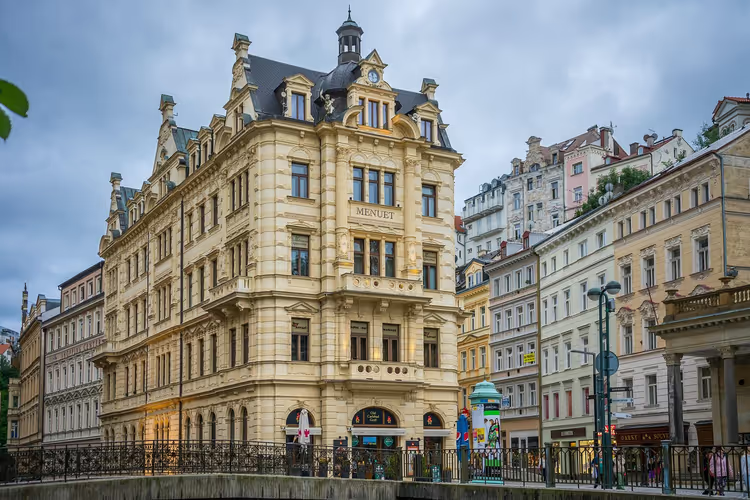
Karlovy Vary in one day on foot: 20 places, colonnades and viewpoints
Karlovy Vary can genuinely be covered in a day. The town is compact, the springs sit close together, and the entire historic core is walkable. Below are twenty places an independent traveler can fit in, plus the order that makes them easiest to see.
The resort has lived on mineral springs for more than six centuries, and the whole old town grew up around them. The Hot Spring Colonnade discharges an average of about two thousand liters of water per minute (as of 09/2026, Karlovy Vary portal). People come here both for treatment and simply to stroll along the promenade.
You will need comfortable shoes and enough time for two uphill climbs. Bring your own water bottle: at the springs you fill it straight from the tap.
Ad: this article contains affiliate links, we earn a commission if you book through them, at no extra cost to you.
One-day route: what you can fit in
💡 In short:
- Start at the Hot Spring Colonnade, then follow the promenade to the Market, Mill and Park colonnades. The numbers in the list below do not set the walking order.
- Allow two hours for the colonnades and another hour for the climbs to the tower and the crosses.
- Museums close earlier than the colonnades, so check opening hours in advance.
- Prices and opening hours: 09/2026, verified on the official website
1. Three Crosses viewpoint
 © Zorka Sojka · CC BY-SAPhoto: Zorka Sojka, CC BY-SA (https://creativecommons.org/licenses/by-sa/4.0), Wikimedia Commons
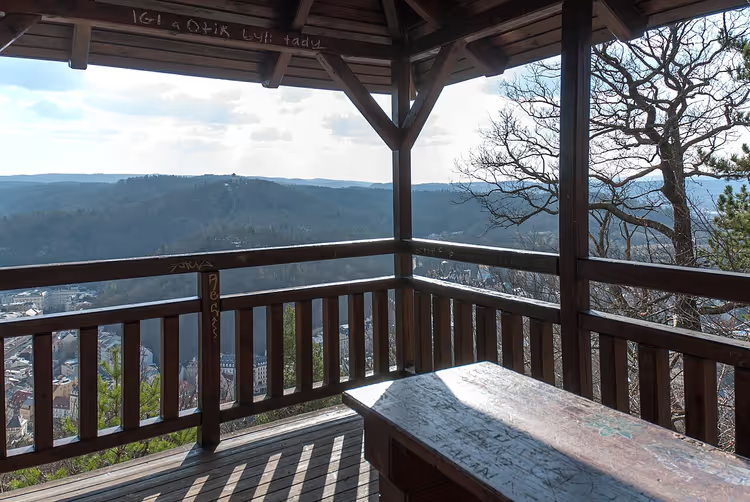
From Three Crosses Hill (Tři kříže) you will see the whole town together with the Teplá River valley. The path up goes through the forest, and early in the morning there is almost no one here. The crosses themselves are wooden, and their origin is still debated: some historians read them as a sign of the region's return to the Catholic faith, others see a depiction of Golgotha.
In the early 20th century there were plans to build a luxury hotel on the hill and connect it to the town with a cable car. Work began before the First World War and quickly stopped. During the war an observation post stood on the hill, and the construction left behind concrete blocks to which the cables would have been attached. The latest gazebo on the summit was built to a design by architect Stross.
- How to get there: from the Mill Colonnade up the forest trail, landmark: the gazebo on the summit.
- Who it's for: those willing to walk uphill and wanting to see the panorama without the crowds.
2. Diana observation tower
 © Mattsjc · CC BYPhoto: Mattsjc, CC BY (https://creativecommons.org/licenses/by/4.0), Wikimedia Commons
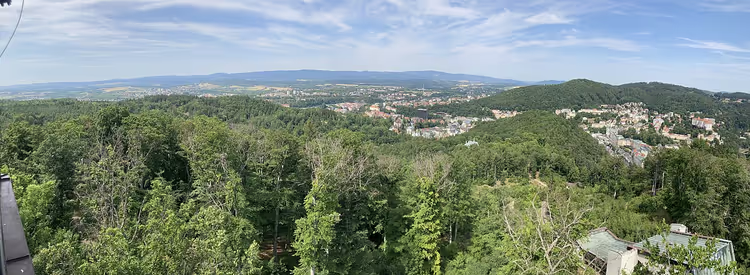
From the Diana tower on a clear day you can see up to 70 km around. The viewpoint was first set up back in 1804, and the current 35 m tower appeared in the early 20th century together with a funicular and a hunting lodge. You go up by elevator or walk up 150 wooden steps. Admission is free (as of 09/2026, official Diana website).
The cable car starts on Mariánská Street next to the Grandhotel Pupp. The route is 453 m long and the ride takes about three minutes (as of 09/2026, official tourism portal).
- Important: from September 1 to 25, 2026, the Diana cable car is closed for track repairs, so on those days the only way up and down is on foot (as of 09/2026, official website).
- Nearby: a restaurant with Czech cuisine; in summer there are pony rides by the tower.
3. Deer Leap viewpoint
 © Rolf Dietrich Brecher from Germany · CC BYPhoto: Rolf Dietrich Brecher from Germany, CC BY (https://creativecommons.org/licenses/by/2.0), Wikimedia Commons
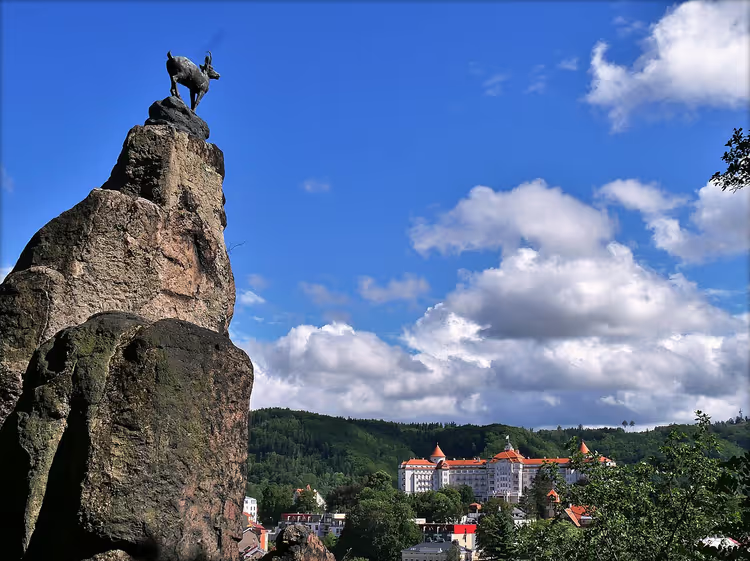
A chamois statue stands on the Deer Leap rock (Jelení skok). According to legend, King Charles IV hunted here, but it was chamois, not deer, that climbed the cliffs. Baron von Lützow noticed the mismatch and commissioned a zinc sculpture. The work by August Kiss first outraged the town council, then won over the locals.
The zinc chamois stood for over a century before it was destroyed. The bronze copy was made by sculptor Kotek, and a gloriette gazebo rose above the rock with money from Viennese industrialist Mayer. Come up here for the view over the valley and the resort itself.
4. Mill Colonnade
 © VitVit · CC BY-SAPhoto: VitVit, CC BY-SA (https://creativecommons.org/licenses/by-sa/4.0), Wikimedia Commons
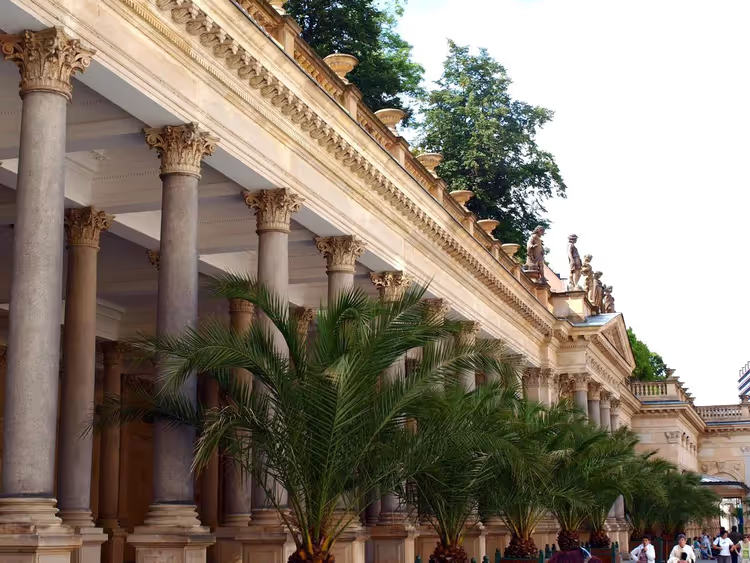
The Mill Colonnade (Mlýnská kolonáda) is the busiest spot in the city today. The light gallery rests on 124 columns, it is always cool inside, and in summer people hide here from the heat. The acoustics are such that concerts are regularly held under its arches: a separate orchestra pit was built for this purpose (as of 09/2026, official tourism portal).
Five springs come to the surface here: Skalní, Libuše, Prince Wenceslas, Mill, and Rusalka. The water in all of them is hot, above 50 °C, so it is poured into a cup and drunk in small sips (as of 09/2026, city portal). At first the townspeople did not like the gallery, and there were even proposals to demolish it. The names of the springs also say a lot: horses were once bathed in Skalní, Libuše was named after the princess, local salt was evaporated from the water of Prince Wenceslas, Mill water had been sold in pharmacies since the 16th century, and Rusalka was previously called the New Spring. Today everything is different: you can come down here for water at any time of day, and admission remains free.
5. Garden Colonnade
 © Lubor Ferenc · CC BY-SAPhoto: Lubor Ferenc, CC BY-SA (https://creativecommons.org/licenses/by-sa/4.0), Wikimedia Commons
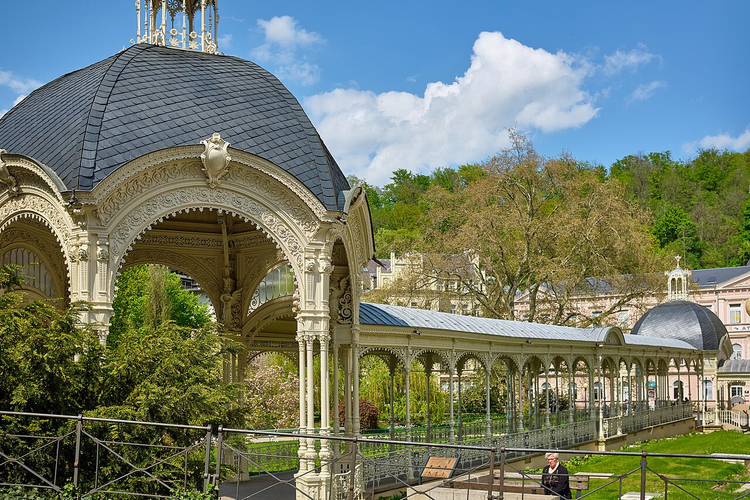
The Garden Colonnade (Sadová kolonáda) stands in the city garden and is connected with the name of Antonín Dvořák. A bust of the composer is installed in the park, and nearby the Viennese architects Helmer and Fellner built a concert venue. It was later dismantled, and the surviving part became the basis of the gallery.
Want to try water with a different taste? Here it is cooler and softer than in the neighboring colonnades (as of 09/2026, official tourism portal).
- How to get there: along the promenade from the Mill Colonnade, landmark: the garden and Dvořák's bust.
- Cost: admission is free, water is available throughout the day.
6. Market Colonnade
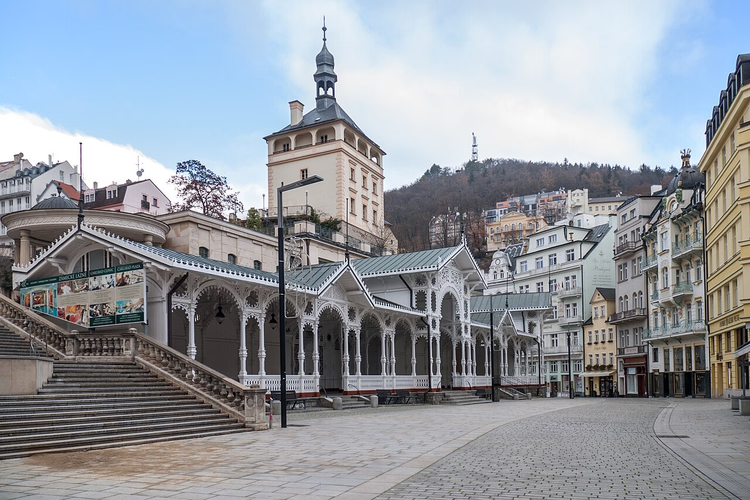
The Market Colonnade (Tržní kolonáda) was built to protect the Market and Charles IV springs from dirt. The project was commissioned from the same Viennese architects, Helmer and Fellner. The masters used Swiss motifs, and the pavilion turned out to resemble Alpine gazebos.
 © Zorka Sojka · CC BY-SAPhoto: Zorka Sojka, CC BY-SA (https://creativecommons.org/licenses/by-sa/4.0), Wikimedia Commons
The wooden structure was planned to last only a few years, but the gallery pleased the townspeople, and it was kept. Today it looks almost the same as when it was built, and the water stands are located right under its arches.
- Cost: admission is free, you can try water from 3 springs (as of 09/2026, official tourism portal).
7. Castle Colonnade
 © SchiDD · CC BY-SAPhoto: SchiDD, CC BY-SA (https://creativecommons.org/licenses/by-sa/4.0), Wikimedia Commons
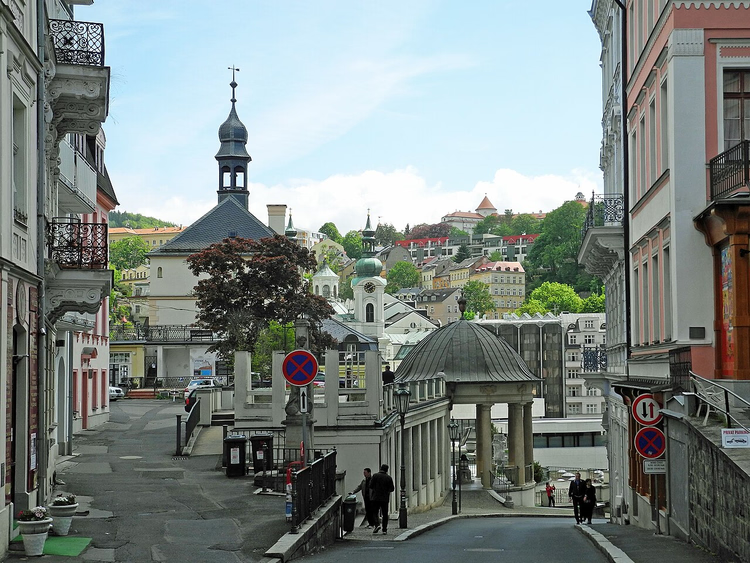
The Castle Colonnade (Zámecká kolonáda) is the youngest in the city: it was built in the early 20th century. The project was designed by the Viennese architect Johann Omann, who chose the Art Nouveau style that was fashionable at the time. The springs here are located higher than all others in the city, and the gallery is decorated with the relief "Spirit of the Springs" by Wenzel Heida. For the relief, the master used the mineral aragonite.
You will not be able to get inside. The administration of the Zámecké Lázně sanatorium has closed the entrance to tourists, and only patients drink the water from here. However, the pavilion is clearly visible from the Market Square, and one of the springs has been routed to the neighboring Market Gallery.
8. Hot Spring Colonnade
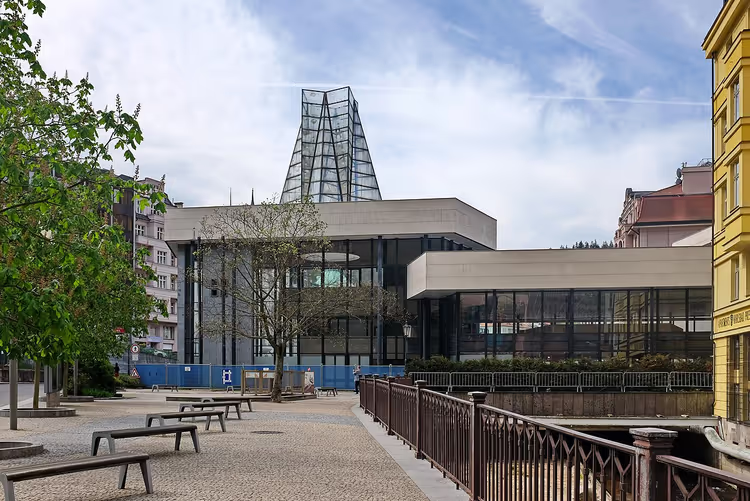 © Lubor Ferenc · CC BY-SAPhoto: Lubor Ferenc, CC BY-SA (https://creativecommons.org/licenses/by-sa/4.0), Wikimedia Commons
The Hot Spring Colonnade (Vřídelní kolonáda) is built around the Vřídlo spring. The mineral water deposit here has been known since the 16th century, and the current gallery appeared in the second half of the 20th century. The gray concrete and huge glass windows were not liked by the city at the time, but today all tour groups gather around them.
The jet shoots up 12 m, and the water comes out at a temperature close to boiling (as of 09/2026, official tourism portal). The drinking stands serve already diluted water: from 30 to 73 °C. There are five stands in total in the colonnade, and each one has its temperature indicated. From the Hot Spring, pipes run to all the sanatoriums in the city, and the local salt is sold as a souvenir.
- Cost: admission is free, the gallery is open from early morning until evening.
- Tip: the water is hot, so fill your own cup and take your time.
9. Motorcycle museum
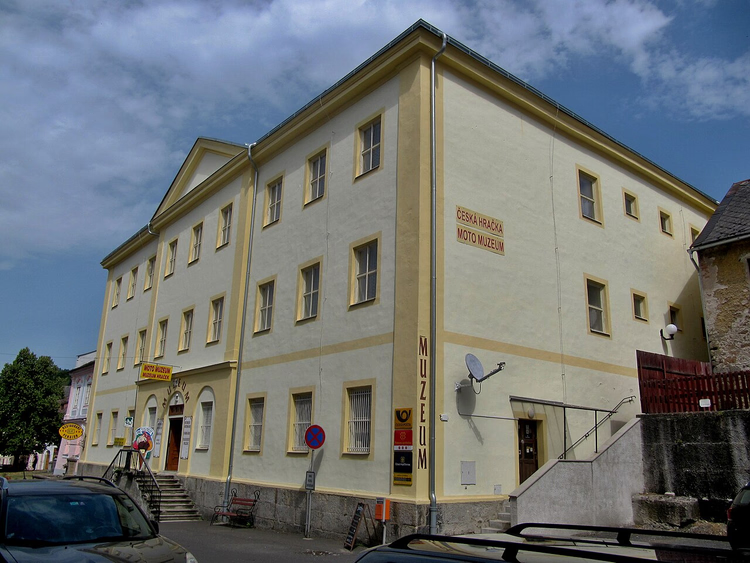 © Palickap · CC BY-SAPhoto: Palickap, CC BY-SA (https://creativecommons.org/licenses/by-sa/3.0), Wikimedia Commons
The motorcycle museum is not in the center, but in the town of Bečov nad Teplou, about 20 km from Karlovy Vary. It is a separate trip and is not part of a walking route. The halls display about fifty restored machines, along with spare parts and accessories that factories stopped producing long ago. The owners take pride in having used original parts during restoration.
The building itself also deserves attention: the exhibition occupies a 13th-century structure. Nearby there is a toy museum and an exhibition of edged weapons and firearms, and a walk through the quiet streets takes less than an hour.
- Getting there: from Karlovy Vary by bus or car.
- Who it's for: those interested in machinery and wanting to get out of the resort part of town.
10. Alois Klein pavilion
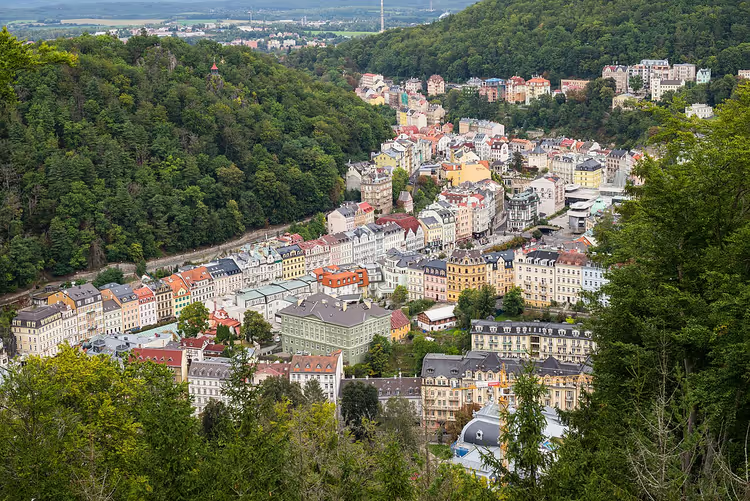 © rboed* · CC BYPhoto: rboed*, CC BY (https://creativecommons.org/licenses/by/2.0), Wikimedia Commons
The Alois Klein pavilion stands above the acidic Štěpánka spring. The spring first appeared here back in the 18th century, on the grounds of what is now the Richmond Hotel, and its water was used in medical treatments. In the last century the spring stopped flowing, and it was searched for over decades. The spring was found, and a light wooden pavilion in the tradition of Alpine architecture was placed above the basin.
Architect Vondráček made the structure airy, and it blended into the park with its centuries-old trees. Walking here is pleasant in any weather: the air in the park is rich in phytoncides, and water can be collected at any time of day. But remember: Štěpánka has no certificate as a natural healing resource, so drink it as ordinary mineral water.
11. Butterfly house
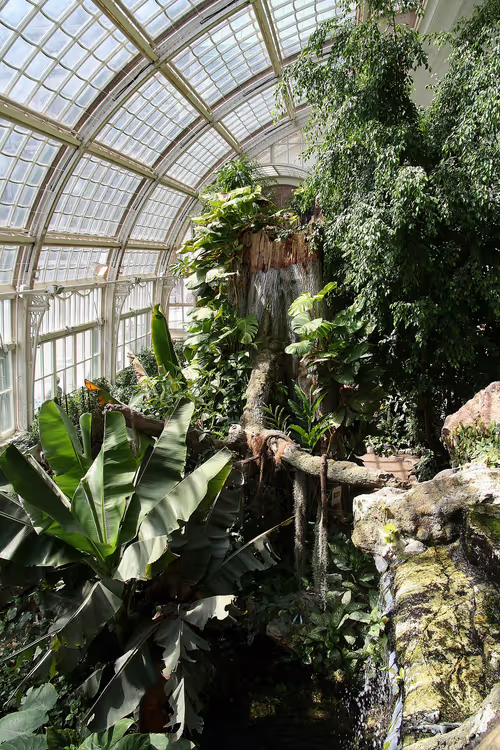 © Manfred Werner / Tsui · CC BY-SAPhoto: Manfred Werner / Tsui, CC BY-SA (https://creativecommons.org/licenses/by-sa/3.0), Wikimedia Commons
If the weather turns bad, head to the Butterfly House (Motýlí dům). An artificial tropical forest has been created under its roof, home to insects from all over the world. The flight area covers 100 m², and the wingspan of the local inhabitants reaches 20 cm (as of 09/2026, official tourism portal).
Butterflies land on shoulders and hands, and photographing them is allowed. A separate area is set aside for an incubator where pupae turn into adult insects. Along the path there are boards describing their habits, and souvenirs are sold at reception.
- Who it's for: families with children and anyone who wants to wait out the rain under a roof.
- Important: the center is open every day, but it is best to check the hours before visiting.
12. Church of St. Mary Magdalene
 © Brück & Sohn Kunstverlag Meißen · CC BY-SAPhoto: Brück & Sohn Kunstverlag Meißen, CC BY-SA (https://creativecommons.org/licenses/by-sa/3.0), Wikimedia Commons
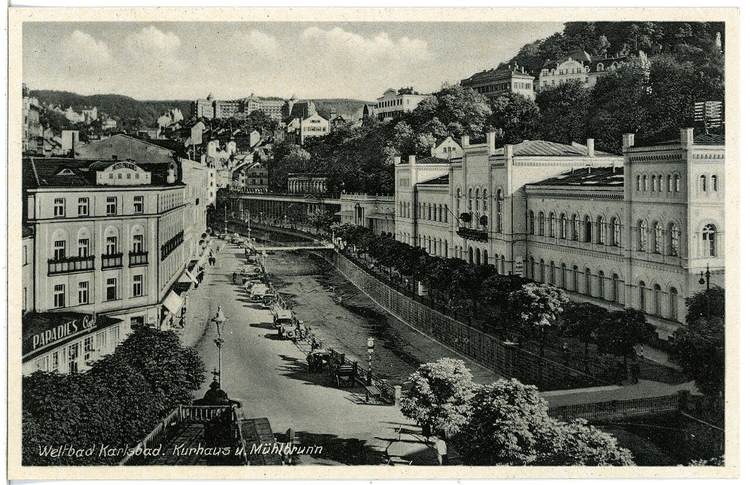
The Church of St. Mary Magdalene stands next to the Geyser, and the gallery is clearly visible from its steps. The first church was founded here by knights back in the 14th century. In the 16th century the building was rebuilt for the growing number of parishioners, but a century later it burned down. The current church was erected in the 18th century, and the work proceeded slowly: a powerful spring flows nearby.
Inside you will see wood carvings and paintings, and the remains from the former cemetery were moved into the crypt, which is open to visitors. The doors are open during the day, but respect the feelings of worshippers. Organ concerts are held according to the schedule posted on the board by the entrance.
13. Church of saints Peter and Paul
 © Lubor Ferenc · CC BY-SAPhoto: Lubor Ferenc, CC BY-SA (https://creativecommons.org/licenses/by-sa/4.0), Wikimedia Commons
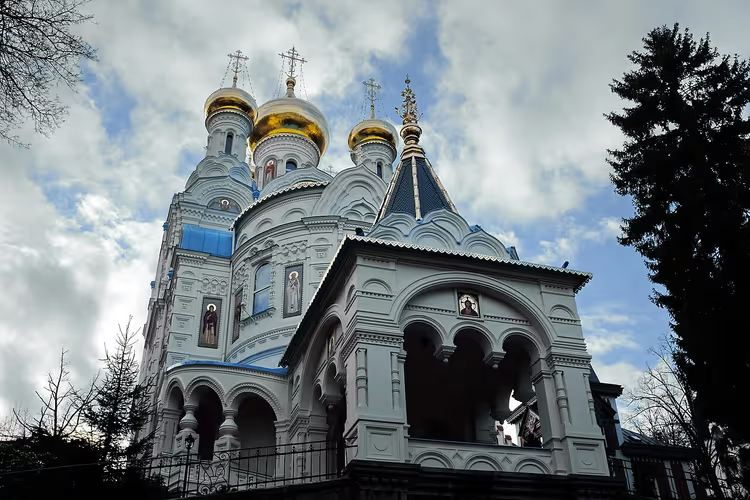
The Church of Saints Peter and Paul was built for Orthodox believers who came to Karlsbad for treatment. The initiator was Grand Duchess Elena Pavlovna, who also collected the first funds. Donations were made by Shuvalov, Vorontsov and Koshelev, and the plot on Schlossberg Street was allocated by the city council. The project was commissioned from Russian architect Konstantin Ukhtomsky, but the funds raised were not enough.
The site was then approved for an Anglican church, and the Orthodox community was offered part of the Pupp grand hotel. A house church was set up in several rooms, but the community grew, and Ukhtomsky's project was revived. The work took four years, and the consecration took place at the end of the 19th century.
A Turgenev fund and a Russian house were established at the church, and before the First World War the rector was arrested, and only the king's intervention saved him from execution. After the revolution, clergy who had fled Russia lived in the priest's house. Today you can recognize motifs of 16th-century Russian architecture. The walls are decorated with frescoes of Basil the Great and John Chrysostom, alongside locally venerated saints Vladislav and Ludmila.
14. Anglican Church of St. Luke
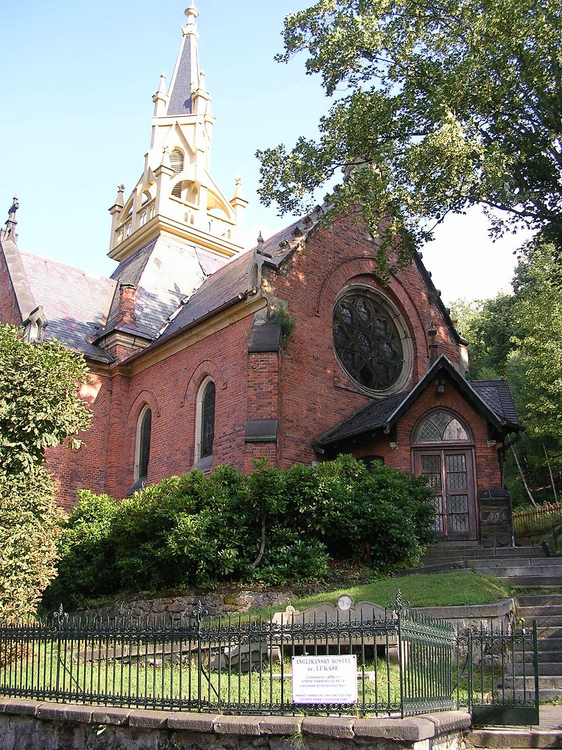
The Anglican Church of St. Luke stands in the center, on the slope of Castle Hill. The red unplastered walls immediately reveal its origin: the church was built for Britons who spent several months at a time at the resort. The previous church was small and was demolished, and the new design was carried out by Karlsbad architect Josef Slovák.
 © cs:ŠJů · CC BY-SAPhoto: cs:ŠJů, CC BY-SA (https://creativecommons.org/licenses/by-sa/3.0), Wikimedia Commons
The work took about two years, and the church was consecrated at the end of the 19th century. Later the building changed ownership, and services in the church ceased. It is still worth going inside: a wax figure exhibition operates there, and you can appreciate the vaults, carved ceilings and colored 19th-century stained glass.
15. City theater
 © I would appreciate being notified if you use my work outside Wikimedia. More of my work can be found in my personal gall · CC BY-SAPhoto: I would appreciate being notified if you use my work outside Wikimedia. More of my work can be found in my personal gall, CC BY-SA (http://creativecommons.org/licenses/by-sa/3.0/), Wikimedia Commons
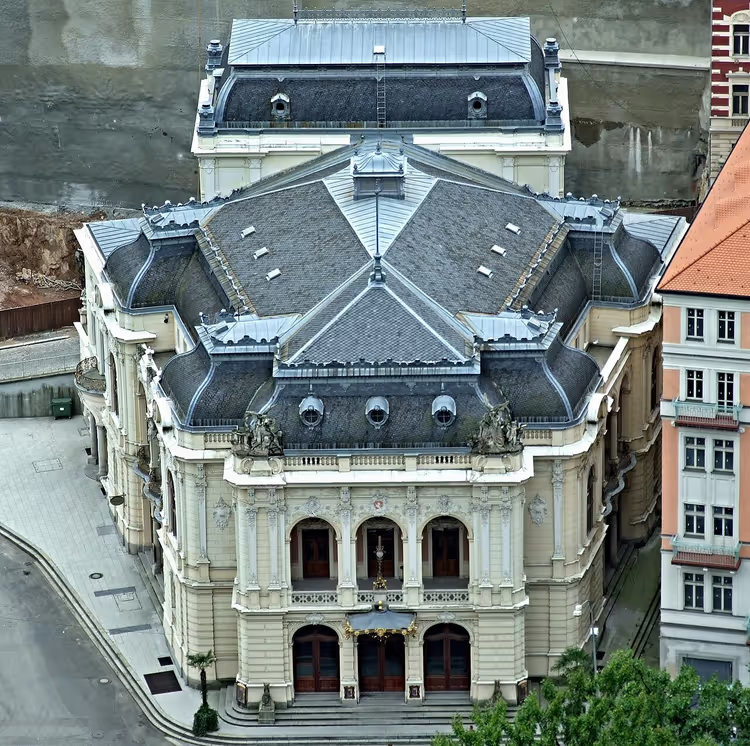
The wooden theater appeared in Karlsbad back in the 18th century to entertain aristocrats. The building burned down, and the city commissioned a stone project from the Viennese firm of Fellner and Helmer. The architects knew how to fit buildings into the already established look of the city, and you can still see the result today.
The hall's main rarity awaits you before the performance begins: the curtain consists of eight panels. On them, the poet stands surrounded by muses, and the brothers Klimt and Franz Matsch painted each girl from their own sisters. They also painted the ceiling and walls, while the engineers used all the innovations of the 19th century. The acoustics turned out excellent, the interiors have been restored, and tickets for performances are sold regularly.
16. Villa Lützow
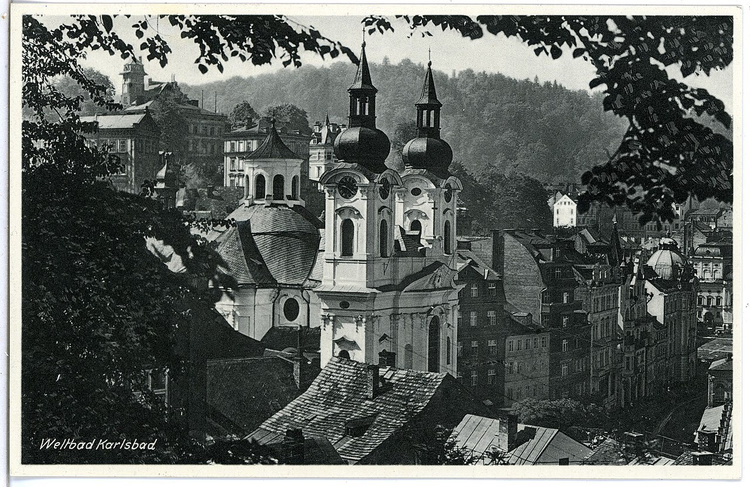 © Brück & Sohn Kunstverlag Meißen · CC BY-SAPhoto: Brück & Sohn Kunstverlag Meißen, CC BY-SA (https://creativecommons.org/licenses/by-sa/3.0), Wikimedia Commons
Baron von Lützow came to Karlsbad for treatment at the age of fifty and ended up staying here to live. With the money from selling his property, he built a villa with a park. The grounds combined terraces, promenades, gazebos, and pavilions, with animal sculptures placed among them: a bull, a cat, a deer, dogs, and a horse.
The most noticeable was the cat, which sits on a pedestal with its back to the city council. The baron constantly argued with the administration, and the cat became his mockery of the city council.
- Important: the new owners have closed the grounds, so you cannot get inside.
- Tip: part of the park and the sculptures are visible from behind the fence from the street, so walk along the wall.
17. Castle Tower
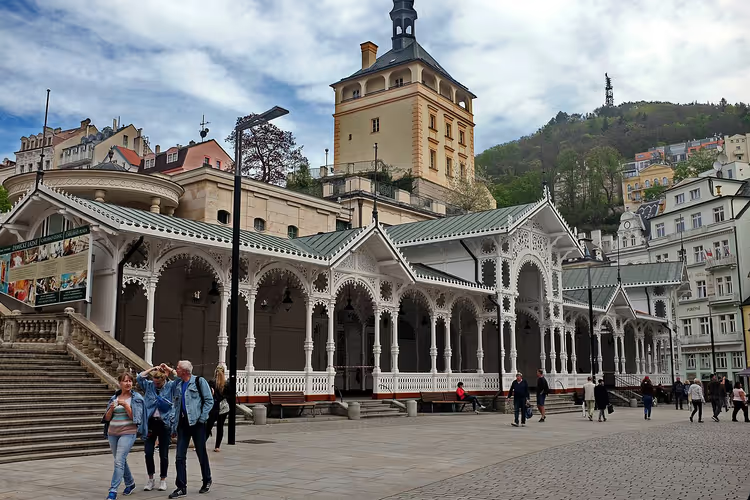 © Lubor Ferenc · CC BY-SAPhoto: Lubor Ferenc, CC BY-SA (https://creativecommons.org/licenses/by-sa/4.0), Wikimedia Commons
The Castle Tower (Zámecká věž) stands in the historic center. From here you can see the Castle and Market colonnades, and you can reach the Geyser in a couple of minutes. Today's structure is new: it rose on the site of the tower that remained from the castle of King Charles IV.
The castle burned down in the early 17th century, and only the tower survived. Later, the townspeople embraced the Baroque style, demolished the old tower, and built a new one in the fashion of that time. Since then, a tradition developed of greeting distinguished guests with fanfares from the tower, and some are still welcomed this way today. The view from here opens onto two colonnades at once, so the tower is convenient to save for the end of your walk.
- Where to eat: there is a Czech cuisine restaurant inside, serving meat prepared according to old recipes and local cheese.
- How to get there: from the Market Colonnade, head up the street toward the castle hill.
18. Chapel of Saint Nicholas
The Chapel of Saint Nicholas was built with the personal funds of Nikolai Stepanov, a native of Russia. The log structure was assembled on site, numbered, and transported, then reassembled on Doubská hora. The design reflects the traditions of Russian wooden architecture.
Services were held here only briefly: today the chapel is closed to worshippers. However, the hill offers views of the surrounding area, and the wooden building fits well into the landscape, so tourists still climb up here.
19. Jan Becher Museum
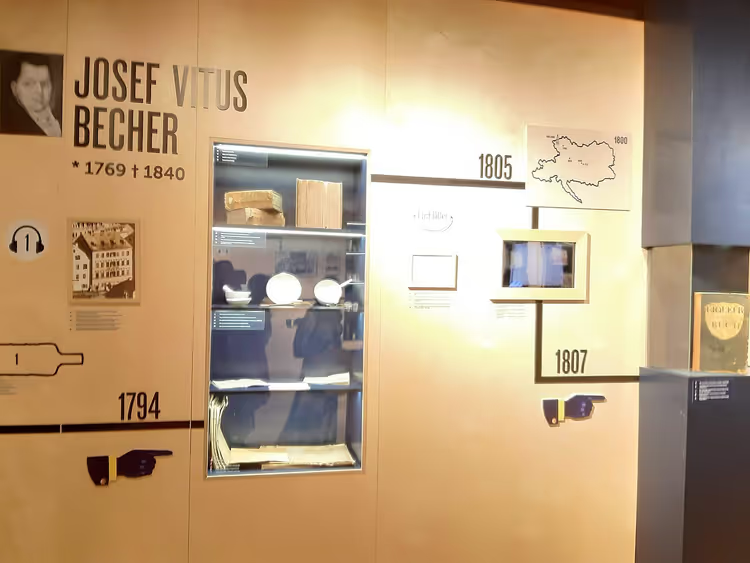
The herbal liqueur was first sold at Becher's pharmacy, and spa guests liked the taste. The drink was named after its creator, and that is how Becherovka came to be. Jan Becher built the historic Steinberky building in 1867, and the factory operated there for more than a century (as of 09/2026, official tourism portal).
Today the building houses an exhibition: you will see historic bottles, the recipe book, and the Becher family's awards, and in the cellars you will learn how the liqueur is made and how the ingredients are stored. The recipe is kept secret, and only a few people know the exact composition. Most of the herbs are gathered around Karlovy Vary, while some ingredients are imported from abroad. The tour ends with a tasting, and you can buy a bottle as a souvenir at the brand store next door.
- Cost and hours: check the official Becherovka website: they also offer a new mixology experience there.
20. Moser Glass Museum
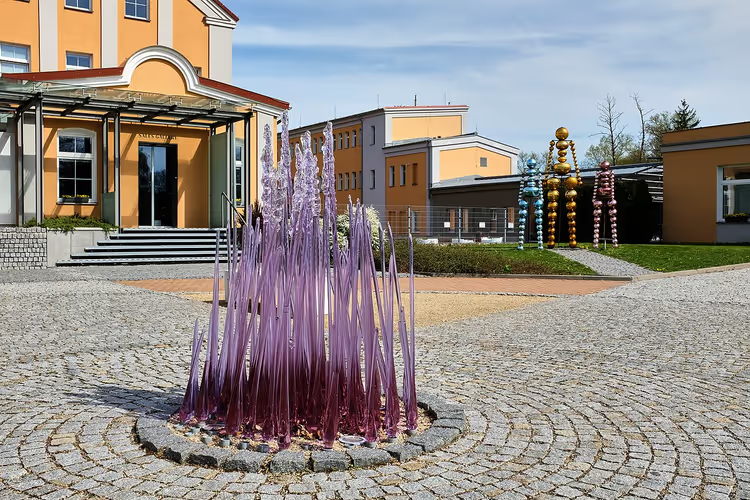 © Lubor Ferenc · CC BYPhoto: Lubor Ferenc, CC BY (https://creativecommons.org/licenses/by/4.0), Wikimedia Commons
More than a century and a half ago, glassware from Ludwig Moser's factory was kept at every royal court. The sets were expensive, but noble families bought them. Today you can not only pick out a colored glass souvenir but also take a look at the production itself.
The halls display more than a thousand items, and the tour takes you into the glassblowing workshop. There you can watch a master blow a piece, but the final finishing is left off camera. Tours run on weekdays from 9:00 to 14:00, and a ticket costs 370 Kč (as of 09/2026, official Moser website). Groups are small, so book your spot in advance.
- Also: the brand store can engrave your purchase, and the cafe with a terrace overlooks Ludwig Moser Square with its fountain and crystal figures.
- Tip: tours are conducted in Czech and English, groups are capped at ten people, so it is best to book in advance.
Practicalities: getting there and where to stay
Direct buses and trains run from Prague to Karlovy Vary; check schedules on the official tourism portal. Within the city you will not need transport: the colonnades, the theater, and the Geyser all stand along the Teplá River, and the climbs to Diana and the Three Crosses take about an hour. It is easiest to start at the Hot Spring Colonnade and walk along the promenade to the Park Colonnade, as in the short route above. If you arrive by car, leave it on the edge of the spa zone and continue on foot. For a day trip, bring a light bag: walking with a suitcase over cobblestones and stairs is awkward.
If you have suitcases, it is more convenient to book an airport transfer: switching to a bus costs you an extra hour. Book a transfer to your hotel.
If you are staying overnight, choose your area in advance. Historic hotels line Mariánská Street, prices near the Geyser are higher, and the neighborhoods near the station are quieter. See hotels in Karlovy Vary on Trip.com.
If you plan to take spa water treatments, add medical insurance to your trip: compare insurance options.
Tours and tickets in Karlovy Vary
Guided tours, skip-the-line tickets and activities — most offers can be cancelled free of charge.
See offers on GetYourGuideThe widget loads once you give your consent.
⁉️🤔 Frequently asked questions
How much time do you need for Karlovy Vary?
A relaxed loop around the colonnades takes two hours, and the climbs to Diana and the Three Crosses add about another hour. With museums, plan for a full day. If you only have half a day, stick to the colonnades and the Geyser and save the museums for next time.
Can you walk the entire city on foot?
Yes. The historic core is compact, the colonnades are only minutes apart on foot, and you will not need public transport within the spa area. The exception is the motorcycle museum in Bečov, which requires a bus or car. The climbs to the viewpoints take time and comfortable shoes.
How much does the spring water cost?
Nothing. Entry to the colonnades is free, you fill your own cup, and the taps run all day. Only museums, tours, and the funicular to the tower are paid.
What to do in the rain?
Head to the Butterfly House, the Becherovka Museum, or the Moser glassblowers: it is warm there and everything is indoors. The colonnades also offer shelter, but the wind blows through them, so stay close to the pavilions.
When is the best time to visit?
The spa operates year-round, while the seasonal stands at the towers depend on the weather. In spring and autumn the colonnades are quieter, in summer there are more open-air concerts, and in winter the town runs on its treatment programs.
Do you need tickets in advance?
No tickets are needed for the colonnades or the Geyser; entry is free. The only thing worth booking in advance is the Moser factory tour: groups are small and slots fill up quickly.
In short: what to book
One day is enough to walk the colonnades, try the water, climb to Diana, and visit one museum. The route comes together naturally: first the lowland with the springs, then the viewpoints, and a museum for dessert.
- If you have one day: the colonnades, the Geyser, Diana Tower, and the Three Crosses.
- If you are traveling with kids: the Butterfly House and the Moser glassblowing workshop.
- If you are into history: the churches, the city theater, and the Lützow Villa from the outside.
- If you are staying overnight: pick a hotel near Mariánská Street, everything is within walking distance from there.
It's best to book the hotel in advance during peak season: check prices on Trip.com. And if you want to explore the city with a guide, add a tour: tours on GetYourGuide.

A small editorial team writing guides for independent travel. We travel ourselves, but we haven’t been everywhere, so we check prices, opening hours and how to get there against official sources.