
















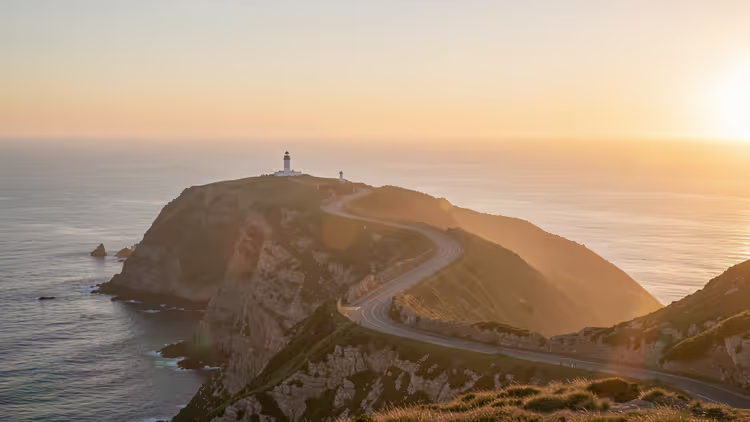
 AIIllustrative image: AI-generated
Excursions in Lisbon: 30 routes from Alfama to Cape Roca
Lisbon sits on seven hills. Every climb to a viewpoint takes energy, and finding the right tram can eat up half a day. With a guide, you spend that time on experiences rather than logistics. The city offers walking, driving, and combined tours: from a two-hour stroll through Alfama to a full day covering Sintra, Cabo da Roca, and Cascais. A ticket to São Jorge Castle costs €17 for adults (as of 09/2026, verified on the official website), and Sintra's palaces admit visitors by timed entry slots booked in advance.
This selection includes thirty programs: walking, wine, driving, and group tours. We describe exactly what you'll see, how long it lasts, and where the route starts. Private guide prices vary by season, so confirm them when booking.
Ad: this article contains affiliate links, we earn a commission if you book through them, at no extra cost to you.
How to choose a tour in Lisbon
💡 In short:
- Walking routes in the center: two to three hours, no transport, great for your first day.
- Sintra and Cabo da Roca: from four hours, a driving tour is more convenient.
- Book palace and castle tickets in advance; in summer, entry is by timed slots.
- Prices and opening hours: 09/2026, verified on the official Parques de Sintra website
First, decide how many hours you're willing to spend. Walking routes through Baixa and Alfama last two to three hours and barely depend on transport. Driving and combined trips take four hours or more: they include Sintra, Cabo da Roca, or Setúbal. Group tours are cheaper than private ones, but you move at the group's pace. In winter, some boat trips and beach stops are canceled due to wind.
1. Sunset at Cabo da Roca and the palaces of Sintra
 © Diego Delso · CC BY-SAPhoto: Diego Delso, CC BY-SA (https://creativecommons.org/licenses/by-sa/4.0), Wikimedia Commons
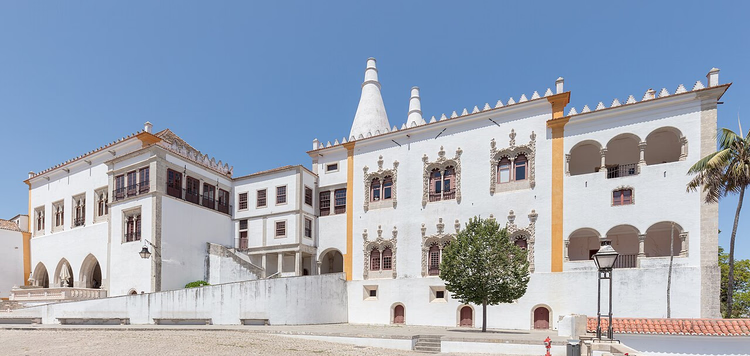
This four-hour evening trip starts in central Lisbon and ends at the lighthouse on Cabo da Roca, the westernmost point of continental Europe. The route passes through Sintra, where mountain slopes, wooded hills, and old quarters unfold from the window and from the rooftop viewpoint of the palace.
In Sintra, you'll taste ginjinha cherry liqueur, port wine, and egg pastries with cheese. The guide, a local resident, shares city legends. The day ends by the ocean: the cliffs of Cabo da Roca rise about one hundred and forty meters above the water, and it's almost always windy here. Bring a jacket even in July, or you'll freeze at the viewpoint.
- Who it's for: those who want to see Sintra and the ocean in one evening.
- The catch: the drive takes more time than the actual stroll through Sintra.
2. Lisbon nightlife: fado and bars
 © Jorge Franganillo · CC BYPhoto: Jorge Franganillo, CC BY (https://creativecommons.org/licenses/by/2.0), Wikimedia Commons
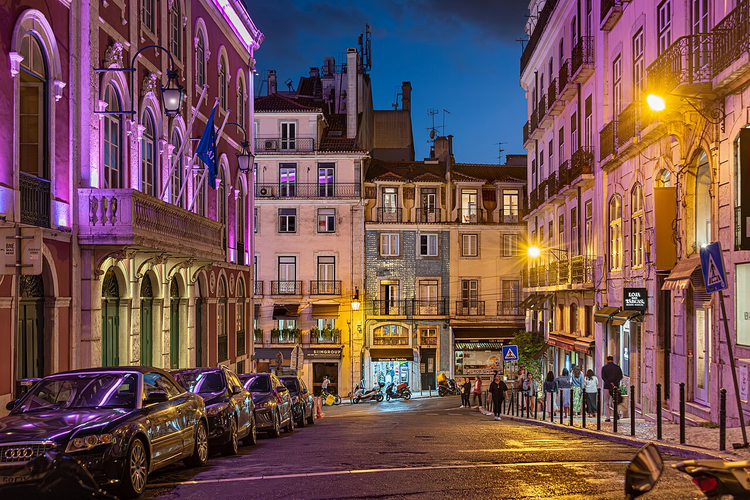
The evening program starts after sunset in Baixa and Alfama. The guide leads the group past the Church of São Roque and the walls of the Carmo Convent, destroyed by the earthquake. From the viewpoint, a panorama of the city settling in for the night opens up, and fado, the Portuguese ballad of separation and jealousy, drifts from open windows.
The route then moves through bars, where you'll taste vinho verde, a young green wine. On the rooftop of one of the buildings, there's a disco pub with DJ sets and cocktails. The evening ends at the Port Wine Institute or at a wine bar with local snacks.
- Who it's for: groups who want to combine a walk with bars.
- The catch: the guide picks the final stop based on the situation; it's not confirmed in advance.
- available dates on GetYourGuide
3. A heartfelt walk through Lisbon's local neighborhoods
 © Mitch Altman from Berlin, Germany · CC BY-SAPhoto: Mitch Altman from Berlin, Germany, CC BY-SA (https://creativecommons.org/licenses/by-sa/2.0), Wikimedia Commons
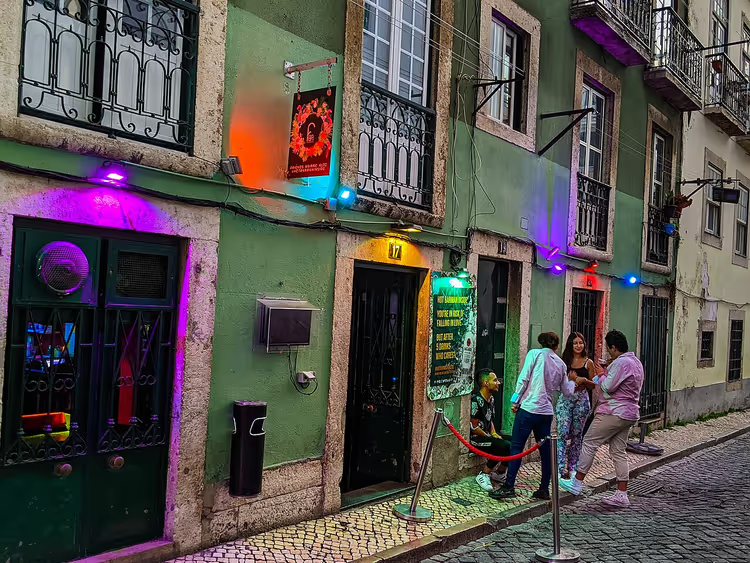
A route for those tired of dates, big names, and lines at monuments. The walk goes through Bairro Alto, Cais do Sodré, Baixa and Chiado, in other words, the streets where Lisboetas themselves live. The guide shares city legends and gives transport tips.
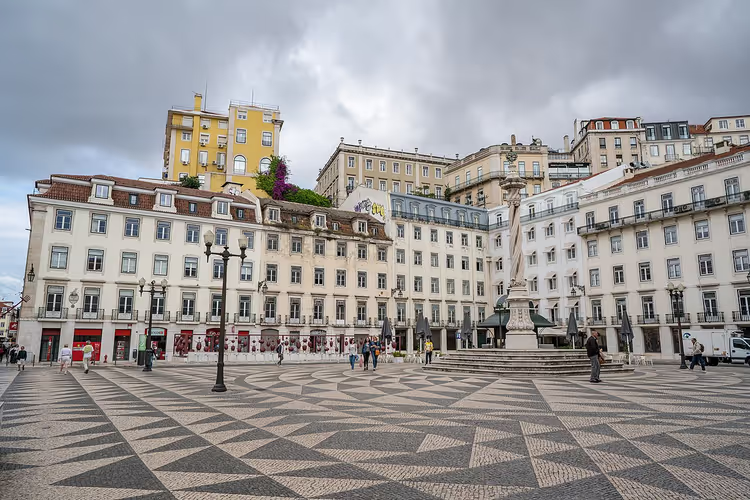
In two and a half hours, you'll see Rossio Square with its wavy cobblestones, the Trinity Theatre, the Arco da Rua Augusta, and the ruins of the Carmo Convent. The group reaches the viewpoint in a shady park by riding the Gloria funicular, which has been operating since the late 19th century.
- How to get there: the start is in the center; you can walk to Rossio Square from the Rossio metro station.
- The catch: lots of uphill walking, so wear comfortable shoes.
- options on GetYourGuide
4. Understand and fall in love with Lisbon in half a day
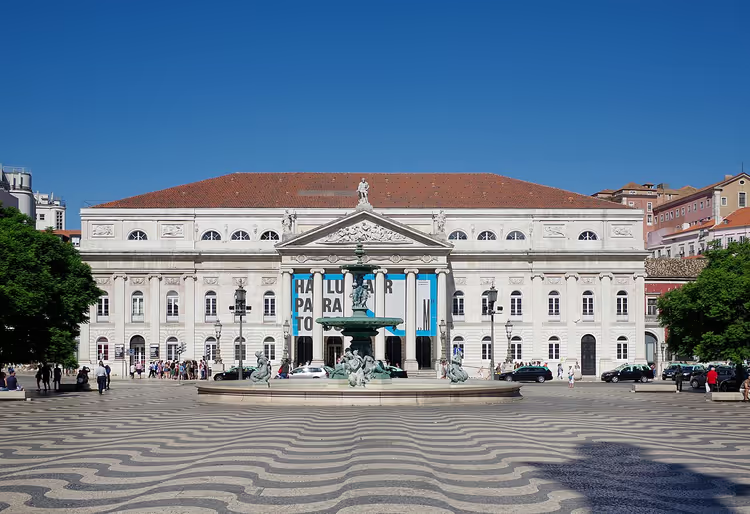 © Berthold Werner · CC BY-SAPhoto: Berthold Werner, CC BY-SA (https://creativecommons.org/licenses/by-sa/4.0), Wikimedia Commons
A sightseeing walk through old quarters and bohemian districts. The city lies on seven hills, so the route constantly goes up and down. The guide shows Rossio Square, Bairro Alto, Chiado with its Garrett shopping street, Baixa, and Alfama.
You photograph tiled roofs, white church facades, and blooming bougainvillea, relax in cafes, and listen to music from open windows. The program includes a ride on the historic funiculars, whose wooden cars have been running for over a century, and on the yellow tram along route 28 (according to the Lisbon tourism office, 09/2026). The tram's interior has been preserved since the early 20th century.
- Who it's for: for a first introduction to the city.
- The catch: in summer the tram is crowded, and there are lines for the funiculars.
- book a group spot
5. On foot through the old town and Alfama
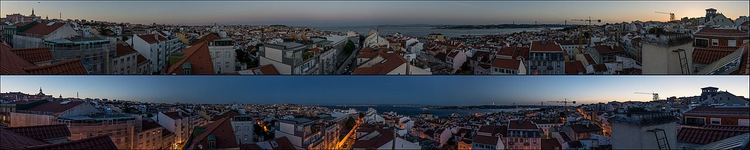 © Martin Zeller · CC BY-SAPhoto: Martin Zeller, CC BY-SA (https://creativecommons.org/licenses/by-sa/4.0), Wikimedia Commons
A four-hour walking tour of the historic center. The guide leads the group through Bairro Alto, leaves time for coffee at a family-run cafe, and shows Baixa with Praça do Comércio, the city's grand gateway.
In Alfama you'll see medieval houses and the Gothic-style cathedral. A separate stop, St. George's Castle: from the walls you get a view of the Tagus River and tiled roofs. A castle ticket costs €17 for adults, youth aged 13 to 25 pay €8.50 (as of 09/2026, verified 09/14/2026 on the official website). Entrance tickets are not included in the tour price.
- Who it's for: for a first introduction to the historic center.
- The catch: the castle ticket is purchased separately, and in summer there's a line at the ticket office.
- see prices on GetYourGuide
6. Non-touristy Lisbon: Campo de Ourique and Estrela
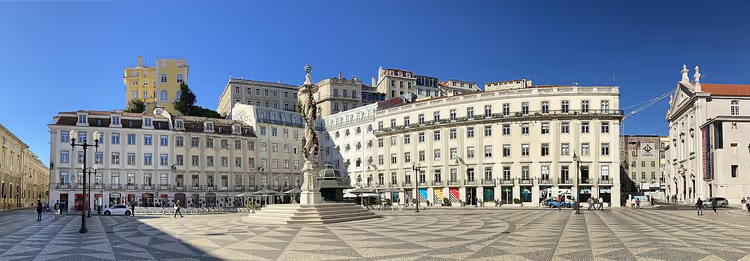 © Dudva · CC BY-SAPhoto: Dudva, CC BY-SA (https://creativecommons.org/licenses/by-sa/4.0), Wikimedia Commons
The Campo de Ourique and Estrela neighborhoods lie away from the tourist trails. Here, far from the crowds, you see everyday city life: atmospheric courtyards, quiet squares, food markets, and affordable family restaurants where locals come for dinner.
Along the way, the guide tells you which castle is considered the country's most mystical place, how long the Águas Livres aqueduct is, when Portugal became a parliamentary republic, and what Queen Maria the Pious is known for. The finale: a viewpoint with a panorama of the Tagus River and the 25 de Abril Bridge.
- How to get there: starts at Rato metro station, ends at the viewpoint.
- The catch: the route is long, and part of the way goes uphill.
- Lisbon tours on GetYourGuide
7. Mysterious Sintra: palaces and parks
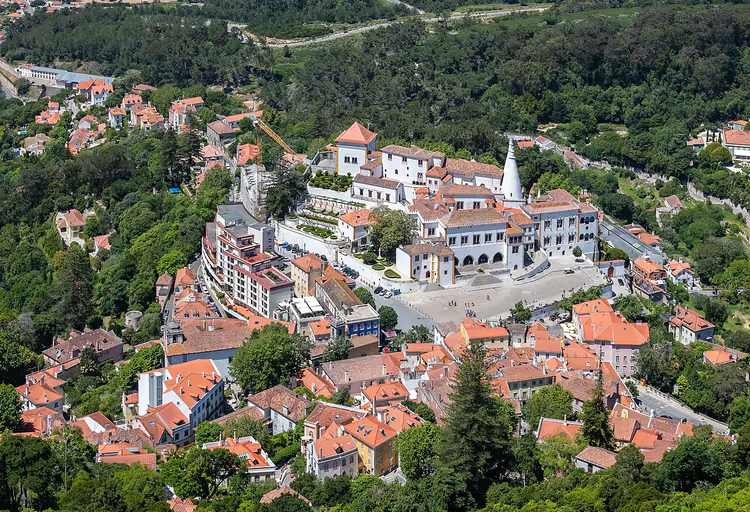 © Diego Delso · CC BY-SAPhoto: Diego Delso, CC BY-SA (https://creativecommons.org/licenses/by-sa/4.0), Wikimedia Commons
Sintra sits half an hour from Lisbon, among hills where it's cool and windy even in summer. In the 15th century the town became a royal residence, and since then palaces and monasteries have been built here.
The main stop is the National Palace of Sintra with its two tall conical chimneys. The second point is the Quinta da Regaleira estate with a tower and a spiral well, whose history is tied to Freemasons and alchemists. Tickets are sold by time slot with a choice of day and hour, so plan your visit in advance (As of Parques de Sintra, 09/2026, official website). The walk ends with artisan workshops and pastry shops selling local sweets.
- Who it's for: lovers of palaces, parks, and legends.
- The catch: in summer there are long lines at Pena and Regaleira, so book an early time slot.
- find a similar tour on GetYourGuide
8. A driving tour of Lisbon

A tour by car or air-conditioned minibus. In any weather you see the central neighborhoods and streets away from the tourist routes, while the guide comments as you go.
The route is flexible: the program is adjusted for weather and traffic. Stops usually include hilltop viewpoints and a ride on the Gloria funicular. Bring a camera: from the little tram and from the heights you get the best shots of the city and the Tagus River.
- Who it's for: those who don't want to walk up and down the hills.
- The catch: part of the time you spend in the vehicle rather than outside.
- available dates on GetYourGuide
9. From Sintra to Estoril along the ocean
 © Alexkom000 · CC BYPhoto: Alexkom000, CC BY (https://creativecommons.org/licenses/by/4.0), Wikimedia Commons
A full day in the surrounding area: Sintra, the Atlantic coast, and two resorts. In Sintra you can choose from several landmarks: Quinta da Regaleira, the Pena and Monserrate palaces, the National Palace, and the Moorish Castle. You decide what to explore in depth.
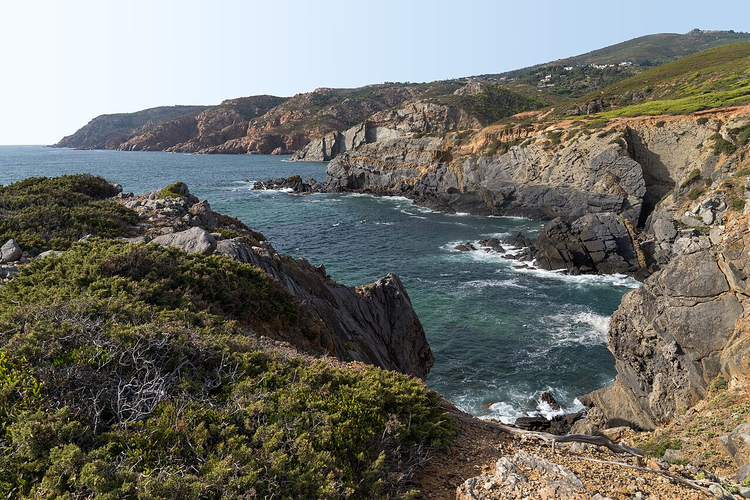
The route then heads to the ocean and the westernmost point of continental Europe, Cabo da Roca. After that comes the Lisbon Riviera: the Cascais waterfront with sandy beaches and yacht marinas, and nearby Estoril with restaurants, a casino, and five-star hotels. Buy Sintra palace tickets in advance for specific time slots (as of 09/2026, Parques de Sintra website).
- How to get there: the group is picked up in central Lisbon, then you travel by car.
- The catch: it's hard to see more than one palace interior in a single day.
- options on GetYourGuide
10. Everything in one day: Lisbon, Sintra, Cascais
 © Nan Palmero from San Antonio, TX, USA · CC BYPhoto: Nan Palmero from San Antonio, TX, USA, CC BY (https://creativecommons.org/licenses/by/2.0), Wikimedia Commons
An eight-hour combined tour for those who have only one day in Lisbon. The itinerary combines walking tours of the center with a car trip. The route passes through Alfama, Baixa, and Belém, where Portuguese expeditions set sail from.
After the viewpoints, the group heads to Sintra with its parks and palaces, then to the ocean at Cabo da Roca. The finale is an introduction to the resorts: Estoril with its hotels and nightclubs, and Cascais with its long sandy beaches. It's a packed day, but you see both the city and nature.
- Who it's for: short trips when time is limited.
- The catch: the pace is fast, with almost no free time.
- book a spot in the group
11. Mira de Aire Caves and the underground kingdom
 © Lara Maia · CC BY-SAPhoto: Lara Maia, CC BY-SA (https://creativecommons.org/licenses/by-sa/3.0/es/deed.en), Wikimedia Commons
The Mira de Aire Caves are considered Portugal's largest tourist cave, visited by more than eight million people (as of 09/2026, official website). The entrance is about 110 kilometers from Lisbon, and the drive takes roughly an hour and a half. Along the way, the guide talks about the country's history and the Portuguese mentality.
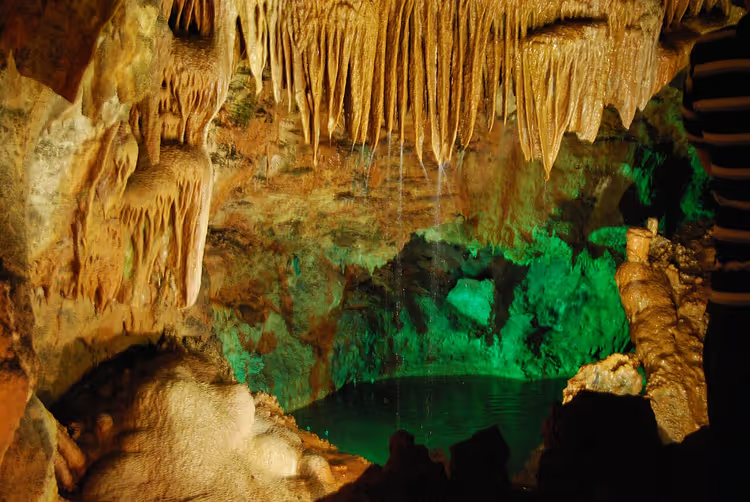
Inside, you walk along developed galleries among stalactites, stalagmites, underground lakes, and illuminated fountains. The route descends more than 100 meters, and the temperature stays around 17 degrees, so bring a sweater. The ticket office is open until 5:00 PM from October to March and until 6:30 PM in summer (as of 09/2026, ticket office hours). You can add a water park or a trip to Fátima and Tomar to the excursion.
- Who it's for: those who aren't afraid of enclosed spaces and stairs.
- The catch: it's damp and chilly inside, and the last tour starts when the ticket office closes.
- available dates on GetYourGuide
12. Port wine tasting in Lisbon

A one-hour port wine tasting at a non-touristy wine house. Port comes from the Douro Valley: it's a fortified wine with a bright fruity flavor and rich color. Only wine made from specific grape varieties grown in that valley has the right to be called true port.
In the tasting room, you sample several varieties and learn how ruby port differs from tawny, and barrel-aged wine from wine matured in the bottle. The guide explains what port is paired with and how it's stored. The program is for adults only: no entry for those under 18.
- Who it's for: those who want to understand port wine without tourist traps.
- The catch: in an hour you only get to try three or four samples, no more.
- see prices on GetYourGuide
13. Evening Lisbon: fado and dinner
 © Miguel Vieira [2] · CC BYPhoto: Miguel Vieira [2], CC BY (https://creativecommons.org/licenses/by/2.0), Wikimedia Commons
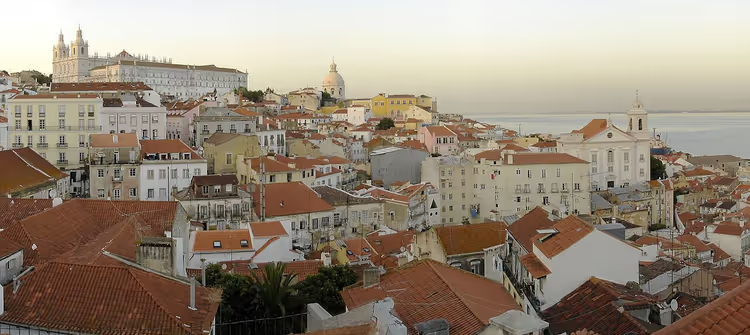
After dark, the lighting transforms the center: Lisbon Cathedral, Casa dos Bicos, Rossio Square, the National Pantheon of Santa Engracia, the National Theater, and the churches of Se and Saint Anthony. The guide talks about Portuguese life, folklore, and national cuisine.
The evening ends with dinner accompanied by live guitar. Fado emerged in Lisbon's neighborhoods in the early 19th century: a singer and a guitarist perform songs about love, jealousy, and separation. Book a table at a popular fado house in advance, especially in summer, otherwise you'll be seated far from the stage.
- Getting there: the tour starts in Baixa, steps from the Baixa-Chiado metro station.
- The catch: at well-known fado houses the dinner is a fixed menu, with limited choices.
- reviews and dates on GetYourGuide
14. The Chiado district and its legends
 © Photograph by Mike Peel ( www.mikepeel.net ). · CC BY-SAPhoto: Photograph by Mike Peel ( www.mikepeel.net )., CC BY-SA (https://creativecommons.org/licenses/by-sa/4.0), Wikimedia Commons
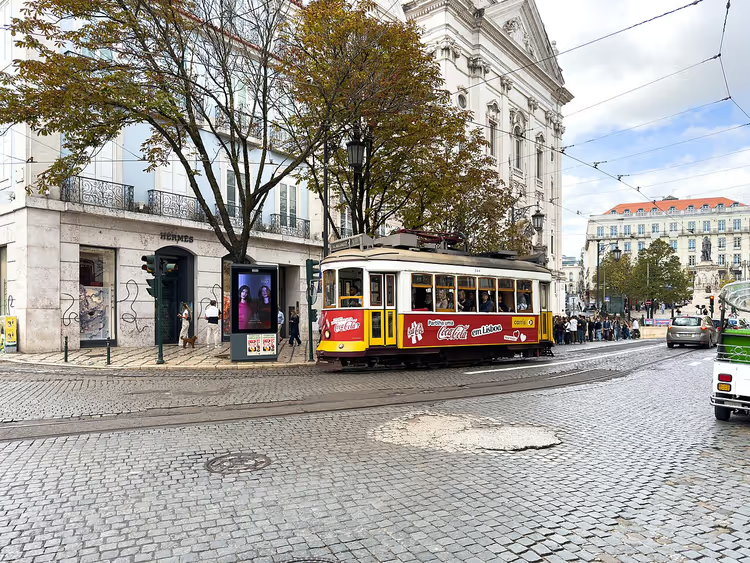
A three-hour walk through Chiado, one of the city's main districts. It's packed with theaters, museums, boutiques, historic cafes, antique shops, and restaurants. The guide leads the group along cobblestone streets with decorated facades and tells stories about local establishments.
Chiado was once a neighborhood of monks, knights, artists, and poets. After a devastating fire in the late 20th century, the district was rebuilt, and urban legends keep that history alive. Walking tours in the center cost roughly the same; the guide confirms the exact price at booking.
- Who it's for: those who love architecture and city stories.
- The catch: during the day the streets are noisy and crowded.
- options on GetYourGuide
15. Cascais, Sintra, and Cabo da Roca in one day
 © Lacobrigo · CC BY-SAPhoto: Lacobrigo, CC BY-SA (https://creativecommons.org/licenses/by-sa/4.0), Wikimedia Commons
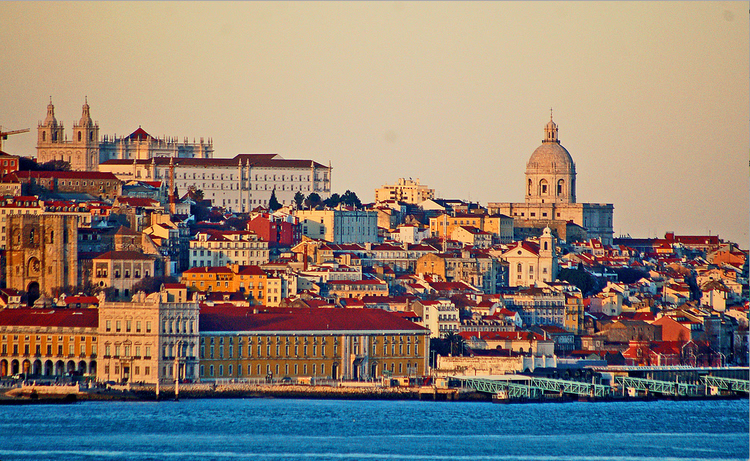
An eight-hour group tour of the most scenic areas around Lisbon. From the capital, the group heads to the coastal towns of Cascais and Estoril, which have long attracted well-heeled vacationers. The guide tells the story of Dusko Popov, the spy who became the prototype for James Bond.
Along the coast, the group passes fishing villages and a natural grotto known as the Devil's Mouth. Following protected trails, travelers make their way to Cabo da Roca. One of the stops is Sintra, set amid a pine forest, with the Pena Palace and the Quinta da Regaleira estate. The finale is a historic pastry shop with almond cakes.
- Who it's for: those who want to see the ocean and Sintra in one day.
- The catch: stops are short, and the group does not go inside the palaces.
- find a similar tour on GetYourGuide
16. Mouraria: the birthplace of fado
 © Jorge Franganillo · CC BYPhoto: Jorge Franganillo, CC BY (https://creativecommons.org/licenses/by/2.0), Wikimedia Commons
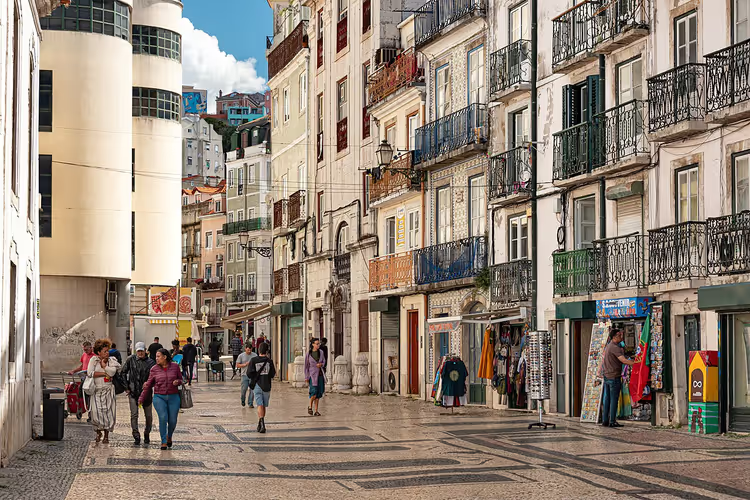
A sightseeing walk through Mouraria, a multicultural neighborhood with a maze of narrow streets, dead ends, and small squares. The guide shows you a district that grew from the city's poorest and most dangerous area into a welcoming and safe one.
In three hours you'll learn the story of fado's origins, see old houses that survived the earthquake, and facades covered in colored ceramic tiles. Part of the route passes by venues of a contemporary art festival. The walk proceeds at a moderate pace, but the streets are uneven.
- Getting there: the tour starts at the Martim Moniz metro station.
- The catch: the neighborhood is hilly, and in places there are no sidewalks.
- available dates on GetYourGuide
17. Portugal's golden ring: Obidos and Fatima
 © Diego Delso · CC BY-SAPhoto: Diego Delso, CC BY-SA (https://creativecommons.org/licenses/by-sa/4.0), Wikimedia Commons
A driving route through towns and villages that have kept their medieval look: Obidos, Alcobaca, Batalha, and Fatima. The group walks along cobbled streets beside the Obidos fortress wall and takes in architectural landmarks.
In Batalha the main stop is the Monastery of Santa Maria da Vitoria, a Gothic masterpiece with stone carving, a filigree gallery, and pinnacles. In Alcobaca you see the Monastery of Santa Maria de Alcobaca; in Fatima, the square with the basilica, one of the largest centers of Catholic pilgrimage. The nine-hour trip is designed as a full day, so bring water and comfortable shoes.
- Who it's for: lovers of Gothic architecture and monasteries.
- The catch: transfers between towns take several hours.
- see prices on GetYourGuide
18. Cabo da Roca and a picnic at Guincho beach
 © Alvesgaspar · CC BY-SAPhoto: Alvesgaspar, CC BY-SA (https://creativecommons.org/licenses/by-sa/3.0), Wikimedia Commons
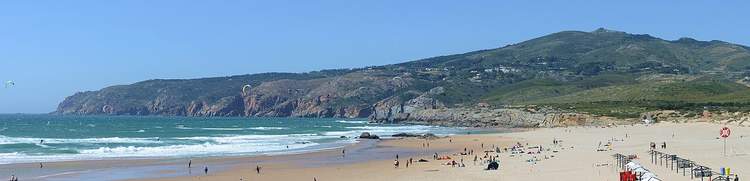
A five-hour trip along the Atlantic coast. The group drives through the resort town of Cascais with its palaces and parks, then arrives at the wide sandy Guincho Beach, popular with surfers. Here you'll have a picnic under cedars and pines.
The main stop is Cabo da Roca, where one of Portugal's oldest lighthouses, Farol do Cabo da Roca (Parques de Sintra), stands above the ocean. The wind is strong here almost all year round, so bring a windbreaker. The group returns by the same route.
- Who it's for: those who come for the ocean and views rather than museums.
- The catch: the picnic depends on the weather; in strong wind it is moved.
- options on GetYourGuide
19. Azulejo, wine, and the Vasco da Gama Bridge
 © Jules Verne Times Two · CC BY-SAPhoto: Jules Verne Times Two, CC BY-SA (https://creativecommons.org/licenses/by-sa/4.0), Wikimedia Commons
A wine and food day on the Setubal Peninsula, about thirty kilometers from Lisbon (as of 09/2026, Visit Portugal). The route crosses the Vasco da Gama Bridge, the longest bridge in Europe. The first stop is a large winery with vineyards and olive groves.
At the winery you learn how local wines are made, then have lunch at a traditional restaurant with seafood, cheeses, and desserts. After that, a factory where azulejo ceramic tiles are hand-painted. The finale is a viewpoint at the Christ monument above the river, with a panorama of the city, and the return trip across the April 25 Bridge.
- Who it's for: those who want to combine wine, food, and views.
- The catch: it's a group tour, so the group sets the pace.
- book a spot in the group
20. Portugal's natural treasures: salt and dinosaurs
 © Alexey Komarov · CC BY-SAPhoto: Alexey Komarov, CC BY-SA (https://creativecommons.org/licenses/by-sa/4.0), Wikimedia Commons
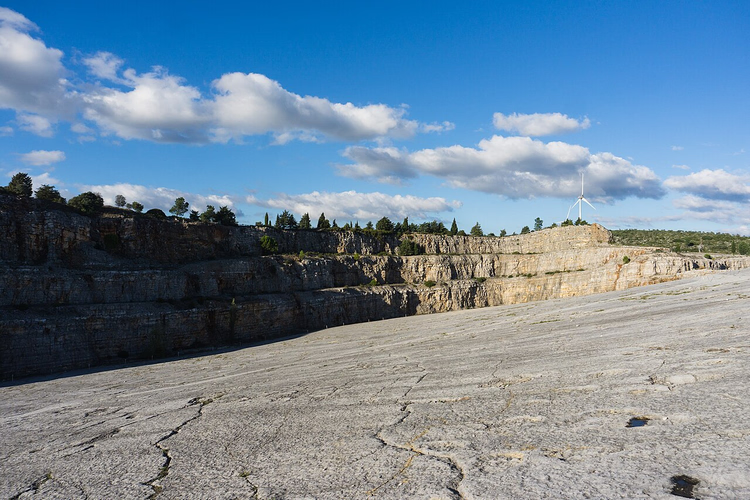
A nine-hour trip through nature reserves and villages of central Portugal. The program combines salt production using traditional methods, dolmens, underground caves, and dinosaur footprints. The route is designed for those who want to see the country beyond the cities.
The first stop is the salt works in Rio Maior, an open-air museum with stone streets and wooden houses. Salt-saturated water flows through wells into basins, where it is evaporated by the sun and manual labor. The group then walks through the Serras de Aire and Candeeiros parks, descends into caves with stalactites, and visits a quarry with dinosaur footprints.
- Who it's for: those who want to see Portugal beyond Lisbon.
- The catch: a lot of time on the road, and some sites are seen quickly.
- find a similar tour on GetYourGuide
21. Old Lisbon: squares and hills
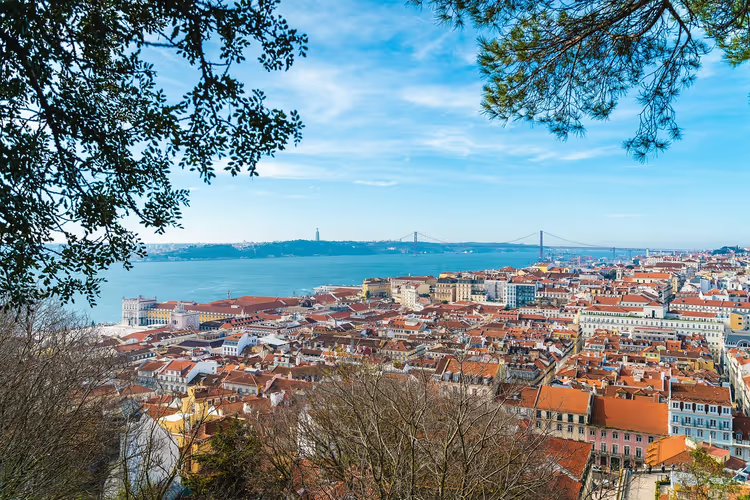
A six-hour walking tour through the historic center. The route passes through Rossio, Figueira, Commerce, and Restauradores squares, along the central Augusta Street and Liberty Avenue. The guide leads the group at a relaxed pace and makes rest stops.
Along the way you see the Church of Saint Roch, Saint George's Castle, and Belem Tower, as well as palaces and historic buildings. At one of the old establishments, the group is treated to a glass of port wine. You can also ride the funicular, buy souvenirs, and take panoramic photos from the hills, but tickets to the castle and tower are paid separately.
- Who it's for: a leisurely introduction to the city.
- The catch: six hours on your feet over hills is tiring, bring water.
- available dates on GetYourGuide
22. A city that will win your heart
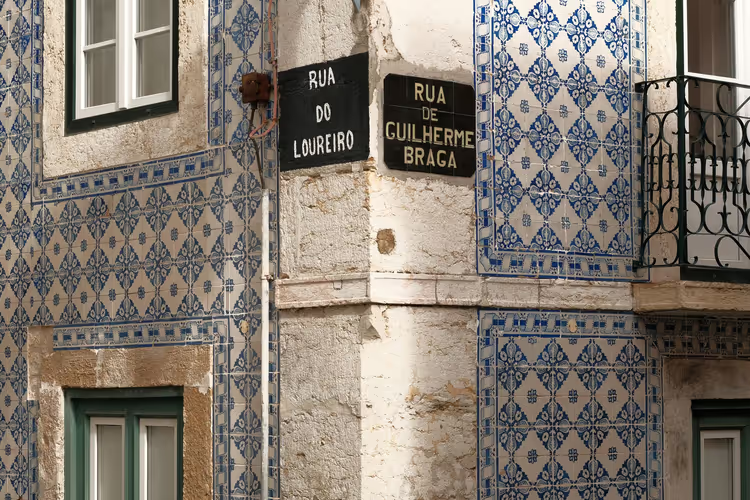
A walk through contrasts: the Alfama, Mouraria, Graca, and Baixa neighborhoods in one program. The guide shows old corners, hidden courtyards, trendy coffee shops, and flea markets where locals haggle.
Every building holds a story the guide tells: azulejo facades, wrought-iron details, carved ornaments. On the narrow streets, modern hipster spots stand next to old cafeterias. Viewpoints and historic trams round out the route, so you see the city from different angles.
- Who it's for: those who want to understand the city's character.
- The catch: the route goes through busy streets, so it will be noisy.
- options on GetYourGuide
23. All of Lisbon: tram, funicular, and elevator
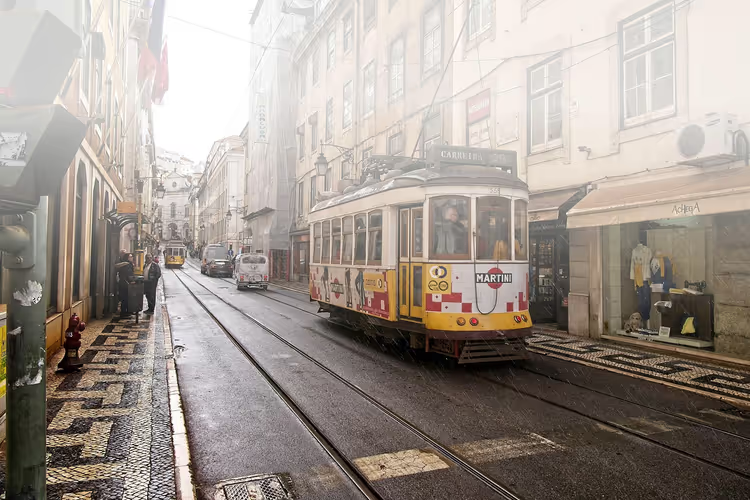
A sightseeing walk where walking segments alternate with rides on city transport. The route starts at Rossio Square and goes past the Church of Saint Dominic, the Basilica of Saint Roch, and the main cathedral.
Through Alfama, Baixa, and Chiado, the group reaches the pedestrian street Rua Augusta, which ends at the triumphal arch and Praça do Comércio. You go up to the viewpoint by funicular, and to Belém by tram on route 15E (as of 09/2026, Lisbon tourist office). There you see the Monument to the Discoveries and the Jerónimos Monastery.
- Who it's for: those who want to cover the city using different types of transport.
- The catch: at rush hour the tram is packed, so it's only comfortable to ride in the morning.
- see prices on GetYourGuide
24. Medieval towns: Tomar, Batalha, Nazaré
 © Alvesgaspar · CC BY-SAPhoto: Alvesgaspar, CC BY-SA (https://creativecommons.org/licenses/by-sa/4.0), Wikimedia Commons
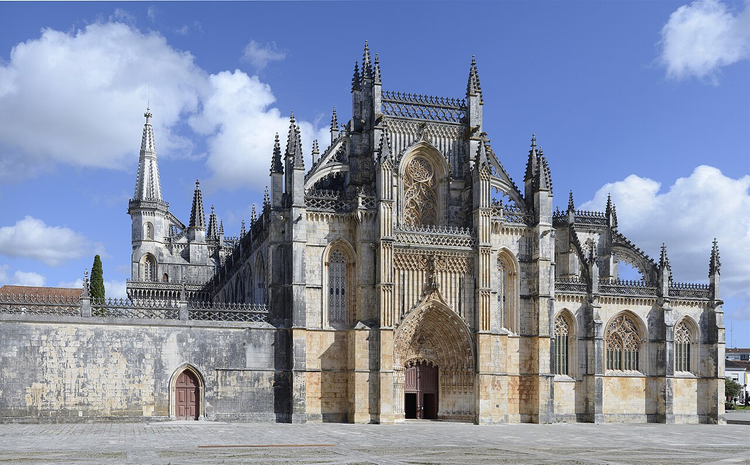
A driving tour through towns with a medieval atmosphere. The guide talks about knights, kings, and monasteries, and the route connects the country's architectural and cultural heritage. You travel across the Iberian Peninsula at a pace that leaves time for a walk in each town.
The first stop is Tomar, with its Templar fortress and a church decorated with stone carvings. Then Batalha, home to the Monastery of Santa Maria da Vitória, a symbol of Portugal's independence. In Nazaré, a former fishing village, surfers now ride giant waves.
The finale is Óbidos, with its ring of fortress walls, white houses under red tile roofs, and a castle with crenellated walls. Its center is compact and can be walked around in an hour, but there are plenty of souvenir shops and pastry shops selling local sweets.
- Who it's for: lovers of history and old towns.
- The catch: in one day, you get less than an hour in each town.
- reviews and dates on GetYourGuide
25. Medieval Portugal: Alcobaça and Óbidos
 © Diego Delso · CC BY-SAPhoto: Diego Delso, CC BY-SA (https://creativecommons.org/licenses/by-sa/4.0), Wikimedia Commons
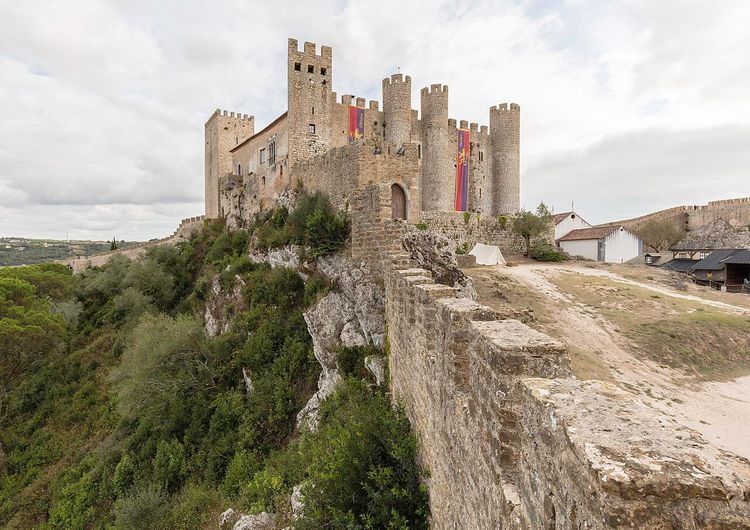
A driving tour through towns that have preserved their medieval character: Óbidos, Alcobaça, Batalha, and Tomar. The guide talks about Christian and Moorish monarchs, knights, and Catholic monks, and you listen to it right in the squares of the old towns.
The main stop is the Monastery of Santa Maria de Alcobaça. Its ensemble forms a courtyard with a garden and an arcaded gallery, and the church facade is adorned with bell towers and a stone rose window. In Batalha you see the Monastery of Santa Maria da Vitória, where austere Gothic meets Manueline style. There is almost no modern development in these towns, so the historic setting has been preserved in full.
In Alcobaça, it's worth spending time inside the monastery, not just at the facade: the kitchen, refectory, and inner courtyards have survived. In Tomar, the group visits halls connected to the history of the Templars. The guide advises what to see first so you don't rush between halls and get tired before lunch.
- Who it's for: those looking for architecture and quiet.
- The catch: the drive is long, and the tour takes a full day.
- find a similar tour on GetYourGuide
26. Wild Sintra: the Moorish castle and Pena
 © Diego Delso · CC BY-SAPhoto: Diego Delso, CC BY-SA (https://creativecommons.org/licenses/by-sa/4.0), Wikimedia Commons
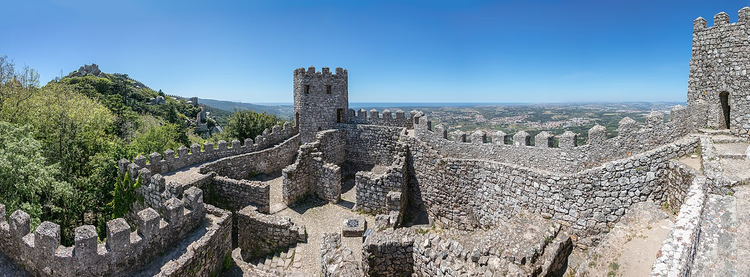
Sintra sits among dense forests on hillsides. The nobility settled here long ago, as evidenced by the estates, mansions, and royal palaces. The guide leads the group through the winding streets of the historic center and the quieter corners of the town.
In two and a half hours, you walk through the botanical garden and climb to the Moorish Castle, Pena Palace, and the Quinta da Regaleira estate. All three landmarks stand on hilltops among exotic plants. Tickets for Pena and Regaleira are sold by time slot, so buy them in advance (as of 09/2026, official website of the Sintra parks).
- Who it's for: a walk in nature and viewing the palaces from outside.
- The catch: the climbs are steep, and entry inside the palaces is separate.
- options on GetYourGuide
27. Belém and the age of explorers
 © pedrik · CC BYPhoto: pedrik, CC BY (https://creativecommons.org/licenses/by/2.0), Wikimedia Commons
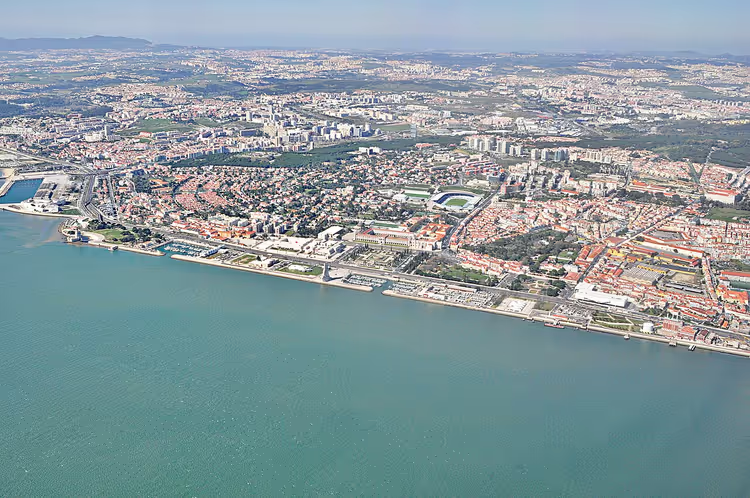
A three-hour walk through Belém, the district from which the expeditions of the discoverers departed. It was from here that Portugal began its maritime trade, which brought the country wealth and influence. The guide tells the story of the great geographical discoveries.
The main monuments, Belém Tower on an islet in the Tagus, which served as a lighthouse, fortress, and prison, and the Jerónimos Monastery, the embodiment of 16th-century Portugal. Nearby stands the Monument to the Discoveries shaped like a caravel. The walk ends at a pastry shop with pastéis de nata. Tickets for the tower and monastery are sold separately; check prices on the Visit Portugal website.
- Who it's for: those interested in the history of exploration.
- The catch: by midday, lines form at the tower and monastery.
- check prices on GetYourGuide
28. Setubal: the market and seafood delicacies
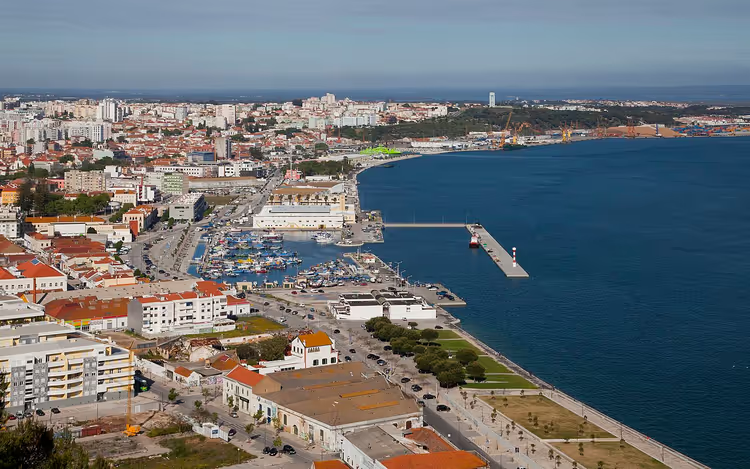 © Diego Delso · CC BY-SAPhoto: Diego Delso, CC BY-SA (https://creativecommons.org/licenses/by-sa/3.0), Wikimedia Commons
A trip to Setubal, a town on hillsides along the Atlantic coast, about half an hour from Lisbon. There are fewer tourists here than in the capital, and you can feel the unhurried rhythm of Portuguese life. The guide leads the group through the old quarters with their narrow streets.
The houses in the center are clad in azulejos from foundation to roofline, and churches and buildings from different eras stand nearby. A separate stop is the city market with seafood delicacies: fresh oysters, sardines, and cuttlefish are sold here. The guide suggests which restaurants prepare them best and how to choose dishes by season.
- Who it's for: those who want to try the local cuisine.
- The catch: the market is only open in the morning, and by lunchtime the fish selection is smaller.
- find a similar tour on GetYourGuide
29. Tasting evening in Setubal
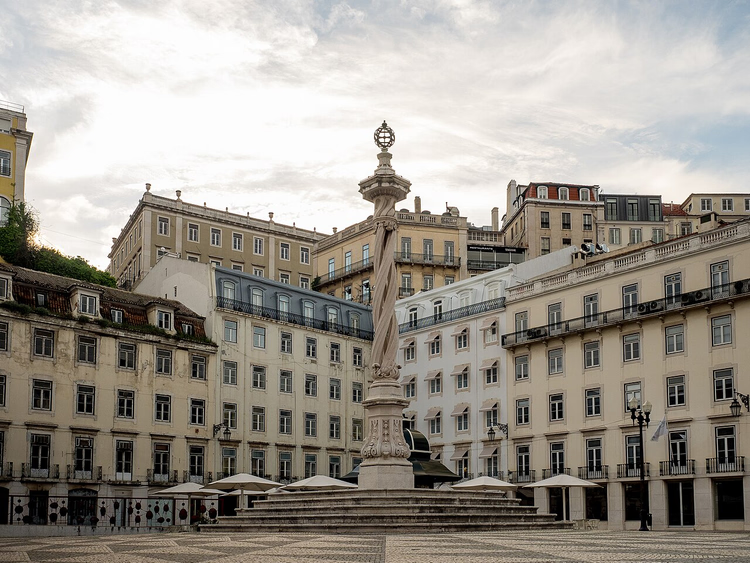 © Ajay Suresh from New York, NY, USA · CC BYPhoto: Ajay Suresh from New York, NY, USA, CC BY (https://creativecommons.org/licenses/by/2.0), Wikimedia Commons
An evening trip to Setubal with a tasting. The town is known for its medieval quarters, nature reserves, and gastronomy, and its facades are decorated with azulejo tiles. The itinerary is designed for those who want to combine a walk and dinner in one evening.
The guide shows buildings in the Manueline style and leads the group to the country's largest fish market. After the walk, participants head to a restaurant on the banks of the Sado River, where they sample several types of wine and port along with seafood dishes. The dinner with tasting lasts about two hours, and you return to Lisbon late.
- Who it's for: those who want to combine the town and dinner.
- The catch: the return trip is late, and part of the group travels on their own.
- available dates on GetYourGuide
30. Portuguese wines: a first introduction
A one-and-a-half-hour wine primer for beginners. The sommelier explains the differences between red, white, rose, and green wine, and how the country's regions influence flavor. You learn why Portuguese wines are rarely found in stores outside the country.
In the tasting room, you sample several wines and listen to a talk on the history of Portuguese winemaking. The sommelier gives recommendations on which snacks pair with each variety and how to read a label. The program is designed for adults, so families with young children usually skip it.
- Who it's for: a first introduction to the wines of Portugal.
- The catch: only basic varieties are covered in an hour and a half.
- reviews and dates on GetYourGuide
Tours and tickets in Lisbon
Guided tours, skip-the-line tickets and activities — most offers can be cancelled free of charge.
See offers on GetYourGuideThe widget loads once you give your consent.
⁉️🤔 Frequently asked questions
How much does a Lisbon tour cost?
The price depends on the format. Walking tours of the center cost less than car and combined tours. For a group tour you pay per person, for a private tour you pay for the whole group, so for a couple or family the private option sometimes works out cheaper. Museum and palace entrance tickets are usually not included in the price; they are bought separately.
Walking tour or by car: which should you choose?
If you have two or three days, the center of Lisbon is easier to cover on foot and by tram. For Sintra, Cabo da Roca, and Setubal, take a car tour, because public transport will eat up time on transfers. A mixed option with walking and transfers suits those who are in town for just one day.
Do you need to buy Sintra tickets in advance?
Yes, you should. Pena Palace and Quinta da Regaleira admit visitors by timed entry with a fixed day and hour, and in summer there are almost no open slots left. Buy tickets on the official Parques de Sintra website a few days before your trip. The Moorish Castle and parks are usually accessible without such a strict schedule.
What if I don't speak Portuguese?
Tours in Lisbon are conducted in English, and some programs are available in German. Choose the program language when booking. In museums, captions are often duplicated in English. In cafes, markets, and on public transport, English is enough, and menus in central Lisbon are usually translated. With a guide, you simply listen and look.
When is the best time to go and what should you bring?
In summer, Lisbon is hot, and Cabo da Roca and the coast are constantly windy, so you need a jacket even in July. Bring comfortable shoes for the cobblestone climbs and water for long walks. In winter, rain is more frequent, but the lines at palaces are shorter and accommodation is cheaper.
In short: what to book
If you only have one day, take a combined tour with Sintra and Cabo da Roca. If you have already seen the center, choose a car trip to Setubal or the wineries. With children, short walking tours of Baixa and Alfama without long transfers are more convenient. For those who don't want to climb the hills, a car tour is a good fit.
All tours of Lisbon and the surrounding area are collected on GetYourGuide, where you can also see available dates and reviews.

A small editorial team writing guides for independent travel. We travel ourselves, but we haven’t been everywhere, so we check prices, opening hours and how to get there against official sources.