
















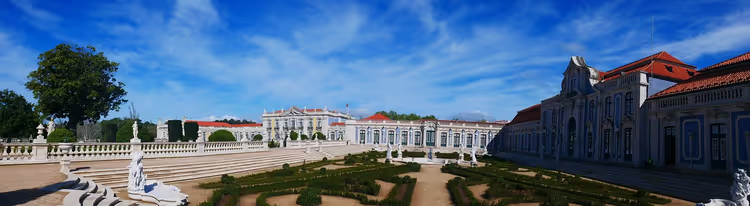
Five places near Lisbon: where to go for a day
Lisbon ends where the Atlantic begins.
If you've already covered the center and the waterfront, the most interesting part is waiting for you half an hour from the city. In one day you can see the cliffs at the edge of Europe, palaces in a misty forest, and wide ocean beaches. You don't need a car for this.
Below are five places worth a trip out of the capital, with directions, opening hours, and prices. Buy tickets to the palaces of Sintra online and for a specific time slot (as of 09/2026, official Parques de Sintra website): in summer, morning slots sell out several days in advance, and the ticket office line grows by midday.
Ad: this article contains affiliate links. We earn a commission if you book through them, at no extra cost to you.
A short table will help you get oriented, and then each place is covered in detail below.
Place | What to see | How much time | How to get there |
|---|---|---|---|
Cabo da Roca | Atlantic cliffs and a lighthouse | 1-2 hours | bus from Sintra or Cascais |
Sintra | Pena and Regaleira palaces, the National Palace | full day | train from Rossio station |
Cascais | fortress, Santa Marta lighthouse, promenade | half a day | train from Cais do Sodré |
Almada | Cristo Rei with a viewing platform | 2-3 hours | ferry from Cais do Sodré and bus |
Costa da Caparica | ocean beach and surf | half a day | bus from Lisbon |
1. Cabo da Roca
💡 In short:
- The westernmost cape of continental Europe, beyond it there is only the Atlantic.
- Cliffs, an 18th-century lighthouse, and strong wind all year round.
 © Olga1969 · CC BYPhoto: Olga1969, CC BY (https://creativecommons.org/licenses/by/4.0), Wikimedia Commons
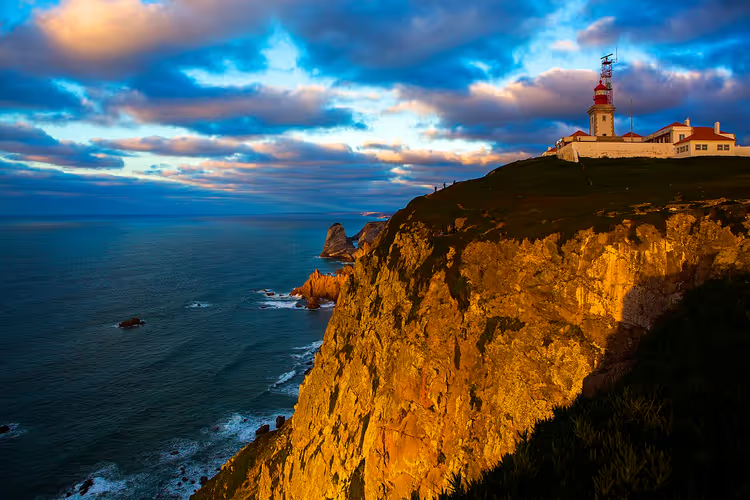
Cabo da Roca lies at the westernmost point of continental Europe. Further west there is only the ocean and the distant coast of America. It's about 40 km from Lisbon, and the bus runs from Sintra and Cascais (according to the official Parques de Sintra website).
At the viewpoint there is a stone monument with a quote from the Portuguese poet Camões: "Here, where the land ends and the sea begins." At the cliff edge, over a hundred meters high, you'll feel the wind nearly knocking you off your feet. Stay well back from the edge and don't climb down onto the wet rocks right at the cliff.
Nearby stands one of the oldest lighthouses in Portugal, built in the 18th century. It is still operational, and the surrounding area is open around the clock. Bring a jacket and a hat: it's cool and windy on the cliffs even in hot weather.
- How to get there: bus from Cascais or Sintra, Cabo da Roca stop.
- Who it's for: anyone who wants to see the edge of Europe and an ocean sunset.
- The catch: wind and cold all year round, no shelter on the cliffs.
2. Sintra
Sintra looks like a set from a fairy tale about knights: palaces stand right in a misty forest, and buses run between them. You won't be able to see everything in one day, so pick two or three sights and move at a relaxed pace.
 © Diego Delso · CC BY-SAPhoto: Diego Delso, CC BY-SA (https://creativecommons.org/licenses/by-sa/4.0), Wikimedia Commons
Pena Palace
Pena Palace (Palácio da Pena) was built in the second half of the 19th century as a summer residence for the royal family. Around it lies a park of about 270 hectares with rare trees and scenic walking paths (as of 09/2026, official Parques de Sintra website).
 © Singa Hitam · CC BYPhoto: Singa Hitam, CC BY (https://creativecommons.org/licenses/by/2.0), Wikimedia Commons
Tickets for the palace and park are sold for a specific time slot, and it's better to buy them in advance (as of 09/2026, official Parques de Sintra website). A separate ticket for the park only is cheaper and doesn't require waiting in line for the palace. A guided tour saves you from figuring out the schedule: tours of Sintra's palaces on GetYourGuide.
Quinta da Regaleira
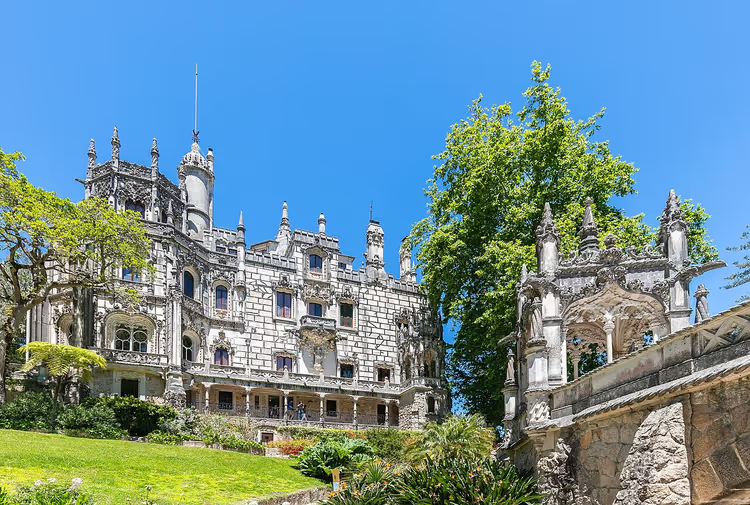
Quinta da Regaleira is considered the most mysterious place in Sintra. In the 19th century, a Freemason bought the estate and turned the garden into a labyrinth of underground passages, grottoes, and sculptures. The estate's main attraction, the Initiation Well (Poço Iniciático), descends as a multi-tiered tower.
 © Diego Delso · CC BY-SAPhoto: Diego Delso, CC BY-SA (https://creativecommons.org/licenses/by-sa/4.0), Wikimedia Commons
An adult ticket costs €20 (as of 09/2026, official Quinta da Regaleira website). Tunnels lead out from the well, and one of them brings you to a waterfall with a pond. The stone steps are slippery after rain, so wear shoes with good grip.
Sintra National Palace
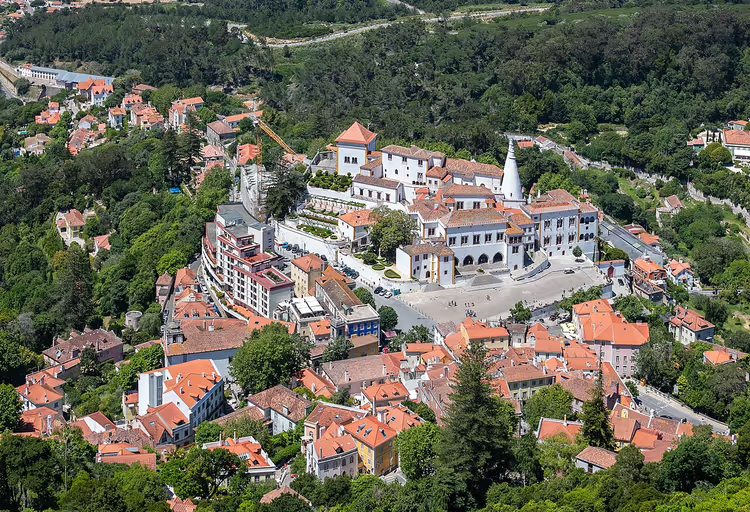
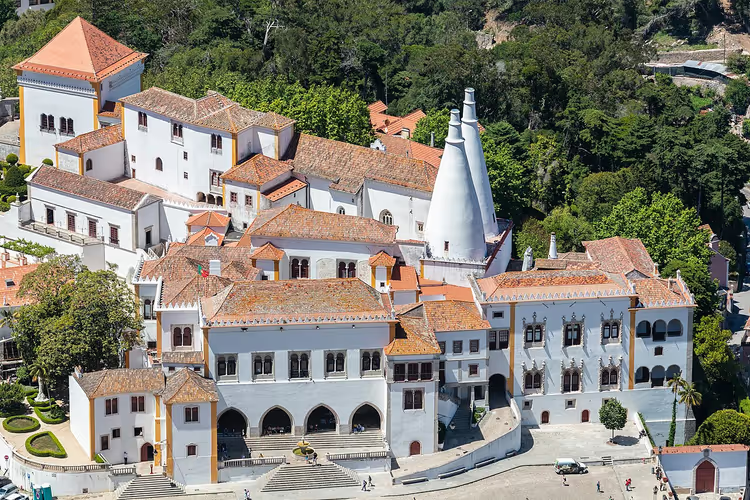
In the historic center stands the Sintra National Palace (Palácio Nacional de Sintra) with two huge chimneys that look like towers. From the 15th to the 19th century, the royal family held receptions here, and today you can walk through rooms decorated with azulejos. An adult ticket costs about €10, the palace is open from 09:30 to 18:30, with the last ticket at 17:30 (as of 09/2026, official Parques de Sintra website).
 © Diego Delso · CC BY-SAPhoto: Diego Delso, CC BY-SA (https://creativecommons.org/licenses/by-sa/4.0), Wikimedia Commons
- How to get there: train from Rossio station or bus from Marquês de Pombal station; Scotturb buses run between the palaces.
- Who it's for: people who love palaces, parks, and views from above.
- The catch: in summer there are lines at Pena Palace, and morning time slots sell out in advance.
3. Cascais
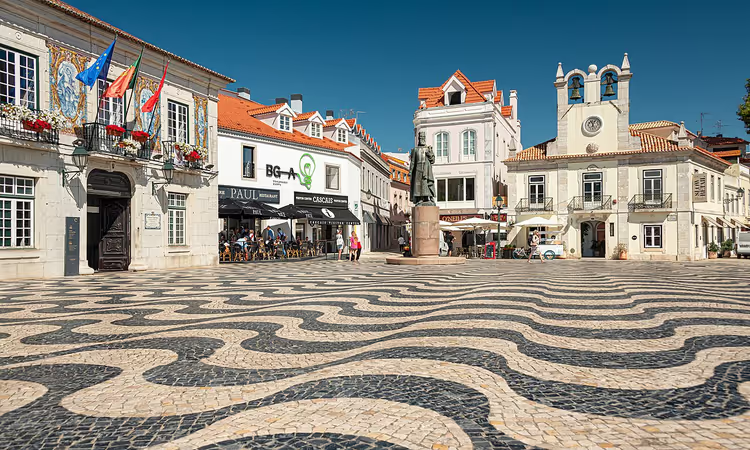
Cascais grew out of a fishing village: first a royal residence appeared here, then noble villas, and today it's one of the most prestigious suburbs of Lisbon. During the day, visitors stroll through the old streets and along the promenade; in the evening, bars and music venues open up.
 © Jorge Franganillo · CC BYPhoto: Jorge Franganillo, CC BY (https://creativecommons.org/licenses/by/2.0), Wikimedia Commons
The main reason to come here is the ocean. The coastline stretches to neighboring Estoril, and a bike path runs along the water where you can rent a bicycle or electric scooter. The historic center is pedestrian-only, so scooters shut off there.
Near the central square stands the Fortaleza de Nossa Senhora da Luz fortress with a 16th-century royal palace. You can enter the grounds freely, and galleries and a hotel now operate inside. Further along the shore you'll find the white-and-blue Santa Marta lighthouse, clad in azulejos.
The lighthouse houses a museum on the history of Portuguese lighthouses. The ticket includes entry to Casa de Santa Maria, a neo-Gothic mansion that a nobleman built for his daughter.
Across the road from Casa de Santa Maria stands the Museu Condes de Castro Guimarães. In the early 20th-century Gothic mansion you'll see furniture, paintings, and a library with tens of thousands of volumes. A bit further along the ocean, and you're at the Boca do Inferno cliff.
Boca do Inferno translates as "Hell's Mouth." The cliffs overhang the water, and in a storm the spray reaches the viewing platform. Don't go past the barrier, the rock crumbles in places. Staying in Cascais is convenient near the ocean: book a hotel in Cascais on Trip.com.
- How to get there: train from Cais do Sodré station to Cascais or Estoril.
- Who it's for: ocean lovers, cyclists, and nightlife enthusiasts.
- The catch: in summer the trains are packed, and spots near the water go fast.
4. Almada
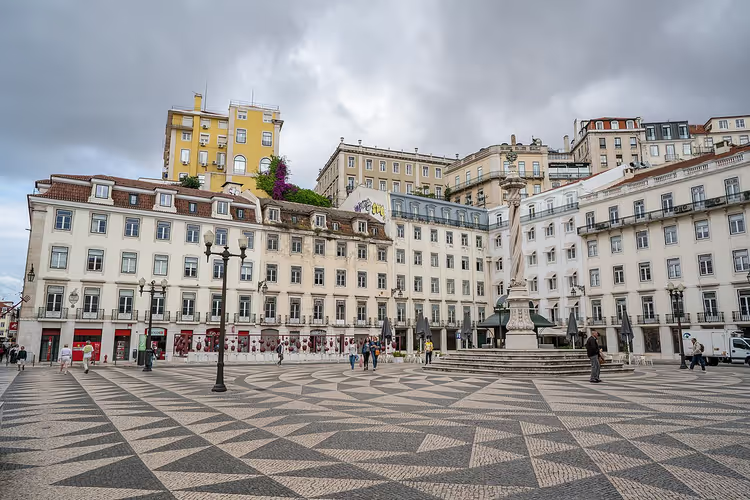
On the other bank of the Tagus, opposite Lisbon, rises Cristo Rei, the statue of Christ the King. Local priests who had visited Brazil were inspired by the statue in Rio de Janeiro, which is why the monument resembles it so closely.
 © Nan Palmero from San Antonio, TX, USA · CC BYPhoto: Nan Palmero from San Antonio, TX, USA, CC BY (https://creativecommons.org/licenses/by/2.0), Wikimedia Commons
The monument was erected in Almada in 1959 with public donations. Fundraising began during World War II: women asked God to protect their husbands and sons from taking part in the fighting. Portugal never entered the conflict (as of 09/2026, official Christ the King website).
The 82-meter pedestal supports a 28-meter statue. Inside there is a chapel and exhibition halls, and an elevator takes you to the upper terrace. Tickets for the ascent are sold only on site, you cannot buy them online (according to the official website). From the observation deck at the base you can also see Lisbon and the 25 de Abril Bridge. A tour with transfer is convenient to book in advance: Christ the King tours on GetYourGuide.
- How to get there: ferry from Cais do Sodré to Cacilhas, then a bus or a walk uphill; from Lisbon you can order a taxi across the bridge.
- Who it's for: those who want to see Lisbon from across the river and from above.
- The catch: access to the terrace costs extra, and the elevator runs in timed sessions.
5. Costa da Caparica
Costa da Caparica was once a fishing village, and now it welcomes visitors from all over Europe. The beach here is wider than in Cascais, and the sand stretches along the ocean for dozens of kilometers. It's one of the best places near Lisbon for surfing.
 © Vitor Oliveira from Torres Vedras, PORTUGAL · CC BY-SAPhoto: Vitor Oliveira from Torres Vedras, PORTUGAL, CC BY-SA (https://creativecommons.org/licenses/by-sa/2.0), Wikimedia Commons
The waterfront was completely rebuilt after a major storm. Modern bars have opened along the ocean where you can work on a laptop. A city bus runs from Lisbon to the beach, so you won't need a car. If you want to explore the entire southern coast, compare rental car options in advance.
- How to get there: bus from Lisbon, travel time depends on which beach you choose.
- Who it's for: those who want open space, waves, and surf.
- The catch: infrastructure on the far stretches of the beach is minimal.
⁉️🤔 Frequently asked questions
How much time do you need for Sintra?
Set aside a full day for Sintra. The Pena Palace and its park alone take several hours, and you still need to travel between sites. If you're short on time, pick two palaces and then head toward the town center. Buy timed-entry tickets so you don't have to wait in line.
Can you explore the Lisbon area without a car?
Yes. Trains run from the center to Sintra and Cascais, a bus goes from Sintra to Cabo da Roca, and you can reach Almada by ferry. A car is only useful for the more distant southern beaches. Buy train tickets from the machine at the station before departure.
When is the best time to go to Cabo da Roca?
In the morning or closer to sunset: during the day, buses bring tour groups, and the light for photos becomes harsher. It's always windy on the cliffs, so you need a jacket and a hat even in July. In winter, the waves are higher and the spectacle is more dramatic.
What should you book in advance?
Tickets to Pena Palace: they're sold for specific time slots, and in summer the morning slots sell out several days ahead. Quinta da Regaleira also requires tickets, but they're more often bought on site. The ride up the Cristo Rei elevator is sold only at the monument's ticket office.
Where should you go for a beach day?
For a wide ocean beach and surfing, head to Costa da Caparica: plenty of sand, consistent waves. Cascais is calmer and closer to the city, with a promenade and a bike path. Both destinations are well connected to Lisbon by public transport.
In short: what to book
If you only have one day, go with Sintra and two palaces, and leave the rest for next time. If you want the ocean without long transfers, choose Cascais. For open space, waves, and surf, choose Costa da Caparica with its wide sand.
Timed-entry tickets to Pena Palace and trips around the area are best booked in advance: a selection of Sintra palace tours on GetYourGuide and hotel options in Cascais on Trip.com.

A small editorial team writing guides for independent travel. We travel ourselves, but we haven’t been everywhere, so we check prices, opening hours and how to get there against official sources.