














What to see in Salou: 10 places from the fortress to the lighthouse
Most visitors to Salou never leave the beach. The town itself is compact. A dozen interesting spots are within walking distance, and we have put them together into one route for you.
There is only one expensive experience here. That is the PortAventura World complex. Seeing the town can realistically be done in a couple of days.
Ad: this article contains affiliate links, we earn a commission if you book through them, at no extra cost to you.
What to see in Salou
💡 In short:
- The town is walkable: the main sights stand along the beach and the Passeig de Jaume I promenade.
- Free: Torre Vella, Masia Catalana, Casa Bonet from the outside, the fountain show, and the city park.
- You pay only at PortAventura World; check prices on the park's official website.
- Prices and opening hours: 09/2026, verified on the official Salou tourist office website.
Below are 10 spots with a brief description. This makes it easier to choose what to fit into your first day.
Place | Why it is interesting | Entry |
|---|---|---|
Torre Vella | fortress and enamel museum | free |
Masia Catalana | estate with peasant life exhibits | free |
Passeig de Jaume I | promenade with mosaics | free |
PortAventura World | amusement park | paid |
Font cibernètica | fountain show | free |
Casa Bonet | art nouveau villa | free from outside |
Salou marina | marina and docks | free |
Monument al Pescador | fisherman sculpture | free |
Camí de Ronda | cliffside trail | free |
Salou city park | flower gardens and ponds | free |
1. Torre Vella: fortress and enamel museum
 © Андрей Бобровский · CC BYPhoto: Андрей Бобровский, CC BY (https://creativecommons.org/licenses/by/3.0), Wikimedia Commons
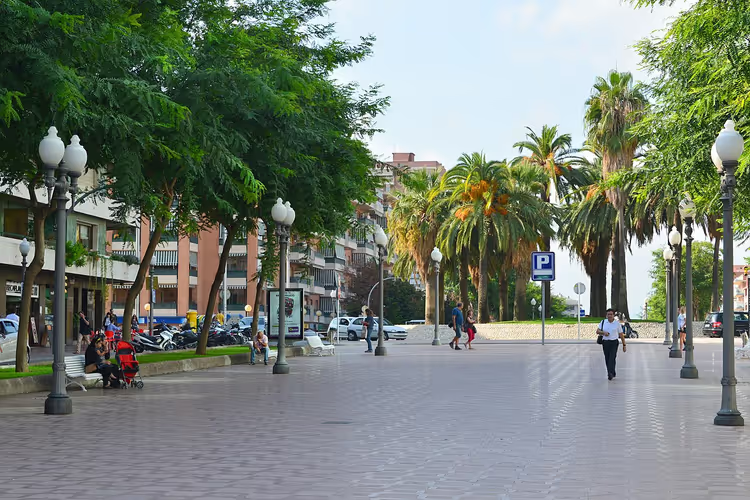
Torre Vella fortress was built in the 16th century to defend the coast from pirate raids. Today the massive building houses an exhibition center and the Museum of Modern Enamel (as of 09/2026, museum official website). Inside, enamel panels by contemporary artists are on display.
See the exhibitions, then walk around the garden surrounding the tower. Among the sculptures stands "The Three Graces" by Aldom Puig: three women dancing the Catalan sardana. Entry is free, but the fortress is open in the evening. Monday through Saturday from 6:00 pm to 8:00 pm in fall and winter, until 9:00 pm in spring and summer. Closed on Sundays and public holidays (as of 09/2026, Salou city council website).
- How to get there: Arquebisbe Pere de Cardona street, about 500 m from Llevant beach (on the map).
- Cost: free entry.
- The catch: the fortress is closed on Sundays and public holidays, and during the day you will only see the fence.
2. Masia Catalana: Catalan estate
The "estate" here is not a real farm. It is a complex of buildings constructed in 1974 as a monumental nativity scene and renovated in 2011 (as of 09/2026, estate page on the tourist office website). Inside, everyday objects of Catalan peasants have been gathered: rural tools, carts, household utensils.
A single visit will give you a sense of how the village lived before tourism. In summer, craft fairs are held here; in winter, Christmas celebrations take place. In the evening, a night market of souvenirs and handmade goods operates.
- How to get there: Carrer de Carles Buïgas, at the end of the Passeig de Jaume I promenade.
- Cost: free entry.
- The catch: the complex is closed during the day; you can only get inside in the evening.
3. Passeig de Jaume I: seaside promenade
 © Txapisotegi · CC BY-SAPhoto: Txapisotegi, CC BY-SA (https://creativecommons.org/licenses/by-sa/4.0), Wikimedia Commons
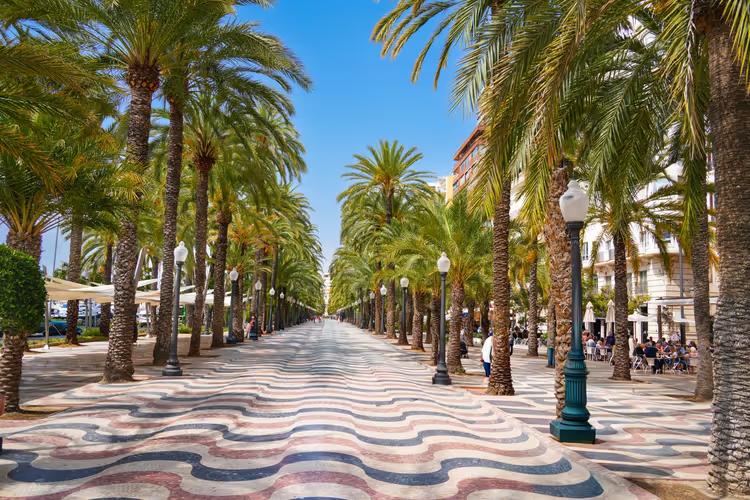
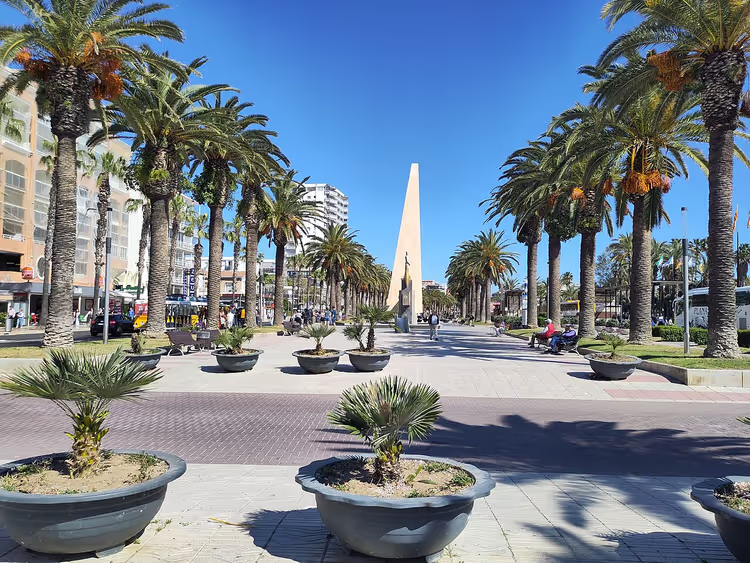
The Passeig de Jaume I promenade runs parallel to the main beach and serves as the seafront walkway. Palm trees grow on both sides, and underfoot you can make out stone mosaics with coats of arms of the country's old noble families. In the center stands a monument to King James I, and at the end a fountain glows.
The fountain was created by architect Carles Buïgas, the designer of Barcelona's singing fountains on Montjuïc hill. Stroll along the promenade at a leisurely pace and admire the art nouveau villas. A separate story: the avenue of centuries-old olive trees, which provide shade in the heat.
- How to get there: the promenade runs from the town center along the beach toward the port.
- Cost: free.
4. PortAventura World: the main amusement park
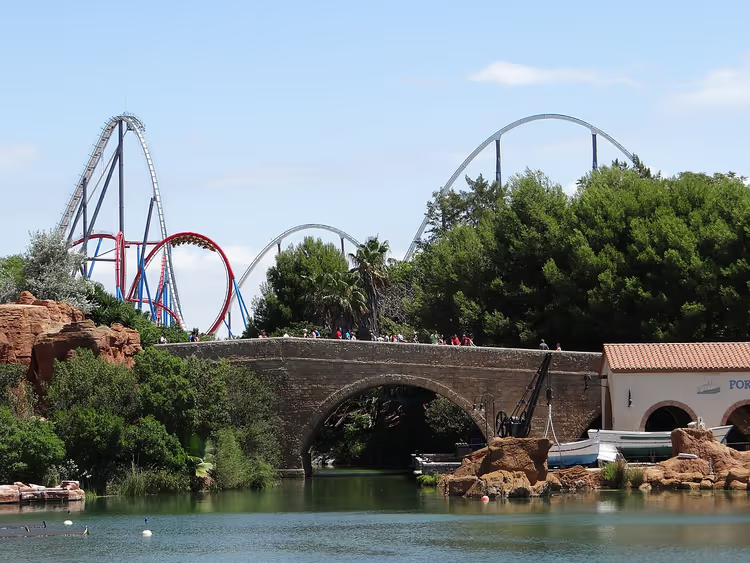
PortAventura World is located near Salou, in Vila-seca. The park is divided into themed areas: Mediterranean, China, Mexico, Polynesia, Wild West. In one day you can walk through several "countries" and ride attractions ranging from family-friendly to extreme ones with loops.
In addition to the main park, Ferrari Land and the Caribe Aquatic Park water park with its Coral Bay zone are also open. The Halloween season runs from September 19 to November 15, 2026 (as of 09/2026, official park website). PortAventura Park ticket prices vary by date.
Tickets are sold online and at the entrance: PortAventura World tickets on GetYourGuide.
- How to get there: by train to PortAventura station on the Barcelona-Tarragona line, or by bus from central Salou.
- Cost: from €24 for the Coral Bay water park zone; the main park costs more (as of 09/2026, official PortAventura website).
- The catch: lines for the top rides are long, so arrive at opening time.
5. Font cibernètica: fountain show
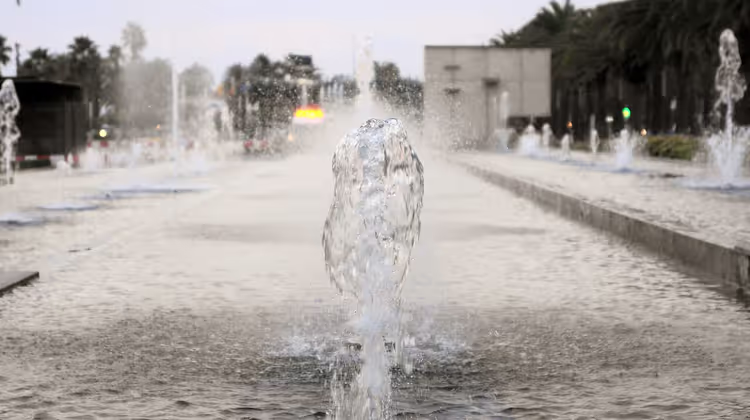
The fountains in Salou do more than decorate the city. The main one, Font cibernètica, turns into a light-and-music show in the evening: the jets change height and color in time with the music. The show runs daily at 10:00 PM (as of 09/2026, show calendar).
Arrive early and you will get a spot near the bridge. From there you can see the center of the water display. Kids love the "prank" fountain, a water arch you can run under. On weekends, laser effects are added to the lighting.
- How to get there: the fountains are on Passeig de Jaume I, near the port.
- Cost: free.
- The catch: the show starts late, so with small children you will have to stay out late.
6. Casa Bonet and the monumental olive trees
 © Ferran Llorens · CC BY-SAPhoto: Ferran Llorens, CC BY-SA (https://creativecommons.org/licenses/by-sa/2.0), Wikimedia Commons
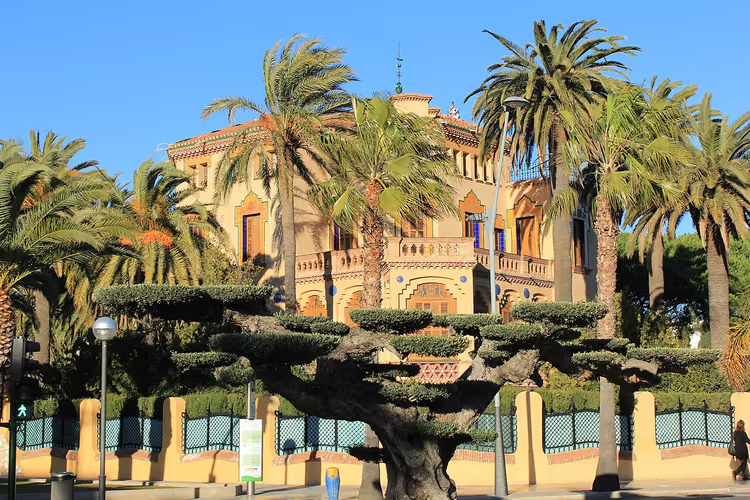
Casa Bonet, a modernist villa, was built in the early 20th century to a design by Domènec Sugrañes, a student of Antoni Gaudí. On the main facade you can read the inscription: "Use time, for it passes irrevocably." The client was a wealthy local resident, Ciriac Bonet.
Tourists are not allowed inside, which is disappointing. You can admire the villa from the boulevard: the interior murals depicting the campaigns of King James I are off-limits, but the facade itself is worth your attention. Nearby grow centuries-old olive trees planted along the promenade.
- How to get there: corner of Passeig de Jaume I and Plaça de Bonet.
- Cost: viewing from outside is free.
- The catch: tourists are not allowed inside; the interiors remain closed.
7. Salou seaport
 © karel291 · CC BYPhoto: karel291, CC BY (https://creativecommons.org/licenses/by/3.0), Wikimedia Commons
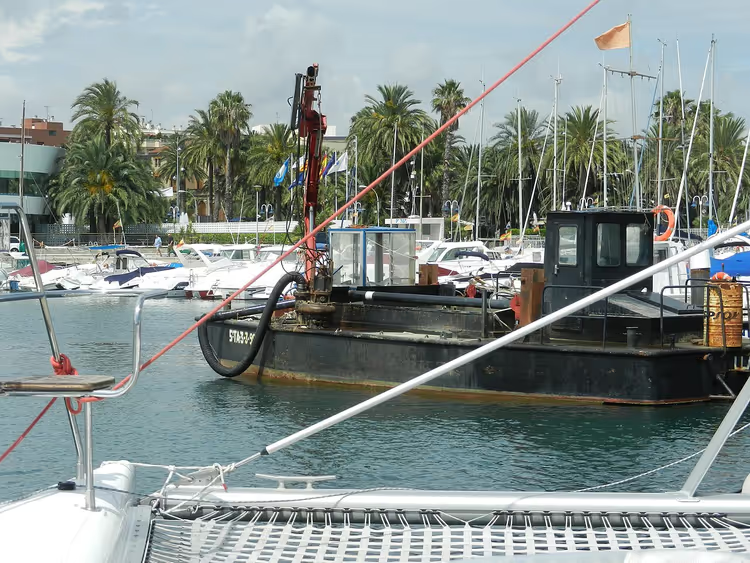
The port of Salou is divided into two parts: fishing docks and a yacht marina. This is where the town's history began: fishing boats that fed all of Salou departed from the pier. Today, motorboats and pleasure craft moor at the docks.
Walk along the pier and a wide bay opens up before you. From here you can see Llevant beach and the whole town. In the evening, people meet up on the waterfront, and cafes stay open late.
- How to get there: the port is 600 m from the center, about an 8-minute walk (per the map).
- Cost: free entry to the area.
8. Monument al Pescador
 © Txapisotegi · CC BY-SAPhoto: Txapisotegi, CC BY-SA (https://creativecommons.org/licenses/by-sa/4.0), Wikimedia Commons
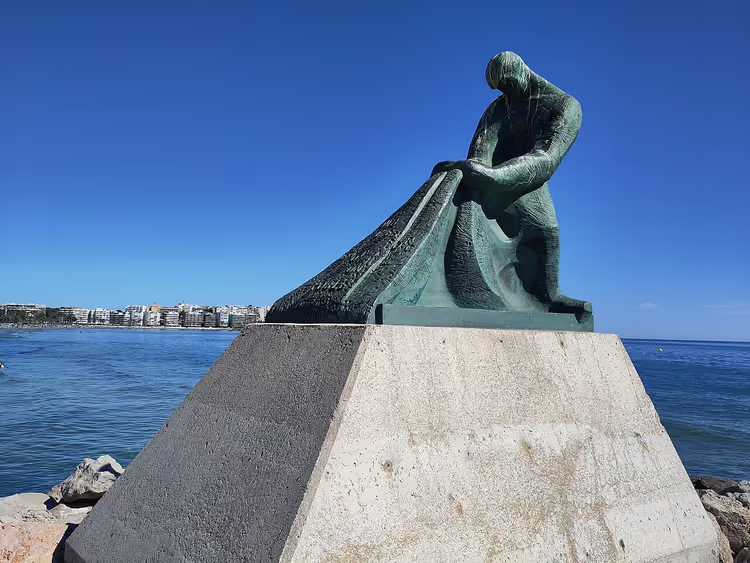
Monument al Pescador stands at the end of the promenade, by the old pier. The sculpture depicts a fisherman hauling a heavy net from the waves. The monument was erected in memory of the town's maritime history: this is where Salou began as a fishing settlement.
The pedestal bears the inscription "With the effort of a whole people." The sculptor lived in a neighboring village. From the monument you can easily photograph the sunset and the yachts at the dock.
- How to get there: Passeig de Miramar, at the end of the boulevard near the port.
- Cost: free.
9. Camí de Ronda: trail along the cliffs
 © Natalianerea · CC BY-SAPhoto: Natalianerea, CC BY-SA (https://creativecommons.org/licenses/by-sa/4.0), Wikimedia Commons
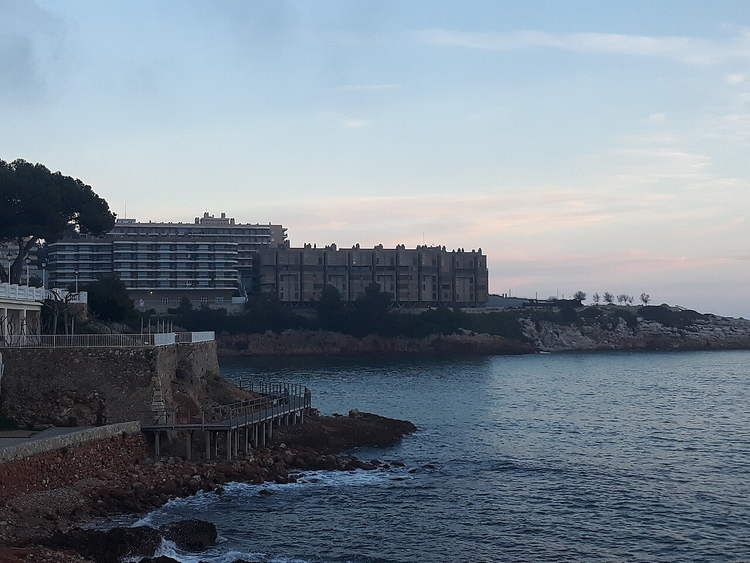
Camí de Ronda runs along the rocky coastline. It starts in central Salou and follows the eastern shore to Cap Salou, past small coves and Cala Crancs beach. In places, the path rises dozens of meters above the sea.
The route is suitable for walks with children. There is a wooden staircase, a bridge, and convenient access points down to the water. Along the way you can reach the Cap Salou lighthouse and the Mirador viewpoint. The cliffs give way to gentle paths, so you can easily pace yourself.
- How to get there: start at the end of Llevant beach and head east following the Camí de Ronda signs.
- Cost: free.
10. Salou city park
 © Mickey Løgitmark · CC BYPhoto: Mickey Løgitmark, CC BY (https://creativecommons.org/licenses/by/3.0), Wikimedia Commons
Salou city park is a good place for a break between the beach and sightseeing. It was designed by architect Antoni Bonet. Paths wind between flower beds with southern plants and small ponds where water lilies grow. In the midday heat, you can hide in the shade.
There is plenty for children to do: carousels and playgrounds are open. Adults can visit cafes, and in the evenings a craft market opens at the Masia Catalana complex. Admission is free, and the park is open from morning until late evening.
- How to get there: Avinguda de Carles Buïgas, next to Masia Catalana.
- Cost: free.
Tours and tickets in Salou
Guided tours, skip-the-line tickets and activities — most offers can be cancelled free of charge.
See offers on GetYourGuideThe widget loads once you give your consent.
⁉️🤔 Frequently asked questions
How many days do you need for Salou?
Two days are enough to see the town. On the first day, walk along Passeig de Jaume I, see Torre Vella, Casa Bonet and the evening fountain show. On the second day, head to the Camí de Ronda trail to Cap Salou. PortAventura World takes a full separate day.
Which Salou attractions are free?
Torre Vella, the Masia Catalana estate, the city park and the fountain show are free to visit. Casa Bonet and Monument al Pescador can be viewed from the outside, also without a ticket. You only have to pay at PortAventura World.
Is PortAventura World worth visiting with children?
Yes, if you have a day to spare. The park is designed for different ages. Some rides are family-friendly, others require a certain height, so restrictions are posted at the entrance. Children usually find the Caribe Aquatic Park water park with its Coral Bay area and Ferrari Land enough.
When is the fountain show in Salou?
Font cibernètica runs every evening, and the show starts at 10:00 PM (as of 09/2026, Salou tourist office).
How to get from Reus airport to Salou?
Reus airport is about 12 km from Salou (according to the map). The easiest option is to take a bus or taxi; the journey takes 15-20 minutes. A transfer is also an option, but it needs to be booked in advance. If you fly into Barcelona, allow about an hour and a half by car (according to the map).
In short: what to book
If you have two days and a hotel near the beach, give one of them entirely to PortAventura World. Save the evening of the other day for the fountains. If you are traveling with children, set aside a separate day for the water park. If you want to avoid the crowds, stay closer to the port and the Camí de Ronda trail.
It is easier to book a hotel in Salou in advance: find a hotel in Salou on Trip.com.

A small editorial team writing guides for independent travel. We travel ourselves, but we haven’t been everywhere, so we check prices, opening hours and how to get there against official sources.