
















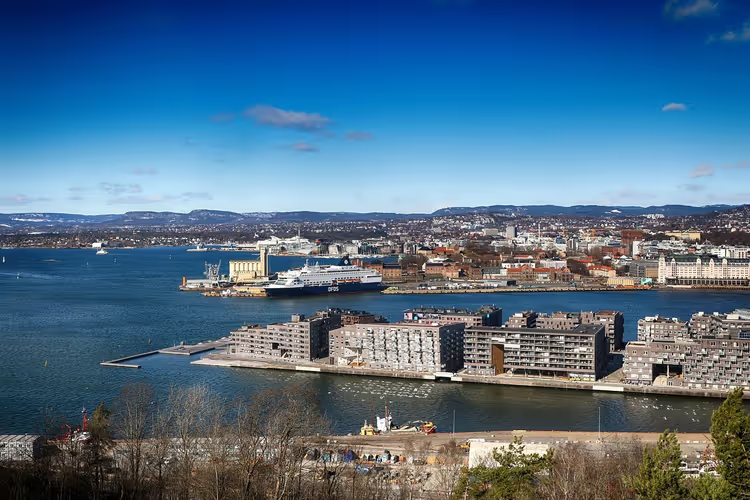
What to see in Oslo: main attractions and museums
Oslo scares people with its prices, but it is laid out conveniently. The city center is walkable, and a ferry from City Hall takes you to the Bygdøy museum peninsula. Expensive hotels and dinners coexist with free entry to the sculpture park and the roof of the Opera House.
Here is a roundup of what is worth seeing in Oslo: the fortress, palaces, parks, and the best museums. For the main sights, we link to official sources with opening hours and prices. Oslo Pass pays for itself with just three museums a day: the card starts at 580 NOK and covers entry and transport (as of 09/2026, VisitOSLO).
Ad: this article contains affiliate links. We earn a commission if you book through them, at no extra cost to you.
Oslo in 2-3 days: the highlights
💡 In short:
- Split Oslo into three days: the center, Bygdøy, Holmenkollen with the parks.
- Prices and opening hours: 09/2026, verified on the official VisitOSLO website.
Oslo's center is walkable: from Central Station to the Royal Palace is about 1.5 km (on the map). Public transport comes in handy for Holmenkollen and Bygdøy. Accommodation is expensive, so many people choose hotels near the station or in the Grünerløkka area.
Akershus Fortress
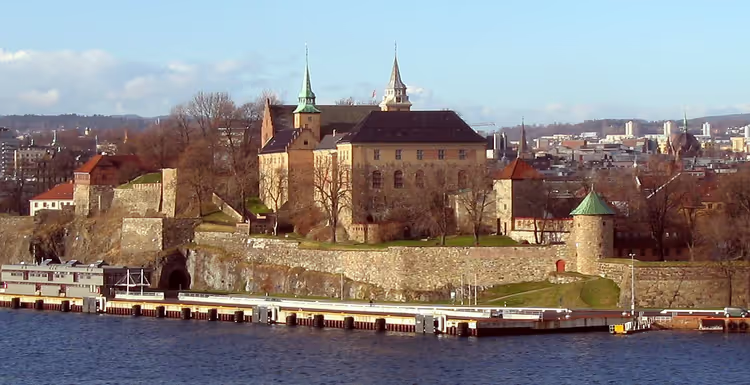
This 13th-century medieval fortress stands on the shore of the fjord. Entry to the fortress grounds is free; you only pay for the museums inside (as of 09/2026, Forsvarshistorisk museum). In summer, concerts and state ceremonies are held here. If you want a guide, book a fortress tour on GetYourGuide.
 © Photo © 2005 by Tomasz Sienicki [user: tsca , mail: tomasz.sienicki at gmail.com] · CC BYPhoto: Photo © 2005 by Tomasz Sienicki [user: tsca , mail: tomasz.sienicki at gmail.com], CC BY (https://creativecommons.org/licenses/by/2.5), Wikimedia Commons
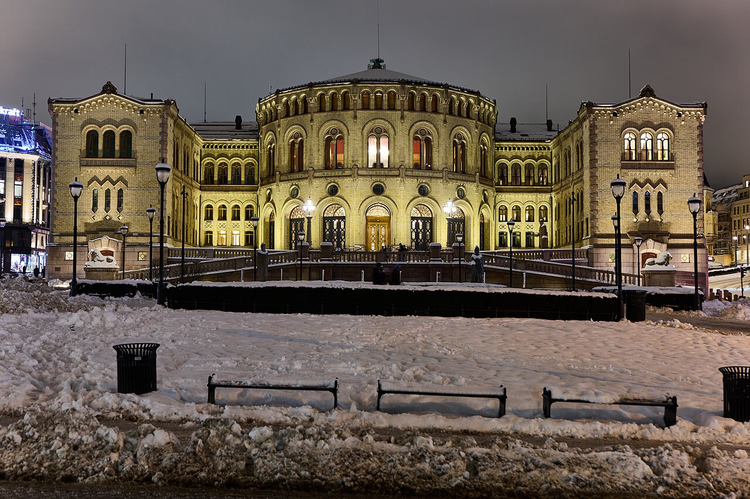
Parliament Building (Storting)
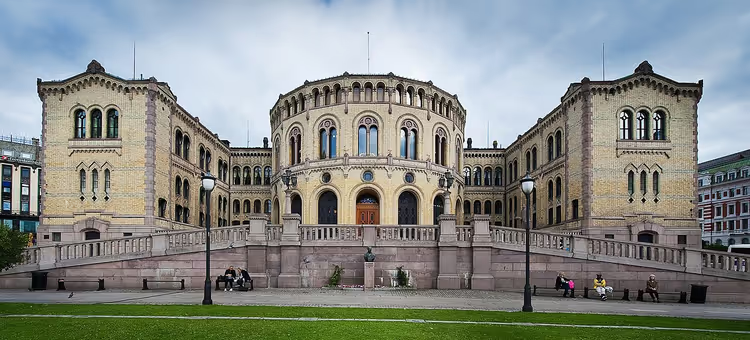
The parliament building is neo-Romanesque, made of yellow brick. Two shaggy stone lions stand at the entrance. According to legend, they were carved by a prisoner named Gudbrand, who was pardoned for his work. You can only get inside on a guided tour; check the schedule on the parliament's website. You will see the building from the outside too, and that alone is worth the walk.
 © Stortinget,_Oslo,_Norway.jpg : gcardinal from Norway · CC BYPhoto: Stortinget,_Oslo,_Norway.jpg : gcardinal from Norway, CC BY (https://creativecommons.org/licenses/by/2.0), Wikimedia Commons
Royal Palace
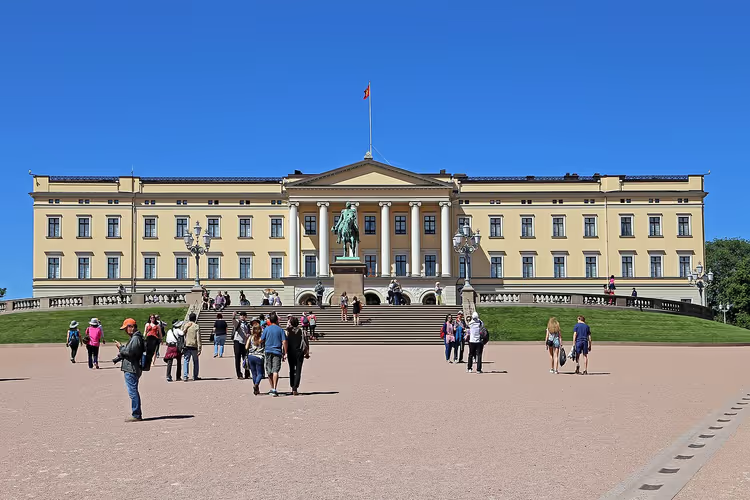
The residence of the Norwegian royal family at the end of Karl Johans gate. Slottsparken, the park around the palace, is open year-round and free. You can only go inside in summer, from late June to mid-August, and only with a guide (as of 09/2026, kongehuset.no). The catch: tickets sell out in advance, so plan your visit before the trip.
 © W. Bulach · CC BY-SAPhoto: W. Bulach, CC BY-SA (https://creativecommons.org/licenses/by-sa/4.0), Wikimedia Commons
City Hall
A multifunctional complex with two towers on the waterfront. The Nobel Peace Prize is awarded every year in the central hall. Galleries operate here as well, and banquets are held. Entry to the lobby is free; you can only get into the halls as part of a group.
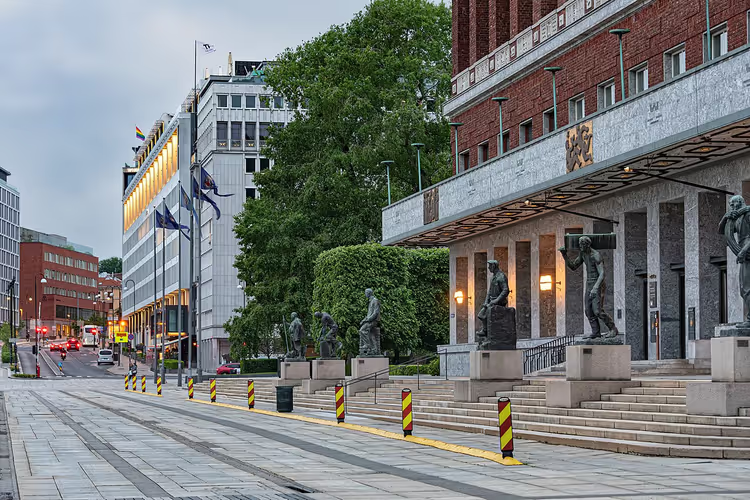 © Jorge Franganillo · CC BYPhoto: Jorge Franganillo, CC BY (https://creativecommons.org/licenses/by/4.0), Wikimedia Commons
Opera House
This concrete and glass building with angular lines stands on the shore of the fjord. Climb the sloping roof for a panorama of the city and the bay. The roof is open to everyone free of charge. World-class stars perform inside, and you can find opera tickets on the official website.
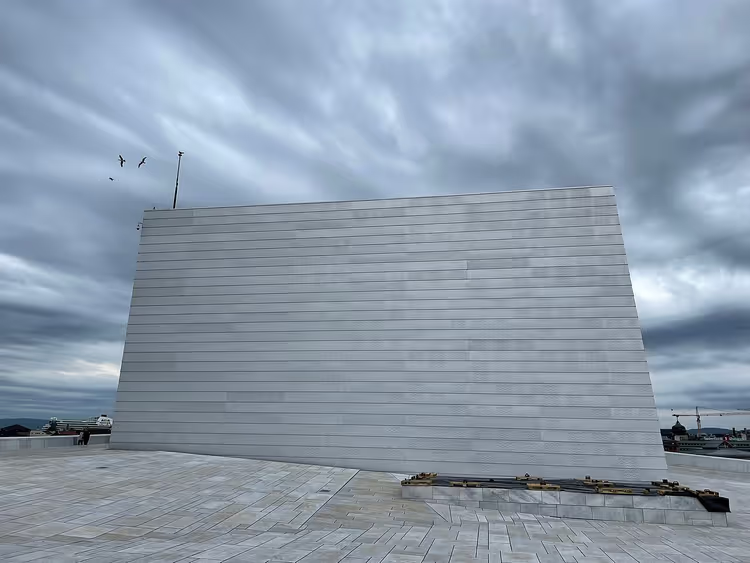 © Ssu · CC BY-SAPhoto: Ssu, CC BY-SA (https://creativecommons.org/licenses/by-sa/4.0), Wikimedia Commons
Holmenkollen
The hill above the city and Oslo's main ski landmark. On the hill you'll find the ski jump, the world's oldest ski museum, simulators, and a cafe. Museum admission is 110 NOK for adults (as of 09/2026, Ski Museum Holmenkollen). Go up to the ski jump observation deck to see the city and the fjord in full.
 © Butz.2013 from Oslo / Berlin, NO / DE · CC BYPhoto: Butz.2013 from Oslo / Berlin, NO / DE, CC BY (https://creativecommons.org/licenses/by/2.0), Wikimedia Commons
Nobel Peace Center
A museum, archive, and educational center in one building on the waterfront. The exhibitions cover climate, conflict, and human rights. A good option if you're traveling with kids. Buy tickets online, the halls fill up quickly in summer.
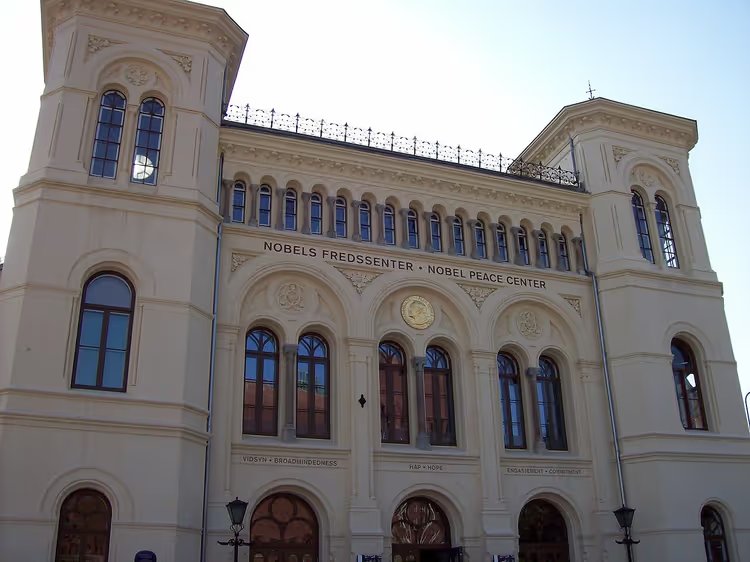 © Paul Berzinn · CC BY-SAPhoto: Paul Berzinn, CC BY-SA (https://creativecommons.org/licenses/by-sa/3.0), Wikimedia Commons
Vigeland Sculpture Park
A park with hundreds of bronze and granite sculptures, open around the clock and free. The figures depict stages of human life: birth, love, struggle, death. In good weather it's a great spot for a picnic. You can walk through the park in an hour, but you'll linger at the bridge with the figures.
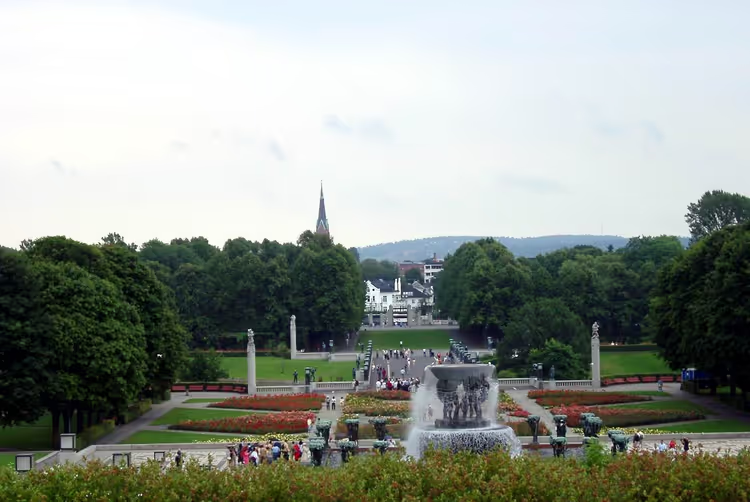 © Hesse1309 · CC BY-SAPhoto: Hesse1309, CC BY-SA (http://creativecommons.org/licenses/by-sa/3.0/), Wikimedia Commons
Aker Brygge district
A former industrial quarter by the fjord, now the most expensive part of Oslo. Inside you'll find restaurants, shops, and high-end real estate, and the waterfront leads right to the water. It's a convenient place to end the day with a stroll along the bay.
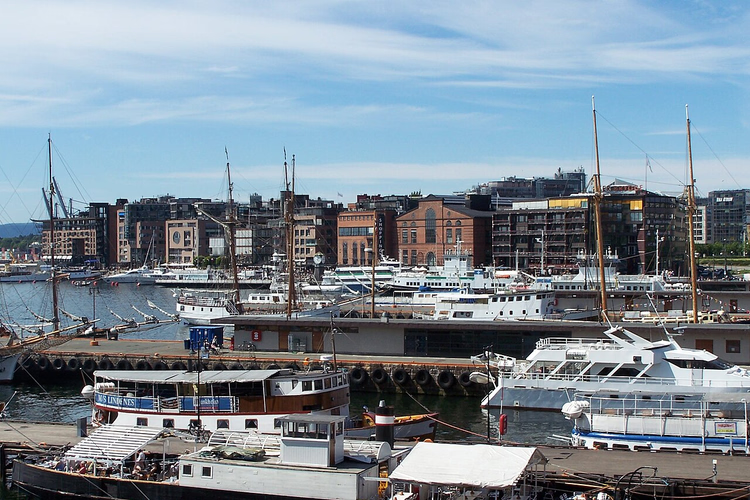 © Chris Nyborg · CC BY-SAPhoto: Chris Nyborg, CC BY-SA (http://creativecommons.org/licenses/by-sa/3.0/), Wikimedia Commons
Grünerløkka district
A neighborhood of street art, bars, and handmade goods. Locals hang out here, not just tourists. The best place in Oslo for meeting new people and street food. Check out the side streets around Markveien.
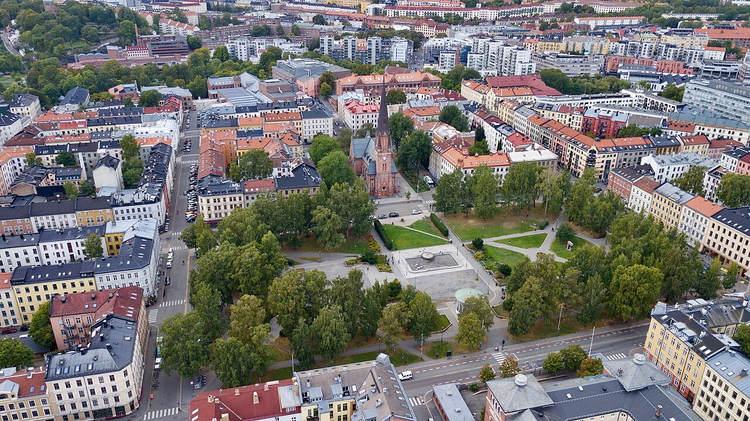 © Kjetil Ree · CC BY-SAPhoto: Kjetil Ree, CC BY-SA (https://creativecommons.org/licenses/by-sa/3.0), Wikimedia Commons
Deichman Bjørvika Library
Opened in 2020 and immediately became a city hub. It's a library, cinema, coworking space, and exhibition venue under one roof. Admission is free, and it's worth going up to the upper floors for the view of Bjørvika.
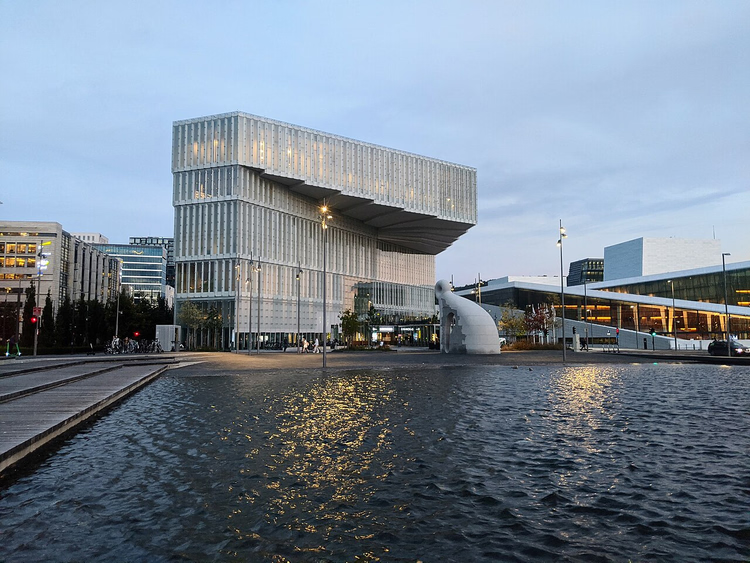 © Åshild Telle · CC BY-SAPhoto: Åshild Telle, CC BY-SA (https://creativecommons.org/licenses/by-sa/4.0), Wikimedia Commons
Ekeberg Park
More of a forest than a park, with one of the best viewpoints in the city. From here you can see the Oslo Fjord and the city center. Inside there's a free ropes course, a restaurant, and a sculpture collection.
 © Thierry Gschwind · CC BYPhoto: Thierry Gschwind, CC BY (https://creativecommons.org/licenses/by/3.0), Wikimedia Commons
Museums of Bygdøy and the city center
Oslo has many strong museums, and some of them are located on the Bygdøy peninsula.
Fram Museum
A museum of the polar ship Fram, which was used to discover the South Pole. The ship stands inside the building, and you can go on board. The museum is open daily year-round (as of 09/2026, Fram Museum). Inside they show a northern lights show.
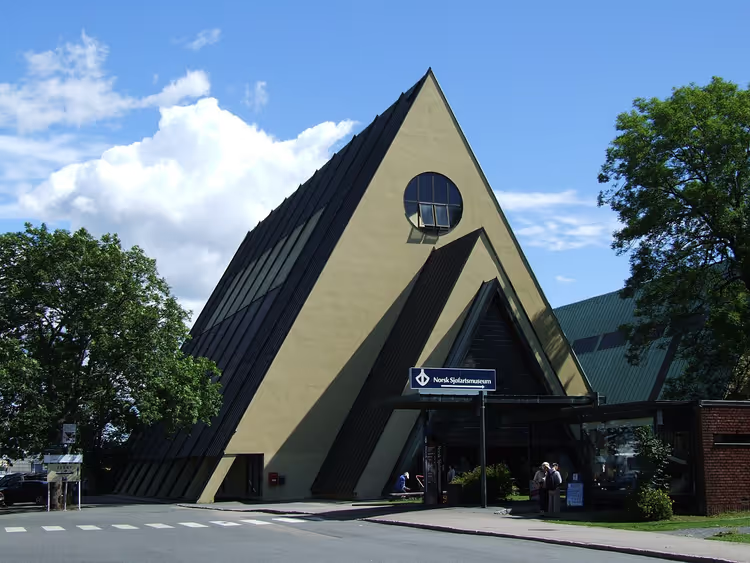 © Pudelek (Marcin Szala) · CC BY-SAPhoto: Pudelek (Marcin Szala), CC BY-SA (https://creativecommons.org/licenses/by-sa/4.0), Wikimedia Commons
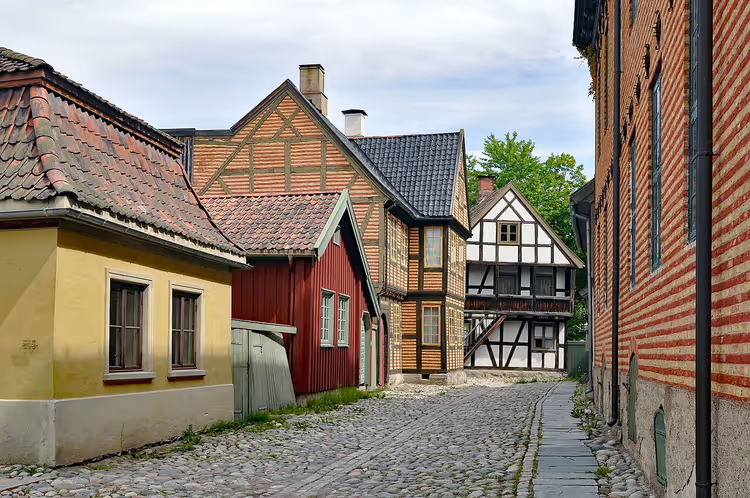
Norwegian museum of cultural history
The country's oldest open-air museum on the Bygdøy peninsula. It brings together wooden houses, farms, and stave churches from all over Norway. The best way to get a feel for the national character in a couple of hours.
 © P. Hughes · CC BYPhoto: P. Hughes, CC BY (https://creativecommons.org/licenses/by/4.0), Wikimedia Commons
Viking Ship Museum
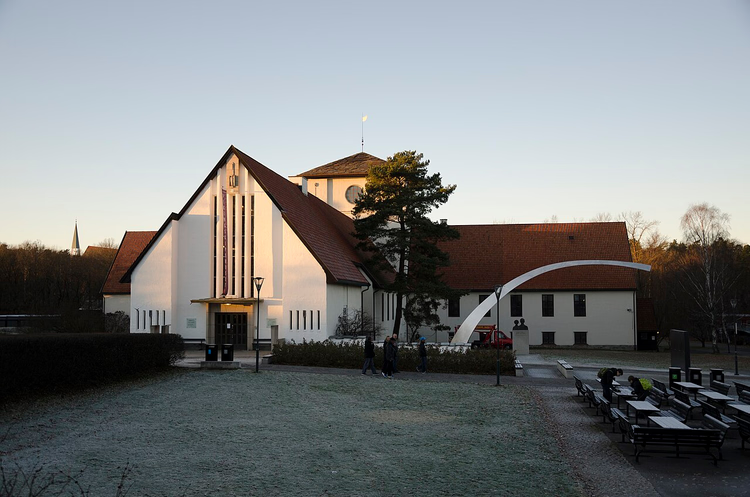
The museum on Bygdøy is closed and will reopen only in 2027 as the Museum of the Viking Age (as of 09/2026, Museum of the Viking Age). The Oseberg and Gokstad ships are currently undergoing restoration. The catch: it is not worth going to Bygdøy for this museum right now. For now, look for Viking Age artifacts at the Historical Museum in the city center.
 © Peulle · CC BY-SAPhoto: Peulle, CC BY-SA (https://creativecommons.org/licenses/by-sa/4.0), Wikimedia Commons
Kon-Tiki Museum
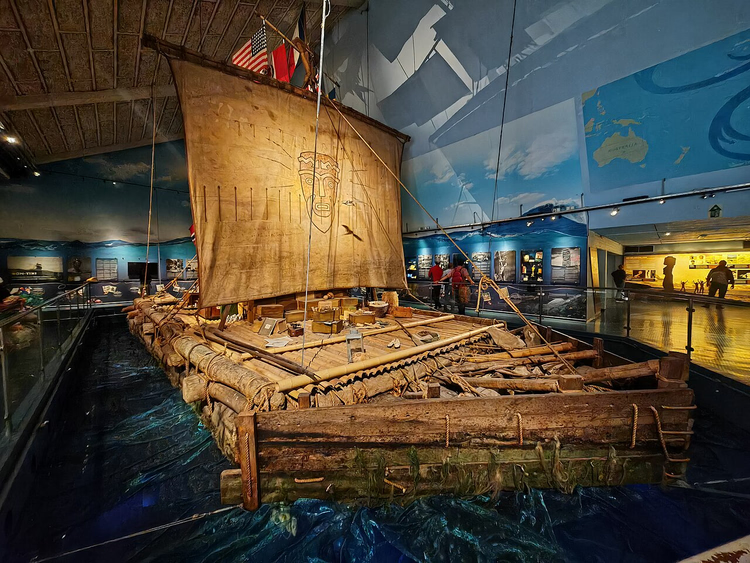
A museum about Thor Heyerdahl's voyages and his Kon-Tiki raft. The original vessels are here: the 1947 raft and the papyrus boat Ra II. The film about the voyage won an Oscar. A good addition to the Fram Museum, they are next to each other on Bygdøy.
 © Dwxn · CC BY-SAPhoto: Dwxn, CC BY-SA (https://creativecommons.org/licenses/by-sa/4.0), Wikimedia Commons
National Museum
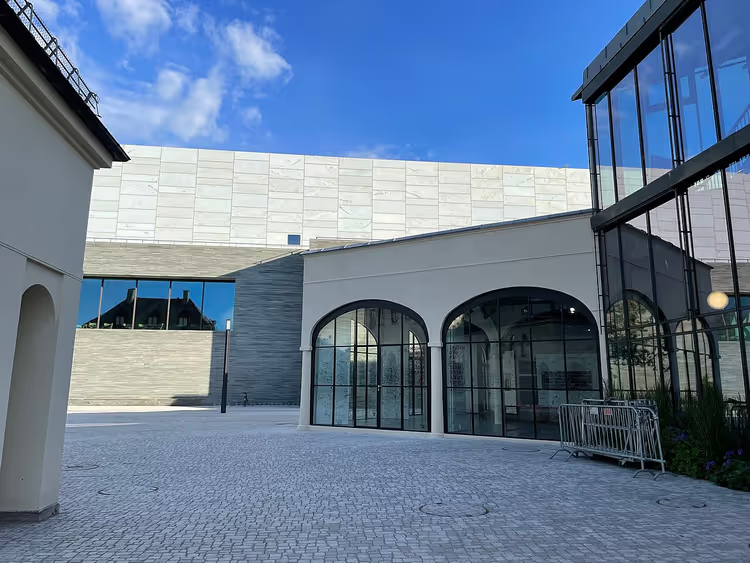
The largest art museum in Northern Europe, on the Bjørvika waterfront. Painting, architecture, and design are gathered under one roof. Edvard Munch's "The Scream" hangs here. Check tickets and opening hours on the museum's website. Get Oslo museum tickets on Tiqets to avoid waiting at the ticket office.
 © Ssu · CC BY-SAPhoto: Ssu, CC BY-SA (https://creativecommons.org/licenses/by-sa/4.0), Wikimedia Commons
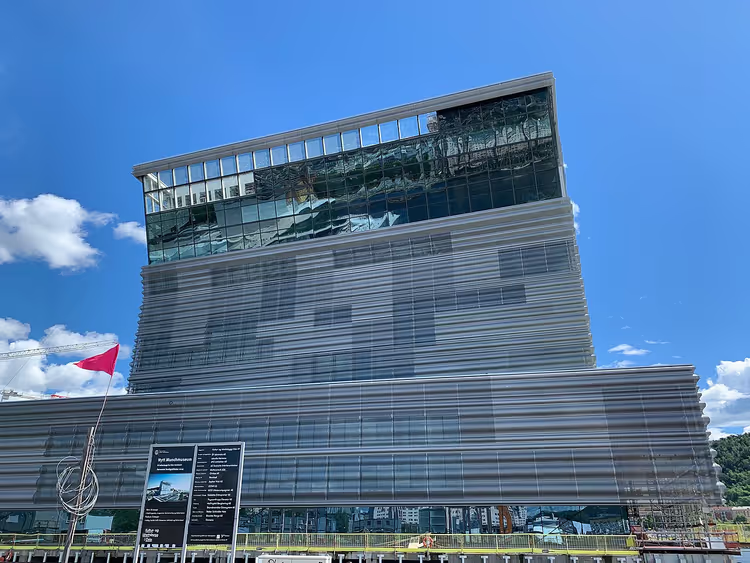
Munch Museum
The museum dedicated to Edvard Munch stands on the Bjørvika waterfront. The exhibition shows the stages of the artist's work, his prints, and photographs. Stop by in the evening hours, when the galleries are less crowded.
 © Annikdance · CC BY-SAPhoto: Annikdance, CC BY-SA (https://creativecommons.org/licenses/by-sa/4.0), Wikimedia Commons
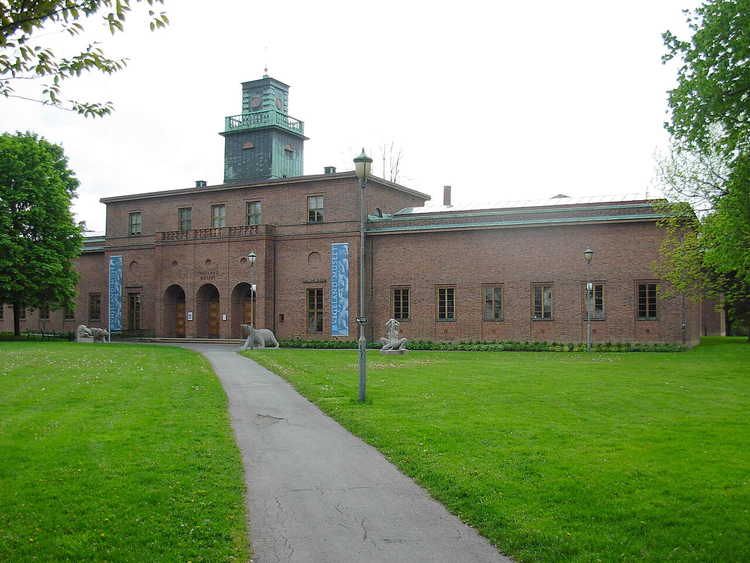
Vigeland Museum
A museum of the sculptor Gustav Vigeland next to his park. Inside there are more sculptures, models, and drawings by the master. A logical continuation of your walk if you enjoyed the park. You can walk there from the park entrance.
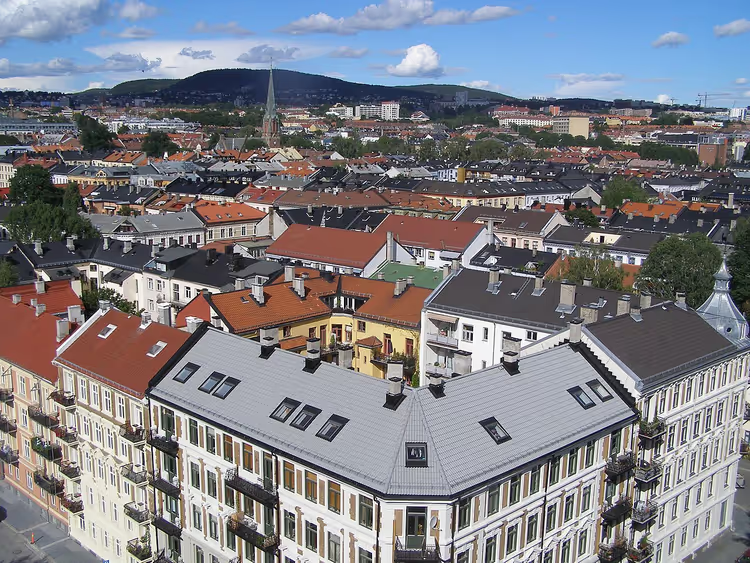
Botanical garden and Natural history museum
The University of Oslo botanical garden has thousands of plants and greenhouses. The Natural history museum with dinosaurs and minerals stands right next to it. A quiet place for a leisurely day away from the tourist streets.
 © Sean Hayford O'Leary · CC BYPhoto: Sean Hayford O'Leary, CC BY (https://creativecommons.org/licenses/by/2.0), Wikimedia Commons
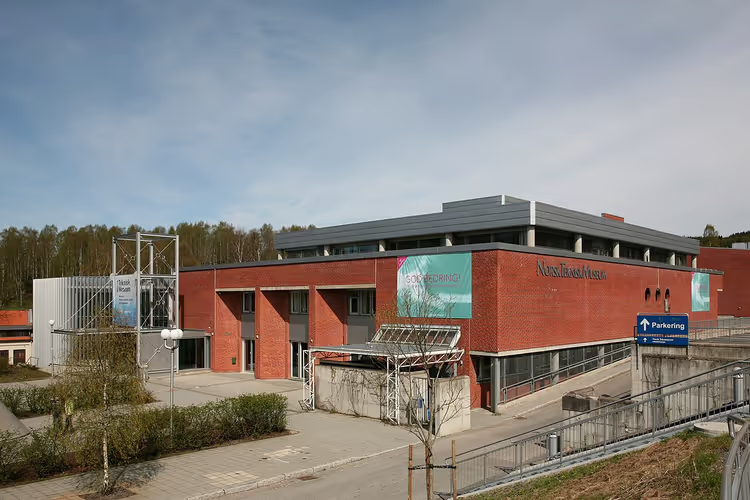
Science and technology museum
Teknisk museum shows how machines and technology work. The interactive exhibits are designed for families with children. A great option for a rainy day when parks are off the table.
 © Trond Strandsberg · CC BY-SAPhoto: Trond Strandsberg, CC BY-SA (http://creativecommons.org/licenses/by-sa/3.0/), Wikimedia Commons
Karl Johans gate and Oscarsborg fortress
Oslo's main pedestrian axis runs from the Central Station to the Royal Palace. It has shops, cafes and street musicians, and you can walk it between the two halves of your route. If you have an extra day, take a trip to Oscarsborg Fortress 35 km from the city, reachable by commuter train and ferry. During World War II, the fortress batteries stopped the German cruiser Blücher.
How to get from the airport to the city center
Flytoget trains and regular commuter trains run from Oslo Gardermoen Airport to the Central Station. Booking an Oslo airport transfer in advance is worth it if you arrive at night or with a lot of luggage. In the city center, get around on foot or by T-bane metro.
Tours and tickets in Oslo
Guided tours, skip-the-line tickets and activities — most offers can be cancelled free of charge.
See offers on GetYourGuideThe widget loads once you give your consent.
⁉️🤔 Frequently asked questions
How many days do you need in Oslo?
Three days is enough for the city center and Bygdøy. Spend the first day on Akershus Fortress, the City Hall, the Opera House, and Karl Johans gate. Spend the second on the Bygdøy museum peninsula. Leave the third for Holmenkollen, Vigeland Park, and Ekeberg. If you go to Oscarsborg Fortress, add another half day.
Is the Oslo Pass worth buying?
Yes, if you plan to visit more than two museums a day. The pass costs from 580 NOK and includes museums, ferries, and public transport (as of 09/2026, official website). For walks in parks and along the waterfront you don't need it: Vigeland Park and Ekeberg are free.
Is the Viking Ship Museum closed?
Yes, it is closed and will reopen in 2027 as the Museum of the Viking Age (as of 09/2026, official website). The Oseberg and Gokstad ships are currently undergoing restoration. For now, Viking Age artifacts are on display at the Historical Museum in central Oslo.
When is the Royal Palace open?
The palace welcomes tourists only in summer, roughly from late June to mid-August (as of 09/2026, Royal Palace website). Tours are guided, and tickets are sold in advance. The rest of the year, you can watch the changing of the guard and stroll through the free Slottsparken park.
What to see on Bygdøy?
The Bygdøy peninsula deserves a full day. The Fram Museum, the Kon-Tiki Museum, and the Norwegian Museum of Cultural History open-air museum are all here. You can get there by ferry from the City Hall or by bus.
In short: what to book
If you want to see all of Oslo's museums, get the Oslo Pass and stop counting every ticket booth. If you're traveling in June or July, book the Royal Palace tour in advance. For museum days on Bygdøy, keep one card for transport and the ferry. Look for a hotel near the Central Station or in Grünerløkka so you don't waste time commuting.
- Compare and book a hotel: Oslo hotels on Trip.com.

A small editorial team writing guides for independent travel. We travel ourselves, but we haven’t been everywhere, so we check prices, opening hours and how to get there against official sources.