
















What to see in Oslo: 30 places from the Viking museum to Ibsen's house
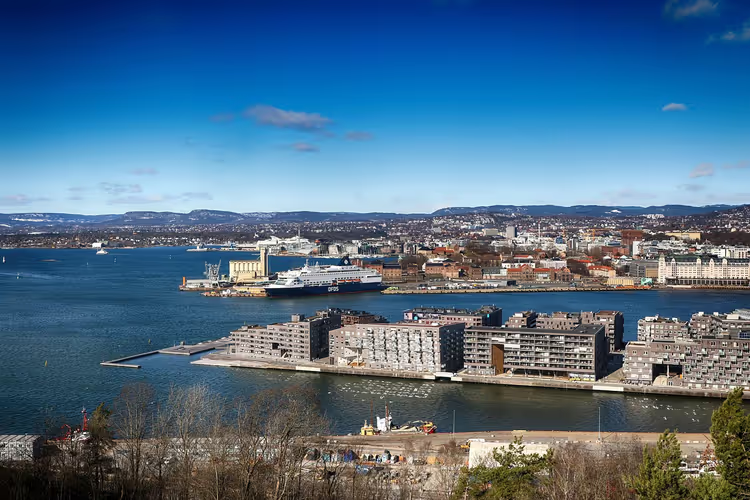
Oslo fits between the fjord and green hills. In one day you won't cover even half of its museums. Most of them stand on the Bygdøy peninsula, which is easiest to reach by ferry from City Hall.
Old guidebooks don't know one important piece of news. The main Viking Ship Museum closed for reconstruction in 2021, and the opening has been pushed back to 2027 (as of 09/2026, Museum of the Viking Age). You won't see the ships themselves for now, but Viking artifacts are temporarily on display in the city center.
Below are thirty places in Oslo: museums, parks, a fortress, a theater, and viewpoints. We've arranged them in order and noted what's nearby, how much it costs, and how to get there.
Ad: this article contains affiliate links, we earn a commission if you book through them, at no extra cost to you.
What to see in Oslo: a quick overview
💡 In short:
- The Bygdøy museums (the Fram ship, Kon-Tiki, the folk museum) are close together: set aside half a day for them.
- Central Oslo is walkable: City Hall, the Royal Palace, the Storting, and Akershus Fortress all sit in one loop.
- Prices and museum opening hours: 09/2026, checked on the MUNCH website and the Fram Museum website.
Many of the places below are museums with paid admission. Some of them can be seen for free, and some are closed on certain days, so check the schedule before your trip.
Place | District | Ticket |
|---|---|---|
Viking Ship Museum | Bygdøy | closed until the new museum opens |
Holmenkollen | Holmenkollen | viewpoint is paid |
Vigeland Sculpture Park | Frogner | free |
Royal Palace | Center | guided tour is paid |
City Hall | Center | free |
Opera House | Bjørvika | lobby is free |
Parliament building | Center | guided tour is free |
Akershus Castle and Fortress | Center | grounds are free |
Kon-Tiki Museum | Bygdøy | paid |
Astrup Fearnley Museum | Bjørvika | paid |
Fram Museum | Bygdøy | paid |
Nobel Peace Center | Center | paid |
Henie Onstad Art Center | Høvikodden | paid |
Cathedral | Center | free |
Tusenfryd amusement park | Vinterbro | paid |
Botanical Garden | Tøyen | free |
Norwegian Museum of Cultural History | Bygdøy | paid |
Ekeberg Sculpture Park | Ekeberg | free |
Ski Museum | Holmenkollen | paid |
St. Olav's Cathedral | Center | free |
Munch Museum | Bjørvika | paid |
Gol Stave Church | Bygdøy | included in museum ticket |
Historical Museum | Center | paid |
Trinity Church | Grønland | free |
National Theatre | Center | free from outside |
Norwegian Museum of Science and Technology | Tøyen | paid |
Reptile Park | Center | paid |
Norwegian Maritime Museum | Bygdøy | paid |
National Gallery | Center | paid |
Henrik Ibsen Museum | Center | included in museum ticket |
1. Viking Ship Museum
 © Larry Lamsa · CC BYPhoto: Larry Lamsa, CC BY (https://creativecommons.org/licenses/by/2.0), Wikimedia Commons
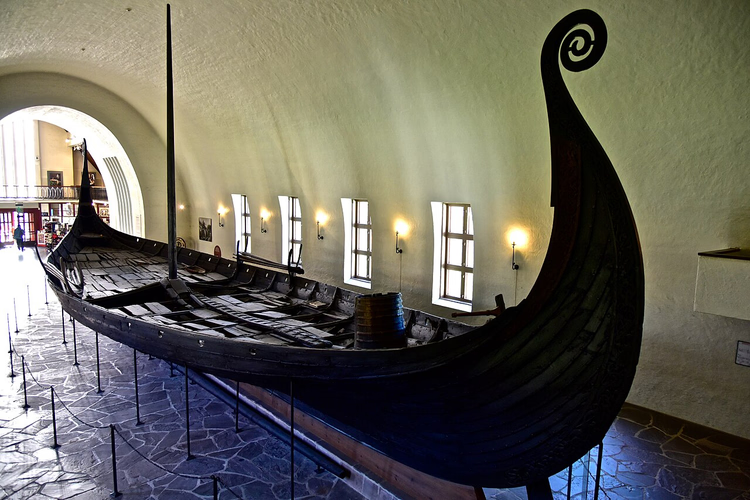
Three original ships were kept here: the Oseberg, Gokstad, and Tune ships. The oak hulls were recovered from burial mounds and preserved. They are a thousand years old, and the ships themselves served as their owners' final resting places and spoke of their status.
The museum on Bygdøy opened in 1926 and has remained the main repository of Viking Age finds ever since. The building is now closed, and the ships have been dismantled piece by piece for restoration (as of 09/2026, Viking Age Museum website). A new museum on the same site is promised to open in 2027.
Alongside the ships, the museum used to display sleds, carts, and carved figures from burial chambers. These objects told the story of Norse daily life and beliefs just as well as weapons did. Now part of the collection has moved to the city center, and part has gone into conservation.
For now, the Viking collection can be seen at the Historical Museum in central Oslo. The VÌKINGR and Miðgarðr exhibitions are on display there, with weapons, jewelry, and everyday objects. The complete ships are not shown anywhere yet; they are waiting for the new building to open. Stop by here if you care about real history, not just pictures from the internet.
- The catch: the museum is closed until the new building opens.
- How to get there: by bus or ferry to the Bygdøy peninsula.
2. Holmenkollen and the ski jump
 © Evka W · CC BY-SAPhoto: Evka W, CC BY-SA (https://creativecommons.org/licenses/by-sa/4.0), Wikimedia Commons
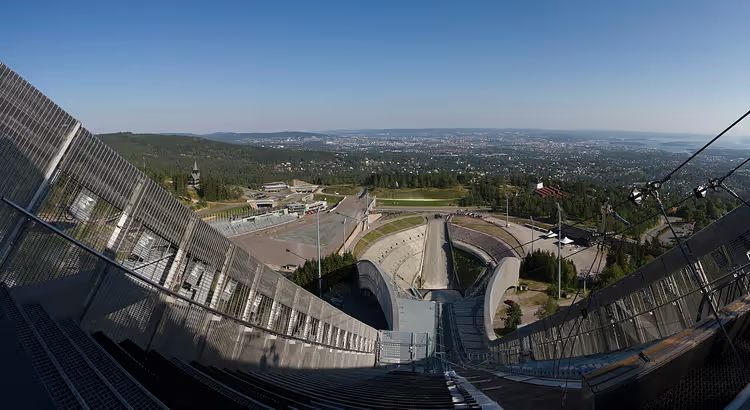
The Holmenkollen ski jump rises above the city. It is visible from many parts of Oslo, and the upper platform offers a panorama of the fjord and the center. In winter, World Cup biathlon and ski jumping events are held here.
A lift takes you to the very top of the jump. In summer, walking trails and a viewpoint operate on the hill. The Ski Museum, with the history of the national sport, stands nearby.
The easiest way to get there is by metro to Holmenkollen station. The trip takes about half an hour from the center. Bring a jacket: it is always windy at the top.
- How to get there: metro to Holmenkollen station, then walk uphill.
3. Vigeland Sculpture Park
 © Hesse1309 · CC BY-SAPhoto: Hesse1309, CC BY-SA (http://creativecommons.org/licenses/by-sa/3.0/), Wikimedia Commons
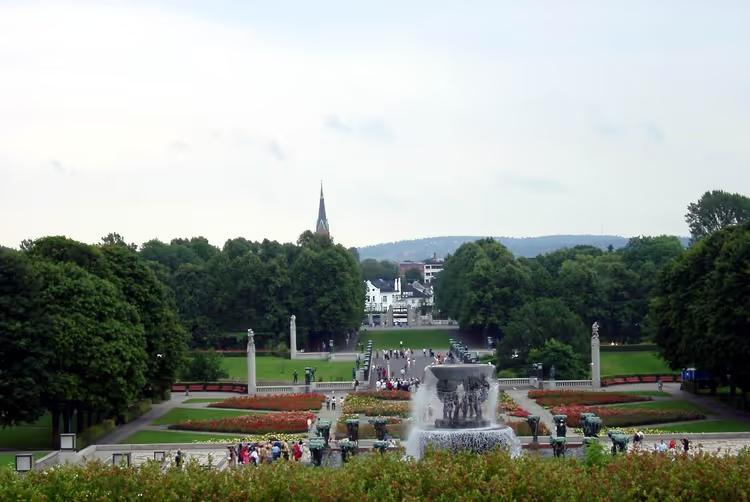
The park in the Frogner district was created by a single sculptor, Gustav Vigeland. He devoted most of his life to it, and the city set aside an entire block for the work. Today hundreds of bronze and granite figures stand here.
The Monolith rises at the center: a column of intertwined human bodies. The Bridge with its figures and several thematic groups lead up to it. The compositions show different sides of life, from childhood to old age.
Admission to the park is free, and it is open around the clock. Come at opening time or after dinner to avoid the crowds. A tram goes to the park, with a stop at the main entrance.
- How to get there: by tram to the stop at the park's main entrance.
4. Royal Palace
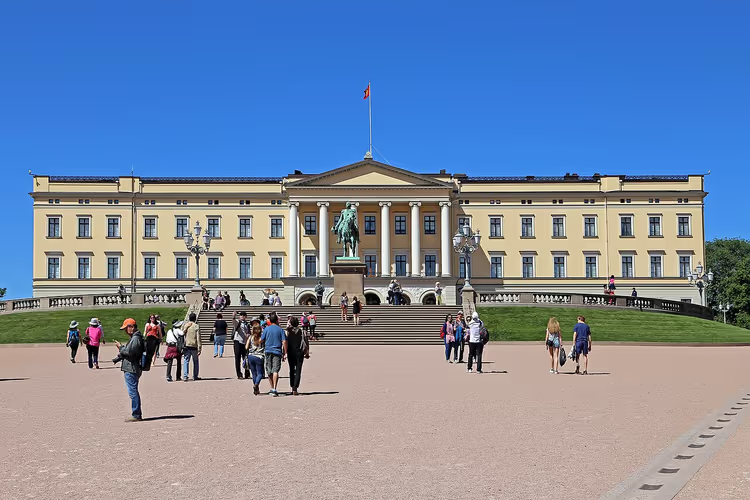 © W. Bulach · CC BY-SAPhoto: W. Bulach, CC BY-SA (https://creativecommons.org/licenses/by-sa/4.0), Wikimedia Commons
The palace on the hill at the end of Karl Johans gate serves as the residence of the Norwegian monarchs. It was built from light stone in the first half of the 19th century in the neoclassical style. An equestrian statue stands in front of the facade, and a large park surrounds the grounds.
In summer, guided tours of the state rooms are offered. Tickets are sold on site, and the line is longer on weekends. The rest of the time you can freely walk through the surrounding park.
The changing of the guard takes place every day and draws a crowd at the fence. Check the exact schedule on the palace's official website before your visit.
- How to get there: on foot from the Storting up Karl Johans gate.
5. Oslo City Hall
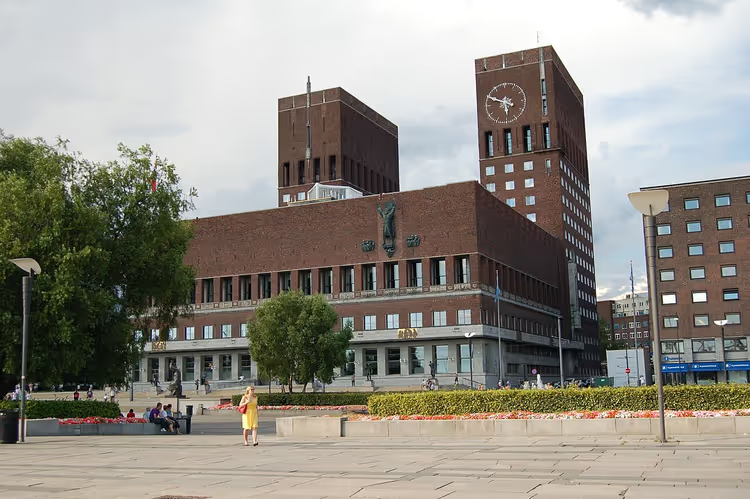 © Leif Rostgaard Niels… · CC BYPhoto: Leif Rostgaard Niels…, CC BY (https://creativecommons.org/licenses/by/3.0), Wikimedia Commons
City Hall stands on Rådhusplassen right by the fjord. Its red brick towers are visible from the ferries approaching the city, and a carillon plays from one of them. The building took several decades to construct in the first half of the 20th century.
Every year in December, the Nobel Peace Prize is awarded here. The city council meets in the central hall. The walls feature murals by Norwegian artists and an astronomical clock with zodiac signs.
Admission to City Hall is free, and it is open during the day on weekdays. A tower tour is booked separately. From the windows you'll see the harbor and the Aker Brygge district.
- How to get there: take the metro to Stortinget station, then walk toward the water.
6. The Opera House
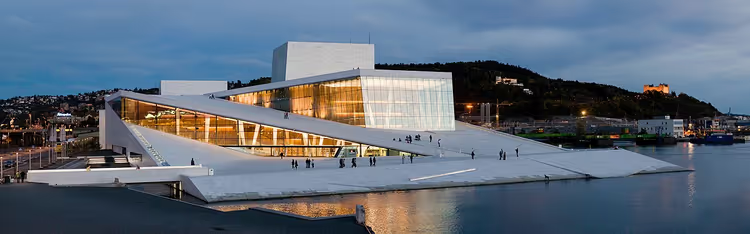 © Rafał Konieczny · CC BY-SAPhoto: Rafał Konieczny, CC BY-SA (https://creativecommons.org/licenses/by-sa/4.0), Wikimedia Commons
The Opera House in the Bjørvika district looks like a white iceberg at the water's edge. It opened at the beginning of this century and immediately became one of the city's symbols. The roof is made of white stone slabs, and walking on it is allowed.
Ramps lead you straight up to the roof, where you get a view of the fjord. In summer people sunbathe on the roof, and there is a cafe in the lobby. The foyer is open free of charge for most of the day.
A backstage tour is booked for a fee. Take it if you're curious how one of Europe's most modern stages works. The theater is a stone's throw from the central station.
- How to get there: on foot from Oslo Central Station along the waterfront.
7. The parliament building (Storting)
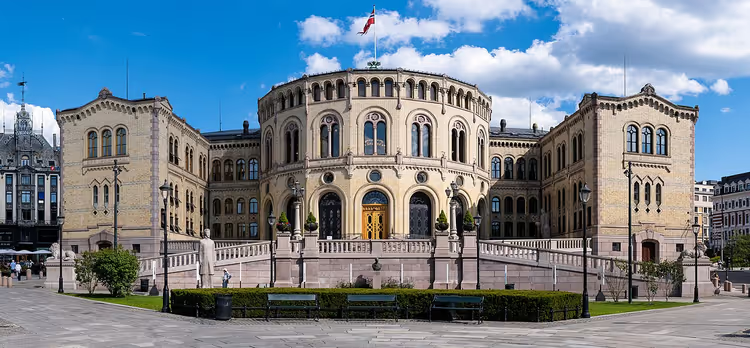 © Christian David · CC BY-SAPhoto: Christian David, CC BY-SA (https://creativecommons.org/licenses/by-sa/4.0), Wikimedia Commons
The Storting stands in the center, on Karl Johans gate. The yellow round parliament building is easy to recognize by its dome and columns. The assembly hall is designed as an amphitheater, with the representatives' seats arranged in a circle.
Inside there is a portrait gallery and a collection of paintings. In summer, free guided tours are offered, but you can only join them by reservation. Spots fill up quickly, so book in advance.
People like to sit on the wide steps in front of the facade. This is where your walking route to the palace begins, along the city's main street.
- How to get there: in the center, a short walk from Stortinget metro station.
8. Akershus Castle and Fortress
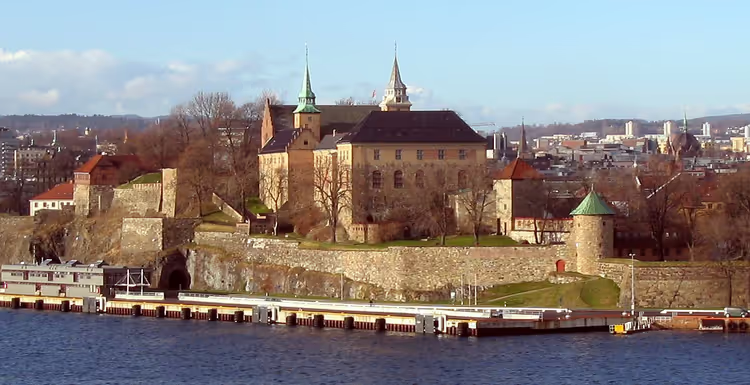 © Photo © 2005 by Tomasz Sienicki [user: tsca , mail: tomasz.sienicki at gmail.com] · CC BYPhoto: Photo © 2005 by Tomasz Sienicki [user: tsca , mail: tomasz.sienicki at gmail.com], CC BY (https://creativecommons.org/licenses/by/2.5), Wikimedia Commons
Akershus Fortress rises above the harbor and is considered the oldest structure in Oslo. The city grew up around its walls back in the Middle Ages. The castle was rebuilt during the Renaissance and later surrounded by a stone wall.
The fortress grounds are open for walking free of charge. Inside, there are the Resistance Museum and the Armed Forces Museum, plus old casemates. Some areas close in the off-season, so it's worth checking the hours on site.
From here you get one of the best views of the harbor and city hall. Come in the evening, when fewer tour groups make their way up here. It's a few minutes' walk from the Storting.
- Getting there: on foot from City Hall Square, up the slope.
9. The Kon-Tiki Museum
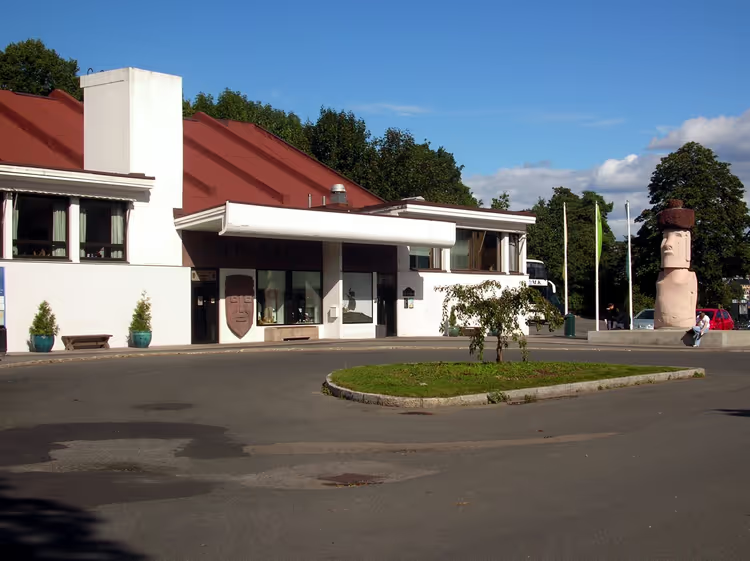 © Grzegorz Wysocki · CC BYPhoto: Grzegorz Wysocki, CC BY (https://creativecommons.org/licenses/by/3.0), Wikimedia Commons
This museum on Bygdøy is dedicated to Thor Heyerdahl and his voyages. Under glass stand the Kon-Tiki raft, the Ra II vessel, and the reed boat Tigris. Heyerdahl crossed the Pacific Ocean on a balsa wood raft and proved that ancient people could have made such journeys.
You'll see expedition equipment, documents, and the traveler's personal belongings. A separate hall is built as an artificial Easter Island cave. There's also a cinema and a souvenir shop.
The museum sits next to the Fram ship on the same peninsula. It's easy to combine both in one visit. Take the ferry here if you want to see the city from the water.
- Getting there: by ferry from City Hall or by bus to Bygdøy.
10. Astrup Fearnley Museum
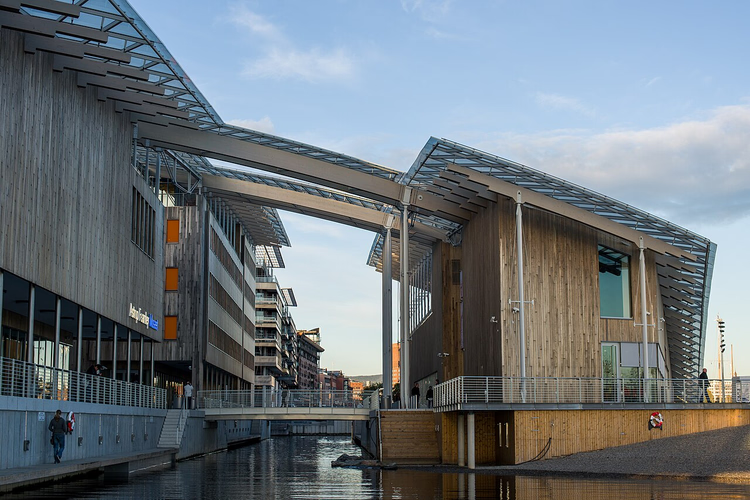 © Ottestad · CC BY-SAPhoto: Ottestad, CC BY-SA (https://creativecommons.org/licenses/by-sa/3.0), Wikimedia Commons
Astrup Fearnley stands on the Bjørvika waterfront, right at the water's edge. It's a private collection of contemporary art assembled by a single family. The building, with its curved glass roof, is considered one of the best pieces of architecture in the city.
The galleries show works by artists of the 20th and 21st centuries. Exhibitions change, so it's worth checking the current lineup on the website. Nearby there's a small sculpture park and a waterfront area.
Admission is paid, and on Wednesdays there's sometimes a free evening. Check the schedule before your visit. You can walk there from the station along the waterfront.
- Getting there: on foot from Central Station along Bjørvika.
11. The Fram Museum
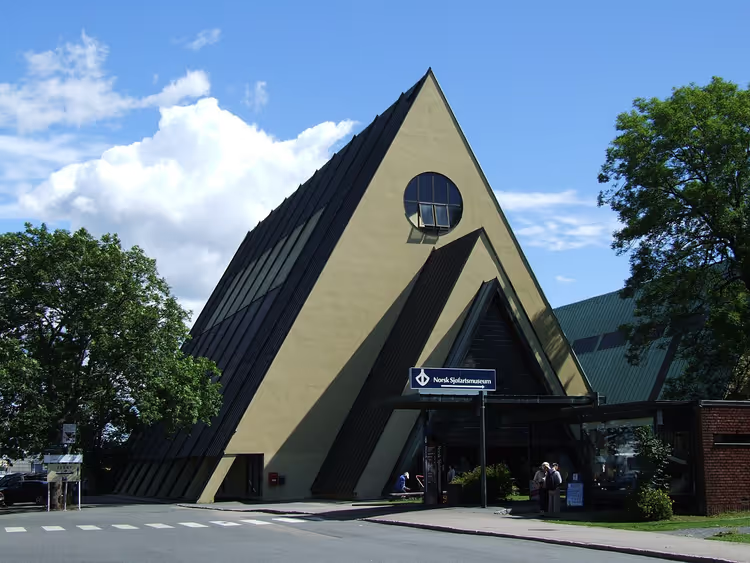 © Pudelek (Marcin Szala) · CC BY-SAPhoto: Pudelek (Marcin Szala), CC BY-SA (https://creativecommons.org/licenses/by-sa/4.0), Wikimedia Commons
The Fram Museum on Bygdøy showcases the strongest wooden ship in history. Fridtjof Nansen and Roald Amundsen sailed her toward the poles. The hull was built so that ice would push the ship upward rather than crush it.
You can climb onto the deck and look inside the ship. The exhibition tells the story of three polar expeditions and life on board for the crew. Separate halls are dedicated to Arctic and Antarctic animals.
The museum is open every day: in summer from early morning until evening, the rest of the year until dark (as of 09/2026, official website). An adult ticket costs 180 kroner (as of 09/2026, official website). Come at opening time, before groups fill the deck.
- Who it's for: anyone interested in polar expeditions and maritime history.
- Getting there: by ferry from City Hall to the Bygdøy stop.
12. Nobel Peace Center
 © Canaan · CC BY-SAPhoto: Canaan, CC BY-SA (https://creativecommons.org/licenses/by-sa/4.0), Wikimedia Commons
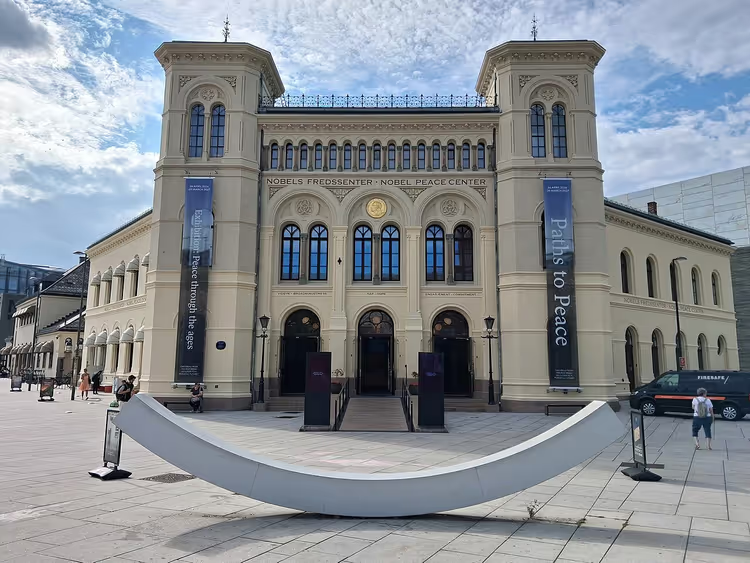
The Peace Center stands on City Hall Square, right next to the city hall. It tells the story of the Nobel Peace Prize and its laureates. The galleries feature interactive screens you can touch to get any information you need.
The exhibition changes and is often dedicated to a single theme of the year. Lectures and meetings with laureates also take place here. You can get a handle on the history of the prize even without a guide.
The center is open daily; check exact hours on the center's website. Admission is paid, with an adult ticket costing around 180 kroner (as of 09/2026, official website). Children enter free.
- Getting there: on City Hall Square, two minutes from the ferry pier.
13. Henie Onstad Art Center
 © Leifern · CC BY-SAPhoto: Leifern, CC BY-SA (http://creativecommons.org/licenses/by-sa/3.0/), Wikimedia Commons
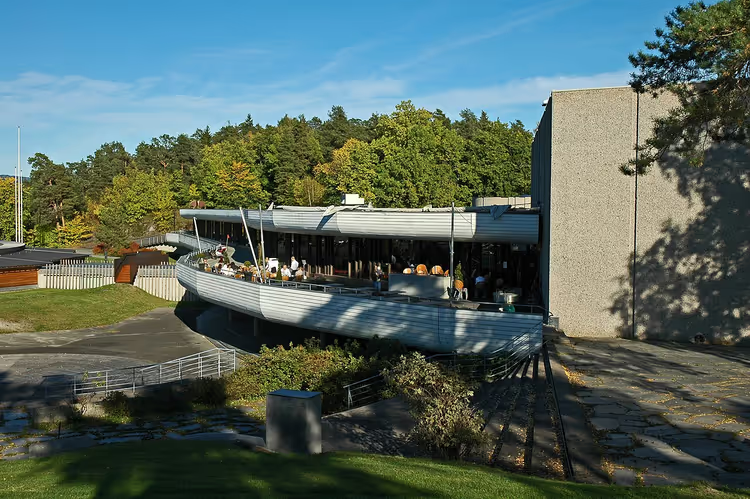
The center on the fjord shore outside the city was created by figure skater Sonja Henie and her husband Niels Onstad. They donated their collection to Norway, and the building opened in the late 1960s. The first works hung in the galleries were by Picasso, Matisse, and Léger.
Sonja Henie won more figure skating titles than anyone before her. She created the "Holiday on Ice" show and brought the sport to the world stage. A separate room displays her awards, costumes, and archive.
Today the center shows 20th-century art and contemporary projects. It is funded by the Onstad family foundation. The founder's grave is located at the building entrance.
The building stands in a sculpture park with a view of the water. In addition to paintings, the center hosts concerts, theater performances, and lectures. In summer the open terrace is in operation, and in winter the galleries empty out.
A couple of hours is enough to see the collection, but with a concert you can stay for the whole evening. Buy your ticket online if you want to skip the line.
The center is closed on Mondays. You can get there by bus from the city center, the trip takes about half an hour.
- How to get there: by bus from the city center to Høvikodden.
14. Oslo Cathedral
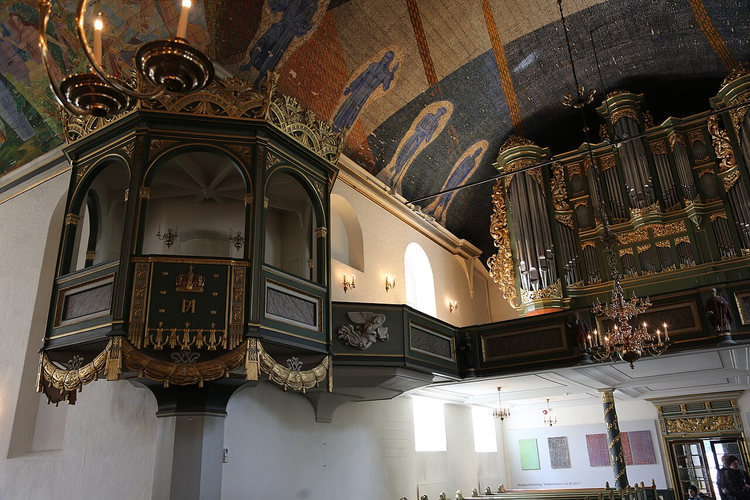
The cathedral stands on Stortorvet square, a step away from the main street. It serves as the official church of the royal family, and coronations and weddings take place here. The current building was constructed in the late 17th century in the Dutch Baroque style. It is already the third church on this site: the two previous ones were destroyed by fires.
 © Hans A. Rosbach · CC BY-SAPhoto: Hans A. Rosbach, CC BY-SA (https://creativecommons.org/licenses/by-sa/3.0), Wikimedia Commons
Inside there is an old organ and a clock tower that has been running since the early 18th century. A separate chapel is open for quiet prayer. Among the relics, the silver composition "The Last Supper" stands out.
The walls are painted with works by well-known masters, and inside the cathedral is painted in traditional blue and yellow tones. Outside, a massive tower with bronze doors greets you. A tall spire is mounted on it, visible from the main street.
The ceiling is decorated with paintings, and a large picture hangs above the altar. The cathedral organ often sounds at evening concerts, and anyone can attend them.
Admission is free, and in summer the cathedral is open during the day. Go in the morning, when there are fewer groups and the light is soft. There are cafes and shops nearby, and City Hall is a few minutes' walk away.
- How to get there: on foot from Central Station along Karl Johans gate.
15. Tusenfryd amusement park
 © Bjoertvedt · CC BY-SAPhoto: Bjoertvedt, CC BY-SA (https://creativecommons.org/licenses/by-sa/3.0), Wikimedia Commons
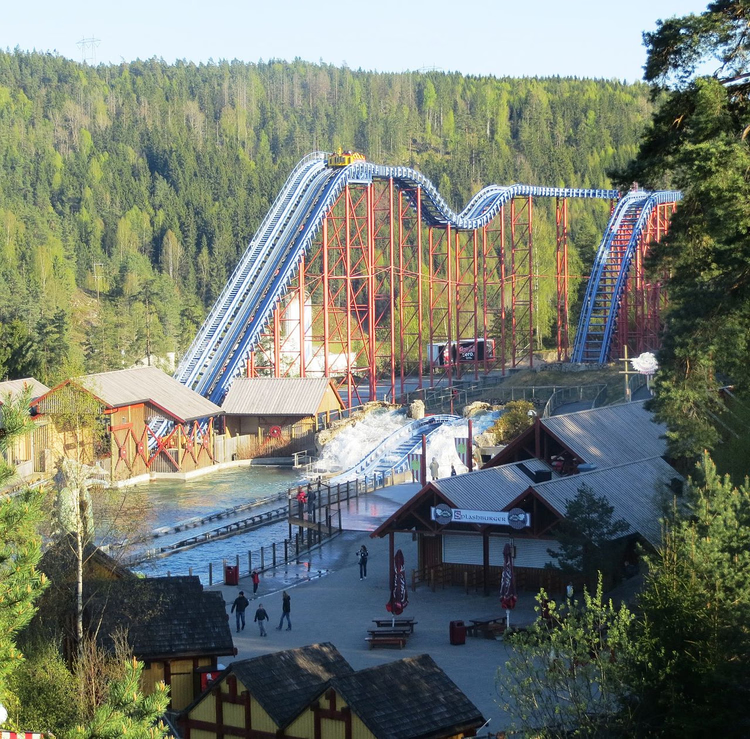
Norway's largest amusement park stands in a suburb south of Oslo and is called Tusenfryd. It has roller coasters with loops and free-fall drops. A separate area is dedicated to a water park with water slides.
The ticket is sold as "all-inclusive" and covers most attractions. The park operates in the warm season and is closed in winter. Check the calendar before your trip if you want to catch a specific event.
The trip from the center takes about half an hour by bus. Arrive at opening time: by midday the lines grow. Bring a change of clothes if you plan to visit the water park.
- Who it's for: families with children and thrill-seekers.
- How to get there: by bus to the stop at the park entrance.
16. Botanical Garden
 © Helge Høifødt · CC BY-SAPhoto: Helge Høifødt, CC BY-SA (http://creativecommons.org/licenses/by-sa/3.0/), Wikimedia Commons
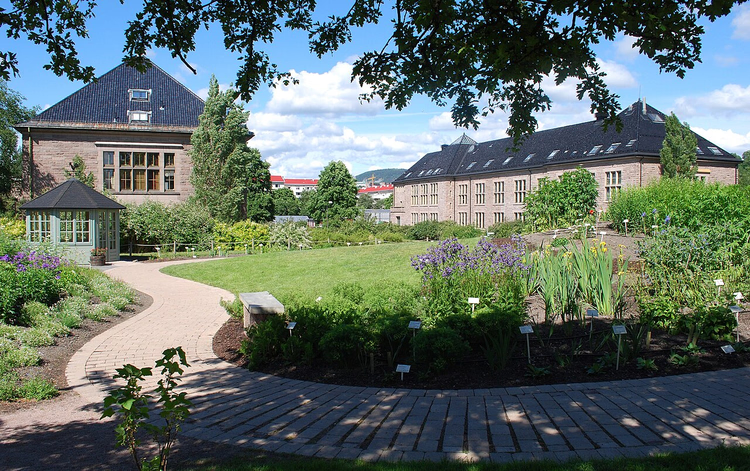
The Botanical Garden occupies a block in the Tøyen district. The collection includes thousands of plants from around the world. Some species here no longer exist in the wild and are preserved only in the garden.
You will walk through the palm house, the aromatic garden, and the arboretum. A very old chestnut tree grows in the Arboretum area. Plants are arranged by family and species, so walking here is also educational.
The garden is open from early morning, longer in summer than in winter. On weekends it opens later. Admission is free, and it is a good place for a break between museums.
- How to get there: on foot from the Grønland district or by tram to Tøyen.
17. Norwegian museum of cultural history
 © P. Hughes · CC BYPhoto: P. Hughes, CC BY (https://creativecommons.org/licenses/by/4.0), Wikimedia Commons
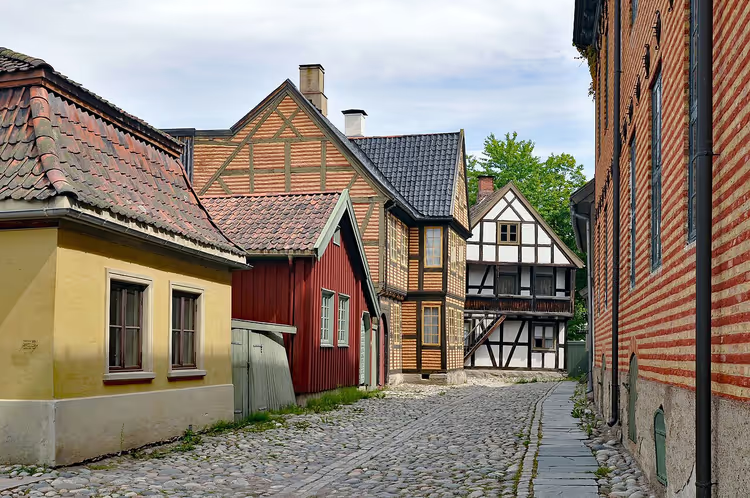
The Museum of Cultural History at Bygdøy operates as an open-air village. Houses and churches from all over Norway have been moved to the park. You will walk along a street of old Oslo and peek into farmyards.
The wooden stave church from Gol, discussed below, also stands here. A separate exhibition is dedicated to Sami culture. In summer the museum hosts festivals and craft demonstrations.
The museum is open every day, usually from mid-morning to early evening (as of 09/2026, official website). Some houses are closed in winter. You can get there by bus or ferry to Bygdøy.
- How to get there: by bus or ferry to the Bygdøy peninsula.
18. Ekeberg Sculpture Park
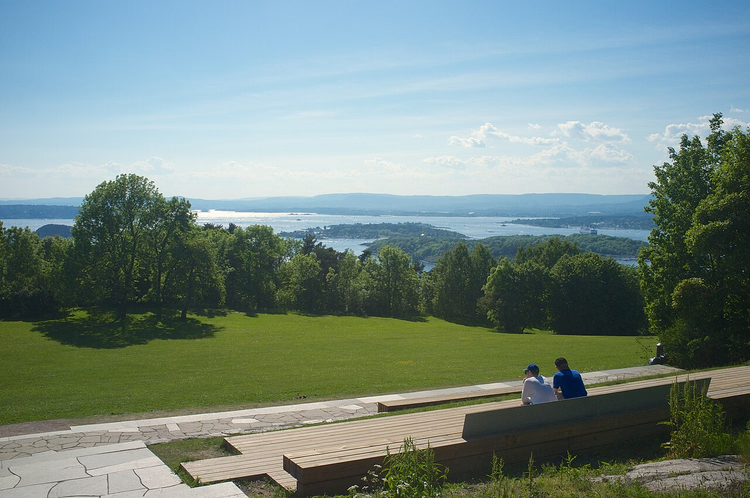
Ekeberg spreads across a hillside above the city. The park was created by collector Christian Ringnes, who donated it to Oslo. It features works by Salvador Dali, Marc Quinn, and other well-known artists.
 © Kjetil Ree · CC BY-SAPhoto: Kjetil Ree, CC BY-SA (https://creativecommons.org/licenses/by-sa/3.0), Wikimedia Commons
The sculptures are made from different materials and placed far apart. Between them, you get views of the fjord and the city center. The local viewpoint is believed to be where Munch painted "The Scream."
Admission is free, and the park is open around the clock. Walk down on foot if you want to combine a stroll with harbor views. The tram stops at the foot of the park.
- How to get there: take the tram to the stop at the foot of Ekeberg.
19. Ski Museum
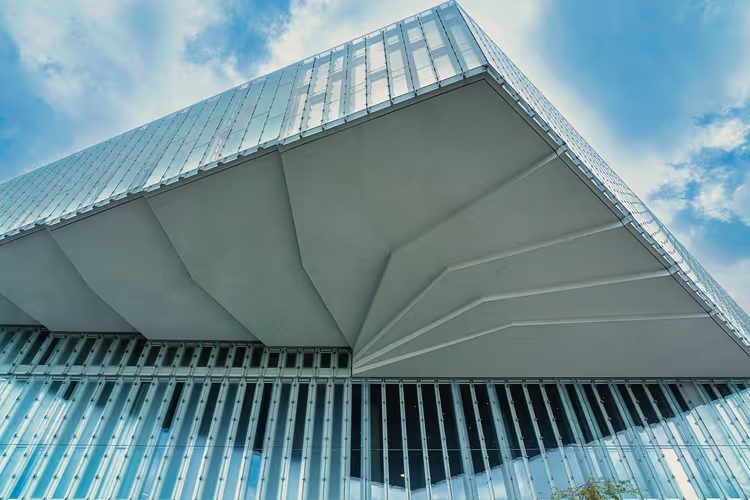
The Ski Museum occupies part of the Holmenkollen complex. Skiing is considered Norway's national sport, and the collection here has been built up over decades. You'll see rock carvings of skiers and ancient snowshoes.
Among the exhibits are four-meter-long skis and equipment belonging to the royal family. A separate archive covers the history of the sport and expeditions. The shop sells ski suits and books.
The museum is open every day, with longer hours in summer than in winter. Tickets are sold together with the ski jump lift or separately. Check the hours on site, as they change in summer.
- The catch: part of the exhibition is closed in the off-season.
- How to get there: take the metro to Holmenkollen station, then walk uphill.
20. St. Olav's Cathedral
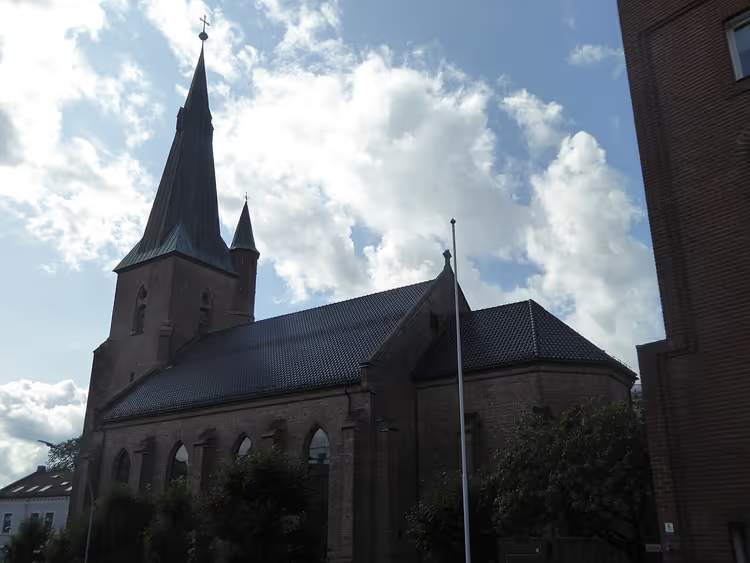 © Nemo bis · CC BY-SAPhoto: Nemo bis, CC BY-SA (https://creativecommons.org/licenses/by-sa/3.0), Wikimedia Commons
St. Olav's Cathedral was built in the mid-19th century. It is Norway's main Catholic church, consecrated in honor of the country's baptizer. Queen Josephine donated a copy of the "Sistine Madonna" to the cathedral.
The church's stained glass windows were created by artist Emanuel Vigeland. Inside, the cathedral feels bright thanks to its tall windows. Organ concerts are often held here in the evenings.
Admission is usually free, and the service schedule is posted by the door. Visit during the day to see the interior without interruptions. The cathedral is a few minutes' walk from the main street.
- How to get there: walk from Karl Johans gate toward Akershus Fortress.
21. Munch Museum
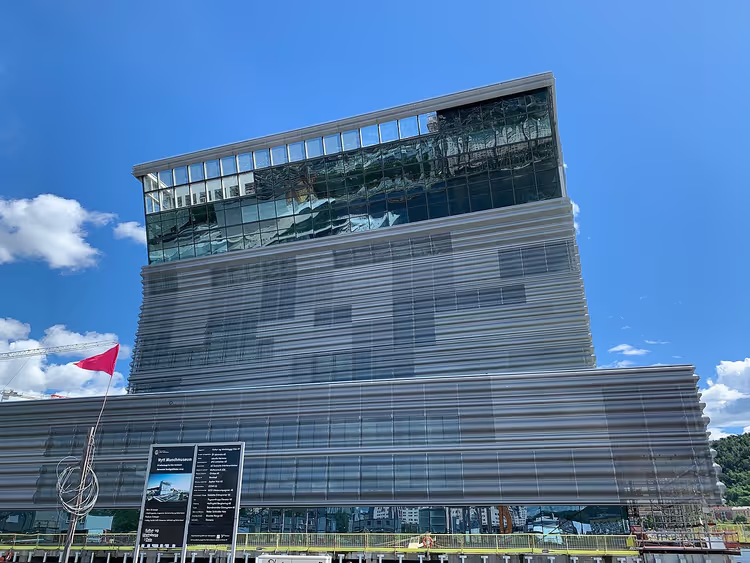 © Annikdance · CC BY-SAPhoto: Annikdance, CC BY-SA (https://creativecommons.org/licenses/by-sa/4.0), Wikimedia Commons
The Munch Museum has moved to a new building on the Bjorvika waterfront. It houses the largest collection of Edvard Munch's works: paintings, prints, and personal belongings. The main highlight, of course, is "The Scream."
The exhibition is spread across floors, and you'll see different periods of the artist's work. One version of "The Scream" is permanently on display, while the others are kept in storage. Allow two to three hours for a full visit.
The museum is open all week: Sunday through Tuesday until evening, with later hours on other days (as of 09/2026, official website). An adult ticket costs just over twenty euros; check the exact price on the museum's website.
- How to get there: walk from the Central Station along the Bjorvika waterfront.
22. Gol Stave Church
 © Francesco Bini · CC BY-SAPhoto: Francesco Bini, CC BY-SA (https://creativecommons.org/licenses/by-sa/4.0), Wikimedia Commons
Gol Stave Church stands in the Norwegian Museum of Cultural History. It is one of the few surviving stave churches in the country. It was moved here from the municipality of Gol over a century ago to save it from demolition.
The structure dates back to the 13th century, with some elements even older. The first written mention dates to the early 14th century. Inside, 17th-century paintings survive and are visible in the dim light near the entrance.
The frame is built from northern pine using a special technique. Boards are fitted between the vertical posts, and the load-bearing pillars are joined into a sturdy frame. This construction method and the pine resin explain why the building has stood for centuries.
Over time, the church was modified: windows were cut, the nave was widened, and the gallery around the choir was removed. Each tier of the roof is covered with shingles and topped with a carved spire. A low door leads inside, and the floor in the porch is paved with stone.
Stop by to see the carvings and vaulted ceilings. The church is included in the museum ticket, so no separate payment is needed. Nearby are other historic houses and farmsteads with household utensils.
In the off-season, some houses are closed, so check the schedule in advance.
- How to get there: on the grounds of the Norwegian Museum of Cultural History on Bygdoy.
23. Historical Museum
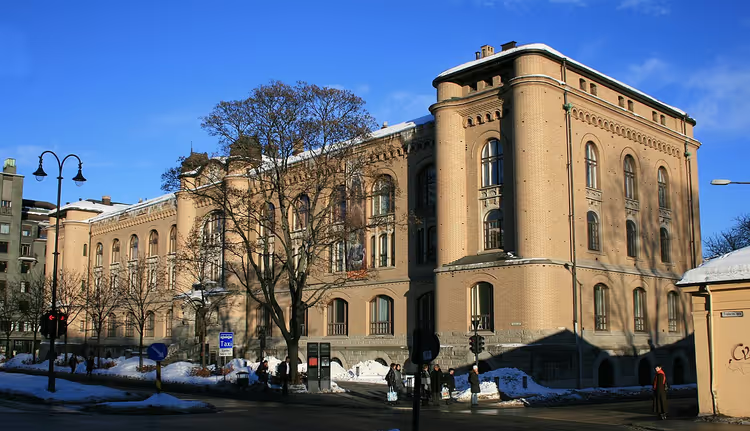 © Vidariv · CC BY-SAPhoto: Vidariv, CC BY-SA (https://creativecommons.org/licenses/by-sa/3.0), Wikimedia Commons
The Historical Museum in central Oslo is spread across several floors. The ground floor displays finds from the Stone Age to the Viking Age: weapons, jewelry, and tools. There is also an armory with armor and blades.
While the Viking Ship Museum is closed, part of its collection has been moved here. The VÌKINGR and Miðgarðr exhibitions introduce you to Viking life and beliefs (as of 09/2026, museum page). This is the only place in Oslo where you can currently see authentic objects from that era.
The second floor houses a collection of coins and banknotes used in different centuries. It includes money from other peoples that reached Norway with travelers, and even old hoards. A separate room is dedicated to the coin collection.
The third floor is the ethnographic section. You'll see Egyptian mummies, Mexican embroidery, Inuit clothing, and shamanic drums. The museum shows how Norwegians viewed other cultures and what they brought back from distant lands.
The museum is closed on Mondays. It has longer hours in summer than in winter. You can walk there from the city's main street.
- How to get there: walk from Karl Johans gate toward the university.
24. Trinity Church
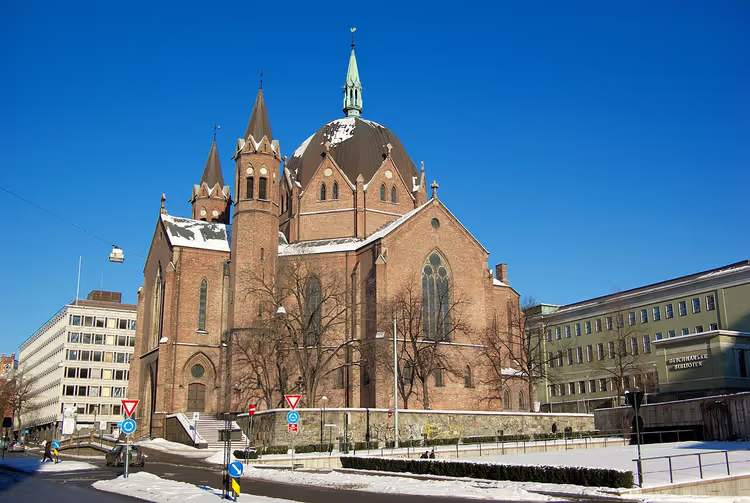 © Bjørn Erik Pedersen · CC BY-SAPhoto: Bjørn Erik Pedersen, CC BY-SA (http://creativecommons.org/licenses/by-sa/3.0/), Wikimedia Commons
Trinity Church stands near the Gronland district. The red-brick Gothic Revival building with two towers seats hundreds of worshippers. It was built in the early 19th century to a design by a German architect.
The church is known for its stained glass windows. Light passing through the colored glass fills the interior with different hues. A large painting of the baptism of Christ hangs above the altar.
Admission is free, and the church is open during the day. Stop by if you're tired of museums and want some quiet. It's a few minutes' walk from the station.
- How to get there: walk from the Central Station through Gronland.
25. National Theatre
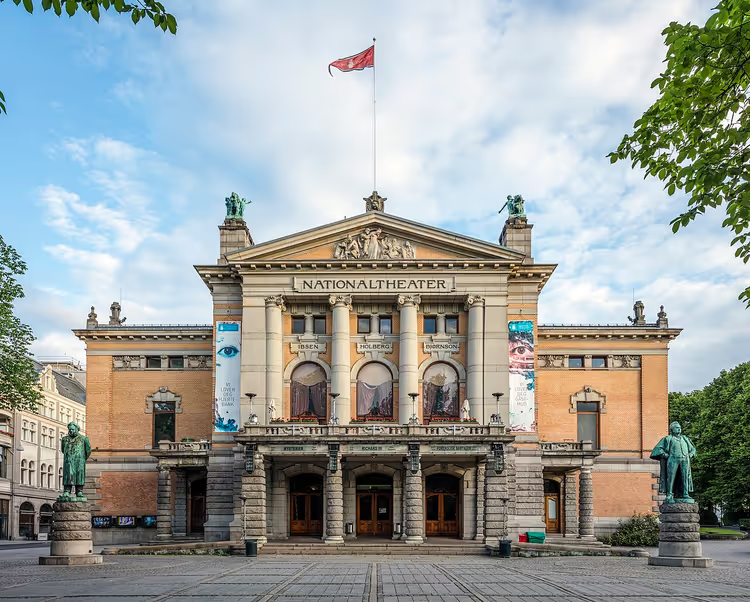 © Godot13 · CC BY-SAPhoto: Godot13, CC BY-SA (https://creativecommons.org/licenses/by-sa/4.0), Wikimedia Commons
The National Theatre stands on the square in front of the main street. It opened in the late 19th century and has been the country's main stage ever since. Monuments to playwrights Henrik Ibsen and Bjørnstjerne Bjørnson stand at the entrance.
Inside, there is a collection of portraits and busts, and the walls are decorated with paintings by Norwegian artists. Ibsen's plays were staged here for a long time, which is why the theater was called his home. Tickets for performances are bought in advance.
You can also view the building from the outside during a walk. In the evening, the facade is beautifully lit. It's a couple of minutes' walk from the Storting.
- How to get there: opposite the Nationaltheatret metro station.
26. Museum of science and technology
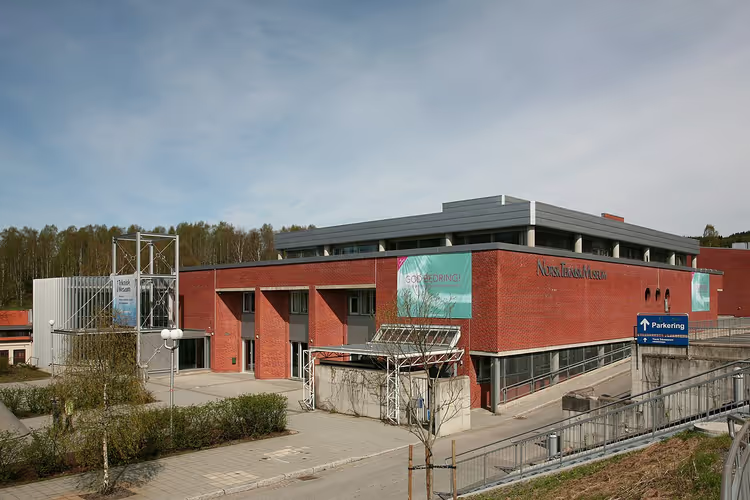 © Trond Strandsberg · CC BY-SAPhoto: Trond Strandsberg, CC BY-SA (http://creativecommons.org/licenses/by-sa/3.0/), Wikimedia Commons
The Museum of Science and Technology in Oslo is interactive. You can touch and start everything here, no theory needed. You'll assemble a model, see household appliances of the past, and peek into the "Invisible World."
A separate hall covers renewable energy: sun, water, and air. The technology collection began to be assembled back in the first half of the 20th century. Exhibits were donated by factories and private owners.
The museum is interesting for both adults and children. Set aside a couple of hours if you want to see all the halls. Check the exact hours and tickets on the museum's website.
- How to get there: by tram to the Tøyen area, then on foot.
27. Reptile park
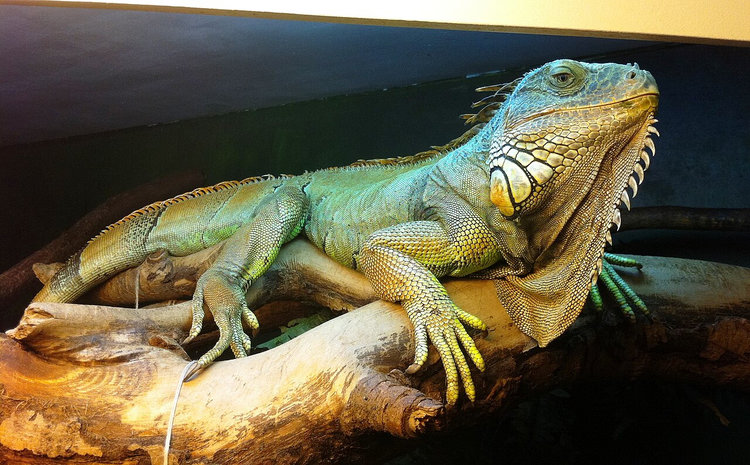 © Chell Hill · CC BY-SAPhoto: Chell Hill, CC BY-SA (https://creativecommons.org/licenses/by-sa/3.0), Wikimedia Commons
The Reptile Park operates indoors and occupies several halls. Snakes, monitor lizards, poisonous frogs, and spiders live here. There is a dwarf crocodile, turtles, and marine fish.
You'll walk past aquariums and terrariums, and the calmest snakes can be held. On Tuesdays, feeding is shown in the early evening. Meeting a boa constrictor on the second floor will be memorable for children.
The park is open every day until almost evening. Tickets are bought at the entrance. You can get there from the main street on foot or by tram.
- Who it's for: families with children and lovers of exotic animals.
- How to get there: on foot or by tram from Karl Johans gate.
28. Norwegian Maritime Museum
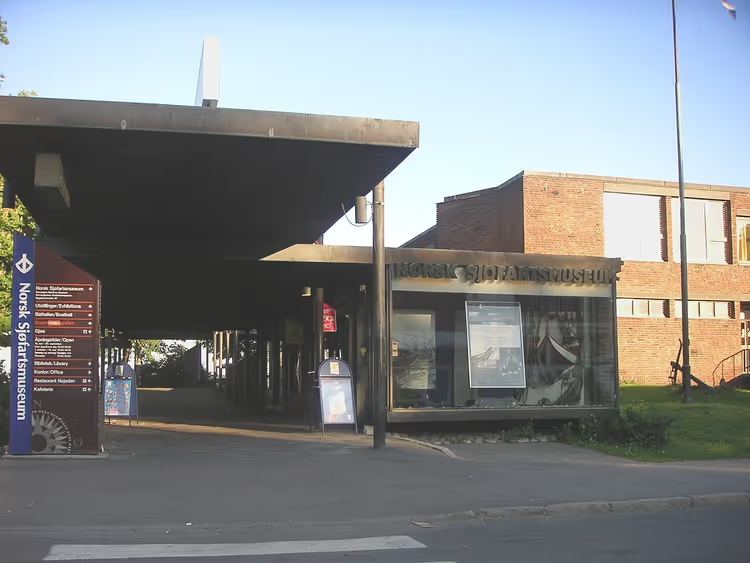 © Hans-Petter Fjeld · CC BY-SAPhoto: Hans-Petter Fjeld, CC BY-SA (https://creativecommons.org/licenses/by-sa/2.5), Wikimedia Commons
The Maritime Museum on Bygdøy tells the story of Norway's connection to the sea. You'll learn about fishing, whaling, and the work of seismic survey fleets. Separate halls are dedicated to rescuing ships trapped in ice.
Guides explain how ship hulls are built and why some designs withstand storms while others don't. The museum houses a collection of maritime paintings by marine artists who depicted the sea and storms.
In the model pool, you can take the helm and feel like a captain. The history of whaling and its modern restrictions is also presented here.
The exhibition is accessible to both children and adults with no maritime background. If you're on Bygdøy, allow about an hour for the museum.
The museum operates on summer and winter schedules, with longer hours in summer. Check the hours in advance, as the halls open later during the shoulder season.
It's located next to the Fram Museum, so it's easy to visit both in one trip.
- Getting there: by ferry or bus to Bygdøy.
29. National Gallery
 © Bjørn Erik Pedersen · CC BY-SAPhoto: Bjørn Erik Pedersen, CC BY-SA (http://creativecommons.org/licenses/by-sa/3.0/), Wikimedia Commons
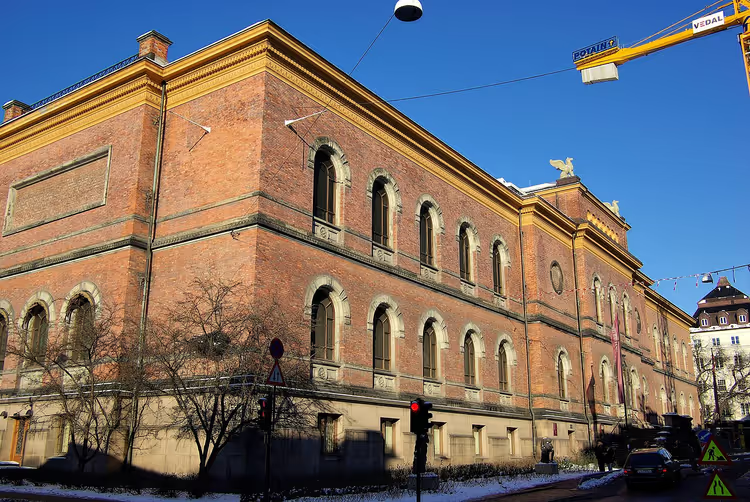
The old National Gallery is now part of the new National Museum. It opened on the waterfront and brought painting, design, and architecture together under one roof (as of 09/2026, National Museum website). One of the versions of "The Scream" also moved here.
The halls feature works by Renoir, Picasso, Van Gogh, and Monet. There's a section of medieval icons and rooms of contemporary art. The collection spans from the late 18th century to the mid-20th century, from Romanticism to Postmodernism.
Munch's "The Scream" was once stolen right out of the gallery, but was recovered a few months later. Today the painting is guarded differently, and other works by the artist hang nearby. If you're interested in Norwegian painting, start your visit here.
The upper floors showcase design, furniture, and architectural models. Temporary exhibitions change several times a year, so check what's on display in advance. A full tour takes at least three hours.
The museum is closed on Mondays. Adult tickets are paid; check the exact price on the website. Arrive at opening time to see "The Scream" without a line.
- Getting there: on foot from City Hall Square toward the waterfront.
30. Henrik Ibsen Museum
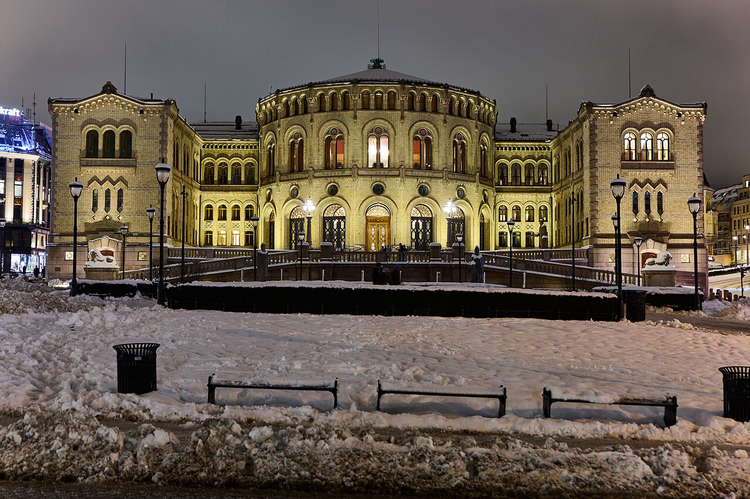
The Ibsen Museum stands next to the Royal Palace Park. The playwright spent the last years of his life here. His study has been preserved as if the owner stepped out for a minute.
The other rooms have been restored, but the furnishings reflect the early 20th century. Ibsen died in the bedroom. Today the museum operates as part of the National Museum (as of 09/2026, Nasjonalmuseet).
Visits are only possible with a scheduled guided tour. Tickets should be purchased in advance, as space is limited. Stop by if Ibsen's plays resonate with you.
- Getting there: on foot from the Royal Palace.
Museum tickets and city tours are best booked in advance: during high season, ticket office lines are long, and spots on boat trips sell out quickly.
Tours and tickets in Oslo
Guided tours, skip-the-line tickets and activities — most offers can be cancelled free of charge.
See offers on GetYourGuideThe widget loads once you give your consent.
Oslo attractions on the map
We've put all thirty points on one map. Open it to plan your route by area and avoid walking extra kilometers.
Sights of Oslo
Places on the map
- 1Viking Ship Museum Three Viking-era ships, closed until the new building opens in 2027
- 2Holmenkollen A ski jump with a panorama of the fjord and the city centre
- 3Vigeland Sculpture Park Hundreds of bronze and granite figures by Gustav Vigeland
- 4Royal Palace The residence of Norway's kings, changing of the guard every day
- 5City Hall The venue where the Nobel Peace Prize is awarded
- 6Opera House A white "iceberg" roof that visitors can walk on
- 7Parliament Building The yellow round Storting building with columns and a dome
- 8Akershus Fortress and Castle Oslo's oldest building, with a view of the harbour
- 9Kon-Tiki Museum Thor Heyerdahl's raft and the vessel "Ra II"
- 10Astrup Fearnley Museum A private collection of contemporary art by the waterfront
- 11Fram Museum The strongest wooden ship in the history of polar expeditions
- 12Nobel Peace Center The history of the Nobel Peace Prize and its laureates
- 13Henie Onstad Art Centre The collection of Sonja Henie and Niels Onstad, Picasso and Matisse
- 14Oslo Cathedral The royal family's official church since the 17th century
- 15TusenFryd Amusement Park Norway's largest amusement park with a water park
- 16Botanical Garden Thousands of plants, a palm house and an arboretum
- 17Norwegian Museum of Cultural History An open-air village with houses from all over Norway
- 18Ekeberg Sculpture Park Works by Salvador Dalí and other artists overlooking the fjord
- 19Ski Museum The history of the national sport at the Holmenkollen complex
- 20St. Olav's Cathedral Norway's main Catholic church with Vigeland stained glass
- 21Munch Museum The largest collection of works by Edvard Munch
- 22Gol Stave Church A 13th-century stave church moved from the Gol municipality
- 23Museum of Cultural History Viking-era finds and an ethnographic collection
- 24Trinity Church A red-brick Gothic church with stained-glass windows
- 25National Theatre The country's main theatre stage, monuments to Ibsen and Bjørnson
- 26Norwegian Museum of Science and Technology Interactive exhibits for adults and children
- 27Reptile Park Snakes, monitor lizards and a dwarf crocodile under one roof
- 28Norwegian Maritime Museum The history of Norway's fishing and whaling industry
- 29National Gallery Renoir, Picasso, Van Gogh and Munch's "The Scream"
⁉️🤔 Frequently asked questions
How many days do you need in Oslo?
Two full days are enough to see the city center and the Bygdøy peninsula. On the first day, walk along the main street from the station to the palace and the fortress. On the second day, set aside time for the Bygdøy museums and Vigeland Park. If you want to visit the Munch Museum, add a third day.
When is the best time to visit Oslo?
The most convenient time is from May to September. Days are long, ferries to Bygdøy run frequently, and parks stay open until late evening. In winter, the city gets dark early, but the Holmenkollen ski trails are open. June and July have the most tourists and the longest lines.
What can you see in Oslo for free?
Vigeland Sculpture Park, Ekeberg Park, and the Botanical Garden don't charge admission. The grounds of Akershus Fortress are also open for walks. The Opera House lobby and roof can be viewed without a ticket. This is a good plan for a day if you want to save on museums.
How do you get around Oslo?
You can walk around the city center, and trams, buses, and the metro go to farther points. A ticket is valid on all types of transport and costs more if purchased from the driver. The ferry to Bygdøy is included in the city transport zone. Download the transit operator's app so you don't have to look for a ticket machine.
Is Oslo Pass worth buying?
The pass pays off if you plan to visit several paid museums over one or two days. It gives free admission and city transport. For a short trip with two museums, it's cheaper to buy regular tickets. Compare prices on the official website before purchasing.
In short: what to book
If you only have one day, start with Bygdøy: the Fram Museum, Kon-Tiki, and the Norwegian Museum of Cultural History are all close together. If you have more time, set aside a separate day for the city center and Akershus Fortress.
If you're short on time: take one city center tour and the Munch Museum. If you're traveling with kids: add the Reptile Park and Tusenfryd. If you're into art: plan for the National Museum and Vigeland Park.

A small editorial team writing guides for independent travel. We travel ourselves, but we haven’t been everywhere, so we check prices, opening hours and how to get there against official sources.