
















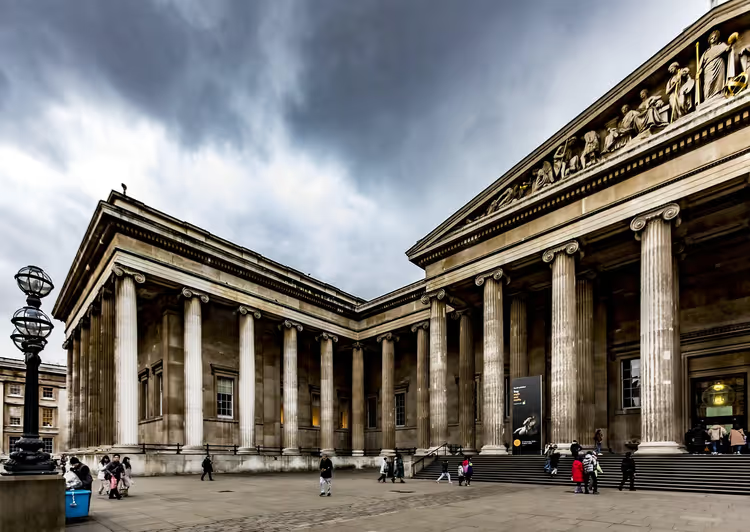
35 Best museums in Prague: what to see and ticket prices
Prague has more museums than days in a vacation. The historic center alone has several dozen: from the modern art collection at Sovovy mlýny in Malá Strana to the underground alchemists' laboratory beneath the Old Town. You won't cover even a third of them in one trip. We've put together 35 Prague museums worth adding to your itinerary and organized them by day, price, and opening hours.
Buy tickets for popular museums in advance: in summer, the National Museum ticket office has a line by eleven in the morning. The most expensive ticket on our list costs around 500 crowns, the cheapest will set you back 50 crowns (as of 09/2026, National Gallery Prague). Below you'll find what to see in each museum, how much it costs, and which day it's closed.
Ad: this article contains affiliate links. We earn a commission if you book through them, at no extra cost to you.
What to know before visiting a museum
Prague is compact, but museums are scattered across different neighborhoods: Kampa is in Malá Strana, the National Museum is on Wenceslas Square, and the Public Transport Museum is out on the edge of the city. Plan for two or three museums a day and don't mix far-flung locations in one route. Most ticket offices stop selling tickets half an hour before closing.
💡 In short:
- See 2-3 museums a day; points in the center are 10-20 minutes apart on foot.
- Buy tickets online and arrive at opening time: lines grow by midday.
- Check the day of the week: most museums are closed on Mondays, the Lapidarium and the Transport Museum don't operate every day.
- Prices and opening hours: 09/2026, verified on the official Prague tourism website.
If you're planning more than three museums per trip, do the math on the Prague Visitor Pass. The official city card covers entry to a number of museums and galleries and includes unlimited public transit (as of 09/2026, Prague city card). For one or two visits, the card is usually more trouble than it's worth.
1. Kampa Museum
 © Besenbinder · CC BY-SAPhoto: Besenbinder, CC BY-SA (https://creativecommons.org/licenses/by-sa/3.0), Wikimedia Commons
Museum Kampa opened in the early 2000s in the former Sovovy mlýny mill. The collection was assembled by Meda and Jan Mládek: Czech art of the 20th century and the world's largest collection of František Kupka. After the renovation, little remains of the old mill. Inside there's a glass roof, a glass balcony, and rooms filled with abstract canvases.
In the courtyard you're greeted by the same works that appear on guidebook covers: giant crawling babies, red dogs, and orange rabbits. Above the entrance hangs Jan Mládek's phrase about the role of culture in the life of a nation. Besides Kupka, the museum shows avant-garde artists from Hungary, Poland, Slovakia, and Yugoslavia, whose work was rarely exhibited in the second half of the 20th century.
Kupka's most famous works are "The Cathedral" and "The Market," both shown at prestigious exhibitions across Europe. The collection later grew: Meda Mládek donated about forty more of the artist's works to the museum. Separate rooms are dedicated to temporary exhibitions by contemporary European artists. The exhibits are nothing alike, and that's the main argument for a visit.
Practical info: address Sovovy mlýny 2, Malá Strana. Ticket around 200 crowns (as of 09/2026, Kampa Museum: prices and hours). Tickets on Tiqets
2. Prague Castle
 © Diego Delso · CC BY-SAPhoto: Diego Delso, CC BY-SA (https://creativecommons.org/licenses/by-sa/4.0), Wikimedia Commons
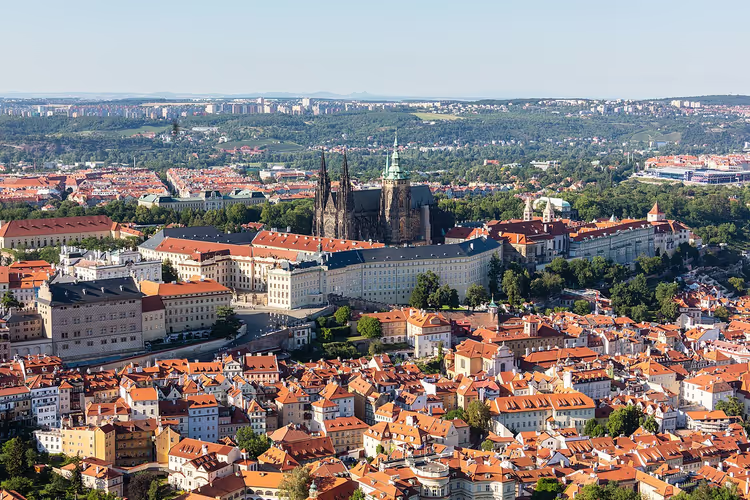
Prague Castle was founded back in the 9th century. It's an open-air museum: palaces, cathedrals, and gardens on a single hill. From above you get a panorama of red tiled roofs, spires, and green garden islands. Arrive at opening time to walk the courtyards without the crowds.
The castle's approach begins at Hradčany Square with the old Schwarzenberg-Lobkowicz, Archbishop's, and Sternberg palaces. Through the ceremonial gates with the honor guard you enter the first courtyard with the Theresian Palace, then the second courtyard through the Matthias Gate. In the middle of the square stands the Plague Column with a statue of the Virgin Mary.
The main point of the third courtyard: St. Vitus Cathedral. Don't miss Golden Lane with its colorful little houses and the Royal Garden with the Summer Palace and the Singing Fountain. In the Honorary Courtyard, the Chapel of the Holy Cross and an old well under a Renaissance grille have been preserved.
Practical info: entry to the courtyards is free; tickets are required for the cathedral, Golden Lane, and the palaces. The grounds are open daily, with hours depending on the season (as of 09/2026, Prague Castle: opening hours). Prague Castle tours on GetYourGuide
3. Museum of Alchemists and Magicians
 © JiriMatejicek · CC BY-SAPhoto: JiriMatejicek, CC BY-SA (https://creativecommons.org/licenses/by-sa/4.0), Wikimedia Commons
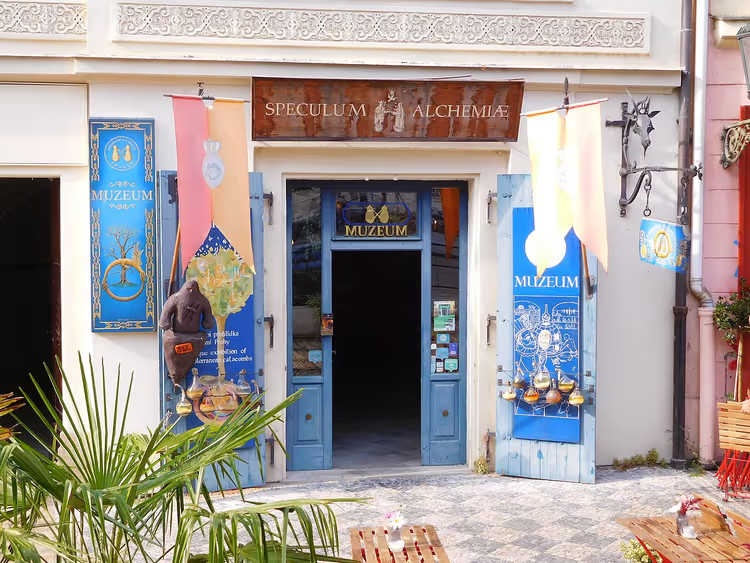
Fans of alchemy stories will find a real underground laboratory here. It is hidden beneath an old house on Hastalská Street, where an alchemical workshop was set up in the 16th century by order of Emperor Rudolf II. Tycho Brahe, Rabbi Loew, and Tadeáš Hájek worked there.
The catacombs were only discovered in the 20th century: the underground space had three exits leading to Prague Castle, the Old Town Hall, and workers' barracks. The museum building is protected by UNESCO as the oldest in Prague. A half-hour tour takes you through a world of retorts, flasks, and test tubes.
The site was previously a herbal pharmacy that sold medicinal herb blends. The exhibits show how the pharmacy was turned into a secret laboratory and what experiments were conducted here. According to legend, the philosopher's stone was sought in the underground chambers. Researchers have established that the experiments here were conducted seriously, not for show.
Practical info: address Hastalská 1, Old Town. Open daily 10:00-18:00, adult ticket 200 CZK, child ticket 70 CZK (as of 09/2026, Museum of Alchemists: prices and hours). Tickets on Tiqets
4. Alfons Mucha Museum
 © JiriMatejicek · CC BY-SAPhoto: JiriMatejicek, CC BY-SA (https://creativecommons.org/licenses/by-sa/3.0), Wikimedia Commons
Alfons Mucha is known as the founder of Czech Art Nouveau. He began his career in the theaters of Paris and Vienna, when an unknown young man started drawing posters for Sarah Bernhardt. He turned advertising posters into fine art: he designed advertisements, illustrated books, and drew sketches for carpets, wallpapers, and jewelry.
The small museum houses paintings, drawings, pastels, engravings, and lithographs, as well as photographs and the artist's personal belongings. Of the hundred or so exhibits, most date from the Paris period. Separate rooms are dedicated to the posters and decorative panels he created for theaters and advertising.
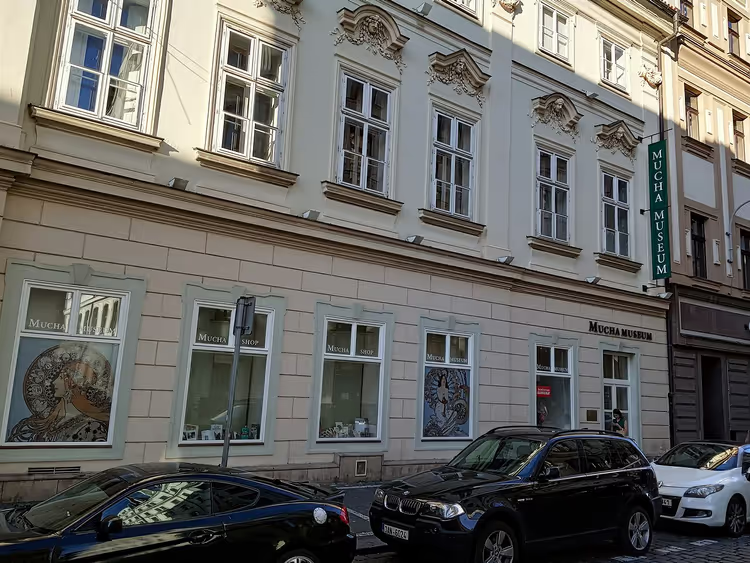
The studio recreates the atmosphere of the creative process: it feels as if the artist is about to pick up a brush. His posters are applied to the window glass, so you will recognize the museum building without fail. The exhibition is small; an hour is enough to see it.
Practical info: address Panská 7, Kaunický Palace, New Town. Ticket 180 CZK, family ticket 490 CZK (as of 09/2026, Mucha Museum: prices and hours). Tickets online
5. Wax Museum
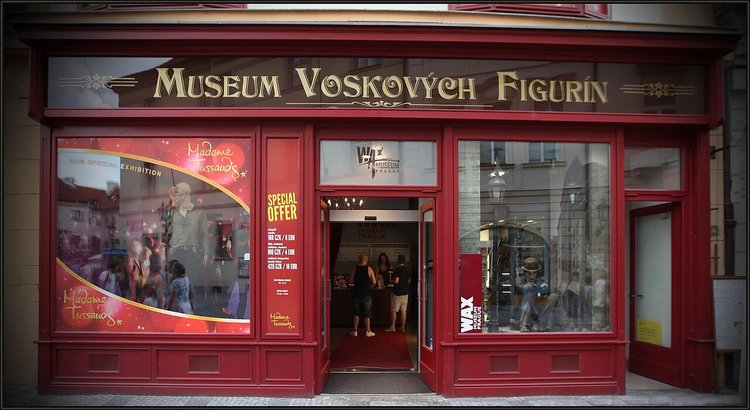 © Morton1905 · CC BY-SAPhoto: Morton1905, CC BY-SA (https://creativecommons.org/licenses/by-sa/4.0), Wikimedia Commons
The Prague Wax Museum opened in the late nineties and has assembled dozens of figures of politicians, performers, scientists, and musicians. According to visitor reviews, the resemblance to the originals is uneven: some figures are instantly recognizable, others less so. On the plus side, the rooms are spacious, and you can approach any figure without crowding.
The layout of the rooms lets you view each character at your leisure. Figures of different nationalities are arranged by theme: politics, theater and film, science, and music. Among the exhibits are Jack Nicholson with his distinctive posture, Princess Diana under glass, and Einstein on a child's swing. According to guests, Mozart lacks the liveliness of the original.
Some figures are placed in individual display cases, so you can examine them up close. Museums like this depend on accurate likeness, and here it varies widely. If you want to compare, stop by for an hour: the exhibition is small but full of character.
Practice: address Celetná 6, Old Town. Open daily 10:00-21:00, adult ticket 160 CZK, child ticket 100 CZK (as of 09/2026, Wax Museum: prices and hours). Tickets on Tiqets
6. Garnet museum
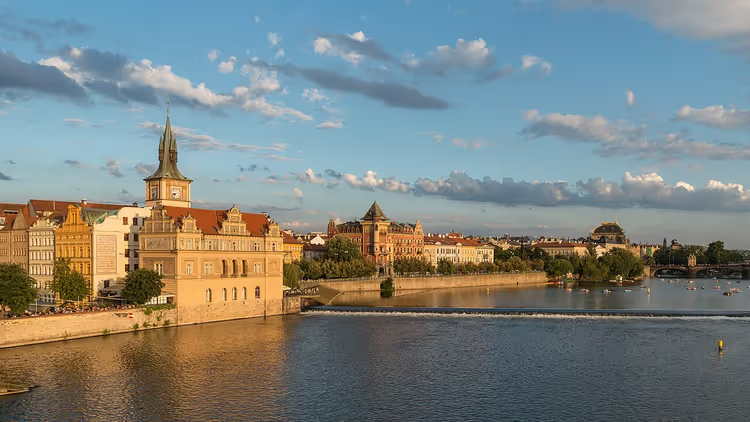 © DXR · CC BY-SAPhoto: DXR, CC BY-SA (https://creativecommons.org/licenses/by-sa/4.0), Wikimedia Commons
Czech garnet is mined near the town of Turnov, and it is the country's only precious stone. A small Prague museum tells the story of its mining, cutting and jewelry making. A separate part of the exhibition is devoted to the magical properties of the stone, in which alchemists and noble families believed.
The display cases hold jewelry of the Czech aristocracy with different types of garnet: almandines, rhodolites and melanites. In the museum shop you can buy jewelry with them. Half an hour is enough for a visit, so the museum is easy to combine with a walk through Nové Město.
Practical info: address Panská 6, Nové Město. Open daily 10:00-20:00, ticket 80 CZK (as of 09/2026, Garnet museum: prices and hours). Tickets on Tiqets
7. Toy museum
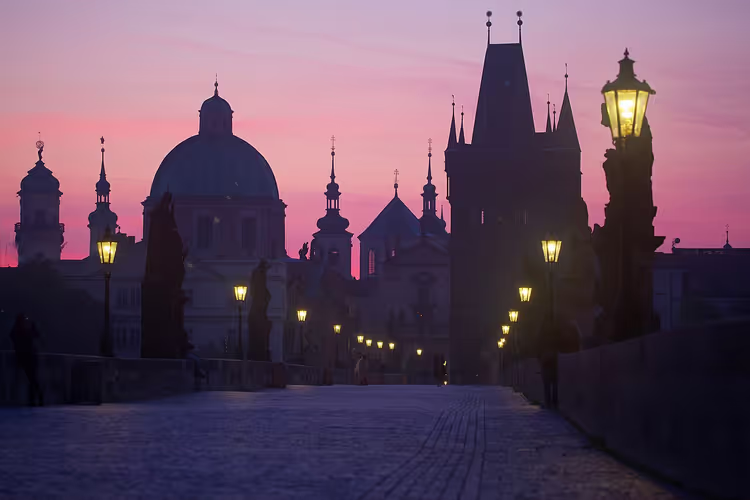 © Bradley Weber · CC BYPhoto: Bradley Weber, CC BY (https://creativecommons.org/licenses/by/2.0), Wikimedia Commons
The Prague Toy Museum operates near Prague Castle. Eleven halls tell the history of toys: tin soldiers, dollhouses, board games and model railways. Some pieces are more than two thousand years old, made of stone, wood and even bread.
A separate section is devoted to Barbie: hundreds of dolls in different looks, along with Ken, houses, dishes and jewelry. The very first Barbie, released in the late fifties, is on display here. The collection of toys in costumes of different nations shows how children's fashion changed over a century.
Eleven exhibition halls present a whole toy world with little towns, houses, rooms and figures of people of different professions and ages. Rare exhibits lie under glass like great treasures. You will especially remember the mechanical toys and antique dollhouse interiors, which were assembled piece by piece.
Practical info: address Jiřská 4, Prague Castle. Open daily 9:30-17:30, adult ticket 70 CZK, child ticket 30 CZK, family ticket 120 CZK (as of 09/2026, Toy museum: prices and hours). Tickets on Tiqets
8. Charles Bridge museum
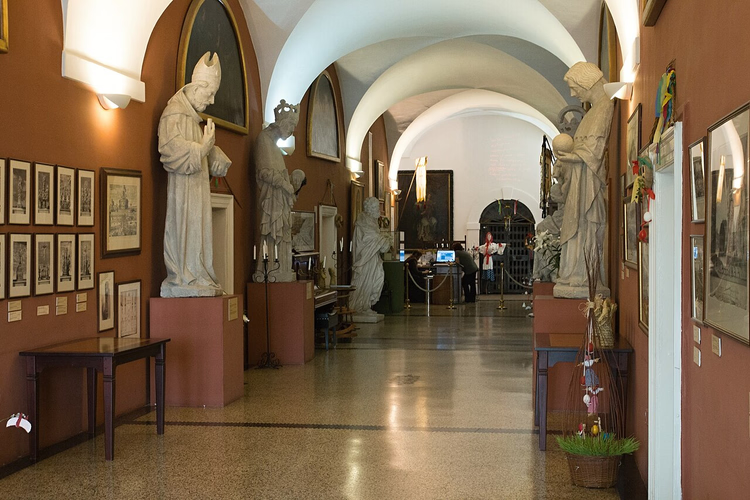 © Zde · CC BY-SAPhoto: Zde, CC BY-SA (https://creativecommons.org/licenses/by-sa/4.0), Wikimedia Commons
Charles Bridge was long the only crossing over the Vltava, and it got its own museum near Křižovnické náměstí. The medieval bridge was built on the site of the older Judith Bridge. Over the centuries its appearance changed: the spans were decorated with sculptures and new elements, and the old bridge still serves the city today.
The museum's main exhibit: a model of the 14th-century bridge set against a builders' workshop. Construction tools and mechanisms are on display here, along with the transport of materials and figures of three hundred and fifty workers with tools. A separate part tells the story of the bridge's reconstruction by stonemasons.
The exhibition is very realistic, and tactile signs are provided for blind visitors. In the museum shop you will find souvenirs and historical replicas made of different materials. Half an hour is enough for a visit, and admission is often bundled with a Vltava river cruise.
Practical info: the museum is open daily at Křižovnické náměstí, next to Charles Bridge. Tickets on Tiqets
9. Franz Kafka museum
 © Mister No · CC BYPhoto: Mister No, CC BY (https://creativecommons.org/licenses/by/3.0), Wikimedia Commons
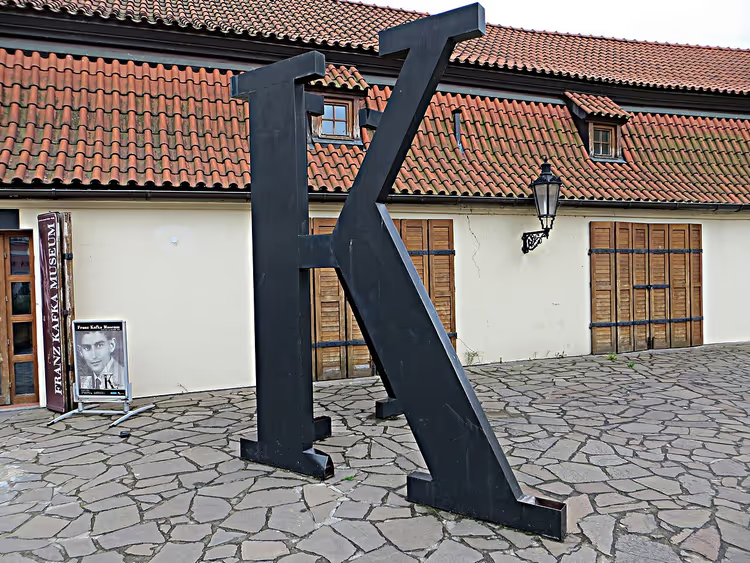
The Franz Kafka Museum occupies a long, low building of a former brick factory in Malá Strana. It is dedicated to the writer who foresaw the horrors of 20th-century totalitarianism in his books. The design is deliberately unsettling, and not everything here will be clear without some familiarity with his prose.
In the courtyard, many visitors are surprised by David Černý's fountain: two moving sculptures of men whose streams spell out words on the water. In front of the entrance stands a collage of two letters "K", symbols of the writer's surname and the names of his characters.
The first section, "Existential Space", transports you to Prague at the beginning of the 20th century: narrow, dim corridors and dark halls create the gloomy atmosphere of his books. Documents, photographs, Kafka's personal belongings, manuscripts and first editions are collected here. A film about the city where he was born and walked completes the experience.
In a separate hall you will learn about the writer's personal life and his relationships with family and friends. The "Imaginary Topography" section shows videos based on the plots of his works. The grim model of an execution from the story about the penal colony, with the figure of a prisoner, is hard to forget after your visit.
Practical info: address Cihelna 2b, Malá Strana. Open daily 10:00-18:00 (as of 09/2026, Kafka Museum: opening hours). Tickets online
10. Beer museum
 © Jacek Halicki · CC BY-SAPhoto: Jacek Halicki, CC BY-SA (https://creativecommons.org/licenses/by-sa/3.0), Wikimedia Commons
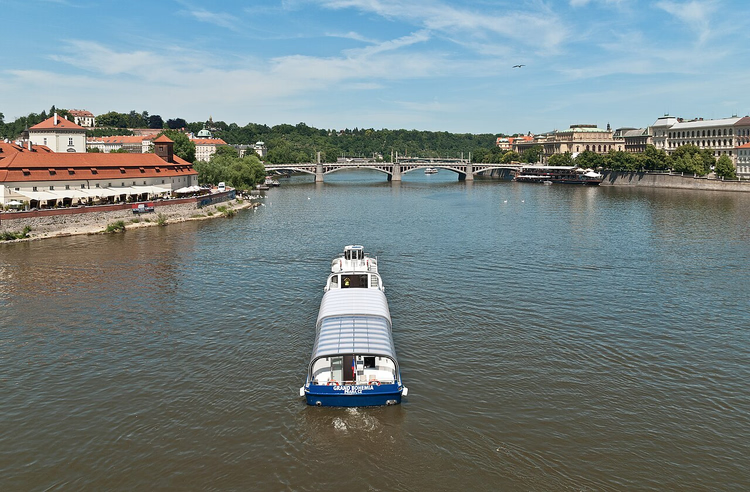
Czech beer has been brewed since ancient times, and Prague could hardly do without a museum dedicated to this drink. It is essentially a large beer bar with three dozen varieties. It is owned by a California entrepreneur who became a beer enthusiast.
Here you will learn about the history of Prague brewing and taste the best Czech beer brands and beer cocktails. The atmosphere is cozy, so there are plenty of guests even on weekdays. On weekends it is better to book a table in advance, otherwise you will have to wait.
Practical info: address Dlouhá 46, Old Town. Open daily 12:00-03:00 (as of 09/2026, Beer Museum: opening hours). Tickets on Tiqets
11. Museum of miniatures
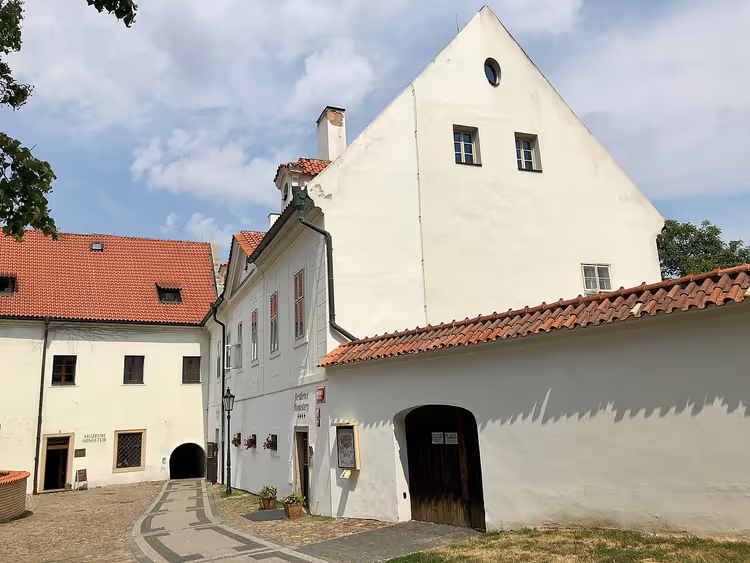
The Museum of Miniatures near Strahov Monastery displays works that can only be seen under a microscope or through a strong magnifying glass. The core of the collection was assembled by master Anatoly Konenko. He started by shoeing an ordinary flea, and over seven and a half years he made miniature horseshoes, scissors, a lock, and a key out of gold.
His works have been exhibited here since the late nineties. Among the exhibits are a flea smaller than a square millimeter, a book with Chekhov's story "The Chameleon," a camel caravan in the eye of a needle, and a train on a dragonfly's antenna. In a miniature copy of the Eiffel Tower just over three millimeters tall, you can make out every detail.
The copies of paintings by Renoir, Rembrandt, and da Vinci are equally impressive. There is a portrait of Chekhov engraved on a poppy seed and Beethoven's face on an apple seed. You can examine all of this in a medieval building near the monastery.
Practical info: address Strahovský klášter 302/11, Hradčany. Open daily 9:00-17:00, adult ticket 100 CZK, child ticket 50 CZK (as of 09/2026, Museum of Miniatures: prices and hours). Tickets on Tiqets
12. Torture museum
 © Giorgio Galeotti · CC BYPhoto: Giorgio Galeotti, CC BY (https://creativecommons.org/licenses/by/4.0), Wikimedia Commons
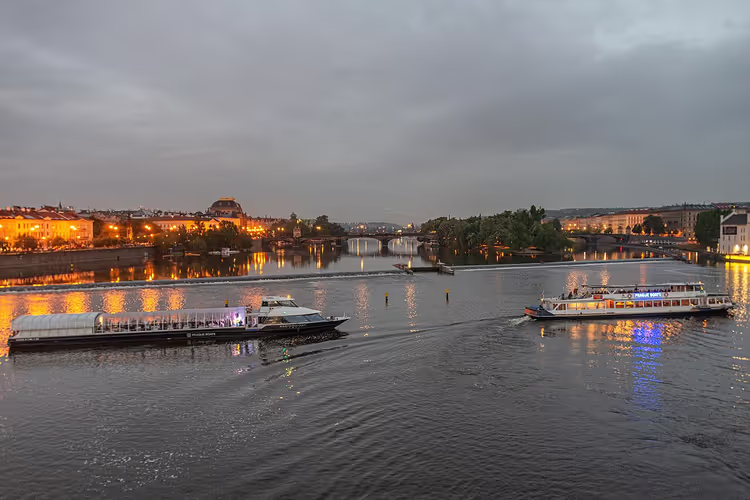
A torture museum operates in the basement of a Gothic building. It will not appeal to everyone: in the dim light, the scenes seem even more frightening. Here stands the head of a condemned man on the block, a figure of an executioner, and a prisoner behind thick bars.
Among the instruments you will see a stake, a "head crusher," a rack, and a "Spanish boot." The exhibits evoke disgust and compassion for the victims at once. Stop by if you are interested in the dark side of medieval justice.
Practical info: address Křižovnické náměstí 194/1, Old Town. Open daily 10:00-22:00, adult ticket 160 CZK, child ticket 100 CZK (as of: 09/2026, Museum of Torture: prices and hours). Tickets on Tiqets
13. National Museum
 © Enfo · CC BY-SAPhoto: Enfo, CC BY-SA (https://creativecommons.org/licenses/by-sa/3.0), Wikimedia Commons
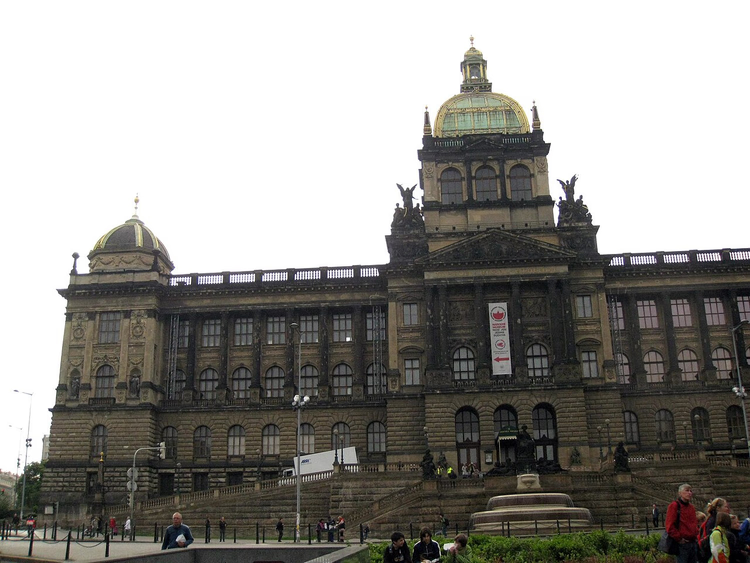
A monumental Neo-Renaissance building stands on Wenceslas Square. It is the country's largest museum. Its collections number millions of exhibits and cover history, ethnography, numismatics, anthropology, paleontology, zoology, and archaeology. The best place to start is the permanent nature exhibition.
Right in the lobby, you will be impressed by the marble, stone carvings, frescoes, and sculptures. Wide staircases with red carpets lead to the central hall with busts of prominent figures in Czech science and culture. Separate halls are dedicated to animals, dinosaurs, and human skeletons.
Among the main exhibits are a fin whale skeleton, as well as jewelry, medieval weapons, ancient coins, minerals, and crystal glassware. Seeing the entire complex will take you several hours, so plan your visit for the morning and get your ticket in advance.
Practical info: address Václavské náměstí 68, New Town. Open daily from 10:00 to 18:00 (as of: 09/2026, Národní muzeum: opening hours). Tickets on Tiqets
14. National Technical Museum
 © BugWarp · CC BYPhoto: BugWarp, CC BY (https://creativecommons.org/licenses/by/4.0), Wikimedia Commons
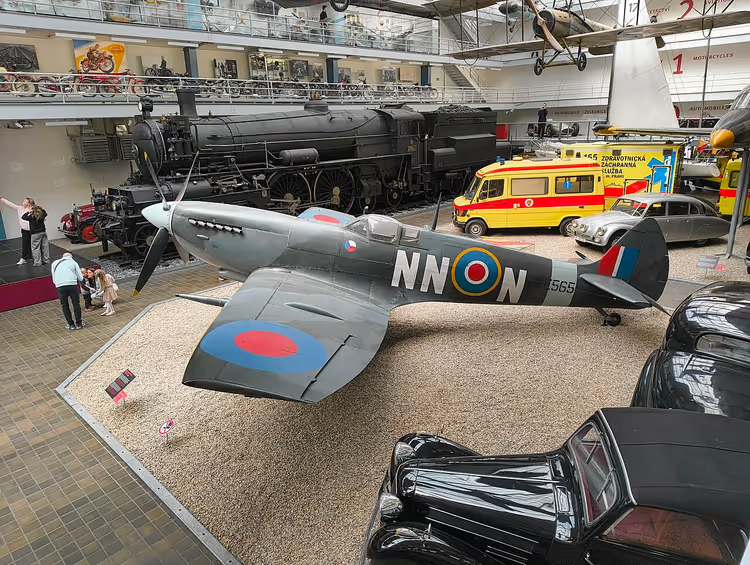
The National Technical Museum showcases industrial achievements from different countries. The halls of the six-story building are filled with machinery invented from the 18th century through the end of the 20th century. In total, there are tens of thousands of exhibits: transportation, household appliances, office equipment, and apparatus.
The largest collection is dedicated to transportation, and it occupies the biggest hall. Rare automobiles, bicycles, motorcycles, airplanes, and steam locomotives are displayed at full scale. You will enjoy seeing some of the first cameras, printing presses, astronomical instruments, old televisions, and tape recorders. Exploring the halls takes at least two hours.
Practical info: open daily except Monday, 9:00 AM to 6:00 PM, admission 220 CZK (as of 09/2026, Národní technické muzeum: admission and hours). Tickets online
15. Czech Police Museum
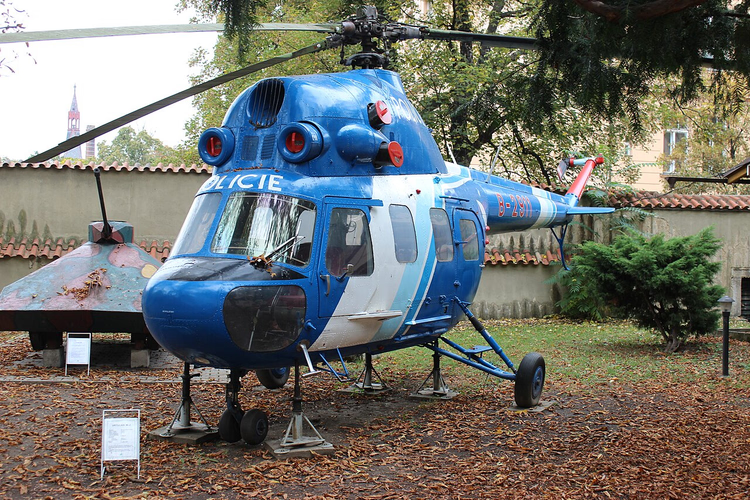
The Police Museum occupies a former monastery building. The exhibition covers the period from the early 20th century and tells the story of investigators, forensic specialists, and undercover officers. A police officer's office and several crime scenes have been recreated here.
 © Krokodyl · CC BY-SAPhoto: Krokodyl, CC BY-SA (https://creativecommons.org/licenses/by-sa/4.0), Wikimedia Commons
The museum's collection holds uniforms and state awards of officers from different eras. Reports, verdicts, physical evidence, and fingerprints introduce you to famous cases of the past. Display cases feature pistols, batons, grenades, and handcuffs.
A separate collection is dedicated to listening devices of the past century. Czechoslovak intelligence officers knew how to install a "bug" in a radio receiver or another device. For surveillance, agents used cameras with powerful telephoto lenses.
Practical info: open Tuesday through Sunday, hours 10:00 AM to 5:00 PM, ticket 50 CZK (as of 09/2026, Police Museum: prices and hours). Tickets on Tiqets
16. Lego Museum
 © JiriMatejicek · CC BY-SAPhoto: JiriMatejicek, CC BY-SA (https://creativecommons.org/licenses/by-sa/4.0), Wikimedia Commons
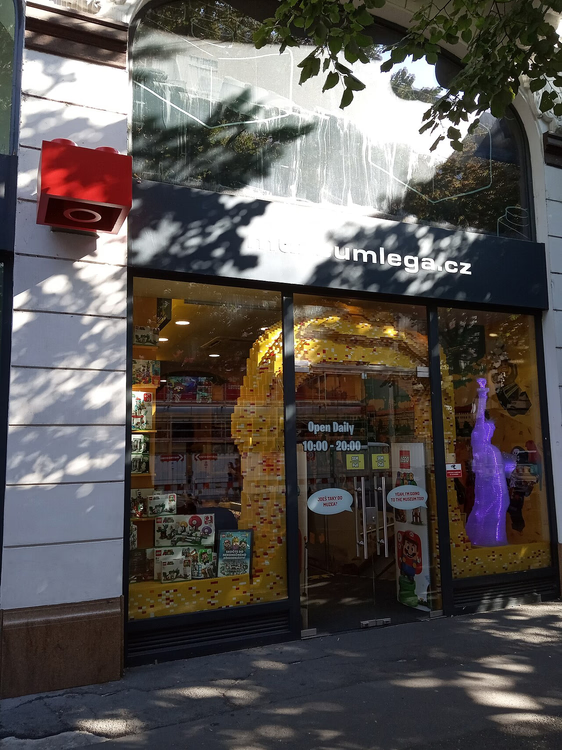
The Lego Museum in Prague has assembled rare and modern construction sets. The exhibition area of the three-story museum is about three hundred square meters. Twenty themed collections fill the halls almost entirely: there are entire cities and universes made of bricks.
Worth your attention are sets of vehicles, construction equipment, world landmarks, spacecraft, pirate ships, and knight's castles. Separate displays are dedicated to characters from "Harry Potter," "Star Wars," and "Indiana Jones."
The museum has a playroom with tables. Adults and children can build any structure here from a huge number of pieces. This is a convenient place to bring a child if you need to switch to playtime after Prague Castle.
Practical info: open daily 10:00 AM to 8:00 PM, adult ticket 200 CZK, child ticket 50 CZK (as of 09/2026, Lego Museum: prices and hours). Tickets on Tiqets
17. Czech Museum of Music
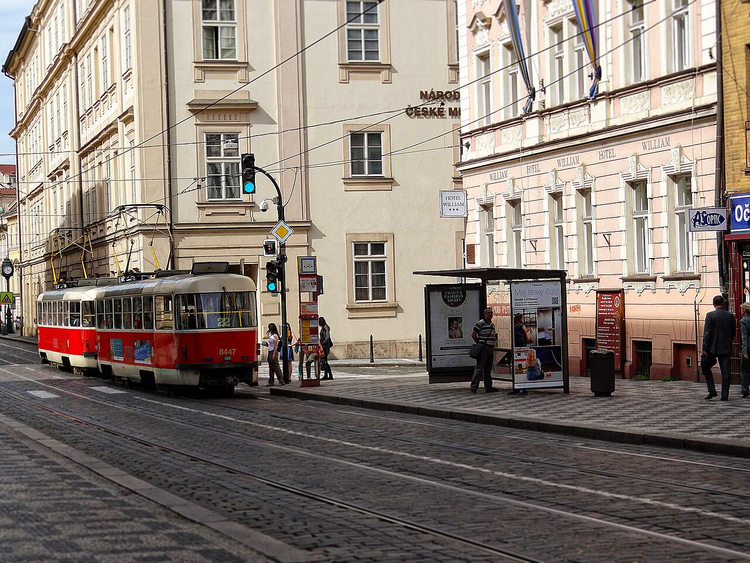
The Czech Museum of Music occupies a Baroque building with an octagonal dome in Malá Strana. Built in the 17th century, it served as the Church of St. Mary Magdalene, a warehouse, a post office, an archive, and a barracks. Today it houses a rich collection of musical instruments.
 © Yannick Loriot · CC BYPhoto: Yannick Loriot, CC BY (https://creativecommons.org/licenses/by/2.0), Wikimedia Commons
You can experience the sound of the instruments by putting on headphones. Among the exhibits is an antique harpsichord that Mozart played during his visit to Prague. French harps, a neon grand piano, and guitars are equally prized.
The interior design is enhanced by light and sound effects. Glass shelving holds vinyl records, sheet music, and other informational materials. The exhibition is designed so that you listen to the instruments rather than simply look at them behind glass.
Practical info: the museum welcomes visitors daily except Tuesday, from 10:00 to 18:00, ticket 120 CZK (as of 09/2026, Czech Museum of Music: hours and tickets). Tickets on Tiqets
18. Museum of Communism
 © Ferfive · CC BYPhoto: Ferfive, CC BY (https://creativecommons.org/licenses/by/4.0), Wikimedia Commons
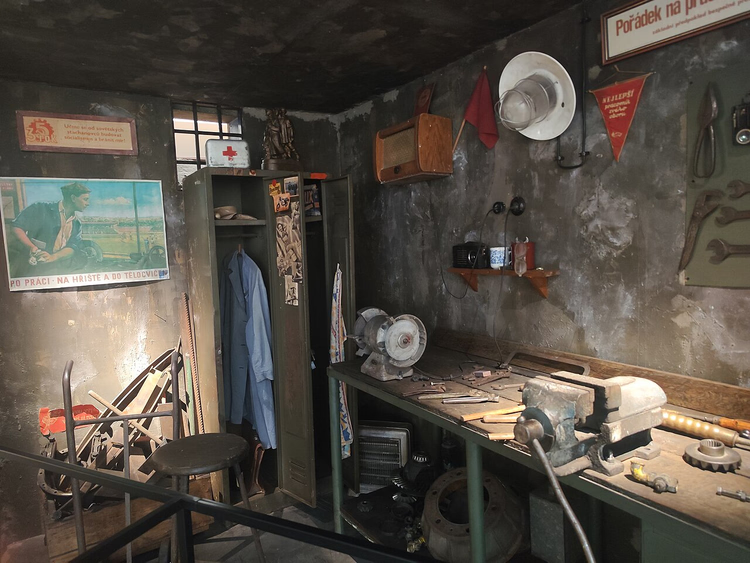
The Museum of Communism immerses you in the era of socialist Czechoslovakia from the late 1940s to the late 1980s. Right at the entrance you are greeted by original posters featuring a matryoshka doll and the Olympic bear. The exhibition spans several rooms and presents the political system of that period with sarcasm.
The collection is built around propaganda materials, paintings, banners, busts of leaders, and military items. A school classroom with desks and communist literature has been recreated here. Secret police interrogation rooms and a half-empty store counter show everyday life and the decline of the planned economy.
Practical info: open daily, seven days a week, from 9:00 to 21:00, adult ticket 290 CZK, student ticket 250 CZK (as of 09/2026, Museum of Communism: prices and hours). Tickets on Tiqets
19. Jewish Museum
 © VitVit · CC BY-SAPhoto: VitVit, CC BY-SA (https://creativecommons.org/licenses/by-sa/4.0), Wikimedia Commons
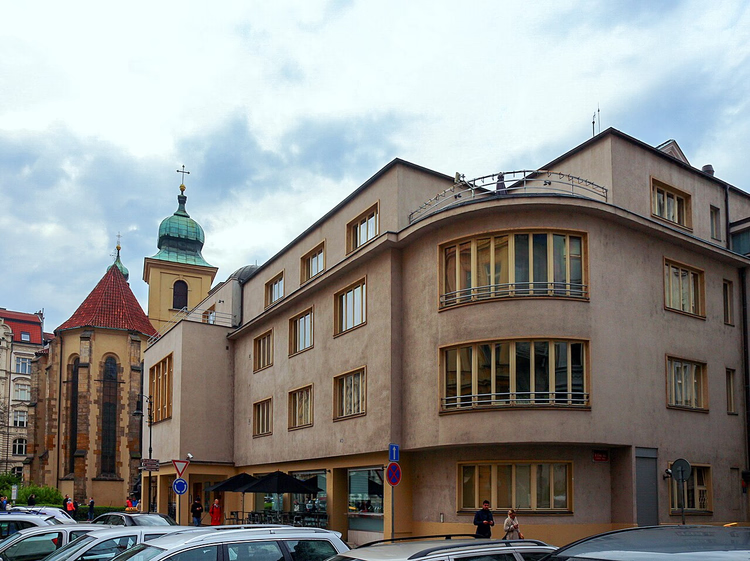
The Jewish Museum brings together a complex of historic buildings in Prague's Jewish Quarter. It includes five synagogues, the old cemetery, and a cultural center. With a single ticket you can explore the history and culture of the Jewish community in Czechia.
The religious buildings house an enormous number of artifacts: around forty thousand items and one hundred thousand books. All exhibits were collected in the territory of Czechia and Moravia. This is one of the most complete collections of Jewish heritage in Europe.
Practical info: open from 9:00 to 18:00 daily, except Saturdays and Jewish calendar holidays. A combined ticket costs 480 CZK (as of 09/2026, Jewish Museum: tickets and hours). Tickets on Tiqets
20. Kingdom of Railways
 © ŠJů · CC BYPhoto: ŠJů, CC BY (https://creativecommons.org/licenses/by/4.0), Wikimedia Commons
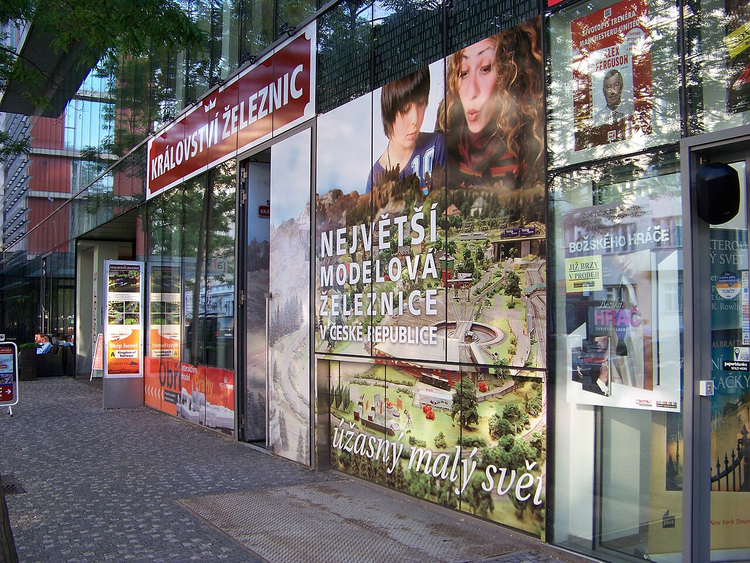
Kingdom of Railways operates in the basement of a Prague shopping center. It features highly detailed miniature models of Czech cities: buildings, streets, parks, rivers, and mountains. Trains move along their routes through these scenes.
Cars, buses, and trains are controlled by traffic lights and road markings. The total length of the tracks exceeds one hundred meters. Scenes from the lives of toy figurines will entertain both adults and children.
Practical info: exhibits are open daily from 9:00 to 19:00, ticket 200 CZK (as of 09/2026, Kingdom of Railways: prices and hours). Tickets on Tiqets
21. National Gallery
 © Derbrauni · CC BYPhoto: Derbrauni, CC BY (https://creativecommons.org/licenses/by/4.0), Wikimedia Commons
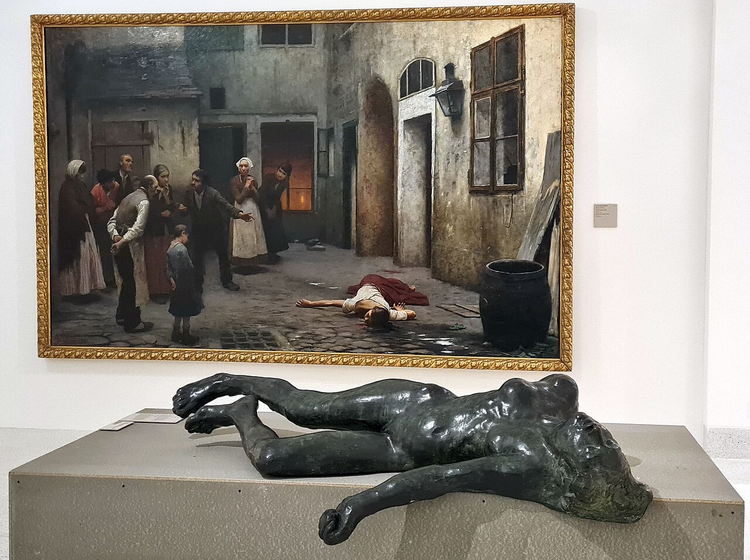
The National Gallery holds an impressive collection of paintings, graphic art, and sculptures. Its exhibitions occupy palace halls in different parts of Prague. The collection began to take shape in the late 18th century, when Czech aristocrats founded a society of art lovers.
One of the main exhibitions is housed in the Kinský Palace. Here you will see Czech landscapes from the 17th to 20th centuries and art from the peoples of the East: ancient Chinese statues, Egyptian papyri, Islamic ceramics, and Japanese prints. The Schwarzenberg Palace displays works by medieval Central European masters and antique weapons.
The gallery's largest building is the Trade Fair Palace. Its halls contain the best works by 19th and 20th century artists: Picasso, Van Gogh, Klimt, Kokoschka, and Braque. Of particular value are the monumental panels of Alphonse Mucha's "Slav Epic." Seeing all the venues will take half a day, so pick two or three based on your interests.
Practical info: a combined ticket costs 500 CZK and is valid for 10 days, individual exhibitions cost 220 CZK each. The gallery is open daily except Monday from 10:00 to 18:00 (as of 09/2026, National Gallery: tickets). Tickets on Tiqets
22. Chocolate Museum
 © JiriMatejicek · CC BY-SAPhoto: JiriMatejicek, CC BY-SA (https://creativecommons.org/licenses/by-sa/3.0), Wikimedia Commons
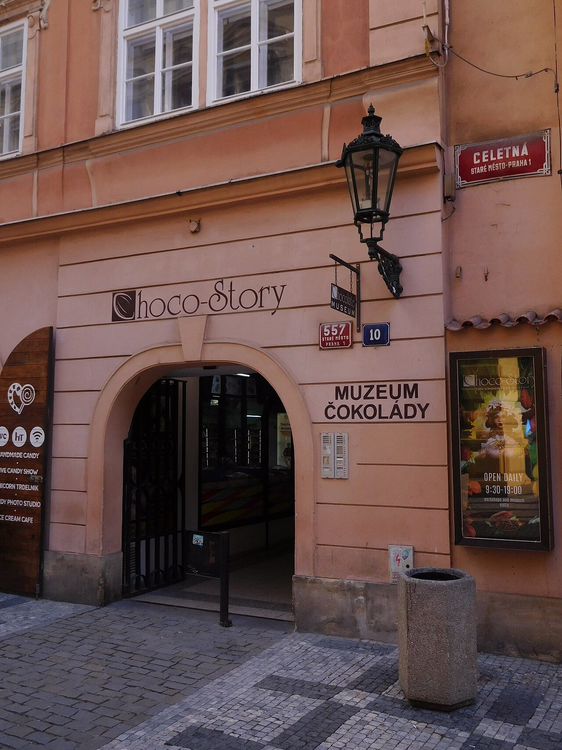
The Chocolate Museum is set in an old mansion near Old Town Square. The air here is filled with the aromas of cocoa, chocolate, and spices. The exhibition tells the story of cocoa cultivation and chocolate production.
One of the rooms houses a collection of chocolate packaging and wrappers from around the world. You will be drawn to sweets shaped like figurines and the process of creating chocolate masterpieces behind glass. Antique molds, cups, and statuettes show how chocolate was made in the past. The ticket includes a tasting, so it is best to visit with a light appetite.
Practical info: open daily from 9:30 to 19:00, ticket 270 CZK with tasting (as of 09/2026, Chocolate Museum: prices and hours). Tickets on Tiqets
23. Karel Zeman Museum
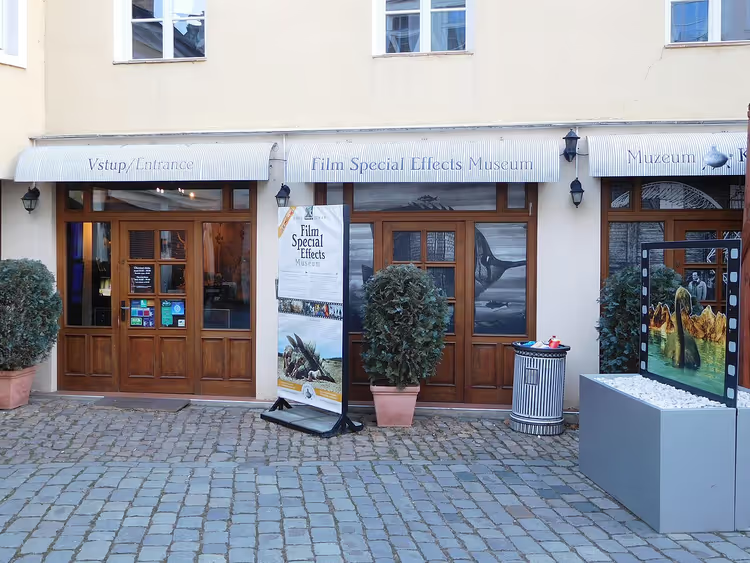
The Karel Zeman Museum is dedicated to the Czech director, animator, and screenwriter. His mid-20th-century films amazed audiences with their visual effects and were groundbreaking for the film industry. The halls recreate film sets and scenery from famous scenes.
 © JiriMatejicek · CC BY-SAPhoto: JiriMatejicek, CC BY-SA (https://creativecommons.org/licenses/by-sa/3.0), Wikimedia Commons
You will see many photographs showing stages of the master's life. Most of the exhibits are connected with the films "Baron Munchausen," "The Stolen Airship," and "Journey to the Beginning of Time." Here you can take part in creating special effects yourself and become a hero of a film.
Practical info: the museum is open daily from 10:00 to 19:00, ticket 250 CZK (as of 09/2026, Karel Zeman Museum: prices and hours). Tickets on Tiqets
24. Military Museum
 © User:Lsmaster · CC BY-SAPhoto: User:Lsmaster, CC BY-SA (https://creativecommons.org/licenses/by-sa/3.0), Wikimedia Commons
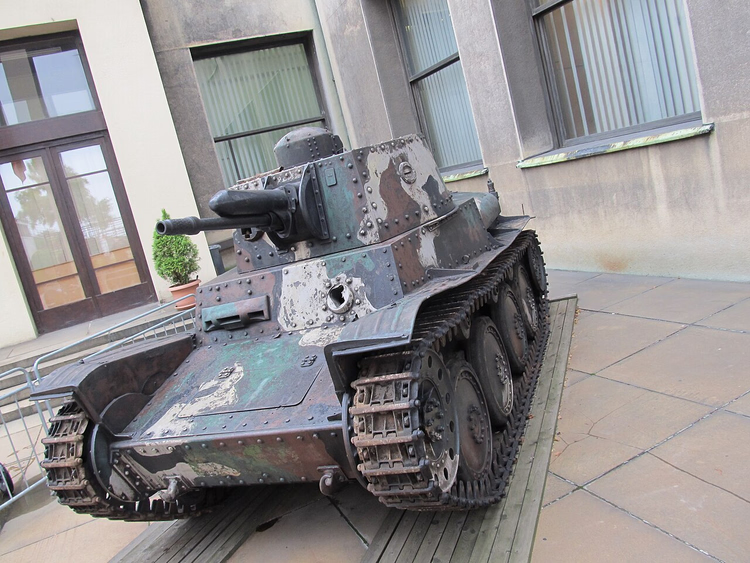
The Military Museum in Žižkov tells the story of the Czech armed forces. After a four-year renovation, it is open again with an updated exhibition. The halls feature display cases with weapons, ammunition, uniforms, medals, photographs, and soldiers' personal belongings.
The exhibitions are divided by period: World War I, the interwar period, and World War II. Pistols, machine guns, grenades, and miniature models of tanks, aircraft, and artillery are displayed separately. Admission is free, which makes the museum convenient for families and school groups.
Practical info: open Wednesday through Sunday, free admission (as of 09/2026, Vojenský historický ústav).
25. Lapidarium
 © Bengt Nyman from Vaxholm, Sweden · CC BYPhoto: Bengt Nyman from Vaxholm, Sweden, CC BY (https://creativecommons.org/licenses/by/2.0), Wikimedia Commons
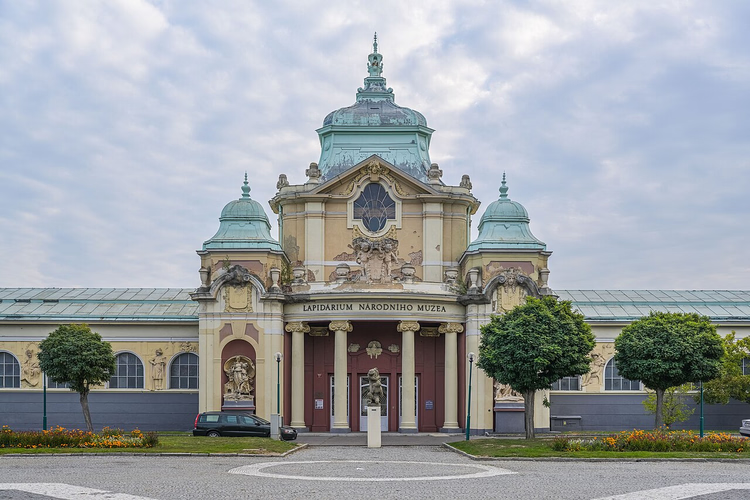
The Lapidarium houses a collection of sculptures that show the development of Czech stone architecture from the 11th to the 19th century. These are sculptures that for centuries adorned the facades of Prague buildings. After wars and floods, fragments, columns, bas-reliefs, and portals were brought together in one place.
More than two thousand exhibits are displayed in eight halls. This is the country's cultural and artistic heritage. Each hall is dedicated to its own period, and you can see how the style changed from Romanesque to Baroque. The museum operates on a short schedule, so check the day before your visit.
Practical info: closed on Mondays and Tuesdays. Wednesday from 10:00 to 16:00, Thursday and weekends from 12:00 to 18:00, ticket 50 CZK (as of 09/2026, Lapidarium: prices and hours). Tickets on Tiqets
26. Public Transport Museum
 © Paul Korecky · CC BY-SAPhoto: Paul Korecky, CC BY-SA (https://creativecommons.org/licenses/by-sa/2.0), Wikimedia Commons
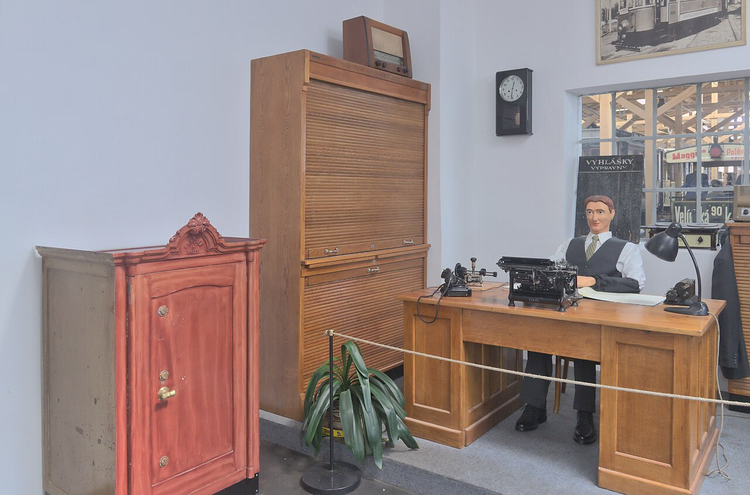
The Public Transport Museum occupies a historic tram depot hangar. Old buses, trams, trolleybuses, and service vehicles are on display here. The vehicles are in excellent condition and look ready to go into service.
The core of the exhibition consists of rare trams. Tram service in Prague was launched in the 1870s, and the first cars were pulled by a team of two horses. By the early 20th century, the track length exceeded fifty kilometers.
Among the exhibits you will recognize the famous Ikarus bus, as well as trolleybuses from Czech manufacturers Tatra and Škoda. Information boards with photographs and route maps complement the collection of transit tickets and miniature models. The museum is open only seasonally, so plan your visit in advance.
Practical info: open from late March to mid-November, Saturdays and Sundays from 9:00 to 17:00, adult ticket 50 CZK, child ticket 30 CZK (as of 09/2026, Transport Museum: prices and hours). Tickets on Tiqets
27. KGB Museum
 © Edgar Jiménez from Porto, Portugal · CC BY-SAPhoto: Edgar Jiménez from Porto, Portugal, CC BY-SA (https://creativecommons.org/licenses/by-sa/2.0), Wikimedia Commons
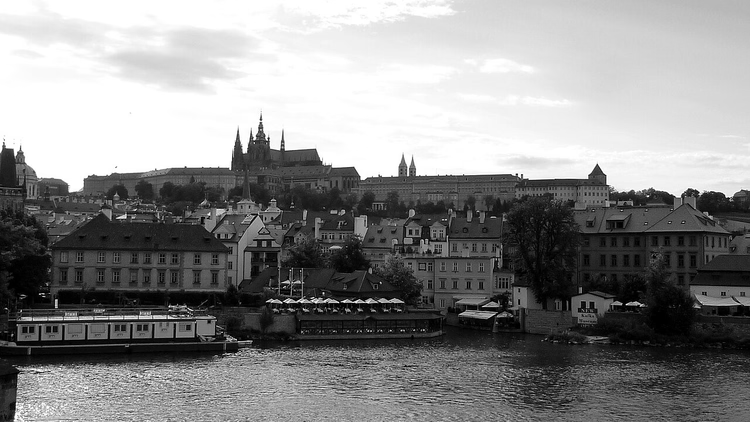
The KGB Museum is put together for anyone interested in the history of Soviet intelligence services. It displays technical spy devices, personal belongings of the organization's leaders, and examples of concealed weapons. Uniforms, office supplies, and published secret documents are shown separately.
The exhibition explains the structure of the committee and its working methods. You will examine surveillance equipment and devices disguised as everyday household items. An hour is usually enough for a visit.
Practical info: open daily from 10:00 to 17:00, ticket 350 CZK (as of 09/2026, KGB Museum: prices and hours). Tickets on Tiqets
28. Museum of historic chamber pots and toilets
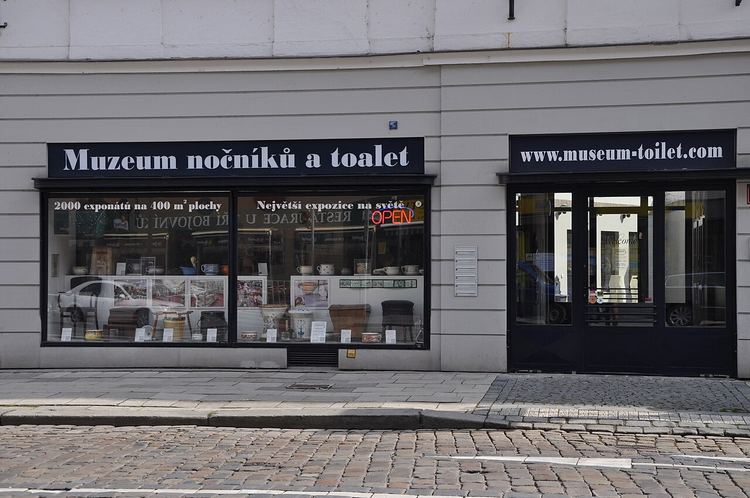
Among Prague's museums, this is one of the most unusual. Its founder bought an old fortress, found a working medieval toilet in it, and decided to build a collection of chamber pots. That is how the museum came to be in the early 2000s.
 © Muzeum nočníků · CC BY-SAPhoto: Muzeum nočníků, CC BY-SA (https://creativecommons.org/licenses/by-sa/4.0), Wikimedia Commons
Today the collection holds around two thousand items. There are wooden pieces shaped like small chairs and painted porcelain vases. The museum's pride: pieces made for Napoleon and President Lincoln. Besides historic sanitary ware, you will see classic apartment and dacha toilets.
Practical info: open daily from 10:00 to 18:00, closed Mondays. Ticket 150 CZK (as of 09/2026, Chamber Pot Museum: prices and hours). Tickets on Tiqets
29. Cold War Museum
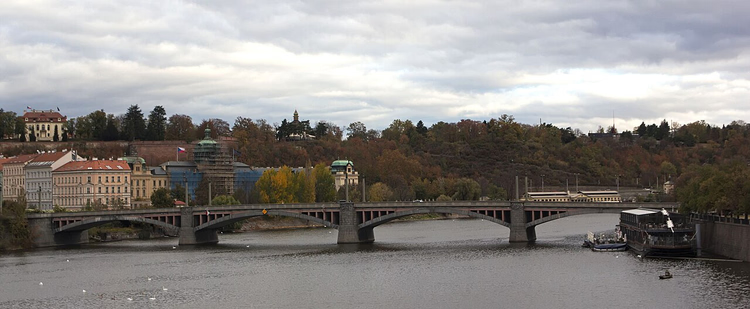 © Xosema · CC BY-SAPhoto: Xosema, CC BY-SA (https://creativecommons.org/licenses/by-sa/4.0), Wikimedia Commons
The Cold War Museum is housed in a former secret bunker beneath the Jalta Hotel. The two-level space originally served as a bomb shelter for the Warsaw Pact headquarters. During the confrontation between the USSR and the USA, hotel rooms where Western diplomats and journalists stayed were tapped from here.
Today the bomb shelter is open as a museum. You will see listening equipment, first aid supplies, and clothing of secret agents. The bunker's interior has been preserved almost unchanged, and that is the main impression of the visit.
Practical info: open Monday through Thursday from 5:00 PM to 8:00 PM, ticket 75 CZK (as of 09/2026, Cold War Museum: prices and hours). Tickets on Tiqets
30. Bedřich Smetana Museum
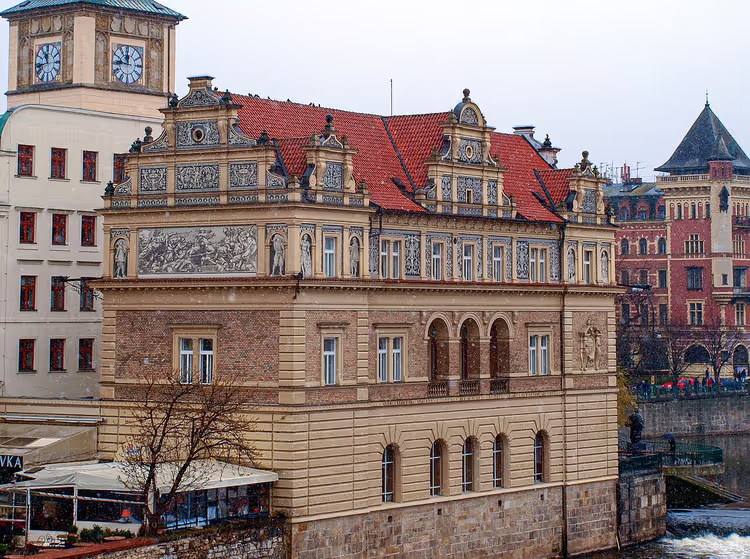 © VitVit · CC BY-SAPhoto: VitVit, CC BY-SA (https://creativecommons.org/licenses/by-sa/4.0), Wikimedia Commons
The Bedřich Smetana Museum occupies the Old Town Water Tower. The exhibition is dedicated to the life and work of the founder of Czech classical music. It houses the composer's personal belongings, manuscripts, and musical instruments.
The museum displays sheet music, family heirlooms, portraits, and documents. Classical music lovers can listen to Smetana's famous works right in the halls. The tower stands right by the Vltava, so a visit is easy to combine with a stroll along the embankment.
Practical info: open daily except Tuesday from 10:00 AM to 5:00 PM, ticket 50 CZK (as of 09/2026, Smetana Museum: prices and hours). Tickets on Tiqets
31. Postal Museum
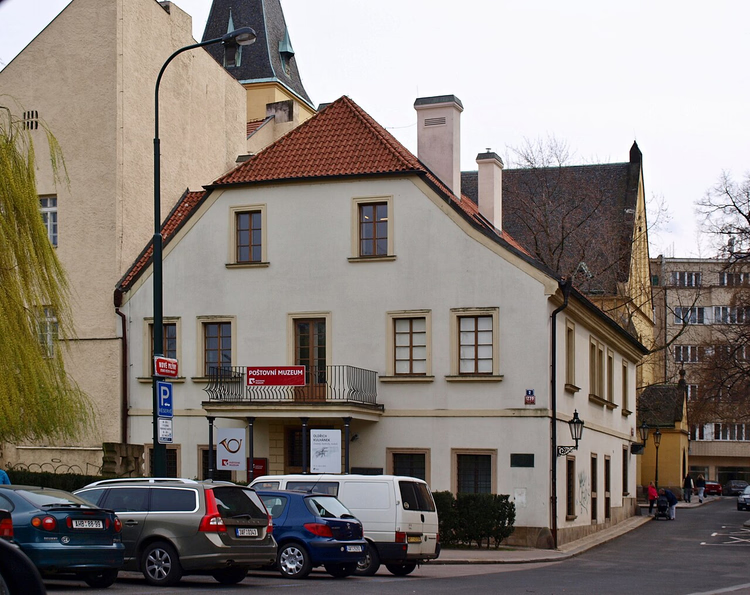 © VitVit · CC BY-SAPhoto: VitVit, CC BY-SA (https://creativecommons.org/licenses/by-sa/4.0), Wikimedia Commons
The Postal Museum operates in a 17th-century Baroque house. Philatelists will find an extensive collection of stamps from Austria-Hungary, Czechoslovakia, and the Czech Republic. For convenience, stamps and postcards are stored in vertical pull-out drawers.
The exhibitions introduce the development of the Czech postal service since the early 20th century. You will see hand stamps for postmarking and rattles that mail carriers used to announce their arrival. A separate section is dedicated to delivery: historic carriages and sleighs.
Practical info: welcomes visitors Tuesday through Sunday from 9:00 AM to 5:00 PM, ticket 50 CZK (as of 09/2026, Postal Museum: prices and hours). Tickets on Tiqets
32. Antonín Dvořák Museum
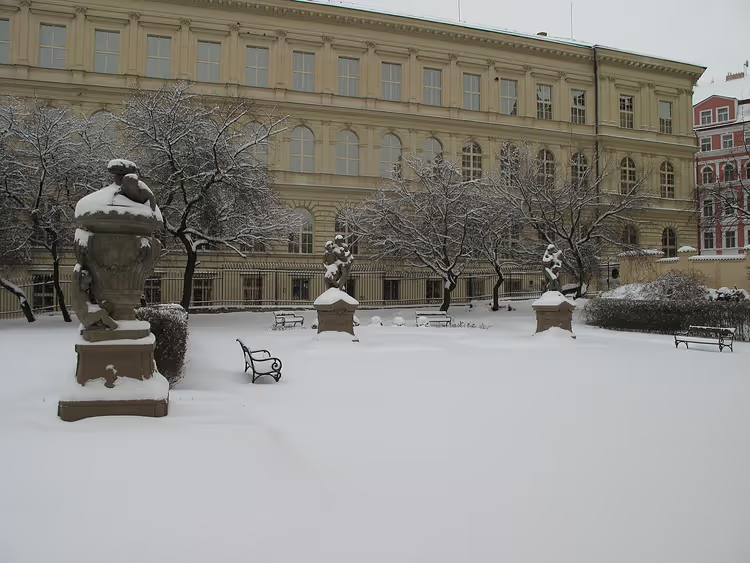 © Juan de Vojníkov · CC BY-SAPhoto: Juan de Vojníkov, CC BY-SA (https://creativecommons.org/licenses/by-sa/3.0), Wikimedia Commons
The Antonín Dvořák Museum was founded in honor of the Czech composer. It is housed in a two-story 18th-century Baroque palace that was once the summer residence of an aristocrat. The facade is decorated with stucco, stone vases, and sculptures, and the main hall is painted with frescoes.
The interiors, antique furniture, and household items recreate the atmosphere of the 19th century. The composer's personal belongings are kept here: music manuscripts, scores, instruments, goose quills, and letters. With particular pride, you will be shown the robe and laurel wreaths presented to the maestro when he received an honorary doctorate from the University of Cambridge.
Practice: open from 10:00 to 17:00 every day except Monday, ticket 50 CZK (as of 09/2026, Dvořák Museum: prices and hours). Tickets on Tiqets
33. Apple Museum
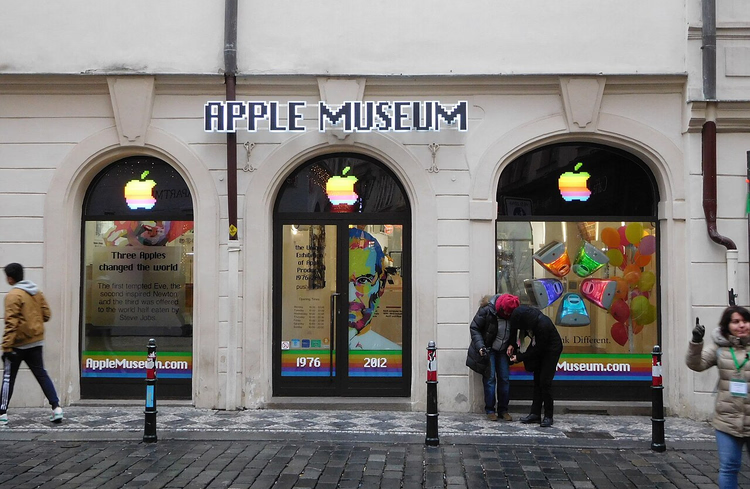
The Apple Museum is dedicated to the American company and its products. The halls are filled with collections of computers, phones, and tablets: more than four hundred items in total, produced from the mid-seventies to the early twenty-tens. The exhibits show the evolution of the company's gadget lineups.
 © JiriMatejicek · CC BY-SAPhoto: JiriMatejicek, CC BY-SA (https://creativecommons.org/licenses/by-sa/3.0), Wikimedia Commons
In addition to the hardware, you will see personal belongings of the company's founder, Steve Jobs. The glass doors and windows of the halls are covered with quotes from the inventor. For fans of the brand, a walk through the halls will take at least an hour, and the museum is open until late.
Practical info: open daily from 10:00 to 22:00, ticket 240 CZK (as of 09/2026, Apple Museum: prices and hours). Tickets on Tiqets
34. Johannes Kepler Museum
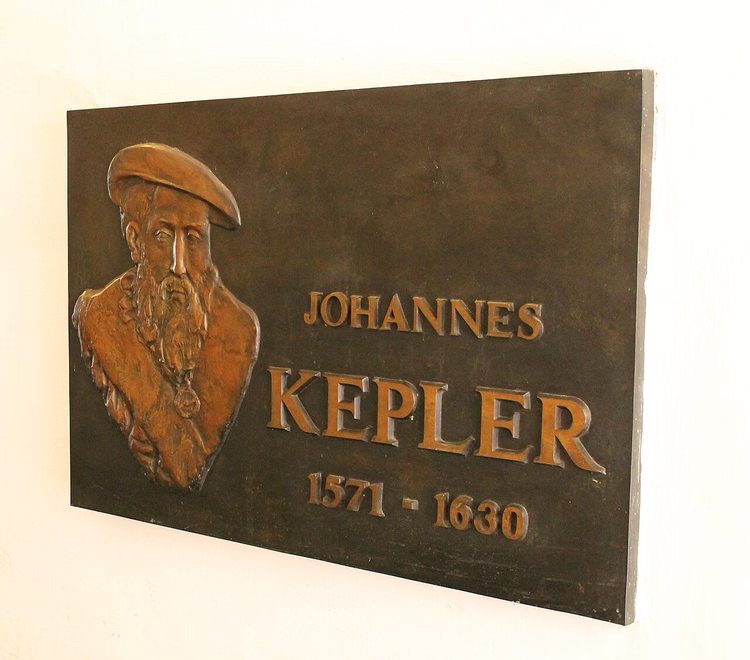
The Johannes Kepler Museum is dedicated to the mathematician and astronomer who lived in Prague for twelve years. These years turned out to be the most productive of his career. The small exhibition is housed in the apartment of a historic building where the scientist worked.
 © Sarah Stierch · CC BYPhoto: Sarah Stierch, CC BY (https://creativecommons.org/licenses/by/4.0), Wikimedia Commons
The exhibition is made up of instruments and devices used by the astronomer. The full range of his achievements is presented through computer animation on video consoles. Kepler studied gravity and planetary motion, and also wrote treatises about lunar expeditions and dreams.
Practical info: open daily except Monday from 10:00 to 18:00, ticket 60 CZK (as of 09/2026, Kepler Museum: prices and hours). Tickets on Tiqets
35. Museum of Gastronomy
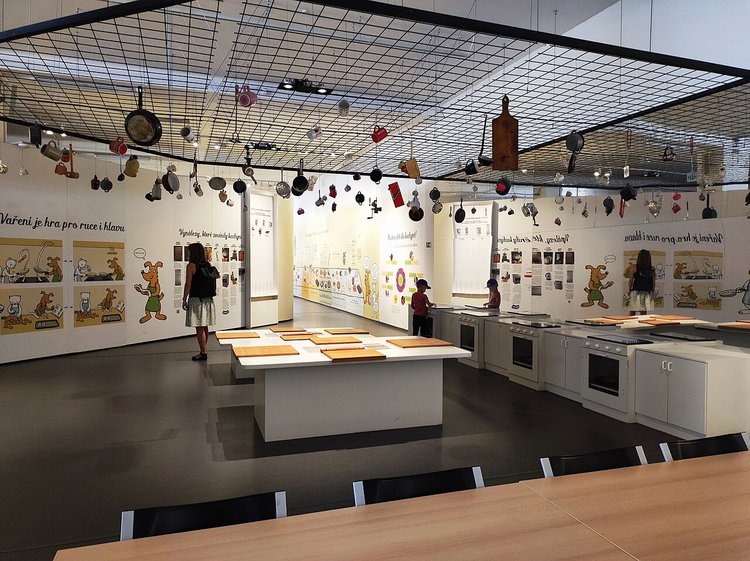
The Museum of Gastronomy shows the history of food preparation through different methods. It houses kitchen tools and utensils from the Stone Age to the present day. You will see models of ancient feasts, a collection of cutlery and tableware, as well as kitchen sets from past centuries.
 © Palickap · CC BY-SAPhoto: Palickap, CC BY-SA (https://creativecommons.org/licenses/by-sa/4.0), Wikimedia Commons
The tour of the exhibits is complemented by workshops and tastings of national dishes. This is one of the few museums in Prague where you can not only look but also taste. Stop by before lunch to combine your visit with a meal.
Practical info: open daily except Monday from 10:00 to 19:00, ticket 180 CZK (as of 09/2026, Museum of Gastronomy: prices and hours). Tickets on Tiqets
Prague museums on the map
All the museums from the list are marked on the map below. Many of them are located in the center, and it is easy to walk between them. Outlying locations, such as the Public Transport Museum or the Lapidarium, are better planned separately and reached by tram or metro.
What to see in Prague besides museums
Between museums, you will still have time for the city. Night Prague with a Vltava river cruise and dinner shows the illuminated bridges and the Castle from the water, while a daytime cruise to the Certovka canal takes about an hour. If you want to cover more sights without getting tired, a hop-on hop-off bus comes in handy: it stops at the main attractions, and you get off wherever you find something interesting.
For several consecutive days, consider a city tourist card: it gives discounts on some museums and transport. Plan evening walks after the museums close, when the center becomes calmer and cooler.
Tours and tickets in Prague
Guided tours, skip-the-line tickets and activities — most offers can be cancelled free of charge.
See offers on TiqetsThe widget loads once you give your consent.
⁉️🤔 Frequently asked questions
How many Prague museums can you realistically visit in one day?
In a day you can comfortably see three museums in the center. Start with Prague Castle and St. Vitus Cathedral, walk down to Museum Kampa in Malá Strana, and in the evening stop by the Karel Zeman Museum. The stops are ten to twenty minutes apart on foot, and plan an hour and a half to two hours for each museum.
When are Prague museums closed?
Most museums are closed on Mondays: the National Gallery and the Gastronomy Museum are among them. The Lapidarium is also closed on Tuesdays, and the Public Transport Museum is open only in season. Ticket offices usually close half an hour before the museum itself.
Where can you get in for free in Prague?
The Military Museum in Žižkov has free admission. The courtyards of Prague Castle are also open without a ticket; you only pay for the cathedral, Golden Lane, and the palaces. Students and children get discounts almost everywhere, so bring an ID.
Is the Prague Visitor Pass worth buying?
The card pays off if you plan to visit more than three museums and use public transport a lot. For two or three visits it usually does not pay for itself; it is cheaper to buy individual tickets or a combo for a group of museums. Do the math based on your own itinerary, not on ads.
Where can you buy tickets without waiting in line?
Tickets are sold online by the museums themselves and by aggregators, and there is often a separate line for them at the entrance. For popular places like the National Museum, book a time slot in advance, especially in summer and on weekends. In the morning the ticket office line is shorter than after midday.
In short: what is worth booking
If you have only one day: get tickets for Prague Castle and the National Museum. With kids: the Toy Museum, the Lego Museum, and the Kingdom of Railways. For a darker experience: the Torture Museum, the Museum of Communism, and the Cold War Museum. For art, set aside time for the National Gallery and Museum Kampa.
Prague is crowded with tourists in summer, so book tickets for popular museums online in advance. That way you will skip the line and choose a convenient time. Prague museum tickets on Tiqets

A small editorial team writing guides for independent travel. We travel ourselves, but we haven’t been everywhere, so we check prices, opening hours and how to get there against official sources.